Twenty-one plants and new power grid to supply Tokyo metropolitan area SHIKO UEDA and SUGURU KURIMOTO, Nikkei staff writersNOVEMBER 10, 2019 TOKYO –– Japan’s northeastern prefecture of Fukushima, devastated during the 2011 earthquake and nuclear disaster, is looking to transform itself into a renewable energy hub, Nikkei has learned.
A plan is under way to develop 11 solar power plants and 10 wind power plants in the prefecture, on farmlands that cannot be cultivated anymore and mountainous areas from where population outflows continue.
The total cost is expected to be in the ballpark of 300 billion yen, or $2.75 billion, until the fiscal year ending in March 2024.
The government-owned Development Bank of Japan and private lender Mizuho Bank are among a group of financiers that have prepared a line of credit to support part of the construction cost.
The power generation available is estimated to be about 600 megawatts, or equivalent to two-thirds of a nuclear power plant. The produced electricity will be sent to the Tokyo metropolitan area.
The plan also envisions the construction of an 80-km wide grid within Fukushima to connect the generated power with the power transmission network of Tokyo Electric Power Co. That part of the project is expected to cost 29 billion yen.
The Japanese government may allow Tokyo Electric Power Company (TEPCO) to dump more than 250 million gallons of contaminated water accumulated in tanks around its Fukushima nuclear power plants into the ocean.
Environment Minister Yoshiaki Harada commented in September that he supports the plan, as it may be the only solution for the wastewater. An expert panel is now studying the options, and its recommendation is likely to become policy.
The contaminated water was used to cool the superheated fuel rods in the Fukushima Daiishi facility prior to and during the nuclear meltdown that occurred as a result of the Tōhoku earthquake and tsunami in March 2011. The water has already been treated by multiple facilities, including a multi-nuclide removal facility (an advanced liquid processing system, or “ALPS”), which removed most of the radioactive materials, including cesium and strontium, but not tritium. Tritium is difficult to separate from water, because it closely resembles hydrogen, which is a natural component of water.
Many methods, both practically tried and theoretical, do exist for separation and removal of tritium, and they were assessed in a report presented by the International Research Institute for Nuclear Decommissioning in 2013. But all of them had the drawback of requiring a large amount of energy and equipment. Also, performance is poor for the low concentrations in the water at Fukushima Daiichi.
Last year, a team of researchers from Kindai University and private companies in western Japan developed an aluminum filter with holes of five nanometers or less in diameter. Steam of water containing tritium can be stopped, while that of water can pass. However, another issue is that 400 cubic meters of groundwater flowing into the basements of the buildings every day needs to be pumped and treated, necessitating treatment on a very large scale. This may not be justified when considering the actual danger of release to the ocean, according to the report.
Before the accident, tritium in cooling water was thinned with circulated sea water so that the allowable concentration might not be exceeded, and the diluted tritium was routinely released into the sea. Releasing the water at a rate that would allow it to be well diluted may be the best option, the report said.
While tritium has a radioactive half-life of 12.3 years, its biological half-life in the human body is only 10 days, and in fish it is less than two days. This is because tritium easily bonds to water, replacing the hydrogen atom. So as we drink and expel water, the tritium is carried away rather than accumulating in tissues. While some radioactive materials become concentrated as they move up the food chain, tritium is diluted.
Yet even to this day, the Japanese government is struggling with the issue of nuclear cleanup, waste disposal and storage. To say the least, the threat is still very much there.
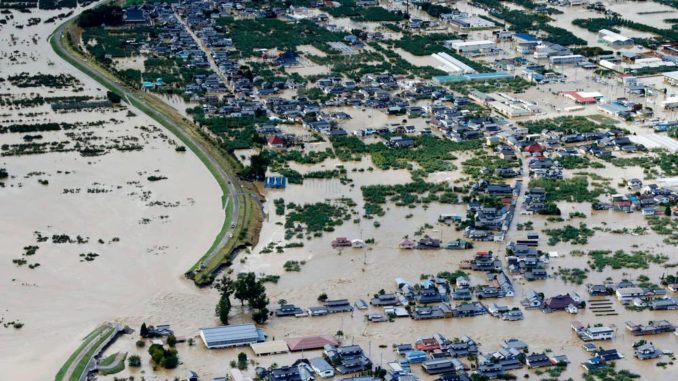
Earlier this month, Typhoon Hagibis swept across the Kanto region of Honshu, leading to deadly floods and landslides across the area.
The Asahi Shimbun reported that a temporary repository where some 2,667 bags of highly radioactive nuclear cleanup waste collected from the Fukushima Daiichi nuclear power plant were stored was completely flooded.
It’s been more than eight years since the nuclear disaster occurred at the Fukushima Daiichi power plant in Japan.
Yet even to this day, the Japanese government is struggling with the issue of nuclear cleanup, waste disposal and storage. To say the least, the threat is still very much there.
Earlier this month, Typhoon Hagibis swept across the Kanto region of Honshu, leading to deadly floods and landslides across the area.
The Asahi Shimbun reported that a temporary repository where some 2,667 bags of highly radioactive nuclear cleanup waste collected from the Fukushima Daiichi nuclear power plant were stored was completely flooded. To make matters worse, many local workers who handled the bags were cutting corners, and didn’t tie them tightly, not to mention that most of the bags, which totaled over 10 million in 2015, were only piled outdoors, unlike other nuclear waste handling plants which generally have facilities to store or cover the nuclear waste inside.
According to Japanese media reports, most of the bags containing the nuclear cleanup waste from the Fukushima Daiichi nuclear plant have not been handled properly. This suggests that the Japanese government and the subcontractors were negligent on the nuclear issue.
It may be a matter of time before the waste poses a huge threat to the environment again.
Given the fact that environmental damage caused by nuclear waste contamination can be both catastrophic and limitless, it is of utmost importance for mankind to learn the lesson of history and not to repeat the mistakes of the 1986 Chernobyl disaster.
This article appeared in the Hong Kong Economic Journal on Oct 18 Translation by Alan Lee
FoE Japan 5th Oct 2019, Fukushima, On October 3, the Citizens’ Committee on Nuclear Energy, whose members include academics, technical experts, and NGOs, made a new proposal to deal with contaminated water from the damaged Fukushima Daiichi Nuclear Plant after the water has been treated.
The proposal, submitted to Ministry of Economy, Trade and Industry (METI), the Ministry of the Environment (MOE), and the Nuclear Regulation Authority, is to convert the treated water to solid form by mixing with mortar, and storing it on land. Citizens’Comittee on Nuclear Energy (CCNE).
Why doesn’t the news media explore the question of what is happening to Fukushima’s bags of radioactive nuclear debris?
Fukushima evacuation: 340,000 people told to leave over landslide fears after flooding, Mirror UK , By Bradley Jolly, Online journalist, 25 OCT 2019The 143,699 households in Fukushima, Japan, have been evacuated over flooding fears after Typhoon Hagibis lashed across the area. More than 340,000 people were today told to leave their homes over landslide fears due to flooding .
Some 143,699 households in Fukushima, one of the worst affected cities, were evacuated today.
Fukushima Prefecture, the evacuation advisory, fears the danger of landslides remains very high.
Alarming photos show muddy water spill from rivers and pedestrians wade through waist-deep floods.
Almost 30,000 soldiers and rescue workers have been sent in to save stranded residents across the region.
The recent typhoons have so far killed 24 people. More than 9,000 homes, including 6,000 in the Chiba prefecture and 2,500 in the nearby Ibaraki prefecture, were without electricity, according to Tokyo Electric Power Company.
Local media reported two dams were expected to release built-up water and urged downstream residents to evacuate as a precaution.
A motorway toll gate near Narita International Airport was temporarily closed for safety reasons. Heavy rain also washed out the second round of the PGA Tour’s first tournament held in Japan, the Zozo Championship in Inzai City, where Tiger Woods was tied with Gary Woodland at 64 after Thursday’s opening round.
Fukushima is on Honshu, Japan’s largest island.
It is about 40 miles away from Japan’s idyllic east coast.
Distribution and origin of highly radioactive microparticles in Fukushima revealed, Science Daily
Date:
October 16, 2019
Source:
University of Helsinki
Summary:
New method allows scientists to create a quantitative map of radioactive cesium-rich microparticle distribution in soils collected around the damaged Fukushima Daiichi Nuclear Power Plant Nuclear Power Plant (FDNPP). This could help inform clean-up efforts in Fuksuhima region.
Distribution, number, source, and movement of the microparticles in the environment has remained poorly understood
A large quantity of radioactivity was released into the environment during the 2011 Fukushima Daiichi Nuclear Power Plant accident. The released radioactivity included small, poorly soluble, cesium-rich microparticles. The microparticles have a very high radioactivity per unit mass (~1011 Bq/g), but their distribution, number, source, and movement in the environment has remained poorly understood. This lack of information has made it hard to predict the potential impact of the radioactive microparticles.
However, a study just published in the scientific journal Chemosphere, involving scientists from Japan, Finland, France, and the USA, addresses these issues. The team, led by Dr. Satoshi Utsunomiya, Ryohei Ikehara, and Kazuya Morooka (Kyushu University), developed a method in 2018 that allows scientists to quantify the amount of cesium-rich microparticles in soil and sediment samples.
They have now applied the method to a wide range of soil samples taken from within, and outside, the Fukushima Daiichi nuclear exclusion zone, and this has allowed them to publish the first quantitative map of cesium-rich microparticle distribution in parts of Fukushima region.
Ed. note. Since we published the article below, Nuclear Hotseat has corrected the misleading information about 2667 bags of radioactive debris being washed away.
2,667 Radioactive Bags From Fukushima Swept Away By Typhoon Hagibishttps://newspunch.com/1667-radioactive-bags-fukushima-swept-away-typhoon-hagibis/, October 14, 2019Baxter DmitryAs Typhoon Hagibis hammered Japan on Saturday, thousands of bags containing radioactive waste at Fukushima were reportedly carried into a local stream by floodwaters.Experts warn the radioactive bags could have a devastating environmental impact across the entire Pacific region, reportsTaiwan News.
According to Asahi Shimbun, a temporary storage facility containing 2,667 bags storing radioactive contaminants from the 2011 Fukushima nuclear disaster were “unexpectedly inundated by floodwaters brought by Typhoon Hagibis.“
Torrential rain flooded the storage facility and released the bags into a waterway 100 meters from the site.
Officials from Tamara City in Fukushima Prefecture said that each bag is approximately one cubic meter in size.
Authorities were only able to recover six of the bags by 9 p.m. on Oct. 12 and it is uncertain how many remain unrecovered while the potential environmental fallout is being assessed.
The radioactive waste swept away by Typhoon Hagibis represents the latest setback for Fukushima officials who have struggled to adequately quarantine the radiation.
StatesmanJournal reports: Seaborne radiation from Japan’s Fukushima nuclear disaster has been detected on the West Coast of the United States.
Cesium-134, the so-called fingerprint of Fukushima, was measured in seawater samples taken from Tillamook Bay and Gold Beach in Oregon, researchers from the Woods Hole Oceanographic Institution are reporting.
Because of its short half-life, cesium-134 can only have come from Fukushima.
Also for the first time, cesium-134 has been detected in a Canadian salmon, the Fukushima InFORM project, led by University of Victoria chemical oceanographer Jay Cullen, is reporting.
In both cases, levels are extremely low, the researchers said, and don’t pose a danger to humans or the environment.
Massive amounts of contaminated water were released from the crippled nuclear plant following a 9.0 magnitude earthquake and tsunami in March 2011. More radiation was released to the air, then fell to the sea.
What to do with the enormous amount of water, which grows by around 150 tonnes a day, is a thorny question, with controversy surrounding a long-standing proposal to discharge it into the sea, after extensive decontamination.
The water comes from several different sources: Some is used for cooling at the plant, which suffered a meltdown after it was hit by a tsunami triggered by a massive earthquake in March 2011.
Groundwater that seeps into the plant daily, along with rainwater, add to the problem.
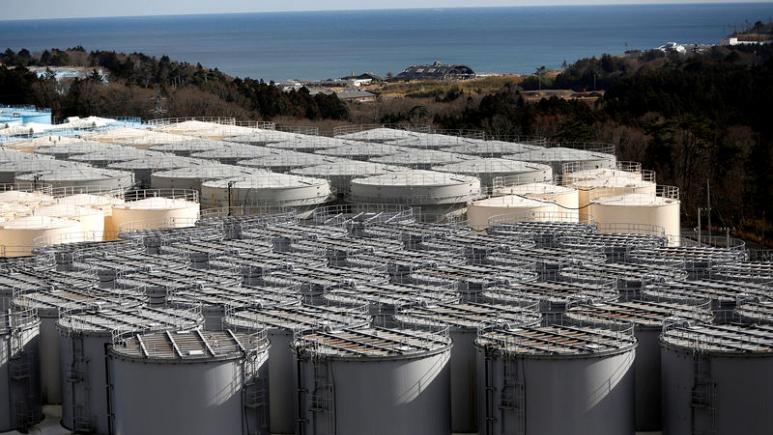
A thousand, towering tanks have now replaced many of the cherry trees that once dotted the plant’s ground.
Each can hold 1,200 tonnes, and most of them are already full.
“We will build more on the site until the end of 2020, and we think all the tanks will be full by around the summer of 2022,” said Junichi Matsumoto, an official with the unit of plant operator TEPCO in charge of dismantling the site.
TEPCO has been struggling with the problem for years, taking various measures to limit the amount of groundwater entering the site.
There is also an extensive pumping and filtration system, that each day brings up tonnes of newly contaminated water and filters out as many of the radioactive elements as possible.
HIGHLY RADIOACTIVE
The hangar where the decontamination system runs is designated “Zone Y” – a danger zone requiring special protections.
All those entering must wear elaborate protection: a full body suit, three layers of socks, three layers of gloves, a double cap topped by a helmet, a vest with a pocket carrying a dosimeter, a full-face respirator mask and special shoes.
Most of the outfit has to burned after use.
“The machinery filters contain radionuclides, so you have to be very protected here, just like with the buildings where the reactors are,” explained TEPCO risk communicator Katsutoshi Oyama.
TEPCO has been filtering newly contaminated water for years, but much of it needs to go through the process again because early versions of the filtration process did not fully remove some dangerous radioactive elements, including strontium 90.
The current process is more effective, removing or reducing around 60 radionuclides to levels accepted by the International Atomic Energy Agency (IAEA) for water being discharged.
But there is one that remains, which cannot be removed with the current technology: Tritium.
Tritium is naturally present in the environment, and has also been discharged in its artificial form into the environment by the nuclear industry around the world.
There is little evidence that it causes harm to humans except in very high concentrations and the IAEA argues that properly filtered Fukushima water could be diluted with seawater and then safely released into the ocean without causing environmental problems.
“ABSOLUTELY AGAINST IT”
But those assurances are of little comfort to many in the region, particularly Fukushima’s fishing industry which, like local farmers, has suffered from the outside perception that food from the region is unsafe.
Kyoichi Kamiyama, director of the radioactivity research department at the regional government’s Fisheries and Marine Science Research Centre, points out that local fishermen are still struggling eight years after the disaster.
“Discharging into the ocean? I’m absolutely against it,” he told AFP.
At the national government level, the view is more sanguine.
“We want to study how to minimise the damage (from a potential discharge) to the region’s reputation and Fukushima products,” an Industry Ministry official said.
The government is sensitive to fears that people inside Japan and further afield will view any discharge as sending radioactive waste into the sea.
No decisions are likely in the near-term, with the country sensitive to the international spotlight that will fall on Japan as it hosts the Olympic Games next year.
Environmentalists are also resolutely opposed to any discharge into the sea, and Greenpeace argues that TEPCO cannot trusted to properly decontaminate the water.
The solution, said Greenpeace senior nuclear specialist Shaun Burnie, “ultimately can only be long-term storage and processing.”
Dumping Fukushima’s Radioactive Water Into Pacific Ocean Is ‘Only Option’, Japan Sayshttps://www.sciencealert.com/fukushima-is-running-out-of-space-to-store-contaminated-waterARIA BENDIX, BUSINESS INSIDER 12 SEP 2019 On March 11, 2011, Japan was struck by the most powerful earthquake in the nation’s history – a magnitude 9 temblor that triggered a tsunami with waves up to 133 feet (40 meters) high. The disaster set off three nuclear meltdowns and three hydrogen explosions at the Fukushima Daiichi Nuclear Power Plant.
Eight years later, Fukushima holds more than 1 million tons of contaminated water.
The water comes from two main sources. First, the tsunami caused the reactor cores to overheat and melt, so cleanup workers injected water into the cores to cool them. In the wake of the accident, groundwater also seeped in beneath the reactors and mixed with radioactive material.
To store this contaminated water, the plant currently has 1,000 sealed tanks. But the water is still accumulating. There’s enough room to keep the liquid contained through summer 2022, but after that, there will be no space left.
At a news briefing in Tokyo, Japan’s environment minister, Yoshiaki Harada, said that come 2022, “the only option will be to drain it into the sea and dilute” the contaminated water.
The Japanese government, however, is waiting on a verdict from a panel of experts before making a final decision about what to do with the water.
Meanwhile, the environmental group Greenpeace said in a statement that the “only environmentally acceptable option” would be to continue to store the water and filter it for contaminants.
But that would require more tanks and an expensive filtration process.
Dumping the water could reduce cleanup costs
Only two events have ever been designated “level 7” nuclear accidents by the International Atomic Energy Agency (IAEA): Fukushima and Chernobyl.
The majority of radiation released during the Fukushima disaster wound up in the Pacific Ocean, but the meltdown also forced the evacuation of more than 200,000 people from nearby areas – about 43,000 of whom still haven’t returned.
Shortly after the tsunami, Fukushima plant workers constructed storage tanks to house the contaminated water used to cool the reactor cores. But they also had to contend with the radioactive groundwater, since cracks in the downed reactors’ foundations allowed liquid to seep in from below.
This left cleanup crews with more dirty water to store and treat than they’d anticipated.
To purify all this water, plant workers at first used zeolites – volcanic materials that cling to a radioactive isotope called cesium. Then in 2013, they filtered the water for strontium, another toxic radioactive substance. But they had trouble filtering out an isotope called tritium, since it binds easily to water.
Greenpeace later said the government had been deterred by the price tag of all the viable methods; one system from a company called Kurion would have cost around US$1 billion to set up, plus several hundred million dollars to operate each year.
‘The sea is not a garbage dump’
Water containing tritium isn’t very dangerous for humans – dumping tritium-laced water into the ocean is common practice for coastal nuclear plants. But it could endanger the local marine species, including fish, which provide a source of income for people living near the power plant.
In 2018, Fukushima’s operator, the Tokyo Electric Power Company (Tepco), also revealed that isotopes like strontium lingered in the water, which meant that about 80 percent of the plant’s treated water still had radiation levels above the government’s standard for ocean dumping.
Some tanks had radiation levels that were 20,000 times greater than the government’s safety standards.
Sending that contaminated water into the ocean could allow it to travel to nearby shores in South Korea, where it could contaminate that local seafood supply, too.
“The sea is not a garbage dump,” Jan Hakervamp, a nuclear-energy expert at Greenpeace, told Business Insider.
“The sea is a common home for all people and creatures and must be protected.” his article was originally published by Business Insider.
Diplomats from 22 countries and regions attended a briefing at the Foreign Ministry, where Japanese officials stressed the importance of combating rumors about safety at the plant, which was decimated by a 2011 earthquake and tsunami, while pledging transparency.
The plant’s operator, Tokyo Electric Power Co., or TEPCO, said last month that it would run out of storage space for the water in 2022, prompting South Korea to raise safety questions amid tensions with Japan that have intensified over trade and history. South Korea was among those represented at Wednesday’s briefing.
Water must be continuously pumped into the four melted reactors at the plant so the fuel inside can be kept cool, and radioactive water has leaked from the reactors and mixed with groundwater and rainwater since the disaster.
The plant has accumulated more than 1 million tons of water in nearly 1,000 tanks. The water has been treated but still contains some radioactive elements. One, tritium — a relative of radiation-emitting hydrogen — cannot be separated.
Tritium is not unique to Fukushima’s melted reactors and is not harmful in low doses, and water containing it is routinely released from nuclear power plants around the world, including in South Korea, officials say.
The water has been a source of concern, sparking rumors about safety, especially as Japan tries to get countries to lift restrictions on food imports from the Fukushima area ahead of the 2020 Tokyo Olympics. Import restrictions are still in place in 22 countries and regions, including South Korea and China.
“In order to prevent harmful rumors about the Fukushima Dai-ichi plant from being circulated, we believe it is extremely important to provide scientific and accurate information,” Yumiko Hata, a Ministry of Economy, Trade and Industry official in charge of the Fukushima accident response, said at the briefing. “We appreciate your understanding of the situation and continuing support for the decommissioning work at the Fukushima Dai-ichi plant.”
Officials said there were no complaints from the diplomats Wednesday about Japan’s handling of the water.
More than eight years after the accident, Japan has yet to decide what to do with the radioactive water. A government-commissioned panel has picked five options, including the controlled release of the water into the Pacific Ocean.
As disputes between Japan and neighboring South Korea escalated over export controls and colonial-era labor used by Japanese companies, Seoul last month announced plans to step up radiation tests of Japanese food products, and asked about the contaminated water and the possibility of its release into the sea.
Experts say the tanks pose flooding and radiation risks and hamper decontamination efforts at the plant. Nuclear scientists, including members the International Atomic Energy Agency and Japanese Nuclear Regulation Authority, have recommended the water’s controlled release into the sea as the only realistic option scientifically and financially. Local residents oppose this, saying the release would trigger rumors of contamination, which would spell doom for Fukushima’s fishing and agriculture industries.
The panel recently added a sixth option of long-term storage.
Fukushima tragedy: The day of black snow https://www.greenpeace.org/international/story/23925/fukushima-tragedy-the-day-of-black-snow/ by Sean Lee 30 August 2019 Toru Anzai is a former resident of Iitate, a small village in Fukushima, Japan, and dearly missed the bamboo shoots that grew in his hometown. During autumn, the bamboo shoots would blanket the mountains that overlooked the residents’ homes in the village. The residents would climb the mountains, gather the plants, and prepare them for dinner. But ever since that tragic day, no one climbed the mountains, and the wild plants vanished from their dinner tables. For Anzai, the bamboo shoots became sad reminders of what used to be.
Anzai remembers the day as the “black snow” day. He heard the explosions on 12 March, 2011. Black smoke rose from the Fukushima nuclear power plant, and the smell of burning iron pervaded the village. It started to rain. The rain turned into snow. The snow was black.
The black snow filled Anzai with an ominous dread, and soon, his fears became reality.
After the black snow shrouded the village, Anzai described in an interview how he started to feel throbbing pain on his skin. It was almost like being sunburned after sunbathing for too long. Both of his legs darkened then peeled in white patches. The only remedy to the peeling was applying medicinal ointment.
Soon after, his entire body began to suffer. The headaches came, followed by shoulder pains. Then the hair loss occurred. Three months after the disaster, he left behind his home and evacuated to survive. Unfortunately, the tragedy did not end there.
Three years later, Anzai started having strokes and heart attacks. A stent was placed in his blood vessel; the tube held open his narrowed blood vessel and kept the blood flowing to his heart. With treatment, his pain somewhat subsided, but whenever Anzai visited Iitate, the pain throughout his entire body relapsed. While these symptoms have not been conclusively connected to the radiation exposure, Anzai believed that they were the realities of the black snow day.
Anzai’s temporary housing was very narrow and consisted of a living room and a bedroom. He had moved into this subsidised housing complex eight years ago. He was one of the first of the 126 families. Often, evacuees gathered around the common area and shared fond memories of their hometowns with each other. Whatever solace could be found, the evacuees found it in each other.
Since allegedly completing the decontamination operation in Iitate, the Japanese government have been urging people to return to their village. In fact, Fukushima prefectural government had ended housing subsidies this past March, and by the end of the month, most people had left the complex. Only around ten families were still looking for a new place to live.
Absently gazing into the dark, clouded sky, Anzai spoke bitterly. “I was kicked out of my hometown for doing nothing wrong. It was heartbreaking. Now, Iitate is polluted, and some of my neighbours have died. When the government asked me to evacuate last minute, I left. Now, they want me to go back. Back to all of the radioactive contamination. I’m so angry, but I don’t know what to do. We have repeatedly petitioned the government, but they’re not willing to listen. Our government has abandoned us.”
Prior to the nuclear incident, there were about 6,300 residents in Iitate. Eight years later, only a little over 300 evacuees have returned at the government’s persistent urging. Most of the returning residents were elderly, aged 60 or older. Even counting the non-natives who had recently relocated to the village, the total figure hovered around only 900 residents.
Iitate’s old and new residents are exposed to radioactive substances on a daily basis. The Japanese government claimed to have completed the decontamination work, but a full decontamination is impossible due to the village’s terrain. More than 70% of Iitate is forest, and unlike in the farmlands, the removal of contaminants that have fallen among the mountainous forest is nearly impossible.
Each year, Greenpeace Germany conducts extensive research on Fukushima villages including Iitate. The findings confirm that the radiation exposure in these villages exceeds the established international safety standards. Anzai believes that the Japanese government is behind the forced homecoming of the Iitate residents.
“The government hopes to publicise good news: the nuclear accident has been dealt with, and the residents have returned home. People who had no choice but to leave are now being pressured to return and put their lives on the line,” lamented Anzai.
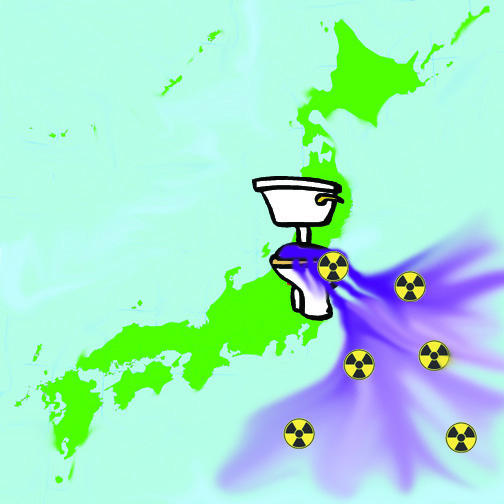
The Japanese government hopes to release more than one million tonnes of highly radioactive water into the Fukushima coast. If the contaminated water becomes flushed into the ocean, the contamination will only add to the harm already inflicted by the Fukushima accident. Furthermore, the ocean currents will shift the radioactive materials through the surrounding waters including the Pacific Ocean.
The industrial pollution and toxins have already caused much distress to our oceans. Discharging the Fukushima’s radioactive water will only worsen the situation, and we cannot, and should never, let this happen.
Fukushima: Nuclear-contaminated water raises 2020 Games site fears,The Weather Network, Caroline Floyd , Meteorologist 14 Aug 19, Beginning late next July, Tokyo and several other sites around Japan will welcome elite athletes from around the world for the 2020 Summer Games. One of the sites carries with it a stigma that organizers are hoping to help heal — Fukushima.
Some scheduled baseball and softball events will take place at Fukushima Azuma Baseball Stadium, located about 70 km northwest of the Fukushima Daiichi nuclear power plant.
There may be another hitch in the road to recovery, however, and it’s looming on the horizon for next year.
Tremendous amounts of water flooded the reactors in the wake of the disaster, both from the tsunami itself and from water added to cover the melted reactors and allow them to cool as part of the efforts to clean up the site and decommission the plant. Since then, groundwater has also infiltrated the site. All of this water has been contaminated by radioactive substances, like cesium and tritium. While the cesium can be removed via processing, tritium generally remains, meaning the still-contaminated water must be stored.
TEPCO, the utility which operated the reactor, has installed about 1,000 large storage tanks at the site to hold the contaminated water; currently, more than 1.05 million tons of radioactive water are being stored in the tanks, and roughly 150 tons are added every day.
TEPCO continues to install new tanks, but according to the Japanese newspaper Asahi Shimbun, “space limitations mean that by the end of 2020, a maximum storage capacity of about 1.34 million tons will be reached.” Officials have added that if the groundwater infiltration was decreased, it will be possible to stretch that date until summer 2022.
Some scheduled baseball and softball events will take place at Fukushima Azuma Baseball Stadium, located about 70 km northwest of the Fukushima Daiichi nuclear power plant.
There may be another hitch in the road to recovery, however, and it’s looming on the horizon for next year.
Tremendous amounts of water flooded the reactors in the wake of the disaster, both from the tsunami itself and from water added to cover the melted reactors and allow them to cool as part of the efforts to clean up the site and decommission the plant. Since then, groundwater has also infiltrated the site. All of this water has been contaminated by radioactive substances, like cesium and tritium. While the cesium can be removed via processing, tritium generally remains, meaning the still-contaminated water must be stored.
TEPCO, the utility which operated the reactor, has installed about 1,000 large storage tanks at the site to hold the contaminated water; currently, more than 1.05 million tons of radioactive water are being stored in the tanks, and roughly 150 tons are added every day.
TEPCO continues to install new tanks, but according to the Japanese newspaper Asahi Shimbun, “space limitations mean that by the end of 2020, a maximum storage capacity of about 1.34 million tons will be reached.” Officials have added that if the groundwater infiltration was decreased, it will be possible to stretch that date until summer 2022.
While more tanks can be installed, a long-term solution is still being sought and, so far, most of them aren’t going over well with the locals.
One suggestion before the central government is to dilute the water after processing and gradually release it into the Pacific. Another is to build a long-term storage facility near the plant site. Fukushima residents, and fishermen in particular, have expressed strong opposition to both ideas, not over fears of the wastewater itself but because of the negative publicity and continuing stigma that would damage their livelihoods……
Setting a deadline on the current storage situation puts additional pressure on Japanese authorities and the public to reach a consensus.
The effort to safely decommission Japan’s Fukushima Daiichi nuclear power plant just got hit by a looming deadline.
In about three years, the plant will run out of space for the massive quantities of treated but still-radioactive water that officials have been storing there, according to The Associated Press. While a government panel came up with a few possible courses of action, the most feasible one at the moment is to simply dump the water into the Pacific — a bleak sign for nuclear disasters in the future.
Maximum Capacity
At the moment, Fukushima has over 1 million tons of water stored in almost 1,000 on-site tanks, the AP reports. Plans are in place to build enough to store nearly 1.4 million more tons, but that even those will reach capacity by mid-2022.
Local fishers and residents of the area say that dumping the water would devastate the area’s fishing and agriculture industry, per the AP. Other options considered by the panel include vaporizing the radioactive water or injecting it deep underground.
“When we talk about Fukushima’s reconstruction, the question is if we should prioritize the decommissioning at the expense of Fukushima people’s lives,” University of Tokyo professor of disaster social science Naoya Sekiya told the AP. “The issue is not just about science.”
Robots come to the rescue after Fukushima Daiichi nuclear disaster, CBS News, CORRESPONDENTLesley Stahl, Produced by Richard Bonin and Ayesha Siddiqi , 28 July 19
Eight years after a powerful earthquake and tsunami caused a massive nuclear meltdown in the Daiichi Power Plant, Lesley Stahl reports on the unprecedented cleanup effort
More than eight years have passed since a monster earthquake and tsunami struck Northeast Japan and triggered what became, after Chernobyl, the worst nuclear disaster in history at the Fukushima Daiichi Nuclear Power Plant.
As we first reported last fall, when three of the plant’s six reactors melted down, hot fuel turned to molten lava and burned through steel walls and concrete floors. To this day, no one knows exactly where inside the reactor buildings the fuel is. And it is so deadly, no human can go inside to look for it. So the Japanese company that owns the crippled plant has turned to robots.
There are four-legged robots, robots that climb stairs and even robots that can swim into reactors flooded with water. They’re equipped with 3D scanners, sensors and cameras that map the terrain, measure radiation levels and look for the missing fuel.
This is part of a massive clean up that’s expected to cost nearly $200 billion and take decades.
Lesley Stahl: Has anything like this cleanup, in terms of the scope, ever happened before?
Lake Barrett: No, this is a unique situation here. It’s never happened in human history. It’s a challenge we’ve never had before………..
Lesley Stahl: Why not just bury this place? Why not do what they did at Chernobyl? Just cover it up, bury it, and just leave it here all– you know, enclosed?
Lake Barrett: Number one this is right next to the sea. We’re 100 yards from the ocean. We have typhoons here in Japan. This is also a high earthquake zone. And there’s gonna be future earthquakes. So these are unknowns that the Japanese and no one wants to deal with………
Lesley Stahl: How many tons of radioactive waste was developed here?
Lake Barrett: Probably 500 to 1,000 tons in each building.
Lesley Stahl: So how long will it be lethal?
Lake Barrett: It will be lethal for thousands of years.
Lesley Stahl: What we’re talking about really is three meltdowns?
Lake Barrett: Yes. It was truly Hell on Earth.
No one is gonna send a worker in there because they’d be overexposed in just a matter of seconds.”
The meltdowns triggered huge explosions that sent plumes of radioactive debris into the atmosphere, forcing the evacuation of everyone within a 12-mile radius – about 160,000 people in all. Weeks later, TEPCO officials engaged in so-called kowtow diplomacy – allowing townspeople to berate them as they prostrated themselves in apology.
Thousands of workers were sent to the countryside to decontaminate everything touched by radiation including digging up dirt and putting it in bags – lots of bags.
At the plant they’re capturing contaminated groundwater, about 150 tons a day, and storing it in tanks, as far as the eye can see.
Lake Barrett: Water is always the major challenge here. And it’s going to remain a major challenge until the entire cores are removed.
The closer workers get to the reactors, the more protective gear they have to wear, as we discovered………..
In the years since the accident, much of the damage to the building has been repaired.
But it’s still dangerous to spend a lot of time here. We could stay only 15 minutes.
Lesley Stahl: There’s this number I’ve been seeing, 566.
Lake Barrett: Right. That’s telling you the radiation level that we’re in. It’s fairly high here. That’s why we’re gonna be here a short time.
Lesley Stahl: How close are you and I, right this minute, to the core?
Lake Barrett: The– the melted cores are about 70 feet that way.
Lesley Stahl: Seventy from here–
Lake Barrett: From here.
Lesley Stahl: –is the melted core?
Lake Barrett: Correct, that’s right over in here. We don’t know quite where other than it fell down into the floor.
Lesley Stahl: So if you sent a worker in right now to find it, how long would they survive?
Lake Barrett: No one is gonna send a worker in there because they’d be overexposed in just a matter of seconds.
Enter the robots.
Lesley Stahl: This is the robot research center.
Dr. Kuniaki Kawabata: Yes. This is for remote control technology development.
In 2016, the Japanese government opened this $100 million research center near the plant where a new generation of robots is being developed by teams of engineers and scientists from the nation’s top universities and tech companies………
But even with all the high-tech training and know-how, the robots have run into problems. For the early models, it was the intense levels of radiation – that fried their electronics and cameras.
Lake Barrett: Their lifetime was hours. We hoped it would be days, but it was for hours………
when Scorpion went inside, it hit some debris and got stuck after traveling less than 10 feet. ……
Finally, in 2017, the swimming robot [Little Sunfish] made its foray into the heart of the reactor. ………. It beamed back images reveali ng clumps of debris, fuel rods, half-destroyed equipment and murky glimpses of what looks like solidified lava — the first signs, TEPCO officials say, of the missing fuel.
Lake Barrett: These robotic steps so far have been significant steps. But it is only a small step on a very, very long journey.
Lesley Stahl: This is gonna take you said decades with an “S.” How many decades?
Lake Barrett: We don’t know for sure. The goal here is 40– 30– 40 years. You know, I personally think it may be even 50– 60, but it’s–









 nuclear-news