14 years since Fukushima nuclear disaster: Greenpeace statement
Greenpeace International, 11 March 2025
Tokyo, Japan – 14 years have passed since the Great East Japan Earthquake and the Fukushima Daiichi nuclear disaster devastated the northeast region of Japan. Greenpeace Japan extends heartfelt condolences to the victims and their families who are still suffering the aftermath of this devastating catastrophe……………………………
The risks of nuclear power plants increase with the length of time they have been in operation, as does their vulnerability to natural disasters such as earthquakes. The Fukushima Daiichi nuclear accident occurred at a nuclear power plant that had been in operation for more than 30 years, and radiation levels remain so high that even 14 years after the accident, it is still impossible for humans to directly inspect the damaged reactors. Therefore, the change of policy to promote nuclear power is unacceptable.[1]
There is no prospect for the disposal of spent nuclear fuel while the existing storage facilities are already close to full capacity, and many local authorities have yet to put in place an effective method for the safe evacuation of residents living near nuclear power stations in the event of an unforeseen emergency.
In addition, the Japanese Government and the Tokyo Electric Power Company (TEPCO), pushing aside the concerns of fishermen, residents and others, have decided to start deliberately discharging contaminated water containing radioactive substances from the accident at the Fukushima Daiichi Nuclear Power Plant into the environment. This discharge is expected to continue for about 30 years until 2051.
14 years ago, the then Government considered the possibility of evacuating 50 million people in the Tokyo metropolitan area. In fact, water treatment plants in Tokyo even introduced temporary restrictions on the amount of water that infants should drink. Due to the direction of the wind, much of the released radioactive material was carried out to sea, but a different wind direction would have resulted in a completely different outcome. The Prime Minister secretly drafted a statement at that time which stated that the worst case scenario had occurred. Have we, who experienced the accident, stayed true to the feelings we had in our hearts at the time?
The Great Hanshin-Awaji Earthquake 30 years ago, the Great East Japan Earthquake 14 years ago, the Noto Peninsula Earthquake a year ago and other earthquakes and floods across the country have occurred in rapid succession. We can only prepare for these natural disasters as best we can, but nuclear disasters are different. Nuclear disasters are caused by our choice and use of nuclear power as a means of generating electricity in Japan. Fortunately, there are many possibilities in Japan to pursue comfortable energy savings, as the electricity supply can be replaced by renewable energies that use neither nuclear power nor fossil fuels.
Therefore, Greenpeace Japan, whose vision is to preserve the bounty of the earth for our children 100 years from now, believes that the only reasonable course to take is to stop nuclear power generation in order to prevent nuclear disasters from happening again. The government should clearly state its policy to phase out the use of nuclear power and fossil fuels, in order to ensure a stable energy supply and decarbonise the country. They should make great strides in energy conservation in a way that promotes health, comfort and efficiency, and the use of renewable energy in a way that is in harmony with local communities and nature, thereby aiming to make Japan an energy-saving and renewable energy powerhouse. We will do our utmost this year to work towards this goal.” https://www.greenpeace.org/international/press-release/73383/14-years-since-fukushima-nuclear-disaster-greenpeace-statement/
“Difficult-to-Return” zones

Some have returned to areas contaminated by the Fukushima disaster but they should never be considered safe, writes Ruiko Muto
https://beyondnuclearinternational.org/2025/03/09/difficult-to-return-zones/ 9 Mar 25
Last summer, I had the opportunity to visit parts of the Difficult-to-Return zones in Fukushima. A hospital, where more than 50 patients died during evacuation efforts in the 2011 nuclear disaster, was now overgrown with dense trees and grasses. In a care home for older people, I saw disarrayed beds and scattered items, such as diapers, medicines and documents, all left untouched since the residents had to evacuate suddenly for safety. The meal plan for 11th March 2011 was still written on the whiteboard.
At a nearby primary school, I found dictionaries placed on each small wooden desk. Pupils’ bags, shoes, brush washers, and even fallen bicycles as well as helmets were still there – everything was left behind. No sounds were to be heard except for the hum of cicadas. There is no doubt that people lived here until just 13 years ago, but now, there is no one. These places remain abandoned even today.
Only a very small number of people have returned to the areas where evacuation orders were lifted. Empty houses need to be demolished one by one. Grand gates and storehouses, seemingly with centuries of history, are being torn down. New homes have been built nearby for disaster-affected families, with some residents with children moving in from outside Fukushima. A resident told me that the current indoor radiation level was as high as 0.3μSv/h, five to ten times higher than the levels before 2011. Part of the Difficult-to-Return zone begins just behind the fences surrounding these homes. Such living conditions should never be called safe.
Meanwhile, the Japanese government has removed its pledge to reduce reliance on nuclear energy from its Seventh Strategic Energy Plan, signalling their intention to revive the industry. To someone like me, who is acutely aware of the ongoing sufferings from the Fukushima nuclear disaster and the reality that local residents cannot safely stay or evacuate if a similar disaster were triggered by an earthquake in areas like the Noto Peninsula, the epicentre of a major earthquake in 2024, Japan’s continued reliance on nuclear energy seems inconceivably absurd.
In 2022, Japan’s Supreme Court ruled that the government was not liable for the 2011 disaster, dismissing the claims of many evacuees and victims seeking fair compensation and accountability. Since then, it has been revealed by a journalist that there was a collusion between the judge and the executives of Tokyo Electric Power Company (TEPCO). The state of the judicial system in Japan is deeply concerning. Similar rulings in other Fukushima nuclear disaster related cases followed in lower courts, leaving those suffering in an incredibly difficult position.
The extraction of 0.7 gramme of nuclear debris from the damaged Fukushima Daiichi nuclear plant has been recently reported, but the modest “success” was achieved only after repeated failed attempts. Harsh working conditions with high levels of radiation exposure and mismanagement by TEPCO — such as failing to send a company staff member to properly inspect a telescopic device — became evident during the process. No review of the plant’s decommissioning roadmap has been carried out to account for the radioactive decay period, even though no one believes the decommissioning process will be completed by 2051, as originally planned.
Having released contaminated underground water from the plant into the ocean despite strong opposition, Japan is now distributing contaminated soil to wider areas, touting it as a “recycled” material for rebuilding works. In doing so, the Japanese government continues to propagate nuclear safety myths, particularly among younger people, while asserting that they alone have the authority to determine which evidence is scientific and which is not.
Along the quiet Fukushima coastline, almost empty of people, lavish corporate facilities and state-of-the art laboratories have been built with generous subsidiaries under the guise of reconstruction efforts.
A nuclear disaster not only devastates your life and home, but it also deprives you of basic human rights. Confronted with this harsh reality even 14 years after the disaster, I cannot help but feel a sense of despair about the future of Fukushima.
With winter nearly gone and spring just around the corner, I long to be filled with good intentions and to see the world with discerning eyes. Encouraged by the knowledge that many friends around the world are tirelessly working to end nuclear energy production, I will continue to contribute as much as possible to this important cause.
Update: Last week the Japanese Supreme Court upheld the acquittals made by a lower court of two of the three TEPCO ex-executives charged. The charges against ex-chairman Katsumata Tsunehisa were dropped following his death in October last year. Lawyers from the criminal trial support group and Ruiko Muto, the plaintiff’s representative, held a press conference. The following are excerpts from Ms. Muto’s statement, translated from the original Japanese:
“Although the defendants were all acquitted by the District Court and the High Court, we put our hope in the dignity of judges and in the justice of the Supreme Court.
“The fact that this decision was made today just before March 11 shows the heartlessness with which the victims of the nuclear accident were truly treated. I wonder how many victims are disappointed and angry.
“The Fukushima nuclear accident is still ongoing. How much damage has been caused by this accident, how many lives have been ruined, how much negative legacy has been inflicted on future generations! Failure to hold accountable the management of the companies responsible for the accident could lead to another nuclear accident. It is very regrettable and disappointing that the court did not understand all this. We cannot challenge this decision in court, but we are not convinced of its validity. I believe that the responsibility for this accident will be challenged in many ways in the future, and we are determined to continue working towards that goal.”
Ruiko Muto is a Fukushima native and a longtime opponent of nuclear power who has spent more than 30 years in the anti-nuclear movement. Ms. Muto is also co-representative of the Nuclear Accident Victims Group Liaison Committee and the Chair of the Complainants for the Criminal Prosecution of the Fukushima Nuclear Disaster. Translation from the Japanese by Japanese Against Nuclear (UK).
Fukushima victims angered, saddened by TEPCO acquittals.
THE ASAHI SHIMBUN, March 7, 2025, by Susumu Okamoto, Noriyoshi Otsuki, Yuto Yoneda and Takashi Endo. https://www.asahi.com/ajw/articles/15659097?fbclid=IwY2xjawI5r7VleHRuA2FlbQIxMQABHWN3s0dp9P01VgNx6-uHR7J7t09vvNY9N_2gIceMP_VQvQV1fbE1ExO8Qw_aem_q068mi2UQmCXSqQO2wrDJQ
Victims of the Fukushima nuclear disaster expressed outrage and sadness after the Supreme Court upheld the acquittals of two former executives of Tokyo Electric Power Co., operator of the stricken nuclear plant.
But for Yoshinobu Ishii, the March 5 decision came as no surprise.
“I expected this because the rulings of the first and second trials were ‘not guilty,’” said Ishii, 80, from Kawauchi, Fukushima Prefecture.
Ishii’s mother, Ei, died at the age of 91 after being forced to flee from the nuclear accident in March 2011.
“My mother is not coming back, even if I blame someone (for her death),” said Ishii, resigned.
The two former vice presidents at TEPCO were charged with professional negligence resulting in death and injury concerning the company’s preparations for a tsunami that could hit its Fukushima No. 1 nuclear power plant.
However, the top court agreed with earlier rulings that said a tsunami of that scale could not have been foreseen and absolved them of criminal responsibility.
Ishii said he was concerned the ruling could further promote Japan’s return to using nuclear power generation for its energy needs.
EVACUATION PLAN ‘USELESS’
On the morning of March 11, 2011, Ishii’s wife, Aiko, 75, visited Ei at an affiliated facility near Futaba Hospital in Okuma, near the nuclear plant.
Ei, who had hurt her back, ate the grated apple and pickled radish that Aiko had brought, and then said her last words to her daughter-in-law: “Be careful on your way home. Come again tomorrow.”
The Great East Japan Earthquake struck that afternoon, unleashing a tsunami that caused the triple meltdown at the nuclear plant.
In the ensuing chaos, patients left behind in hospitals and related facilities were forced to take buses and other means on a harsh evacuation route exceeding 200 kilometers.
A week after the tsunami, the Ishii couple found Ei’s body wrapped in a white cloth in a high school gymnasium. Her death certificate read: “Cause of death: hypothermia” and “Date of death: around March 14.”
The former TEPCO executives were cleared of negligence charges concerning the deaths of 44 people, including hospital patients like Ei who died in evacuation.
Immediately after the nuclear accident, there was a growing movement to move away from nuclear power generation.
Now, however, nuclear reactors are increasingly being restarted around the nation.
“Japan is a country where many earthquakes occur, so ‘100 percent safety’ is impossible,” Ishii said. “That’s why the nuclear accident happened and why the evacuation plan was useless.”
FEELING HELPLESS
A group of victims in Fukushima Prefecture initiated the criminal procedures against the former TEPCO executives.
The group’s leader, Ruiko Muto, 71, ran a coffee shop in Tamura, Fukushima Prefecture, about 40 kilometers west of the Fukushima No. 1 nuclear power plant.
She had no choice but to close the shop after the accident.
“I wanted to make it clear through a criminal trial who should take responsibility to prevent a repeat of the same mistakes,” she said.
She had sat in the galleries of court rooms since the first hearing of the trial at the Tokyo District Court in 2017.
When she learned on March 6 that the Supreme Court had effectively finalized the not guilty verdicts, she felt frustrated and shed tears.
She fears the acquittals will intensify a sense of helplessness among those affected in Fukushima Prefecture.
“Victims of damage caused by the nuclear accident tend not to speak out,” Muto said.
FOCUS NOW ON CIVIL CASE
Yuichi Kaido, a lawyer representing plaintiffs in both the criminal case and a civil lawsuit against former TEPCO managers, criticized the Supreme Court’s decision at a news conference on March 6.
“Its logic was too rough,” Kaido said.
But he said some good came out of the trial and appeals process, which took more than seven years to complete.
Many TEPCO employees and other related parties testified as witnesses.
“The testimonies at the trial have become invaluable evidence when discussing the nuclear accident,” Kaido said.
In the civil lawsuit, the Tokyo District Court ordered the former TEPCO managers to pay more than 13 trillion yen ($88 billion) in damages over the nuclear accident.
The defendants appealed the ruling, and the Tokyo High Court is expected to hand down its ruling in June.
“It is important to ensure the district court’s ruling is upheld,” Kaido said.
DISAPPOINTMENT
In the criminal case, prosecutors initially decided not to charge the former TEPCO executives.
But a citizens inquest panel twice ruled that they should be prosecuted, and mandatory indictments were applied.
(A third former TEPCO executive was charged, but his trial was terminated after his death in October last year.)
The four designated lawyers who acted as prosecutors in the trial held a news conference after the top court’s decision.
“The Supreme Court did not respond to our arguments,” Shozaburo Ishida said. “I wish they had made a more rigorous decision.”
Debris extracted from Fukushima nuclear plant revealed to media
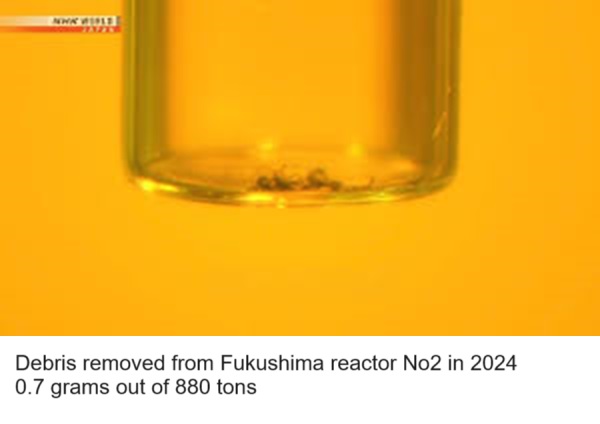
Friday, Feb. 21, https://www3.nhk.or.jp/nhkworld/en/news/20250221_08/?fbclid=IwY2xjawInSAlleHRuA2FlbQIxMQABHSRSw2PSosgQ6p28ndBqzler46N1Sr9mAHZH_X5SQL5hfjsJ5Tr3M48JTg_aem_xXho8cY6EkFQUvxp6aOcZQNuclear fuel debris that was extracted from the damaged Fukushima Daiichi nuclear power plant last year has been revealed to reporters for the first time.
The debris taken from the plant’s No.2 reactor consists of molten fuel mixed with surrounding structural components. The operator, Tokyo Electric Power Company, successfully retrieved 0.7 grams of the material in its first test extraction operation through November last year.
The debris was first transferred to a research facility of the Japan Atomic Energy Agency in Oarai Town, Ibaraki Prefecture, for the initial analysis, including surface observation.
The researchers then split the debris into smaller pieces to be examined at five research facilities, including a large one in Hyogo Prefecture.
Reporters were given the opportunity to observe the samples, which were placed in two separate transparent containers at a facility in Ibaraki Prefecture. One container held a particle about 2 millimeters in size that appeared silver, while the other had multiple dark fragments.
So far, the researchers have detected uranium, which is contained in nuclear fuel, on the surface of the debris, as well as metals such as iron, which are believed to have come from the reactor’s structure.
The researchers plan to examine the characteristics of the debris, including its hardness and adhesiveness. They will also expose the samples to lasers to determine whether the uranium inside is prone to triggering a nuclear fission reaction.
The agency says it will use these analyses to evaluate potential methods for full-scale extraction of the debris, and to determine the risk of a renewed criticality event, in which a self-sustaining chain reaction could occur.
The agency plans to release the findings of the major analyses in the middle of this year.
Ogino Hideki, the chief engineer at the agency’s Collaborative Laboratories for Advanced Decommissioning Science, spoke to the reporters.
He said it is difficult to fully grasp the overall characteristics of the debris based on the ongoing analyses alone. But he expressed his commitment to contributing to the decommissioning efforts through analyzing the samples using the technology that he and his fellow researchers have developed.
It is estimated that there is a total of around 880 tons of fuel debris in the No. 1, 2 and 3 reactors.
Japan to pick final disposal sites for Fukushima soil around 2030

The Environment Ministry plans to decide around 2030 or later where to finally dispose of soil removed from the ground during decontamination work after the March 2011 disaster at Tokyo Electric Power Company Holdings’ Fukushima No.1 nuclear power plant, it was learned Wednesday.
The plan was included in a draft timetable for the final disposal of such soil outside Fukushima Prefecture by March 2045, presented by the ministry at a meeting of a related expert panel on the day. The ministry will consider a process for selecting final disposal sites from fiscal 2025.
As of the end of December, about 14 million cubic meters of such soil had been transported to an interim storage facility straddling the Fukushima towns of Okuma and Futaba.
Three-quarters of the soil had radiation concentrations of 8,000 becquerels per kilogram or less and will be reused in public works, while the rest will be subject to final disposal.
Final disposal sites are estimated to require up to 50 hectares if the volume of the soil is not reduced, or 2 to 3 hectares if the volume is reduced. Meanwhile, radiation levels would be higher in the reduced soil.
The government is slated to draw up a basic plan as early as this spring for reusing some of the soil and finally disposing of the rest.
TEPCO takes on challenge of making space for Fukushima nuclear debris
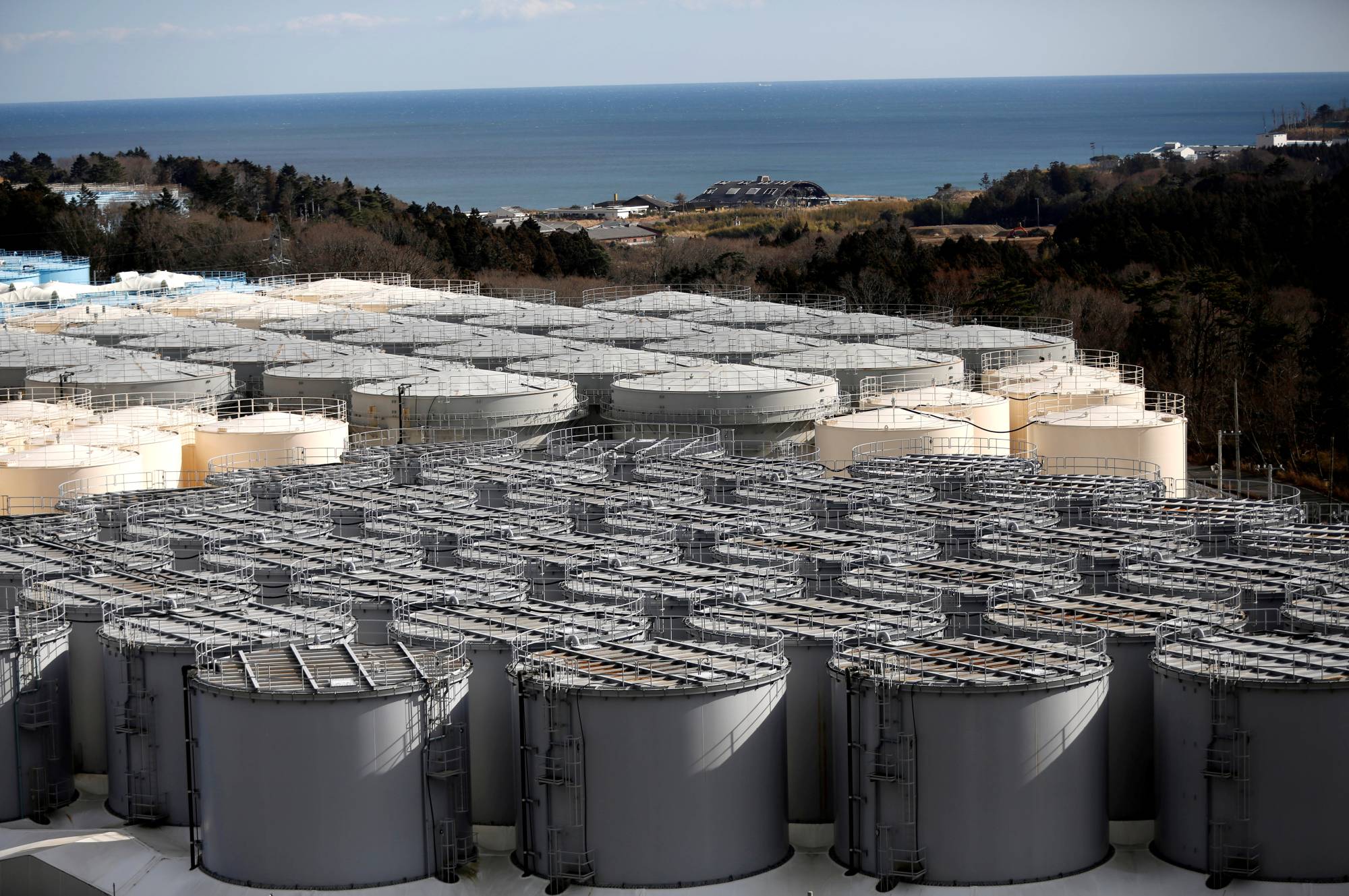
Fukushima Daiichi Nuclear Power Plant (Japan) (AFP) – Workers at Japan’s crippled Fukushima nuclear plant have started dismantling water storage tanks to free up space for tonnes of nuclear debris, 14 years after the facility was hit by a devastating tsunami.…………………….
France24 15th Feb 2025, https://www.france24.com/en/live-news/20250215-tepco-takes-on-challenge-of-making-space-for-fukushima-nuclear-debris
40% of workers cite radiation concerns at Fukushima plant

By KEITARO FUKUCHI/ Asahi Shimbun, Staff Writer, February 2, 2025
Forty percent of the workforce at the crippled Fukushima No. 1 nuclear plant worry about radiation issues on the job, a nearly three-fold spike over the previous year, a survey found.
More than half of those respondents cited fears of their body coming into contact with a radioactive substance.
Tokyo Electric Power Co., the plant operator that conducted the annual survey, said recent incidents at the plant probably contributed to the heightened concerns.
For example, two workers were hospitalized in October 2023 after they were accidentally splashed with waste liquid containing highly radioactive substances while cleaning piping in a contaminated water treatment facility.
The survey was carried out between September and October to improve the working environment. TEPCO distributed a questionnaire to all workers at the plant and received responses from 5,498 individuals, or 94.5 percent……………………….
Asked to choose specific issues they were concerned about, 52.2 percent, the largest percentage, picked “physical contamination,” up about seven points from 2023.
In another incident, about 1.5 tons of contaminated water flowed out of a water purification facility at the plant through an air exhaust opening in February 2024…… more https://www.asahi.com/ajw/articles/15609878
Second Fukushima nuclear sample removal eyed for March

CNA 26th Dec 2024
Three of Fukushima’s six reactors went into meltdown in 2011 after a huge tsunami swamped the facility.
TOKYO: The operator of Japan’s stricken Fukushima nuclear plant said on Thursday (Dec 26) it will start the second round of a tricky operation to collect samples of radioactive debris from the site this spring.
Around 880 tonnes of hazardous material remain at the Fukushima site, 13 years after a catastrophic tsunami caused by a 9.0-magnitude earthquake triggered one of history’s worst nuclear accidents.
Removing the debris is seen as the most daunting challenge in a decommissioning project due to last decades, because of the dangerously high radiation levels.
Last month, operator Tokyo Electric Power Company (TEPCO) said a trial debris removal operation using a specially developed extendible device had been completed.
The sample weighing just below 0.7g – equivalent to about one raisin – was delivered to a research lab near Tokyo for analysis.
A TEPCO official told a press conference they are now gearing up for a second sample removal due in “March to April”……….
https://www.channelnewsasia.com/east-asia/fukushima-nuclear-plant-sample-removal-march-2025-4826701
Tepco eyes second test removal of Fukushima nuclear fuel debris
Japan Times 29th Nov 2024, https://www.japantimes.co.jp/news/2024/11/29/japan/tepco-debris-removal-plan/
Tokyo Electric Power Company Holdings is considering conducting a second test to remove nuclear fuel debris from one of the three meltdown-hit reactors at its Fukushima No. 1 nuclear power plant, company officials said Thursday.
As in the previous test, Tepco plans to use a fishing rod-shaped device to remove the debris from the plant’s No. 2 reactor.
Tepco collected 0.7 gram of debris in the first test, which started in September and ended on Nov. 7. The debris is currently under analysis at the Japan Atomic Energy Agency.
Nuclear Regulation Authority Chairperson Shinsuke Yamanaka has asked the company to collect more debris to gather more data.
Some 880 tons of nuclear debris, a mixture of melted fuel and reactor parts, is estimated to remain in the No. 1, No. 2 and No. 3 reactors at the plant, which was crippled by the March 2011 Great East Japan Earthquake and tsunami.
Nuclear debris retrieved from Fukushima reactor weighs 0.7 gram, (Just 880 tons to go)
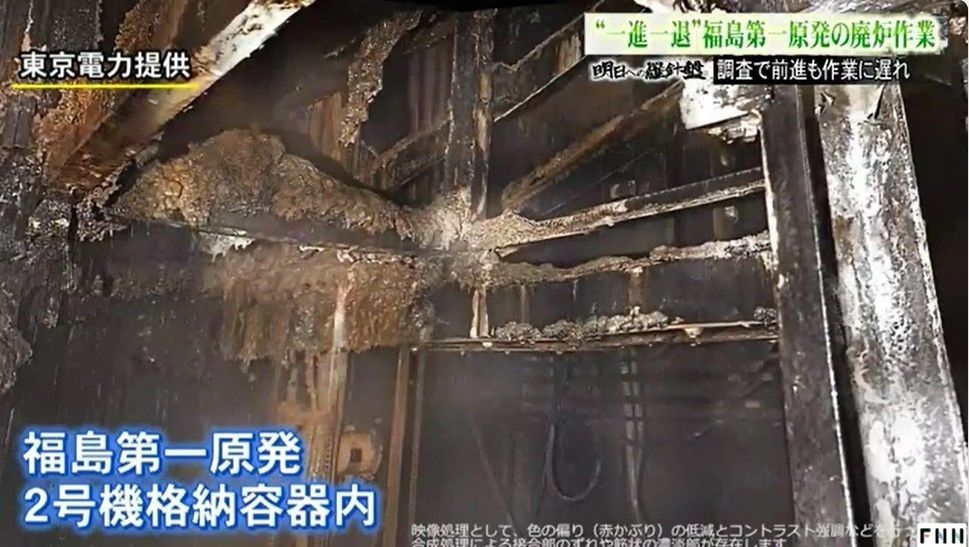
Japan Times 9th Nov 2024
The nuclear fuel debris collected on a trial basis from a crippled reactor at the Fukushima No. 1 nuclear power station weighs 0.7 gram, Tokyo Electric Power Company Holdings said Friday.
The collected substance will be analyzed at four facilities, including the Japan Atomic Energy Agency, for research toward full-scale extraction of nuclear fuel debris from reactors at the Tepco plant in Fukushima Prefecture…………………..
The company plans to spend the next few days preparing for the transportation of the fuel debris to the four facilities.
The four facilities will share the nuclear fuel debris and analyze its components and hardness over several months to a year.
TEPCO collected the debris from the No. 2 reactor Thursday, about two months after the trial work was launched Sept. 10. It was the first time that fuel debris has been removed from a damaged reactor at the Fukushima No. 1 plant.
A total of about 880 tons of nuclear debris, a mixture of melted fuel and reactor parts, is believed to remain in the No. 1 to No. 3 reactors………
https://www.japantimes.co.jp/news/2024/11/09/japan/fukushima-tepco-nuclear-debris/
Tepco removes [a tiny sceric]of nuclear fuel debris from Fukushima disaster site
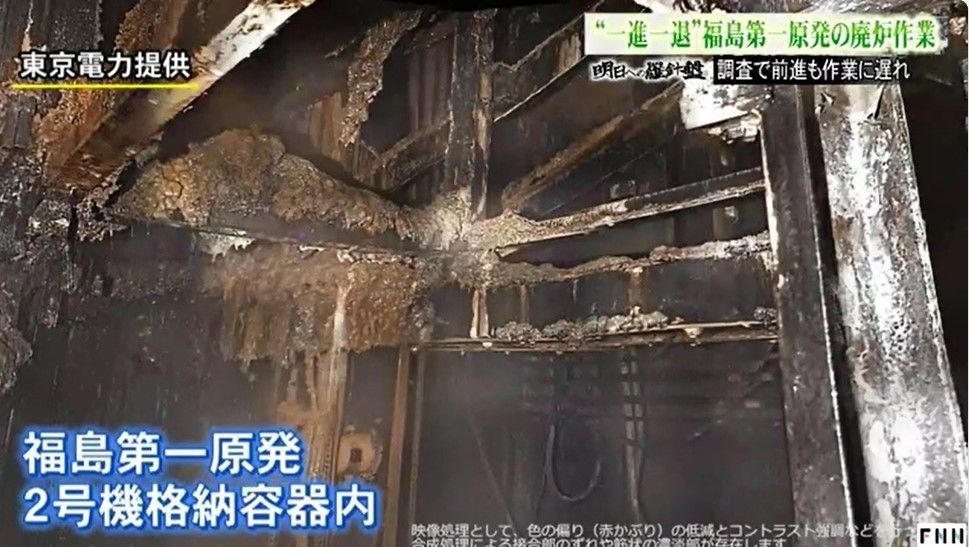
The whole process is expected to cost around ¥23 trillion ($149 billion) and take decades to complete. About 880 tons of radioactive material, like melted fuel and metal cladding, are said to be stuck at the bottom of the three reactors at the plant.
By Shoko Oda, Bloomberg, Japan Times 7th Nov 2024
https://www.japantimes.co.jp/news/2024/11/07/japan/tepco-debris-removal-demonstration/
Tokyo Electric Power Company Holdings says it has removed nuclear fuel debris left inside a reactor in a demonstration at its Fukushima No. 1 power plant, 13 years after a meltdown there.
Radioactive debris was removed from the Unit 2 reactor at the plant and was placed inside a sealed container for transportation, the power producer said in an emailed statement on Thursday.
The demonstration is part of Tepco’s cleanup plan for the site, after the March 2011 Great East Japan Earthquake and tsunami overwhelmed the facility and led to the worst nuclear disaster since Chernobyl. The whole process is expected to cost around ¥23 trillion ($149 billion) and take decades to complete. About 880 tons of radioactive material, like melted fuel and metal cladding, are said to be stuck at the bottom of the three reactors at the plant.
Tepco, which is decommissioning the plant alongside the government, is using a robotic arm that looks like a fishing rod with a claw grip to remove a small sample of the nuclear debris. The company had planned to remove just 3 grams as part of the demonstration.
The removed debris is set to be transported to Japan Atomic Energy Agency’s research facility for analysis, according to Tepco’s website.
The retrieval process began in September but faced challenges. A camera attached to the robotic arm stopped working, forcing Tepco to suspend the demonstration to replace the camera.
Robot Removes First Bit Of Fukushima’s Nuclear Fuel Debris – Just 880 Tons More To Go
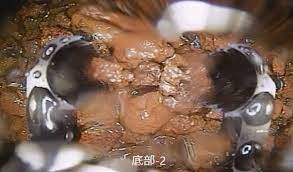
The radioactive ruins are still far too dangerous for humans.
Tom Hale, IFL Science 6th Nov 2024, https://www.iflscience.com/robot-removes-first-bit-of-fukushimas-nuclear-fuel-debris-just-880-tons-more-to-go-76669
robot has delved into the radioactive ruins of Fukushima to retrieve a tiny chunk of spent nuclear fuel. It’s the first time solid fuel debris has been removed from the plant – but they’ve still got a hell of a long way to go: 880 tons of the stuff to be precise.
The remotely operated robotic arm, equipped with a telescopic camera, was able to grasp and retrieve a “small amount of fuel debris” from the floor of Unit 2’s reactor on October 30, according to the plant’s operator Tokyo Electric Power Company Holdings (TEPCO).
“From the results of primary containment vessel internal investigations, we have deduced that the accumulated debris on the surface of the floor inside the pedestal is solidified molten material that consists of fuel elements and also may contain a lot of metal,” TEPCO said in a statement.
The fuel debris will now be taken away from the Fukushima site where scientists will analyze it to gain further insight into how to remove the rest of the debris.
“By analyzing the attributes of the sampled fuel debris we will directly ascertain information such as the composition of debris at the sampling location and radioactivity density,” added TEPCO……………………………………………………………..
It’s estimated that the three impacted reactors contain an estimated total of 880 tons of melted fuel debris, all of which TEPCO hopes to remove during their decommissioning effort by the year 2031. The latest retrieval of a small chunk of radioactive debris is just the beginning of the mammoth feat ahead.
Along with solid debris, the decommissioning project has also had to deal with the colossal quantities of radioactive water that accumulated after being used to cool the damaged reactor cores. In August 2023, Japan began releasing some of the treated wastewater into the Pacific Ocean, much to the annoyance of their neighbors.
TEPCO has expressed hope the entire clean-up operation will be completed in 30 to 40 years, although some speculate the target is overly optimistic.
Senior Journalist
1
The global nuclear industry has no idea how to decommission Fukushima nuclear plant, but hopes that a tiny robot might help
Robot retrieves radioactive fuel sample from Fukushima nuclear reactor site
Plant’s owners hope analysis of tiny sample will help to establish how to safely decommission facility
Kevin Rawlinson and agency, Sun 3 Nov 2024
A piece of the radioactive fuel left from the meltdown of Japan’s tsunami-hit Fukushima Daiichi nuclear power plant has been retrieved from the site using a remote-controlled robot.
Investigators used the robot’s fishing-rod-like arm to clip and collect a tiny piece of radioactive material from one of the plant’s three damaged reactors – the first time such a feat has been achieved. Should it prove suitable for testing, scientists hope the sample will yield information that will help determine how to decommission the plant.
The plant’s manager, Tokyo Electric Power Company Holdings (Tepco), has said the sample was collected from the surface of a mound of molten debris that sits at the bottom of the Unit 2 reactor’s primary containment vessel.
The “telesco” robot, with its frontal tongs still holding the sample, returned to its enclosed container for safe storage after workers in full hazmat gear pulled it out of the containment vessel on Saturday. But the mission is not over until it is certain the sample’s radioactivity is below a set standard and it is safely contained.
If the radioactivity exceeds the safety limit then the robot must return to find another piece, but Tepco officials have said they expect the sample will prove to be small enough.
The mission started in September and was supposed to last two weeks, but had to be suspended twice.
A procedural mistake held up work for nearly three weeks. Then the robot’s two cameras, designed to transmit views of the target areas for its operators in the remote control room, failed. That required the robot to be pulled out entirely for replacement before the mission resumed on Monday.
Fukushima Daiichi lost its cooling systems during the 2011 earthquake and tsunami, causing meltdowns in three of its reactors. An estimated 880 tons of fuel remains in them, and Tepco has carried out several robotic operations.
Tepco said that on Wednesday the robot successfully clipped a piece estimated to weigh about 3 grams from the area underneath the Unit 2 reactor core, from which large amounts of melted fuel fell during the meltdown 13 years ago.
The plant’s chief, Akira Ono, said only the tiny sample can provide crucial data to help plan a decommissioning strategy, develop necessary technology and robots and retroactively establish exactly how the accident had developed.
The Japanese government and Tepco have set a target of between 30 and 40 years for the cleanup, which experts say is optimistic. No specific plan for the full removal of the fuel debris or its final disposal has been decided.
A small amount of nuclear fuel debris retrieved at Tepco Fukushima plant
Japan Times 31st Oct 2024
https://www.japantimes.co.jp/news/2024/10/31/japan/fukushima-debris-catch/
A device has retrieved a small amount of nuclear fuel debris during trial work to remove debris from a reactor at Tokyo Electric Power Company Holdings’ Fukushima No. 1 plant, the company has said.
It is expected to take about a week to finish collecting the portion of debris.
If successful, it will be the first time for nuclear fuel debris to be removed from any of the three reactors at the plant that experienced meltdowns following the March 2011 Great East Japan Earthquake and tsunami.
The trial work began just before 10 a.m. on Wednesday.
A claw-like tool attached to the tip of a telescopic collection device was lowered toward debris at the bottom of the containment vessel of the No. 2 reactor at the plant in Fukushima Prefecture.
The remotely operated device retrieved a small amount of debris at 10:30 a.m.
Tepco was set to pull out the removal device from the containment vessel Thursday or later and put the debris in a transport container.
If radiation levels are higher than expected, the debris may be put back into the containment vessel to avoid workers being exposed to radiation.
If they are not higher than expected, however, the collected debris will be analyzed at a facility of the Japan Atomic Energy Agency.
About 880 tons of nuclear fuel debris are believed to sit inside the meltdown-stricken No. 1 to No. 3 reactors.
Removing the debris is viewed as the most difficult part of the process of decommissioning the Fukushima plant.
Tepco initially planned to begin the removal work in 2021.
It started in September this year about three years behind schedule due chiefly to delays in the development of the device and problems with preparing for the work.
Japan to resume trial removal of Fukushima nuclear debris, reports say
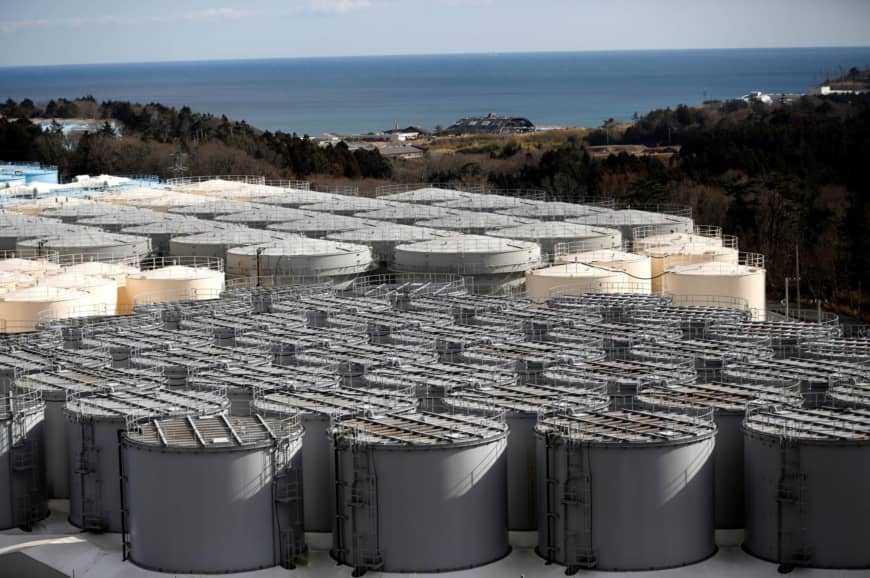
https://www.japantimes.co.jp/news/2024/10/25/japan/fukushima-debris-removal/
The operator of the tsunami-stricken Fukushima No. 1 nuclear plant will resume an operation to remove a sample of highly radioactive material next week, reports said Friday, after having suspended the effort over a technical snag.
Extracting the estimated 880 tons of highly radioactive fuel and debris inside the former power station remains the most challenging part of decommissioning the facility, which was hit by a catastrophic tsunami in 2011.
Radioactivity levels inside are far too high for humans to enter, and last month engineers began inserting an extendable device to try and remove a small sample.
However, operator Tokyo Electric Power Company Holdings had to halt the procedure after noticing that remote cameras on the apparatus were not beaming back images to the control center.
Tepco on Friday said it would resume the removal on Monday after replacing the cameras with new ones, the Asahi Shimbun daily and other local media reported.
Tepco officials could not immediately be reached to confirm the reports.
Three of Fukushima’s six reactors went into meltdown after a tsunami triggered by the nation’s biggest earthquake on record swamped the facility in one of the world’s worst nuclear accidents.
Japan last year began releasing into the Pacific Ocean some of the 540 Olympic swimming pools’ worth of reactor cooling water amassed since the catastrophe.
China and Russia banned Japanese seafood imports as a result, although Tokyo insists the discharge is safe, a view backed by the U.N. atomic agency.
Beijing last month said it would “gradually resume” importing seafood from Japan after imposing the blanket ban.
In a Tepco initiative to promote food from the Fukushima area, swanky London department store Harrods began selling peaches grown in the region last month.
1 This Month
10 March A LIVE WEBINAR THE REAL EFFECTS OF NUCLEAR POWER
What the Industry Isn’t Telling Us
1:00 PM Mountain, 2 pm Central, 3 pm Eastern. Live on the Keepers of the Water Facebook page



18 March Webinar @ 1 PM EST: An Assessment of SMR Projects: The Case of Canada
register for the zoom:
https://us02web.zoom.us/webinar/register/WN_o8BIIOUvQ2ONJR1nta65DQ#/registration


of the week – STOP SMALL MODULAR REACTORS IN CANADA
To see nuclear-related stories in greater depth and intensity – go to https://nuclearinformation.wordpress.com
-
Archives
- March 2026 (99)
- February 2026 (268)
- January 2026 (308)
- December 2025 (358)
- November 2025 (359)
- October 2025 (376)
- September 2025 (258)
- August 2025 (319)
- July 2025 (230)
- June 2025 (348)
- May 2025 (261)
- April 2025 (305)
-
Categories
- 1
- 1 NUCLEAR ISSUES
- business and costs
- climate change
- culture and arts
- ENERGY
- environment
- health
- history
- indigenous issues
- Legal
- marketing of nuclear
- media
- opposition to nuclear
- PERSONAL STORIES
- politics
- politics international
- Religion and ethics
- safety
- secrets,lies and civil liberties
- spinbuster
- technology
- Uranium
- wastes
- weapons and war
- Women
- 2 WORLD
- ACTION
- AFRICA
- Atrocities
- AUSTRALIA
- Christina's notes
- Christina's themes
- culture and arts
- Events
- Fuk 2022
- Fuk 2023
- Fukushima 2017
- Fukushima 2018
- fukushima 2019
- Fukushima 2020
- Fukushima 2021
- general
- global warming
- Humour (God we need it)
- Nuclear
- RARE EARTHS
- Reference
- resources – print
- Resources -audiovicual
- Weekly Newsletter
- World
- World Nuclear
- YouTube
-
RSS
Entries RSS
Comments RSS
 nuclear-news