Fukushima Daiichi nuclear power plant’s deadly hazard – highly radioactive sandbags
 Nuclear sandbags too hot to handle, https://www.theaustralian.com.au/world/the-times/nuclear-sandbags-too-hot-to-handle/news-story/87b811443cb8e2881f55e17108872880 By RICHARD LLOYD PARRY, THE TIMES. APRIL 1, 2020
- Japanese engineers trying to dismantle the melted reactors at the Fukushima Daiichi nuclear power plant face a new hazard — radioactive sandbags so deadly that standing next to them for a few minutes could be fatal.
The sandbags were intended to make life easier for the teams dealing with the aftermath of the nuclear disaster in 2011 when three reactors melted after a tsunami destroyed their cooling systems. Twenty-six tonnes of the bags were placed in basements beneath two of the reactors to absorb radioactivity from waste water.
They were stuffed with zeolite, minerals that can absorb caesium. Nine years after the disaster, the submerged sandbags have sucked up so much radiation that they now represent a deadly danger themselves.
Samples of zeolite removed from the bags contain caesium, producing huge amounts of radiation, while the sandbags are giving off up to four sieverts of radiation an hour. Fifteen minutes of exposure to this could cause haemorrhaging. After an hour, half of those exposed would eventually die as a result. The maximum lifetime recommended dose of radiation for humans is less than half a sievert.
Tokyo Electric Power Co (Tepco), which operates the plant, had intended to remove the contaminated water by the end of 2020. The complication caused by the sand means it will take three years longer, the latest delay to the decommissioning.
Tepco managers have admitted that the technology needed to finish the job does not exist and they do not have a full idea of how it will be achieved. Their stated goal of decommissioning by 2051 may be impossible, they said.
One of the biggest problems is the 170 tonnes of irradiated water coming out of the plant every day, much of it natural ground water that flows through the earth towards the sea, picking up radiation on the way. Tepco pumps it out and stores it in huge storage tanks, filtered of some, but not all, of its contaminants — 1.17 million tonnes so far. In two years, the storage space will run out.
The government wants to pour the water away, insisting that the diluting effect of the Pacific will render the radiation harmless, but it is opposed by North and South Korea and the local fishing industry, whose reputation has been ruined by the disaster.
TEPCO’s staggering costs to remove melted nuclear fuel from Fukushima’s crippled reactors
 TEPCO puts cost to remove melted nuclear fuel at over 1 trillion yen, http://www.asahi.com/ajw/articles/13259804, By RINTARO SAKURAI/ Staff Writer, March 31, 2020 Tokyo Electric Power Co. estimates that 1.37 trillion yen ($12.6 billion) will be needed over 12 years to remove melted nuclear fuel from reactors at the crippled Fukushima No. 1 nuclear power plant.TEPCO’s announcement on March 30 covers only two of the three reactors that suffered meltdowns triggered by the 2011 Great East Japan Earthquake and tsunami. TEPCO puts cost to remove melted nuclear fuel at over 1 trillion yen, http://www.asahi.com/ajw/articles/13259804, By RINTARO SAKURAI/ Staff Writer, March 31, 2020 Tokyo Electric Power Co. estimates that 1.37 trillion yen ($12.6 billion) will be needed over 12 years to remove melted nuclear fuel from reactors at the crippled Fukushima No. 1 nuclear power plant.TEPCO’s announcement on March 30 covers only two of the three reactors that suffered meltdowns triggered by the 2011 Great East Japan Earthquake and tsunami.
No estimate was attempted for the cost to prepare for the removal of melted nuclear fuel from the No. 1 reactor. The situation at that reactor is the most difficult among the three reactors, and TEPCO officials are still struggling to come up with a plan for removing the debris from within. The estimate covers the period between fiscal 2020 and fiscal 2031. Of that amount, 350 billion yen will be applied as a special loss to the company’s balance statement for the fiscal year ending March 31, 2020. The utility had already released its plan for decommissioning the three reactors, which foresaw a start to removing melted nuclear fuel from the No. 2 reactor before the end of 2021, while removal would begin for the No. 3 reactor by 2031. In announcing its expected profits for the current fiscal year, TEPCO also outlined its estimated expenses for melted fuel removal over the next 12 years. A total of 330 billion would be needed as preparatory measures, such as further examining the interior of the No. 2 reactor and decontaminating radiation from the area around the three reactors. Another 20 billion yen is expected to be spent for trial removal of melted nuclear fuel from the No. 2 reactor, while 1.02 trillion yen would be required to construct the facilities needed to remove the melted fuel from the No. 2 and No. 3 reactors. The construction cost would be written off as a special loss from TEPCO’s balance statement in the fiscal year when the work takes place. TEPCO forecasts a net profit of 79 billion yen for the current fiscal year, a decrease of 66 percent from fiscal 2019. Sales are expected to decrease by 2.2 percent to 6.199 trillion yen. |
|
Tepco has drafted a plan for disposing of Fukushima’s accumulation of waste water
 Plan to dispose of Fukushima wastewater drafted https://www3.nhk.or.jp/nhkworld/en/news/20200324_42/ , March 24, 20 NHK has learned that Tokyo Electric Power Company, or TEPCO, has drafted a plan for disposing of radioactive wastewater stored at the troubled Fukushima Daiichi nuclear power plant.Water used to cool molten nuclear fuel from the 2011 accident is treated to remove most radioactive material. But tritium and other substances remain in the water, a huge amount of which is stored in about 1,000 large tanks. Plan to dispose of Fukushima wastewater drafted https://www3.nhk.or.jp/nhkworld/en/news/20200324_42/ , March 24, 20 NHK has learned that Tokyo Electric Power Company, or TEPCO, has drafted a plan for disposing of radioactive wastewater stored at the troubled Fukushima Daiichi nuclear power plant.Water used to cool molten nuclear fuel from the 2011 accident is treated to remove most radioactive material. But tritium and other substances remain in the water, a huge amount of which is stored in about 1,000 large tanks.
A government panel last month compiled a report that says releasing diluted radioactive wastewater into the sea or air are realistic options. TEPCO’s plan for doing so would involve diluting the wastewater with seawater, aiming for a tritium level of one-fortieth that allowed by national regulation. The firm would gradually release the diluted water over about 30 years, taking into consideration the amount of similar water released at other nuclear plants. TEPCO would also test treating the wastewater again to further remove other radioactive materials. The utility is to explain the plan to local officials and residents in Fukushima Prefecture. People in the local fishery and tourism industries oppose releasing the water into the ocean. |
|
|
Release of Fukushima No 1 reactor’s radioactive water may take 30 years
 Tepco may take 30 years to release Fukushima No. 1 radioactive water, https://www.japantimes.co.jp/news/2020/03/25/national/tepco-fukushima-nuclear-plant-water/#.Xnvw-4gzbIU Tokyo Electric Power Company Holdings Inc. said Tuesday it may spend up to 20 to 30 years releasing contaminated water into the surrounding environment from its disaster-crippled Fukushima No. 1 nuclear power plant.
The possible time span was mentioned in draft plans Tepco drew up in line with a government panel’s report in February, calling the release of the water into the ocean or the air in the form of vapor a “realistic option.”
The company currently stores roughly 119 tons of water that still contains tritium and other radioactive substances after passing through a treatment process at the nuclear plant, which suffered a triple meltdown in March 2011 caused by a magnitude 9.0 earthquake and tsunami. The amount of contaminated water stored at the facility is still increasing.
According to the draft plans, Tepco will first conduct secondary treatment work to reduce the amount of radioactive substances in the water other than tritium — which cannot be removed by existing systems — to levels below national standards.
Following the treatment, the water will be released into the ocean, after being diluted with seawater to lower the radiation level to 1,500 becquerels per liter, or emitted into the air from a tall exhaust stack after being vaporized.
Tepco also plans to use social media to counter rumors that exposure to radiation from the released water is harmful.
The clean-up of the Fukushima nuclear mess is not going to schedule – continual decommissioning delays
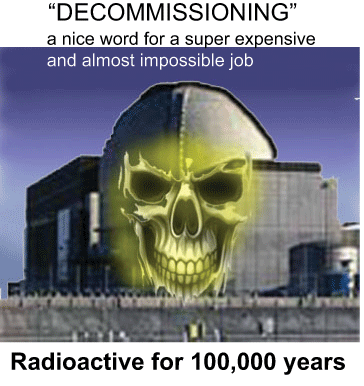 Japan’s 3/11 Recovery Stalled by Fukushima Japan’s 3/11 Recovery Stalled by Fukushima  Decommissioning Delays Decommissioning DelaysDelays in dismantling the disaster-stricken nuclear power complex cast doubt on whether recovery goals will move forward according to schedule. The Diplomat By Thisanka Siripala, March 13, 2020 Nine years after a quake-triggered tsunami sparked a triple meltdown at Fukushima Daiichi nuclear power plant, decontamination and decommissioning continues in northeastern Japan. The ultimate goal of removing all debris is expected to take anywhere between 30 to 40 years, but progress has been slower than originally planned. So far just one-fourth of decommission work has been completed, drawing attention to work that has not yet begun. The Fukushima decommissioning and decontamination draft has been amended five times. While changes published in December offered a specific time frame for the first time, the latest timetable for debris removal has been pushed back five years, citing the need for additional safety precautions. Previously, the process of removing spent fuel was scheduled from 2021 to 2024. But work on reactor two looks more likely to start in 2025 and last until 2027, followed by reactor one work commencing sometime between March 2028 and March 2029. ……..
The next decommissioning stage sets out the removal of 4,471 spent fuel rods inside the cooling pools of reactors one to six. But the biggest obstacle is finding a way to locate and remove the molten nuclear fuel. With frequent delays, evacuees face a constant sense of uncertainty,
tangled in a waiting game to see whether decommissioning work can be completed in 30 years.
Reactor two is seen as the safest and easiest option to start full-scale debris removal since it suffered the least structural damage with only “some fuel” melting through the pressure vessel and accumulating at the bottom of the containment vessel. But with no established method for debris retrieval, attempts to survey the location and distribution of molten nuclear fuel among the rubble requires a lengthy trial and error process. In mid-February 2019 an attempt to probe and collect samples from reactor two failed to find and lift the main nuclear fuel debris, instead lifting portions of pebble-like sediment with the lowest radiation readings from the surface. At this stage there is no way for TEPCO, the company that owns the Fukushima Daiichi plant, to determine where fuel debris lies among the rest of the metal debris. It’s estimated that reactor two alone contains 237 metric tons of debris while reactors one and three contain a combined 880 tons. The complexity of debris removal requires developing specialized technology that does not yet exist.
Also plaguing decommissioning efforts is the battle over how to safely dispose of 1 million tons of contaminated water that were used to cool nuclear fuel. Currently, huge tanks on the premises store the polluted runoff, which could fill 400 Olympic swimming pools, but space is expected to run out by mid-2022. On average 170 tons of contaminated water is produced to cool fuel in nuclear reactors. Without constant cooling, nuclear fuel risks melting from its own heat in a process called decay heat. With two years needed to prepare a disposal method, time is running out for a final decision. Government proposals to slowly release contaminated water into the ocean has sparked fierce backlash from locals and the agriculture and fishing industries, who argue traces of radioactive materials such as tritium still found in “treated” water could further harm a region still struggling to restore its international reputation……..
To make matters worse, decommissioning operations have been temporarily suspended due to the spread of coronavirus. Tepco was forced to cancel on-site inspections of reactor one scheduled during March, which would have brought together some 1,800 experts and members of parliament, as well as local residents and student groups. https://thediplomat.com/2020/03/japans-3-11-recovery-stalled-by-fukushima-decommissioning-delays/
|
|
|
Fukushima’s huge accumulation of radioactive water – a pressing problem as Olympics approach
Contaminated water at nuclear plant still an issue ahead of Tokyo Olympics, https://www.thecanary.co/global/world-news/2020/03/10/contaminated-water-at-nuclear-plant-still-an-issue-ahead-of-tokyo-olympics/ Work to deal with contaminated water at Japan’s Fukushima nuclear power plant continues as the Olympic Games approach.
Inside a giant decontamination facility at the destroyed plant, workers in hazmat suits monitor radioactive water pumped from three damaged reactors.
The decontamination process is a key element of a contentious debate over what should be done with the nearly 1.2 million tons of still-radioactive water being closely watched by governments and organisations around the world ahead of this summer’s Tokyo Olympics.
The plant’s operator, Tokyo Electric Power Company, or Tepco, says it needs to free up space as work to decommission the damaged reactors approaches a critical phase. It is widely expected that Tepco will gradually release the water into the nearby ocean following a government decision allowing it to do so.
The company is still vague on the timing.
But local residents, especially fishermen, are opposed to the plan because they think the water release would hurt the reputation of already battered fisheries, where annual sales remain about half of the level before the nuclear accident, even though the catch has cleared strict radioactivity tests.
Tepco chief decommissioning officer Akira Ono says the water must be disposed as the plant’s decommissioning moves forward because the area used by the tanks is needed to build facilities for the retrieval of melted reactor debris.
Workers are planning to remove a first batch of melted debris by December 2021.
Remote control cranes are dismantling a highly contaminated exhaust tower near Unit 2, the first reactor to get its melted fuel removed.
At Unit 3, spent fuel units are being removed from a cooling pool ahead of the removal of melted fuel.
The dilemma over the ever-growing radioactive water is part of the complex aftermath of the magnitude 9.0 earthquake and tsunami that hit on March 11 2011, destroying key cooling functions at the Fukushima Dai-ichi plant.
Three reactors melted, releasing massive amounts of radiation and forcing 160,000 residents to evacuate.
About 40,000 still have not returned.
Except for the highly radioactive buildings that house the melted reactors, most above-ground areas of the plant can now be visited while wearing just a surgical mask, cotton gloves, a helmet and a personal dosimeter.
The area right outside the plant is largely untouched and radiation levels are often higher.
The underground areas remain a hazardous mess.
Radioactive cooling water is leaking from the melted reactors and mixes with groundwater, which must be pumped up to keep it from flowing into the sea and elsewhere.
Separately, even more dangerously contaminated water sits in underground areas and leaks continuously into groundwater outside the plant, experts say. The contaminated water pumped from underground first goes through caesium and strontium removal equipment, after which most is recycled as cooling water for the damaged reactors.
The contaminated water pumped from underground first goes through caesium and strontium removal equipment, after which most is recycled as cooling water for the damaged reactors.
Katsumi Shozugawa, a radiology expert at the University of Tokyo who has been analysing groundwater around the plant, said the long-term consequences of low-dose exposure in the food chain has not been fully investigated.
“At this point, it is difficult to predict a risk,” he said.
“Once the water is released into the environment, it will be very difficult to follow up and monitor its movement.
“So the accuracy of the data before any release is crucial and must be verified.”
After years of discussions about what to do with the contaminated water without destroying the local economy and its reputation, a government panel issued a report earlier this year that narrowed the water disposal options to two: diluting the treated water to levels below the allowable safety limits and then releasing it into the sea in a controlled way, or allowing the water to evaporate in a years-long process.
The report also urged the government to do more to fight the “reputational damage” to Fukushima fishing and farm produce, for instance by promoting food fairs, developing new sales routes and making use of third-party quality accreditation systems.
Tepco and government officials promise the plant will treat the water for a second time to meet legal requirements before any release.
At the end of a tour of the treatment facility, a plant official showed journalists a glass bottle containing clear water taken from the processing equipment.
Workers are required to routinely collect water samples for analysis at laboratories at the plant.
Radiology technicians were analysing the water at one lab.
Officials say the treated water will be diluted with fresh water before it is released into the environment.
Doubts about the plant’s water treatment escalated two years ago when Tepco acknowledged that most of the water stored in the tanks still contains cancer-causing caesium, strontium and other radioactive materials at levels exceeding safety limits.
International Atomic Energy Agency, run by 5 nuclear weapons nations, backs Fukushima water emptying to the Pacific
China , France , Russia , UK , and the USA, oversee the IAEA – International Atomic Energy Agency, this was expected.
UN SC P5 nuclear nations is a fully integrated system inclusive of the Military-Industrial Complex.
An ecosystem that includes weapons of mass destruction, for peace, a leadership group in a state of cultural cognitive dissonance.
Who as a group know gene sheering radionuclides, have an effect on DNA X10 times half-life of any alpha particles out of nuclear reactors.
IAEA backs release of Fukushima water into sea, AsiaTimes, 27 Feb 20,
Most of the radioactive isotopes have been filtered out, but one – tritium, which has long half-life – remains, The world’s nuclear watchdog gave its backing Thursday to Japanese plans to release contaminated water from the damaged Fukushima nuclear plant into the ocean.
Japan has around a million tonnes of contaminated water stored in tanks at the site of the Fukushima Daiichi plant, whose reactors went into meltdown after a huge tsunami in 2011.
A government panel last month recommended the water be released into the ocean or vaporized, but no final decision has been taken, with all solutions deeply unpopular with sections of the Japanese public.
International Atomic Energy Agency (IAEA) director Rafael Grossi told journalists in Tokyo the panel’s recommendations both appeared suitable…….
“Releasing into the ocean is done elsewhere, it’s not something new, there is no scandal here,” Grossi added.
“But what is important is to do it in a way that is not harmful and you need somebody to monitor before, during and after release, to check that everything is okay.”
The radioactive water comes from several different sources – including water used for cooling at the plant, and groundwater and rain that seeps into the plant daily – and is put through an extensive filtration process.
Most of the radioactive isotopes have been removed by the filtration system, but one – tritium, which has a long half-life – remains…….. https://asiatimes.com/2020/02/iaea-backs-release-of-fukushima-water-into-sea/
Japanese expert panel recommends releasing Fukushima radioactive water into the ocean
 Fukushima radioactive water should be released into ocean, say Japan experts, https://www.theguardian.com/world/2020/feb/01/fukushima-radioactive-water-should-be-released-into-ocean-say-japan-experts
Build-up of contaminated water from wrecked nuclear plant has been sticking point in clean-up likely to take decades, A panel of experts advising Japan’s government on a disposal method for radioactive water from the destroyed Fukushima nuclear plant has recommended releasing it into the ocean, a move likely to alarm neighbouring countries.
The panel, under the industry ministry, came to the conclusion after narrowing the choice to either releasing the contaminated water into the Pacific Ocean or letting it evaporate – and opted for the former. Based on past practice, it is likely the government will accept the recommendation.
The build-up of contaminated water at Fukushima has been a sticking point in the clean-up, which is likely to last decades, especially as the Olympics are due to be held in Tokyo this year with some events less than 60km (35 miles) from the wrecked plant.
Neighbouring South Korea has retained a ban on imports of seafood from Japan’s Fukushima region imposed after the nuclear disaster and summoned a senior Japanese embassy official last year to explain how the Fukushima water would be dealt with. Its athletes are planning to bring their own radiation detectors and food to the Games.
In 2018, Tokyo Electric apologised after admitting its filtration systems had not removed all dangerous material from the water, and the site is running out of room for storage tanks.
But it plans to remove all radioactive particles from the water except tritium, an isotope of hydrogen that is hard to separate and is considered to be relatively harmless.
“Compared to evaporation, ocean release can be done more securely,” the committee said, pointing to common practice around the world where normally operating nuclear stations release water that contains tritium into the sea.
The recommendation needs to be confirmed by the head of the panel, Nagoya University professor emeritus Ichiro Yamamoto, and submitted to the government at a later date that has not been set.
Tokyo Electric, or Tepco, has collected nearly 1.2m tonnes of contaminated water from the cooling pipes used to keep fuel cores from melting since the plant was crippled by an earthquake and tsunami in 2011. The water is stored in huge tanks that crowd the site.
The utility says it will run out of room to store the water by 2022.
Backstory: Inside the destroyed Fukushima plant – radiation, risk and reporting
Backstory: Inside the destroyed Fukushima plant – radiation, risk and reporting, 29 Jan 2020,
|
By Aaron Sheldrick, OKUMA, Japan (Reuters) – Reuters was recently given exclusive access to Japan’s Fukushima nuclear plant, where three reactors melted down in 2011 after a powerful earthquake and tsunami overwhelmed the seaside facility. It was my fourth visit to the plant since the disaster to report on a massive clean-up. Work to dismantle the plant has taken nearly a decade so far, but with Tokyo due to host the Olympics this summer – including some events less than 60 kilometers (38 miles) from the power station – there has been renewed focus on safeguarding the venues. Nearly 10 years into the decades-long clean-up some progress has been made, with potentially dangerous spent fuel removed from the top of one damaged reactor building and removal underway from another. But the melted fuel inside the reactors has yet to be extracted and areas around the station remain closed to residents. Some towns have been reopened further away but not all residents have returned. This time I was taken to the site’s water treatment building, a cavernous hall where huge machines called Advanced Liquid Processing Systems (ALPS) are used to filter water contaminated by the reactors. On my first visit in 2012 I had to wear full protective gear put on at an operations base located in a sports facility about 20 kilometers south of Fukushima Daiichi called J-Village, where the Olympic torch relay will start in March, then taken to the site by bus. This time I was driven by van from a railway station in Tomioka, a town re-opened in 2017, about 9 kilometers away with no precautions. More than 90% of the plant is deemed to have so little radioactivity that few precautions are needed. Nevertheless, reporting from there was not easy. Before entering the plant itself, which is about the size of 400 football fields, I was asked to take off my shoes and socks, given a dosimeter – a device that measures radiation levels – three pairs of blue socks, a pair of cloth gloves, a simple face mask, a cotton cap, a helmet and a white vest with clear panels to carry my equipment and display my pass. I put on all three pairs of socks and the rest of the gear given to me, later including rubber boots. I was to change in and out of different pairs of these boots many times – I lost count – color coded according to the zone we passed through, each time putting them in plastic bags that would be discarded after use. After reaching the ALPS building in a small bus, I was decked out in protective equipment, a full-body Du Pont Tyvek suit along with two sets of heavy surgeon-like latex gloves that were taped fast to the outfit. I also had to put on a full-face mask after taking off my spectacles since it would not fit otherwise and told to speak as loudly as possible due to the muffling effect of the gear …….. About 4,000 workers are tackling the cleanup at Fukushima, including dismantling the reactors. Many wear protective gear for entering areas with higher radiation. The plant resembles a huge construction site strewn in areas with twisted steel and crumpled concrete, along with cars that can no longer be used, while huge tanks to hold water contaminated by contact with the melted fuel in the reactors increasingly crowd the site. Some wreckage is still so contaminated it is left in place or moved to a designated area for the radiation to decay while the important work on the reactor buildings is underway……….. https://www.reuters.com/article/us-olympics-2020-fukushima-backstory/backstory-inside-the-destroyed-fukushima-plant-radiation-risk-and-reporting-idUSKBN1ZS0IR  |
|
Japan to release over a million tonnes of radioactive water into sea from Fukushima power plant
|
Tokyo Electric has collected nearly 1.2 million tonnes of contaminated water from cooling pipes used to keep fuel cores from melting since the plant was devastated by the earthquake and tsunami which hit eastern Japan in 2011. The water, containing 62 radioactive elements, is stored in huge tanks on the site of the now disabled power plant, but Tokyo Electric has said it will run out of room to store the water by 2022. The water has been treated and Tokyo Electric said it is able to remove all radioactive particles from the water to levels not harmful to humans, except tritium, an isotope of hydrogen which is more difficult to separate from water. A panel of experts working for Japan’s economy and industry ministry concluded that letting the water run into the sea was the best option after looking at other proposals. The only other viable option considered was to let the water evaporate. In Friday’s proposal, the ministry said the controlled release to the sea is superior because its route is predictable and easier to sample and monitor. “Compared to evaporation, ocean release can be done more securely,” the committee said, pointing to common practice around the world where nuclear power stations operating under normal conditions routinely release water containing tritium into the sea. But the decision will alarm neighbouring countries and comes ahead of Japan’s hosting of the 2020 Olympic Games, with some events due to be held less than 60km away from the Fukushima site. Fishermen and residents also fear health effects from releasing the radioactive water as well as harm to the region’s image and farm industries. Neighbouring South Korea has retained a ban on imports of seafood from Japan’s Fukushima region imposed after the nuclear disaster and summoned a senior Japanese embassy official last year to explain how the Fukushima water would be dealt with, Reuters reported. South Korean athletes are planning to bring their own radiation detectors and food to the Games. Experts say there is no established method to fully separate tritium from water, but it is not a problem in small amounts. Government officials also say tritium is routinely released from existing nuclear power plants around the world. The report acknowledges the water releases would harm industries that still face reluctant consumers despite safety checks. It promised to reinforce monitoring of tritium levels and food safety checks to address safety concerns. |
|
|
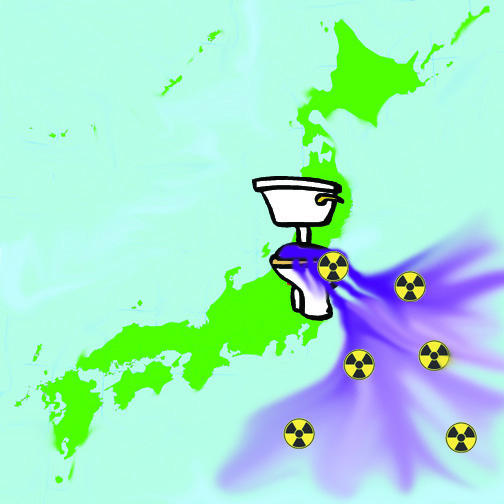
Fukushima Reactor Cleanup Delayed by Five Years as Japanese Public Demands End to Nuclear Energy
The removal of the spent fuel was planned to begin in 2023, but the process was bumped back to 2024 at the earliest for the plant’s No. 1 reactor and 2027 or later for the No. 2 reactor.
According to the Japan Times, the government claims this aspect of the clean-up is being delayed due to safety concerns and that it plans to construct barriers around the reactors to prevent the spread of radioactive dust.
Reporting on the delay comes days after the Ministry of Economy, Trade, and Industry proposed releasing contaminated water from the plant into the ocean or allowing it to evaporate, and weeks after the ministry said the water contained higher levels of radioactive material than previously thought.
The most recent news about the cleanup process—which is under a 30-40 year plan following the 2011 earthquake and tsunami which forced more than 100,000 residents to evacuate the rural Fukushima region to avoid nuclear contamination from the plant—raised alarm among critics of nuclear power.
The Japanese public has reportedly grown increasingly anti-nuclear power since the Fukushima disaster, according to an Al Jazeera report earlier this month.
“Japanese people’s sentiment changed after Fukushima Daiichi and it is continuing until now,” Hajime Matsukubo, secretary-general of the Citizens’ Nuclear Information Center, told Al Jazeera. “They say no.”
In a 2015 poll by the Japan Atomic Energy Relations Organization, only 10 percent of Japanese respondents said the country should maintain its use of nuclear energy.
Further delay in removal of spent nuclear fuel at Fukushima No. 1
 Removal of spent nuclear fuel at Fukushima No. 1 delayed up to five years https://www.japantimes.co.jp/news/2019/12/27/national/spent-nuclear-fuel-fukushima-daiichi-delay/#.XgZtU0czbIU KYODO, DEC 27, 2019 Removal of spent nuclear fuel at Fukushima No. 1 delayed up to five years https://www.japantimes.co.jp/news/2019/12/27/national/spent-nuclear-fuel-fukushima-daiichi-delay/#.XgZtU0czbIU KYODO, DEC 27, 2019
The government decided Friday to delay the removal of spent fuel from the Fukushima No. 1 nuclear power plant’s Nos. 1 and 2 reactors by up to five years, casting doubt on whether it can stick to its time frame for dismantling the crippled complex.
The process of removing the spent fuel from the units’ pools had previously been scheduled to begin in fiscal 2023. In its latest decommissioning plan, the government said the plant’s operator, Tokyo Electric Power Company Holdings Inc., will not begin the roughly two-year process at the No. 1 unit at least until fiscal 2027 and may wait until fiscal 2028. Work at the No. 2 unit is now slated to start between fiscal 2024 and fiscal 2026, it said. The delay is necessary to take further safety precautions, such as the construction of an enclosure around the No. 1 unit to prevent the spread of radioactive dust and the decontamination of the No. 2 unit, the government said. It is the fourth time it has revised its schedule for removing the spent fuel rods. It’s a very difficult process and it’s hard to know what to expect. The most important thing is the safety of the workers and the surrounding area,” industry minister Hiroshi Kajiyama told a news conference. The government set a new goal of finishing the removal of the 4,741 spent fuel rods across all six of the plant’s reactors by fiscal 2031. Tepco has started the process at the No. 3 unit and already finished at the No. 4 unit, which was off-line for regular maintenance at the time of the disaster. A schedule has yet to be set for the Nos. 5 and 6 reactors. While the government maintained its overarching time frame of finishing the decommissioning of the plant 30 to 40 years from the 2011 crisis triggered by a magnitude 9.0 earthquake and tsunami, there may be further delays. The government said it will begin removing fuel debris in fiscal 2021 from the three reactors that experienced core meltdowns, starting with the No. 2 unit. The process, considered the most difficult part of the decommissioning plan, will involve using a robot arm to initially remove small amounts of debris, and later take out larger amounts. The government also said it will aim to reduce the pace at which contaminated water at the plant increases. Water for cooling the melted cores, mixed with underground water, amounts to around 170 tons per day. That number will be reduced to 100 tons by 2025, it said. The water is being treated to remove the most radioactive materials and stored in tanks on the plant’s grounds, but already more than 1 million tons have been collected and space is expected to run out by the summer of 2022. |
|
Tepco (once again) saying they will put a giant cover over Fukushima No.1 reactor

|
Fukushima Daiichi No.1 reactor to be covered, https://www3.nhk.or.jp/nhkworld/en/news/20191220_12/ The operator of the damaged Fukushima Daiichi nuclear power plant says it will install a giant cover over one of the reactors that underwent a nuclear meltdown as part of its dismantling process.Tokyo Electric Power Company announced the decision on Thursday regarding the No.1 reactor building, which was affected by the 2011 earthquake and tsunami.
The covering will measure 65 meters high, 65 meters long and 50 meters wide. Its ceiling will have cranes that can be used to remove debris. The reactor’s fuel storage pool still holds 392 nuclear fuel units. As part of their removal process, TEPCO is clearing scattered debris from the building. TEPCO says that by installing the cover, it aims to lower the risks of radioactive dust spreading outside during the debris removal process. It added that the device will also prevent rainwater from getting into the reactor building, thereby helping to reduce the volume of newly contaminated water. TEPCO says it cannot tell when the device will be completed, as it is still in the process of making a detailed construction plan. |
|
Fukushima Unit 3 Spent Fuel Damage Identified
Fukushima Unit 3 Spent Fuel Damage Identified, Simply Info [excellent photos], December 16, 2019
TEPCO has identified twelve fuel assemblies with damaged lifting handles. Further damage can not be identified at this point as the assemblies are still in the fuel racks in the spent fuel pool. The location of the newer 6 damaged assemblies are from the location where the fuel handling crane and a concrete hatch fell into the pool…. http://www.simplyinfo.org/?p=17842
Analysis of decontamination of irradiated soil of Fukushima area
Fukushima: Lessons learned from an extraordinary case of soil decontamination https://www.sciencedaily.com/releases/2019/12/191212081926.htm
- Source:
- European Geosciences Union
- Summary:
- Following the accident at the Fukushima nuclear power plant in March 2011, the Japanese authorities decided to carry out major decontamination works in the affected area, which covers more than 9,000 km2. On Dec. 12, 2019, with most of this work having been completed, researchers provided an overview of the decontamination strategies used and their effectiveness.
- On December 12, 2019, with most of this work having been completed, the scientific journal SOIL of the European Geosciences Union (EGU) is publishing a synthesis of approximately sixty scientific publications that together provide an overview of the decontamination strategies used and their effectiveness, with a focus on radiocesium. This work is the result of an international collaboration led by Olivier Evrard, researcher at the Laboratoire des Sciences du Climat et de l’Environnement [Laboratory of Climate and Environmental Sciences] (LSCE — CEA/CNRS/UVSQ, Université Paris Saclay).
Soil decontamination, which began in 2013 following the accident at the Fukushima Dai-ichi nuclear power plant, has now been nearly completed in the priority areas identified1. Indeed, areas that are difficult to access have not yet been decontaminated, such as the municipalities located in the immediate vicinity of the nuclear power plant. Olivier Evrard, a researcher at the Laboratory of Climate and Environmental Sciences and coordinator of the study (CEA/CNRS/UVSQ), in collaboration with Patrick Laceby of Alberta Environment and Parks (Canada) and Atsushi Nakao of Kyoto Prefecture University (Japan), compiled the results of approximately sixty scientific studies published on the topic.
This synthesis focuses mainly on the fate of radioactive cesium in the environment because this radioisotope was emitted in large quantities during the accident, contaminating an area of more than 9,000 km2. In addition, since one of the cesium isotopes (137Cs) has a half-life of 30 years, it constitutes the highest risk to the local population in the medium and long term, as it can be estimated that in the absence of decontamination it will remain in the environment for around three centuries.
“The feedback on decontamination processes following the Fukushima nuclear accident is unprecedented,” according to Olivier Evrard, “because it is the first time that such a major clean-up effort has been made following a nuclear accident. The Fukushima accident gives us valuable insights into the effectiveness of decontamination techniques, particularly for removing cesium from the environment.”
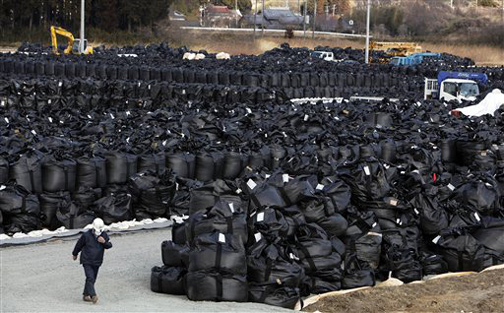
- This analysis provides new scientific lessons on decontamination strategies and techniques implemented in the municipalities affected by the radioactive fallout from the Fukushima accident. This synthesis indicates that removing the surface layer of the soil to a thickness of 5 cm, the main method used by the Japanese authorities to clean up cultivated land, has reduced cesium concentrations by about 80% in treated areas. Nevertheless, the removal of the uppermost part of the topsoil, which has proved effective in treating cultivated land, has cost the Japanese state about €24 billion. This technique generates a significant amount of waste, which is difficult to treat, to transport and to store for several decades in the vicinity of the power plant, a step that is necessary before it is shipped to final disposal sites located outside Fukushima prefecture by 2050. By early 2019, Fukushima’s decontamination efforts had generated about 20 million cubic metres of waste.
Decontamination activities have mainly targeted agricultural landscapes and residential areas. The review points out that the forests have not been cleaned up — because of the difficulty and very high costs that these operations2 would represent — as they cover 75% of the surface area located within the radioactive fallout zone. These forests constitute a potential long-term reservoir of radiocesium, which can be redistributed across landscapes as a result of soil erosion, landslides and floods, particularly during typhoons that can affect the region between July and October. Atsushi Nakao, co-author of the publication, stresses the importance of continuing to monitor the transfer of radioactive contamination at the scale of coastal watersheds that drain the most contaminated part of the radioactive fallout zone. This monitoring will help scientists understand the fate of residual radiocesium in the environment in order to detect possible recontamination of the remediated areas due to flooding or intense erosion events in the forests.
The analysis recommends further research on:
- the issues associated with the recultivation of decontaminated agricultural land3,
- the monitoring of the contribution of radioactive contamination from forests to the rivers that flow across the region,
- and the return of inhabitants and their reappropriation of the territory after evacuation and decontamination.
This research will be the subject of a Franco-Japanese and multidisciplinary international research project, MITATE (Irradiation Measurement Human Tolerance viA Environmental Tolerance), led by the CNRS in collaboration with various French (including the CEA) and Japanese organizations, which will start on January 1, 2020 for an initial period of 5 years.
Complementary approaches
This research is complementary to the project to develop bio- and eco-technological methods for the rational remediation of effluents and soils, in support of a post-accident agricultural rehabilitation strategy (DEMETERRES), led by the CEA, and conducted in partnership with INRA and CIRAD Montpellier.
Decontamination techniques
- In cultivated areas within the special decontamination zone, the surface layer of the soil was removed to a depth of 5 cm and replaced with a new “soil” made of crushed granite available locally. In areas further from the plant, substances known to fix or substitute for radiocesium (potassium fertilizers, zeolite powders) have been applied to the soil.
- As far as woodland areas are concerned, only those that were within 20 metres of the houses were treated (cutting branches and collecting litter).
- Residential areas were also cleaned (ditch cleaning, roof and gutter cleaning, etc.), and (vegetable) gardens were treated as cultivated areas.
1 In Fukushima prefecture and the surrounding prefectures, the decision to decontaminate the landscapes affected by the radioactive fallout was made in November 2011 for 11 districts that were evacuated after the accident (special decontamination zone — SDZ — 1,117 km2) and for 40 districts affected by lower, but still significant levels of radioactivity and that had not been evacuated in 2011 (areas of intensive monitoring of the contamination — ICA, 7836 km2). 2 128 billion euros according to one of the studies appearing in the review to be published on 12 December 2019 in SOIL. 3 Relating to soil fertility and the transfer of radiocesium from the soil to plants, for example.
The study was conducted by Olivier Evrard (Laboratoire des Sciences du Climat et de l’Environnement (LSCE/IPSL), Unité Mixte de Recherche 8212 (CEA/CNRS/UVSQ), Université Paris-Saclay), J. Patrick Laceby (Environmental Monitoring and Science Division (EMSD), Alberta Environment and Parks (AEP)), and Atsushi Nakao (Graduate School of Life and Environmental Sciences, Kyoto Prefectural University).
1 This Month
10 March A LIVE WEBINAR THE REAL EFFECTS OF NUCLEAR POWER
What the Industry Isn’t Telling Us
1:00 PM Mountain, 2 pm Central, 3 pm Eastern. Live on the Keepers of the Water Facebook page



18 March Webinar @ 1 PM EST: An Assessment of SMR Projects: The Case of Canada
register for the zoom:
https://us02web.zoom.us/webinar/register/WN_o8BIIOUvQ2ONJR1nta65DQ#/registration


of the week – STOP SMALL MODULAR REACTORS IN CANADA
To see nuclear-related stories in greater depth and intensity – go to https://nuclearinformation.wordpress.com
-
Archives
- March 2026 (109)
- February 2026 (268)
- January 2026 (308)
- December 2025 (358)
- November 2025 (359)
- October 2025 (376)
- September 2025 (258)
- August 2025 (319)
- July 2025 (230)
- June 2025 (348)
- May 2025 (261)
- April 2025 (305)
-
Categories
- 1
- 1 NUCLEAR ISSUES
- business and costs
- climate change
- culture and arts
- ENERGY
- environment
- health
- history
- indigenous issues
- Legal
- marketing of nuclear
- media
- opposition to nuclear
- PERSONAL STORIES
- politics
- politics international
- Religion and ethics
- safety
- secrets,lies and civil liberties
- spinbuster
- technology
- Uranium
- wastes
- weapons and war
- Women
- 2 WORLD
- ACTION
- AFRICA
- Atrocities
- AUSTRALIA
- Christina's notes
- Christina's themes
- culture and arts
- Events
- Fuk 2022
- Fuk 2023
- Fukushima 2017
- Fukushima 2018
- fukushima 2019
- Fukushima 2020
- Fukushima 2021
- general
- global warming
- Humour (God we need it)
- Nuclear
- RARE EARTHS
- Reference
- resources – print
- Resources -audiovicual
- Weekly Newsletter
- World
- World Nuclear
- YouTube
-
RSS
Entries RSS
Comments RSS
 nuclear-news