11,500 metric tonnes of radioactive water to be dumped into the sea
Japan to dump 11,500 metric tonnes of radioactive water (Reuters) 5 April 11, – Japan needs to discharge a total of 11,500 metric tons of low-contaminated water into the ocean from a stricken nuclear power plant, a Japanese official said on Monday.Koichiro Nakamura, a deputy director general of Japan’s Nuclear and Industrial Safety Agency (NISA), said the measure was needed to “avoid a more serious risk,” without elaborating. Continue reading
Fukushima will become a radioactive no man’s land
Even after a cold shutdown, scrapping the plant will likely take decades, and the site will become a no-man’s land.
Tonnes of nuclear waste sit at the site of the nuclear reactors, and enclosing the reactors by injecting lead and encasing them in concrete would make it safe to work and live a few kilometres away from the site, but is not a long-term solution for the disposal of spent fuel, which will decay and emit fission fragments over tens of thousands of years.
‘No safe levels’ of radiation in Japan, Al Jazeera 5 April 11“……Japanese officials conceded to the public on March 31 that the battle to save four crippled nuclear reactors at the Fukushima Daiichi nuclear plant has been lost. On March 29 a US engineer who helped install the reactors at the plant said he believed the radioactive core in unit No. 2 may have melted through the bottom of its containment vessel and on to a concrete floor. Continue reading
China detects radioactive cesium 137 from Fukushima
Radioactive cesium detected in more Chinese regions amid Japan nuclear crisis BEIJING, April 4 (Xinhua) — Trace levels of radioactive isotope cesium-137 and -134 were detected in the air of 13 of the Chinese mainland’s 31 provincial-level regions on Monday, up from eight regions on Sunday.Cesium-137 and -134 were detected in Beijing, Tianjin, Hebei, Shanxi, Shandong, Shanghai, Inner Mongolia, Jiangshu, Zhejiang, Anhui, Jiangxi, Hubei and Ningxia on Monday….Radioactive cesium detected in more Chinese regions amid Japan nuclear crisis
Comparing Fukushima’s radiation to Chernobyl’s
The Central Institute for Meteorology and Geodynamics of Vienna told New Scientist on March 24: “Japan’s damaged nuclear plant in Fukushima has been emitting radioactive iodine and caesium at levels approaching those seen in the aftermath of the Chernobyl accident in 1986…..The daily amount of caesium-137 released from Fukushima Daiichi is around 60 per cent of the amount released from Chernobyl.”….According to a report from the New York Academy of Sciences, due to the Chernobyl disaster, 985,000 people have died, mainly from cancer, between 1986-2004.
‘No safe levels’ of radiation in Japan, Al Jazeera 5 April 11“………Fukushima as ChernobylThis month marks the 25th anniversary of the Chernobyl nuclear disaster.“There are still no-go areas there, and the workers town has long since been abandoned, and we are seeing radioactive refugees from there, like we are now seeing generated in Japan,” Continue reading
Newspaper and sawdust to fix Fukushima nuclear leak?
 Japan nuclear crisis: workers using newspaper and sawdust to block pipes, Japanese workers battling to stop a radioactive water leak into the Pacific from the beleaguered nuclear power plant have resorted to using newspaper and sawdust to try and block the pipes. – Telegraph, By Danielle Demetriou, Tokyo 04 Apr 2011
TEPCO workers were using a polymer mixed with shredded paper and sawdust to try to close off pipes through which the water has flowed into a cracked concrete pit at the Fukushima Daiichi plant, from where it has run into the sea. An earlier attempt to seal the crack with cement failed to stop the leak.”From the afternoon, the workers began pouring polymeric powder, sawdust, newspaper – things we could think of to clog up the holes,” said Hidehiko Nishiyama, a spokesman for the nuclear safety agency.
“So far, there has not been any clear indication that the volume of leaking water has been reduced.”…… Japan nuclear crisis: workers using newspaper and sawdust to block pipes – Telegraph
Fukushima “worst nuclear disaster in history”? – with release of radioactive Cesium 137
 The highest cesium-137 levels in some villages near Chernobyl were 5 million Bq/m2. If true, Fukushima has already released higher levels of Cesium 137 than Chernobyl, making it the worst source of nuclear radiation release in history…..If preliminary information is correct, Fukushima already is the worst nuclear disaster in history.

 Japan’s Government Needs to Move Quickly, THE HUFFINGTON POST, Daniel Wagner, 4 April 11, Daniel Wagner is managing director of Country Risk Solutions, a political risk consulting firm based in Connecticut, and senior advisor to the PRS Group. Why the Japanese Government Needs to Move Quickly The focus of much of the press since the quake and tsunami has been on levels of radioactive iodine that has been released into the environment, but cesium-137 is a much greater health concern and has been linked to cancer deaths nine times greater than radioactive iodine, with a half life of 30 years. Last week, for the first time, the Japanese science ministry began to release measurements of cesium-137 in soil around the plant. Continue reading
The anger of evacuated Japanese citizens against nuclear company
In Japan, evacuees direct anger at nuclear-plant owner Tokyo Electric Power Co. The Washington Post By Andrew Higgins, April 3, TAMURA, JAPAN — When the boss of Tokyo Electric Power Co. checked into a Tokyo hospital last week with high blood pressure, he didn’t get any sympathy from Tomishige Maruzoi. “High blood pressure? We’ve all got high blood pressure,” said Maruzoi, a 57-year-old construction worker who now sleeps on a piece of cardboard in a gymnasium. “I feel nothing but anger.”
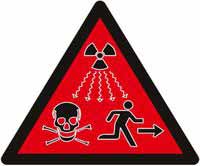 Maruzoi fled his home, less than two miles from the stricken Fukushima Daiichi nuclear complex, on March 12. In a fit of fury and despair, he decided last week to return and see for himself the havoc wrought by Tokyo Electric, known as Tepco….He stayed for less than an hour, just long enough to inspect his property, grab some clothes — and dig up some soil from his garden.He wrapped the earth in plastic and set off back to Tamura,….Back in the gymnasium, Maruzoi had the soil tested at a radiation screening center. The Geiger counter flashed an alarm. Maruzoi quickly got rid of his contaminated sod. He also ditched all hope of returning to Okuma to live anytime soon.“I wish I could go back, but realistically it will not be possible for 20 or 30 years,”….. In Japan, evacuees direct anger at nuclear-plant owner Tokyo Electric Power Co. – The Washington Post
Fukushima facility “awash with radioactive saltwater”
The battle to cool overheated reactors and avoid dangerous meltdowns of the highly radioactive fuel rods has seen workers hose saltwater into reactors, but this has left the facility awash with contaminated saltwater, preventing workers getting closer to the reactors……
Japan says it may take months to end radiation leaks, Daily Times, 4 April 11, TOKYO: Japan’s government warned on Sunday it may take months to stop radiation leaking from a nuclear plant crippled by a huge earthquake and tsunami, three weeks ago, as more bodies were recovered in devastated areas of northeast Japan. Continue reading
Workers still trying to stop Fukushima radioactive water leak
Bodies found as nuclear plant leak poisons ocean | The Australian, 4 April 11, “……..Plant workers yesterday attempted to inject water-absorbent polymer into a 20cm crack in a pit beneath the No 2 reactor that has been blamed for radioactive leaks into the ocean. Earlier attempts to fill the crack with concrete failed.”We are hoping the polymers will absorb water and fill in the pipe to prevent water from flowing,” said the deputy director-general of Japan’s Nuclear and Industrial Safety Agency, Hidehiko Nishiyama.TEPCO said radiation readings in the air above the pit had hit 1000 millisieverts per hour – more than four times the allowable annual total for workers at the plant. Continue reading
Decades until Fukushima nuclear plant closed down
 Experts: Scrapping Fukushima plant could take decades, asahi.com(朝日新聞社)2 April 11, – Regaining control of the four stricken reactors at the Fukushima No. 1 nuclear power plant could take months or years, according to nuclear experts. And, even if the reactor cores can be cooled below 100 degrees, known as the “cold shutdown” stage, decommissioning will take several decades……. Continue reading
A floating radioactive waste pool? Hope there’s no more tsunamis!
 Pontoon to hold Japan nuke plant water | Herald Sun April 02, 2011 THE operator of Japan’s disaster-stricken nuclear power plant plans to use a huge steel floating structure to contain radioactive water it releases.The pontoon-type structure which can hold a maximum of 18,000 tonnes of water will be handed over to Tokyo Electric Power Co (TEPCO) by its owner which has been using it as a floating park for anglers, officials said yesterday.Called a “Mega-Float”, it measures 136 metres long, 46 metres wide and three metres high and can hold up to 10,000 tonnes of water without sinking….. Pontoon to hold Japan nuke plant water | Herald Sun
Fukushima a greater disaster than Chernobyl
“Chernobyl was level seven and it had only one reactor and lasted only two weeks. We have now three weeks (at Fukushima) and we have four reactors which we know are in very dangerous situations,”
Fukushima ‘much bigger than Chernobyl’, says Russian nuclear activist | Herald SunApril 02, 2011 JAPAN’S unfolding nuclear disaster is “much bigger than Chernobyl” and could rewrite the international scale used to measure the severity of atomic accidents, a Russian expert says.”Chernobyl was a dirty bomb explosion. The next dirty bomb is Fukushima and it will cost much more in economic and human terms,” Natalia Mironova said. Continue reading
As Japan proposes to get bone marrow cells from workers, global nuclear industry prospec ts dim
If the past is any guide, the problems at Fukishima will slow or even freeze the construction of plants in many countries.
Walsh: Fukushima will slow or even freeze building of nuclear plants in many countries – In the Arena – CNN.com James Walsh, 2 April 11, TIME magazine reports that Japanese authorities have proposed, as a precautionary measure, the harvesting and banking of the stem cells from the bone marrow of workers at the crippled Fukushima nuclear power plant. Those cells could be transplanted back in workers who were exposed to too much radiation. How much danger are these workers in? Continue reading
Authorities do not know what are Fukushima’s real radiation dangers
“When you hear ‘no immediate danger’ [from nuclear radiation] then you should run away as far and as fast as you can.”
Nuclear’s green cheerleaders forget Chernobyl at our peril Pundits who downplay the risks of radiation are ignoring the casualities of the past. Fukushima’s meltdown may be worse John Vidal guardian.co.uk, Friday 1 April 2011“…..Every day there are more setbacks to solving the Japanese nuclear crisis and it’s pretty clear that the industry and governments are telling us little; have no idea how long it will take to control; or what the real risk of cumulative contamination may be. Continue reading
Global monitoring of Fukushima radiation fallout
Radioactive iodine-131 and cesium-137 are key to this process. They don’t exist in nature, so their appearance signals a nuclear event — either a bomb or a reactor in trouble…..Nuclear detectives can dive deeper still, sorting out whether radioactive emissions emanate from a dangerously active and still-fissioning reactor core, from burning fuel rods, or from used fuel sitting in pools.
As Fukushima fallout circles the globe, nuclear sleuths sift it for clues, The Washington Post, by Brian Vastag 1 April 11, Fallout from the Fukushima Daiichi nuclear plant has landed on 30 exquisitely sensitive detectors on desolate Arctic islands, on the tops of tall buildings and in other windy locales across the Northern Hemisphere, according to the Comprehensive Test Ban Treaty Organization, which maintains those sensors. Sniffing the air like silent sentinels, the 63 shack-like stations (with 17 more planned) are capturing tiny radioactive particles in filters much like those on a home furnace. Continue reading
1 This Month

Website of the Week

New book – https://www.amazon.com/dp/1923372157?utm_source=substack&utm_medium=email
Now until to February 10, 2026 Radioactive waste storage in France: the debate is finally open! How to participate?
-
Archives
- January 2026 (118)
- December 2025 (358)
- November 2025 (359)
- October 2025 (377)
- September 2025 (258)
- August 2025 (319)
- July 2025 (230)
- June 2025 (348)
- May 2025 (261)
- April 2025 (305)
- March 2025 (319)
- February 2025 (234)
-
Categories
- 1
- 1 NUCLEAR ISSUES
- business and costs
- climate change
- culture and arts
- ENERGY
- environment
- health
- history
- indigenous issues
- Legal
- marketing of nuclear
- media
- opposition to nuclear
- PERSONAL STORIES
- politics
- politics international
- Religion and ethics
- safety
- secrets,lies and civil liberties
- spinbuster
- technology
- Uranium
- wastes
- weapons and war
- Women
- 2 WORLD
- ACTION
- AFRICA
- Atrocities
- AUSTRALIA
- Christina's notes
- Christina's themes
- culture and arts
- Events
- Fuk 2022
- Fuk 2023
- Fukushima 2017
- Fukushima 2018
- fukushima 2019
- Fukushima 2020
- Fukushima 2021
- general
- global warming
- Humour (God we need it)
- Nuclear
- RARE EARTHS
- Reference
- resources – print
- Resources -audiovicual
- Weekly Newsletter
- World
- World Nuclear
- YouTube
-
RSS
Entries RSS
Comments RSS
 nuclear-news