Dissatisfied, Japanese Nuclear Adviser quits
 Japanese Nuclear Adviser Quits, Wall Street Journal, By WILLIAM SPOSATO, 30 April 11, TOKYO—A special advisor to the Japanese government on radiation safety resigned Friday, saying that he was dissatisfied with the handling of the ongoing crisis at the Fukushima Daiichi nuclear power plant. Continue reading
At last, attention to the irradiated animals at Fukushima
 “We can’t turn a blind eye to Japan’s abandoned animals that have not received adequate food or water for more than a month and continue to receive dangerous levels of radiation.”…
Animal Attraction: IFAW convenes nuclear radiation experts for landmark animal rescue summit in Japan, by Stacy Fox, khou.com, April 29, 2011, The International Fund for Animal Welfare (IFAW – www.ifaw.org) is organizing a gathering of radiation and animal rescue experts from the United States and Japan to discuss the current crisis and develop steps to provide aid to animals inside the evacuation zone. The team of experts will meet from May 2 -3 at the International House of Japan in Tokyo. Continue reading
Roundup of news on Fukushima nuclear reactor crisis
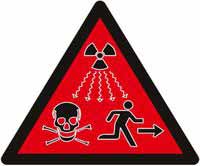 There is no known “safe dose” of ionizing radiation, and the government is under increasing pressure to do a full analysis of health impacts that radioactive fallout could have on nursing mothers and infants
Japan Nuclear Update, Clean Energy.org, April 28th, 2011 Sara Barczak › “……..the ongoing nuclear crisis at the Fukushima Daiichi nuclear plant continues to present new challenges. The nuclear fuel in reactor Unit 1 is apparently melting with emergency cooling efforts requiring 6 tons of water injected every hour. Continue reading
Japan stopping Greenpeace from monitoring seawater radiation
 Greenpeace says Japan restricting its radiation , Straits Times, 29 April 11, TOKYO – GREENPEACE said on Thursday Japan had blocked it from testing seawater and marine life for radiation from a stricken nuclear plant in territorial waters that extend 20km offshore. Continue reading
Highest radiation readings now at Fukushima No 1 nuclear reactor
| Radiation Readings at TEPCO Plant Rise to Highest Arirang, 28 April 11The operator of the crippled Fukushima nuclear power plant says the level of radiation is the highest at the number one reactor showing readings of 1,120 milisieverts per hour. This is the highest level detected since the March 11th earthquake and tsunami that hit the country and led to the ongoing nuclear crisis there. That’s also more than four times the annual dose of radiation allowed for the plant’s workers. http://www.arirang.co.kr/News/News_View.asp?nseq=115402&code=Ne2&category=2 |
Latest information on Fukushima’s nuclear power plant
 What’s going on at Japan’s damaged nuclear power plant?, Reuters, 27 April 11, “…… WILL THE SITE BECOME A NO-MAN’S LAND?
Most likely, yes. Even after a cold shutdown there are tonnes of nuclear waste sitting at the site of the nuclear reactors.
Entombing the reactors in concrete would make them safe to work and live a few kilometres away from the site, but is not a long-term solution for the disposal of spent fuel, which will decay and emit radiation over several thousand years.
The spent nuclear fuel in Fukushima has been damaged by sea water, so recycling it is probably not an option, while transporting it elsewhere is unlikely because of the opposition that proposal would bring.
Experts say the clean-up will take decades. (Additional reporting by Shinichi Saoshiro and Yoko Kubota; Editing by Alex Richardson) MORE AT….http://www.reuters.com/article/2011/04/27/japan-plant-idUSL3E7FR2IV20110427
Japan makes convenient new rules on “acceptable” nuclear radiation
it has the effect of legalizing illness and deaths from nuclear radiation, or at least the state’s responsibility for them…..the state’s concern appears to be less the health of employees and more the cost of caring for nuclear victims.
Dying for TEPCO? Fukushima’s Nuclear Contract Workers, The Asia Pacific Journal , Paul Jobin 28 April 11“……On March 14th, the Ministry of Health and Labor raised the maximum dose for workers to 250 mSv a year, where previously it was set at 100 mSv over 5 years (either 20 mSv a year for five years or 50 mSv for 2 years, which is in itself a strange interpretation of the recommendations of the International Commission on Radiological Protection’s guideline stipulating a maximum of 20 mSv a year. Continue reading
Fukushima’s unsolved nuclear radiation problem
Fukushima Radiation Readings at Their Highest, Japan Is Contaminated Financial Feed, by Chris Hartley on Apr 27, 2011 Robots sent to get Japan’s Fukushima Dai-Ichi reactor No. 1’s radiation readings reflected 1,120 millisierverts of radiation per hour, said the general manager of Tokyo Electric Power Co (Tepco) Junichi Matsumoto. The reading is 4 times higher than the yearly dose a nuclear worker is allowed to be exposed to……..Tepco said it is not possible to push through with the planned flooding of more water to reactor No. 1 to expedite its emergency cooling efforts. Kyoto University nuclear engineering professor Hironobu Unesaki said Tepco must figure out the high radiation’s source. If it’s from contaminated water leaking from inside the reactor, Tepco’s so-called water tomb may be jeopardized because flooding the containment vessel will result in more radiation in the building, added the professor. The explosion at the plant damaged reactors 1, 2, and 3’s cores and reactor 4’s fuel rods. Tepco has used several emergency measures to cool the units, such as pouring millions of liters of water.
Fukushima’s contract workers exposed to radiation
What is clear is that the contract laborers are routinely exposed to the highest level of radiation….the whole system is opaque, thus complicating the procedure for workers who need to apply for occupational hazards compensation.
Dying for TEPCO? Fukushima’s Nuclear Contract Workers, The Asia Pacific Journal , Paul Jobin, 28 April 11, Liquidators recruited by ads In the titanic struggle to bring to closure the dangerous situation at Fukushima Nuclear Plant No1, there are many signs that TEPCO is facing great difficulties in finding workers. At present, there are nearly 700 people at the site. As in ordinary times, workers rotate so as to limit the cumulative dose of radiation inherent in maintenance and cleanup work at the nuclear site. But this time, the risks are greater, and the method of recruitment unusual. Continue reading
Excess radiation exposure to woman at Fukushima
Woman at Fukushima Nuclear Plant Received Excess Level of Radiation, Forbes, Apr. 27 2011 – A woman working at the crippled Fukushima Daiichi nuclear plant (FDI) was exposed to radiation three times higher than the legal limit, according to a statement today by the plant operators.
The woman worked at FDI for 11 days in March, according to the Tokyo Electric Power Company (TEPCO), after the March 11th crisis began. TEPCO didn’t say why it waited a month to make the news public.
The woman was exposed to 17.55 millisieverts of radiation. The legal exposure limit for female nuclear plant workers in Japan is 5 millisieverts over 3 months…….TEPCO minimized the incident, saying that, “we have confirmed by a medical diagnosis that there is no impact on her health.”
Such a statement can be misleading. Only extremely high doses of radiation have an immediate impact on a person’s health. The primary threat to nuclear workers is the long-term prospect of developing cancer from lower levels of radiation…..http://blogs.forbes.com/oshadavidson/2011/04/27/woman-at-fukushima-nuclear-plant-received-excess-level-of-radiation/
Fukushima will eventually be many times worse than Chernobyl
 Chernobyl is over. Fukushima hasn’t really begun. Chernobyl released a huge radioactive cloud when it blew up. Fukushima will exceed the Chernobyl release in a year no matter what else happens…..Fukushima will be many times worse than Chernobyl and will continue for, possibly, hundreds of years.
Fukushima Could Be Worse — And It Will Be, April 25, 2011, Hawaii News Daily, By Tom Burnett “.. F-Daiichi is releasing 154 teraBecquerels of radionuclide particulate matter a day. Almost all of the reports repeat the statement that Fukushima has (so-far) released only about 10% of the radiation Chernobyl released. No problem. Well, they say, “It COULD have been worse.” IT WILL BE! Continue reading
No room for complacency about Japan’s nuclear reactors
Every functional nuclear plant is being pushed to the limit and beyond in order to maintain a semblance of normality – but they are ALL in bad repair and are sitting ducks for the next mega-quake….or for ONE overworked plant manager to make a bad decision. Or simply overuse…………There also seem to be problems at :
Onagawa reactor #3
Fukushima Daini reactor #3
Tokai Reactor #3
Kashiwazaki reactor #3……the core is generating deadly radiation
Fukushima Could Be Worse — And It Will Be, April 25, 2011, Hawaii News Daily, By Tom Burnett “……..I have information from Yoichi ‘boots on the ground’ that smoke was emitting from Kashiwazaki last week after the MAG 7,1 EQ. which occurred off Honshu on 7 APR 2011. Continue reading
Nuclear Safety Commission – hourly Fukushima Radiation forecasts
Nuclear Body To Issue Hourly Radiation Forecasts, TOKYO (Nikkei) April 26–The Nuclear Safety Commission said Monday that it will start issuing forecasts of how airborne radioactive material may be spreading out by the hour from the Fukushima Daiichi power plant.
Starting Tuesday, the commission’s Web site will show hour-by-hour data from SPEEDI, a system that analyzes and predicts dispersal of radioactive material in the event of a nuclear emergency.
Run by the government-affiliated Nuclear Safety Technology Center, the system has taken flak for publishing results just twice since the Fukushima crisis began, despite 11.3 billion yen in development and operating costs……..http://e.nikkei.com/e/fr/tnks/Nni20110426D25JFA23.htm
Fukushima debris too radioactive for workers to deal with
The legal limit on the amount of radiation a worker can be exposed to has been raised to 250 millisieverts for the crisis. It takes less than 17 minutes to hit that limit when working in an environment being exposed to 900 millisieverts per hour.
Hot debris hampers reactor repairs, Radiation map shows hazards lurking around every corner, Japan Times, Kyodo, 25 April 11, A contamination map revealing radiation levels at about 150 places in the Fukushima No. 1 power plant was released Saturday by troubled Tokyo Electric Power Co………One finding acquired from the map’s data as of Wednesday night is that a piece of concrete debris near the No. 3 reactor was emitting a nearly lethal 900 millisieverts per hour of radiation. Continue reading
Atmospheric radiation from Fukushima greater than they thought
.On April 17, plant operator Tokyo Electric Power Co. said in its plan for stabilization of the crippled reactors it would not start to get radiation leakage under control until the plan’s fourth month of implementation.
Atmospheric radiation leak underestimated, The Yomiuri Shimbun, 25 April 11, Data released by the government indicates radioactive material was leaking into the atmosphere from the Fukushima No. 1 nuclear power plant in early April in greater quantities than previously estimated. Continue reading
1 This Month
10 March A LIVE WEBINAR THE REAL EFFECTS OF NUCLEAR POWER
What the Industry Isn’t Telling Us
1:00 PM Mountain, 2 pm Central, 3 pm Eastern. Live on the Keepers of the Water Facebook page



18 March Webinar @ 1 PM EST: An Assessment of SMR Projects: The Case of Canada
register for the zoom:
https://us02web.zoom.us/webinar/register/WN_o8BIIOUvQ2ONJR1nta65DQ#/registration


of the week – STOP SMALL MODULAR REACTORS IN CANADA
To see nuclear-related stories in greater depth and intensity – go to https://nuclearinformation.wordpress.com
-
Archives
- March 2026 (109)
- February 2026 (268)
- January 2026 (308)
- December 2025 (358)
- November 2025 (359)
- October 2025 (376)
- September 2025 (258)
- August 2025 (319)
- July 2025 (230)
- June 2025 (348)
- May 2025 (261)
- April 2025 (305)
-
Categories
- 1
- 1 NUCLEAR ISSUES
- business and costs
- climate change
- culture and arts
- ENERGY
- environment
- health
- history
- indigenous issues
- Legal
- marketing of nuclear
- media
- opposition to nuclear
- PERSONAL STORIES
- politics
- politics international
- Religion and ethics
- safety
- secrets,lies and civil liberties
- spinbuster
- technology
- Uranium
- wastes
- weapons and war
- Women
- 2 WORLD
- ACTION
- AFRICA
- Atrocities
- AUSTRALIA
- Christina's notes
- Christina's themes
- culture and arts
- Events
- Fuk 2022
- Fuk 2023
- Fukushima 2017
- Fukushima 2018
- fukushima 2019
- Fukushima 2020
- Fukushima 2021
- general
- global warming
- Humour (God we need it)
- Nuclear
- RARE EARTHS
- Reference
- resources – print
- Resources -audiovicual
- Weekly Newsletter
- World
- World Nuclear
- YouTube
-
RSS
Entries RSS
Comments RSS
 nuclear-news