Drone video from inside a Fukushima reactor shows a hole in pressure vessel, likely fuel debris
Daily Mail. By ASSOCIATED PRESS, 20 March 2026
TOKYO (AP) – A video taken by tiny drones sent into one of three damaged reactors at the Fukushima Daiichi nuclear power plant showed a gaping hole in the thick-walled steel container of the core, with lumps of likely melted fuel debris hanging from it, in a first sighting of a pressure vessel bottom since the meltdown 15 years ago.
The rare footage was taken by micro-drones – measuring 12 by 13 centimeters (4.7 by 5.1 inches) and weighing only 95 grams (3.3 ounces) each – deployed for a two-week mission to collect visual, radiation and other data from inside the Unit 3 reactor. It was released late Thursday.
The March 11, 2011 massive quake and tsunami destroyed cooling systems at the Fukushima Daiichi plant, causing meltdowns at reactors No. 1, 2 and 3.
The three reactors contain at least 880 tons of melted fuel debris with radiation levels still dangerously high. Tokyo Electric Power Company Holdings, which manages the plant, successfully took tiny melted fuel samples from the Unit 2 reactor last year, but internal details remain little known.
TEPCO plans more remote-controlled probes and sampling to analyze melted fuel and to develop robots for future fuel debris removal that experts say could take decades more.
Sending drones as close as possible to the pressure vessel’s bottom was an important goal of the latest probe, according to the plant operator, Tokyo Electric Power Company Holdings……………………………..
TEPCO spokesperson Masaki Kuwajima said officials confirmed there was a hole at the bottom of the vessel and that those hanging objects, lumps and deposits are believed to be melted fuel debris…….
The latest drone mission came nearly a decade after an earlier underwater robot probe provided a less clear picture of the inside of the Unit 3 reactor.https://www.dailymail.co.uk/wires/ap/article-15663749/Drone-video-inside-Fukushima-reactor-shows-hole-pressure-vessel-likely-fuel-debris.html
U.S. and Japan Ponder Nuclear Energy Project in Massive $550 Billion Deal

By Michael Kern – Oil Price 4th March 2026, https://oilprice.com/Latest-Energy-News/World-News/US-and-Japan-Ponder-Nuclear-Energy-Project-in-Massive-550-Billion-Deal.html
The United States and Japan have been considering the inclusion of a nuclear power project involving Westinghouse in the $550-billion package of investment that Japan has pledged in the U.S. under the bilateral trade deal, sources familiar with the plans told Reuters on Wednesday.
Last year, as part of the U.S.-Japan trade agreement, Japan pledged to buy $8 billion worth of American products per year. The Government of Japan has also agreed to invest $550 billion in the United States, the White House said.
At the time, U.S. Secretary of Commerce, Howard Lutnick, hailed the deal as “historic” and said that the U.S. would use the $500-billion Japanese investment “to build our energy infrastructure, chip manufacturing, critical minerals mining, and shipbuilding to name a few.”
The plan for a nuclear power project, as well as a copper refining facility, is being discussed and could be talked into details later this month when Japan’s Prime Minister Sanae Takaichi is due to meet with U.S. President Donald Trump at the White House on March 19, according to Reuters’ anonymous sources.
Westinghouse, which could be involved in the nuclear power project, was named as a company that has expressed interest to launch projects in the energy sector, according to a joint fact sheet for the Japan-U.S. Investment.
TEPCO planning to send probe into Fukushima nuke reactor
By TOMOYUKI SUZUKI/ Staff Writer, March 4, 2026 ,
https://www.asahi.com/ajw/articles/16341286
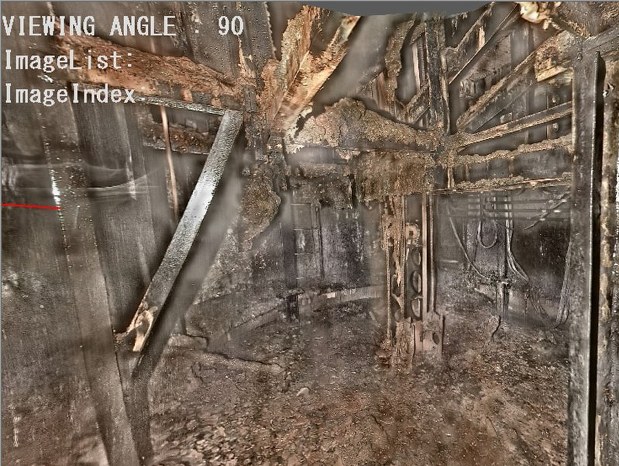
Tokyo Electric Power Co. will soon launch a probe, the first of its kind, into the pressure vessel at one of the hobbled reactors at its Fukushima No. 1 nuclear power plant to scope out the current conditions.
The effort is part of TEPCO’s long-standing goal of retrieving melted nuclear fuel debris, left in the aftermath of the triple reactor meltdowns following the 2011 Great East Japan Earthquake and tsunami.
TEPCO officials said they are planning to insert a camera-equipped fiberscope into the plant’s No. 2 reactor to shoot footage and measure radiation levels during the first half of fiscal 2026 between April and September.
An estimated 880 tons of fuel debris remain inside the No. 1, 2 and 3 reactors at the Fukushima No. 1 plant.
TEPCO plans to approach the contaminated debris, which remains in the pressure vessels, from the tops of the reactor buildings and pulverize the debris to reduce the volume and collect it by sucking it from the side or by other means.
TEPCO officials are hoping, during the planned probe, to monitor the interior of the pressure vessel visually and ascertain the radiation levels on a location-by-location basis to help work out concrete methods for retrieving the fuel debris.
The fiberscope to be used in the probe, which resembles an endoscope, will be inserted into the pressure vessel from the side through piping.
The officials said they will be probing not the core part of the vessel but the outer side of a shroud of stainless steel, which has been installed to surround nuclear fuel, to determine, among other things, if the shroud has been deformed and if there is any debris in sight.
They said they will conduct mock-up drills in the days and months to come. They added that they will take measures to block air from leaking from the pressure vessel’s interior so workers will not be exposed to radiation.
The probe was initially scheduled to begin in fiscal 2024, but the work has been delayed because the development of a dosimeter-equipped fiberscope and other processes have turned out to be more time-consuming than expected.
“When the distribution of dose levels is known, that could, depending on the circumstances, help give an estimate of the amount of residual fuel (which has yet to turn into debris),” said Akira Ono, president of TEPCO’s Fukushima Daiichi Decontamination & Decommissioning Engineering Co., which is overseeing the corresponding processes at the Fukushima No. 1 nuclear plant.
TEPCO plans to start large-scale retrieval of the Fukushima No. 1 plant’s debris at its No. 3 reactor in fiscal 2037 or later.
The dose levels and circumstances of the areas surrounding the reactor buildings are not the same for the No. 1, 2 and 3 reactors.
TEPCO officials said they have set a target date of 2027 for studying the design of debris removal equipment and other specifics for those reactors.
2222222
Japan Eyes Pacific Island for Nuclear Waste Disposal Site
Tokyo, March 3 (Jiji Press)
https://jen.jiji.com/jc/eng?g=eco&k=2026030300561
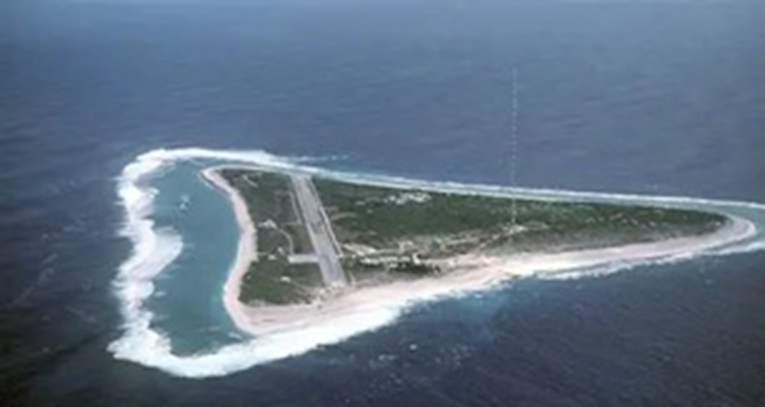
–The Japanese government is considering Minamitorishima, a remote Tokyo island in the Pacific, as a possible site for the final disposal of highly radioactive waste from nuclear power plants, it was learned Tuesday.
At a press conference on the day, industry minister Ryosei Akazawa said that the government will submit a request for a related literature survey to the Tokyo village of Ogasawara, where the island is located, as early as later in the day.
“Minamitorishima is considered to be an area with favorable conditions (for a nuclear waste disposal site),” Akazawa said.
Similar surveys have so far been conducted in the town of Suttsu and the village of Kamoenai, both in the northernmost prefecture of Hokkaido, and the southwestern town of Genkai, Saga Prefecture.
TEPCO removing empty tanks to advance Fukushima plant decommissioning work
February 28, 2026 (Mainichi Japan) https://mainichi.jp/english/articles/20260228/p2g/00m/0na/010000c
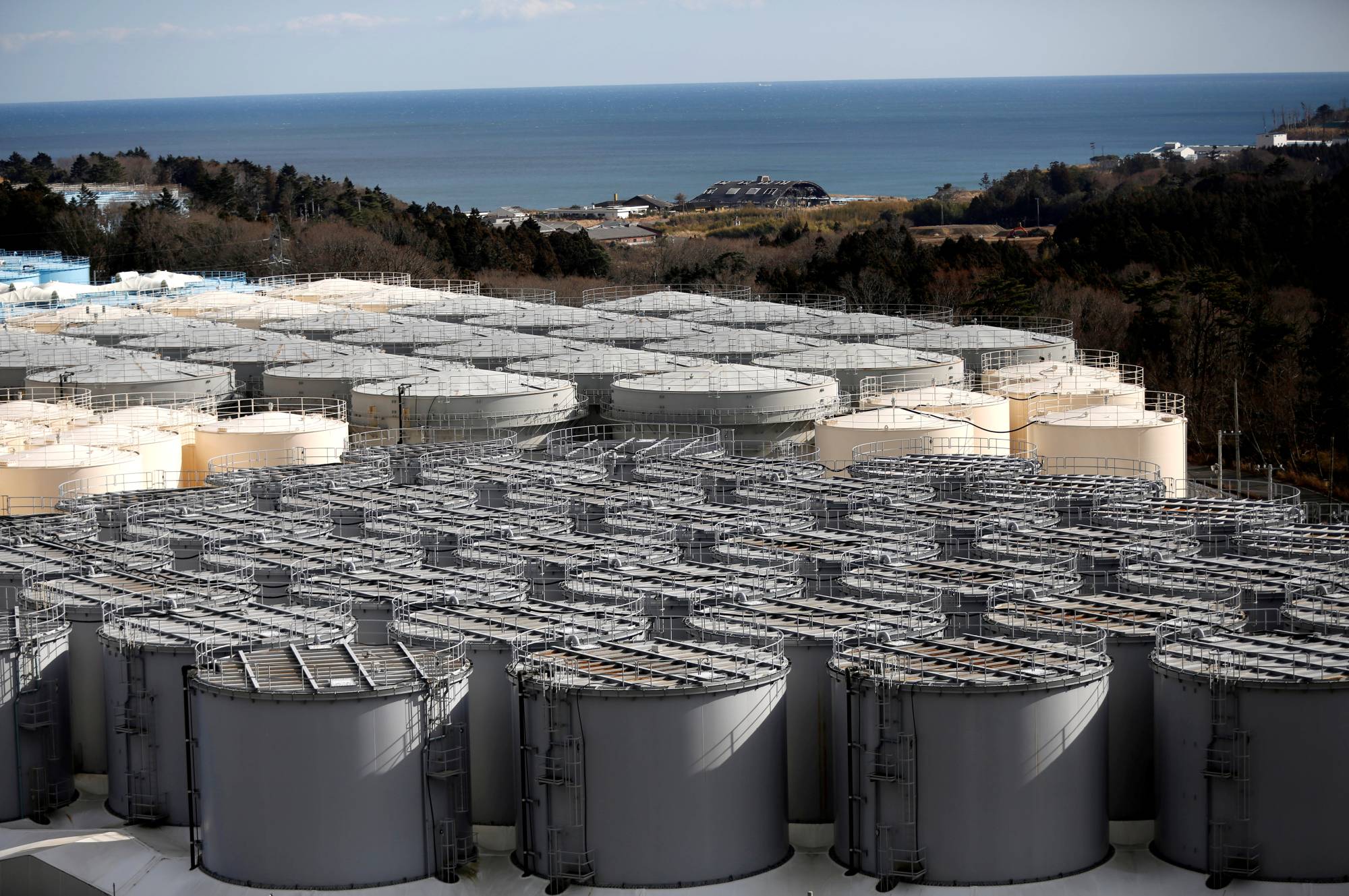
TOKYO (Kyodo) — The operator of the Fukushima Daiichi nuclear power plant continues to demolish tanks emptied by the release of treated radioactive water into the sea, aiming to use the freed-up space to build facilities to advance decommissioning work.
Nearly 15 years after the nuclear accident triggered by a massive earthquake and tsunami, Tokyo Electric Power Company Holdings Inc. is still coping with radioactive water generated in the process of cooling melted reactor fuel, although the daily buildup is on track to be the smallest in the current fiscal year.
The discharge of treated water into the Pacific Ocean began in August 2023, as more than 1,000 tanks installed at the site to store the wastewater were deemed to be taking up too much space and hindering progress in decommissioning work.
The first tank dismantling following the water release took place in February 2025 in an area known as J9. After workers finished removing a dozen tanks there by September, they moved on to the adjacent area known as J8, where nine tanks stand.
Each of the nine tanks is 12 meters tall and 9 meters wide, with a capacity of 700 tons. Removing the tanks in the two sections will free up about 2,900 square meters.
The utility plans to use the land to build facilities to store melted fuel debris to be retrieved from the No.3 reactor and to conduct maintenance for debris removal devices.
Some 880 tons of debris are estimated to remain in the Nos. 1 to 3 reactors that suffered core meltdowns in the world’s worst nuclear crisis since the 1986 Chernobyl disaster. Hydrogen explosions damaged the buildings housing the Nos. 1, 3 and 4 units.
TEPCO and the government plan to start full-fledged removal of debris at the No. 3 reactor no earlier than fiscal 2037, pushing back the early 2030s target due to the time needed for preparation.
Radiation levels inside the empty tanks have been confirmed to be lower than the average air dose level outside, indicating that contamination was relatively low, according to the operator.
Disassembled tank parts will be cut into small pieces using gas cutting torches and stored in cargo containers on the power plant premises.
Harrowing six final words of nuclear worker as his skin fell off during 83 days of agony
WARNING: DISTRESSING CONTENT Nuclear plant worker Hisashi Ouchi suffered the highest radiation dose in history after 1999 Japan accident, enduring 83 agonising days before death.
Edward Easton and Jane Lavender Associate Editor, 18 Feb 2026, https://www.dailystar.co.uk/news/world-news/harrowing-six-final-words-nuclear-36730407
What You Need to Know
Hisashi Ouchi, a 35‑year‑old nuclear plant worker, survived a 1999 criticality accident that delivered the highest recorded radiation dose to a human, enduring 83 days of severe medical complications before dying of multiple organ failure. A government probe later blamed inadequate supervision, safety culture, and training, leading to negligence charges against six plant officials.
Key points:
On September 30, 1999, a criticality accident at a Japanese nuclear fuel processing plant exposed worker Hisashi Ouchi to an estimated 17,000 millisieverts of radiation.
The dose Ouchi received was about 850 times the annual occupational limit for nuclear workers and roughly 140 times higher than the exposure of residents near Chernobyl.
Ouchi was hospitalized at the University of Tokyo Hospital, where he underwent experimental treatments for 83 days, during which his skin sloughed off, his eyelids fell off, and his digestive system collapsed.
Medical staff administered up to ten blood transfusions daily, and painkillers were reported to be ineffective; Ouchi reportedly said, “I can’t take it anymore. I am not a guinea pig.”
He died on December 21, 1999, and the official cause of death was recorded as multiple organ failure
****************************************************************************************************.
A nuclear facility worker suffered what many consider to be the most agonising death ever recorded after a routine procedure went catastrophically wrong.
Hisashi Ouchi, 35, was exposed to an incomprehensible level of radiation when colleagues accidentally added excessive uranium to a processing vessel, sparking an uncontrolled nuclear chain reaction on September 30, 1999.
The unfortunate Ouchi was positioned nearest to the vessel, consequently subjecting him to 17,000 millisieverts of radiation – equivalent to 200,000 X-rays.
The exposure he received was 850 times the safe yearly limit for nuclear facility workers, 140 times greater than what Chernobyl residents experienced after the 1986 catastrophe, and the most severe dose ever documented in human history.
Within seconds and minutes of his exposure, Ouchi became violently sick. Whilst most individuals subjected to such levels would die within days, Ouchi survived, reports the Mirror.
He was taken to hospital alert but in critical condition, as his white blood cell count had been virtually eliminated, leaving him completely without an immune system.
Medical staff moved him to the University of Tokyo Hospital, where they tried various experimental procedures in a frantic bid to preserve his life.
What ensued was 83 days of torment for the nuclear facility worker.
Radiation had completely obliterated Ouchi’s capacity to heal and regenerate cells, causing his skin to gradually slough away, his blood vessels to fail, and his eyelids to fall off.
Fluids seeped relentlessly from his ravaged flesh and accumulated in his lungs, compelling medics to maintain him on life support.
Making his ordeal even more harrowing, his digestive system collapsed entirely, inflicting excruciating agony and causing litres of fluid to drain from his body daily. Despite numerous skin grafts and stem cell treatments, his body remained unable to recover.
Breathing became impossible without mechanical assistance, and nourishment could only be administered via feeding tube.
The agony became so unbearable that, two months into his treatment, Ouchi’s heart ceased beating, yet medical staff chose to revive him.
His wife reportedly held onto hope that he would survive until at least January 1, 2000, so they could welcome the new millennium together.
During lucid moments, he remained fully aware of his deteriorating condition.
According to accounts, Ouchi eventually reached breaking point and spoke six chilling words to hospital staff: “I can’t take it anymore. I am not a guinea pig.”
Medical professionals were compelled to administer up to ten blood transfusions daily merely to sustain his life. Painkillers appeared utterly ineffective, and at one stage, he reportedly pleaded for the treatment to cease.
Ouchi passed away on December 21, 1999, from multiple organ failure, nearly three months following the incident. Multiple organ failure was recorded as the official cause of death.
Four months afterwards, in April 2000, his colleague Shinohara also died from multiple organ failure at the age of 40.
Supervisor Yokokawa, who had been seated at his workstation when the criticality incident unfolded, managed to survive.
A probe by the Japanese government determined that the accident was due to a lack of regulatory supervision, a deficient safety culture, and insufficient training for employees.
Six officials from the company running the plant were subsequently charged with professional negligence and breaches of nuclear safety laws. In 2003, they received suspended prison sentences for their deadly neglect.
Fukushima review – a devastating account of disaster and denial in 2011 nuclear catastrophe
A tense return to the disaster foregrounds the heroism of the ‘Fukushima 50’ while raising questions about corporate secrecy and nuclear safety.
Peter Bradshaw, Wed 18 Feb 2026, https://www.theguardian.com/film/2026/feb/18/fukushima-review-2011-nuclear-disaster-japan
The terrifying story of Japan’s Fukushima nuclear accident of 2011, caused by a cataclysmic earthquake and tsunami, is retold by British film-maker James Jones and Japanese co-director Megumi Inman. The natural disaster left 20,000 dead, and 164,000 people were displaced from the area around the nuclear plant, some with no prospect of return. The earthquake damaged the cooling systems that prevent meltdowns and caused three near-apocalyptic explosions, bringing the nation close to a catastrophe that would have threatened its very existence. Incredibly, the ultimate calamity was finally staved off by nothing more hi-tech than a committed fire brigade spraying thousands of tons of water on the exposed fuel rods.
The film plunges us into the awful story moment-by-moment, accompanied by interviews with the chief players of the time – prominently nuclear plant employee Ikuo Izawa, a shift supervisor and de facto leader of the “Fukushima 50” (actually 69 people) who became legendary in Japan and beyond for their self-sacrificial courage, staying in a nightmarish reactor when everyone else had been evacuated.
Perhaps we could have been given more context and less immediate drama, particularly more background about the plant’s dismal corporate owners, the Tokyo Electric Power Company, or Tepco, which had closed a nuclear plant in 2007 after an earthquake, with a resulting loss of profits. But to skimp on the drama might be obtuse, given the pure hair-raising shock of events. The archive footage of the tsunami spreading across the fields and farmland of Japan is deeply disturbing; “nightmare” is a word casually used, but appropriate here.
The Japanese soul had been uniquely traumatised by the nuclear issue in 1945 and Fukushima was the opening of an old wound; Barack Obama’s offers to help were received warily and the film hints that some of a certain age might have even suspected a kind of opportunistic emergency takeover, like the Douglas MacArthur rule that followed the war. There is something chillingly military in the company’s need for volunteers for a so-called “suicide squad” to vent the reactors to forestall a pressure buildup.
And as far as comparisons with the Chornobyl disaster go, that involved a single reactor; Fukushima had six ready to blow. Before I watched this film, I assumed that Japan’s modern democracy would at least have meant more transparency than the sclerotic and malign Soviet apparatchiks. But maybe not. Tepco has still not released a full history of exactly what went wrong and what discussions took place at the time. And in any case, politicians were themselves dismally eager to cover themselves by tentatively blaming Tepco.
The most robust witness here is the New York Times’s Tokyo bureau chief Martin Fackler, who gives us a crisp account of the official chaos and bungling – and the fact that Tepco had already received a report indicating the Fukushima plant was vulnerable to an earthquake and did nothing. He is interesting on corporate obeisance to the “safety myth”, an industry article of faith which does not result in vigilant and innovative efforts to improve safety, but rather icy disapproval of anyone who questions existing safety provisions. Doing so was disloyalty to the industry and could damage your career.
Perhaps inevitably, the larger questions are left open. Fossil fuels cause slow-motion catastrophe to the planet – in fact, not so slow – while nuclear fuel does not cause climate change, but could cause instant calamity. So is the answer simply what the industry says it is? More and better safety? Or can other renewables fill the gap? Either way, this is a gripping film.
Fukushima is out in the UK and US from 20 February.
This article was amended on 19 February 2026 to clarify that the death toll relates to the natural disaster alone.
Japan Restarts Nuclear Power at Kashiwazaki Kariwa After 14 Years
By Alex Kimani – Feb 11, 2026,
https://oilprice.com/Latest-Energy-News/World-News/Japan-Restarts-Nuclear-Power-at-Kashiwazaki-Kariwa-After-14-Years-in-the-Dark.html
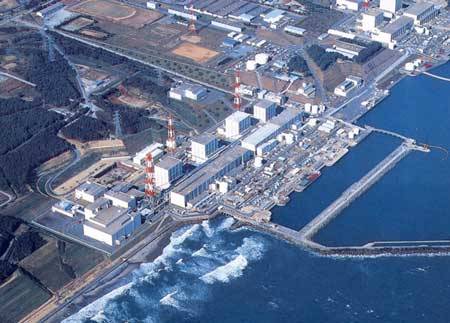
Japan’s Tokyo Electric Power Company (TEPCO) has restarted Unit 6 of the Kashiwazaki-Kariwa nuclear power plant, following a 14-year shutdown following the 2011 Fukushima disaster. The 1,360 MW reactor is the first unit to come online since the nuclear accident that saw Japan halt operations at all its nuclear plants pending regulatory changes.
The accident was caused by the 9.1-magnitude T?hoku earthquake – the third-largest in the world since 1900 – that triggered a tsunami, resulting in electrical grid failure and damage to nearly all of the power plant’s backup energy sources. With a total capacity of roughly 7,965 MW, the Kashiwazaki-Kariwa Nuclear Power Plant is the largest in the world.
TEPCO has implemented extensive, multi-layered safety enhancements at the Kashiwazaki-Kariwa Nuclear Power Plant to prevent accidents, particularly focusing on tsunami, earthquake, and terrorism risks. The company has constructed a 15-meter-high reinforced concrete seawall (extending 1,000 meters) to protect against tsunamis far exceeding the predicted maximum of 7-8 meters; critical buildings, including reactor and turbine buildings, have been fitted with heavy, watertight doors and barriers to prevent water from entering during a flood while essential equipment and emergency diesel generators have been moved to higher ground (up to 35 meters) to remain operational if the site floods.
Similar to many Western nations, Japan is doing a 180 on nuclear power after virtually ditching the power source as it looks to enhance energy security, reduce heavy reliance on expensive imported fossil fuels, meet rising electricity demand (including for AI data centers), and achieve 2050 carbon neutrality goals. Japan imports 60-70% of its electricity resources. In 2024, the country spent nearly $70 billion on liquefied natural gas (LNG) and coal imports, with nuclear power offering a [?] cheaper, [?] home-grown alternative.
Japan to restart world’s biggest nuclear plant on Monday
Japan Today 8th Feb 2026, https://japantoday.com/category/national/japan-to-restart-world’s-biggest-nuclear-plant
Japan will switch the world’s largest nuclear power plant back on next week, after a glitch with an alarm forced the suspension of its first restart since the 2011 Fukushima disaster.
The announcement came after TEPCO restarted the reactor on January 21 but shut it off the following day after an alarm from the monitoring system sounded.
Due to an error in its configuration, the alarm had picked up slight changes to the electrical current in one cable even though these were still within a range considered safe, Takeyuki Inagaki, the head of the Kashiwazaki-Kariwa plant run by Tokyo Electric Power (TEPCO), said.
The firm has now changed the alarm’s settings as the reactor is safe to operate, Inagaki said.
The commercial operation will commence on or after March 18 after another comprehensive inspection, he said.
Kashiwazaki-Kariwa is the world’s biggest nuclear power plant by potential capacity, although just one reactor of seven will restart.
The facility had been offline since Japan pulled the plug on nuclear power after a colossal earthquake and tsunami sent three reactors at the Fukushima atomic plant into meltdown in 2011.
Resource-poor Japan now wants to revive atomic energy to reduce its reliance on fossil fuels, achieve carbon neutrality by 2050 and meet growing energy needs from artificial intelligence.
Kashiwazaki-Kariwa is the first TEPCO-run unit to restart since 2011. The company also operates the stricken Fukushima Daiichi plant, now being decommissioned.
Public opinion in the area around the plant is deeply divided: Around 60 percent of residents oppose the restart, while 37 percent support it, according to a survey conducted by Niigata prefecture in September.
In January, seven groups opposing the restart submitted a petition signed by nearly 40,000 people to TEPCO and Japan’s Nuclear Regulation Authority, saying that the plant sits on an active seismic fault zone and noted it was struck by a strong quake in 2007.
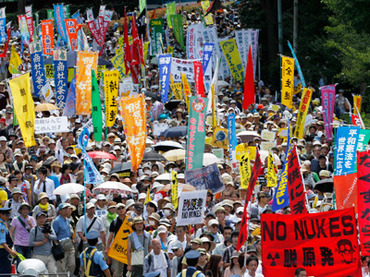
Inside Japan’s Controversial Shift Back to Nuclear Energy
Oil Price, By Felicity Bradstock – Jan 24, 2026
- Japan is shifting its energy policy to redevelop its nuclear energy capacity, aiming for 20 percent of its power from nuclear energy by 2040 to support climate goals.
- The world’s largest nuclear facility, the Kashiwazaki-Kariwa plant, is preparing to restart operations, which marks a major step in the government’s nuclear deployment plans despite significant public opposition and safety concerns.
- Public confidence in the nuclear sector has been harmed by the 2011 Fukushima disaster and further damaged by recent news of a utility, Chubu Electric Power, fabricating seismic risk data.
Alongside plans to establish a strong renewable energy sector, Japan aims to redevelop its nuclear energy capacity to boost its power and support its climate goals. However, with memories of the Fukushima nuclear disaster still fresh, many in Japan are worried about the risks involved with developing the country’s nuclear capacity. Nevertheless, the government has big plans for a new nuclear era, commencing with the restarting of the world’s biggest nuclear facility…………………………………………………………..
The Fukushima accident prompted a widespread distrust of nuclear power in Japan for more than a decade. However, in February 2025, Japan’s Economy, Trade and Industry Ministry published a draft revision of the national basic energy plan, in which the statement on moving away from nuclear power has been removed. Later that month, the Cabinet approved the revised Seventh Strategic Energy Plan, which stated the aim of producing 20 percent of power from nuclear energy by 2040. This marked a significant shift in Japan’s approach to nuclear power.
Before 2011, Japan had 54 reactors that provided around 30 percent of the country’s electricity. At present, just 14 of 33 operable reactors are producing power, while efforts to restart others have been thwarted due to public opposition.
Japan is home to the world’s largest nuclear facility, the 8.2 GW Kashiwazaki-Kariwa plant, which covers 4.2 km2 of land in Niigata prefecture, 220km north-west of Tokyo. The facility was developed in 2012, but it has yet to come online, as, following the Fukushima disaster, the poor public perception of safety in the nuclear sector led the government to shut down several nuclear reactors.
Kashiwazaki-Kariwa is operated by Tokyo Electric Power (Tepco), the same utility that managed Fukushima. Tepco aimed to restart one of the seven reactors at Kashiwazaki on 19th January, but was forced to delay the restart as an alarm malfunctioned during a test of equipment, although the company expects to bring it online within the next few days. The restarting of reactor No. 6 will increase Tokyo’s electricity supply by around 2 percent, as well as mark a major step forward in the government’s plans to deploy more nuclear power in the coming years.
However, many in Japan are still wary about the risks involved with nuclear power projects. Many of those living with proximity to Kashiwazaki-Kariwa are worried about the potential for another Fukushima-scale event, which could lead up to 420,000 residents to be evacuated from across a 30 km radius…………………..
public confidence in nuclear power companies in nuclear power companies has been further harmed due to recent news of a firm fabricating data. It was found that Chubu Electric Power, a utility in central Japan, fabricated seismic risk data during a regulatory review, ahead of a possible restart of two reactors at its idle Hamaoka plant. In response, Japan’s Nuclear Regulation Authority (NRA) scrapped the safety screening at the plant, which is located on the coast, around 200 km west of Tokyo, in an area prone to Nankai Trough megaquakes. The NRA is now considering inspecting Chubu’s headquarters.
…………Despite overwhelming public opposition to the development of Japan’s nuclear power sector, the government plans to gradually restart several reactors and expand nuclear capacity in the coming decades to support decarbonisation aims. https://oilprice.com/Alternative-Energy/Nuclear-Power/Inside-Japans-Controversial-Shift-Back-to-Nuclear-Energy.html
An alarm sounds and Tepco suspends restart at Kashiwazaki-Kariwa

A September survey asked 12,000 residents if they believed the conditions for restarting operations were already in place — 37% responded positively and 60% negatively.
By Francis Tang, 23 Jan 26, https://www.japantimes.co.jp/news/2026/01/23/japan/science-health/kashiwazaki-kariwa-alarm/
One day after Tokyo Electric Power Company Holdings (Tepco) restarted the world’s largest nuclear power plant, what was meant to mark a turning point in Japan’s long-stalled nuclear revival became an object lesson in just how fragile that effort remains.
At stake is Japan’s decadelong attempt to reduce imported energy dependency, which increased following the 2011 disaster at the Fukushima No. 1 nuclear power plant, and restore trust lost during the meltdown and in the 15 years since.
On Wednesday night, Tepco restarted reactor No. 6 at the Kashiwazaki-Kariwa nuclear power plant — the company’s first restart since all of its reactors were shut down in the aftermath of Fukushima.
Hours later, an alarm sounded for one rod inside the reactor, and the removal of control rods was suspended. About 16 hours later, Tepco announced that it would carry out a “planned temporary shutdown,” taking the reactor back offline to allow a full probe into the cause of the alarm to proceed.
“We are not assuming that the investigation and related work will be wrapped up in one day or two, but at this point, we cannot say at all how many days it will take,” plant manager Takeyuki Inagaki told a news conference on Thursday night.
Control rod insertion began at 11:56 p.m. on Thursday, and the reactor was formally shut down early Friday morning, according to the company.
“For now, our priority is to move forward with the cause investigation,” Inagaki said.
The company said that the alarm came from a control panel for a motor that drives the control rod, indicating a problem in the control panel. A separate alarm indicated a problem with an inverter.
Tepco added that the alarms indicate with light and sound.
Control rods regulate the nuclear reaction inside a nuclear power reactor. They are pulled out to start fission and reinserted to slow and stop it.
Located 120 kilometers northwest of Tokyo, Kashiwazaki-Kariwa is the world’s largest nuclear power plant, with seven reactors. It is one of the three nuclear power plants owned by Tepco, with the other two located in Fukushima.
After the March 2011 earthquake and subsequent tsunami triggered triple meltdowns at the Fukushima No. 1 plant, all nuclear plants in Japan were shut down. While some owned by other operators have since resumed operation after meeting stricter safety standards, Tepco has not been able to restart any of its reactors until this week.
Two prerequisites come into play when the government greenlights the restart of a nuclear plant: that it meets the post-Fukushima regulation standards set by the Nuclear Regulation Authority, and that it gains the “understanding” of local communities.
The local community in Niigata Prefecture, where Kashiwazaki-Kariwa is located, has mixed views on the plant’s restart. A September survey asked 12,000 residents if they believed the conditions for restarting operations were already in place — 37% responded positively and 60% negatively.
In 2017, Kashiwazaki-Kariwa units No. 6 and No. 7 passed Nuclear Regulation Authority reviews required for restart, but the subsequent discovery of inadequate antiterrorism measures in 2021 led to an effective withdrawal of approval through 2023.
Tepco was initially set to restart the reactor on Tuesday, but postponed the restart after a problem — which was separate from Thursday’s — was identified in one of the control rod alarms during testing.
An alarm that was designed to notify of unintended control rod removals did not go off when one of the rods was pulled out, the company said on Saturday. The process to address this delayed the restart by a day.
The government has positioned its restart as central to Japan’s energy strategy, which includes a goal of achieving 30% to 40% energy self-sufficiency by fiscal 2040, and having nuclear power generating roughly 20% of the country’s power, up from 8.5% in fiscal 2023
Prime Minister Sanae Takaichi is also keen on energy security.
During her campaign for the ruling Liberal Democratic Party’s presidency last year, she vowed to achieve “100% self-sufficiency” in energy, and said in her first policy speech as prime minister that her government would aim for the quick implementation of next-generation reactors and fusion power.
In the aftermath of the Fukushima disaster, Japan’s rate of self-sufficiency on energy dropped from 20.2% in fiscal 2010 to 6.5% in fiscal 2012. While it rebounded to above 10% in recent years, data center and semiconductor needs are expected to lead to a surge in electricity demand.
Kashiwazaki-Kariwa’s restart is “extremely important” in resolving vulnerabilities in eastern Japan’s power supply, containing electricity prices and developing decarbonized power sources, Economy, Trade and Industry Minister Ryosei Akazawa said on Friday, calling the restart a “highly significant step.”
“Under guidance of the Nuclear Regulation Authority, Tepco should continue to respond with the highest priority placed on safety and with a strong sense of vigilance. It should first and foremost work to identify the cause and resolve the issue, and provide careful and easy-to-understand explanations to local communities and the public,” he added.
Nuclear lapses overshadow reactor restarts in post-Fukushima Japan.

Power provider admits to manipulating data to downplay effect of large
earthquake. This month, one of Japan’s biggest utilities admitted to
manipulating data to downplay the effect of a large earthquake on a nuclear
power plant under review for reopening.
The admission followed a security
failure at Japan’s nuclear energy watchdog, in which an employee lost a
work phone with contact details of staff involved in nuclear security
during a personal trip to China.
The compliance lapses at Chubu Electric
and the Nuclear Regulation Authority threaten confidence in Japan’s safety
regime as the country tries to reopen its nuclear plants 15 years after a
massive quake caused a tsunami that inundated reactors in Fukushima.
FT 22nd Jan 2026,
https://www.ft.com/content/0bb511ab-80dc-44c2-ab06-d0e587c8367e
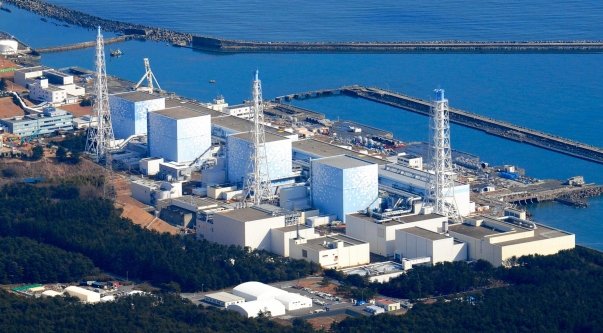
Nuclear reactor owned by Fukushima plant operator TEPCO to shut down again hours after restart.
By ASSOCIATED PRESS, 22 January 2026 https://www.dailymail.co.uk/wires/ap/article-15487139/Nuclear-reactor-owned-Fukushima-plant-operator-TEPCO-suspends-hours-old-restart.html
TOKYO (AP) – A reactor at the world’s largest nuclear power plant that restarted for the first time since the 2011 Fukushima nuclear disaster is now being shut down again Thursday due to a glitch that occurred hours after the unit’s resumption, its operator said.
The No. 6 reactor at the Kashiwazaki-Kariwa plant in north-central Japan reactivated Wednesday night for the first time in 14 years, as plant workers started removing neutron-absorbing control rods from the core to start stable nuclear fission.
But the process had to be suspended hours later due to a malfunction related to control rods, which are essential to safely starting up and shutting down reactors, the Tokyo Electric Power Company Holdings said.
TEPCO, which also manages the wrecked Fukushima plant, said there was no safety issue from the glitch.
Kashiwazak-Kariwa plant chief Takeyuki Inagaki told a news conference that he has decided to shut down the reactor to ensure safety. The operation had to stop when an alarm went off after 52 of the 205 control rods were removed from the core, he said. Inagaki said he hoped to start putting them back in later Thursday to bring the No. 6 reactor to a shutdown.
“The equipment is essential to safe operation, and we will examine it inside out,” he said, adding that the reactor will not be restarted until the cause is found and measures are taken.
“I don’t think this is going to be resolved in a couple of days,” Inagaki said.
The restart at the Kashiwazaki-Kariwa plant was being watched closely since TEPCO also runs the Fukushima Daiichi plant that was ruined in the 2011 quake and tsunami. Resource-poor Japan is accelerating atomic power use to meet soaring electricity needs.
All seven reactors at Kashiwazaki-Kariwa have been dormant since a year after the meltdowns of reactors at the Fukushima plant contaminated the surrounding land with radioactive fallout so severe that some areas are still uninhabitable.
TEPCO is working on the cleanup at the Fukushima site that´s estimated to cost 22 trillion yen ($139 billion). It’s also trying to recover from the damage to its reputation after government and independent investigations blamed the Fukushima disaster on TEPCO´s bad safety culture and criticized it for collusion with safety authorities.
Fourteen other nuclear reactors have restarted across Japan since 2011, but the Kashiwazaki-Kariwa plant, about 220 kilometers (135 miles) northwest of Tokyo, is the first TEPCO-run unit to resume production.
A restart of the No. 6 reactor could generate an additional 1.35 million kilowatts of electricity, enough to power more than 1 million households in the capital region.
The Kashiwazaki-Kariwa plant´s combined output capacity of 8 million kilowatts makes it the world´s largest, though TEPCO plans to resume only two of the seven reactors in coming years.
Mayors for Peace Joint Appeal

January 20, 2026, https://www.mayorsforpeace.org/wp-content/uploads/2026/file-2601-MfP_Joint-Appeal_January-2026_E.pdf
The milestone year of 2025—marking 80 years since the end of World War II and the atomic
bombings of Hiroshima and Nagasaki, the first use of nuclear weapons in human history—has come
to a close, and a new year, 2026, has begun. Over the past year, Mayors for Peace undertook a wide
range of peace initiatives. In particular, in August, the 11th General Conference of Mayors for Peace
was convened in Nagasaki City, where member cities from around the world engaged in extensive
discussions and renewed their shared determination to achieve a world without nuclear weapons.
Yet today, as power struggles over territory and economic influence initiated by nuclear-armed major
powers intensify, the global situation is growing ever more precarious. Distrust among states is
deepening, regional tensions are worsening in Europe, the Middle East, Latin America, and Asia, and
armed conflicts continue to spread, claiming the lives of countless innocent civilians. Moreover, as
the long-standing taboo against the use of nuclear weapons is being seriously eroded, momentum
toward nuclear disarmament and the abolition of nuclear weapons has stagnated.
Under these circumstances, the New Strategic Arms Reduction Treaty (New START Treaty)—the
only remaining nuclear disarmament and arms control treaty in force between the United States and
the Russian Federation—is set to expire in February 2026. We strongly urge both governments, which
together possess approximately 90 percent of the world’s nuclear warheads, to continue to honor the
limits of the treaty on an agreed basis and to demonstrate commendable leadership by advancing
nuclear disarmament. At the same time, we are gravely concerned that the collapse of this significant
arms control framework between the world’s nuclear superpowers could trigger an intensified global
arms race, including in nuclear weapons.
January 22 of this year marks five years since the Treaty on the Prohibition of Nuclear Weapons
entered into force in 2021. This treaty, a powerful international norm that prohibits the development,
testing, use, and threat of use of nuclear weapons, is a ray of hope amid the present depressing
situation. It was born from the heartfelt appeal of the hibakusha— “No one else should suffer as we
have.” We call upon all states to acknowledge the catastrophic and inhumane consequences of nuclear
weapons and to sign and ratify the treaty without delay.
Comprising local government leaders responsible for protecting the safety and security of their
citizens, Mayors for Peace now includes approximately 8,600 member cities in 166 countries and
regions worldwide and has worked for over 40 years toward the abolition of nuclear weapons. We
urge all policymakers to make every possible diplomatic effort to pursue the peaceful resolution of
conflicts through dialogue and to take concrete steps toward the realization of a peaceful world free from nuclear weapons.
MATSUI Kazumi , Mayor of Hiroshima , President of Mayors for Peace
SUZUKI Shiro
Vice President of Mayors for Peace
Mayor of Nagasaki
15 years after Fukushima, Japan prepares to restart the world’s biggest nuclear plant.
Tepco is set to defy local public opinion and restart one of Kashiwazaki-Kariwa’s seven reactors.
for many of the 420,000 people living within a 30km (19-mile) radius of Kashiwazaki-Kariwa who would have to evacuate in the event of a Fukushima-style incident, Tepco’s imminent return to nuclear power generation is fraught with danger.
A return to nuclear power is at the heart of Japan’s energy policy but, in the wake of the 2011 disaster, residents’ fears about tsunamis, earthquakes and evacuation plans remain
Justin McCurry Guardian, in KashiwazakiMon 19 Jan 2026
The activity around the Kashiwazaki-Kariwa nuclear power plant is reaching its peak: workers remove earth to expand the width of a main road, while lorries arrive at its heavily guarded entrance. A long perimeter fence is lined with countless coils of razor wire, and in a layby, a police patrol car monitors visitors to the beach – one of the few locations with a clear view of the reactors, framed by a snowy Mount Yoneyama.
When all seven of its reactors are working, Kashiwazaki-Kariwa generates 8.2 gigawatts of electricity, enough to power millions of households. Occupying 4.2 sq km of land in Niigata prefecture on the Japan Sea coast, it is the biggest nuclear power plant in the world.
Since 2012, however, the plant has not generated a single watt of electricity, after being shut down, along with dozens of other reactors, in the wake of the March 2011 triple meltdown at Fukushima Daiichi, the world’s worst nuclear accident since Chornobyl.
Located about 220km (136 miles) north-west of Tokyo, the Kashiwazaki-Kariwa plant is run by Tokyo Electric Power (Tepco), the same utility in charge of the Fukushima facility when a powerful tsunami crashed through its defences, triggering a power outage that sent three of its reactors into meltdown and forcing 160,000 people to evacuate.
Weeks before the 15th anniversary of the accident, and the wider tsunami disaster that killed an estimated 20,000 people along Japan’s north-east coast, Tepco is set to defy local public opinion and restart one of Kashiwazaki-Kariwa’s seven reactors.
On Monday, Tepco said it would delay the restart, originally scheduled for the following day, after an alarm malfunctioned during a test of equipment over the weekend, according to public broadcaster NHK. The reactor is now expected to go back online in the coming days, NHK added.
Restarting reactor No 6, which could boost the electricity supply to the Tokyo area by about 2%, will be a milestone in Japan’s slow return to nuclear energy, a strategy its government says will help the country reach its emissions targets and strengthen its energy security.
But for many of the 420,000 people living within a 30km (19-mile) radius of Kashiwazaki-Kariwa who would have to evacuate in the event of a Fukushima-style incident, Tepco’s imminent return to nuclear power generation is fraught with danger.
They include Ryusuke Yoshida, whose home is less than a mile and a half from the plant in the sleepy village of Kariwa. Asked what worries him most about the restart, the 76-year-old has a simple answer. “Everything,” he says, as waves crash on to the shore, the reactors looming in the background.
“The evacuation plans are obviously ineffective,” adds Yoshida, a potter and member of an association of people living closest to the facility. “When it snows in winter the roads are blocked, and a lot of people who live here are old. What about them, and other people who can’t move freely? This is a human rights issue.”……………………………..
“The core of the nuclear power business is ensuring safety above all else, and the understanding of local residents is a prerequisite,” says Tatsuya Matoba, a Tepco spokesperson.
That is the one hurdle residents say Tepco has failed to overcome after local authorities ignored calls for a prefectural referendum to determine the plant’s future. In the absence of a vote, anti-restart campaigners point to surveys showing clear opposition to putting the reactor back online.
They include a prefectural government poll conducted late last year in which more than 60% of people living within 30km of the plant said they did not believe the conditions for restarting the facility had been met…………
Kazuyuki Takemoto, a member of the Kariwa village council, says seismic activity in this region of north-west Japan means it is impossible to guarantee the plant’s safety.
“But there has been no proper discussion of that,” says Takemoto, 76. “They say that safety improvements have been made since the Fukushima disaster, but I don’t think there is any valid reason to restart the reactor. It’s beyond my comprehension.”
‘The priority should be to protect people’s lives’
Just weeks before the planned restart, the nuclear industry attracted fresh criticism after it emerged that Chubu Electric Power, a utility in central Japan, had fabricated seismic risk data during a regulatory review, conducted before a possible restart, of two reactors at its idle Hamaoka plant.
“When you look at what’s happened with Hamaoka, do you seriously think it’s possible to trust Japan’s nuclear industry?” Takemoto says. “It used to be said that nuclear power was necessary, safe and cheap … We now know that was an illusion.”
Adding to local concerns are the presence of seismic faults in and around the site, which sustained damage during a 6.8-magnitude offshore earthquake in July 2007, including a fire that broke out in a transformer. Three reactors that were in operation at the time shut down automatically.
The Kashiwazaki-Kariwa restart is a gamble for Japan’s government, which has put an ambitious return to nuclear power generation at the centre of its new energy policy as it struggles to reach its emissions targets and bolster its energy security.
Before the Fukushima disaster, 54 reactors were in operation, supplying about 30% of the country’s power. Now, of 33 operable reactors, just 14 are in service, while attempts to restart others have faced strong local opposition.
Now, 15 years after the Fukushima meltdown, criticism of the country’s “nuclear village” of operators, regulators and politicians has shifted to this snowy coastal town.
Pointing out one of the many security cameras near the plant, Yoshida says the restart has been forced on residents by the nuclear industry and its political allies. “The local authorities have folded in the face of immense pressure from the central government,” he says.
“The priority of any government should be to protect people’s lives, but we feel like we have been deceived. Japan’s nuclear village is alive and well. You only have to look at what’s happening here to know that.” https://www.theguardian.com/world/2026/jan/19/japan-nuclear-plant-restart-kashiwazaki-kariwa-fukushima
1 This Month


Tell the Ukrainian Government to Drop Prosecution of Peace Activist Yurii Sheliazhenko

Petition to revoke the licensing of the Near Surface Nuclear Disposal Facility (NSDF) at Chalk River. https://www.ourcommons.ca/petitions/en/Petition/Details?Petition=e-7247


of the week – STOP SMALL MODULAR REACTORS IN CANADA
To see nuclear-related stories in greater depth and intensity – go to https://nuclearinformation.wordpress.com
-
Archives
- March 2026 (183)
- February 2026 (268)
- January 2026 (308)
- December 2025 (358)
- November 2025 (359)
- October 2025 (376)
- September 2025 (258)
- August 2025 (319)
- July 2025 (230)
- June 2025 (348)
- May 2025 (261)
- April 2025 (305)
-
Categories
- 1
- 1 NUCLEAR ISSUES
- business and costs
- climate change
- culture and arts
- ENERGY
- environment
- health
- history
- indigenous issues
- Legal
- marketing of nuclear
- media
- opposition to nuclear
- PERSONAL STORIES
- politics
- politics international
- Religion and ethics
- safety
- secrets,lies and civil liberties
- spinbuster
- technology
- Uranium
- wastes
- weapons and war
- Women
- 2 WORLD
- ACTION
- AFRICA
- Atrocities
- AUSTRALIA
- Christina's notes
- Christina's themes
- culture and arts
- Events
- Fuk 2022
- Fuk 2023
- Fukushima 2017
- Fukushima 2018
- fukushima 2019
- Fukushima 2020
- Fukushima 2021
- general
- global warming
- Humour (God we need it)
- Nuclear
- RARE EARTHS
- Reference
- resources – print
- Resources -audiovicual
- Weekly Newsletter
- World
- World Nuclear
- YouTube
-
RSS
Entries RSS
Comments RSS
 nuclear-news
