nuclear-news

The News That Matters about the Nuclear Industry Fukushima Chernobyl Mayak Three Mile Island Atomic Testing Radiation Isotope

  • Home
  • 1 This Month
  • ACTION !
  • Disclaimer
  • Links
  • PAGES on NUCLEAR ISSUES

India and Pakistan on Hair-Trigger Nuclear Alert Over Kashmir

Hair-Trigger Nuclear Alert Over Kashmir, Common Dreams,  India and Pakistan, where people starve in the streets, waste billions on military spending because of the Kashmir dispute. Now some of India’s extreme Hindu nationalists warn they want to reabsorb Pakistan, Bangladesh, and even Sri Lanka into Mother India.  by Eric Margolis  11 Aug 19

Two of the world’s most important powers, India and Pakistan, are locked into an extremely dangerous confrontation over the bitterly disputed Himalayan mountain state of Kashmir. Both are nuclear armed.

Kashmir has been a flashpoint since Imperial Britain divided India in 1947. India and Pakistan have fought numerous wars and conflicts over majority Muslim Kashmir. China controls a big chunk of northern Kashmir known as Aksai Chin.

In 1949, the UN mandated a referendum to determine if Kashmiris wanted to join Pakistan or India. Not surprisingly, India refused to hold the vote. But there are some Kashmiris who want an independent state, though a majority seek to join Pakistan……

What makes this confrontation so dangerous is that both sides have important tactical and nuclear forces arrayed against one another. These are mostly short/medium-ranged nuclear tipped missiles, and air-delivered nuclear bombs. Strategic nuclear weapons back up these tactical forces. A nuclear exchange, even a limited one, could kill millions, pollute much of Asia’s ground water, and spread radioactive dust around the globe – including to North America. ….https://www.commondreams.org/views/2019/08/11/hair-trigger-nuclear-alert-over-kashmir

August 12, 2019 Posted by Christina Macpherson | India, Pakistan, politics international, weapons and war | Leave a comment

Pakistan on the brink again, as India abolishes self-rule for Kashmir

Kashmir crisis: Will nuclear-armed Pakistan go to war with India again?  Telegraph UK    Ben Farmer, islamabad

8 AUGUST 2019      Pakistan has downgraded diplomatic ties with India and suspended trade with its neighbour as the political row over the disputed territory of Kashmir escalates.

India’s announcement that it will abolish self-rule for Kashmir has been denounced as illegal in Islamabad, with the country’s military warning it will  “go to any extent” to support Kashmiris.

What options does Pakistan have?

Why is there pressure on Pakistan to act?

Kashmir has poisoned relations between India and Pakistan since Independence. Both claim the territory, which is now divided between them by a fortified line of control. They have fought three wars over it….. https://www.telegraph.co.uk/news/2019/08/08/kashmir-crisis-will-nuclear-armed-pakistan-go-war-india/

August 10, 2019 Posted by Christina Macpherson | India, Pakistan, politics international | Leave a comment

Kashmir, nexus of conflict between nuclear antagonists India and Pakistan, faces crackdown, plunges into fear,

Kashmir, nexus of conflict between nuclear antagonists India and Pakistan, faces crackdown, plunges into fear, By Douglas Perry | The Oregonian/OregonLive, 5 Aug 19, India and Pakistan have fought two wars and engaged in countless cross-border military skirmishes over Kashmir.

Now India has plunged the mountainous region into fear by revoking Kashmir’s constitutionally mandated “special privileges.” The federal government in Delhi sent in thousands of troops over the weekend, and Kashmiri political leaders have been put under house arrest. Internet service to the area has been cut off or restricted…..

The crackdown did not come as a surprise: The Delhi government ordered tourists out of the Himalayan region last week, warning of a possible terrorist attack.

Kashmir has been claimed by both Hindu-majority India and Muslim-majority Pakistan — and administered by India — since the two countries won their independence shortly after World War II. Great Britain partitioned its colony on the Indian subcontinent in 1947 before pulling out, sparking widespread violence. “Under the partition plan provided by the Indian Independence Act,” the BBC notes, “Kashmir was free to accede to India or Pakistan” — and the region’s maharaja at the time chose India, even though the population is predominantly Muslim. This led to a two-year war between India and Pakistan, with another one erupting in 1965.

In the 1990s, both India and Pakistan successfully tested nuclear weapons and began stockpiling warheads. Various armed separatist outfits have been operating in Kashmir for decades…….. https://www.oregonlive.com/news/2019/08/kashmir-nexus-of-conflict-between-nuclear-antagonists-india-and-pakistan-faces-crackdown-plunges-into-fear.html

August 6, 2019 Posted by Christina Macpherson | India, Pakistan, politics international | Leave a comment

India’s Govt prohibits mining of thorium and other atomic minerals by private entities  

Govt prohibits mining of atomic minerals by private entities   https://www.thehindubusinessline.com/economy/govt-prohibits-mining-of-atomic-minerals-by-private-entities/article28732945.ece July 27, 2019 

Atomic minerals zirconium, monazite and thorium are found in abundance along several beaches of the country

The government has prohibited mining of atomic minerals by private entities and will grant operating rights to only state-run companies to “safeguard” strategic interest of the country, according to a gazette notification issued on Saturday.

Atomic minerals zirconium, monazite and thorium are found in abundance along several beaches of the country.

Zircon have potential applications in the strategic, defence and hi-tech sectors as it contains an important strategic element, called hafnium, which is used in the field of atomic energy.

Monazite is a mineral of thorium, uranium and rare earths and it has a high percentage of neodymium which has several hi-tech applications.

Zirconium, hafnium and thorium are very important strategic elements used in different stages of the country’s nuclear power programme, and since monazite and zircon occur in beach sand minerals, any loss or pilferage of these minerals at any stage of mineral handling or processing “shall affect the larger national interest”, the notification said.

“In offshore areas and their strategic importance, it is imperative that the mineral concessions in offshore areas be brought at par with the onshore areas in their treatment and therefore, in order to safeguard the strategic interest of the nation, it is expedient in larger national interest to prohibit the grant of operating rights in terms of any reconnaissance permit, exploration license or production lease of atomic minerals” in any offshore areas to anyone, except a government owned or controlled company, it stated.

“The central government hereby prohibits grant of operating rights in respect of atomic minerals in any offshore areas in the country…to any person, except the government or a government company or a corporation owned or controlled by the government, under the Offshore Areas Mineral (Development and Regulation) Act, 2002,” it said.

The government also “rescinded” any action taken by it earlier in this regard.

July 29, 2019 Posted by Christina Macpherson | business and costs, India, RARE EARTHS | Leave a comment

India’s tigers and other endangered species now threatened by uranium mining n Amrabad Tiger Reserve

Digging for uranium in tiger country: Nuclear drive tests India’s commitment to protecting endangered species.  ‘If India’s largest tiger reserves are not sacrosanct then the future … is really bleak’, Independent Adam Withnall, Delhi @adamwithnall  14 July 19, The Amrabad Tiger Reserve, spanning more than 2,800sq km of verdant jungle in India’s southern state of Telangana, is a paradise of biodiversity.

One of the biggest nature reserves in the country, it hosts not just India’s national animal but a range of other endangered species including pangolins, panthers, sloth bears, wild dogs, jungle cats, and spotted and sambar deer.

The Chenchu, one of India’s few remaining protected hunter-gatherer tribes, also count the Amrabad reserve as their ancestral home……..

  • Local activists and forestry officials are now up in arms after the central government in late May gave initial clearance for an exploratory uranium mining project in Amrabad Tiger Reserve, saying the proposal was “of critical importance from a national perspective”. …….
  • At the annual budget presented by finance minister Nirmala Sitharaman last week, it was announced that custom duties will be waved on all imports of parts for new nuclear power plants.
  • There are currently 22 nuclear reactors operating across India, of which 14 rely on imported uranium. Plans are in place to expand that capacity to 32 reactors, with the additional 10 located at four sites in Rajasthan, Karnataka, Haryana and Madhya Pradesh. All are targeting completion by 2025.

    At the same time, earlier this year the Indian foreign ministry announced an agreement with the US to establish six American-owned nuclear power plants in India…….

    A joint statement spelled out no further detail, but showed an intent to open up India’s nuclear energy market which, since it began its nuclear arms race with neighbouring Pakistan in 1998, has been cut off from international investment and trade.

  • Amrabad is one of 13 sites that have now received “in-principle” approval for uranium mining projects. The national Forest Advisory Committee gave its assent on 22 May for a proposal to carry out a survey and dig boreholes in areas that include the reserve’s “core” blocks for tiger protection.

    In documents supporting its proposal, the Department of Atomic Energy (DAE) noted that India’s existing discovered reserves of uranium were “either of low grade or low tonnage or both”, and that finding new sources of high-grade uranium was essential to meet the country’s growing demand…….

  • The department must now submit a detailed proposal that gives exact locations for digging to begin, but the granting of initial approval has alarmed local experts, many of whom submitted reports urging against the project.

    Telangana’s principal chief conservator of forests, PK Jha, told the Indian Express he would not allow anyone to drill inside Amrabad unless express permission was granted by the National Tiger Conservation Authority (NTCA). “We did not allow it till now though the proposal is two or three years old,” he said.

  • Imran Siddiqui, co-founder of the Hyderabad Tiger Conservation Society, wrote in a blog post that he and other activists had been successfully fighting off various mining projects in Amrabad for decades.

    He said the combined effects of building roads to bring in mining equipment, the digging itself and the potential for water contamination “seem poised to destroy the ecology of the entire tiger reserve”.

    “If India’s largest tiger reserves are not sacrosanct then the future of the tiger is really bleak in the new India we are making,” he said…….. https://www.independent.co.uk/news/world/asia/india-uranium-mining-amrabad-tiger-reserve-telangana-conservation-

July 15, 2019 Posted by Christina Macpherson | environment, India | Leave a comment

India’s nuclear power programme unlikely to progress. Ocean energy is a better way.

The problem is apparently nervousness about handling liquid Sodium, used as a coolant. If Sodium comes in contact with water it will explode; and the PFBR is being built on the humid coast of Tamil Nadu. The PFBR has always been a project that would go on stream “next year”. The PFBR has to come online, then more FBRs would need to be built, they should then operate for 30-40 years, and only then would begin the coveted ‘Thorium cycle’!

Why nuclear when India has an ‘ocean’ of energy,  https://www.thehindu.com/business/Industry/why-nuclear-when-india-has-an-ocean-of-energy/article28230036.ece

M. Ramesh – 30 June 19 Though the ‘highly harmful’ source is regarded as saviour on certain counts, the country has a better option under the seas

If it is right that nothing can stop an idea whose time has come, it must be true the other way too — nothing can hold back an idea whose time has passed.

Just blow the dust off, you’ll see the writing on the wall: nuclear energy is fast running out of sand, at least in India. And there is something that is waiting to take its place.

India’s 6,780 MW of nuclear power plants contributed to less than 3% of the country’s electricity generation, which will come down as other sources will generate more.

Perhaps India lost its nuclear game in 1970, when it refused to sign – even if with the best of reasons – the Non Proliferation Treaty, which left the country to bootstrap itself into nuclear energy. Only there never was enough strap in the boot to do so.

In the 1950s, the legendary physicist Dr. Homi Bhabha gave the country a roadmap for the development of nuclear energy.

Three-stage programme

In the now-famous ‘three-stage nuclear programme’, the roadmap laid out what needs to be done to eventually use the country’s almost inexhaustible Thorium resources. The first stage would see the creation of a fleet of ‘pressurised heavy water reactors’, which use scarce Uranium to produce some Plutonium. The second stage would see the setting up of several ‘fast breeder reactors’ (FBRs). These FBRs would use a mixture of Plutonium and the reprocessed ‘spent Uranium from the first stage, to produce energy and more Plutonium (hence ‘breeder’), because the Uranium would transmute into Plutonium. Alongside, the reactors would convert some of the Thorium into Uranium-233, which can also be used to produce energy. After 3-4 decades of operation, the FBRs would have produced enough Plutonium for use in the ‘third stage’. In this stage, Uranium-233 would be used in specially-designed reactors to produce energy and convert more Thorium into Uranium-233 —you can keep adding Thorium endlessly.

Seventy years down the line, India is still stuck in the first stage. For the second stage, you need the fast breeder reactors. A Prototype Fast Breeder Reactor (PFBR) of 500 MW capacity, construction of which began way back in 2004, is yet to come on stream.

The problem is apparently nervousness about handling liquid Sodium, used as a coolant. If Sodium comes in contact with water it will explode; and the PFBR is being built on the humid coast of Tamil Nadu. The PFBR has always been a project that would go on stream “next year”. The PFBR has to come online, then more FBRs would need to be built, they should then operate for 30-40 years, and only then would begin the coveted ‘Thorium cycle’! Nor is much capacity coming under the current, ‘first stage’. The 6,700 MW of plants under construction would, some day, add to the existing nuclear capacity of 6,780 MW. The government has sanctioned another 9,000 MW and there is no knowing when work on them will begin. These are the home-grown plants. Of course, thanks to the famous 2005 ‘Indo-U.S. nuclear deal’, there are plans for more projects with imported reactors, but a 2010 Indian ‘nuclear liability’ legislation has scared the foreigners away. With all this, it is difficult to see India’s nuclear capacity going beyond 20,000 MW over the next two decades.

Now, the question is, is nuclear energy worth it all?

There have been three arguments in favour of nuclear enFor Fergy: clean, cheap and can provide electricity 24×7 (base load). Clean it is, assuming that you could take care of the ticklish issue of putting away the highly harmful spent fuel.

But cheap, it no longer is. The average cost of electricity produced by the existing 22 reactors in the country is around ₹2.80 a kWhr, but the new plants, which cost ₹15-20 crore per MW to set up, will produce energy that cannot be sold commercially below at least ₹7 a unit. Nuclear power is pricing itself out of the market. A nuclear power plant takes a decade to come up, who knows where the cost will end up when it begins generation of electricity?

Nuclear plants can provide the ‘base load’ — they give a steady stream of electricity day and night, just like coal or gas plants. Wind and solar power plants produce energy much cheaper, but their power supply is irregular. With gas not available and coal on its way out due to reasons of cost and global warming concerns, nuclear is sometimes regarded as the saviour. But we don’t need that saviour any more; there is a now a better option.

Ocean energy

The seas are literally throbbing with energy. There are at least several sources of energy in the seas. One is the bobbing motion of the waters, or ocean swells — you can place a flat surface on the waters, with a mechanical arm attached to it, and it becomes a pump that can be used to drive water or compressed air through a turbine to produce electricity. Another is by tapping into tides, which flow during one part of the day and ebb in another. You can generate electricity by channelling the tide and place a series of turbines in its path. One more way is to keep turbines on the sea bed at places where there is a current — a river within the sea. Yet another way is to get the waves dash against pistons in, say, a pipe, so as to compress air at the other end. Sea water is dense and heavy, when it moves it can punch hard — and, it never stops moving.

All these methods have been tried in pilot plants in several parts of the world—Brazil, Denmark, U.K., Korea. There are only two commercial plants in the world—in France and Korea—but then ocean energy has engaged the world’s attention.

For sure, ocean energy is costly today.

India’s Gujarat State Power Corporation had a tie-up with U.K.’s Atlantic Resources for a 50 MW tidal project in the Gulf of Kutch, but the project was given up after they discovered they could sell the electricity only at ₹13 a kWhr. But then, even solar cost ₹18 a unit in 2009! When technology improves and scale-effect kicks-in, ocean energy will look real friendly.

Initially, ocean energy would need to be incentivised, as solar was. Where do you find the money for the incentives? By paring allocations to the Department of Atomic Energy, which got ₹13,971 crore for 2019-20.

Also, wind and solar now stand on their own legs and those subsidies could now be given to ocean energy.
July 1, 2019 Posted by Christina Macpherson | India, Reference, renewable, technology, thorium | Leave a comment

Why India’s Hypersonic Missile Could Trigger A Nuclear War

New missile, new threats? National Interest,  by Michael Peck, 21  June  19  1ndia’s test of a hypersonic missile signifies more than the advance of Indian weapons technology.

It also is one step closer to triggering a nuclear war with Pakistan.

Ironically, the first launch of the Hypersonic Technology Demonstrator Vehicle, or HSTDV, was a failure. The HSTDV, which is shaped almost like a sailing ship, is supposed to be a testbed for developing future hypersonic weapons such as cruise missiles. It is launched atop an Agni 1, an Indian ballistic missile…….

While that doesn’t necessarily mean the HSTDV has a problem, it’s not good news for India’s strategic nuclear deterrent. “The Agni 1 is a nuclear-capable missile that is in service with the strategic forces and has been successfully tested several times in the past,” noted the Economic Times. “Its failure to reach the desired altitude is a reason for concern and is being studied.”

Yet unproven or not, the existence of an Indian hypersonic project is an ominous step for India’s cold war with its neighbor Pakistan. Hypersonic missiles—defined as rockets with a velocity of at least Mach 5, though Russia and America are developing Mach 20 weapons—are dangerous because of their speed. Though the weapons have yet to be tested in combat, the U.S. military is concerned that Russian and Chinese hypersonic weapons may travel so fast that they can’t be intercepted. At the tactical level, this means that aircraft carriers and air bases could be destroyed by a salvo of missiles.

But on the strategic level, hypersonic weapons are truly frightening. A hypersonic missile can deliver a nuclear warhead more quickly than a ballistic missile. Or, a hypersonic missile armed with a conventional warhead might be able to destroy an opponent’s nuclear missiles in a first strike, but without the attacker having to resort to nuclear weapons.

Whether or not such a strike would be successful, or whether anyone would be confident enough to risk a nuclear exchange by using hypersonics, isn’t the point. Unlike the United States versus Russia and China, whose homelands are separated by thousands of miles of ocean, the distance between New Delhi and Islamabad is just over 400 miles. A Mach 5 or 10 weapon missile launched from India or Pakistan could hit its target in minutes (Russia’s Avangard hypersonic glider reportedly has a speed of Mach 20, with the United States working on a weapon equally as fast).

Knowing that India has hypersonic weapons could make Pakistan feel trapped in a “use them or lose them” mindset regarding its nuclear weapons. https://nationalinterest.org/blog/buzz/why-india%E2%80%99s-hypersonic-missile-could-trigger-nuclear-war-63627

June 22, 2019 Posted by Christina Macpherson | India, weapons and war | Leave a comment

The world’s societies on the brink of unmanageable climate chaos

No System of Government Designed by Human Beings Can Survive What the Climate Crisis Will Bring  https://www.esquire.com/news-politics/politics/a28102591/india-drought-chennai-climate-change-five-years-transform/, The window to prevent the worst of it is closing. Fast.   BY CHARLES P. PIERCE, JUN 19, 2019

It is a long held belief here in the shebeen that, thanks to those clever Chinese climate hoaxsters, the next world wars are going to be fought not over oil, but over water. This is especially true in places like India, which is currently in the middle of a murderous heat wave in which temperatures regularly top out at 120 degrees Fahrenheit, and where hugely populated cities are running out of water.

From the BBC: 

Residents have had to stand in line for hours to get water from government tanks, and restaurants have closed due to the lack of water. “Only rain can save Chennai from this situation,” an official told BBC Tamil. The city, which, according to the 2011 census, is India’s sixth largest, has been in the grip of a severe water shortage for weeks now. As the reservoirs started to run dry, many hotels and restaurants shut down temporarily.   The Chennai metro has turned off air conditioning in the stations, while offices have asked staff to work from home in a bid to conserve water..

The water crisis has also meant that most of the city has to depend solely on Chennai’s water department, which has been distributing water through government trucks across neighborhoods. “The destruction has just begun,” an official said. “If the rain fails us this year too, we are totally destroyed.”

And, as the Times of London reports, the combination of heat and drought not only is killing people, but also is emptying villages in the northern part of India. (Gee, I wonder where everyone will go and how welcome they’ll be when they get there?) And things among the people who have stayed so far are getting ugly.

In the worst-hit areas many villages starved of water have been abandoned until the arrival of the monsoon brings relief, after weeks of temperatures topping 50 degrees. In the northern states of Uttar Pradesh, Bihar and Rajasthan fighting has broken out over scarce water supplies, with police deployed to protect water trucks and wells.

People have the misapprehension that we can recover from this state just by reducing carbon emissions, Anderson said in an appearance at the University of Chicago. Recovery is all but impossible, he argued, without a World War II-style transformation of industry—an acceleration of the effort to halt carbon pollution and remove it from the atmosphere, and a new effort to reflect sunlight away from the earth’s poles. This has to be done, Anderson added, within the next five years.  “The chance that there will be any permanent ice left in the Arctic after 2022 is essentially zero,” Anderson said, with 75 to 80 percent of permanent ice having melted already in the last 35 years.

This is a part of the new normal, and it’s coming soon to a theater near you. But, not to worry. According to this guy, if we don’t turn things around on those clever Chinese climate hoaxsters in the next half-decade, we’re all screwed anyway. From those noted tree-hugging libs at Forbes:

“We have exquisite information about what that state is, because we have a paleo record going back millions of years, when the earth had no ice at either pole. There was almost no temperature difference between the equator and the pole,” said James Anderson, a Harvard University professor of atmospheric chemistry best known for establishing that chlorofluorocarbons were damaging the Ozone Layer. “The ocean was running almost  10ºC warmer all the way to the bottom than it is today,” Anderson said of this once-and-future climate, “and the amount of water vapor in the atmosphere would have meant that storm systems would be violent in the extreme, because water vapor, which is an exponential function of water temperature, is the gasoline that fuels the frequency and intensity of storm systems.”…

No system of government devised by human beings can withstand what’s coming, any more than overbuilt coastal enclaves can.

June 20, 2019 Posted by Christina Macpherson | climate change, India | Leave a comment

VCK Chief Thol. Thirumavalavan opposes Nuclear fuel storage facility in Kudankulam plant

Nuclear fuel storage facility in Kudankulam plant opposed  https://www.deccanchronicle.com/nation/current-affairs/160619/nuclear-fuel-storage-facility-in-kudankulam-plant-opposed.html  

DECCAN CHRONICLE.Jun 16, 2019  Chennai: VCK chief Thol Thirumavalavan has opposed the construction of Away From Reactor (AFR) Spent Fuel Storage facility within the Kudankulam Nuclear Power Plant in Tirunelveli saying it is totally against the rules and regulations.

“Away from reactor means away from the campus. They have to choose a proper place which does not affect the people. They have to choose a place which is not affected by any natural calamity. But that is not possible now. So they are trying to construct Away From Reactor (AFR) Spent Fuel Storage facility within the campus which is dangerous,” he said.

He said the opposition parties including the DMK are opposed to the construction of Nuclear waste plant within the campus as it is totally against the rules and regulations. “So we will hold a demonstration on June 25 against it,” he told reporters here on Saturday. Leaders of other parties including CPI and Muslim League were present on the occasion.

If possible, he would meet Prime Minister Narendra Modi and prevail upon him to halt the construction of the AFR.

Director of Kudankulam Nuclear Power Plant (KKNPP) Sanjay Kumar has said that all nuclear power stations in operation in India and other countries had facilities to store new as well as spent (used) fuel on the premises of the plant. The scheme for the storage of spent fuel in a nuclear power plant was two-fold — one facility is located within the reactor building/service building, generally known as the spent fuel storage pool / bay, and the other is located away from the reactor, called the Away From Reactor (AFR) Spent Fuel Storage Facility, but within the plant’s premises, he had said.
Meanwhile, ahead of a scheduled public hearing on July 10, anti-nuclear groups have opposed the proposal to set up an ‘AFR’ facility on the premises of the KKNPP.

June 17, 2019 Posted by Christina Macpherson | India, wastes | Leave a comment

How to avoid nuclear confrontation between India and Pakistan

WILL INDIA AND PAKISTAN BE ABLE TO STEP BACK FROM NUCLEAR DANGER? Arms Control Wonk, by Michael Krepon | May 13, 2019    Dark clouds are gathering. The Trump administration seems headed toward pre-emptive strikes against Iran. This progression began when Donald Trump walked away from the deal struck by President Obama, the European Union, Russia and China freezing advances in Iran’s nuclear weapon-related activities. Next, not unexpectedly, was Tehran’s threat to get back in the business of serious uranium enrichment in response to the U.S. walk out and Europe’s likely inability to circumvent Washington’s secondary sanctions. If Tehran follows through or if there is another prompt, the following step in this progression would be to set back Iran’s nuclear program several years by bombing the hell out of it. Conciliators be damned: Cue to the mission accomplished banners and drop the confetti.
……After two inept performances at summit meetings, it is evident that Trump and Secretary of State Mike Pompeo are out of their element trying to negotiate deals to reduce nuclear dangers. Young Mr. Kim is now back to firing missiles, which is the way he negotiates.
Compared to U.S.-Iran and U.S.-North Korean relations, the ill-will between India and Pakistan seems more manageable. Can these nuclear-armed neighbors take constructive steps away from periodic crises and confrontation? The smart money bets no, and cynics are usually right. Those who have tried to break the cycle of enduring enmity on the subcontinent have not been rewarded. A succession of Indian Prime Ministers, including the incumbent, have been burned by making gestures to improve relations with Pakistan. An act of violence has followed, usually perpetrated by militants with ties to Pakistan, making Indian leaders look foolish for trying. ……..
 The nuclear competition between India and Pakistan is accelerating with the introduction of new ballistic and cruise missiles, along with missiles carrying multiple warheads. India is implementing plans to deploy missile defenses, even though Pakistan has already taken steps to defeat them. Nuclear weapons are heading to sea, where command and control will be more challenging.
Nuclear doctrines are evolving. Both countries are falling victim to the counterforce compulsion — a disease that infects nuclear-armed states when the size of their arsenals exceeds the number of cities to be targeted. Minimum deterrence evolves into war-fighting strategies when stockpiles permit the targeting of military, air and naval bases, missile deployment areas and other strategic facilities. This is a recipe for an open-ended nuclear competition, requiring even more fissile material production. India and Pakistan won’t go as deep into this morass as the United States and the Soviet Union, but they’ll go deeper than Great Britain and France……..

If India’s new government has the wisdom to try once more to move away from confrontation, there is no shortage of confidence-building and nuclear risk-reduction measures to pursue. Every Indian and Pakistani diplomat worth his or her salt can quickly identify a half-dozen worthwhile measures that would not diminish security while helping to place time and space before another clash. If enough time and space are added, there may not be another clash.

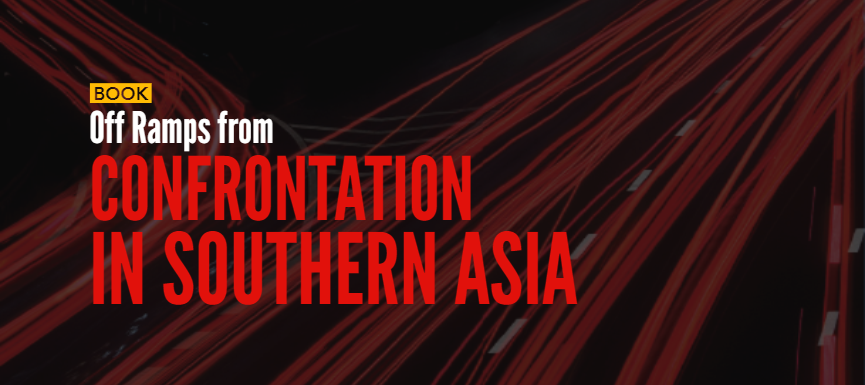
The Stimson Center has added to the list of creative confidence-building and nuclear risk-reduction measures. Stimson has gathered rising talent and veteran analysts from India, Pakistan and the United States to propose pragmatic, novel approaches to improve ties. The result is the latest book from Stimson’s South Asia Program, Off Ramps from Confrontation in Southern Asia, freely available for downloading here. We’ve assembled eighteen interesting ideas, including collaborative environmental protection by Sameer Ali, joint initiatives on the humanitarian impact of nuclear weapons by Arka Biswas and Saira Bano, the creation of communication links between National and Nuclear Command Authorities by Harry Hannah, an expanded missile flight-test notification regime by Frank O’Donnell, and modernizing the nuclear non-attack agreement by Toby Dalton.
These and other ideas are worth consideration — if a window opens slightly after the Indian elections are sorted out. If this window remains closed, dangers will continue to grow.https://www.armscontrolwonk.com/archive/1207411/will-india-and-pakistan-be-able-to-step-back-from-nuclear-danger/

May 14, 2019 Posted by Christina Macpherson | India, Pakistan, politics international | Leave a comment

Thousands homeless, 33 dead, as cyclone Fani hits India

India Cyclone Kills at Least 33, Hundreds of Thousands Homeless, Epoch Times

BY REUTERS
May 5, 2019 PURI, India—Hundreds of thousands of people were left homeless after a cyclone packing winds of about 200 km per hour slammed into eastern India, ripping out tin roofs and destroying power and telecom lines, officials said on Sunday, May 5.

At least 33 people were killed after cyclone Fani struck the state of Odisha on Friday but a million people emerged unscathed after they moved into storm shelter ahead of landfall.

The death toll could have been much greater if not for the massive evacuation in the days before the storm made landfall, officials said…..

Fani was the strongest summer cyclone in 43 years to hit Odisha, disrupting water supplies and transport links, the state’s chief minister Naveen Patnaik said in a statement. ….. https://www.theepochtimes.com/india-cyclone-kills-at-least-33-hundreds-of-thousands-homeless_2907764.html

May 7, 2019 Posted by Christina Macpherson | climate change, India | Leave a comment

Constant military posturing from both Pakistan and India

India and Pakistan Will ‘Never Be Friends’ as U.S. Sits Out Aggressive Nuclear Threats  https://www.ccn.com/india-pakistan-never-friends-nuclear-threats-us-sidelines

 Ben Brown  29/04/2019  By CCN.com: As India and Pakistan continue to throw nuclear threats back and forth, a senior Indian government official tasked with diplomacy in external affairs has dampened any hopes for peace between the two nations.

India’s minister of state for external affairs V.K Singh said this weekend that India and Pakistan will never be friends:

“A country which has been triggering proxy wars against India besides being a terrorist hub can never be treated as a friend. Treating Pakistan as a friend will be the biggest weakness of India.”

INDIA AND PAKISTAN: MONTHS OF NUCLEAR TENSION

The statement comes after months of tension between the two nuclear neighbors. The military posturing reached a peak last week when India’s prime minister Narendra Modi threatened Pakistan with the “mother of nuclear bombs.”

The military aggression first flared in February when Pakistan-based terrorist group JeM killed 40 Indians. India responded with airstrikes over the border and a series of aggressive military action followed on both sides.

PAKISTAN’S F-16 FIGHTER JET AGGRESSION: A VIOLATION OF US TERMS?

The United States has also been dragged into the ongoing conflict between India and Pakistan, but the Trump administration remains firmly on the sidelines. The US has refused to comment on Pakistan’s possible violation of US terms.

In February 2019, Pakistan shot down an Indian jet and captured its pilot. India claims this aggressive action was carried out by a Pakistani F-16 fighter jet, sold to Islamabad by the United States.

If India’s claims are true, it may be a violation of international terms. According to the US arms agreement, Pakistan is only permitted to use the F-16 fighter jets defensively.

Pakistan maintains it did not use the F-16 in the dogfight and, despite India’s claim that it shot down a Pakistani F-16 in the clash, a US count found that all jets were present and correct. India, however, submitted some evidence in the form of call-signs and weaponry used which are associated with Pakistani F-16s.

US STAYS ON THE SIDELINES

This weekend, the US refused to share any information with India about the possible violation of terms. Speaking to the Indian Express, an unnamed official said it was a matter solely for the US and Pakistan:

“Soon after we were informed by the Indian side about Pakistan using F-16 aircraft on Feb 27, we informed the Indians that we will not be sharing any information on the subject as it is a bilateral matter between the US and Pakistan.” 

Pakistan maintains it did not use the F-16 in the dogfight and, despite India’s claim that it shot down a Pakistani F-16 in the clash, a US count found that all jets were present and correct. India, however, submitted some evidence in the form of call-signs and weaponry used which are associated with Pakistani F-16s.

The official said it was a strictly unbiased position and it would do the same if the tables were turned:

“If a third country tomorrow wants information about the C130 or C17 or Apaches that the IAF [Indian Air Force] uses, our answer would be the same. It is a bilateral matter between India and the US.”

PEACE IN THE INDIAN SUB-CONTINENT?Pakistan is on a mission to dispel fears of conflict, but not everyone is convinced. The country invited a handful of journalists to learn about Islamabad’s desire for peace, summed up by this Reuters commentary:

“Pakistan says it is tired of conflict, opposed to extremism, open for peace talks and clamping down on corruption. It also insists it is run by politicians, with the military partnering rather than dominating.”

But with constant military posturing from both Pakistan and India, the peaceful rhetoric doesn’t quite match the nuclear grandstanding.

April 30, 2019 Posted by Christina Macpherson | India, Pakistan, politics international | Leave a comment

Pakistan warns India against mentioning its nuclear power lightly

–‘Don’t test our resolve’: Pakistan warns India against mentioning its nuclear power lightly  https://scroll.in/latest/921739/dont-test-our-resolve-pakistan-warns-india-against-mentioning-its-nuclear-power-lightly– 29 Apr 19, Pakistan’s military spokesperson Major General Asif Ghafoor reiterated Pakistan’s denial of India’s claim that it was responsible for the attack in Pulwama. Pakistan on Monday warned India against testing its military’s resolve and said that it was capable of protecting its citizens. Pakistan’s military spokesperson Major General Asif Ghafoor accused India of relying on false claims about the Pulwama attack in India and the Indian Air Force’s air strike in Balakot.The military spokesperson urged India to be a more responsible nuclear power. “In your [Indian] rhetoric, you keep using nuclear power as a threat,” Ghafoor said. “Nuclear powers are not a threat, they are a weapon of deterrence that should not be mentioned lightly…Do not test our resolve.”

Ghafoor was referring to Prime Minister Narendra Modi’s remark earlier this month that India’s nuclear weapons are “not meant for Diwali”. Modi had received criticism from several quarters for that statement.

Ghafoor denied that it was responsible for the attack in Pulwama that killed 40 Indian security personnel. “We told them we were not involved,” Ghafoor told reporters at a press conference. “India then violated our airspace, we then gave the ultimatum that we will respond when we see fit. Two months have passed since and India has told countless lies on the matter. We have not responded to the lies, not because we can’t, but because we don’t want to retaliate.”

Ghafoor reiterated that Pakistan had incurred no damage from India’s air strike in Balakot. He said hiding the downing of a plane is impossible in today’s day and age.

“International media came to Pakistan, we told them that they should go to the place and see for themselves what had happened. India had said that 300 people had died in their attack [in Balakot]. Then they said that they had used a small-scale missile that bore a tiny hole in the ceiling of the building and then exploded inside. We again offered to show your own [Indian] media the site,” he said.

April 30, 2019 Posted by Christina Macpherson | India, Pakistan, politics international | Leave a comment

Report on Modi’s remark on nuclear weapons sent to EC, says election official in Barmer

Report on Modi’s remark on nuclear weapons sent to EC, says election official in Barmer  https://scroll.in/latest/921705/report-on-modis-remark-on-nuclear-weapons-sent-to-ec-says-district-election-officialThe prime minister had warned Pakistan at the rally last week, saying India’s nuclear weapons are ‘not meant for Diwali’.Election authorities in Barmer district of Rajasthan on Monday said they have submitted a factual report to the Election Commission after looking into the Congress’ allegation that Prime Minister Narendra Modi had “brazenly violated” the poll code by repeatedly invoking the armed forces at an rally in the district on April 21, PTI reported.

At the rally, Modi had said that India does not get scared of Pakistan’s nuclear strike threats anymore. “Every other day they used to say, ‘We have nuclear button, we have nuclear button’,” the prime minister had said. “What do we have then? Have we kept it for Diwali?”

Following the complaint by the Congress the following day, the Election Commission had sought a report on the prime minister’s address. “The report has been forwarded with the copy of PM’s speech as per the direction of the commission,” said district election officer Himanshu Gupta.

This is not the first instance of the ruling party invoking the armed forces during the campaign for these Lok Sabha elections. On April 18, the Election Commission warned Union Minister for Minority Affairs Mukhtar Abbas Naqvi for referring to the defence forces as “Modi ji ki Sena [Narendra Modi’s Army]” and asked him to be careful in the future. This came a few days after a warning was issued to Uttar Pradesh Chief Minister Adityanath for making the same remark.

Apart from the Opposition parties, military veterans have also complained about such speeches made by BJP leaders. On April 12, more than 150 veterans of the Indian armed forces wrote to President Ram Nath Kovind, urging him to stop the politicisation of the military during election campaigns. The letter urged Kovind to “take all necessary steps to urgently direct all political parties that they must forthwith desist from using the military, military uniforms or symbols, and any actions by military formations or personnel, for political purposes or to further their political agendas”.

The Election Commission has issued multiple advisories asking political parties not to indulge in political propaganda involving the defence forces.

April 30, 2019 Posted by Christina Macpherson | India, Pakistan, politics international | Leave a comment

Narendra Modi using threat of nuclear bombing Pakistan, as an election campaign tactic

Dear Mr. Modi, A Nuclear Bomb Is Not A Campaign Prop,   https://www.newsclick.in/narendra-modi-nuclear-bomb-diwali-pakistan   In a campaign speech in Rajasthan on April 22, prime minister Narendra Modi casually threatened Pakistan with the use of nuclear bombs, saying India’s nuclear arsenal has not been saved for Diwali. Newsclick Team, 24 Apr 2019   

In a campaign speech in Rajasthan on April 22, prime minister Narendra Modi casually threatened Pakistan with the use of nuclear bombs, saying India’s nuclear arsenal has not been saved for Diwali. Another world leader, US president Donald Trump has been just as cavalier with mentioning nuclear weapons to make threats in the past.  Have these two national leaders forgotten the kind of devastation a nuclear weapon can cause?

April 25, 2019 Posted by Christina Macpherson | India, politics | Leave a comment

« Previous Entries     Next Entries »

1 This Month

​To see nuclear-related stories in greater depth and intensity – go to https://nuclearinformation.wordpress.com/

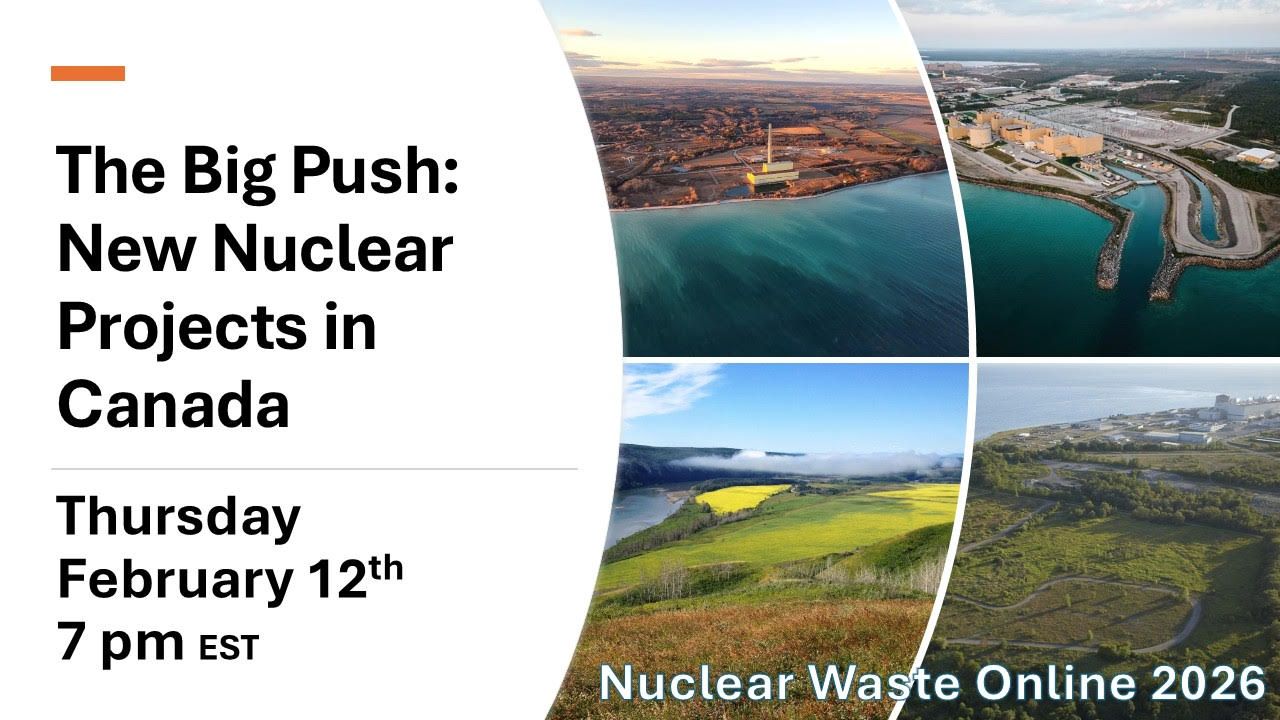
12 February – Webinar The Big Push: New Nuclear Projects in Canada

Thursday, February 12, 7 pm Eastern | 2nd of 4 sessions in the 2026 Nuclear Waste Online webinar series

 Join a webinar on the push for new nuclear generation in Canada. Go to Northwatch.org to register or use the registration link https://us02web.zoom.us/webinar/register/WN_ZfWOf1GITqSRIZX8CB-A9w

  • Categories

    • 1
      • Arclight's Vision
    • 1 NUCLEAR ISSUES
      • business and costs
        • employment
        • marketing
      • climate change
      • culture and arts
      • ENERGY
        • renewable
          • decentralised
          • energy storage
      • environment
        • oceans
        • water
      • health
        • children
        • psychology – mental health
        • radiation
        • social effects
        • women
      • history
      • indigenous issues
      • Legal
        • deaths by radiation
        • legal
      • marketing of nuclear
      • media
        • investigative journalism
        • Wikileaks
      • opposition to nuclear
      • PERSONAL STORIES
      • politics
        • psychology and culture
          • Trump – personality
        • public opinion
        • USA election 2024
        • USA elections 2016
      • politics international
      • Religion and ethics
      • safety
        • incidents
      • secrets,lies and civil liberties
        • civil liberties
      • spinbuster
        • Education
      • technology
        • reprocessing
        • Small Modular Nuclear Reactors
        • space travel
      • Uranium
      • wastes
        • – plutonium
        • decommission reactor
      • weapons and war
        • Atrocities
        • depleted uranium
      • Women
    • 2 WORLD
      • ANTARCTICA
      • ARCTIC
      • ASIA
        • Burma
        • China
        • India
        • Indonesia
        • Japan
          • – Fukushima 2011
          • Fukushima 2012
          • Fukushima 2013
          • Fukushima 2014
          • Fukushima 2015
          • Fukushima 2016
          • Fukushima continuing
        • Malaysia
        • Mongolia
        • North Korea
        • Pakistan
        • South Korea
        • Taiwan
        • Turkey
        • Vietnam
      • EUROPE
        • Belarus
        • Bulgaria
        • Denmark
        • Finland
        • France
        • Germany
        • Greece
        • Ireland
        • Italy
        • Kazakhstan
        • Kyrgyzstan
        • Russia
        • Spain
        • Sweden
        • Switzerland
        • UK
        • Ukraine
      • MIDDLE EAST
        • Afghanistan
        • Egypt
        • Gaza
        • Iran
        • Iraq
        • Israel
        • Jordan
        • Libya
        • Saudi Arabia
        • Syria
        • Turkey
        • United Arab Emirates
      • NORTH AMERICA
        • Canada
        • USA
          • election USA 2020
      • OCEANIA
        • New Zealand
        • Philippines
      • SOUTH AMERICA
        • Brazil
    • ACTION
    • AFRICA
      • Kenya
      • Malawi
      • Mali
      • Namibia
      • Niger
      • Nigeria
      • Somalia
      • South Africa
    • Atrocities
    • AUSTRALIA
    • Christina's notes
    • Christina's themes
    • culture and arts
    • Events
    • Fuk 2022
    • Fuk 2023
    • Fukushima 2017
    • Fukushima 2018
    • fukushima 2019
    • Fukushima 2020
    • Fukushima 2021
    • general
    • global warming
    • Humour (God we need it)
    • Nuclear
    • RARE EARTHS
      • thorium
    • Reference
      • Reference archives
    • resources – print
    • Resources -audiovicual
    • Weekly Newsletter
    • World
    • World Nuclear
    • YouTube
  • Pages

    • 1 This Month
    • ACTION !
    • Disclaimer
    • Links
    • PAGES on NUCLEAR ISSUES
      • audio-visual news
      • Anti Nuclear, Clean Energy Movement
        • Anti Nuclear movement – a success story
          • – 2013 – the struggle for a nuclear-free, liveable world
          • – 2013: the battle to expose nuclear lies about ionising radiation
            • Speakers at Fukushima Symposium March 2013
            • Symposium 2013 Ian Fairlie
      • Civil Liberties
        • – Civil liberties – China and USA
      • Climate change
      • Climate Change
      • Economics
        • – Employment
        • – Marketing nuclear power
        • – Marketing Nuclear Power Internationally
        • nuclear ‘renaissance’?
        • Nuclear energy – the sick man of the corporate world
      • Energy
        • – Solar energy
      • Environment
        • – Nuclear Power and the Tragedy of the Commons
        • – Water
      • Health
        • Birth Defects in the Chernobyl Radiation Affected Region.
      • History
        • Nuclear History – the forgotten disasters
      • Indigenous issues
      • Ionising radiation
        • – Ionising radiation – medical
        • Fukushima FACT SHEET
      • Media
        • Nuclear Power and Media 2012
      • Nuclear Power and the Consumer Society – theme for December 2012
      • Peace and nuclear disarmament
        • Peace on a Nuclear Free Earth
      • Politics
        • – Politics USA
      • Public opinion
      • Religion and ethics
        • -Ethics of nuclear power
      • Resources – print
      • Safety
      • Secrets and lies
        • – NUCLEAR LIES – theme for January 2012
        • – Nuclear Secrets and Lies
      • Spinbuster
        • 2013 nuclear spin – all about FEAR -theme for June
        • Spinbuster 1
      • Technology
        • TECHNOLOGY Challenges
      • Wastes
        • NUCLEAR WASTES – theme for October 2012
        • – Plutonium
      • Weapons and war
      • Women
  • Archives

    • February 2026 (115)
    • January 2026 (308)
    • December 2025 (358)
    • November 2025 (359)
    • October 2025 (376)
    • September 2025 (258)
    • August 2025 (319)
    • July 2025 (230)
    • June 2025 (348)
    • May 2025 (261)
    • April 2025 (305)
    • March 2025 (319)
  • Categories

    • 1
      • Arclight's Vision
    • 1 NUCLEAR ISSUES
      • business and costs
        • employment
        • marketing
      • climate change
      • culture and arts
      • ENERGY
        • renewable
          • decentralised
          • energy storage
      • environment
        • oceans
        • water
      • health
        • children
        • psychology – mental health
        • radiation
        • social effects
        • women
      • history
      • indigenous issues
      • Legal
        • deaths by radiation
        • legal
      • marketing of nuclear
      • media
        • investigative journalism
        • Wikileaks
      • opposition to nuclear
      • PERSONAL STORIES
      • politics
        • psychology and culture
          • Trump – personality
        • public opinion
        • USA election 2024
        • USA elections 2016
      • politics international
      • Religion and ethics
      • safety
        • incidents
      • secrets,lies and civil liberties
        • civil liberties
      • spinbuster
        • Education
      • technology
        • reprocessing
        • Small Modular Nuclear Reactors
        • space travel
      • Uranium
      • wastes
        • – plutonium
        • decommission reactor
      • weapons and war
        • Atrocities
        • depleted uranium
      • Women
    • 2 WORLD
      • ANTARCTICA
      • ARCTIC
      • ASIA
        • Burma
        • China
        • India
        • Indonesia
        • Japan
          • – Fukushima 2011
          • Fukushima 2012
          • Fukushima 2013
          • Fukushima 2014
          • Fukushima 2015
          • Fukushima 2016
          • Fukushima continuing
        • Malaysia
        • Mongolia
        • North Korea
        • Pakistan
        • South Korea
        • Taiwan
        • Turkey
        • Vietnam
      • EUROPE
        • Belarus
        • Bulgaria
        • Denmark
        • Finland
        • France
        • Germany
        • Greece
        • Ireland
        • Italy
        • Kazakhstan
        • Kyrgyzstan
        • Russia
        • Spain
        • Sweden
        • Switzerland
        • UK
        • Ukraine
      • MIDDLE EAST
        • Afghanistan
        • Egypt
        • Gaza
        • Iran
        • Iraq
        • Israel
        • Jordan
        • Libya
        • Saudi Arabia
        • Syria
        • Turkey
        • United Arab Emirates
      • NORTH AMERICA
        • Canada
        • USA
          • election USA 2020
      • OCEANIA
        • New Zealand
        • Philippines
      • SOUTH AMERICA
        • Brazil
    • ACTION
    • AFRICA
      • Kenya
      • Malawi
      • Mali
      • Namibia
      • Niger
      • Nigeria
      • Somalia
      • South Africa
    • Atrocities
    • AUSTRALIA
    • Christina's notes
    • Christina's themes
    • culture and arts
    • Events
    • Fuk 2022
    • Fuk 2023
    • Fukushima 2017
    • Fukushima 2018
    • fukushima 2019
    • Fukushima 2020
    • Fukushima 2021
    • general
    • global warming
    • Humour (God we need it)
    • Nuclear
    • RARE EARTHS
      • thorium
    • Reference
      • Reference archives
    • resources – print
    • Resources -audiovicual
    • Weekly Newsletter
    • World
    • World Nuclear
    • YouTube
  • RSS

    Entries RSS
    Comments RSS

Site info

nuclear-news
Create a free website or blog at WordPress.com.
Privacy & Cookies: This site uses cookies. By continuing to use this website, you agree to their use.
To find out more, including how to control cookies, see here: Cookie Policy
  • Subscribe Subscribed
    • nuclear-news
    • Join 2,077 other subscribers
    • Already have a WordPress.com account? Log in now.
    • nuclear-news
    • Subscribe Subscribed
    • Sign up
    • Log in
    • Report this content
    • View site in Reader
    • Manage subscriptions
    • Collapse this bar
 

Loading Comments...