World Bank backs solar power in 1 trillion dollars loan, tripling India’s renewable energy

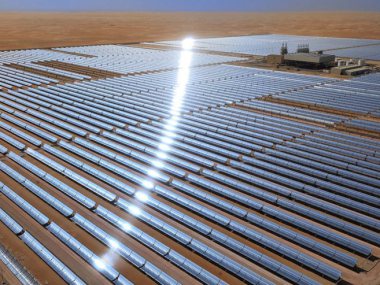 PM Modi lands World Bank’s record 1 trillion dollars loan for mega solar power project The World Bank has signed an agreement with India-led International Solar Alliance (ISA) to mobilise investments worth $1 trillion by 2030. IANS India Today, by Arpan RaiNew Delhi, June 30, 2016 The World Bank on Thursday signed an agreement with India-led International Solar Alliance (ISA) to mobilise investments worth $1 trillion by 2030 to help fund projects to increase solar energy use around the world.
The agreement, establishing the World Bank Group as a financial partner for 121-nation ISA, was signed here in the presence of visiting World Bank President Jim Yong Kim, Finance Minister Arun Jaitley and New and Renewable Energy Minister Piyush Goyal.
The ISA was launched at the Paris United Nations Climate Change Conference in November by Prime Minister Narendra Modi and French President Francois Hollande.
WHAT ALL DOES THE AGREEMENT INCLUDE?
As part of the agreement, the Bank will develop a roadmap to mobilise financing for development and deployment of affordable solar energy, and work with other multilateral development banks and financial institutions to develop financing instruments to support solar development.
On the occasion, the multilateral lender also announced that it planned to provide more than $1 billion to support India’s initiative to expand solar energy generation.
WHY IS THE MOVE A GRAND INVESTMENT FOR WORLD BANK?
The solar investments for India combined would be the Bank’s largest financing of solar energy projects for any country in the world to date, it said.
India’s plans to virtually triple the share of renewable energy by 2030 will both transform the country’s energy supply and have far-reaching global implications in the fight against climate change………http://indiatoday.intoday.in/story/pm-modi-lands-world-banks-record-1-trillion-dollars-loan-for-mega-solar-power-project/1/704572.html
India and Pakistan communicate with each other on nuclear facilities
 Pakistan, India exchange information on nuclear facilities http://dailytimes.com.pk/islamabad/01-Jan-06/pakistan-india-exchange-information-on-nuclear-facilities ISLAMABAD: Pakistan and India on Sunday exchanged lists of their nuclear facilities on Sunday, a requirement every January 1 under an accord in which they promised not to attack each other’s nuclear installations.
“The governments of Pakistan and India today exchanged lists of their respective nuclear installations and facilities in accordance with Article II of the Agreement on Prohibition of Attacks Against Nuclear Installations and Facilities between Pakistan and India of December 31, 1988,” a Foreign Office statement said.
Zaheer A. Janjua, Director of the India Desk in Pakistan Ministry of Foreign Affairs handed over the list to an officer of the Indian High Commission in Islamabad at the Foreign Office at 11:00am PST, the statement said.
India handed over their list to Muhammad Khalid Jamali, First Secretary of the Pakistan High Commission at the Ministry of External Affairs in New Delhi at 11:30am IST, it added. The statement did not give any details of which installations and facilities are mentioned in the lists. The list usually includes civilian nuclear power plants and gives the exact location of each such installation.
Top foreign ministry officials from Pakistan, led by Foreign Secretary Riaz Muhammad Khan will meet Indian officials on January 17 and 18 in New Delhi for talks on Kashmir and other issues. Railway officials are also slated to meet in New Delhi on January 5 and 6 to discuss reopening a rail link between Munabao and Khokhrapar, which was terminated after a 1965 war between the two countries.
GE Hitachi Nuclear Energy’s struggle to get the Indian market
 India Won’t Buy Untested GE-Hitachi Reactors, Atomic Chief Says, Bloomberg Rajesh Kumar Singh Rick Clough June 29, 2016
-
GE Hitachi reactors don’t have a reference plant, Basu says
-
GE calls for channeling nuclear liability to plant operators
-
India won’t buy untested GE Hitachi Nuclear Energy’s atomic reactors, reflecting safety concerns, the country’s top atomic-energy bureaucrat said.
“Right now they have offered us reactors that do not have a reference plant,” Sekhar Basu, secretary at India’s Department of Atomic Energy, said in a phone interview. “We will not buy a reactor that doesn’t have a reference plant.”
India’s reservations come months after General Electric Co. Chairman Jeffrey Immelt said his company won’t risk building a nuclear plant in India, citing the nation’s nuclear liability law, which exposes equipment suppliers to claims and litigation if there is an accident. The law has stood in the way of India’s nuclear expansion plans, as reactor suppliers including GE and Westinghouse Electric Co. weigh risks of doing business in the country.
- “GE Hitachi continues to have a strong interest in providing our technology to India for the eventual construction of multiple” economic simplified boiling-water reactors, or ESBWRs, the company said in an e-mailed statement. “We believe the path forward requires a sustainable regulatory environment, which would include a nuclear-liability law that channels liability to plant operators consistent with global best practices.”…….
- EDF has a pact to build a plant in the western state of Maharashtra, while the Russian-designed reactors are being used for a plant in the southern state of Tamil Nadu. http://www.bloomberg.com/news/articles/2016-06-29/india-won-t-buy-untested-ge-hitachi-reactors-atomic-chief-says
India stopped by China, from joining Nuclear Suppliers Group
China maintains its opposition to India joining a group of nations seeking to prevent the proliferation of nuclear weapons by controlling access to sensitive technology, said the head of the arms control department in China’s Foreign Ministry.
The Nuclear Suppliers Group (NSG) met this week in Seoul, but China said it would not bend the rules and allow India membership as it had not signed the nuclear Non-Proliferation Treaty (NPT), the main global arms control pact.
“Applicant countries must be signatories of the Treaty on the Non-Proliferation of nuclear weapons (NPT),” Wang Qun, the head of arms control department in China’s Foreign Ministry, was quoted as saying in Seoul on Thursday night.
“This is a pillar, not something that China set. It is universally recognized by the international community,” Wang said according to a statement released by the Chinese foreign ministry on Friday.
Opponents argue that granting India membership would further undermine efforts to prevent proliferation. It would also infuriate India’s rival Pakistan, an ally of China’s, which has responded to India’s membership bid with one of its own.
Pakistan joining would be unacceptable to many, given its track record. The father of its nuclear weapons program ran an illicit network for years that sold nuclear secrets to countries including North Korea and Iran. http://www.reuters.com/article/us-india-nuclear-china-idUSKCN0ZA0IF
China not happy with USA’s promotion of India to join Nuclear Suppliers Group
 China Takes Swipe At US Over India’s Nuke Club NSG Bid
“I have not seen the US statement supporting India. But the US is one of those who made the rule that non-NPT countries should not join the Nuclear Suppliers Group,” she said.
“According to my understanding, it (entry of new members) is not on the agenda of the NSG meeting in Seoul. The door is open for the admission of the non-NPT members. It is never closed. It is open. But the members of the NSG should stay focused on whether the criteria should be changed and whether non-NPT members should be admitted into the NSG”, she added.
Talking to journalists about the implications of India’s membership, the Chinese official said, “If the non-proliferation regime is changed how can we explain the Iranian nuclear treaty. We have North Korean issues there. So this concerns the core issue whether NPT and non-proliferation system could be impacted by this.”
On Monday, the United States gave a fresh push to India’s membership by asking members of the NSG to support India’s entry. White House Press Secretary josh Earnest said, “We believe, and this has been US policy for some time, that India is ready for membership and the United States calls on participating governments to support India’s application at the plenary session of Nuclear Suppliers Group (NSG)”……
China has also been batting for its close ally Pakistan’s entry if NSG extends any exemption for India.
The NSG looks after critical issues relating to the nuclear sector and its members are allowed to trade in and export nuclear technology. Membership of the grouping will help India significantly expand its atomic energy sector. http://www.ndtv.com/india-news/china-takes-swipe-at-us-over-indias-nuke-club-nsg-bid-1421679
Financially imprudent for India to let Westinghouse build nuclear reactors
 The cost of nuclear diplomacy, THE HINDU, SUVRAT RAJU, 20 JUNE 16 The government’s decision to let Westinghouse build six nuclear reactors in India smacks not only of arbitrary use of executive authority but is also financially imprudent
 In their recent joint statement, Prime Minister Narendra Modi and President Barack Obama “welcomed the start of preparatory work… in India for six AP1000 reactors to be built by Westinghouse…” Judging by the cost of similar reactors under construction in the U.S., these six reactors may cost as much as Rs.4 lakh crore. This makes the deal potentially the largest commercial contract in the offing between the two countries.
Economically unviable When the United Progressive Alliance government announced its intention to start work on two reactors each from Westinghouse and General Electric (GE) in the 12th Plan period (2012-2017), it did little to pretend that these contracts made sense on their own merits. Instead, as the former chairperson of the Atomic Energy Commission, Anil Kakodkar, explained, India had “to keep in mind the commercial interests of foreign countries and of the companies there” and was obliged to purchase these reactors in return for U.S. diplomatic support on other issues.
Last year, GE backed out of this arrangement citing concerns about India’s liability law. This was good riddance; GE was offering India an untested design that it has not yet managed to sell anywhere in the world. But the government’s decision to deepen India’s investment in Westinghouse — even as negative news about the company has accumulated — makes little sense.
In April, Toshiba, which acquired Westinghouse in 2006, announced a $2.3 billion write-down in its value, largely because of persistent concerns about the economic viability of Westinghouse’s AP1000 design. Of more than a dozen orders that Westinghouse expected from within the U.S. a decade ago, only four have materialised. Just last month, a utility called Florida Power and Light postponed its plans for two AP1000 reactors by at least four years. And in February, the Tennessee Valley Authority, a U.S. government company, cancelled its plans for two AP1000 reactors explaining that this was “the fiscally responsible action”.
- the government has persisted in making concessions to Westinghouse. In February, it ratified the “Convention on Supplementary Compensation” (CSC) for Nuclear Damage that contradicts India’s domestic liability law and protects nuclear suppliers from liability for an accident. Now, in the event of a disaster, Indian courts may find it difficult to exercise jurisdiction over Westinghouse that is not based in India and could point to India’s international commitments under the CSC to block any potential claims against it.
- For example, Dow Chemicals has rebuffed attempts to make it contribute to a clean-up in Bhopal by arguing that Indian courts have “no jurisdiction over it”. And in a cautionary tale about how flawed international agreements can subvert the domestic legal system, in 2011, an international arbitration tribunal awarded White Industries Australia Ltd. AU$4 million under a bilateral investment treaty even as its dispute with the Indian government was sub judice in India’s Supreme Court……..http://www.thehindu.com/opinion/op-ed/the-cost-of-nuclear-diplomacy/article8748864.ece
Nuclear Suppliers Group should say NO to India’s try for membership
The Nuclear Suppliers Group’s Critical India Decision An upcoming meeting will decide whether India will be allowed to join. Member states should think carefully. The Diplomat, By Mark Hibbs June 18, 2016 Beginning on Monday, the Nuclear Suppliers Group, or NSG – 48 countries that export most of the world’s nuclear material, equipment, and technology – will meet in Seoul to decide whether India should now be allowed to join. The United States has strongly urged the NSG to say yes.
The NSG should not say yes next week. It should tell India that there are good reasons to include it, but also that the group needs to complete an internal fact-finding and consensus-forming process in part to prepare the NSG for the consequences of possible Indian membership.
The United States has argued that bringing India into the group would be good for nuclear nonproliferation. So far it isn’t clear what the net overall benefit would be, especially because the White House is prepared to go forward without India having made non-proliferation commitments that many others in the group have made and virtually all say are important.
All NSG members are parties to the Nuclear Nonproliferation Treaty, or NPT. For the group’s 43 states without nuclear arms, NPT membership commits them not to possess these weapons. For the five states in the NSG with nuclear weapons, NPT membership means that they have legally committed themselves to nuclear disarmament and not to assist others in obtaining nuclear weapons. In addition, NSG members have taken other important steps toward a nuclear weapon-free future, by joining the Comprehensive Nuclear Test Ban Treaty (CTBT), by joining treaties that create nuclear weapons-free zones, and/or by permitting the International Atomic Energy Agency to verify that no aspect of their nuclear programs are being used to produce uranium or plutonium for nuclear weapons.
India is a nuclear-armed state. India is not a party to the NPT, it is not a party to a nuclear weapon-free zone treaty, it will not join the CTBT, and it will not make legal commitments identical to NPT articles concerning its nuclear arms. NSG members therefore are compelled to think harder than in previous cases about what will be the consequences of admitting India into the group. Those consequences include the impact on current NSG rules that discourage assistance to nuclear weapons programs in four non-NPT countries, as well as the impact on global efforts to strengthen specific NPT norms……..
The United States advocates Indian NSG membership for commercial and geostrategic reasons largely unrelated to nuclear export controls. Neither ground justifies forcing a decision now. In 2008, the NSG elected to permit civilian nuclear trade with India, meaning that India can import a raft of reactors its wants to buy from vendor Westinghouse. ……http://thediplomat.com/2016/06/the-nuclear-suppliers-groups-critical-india-decision/
Solar power brings free irrigation to a Gujarat Village
 With Solar Power, A Gujarat Village Is Irrigating Its Fields For Free NDTV, All India |Written by Rohit Bhan | Updated: May 22, 2016 DHUNDI:
HIGHLIGHTS
- Farmers formed cooperative to install solar panels in their fields
- Solar panels power irrigation, surplus power sold to electricity board
- Project funded by farmers and non-profit group IWMI
Around seven months ago, about a dozen farmers in Ramabhai’s village about 90 km from Ahmedabad came together to form a solar cooperative and set up solar panels in the fields to generate electricity.
“We used to spend 500 rupees on diesel for pumping sets for drawing water for irrigation. But now we do it with solar energy,” Rambhai said.
“We also make money by selling solar power when we not irrigating our fields. We can sell excess electricity to the power board for Rs. 4.63 per unit,” he added…….http://www.ndtv.com/india-news/with-solar-power-a-gujarat-village-is-irrigating-its-fields-for-free-1408800
Nuclear marketers see India as a saviour of nuclear industry
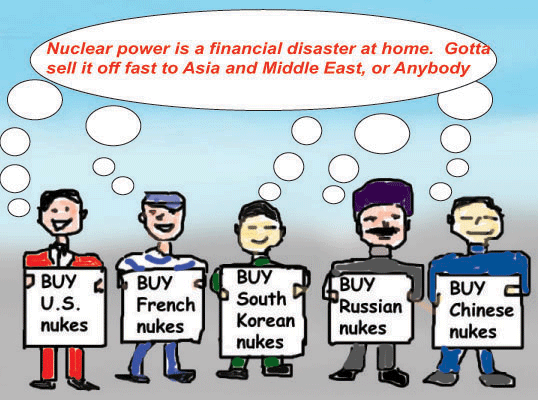
U.S. President Barack Obama and Indian Prime Minister Narendra Modi agreed at a June 7 summit that U.S. nuclear reactor maker Westinghouse Electric, a subsidiary of Japan’s Toshiba, would build power plants in the South Asian nation. In a statement following their meeting in Washington, Modi and Obama said they welcomed the announcement by the Nuclear Power Corp. of India and Westinghouse that they would finalize a contract by June 2017. The two companies had said they would immediately begin the work of designing reactors and selecting locations.
As the nation opens its market for nuclear plants, competition is likely to intensify between the U.S., France, Japan and other countries seeking a greater market share.
France reached an agreement early this year to start a development project in western India in 2017. Although a formal agreement has yet to be signed, the country will compete with the U.S. to become the first Western country in about 40 years to deliver a reactor to India. Japan also reached a broad agreement with India in late 2015……..http://asia.nikkei.com/magazine/20160616-POWER-PERFORMERS-of-the-Asia300/Business/Nuclear-power-plant-builders-see-new-opportunities-in-India
India paying high cost to save Westinghouse’s nuclear business
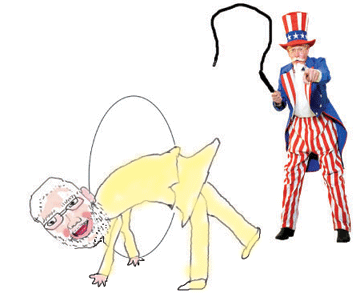 The Cost of Modi’s US Visit: Offering Rs. 2.8 lakh crore to Westinghouse, News Click, Prabir Purkayastha, June 09, 2016
The 4th visit of Modi to the US has very little to show as achievements. No wonder, the headlines screamed about “the start of the preparatory work” on six nuclear reactors as a major achievement. Not content with this, the Westinghouse AP 1000 reactors were even hyped as 5th generation reactors, skipping two whole generations of reactors in between. The earlier AP 600 reactors are recognised as 2nd generation reactors, making the AP 1000 the 3rd generation, which is how they are known in the rest of the world – except to certain gentlemen in the Indian media.
The reality is that after 8 years of negotiations on the Westinghouse reactors, India has now shifted the location from Mithivirdhi in Gujarat to Srikakulam in Andhra Pradesh. The negotiations for the deal with Westinghouse are still stuck, and only a new beginning is being sought with this new site. All that Westinghouse has agreed is that they will do some preliminary work for this new site — “start of the preparatory work”.
In today’s world, nuclear energy is a dying technology. Its costs are too high, its ability to build to schedule is non existent and it faces the challenge of renewables – wind and solar – the costs of which are dropping rapidly. The US, after a brief flirtation with nuclear energy – the so-called nuclear renaissance – has pretty much decided not to invest any further in this technology.
It is only China and India that can revive the dying nuclear industry of the US. Both Westinghouse and GE are without any further orders in the US and in the EU. So it is not the US showing its willingness to “give” us nuclear reactors to India that is the issue; it is India helping to revive a patient – the US nuclear industry – which has currently one foot already in the grave.
How much are we committing to pay to revive a dying Westinghouse? Continue reading
India’s nuclear lobbying
Viewpoint: India’s nuclear lobbying and an increasingly isolated Pakistan, BBC News, By Ahmed RashidLahore 14 June 2016
India’s American-backed bid to join the prestigious Nuclear Suppliers Group (NSG) has once again isolated Pakistan in South Asia.
Pakistan is increasingly finding itself friendless in the region as Iran, Afghanistan and India all find fault with Pakistan’s inability to end terrorism on its soil and in particular to bring the Afghan Taliban to the table for peace talks, as Islamabad promised to do nearly two years ago.
The 48-nation NSG, which sets global rules for international trade in nuclear energy technology, has become the latest diplomatic battleground between India and Pakistan. It is due to hold a crucial meeting this month. The Pakistani military is angry that after Indian Prime Minister Narendra Modi’s recent trip to Washington, the US has been furiously lobbying all member countries to give India a seat at the NSG table.
Pakistan then asked for the same, but its proliferation record is not as good as India’s and it clearly would not succeed. Instead, it has asked China to veto the Indian bid which it is likely to do. However, smaller countries are angry with the US, who they accuse of browbeating them, and complain that neither India nor Pakistan can become members until they sign the nuclear non-proliferation treaty (NPT) which is an essential requirement.
President Obama is going against his own policy of nuclear restraint and disarmament by offering to make India – but not Pakistan – a member of the NSG, when the US has also tied up plans to sell India six nuclear power plants……..http://www.bbc.com/news/world-asia-36518330
Russians call US nuclear reactors a “white elephant” for India
 US Nuclear Reactors to Prove White Elephant for India. Sputnik News 13 June 16 India’s latest move in the direction of implementing a nuclear energy pact with the US is gaining strong resentment as the US reactors are most likely to cost three times more than that of Russian reactors already well operational.
USA not yet able to get India into the Nuclear Suppliers Group
Nuclear Suppliers Group Meeting On India’s Membership Ends Inconclusive http://www.ndtv.com/india-news/nuclear-suppliers-group-meeting-on-indias-membership-ends-inconclusive-1417783 Agencies | June 10, 2016 VIENNA:
HIGHLIGHTS
- No decision on India’s application to enter NSG in Vienna meeting
- Application to be taken up in meeting in Seoul on June 20
- Countries led by US support India’s bid, others led by China oppose
India’s application is now expected to be taken up in a meeting in Seoul on June 20.
The US-led push for India to join the club of countriescontrolling access to sensitive nuclear technology had made some headway on Thursday as several opponents appeared more willing to work towards a compromise, but China has consistently remained defiant.
The Nuclear Suppliers Group or NSG aims to prevent the proliferation of nuclear weapons by restricting the sale of items that can be used to make those arms. It was set up in response to India’s first nuclear test in 1974.
India already enjoys most of the benefits of membership under a 2008 exemption to NSG rules granted to support its nuclear cooperation deal with Washington, even though India has developed atomic weapons and never signed the nuclear Non-Proliferation Treaty, the main global arms control pact.
After meeting with Prime Minister Narendra Modi at the White House on Thursday, President Barack Obama pledged America’s backing for India to be given a seat in the NSG.
But China on Thursday maintained its position that the Non-Proliferation Treaty is central to the NSG, diplomats said.
Stumbling block prevents Toshiba Westingouse selling nuclear technology to India
Nisha Desai Biswal, assistant secretary of State for South Asian affairs, told a Senate committee on May 24 that a commercial deal was “quite close.”
The stumbling block, however, has been one article in a 2010 piece of Indian legislation that would make Westinghouse — and its suppliers — potentially vulnerable to crippling litigation under local Indian laws in the event of an accident. India has offered to establish insurance pools, but companies have not accepted that plan. There was no indication Tuesday that this issue had been resolved.
“They’ve painted themselves into a corner,” Omer F. Brown, a lawyer and nuclear liability expert, said of the Indian government. “I don’t know how they get out of it given that they wrote the law the way they did.”
Westinghouse and General Electric’s nuclear arm have been striving to reach a deal with India for more than a decade, and in 2008 Congress approved an agreement to promote nuclear cooperation with India, which critics said undermined half a century of U.S. nonproliferation efforts.
Daryl Kimball, director of the Arms Control Association, said the U.S. push for India’s membership in the NSG “would compound the damage in my view of Bush administration’s exemption” for India. He and 16 other non-proliferation experts, including from the Obama administration, have written a letter urging the administration to drop its support for India’s membership……..http://www.ndtv.com/india-news/6-nuclear-power-reactors-for-andhra-deal-on-but-foreign-media-1416685
India’s Prime Minister Modi lobbying the world, for India to join the nuclear salesmen
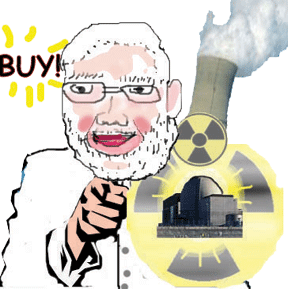 Modi’s global nuclear lobby tour, Nikkei Asian Review KIRAN SHARMA, Nikkei staff writer NEW DELHI 7 June 16, — Indian Prime Minister Narendra Modi is personally lobbying Switzerland, the U.S. and Mexico for his country’s admission into the 48-nation Nuclear Suppliers Group ahead of its next meeting in Vienna on Thursday.
India’s entry has been opposed by China, and Modi’s lobbying is the major component in a five-nation tour begun Saturday that also takes in Afghanistan and Qatar.
The announcement in Geneva was a boost to India because Switzerland had earlier been dubious about backing entrance to the NSG by nonsignatories to the Treaty on the Non-Proliferation of Nuclear Weapons. India considers the NPT discriminatory, and has not signed up.
India applied for Nuclear Suppliers Group membership on May 12 after preparing for several years. The group was created in response to India’s first nuclear test in 1974 to control the global supply of atomic material and technology. ……..
China, India’s biggest neighbor, argues that any new Nuclear Suppliers Group member should have signed the NPT. The U.S. backs India, citing its clean nonproliferation record. The U.S. helped India secure a special waiver from the NSG in 2008 for a bilateral civil nuclear deal. ………
India says it seeks a nuclear industry compliant with international norms and practices, but views the NSG and the NPT as separate matters.
“The NSG is a regime,” said Jaishankar. “It is a sort of a flexible arrangement amongst states, which is quite different from the NPT — which is a treaty.” The Indian foreign secretary pointed out that the central words in the two titles were “supplier” and “proliferation.” “So, I think the objectives are different,” he said……..
After the NSG’s meeting this week in Vienna, the group will meet in Seoul on June 24 and will review India’s application…..http://asia.nikkei.com/Politics-Economy/International-Relations/Modi-s-global-nuclear-lobby-tour
1 This Month
19 February – VIRTUAL EVENT-Decision Time: AI and Our Nuclear Arsenal
12:45 p.m. Central / 1:45 p.m. Eastern
To see nuclear-related stories in greater depth and intensity – go to https://nuclearinformation.wordpress.com
-
Archives
- February 2026 (127)
- January 2026 (308)
- December 2025 (358)
- November 2025 (359)
- October 2025 (376)
- September 2025 (258)
- August 2025 (319)
- July 2025 (230)
- June 2025 (348)
- May 2025 (261)
- April 2025 (305)
- March 2025 (319)
-
Categories
- 1
- 1 NUCLEAR ISSUES
- business and costs
- climate change
- culture and arts
- ENERGY
- environment
- health
- history
- indigenous issues
- Legal
- marketing of nuclear
- media
- opposition to nuclear
- PERSONAL STORIES
- politics
- politics international
- Religion and ethics
- safety
- secrets,lies and civil liberties
- spinbuster
- technology
- Uranium
- wastes
- weapons and war
- Women
- 2 WORLD
- ACTION
- AFRICA
- Atrocities
- AUSTRALIA
- Christina's notes
- Christina's themes
- culture and arts
- Events
- Fuk 2022
- Fuk 2023
- Fukushima 2017
- Fukushima 2018
- fukushima 2019
- Fukushima 2020
- Fukushima 2021
- general
- global warming
- Humour (God we need it)
- Nuclear
- RARE EARTHS
- Reference
- resources – print
- Resources -audiovicual
- Weekly Newsletter
- World
- World Nuclear
- YouTube
-
RSS
Entries RSS
Comments RSS
 nuclear-news