9 year old girl sues Indian government for inaction on climate change

 Girl, 9, sues Indian government over inaction on climate change http://news.trust.org/item/20170407113847-vw8c4 by Rina Chandran | @rinachandran | Thomson Reuters Foundation, 7 April 2017 India is home to four of the 10 worst ranked cities in the world for air pollution MUMBAI, – A nine-year-old girl has filed a legal case against the Indian government for failing to take action on climate change, highlighting the growing concern over pollution and environmental degradation in the country.
In the petition filed with the National Green Tribunal (NGT), a special court for environment-related cases, Ridhima Pandey said the government has failed to implement its environment laws.
“As a young person (Ridhima) is part of a class that amongst all Indians is most vulnerable to changes in climate, yet are not part of the decision making process,” the 52-page petition said. The petition called on the tribunal to direct the government “to take effective, science-based action to reduce and minimise the adverse impacts of climate change”.
The tribunal has asked the Ministry of Environment and the Central Pollution Control Board to respond within two weeks.
A spokesman from the Ministry of Environment told the Thomson Reuters Foundation that they would respond as directed by the tribunal.
India is home to four of the 10 worst ranked cities in the world for air pollution. Along with China, India accounted for more than half the total number of global deaths attributable to air pollution in 2015, according to a recent study.
Despite several laws to protect India’s forests, clean up its rivers and improve air quality, critics are concerned that implementation is poor, and economic growth often takes precedence over the environment.
Flash floods and landslides in the Himalayan state of Uttarakhand, where Ridhima lives, killed hundreds of people and left tens of thousands homeless in 2013.
The devastation affected Ridhima, the daughter of an environmental activist, said Rahul Choudhary, a lawyer representing her.
“For someone so young, she is very aware of the issue of climate change, and she is very concerned about how it will impact her in future,” he said. “She wanted to do something that can have a meaningful effect, and we suggested she could file a petition against the government,” he told the Thomson Reuters Foundation.
Ridhima is not the first child in India to take the government to task over inaction to protect the environment.
Last year, six teenagers filed a petition with the NGT over air pollution in New Delhi which has the worst air quality in the country.
India is taking some action to mitigate the damage. As a signatory to the Paris agreement on climate change, it is committed to ensuring that at least 40 percent of its electricity is generated from non-fossil-fuel sources by 2030.
In her petition, Ridhima asked the court to order the government to assess industrial projects for climate-related issues, prepare a “carbon budget” to limit carbon dioxide emissions, and create a national climate recovery plan.
“That a young girl is doing so much to draw the government’s attention is something. We hope the case puts some pressure on the government to act,” said Choudhary. (Reporting by Rina Chandran @rinachandran, Editing by Belinda Goldsmith; Please credit the Thomson Reuters Foundation, the charitable arm of Thomson Reuters, that covers humanitarian news, women’s rights, trafficking, property rights, climate change and resilience. Visit news.trust.org to see more stories.)
India US Nuclear Deal should be given a decent burial, now that Westinghouse is bankrupt
With Westinghouse Bankruptcy, the Nuclear Energy Story Nearly Over The much touted nuclear renaissance is now over. News Click Prabir Purkayastha 07 Apr 2017 With Westinghouse announcing its bankruptcy, India’s pledge to buy at least 10,000 MW as a part of the India US Nuclear Deal and reiterated by Modi last year, should be given a decent burial. Any agreement with Westinghouse now means that India would be bailing out Westinghouse and the US nuclear industry with Indian peoples’ money.
This also draws to a close all talk about a nuclear renaissance. The three major reactor manufacturers – Toshiba-Westinghouse, GE-Hitachi and Areva, France – are all in major financial difficulties. Only a fool will still believe their promise that the 3rd generation reactors they are developing – none of which have been successfully commissioned as yet – are either safe or cheap.
The Left’s position during the India US 123 Deal was that it neither served India’s strategic interest, nor made sense in energy terms. It also meant abandoning India’s self-reliant nuclear reactor industry for importing costly and unproven US reactors. Though it failed to stop the 123 Agreement in Parliament, the Left successfully led the struggle to modify India’s Nuclear Liability Act, ensuring that nuclear suppliers, like in any other hazardous industry, should be liable for their faulty equipment.
The Fukushima disaster has shown that a nuclear accident can cost up to $200 billion . Even this could be a conservative estimate. The Indian liability law caps operator and suppliers’ liability to just $ 407 million (300 million SDR’s). Though cost of a reactor is in billions of dollars, even this small liability, only a fraction of its cost, was perceived to be too “dangerous” and unacceptable to the US suppliers.
Last year, Modi, announced during one of his US visits that not only would India buy US reactors, a continuation of the assurance given by Shivshankar Menon, the Foreign Secretary under Manmohan Singh (Letter September 10th, 2008 ), but would also assume the liabilities of the US suppliers in case of of a nuclear accident. India offered Mithi Virdi in Gujarat to Westinghouse and Kovvada in Andhra to GE as the two sites. Subsequently on GE’s failure to show any successful contract combined with local resistance in Mithi Virdi, GE’s project was considered cancelled, and its Andhra site offered to Westinghouse.
Fortunately for India, Modi’s assurances have come too late for the US nuclear industry. The much touted nuclear renaissance is now over. In OECD countries, only 7 new reactors are being built with varying degrees of state support. With huge cost and time overruns, the curse of the nuclear industry, all of them are in deep trouble. GE, unsuccessful in selling even one of its so-called advanced design, has virtually pulled out of the nuclear business. After huge and continuing losses, Areva, the French reactor supplier, is being taken over by EdF, the French state-owned energy utility. EdF has already scrapped the new Areva EPR design, with which the Finnish Olkiluoto and French Flamanville plants were being built. This is also the design Areva is trying to sell for the Jaitapur project in Maharashtra.
The major objections of the Left regarding imported reactors have been proven correct. The untried and untested designs have meant numerous changes and difficulties in construction, leading to significant delays and sharp increase in costs. The cost of the two Areva plants of Euro 3 billion each originally, have increased by almost three times .
The Westinghouse story is no different………
In the exchanges between the UPA and the Left during Manmohan Singh’s government, the cost of new nuclear plants from French or US suppliers had come up. The UPA had presented figures for capital cost per KW of $1,500 and the price of power to be Rs. 1.49 paise per unit from imported nuclear plants. The Left had given figures from Olkiluoto and the US, showing that the capital cost would be at least $4,000 per KW and the price of electricity from such plants around Rs. 5 per unit.
The figures from the US and French projects now show that the capital cost per KW for such plants is in the range of $6,000-7,000, and therefore the price per unit of electricity from such plants will not be less than Rs. 8-10 per unit.
Why did the UPA claim such absurdly low figures for nuclear energy? They were either figments of their imagination or took these figures straight from the promotional material of the nuclear suppliers. To claim nuclear energy to be competitive, the nuclear suppliers took a 60-year life of the plant, left out the interest on capital during construction as a component of the cost, and claimed their new designs had much lower capital costs. They then did what are called levellised cost calculations – the cost of electricity over the lifetime of the plant. By this sleight of hand, they reached figures for the cost of nuclear power to be competitive with coal and gas.
Of course, the actual capital costs are much higher than what the nuclear industry was claiming. The regulators and utilities that price the electricity, have also to look at all the cost components including cost of capital, interest on loans, etc., and fix the price that of electricity. What matters to consumers and utilities (distribution companies or state electricity boards) is not the levellised cost of electricity, but the entry cost of nuclear power to the grid. This is what needs to be competitive to other sources. Any such calculations shows that nuclear energy is simply not competitive.
The collapse of Westinghouse, which has either built or licensed its designs to almost half the world’s reactors, shows that the nuclear story is nearly over. The reality is that with the cost of renewables – solar photovoltaics and wind – dropping sharply, the economics are increasingly against nuclear energy. This is apart from danger of catastrophic accidents or danger from long-term storage of radioactive nuclear wastes. It may still sustain itself for some time in countries, where there is a strong indigenous nuclear industry, such as India, China, Korea and Russia. But its days are now clearly numbered. http://www.newsclick.in/westinghouse-bankruptcy-nuclear-energy-story-nearly-over
Indian nuclear power plant to use drones for surveillance
Nuclear plant to have eye in the sky http://www.thehindubusinessline.com/news/science/nuclear-plant-to-have-eye-in-the-sky/article9612475.ece MUMBAI, APRIL 2: Situated in vast areas and away from human settlement, the surveillance of nuclear power plants have been a challenge for paramilitary force CISF, which is tasked with the security of such installations.
Now, the Nuclear Power Corporation of India (NPCIL) plans to deploy drones for the purpose at the Madras Atomic Power Station (MAPS) near Kalpakkam in Tamil Nadu.
While MAPS would be the first such facility in the country to use drones for general surveillance and intrusion detection, they were famously deployed by Japanese engineers at the Fukushima Daiichi nuclear power plant after the nuclear accident of 2011.
The Kalpakkam plant, located 70 km from Chennai, is also in the vicinity of other sensitive installations of the Department of Atomic Energy (DAE) such as the Indira Gandhi Centre for Atomic Research, the Fast Breeder Reactor Project, the BARC-run nuclear desalination demonstration plant and Kalpakkam fuel reprocessing plant.
Sources close to the development said tenders are likely to be floated by the NPCIL for procuring the drones and their control systems this fiscal. The use of drones will also require clearances from the Atomic Energy Regulatory Board (AERB), the regulator for all atomic energy institutions in the country.
Both aerial and ground level drones are capable of large-scale territorial surveillance. They are fitted with video cameras and other sensors that allow continuous surveillance of facilities.
Sources said the cameras mounted on the drones could be programmed to scan for certain topographical features on the ground and if there is a mismatch between the programmed image and the live feed from drones, alarms would go off.
Lt Gen DS Hooda (Retd), who served as Chief of Northern Army Command, told BusinessLine that the Army had been using drones on the India-Pakistan border and in Kashmir region. Drones allow the forces to get a bird’s eye view of the terrain and identify intruders hiding in tall structures. Drones would prove to useful in securing large installations, he said.
Vague outlook for India-U.S. civil nuclear pact, unlikely to meet June deadline
India-U.S. civil nuclear pact likely to miss June deadline, THE HINDU, Bankruptcy of reactor maker Westinghouse clouds operationalisation of the deal.
More than two years after India and the U.S. announced that the civil nuclear deal was “done,” its actual operationalisation is in doubt over a number of developments that stretch from a “school scandal” in the Japanese parliament to the Cranberry, Pennsylvania headquarters of Westinghouse Electric, which is expected to file for bankruptcy this week.
Six reactors for A.P. According to the agreement over liability issues and the negotiations that followed former U.S. President Barack Obama’s visit to India in January 2015 and Prime Minister Narendra Modi’s visit to Washington in June 2016, the two sides had agreed to “work toward finalising the contractual arrangements by June 2017” for six reactors to be built in Andhra Pradesh by Toshiba-owned Westinghouse and the Nuclear Power Corporation of India Ltd (NPCIL).
When completed, this was to be the first operationalisation of the India-U.S. civil nuclear deal, which was announced in 2008, and proof that both sides had effectively sorted out all their issues, including over the liability that suppliers must accept in the event of an accident.
The reason for the concern is that the nuclear arrangement hinged on two major factors — the completion of the India-Japan Nuclear Cooperation Agreement (NCA), as Toshiba and other suppliers for reactor parts are bound by Japanese laws and by the actual contract to be negotiated by the U.S.-based Westinghouse…….
When contacted, the U.S. Embassy declined to comment on how the bankruptcy issues would affect the deal. Nuclear officials said it was “likely” the June 2017 commercial contract with Westinghouse would be “delayed”, given that other financial companies, insurance companies would require clarity on the company’s future before agreeing to sign on the contract.
“The truth is the picture is very hazy at the moment,” a senior official of NPCIL said, adding that in the absence of land acquisition procedures for the other India-U.S. nuclear venture with GE-Hitachi for six 1594 MW reactors, the future of the India-U.S. nuclear deal is, for the moment, pinned to the future of Westinghouse itself. http://www.thehindu.com/news/national/indo-us-civil-nuclear-pact-likely-to-miss-june-deadline/article17668572.ece
India’s nuclear watchdog shuts down Kakrapar Nuclear Power Plant due to “smallpox-like spots”
This 21st century atomic potboiler is actually unfolding through the hard work of scientists at the Bhabha Atomic Research Centre (BARC), whose laboratory actually shares a wall with the famous property where Raj Kapoor used to live. Here, they are working overtime to find out the real cause of the leaks at the twin reactors in southern Gujarat.
To avoid panic and further accidents, Indian nuclear watchdog Atomic Energy Regulatory Board (AERB) has shut down the affected plants till the cause has been found. Nuclear experts say the pipes, made from a rare alloy, have contracted what seems like small pox, and this contagion has spread all over the critical tubes in two Indian Pressurised Heavy Water Reactors (PHWR) at the Kakrapar facility. To make matters worse, more than a year into the investigation, the teams of scientists can’t figure out what has gone wrong.
It was on the morning of March 11, 2016, and as fate would have it, exactly five years after the Fukushima reactors in Japan began exploding, Unit Number 1 of the 220-MW PHWR at Kakrapar developed a heavy water leak in its primary coolant channel and a plant emergency was declared at the site.
The indigenously built nuclear plant had to be shut down, but no worker was exposed and there were no radiation leaks, the Department of Atomic Energy confirmed. Operator Nuclear Power Corporation of India Limited (NPCIL) said the reactor had shut down safely, and confirmed that safety systems had functioned normally.
The atomic thriller really begins when experts were trying to find out why a leak recognition system failed, when it should have raised an alarm. “There is a leak detection system in place in all PHWRs, but in this case it failed to detect the leak on March 11, 2016,” confirms AERB Chairman SA Bhardwaj. The watchdog body suspects the crack developed so rapidly that the electronic leak detection system just did not have the time to react.
Subsequent investigations revealed that the leak detection system was fully functioning and the operator had not shut it down to cut costs. Nothing in the core of a nuclear reactor can be done in a jiffy, and several weeks after the first leak, the initial probe using a specially designed tool revealed four big cracks in a coolant tube had led to the massive leak.
The mystery unfolds
The discovery of the crack was only the beginning of the mystery. Further efforts to find the cause established that the outside of the tube, the part not exposed to high-temperature heavy water, was corroded due to unknown causes.
This was a stunning discovery, since the outside of the failed tube was exposed only to high-temperature carbon dioxide and there had been no recorded case of a similar corrosion on the outside of any tube. It is also very hard to access this part since the space is tiny in the annulus.
The AERB then ordered that all tubes made of a special zirconium-niobium alloy be checked on the outside. To their surprise, they discovered that the contagion of the nodular corrosion, ‘small pox-like’ in layman’s parlance, was widespread in many of the 306 tubes. Similar tubes from the same batch used at other Indian reactors continued to operate without corrosion.
The needle of suspicion now pointed to carbon dioxide, a gas known to be very stable in high-radiation environments. A further post mortem revealed that Unit-2, which is twin of the affected reactor, had also been affected by a similar leak on July 1, 2015. Investigations into Unit-2’s failure were made but no conclusive result had been found. This back-to-back failure of two fully functional nuclear reactors befuddled engineers.
BARC begins probe
Undaunted, AERB ordered that the entire assembly and not just the affected tube be safely pulled out and brought to BARC, India’s foremost nuclear laboratory, for detailed failure analysis.
In addition, since India operates another 16 similar nuclear plants, a full-fledged investigation was carried out on coolant channels at all atomic power plants. The investigating team found the ‘small pox-like’ corrosion was confined only to the two units at Kakrapar.
While NPCIL heaved a sigh of relief, the finding made it all the more difficult to discern the true cause of the leaks at Kakrapar. Mr. Bhardwaj says investigators are wondering if the carbon dioxide used in Kakrapar may have been contaminated, which caused the nodular corrosion.
The source of the carbon dioxide was traced backwards, and it seems only the Kakrapar plant was sourcing its gas from a Naptha cracking unit, where it was possibly contaminated by hydrocarbons.
India forced to back out of nuclear project sites, due to local opposition
 India exploring new sites for building nuclear projects: report, Live Mint 2 Mar 17 India has had to back out from a couple of nuclear project sites in the past because of opposition from the local population. New Delhi: India is exploring new locations, in addition to those already identified, to build nuclear power plants and meet its generation goal, a government official with direct knowledge of the matter said.
The nation has had to back out from a couple of sites in the past because of opposition from the local population and is now looking at regions, including those away from the sea, to supplement the existing list, the official said without elaborating. He asked not to be named as the plans aren’t public yet.
India’s plans to expand its nuclear generation capacity more than ten-fold have been hampered by delays in construction due to protests by the local population and suppliers’ concern over a liability law. The law, which allows for claims from companies setting up the plant, has discouraged reactor suppliers from General Electric Co. to Toshiba Corp.-controlled Westinghouse Electric Co.
Toshiba said last month unit Westinghouse’s plan to set up six reactors in India are contingent on a change in the nuclear liability law. It will no longer take up the risk of building new nuclear plants and instead specialize in supplying parts and reactor engineering, the company said following a $6.3 billion write-down.
India is awaiting an official communication from Westinghouse on its plans in the country, the government official said, declining to comment further……..http://www.livemint.com/Politics/cAl4c3eRVpruUoduidBqcO/India-said-to-explore-new-sites-for-building-nuclear-project.html
India launches nuclear destroyer missile
Nuclear destroyer missile launched by India in chilling warning to world, Daily Star , 2 Mar 17 INDIA has fired a nuclear destroyer missile as the nation prepares for all-out war. The low altitude interceptor was fired over the Bay of Bengal to destroy an incoming ballistic missile.
Defence officials in the country are developing a two-tier ballistic missile defence to protect against impending nuclear war.
“The complete event including the engagement and destruction was tracked by a number of electro-optical tracking systems using infrared imagery…..http://www.dailystar.co.uk/news/latest-news/592823/Nuclear-war-destroyer-missile-World-War-3-India-Pakistan-conflict
Solar power for 7,000 Railway Stations In India
7,000 Railways Stations In India To Go Solar https://cleantechnica.com/2017/02/21/7000-railways-stations-india-go-solar/ February 21st, 2017 by Saurabh Mahapatra Almost every railway station in India will soon be fed with solar power if the plans announced in India’s latest union budget are implemented.

The Indian Finance Minister Arun Jaitley announced that the 7,000 railway stations across the country will be fed with solar power as per the Indian Railways mission to implement 1,000 megawatts of solar power capacity. The minister made the announcement during the union budget speech on 1 February 2017.
The minister stated that work to set up rooftop solar power systems at 300 stations has already started, and soon this number will increase to 2,000 stations. According to data released by the Minister of Railways, India had 7,137 railway stations at the end of March 2015.
These rooftop solar power systems are expected to be implemented through developer mode, wherein the project developer will sign long-term power purchase agreement with Indian Railways.
In addition to rooftop solar power systems, the Indian Railways is expected to set up large-scale projects as well. Last year, it announced plans to launch a tender for 150 megawatts (MW) of rooftop systems. Late last year, it announced a partnership with the United Nations Development Programme (UNDP) to set up 5 gigawatts of solar power capacity.
The Indian Railways has managed to identify the solar power resource in two states so far — Gujarat and Rajasthan — where 25 MW of rooftop and 50 MW of ground-mounted capacity is to be commissioned in the first phase of the program. In the second phase, 60 MW of rooftop and 660 MW of ground-mounted capacity will be installed in nine other states. During the third phase, 400 MW of rooftop and 3,800 MW of ground-mounted capacity will be installed in the rest of the country.
Pakistan and India have agreed to extend their bilateral nuclear safety agreement

 Pakistan, India extend nuclear safety agreement, By Our Correspondent, Express Tribune, February 21, 2017 ISLAMABAD: Pakistan and India have agreed to extend their bilateral agreement on reducing the risk from accidents relating to nuclear weapons in a move suggesting the two rivals are still mindful of nuclear dangers despite currently strained ties.
The key agreement was extended for the next five years (2017-2022), said a statement issued by the Foreign Office on Tuesday.
The agreement came into force in 2007. It was subsequently extended for a period of five years in 2012. The accord is part of the nuclear confidence building measures agreed between Pakistan and India. The aimed of the agreement is to promote a stable environment of peace and security between the two countries, reads the official handout.
“It is premised on the recognition that the nuclear dimension of the security environment of the two countries adds to their responsibility for avoidance of conflict,” the statement added.
The agreement provides for immediate exchange of information between the two countries in the event of any accident relating to nuclear weapons, under their respective jurisdiction and control, which could create the risk of radioactive fallout, with adverse consequences for both sides, or create the risk of an outbreak of a nuclear war…….https://tribune.com.pk/story/1334606/pakistan-india-extend-nuclear-safety-agreement/
Pakistan demands that India bring its nuclear programme under International Atomic Energy Commission (IAEA)’s safeguards
‘Pakistan wants India’s entire nuclear programme under IAEA safeguards’ http://www.pakistantoday.com.pk/2017/02/07/pakistan-wants-indias-entire-nuclear-programme-under-iaea-safeguards/ February 07, 2017 ISLAMABAD: Pakistan wants India to bring its entire civilian nuclear programme under the safeguards laid out by the International Atomic Energy Commission (IAEA), a statement quoting Director General Disarmament at the Foreign Office Kamran Akhtar said.
Akhtar was speaking at a round-table discussion in Islamabad on Fissile Material Cut-Off Treaty (FMCT), organised to prepare for the upcoming Conference on Disarmament (CD).
“It is incumbent on us to stand up for our own interest. We want an assurance that India’s whole three stage nuclear power programme would be under safeguards,” said Akhtar. “Pakistan will not agree to FMCT until it gets the assurance from India.”
He said negotiating a treaty that only bans future production of fissile material without taking into account the existing stockpiles would freeze “the existing asymmetries”.
The DG Disarmament was of the opinion that India has been given “discriminatory waivers”, which add to Pakistan’s security concerns.
He said that eight of the Indian reactors, its fast breeder programme and approximately five tonnes of reactor-grade plutonium were included in the safeguards of dictated by the IAEA.
The FMCT would put Pakistan at a permanent disadvantage and undermine its security interests, Akhtar added. There is a fear that the reactors not mandated by the safeguards might be used clandestinely for plutonium production and the existing stockpiles might be diverted to a military programme at a subsequent stage, the DG said.
“Pakistan should not be asked to agree to something that is not in its strategic interest. We have to factor into consideration possible actions by India that could undermine credibility of our nuclear deterrence,” he added.
China more than doubled solar capacity in 2016
Installed PV capacity rose to 77.42 gigawatts at the end of 2016, with the addition of 34.54 gigawatts over the course of the year, data from the energy agency showed.
Shandong, Xinjiang, Henan were among the provinces that saw the most capacity increase, while Xinjiang, Gansu, Qinghai and Inner Mongolia had the greatest overall capacity at the end of last year, according to the data.
China will add more than 110 gigawatts of capacity in the 2016-2020 period, according to the NEA’s solar power development plan.
Solar plants generated 66.2 billion kilowatt-hours of power last year, accounting for 1 percent of China’s total power generation, the NEA said.
The country aims to boost the mix of non-fossil fuel generated power to 20 percent by 2030 from 11 percent today.
China plans to plough 2.5 trillion yuan ($364 billion) into renewable power generation by 2020.
(Reporting by Ryan Woo; Editing by Helen Popper)
Slowdown in Indian company’s effort to develop nuclear power, renewables now more favoured
NTPC’s efforts to get into nuclear power have slowed down even as the public sector power generation behemoth is focussing more on renewable energy.
A senior company official said the uncertainty due to higher tariff cost, along with some earlier ‘legislative hurdles’ are the reasons for lesser excitement for nuclear power projects.
The Parliament cleared the amendment to the Atomic Energy Act 1962 on December 31, 2015. This allowed the joint venture PSUs (public sector undertakeings) to build and operate nuclear power plants.
Impact of delay
NTPC officials BusinessLine spoke to said that ASHVINI — the joint venture between NTPC and Nuclear Power Corporation of India — was to be allocated the 2×700 MW Gorakhpur Haryana Anu Vidyut Pariyojana (GHAVP) project in Haryana. But due to delays in the amendment to the law, NPCIL decided to go ahead and build the plant itself.
In 2010, the then Department of Atomic Energy (DAE) Secretary, Srikumar Banerjee, had said that one of the sites identified by the DAE for the 2×700 MW plant would go to a NTPC and NPCIL joint venture company.
In 2011, NTPC-NPCIL formed the Anushakti Vidhyut Nigam Ltd (ASHVINI) with the objective of building nuclear power plants.
But the JV could not begin building nuclear power plants as the Atomic Energy Act did not allow joint ventures of PSUs for the same.
NTPC officials say that the expected power tariff from GHAVP is likely to be close to ₹10/kWh. Further, the plant will be commissioned in another 10 years.
High cost a concern
Assessing the subdued price of power in the country and the low price of renewable energy, officials said that the high tariff cost will be of concern when the plant is commissioned.
Considering that amendments to the Atomic Energy Act have been approved, it is now the prerogative of the DAE to allocate GHAVP to ASHVINI, according to NTPC officials.
In 2014, the estimated cost of the entire project of 28 GW, to be built in two phases, was envisaged at ₹20,594 crore.
China criticises India’s nuclear weaponry, says Pakistan should have the same nuclear “privileges”
Pak should have privileges as India in nuclear development: Chinese state media Hindustan Times, Jan 05, 2017 India has “broken” UN limits on nuclear arms and long-range missiles and Pakistan should also be accorded the same “privilege”, state-run Chinese media said on Thursday as it criticised New Delhi for carrying out Agni-4 and 5 missile tests whose range covers the Chinese mainland.
“India has broken the UN’s limits on its development of nuclear weapons and long-range ballistic missile,” the ruling Communist Party-run tabloid Global Times said in its editorial.
“The US and some Western countries have also bent the rules on its nuclear plans. New Delhi is no longer satisfied with its nuclear capability and is seeking intercontinental ballistic missiles that can target anywhere in the world and then it can land on an equal footing with the UN Security Council’s five permanent members,” it said.
“In general, it is not difficult for India to produce intercontinental ballistic missiles which can cover the whole world. If the UN Security Council has no objection over this, let it be. The range of Pakistan’s nuclear missiles will also see an increase. If the world can adapt to these, China should too,” it said.
The references to violation of UN rules by the daily were significant as the Chinese foreign ministry spokesperson Hua Chunying while reacting to India’s Agni-5 missile test said on December 27 that ”on whether India can develop this ballistic missile that can carry nuclear weapons, I think relevant resolutions of the UNSC have clear rules”. http://www.hindustantimes.com/india-news/pak-should-have-privileges-as-india-in-nuclear-development-chinese-state-media/story-ac8Oad5ab7abln3mfzNlcM.html
Would India and Pakistan go to nuclear war?
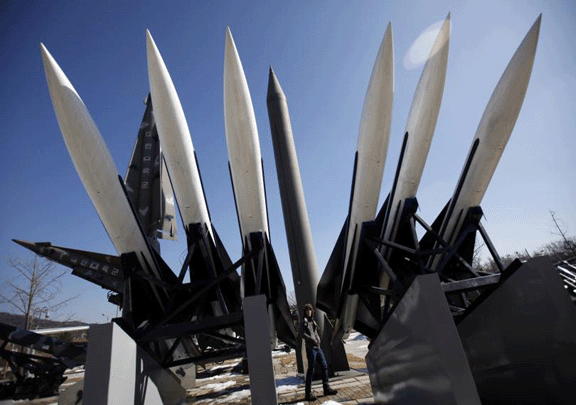 2.5 billion people, nukes and missiles. What could go wrong? By Joshua Berlinger, CNN January 5, 2017
Story highlights
1 This Month
To see nuclear-related stories in greater depth and intensity – go to https://nuclearinformation.wordpress.com/
12 February – Webinar The Big Push: New Nuclear Projects in Canada
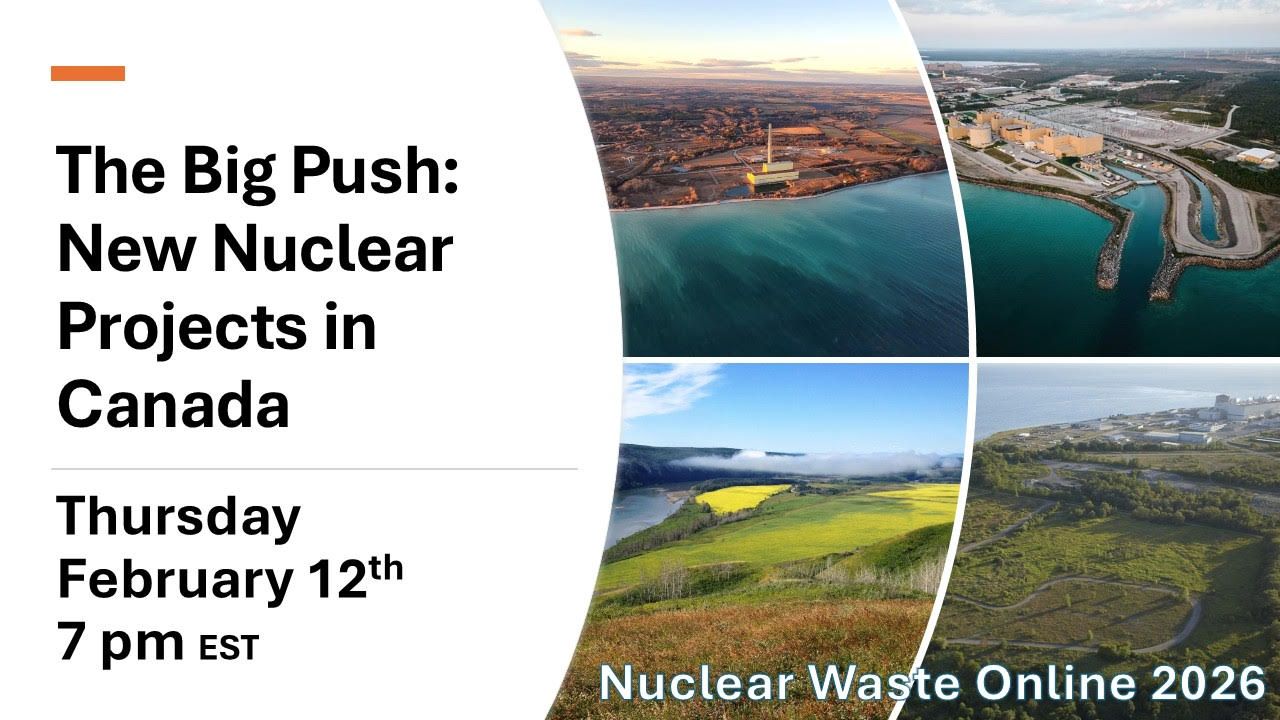
Thursday, February 12, 7 pm Eastern | 2nd of 4 sessions in the 2026 Nuclear Waste Online webinar series
Join a webinar on the push for new nuclear generation in Canada. Go to Northwatch.org to register or use the registration link https://us02web.zoom.us/webinar/register/WN_ZfWOf1GITqSRIZX8CB-A9w

-
Archives
- February 2026 (127)
- January 2026 (308)
- December 2025 (358)
- November 2025 (359)
- October 2025 (376)
- September 2025 (258)
- August 2025 (319)
- July 2025 (230)
- June 2025 (348)
- May 2025 (261)
- April 2025 (305)
- March 2025 (319)
-
Categories
- 1
- 1 NUCLEAR ISSUES
- business and costs
- climate change
- culture and arts
- ENERGY
- environment
- health
- history
- indigenous issues
- Legal
- marketing of nuclear
- media
- opposition to nuclear
- PERSONAL STORIES
- politics
- politics international
- Religion and ethics
- safety
- secrets,lies and civil liberties
- spinbuster
- technology
- Uranium
- wastes
- weapons and war
- Women
- 2 WORLD
- ACTION
- AFRICA
- Atrocities
- AUSTRALIA
- Christina's notes
- Christina's themes
- culture and arts
- Events
- Fuk 2022
- Fuk 2023
- Fukushima 2017
- Fukushima 2018
- fukushima 2019
- Fukushima 2020
- Fukushima 2021
- general
- global warming
- Humour (God we need it)
- Nuclear
- RARE EARTHS
- Reference
- resources – print
- Resources -audiovicual
- Weekly Newsletter
- World
- World Nuclear
- YouTube
-
RSS
Entries RSS
Comments RSS
 nuclear-news