The extraordinary financial costs of ‘small’ nuclear power stations

By Alan Finkel, Cosmos, 21 Mar 24
Partial extract from an article to be posted in 360info.org
They’re being touted as the solution to kickstarting a nuclear power industry in Australia.
According to the Opposition’s Minister for Climate Change and Energy, Ted O’Brien, small modular reactors (SMR) could be built within ten-year period if it wins the next election.
However, it would likely take 20 years to commence commercial operation of any nuclear reactors in Australia from the time in-principle approval was reached. To reach that starting point and enable detailed consideration of the challenges and costs of nuclear power, the existing legislative ban on nuclear power in Australia will need to be removed.
There are other obstacles.
While there’s plenty of excitement about SMRs, the problem is there just isn’t enough data about them, mainly because there are none operating in any OECD country.
And it’s unknown when any might be. As Allison Macfarlane, former chair of the US Nuclear Regulatory commission, argues in her article,The end of Oppenheimer’s energy dream, the proposal for small modular reactors to help us in the clean energy transition is fanciful.
The SMR furthest along the US Nuclear Regulatory Commission (NRC) approval process, from the US company NuScale, cancelled its first planned installation in Utah last November when the initial cost blew out to USD$9 billion, corresponding to USD$20 billion per GW.
The only countries with working SMRs are China and Russia.
Micro and large reactors
Micro reactors are intended to generate electrical power up to 10 MW per unit. Although companies such as Rolls Royce are developing these, there do not appear to be any commercial micro modular reactors that have completed their design.
That leaves full-scale reactors, which have also been mentioned as part of a possible Australian nuclear power play.
Korean company KEPCO builds most of the nuclear reactors in Korea and has now built one at Barakah in the United Arab Emirates. This 5.6 GW plant, scheduled to open this year, has taken 16 years to complete and cost USD$24 billion (AUD$36 billion). At 5.6 GW, that is AUD$6.4 billion per GW. Given salaries and skills shortages in Australia, inflation, interest rates and our regulatory requirements, it would cost more and take longer in Australia.
The Hinkley C plant in the UK was supposed to be finished in 2017 but has been delayed again until 2031 – 23 years after approval. The estimated construction cost ballooned to AUD$89 billion. At 3.2 GW electrical power, that is AUD$28 billion per GW.
In the US, the most recent nuclear reactors to be built are the Vogtle 3 and 4built at the existing facility that is home to the Vogtle 1 and 2 reactors. Both were anticipated to be in service in 2016. Vogtle 3 began commercial operation in July 2023. Vogtle 4 is projected to commence operation in the second quarter of 2024 – 15 years after the construction contract was awarded.
Construction cost USD$34 billion (AUD$52 billion) for the combined 2.2 GW output of the two reactors, or AUD$24 billion per GW.
Construction of nuclear plants in the United States has declined dramatically over the years. Approximately 130 were built from the mid 1950s to the mid 1990s. Only four commenced operation in the 30 years from the mid 1990s to now, and at the time of writing there are no nuclear reactors under construction in the United States.
In France, only one nuclear power plant is under construction. The 1.65 GW Flamanville EPR reactor is hoped to be completed and begin to supply electricity later this year, 17 years after construction began. The most recent cost estimate was AUD$22 billion or AUD$13 billion per GW. No other nuclear power plants are planned in France.
These high costs and long delivery durations for full-scale reactors are the reasons SMRs are proposed as a way forward in Australia. However, SMRs are a new technology. There are none in operation or construction in any OECD countries, thus it is not possible to estimate the costs or delivery schedules. NuScale’s investment to date suggests that the capital cost for the first units to be delivered will be very high. ………… https://cosmosmagazine.com/technology/energy/the-extraordinary-financial-costs-of-nuclear-power/
U.S. Troops Are One Mile From The Chinese Border
the most important news, March 21, 2024 [ The original has several substantial quotations from news media]
The U.S. cannot afford a war with China. The size of our military has been shrinking, and our resources are stretched way too thin. Today, the U.S. has military bases in 80 different countries, and we have troops stationed in 178 different countries. That is insane. No empire in the entire history of humanity has had forces spread all over the planet like this. Our ammunition levels are extremely low due to major conflicts in the Middle East and Ukraine, and every war game that our leaders have conducted has shown us losing a war to protect Taiwan. So we should be trying to avoid sparking a war with China, because we are holding a losing hand.
But our politicians seem determined to provoke one anyway. It is being reported that officials in Taiwan have confirmed that U.S. forces are now permanently stationed “on its islands in the Taiwan Strait”…
Taiwan’s main island is approximately 100 miles from China, but in some places the Kinmen islands and China are “barely more than a mile apart”…
What are our leaders thinking?
This doesn’t make war less likely.
It makes war more likely.
On Wednesday, China sent 32 warplanes toward Taiwan in a 24 hour period…
The Chinese do this sort of thing when they are upset.
And right now they are very, very upset.
And China has been feverishly preparing for the coming war…
When war with China finally erupts, will we be able to handle it?
Of course not.
Our forces are scattered all over the planet, and so many of our resources have already been poured into the war in Ukraine.
Even though there have been efforts to ramp up ammunition production in the U.S., it is being reported that “Russia is producing nearly three times as many artillery munitions as the United States and Europe combined”…
No matter how you feel about the war, that is just embarrassing.
One of the reasons why we won World War II was because the U.S. could simply outproduce everyone else by a wide margin.
But now we just look pathetic.
French President Emmanuel Macron and other western leaders have suggested that NATO troops should be sent into Ukraine if that is what is necessary to keep the Russians from winning.
If that actually happens, U.S. boys and girls will inevitably be sent to die in the trenches of eastern Ukraine too.
In anticipation of a wider war, the Russians are conducting another round of mobilization.
In fact, Russian Defense Minister Sergei Shoigu has just announced “the creation of 2 new ground armies, with 16 new brigades & 14 new divisions”.
Meanwhile, Israeli officials continue to insist that a major ground operation will happen in Rafah no matter what the Biden administration thinks about such a move…
When the IDF goes into Rafah, that could cause the entire region to erupt.
And so U.S. forces may be called on to intervene in the Middle East as well.
Spreading your resources way too thin is a sure way to lose.
Unfortunately, our politicians don’t seem to understand this, and their very foolish decisions will soon lead to absolutely disastrous consequences.
Michael’s new book entitled “Chaos” is available in paperback and for the Kindle on Amazon.com, and you can check out his new Substack newsletter right here. https://themostimportantnews.com/archives/u-s-troops-are-one-mile-from-the-chinese-border
Coalition Kill Chain for the Pacific: Lessons from Ukraine

U.S. Naval Institute, By Majors Dylan Buck and Steven Stansbury, U.S. Marine Corps, July 2023
Proceedings Vol. 149/7/1,445
Russia’s war in Ukraine offers a critical case study on why—and how—to build a more robust kill chain that leverages partners’ and allies’ capabilities. A more expansive satellite communications (SATCOM) network that enables a real-time integrated common operational picture (COP) will be necessary to generate the relative combat power advantage over the People’s Liberation Army (PLA). Russia initiated combat operations in Ukraine with cyberattacks on SATCOM to disrupt Ukraine’s kill chain—the methodology for finding, fixing, targeting, tracking, engaging, and assessing (F2T2EA) an adversarial objective.
Ukraine’s kill chain—the methodology for finding, fixing, targeting, tracking, engaging, and assessing (F2T2EA) an adversarial objective. The United States, alongside partners, allies, and industry, was able to blunt Russia’s invasion by reconstructing Ukraine’s SATCOM network and sharing critical intelligence. However, the kill chain architecture leveraged against Russia does not exist in the first island chain of the western Pacific.
…………… To achieve the capability required to deter the PLA, the Department of Defense (DOD) must further develop SATCOM architecture in the first island chain and expand partners and allies’ access to the COP to build a coalition kill chain that can mass fires.
……….. the United States had to create more permissive policy for intelligence sharing for more effective targeting. Furthermore, kill chains in the Pacific are more dependent on SATCOM as submarine internet cables are more vulnerable and likely already compromised by China.
……. First, to enhance U.S. SATCOM architecture, the DoD could begin to supplement geosynchronous orbit satellites by proliferating low-earth-orbit and medium-earth-orbit satellites. This would reduce vulnerabilities related to adversarial space operations and expand SATCOM range and resiliency. SpaceX’s Starlink functions off the same principle of a mesh networks of low-earth-orbit satellites.
Second, the United States could use partner and allies’ satellite networks and make policy more permissive with intelligence sharing. In March 2022, the Department of Defense announced its Joint All-Domain Command and Control Implementation Plan with the 5th line of effort to “Modernize Mission Partner Information Sharing.” The intent is to enhance the ability to integrate partner and allies’ data for all-domain coalition operations. After all, the value in integrating systems is only as good as the real-time tracks being shared. To build a coalition kill chain, U.S. policy will have to become more permissive with intelligence sharing among partners and allies.
Structure of the Multinational Kill Chain
The United States will also need to create a methodology for building a multinational COP and integrated fires network. Tactical-level forces across the partner and ally network must evolve to contribute more to operational and strategic-level fires and effects. This effort is twofold: first, the joint force could expand partners and allies’ access to Type-1 Link-16 cryptography, so they are built into the operational tasking link; and second, it could reduce constraints on protocols and pathways for sharing information.
The first effort would integrate partners and allies into the tactical data link router used by the U.S. joint force, also known as the Joint Range Extension Applications Protocol. This would require access to the joint Link 16 architecture by assigning partners and allies a cryptographic variable logic label via an operational tasking data link (OPTASK LINK). Access to the Link 16 architecture would provide a shared COP capable of integrating national technical means for finding and fixing targets and cuing assets to track them.
……………………………………………Once the multilateral kill chain is built, it must be rehearsed with common understanding of joint war-at-sea terminology among partners and allies. War-at-sea, zones of action, and zones of fire must be standardized in planning to achieve a common lexicon. The Global Area Reference System is also key to orientation and understanding the battlespace. Rehearsing multilateral plans for fire, specifically including protocols for authorities, and collaborating on battle damage assessments are necessary to achieve true integration………………………………………………….. https://www.usni.org/magazines/proceedings/2023/july/coalition-kill-chain-pacific-lessons-ukraine
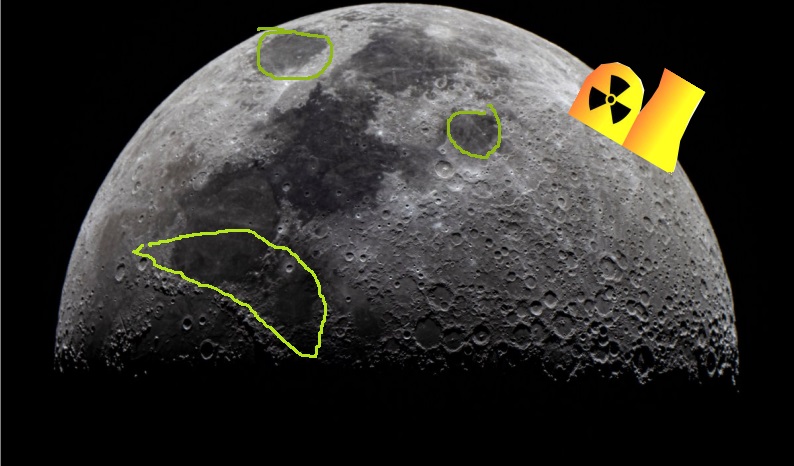
Russia and China announce plan to build shared nuclear reactor on the moon by 2035, ‘without humans’
Live Science, By Harry Baker, 8 Mar 24
The proposed nuclear reactor, which could be transported and assembled without human assistance, would provide energy to a lunar base that Russia and China have agreed to build together.
Russia’s space agency Roscosmos has announced plans to work with China to build an automated nuclear reactor on the moon by 2035. The proposed reactor will help power a proposed lunar base that the two countries will jointly operate.
Back in 2021, Roscosmos and the China National Space Administration (CNSA) revealed that they intended to build a shared base on the moon, named the International Lunar Research Station (ILRS), which they claimed at the time would be “open to all interested countries and international partners.”
However, NASA astronauts are unlikely to be allowed to visit this base due to historically frosty relations with CNSA and a more recent split with Roscosmos, which will leave the International Space Station by 2025 in response to sanctions from the U.S. over Russia’s invasion of Ukraine in February 2022.
On Tuesday (March 5), Roscosmos announced that it will eventually attempt to build a nuclear reactor alongside CNSA, which would theoretically be able to power the ILRS.
“Today we are seriously considering a project — somewhere at the turn of 2033-2035 — to deliver and install a power unit on the lunar surface together with our Chinese colleagues,” Roscosmos director general Yury Borisov told state-owned Russian news site TASS.
Borisov added that the challenging construction job would likely be carried out autonomously “without the presence of humans” and that the necessary technological solutions to pull it off are “almost ready.”
Roscosmos is also looking to use massive nuclear-powered rockets to transfer cargo to the moon to build this base, but the agency has not yet figured out how to build these spacecraft safely, Reuters reported……………………………………..
Roscosmos and CNSA, neither of which have put humans on the moon’s surface, have contrasting track records when it comes to recent lunar exploration.
Last year, Russia’s first moon mission in 47 years ended in disaster when the Luna-25 lander crashed into the lunar surface, leaving behind a 33-foot (10 meter) wide crater.
However, China has had a presence on the moon since 2013, when the Chang’e 3 mission put a lander and rover on the lunar surface. The subsequent Chang’e 4 and Chang’e 5 missions, which occurred in 2019 and 2020 respectively, also successfully landed spacecraft on the moon. The most recent mission also successfully returned lunar samples to Earth — a feat that CNSA will attempt to repeat later this year.
Last week, CNSA also announced that it will start launching giant reusable rockets over the next two years as part of the agency’s plan to put boots on the moon by 2030.
However, NASA is still on track to return humans to the lunar surface before then, despite the first crewed Artemis mission being delayed until 2026. https://www.livescience.com/space/space-exploration/russia-and-china-announce-plan-to-build-shared-nuclear-reactor-on-the-moon-by-2035-without-humans
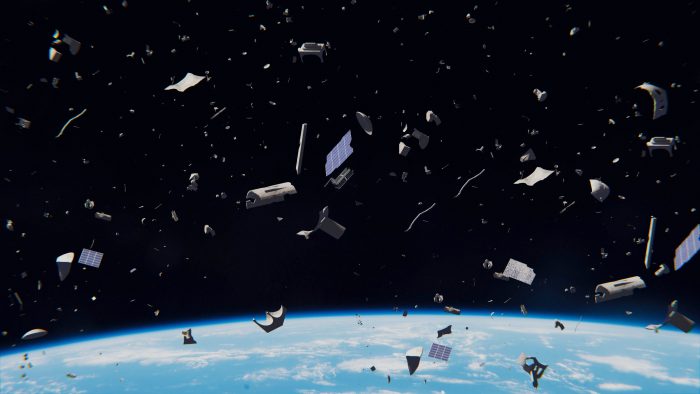
China outlines position on use of space resources
Space News Andrew Jones, March 6, 2024
HELSINKI — China holds a seemingly positive stance towards the use of space resources, according to a recent submission made by a Chinese delegation to the United Nations.
The delegation appears to state that China considers space resource utilization as permissible, but must be conducted in accordance with the Outer Space Treaty (OST) of 1967.
China’s submission treats the use of space resources as legal, but also calls for adherence to the existing frameworks of international space law, with the OST as the cornerstone.
The document was submitted to the Working Group on Legal Aspects of Space Resource Activities of the Legal Subcommittee of the Committee on the Peaceful Uses of Outer Space (COPUOS).
COPUOS is a body of the United Nations tasked with governing the exploration and use of space for the benefit of all humanity, overseeing matters related to space science and technology and their applications. The Working Group plays a critical role in addressing the legal challenges posed by the utilization of space resources, helping to shape the international legal framework that will govern these activities.
The submission could be seen as a beneficial development, helping to set the stage for a dialogue on the legal frameworks for governing the use of space resources.
“This engagement by China on the international discussion on space resources is a positive development,” Christopher Johnson, director of legal affairs and space law for the Secure World Foundation, told SpaceNews. “It tells us that China is taking international fora like COPUOS seriously, and seems to be engaging in good faith with the fora and with the process.
“Additionally, it’s welcome to have a clear statement of Chinese positions on these issues, and this informs other States in their approach and preparations to the international discussions going on at the UN.”
Johnson interprets the Chinese stance as seemingly largely aligned with the broader international consensus on the use of space resources. That is, the right to possess and use space resources is not only desirable by space agencies and national governments, but is also permissible under the current international law.
Discussion and consideration of the use and legality utilizing space resources has grown in recent years due to advancements in the space sector, the rise of commercial companies and renewed interest in the moon.
This has made international law and diplomacy related to the subject matters of key focus, with the distance between the respective stances of the U.S. and China likely to be pivotal. ……………….
There are a number of issues for the international community to settle going forward, some of which are noted in the Chinese submission. These include how space resources can be utilized in a sustainable fashion and in a way that fosters scientific investigations, while also ensuring peaceful relations in space between states and other actors in space.
Another key matter is the question of how states supervise their national activities, making sure private companies comply with the law. Additionally, all such activities will also need to preclude any national territorial annexation of the moon or other celestial bodies, as prohibited by Article II of the OST. ……………………………………………………………….. more https://spacenews.com/china-outlines-position-on-use-of-space-resources/
China urges largest nuclear states to negotiate a ‘no-first-use’ treaty
States with the largest nuclear arsenals should negotiate a treaty on no-first-use of nuclear weapons against each other or make a political statement in this regard, the Chinese foreign ministry’s arms control department said.
Director general of the department, Sun Xiaobo, called on nuclear states to fulfil their “special and priority responsibilities” on nuclear disarmament according to the U.N. Conference on Disarmament, which seeks to prevent nuclear war, official news agency Xinhua said on Wednesday.
During the forum’s weekly meeting in Geneva on Monday, Sun said the body should define a roadmap or timetable for an international legal instrument that would protect non-nuclear-weapon states from the threat of nuclear weapons.
“Nuclear-weapon states should negotiate and conclude a treaty on no-first-use of nuclear weapons against each other or make a political statement in this regard,” Sun said.
China and India are currently the only two nuclear powers to formally maintain a no first use policy. Russia and the United States have the world’s biggest nuclear arsenals.
Sun also called for a universal, non-discriminatory, non-proliferation, export control order to address global security challenges, and promote more compliance in the field of biochemistry to maintain the authority of the arms control treaty system.
The U.N. disarmament forum should also respond to emerging scientific and technological challenges such as artificial intelligence, outer space and cyber, he said.
Sun described the international strategic security situation as facing new challenges, and that countries with the strongest military power have repeatedly “broken treaties” in order to “seek their own absolute superiority”.
China is ‘unlikely’ to lift import ban on Japanese seafood as dumping continues
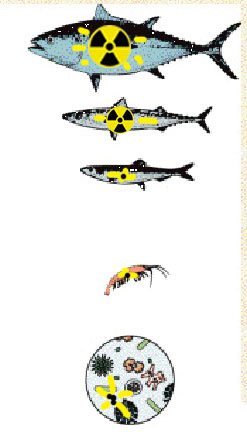
predatory species higher up in the food chain have a greater chance of experiencing bioaccumulation and biomagnification of radioactive substances. As time goes on and more nuclear-contaminated water is discharged, the negative effects will only increase
By GT staff Feb 25, 2024 , https://www.globaltimes.cn/page/202402/1307658.shtml
Half a year after Japan opened Pandora’s box by dumping nuclear-contaminated wastewater from the crippled Fukushima Daiichi nuclear power plant into the ocean, Japanese media are discussing the possibility of bilateral talks for getting China to revoke its import ban on Japanese marine products, in an apparent attempt to test the waters.
In response, Chinese experts told the Global Times on Sunday that, in the short term, it is unlikely that China will revoke the ban as there are currently no conditions for a withdrawal.
Meanwhile, a Kyodo News survey on Friday showed that most Japanese fishery groups have been affected by the discharge, with many feeling the impact through China’s import ban on Japanese seafood.
The survey found that 29 out of 36 respondents among the members of the National Federation of Fisheries Cooperative Associations said they “had felt” or “had somewhat felt” negative effects, including financial damage due to the contaminated water dumping, overwhelmingly due to the subsequent import ban by China.
Chinese Foreign Ministry spokesperson Mao Ning said at a regular press conference that the precautionary measures taken by China and some other countries in response to Japan’s move are aimed at protecting food safety and people’s health.
“These measures are entirely legitimate, reasonable and necessary,” Mao said.
Chang Yen-chiang, director of the Yellow Sea and Bohai Sea Research Institute of Dalian Maritime University, revealed several main factors why China is less likely to revoke the ban in the short run.
There is no halt in the ocean discharge, that is, the Japanese side has not withdrawn from their erroneous actions, he said.
Currently, half a year has passed since the dumping began, meaning that under the influence of ocean currents, the impact of Japan’s nuclear-contaminated water discharge on East Asia may just be starting, and further impacts need to be assessed, Chang said.
In addition, predatory species higher up in the food chain have a greater chance of experiencing bioaccumulation and biomagnification of radioactive substances. As time goes on and more nuclear-contaminated water is discharged, the negative effects will only increase, Chang said. “Under these circumstances, how could the ban be lifted?” the expert asked.
TEPCO – operator of the Daiichi plant – plans to release a total of about 54,600 tons of nuclear-contaminated water on seven occasions in the 2024 fiscal year, more than double the amount of 2023, according to media reports.
Chang called on Japan to consider solving the Fukushima nuclear power plant issue on a fundamental level, such as focusing on research on how to handle the burnt-out nuclear reactors. Otherwise, radioactive substances will continue to be produced endlessly, and the discharge of nuclear contamination could last for over 100 years, making the situation increasingly worse.
Japanese media have reported on a series of scandals concerning leaks occurring during the contaminated water discharge process, which led to soil contamination around the nuclear power plant.
Most recently, 1.5 metric tons of highly radioactive water escaped in early February during valve checks at a treatment machine designed to remove cesium and strontium from the contaminated water, according to TEPCO.
According to Japanese experts studying the soil, the radiation levels in Fukushima soil are much higher compared to other areas.
“We should be more vigilant toward crops and plants grown in this contaminated soil. China should increase radioactive testing of Japanese agricultural products and cosmetics imports,” Chang stated.

China is ‘unlikely’ to lift import ban on Japanese seafood as dumping continues
By GT staff reportersPublished: Feb 25, 2024 09:50 PM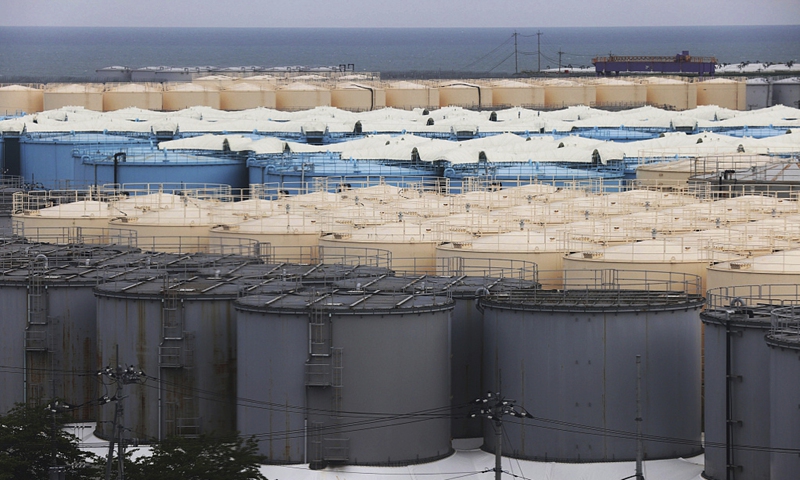
Water tanks near Fukushima Daiichi nuclear power plant in Okuma town of Fukushima prefecture on May 26, 2023 Photo: VCG
Half a year after Japan opened Pandora’s box by dumping nuclear-contaminated wastewater from the crippled Fukushima Daiichi nuclear power plant into the ocean, Japanese media are discussing the possibility of bilateral talks for getting China to revoke its import ban on Japanese marine products, in an apparent attempt to test the waters.
In response, Chinese experts told the Global Times on Sunday that, in the short term, it is unlikely that China will revoke the ban as there are currently no conditions for a withdrawal.
Meanwhile, a Kyodo News survey on Friday showed that most Japanese fishery groups have been affected by the discharge, with many feeling the impact through China’s import ban on Japanese seafood.
The survey found that 29 out of 36 respondents among the members of the National Federation of Fisheries Cooperative Associations said they “had felt” or “had somewhat felt” negative effects, including financial damage due to the contaminated water dumping, overwhelmingly due to the subsequent import ban by China.
Chinese Foreign Ministry spokesperson Mao Ning said at a regular press conference that the precautionary measures taken by China and some other countries in response to Japan’s move are aimed at protecting food safety and people’s health.
“These measures are entirely legitimate, reasonable and necessary,” Mao said.
Chang Yen-chiang, director of the Yellow Sea and Bohai Sea Research Institute of Dalian Maritime University, revealed several main factors why China is less likely to revoke the ban in the short run.
There is no halt in the ocean discharge, that is, the Japanese side has not withdrawn from their erroneous actions, he said.
Currently, half a year has passed since the dumping began, meaning that under the influence of ocean currents, the impact of Japan’s nuclear-contaminated water discharge on East Asia may just be starting, and further impacts need to be assessed, Chang said.
In addition, predatory species higher up in the food chain have a greater chance of experiencing bioaccumulation and biomagnification of radioactive substances. As time goes on and more nuclear-contaminated water is discharged, the negative effects will only increase, Chang said. “Under these circumstances, how could the ban be lifted?” the expert asked.
TEPCO – operator of the Daiichi plant – plans to release a total of about 54,600 tons of nuclear-contaminated water on seven occasions in the 2024 fiscal year, more than double the amount of 2023, according to media reports.
Chang called on Japan to consider solving the Fukushima nuclear power plant issue on a fundamental level, such as focusing on research on how to handle the burnt-out nuclear reactors. Otherwise, radioactive substances will continue to be produced endlessly, and the discharge of nuclear contamination could last for over 100 years, making the situation increasingly worse.
Japanese media have reported on a series of scandals concerning leaks occurring during the contaminated water discharge process, which led to soil contamination around the nuclear power plant.
Most recently, 1.5 metric tons of highly radioactive water escaped in early February during valve checks at a treatment machine designed to remove cesium and strontium from the contaminated water, according to TEPCO.
According to Japanese experts studying the soil, the radiation levels in Fukushima soil are much higher compared to other areas.
“We should be more vigilant toward crops and plants grown in this contaminated soil. China should increase radioactive testing of Japanese agricultural products and cosmetics imports,” Chang stated.
As Japanese industries, including fisheries and cosmetics, have been affected, Japanese media continues to report news about bilateral talks aimed at getting China to revoke its import ban on Japanese marine products, trying to test the reaction from China.
The Asahi Shimbun revealed Friday that nuclear experts from Japan and China started talks in January regarding contaminated water. The report noted that the Chinese side has still shown no signs of ending its import ban.
The Kyodo News reported on Thursday that when Chinese Ambassador to Japan Wu Jianghao met with the leader of the Social Democratic Party, Mizuho Fukushima, in January, China’s import suspension was also discussed, but there were no conditions for lifting the ban at present.
The odds of China using nuclear war to resolve the Taiwan issue
By John F. CopperFeb 20, 2024, https://johnmenadue.com/the-odds-of-china-using-nuclear-war-to-resolve-the-taiwan-issue-u-s-expert-versus-taiwan-experts/
Recently the Centre for Strategic and International Studies, a thinktank in Washington, DC, did a survey asking U.S. and Taiwan Experts if China might use nuclear weapons in a conflict with or over Taiwan. The results were astonishing to most who read the study. Almost half of U.S. experts reported they thought China would. Only one quarter that number of Taiwan experts, 11 percent, so opined.
Different histories and variances in views of the world order explain this.
The US view
The United States was born out of war in the late 1700s. Americans call it a revolutionary war or a war of independence. It was the latter. (Social classes did not change.)
Growing from a small country on the East Coast to a two-ocean nation in a century was built on wars with the indigenous people (American Indians) that were reduced from 100 percent of the population to 2 percent today. The wars were vicious, including the use of germ weapons and deliberately starving the enemy. Essentially wars of annihilation.
In the late 1800s the Indians were defeated marked by a victory (some called a massacre) in the Battle of Wounded Knee. Thenceforth the U.S. became an external expansionist power: incorporating Hawaii, defeating Spain to colonise the Philippines, and taking some other Pacific Islands.
World War I and II enhanced America’s world power status: from being an important nation to being a preeminent world power (superpower). In 1991, the U.S. defeated the Soviet Union, the only other superpower, with an arms race that America won—to become the world’s sole superpower.
Four years ago, former President Jimmy Carter noted America had been at peace only 16 of the last 242 years and concluded the U.S. was the most warlike nation in history. By contrast, China had not been at war in the last 40 years.
Meanwhile, after World War II the U.S. built a new world order employing its superior national power and its view of what the world should be –a world of global trade and economic growth and dragooned democracy. It worked well for a while.
But America became overstretched from its role as a military giant, and in some ways soft or at least tired of its global responsibilities. After the fall of the Soviet Union, it was not ready to lead a unipolar world.
More important, it faced a growing challenge. Mao, China’s great leader, died in 1976 and two years later Deng Xiaoping reconstructed China, getting rid of Mao’s radical communism and replacing it with free-market capitalism, trade and a system that built on China’s education tradition. China boomed economically.
It even grew during the world recession of 2008 and the subsequent almost slowest U.S. recovery in recent history. China became the number one nation in the world economically based on purchasing power. It led the word in steel production and other measures of big power status. In made the UN’s poverty eradication project work by helping developing countries grow with its formidable Belt and Road Initiative that was heading toward spending a trillion dollars compared to America’s biggest, the Marshall Plan (costing a bit over 100 billion in today’s dollars). Meanwhile, China passed the U.S. in registering patents and publishing academic articles while building modern airports and fast trains (more than the rest of the world combined while American had none).
President Trump met the China challenge with a make America great again policy. He sought to bring important industries back and restore U.S. capitalism. However, he faced virtually impossible hurdles to do this: an inflated and powerful government bureaucracy, too many lawyers that impeded business, horribly expensive penal and welfare systems, high taxes and a burdensome debt. Plus, the intelligence agencies and the federal police (FBI), the mainstream media, and American academe all opposed him while the Democratic Party that was bigger than his party had more money.
President Biden sought to destroy Trump’s America. As a globalist he advocated the idea of the US as an exceptional country and a superpower. America was to be a nation organising a bloc of democracies facing off against the China-led authoritarian nations. But this failed. America’s democracy appeared to many to have evolved into partisan rule by the deep state. Europeans did not want to be led by the U.S. Europe and Japan did not wish to end important economic ties with China. The Biden administration engaged in a financial and technology war with China, which hurt the U.S. more than China. The developing countries of the world continued to admire China for its aid and investments.
Good luck competing with China…
Meanwhile, pundits were taken by an idea expressed in the ancient book by Thucydides, The Peloponnesian Wars, that competition and eventually war between a status quo power (Sparta) and a rising power (Athens) was the model for most major wars after that. The relationship between America and China fit the model well. Thus, war was coming.
Provoking a war by demonising China as an expansionist power and an abuser of human rights meant that the U.S. should to go to war soon—before China, experiencing a renaissance and rising in national power, might defeat the U.S. that was experiencing decline.
The Taiwanese view
Taiwan has a very different history and view of the world from America. It early on grew up in isolation. Then it was exposed to the world outside via trade handled by its merchants, pirates, and outsiders. Chinese migrated to Taiwan and subdued the indigenous population reducing it to 2 percent of residents as happened in America; but this did not make Taiwan a world power.
Instead, Taiwan was ruled by Westerners (the Netherlands) for a brief time that improved its economy and more. For two centuries it was then ruled by China that did not have much interest in Taiwan and eventually abandoned it. Forthwith, Taiwan became a colony of Japan, during which time it saw economic modernisation without political choice or democracy.
Then the United States defeated Japan in war and returned Taiwan to China according to wartime agreements made at Potsdam and Tehran. Taiwan was not given any choice in the matter.
But China was at war with itself–a civil war between Chiang Kai-shek’s Nationalists and Mao Tse-tung’s Communists. Four years later Chiang lost and retreated to Taiwan to regroup. Again, Taiwan had no voice.
Owing to the Korean War the United States viewed Mao as a confederate of the Soviet Union and therefore an enemy. America gave aid and protection to Chiang’s Republic of China based on Taiwan. But the U.S. did not want a war with China allied with the Soviet Union and the result was a stalemate.
Chiang shifted his attention to Taiwan’s economic development and succeeded beyond almost anyone’s expectations. Its gross national product grew at a pace that far exceeded Western countries or Japan at their halcyon growth days.
Peace made this possible. Economic growth produced prosperity. Prosperity begat a middle class. A middle class serve to create political change and democracy.
Taiwan became a model for economic development and political change. Something similar happened in China under Deng: a booming economy and some political liberalisation. China and Taiwan linked up with trade and investments such that it made for mutual understanding and the avoidance of war, the same conditions that made the European Community work.
Strategically, Taiwan aligned with the United States against China in the Cold War. Like before it had no choice. But it avoided developing a nuclear weapon believing Chinese leaders when they said they would not use its nukes against Taiwan as they would not consider killing their own people.
Taiwan believed this because China did not engage in a nuclear arms race with America even though in the last two or three decades it could afford to do so. China sought to deal with Taiwan with its economic prowess, though it pulled its punches in using pressure and Taiwan knew it.
Taiwan’s residents’ national identity made it favour its sovereignty and separation from China or independence. Yet they knew this was contingent on America’s protection, regarding which they had some doubts.
Washington’s policy was that there was one China and Taiwan was part of China. President Biden restated this in the presence of world leaders at an APEC meeting in San Francisco. Feelings grew in Taiwan that America regarded it a pawn. The Biden administration forced Taiwan to invest in producing top-of-the line computer chips in Arizona, thus disabling what President Tsai called Taiwan’s “silicon shield.” She and Taiwan’s population could also see that China was on the rise; the U.S. was not.
Opinion polls in Taiwan reflected this. While residents’ identity favoured Taiwan and they picked independence over unification, they fancied the status quo more, and perceived Taiwan would reunify with China in the long run. Most of all they wanted peace. War, even if the U.S. kept its promises and fought for Taiwan, would still mean Taiwan would suffer grievously.
Finally, they preferred China’s world order that was founded on financial and technological power, not America’s system which relied on military might that Henry Kissinger, among others, opined was in quick decay.
Hence, it is understandable why U.S. pundits see China attacking Taiwan even with nuclear weapons much more likely than Taiwan scholars.
Chinese nuclear fuel engineer Li Guangchang caught in anti-corruption net targeting ‘high-risk’ areas
- Li, former nuclear fuel director at China National Nuclear Corporation, is suspected of serious violations of discipline and law, CCDI says
- Communist Party’s top corruption watchdog says he is undergoing disciplinary inspection and supervision, but website post offers no details
Amber Wang in Beijing, 4 Feb, 2024
A leading Chinese nuclear fuel engineer has been placed under investigation, becoming the latest case in Beijing’s sweeping crackdown on corruption in “high-risk” areas such as energy and state-owned enterprises.
Li Guangchang, a member of the science and technology committee of China National Nuclear Corporation (CNNC), is suspected of committing serious violations of discipline and law, the Central Commission for Discipline Inspection (CCDI) said in a statement on its website…………… https://www.scmp.com/news/china/politics/article/3250877/chinese-nuclear-fuel-engineer-li-guangchang-latest-corruption-net-clean-drive-high-risk-areas?campaign=3250877&module=perpetual_scroll_0&pgtype=article
A new ‘Cold War’ on a deadly hot planet?
China and the US must cut war-like posturing and face a world in desperate danger
By Tom Engelhardt, Tom Dispatch/Common Dreams
Tell me, what planet are we actually on? All these decades later, are we really involved in a “second” or “new” Cold War? It’s certainly true that, as late as the 1980s, the superpowers (or so they then liked to think of themselves), the United States and the Soviet Union, were still engaged in just such a Cold War, something that might have seemed almost positive at the time. After all, a “hot” one could have involved the use of the planet’s two great nuclear arsenals and the potential obliteration of just about everything.
But today? In case you haven’t noticed, the phrase “new Cold War” or “second Cold War” has indeed crept into our media vocabulary. (Check it out at Wikipedia.) Admittedly, unlike John F. Kennedy, Joe Biden has not actually spoken about bearing “the burden of a long, twilight struggle.” Still, the actions of his foreign policy crew — in spirit, like the president, distinctly old Cold Warriors — have helped make the very idea that we’re in a new version of just such a conflict part of everyday media chatter.
And yet, let’s stop and think about just what planet we’re actually on. In the wake of August 6 and August 9, 1945, when two atomic bombs destroyed the Japanese cities of Hiroshima and Nagasaki, there was little doubt about how “hot” a war between future nuclear-armed powers might get. And today, of course, we know that, if such a word can even be used in this context, a relatively modest nuclear conflict between, say, India and Pakistan might actually obliterate billions of us, in part by creating a — yes, brrr — “nuclear winter,” that would give the very phrase “cold” war a distinctly new meaning.
These days, despite an all too “hot” war in Ukraine in which the U.S. has, at least indirectly, faced off against the crew that replaced those Soviet cold warriors of yore, the new Cold War references are largely aimed at this country’s increasingly tense, ever more militarized relationship with China. Its focus is both the island of Taiwan and much of the rest of Asia. Worse yet, both countries seem driven to intensify that struggle.
In case you hadn’t noticed, Joe Biden made a symbolic and much-publicized stop in Vietnam (yes, Vietnam!) while returning from the September G20 summit meeting in India. There, he insisted that he didn’t “want to contain China” or halt its rise. He also demanded that it play by “the rules of the game” (and you know just whose rules and game that was). In the process, he functionally publicized his administration’s ongoing attempt to create an anti-China coalition extending from Japan and South Korea (only recently absorbed into a far deeper military relationship with this country), all the way to, yes, India itself.
And (yes, as well!) the Biden administration has upped military aid to Japan, Taiwan (including $85 million previously meant for Egypt), Australia (including a promise to supply it with its own nuclear attack submarines), and beyond. In the process, it’s also been reinforcing the American military position in the Pacific from Okinawa, Guam, and the Philippines to — yes again — Australia. Meanwhile, one four-star American general has even quite publicly predicted that a war between the U.S. and China is likely to break out by 2025, while urging his commanders to prepare for “the China fight”! Similarly, Director of National Intelligence Avril Haines has called China the “leading and most consequential threat to U.S. national security” and the Biden foreign policy team has been hard at work encircling — the Cold War phrase would have been “containing” — China, both diplomatically and militarily.
On the Chinese side, that country’s military has been similarly ramping up its air and naval activities around and ever closer to the island of Taiwan in an ominous fashion, even as it increases its military presence in places like the South China Sea (as has the U.S.). Oh, and just in case you hadn’t noticed, with a helping hand from Russia, Beijing is also putting more money and effort into expanding its already sizable nuclear arsenal.
Yes, this latest version of a Cold War is (to my mind at least) already a little too hot to handle. And yet, despite that reality, it couldn’t be more inappropriate to use the term “new Cold War” right now on a globe where a previously unimagined version of a hot war is staring us all, including most distinctly the United States and China, in the face.
As a start, keep in mind that the two great powers facing off so ominously against each other have long faced off no less ominously against the planet itself. After all, the United States remains the historically greatest greenhouse gas emitter of all time, while China is the greatest of the present moment (with the U.S. still in second place and Americans individually responsible for significantly more emissions than their Chinese counterparts). The results have been telling in both countries…………………………………………………………… more https://beyondnuclearinternational.org/2024/01/21/a-new-cold-war-on-a-deadly-hot-planet/
US urges discussions with China on practical nuclear risk reduction steps
Reuters, January 19, 2024
WASHINGTON, Jan 18 (Reuters) – The United States does not expect formal nuclear arms-control negotiations with China anytime soon, but does want to see a start of discussions on practical risk-reduction measures, a senior White House official said on Thursday.
Pranay Vaddi, the senior White House official for arms control and non proliferation, told a Washington think tank it had been important to have initial arms-control talks in November with China, but stressed the need for them to involve key Chinese decision makers or influencers on the country’s nuclear posture………………………..
The U.S. and China held their first talks on nuclear arms control in nearly five years on Nov. 6, amid growing U.S. concerns about China’s nuclear build up, but the meeting produced no specific results…………………………………………..
The U.S. and China held two days of military talks in Washington last week, their latest engagement since agreeing to resume military-to-military ties.
In its annual report on the Chinese military in October, the Pentagon said China has more than 500 operational nuclear warheads and will probably have over 1,000 warheads by 2030.
The U.S. has a stockpile of about 3,700 nuclear warheads, of which roughly 1,419 strategic nuclear warheads were deployed.
Reporting by David Brunnstrom; Editing by Sandra Maler, https://www.reuters.com/world/us-urges-discussions-with-china-practical-nuclear-risk-reduction-steps-2024-01-18/
Nuclear Continues To Lag Far Behind Renewables In China Deployments
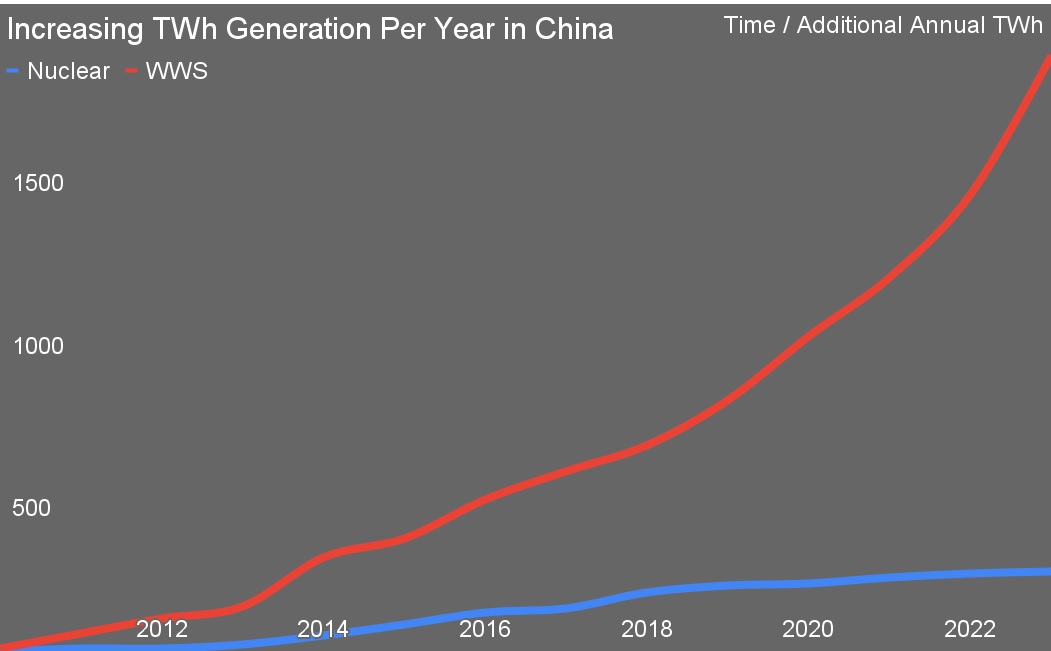
China can’t scale its nuclear program at all. It peaked in 2018 with 7 reactors with a capacity of 8.2 GW. For the five years since then then it’s been averaging 2.3 GW of new nuclear capacity, and last year only added 1.2 GW between a new GW scale reactor and a 200 MW small modular nuclear reactor.
Michael Barnard 13 Jan 24, https://cleantechnica.com/2024/01/12/nuclear-continues-to-lag-far-behind-renewables-in-china-deployments/
Since 2014 I’ve been tracking the natural experiment in China regarding the ability to scale nuclear generation vs renewables. My hypothesis was that the modularity and manufacturability of wind and solar especially meant that it would be much easier for them to scale up to massive sizes.
That hypothesis was strongly confirmed when I first published the results in 2019, and again in 2021 and 2022 when I updated them. In what is becoming a dog bites man annual article, here are the 2023 results. Once again, China’s nuclear program barely added any capacity, only 1.2 GW, while wind and solar between them added about 278 GW. Even with the capacity factor difference, the nuclear additions only mean about 7 TWh of new low carbon generation per year, while wind and solar between them will contributed about 427 TWh annually, over 60 times as much low carbon electricity.
As a note, there were no new hydroelectric dams commissioned in China, so that continued acceleration of deployment is solely due to wind and solar. That’s going to change when the absurdly massive Tibetan Yarlung Tsangpo river dam is commissioned, likely in the mid 2030s. That dam will generate three times the energy annually as the Three Gorges Dam, making it by far the biggest dam in the world by every measure.
A few points. First, what’s a natural experiment? It’s something which is occurring outside of a laboratory or research setting in the real world that coincidentally controls for a bunch of variables so that you can make a useful comparison. An often referenced example was of a specific region where half was without electricity for a few months. Researchers posited that the blackout region would have seen more pregnancies starting in that period, and sure enough, that’s what they found.
So why is China a natural experiment for scalability of wind and solar? Well, it controls for a bunch of variables. Both programs were national strategic energy programs run top down. I started the comparison in 2010 because the nuclear program had been running for about 15 years by then and the renewables program for five years, so both were mature enough to have worked out the growing pains.
One of the things that western nuclear proponents claim is that governments have over-regulated nuclear compared to wind and solar, and China’s regulatory regime for nuclear is clearly not the USA’s or the UK’s. They claim that fears of radiation have created massive and unfair headwinds, and China has a very different balancing act on public health and public health perceptions than the west. They claim that environmentalists have stopped nuclear development in the west, and while there are vastly more protests in China than most westerners realize, governmental strategic programs are much less susceptible to public hostility. And finally, western nuclear proponents complain that NIMBYs block nuclear expansion, and public sentiment and NIMBYism is much less powerful in China with its Confucian, much more top down governance system.
China’s central government has a 30 year track record of building massive infrastructure programs, so it’s not like it is missing any skills there. China has a nuclear weapons program, so the alignment of commercial nuclear generation with military strategic aims is in hand too. China has a strong willingness to finance strategic infrastructure with long-running state debt, so there are no headwinds there either.
Yet China can’t scale its nuclear program at all. It peaked in 2018 with 7 reactors with a capacity of 8.2 GW. For the five years since then then it’s been averaging 2.3 GW of new nuclear capacity, and last year only added 1.2 GW between a new GW scale reactor and a 200 MW small modular nuclear reactor.
So what’s going on? As I noted late in 2023, nuclear energy and free market capitalism aren’t compatible, but China isn’t capitalist, according to a lot of westerners. But it very definitely is a market and export capitalist economy, albeit with more state intervention and ownership, and the nuclear program is suffering as a result. That lone small modular reactor is a clear signal of that.
China’s CGN Halts Funding for UK’s Hinkley Nuclear Plant

- EDF may have to fund completion of £32.7 billion plant alone
- Britain took over CGN’s stake in a similar project last year
By Francois De Beaupuy, December 14, 2023
China General Nuclear Power Corp. has halted funding for the UK’s Hinkley Point C nuclear station in a fresh sign of tension between London and Beijing.
CGN skipped several installments in recent months, according to people familiar with the matter. That means Electricite de France SA, which was building the £32.7 billion ($41 billion) plant with CGN, may have to pay for its completion alone, they said, asking not to be named,
because the information isn’t public.
The withdrawal of funding comes
after the UK took over CGN’s stake in a similar nuclear project in
Sizewell last year following concerns over national security. Back then,
the government didn’t rule out that it might intervene in other cases of
Chinese involvement in UK energy supply, arguing that it would need to
consider risks to security and energy independence.
CGN’s plan to build a
Chinese-designed atomic plant in Southeast England is also up in the air.
It’s unclear whether the funding halt is temporary or definite, some of
the people said, adding that the project will continue in any case. A
spokesperson for EDF declined to comment when reached by Bloomberg, and CGN
didn’t respond to a request for comment.
Bloomberg 14th Dec 2023
Chinese Nuclear Weapons and Canada: An Uncivil-Military Connection

The United States should take action to ensure that domestic and foreign actors are not boosting the nuclear programs of adversaries.
by Henry Sokolski, https://nationalinterest.org/feature/chinese-nuclear-weapons-and-canada-uncivil-military-connection-207727 6 Dec 23
For decades, the Defense Department made little or no connection between China’s civilian nuclear power program and its military nuclear weapons buildup. No longer.
For the last three years, the Pentagon has explicitly linked Beijing’s “peaceful” fast reactor power program to China’s ramped-up weapons plutonium efforts and the projection China will acquire more than 1,000 nuclear warheads by 2030. In its latest annual China military power report, the Defense Department went further and revealed that China is using its civilian nuclear reactors to produce tritium to fuel its thermonuclear weapons.
China is doing this by placing lithium rods in power reactors and bombarding the rods with neutrons. This produces tritium, which subsequently is separated, much like how America makes its weapons tritium. It’s unclear if China uses all its power reactors—American, Canadian, Russian, French, or Chinese-designed—for this purpose.
The Pentagon report, however, notes that China uses a tritiated heavy water extraction process to cull tritium produced when hydrogen atoms absorb neutrons and become tritium atoms. The only reactors in China that use heavy water are located in Haiyan and operated by China National Nuclear Power Corporation (CNNC)—Beijing’s premier nuclear weapons contractor.
Canada supplied these reactors through Atomic Energy of Canada Limited (AECL), a Canadian government-owned firm. In addition, AECL agreed to work with CNNC on advanced heavy water reactors and related technologies. In 2011, AECL sold its heavy water reactor business to SNC-Lavalin Inc. (recently renamed AtkinsRealis). AtkinsRealis continues to collaborate with CNNC on its heavy water reactors.
However, Canada’s nuclear transfers to China aren’t limited to reactors. In late October, the Canadian firm Cameco, one of the world’s largest uranium suppliers, announced it had contracted to sell more than 97,500 metric tons of uranium to CNNC. Cameco says it will send the CNNC more than 12,700 metric tons annually for the next four years. 12,700 metric tons is roughly 200 to 300 metric tons more than China’s entire civilian sector consumes annually. The 200-to-300-ton surplus alone could fuel as many as 100 bombs each year.
This should raise eyebrows. With poor domestic uranium resources, China insists it’s only building up its uranium reserves for future nuclear power use. Perhaps, but there is no agreed way to verify this. The same is true with tritium. Currently, there are no effective controls on either nuclear substance to assure their peaceful end-use. Both, however, are critical to making nuclear weapons, and CNNC, China’s top weapons vendor, controls these materials.
What should be done?
First, our government needs to name and shame firms exporting critical nuclear materials and technologies to America’s nuclear-armed rivals. This would require spotlighting Canada’s Cameco and AkinsRealis. It also would require listing France’s nuclear firm, EDF, which this spring announced it would work with CNNC in developing advanced spent fuel recycling, a process critical to producing weapons plutonium. Yet, another entity that deserves dishonorable mention is Rosatom, Russia’s prime nuclear weapons developer, in addition to firms in business with the company. The House has already spotlighted Rosatom as a bad actor, asking the White House to sanction it for assisting China’s fast reactor program.
To expose these entities further, the Departments of Defense and the Intelligence Community should produce an unclassified annual report clarifying which domestic and foreign firms might be transferring nuclear materials and technologies to hostile states’ nuclear weapons entities.
Second, the U.S. government should prohibit government purchases and subsidies to these firms. Congress and the White House may be reticent to sanction firms for trading with hostile states’ nuclear weapons entities. But our government should, at least, not buy goods from such firms or subsidize them.
Finally, the United States and other like-minded nations should call on the International Atomic Energy Agency to track and safeguard tritium and unenriched uranium to prevent their diversion to make bombs. Fortunately, there is little commercial demand for tritium. Most of what is produced is then extracted from reactors for occupational safety reasons and is accounted for.
Similarly, most uranium ore is used to fuel legitimate civilian reactors. Yet, it too is critical to make nuclear weapons, and it is not currently tracked or safeguarded. Given that the government already tracks and sanctions certain oil and gas transfers—a daunting task—it’s difficult to understand why we don’t do the same for uranium and tritium. In the lead-up to the next Nuclear Nonproliferation Treaty Review Conference in 2026, the United States should close this gap.
Henry Sokolski is the executive director of the Nonproliferation Policy Education Center in Arlington, Virginia, and the author of Underestimated: Our Not So Peaceful Nuclear Future (2019). He served as deputy for nonproliferation policy in the office of the U.S. Secretary of Defense during the George H.W. Bush administration.
In softening on China, the West may be trying to avoid a nuclear arms race
SCMP, Bob Savic 26 Nov 23
Why the West is suddenly softening on China: power grows out of nuclear warheads
- Weeks before Xi Jinping met various leaders in San Francisco, the US released an estimate of China’s nuclear stockpile
- Now, the EU and UK seem to be holding out an olive branch to China, especially with the surprise appointment of David Cameron as foreign secretary
In a much-publicised report issued on October 19, the US Department of Defence estimated China’s stock of operational nuclear warheads to be at 500, and exceeding 1,000 by 2030. This contrasts with its 2020 report that estimated a stockpile “in the low-200s”, which would grow to about 400 by the end of the decade.
Beijing has consistently dismissed these reports, asserting they are used to serve Washington’s strategic interest of portraying China as a threat to global security.
Irrespective of whether the reports are accurate or fictional, the West has probably decided to err on the side of caution and accept the findings. There has been a discernible shift as Western governments actively seek areas of mutual cooperation with Beijing.
Ultimately, this turn of events probably reflects Western concern over a nuclear arms race fuelled by dangerously destabilising great-power rivalry between China and the United States, at a time when the West is grappling with so-called fatigue in its conflict with Russia over Ukraine.
Further, there is the Israel-Hamas conflict in Gaza. The major Western powers’ failure to back a non-binding UN resolution calling for a truce, which was supported by China and the vast majority of non-Western states, has opened a yawning rift between the West and the Global South.
In any case, one cannot rule out both factors in the West’s approach to China. The most high-profile rapprochement with China was clearly reached when Chinese President Xi Jinping met US President Joe Biden on the sidelines of the Apec summit in San Francisco.
After a year of hyper-tense relations between Beijing and Washington – over then US House speaker Nancy Pelosi’s visit to Taiwan and the Chinese “spy balloon” over mainland America – the Biden administration’s four-hour talks with Xi and senior Chinese officials signified a new strategy of constructive engagement.
As widely reported, the meeting concluded with an agreement to resume military-to-military communications, deemed vital in the context of increasingly knife-edge naval and air activities, by both sides, in the Taiwan Strait and South China Sea.
Also on the sidelines of the Asia-Pacific Economic Cooperation summit in San Francisco, Xi held talks with Japan’s Prime Minister Fumio Kishida for the first time in a year…………………………………………………………………….
Other leaders, further afield, may also be seeking to offer Beijing an olive branch. In early November, European Commission President Ursula von der Leyen said a summit with the Chinese government would take place in China in December, the first in-person European Union-China summit in four years………………
Lastly, and in an even greater surprise, was the appointment of Britain’s former prime minister David Cameron as the new foreign secretary on November 13. There has been much speculation about why the current British prime minister, Rishi Sunak, would bring Cameron back into the cabinet after he spent several years outside politics.
Among those reasons is likely to be that Cameron made high-level international contact when in office, not the least of which was crafting the “golden era” of relations with China, even having a pint of beer with Xi at a British pub…………………………………..
the new Pentagon report on China’s substantial upscaling of its nuclear stockpile, no matter whether it is accurate or not, may have been all that was necessary to prompt Western decision-makers to act swiftly, and in concert, thus averting any escalation of geopolitical tensions that might imperil the West’s still dominant global position. https://www.scmp.com/comment/opinion/article/3242540/why-west-suddenly-softening-china-power-grows-out-nuclear-warheads
1 This Month

of the week – Shut Down Drone Warfare!


Tell the Ukrainian Government to Drop Prosecution of Peace Activist Yurii Sheliazhenko

Petition to revoke the licensing of the Near Surface Nuclear Disposal Facility (NSDF) at Chalk River. https://www.ourcommons.ca/petitions/en/Petition/Details?Petition=e-7247
To see nuclear-related stories in greater depth and intensity – go to https://nuclearinformation.wordpress.com
-
Archives
- April 2026 (68)
- March 2026 (251)
- February 2026 (268)
- January 2026 (308)
- December 2025 (358)
- November 2025 (359)
- October 2025 (376)
- September 2025 (257)
- August 2025 (319)
- July 2025 (230)
- June 2025 (348)
- May 2025 (261)
-
Categories
- 1
- 1 NUCLEAR ISSUES
- business and costs
- climate change
- culture and arts
- ENERGY
- environment
- health
- history
- indigenous issues
- Legal
- marketing of nuclear
- media
- opposition to nuclear
- PERSONAL STORIES
- politics
- politics international
- Religion and ethics
- safety
- secrets,lies and civil liberties
- spinbuster
- technology
- Uranium
- wastes
- weapons and war
- Women
- 2 WORLD
- ACTION
- AFRICA
- Atrocities
- AUSTRALIA
- Christina's notes
- Christina's themes
- culture and arts
- Events
- Fuk 2022
- Fuk 2023
- Fukushima 2017
- Fukushima 2018
- fukushima 2019
- Fukushima 2020
- Fukushima 2021
- general
- global warming
- Humour (God we need it)
- Nuclear
- RARE EARTHS
- Reference
- resources – print
- Resources -audiovicual
- Weekly Newsletter
- World
- World Nuclear
- YouTube
-
RSS
Entries RSS
Comments RSS
 nuclear-news