China’s openness about its latest nuclear missile test shows growing confidence vis-à-vis the United States

The rare public ICBM test seems to have been specifically aimed at dissuading Washington from using nuclear weapons in a potential conflict across the Taiwan Strait
Bulletin, By Hui Zhang | October 16, 2024
China’s Ministry of National Defense announced last month that the People’s Liberation Army Rocket Force (PLARF) had successfully launched an intercontinental ballistic missile (ICBM) carrying a simulated warhead into the Pacific Ocean and that the missile accurately fell into the designated area. This was the first time since 1980 that China had test-fired an ICBM into international waters.
But the test launch was part of routine annual training, the ministry added, in line with international law and international practice, and not directed against any country or target.
Just as observers were vigorously speculating about the type of missile used in the test, China Junhao (China’s military media wing) cut short the discussions, releasing pictures of the launch site—a very rare step given that the Chinese army has not made public a photo of the launch of a new ICBM for decades.
China’s Ministry of National Defense announced last month that the People’s Liberation Army Rocket Force (PLARF) had successfully launched an intercontinental ballistic missile (ICBM) carrying a simulated warhead into the Pacific Ocean and that the missile accurately fell into the designated area. This was the first time since 1980 that China had test-fired an ICBM into international waters.
But the test launch was part of routine annual training, the ministry added, in line with international law and international practice, and not directed against any country or target.
Just as observers were vigorously speculating about the type of missile used in the test, China Junhao (China’s military media wing) cut short the discussions, releasing pictures of the launch site—a very rare step given that the Chinese army has not made public a photo of the launch of a new ICBM for decades…………………
With this new launch test, China certainly wants to show a forceful response to suspicion about its nuclear deterrence capabilities in the wake of recent corruption scandals and command instability in its rocket force. The test shows that the rocket force has an operational and credible nuclear force that can help ensure China’s ability to maintain a strong nuclear deterrent—a key element of President Xi Jinping’s long-held military objectives and emphasis on strengthening China’s nuclear forces, an emphasis initiated in 2015.
The rare public ICBM test seems to have been specifically aimed at dissuading Washington from using nuclear weapons in a potential conflict across the Taiwan Strait. The unusual transparency surrounding the test shows how China is becoming increasingly confident vis-à-vis the United States. It also could offer a rare opportunity for engaging in risk reduction talks.
A new missile type. Unlike the United States, which usually tests its ICBMs in international waters, China has usually fired its ICBMs over its homeland, using a lofted or depressed trajectory to keep the missile inside Chinese territory. China’s last full-trajectory flight test of an ICBM (the DF-5) was conducted in May 1980………………………………….
Where the 1980 test was meant to be a trump card for deterring Moscow, today’s DF-31AG test is aimed at deterring Washington………………………………………………………………………………………………………………….
Changing target. China now perceives the United States as being its main threat, and the question of whether China has a credible and reliable deterrent against a US first nuclear strike has become more important in Chinese government circles. At least, this appears to be the strategic calculation that Xi currently pursues………………………………………….
Since 2012 and Xi’s presidential tenure, however, China has been substantially modernizing, expanding, and diversifying its nuclear forces to address perceived threats from the United States. …………………………..
China has expanded its nuclear arsenal at unprecedented speed and scale. It has increased its total warhead count from about 260 in 2016 to about 500 in 2024. Most of the increase has come in the shape of ICBMs capable of reaching the continental United States—from about 65 in 2016 to about 240 in 2024. The US Defense Department projected that China would possess over 1,000 warheads by 2030.
The observable transformation of China’s nuclear posture and the projections for its expansion over the next decade raise the question of whether China has changed its nuclear strategy.[8] Until recently, Chinese officials and government documents reaffirmed China’s commitment to a no-first-use policy and a self-defense nuclear strategy.[9] Under this nuclear policy and strategy, China has always confirmed that it “keeps its nuclear capabilities at the minimum level required for national security.” The major question is how to interpret the “minimum” needs of a nuclear force for a secured second-strike capability.
Searching for a minimum and “effective” deterrent. China’s officials have never declared a specific number of weapons required for its minimum level. Such a level is never static. It depends on several factors, including estimates of survivability during a nuclear attack and a projected enemy’s missile defense systems. …………………….
………….. since 2000, the US missile defense plan has been a major driver of China’s nuclear modernization and buildup…………………………….
At this stage, it is not clear whether Xi Jinping has decided to empower the country’s nuclear force beyond assuring such a reliable second-strike capability. However, while there is little evidence to show that China has changed its long-standing nuclear strategy and no-first-use policy, recent qualitative and quantitative improvements in the nuclear forces demonstrate that Chinese leaders may now pursue a more ambitious nuclear strategy.
A more confident China—and the need to reduce risk. Without a clear understanding of China’s goals and motivations, a new arms race could be triggered with the United States, which would reverse China’s long-standing policy against such engagements. It is now the time for both countries to conduct dialogues to avoid a nuclear arms race and reduce the risk of nuclear conflict. Both sides should undertake risk-reduction and military confidence-building measures to address security concerns, clarify strategic intentions, and increase transparency. They should also engage in “strategic stability” talks.
As a first step, China and the United States could negotiate a bilateral agreement on mutual notification for ballistic missile and space launches, which would significantly reduce the risk of misperception and miscalculation……………………..https://thebulletin.org/2024/10/chinas-openness-about-its-latest-nuclear-missile-test-shows-growing-confidence-vis-a-vis-the-united-states/?utm_source=Newsletter&utm_medium=Email&utm_campaign=ThursdayNewsletter10172024&utm_content=NuclearRisk_ChinaNuclearMissileTest_10162024
.
China to head green energy boom with 60% of new projects in next six years

China is expected to account for almost 60% of all renewable energy
capacity installed worldwide between now and 2030, according to the
International Energy Agency. The IEA’s highly influential renewable energy
report found that over the next six years renewable energy projects will
roll out at three times the pace of the previous six years, led by the
clean energy programmes of China and India.
It found that the world’s
renewable energy capacity is on course to outpace the 2030 goals set by
governments to roughly equal the power systems in China, the EU, India and
the US combined. Fatih Birol, the executive director of the IEA, said:
“If I could sum this [trend] up in two words they would be: China,
solar.”
Guardian 9th Oct 2024, https://www.theguardian.com/environment/2024/oct/09/china-to-head-green-energy-boom-with-60-of-new-projects-in-next-six-years
What reports got wrong about China’s ‘sunken nuclear submarine’
Western news organizations often miss crucial context—and even the real news—about Chinese military modernization.
Defense One, By J. Michael Dahm and Peter W. Singer 4 Oct 24
The purported sinking of a Chinese nuclear submarine at a Wuhan shipyard pier is the latest example of Western reporting on military developments in China that overlooks important details and context, or even takes the wrong lessons from the fragments of stories they tell.
The incident, which took place in June, drew some mention the following month on social media and even in the defense press, but it went viral after a Sept. 26 report in the Wall Street Journal touched off coverage from Fox News to CBS. What apparently lit up the U.S. media landscape were the assertions, attributed to unnamed U.S. defense officials, that the submarine was nuclear-powered. Many of the subsequent reports suggested that the incident revealed safety concerns about a new class of PLA Navy nuclear submarine and a serious setback for China’s military modernization.
These are mischaracterizations. Moreover, the reporting actually buried the lead. The shipyard accident tells us very little about the future of PLA naval modernization, but the submarine itself does.
The afflicted boat was said to be a “Type 041 Zhou-class submarine” powered by a nuclear reactor. But tracing that claim to its origins reveals the importance of context and of using varied sources………………………………………………………………………………………………………………………………….
The point is that a preponderance of public sourcing indicates there is far more uncertainty about the ship itself than the headlines would have it. Indeed, there is nothing in the available reporting that indicates an actual nuclear incident. The satellite photos showed four crane barges that may have been deployed to raise a sunken object, but no nuclear-response efforts were detected. This was not Chernobyl.
……………………………….. This story also underlines a larger problem in Western media reporting on China’s military in recent years: too often, it swings between two extremes that portray the PLA as either comically inept or ten feet tall……………………………………
…………… The issues in U.S.-China security are of growing domestic interest and political importance, especially during an election season. As such, it is ever more vital that mass media reporting on PLA capabilities avoids the temptation to hunt for “clicks” and “eyeballs” and instead seeks out the details and context necessary to fully understand the implications of China’s military modernization.
J. Michael Dahm is a Senior Associate with BluePath Labs, a Senior Fellow at the Mitchell Institute for Aerospace Studies, and a Lecturer in International Affairs at the George Washington University.
P.W. Singer is a best-selling author of such books on war and technology as Wired for War, Ghost Fleet, and Burn-In; senior fellow at New America; and co-founder of Useful Fiction, a strategic narratives company. https://www.defenseone.com/ideas/2024/10/chinas-sunken-nuclear-sub-was-likely-nothing-sort/400001/
Chinese nuclear-powered attack submarine sank earlier this year, says senior US defence official
ABC News, 27 Sept 24
In short:
China’s newest nuclear-powered attack submarine sank earlier this year, according to a senior US defence official.
A series of satellite images from Planet Labs from June appear to show cranes at the Wuchang shipyard, where the submarine would have been docked.
What’s next?
China’s submarine force is expected to grow to 65 by 2025 and 80 by 2035, the US Department of Defense has said.
A senior US defence official has said that China’s newest nuclear-powered attack submarine sank earlier this year, marking a potential embarrassment for Beijing as it seeks to expand its military capabilities.
China already has the largest navy in the world, with over 370 ships, and it has embarked on production of a new generation of nuclear-armed submarines.
The US defence official, speaking on condition of anonymity on Thursday, local time, said China’s new first-in-class nuclear-powered attack submarine sank alongside a pier sometime between May and June.
A Chinese embassy spokesperson in Washington said they had no information to provide.
“In addition to the obvious questions about training standards and equipment quality, the incident raises deeper questions about the PLA’s internal accountability and oversight of China’s defence industry — which has long been plagued by corruption,” the official said, using an acronym for the People’s Liberation Army.
“It’s not surprising that the PLA Navy would try to conceal the sinking,” the official added………………………………………………. more https://www.abc.net.au/news/2024-09-27/one-of-china-submarine-sank-says-us-defence-official/104406362
US Navy chief unveils plan to be ready for possible war with China by 2027
The announcement of the goals comes as US leaders are treading a fine line, pledging a commitment to the defence of Taiwan while also working to keep communication open with Beijing to deter greater conflict.
Beijing regards Taiwan as part of China to be reunited, by force if necessary. Most countries, including the US, do not recognise Taiwan as an independent state.
But Washington opposes any attempt to take the island by force and is legally bound to support Taiwan’s military defence capability.
Admiral Lisa Franchetti says lessons from combat in the Red Sea and Ukraine’s Black Sea fight can help the US prepare for an attack on Taiwan
SCMP, Associated Press, 19 Sep 2024
The US Navy is taking lessons from its combat in the Red Sea over the past year and what Ukraine has done to hold off the Russians in the Black Sea to help US military leaders prepare the service for a potential future conflict with China.
From drones and unmanned surface vessels to the more advanced operation of shipboard guns, the US Navy is expanding its combat skills and broadening training. It is also working to overcome recruiting struggles so it can have the sailors it needs to fight the next war.
Admiral Lisa Franchetti, chief of naval operations, is laying out a series of goals, including several that will be highly challenging to meet, in a new navigation plan she described in an interview. The objective is to be ready to face what the Pentagon calls its key national security challenge – China.
“I’m very focused on 2027. It’s the year that President Xi [Jinping] told his forces to be ready to invade Taiwan,” Franchetti said. “We need to be more ready.”
The new plan, released on Wednesday, includes what she considers seven priority goals, ranging from removing delays in ship depot maintenance to improving US Navy infrastructure, recruiting and the use of drones and autonomous systems.
One significant challenge is to have 80 per cent of the force be ready enough at any given time to deploy for combat if needed – something she acknowledged is a “stretch goal”. The key, she said, is to get to a level of combat readiness where “if the nation calls us, we can push the ‘go’ button and we can surge our forces to be able to meet the call”.
The announcement of the goals comes as US leaders are treading a fine line, pledging a commitment to the defence of Taiwan while also working to keep communication open with Beijing to deter greater conflict.
Beijing regards Taiwan as part of China to be reunited, by force if necessary. Most countries, including the US, do not recognise Taiwan as an independent state.
But Washington opposes any attempt to take the island by force and is legally bound to support Taiwan’s military defence capability.
An important element in any Asia-Pacific conflict will be the need to control the seas. Franchetti said the US can learn from how the Ukrainians have used drones, air strikes and long-range unmanned vessels to limit Russian ship activity in the western Black Sea and keep access open to critical ports.
“If you look at the Ukrainian success in really keeping the Russian Black Sea fleet pushed all the way over into the east, that’s all about sea denial and that’s very important,” Franchetti said. She added that Ukraine has been innovating on the battlefield by using existing systems, such as drones, in different ways.
The US Navy’s months-long battle with the Iran-backed Houthi rebels in Yemen has provided other lessons…………………………………………………………………. https://www.scmp.com/news/world/united-states-canada/article/3279048/us-navy-chief-unveils-plan-be-ready-possible-war-china-2027
Surge in Russian uranium sent to China
https://www.telegraph.co.uk/world-news/2024/09/17/ukraine-russia-war-latest-news27/
Washington fears Russia is sending large quantities of enriched uranium to China in an effort to evade sanctions imposed after its invasion of Ukraine.
Chinese imports of enriched uranium from Russia, the world’s largest exporter of the radioactive metal, soared in 2022 and 2023, according to data released by the World Bank.
The US is now investigating whether the uranium, used as nuclear power plant fuel, is then being imported to America.
China only started to send vast quantities of enriched uranium to the US after Congress passed a ban on the import of the metal from Russia after the Ukraine invasion.
“As China may be seeking to carve out a greater role for itself in world enriched uranium markets, increased imports of Russian enriched uranium may facilitate the pursuit of Beijing’s ambitions,” said a report in March by the London-based Royal United Services Institute think tank.
China keeps door firmly closed to Japanese seafood imports
Japan Times, Zhoushan, China – 24 Aug 24
China is keeping its door tightly shut to Japanese fishery products after imposing an import ban a year ago in protest against the discharge of treated water into the sea from a crippled nuclear power plant in Japan.
Despite Tokyo’s repeated assurances that the procedure is safe, Chinese officials still refer to the treated water, which contains small amounts of radioactive tritium, as “nuclear-contaminated water.”
Tokyo and Beijing are in talks over the issue but there are no clues yet as to how the situation could be resolved.
In a meeting with Japanese Foreign Minister Yoko Kamikawa late last month, Chinese Foreign Minister Wang Yi reiterated Beijing’s demand that an international system to monitor the water release be established.
China imposed the blanket ban on fishery products from Japan on Aug. 24 last year immediately after the Fukushima No. 1 nuclear power plant started releasing treated water.
Chinese trade statistics show that no fishery products, except aquarium fish, have been imported from Japan since September last year…………………………………………..
The Japanese food company’s sales in China have yet to return to normal levels. “The situation remains tough,” the food company official said.
The impact of the import ban has spread further than Beijing had anticipated.
A woman in her 40s in Beijing said she has not eaten marine products for a long while.
……………………………………………Beijing has said seafood sold in China is safe because strict radiation inspections are conducted in China.
But a dealer in fishery products in Zhoushan said that the ocean is connected. It is illogical that Japanese products are dangerous and Chinese products are safe, the dealer said.
In China, experts’ views that the treated water would reach the Chinese coast as early as this spring spread in state media and on social media. ……………………………………………… https://www.japantimes.co.jp/business/2024/08/24/china-ban-japan-seafood/—
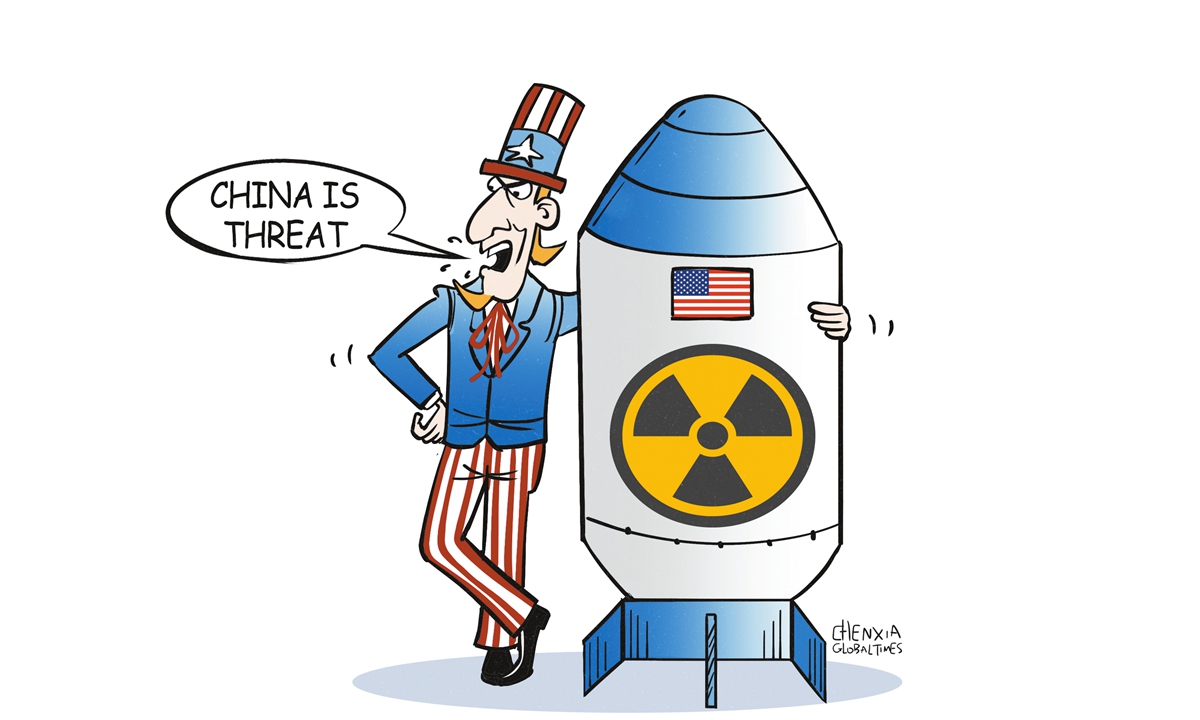
US crying wolf over China’s ‘nuclear threat’ while expanding nuclear arsenal
Aug 22, 2024 https://www.globaltimes.cn/page/202408/1318466.shtml
On Tuesday, a New York Times report caused quite a stir: US President Joe Biden has ordered US forces to prepare for “possible coordinated nuclear confrontations with Russia, China and North Korea.” It sounds like the US president was instructing the military to prepare for doomsday, observers pointed out.
The report revealed that in March, Biden approved a highly classified nuclear strategy plan called “Nuclear Employment Guidance,” which for the first time reorients the US’ deterrent strategy to focus on the so-called threat posed by China’s rapid expansion in its nuclear arsenal. The article states that this shift comes as the Pentagon believes China’s stockpiles will rival the size and diversity of the US’ and Russia’s over the next decade.
With over 5,000 nuclear warheads, the US possesses the world’s largest and most advanced nuclear arsenal. So why does it repeatedly target China in its nuclear threat rhetoric? This can be traced back to a dilemma faced by the US Department of Defense – how to justify maintaining such a massive nuclear arsenal in the post-Cold War world. To secure more defense budgets for the domestic military-industrial complex, the US chooses to constantly manufacture or exaggerate baseless “nuclear threats.” And China has become the best excuse.
What the US truly seeks is to ensure that its power far exceeds that of any other country in the world, allowing it to threaten and coerce other nations at will, without fear of retaliation. As a hegemonic state, US’ security is built on the insecurity of other countries. To maintain its hegemonic status, the US struggles to ensure its absolute superiority in power, with nuclear weapons being a crucial tool in maintaining its global dominance. Therefore, this new nuclear strategy plan is an excuse for expanding its nuclear arsenal and sustaining its military hegemony.
China and the US have fundamentally different perceptions of the strategic role of nuclear weapons. China has repeatedly emphasized that it pursues a nuclear strategy of self-defense, and is committed to the policy of no first use of nuclear weapons. China does not engage in any nuclear arms race with any other country, and keeps its nuclear capabilities at the minimum level required for national security. The notion of establishing an offensive nuclear hegemony or pursuing the so-called goal of rivaling the nuclear arsenal size of the US does not align with China’s strategic logic. As experts pointed out, China’s development of nuclear weapons is aimed at avoiding threats from other nuclear-armed states.
No matter how the US fabricates or exaggerates the so-called China threat narrative, China’s nuclear development follows its own set pace, including a measured increase in the quantity and quality of its nuclear arsenal, which will not be swayed by the US’ interference. This is a necessary measure for China in a complex international environment to safeguard its national security and territorial integrity – a legitimate act of self-defense, Shen Yi, a professor at Fudan University, told the Global Times.
The US repeatedly harps on the “China nuclear threat” narrative, yet it is, in fact, the one that poses the biggest nuclear threat to the world. In possession of the largest nuclear arsenal in the world, the US follows a nuclear policy that allows first-use of nuclear weapons. In recent years, the US has invested heavily to miniaturize nuclear weapons, lowering the threshold of their use in real-combat, and used nuclear weapons as a bait to hijack its allies and partners. Its irresponsible decisions and actions have resulted in the proliferation of nuclear risks, and its attempts to maintain hegemony and intimidate the world with nuclear power have been fully exposed.
There will be no winners in a nuclear war. We urge the US to abandon Cold War mentality, recognize that a nuclear war cannot be won and must never be fought, reduce the role of nuclear weapons in national and collective security policies, and take concrete actions to promote global strategic stability, instead of doing the opposite. Instead of smearing and hyping up China, the US should reflect on itself and consider how to rebuild mutual trust with China through dialogue and sincerity.
The U.S. and China Can Lead the Way on Nuclear Threat Reduction
Policies of “no first use” are a model for nuclear states.
Foreign Policy, By Zhou Bo, a senior fellow at the Center for International Security and Strategy at Tsinghua University and a retired senior colonel in the Chinese People’s Liberation Army. August 20, 2024,
Since the end of the Cold War, the role of nuclear weapons has only grown. Nuclear arsenals are being strengthened around the world, with many nuclear states continuing to modernize their arsenals. In June, outgoing NATO Secretary-General Jens Stoltenberg said that the alliance was in talks to deploy more nuclear weapons, taking them out of storage and placing them on standby. Robert C. O’Brien, a former national security advisor to former U.S. President Donald Trump, has urged him to conduct nuclear tests if he wins a new term, arguing that it would help the United States “maintain technical and numerical superiority to the combined Chinese and Russian nuclear stockpiles.”
There are two bleak conclusions about nuclear diplomacy in this age. First, it will be impossible to ban such weapons anytime soon. Since its passage in 2017, no nuclear-armed states have signed the United Nations Treaty on the Prohibition of Nuclear Weapons, some of them instead contending that it will distract attention from other disarmament and nonproliferation initiatives.
It is also very hard, if not impossible, to convince these states to reduce their nuclear stockpiles amid ever-intensifying geopolitical and military competition. On the contrary, in February 2023, Russia announced that it was suspending its participation in the 2010 Treaty on Measures for the Further Reduction and Limitation of Strategic Offensive Arms (New START)—the last remaining nuclear arms control treaty limiting Russian and U.S. strategic nuclear forces.
In response, the United States has also suspended the sharing and publication of treaty data. In November, Russia went a step further and withdrew its ratification of the Comprehensive Nuclear Test Ban Treaty (CTBT), citing “an imbalance” with the United States, which has failed to ratify the treaty since it opened for signature in 1996.
Amid such a situation, it is impossible for Beijing to stand by idly. The Stockholm International Peace Research Institute estimates that the size of China’s nuclear arsenal has increased from 410 warheads in January 2023 to 500 in January 2024, and it is expected to continue to grow. For the first time, China may also now be deploying a small number of warheads on missiles during peacetime. According to the U.S. Defense Department, China is likely to increase its nuclear warheads to 1,500 by 2035.
Given this reality, perhaps the most promising near-term way to guard against nuclear risks is not by limiting the number of nuclear weapons but by controlling the policies that govern their use. In this regard, a pledge by nuclear-armed states of “no first use” of nuclear weapons looks to be the most realistic approach in reducing the escalation of nuclear threats.
In theory, no first use refers to a policy by which a nuclear-armed power formally refrains from the use of nuclear weapons or other weapons of mass destruction in warfare, except in the case of doing so as a second strike in retaliation to an attack by an enemy power using weapon of mass destruction.
Of the five nuclear states that have signed onto the Treaty on the Nonproliferation of Nuclear Weapons (NPT)—China, France, Russia, the United Kingdom, and the United States—only China has ever declared a no-first-use policy. On Oct. 16, 1964, when China successfully detonated its first atomic bomb, the country immediately declared that it would not be the first to use nuclear weapons at any time and under any circumstances, and unconditionally committed itself not to use or threaten to use nuclear weapons against nonnuclear states or in nuclear-weapon-free zones…………………………………………..
All nuclear powers could afford to adopt a formal no-first-use policy—taking the moral high ground without reducing their capabilities for retaliation.
Though it has never adopted a no-first-use policy itself, the United States’ nuclear posture is actually more similar to China’s than it seems. In its 2022 Nuclear Posture Review, the Biden administration declared that it would only consider the use of nuclear weapons “in extreme circumstances to defend the vital interests of the United States or its allies and partners.” But it is hard to imagine which interests are so vital that they might require Washington to use nuclear weapons as a first measure to defend them.
To be sure, it is important for the United States to assure its allies that it will follow through on its deterrent promises. It is equally hard to imagine who would venture to launch a nuclear strike on a U.S. ally, knowing the dire potential consequences.
The United Kingdom’s nuclear deterrent, meanwhile, is operationally independent. But in terms of its nuclear policy, the British government has made it clear that “we would consider using our nuclear weapons only in extreme circumstances of self-defence, including the defence of our NATO allies.” France, meanwhile adheres to a principle of “strict sufficiency.”
The real challenge, then, is getting Russia to commit to a no-first-use policy. The Soviet Union adopted a formal policy of no first use in 1982. But after its dissolution, the Russian Federation reversed this approach in 1993, likely to mitigate the comparative weakness of the Russian Armed Forces in the post-Soviet era………………………………………………….
A dual-track approach may be the best bet for the adoption of a formal no-first-use policy.
In Europe, NATO can start with a unilateral no-first-use pledge against Russia as a gesture of goodwill. Even if such an offer isn’t immediately reciprocated by Russia, it might begin to thaw tensions.
As a second—and crucial—step, NATO could pledge to halt any further expansion of its alliance in exchange for Moscow adopting a no-first-use policy This would be a difficult pill for the alliance to swallow. But after Sweden’s and Finland’s entry earlier this year, there are only three aspiring countries on the waiting list: the barely significant Bosnia and Herzegovina as well as Georgia and Ukraine, which have deeply problematic ongoing conflicts with Russia that NATO is sensitive about.
The path forward would likely be smoother if it went through Asia. Both Russia and China have already agreed to no first use against each other. China and the United States could reach a similar agreement, thus de-escalating potential conflicts involving U.S. allies—such as the Philippines and Japan—as well as the dangers that could be provoked through accidental collisions in the sea or air. A U.S.-led example might then make it easier to bring the Europeans on board.
This may seem far-fetched in the current geopolitical climate, but there is precedent for it. When India and Pakistan tested nuclear devices in May 1998, they incurred swift condemnation from the U.N. Security Council, which called for both countries to sign both the NPT and the Comprehensive Nuclear Test Ban Treaty. In a rare show of solidarity, China and the United States made a joint declaration in June 1998 agreeing to de-target their nuclear weapons against each other.
This was largely a symbolic and unverifiable step. But it was not only a defusing of tensions, but also good to see nuclear states at least partially honoring the vision of nuclear disarmament laid out in Article VI of the NPT. And this China-U.S. joint statement eventually led to another joint statement among the five nuclear-armed permanent Security Council states in May 2000, which affirmed that their nuclear weapons are not targeted at each other or at any other states.
No first use is a big step forward from nontargeting. It’s not out of bounds to imagine that, with enough diplomatic capital, a similar but more important pledge of no first use could be made today. In fact, in January 2022—only a month before Russia’s invasion of Ukraine—these five nuclear powers agreed in a joint statement that “a nuclear war cannot be won and must never be fought.”
What is more significant is that during Chinese President Xi Jinping’s visit to Moscow last year, China and Russia reiterated this commitment, even amid Russia’s ongoing war.
If, indeed, a nuclear war cannot be won, then what is stopping these nuclear powers from taking a no-first-use pledge? Nuclear weapons didn’t help the United States in its wars in Vietnam, Iraq, and Afghanistan—or the Russians in Ukraine. A commitment of no first use by the nuclear-armed states would give people hope that a nuclear-free world, however distant, is still possible one day.
This essay is published in cooperation with the Asian Peace Programme at the National University of Singapore’s Asia Research Institute. https://foreignpolicy.com/2024/08/20/nuclear-weapons-war-no-first-use-policy/—
Understanding China’s Approach to Nuclear Deterrence
China has also always adhered to a “no first use” (NFU) doctrine regarding its nuclear forces, precluding it from adopting an asymmetric escalation posture. That it is entirely reliant on its own strategic nuclear capabilities for deterrence also precludes it from adopting a catalytic posture, as it does not need to, nor can it rely on, a nuclear patron to intervene in crises on its behalf.
Alex Alfirraz Scheers, https://thediplomat.com/2024/08/understanding-chinas-approach-to-nuclear-deterrence/
It has never been more crucial to understand China’s approach to deterrence, in order to bring a much-needed sense of perspective to Sino-American nuclear dynamics
The case for U.S. nuclear superiority made by several high-profile nuclear policy experts in the United States has tacitly increased tensions between Washington and Beijing. Any decision to pursue the recommendations outlined in the U.S. Strategic Posture Review to respond to China’s alleged efforts to achieve nuclear parity with the United States will only create a more uncertain and dangerous international threat environment. Hence, it has never been more crucial to understand China’s approach to deterrence, in order to bring a much-needed sense of perspective to Sino-American nuclear dynamics. More importantly, cultivating a sense of understanding is critical to attaining and maintaining peace.
This article seeks to contextualize China’s nuclear journey, and to serve as a reminder to policymakers and the general public alike that while China’s nuclear journey has been far from straightforward, China’s nuclear intentions have historically been to prevent and not to provoke nuclear conflict.
China has been a nuclear power since 1964. Up until the 1990s, China only had roughly 20 strategic nuclear capable delivery systems. Its approach to deterrence in that period, according to Nicola Leveringhaus, was not strategic, but rather can be understood by analyzing technological constraints, domestic politics, and its leadership decision-making considerations on nuclear and national security issues.
During the Cold War, China’s main strategic threats were posed by the USSR and the United States. Then, nuclear weapons served as a deterrent against any acts of aggression by the superpowers. In the 21st century, China has undertaken massive nuclear modernization and expansion. Today, China’s nuclear forces are numbered at roughly 440 warheads, and according to Pentagon estimates will number 1,500 warheads by 2035.
With the end of the Cold War and the dissolution of the USSR, and the emergence of regional nuclear powers such as India and Pakistan as well as a continued U.S. threat perception, China’s nuclear deterrent is positioned to prevent acts of aggression regionally and against the United States.
Indeed, according to Caitlin Talmadge and Joshua Rovner, “The specific nature of China’s improvements do seem oriented toward bolstering the country’s assured retaliation posture in response to growing threats from ever more capable U.S. counterforce and missile defense systems.”
Yet, throughout China’s nuclear history, it has consistently adopted a deterrence by punishment posture, and has stressed the importance of maintaining an effective second-strike retaliatory capability.
A deterrence by punishment posture enables China to threaten nuclear retaliation against a nuclear strike on its vital interest, and a secure second-strike capability refers to China’s ability to absorb a nuclear strike and to retaliate with a nuclear response. Both require highly survivable nuclear capabilities, and a resilient national security infrastructure, which China appears to have continually pursued.
Since Xi Jinping came to power in 2012, China has invested heavily in developing a triad of land, air and sea-based nuclear capabilities. While the proliferation of nuclear silos from which to launch its DF-5 intercontinental ballistic missiles (ICBM) constitutes the largest land-based nuclear build-up in China’s history, they bolster China’s strategic deterrence capability by signaling to the United States that it is investing in long-range delivery systems that can reach targets in the continental United States.
Nevertheless, as Vipin Narang observed, “The types of capabilities that China developed are consistent with a retaliatory posture aimed at deterring nuclear coercion and nuclear use.” China has also always adhered to a “no first use” (NFU) doctrine regarding its nuclear forces, precluding it from adopting an asymmetric escalation posture. That it is entirely reliant on its own strategic nuclear capabilities for deterrence also precludes it from adopting a catalytic posture, as it does not need to, nor can it rely on, a nuclear patron to intervene in crises on its behalf.
As Brandon Babin stated, “China has defined its active defense national military strategy as ‘striking only after the enemy has struck.’” Nevertheless, recent Chinese efforts to develop more nuclear options, such as theater nuclear weapons and longer-range ballistic missiles, indicate that China is potentially reviewing its deterrence posture.
Current estimates of their nuclear forces suggest that China appears to adopt a posture that includes countervalue targets, holding at risk their adversaries’ densely populated centers. The size of China’s nuclear forces logically orients it toward adopting countervalue targeting, as a counterforce posture would require a nuclear force size capable of successfully hitting an adversary’s nuclear forces.
A damage limitation approach, therefore, would simply not be feasible with their force size. As it stands, counterforce would prove ineffective for China if ever it is engaged in a nuclear conflagration with the United States. Again, Narang here is salient: “Chinese posture features…strong centralized controls, survivability through dispersed and concealed stewardship procedures and numerical ambiguity, and punitive retaliatory strikes against key countervalue targets.”
Adopting countervalue targeting enables China to effectively deter adversaries without requiring it to possess robust nuclear forces with sophisticated delivery systems. Changes in force size, however, will surely increase China’s nuclear options and will afford China with a breadth of maneuverability previously unattainable.
China’s targets also align with its deterrence by punishment posture. Its primary targets, as illustrated by its DF-1 to D-5 ICBMs, are strategic in character. These targets illustrate that China’s approach is also shaped by the fact that since the end of the Cold War, it does not face any direct existential security threats on its borders. Recent skirmishes with India have not escalated to levels of war-fighting sufficient to warrant genuine concern and are unlikely to result in the kind of direct military engagement seen in the 1969 conflict with the Soviet Union.
There is precedent – however obscure – for China to trade blows with a nuclear power: The Sino-Soviet border clashes in 1969 are the only time in history that a nuclear China clashed militarily with another nuclear power. However, given that the likelihood for a recurrence of such clashes remains low, never mind the likelihood of regional nuclear escalation involving China, policymakers in the United States should not seek to pursue superiority simply to fuel a sense of insecurity in China.
Having said that, China’s main strategic concern revolves around Taiwan, and its nuclear deterrence strategy is ultimately oriented toward preventing what it refers to as a “high-intensity war” with the United States. How the next president of the United States will affect China’s calculus remains to be seen, but recent reports regarding China’s decision not to pursue arms control talks with the United States surely do not bode well for Sino-American cooperation on nuclear matters.
Whether a President Trump or a President Harris can lead to a course reversal for the better remains to be seen. Nevertheless, China’s approach to nuclear deterrence looks likely to continue to be informed by its efforts to protect its vital interests and to deter conflict with the United States, through threatening a retaliatory nuclear strike and by preserving assured second-strike capabilities.
While concerns mount over the prospect of a future nuclear conflict between the United States and China, a concerted U.S. pursuit of nuclear superiority will do little to decrease tensions with China and preserve the peace, however fragile it may currently appear to be.
The US might lose a war with China, congressional commission says
Insufficient industry, readiness, innovation, and funding hamper military’s ability to prevail in conflict, key experts find.
By Patrick Tucker, Science & Technology Editor, Defense One, July 29, 2024, https://www.defenseone.com/threats/2024/07/us-might-lose-war-china-congressional-commission-says/398418/
The U.S. military “lacks both the capabilities and the capacity required to be confident it can deter and prevail in combat,” in the judgment of a congressional commission whose new report finds that collaboration between Russia, China, and other autocratic states is increasing the chance of a multi-front conflict—and that the U.S. would have trouble sustaining such a fight.
For more than a year, the former lawmakers, military leaders, and policy experts on the Commission on the National Defense Strategy have studied how well the U.S. military is executing the 2022 national defense strategy. The group released their report on Monday and will present its findings to the Senate Armed Services committee on Tuesday.
The group found big gaps between the Defense Department’s ambitions of deterring or prevailing in a major conflict and reality. One of the reasons they came to that conclusion is the current state of the U.S. defense industrial base compared to China’s.
“Unclassified public wargames suggest that, in a conflict with China, the United States would largely exhaust its munitions inventories in as few as three to four weeks, with some important munitions (e.g., anti-ship missiles) lasting only a few days. Once expended, replacing these munitions would take years,” the report states.
Furthermore, the growing collaboration between autocratic powers make it nearly inevitable that China and Russia would coordinate against the United States in the event of an armed conflict with one or the other.
“The United States should assume that if it enters a direct conflict involving Russia, China, Iran, or North Korea, that country will benefit from economic and military aid from the others. We also believe that this partnership increases the likelihood that a conflict with one would expand to multiple fronts, causing simultaneous demands on U.S. and allied resources,” the report states.
Of the commission’s many recommendations, most are similar to efforts the Pentagon is already undertaking, including reaching out more aggressively to the private sector, particularly new information-technology focused startups, to establish a new industrial base, and reevaluating counterproductive regulatory impediments to buying and selling defense technology.
Other recommendations are more pointed, such as abandoning outdated “programs of record” in order to procure key pieces of equipment, and loosening ship maintenance rules, allowing more maintenance in foreign ports, and being more willing to buy weapons and supplies from other countries.
But for the most part, the commission’s report paints a picture of a situation years in the making that can’t be righted quickly.
“Today, the United States has a DIB with too few people, too few companies, declining and unstable financial support, and insufficient production capacity to meet the needs of the Joint Force in both peacetime and wartime,” the group said.
China Stops Arms Control Talks With the US Over Arms Sales to Taiwan
The Chinese Foreign Ministry says the US continues to do things that go against Beijing’s ‘core interests’
Anti War, by Dave DeCamp, JULY 18, 2024
The Chinese Foreign Ministry said Wednesday that Beijing had stopped arms control talks with the US over continued US arms sales to Taiwan and other steps that go against China’s “core interests.”
The US and China held consultations on arms control back in November 2023. A reporter asked Chinese Foreign Ministry spokesman Lin Jian about comments from US officials suggesting China declined to hold another round.
“Over the past weeks and months, despite China’s firm opposition and repeated protest, the US has continued to sell arms to Taiwan and done things that severely undermine China’s core interests and the mutual trust between China and the US. This has seriously compromised the political atmosphere for continuing the arms control consultations,” Lin said.
“Consequently, the Chinese side has decided to hold off discussion with the US on a new round of consultations on arms control and non-proliferation. The responsibility fully lies with the US,” the spokesman added………………………………………………………more https://news.antiwar.com/2024/07/17/china-stops-arms-control-talks-with-the-us-over-arms-sales-to-taiwan/
China is installing the wind and solar equivalent of five large nuclear power stations per week

Instead of nuclear, solar is now intended to be the foundation of China’s new electricity generation system.
ABC Science / By technology reporter James Purtill, 16 July 24, https://www.abc.net.au/news/science/2024-07-16/chinas-renewable-energy-boom-breaks-records/104086640
In short:
China is installing record amounts of solar and wind, while scaling back once-ambitious plans for nuclear.
While Australia is falling behind its renewables installation targets, China may meet its end-of-2030 target by the end of this month, according to a report.
What’s next?
Energy experts are looking to China, the world’s largest emitter and once a climate villain, for lessons on how to rapidly decarbonise.
While Australia debates the merits of going nuclear and frustration grows over the slower-than-needed rollout of solar and wind power, China is going all in on renewables.
New figures show the pace of its clean energy transition is roughly the equivalent of installing five large-scale nuclear power plants worth of renewables every week.
A report by Sydney-based think tank Climate Energy Finance (CEF) said China was installing renewables so rapidly it would meet its end-of-2030 target by the end of this month — or 6.5 years early.
It’s installing at least 10 gigawatts of wind and solar generation capacity every fortnight.
By comparison, experts have said the Coalition’s plan to build seven nuclear power plants would add fewer than 10GW of generation capacity to the grid some time after 2035.
Energy experts are looking to China, the world’s largest emitter, once seen as a climate villain, for lessons on how to go green, fast.
“We’ve seen America under President Biden throw a trillion dollars on the table [for clean energy],” CEF director Tim Buckley said.
“China’s response to that has been to double down and go twice as fast.”
Smart Energy Council CEO John Grimes, who recently returned from a Shanghai energy conference, said China has decarbonised its grid almost as quickly as Australia, despite having a much harder task due to the scale of its energy demand.
“They have clear targets and every part of their government is harnessed to deliver the plan,” he said.
China accounts for about a third of the world’s greenhouse gas emissions. A recent drop in emissions (the first since relaxing COVID-19 restrictions), combined with the decarbonisation of the power grid, may mean the country’s emissions have peaked.
“With the power sector going green, emissions are set to plateau and then progressively fall towards 2030 and beyond,” CEF China energy policy analyst Xuyang Dong said.
So how is China building and connecting panels so fast, and what’s the role of nuclear in its transition?
Like building solar farms near Perth to power Sydney
Because its large cities of the eastern seaboard are dominated by apartment buildings, China hasn’t seen an uptake of rooftop solar like in Australia.
To find space for all the solar panels and wind turbines required for the nation’s energy needs, the planners of China’s energy transition have looked west, to areas like the Gobi Desert.
The world’s largest solar and wind farms are being built on the western edge of the country and connected to the east via the world’s longest high-voltage transmission lines.
These lines are so long they could span the length of our continent.
In Australian terms, it’s the equivalent of using solar panels near Perth to power homes in Sydney.
Mr Buckley said China’s approach was similar to the Australian one of developing regional “renewable energy zones” for large-scale electricity generation.
“They’re doing what Australia is doing with renewable energy zones but they’re doing it on steroids,” he said.
What about ‘firming’ the grid?
One of the issues with switching a grid to intermittent renewables is ensuring a steady supply of power.
In technical terms, this is the difference between generation capacity (measured in gigawatts) and actual energy output (measured in gigawatt-hours, or generation over time).
Renewables have a “capacity factor” (the ratio of actual output to maximum potential generation) of about 25 per cent, whereas nuclear’s is as high as 90 per cent.
So although China is installing solar and wind generation equivalent to five large nuclear power plants per week, their output is closer to one nuclear plant per week.
Renewables account for more than half of installed capacity in China, but only amount to about one-fifth of actual energy output over a year, the CEF’s Tim Buckley said.
To “firm” or stabilise the supply of power from its renewable energy zones, China is using a mix of pumped hydro and battery storage, similar to Australia.
“They’re installing 1GW per month of pumped hydro storage,” Mr Buckley said.
“We’re struggling to build the 2GW Snowy 2.0 in 10 years.”
There are some major differences between Australia and China’s approaches, though. Somewhat counterintuitively, China has built dozens of coal-fired power stations alongside its renewable energy zones, to maintain the pace of its clean energy transition.
China was responsible for 95 per cent of the world’s new coal power construction activity last year.
The new plants are partly needed to meet demand for electricity, which has gone up as more energy-hungry sectors of the economy, like transport, are electrified.
The coal-fired plants are also being used, like the batteries and pumped hydro, to provide a stable supply of power down the transmission lines from renewable energy zones, balancing out the intermittent solar and wind.
Despite these new coal plants, coal’s share of total electricity generation in the country is falling.
The China Energy Council estimated renewables generation would overtake coal by the end of this year.
The CEF’s Xuyang Dong said despite the country’s reliance on coal, “having China go green at this speed and scale provides the world with a textbook to do the same”.
“China is installing every week the equivalent of what we’re doing every year.”
Despite this speed, China wasn’t installing renewables fast enough to meet its 2060 carbon neutrality target, she added.
“According to our analysis, [the current rate of installation] is not ambitious enough for China.”
What about nuclear?
China is building new nuclear plants, although nowhere near as fast as it once intended.
In 2011, Chinese authorities announced fission reactors would become the foundation of the country’s electricity generation system in the next “10 to 20 years”.
But Japan’s 2011 Fukushima disaster prompted a moratorium on inland nuclear plants, which have to use river water for cooling and are more vulnerable to frequent flooding.
Meanwhile, over the following decade, solar became the cheapest electricity in the world.
From 2010 to 2020, the installed cost of utility-scale solar PV declined by 81 per cent on a global average basis.
As well as cheap, it was safe, which made solar farms quicker to build than nuclear reactors.
Instead of nuclear, solar is now intended to be the foundation of China’s new electricity generation system.
Authorities have steadily downgraded plans for nuclear to dominate China’s energy generation. At present, the goal is 18 per cent of generation by 2060.
China installed 1GW of nuclear last year, compared to 300GW of solar and wind, Mr Buckley said.
“That says they’re all in on renewables.
“They had grand plans for nuclear to be massive but they’re behind on nuclear by a decade and five years ahead of schedule on solar and wind.”
How is China transitioning so fast?
In June of this year, on the eve of the Coalition’s nuclear policy announcement, former Queensland Premier Annastacia Palaszczuk, who’s now a Smart Energy Council “international ambassador”, led a delegation of Australians to the world’s largest clean energy conference in Shanghai.
The annual Smart Energy Conference hosts more than 600,000 delegates across three days.
Its scale underlines China’s increasing dominance of the global clean energy economy and, for some attendees, prompted unenviable comparisons with Australia’s progress.
Mr Buckley, who was part of the delegation, said he was “blown away”.
“China is winning this race.”
John Grimes, the Smart Energy Council CEO who also attended, said Australia could learn from the Chinese government’s ability to execute a long-term, difficult and costly transition plan, rather than relying on market forces to find a solution.
“Australia’s transition is going too slow, there was a lost decade of action,” he said.
“The world today spends about $7 trillion a year on coal, gas and oil and that money is going to find a new home.
Who is going to be the economic winner in that global economic transition? It’s going to be China.”
He and other energy experts are frustrated with the progress of Australia’s transition, including the discussion of nuclear power and the “weaponisation of dissent” from community groups over new wind farms and transmission lines.
Stephanie Bashir, CEO of the Nexa energy advisory, said Australia’s transition was tangled in red tape.
“The key hold-up for a lot of projects is the slow planning approvals,” Ms Bashir, who also attended the conference, said.
“In China they decide they’re going to do something and then they go and do it.”
The Australian Energy Market Operator’s (AEMO) plan to decarbonise the grid and ensure the lights stay on when the coal-fired power stations close requires thousands of kilometres of new transmission lines and large-scale solar and wind farms.
Australia is installing about half the amount of renewables per year required under the plan.
Due to this shortfall, many experts say its unlikely to meet its 2030 target of 82 per cent renewables in the grid and 43 per cent emissions reduction.
“We need to build 6GW each year from now until each power station closes, and so far we’re only bringing online 3GW,” Ms Bashir said.
“If we identify some projects are nation-building … and we need them for transition, we just have to get on with it.”
Mr Buckley predicted China would accelerate its deployment of renewables.
“My forecast is it will lift 20 per cent per annum on current levels.”
U.S. and China hold first informal nuclear talks in five years
By Greg Torode, Gerry Doyle and Laurie Chen, June 22, 2024
HONG KONG, (Reuters) – The United States and China resumed semi-official nuclear arms talks in March for the first time in five years, with Beijing’s representatives telling U.S. counterparts that they would not resort to atomic threats over Taiwan, according to two American delegates who attended.
The Chinese representatives offered reassurances after their U.S. interlocutors raised concerns that China might use, or threaten to use, nuclear weapons if it faced defeat in a conflict over Taiwan. Beijing views the democratically governed island as its territory, a claim rejected by the government in Taipei.
“They told the U.S. side that they were absolutely convinced that they are able to prevail in a conventional fight over Taiwan without using nuclear weapons,” said scholar David Santoro, the U.S. organiser of the Track Two talks, the details of which are being reported by Reuters for the first time.
Participants in Track Two talks are generally former officials and academics who can speak with authority on their government’s position, even if they are not directly involved with setting it. Government-to-government negotiations are known as Track One.
Washington was represented by about half a dozen delegates, including former officials and scholars at the two-day discussions, which took place in a Shanghai hotel conference room.
Beijing sent a delegation of scholars and analysts, which included several former People’s Liberation Army officers.
A State Department spokesperson said in response to Reuters’ questions that Track Two talks could be “beneficial”. The department did not participate in the March meeting though it was aware of it, the spokesperson said.
Such discussions cannot replace formal negotiations “that require participants to speak authoritatively on issues that are often highly compartmentalized within (Chinese) government circles,” the spokesperson said.
Members of the Chinese delegation and Beijing’s defence ministry did not respond to requests for comment.
The informal discussions between the nuclear-armed powers took place with the U.S. and China at odds over major economic and geopolitical issues, with leaders in Washington and Beijing accusing each other of dealing in bad faith…………………………………………………………………………………………………………………………………………………………. more https://www.reuters.com/world/us-china-hold-first-informal-nuclear-talks-5-years-eyeing-taiwan-2024-06-21/
Why a substantive and verifiable no-first-use treaty for nuclear weapons is possible
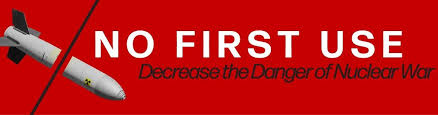
a no-first-use treaty could prohibit verbal threats of first use of nuclear weapons by the governments and militaries of states parties. Threatening to use nuclear weapons first is a means of sending a coercive signal. Such threats can be a major cause of escalation of nuclear confrontation and constitute a dangerous nuclear risk that must be reduced. A no-first-use treaty can consider any verbal threat of first use of nuclear weapons as a violation that is not only harmful but also detectable. A clause prohibiting the threat of first use of nuclear weapons, if included in the treaty, is verifiable. With a no-first-use treaty in place, if a state party intends to threaten to use nuclear weapons first would mean it can only withdraw from the treaty or violate its no-first-use commitment, raising the cost of signaling a nuclear threat. In this way, a no-first-use treaty could play a significant role in nuclear risk reduction
By Li Bin | June 4, 2024 https://www.hindustantimes.com/world-news/us-news/us-issues-major-nuclear-weapons-alert-amid-fears-of-all-out-war-if-that-day-comes-101717854501474.html
Since conducting its first nuclear detonation in 1964, China has pledged to never be the first to use nuclear weapons and has urged other nuclear weapon states to make the same commitment by proposing that they negotiate a no-first-use treaty.
In the United States, there have also been domestic policy initiatives, including in 2017 when US Vice-President Joe Biden commented that “deterring—and if necessary, retaliating against—a nuclear attack should be the sole purpose of the US nuclear arsenal.” However, successive US administrations have failed to formally adopt a “sole-purpose” policy, nor have they responded positively to China’s no-first-use proposals. And there is little hope that President Biden will move forward with this policy before the US presidential election in November.
But silence is consent: Both presidential candidates, Biden and Donald Trump, need now to explain to their domestic and international audiences why the United States should not adopt the “sole-purpose” policy and why they refused as presidents to negotiate a no-first-use treaty with China.
Criticism. The “sole purpose” and “no-first-use” policies may differ in some details, but in general they are very similar (and I don’t distinguish between the two here). There are two sets of reasons for criticizing the idea of no-first-use. First, for some, a no-first-use policy is not considered credible or verifiable. Others argue that the United States must retain the option of first use of nuclear weapons and that a no-first-use policy is not in the United States’ interest. This second argument, however, should be judged and debated by US experts and lawmakers.
Continue reading1 This Month

of the week – Shut Down Drone Warfare!


Tell the Ukrainian Government to Drop Prosecution of Peace Activist Yurii Sheliazhenko

Petition to revoke the licensing of the Near Surface Nuclear Disposal Facility (NSDF) at Chalk River. https://www.ourcommons.ca/petitions/en/Petition/Details?Petition=e-7247
To see nuclear-related stories in greater depth and intensity – go to https://nuclearinformation.wordpress.com
-
Archives
- April 2026 (57)
- March 2026 (251)
- February 2026 (268)
- January 2026 (308)
- December 2025 (358)
- November 2025 (359)
- October 2025 (376)
- September 2025 (257)
- August 2025 (319)
- July 2025 (230)
- June 2025 (348)
- May 2025 (261)
-
Categories
- 1
- 1 NUCLEAR ISSUES
- business and costs
- climate change
- culture and arts
- ENERGY
- environment
- health
- history
- indigenous issues
- Legal
- marketing of nuclear
- media
- opposition to nuclear
- PERSONAL STORIES
- politics
- politics international
- Religion and ethics
- safety
- secrets,lies and civil liberties
- spinbuster
- technology
- Uranium
- wastes
- weapons and war
- Women
- 2 WORLD
- ACTION
- AFRICA
- Atrocities
- AUSTRALIA
- Christina's notes
- Christina's themes
- culture and arts
- Events
- Fuk 2022
- Fuk 2023
- Fukushima 2017
- Fukushima 2018
- fukushima 2019
- Fukushima 2020
- Fukushima 2021
- general
- global warming
- Humour (God we need it)
- Nuclear
- RARE EARTHS
- Reference
- resources – print
- Resources -audiovicual
- Weekly Newsletter
- World
- World Nuclear
- YouTube
-
RSS
Entries RSS
Comments RSS
 nuclear-news