China must wait four years for decision on Bradwell nuclear plant After Hinkley Point C go-ahead, Essex reactor would be even more significant for China – and more controversial for UK, Guardian, Graham Ruddick and Tom Phillips, 17 Sept 16China faces at least a four-year wait to find out whether its plans to build a nuclear power station in Essex will be approved.
Under the deal, CGN agreed to invest £6bn inHinkley Point C in return for leading its own power plant project at Bradwell.
The Bradwell plant is considered vital by the state-owned company because it would be the first Chinese nuclear reactor to be built in a developed country and an opportunity to promote China’s technological expertise.
CGN plans formally to submit its plan for a nuclear reactor at Bradwell within weeks. However, it would take at least four years for the Office of Nuclear Regulation (ONR) to assess the proposals and possibly approve them. This means that despite the government having approved Hinkley Point C, the shape of Britain’s future energy supply will remain unresolved for some time……..
The process for the Chinese company would be the same as for other new reactors and would take around four years, as long as the group met the timetable for submissions and provided sufficient detail…….
CGN would own two-thirds of the Bradwell B project, with the French energy company EDF owning the rest. This is the reverse of Hinkley Point C, which is two-thirds owned by EDF and of a French design…….
Johnny Hon, a Sino-British entrepreneur and vice-president of the 48 Group Club, which promotes trade links between the countries, said: “Although the news is most welcome from China’s perspective, their most anticipated deal is the third potential reactor in Bradwell in Essex – whose details are yet to be confirmed.
“This reactor would be the first in a developed country to use Chinese technology and [would] be a breakthrough in establishing China as a global leader in nuclear power.”…….
China to build nuclear reactor in Essex after Hinkley deal approved, Telegraph UK, Emily Gosden, energy editor 15 SEPTEMBER 2016
China is to begin developing a new nuclear power station in Essex after the Government heralded a new wave of UK reactors by approving the £18bn Hinkley Point plant in Somerset.
Chinese state nuclear firm CGN will fund one-third of Hinkley, which is led by French state energy giant EDF, in return for the chance to build its own design of reactor at Bradwell with EDF’s support………
The only change to the Hinkley deal is that the Government has taken powers to veto EDF selling its controlling stake in the project, leading critics to call Mrs May’s review “a lot of hot air”……..Both CGN and EDF made clear they did not regard the new safeguards as any obstacle to proceeding with the plans for a Chinese reactor at Bradwell.
Although ministers made no mention of Bradwell in their announcement, sources told the Telegraph that CGN had privately received Government assurance its plans, which were endorsed by the previous administration, were still welcome.
CGN said it was “delighted” by the Hinkley decision which would allow it to “move forward and deliver” Bradwell.
It is understood the firm hopes to begin the process of seeking UK safety approval for its Hualong One reactor design in the autumn. EDF has previously said such a plant could begin construction as early as 2022, subject to approval by UK regulators.
Simmering US-China rivalry prompts North Korea nuclear test finger-pointing, CNBC News, Huileng Tan | @huileng_tan, 13 Sept 16 China has lashed out at the U.S. after Washington accused Beijing of not doing enough to arrest North Korean‘s nuclear ambitions, underscoring tensions between the two world powers in the geopolitically sensitive Korean Peninsula.
At the Chinese foreign affairs ministry’s regular press conference on Monday, spokesperson Hua Chunying said U.S. Defense Secretary Ash Carter was being “unnecessarily modest” for thrusting the responsibility of handling Pyongyang solely on China.
“The cause and crux of the Korean nuclear issue rest with the U.S. rather than China,” added Hua in an official transcript from the foreign affairs ministry. “The core of the issue is the conflict between (North Korea) and the U.S. It is the U.S. who should reflect upon how the situation has become what it is today, and search for an effective solution. It is better for the doer to undo what he has done. The U.S. should shoulder its due responsibilities,” she said.
Hua was responding to Carter who singled out the East Asian giant at a news conference in Norway as bearing the responsibility for North Korea’s recalcitrant nuclear testing……..
On Tuesday, two U.S. B-1 bombers flew over South Korea in a show of solidarity with South Korea while Sung Kim, the U.S. envoy on North Korea, said the world’s largest economy remained open to a meaningful dialogue with Pyongyang, Reuters reported……..
The Chinese foreign affairs ministry’s Hua urged for dialogue among all parties to address security concerns. “It has been proven time and again that sanctions alone cannot solve the problem,” she added………
“China is very worried about the North Korean regime but it does not want a collapse of that regime and a unified Korea under the current the South Korea regime which they would regard as a mortal threat to their interest (with) American security forces right alongside their border,” he told CNBC’s “Squawk Box“.
That explained Beijing’s intense opposition to the deployment of the U.S. Thaad defense system on South Korean soil even though Seoul was an ally which had repeatedly explained that the weapon was for self-defense.
“(There is) a larger sense that China feels that they are in a long term rivalry (with the U.S.)… In my view, there is a troubling chill over U.S.-China relations and I don’t see either presidential candidates really offering a sensible way to lower the temperatures in this rivalry. But if China is locked into this rivalry as it sees it, then it is taking measures that we don’t like at all,” Lyle Goldstein, a professor at the China Maritime Studies Institute at the U.S. Naval War College told CNBC. http://www.cnbc.com/2016/09/13/simmering-us-china-rivalry-prompts-north-korea-nuclear-test-finger-pointing.html
The analysis comes as China – alongside the US – moved to ratify the Paris climate treaty.
China’s coal use fell for the second year in a row in 2015, with 2016 on track to be the third – though it remains the largest source of energy; causing an estimated 370,000 premature deaths from air pollution in 2013.
But it’s China’s use of renewable energy that is really changing.
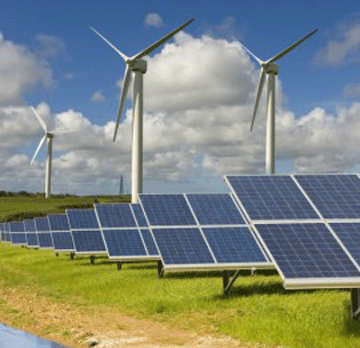
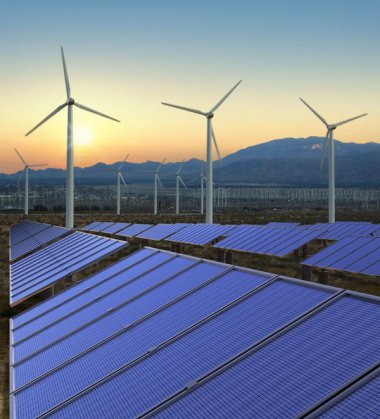
1. Power generation from wind and solar increased more than China’s total electricity demand in 2015.
So yes, energy demand in the world’s largest economy is growing but this new data means that all new demand was covered from these sources.
In detail that means:
Electricity consumption in China rose 0.5% from 2014 to 2015, from 5522 TWh (terawatt-hours) to 5550 TWh.
At the same time, electricity generated from wind and solar sources increased by 21% and 64%, respectively, covering off the rise almost twice over.
2. China’s increase in power generation from wind and solar in 2015 (48 TWh) alone was twice as large as Ireland’s entire electricity demand the previous year (24 TWh).
3. Half of all wind power capacity and almost one third of all solar PV capacity installed globally in 2015 was in China.
4. The surface area of solar panels installed in China in 2015 is equal to over 10,000 football pitches. That’s more than one football pitch per hour, every hour of the year.
5. China’s targets a similar pace of wind and solar growth in its 2020 renewable energy targets.This will mean adding approximately the entire electricity demand of UK from wind and solar in just five years. See the full dataset here.
China: Six little known facts about the country’s solar and wind boom New data collated by Greenpeace shows that the country’s electricity consumption rose 0.5% last year, from 5522 TWh (terawatt hours) to 5550 TWh.
Wind and solar comfortably met this new demand, producing 186.3 TWh and 38.3 TWh of electricity in 2015, compared to 153.4 TWh and 23.3 TWh the year before. That’s a dramatic increase: 21% and 64%, respectively.
To give those numbers more context, China’s increase in power generation from wind and solar in 2015 (48 TWh) alone was twice Ireland’s entire electricity demand the previous year (24 TWh).
Half UK energy needs In fact, Chinese wind alone could have met more than half the UK’s entire energy needs in 2015 (304 TWh).
The expansion of renewable energy generation was made possible by China vastly increasing its wind and solar capacity in 2015, up 28% and 54% respectively on 12 months previously. In total, the country made up nearly half of the world’s new solar and wind capacity last year.
Coal use falls The increased use of renewable energy, together with a marked economic shift away from heavy industry sectors, has meant that coal use in the country has dropped for a third year in a row, though it is still the biggest source of global CO2 emissions.
Last week, China announced that it was ratifying the Paris climate agreement, alongside the United States, in a move widely hailed as historic.
With the American presidential election now just two months away, it remains to be seen whether the States will be able to catch up in the race to lead the post-fossil fuels global economy. See the full dataset here.
US-China Tensions Undermine Cooperation on N. Korean Nuclear Threat SEOUL — VOA NEWS 8 SEP 16 Washington and Beijing’s longstanding agreement on the need to persuade North Korea to give up its nuclear ambitions is, analysts say, splintering over rising tensions in the region and diverging national interests.
American and South Korean officials, as well as analysts from China and Russia, addressed the increasingly complex security situation on the Korean peninsula at the Seoul Defense Dialogue on Thursday, organized by the South Korean Ministry of Defense.
Stay the course
Kim Hong-kyun, the South Korean Special Representative for Korean Peace and Security Affairs, called for continued international support to pressure the Kim Jong Un government to curb its defiant and continued development of nuclear weapons and ballistic missiles……..
The latest round of United Nations sanctions caused economic pain, especially, Kim said, in trade, shipping and finance. However, since the new restrictions were imposed in March, North Korea has conducted 20 tests of short and medium range missiles, including submarine-based launches, advancing its capability to reach the U.S. mainland with a nuclear strike.
Both Kim and U.S. Undersecretary of Defense David Shear noted that diplomatic outreach is at a standstill as both Seoul and Washington demand that Pyongyang first take significant action to dismantle its nuclear program before any talks can occur.
“Unfortunately, today there have been no credible signs that North Korea is ready to move down this path,” Shear said.
China For sanctions to be effective, China’s support remains crucial as it is North Korea’s economic lifeline. Nearly 90 percent of all North Korean trade flows through China.
US joins China in ratifying Paris climate agreement in ‘turning point’ for planet , ABC News 4 Sept 16 America and China have formally joined the Paris climate change agreement, with US President Barack Obama hailing the accord as the “moment we finally decided to save our planet”.
The move by the world’s two biggest polluters is a major step forward for the 180-nation deal, which sets ambitious goals for capping global warming and funnelling trillions of dollars to poor countries facing climate catastrophe.
Mr Obama and his Chinese counterpart Xi Jinping handed ratification document to United Nations chief Ban Ki-moon, who said he was now optimistic the agreement will be in force by the end of the year.
Mr Ban described the two leaders as far-sighted, bold and ambitious.
“China and the United States represent nearly 40 per cent of global greenhouse gas emissions,” he said.
“Now by formally joining the Paris agreement your have added powerful momentum to the drive for the agreement to enter into force this year.”
China has ratified Paris climate agreement, state media says, ABC News 3 Sep 16China has ratified the Paris agreement on climate change, according to state media, a key move by the world’s biggest polluter that brings the deal a major step closer to coming into force.
The National People’s Congress legislature voted to adopt “the proposal to review and ratify the Paris Agreement”, the official Xinhua news agency said.
China is responsible for about 25 per cent of global carbon emissions, with the US in second place on about 15 per cent, making their efforts crucial in the fight against warming.
G20: China expected to press Theresa May on Hinkley nuclear plant As PM prepares to meet Xi Jinping at summit, officials have reportedly raised issue of delayed power station, Guardian, Rowena Mason, Tom Phillips, 2 Sep 16, Theresa May is expected to come under pressure from China at the G20 summit over her decision to review the proposed Hinkley nuclear plant, after the issue was raised by Beijing in a meeting with the British energy minister.
The new British prime minister will have her first face-to-face meeting with Xi Jinping, the Chinese premier, at the summit on Sunday or Monday, amid continuing tensions over Hinkley Point in Somerset.
May angered Beijing by deciding in July that approval of the French- and Chinese-backed £18bn nuclear plant would be delayed, apparently as a result of security concerns over Chinese involvement.
The Chinese government has been publicly making its clear it wants the project to go ahead, but May and her ministers have stuck to the position that the government is “considering all the component parts of the project before making its decision in the early autumn”.
It is understood Chinese officials raised the issue of Hinkley last week when Baroness Lucy Neville-Rolfe, the new energy and intellectual property minister, made a low-profile trip to China. The Chinese National Energy Administration said on its website that Neville-Rolfe met one of its top officials in Beijing to discuss Hinkley Point……..
anti-nuclear groups urged the prime minister to stand firm against Chinese and French lobbying for the Hinkley Point power station to go ahead.
John Sauven, executive director of Greenpeace UK, said May had a “delicate diplomatic job awaiting her at the G20, and she will no doubt come under renewed pressure to give Hinkley the go-ahead.”
Ankara has opted to cooperate with Beijing, ratifying an agreement which includes not only nuclear power plant construction on Turkish territory, but also joint nuclear power development with China and the US. The Chinese State Nuclear Power Technology Corporation will implement technologies obtained in collaboration with US-based Westinghouse Electric company. The potential technological tripartite arrangement could result in significant regional and global political clout, according to the Asia Times. After a successful contract with Russia in 2010 to build Turkey’s first nuclear plant in Akkuyu, Ankara made plans for a second plant, to be located in Sinop, on the Black Sea. Among potential partners were Japan, a plan which was suspended following the Fukushima disaster. Canada, China and South Korea were also considered as possible partners. Although Beijing’s financing made the Chinese option attractive, the Turkish government in May 2013 awarded the construction of the second Turkish nuclear power plant to a Japanese-French consortium.
Turkey nonetheless continued collaborating with China on energy-related issues. Beginning November 2014, Turkey and China boosted mutual cooperation, and that year signed an agreement of exclusivity with the Chinese State Nuclear Power Technology Corporation (SNPTC) for a third nuclear plant. In June, Turkish Energy Minister Berat Albayrak, during a visit to China for the G20 Energy Ministers Meeting, signed a memorandum of understanding for the mutual development of nuclear power technologies. In August, China’s deputy minister of foreign affairs, Zhang Ming, visited Turkey to express solidarity with the country’s elected government and to discuss energy issues. Ratification of a 2012 nuclear cooperation agreement with China came soon after. Currently, the Chinese State Nuclear Power Technology Corporation (SNPTC) is close to winning the competition to construct Turkey’s third nuclear power plant, slated to cost some $25 million and have a 5,000-megawatt capacity.
Ambitious Nuclear Expansion Is Causing Problems For China. Oil Price, By Irina Slav – Aug 29, 2016, China General Nuclear Power Corp. has been indicted by the FBI on allegations that it has been trying to illegally acquire nuclear technology secrets from its U.S. consultants. According to the indictment, the country has been working with said consultants for years – and has been pressuring them into handing over sensitive trade information – pursuing Beijing’s international nuclear expansion ambitions.
Last month, Britain’s PM Theresa May postponed the go-ahead for the construction of the country’s biggest NPP in several decades, Hinckley Point, citing concerns about Chinese interference in British national security. The Chinese company behind Hinckley Point is China General Nuclear Power Corp.
These two cases have highlighted China’s growing ambitions in the nuclear field – not just domestic but international. They have also highlighted the inherent suspicion that Western governments feel towards China. In the case with the U.S. consultants, it’s very likely that the charges are legitimate, despite CGNP issuing a statement that said it “always sticks to the principle of following laws and regulations.”……
China has very aggressive international nuclear ambitions. The country’s state-owned nuclear power companies have been working with international leaders such as France’s Areva and EDF, and Westinghouse, on developing its own nuclear reactor that Beijing hopes to start exporting on a large scale.
The reactor in question is Hualong One, and it has been exported to two countries to date, Pakistan and Argentina. Both deals include financing for the construction of the power plants from Chinese sources, which is the model China used to get into road construction and other infrastructure in Africa an the Middle East, AP notes.
CGNP’s investment in the $24-billion Hinckley Point is yet another aspect of China’s international nuclear ambitions. Experts, however, are wary of the success of this ambition. Many warn that China has yet to win the trust of its potential clients – even though no Chinese nuclear plant has so far made headlines by causing a disaster, general sentiment towards nuclear energy is suspicious, and as a result, safety standards are very stringent. In addition to this stringency, they also vary from country to country, so Chinese reactor builders will have to be very flexible in their offer if they want to convince their potential clients to become actual ones.
What’s more, this market is extremely competitive, and there are clear global leaders, such as the aforementioned French and U.S. companies. These companies have the experience, the track record, and the reputation that ensure their place at the top. China lacks all of these, so pushing into the international nuclear reactor market may prove difficult.
China nuclear developer, Saudi’s Falih meet on nuclear cooperation By Reuters | Aug 30, 2016,BEIJING: China’s leading state nuclear project developer China National Nuclear Corp (CNNC) said it met on Monday with Saudi energy minister Khalid Al-Falih to discuss cooperation in the nuclear power sector.
Beijing is embarking on an ambitious plan to export its locally developed nuclear technology as well as its equipment manufacturing capacity, potentially worth billions of dollars.
CNNC chairman Sun Qin told Al-Falih that China is ready to cooperate fully with Saudi Arabia over nuclear power, according to a short statement posted on the CNNC website late on Monday.
How air pollution is causing the world’s ‘Third Pole’ to melt https://www.washingtonpost.com/news/energy-environment/wp/2016/08/24/how-air-pollution-is-causing-the-worlds-third-pole-to-melt/?utm_term=.2da2fe69b67fBy Chelsea Harvey August 24 In discussions about melting glaciers, most people think immediately of the vast ice sheets in Greenland and Antarctica. But there’s another, less talked-about ice-filled region on Earth that’s also experiencing dramatic melt, with millions of humans’ livelihoods and water supply at stake. The snow-covered Himalaya-Hindu Kush mountains and the Tibetan Plateau, spanning a broad area in Central and East Asia, together contain the largest ice mass on the planet outside of the polar regions. In fact, it’s earned itself the nickname of the “Third Pole.” But as in Greenland and Antarctica, there’s trouble afoot: Glaciers in the Third Pole are also shrinking.
According to remote sensing data collected and analyzed by the Chinese Academy of Sciences, about 18 percent of China’s glaciers alone have disappeared over the past 50 years. And that’s a big problem because meltwater from these glaciers feeds a network of rivers that supply water, directly or indirectly, to more than a billion people downstream.
Rising temperatures, the product of global warming, are certainly one threat facing the glaciers, said Shichang Kang, a professor at the Chinese Academy of Sciences’ Institute of Tibetan Plateau Research. But air pollution in the region is also helping to accelerate the melting. And now, Kang and a group of colleagues have helped shed some new light on where all this pollution is coming from and how it could be stopped.
In a new study, published Tuesday in the journal Nature Communications, the researchers collected samples of black carbon — a particulate matter created through the burning of fossil fuels and biomass — throughout the Third Pole and analyzed them using a special chemical “fingerprinting” process that identifies what kind of burning produced them and where they originated.
Black carbon might be most famous for the range of adverse health effects it’s believed to cause, including respiratory and cardiovascular problems and even premature death. But in terms of its effects on glaciers, it’s known to cause snow and ice melt in a number of different ways. First, black carbon floating in the atmosphere is able to absorb sunlight and cause at least temporary regional warming as a result, Kang noted. Additionally, when black carbon deposits itself on snow and ice masses, it tends to darken their surfaces, causing them to absorb more sunlight and melt faster.
Until now, scientists have had trouble pinpointing which places are contributing pollution to which regions of the Himalayas and the Tibetan Plateau and which types of sources are causing the most damage. That’s important information, not only for constructing accurate ice models to predict how the glaciers might change in the future, but also for writing new policies aimed at cutting pollution in the places that need it most.
In their new study, the researchers found evidence that both the burning of fossil fuels and the burning of biomass — materials such as plant matter and animal dung — have contributed to the black carbon that ended up in the Third Pole. In the Himalayas, it was split about evenly between the two sources, with most of it coming from the Indo-Gangetic Plain in northern India, while in the northern part of the Tibetan Plateau, most of the black carbon came from fossil fuel burning in China.
But in the inner, central part of the plateau, about two thirds of the sampled black carbon came from biomass burning rather than fossil fuels — a finding that Kang noted is “very surprising.” This suggests that internal Tibetan fuel-burning practices, such as burning yak dung for daily cooking and heating, are contributing more pollutants to certain parts of the Third Pole than experts previously suspected.
This is valuable data that can better inform the models used to simulate ice melt in the Third Pole and make predictions about what the region’s future might look like. But according to Kang, “the most important thing is that we can provide mitigation [advice] to policymakers.”
Because most biomass burning on the Tibetan Plateau is used for home energy, including cooking and heating, government investments in improving the efficiency of stoves and expanding the availability of cleaner energy sources to households in the region could make a big difference, Kang noted.
This advice isn’t meant to overshadow efforts to reduce fossil fuel burning, which also has big implications for the fight against global climate change. And wider efforts to address the burning of fossil fuels in Central and East Asia are already under way in some places. In China, for instance, coal-burning still remains the country’s dominant power source — but reports suggest that coal consumption hasn’t grown since 2013 and may have even declined in the last year, while the government has also placed a moratorium on new coal mine approvals for at least the next three years.
The study’s results may have helped reveal some new ways governments can add to or prioritize their current efforts to cut down on black carbon production. In the meantime, careful monitoring of the Third Pole’s glaciers will be critical, Kang said, especially when it comes to keeping an eye on the region’s water resources and making projections for the future.
“In the future, we’re definitely going to see glaciers shrink, but different regions with different climate regimes have different responses,” Kang said. “This is what we want to try to figure out.”
Protests threaten China’s nuclear energy plans, Global Risk Insights, 26 Aug 16NIMBYism is on the rise in China, and without better dialogue between stakeholders, threatens to undermine Beijing’s nuclear plans and efforts to meet its COP21 goals.
Over the past two weeks, thousands of residents of Lianyungang, a town in Jiangsu province, have gathered, halting preparations for a proposed nuclear waste reprocessing plant. Lianyungang is one of six sites under consideration for the project, but the two companies developing the plant, China National Nuclear Co. (CNNC) and France’s Areva, have not yet decided on a final location.
China’s ambitious nuclear plans The proposed fuel reprocessing center would recycle spent fuel to create new fissile material. This process also reduces the final volume of nuclear waste that needs to be stored. Currently, spent fuel is stored onsite at the power plant, usually first in cooling pools and then in dry casks. Long term storage facilities, such as the controversial Yucca mountain repository in Nevada, have been unsuccessful in gaining regulatory approval. However, on-site waste storage is not viable in the long term, and fuel reprocessing centers, like the proposed $15 billion CNNC-Areva project, will be critical to the viability of nuclear energy in China.………
Chinese state media has attributed the movement in Lianyungang to “nimbyism.” The NIMBY (Not In My Backyard) mentality has led to the suspension or cancellation of other industrial projects in China, such as praxylene or waste incinerator plants.
Lack of public input fuels opposition There is growing advocacy in China for an expanded role for public input in planning these projects – currently decisions at the planning stages are made with little input from residents: “for many local residents, there is no absolute guarantee that those projects, if built in their neighborhood, can be 100 percent safe. If there is some harm, they will bear the brunt of the costs and risks…..” http://globalriskinsights.com/2016/08/nimbyism-threatens-china-nuclear-plans/









 nuclear-news