Coalition of the unlikely: How Australia and China could save the planet.

Cooperation between Australia and China could send a useful message to the Trump regime and other countries around the world about both the possibility of developing alternatives to failing American leadership and the institutional order it did so much to create.
By Mark Beeson | 17 November 2025, https://independentaustralia.net/politics/politics-display/coalition-of-the-unlikely-how-australia-and-china-could-save-the-planet,20387
If we are to survive, unprecedented levels of cooperation are needed, no matter how unlikely. Mark Beeson writes.
GLOBAL GOVERNANCE is failing. Nothing highlights this reality more dramatically than our collective inability to address the degradation of the natural environment adequately. Addressing an unprecedented problem of this magnitude and complexity would be difficult at the best of times. Plainly, these are not the best of times.
Even if climate change could be dealt with in isolation, it would still present a formidable challenge. But when it is part of a polycrisis of intersecting issues with the capacity to reinforce other more immediate, politically sensitive economic, social and strategic problems, then the prospects for effective cooperative action become more remote.
Indeed, the polycrisis makes it increasingly difficult to know quite which of the many threats to international order and individual well-being we ought to focus on. The “we” in this case is usually taken to be the “international community”, which has always been difficult to define, generally more of an aspiration than a reality, frequently more noteworthy for its absence than its effectiveness.
Nation-states, by contrast, can still act, even if we don’t always like what they do. The quintessential case in point now, of course, is the administration of U.S. President Donald Trump. Because it is by any measure still the most powerful country in the world, what America does necessarily affects everyone. This is why its actions on climate change – withdrawing from the Paris Agreement, gutting the Environmental Protection Authority, encouraging fossil fuel companies – matter so much.
But nation-states can also be forces for good and not just for those people who live within the borders of countries in the affluent global North. On the contrary, states that oversee a reduction in CO2 emissions are not only helping themselves, but they are also helping their neighbours and setting a useful example of “good international citizenship”.
When global governance is failing and being actively undermined by the Trump regime, it is even more important that other countries try to fill the void, even if this means cooperating with the unlikeliest of partners. Australia and China really could offer a different approach to climate change mitigation while simultaneously defusing tensions in the Indo-Pacific and demonstrating that resistance to the Trump agenda really is possible.
Friends with benefits
In the long term, if there still is one, environmental breakdown remains the most unambiguous threat to our collective future, especially in Australia, the world’s driest continent. And yet Australia’s strategic and political elites remain consumed by the military threat China supposedly poses, rather than the immediate, life-threatening impact of simultaneous droughts, fires and floods.
One of the only positives of the climate crisis is that it presents a common threat that really ought to generate a common cause. Some countries are no doubt more responsible for the problem and more capable of responding effectively, so they really ought to overcome the logic of first-mover disadvantage. No doubt, some other country will take over Australian coal markets, but someone has to demonstrate that change is possible.
China is possibly at even greater risk from the impact of climate catastrophes because of water shortages and, paradoxically enough, rising sea levels that will eventually threaten massive urban centres like Guangzhou and Shanghai. While there is much to admire about the decrease in poverty in the People’s Republic, it has come at an appalling cost to the natural environment. China also has powerful reasons to change its ways.
Unfortunately, Chinese policymakers, like Australia’s and their counterparts everywhere else, are consumed with more traditional threats to national strategic and economic security. This may be understandable enough in a world turned upside down by an unpredictable administration bent on creating a new international order that puts America first and trashes the environment in the process.
But in the absence of accustomed forms of leadership from the U.S. and the international community, for that matter, states must look to do what they can where they can, even if this means thinking the unthinkable and working with notional foes. China and Australia really do have a common cause when it comes to the environment and they could and should act on it.
Yes, this does all sound a bit unlikely. But if we are to survive in anything like a civilised state, unprecedented levels of cooperation would seem to be an inescapable part of limiting the damage our current policies have inflicted on the environment. In this context, Australia and China really could lead the way by simply agreeing to implement coordinated domestic actions designed to set a good example and address a critical global problem.
Leading by example
As two of the biggest consumers and producers of coal, Australia and China could make an outsize contribution to a global problem that would almost certainly win near universal praise, not to say disbelief. In short, China could agree not to build any more coal-fired power stations and Australia could commit to not opening any more new mines and rapidly moving to close down existing ones.
This would be a challenge for both countries, no doubt, but if we are ever going to address the climate challenge seriously, this is the sort of action that will be needed. There are no easy or painless solutions. But voluntarily abandoning the use of one of the most polluting fossil fuels is a potentially feasible and effective gesture that would make a difference. After all, China is a world leader in the development and use of green energy already, so the transition would be difficult but doable.
Australia has a shameful record of exporting carbon emissions and could live without the coal industry, which produces most of them, altogether. Coal extraction doesn’t employ many people and Australia is a rich enough country to compensate those affected by the loss of what are awful jobs in a dirty industry. If Australia can find $368 billion for submarines that will likely never arrive, to counter an entirely notional threat from China, it ought to be able to find a couple of billion to deal with a real one.
No doubt there would be significant pushback from coal industry lobbyists and politicians who think their future depends on being “realistic”, even if it means wrecking the planet. And yet it is possible, even likely, that such actions on the part of Australia and China would be very well received by regional neighbours, who would directly benefit from their actions and who might also be encouraged to consider meaningful cooperative actions themselves.
Given the failure of regional organisations like ASEAN to tackle these issues, normative pressure could be useful.
China might even get a significant boost to its soft power and regional reputation. President Xi Jinping frequently talks about the need to develop an “ecological civilisation”. Moving away from coal and collaborating with an unlikely partner for the collective good would be an opportunity to demonstrate China’s commitment to this idea, and to offer some badly needed environmental leadership.
If that’s not an example of what Xi calls win-win diplomacy, it’s hard to know what is.
A sustainable world order?
In the absence of what U.S. Senator Bernie Sanders calls a “revolution” in American foreign policy, multilateralism may well be in terminal decline. Indeed, it is an open question whether interstate cooperation will survive another four years of Trumpism, especially when the United Nations faces a funding crisis and politics in the European Union is moving in a similarly populist and authoritarian direction.
Cooperation between Australia and China could send a useful message to the Trump regime and other countries around the world about both the possibility of developing alternatives to failing American leadership and the institutional order it did so much to create. American hegemony was frequently self-serving, violent and seemingly indifferent to its impact on the global South, but we may miss it when it’s gone.
If multilateralism is likely to be less effective for the foreseeable future, perhaps minilateralism or even bilateralism can provide an alternative pathway to cooperation. Narrowly conceived notional strategic threats could be usefully “decoupled” from the economic and environmental varieties. In such circumstances, geography may be a better guide to prospective partners than sacrosanct notions about supposed friends and enemies.
Someone somewhere has to show leadership on climate change and restore hope that at least one problem, arguably the biggest one we collectively face, is being taken seriously. There really isn’t any choice other than to contemplate unprecedented actions for an unprecedented problem. Australia and China may not save the world, but they could make things a bit less awful and inject some much-needed creativity and hope into international politics.
Mark Beeson is an adjunct professor at the University of Technology Sydney and Griffith University. He was previously Professor of International Politics at the University of Western Australia.
COP30 won’t save us, but China might.

From Fix the News, 17 Nov 25
We’ve been writing about China’s renewable energy revolution here for years, so we know it’s not news to you. But it does feel like something has shifted in the last few weeks; that mainstream outlets seem to have finally woken up to what’s actually happening and more importantly, what it means. It’s not just that China is building lots of solar and wind. It’s that China might actually be the country that saves us from climate catastrophe.
This is a difficult thing for many of us in the West to get our heads around. China has been the world’s collective climate bogeyman for so long, the largest emitter, still pumping out coal, refusing to make the commitments everyone else has agreed to. But, as negotiations kick off in earnest at COP30 in Belém, the story has flipped. China’s emissions are plateauing and more crucially, they’re now supplying the technology for the energy transition to everyone else.
The Economist says China is “a new type of superpower: one which deploys clean electricity on a planetary scale;” already home to a terawatt of installed solar capacity, more than double what the United States and Europe have combined. It makes more money from exporting green technology than America (the world’s biggest petrostate) makes from exporting fossil fuels.
Reuters notes that China now dominates clean energy supply chains and files three times more clean-tech patents than the rest of the world combined. “China is now the main engine of the global clean energy transition.”
The New York Times reports that China’s overseas investments in clean energy have exceeded $225 billion since 2011, more than the Marshall Plan, adjusted for inflation. In Pakistan, a standalone panel costs farmers $125, and they never have to worry about buying diesel again. In Nepal, electric vehicles now make up 76% of new car sales because the Chinese Seres Mini EV sells for $10,000. These aren’t moral decisions. They’re economic ones.
But the journalist who captures it best is Ambrose Evans-Pritchard in The Telegraph. He starts with the grim reality that CO2 emissions hit record levels last year, oceans are the warmest ever recorded, and forests are burning at unprecedented rates. Then he introduces the idea of a “second derivative” – the early signs of an energy shift most people are missing.
Global fossil use in industry peaked in 2014. Sales of petrol and diesel cars peaked in 2017. Transport emissions are finally rolling over. China’s coal use appears to have peaked. Its emissions have fallen by 1% this year.
His conclusion is worth repeating: “We may or may not avert a scorching runaway world of two degrees plus, but whether we succeed will have nothing to do with anything said or agreed to by the 50,000 people descending on Belém. It will be decided by geopolitics, market prices and the tidal force of technological change.”
Try not to worry too much about the climate summits. What matters far more is that China is now playing midwife to a clean energy transition that makes economic sense for the 80% of humanity that lives in countries that import fossil fuels. Those 6.4 billion people have no reason to stay dependent on shipments from petrostates anymore, when they can import solar panels made by the world’s first electrostate.
This doesn’t mean the problem is solved, energy is too big and complicated for that. China and India are still building coal plants. Almost every country is building fossil gas. But the trajectory has changed. And it’s changed not because of international agreements or appeals to the better angels of our nature, but because national self-interest is finally aligning with climate action.
US Plans for China Blockade Continue Taking Shape

Brian Berletic. https://sovereignista.com/ November 11, 2025
What was once a theoretical discussion in U.S. military journals about blockading China’s oil supply is now steadily turning into a tangible, multi-layered strategy aimed at containing Beijing and preserving American global dominance.
In 2018, the US Naval War College Review published a paper titled, “A Maritime Oil Blockade Against China—Tactically Tempting But Strategically Flawed.” It was only one of many over the preceding years discussing the details of implementing a maritime blockade as part of a larger encirclement and containment strategy of China.
At first glance the paper looks like US policy thinking considered, then moved past the idea of blockading China. Instead, the paper merely listed a number of obstacles impeding such a strategy in 2018—obstacles that would need to be removed if such a strategy were to be viable in the near or intermediate future—and obstacles US policymakers have been removing ever since.
More contemporary papers published, including those among the pages of the US Naval Institute (here and here), have updated and refined not just an emerging strategy to theoretically confront and contain China, but a plan of action taking tangible shape.
Cold War Continuity of Agenda
Throughout the Cold War and ever since its conclusion, the US’ singular foreign policy objective has been to maintain American hegemony over the globe established at the end of the World Wars. A 1992 New York Times article titled “U.S. Strategy Plan Calls for Insuring no Rivals Develop” made it clear the US would actively prevent the emergence of any nation or groups of nations from contesting American primacy worldwide.
In recent years this has included preventing the reemergence of Russia as well as the rise of China. It also involves surrounding both nations with arcs of chaos and/or confrontation—either through the destruction of neighboring countries through political subversion, or the capture of these nations by the US and their transformation into battering rams to be used against both nations.
Ukraine is an extreme example of this policy in action. The US is also transforming both the Philippines and the Chinese island province of Taiwan into similar proxies vis-à-vis China.
Beyond this, the US seeks to prevent the majority of nations currently outside US dominion from joining with and contributing to the multipolar world order proposed by nations like Russia and China.
This strategy of coercion, destabilization, political capture, proxy war, and outright war has been used to target both Russia and China directly, their neighbors, and a growing list of nations far beyond their near abroad.
The US is demonstrating a clear, unwavering commitment to a multi-layered strategy of containment, coercion, and confrontation designed not just to prepare for conflict, but to make that conflict both inevitable and successful for the singular goal of maintaining global American hegemony
Strengths and Weaknesses of American Primacy
Enabling this strategy is America’s global-spanning military presence facilitated by its “alliance network.” This network of obedient client regimes both hosts US military forces and serves as an extension of US military, economic, and increasingly military-industrial power. US “allies” often pursue US geopolitical objectives at their own expense.
Again, an explicit example of this is Ukraine, which is locked in a proxy war with Russia, threatening its own self-preservation as a means of—as US policymakers described in a 2019 RAND Corporation paper—“extending Russia.”
While conflicts like that unfolding in Ukraine or the US-backed military build-up in the Philippines or on Taiwan has exposed a critical weakness of the United States—its lagging military industrial capacity vis-à-vis either Russia or China, let alone both nations—the US has demonstrated the ability to compensate through geopolitical agility the multipolar world is struggling to address.
This includes the ability of the US to mire a targeted nation in conflict in one location while moving resources across its global-spanning military-logistical networks toward pressure points in other locations, overextending the targeted nation and achieving success in at least one of the multiple pressure points targeted. The US successfully did this through its proxy war against Russia in Ukraine, which tied Russia up sufficiently for the US to finally succeed in the overthrow of the Syrian government, where Russian forces had previously thwarted US-sponsored proxy war and regime change.
It also includes the ability of the US to target partner or potential partner nations of Russia and China through economic, political, or even military means in ways Russia and China are unable to defend against—including through political subversion facilitated through America’s near monopoly over global information space.
These advantages the US still possesses also make potential maritime blockades very difficult for Russia and China to defend against.
Russian Energy Shipments as a Beta Test for Blockading China
France recently announced seizing a ship accused of being part of Russia’s “ghost” or “shadow” fleet—ships refusing to heed unilateral sanctions placed by the US and its client states on Russian energy shipments.
This was just one of several first steps toward what may materialize into a wider and more aggressive interdiction or blockade of Russian energy shipments. This may also be a beta test for implementing a long-desired maritime blockade on China…………………
Setting the Stage for a Blockade of China Has Already Begun
The 2018 US Naval War College Review paper lays out the realities of a potential blockade against China in 2018, noting the various opportunities and risks associated with such a strategy…………………………………………………………………………………………..
Since the paper was published, the US has pursued both continued preparations for a maritime blockade of China itself, as well as build up a number of regional proxies to wage war against China, as the US wages proxy war against Russia in Ukraine and, increasingly, through the rest of Europe……………………………………………………………………..
To understand Washington’s strategy toward China, one should not look to the political rhetoric of “retreat” or “homeland defense” in the Western Hemisphere, but rather to the tangible actions taking place across the Asia-Pacific and beyond—the meticulous encirclement of China’s periphery, the sustained attacks on its critical overland energy and trade links (BRI/CPEC), the calculated incapacitation of Russia as a potential energy supplier, and the establishment of local proxy forces (the Philippines, Japan, separatists on Taiwan) prepared to wage war.
Far from an abstract or “flawed” concept relegated to think-tank papers, the maritime oil blockade—or wider general blockade against China—is being incrementally prepared in real-time. By systematically removing the very obstacles noted in the 2018 Naval War College Review paper, the US is demonstrating a clear, unwavering commitment to a multi-layered strategy of containment, coercion, and confrontation designed not just to prepare for conflict, but to make that conflict both inevitable and successful for the singular goal of maintaining global American hegemony. https://sovereignista.com/2025/11/11/us-plans-for-china-blockade-continue-taking-shape/
China denies nuclear testing, calls on US to maintain moratorium
US president claims China, Russia have carried out secret nuclear weapon tests as he seeks to justify return to testing.
Aljazeera, By Adam Hancock and News Agencies, 3 Nov 2025
China has denied it has been secretly testing nuclear weapons, refuting a claim from United States President Donald Trump.
Chinese Foreign Ministry spokeswoman Mao Ning insisted on Monday that Beijing has not broken the informal moratorium that has persisted for decades on the testing of nuclear arms.
Trump claimed on Sunday that, as well as China, Russia, North Korea and Pakistan are all engaged in secret underground testing. He made the comments as he pushes for the US to resume tests.
China has “abided by its commitment to suspend nuclear testing”, Mao said in response to questions regarding Trump’s allegation.
“As a responsible nuclear-weapon state, China is committed to peaceful development, follows a policy of ‘no first use’ of nuclear weapons and a nuclear strategy that focuses on self-defence, and adheres to its nuclear testing moratorium,” she said.
She also said that Beijing calls on the US to uphold the moratorium on nuclear testing, following Trump’s surprise announcement on Thursday that he had ordered the Department of Defense to “immediately” resume tests.
China hopes the US will “take concrete actions to safeguard the international nuclear disarmament and non-proliferation regime and maintain global strategic balance and stability”, Mao continued.
‘The only country that doesn’t test’
Trump made the claims about secret nuclear tests, without offering evidence, in a television interview with CBS.
“Russia’s testing, and China’s testing, but they don’t talk about it,” he said.
“I don’t want to be the only country that doesn’t test,” he continued, adding North Korea and Pakistan to the list of nations allegedly testing arsenals.
The US has not set off a nuclear explosion since 1992. No country other than North Korea is known to have conducted a nuclear detonation for decades. Russia and China report they have not carried out such tests since 1990 and 1996, respectively…………………..https://www.aljazeera.com/news/2025/11/3/china-denies-nuclear-testing-calls-on-us-to-maintain-moratorium
Donald Trump’s nuclear testing order sparks pushback from Russia, China and the UN.
SBS World News, 31 Oct 25
Trump said the Pentagon will immediately resume testing the US nuclear arsenal on an “equal basis” with other nuclear powers.
United States President Donald Trump has landed back in the US after a surprise directive to begin nuclear weapons testing that has raised the spectre of renewed superpower tensions.
Trump announced the order on social media, just as he was entering a summit with Chinese leader Xi Jinping in South Korea on Thursday.
It came days after Russia declared it had tested nuclear-capable, nuclear-powered cruise missiles and sea drones.
The blunt statement from Trump, who boasts frequently about being a “peace” president, left much unanswered.
Chiefly, it was unclear whether he meant testing weapons systems or actually conducting test explosions — something the US has not done since 1992.
“Because of other countries’ testing programs, I have instructed the Department of War to start testing our Nuclear Weapons on an equal basis,” Trump said in a post on his Truth Social platform.
Trump also said that the US has more nuclear weapons than any other country and that he had achieved this in his first term as president.
The Stockholm International Peace Research Institute said in its latest annual report that Russia possesses 5,489 nuclear warheads, compared to 5,177 for the United States and 600 for China.
In his post, Trump said — minutes ahead of his meeting with Xi — that China was expected to “be even within 5 years”, without substantiating the claim.
China, Russia express concerns
In response to Trump’s announcement, Chinese foreign ministry spokesperson Guo Jiakun urged the US to “earnestly abide” by a global nuclear testing ban.
Russia questioned whether Trump was well-informed about its activities.
“President Trump mentioned in his statement that other countries are engaged in testing nuclear weapons. Until now, we didn’t know that anyone was testing,” Kremlin spokesman Dmitry Peskov told reporters.
Russia’s recent weapons drills “cannot in any way be interpreted as a nuclear test”, Peskov said. “We hope that the information was conveyed correctly to President Trump.”
Peskov then implied that Russia would conduct its own live warhead tests if Trump did it first.
“If someone departs from the moratorium, Russia will act accordingly,” Peskov said.
Russian President Vladimir Putin has repeatedly said that if any country tests a nuclear weapon, then Russia will do so too.
Both countries observe a de facto moratorium on testing nuclear warheads, though Russia and the United States do regularly run military drills involving nuclear-capable systems.
The US has been a signatory since 1996 to the Comprehensive Nuclear-Test-Ban Treaty, which bans all atomic test explosions, whether for military or civilian purposes.
United Nations secretary-general António Guterres said through his deputy spokesman that “nuclear testing can never be permitted under any circumstances”………………………………………… https://www.sbs.com.au/news/article/trump-nuclear-testing-order-pushback/a21zghnl1
Stabilizing the U.S.-China Rivalry.

| RAND think tank, famous for its influential policy papers which have shaped US-Russian relations, has released an eye-opening call for a change of course on China. This comes by way of the latest Trump-China escalations which, it appears, have greatly worried insiders of the ‘deep state’ system; enough so that for once they have begun swallowing their pride and envisioning a calmer, more placating approach toward China so as not to upset the global status quo too much. |
Michael J. Mazarr, Amanda Kerrigan, Benjamin Lenain, Oct 14, 2025, https://www.rand.org/pubs/research_reports/RRA4107-1.html?utm_source=substack&utm_medium=email
The geopolitical rivalry between the United States and China embodies risks of outright military conflict, economic warfare, and political subversion, as well as the danger that tensions between the world’s two leading powers will destroy the potential for achieving a global consensus on such issues as climate and artificial intelligence. Moderating this rivalry therefore emerges as a critical goal, both for the United States and China and for the wider world.
The authors of this report propose that, even in the context of intense competition, it might be possible to find limited mechanisms of stabilization across several specific issue areas. They offer specific recommendations both for general stabilization of the rivalry and for three issue areas: Taiwan, the South China Sea, and competition in science and technology.
Key Findings
Several broad principles can guide efforts to stabilize intense rivalries
- Each side accepts that some degree of modus vivendi must necessarily be part of the relationship.
- Each side accepts the essential political legitimacy of the other.
- In specific issue areas, especially those disputed by the two sides, each side works to develop sets of shared rules, norms, institutions, and other tools that create lasting conditions of a stable modus vivendi within that domain over a specific period (such as three to five years).
- Each side practices restraint in the development of capabilities explicitly designed to undermine the deterrent and defensive capabilities of the other in ways that would create an existential risk to its homeland.
Each side accepts some essential list of characteristics of a shared vision of organizing principles for world politics that can provide at least a baseline for an agreed status quo.- There are mechanisms and institutions in place — from long-term personal ties to physical communication links to agreed norms and rules of engagement for crises and risky situations — that help provide a moderating or return-to-stable-equilibrium function.
Recommendations
Six broad-based initiatives can help moderate the intensity of the U.S.-China rivalry
- Clarify U.S. objectives in the rivalry with language that explicitly rejects absolute versions of victory and accepts the legitimacy of the Chinese Communist Party.
- Reestablish several trusted lines of communication between senior officials.
- Improve crisis-management practices, links, and agreements between the two sides.
- Seek specific new agreements — a combination of formal public accords and private understandings — to limit the U.S.-China cyber competition.
Declare mutual acceptance of strategic nuclear deterrence and a willingness to forswear technologies and doctrines that would place the other side’s nuclear deterrent at risk.- Seek modest cooperative ventures on issues of shared interest or humanitarian concern.
More-specific strategies should guide efforts to stabilize the issues of Taiwan, the South China Sea, and competition in science and technology
- Stabilizing the Taiwan issue should focus on creating the maximum incentive for Beijing to pursue gradual approaches toward unification.
- For the South China Sea, combine deterrence of military escalation with intensified multilateral and bilateral diplomacy to create a medium-term route to a peaceful solution as the default international process and expectation.
- In the U.S.-China science and technology rivalry, manage the worst aspects of emerging technologies for mutual security and the condition of the rivalry, and step back from the most extreme versions of efforts to undermine the other side’s progress.
Quake less alarming than tsunami threat to China’s coastal nuclear power plants

REACTORS: A tremor yesterday posed minimal danger to Kinmen, but a greater risk would come from tsunamis striking Chinese coastal nuclear plants, an expert said
Taipei Times, By Wu Liang-yi and Jake Chung / Staff reporter, with staff writer, 21 Sept 25, https://www.taipeitimes.com/News/taiwan/archives/2025/09/21/2003844164
Taiwan’s nuclear engineers and the Central Weather Administration (CWA) yesterday said that an earthquake near Kinmen County was less concerning than the potential risk posed by earthquake-triggered tsunamis striking nuclear power plants along China’s coast.
A magnitude 5.0 quake on the Richter scale, the strongest recorded in the Kinmen region in 32 years, struck at 6:56am yesterday.
The CWA said its epicenter was in the Taiwan Strait, about 93.9km east of Kinmen County Hall, at a depth of 17.2km.
Nuclear engineer Ho Li-wei (賀立維) said that while nuclear power plants are designed to withstand strong earthquakes, their cooling systems are more vulnerable.
Ho cited the 2011 Fukushima Dai-ichi disaster, where the plant’s cooling system was damaged by a tsunami triggered by the Tohoku earthquake, ultimately leading to hydrogen explosions that destabilized the facility.
If the same happened to Chinese coastal nuclear power plants, irradiated water could seep into underground aquifers or be carried into the sea, posing a devastating threat to Taiwan’s fisheries, he said.
Kinmen and Lienchiang counties would face particular risk due to their proximity to China, he said.
On the issue of spent fuel pools, Ho said that used fuel rods are stored in pools to dissipate heat and radiation, often requiring years of cooling before they can be transferred to dry storage.
The number of spent fuel rods in pools far exceeds those in active reactors, making them a significant security risk, he said.
CWA Seismological Center Director Wu Chien-fu (吳健富) said that the Kinmen earthquake was not on a fault line and carried little risk of causing a major quake.
Tsunami-generating earthquakes must reach at least magnitude 7 on the Richter scale and occur at depths of less than 30km, Wu said, adding that the likelihood of such conditions arising in the Taiwan Strait is not high.
While the Strait’s shallow waters make it theoretically vulnerable to tsunamis, Wu said that even waves generated by distant quakes would be greatly diminished by the time they reached the area.
Additional reporting by CNA
Can the US, Russia and China break their nuclear talks impasse?
With a key US-Russia arms treaty due to expire in February, the world is at risk of entering a new era of strategic instability, analysts warn.
Shi Jiangtao, SCMP, 21 Sep 2025
US President Donald Trump’s summit in Alaska last month with Russian leader Vladimir Putin failed to revive long-stalled nuclear negotiations or advance efforts to preserve the last major arms control pact between Washington and Moscow, which is set to expire in February.
Trump’s subsequent push for trilateral “denuclearisation” talks involving China elicited a firm refusal from Beijing, underscoring challenges to extending the New Strategic Arms Reduction Treaty (New START) amid fears of a fresh nuclear arms race, analysts said.
Following the summit, Beijing, with its long-standing policy of “no first use” and a nuclear strategy rooted in self defence, spurned Trump’s proposal, with Chinese foreign ministry spokesman Guo Jiakun calling it “neither reasonable nor realistic”…………………………(Subscribers only) https://www.scmp.com/news/china/diplomacy/article/3326243/can-us-russia-and-china-break-their-nuclear-talks-impasse?module=perpetual_scroll_0&pgtype=article
Chinese hackers gain access to US oversight of nuclear weapons in widespread Microsoft hack: report

The tech giant blamed a vulnerability in its SharePoint document software
Anthony Cuthbertson,Rhian Lubin, Wednesday 23 July 2025, https://www.the-independent.com/tech/security/china-hack-nuclear-microsoft-sharepoint-b2795333.html
Chinese hackers gained access to the U.S. government agency that oversees nuclear weapons in a widespread Microsoft hack.
Microsoft issued an alert Tuesday warning that hackers affiliated with the Chinese government have been exploiting cybersecurity vulnerabilities in the company’s SharePoint software.
Tens of thousands of servers hosting the software, which is used for sharing and managing documents, were said to be at risk as a result.
The National Nuclear Security Administration, a semi-autonomous agency within the U.S. Department of Energy responsible for maintaining the nation’s stockpile of nuclear weapons, was breached in the attacks on July 18, Bloomberg first reported.
The agency is responsible for providing the Navy with nuclear reactors for submarines and responds to nuclear and radiological emergencies in the U.S. and overseas. No sensitive or classified information has leaked in the cyber attack, according to Bloomberg.
“On Friday, July 18th, the exploitation of a Microsoft SharePoint zero-day vulnerability began affecting the Department of Energy,” an agency spokesman said in a statement to the outlet. “The department was minimally impacted due to its widespread use of the Microsoft M365 cloud and very capable cybersecurity systems. A very small number of systems were impacted. All impacted systems are being restored.”
Security firm Eye Security said that 400 organizations and agencies globally were impacted, including national governments in Europe and the Middle East.
Microsoft linked the attack to two main groups, Linen Typhoon and Violet Typhoon, and flagged that another China-based group, Storm-2603, had also targeted its systems.
The Education Department, Florida’s Department of Revenue and the Rhode Island General Assembly were also breached in the attack, according to Bloomberg.
Eye Security warned that the breaches could allow hackers to impersonate users or services by stealing cryptographic keys — alphabetical codes or sequences of characters — even after software updates. Users should take further steps to protect their information, the firm said.
Microsoft said in a message to customers that it has since released “new comprehensive security updates” to deal with the incident.
But security researchers warned that the full extent of the breach and its consequences are yet to be fully revealed.
“This is a critical vulnerability with wide reaching implications,” Carlos Perez, director of security intelligence at TrustedSec, who previously trained U.S. military cyber protection teams, told The Independent.
“It enables unauthenticated remote code execution on SharePoint servers, which are a core part of enterprise infrastructure. It is already being actively exploited at scale, and it only took 72 hours from the time a proof of concept was demonstrated for attackers to begin mass exploitation campaigns.
“What makes it even more severe is the way it exposes cryptographic secrets, effectively allowing attackers to convert any authenticated SharePoint request into remote code execution. That is a dangerous capability to put into the hands of threat actors.”
Microsoft said it had “high confidence” that firms who do not install the new security updates could be targeted by the groups.
The tech firm said the attackers had been uploading malicious scripts which are then “enabling the theft of the key material” by hackers.
In a statement, the company added: “Investigations into other actors also using these exploits are still ongoing.”
Additional reporting from agencies.
Poisoned water and scarred hills
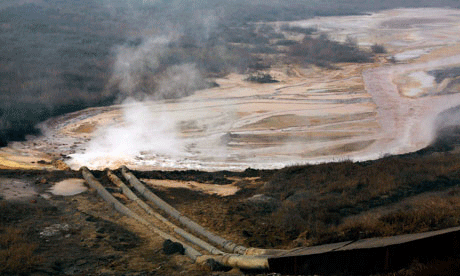
The price of the rare earth metals the world buys from China
By Laura Bicker and the Visual Journalism team: 08/07/2025, https://www.bbc.co.uk/news/resources/idt-66cdf862-5e96-4e6e-90b8-a407b597c8d9
When you stand on the edge of Bayan Obo, all you see is an expanse of scarred grey earth carved into the grasslands of Inner Mongolia in northern China.
Dark dust clouds rise from deep craters where the earth’s crust has been sliced away over decades in search of a modern treasure.
You may not have heard of this town – but life as we know it could grind to a halt without Bayan Obo.
The town gets its name from the district it sits in, which is home to half of the world’s supply of a group of metals known as rare earths. They are key components in nearly everything that we switch on: smartphones, bluetooth speakers, computers, TV screens, even electric vehicles.
And one country, above all others, has leapt ahead in mining them and refining them: China.
This dominance gives Beijing huge leverage – both economically, and politically, such as when it negotiates with US President Donald Trump over tariffs. But China has paid a steep price for it.
To find out more, we travelled to the country’s two main rare earth mining hubs – Bayan Obo in the north and Ganzhou in the province of Jiangxi in the south.
We found man-made lakes full of radioactive sludge and heard claims of polluted water and contaminated soil, which, in the past, have been linked to clusters of cancer and birth defects. These journeys were challenging.
Beijing appears sensitive to criticism of its environmental record. We were pulled over by police, questioned by them and stuck in a three-hour standoff with an unidentified mining boss who refused to let us leave unless we deleted our footage.
Our calls for an interview or a statement have gone unanswered, but the government has published new regulations to try to strengthen its supervision of the industry.
Authorities have been making an effort to clean up these mining sites, scientists told the BBC. Still, China’s mining operations in the north just keep growing.
Machines are constantly on the hunt for rare earths called neodymium and dysprosium that go into making powerful magnets for a variety of modern technology, from electric vehicles to computer hard drives.
To find these rare earths, the machines strip away the topsoil layer-by-layer, kicking up harmful dust, some of which contains high levels of heavy metals and radioactive material.
Satellite images from the last few decades show how the Bayan Obo mine has spread.
The mine sits in the vast, aridness of Inner Mongolia, a nine-hour drive from the capital, Beijing.
There were once more than a thousand mining sites, some of them illegal, dotted throughout this one county. Companies got what they needed from one mine, and then moved to another.
Then in 2012, the Chinese government stepped in to regulate, dramatically reducing the number of mining licences they issued.
But significant damage had been done to the area already. Research going back decades has linked the rare earth mines to deforestation, soil erosion and chemical leaks into rivers and farmland.
Local farmer Huang Xiaocong, whose land is surrounded by four rare earth sites, believes landslides are still being triggered by improper mining practices.
He has also accused the state-owned company of grabbing land illegally. The firm refused to answer the BBC’s questions.
“This problem is way too big for me to solve. It’s something that has to be dealt with at the higher levels of government,” Mr Huang said.
“We ordinary people don’t have the answers… Farmers like us, we’re the vulnerable ones. To put it simply, we were born at a disadvantage. It’s pretty tragic.”
It is rare and often risky in China for villagers to take on huge companies – and even rarer for them to speak to international media. But Mr Huang is determined to be heard and has taken his case to the local Natural Resources Bureau.
Satellite images show the mining ponds surrounding Mr Huang’s village and land. Within a six kilometres wide square, at least four sites are visible.
During our interview with Mr Huang, we were surrounded by men wearing uniforms branded with what appeared to be the logo of the same rare earth company. At least 12 other men used their vehicles to block our car from leaving.
Eventually, someone who identified himself as a local manager of China Rare Earth Jiangxi Company arrived. He confronted Mr Huang and us, and wouldn’t let us leave for nearly three hours, despite our attempts to negotiate and our offers to hear his argument.
Those living around the mines in Bayan Obo and Ganzhou appear to be victims of what used to be China’s “develop first and clean up later” approach to mining, says Professor Julie Klinger, author of Rare Earth Frontiers. That has changed now as they try harder to mitigate the damage, she adds, but the consequences are here to stay.
“I think it’s very difficult to know the true human and environmental cost of that sort of development model,” she told the BBC.
The worst health effects were found in and around the largest tailing pond south of Bayan Obo in the city of Baotou. In the decades leading up to 2010, villagers were diagnosed with bone and joint deformities caused by too much fluoride in the water and acute arsenic toxicity, according to Professor Klinger.
Most of them lived close to the Weikuang Dam, a man-made lake built to dump mining waste in the 1950s. Authorities have since moved villagers away from the site, but the 11km-long tailings pond is still full of grey clay sludge, including radioactive thorium.
Studies suggest this toxic mix could be slowly seeping into the groundwater and moving towards the Yellow River, China’s second-largest, and a key source of drinking water for the north of the country.
As the demand for pocket gadgets, electric vehicles, solar panels, MRI machines and jet engines surges, there is one worrying statistic to contend with – mining just one tonne of rare earth minerals creates some 2,000 tonnes of toxic waste.
China is now trying to rein in the environmental harm its rush for rare earths has caused, while expanding its mining operations abroad. Others, including the United States, are in a hurry to catch up with their own rare earth enterprises.
But scientists warn that no matter where these metals are mined, without the right solutions, landscapes and lives will be put at risk.
And yet, some farmers in Bayan Obo have adjusted to life in the the world’s rare earth capital.
The metals that have scarred their land and poisoned their water have also brought them jobs.
“With the rare earths, there’s money now,” one farmer told us. “The mines pay 5,000 or 6,000 yuan ($837; £615) a month.”
He says he lost money herding horses, among the traditional livelihoods in a region that has long been home to nomadic people. Horses still roam the pastures next to the mines, as diggers continue their search for more rare earths.
“Farming’s fine,” he told us as he planted green onions. “You just grow your crop and sell it – simple as that.”
China backs Southeast Asia nuclear ban; Rubio, Lavrov at ASEAN meeting
US President Trump’s tariffs loom over gathering in Malaysia’s Kuala Lumpur which will also feature US-Russia talks.
Aljazeera, 10 Jul 2025
China has agreed to sign a Southeast Asian treaty banning nuclear weapons, Malaysia’s and China’s foreign ministers confirmed, in a move that seeks to shield the area from rising global security tensions amid the threat of imminent United States tariffs.
The pledge from Beijing was welcomed as diplomats on Thursday gathered for the Association of Southeast Asian Nations (ASEAN) foreign ministers’ meeting, where US Secretary of State Marco Rubio is also due to meet regional counterparts and Russian counterpart Sergey Lavrov.
Malaysia’s Minister of Foreign Affairs Mohamad Hasan told reporters China had confirmed its willingness to sign the Southeast Asian Nuclear Weapon-Free Zone (SEANWFZ) treaty – an agreement in force since 1997 that restricts nuclear activity in the region to peaceful purposes such as energy generation.
“China made a commitment to ensure that they will sign the treaty without reservation,” Hasan said, adding that the formal signing will take place once all relevant documentation is completed.
ASEAN has long pushed for the world’s five recognised nuclear powers – China, the United States, Russia, France and the United Kingdom – to sign the pact and respect the region’s non-nuclear status, including within its exclusive economic zones and continental shelves.
Last week, Beijing signalled its readiness to support the treaty and lead by example among nuclear-armed states.
Rubio, who is on his first visit to Asia as secretary of state, arrived in Kuala Lumpur on Thursday amid a cloud of uncertainty caused by President Donald Trump’s aggressive tariff strategy, which includes new levies on six ASEAN nations as well as key traditional allies Japan and South Korea……………………………………………………………….
………………………..Reporting from Kuala Lumpur, Al Jazeera’s Rob McBride says Southeast Asian nations are finding themselves at the centre of intensifying diplomatic competition, as global powers look to strengthen their influence in the region.
“The ASEAN countries are facing some of the highest tariffs from the Trump administration,” McBride said. “They were also among the first to receive new letters announcing yet another delay in the imposition of these tariffs, now pushed to 1 August.”
The uncertainty has pushed ASEAN states to seek alternative trade partners, most notably China. “These tariffs have provided an impetus for all of these ASEAN nations to seek out closer trade links with other parts of the world,” McBride added.
China’s Foreign Minister Wang Yi has been in Kuala Lumpur for meetings with ASEAN counterparts, underscoring Beijing’s growing engagement.
Meanwhile, Russia’s top diplomat, Sergey Lavrov, has also been holding talks in Malaysia, advancing Moscow’s vision of a “multipolar world order” – a concept backed by China that challenges what they see as a Western-led global system dominated by the US………………………………………………………………………………………………………………………. https://www.aljazeera.com/news/2025/7/10/china-backs-southeast-asia-nuclear-ban-rubio-lavrov-at-asean-meeting
China lifts a nearly 2-year ban on seafood from Japan over Fukushima wastewater
China has reopened its market to seafood from Japan after a nearly
two-year ban over the discharge of slightly radioactive wastewater from the
tsunami-destroyed Fukushima nuclear power plant. A notice from the customs
agency said the ban had been lifted Sunday and that imports from most of
Japan would be resumed. The ban, imposed in August 2023, was a major blow
to Japan’s fisheries industry. China was the biggest overseas market for
Japanese seafood, accounting for more than one-fifth of its exports.
Daily Mail 30th June 2025, https://www.dailymail.co.uk/wires/ap/article-14859601/China-lifts-nearly-2-year-ban-seafood-Japan-Fukushima-wastewater.html
‘We Are Preparing for War’ With China ‘Threat’, Says US Defense Secretary Pete Hegseth.
US Secretary of Defense Pete Hegseth delivered an extremely hawkish speech at the Shangri-La Dialogue 2025 summit in which he demonized China as a “threat” and said, “We are preparing for war” in the Asia-Pacific region.
By Ben Norton, 5 June 25, https://geopoliticaleconomy.com/2025/06/06/preparing-war-china-threat-us-defense-secretary-pete-hegseth/
US Secretary of Defense Pete Hegseth delivered an extremely hawkish speech in which he demonized China as a “threat” and said, “We are preparing for war”.
“Those who long for peace, must prepare for war. And that’s exactly what we’re doing. We are preparing for war, in order to deter war — to achieve peace through strength”, Hegseth stated.
The top Donald Trump administration official made these aggressive remarks at the Shangri-La Dialogue 2025, a summit held in Singapore on 31 May.
“The threat China poses is real, and it could be imminent. We hope not, but it certainly could be”, Hegseth claimed, indicating that the Pentagon was preparing for a war over Taiwan.
“Beyond our borders and beyond our neighborhood, we are reorienting toward deterring aggression by Communist China”, he stressed.
The message of Trump’s Pentagon: war is peace
The Trump administration’s Pentagon has essentially pushed the message “war is peace”.
Hegseth has incessantly reiterated the slogan “peace through strength”.
“President Trump said it himself [in May] in Riyadh – and will never hesitate to wield American power swiftly and decisively if necessary. That is re-establishing deterrence”, the defense secretary emphasized in Singapore.
Hegseth is a war hawk and a religious fundamentalist. He made his name as a former host on the conservative TV network Fox News, where Trump discovered him.
In 2020, Hegseth published a book called “American Crusade”, in which he proudly identified as a “crusader” and wrote that the US right wing is waging a “holy war” against China, the international left, and Islam.
“Communist China will fall—and lick its wounds for another two hundred years”, he promised in the extremist book.
Trump admin pressures Asia-Pacific countries to minimize “economic cooperation with China”
In his speech in Singapore in May 2025, Pete Hegseth noted that it was his second time in his four months serving as secretary of defense that he had visited the Asia-Pacific region (which Washington has sought to rebrand as the “Indo-Pacific”).
In March, Hegseth traveled to Japan and the Philippines, where he threatened China and boasted of US “war-fighting” preparations and “real war plans”.
At the Shangri-La Dialogue conference, Hegseth half-jokingly threatened the Asia-Pacific region with his endless presence……………………………..
The Trump administration essentially told countries that they must choose between either the United States or China — that they can’t have good relations with both sides, because a war could be coming soon.
Hegseth said (emphasis added):
Facing these threats, we know that many countries are tempted by the idea of seeking both economic cooperation with China and defense cooperation with the United States. Now that is a geographic necessity for many. But beware the leverage that the CCP seeks with that entanglement. Economic dependence on China only deepens their malign influence and complicates our defense decision space during times of tension.
China opposes hegemony, while the US empire seeks it
Defense Secretary Hegseth claimed in his May speech in Singapore that, supposedly, “China seeks to become a hegemonic power in Asia. No doubt”.
This is false. China has consistently emphasized, over decades, that it does not seek hegemony. In fact, Beijing does not want any country to have hegemony.
Principled opposition to hegemony has been a constant since the founding of the People’s Republic of China (PRC) under Mao Zedong in 1949, through the Reform and Opening Up initiated by Deng Xiaoping in 1978, and into the New Era launched by President Xi Jinping in 2012.
The Chinese government has always stressed what it calls its “unequivocal commitment to supporting other developing countries in their efforts to defend national sovereignty, develop national economy and fight imperialism, colonialism, and hegemonism”.
In a speech at the United Nations General Assembly in 1974, Deng Xiaoping stated, “If one day China should change her color and turn into a superpower, if she too should play the tyrant in the world, and everywhere subject others to her bullying, aggression, and exploitation, the people of the world should identify her as social-imperialism, expose it, oppose it, and work together with the Chinese people to overthrow it”.
In fact, when the PRC normalized diplomatic relations with the United States and Japan in the 1970s, a source of diplomatic tension was China’s insistence that, in the joint statements signed by Beijing and Washington and Beijing and Tokyo, there had to be an “anti-hegemony” clause.
It is actually the United States that has consistently sought to impose its hegemony on the rest of the world.
This was spelled out clearly in a 1992 document published by the US Department of Defense, known as the Wolfowitz Doctrine (because it was co-written by Paul Wolfowitz, who then served as US under secretary of defense for policy, before later returning as secretary of defense under George W. Bush).
The Pentagon’s Wolfowitz Doctrine stated (emphasis added):
Our first objective is to prevent the re-emergence of a new rival. This is a dominant consideration underlying the new regional defense strategy and requires that we endeavor to prevent any hostile power from dominating a region whose resources would, under consolidated control, be sufficient to generate global power. These regions include Western Europe, East Asia, the territory of the former Soviet Union, and Southwest Asia.
The Trump administration’s foreign policy is still consistent with much of the Wolfowitz Doctrine. Although Trump has de-prioritized Western Europe and the territory of the former USSR, he has dedicated significant resources to US military operations in East Asia and Southwest Asia (also known as the Middle East).
In fact, the main theme of Hegseth’s speech was that the Pentagon will not accept China challenging US dominance in the Asia-Pacific region.
“We will not be pushed out of this critical region”, Hegseth said, in a clear message to Beijing.
This was the US empire stating clearly that it seeks to impose its hegemonic control over East Asia.
Bipartisan warmongering in Washington
This aggressive anti-China stance is bipartisan in Washington.
A former top Joe Biden administration official said he agreed with the thrust of the anti-China policy pursued by Pete Hegseth, a right-wing extremist and religious fanatic.
Ely Ratner, who served as the assistant secretary of defense for Indo-Pacific security affairs in Biden’s Pentagon, wrote approvingly on Twitter/X, “Rhetoric aside, on actual defense policy Secretary Hegseth’s speech was near total continuity with the previous administration”.
“That’s good, but we’ll need heightened urgency, attention, and resources to address the China challenge”, Ratner added.
Biden’s neoconservative Secretary of State Antony Blinken had also maintained a hardline anti-China position.
In a speech in 2022, Blinken announced what was essentially a containment policy targeting China.
“We cannot rely on Beijing to change its trajectory. So we will shape the strategic environment around Beijing”, he said.
Blinken added, “The scale and the scope of the challenge posed by the People’s Republic of China will test American diplomacy like nothing we’ve seen before”.
China unveils world’s first AI nuke inspector
China creates artificial intelligence system to oversee nuclear warhead detection despite concerns it could leak tech secrets
China creates artificial
intelligence system to oversee nuclear warhead detection despite concerns
it could leak tech secrets. Chinese scientists have developed an artificial
intelligence system that can distinguish real nuclear warheads from decoys,
marking the world’s first AI-driven solution for arms control
verification. The technology, disclosed in a peer-reviewed paper published
in April by researchers with the China Institute of Atomic Energy (CIAE),
could bolster Beijing’s stance in stalled international disarmament talks
while fuelling debate on the role of AI in managing weapons of mass
destruction.
South China Morning Post 30th May 2025, https://www.scmp.com/news/china/science/article/3312270/china-unveils-worlds-first-ai-nuke-inspector
China and Russia plan to build nuclear power station on moon
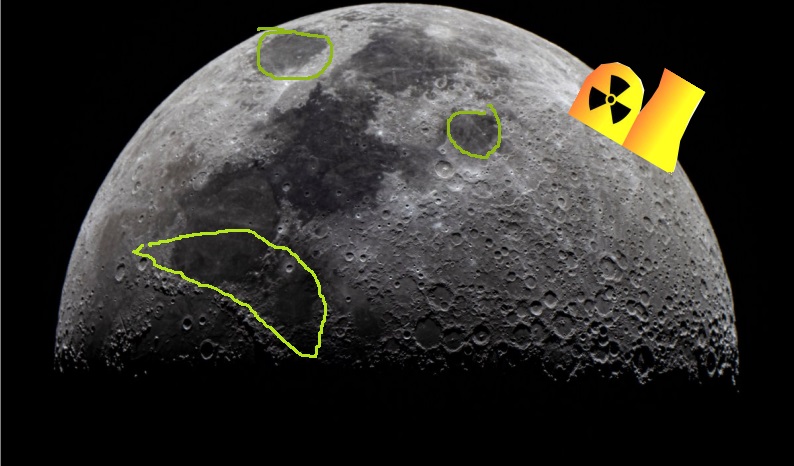
China and Russia plan to build a nuclear reactor on the moon by 2035 to
power a permanent lunar base. The International Lunar Research Station
(ILRS) will rely on the power plant for its scientific research. The IRLS
involves over a dozen international partners and is seen as a rival program
to NASA’s Artemis Program.
Deutsche Welle 16th May 2025, https://www.dw.com/en/china-and-russia-plan-to-build-nuclear-power-station-on-moon/a-72565465
1 This Month

of the week – Shut Down Drone Warfare!


Tell the Ukrainian Government to Drop Prosecution of Peace Activist Yurii Sheliazhenko

Petition to revoke the licensing of the Near Surface Nuclear Disposal Facility (NSDF) at Chalk River. https://www.ourcommons.ca/petitions/en/Petition/Details?Petition=e-7247
To see nuclear-related stories in greater depth and intensity – go to https://nuclearinformation.wordpress.com
-
Archives
- April 2026 (57)
- March 2026 (251)
- February 2026 (268)
- January 2026 (308)
- December 2025 (358)
- November 2025 (359)
- October 2025 (376)
- September 2025 (257)
- August 2025 (319)
- July 2025 (230)
- June 2025 (348)
- May 2025 (261)
-
Categories
- 1
- 1 NUCLEAR ISSUES
- business and costs
- climate change
- culture and arts
- ENERGY
- environment
- health
- history
- indigenous issues
- Legal
- marketing of nuclear
- media
- opposition to nuclear
- PERSONAL STORIES
- politics
- politics international
- Religion and ethics
- safety
- secrets,lies and civil liberties
- spinbuster
- technology
- Uranium
- wastes
- weapons and war
- Women
- 2 WORLD
- ACTION
- AFRICA
- Atrocities
- AUSTRALIA
- Christina's notes
- Christina's themes
- culture and arts
- Events
- Fuk 2022
- Fuk 2023
- Fukushima 2017
- Fukushima 2018
- fukushima 2019
- Fukushima 2020
- Fukushima 2021
- general
- global warming
- Humour (God we need it)
- Nuclear
- RARE EARTHS
- Reference
- resources – print
- Resources -audiovicual
- Weekly Newsletter
- World
- World Nuclear
- YouTube
-
RSS
Entries RSS
Comments RSS
 nuclear-news