Russian and American nuclear wastes in the Arctic may release radiation as global heating melts the ice.
Climate change: Arctic’s unknown viruses’ and nuclear waste, A rapidly warming Arctic could cause the spread of nuclear waste, undiscovered viruses and antibiotic resistant bacteria, a report has found. BBC, 2 Oct 21,
It said potential radioactive waste from Cold War nuclear submarines and reactors and damage from mining could be released as the ice melts.
The nine million square miles of Artic dates to about a million years old.
Co-author Dr Arwyn Edwards from Aberystwyth University said much of the Arctic is still unknown.
Writing in Nature Climate Change, Dr Edwards co-authored report with academics from universities in the United States and NASA’s Jet Propulsion Laboratory in Southern California.
The Arctic houses a diverse range of chemical compounds whether through natural processes, accidents or deliberate storage.
Nuclear waste, viruses and chemicals
Thawing permafrost, or permanently frozen land, has widely been seen as a contributor to greenhouse gas emissions as massive stores of Arctic soil carbon are released to the atmosphere as carbon dioxide and methane, as well as causing abrupt change to the landscape.
However, the research found the implications are more widespread and less understood – with potential for the release of nuclear waste and radiation, unknown viruses and other chemicals of concern.
Between 1955 and 1990, the Soviet Union conducted 130 nuclear weapons tests in the atmosphere and near surface ocean of the Novaya Zemlya archipelago off the coast of north-west Russia.
The tests used 224 separate explosive devices, releasing about 265 megatons of nuclear energy and more than 100 decommissioned nuclear submarines were scuttled in the nearby Kara and Barents seas.
Despite a Russian government launching a strategic clean-up plan, the review notes the area has tested highly for the radioactive substances caesium and plutonium, between undersea sediment, vegetation and ice sheets.
The United States’ Camp Century nuclear-powered under-ice research facility in Greenland also produced considerable nuclear and diesel waste.
Decommissioned in 1967, waste was left in the accumulating ice, which faces a longer term threat from changes to the Greenland Ice Sheet.
The 1968 Thule bomber crash in the same country also dispersed huge amounts of plutonium on the Greenland ice sheet……………………..
The report said despite its findings, it is still poorly understood and largely unquantified and further in-depth research in the area is vital to gain further insight into the risks……….. https://www.bbc.com/news/uk-wales-58724710
Greenland moves toward a stricter ban on uranium mining.
Greenland has taken the first step towards outlawing uranium mining after lawmakers there proposed a stricter version of a ban that the country’s national assembly overturned in 2013. Only July 2, the elected government began a month-long public consultation period for a proposed bill that, in addition to mining uranium, would prohibit the feasibility studies and exploration activities that must be completed before a mining project can be considered for a license to begin operation.
According to proposal, Naalakkersuisut, the elected government, is hoping that a reinstatement of what was known as the zero-tolerance policy, to achieve its goal of ensuring that “Greenland neither produces nor exports uranium.”
Artic Today 14th July 2021
Collaboration between Russia and Europe finally cleans up the most dangerous nuclear ship in the Arctic.
After 27 Years, Lepse No Longer Poses a Nuclear Threat to the Arctic, High North News, PETER B. DANILOV 17 June 21, Last week, the Russian service ship Serebryanka delivered the last spent-fuel bundles from the Lepse floating maintenance base to an Atomflot storage site in Murmansk, completing the final stage of securing the nuclear waste……. To ensure the dismantling of the Lepse floating maintenance base, it was necessary to specially develop new technologies and equipment and make innovative decisions,” said FSUE Atomflot Director General Mustafa Kashka.
In July 2020, the Lepse floating maintenance base’s main batch of spent nuclear fuel was unloaded at the Nerpa shipyard. A total of 620 spent-fuel bundles were extracted and unloaded.
Lepse was regarded as the most dangerous nuclear vessel in the north and the Norwegian environmental NGO Bellona began the work of securing the spent nuclear fuel onboard the vessel in 1994.
……….. The project to dismantle and dispose of the Lepse Floating Maintenance Base is multilaterally implemented.
In 1996, the project was included in the EU’s TACIS program (Technical Assistance to the Commonwealth of Independent States), which involved the allocation of funds for the inspection of the state of spent nuclear fuel.
Since 2008, the project has been carried out in the framework of a Grant Agreement between the European Bank for Reconstruction and Development (EBRD), Rosatom, and JSC NFC Logistics Centre (the project’s customer and coordinator).
The EBRD has provided 54 million euros from the Northern Dimension Environmental Partnership Fund (NDEP). https://www.highnorthnews.com/en/after-27-years-lepse-no-longer-poses-nuclear-threat-arctic
Ice sheets melting, ocean currents, and the risk of climate tipping points
Ice sheets and ocean currents at risk of climate tipping points can
destabilise each other as the world heats up, leading to a domino effect
with severe consequences for humanity, according to a risk analysis.
Tipping points occur when global heating pushes temperatures beyond a
critical threshold, leading to accelerated and irreversible impacts. Some
large ice sheets in Antarctica are thought to already have passed their
tipping points, meaning large sea-level rises in coming centuries.
The new research examined the interactions between ice sheets in West Antarctica,
Greenland, the warm Atlantic Gulf Stream and the Amazon rainforest. The
scientists carried out 3m computer simulations and found domino effects in
a third of them, even when temperature rises were below 2C, the upper limit
of the Paris agreement.
Yhe study showed that the interactions between
these climate systems can lower the critical temperature thresholds at
which each tipping point is passed. It found that ice sheets are potential
starting points for tipping cascades, with the Atlantic currents acting as
a transmitter and eventually affecting the Amazon.
Guardian 3rd June 2021
Australian-Chinese company Greenland Minerals to be thwarted in its bid for uranium and rare earth mining in Greenland.

Telegraph 17th April 2021, Overlooking the small fishing town of Narsaq, next to painted houses and slow-moving icebergs, lies one the last great untapped deposits of rare earth materials. About a quarter of the world’s rare earth minerals are thought to be found here, deep in the southern fjords of Greenland, providing key ingredients needed to build everything from wind turbines or electric vehicles. These deposits are crucial to Britain’s dream of developing the technologies required to become a green economy while reducing our rare-earth reliance on China.
But one man could be about to scupper the UK’s plans. Múte Bourup Egede, the 34-year-old leader of the Left-wing Inuit Ataqatigiit party, won a snap election in Greenland lastweek. At the heart of his election campaign was a pledge to halt the Kvanefjeld project by Greenland Minerals, an Australian company with Chinese ownership.
But for Greenlanders, strategic relevance was eclipsed by concerns surrounding the mine’s uranium contents. The territory’s anxieties around radioactive materials can be traced back to the 1968 Thule plane crash, when a US plane carrying nuclear bombs crashed into the sea ice in Greenland’s north. Even though the nuclear material did not
detonate, as part of clean up efforts the US Air Force collected 1.6m gallons of contaminated snow.
https://www.telegraph.co.uk/technology/2021/04/17/battle-rare-earth-minerals-turns-radioactive/
Opposition to uranium and rare earths mining – party wins Greenland election
Left-wing party opposed to rare earth mining project wins Greenland election, A left-wing environmentalist party opposed to a controversial mining project won a clear victory in Greenland’s parliamentary election, according to results released Wednesday. https://www.france24.com/en/europe/20210407-left-wing-party-opposed-to-rare-earth-mining-project-wins-greenland-election 7 Apr 21,
With 36.6 percent of the vote, Inuit Ataqatigiit (IA) was ahead of Siumut, a social democratic party that has dominated politics in the Danish territory since it gained autonomy in 1979.
“Thank you to the people who trusted us to work with the people in the centre for the next four years,” IA leader Mute Egede said on KNR public television after the results were announced.
IA, which was previously in opposition, is expected to grab 12 out of the 31 seats in the Inatsisartut, the local parliament, up from eight currently.
But without an absolute majority, the most likely scenario is that IA joins forces with smaller parties to form a coalition. Siumut, which headed the outgoing government, was partly weakened by internal struggles. It gained 29.4 percent of the vote, still two percentage points higher than its results in the 2018 election.
The dividing line between the two parties was whether to authorise a controversial giant rare earth and uranium mining project, which is currently the subject of public hearings.
The Kuannersuit deposit, in the island’s south, is considered one of the world’s richest in uranium and rare earth minerals — a group of 17 metals used as components in everything from smartphones to electric cars and weapons.
IA has called for a moratorium on uranium mining, which would effectively put a halt to the project.
Divisions over Kuannersuit originally triggered the snap election in the territory after one of the smaller parties left the ruling Siumut coalition.
Opponents say the project, led by the Chinese-owned Australian group Greenland Minerals, has too many environmental risks, including radioactive waste.
Egede told KNR he would immediately start discussions to “explore different forms of cooperation” before forming a coalition government.
The 34-year-old, who has been a member of the Inatsisartut since 2015, took over the reins of the left-green party a little over two years ago.
Putin amassing, testing, huge military arsenal in the Arctic
Daily Mail 5th April 2021, Satellite images appearing to show Russia beefing up its military presence
in the Arctic have emerged just days after three of Moscow’s nuclear ballistic missile submarines smashed through the polar region in a show of strength. The images show the Russian military has been rebuilding and expanding numerous facilities across the Arctic in recent years.
From
revamping runways to deploying additional surveillance and air defence assets, the satellite images reveal a continuous effort to expand Moscow’s capabilities in the polar region.
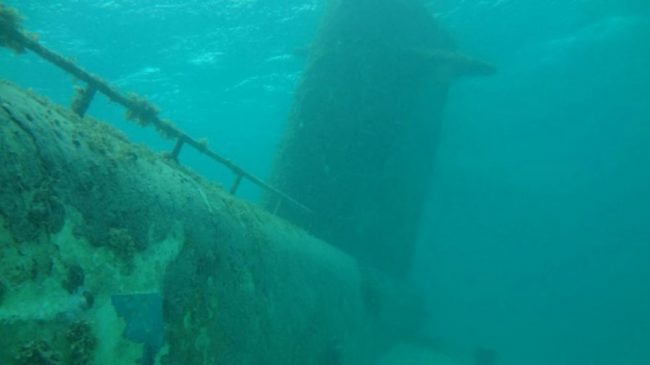
Russia planning to dispose of highly dangerous nuclear reactor cores of submarine at bottom of Kara Sea
|
Rosatom seeks contractor to dispose of sunken subs reactor cores https://bellona.org/news/nuclear-issues/2021-03-rosatom-seeks-contractor-to-dispose-of-sunken-subs-reactor-cores Rosatom, Russia’s state nuclear corporation, has announced a tender for disposing of reactor cores from the K-27 submarine, which was itself scuttled by the Soviet Navy in the Kara Sea four decades ago. March 21, 2021 by Anna Kireeva, translated by Charles Digges The tender speaks specifically of preparing for dismantlement and disassembly the spent removable cores from the reactor of the project 645 (item 64) nuclear submarine. These removable parts, which were removed in 1967, are currently located at the Gremikha storage base in Russia’s Murmansk region.
The tender also demands the preparation of cassettes of these irradiated parts in order to transport them to a federal nuclear fleet storage point, from where they will be sent for processing. The price tag for the task is 500 million rubles, about $6.7 million. Anatoly Grigoriev, head of international technical assistance projects at Rosatom, confirmed that the tender refers to the removable reactor cores from the K-27, which were extracted in 1967. After unloading, the cores were deposited at the Gremikha base. “It is worth noting that the publication of the tender has attracted a lot of attention and caused contradictory interpretations,” said Andrei Zolotkov, who heads Bellona’s offices in Murmansk. “First, it is not clear why a submerged nuclear submarine is called ‘scrapped.’ Secondly, it was not clear how it was possible to prepare for the disposal of spent removable parts of a nuclear submarine that lies at the bottom of the Kara Sea, when the decision to lift it has not yet been made. ” The K-27 was sunken intentionally in the Kara Sea’s Stepovoy Bay in 1981. It is considered by experts to be especially dangerous thanks to its liquid metal cooled reactors. At the time, the submarine was prepared for flooding by filling it with bitumen, concrete and furfural. But it’s likely that these substances left pockets of air, which would allow for the formation of condensation within the sunken hull. The submarine has been included as a priority on a federal list of sunken objects to be lifted from the seabed. The urgency owes to the high enrichment of the K-27’s nuclear fuel and the shallow 33-meter depth at which it lies. The furfural-combination filler used to seal the sub before its sinking also has a limited shelf-life, and is only guaranteed to last another few years. Some experts also fear that the nuclear fuel onboard the sub could undergo a spontaneous chain reaction should they be breached by water. Discussion among Russian officials on lifting various pieces of nuclear debris from the Arctic has heated up in recent years. In 2019, a group of Russian scientists collected, systematized and analyzed data on each of these sunken nuclear and radiation hazards and identified the most dangerous among them. The K-27 is listed as one of six such hazards requiring lifting within a federal effort called the “Strategy for the Development of the Arctic Zone of the Russian Federation until 2035.” The problem is that lifting the flooded objects is an extremely difficult task, as shown by the years-long effort to raise the Kursk nuclear submarine, which sank during a naval exercise in 2000, killing all 118 crew members. Russian scientists have weighed the options for lifting the hazards and calculated possible damages should the operations fail. The consequences could be serious, involving releases of radiation into the sea and air, with contamination possibly surpassing Russia’s borders. At the moment, engineers are designing a vessel capable of lifting these sunken radiation hazards from the sea floor, with construction of a recovery ship projected by the end of 2026. Lifting and dismantling the K-27 thereafter is expected to take from 2028 to 2013. According to Rosatom, the total activity of the sunken radiation hazards in the Kara and Barents Seas is 1 million Curie. According to preliminary estimates of Russian specialists, they can all be extracted within 12 years. |
|
Uranium mining plunder of Greenland, and the threat to the sub-arctic environment
|
The plundering of Greenland, Uranium and other resources the latest threat to precious sub-arctic ecosystems, Beyond Nuclear International. By Niels Henrik Hooge, 24 Jan 21, The governments of Greenland and Denmark are encouraging large-scale mining in Greenland, including what would be the second-largest open pit uranium mine in the world. Now groups are calling on those governments to halt such desecration and instead establish an Arctic sanctuary. Your organization can sign onto this petition. Read the petition here, then send your organization name (and logo, optional) to either Niels Henrik Hooge at nielshenrik@noah.dk or to Palle Bendsen at: pnb@ydun.net. No or few World Heritage Sites probably have more or bigger mining projects in their vicinity than the Kujataa UNESCO World Heritage Site (WHS) in Southern Greenland. The property was inscribed on UNESCO’s world heritage list in 2017. It comprises a sub-arctic farming landscape consisting of five components that represent key elements of the Norse Greenlandic and modern Inuit farming cultures. On one hand they are distinct, on the other they are both pastoral farming cultures located on the climatic edges of viable agriculture, depending on a combination of farming, pastoralism and marine mammal hunting. The landscape constitutes the earliest introduction of farming to the Arctic. Some of the world’s biggest mining projects are located near Kujataa Kujaata is situated in Kommune Kujalleq, the southernmost and smallest municipality of Greenland with its rich mineral resources. These include zinc, copper, nickel, gold, diamonds and platinum group metals, but first and foremost substantial deposits of rare earth elements (REEs) and uranium. …… Some of the biggest REEs mining projects in the world are located only a few kilometres from the Kujataa WHS. The biggest and most controversial is the Kvanefjeld REEs-uranium mining project, owned by the Australian company Greenland Minerals Ltd., GML. According to GML, in addition to containing the second biggest uranium and by far the largest thorium deposits, the Ilimaussaq Complex, of which Kvanefjeld is a part, possesses the second largest deposits of rare earth elements in the world. The mine, which would be the world’s second largest open pit uranium mine, is located on top of a mountain, almost one kilometre above sea-level, and only six kilometres away from Narsaq, a town of approximately 1,500 inhabitants, and also near some of the parts of the Kujataa WHS. A second major project close to Kujataa is the Kringlerne REEs mining project, which is described by its owner, the Australian mining company Tanbreez Mining Greenland A/S, as the probably largest deposit of REEs in the world. ………… Calls for enlargement of the Kujataa WHS Especially in Southern Greenland, there has long existed a notion that the Kujataa World Heritage Site in its present form has been delineated to accommodate the Kvanefjeld mining project and that the potential impacts of the other mining projects surrounding the site have not been considered. …………… Kujataa’s OUV under threat It is also clear that Kujaata’s Outstanding Universal Value, i.e. its exceptional cultural and natural significance, will be under threat if the mining projects surrounding the site are implemented. There have already been calls to put Kujaata on the World Heritage Convention’s danger list. Kujataa’s unique farming traditions have been a determining factor in designating it as world heritage. However, the Danish Risø National Laboratory has estimated that up to a thousand tons of radioactive dust might be released annually from just the Kvanefjeld open pit mine due to material handling, hauling and blasting and from the ore stock and waste rock piles. Furthermore, if the tailings by some unforeseen cause such as leakages, technical problems, etc. would turn dry, massive amounts of radioactive and toxic dust would be blown away. The dust from the aforementioned sources will be carried by heavy arctic sea winds across the region, where it will affect among others agricultural activities. The predominant wind direction and the direction for the strongest winds are east- and north- eastwards, where the Kujataa WHS is located. The area, its people, domestic animals and wildlife would be chronically exposed to radioactive and other toxic species via drinking water, food and air1. Furthermore, most if not all the planned mining projects in the area are open pit mines. Perpetual blasting with explosives on the mountain tops in the open pit mines surrounding the world heritage site and the excavation and transport by dump trucks to the mills, where the rocks are crushed, could cause considerable noise disturbance during the entire operation of the mines. According to the EIA draft reports for the Kvanefjeld project, a dilution factor in the order of 2000 for the waste water would be required to be rendered safe for the most critical parameters. This would mean that the discharges of waste water during just one year would have to be diluted into 7 km3 of seawater in the Fiord system, which is part of the Kujataa World Heritage Site, and into 260 km3 of seawater during the planned operational lifetime of the Kvanefjeld mine. Furthermore, seepage, leaks and spills of liquids form the tailings will cause contamination of groundwater and rivers by radioactive and non-radioactive toxic chemical species. Seafood would become contaminated as well, due to the substantial discharges of wastes into the Fiords and the coastal sea. Large-scale mining and particularly uranium mining are incompatible with the development of three of the four sectors of the farming landscape, namely fishing and hunting, tourism and food production. It is relevant to ask how the entire character of the landscape would change in the development from a rural to an industrial area in the wake of both the big mining projects. This also pertains to the question of urban development, when among others new ports, port facilities and accommodation villages have to be built and corresponding support infrastructure implemented. No real plans to protect Kujataa………… in its description of the impacts of the nearby mining activities, the management plan relies on a draft of an Environmental Impact Assessment (EIA) of the Kringlerne mining project, which was rejected by Greenland’s Environmental Agency for Mineral Resources Activities (EAMRA), because it did not contain enough relevant information. EAMRA has also rejected the four latest EIA draft reports on the Kvanefjeld project because of lack of information. Among other things, Kvanefjeld’s owner, GML, is criticised for not providing a comprehensive assessment of the earthquake risk in the region, final results of tests of toxic elements during extraction and processing, final radiological estimates and results of investigations of impacts of radioactive minerals, and for failing to describe the alternatives regarding management of tailings and the shutdown of the tailings facility. In September 2019, the CEO of GML was also formally reproached by Greenland’s Prime Minister and the Department of Nature and Environment’s Permanent Secretary for lobbying high-ranking civil servants and ministers who had no competence within the EIA review process in order to undermine EAMRA’s authority. A Heritage Impact Assessment is not enough …….. it could be argued that there is already enough reason for the Greenlandic and Danish States Parties to involve UNESCO and – considering that environmental issues are at the core of the problems and Kujataa’s management plan is based on rejected EIA draft reports – to include IUCN in the process. However, the biggest problem for not only Kujataa, but all Greenland’s three world heritage sites could be the fact that Greenland’s environmental legislation does not mandate strategic environmental impact assessments for minerals exploration areas, which means that the public is not kept informed in advance on what areas could be designated. Thus, implementation of the Aarhus Convention in Greenland should have high priority in order to reinforce Greenland’s environmental legislation. Niels Henrik Hooge is member of NOAH Friends of the Earth Denmark’s uranium group. https://wordpress.com/read/feeds/72759838/posts/3144708883 |
|
|
Russia marketing small nuclear reactors to the Arctic , (who cares about the toxic wastes?)

Rosatom to build small-scale land-based Arctic nuclear plant by 2028
Rosatom said it has reached an agreement with the government of the Republic of Sakha (Yakutia) setting out parameters for pricing energy that will be produced by the nuclear plant, which is expected to be completed by 2028……….
“I am convinced that a small-scale nuclear power plant will give a qualitative impetus to the development of the Arctic regions of Yakutia, stimulate the development of industry in Ust-Yansky ulus and improve the living standards of local residents,” said in a statement Head of the Sakha Republic Aysen Nikolayev.
The nuclear plant is expected to operate for 60 years but the press release did not specify how Rosatom plans to deal with the nuclear waste produced by it.
Rosatom officials said the small-scale nuclear plant is based on a proven technology that has already been tested in Arctic conditions.
RITM-200 reactors are already being used on the recently commissioned Arktika nuclear-powered icebreaker and six other 22220 design heavy Russian icebreakers that are being built, Rosatom officials said…….
“The implementation of this project strengthens the leading position of Rosatom in the world market of small nuclear power plants.”…….
Rosatom is also actively marketing the technology for export overseas, Likhachev said. https://thebarentsobserver.com/en/nuclear-safety/2020/12/rosatom-build-small-scale-land-based-arctic-nuclear-plant-2028
Greenhouse gas emissions transforming the Arctic into ‘an entirely different climate’
Guardian 8th Dec 2020. The Arctic’s rapid transformation into a less frozen, hotter and
biologically altered place has been further exacerbated by a year of
wildfires, soaring temperatures and loss of ice, US scientists have
reported. The planet’s northern polar region recorded its second hottest
12-month period to September 2020, with the warmest temperatures since 1900
all now occurring within the past seven years, according to an annual
Arctic report card issued by the National Ocean and Atmospheric
Administration (Noaa). The Arctic is heating up at a rate around double
that of the global average, due to the human-caused climate crisis.
—
Putin’s Russia keen to exploit the Arctic for fossil fuels: more nuclear-powered icebreakers on the way
|
Putin decrees development of Arctic with more nuclear icebreakers – This will help Russia cash flow from fossil fuels. Russian President Vladimir Putin has signed an executive order, On the Strategy for Developing the Russian Arctic Zone and Ensuring National Security until 2035, which foresees the construction of at least five new nuclear-powered icebreakers of the Project 22220 series, and three of the Project 10510 series. The vessels are needed to ensure year-round navigation along the Northern Sea Route. Project 10510, also known through the Russian type size series designations LK-110Ya and LK-120Ya or the project name Leader, will supersede Project 22220 icebreakers as the largest and most powerful in the world…….. https://www.oilandgas360.com/putin-decrees-development-of-arctic-with-more-nuclear-icebreakers-this-will-help-russia-cash-flow-from-fossil-fuels/ |
|
|
Release of methane off East Siberian coast has been triggered,
Exclusive: expedition discovers new source of greenhouse gas off East Siberian coast has been triggered, Guardian, Jonathan Watts Global environment editor 28 Oct 20 Scientists have found evidence that frozen methane deposits in the Arctic Ocean – known as the “sleeping giants of the carbon cycle” – have started to be released over a large area of the continental slope off the East Siberian coast, the Guardian can reveal.High levels of the potent greenhouse gas have been detected down to a depth of 350 metres in the Laptev Sea near Russia, prompting concern among researchers that a new climate feedback loop may have been triggered that could accelerate the pace of global heating.
The slope sediments in the Arctic contain a huge quantity of frozen methane and other gases – known as hydrates. Methane has a warming effect 80 times stronger than carbon dioxide over 20 years. The United States Geological Survey has previously listed Arctic hydrate destabilisation as one of four most serious scenarios for abrupt climate change.
The international team onboard the Russian research ship R/V Akademik Keldysh said most of the bubbles were currently dissolving in the water but methane levels at the surface were four to eight times what would normally be expected and this was venting into the atmosphere.
“At this moment, there is unlikely to be any major impact on global warming, but the point is that this process has now been triggered. This East Siberian slope methane hydrate system has been perturbed and the process will be ongoing,” said the Swedish scientist Örjan Gustafsson, of Stockholm University, in a satellite call from the vessel.
The scientists – who are part of a multi-year International Shelf Study Expedition – stressed their findings were preliminary. The scale of methane releases will not be confirmed until they return, analyse the data and have their studies published in a peer-reviewed journal.
But the discovery of potentially destabilised slope frozen methane raises concerns that a new tipping point has been reached that could increase the speed of global heating.
The Arctic is considered ground zero in the debate about the vulnerability of frozen methane deposits in the ocean.
With the Arctic temperature now rising more than twice as fast as the global average, the question of when – or even whether – they will be released into the atmosphere has been a matter of considerable uncertainty in climate computer models.
The 60-member team on the Akademik Keldysh believe they are the first to observationally confirm the methane release is already under way across a wide area of the slope about 600km offshore………………
Temperatures in Siberia were 5C higher than average from January to June this year, an anomaly that was made at least 600 times more likely by human-caused emissions of carbon dioxide and methane. Last winter’s sea ice melted unusually early. This winter’s freeze has yet to begin, already a later start than at any time on record. https://www.theguardian.com/science/2020/oct/27/sleeping-giant-arctic-methane-deposits-starting-to-release-scientists-find
Unwanted nuclear submariness and military operations in the Arctic
Increased interest in the Arctic: “The U.S. Army has made a significant pivot” There is a pivot in the U.S. Army to train and operate more in Alaska to rebuild skills, according to Major General Peter Andrysiak, commander U.S. Army Alaska. He says the U.S. Army soon will release its own Arctic strategy.
Delayed freezing of Arctic sea due to continued freakish warm weather

|
Alarm as Arctic sea ice not yet freezing at latest date on record
Delayed freeze in Laptev Sea could have knock-on effects across polar region, scientists say, Guardian, jonathan Watts Global environment editor @jonathanwatts, Thu 22 Oct 2020 For the first time since records began, the main nursery of Arctic sea ice in Siberia has yet to start freezing in late October. The delayed annual freeze in the Laptev Sea has been caused by freakishly protracted warmth in northern Russia and the intrusion of Atlantic waters, say climate scientists who warn of possible knock-on effects across the polar region. Ocean temperatures in the area recently climbed to more than 5C above average, following a record breaking heatwave and the unusually early decline of last winter’s sea ice. The trapped heat takes a long time to dissipate into the atmosphere, even at this time of the year when the sun creeps above the horizon for little more than an hour or two each day. Graphs of sea-ice extent in the Laptev Sea, which usually show a healthy seasonal pulse, appear to have flat-lined. As a result, there is a record amount of open sea in the Arctic. “The lack of freeze-up so far this fall is unprecedented in the Siberian Arctic region,” said Zachary Labe, a postdoctoral researcher at Colorado State University. He says this is in line with the expected impact of human-driven climate change. 2020 is another year that is consistent with a rapidly changing Arctic. Without a systematic reduction in greenhouse gases, the likelihood of our first ‘ice-free’ summer will continue to increase by the mid-21st century,’ he wrote in an email to the Guardian. This year’s Siberian heatwave was made at least 600 times more likely by industrial and agricultural emissions, according to an earlier study. The warmer air temperature is not the only factor slowing the formation of ice. Climate change is also pushing more balmy Atlantic currents into the Arctic and breaking up the usual stratification between warm deep waters and the cool surface. This also makes it difficult for ice to form……… https://www.theguardian.com/world/2020/oct/22/alarm-as-arctic-sea-ice-not-yet-freezing-at-latest-date-on-record?CMP=twt_a-environment_b-gdneco&fbclid=IwAR1qZzerjnAanadMi942h7N8XdCf6Drz_-UIO5mECgAzvXqgiIYjuh6BETc |
|
1 This Month
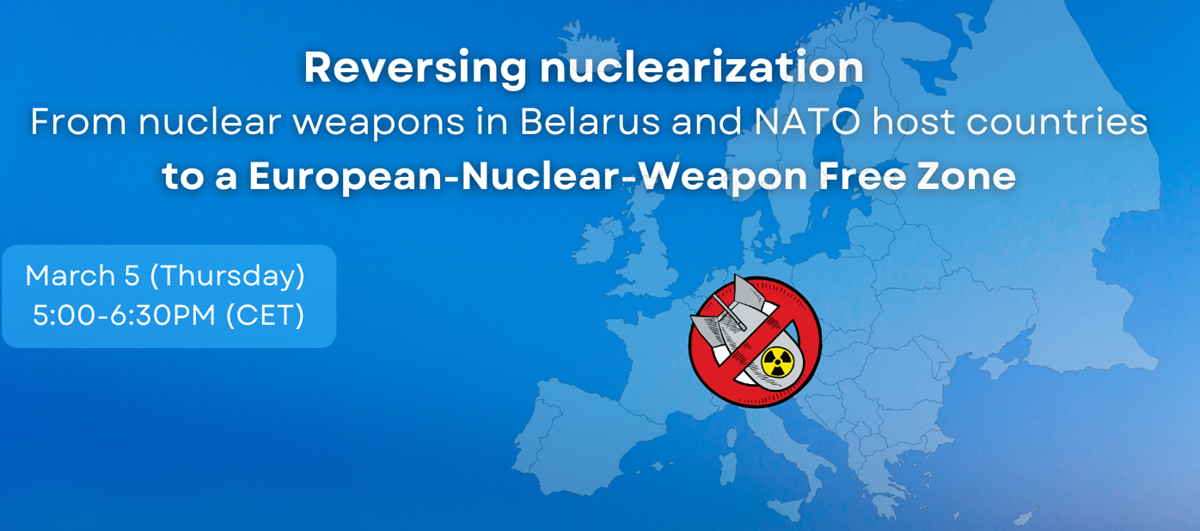
5 March -Online – Reversing nuclearization:
From nuclear weapons in Belarus and NATO host countries to a European-Nuclear-Weapon Free Zone
11am-12:30pm Eastern Time USA / 5pm-6:30pm CET

of the week – Advocating for a
nuclear free beach – https://www.samuellawrencefoundation.org/
The Samuel Lawrence Foundation advocates for a Nuclear Waste Free Beach at San Onofre, join us and take action!

10 March A LIVE WEBINAR THE REAL EFFECTS OF NUCLEAR POWER
What the Industry Isn’t Telling Us
1:00 PM Mountain, 2 pm Central, 3 pm Eastern. Live on the Keepers of the Water Facebook page

18 March Webinar @ 1 PM EST: An Assessment of SMR Projects: The Case of Canada
register for the zoom:
https://us02web.zoom.us/webinar/register/WN_o8BIIOUvQ2ONJR1nta65DQ#/registration

of the week – STOP SMALL MODULAR REACTORS IN CANADA
To see nuclear-related stories in greater depth and intensity – go to https://nuclearinformation.wordpress.com
-
Archives
- March 2026 (38)
- February 2026 (268)
- January 2026 (308)
- December 2025 (358)
- November 2025 (359)
- October 2025 (376)
- September 2025 (258)
- August 2025 (319)
- July 2025 (230)
- June 2025 (348)
- May 2025 (261)
- April 2025 (305)
-
Categories
- 1
- 1 NUCLEAR ISSUES
- business and costs
- climate change
- culture and arts
- ENERGY
- environment
- health
- history
- indigenous issues
- Legal
- marketing of nuclear
- media
- opposition to nuclear
- PERSONAL STORIES
- politics
- politics international
- Religion and ethics
- safety
- secrets,lies and civil liberties
- spinbuster
- technology
- Uranium
- wastes
- weapons and war
- Women
- 2 WORLD
- ACTION
- AFRICA
- Atrocities
- AUSTRALIA
- Christina's notes
- Christina's themes
- culture and arts
- Events
- Fuk 2022
- Fuk 2023
- Fukushima 2017
- Fukushima 2018
- fukushima 2019
- Fukushima 2020
- Fukushima 2021
- general
- global warming
- Humour (God we need it)
- Nuclear
- RARE EARTHS
- Reference
- resources – print
- Resources -audiovicual
- Weekly Newsletter
- World
- World Nuclear
- YouTube
-
RSS
Entries RSS
Comments RSS
 nuclear-news