UNIVERSITY OF BRISTOL MELTING ICE SHEETS RELEASE TONS OF METHANE INTO THE ATMOSPHERE, STUDY FINDS
The Greenland Ice Sheet emits tons of methane according to a new study, showing that subglacial biological activity impacts the atmosphere far more than previously thought.
An international team of researchers led by the University of Bristol camped for three months next to the Greenland Ice Sheet, sampling the meltwater that runs off a large catchment (> 600 km2) of the Ice Sheet during the summer months.
As reported in Nature, using novel sensors to measure methane in meltwater runoff in real time, they observed that methane was continuously exported from beneath the ice.
They calculated that at least six tons of methane was transported to their measuring site from this portion of the Ice Sheet alone, roughly the equivalent of the methane released by up to 100 cows.
Professor Jemma Wadham, Director of Bristol’s Cabot Institute for the Environment, who led the investigation, said: “A key finding is that much of the methane produced beneath the ice likely escapes the Greenland Ice Sheet in large, fast flowing rivers before it can be oxidized to CO2, a typical fate for methane gas which normally reduces its greenhouse warming potency.”
Methane gas (CH4) is the third most important greenhouse gas in the atmosphere after water vapour and carbon dioxide (CO2). Although, present in lower concentrations that CO2, methane is approximately 20-28 times more potent. Therefore smaller quantities have the potential to cause disproportionate impacts on atmospheric temperatures. Most of the Earth’s methane is produced by microorganisms that convert organic matter to CH4 in the absence of oxygen, mostly in wetlands and on agricultural land, for instance in the stomachs of cows and rice paddies. The remainder comes from fossil fuels like natural gas.
While some methane had been detected previously in Greenland ice cores and in an Antarctic Subglacial Lake, this is the first time that meltwaters produced in spring and summer in large ice sheet catchments have been reported to continuously flush out methane from the ice sheet bed to the atmosphere.
Lead author, Guillaume Lamarche-Gagnon, from Bristol’s School of Geographical Sciences, said: “What is also striking is the fact that we’ve found unequivocal evidence of a widespread subglacial microbial system. Whilst we knew that methane-producing microbes likely were important in subglacial environments, how important and widespread they truly were was debatable. Now we clearly see that active microorganisms, living under kilometres of ice, are not only surviving, but likely impacting other parts of the Earth system. This subglacial methane is essentially a biomarker for life in these isolated habitats.”
Most studies on Arctic methane sources focus on permafrost, because these frozen soils tend to hold large reserves of organic carbon that could be converted to methane when they thaw due to climate warming. This latest study shows that ice sheet beds, which hold large reserves of carbon, liquid water, microorganisms and very little oxygen – the ideal conditions for creating methane gas – are also atmospheric methane sources.
Co-researcher Dr Elizabeth Bagshaw from Cardiff University added: “The new sensor technologies that we used give us a window into this previously unseen part of the glacial environment. Continuous measurement of meltwater enables us to improve our understanding of how these fascinating systems work and how they impact the rest of the planet.”
With Antarctica holding the largest ice mass on the planet, researchers say their findings make a case for turning the spotlight to the south. Mr Lamarche-Gagnon added: “Several orders of magnitude more methane has been hypothesized to be capped beneath the Antarctic Ice Sheet than beneath Arctic ice-masses. Like we did in Greenland, it’s time to put more robust numbers on the theory.”
This study was a collaboration between Bristol University, Charles University (Czechia), the National Oceanography Centre in Southampton, Newcastle University, the University of Toronto (Canada), the Université Libre de Bruxelles (Belgium), Cardiff University (UK), and Kongsberg Maritime Contros (Germany). It was funded by the Natural Environment Research Council (NERC), with additional funds from the Leverhulme Trust, the Czech Science Foundation, the Natural Sciences and Engineering Research Council of Canada, and the Fond de Recherche Nature et Technologies du Québec (Canada).
Paper: ‘Greenland melt drives continuous export of methane from the ice sheet bed’ by Guillaume Lamarche-Gagnon, Jemma L. Wadham, et al. Nature, Doi: 10.1038/s41586-018-0800-0
Seventy percent of the current infrastructure in the Arctic has a high potential to be affected by thawing permafrost in the next 30 years. Even meeting the climate change targets of the Paris Agreement will not substantially reduce those projected impacts, according to a new study.
Seventy percent of the current infrastructure in the Arctic has a high potential to be affected by thawing permafrost in the next 30 years. Even meeting the climate change targets of the Paris Agreement will not substantially reduce those projected impacts, according to a new study published in Nature Communications.
“Much more needs to be done to prepare Alaska and Alaskans for the adverse consequences of coming changes in permafrost and climate,” said Vladimir Romanovsky, a scientist with the University of Alaska Fairbanks Geophysical Institute who has been monitoring permafrost across Alaska for 25 years.
Permafrost is ground that is frozen year-round for a minimum of two years. When it thaws, it can change from solid earth into mud. In many cases, the ground will slump, leading to destructive failure in any structures erected there.
“These observations have led me to believe that the global warming is not a ‘fake’ but the reality,” Romanovsky said. “And here, in Alaska, we are dealing already and will be dealing even more in the near future with this reality.”
Romanovsky is one of the study’s authors, along with researchers from Finland, Norway, Russia and Michigan. The research is the first to explicitly show the amount of fundamental infrastructure across the Northern Hemisphere that is at risk of structural failure from permafrost thaw caused by climate change.
The paper reports that by 2050, about three-quarters of the population now living on permafrost, about 3.6 million people, will be affected by damage to infrastructure from permafrost thaw. In Alaska, about 340 miles of the trans-Alaska oil pipeline traverses ground where near-surface permafrost may thaw by 2050.
“The results show that most fundamental Arctic infrastructure will be at risk, even if the Paris Agreement target is achieved,” the authors write. However, after 2050, attaining the Paris Agreement goals would make a clear difference in potential damage to infrastructure.
The authors looked at measurements of ground temperature, annual thaw depth and other data to make their projections. They note that because of the uncertainties, the amount of infrastructure at risk from permafrost thaw is probably not much smaller than their estimate, but could be substantially larger.
Damage to industrial facilities such as pipelines could lead to major ecosystem disruption if it results in spills. Energy supplies, national security and general economic activity could be adversely affected as well, the authors write. The Yamal-Nenets region in northwestern Siberia is the source of more than one-third of the European Union’s pipeline imports of natural gas, for example.
Many parts of the Arctic’s infrastructure have relatively short lifespans. Planners and engineers need to know in detail where permafrost is most likely to thaw as they plan for replacements, upgrades and maintenance. This study mapped such areas at a resolution of 0.6 miles, allowing them to target mitigation where it is most needed.
A science expedition to the area has discovered “big concentrations of radioactivity” in the ice – and concludes that the glaciers are melting into the sea at record speed.
By Thomas Nilsen, 10 Oct 18, -The primary goals for the Russian researchers were to study whether hundreds of containers with dumped radioactive waste in the Kara Sea were leaking or not.
Sailing the Kara Sea and the bays along the east coast of Novaya Zemlya from August 17th to September 20th, the researchers on board “Akademik Keldysh” conclude there are good reasons to continue monitoring the dumped containers, but preliminary results gives no indications of leakages. However, especially one barge that was discovered at 400 meters depth, filled with radioactive waste containers, requires special attention for the future. Underwater footages show the barge is destroyed and some containers have fallen out and are spread on the seafloor, news agency TASSreports.
More worrying is the radiation discovered in the glaciers stretching out in the waters. From 1957 to 1962, a total of 86 nuclear bomb tests were carried out in the atmosphere at Novaya Zemlya. The tests include the largest nuclear devices ever exploded, like the so-called 58 megatons Tsar-bomb on October 30, 1961.
Most bombs were exploded above ground at the northern polygon near the Matotchin Shar dividing the northern and southern island of the archipelago. Wind direction, for the most, was towards the north when the tests took place.
It is the fallout from these tests that now are about to melt out to the sea.
The researchers on board “Akademik Keldysh” took samples for radioactivity from the Nally glacier in the Blagopoluchiya Bay, just on the northern boundaries of the test site for atmospheric bombs 60 years back in history.
Deputy Director of the Institute of Oceanology, Mikhail Flint, says to TASS that high levels of radioactivity were found.
“On the Novaya Zemlya, the wind direction is such that most of the pollution is accumulated on the northern island and the northern ice sheet. We have studied one of the glaciers that could carry such pollution – the Nally Glacier in the Blagopoluchiye Bay, and in this glacier we found parts that hold big concentrations of radioactivity,” Mikhail Flint tells.
“I would not give any exact estimation about the discovery, but in these parts of the moving glacier there were found doses that twice exceeded that baseline level on Novaya Zemlya.”
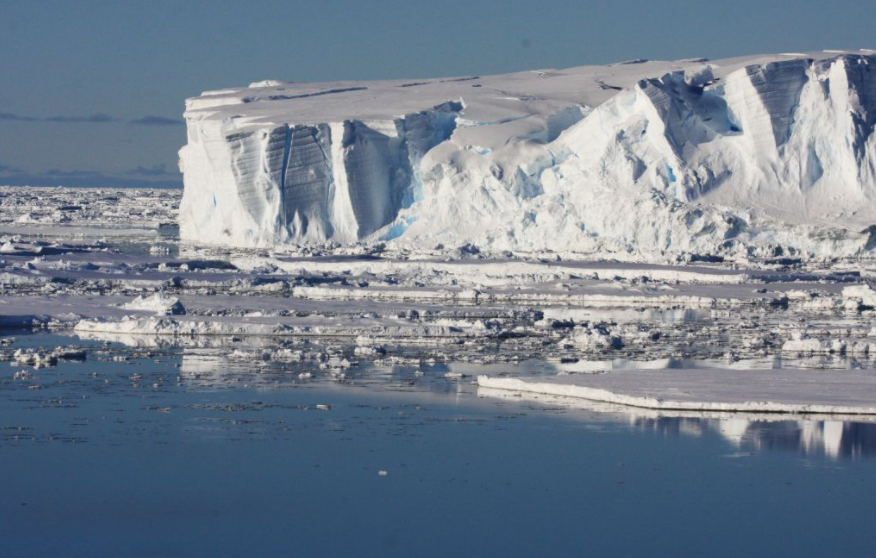
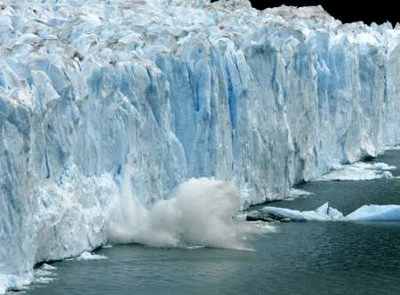
Explaining how the glaciers in the area are retreating, the researchers tell how “Akademik Keldysh” sailed to the point in Blagopoluchiye Bay where the Vershinsky glacier in 2014 ended in the sea. Today, that spot was more than 2 kilometers out from where the terminus of the glacier is now.
The majority of the northern island on Novaya Zemlya is covered by ice and glaciers have their terminus on both the eastern and western shores. That means both to the Barents- and Kara Seas.
While there are close to nothing of commercial fisheries in the Kara Sea, the Barents Sea has a high biological production and the fisheries, in particular the cod fisheries, are of great importance for both Norway and Russia.
It’s not only summer weather that is changing. Earlier this year, one study showed that when the Arctic is unusually warm, extreme winter weather is two-to-four times more likely in the eastern U.S.
Think of the Arctic as our early warning system, a big screaming alarm that is alerting us to the fact that the planet we will live on tomorrow is nothing like the planet we lived on yesterday, and we better get ready
Last week, scientists learned that 40-foot piles of compacted sea ice — some of the oldest and most durable clusters in the Arctic — are breaking away from the coast of Greenland and drifting out to sea. One meteorologist called it “scary,” but it was hardly unexpected. As the earth’s climate heats up, the idea of a “blue Arctic” — that is, the disappearance of sea ice for at least part of the year, leaving only open ocean — has long been predicted by climate scientists. Some researchers believe that you might be able to kayak to the North Pole as early as 2030; others think the sea ice might last until 2040 or longer.
The thawing of the Arctic is one of the biggest stories of our time, even if it is playing out at a pace and in a way that virtually guarantees most people will pay little or no attention to it. What’s going on is not a future concern, or simply a tragedy for polar bears; the warming Arctic is already having a tremendous impact on our world and may help explain much of the extreme weather this summer, especially in the U.S. and in western Europe. To oversimplify this only slightly, you could argue that this summer’s historic wildfires in California were predicted by heat in the Arctic.
In recent years, the Arctic has been heating up faster than any other place on the planet. (Last winter, temperatures in the Arctic were 45 degrees Fahrenheit above normal). Last week, German climate scientist Stefan Rahmstorf wrote an excellent piece in Politico explaining why the warming Arctic is not only causing ice to melt, but changing the weather dynamics for the entire planet. Continue reading →
What’s happening to our weather? The answers are hiding in Arctic air, Guardian, Helen Czerski, 1 Sept 18, Dozens of scientists, Helen Czerski among them, are at work in the Arctic, seeking answers to questions that profoundly affect the future of everyone on the planet …….. For two months, the Swedish icebreaker Oden is home to 74 of us, living and working at the top of the world to tap into the stories that the blue and the white have to tell.
…….on this trip, the desire to go one step further is merged with self-preservation. The Arctic may be a long way from most of us, but what happens here matters to all of us. The weather up here is intimately connected to the patterns of weather further south, particularly the jet stream that feeds endless British conversations about the weather. As the sea ice melts, shipping routes are opening up across the Arctic, bringing questions about regulation and control over this previously inaccessible region. And this is an important area for many species, providing summer feeding grounds for visitors from the south. The Arctic may be a long way away, but it is woven into all our lives.
This scientific expedition was funded by the Swedish Polar Research Secretariat and the American National Science Foundation to answer a specific question: how does the ocean affect the weather in the high Arctic? It’s thought that material produced by life beneath the ice reaches and influences the clouds, but how does that happen and when?
Answers to those questions are essential to improve the weather forecasts for this region, and to allow us to predict the effects of the substantial changes in temperature and sea ice that have been observed.
Sea ice doesn’t just matter for its own sake. It has a strong influence on both the ocean and atmosphere, and the consequences tweak our planet’s energy budget. The solar energy that flows into the Earth system is mostly absorbed in the tropics, transported northwards by the atmosphere and ocean, and eventually re-emitted into space as infra-red radiation.
The Arctic balance sheet controls the final part of that process, and the keys to the energy flow through this vast icy wilderness are held by the clouds. Oden is a tiny speck in the white, drifting with the sea ice only a few miles from the north pole, perfectly positioned between the clouds and the ocean to watch and sample and learn………
Understanding this environment is slow work, but the need is urgent. This region is already changing very rapidly, and we cannot understand the importance of a change if we don’t understand the starting point. Expeditions like this are difficult and expensive to run, but the data they produce is essential. In the next couple of weeks, there will be plenty of news stories about the annual sea ice minimum, but less discussion about the specifics of why it might matter. If the ice changes, many other things will also change, and we need to predict the consequences. ……..https://www.theguardian.com/environment/2018/sep/01/whats-happening-weather-answers-arctic-air-oden-helen-czerski
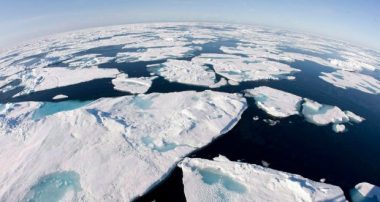
Arctic sea ice isn’t just threatened by the melting of ice around its edges, a new study has found: Warmer water that originated hundreds of miles away has penetrated deep into the interior of the Arctic.
Arctic sea ice isn’t just threatened by the melting of ice around its edges, a new study has found: Warmer water that originated hundreds of miles away has penetrated deep into the interior of the Arctic.
That “archived” heat, currently trapped below the surface, has the potential to melt the region’s entire sea-ice pack if it reaches the surface, researchers say.
The study appears online Aug. 29 in the journal Science Advances.
“We document a striking ocean warming in one of the main basins of the interior Arctic Ocean, the Canadian Basin,” said lead author Mary-Louise Timmermans, a professor of geology and geophysics at Yale University.
The upper ocean in the Canadian Basin has seen a two-fold increase in heat content over the past 30 years, the researchers said. They traced the source to waters hundreds of miles to the south, where reduced sea ice has left the surface ocean more exposed to summer solar warming. In turn, Arctic winds are driving the warmer water north, but below the surface waters.
“This means the effects of sea-ice loss are not limited to the ice-free regions themselves, but also lead to increased heat accumulation in the interior of the Arctic Ocean that can have climate effects well beyond the summer season,” Timmermans said. “Presently this heat is trapped below the surface layer. Should it be mixed up to the surface, there is enough heat to entirely melt the sea-ice pack that covers this region for most of the year.”
The co-authors of the study are John Toole and Richard Krishfield of the Woods Hole Oceanographic Institution.
The National Science Foundation Division of Polar Programs provided support for the research.
An asteroid has exploded in a ‘fireball’ near an American early warning radar base, prompting a top scientist to reflect on how a similar ‘freak’ incident could cause nuclear war. The meteor was only detected after it detonated close to Thule Airbase, Greenland, on July 25. A prominent nuclear expert later discussed how the US military could have mistaken the explosion for a Russian ‘first strike’ and launched up to 2,000 nukes in retaliation.
Thule is a base in Greenland which incorporates a Ballistic Missile Early Warning Site designed to spot nuclear doomsday weapons flying towards America. Hans M. Kristensen, director of the Nuclear Information Project at the Federation of American Scientists, tweeted: ‘We’re still here, so they correctly concluded it was not a Russian first strike. ‘There are nearly 2,000 nukes on alert, ready to launch.’ Kristensen told Metro that a ‘freak incident like this could potentially trigger an alert that caused the United States to overreact’, although he stressed such an event was unlikely.
‘The potential risks are about what could happen in a tense crisis where two nuclear powers were at each other’s throats and a conventional shooting war had broken out and part of the command and control system degraded,’ he said. ‘The early warning systems are supposed to be able to differentiate and in most cases probably would be able to do so. ‘But with large number of nuclear weapons on high alert, the concern would be that an overreaction could trigger a series of events that escalated the conflict significantly. ‘There have been cases during the Cold War where atmospheric events caused early warning systems to falsely report nuclear attacks. Fortunately, military officers figured out that they were false alarms.’ He said tensions were low at the moment, making it very unlikely that an asteroid strike would trigger a nuclear war.
‘I don’t think there is any risk that such an event could trigger a nuclear launch under normal circumstances,’ Kristensen continued. ‘There are no other indicators that nuclear adversaries at this point are about to launch nuclear weapons against the United States.’ The asteroid hit on July 25 and exploded with a force of about 2.1 kilotons, Nasa confirmed. This is about an eighth of the 15 kiloton yield of the Little Boy bomb, which was used to destroy Hiroshima in World War II. In 1968, a United States Air Force (USAF) B-52 bomber carrying four hydrogen bombs crashed into sea ice near Thule, causing a huge explosion and forcing a massive clean-up operation.
It’s so hot, even parts of the Arctic are on fire.
Temperatures this month reached 86 degrees Fahrenheit well inside the Arctic Circle in Sweden, where the worst fires the country has seen in decades are now burning. More than 50 fires have ignited across the country, forcing evacuations. Finland and Norway are also fighting flames.
“This is a serious situation and the risk for forest fires is extremely high in the whole country,” Jakob Wernerman, operative head of the Swedish Civil Contingencies Agency, told the Associated Press.
So far, no deaths from wildfires have been reported in Scandinavia, but Greece hasn’t been so fortunate. The country declared a state of emergency as raging forest fires have killed more than 70 people and injured more than 180 as they encroach on the capital Athens.
“There are no words to describe the feelings of all of us, these times,” said Greek Prime Minister Alexis Tsipras during a televised address Tuesday. “The country is going through a tragedy.”
The government suspects arsonists may be behind the fires. But there’s also been intense heat across Europe this summer.
Across Europe, fire risks remain high in the coming weeks, according to the European Forest Fire Information System:
While warm temperatures and dry conditions crop up sporadically throughout Europe during the summer, it’s highly unusual that so many places are experiencing such hot, dry conditions for so long at the same time:
A corollary is that summers also spark wildfires in Europe on a regular basis, but rarely in so many places at the same time.
As for the rest of the world, heat this summer has already proved deadly in countries including Japan, Pakistan, and Canada.
As the climate changes, the fire season is getting longer, now stretching from June through October in Europe. We saw this play out late last year as Hurricane Ophelia sent stiff winds through Portugal and Spain, driving wildfires that killed more than 100 people. The European Environment Agency reported that “an expansion of the fire-prone area and longer fire seasons are projected across Europe.”
At least 11 wildfires are raging inside the Arctic Circle as the hot, dry summer turns an abnormally wide area of Europe into a tinderbox.
The worst affected country, Sweden, has called for emergency assistance from its partners in the European Union to help fight the blazes, which have broken out across a wide range of its territory and prompted the evacuations of four communities.
Tens of thousands of people have been warned to remain inside and close windows and vents to avoid smoke inhalation. Rail services have been disrupted.
The Copernicus Earth observation programme, which gives daily updates of fires in Europe, shows more than 60 fires burning across Sweden, with sites also ablaze in Norway, Finland and Russia, including in the Arctic Circle.
Norway has sent six fire-fighting helicopters in response to its neighbour’s request for assistance. Italy is sending two Canadair CL-415s – which can dump 6,000 litres of water on each run – to Örebro in central southern Sweden.
In western Sweden, fire-fighting operations were temporarily halted near an artillery training range near Älvdalen forest due to concernsthat unexploded ordnance might be detonated by the extreme heat.
Residents in Uppsala said they could see the plumes of smoke and have been banned from barbecuing in national parks, after 18 consecutive days without rain.
“This is definitely the worst year in recent times for forest fires. Whilst we get them every year, 2018 is shaping up to be excessive,” said Mike Peacock, a university researcher and local resident.
There have been huge fires in the past in Sweden, but not over such a wide area. This appears to be a trend as more and bigger blazes are reported in other far northern regions like Greenland, Alaska, Siberia and Canada.
The sparks come from a variety of sources: BBQs, cigarettes and increasingly lightning, which is becoming more frequent as the planet warms.
Swedish authorities say the risk of more fires in the days ahead is “extremely high” due to temperatures forecast in excess of 30C. Much of the northern hemisphere has sweltered in unusually hot weather in recent weeks, breaking records from Algeria to California and causing fires from Siberia to Yorkshire. Ukraine has been hit especially hard by wildfires.
The European Forest Fire Information System warned fire danger conditions were likely to be extreme across much of central and northern Europe in the coming weeks.
EU officials said many of this year’s fires are outside the traditional European fire zone of the Mediterranean, and are increasingly taking place at unexpected times of year. 2017 was the worst fire year in Europe’s history, causing destruction to thousands of hectares of forest and cropland in Portugal, Spain and Italy, as late as November. “There are clear trends of longer fire seasons and frequent critical periods in Europe that are leading to dangerous fire situations,” said a European commission official.
Climate scientists said the Arctic and other areas that were once relatively fire-free are likely to become more vulnerable.
“What we’re seeing with this global heatwave is that these areas of fire susceptibility are now broadening, with the moors in north-west England and now these Swedish fires a consequence of that,” said Vincent Gauci, professor of global change ecology at the Open University.
“Both these areas are typically mild and wet which allows forests and peatlands to develop quite large carbon stores,” he added. “When such carbon-dense ecosystems experience aridity and heat and there is a source of ignition – lightning or people – fires will happen.”
Huge part of Arctic ocean is shifting to an Atlantic climate, study finds
The northern Barents Sea has warmed 1.5 degrees Celsius in just 18 years, Independent, Chris Mooney 28 June 1
Scientists studying one of the fastest-warming regions of the global ocean say changes in this region are so sudden and vast that in effect, it will soon be another limb of the Atlantic, rather than a characteristically icy Arctic sea.
The northern Barents Sea, to the north of Scandinavia and east of the remote archipelago of Svalbard, has warmed extremely rapidly – by 2.7 degrees Fahrenheit (1.5 degrees Celsius) just since the year 2000 – standing out even in the fastest warming part of the globe, the Arctic.
“We call it the Arctic warming hotspot,” says Sigrid Lind, a researcher with the Institute of Marine Research in Tromso, Norway.
Now Ms Lind and her colleagues have shown, based on temperature and salinity measurements taken on summer research cruises, that this warming is being accompanied by a stark change of character, as the Atlantic Ocean is in effect taking over the region and converting it into a very different entity.
Their results were published this week in Nature Climate Change by Ms Lind and two colleagues at Norway’s Institute of Marine Research and University of Bergen. And they underscore that the divide between the Atlantic and the Arctic is not just a geographical one – it’s physical in nature…….
The result, the study says, has been a “dramatic shift in the water column structure in recent years.” Arctic surface waters, with a temperature below freezing, are “now almost entirely gone.”
“This region is shifting to the Atlantic climate, and it’s going fast,” says Ms Lind.
In a drill, fake terrorists take over Arctic radioactive waste storage site
Russian officials have said they thwarted a terrorist attack at a facility storing old radioactive components from nuclear vessels located in the Arctic — but don’t worry. It was just a drill. Bellona, by Anna Kireeva
Russian officials have said they thwarted a terrorist attack at a facility storing old radioactive components from nuclear vessels located in the Arctic — but don’t worry. It was just a drill.
The simulated siege was part of a large-scale exercise called Atom-2018, and was meant to prepare workers at the Sayda Bay for the worst – an armed incursion into a sensitive facility within Russia’s vast but fragile nuclear waste storage industry, complete with bombs, hostages and political demands.
According to reports, staff at the facility were alerted to the fact that the exercise was a drill. The purpose of the fake crisis, rather than scaring workers at a radioactive materials storage site, was to prepare officials from Russia’s security services to map out countermeasures specifically designed for the Sayda Bay site.
Sayda Bay is a part of the Murmansk branch of RosRAO, the state operator responsible for the management and storage and handling of non-nuclear radioactive waste, as well as decommissioning nuclear vessels, especially submarines.
Located 60 kilometers from Murmansk, Sayda Bay is itself an old Soviet-era military base. Since 2004, it has been tasked with storing reactor compartments from the dismantled submarines of Russia’s once overwhelming Northern Fleet of nuclear submarines.
Later, facilities were built at Sayda Bay to handle and condition radioactive waste. Currently it houses about 80 single unit reactor blocks and has space for 40 more. Eventually, the site will hold the irradiated remains of the Lepse, a nuclear icebreaker refueling vessels that is carefully being pulled apart at the Nerpa Shipyard near Murmansk.
Floating nuclear power plant reaches the Arctic, Greenpeace demands strict safety controls by Greenpeace International Vienna, Austria – As Russia’s state-run corporation Rosatom prepares to celebrate the arrival of its first purpose-built floating nuclear power plant in the Arctic city of Murmansk, campaigners are warning of threats to people and nature and calling for a full environmental impact assessment and independent nuclear oversight.
The controversial Akademik Lomonosov barge, dubbed ‘nuclear Titanic’ by some, arrived in Murmansk today where it will be loaded with nuclear fuel and tested. The Rosatom welcoming party is scheduled to take place on 19 May.
“It is now that one of the riskiest parts of the project begins,” said Jan Haverkamp, nuclear expert with Greenpeace Central and Eastern Europe.
“The barge will be fuelled and tested near a city of 300,000 people, then towed with two reactors full of irradiated fuel along the Northern Sea Route. Its installation in the harsh environment of the Russian Arctic will pose a constant threat to people of the North and the pristine Arctic nature,” he added.
Greenpeace CEE together with Russian environmental organisations Ecodefense andRussian Socio-Ecological Union (Friends of the Earth Russia) has sent a letter to Rosatom and relevant authorities demanding full and unrestricted regulatory oversight by the Russian nuclear regulator Rostechnadzor, with peer-review by nuclear regulators from other Arctic countries, as well as a transboundary Arctic Environmental Impact Assessment (EIA).[1]
“The incident-ridden history of Russian nuclear icebreakers and submarines shows the need for strict, independent oversight with international peer review. This must start now, before the reactors are loaded, and span the plant’s entire risky operation – including transport, decommissioning and waste management,” said Haverkamp.
Initial plans to load and test the floating nuclear plant in the centre of St. Petersburg were abandoned after pressure from Nordic and Baltic countries and a public petition organised by Greenpeace Russia. While being towed to Murmansk, the barge was escorted and peacefully protested in Danish waters by the Greenpeace Ship Beluga II.
In 2019, the Akademik Lomonosov will be towed 5,000 km through the Northern Sea Route and put to use near Pevek, in Russia’s Chukotka Region.
According to Russian media, 15 countries, including China, Algeria, Indonesia, Malaysia, Argentina and Sudan, have shown interest in hiring floating nuclear plants that – among other purposes – are intended to provide power for fossil fuel exploration.
Notes:
[1] The letter was sent today to the acting Minister of Natural Resources and Environment of the Russian Federation, the CEO of Rosatom, the chairperson of the Russian nuclear regulator Rostechnadzor and the international cooperation body for the Arctic, the Arctic Council.
Recent press releases with more information available here and here.
Rosatom, Russia’s state-controlled nuclear giant, has just launched the Akademik Lomonosov, the first of a fleet of floating nuclear power plants that Russia plans to build and sell to other countries such as China, Indonesia and Sudan. It is currently being towed across the Baltic Sea, where it will travel all of Scandinavia to Murmansk, to be supplied and tested, before departing on a 5,000 kilometre trip through the Arctic.
We already know the risks of drilling for oil in such a fragile and wild environment as the Arctic, but a nuclear reactor floating in its waters could aggravate things much more. This is why:
It is a matter of time that a catastrophe occurs
Rosatom has said that the plant “is designed with a large margin of safety that exceeds all possible threats and makes nuclear reactors indestructible in the face of tsunamis and other natural disasters.” Remember what happened the last time they said a boat was “unsinkable”?
Nothing is indestructible. The problem is that this nuclear Titanic has been built without independent experts to verify it. The same lack of supervision that there was in Chernobyl.
The flat bottom hull of this plant makes it especially vulnerable to tsunamis and cyclones. A large wave could launch the station to the coast. Also, he can not move alone either. If you release moorings, you can not move away from a threat (such as an iceberg or a strange vessel, for example) increasing the risk of a fatal incident. A collision shock would damage your vital functions, causing a loss of power and damaging your cooling function.
Imagine how difficult it would be to deal with the consequences
There are so many things that could go wrong here: it could flood, sink or run aground. All of these scenarios could lead to the release of radioactive substances into the environment.
In case of a collapse, the ocean water would cool the core. It may seem like a good idea, but when the fuel rods are melted with seawater, there would first be a water explosion and possible explosions of hydrogen that would propagate a large number of radioactive isotopes into the atmosphere.
Damage to the reactor could contaminate much of the marine wildlife that is nearby, which means that fish populations could be contaminated in the coming years. The radioactive Arctic is not the most beautiful scenario. The areas around Fukushima and Chernobyl are already difficult to clean, imagine in the polar night, with sub-zero temperatures and snowstorms.
The terrible trajectory of nuclear ships, icebreakers and Russian submarines
In Russia, there is a very long list of accidents with nuclear submarines and icebreakers.
The first nuclear icebreaker, Lenin, suffered a cooling accident in 1965, which caused a partial melting of the nucleus, which ended up pouring into the Tsivolki Bay near the Novaya Zemyla archipelago in 1967. In 1970, the reactor of a nuclear submarine ( K-320) was launched at the Krasnoye Sormovo pier in Russia, releasing large amounts of radiation and exposing hundreds of people. An accident during the fuel loading of a nuclear submarine reactor in Chazma in 1985 irradiated 290 workers, causing 10 deaths and 49 injured people. And the list goes on …
Rosatom’s plans to build a fleet of floating nuclear power plants pose an increased risk of unprecedented nuclear accidents in the Arctic.
A nuclear dump in the water
We already have enough radioactive waste without knowing what to do with them. We do not need more.
The reactors of this plant are smaller than those found in a nuclear power plant on land and will need to be refuelled every two or three years. The radioactive waste will be stored on board until it returns after the designated 12 years of operation. That means radioactive waste will be left floating in the Arctic for years.
This is not only incredibly dangerous, but there is still no safe place to transport the fuel used once you step on firm ground. No source of energy must generate waste that takes thousands of years to be safe.
Is using nuclear energy to facilitate the extraction of more fossil fuels
If this floating nightmare were not already absurd enough, the reason they are towing it to the Arctic is to help Russia extract more fossil fuels. Its main mission is to provide electricity to the northern oil, gas, coal and mineral extraction industries.
And it is not necessary to repeat the reasons why more fossil fuels are synonymous with more climate change. We only have to protect the Arctic from this potential catastrophe.
Responsible for the anti-nuclear campaign of Greenpeace Spain, Source: El Independiente
Melting Arctic sends a message: Climate change is here in a big way, The Conversation, Mark Serreze, Research Professor of Geography and director, National Snow and Ice Data Center, University of Colorado,
Scientists have known for a long time that as climate change started to heat up the Earth, its effects would be most pronounced in the Arctic. This has many reasons, but climate feedbacks are key. As the Arctic warms, snow and ice melt, and the surface absorbs more of the sun’s energy instead of reflecting it back into space. This makes it even warmer, which causes more melting, and so on.
This expectation has become a reality that I describe in my new book “Brave New Arctic.” It’s a visually compelling story: The effects of warming are evident in shrinking ice caps and glaciers and in Alaskan roads buckling as permafrost beneath them thaws.
But for many people the Arctic seems like a faraway place, and stories of what is happening there seem irrelevant to their lives. It can also be hard to accept that the globe is warming up while you are shoveling out from the latest snowstorm.
Since I have spent more than 35 years studying snow, ice and cold places, people often are surprised when I tell them I once was skeptical that human activities were playing a role in climate change. My book traces my own career as a climate scientist and the evolving views of many scientists I have worked with. When I first started working in the Arctic, scientists understood it as a region defined by its snow and ice, with a varying but generally constant climate. In the 1990s, we realized that it was changing, but it took us years to figure out why. Now scientists are trying to understand what the Arctic’s ongoing transformation means for the rest of the planet, and whether the Arctic of old will ever be seen again.
Russian Arctic glacier loss doubles as temps warm https://www.eurekalert.org/pub_releases/2018-04/cu-rag042518.php, CORNELL UNIVERSITY , 25 Apr 18, ITHACA, N.Y.– Ice mass loss in the Russian Arctic has nearly doubled over the last decade according to Cornell University research published in the journal Remote Sensing of Environment.
The research focused on Franz Josef Land, a glaciated Russian archipelago in the Kara and Barents seas – among the northernmost and most remote parcels of land on Earth.
“Glaciers there are shrinking by area and by height. We are seeing an increase in the recent speed of ice loss, when compared to the long-term ice-loss rate,” said lead researcher Whyjay Zheng, a Cornell University doctoral student in geophysics. “We are finding out that the ice is changing more rapidly than we previously thought,” said Zheng. “The temperature is changing in the Arctic faster than anywhere else in the world.”
From 1953 to 2010, the average rate of ice surface loss was 18 centimeters per year. From 2011 to 2015, the ice surface decrease was 32 centimeters per year, which is a water loss of 4.43 gigatons annually, said Zheng. For perspective, that much water would raise the level of Cayuga Lake — the longest of New York state’s Finger Lakes, at 38 miles — by 85 feet and inundate the cities of Ithaca and Seneca Falls.
he Arctic has been warming in recent decades, but glaciers across the region are responding in different ways. “Previous studies have shown that the glaciers in northern Canada seem to be shrinking at a faster rate than the ones in some parts of northern Russia,” said senior author Matt Pritchard, Cornell professor of geophysics.
“Our work takes a closer look at the Russian glaciers to understand why they might be responding to a warming Arctic differently than glaciers in other parts of the Arctic. Why glaciers in Franz Josef Land have been shrinking more rapidly between 2011 and 2015 than in previous decades is possibly related to ocean temperature changes,” said Pritchard.
###
Support for Zheng’s research was provided by an Overseas Ph.D. Scholarship funded by the Ministry of Education, Taiwan.
Cornell University has television, ISDN and dedicated Skype/Google+ Hangout studios available for media interviews.







 nuclear-news