Antarctica may have crossed a tipping point that leads to rising seas
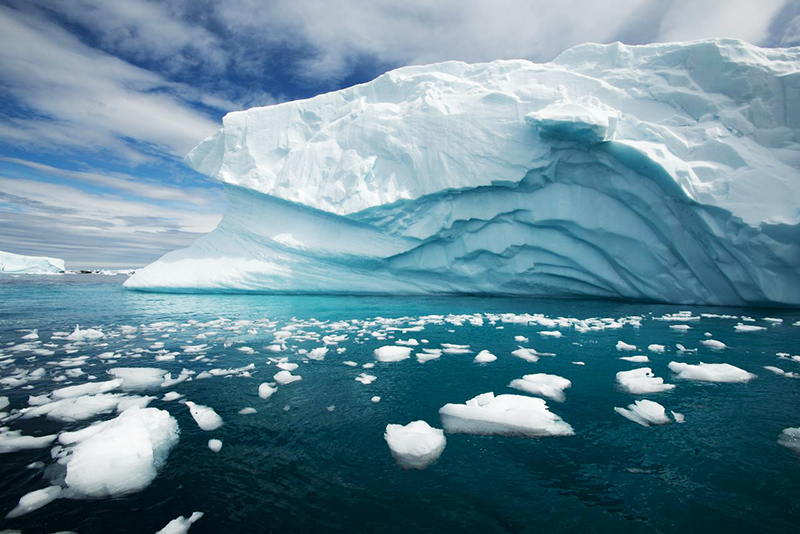
Scientists are beginning to understand the sudden loss of sea ice in
Antarctica – and there is growing evidence that it represents a permanent
shift with potentially catastrophic consequences.
Antarctica may have
passed a climate tipping point of no return, scientists are warning, with
mounting evidence that a sudden slump in sea ice formation since 2016 is
linked to human-induced ocean warming. For decades, Antarctic sea ice
levels remained relatively stable despite rising global temperatures. But
that shifted suddenly in 2016, when the extent of sea ice began to sharply
fall.
The consequences of this recent shift could be catastrophic.
Antarctica’s sea ice helps to stabilise glaciers and ice sheets on the
land. Without adequate sea ice formation, their melting rates will
accelerate, with the potential to cause extreme global sea level rise. It
is estimated that the Antarctic ice sheet contains enough water to raise
global sea levels by 58 metres.
New Scientist 2nd Oct 2025 https://www.newscientist.com/article/2498509-antarctica-may-have-crossed-a-tipping-point-that-leads-to-rising-seas/
World’s largest iceberg is finally about to disappear 40 years after breaking away from Antarctica
Megaberg twice the size of London could melt away within weeks

Stuti Mishra, Independent, 03 September 2025
A large Antarctic iceberg that calved almost four decades ago is now in its final days, with scientists saying it could vanish within weeks after drifting into warmer seas.
The megaberg, known as A23a, broke off the Filchner Ice Shelf in 1986 and became stuck on the seabed of the Weddell Sea, where it remained grounded for over 30 years.
It set adrift in 2020 and was carried by ocean currents into the “iceberg alley” – the South Atlantic route where most of Antarctica’s giants eventually meet their end.
Earlier this year, A23a still covered nearly 3,100 sq km, making it the world’s largest iceberg, bigger than Long Island and more than twice the size of London.
In recent months, however, enormous sections have splintered away. Satellite images analysed by the EU’s Copernicus programme show it has shrunk to less than half its original size, now measuring about 1,770 sq km.
Some of the breakaway fragments are themselves colossal, including one that is 400 sq km in area, while countless smaller bergs, still large enough to pose hazards to shipping, now litter surrounding waters.
The megaberg is breaking up “fairly dramatically”, Andrew Meijers, a physical oceanographer at the British Antarctic Survey, told AFP……………………………
Despite its size and longevity, researchers said the fate of A23a was inevitable once it left Antarctic waters. Exposed to warmer seas and battered by waves, it started dissolving at speed.
https://www.independent.co.uk/climate-change/news/iceberg-a23a-antarctica-melting-b2819233.html
‘It looks more likely with each day we burn fossil fuels’: polar scientist on Antarctic tipping points

Despite working on polar science for the British Antarctic Survey for 20 years, Louise Sime finds the magnitude of potential sea-level rise hard to comprehend. Up until 2016, the sea ice
in Antarctica seemed relatively stable. Then everything started to change.
At first, the decline was mostly in line with climate models.
But suddenly, in 2023, there was an enormous drop. About 2.5 million sq km of Antarctic
sea ice went missing relative to the average before 2023. The anomaly was
of such a magnitude that it’s quite hard for scientists to know what to
make of it. It has been described as a five sigma event.
The potential for Antarctica to increase global sea levels is scarier than for Greenland.
Right now, they’re both contributing similar amounts to sea-level rise,
but in future, it could be Greenland goes up a bit and then Antarctica goes
up catastrophically. Greenland has the potential to raise sea levels by
five or six metres, but we don’t expect this will come in the form of an
absolutely catastrophic, abrupt loss. Most of the ice in Greenland is not
below sea level so we can see what is happening and we expect it will melt
in a linear fashion.
By contrast, Antarctica has 80 metres of potential
sea-level rise. We don’t expect all of that, but it is harder to know
exactly what is happening.
Guardian 27th June 2025, https://www.theguardian.com/environment/ng-interactive/2025/jun/27/tipping-points-antarctica-arctic-sea-ice-polar-scientist
I just returned from Antarctica: climate change isn’t some far-off problem – it’s here and hitting hard.
The continent stands as a powerful symbol of our interconnected climate systems – a compelling case for conservation…………………… the ocean shapes our world – and Antarctica is central to that story. The surrounding waters link the Pacific, Indian and Atlantic oceans through the Antarctic Circumpolar Current. This connectivity means that what happens in Antarctica affects us all.
Jennifer Verduin, Sun 11 May 2025, https://www.theguardian.com/commentisfree/2025/may/11/antarctica-climate-change-threat
As an oceanographer, I study how the ocean shapes our world. For Australia and other nations, the lesson is urgent.
Antarctica is often viewed as the last truly remote place on Earth – frozen, wild and untouched. But is it really as untouched as it seems?
This vast frozen continent is encircled by the Antarctic Circumpolar Current, the only current in the world that connects all the oceans, showing how closely linked our planet really is.
Earlier this year, I joined more than 100 scientists on a journey to Antarctica. What we encountered was extraordinary: towering icebergs, playful penguins, breaching whales and seals resting on the ice. Yet beneath this natural wonder lies a sobering reality – Antarctica is changing, and fast. The experience left me both inspired and deeply saddened.
This unique environment highlights the fragility of our planet. Its pristine landscapes and thriving wildlife represent what we stand to lose if we don’t take urgent action to reduce human impact.
Historically, Antarctica suffered from exploitation – hunters came for whales and seals, leaving scars on its ecosystems. While wildlife is slowly recovering, these species now face a new threat: climate change. Rising ocean temperatures are melting ice, reshaping habitats and disrupting the delicate balance of life.
The continent stands as a powerful symbol of our interconnected climate systems – a compelling case for conservation. During our visit, we toured research stations and Port Lockroy, where gentoo penguins raise their chicks. Here, human activity is carefully managed. Half the island is set aside for the penguins, while the other half welcomes around 18,000 tourists each year who come to learn about this remarkable place. It’s a model of coexistence – one that shows how we can live alongside nature when we choose to act responsibly.
Along our journey, we witnessed diverse wildlife in their natural habitats – from penguins and seals to whales and seabirds. Albatrosses and cape petrels followed our ship, gliding effortlessly over the waves – symbols of resilience, yet also vulnerability.
But reminders of past damage still linger. On Deception Island, rusted remains of the whaling industry serve as stark evidence of the harm unchecked exploitation can cause. They also underscore why continued protection of these fragile ecosystems is vital.
As an oceanographer, I study how the ocean shapes our world – and Antarctica is central to that story. The surrounding waters link the Pacific, Indian and Atlantic oceans through the Antarctic Circumpolar Current. This connectivity means that what happens in Antarctica affects us all. Pollution, warming seas and oil spills know no borders. These changes disrupt ocean currents, harm marine life and influence climate systems around the globe.
The implications are clear: addressing environmental challenges requires international cooperation and decisive action.
State of the Cryosphere Report 2024
Lost Ice, Global Damage
In the State of the Cryosphere 2024 – Lost Ice, Global Damage report, over 50 leading cryosphere scientists warn of vastly higher impacts and costs to the global economy given accelerating losses in the world’s snow and ice regions. Current climate commitments, leading the world to well over 2°C of warming, would bring disastrous and irreversible consequences for billions of people from global ice loss.
Based on the most recent cryosphere science updates from 2024, the authors underscore that the costs of loss and damage will be even more extreme, with many regions experiencing sea-level rise or water resource loss well beyond adaptation limits in this century if our current level of emissions continues – leading towards a rise of 3°C or more. Mitigation will also become more costly due to feedbacks from thawing permafrost emissions and loss of sea ice.
For the first time, the report notes a growing scientific consensus that melting Greenland and Antarctic ice sheets, among other factors, may be slowing important ocean currents at both poles, with potentially dire consequences for a much colder northern Europe and greater sea-level rise along the U.S. East Coast.
Reviewed and supported by over 50 leading cryosphere scientists, this is the latest report in the State of the Cryosphere series, which takes the pulse of the cryosphere on an annual basis. The cryosphere is the name given to Earth’s snow and ice regions and ranges from ice sheets, glaciers, snow and permafrost to sea ice and the polar oceans – which are acidifying far more rapidly than warmer waters. The report describes how a combination of melting polar ice sheets, vanishing glaciers, and thawing permafrost will have rapid, irreversible, and disastrous impacts worldwide.
TODAY. The polar playground for a suicidal species?
https://theaimn.net/the-polar-playground-for-a-suicidal-species/ 7 January 25
Where to begin on this mind-boggling story about epic changes on a very small planet?
Well, let’s begin on the fun part. The Australian Antarctic Program encourages some pretty innocuous recreational activities, plus of course, encouragement for tourists to come, and to learn about the polar world. So that’s OK, I suppose. But lately, in the news, there is growing concern that tourists, Australians in particular, are taking such a playful attitude to Antarctica, that they are risking their personal safety.
Interesting that the video above puts the blame on TikTok for encouraging the fun and danger. But tourism itself is good for increasing education about Antarctica. As long as individuals personally behave safely, that’s fine, isn’t it?
But what about planetary safety?
What Australians, and most of the world, learn about Antarctica, is that it’s pretty, and has penguins, Oh, and the ice is melting a bit, too. And that’s about it. The media does not trouble our complacent little minds with information about the thermohaline ocean circulation, the atmospheric circulation patterns, the carbon-sequestration of krill, the polar vortex…. Much too hard for us, in this cricket-tennis season.
Right now, Northern Europe and parts of the USA are experiencing extreme cold weather. No doubt some people would say that this disproves global heating, climate change. Alas, these extremes, emanating from the Arctic, by the polar vortex, are exacerbated by global heating. The polar vortex is a complex system, difficult to grasp, for the average news reader, so it is part of the whole poorly known, global climate system.
Antarctica is at the other end of the world – not connected to all this? Well, not if you ignore the global thermohaline circulation, among other things like sea level rise.
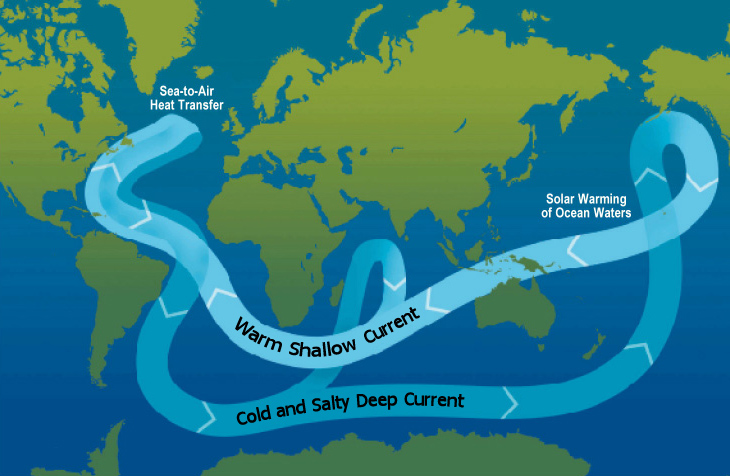
Global thermohaline circulation
Professor Elisabeth Leane, Professor of Antarctic Studies at the University of Tasmania says – What happens in Antarctica doesn’t stay in Antarctica. Its future will shape the future of the planet
Which brings me to the question of safety in relation to Antarctica – planetary, not just personal.
And here’s what the University of Tasmania says about it – Antarctica’s tipping points threaten global climate stability.
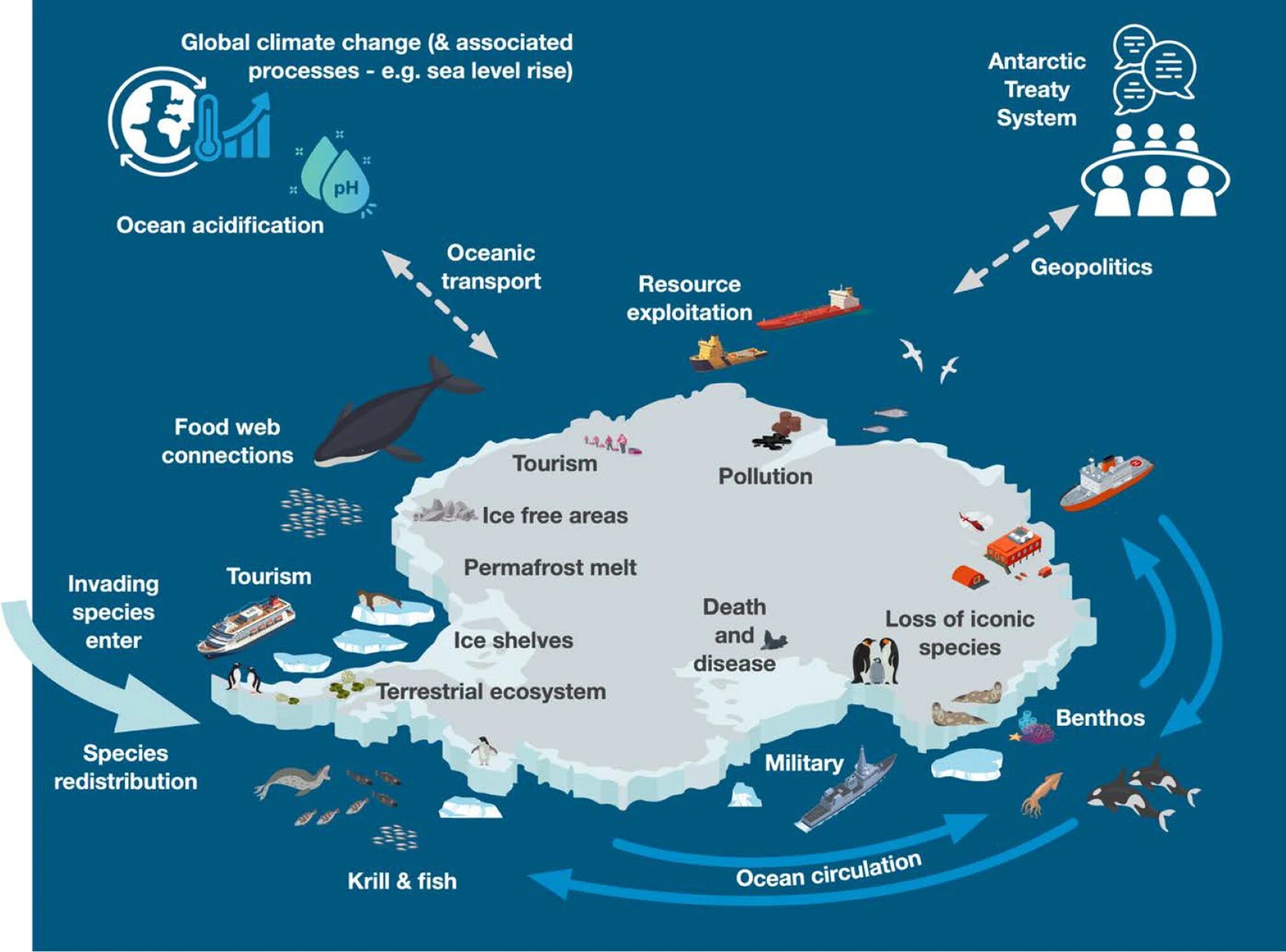
The map above is from the University of Tasmania’s report by international climate scientists . It identifies the various cascading tipping points and their interactions and pressures on the ecosystem.
For those who care about the climate change issue, and about Australia and the Antarctic, I would urge them to watch, and persist with, this brilliant report by climate researcher Paul Beckwith – https://www.youtube.com/watch?v=6WccDhnM8R8
Beckwith explains the potential tipping points identified by the study and their interrelationships , and adds the issue of sea ice loss. Critical issues are ice sheets, ocean acidification, ocean circulation, species redistribution, invasive species, permafrost melting, local pollution, chemical impacts, social impacts, local pollution and the Antarctic Treaty System. He goes on to explain with excellent graphics, the global thermohaline circulation, and then, in-depth, the records on sea ice, and then on to his detailed study on the tiny krill or light shrimp, and their global importance. Finally, Beckwith outlines the politics, the various national claims in the Antarctic Treaty System. The scientists’ conclusion – the urgent need for action on climate. Heavy stuff. Fascinating stuff. He finishes with a reminder of the unique role of that amazing critter the krill.
If you want a more concise discussion of the University of Tasmania’s December remarkable workshop of international marine scientists – go to Radio Ecoshock – World-changing Tipping Points – In Antarctica !
The “mainstream media” rarely covers climate change in any depth. For decades, the public has been informed very superficially on this life and death matter for our survival. The dedicated scientists produce their research results, but the media seem to find these too difficult, or too “political” to bother to report on them properly. The December 2024 “emergency summit” of international polar scientists in Tasmania barely got a mention in the Australian or international press.
You have to go to alternative media, to get any real insight into what is happening to the climate of our planet home. For decades now, Paul Beckwith has being producing his highly informative and wonderfully illustrated videos, on Youtube. Meanwhile Alex Smith has been doing the same sort of thing on radio and podcast, and print, – on Radio Ecoshock, which is heard in Australia on Community Radio 3CR.
In 2025, it is ever more urgent for people to wade through the morass of “social” media, and corporate media, and “alternative” media, to find the facts on climate change. Paul Beckwith and Radio Ecoshock are two examples of a rare and endangered human species – journalists who do their homework on climate change.
Scientists should break the ice
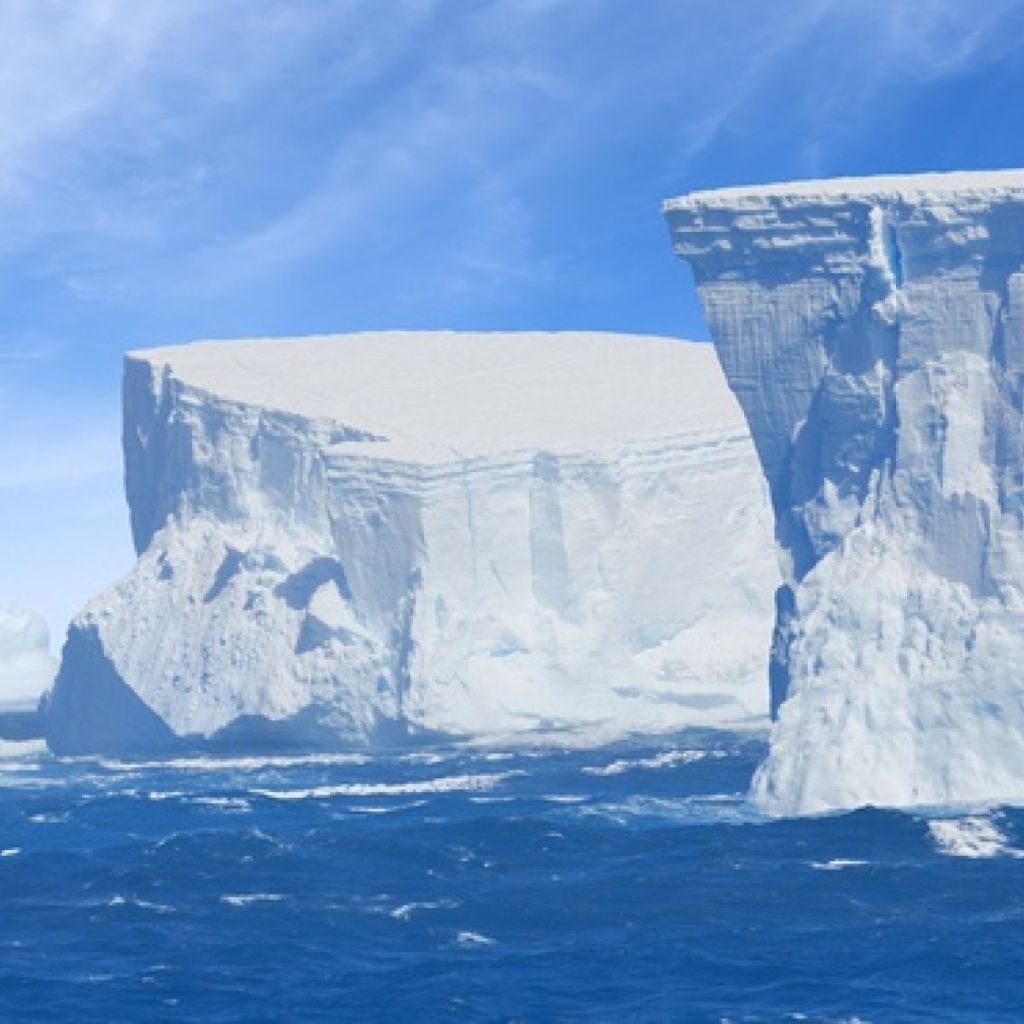
once the ice sheet slides into the ocean, there is no putting it back, even if all carbon emissions ended that day. The ice-sheet holds enough water to raise sea levels by 58 metres. Even if only half of it breaks off, it will be just a waiting game over just a few years for the ice to melt and for us to watch every coastal city on earth to be inundated. In our lifetime.
once the ice sheet slides into the ocean, there is no putting it back, even if all carbon emissions ended that day. The ice-sheet holds enough water to raise sea levels by 58 metres. Even if only half of it breaks off, it will be just a waiting game over just a few years for the ice to melt and for us to watch every coastal city on earth to be inundated. In our lifetime.
Crispin Hull, December 29, 2024
The 2024 award for the biggest disjoin between the importance of a story and the coverage it got must surely go to the science briefing on Antarctica and Sea-Level Rise published by the Australian Antarctic Program Partnership and the ARC Australian Centre for Excellence in Antarctic Science.
It came out in September. The ABC had some coverage, but it seemed to miss some essential points.
Here is what the new science tells us and how it is different from the older science.
The older science tells us that the amount of sea ice in Antarctica is shrinking, but not as badly as in the Arctic. Sea ice expands and contracts quite quickly according to air and sea temperature. So, a gradual reduction in sea ice will mean a gradual and comparatively small rise in sea levels.
This science should be moderately alarming, but the misinformationists in the fossil fuel industry can bat away public fears by saying not much is happening here and it will not happen in your lifetime, so carry on as usual.
This is standard stuff from fossil misinformationists: climate change is not happening, but if it is happening it is part of natural geologic forces and has nothing to do with human-generated carbon, and even if it is caused by human-generated carbon we can develop technologies to capture the carbon and safely store it away.
In short, they base their facts on their desired conclusion that they can continue to make profits from the emission of carbon until ecosystems and economies collapse. When it is too late.
Coming back to Antarctica, earlier science suggested that sea-ice contraction could be reversed if temperatures came down a bit. As it happens sea-ice is an important reflector of solar rays (and heat). Without the sea-ice you have dark ocean which absorbs the rays and increases the heat of the ocean. Nonetheless, it is still a probably reversible process.
Enter the new research. This is about the eastern Antarctic icesheet. Hitherto, this has given climate scientists much less cause for concern. This is because the eastern ice sheet has built up over land. It is anchored.
Unlike sea-ice it is not vulnerable to warmer water melting it.
Picture the land mass and a big thick ice sheet over it. The sea nibbles at the edge and even if the sea is a bit warmer it does not melt much ice. This is not like sea-ice where the warmer water is all around it melting it quickly. So, hitherto scientists have taken some climate solace in the fact that so much ice is safely tied up in the eastern Antarctic ice-sheet (more than 60 per cent of the world’s fresh water) and so will give us more time to slow and reverse the warming of the planet.
Enter the new research. Remove the image of a lump of land mass. Rather picture that the land mass has been forced down by the weight of the ice – heavier at the middle of the land mass and lighter at the edge.
The new science tells us that much of the eastern Antarctic ice-sheet is grounded below sea level. So, one the warmer sea waters get under it, the whole sheet becomes unstable and can slide into the ocean. And even if temperatures are made to fall, the tipping point would have been reached – the warmer sea would have run under the massive ice-sheet, undermining it and making its slide into the ocean inevitable.
And once the ice sheet slides into the ocean, there is no putting it back, even if all carbon emissions ended that day. The ice-sheet holds enough water to raise sea levels by 58 metres. Even if only half of it breaks off, it will be just a waiting game over just a few years for the ice to melt and for us to watch every coastal city on earth to be inundated. In our lifetime.
Once the ice sheet hits the ocean, it is the end of civilisation as we know it.
The ice cannot be put back.
The greater the potential damage the more you should do about it, even if you think the risk is small. This is why people go to a lot of effort to make their houses less exposed to bushfires and cyclones.
It may be that some billionaires might imagine they could set up doomsday retreats to avoid death, injury, and discomfort. They are dreaming. In those circumstances money means nothing and the profit-driven selfishness that drives unnecessarily extending the use of fossil fuel will be brushed aside by the maniac selfishness of those on a desperate if doomed survival mission.
Scientists must change stop their subdued, cautious approach to reporting climate change. It is understandable because scientists do not want to cause panic or unnecessary alarm. But the approach has just given the fossil industry endless free kicks. It is time for alarm and measured panic.
Scientists should stop being scared of publishing scary material in a scary way. It is time to tell people the reality of the biggest security, economic, and existential threat to humans on earth………………………. more http://www.crispinhull.com.au/2024/12/29/scientists-should-break-the-ice/?utm_source=mailpoet&utm_medium=email&utm_campaign=crispin-hull-column
World’s largest iceberg on the move again after months spinning on the spot
The iceberg is about three times the size of New York City and more than twice the size of Greater London
Rituparna Chatterjee, Independent 15th Dec 2024, https://www.independent.co.uk/climate-change/news/world-largest-iceberg-a23a-moving-antarctic-b2664564.html
The world’s largest iceberg is on the move again after decades of being grounded on the seafloor and more recently spinning on the spot, according to the British Antarctic Survey (BAS).
The mega A23a iceberg has broken free from its position north of the South Orkney Islands and is now drifting in the Southern Ocean, scientists said.
“It’s exciting to see A23a on the move again after periods of being stuck. We are interested to see if it will take the same route the other large icebergs that have calved off Antarctica have taken. And more importantly what impact this will have on the local ecosystem,” Dr Andrew Meijers, an oceanographer at the BAS, said.
The iceberg, known as A23a, split from the Antarctic’s Filchner Ice Shelf in 1986. But it became stuck to the ocean floor and had remained for many years in the Weddell Sea.
Scientists anticipate that A23a will continue its journey into the Southern Ocean following the Antarctic Circumpolar Current, which is likely to drive it towards the sub-Antarctic island of South Georgia. In that region it will encounter warmer water and is expected to break up into smaller icebergs and eventually melt.
When glaciers calve: Huge underwater tsunamis found at edge of Antarctica, likely affecting ice melt.
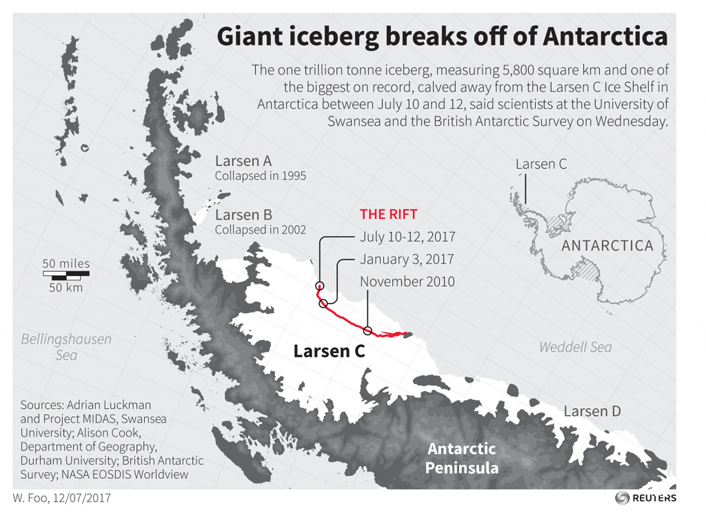
Bulletin, By Michael Meredith | July 15, 2024
Antarctica is huge, it affects pretty much every place and every living thing on our planet, and it is changing. This should be a concern for all of us, and yet we know troublingly little about some key aspects of the great white continent.
Despite its position in the far distant south, Antarctica is a vital component in the functioning of the planet. It is central to global ocean circulation, thus exerting a profound influence on the world’s climate (Figure 1 on original). The vast Southern Ocean that surrounds Antarctica absorbs huge quantities of heat and carbon dioxide from the atmosphere and distributes them around the rest of the world, thereby slowing the rate of global warming elsewhere. This “climate favor” has comes at a cost, however—the Southern Ocean is overheating and acidifying, with marked impacts on the marine ecosystem. The extra heat in the ocean is also melting the fringes of the Antarctic Ice Sheet, destabilizing its glaciers, and increasingly pushing up sea levels worldwide. The sea ice around Antarctica—formed in the fall and winter of the Southern Hemisphere, when the ocean surface freezes—has now reached record low extents, affecting the Earth’s energy budget and acting to further accelerate climate change.
All the information we have from Antarctica comes from sparse networks of sensors and equipment deployed directly, augmented with satellite measurements of the ice and ocean surface and computer simulations. While we know more about Antarctica and the Southern Ocean than ever before, it is still one of the least-well measured places on our planet, with some areas still remaining “data deserts.” We need to know more, so that we can better understand the causes of the changes happening here, how they will continue to change in future, and hence what the global impacts are likely to be.
One feature of the Southern Ocean that is often overlooked is how (and how strongly) it is mixed. This is a key process that redistributes heat, carbon, nutrients, plankton, and all other things in the sea, with profound consequences.
………………………………………glacier calving event had caused a sudden massive burst in the mixing of the ocean, stretching many kilometers from the ice front.
How did it do this? The data revealed that the glacier calving had triggered an underwater tsunami event. In essence, large waves (the height of a two-story house) were generated and moved rapidly away from the glacier, riding the interface between layers in the ocean that were tens of meters down. When these internal tsunami waves finally broke—like surface waves on a beach—they caused massive churn and mixing…………………………………………………………………………
This process—of glacier calving generating internal tsunamis and bursts of ocean mixing—is entirely absent from the computer models that are used to simulate our climate and ecosystem, hampering our ability to reliably project future changes. We need to know more about how this process works, how it will change, and what its consequences will be. ……. https://thebulletin.org/premium/2024-07/when-glaciers-calve-huge-underwater-tsunamis-found-at-edge-of-antarctica-likely-affecting-ice-melt/?utm_source=Newsletter&utm_medium=Email&utm_campaign=ThursdayNewsletter08152024&utm_content=ClimateChange_HugeUnderwaterTsunamis_07152024&utm_source=Newsletter&utm_medium=Email&utm_campaign=ThursdayNewsletter08152024&utm_content=ClimateChange_HugeUnderwaterTsunamis_07152024
The dirty history of ‘Nukey Poo’, the reactor that soiled the Antarctic
By Nick O’Malley, July 10, 2024 , https://www.theage.com.au/environment/conservation/the-dirty-history-of-nukey-poo-the-reactor-that-soiled-the-antarctic-20240708-p5jrzd.html
The rekindled nuclear debate in Australia has stirred old memories in some of a little-known chapter of our region’s history, when the US Navy quietly installed what today we might call a small modular reactor at the US Antarctic base on Ross Island.
The machine, nicknamed “Nukey Poo” by the technicians who looked after it, was installed at McMurdo base in 1961, when Antarctic exploration was expanding and nuclear energy had developed a bright futuristic sheen.
Things did not end well.
Back then, as now, Antarctic missions relied upon lifelines with distant homes. Supplies had to be carried long and sometimes dangerous distances. The US kept its Antarctic sites supplied via an ongoing supply mission called Operation Deep Freeze, which was based at the McMurdo Naval Air Facility.
According to an article on the Nukey Poo incident published in 1978 by the Bulletin of the Atomic Scientists – a journal concerned with the potential danger of nuclear technology, founded by Albert Einstein and veterans of the Manhattan Project – while a gallon of diesel cost the US Navy US12¢ back then, by the time the Americans shipped supplies to McMurdo, diesel cost 40¢ a gallon. At South Pole station, diesel was worth $12 a gallon.
But the then US Atomic Energy Commission had a solution to save costs on transporting supplies. What if McMurdo, and other distant US bases, were supplied by small transportable nuclear reactors? Congress agreed and soon the Martin Marietta Corporation won a contract to build them.
In an advertisement in Scientific American, the company boasted in language reminiscent of today’s debate over modular reactors that “because nuclear energy packs great power in little space, it’s extremely useful when you need electricity in remotes spots. It’s portable and gives you power that last for years …” Soon, the company said, nuclear power might be carrying us to outer space and frying our eggs.
A reactor named PM-3A (PM stood for “portable, medium powered”) was shipped out in sea crates and installed at McMurdo – which is within New Zealand-claimed Antarctic territory – over the summer of 1961 and became known on the base as Nukey Poo. Because cement would not cure in the frigid climate, the reactor was not encased in concrete, rather its four major components sat in steel tanks embedded in gravel and wrapped in a lead shield.
Admiral George Dufek described the moment as “a dramatic new era in man’s conquest of the remotest continent”. The US administration was certain the reactor did not violate the Antarctic Treaty’s declaration that “any nuclear explosions in Antarctica and the disposal there of radioactive waste material shall be prohibited”.
Within a year, Nukey Poo caused its first fuss, a hydrogen fire in a containment tank that led to a shutdown and energy shortages. Icebreakers fought to break through and fuel for generators was delivered by helicopter, which burned as much as they delivered over the course of a flight. Over the following years, Nukey Poo proved so unreliable and expensive to maintain that the military gave up hopes of using the technology to displace diesel at other remote locations.
In 1972, the navy began the three-year task of decommissioning the reactor and decontaminating the site. During that process, they discovered corrosion that technicians feared may have caused leaks of irradiated material. No detailed investigation was done. The secretary of the US National Academy of Sciences said the program was ended due to a series of malfunctions and the possibility of leaks, the Bulletin of the Atomic Scientists reported. The New Zealand government declared the decision was economic.
Either way, it was decided not only to remove the reactor, but half the hillside it was built into. Eventually 12,000 tonnes of irradiated gravel and soil was removed on supply ships to be buried in concrete lined pits in the United States.
The young Australian scientist, Dr Howard Dengate, who had run one of the NZ bases, hitched a lift on one those ships, the Schuyler Otis Bland, in 1977. Dengate recalls a grumpy captain who once swore at him for inviting bad luck on the ship by whistling on deck. The captain, Dengate recalled this week, blamed him for “whistling up” the storm that struck the vessel before the Australian disembarked in New Zealand and the ship sailed on to the US.
Though the reactor was little discussed in the wider world, no secret was made on the base of the reactor or its impact. Indeed, Dengate recalled finding an operating manual for the reactor in the American rubbish pits that New Zealanders had developed the habit of fossicking in.
But the story did not end there.
In 2011, an investigation by journalists of News 5 Cleveland found evidence that McMurdo personnel were exposed to long-term radiation, and in 2017 compensation was paid to some American veterans of the base. A year later, New Zealand officials announced that it was possible that New Zealand staff were also affected.
It has since been reported that four New Zealanders had raised claims about their ill health since their time in the Antarctic.
In 2020, the Waitangi Tribunal, a permanent commission in New Zealand to investigate cases against the Crown, launched inquiries. They are not yet complete.
Asked if he was concerned about travelling with the irradiated material, Dengate said he was not. “We were young and dumb and adventurous,” he told this masthead of his time in the Antarctic.
Newly identified tipping point for ice sheets could mean greater sea level rise
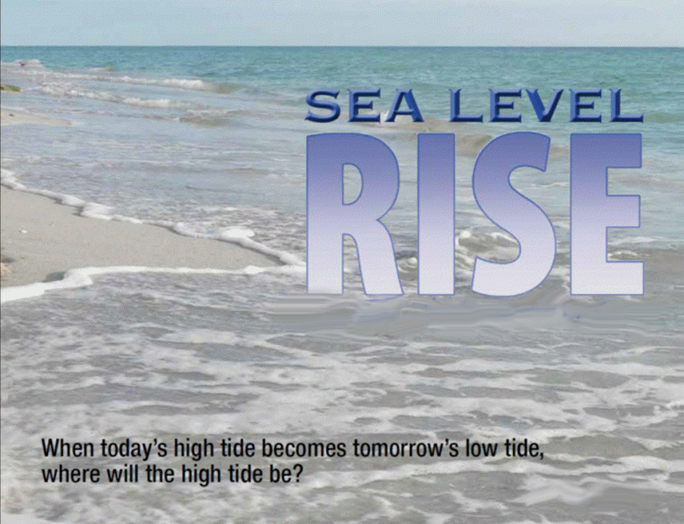
Small increase in temperature of intruding water could lead to very big increase in loss of ice, scientists say
A newly identified tipping point for the loss of ice sheets in Antarctica and elsewhere could mean future sea level rise is significantly higher than current projections.
A new study has examined how warming seawater intrudes between coastal ice sheets and the ground they rest on. The warm water melts cavities in the ice, allowing more water to flow in, expanding the cavities further in a feedback loop. This water then lubricates the collapse of ice into the ocean, pushing up sea levels.
The researchers used computer models to show that a “very small increase” in the temperature of the intruding water could lead to a “very big increase” in the loss of ice – ie, tipping point behaviour.
It is unknown how close the tipping point is, or whether it has even been crossed already. But the researchers said it could be triggered by temperature rises of just tenths of a degree, and very likely by the rises expected in the coming decades.
Sea level rise is the greatest long-term impact of the climate crisis and is set to redraw the world map in coming centuries. It has the potential to put scores of major cities, from New York City to Shanghai, below sea level and to affect billions of people.
The study addresses a key question of why current models underestimate the sea level seen in earlier periods between ice ages. Scientists think some ice sheet melting processes must not be yet included in the models.
“[Seawater intrusion] could basically be the missing piece,” said Dr Alexander Bradley of the British Antarctic Survey, who led the research. “We don’t really have many other good ideas. And there’s a lot of evidence that when you do include it, the amount of sea level rise the models predict could be much, much higher.”
Previous research has shown that seawater intrusion could double the rate of ice loss from some Antarctic ice shelves. There is also real-world evidence that seawater intrusion is causing melting today, including satellite data that shows drops in the height of ice sheets near grounding zones.
“With every tenth of a degree of ocean warming, we get closer and closer to passing this tipping point, and each tenth of a degree is linked to the amount of climate change that takes place,” Bradley said. “So we need very dramatic action to restrict the amount of warming that takes place and prevent this tipping point from being passed.”
The most important action is to cut the burning of fossil fuels to net zero by 2050.
Bradley said: “Now we want to put [seawater intrusion] into ice sheet models and see whether that two-times sea level rise plays out when you analyse the whole of Antarctica.”
Scientists warned in 2022 that the climate crisis had driven the world to the brink of multiple “disastrous” tipping points, including the collapse of Greenland’s ice cap and the collapse of a key current in the north Atlantic, disrupting rains upon which billions of people depend for food.
Research in 2023 found that accelerated ice melting in west Antarctica was inevitable for the rest of the century, no matter how much carbon emissions are cut, with “dire” implications for sea levels.
The new research, published in the journal Nature Geoscience, found that some Antarctic ice sheets were more vulnerable to seawater intrusion than others. The Pine Island glacier, currently Antarctica’s largest contributor to sea level rise, is especially vulnerable, as the base of the glacier slopes down inland, meaning gravity helps the seawater penetrate. The large Larsen ice sheet is similarly at risk.
The so-called “Doomsday” glacier, Thwaites, was found to be among the least vulnerable to seawater intrusion. This is because the ice is flowing into the sea so fast already that any cavities in the ice melted by seawater intrusion are quickly filled with new ice.
Dr Tiago Segabinazzi Dotto, of the UK’s National Oceanography Centre, welcomed the new analysis of the ocean-ice feedback loop under ice sheets.
“The researchers’ simplified model is useful for showing this feedback, but a more realistic model is highly needed to evaluate both positive and negative feedbacks,” he said. “An enhancement of observations at the grounding zone is also essential to better understand the key processes associated with the instability of ice shelves.”
“Truly the stuff of nightmares”: unprecedented low in Antarctic sea ice recorded

By Jeremy Smith, May 31, 2024, https://johnmenadue.com/truly-the-stuff-of-nightmares-unprecedented-low-in-antarctic-sea-ice-recorded/?fbclid=IwZXh0bgNhZW0CMTEAAR0LBw8Xpve2S05Os1FH_y7RYvvv8tqj0qhXrhsM-Z3e49hH1Uu2E44lQr4_aem_AbLMAUeHwooBl6H86wLEqHTtPllDKldX5fzB5e2_5LYTTkXQuf4y_brUHNORL5PsxpdKGuD227S1VVLTWCOjJj7N
Each winter the surface of the sea freezes around Antarctica, over a vast area, mostly to a depth of about one metre. But this is starting to change. Last year, the sea ice reached an unprecedentedly low maximum extent of only 17 million square kilometres.
Why aren’t we talking about sea ice? Perhaps it’s because most people haven’t even heard of it, which is a shame because it’s important.
Each winter the surface of the sea freezes around Antarctica, over a vast area, mostly to a depth of about one metre. The continent effectively doubles in size, with 18-20 million square kilometres being covered by floating ice. That’s an area 2.5 times that of Australia; 4% of Earth’s surface.
But this is starting to change. Last year, the sea ice reached an unprecedentedly low maximum extent of only 17 million square kilometres. Although this year looks like being a little less extreme, a clear and concerning trend appears to be under way. This is emphasised in the ice minimum values in late summer. By February each year the sea ice extent shrinks typically to about three million square kilometres (mostly in two large embayments, the Weddell Sea and the Ross Sea), but through most of the present decade it has dwindled to below two million.
Why does this matter? Well for a start, it is the underside of this huge area of sea ice where algae live and multiply, which feed the shrimp-like krill that in turn sustains an entire ecosystem: fish, seals, penguins, whales, the lot. The upper surface of sea ice is also crucially important. Its albedo, or reflectivity, means that 80-90% of the incoming summer sunshine is bounced back into space. Replace the ice with dark ocean and only about 9% is reflected, the rest going to warm the water. So the loss of sea ice is not only a symptom of climate change, it also contributes to it, in a feedback loop that might accelerate.
There’s more. When sea water freezes, the developing ice crystals comprise nearly pure water. Most of the salt is extruded as a heavy brine, and this cold, dense water sinks, becoming the Antarctic Bottom Current. This circulates around the Southern Ocean before spinning off into the other major ocean basins. As this deep cold flow moves north it displaces warmer water which then up-wells and forms the main surface currents. Without the annual ‘push’ of the Antarctic Bottom Current, these warmer currents might slow and cease.
The global ocean is so vast that it changes very slowly. We are only now beginning to see the results of the ocean’s absorbance of a century of industrial environmental heating, in the form of anomalously warm seas particularly this year. Any pronounced weakening of the ocean circulation due to sea ice loss will be slow – but inexorable.
The results, which are probably not going to happen in our own lifetimes but could well become part of our legacy to future generations, are likely to be dire. It could eventually mean goodbye to the Gulf Stream and the other currents which maintain benign climates on the European Atlantic coast, around Japan, and elsewhere in the northern hemisphere.
The possible consequences of such climate change for human societies are truly the stuff of nightmares.
Isle of Wight-size iceberg breaks from Antarctica

BBC News, Jonathan Amos, Science correspondent, 20 May 24
Another big iceberg has broken away from an area of the Antarctic that hosts the UK’s Halley research station.
It is the third such block to calve near the base in the past three years.
This new one is not quite as large, but still measures some 380 sq km (145 sq miles) – roughly the size of the Isle of Wight.
The British Antarctic Survey (BAS) took the precaution of moving Halley in 2017 because of concerns over the way the local ice was behaving.
Its buildings were shifted on skis to take them away from immediate trouble.
The station is also now routinely vacated during the long dark months of the southern winter. The last personnel were flown out in February.
Halley sits on top of the Brunt Ice Shelf, which is the floating protrusion of glaciers that have flowed off the continent into the Weddell Sea.
This shelf will periodically shed icebergs at its forward edge and it is currently going through an extremely dynamic phase.
In 2021, the shelf produced a berg the size of Greater Paris (1,300 sq km/810 sq miles) called A74, followed in 2023 by an even bigger block (1,500 sq km/930 sq miles) the size of Greater London, known as A81.
The origin of the new berg goes back to a major crack that was discovered in the shelf on 31 October, 2016. Predictably, it was nicknamed the “Halloween Crack”.
A further fracture perpendicular to Halloween has now cut a free-floating segment of ice that has already begun to drift out into the Weddell Sea………………..
Satellite imagery confirms the GPS data. The berg is surrounded by seawater on all sides.
The loss of so much ice from the Brunt structure these past three years has triggered a rapid acceleration in the shelf’s seaward movement.
Historically, it has flowed forward at a rate of 400-800m (1,300-2,600ft) per year. It is now moving at about 1,300m (4,300ft) a year………………………….
“This latest calving reduces the Brunt Ice Shelf to its smallest observed size,” commented remote sensing specialist Prof Adrian Luckman, from Swansea University…………………………………………… more https://www.bbc.com/news/articles/c033wr32ewno
We’ve underestimated the ‘Doomsday’ glacier – and the consequences could be devastating

The Thwaites Glacier, dubbed ‘Doomsday’, could trigger a two-foot rise in global sea levels if it melts completely
Katie Hawkinson, 22 May 24, https://www.independent.co.uk/climate-change/news/thwaites-doomsday-glacier-melting-study-b2548765.html
A vast Antarcticglacier is more vulnerable to melting than previously thought, according to new research, with potentially devastating consequences for billions of people.
The Thwaites Glacier — dubbed the “Doomsday” glacier because of the grave impacts for global sea level rise if it melts — is breaking down “much faster” than expected, according to a peer-reviewed study published Monday in the academic journal, Proceedings of the National Academy of Sciences.
Using satellite imagery, scientists determined that widespread contact between the glacier and warm ocean water is speeding up the melting process. The climate crisis is interrupting natural processes across large parts of the continent, according to the Antarctic and Southern Ocean Coalition.
The glacier, roughly the size of the United Kingdom, could cause global sea levels to rise more than 2 feet if it melts completely, according to the study.
“Thwaites is the most unstable place in the Antarctic and contains the equivalent of 60 centimeters of sea level rise,” study co-author Christine Dow said in a statement.
“The worry is that we are underestimating the speed that the glacier is changing, which would be devastating for coastal communities around the world,” she continued.
Record rising sea levels have already had severe consequences for coastal and island communities. In February, 1,200 residents of the island, Gardi Sugdub, began to relocate to mainland Panama as the rising Caribbean Sea overtake their home, according to the BBC.
As a result, the indigenous Guna people have become some of the first climate refugees in the Americas.
United Nations Secretary-General Antonio Guterres said last year that more than 900million people face extreme danger from rising sea levels — a projection made even before this week’s discovery about the rapidly-melting glacier.
Mr Guterres said cities across the globe including Mumbai, Shanghai, London, New York, and Buenoes Aires will face “serious impacts”
“The consequences of all of this are unthinkable,” he said. “Low-lying communities and entire countries could disappear forever. We would witness a mass exodus of entire populations on a biblical scale. And we would see ever-fiercer competition for fresh water, land and other resources.”
‘Simply mind-boggling’: world record temperature jump in Antarctic raises fears of catastrophe
“Essentially, it is a vicious circle of warming oceans and melting of sea ice, though the root cause is humanity and its continuing burning of fossil fuels and its production of greenhouse gases,”
An unprecedented leap of 38.5C in the coldest place on Earth is a harbinger of a disaster for humans and the local ecosystem
Robin McKie Science editor, Sun 7 Apr 2024 , https://www.theguardian.com/environment/2024/apr/06/simply-mind-boggling-world-record-temperature-jump-in-antarctic-raises-fears-of-catastrophe
On 18 March, 2022, scientists at the Concordia research station on the east Antarctic plateau documented a remarkable event. They recorded the largest jump in temperature ever measured at a meteorological centre on Earth. According to their instruments, the region that day experienced a rise of 38.5C above its seasonal average: a world record.
This startling leap – in the coldest place on the planet – left polar researchers struggling for words to describe it. “It is simply mind-boggling,” said Prof Michael Meredith, science leader at the British Antarctic Survey. “In sub-zero temperatures such a massive leap is tolerable but if we had a 40C rise in the UK now that would take temperatures for a spring day to over 50C – and that would be deadly for the population.”
This amazement was shared by glaciologist Prof Martin Siegert, of the University of Exeter. “No one in our community thought that anything like this could ever happen. It is extraordinary and a real concern,” he told the Observer. “We are now having to wrestle with something that is completely unprecedented.”
Poleward winds, which previously made few inroads into the atmosphere above Antarctica, are now carrying more and more warm, moist air from lower latitudes – including Australia – deep into the continent, say scientists, and these have been blamed for the dramatic polar “heatwave” that hit Concordia. Exactly why these currents are now able to plunge so deep into the continent’s air space is not yet clear, however.
Nor has this huge temperature hike turned out to be an isolated event, scientists have discovered. For the past two years they have been inundated with rising numbers of reports of disturbing meteorological anomalies on the continent. Glaciers bordering the west Antarctic ice-sheet are losing mass to the ocean at an increasing rate, while levels of sea ice, which float on the oceans around the continent, have plunged dramatically, having remained stable for more than a century.https://interactive.guim.co.uk/uploader/embed/2024/04/archive-zip/giv-13425WC79HMmcEe8y/
These events have raised fears that the Antarctic, once thought to be too cold to experience the early impacts of global warming, is now succumbing dramatically and rapidly to the swelling levels of greenhouse gases that humans continue to pump into the atmosphere.
These dangers were highlighted by a team of scientists, led by Will Hobbs of the University of Tasmania, in a paper that was published last week in the Journal of Climate. After examining recent changes in sea ice coverage in Antarctica, the group concluded there had been an “abrupt critical transition” in the continent’s climate that could have repercussions for both local Antarctic ecosystems and the global climate system.
“The extreme lows in Antarctic sea ice have led researchers to suggest that a regime shift is under way in the Southern Ocean, and we found multiple lines of evidence that support such a shift to a new sea ice state,” said Hobbs.https://interactive.guim.co.uk/uploader/embed/2024/04/archive-2-zip/giv-13425x5sm3FJkGC7J/
The dramatic nature of this transformation was emphasised by Meredith. “Antarctic sea ice coverage actually increased slightly in the late 20th and early 21st century. However, in the middle of the last decade it fell off a cliff. It is a harbinger of the new ground with the Antarctic climate system, and that could be very troubling for the region and for the rest of the planet.”
The continent is now catching up with the Arctic, where the impacts of global warming have, until now, been the most intense experienced across the planet, added Siegert. “The Arctic is currently warming at four times the rate experienced by the rest of the planet. But the Antarctic has started to catch up, so that it is already warming twice as quickly as the planet overall.”
A key reason for the Arctic and Antarctic to be taking disproportionate hits from global warming is because the Earth’s oceans – warmed by fossil-fuel burning – are losing their sea ice at their polar extremities. The dark waters that used to lie below the ice are being exposed and solar radiation is no longer reflected back into space. Instead, it is being absorbed by the sea, further heating the oceans there.
“Essentially, it is a vicious circle of warming oceans and melting of sea ice, though the root cause is humanity and its continuing burning of fossil fuels and its production of greenhouse gases,” said Meredith. “This whole business has to be laid at our door.”
As to the consequences of this meteorological metamorphosis, these could be devastating, researchers warn. If all the ice on Antarctica were to melt, this would raise sea levels around the globe by more than 60 metres. Islands and coastal zones where much of the world’s population now have homes would be inundated.
Such an apocalypse is unlikely to occur for some time, however. Antarctica’s ice sheet covers 14m square kilometres (about 5.4m square miles), roughly the area of the United States and Mexico combined, and contains about 30m cubic kilometres (7.2m cubic miles) of ice – about 60% of the world’s fresh water. This vast covering hides a mountain range that is nearly as high as the Alps, so it will take a very long time for that to melt completely, say scientists.
Nevertheless, there is now a real danger that some significant sea level rises will occur in the next few decades as the ice sheets and glaciers of west Antarctica continue to shrink. These are being eroded at their bases by warming ocean water and could disintegrate in a few decades. If they disappear entirely, that would raise sea levels by 5m – sufficient to cause damage to coastal populations around the world. How quickly that will happen is difficult to assess. The Intergovernmental Panel on Climate Change has said that sea levels are likely to rise between 0.3m to 1.1m by the end of the century. Many experts now fear this is a dangerous underestimate. In the past, climate change deniers accused scientists of exaggerating the threat of global warming. However, the evidence that is now emerging from Antarctica and other parts of the world makes it very clear that scientists did not exaggerate. Indeed, they very probably underrated by a considerable degree the threat that now faces humanity.
“The picture is further confused in Antarctica because, historically, we have had problems getting data,” added Meredith. “We have never had the information about weather and ecosystem, compared with the data we get from the rest of the world, because the continent is so remote and so hostile. Our records are comparatively short and that means that the climate models we have created, although very capable, are based on sparse data. They cannot capture all of the physics, chemistry and biology. They can make predictions that are coherent but they cannot capture the sort of extremes that we’re now beginning to observe.”
The woes facing Antarctica are not merely of human concern, however. “We are already seeing serious ecological impacts that threaten to spread through the food chain,” said Prof Kate Hendry, a chemical oceanographer based at the British Antarctic Survey.
A critical example is provided by the algae which grow under and around sea ice in west Antarctica. This is starting to disappear, with very serious implications, added Hendry. Algae is eaten by krill, the tiny marine crustaceans that are one of the most abundant animals on Earth and which provide food for predators that include fish, penguins, seals and whales. “If krill starts to disappear in the wake of algae, then all sorts of disruption to the food chain will occur,” said Hendry.
The threat posed by the disappearance of krill goes deeper, however. They play a key role in limiting global warming. Algae absorb carbon dioxide. Krill then eat them and excrete it, the faeces sinking to the seabed and staying there. Decreased levels of algae and krill would then mean less carbon from the atmosphere would be deposited on the ocean floor and would instead remain near the sea surface, where it would return to the atmosphere.
“They act like a conveyor belt that takes carbon out of the atmosphere and carries it down to the deep ocean floor where it can be locked away. So if we start messing with that system, there could be all sorts of other knock-on effects for our attempts to cope with the impact of global warming,” added Hendry. “It is a scary scenario. Nevertheless that, unfortunately, is what we are now facing.”
Another victim of the sudden, catastrophic warming that has gripped the continent is its most famous resident: the emperor penguin. Last year the species, which is found only in Antarctica, suffered a catastrophic breeding failure because the platforms of sea ice on which they are born started to break up long before the young penguins could grow waterproof feathers.
“We have never seen emperor penguins fail to breed, at this scale, in a single season,” said Peter Fretwell, of the British Antarctic Survey. “The loss of sea ice in this region during the Antarctic summer made it very unlikely that displaced chicks would survive.”
Researchers say that the discovery of the loss of emperor penguins suggests that more than 90% of colonies will be wiped out by the end of the century, if global warming trends continue at their current disastrous rate. “The chicks cannot live on sea ice until they have fledged,” said Meredith. “After that, they can look after themselves. But the sea ice is breaking up before they reach that stage and mass drowning events are now happening. Colonies of penguins are being wiped out. And that’s a tragedy. This is an iconic species, one that is emblematic of Antarctica and the new vulnerability of its ecosystems.”
The crisis facing the continent has widespread implications. More than 40 nations are signatories of the Antarctic Treaty’s environmental protocol, which is supposed to shield it from a host of different threats, with habitat degradation being one of the most important. The fact that the continent is now undergoing alarming shifts in its ice covering, eco-systems and climate is a clear sign that this protection is no longer being provided.
“The cause of this ecological and meteorological change lies outside the continent,” added Siegert. “It is being caused because the rest of the world is continuing to emit vast amounts carbon dioxide.
“Nevertheless, there is a good case for arguing that if countries are knowingly polluting the atmosphere with greenhouse gases, and Antarctica is being affected as a consequence, then the treaty protocol is being breached by its signatories and their behaviour could be challenged on legal and political grounds. It should certainly make for some challenging meetings at the UN in the coming years.”
1 This Month


Tell the Ukrainian Government to Drop Prosecution of Peace Activist Yurii Sheliazhenko

Petition to revoke the licensing of the Near Surface Nuclear Disposal Facility (NSDF) at Chalk River. https://www.ourcommons.ca/petitions/en/Petition/Details?Petition=e-7247


of the week – STOP SMALL MODULAR REACTORS IN CANADA
To see nuclear-related stories in greater depth and intensity – go to https://nuclearinformation.wordpress.com
-
Archives
- March 2026 (183)
- February 2026 (268)
- January 2026 (308)
- December 2025 (358)
- November 2025 (359)
- October 2025 (376)
- September 2025 (258)
- August 2025 (319)
- July 2025 (230)
- June 2025 (348)
- May 2025 (261)
- April 2025 (305)
-
Categories
- 1
- 1 NUCLEAR ISSUES
- business and costs
- climate change
- culture and arts
- ENERGY
- environment
- health
- history
- indigenous issues
- Legal
- marketing of nuclear
- media
- opposition to nuclear
- PERSONAL STORIES
- politics
- politics international
- Religion and ethics
- safety
- secrets,lies and civil liberties
- spinbuster
- technology
- Uranium
- wastes
- weapons and war
- Women
- 2 WORLD
- ACTION
- AFRICA
- Atrocities
- AUSTRALIA
- Christina's notes
- Christina's themes
- culture and arts
- Events
- Fuk 2022
- Fuk 2023
- Fukushima 2017
- Fukushima 2018
- fukushima 2019
- Fukushima 2020
- Fukushima 2021
- general
- global warming
- Humour (God we need it)
- Nuclear
- RARE EARTHS
- Reference
- resources – print
- Resources -audiovicual
- Weekly Newsletter
- World
- World Nuclear
- YouTube
-
RSS
Entries RSS
Comments RSS
 nuclear-news