The Zaporizhzhia nuclear power plant in southern Ukraine remains under Russian control, despite media reports
The Zaporizhzhia nuclear power plant in southern Ukraine remains under
Russian control, authorities installed by Moscow in the nearby city of
Enerhodar said on Monday, after a Ukrainian official suggested Russian
forces were preparing to leave.
“The media are actively spreading fake news
that Russia is allegedly planning to withdraw from Enerhodar and leave the
(plant). This information is not true,” the Russia-installed administration
wrote on the Telegram messaging app.
Reuters 28th Nov 2022
Russia’s former southern capital renounces its past: How Ukraine is destroying its heritage

Rt.com 27 Nov 22, Ukraine is turning into a significantly more homogeneous and far less culturally diverse country.
In recent years, Ukraine has become the battleground for a ‘war of monuments’ waged among various political forces. In 2014, the process reached a peak during the mass demolition of statues of Vladimir Lenin and other Soviet politicians. These events fundamentally changed the symbolism and policy of the country’s historical memory, paving the way to a reality in which any public speech must now be accompanied by the words ‘Glory to Ukraine! Glory to the heroes!’
This was the slogan of Stepan Bandera’s World War Two nationalist movement, which collaborated with Adolf Hitler’s Nazis and took part in the Holocaust.
Although Ukrainian President Vladimir Zelensky’s team initially tried to ‘reset’ the historical memory policy, radical nationalism got the upper hand in this symbolic battle. Following the start of Russia’s military operation, this year, the so-called ‘decommunization’ policy became openly known as ‘de-Russification’ – even with over half of the population officially recognized as Russian-speaking.
Memory wars
After Russian troops entered Ukraine in February, many locals projected their hatred of Moscow onto objects of cultural and historical heritage that were in any way linked to the Russian Empire or the Soviet Union. Meanwhile, politicians actively supported such sentiment, using it as a cheap way to boost their personal ratings.
Over the past months, the number of initiatives aimed at the cultural and historical ‘de-Russification’ of Ukraine have ballooned. Examples abound. The Kiev City Council recently renamed 11 streets having any reference to Russia (Lomonosov, Magnitogorsk, and Belomorskaya streets, among others). It also completely excluded the Russian language from the curricula of the capital’s kindergartens and schools.
The decision was supported by 64 out of 120 deputies. Vadim Vasilchuk, head of the Standing Committee on Education, Science, Family, Youth and Sports of the body, commented that teaching Russian in the current situation is “inappropriate.” In fact, Kiev’s educational institutions stopped teaching the language in any shape or form (including as electives) at the beginning of the academic year.
Meanwhile, other Ukrainian cities saw a wave of ‘de-Pushkinization’ sweep through. In November, monuments to the great Russian poet were toppled in Kharkov and Zhitomir, while the monument in Odessa was painted over with the inscription ‘Get out!’ In Kiev, one of the oldest monuments to the bard had been taken down a few weeks earlier.
The demolition of monuments to Russian and Soviet statesmen has continued as well. The Ukrainian Ministry of Culture’s expert council on ‘overcoming the consequences of Russification and totalitarianism’ decided to demolish monuments to Soviet military commanders Nikolay Vatutin and Nikolay Shchors (even though Leonid Kravchuk – a student at the time and later the first president of Ukraine – posed for the Shchors monument).
A memorial to Soviet soldiers erected on May 8, 1970 on the 25th anniversary of victory in WWII was demolished in Uzhgorod in November. The decision dates back to October 13. In its place, Kiev proposed a memorial to the soldiers of the 128th separate mountain assault brigade of the Armed Forces of Ukraine – a military unit that took an active part in the Donbass war unleashed by Kiev in 2014.
The story of one monument
Perhaps the most dramatic case of ‘de-Russification’ unfolded in the port city of Odessa. The city’s history dates back to the end of the 18th century, when the Russian Empire colonized the northern Black Sea region. In November, Odessa’s mayor, Gennady Trukhanov, announced the impending demolition of one of the historical city symbols – a monument to its founders that shows Catherine the Great and her associates, thanks to whom the city became the southern capital of the Russian Empire by the end of the 19th century………………………………………………………………….
How has this become possible? When Ukraine gained independence following the collapse of the Soviet Union, its political (electoral) geography acquired stable borders and became integrated into the self-consciousness of the country’s two parts. In fact, several population groups with powerful national identities emerged at the time: Ukrainian-speaking (mostly living in the western and central regions, and professing a purely ethnic narrative), Russian-speaking (mostly living in the center, south and east, for whom Russians were not ‘strangers’ or ‘enemies’), and actual Russians.
These groups, particularly the Ukrainian speakers and Russian speakers, long had their own heritage, language, and political representation. Recall the Orange Revolution of 2004 or the Euromaidan of 2014, during which the ‘pro-Ukrainian’ part of society opposed the ‘pro-Russian’ leader Viktor Yanukovych. Who, in reality, had spent years negotiating with the EU about eventual Ukrainian membership. ………………………………………….
A few years ago, residents of Ukraine’s south and east spoke Russian while recognizing themselves as Ukrainians. Now, the Russian language and its cultural and historical symbols are undergoing irreversible changes and becoming a marker of political affiliation – namely, of being pro-Russian.
Conscious of this, the authorities are striving to gain control over historical heritage and memory policies and expect to win this battle for public opinion. The current southern and eastern regions are turning into a testing ground for experimental nation-building. Their political self-determination fully depends on the historical memory and language policies. Meanwhile, nationalism offers all the necessary tools for constructing a cohesive socio-political community. That is why such a striking ‘de-Russification’ initiative as the demolition of the monument to Catherine the Great in Odessa will not be the last.
For many years, the main political and cultural debate in Ukrainian society has revolved around the question of preserving or eradicating its Russian and Soviet cultural heritage. In the present situation of armed conflict, supporters of the latter skillfully use public outrage to achieve their aims. Should the process continue (and there’s little reason to think it won’t), in a few years Ukraine will turn into a significantly more homogeneous and far less culturally diverse country – one that has willingly renounced a major part of its heritage.
By Alexander Nepogodin, an Odessa-born political journalist, expert on Russia and the former Soviet Union. https://www.rt.com/russia/566917-ukraine-is-losing-heritage/—
Washington’s Iron Curtain in Ukraine
Peace and Planet Newsby Diana Johnstone | Fall 2022 Edition
This article is from June 2014; the editors found it profoundly accurate and quite prescient about the shape of things we are witnessing today.
ATO leaders are currently acting out a deliberate charade in Europe, designed to reconstruct an Iron Curtain between Russia and the West.
With astonishing unanimity, NATO leaders feign surprise at events they planned months in advance. Events that they deliberately triggered are being misrepresented as sudden, astonishing, unjustified “Russian aggression.” The United States and the European Union undertook an aggressive provocation in Ukraine that they knew would force Russia to react defensively, one way or another.
They could not be sure exactly how Russian president Vladimir Putin would react when he saw that the United States was manipulating political conflict in Ukraine to install a pro-Western government intent on joining NATO. This was not a mere matter of a “sphere of influence” in Russia’s “near abroad,” but a matter of life and death to the Russian Navy, as well as a grave national security threat on Russia’s border.
A trap was thereby set for Putin. He was damned if he did, and damned if he didn’t. He could underreact, and betray Russia’s basic national interests, allowing NATO to advance its hostile forces to an ideal attack position.
Or he could overreact, by sending Russian forces to invade Ukraine. The West was ready for this, prepared to scream that Putin was “the new Hitler,” poised to overrun poor, helpless Europe, which could only be saved (again) by the generous Americans.
In reality, the Russian defensive move was a very reasonable middle course. Thanks to the fact that the overwhelming majority of Crimeans felt Russian, having been Russian citizens until Khrushchev frivolously bestowed the territory on Ukraine in 1954, a peaceful democratic solution was found. Crimeans voted for their return to Russia in a referendum which was perfectly legal according to international law, although in violation of the Ukrainian constitution, which was by then in tatters having just been violated by the overthrow of the country’s duly elected president, Victor Yanukovych, facilitated by violent militias. The change of status of Crimea was achieved without bloodshed, by the ballot box.
Nevertheless, the cries of indignation from the West were every bit as hysterically hostile as if Putin had overreacted and subjected Ukraine to a U.S.-style bombing campaign, or invaded the country outright – which they may have expected him to do.
U.S. Secretary of State John Kerry led the chorus of self-righteous indignation, accusing Russia of the sort of thing his own government is in the habit of doing. “You just don’t invade another country on phony pretext in order to assert your interests. This is an act of aggression that is completely trumped up in terms of its pretext,” Kerry pontificated. “It’s really 19th-century behavior in the 21st century.” Instead of laughing at this hypocrisy, U.S. media, politicians and punditry zealously took up the theme of Putin’s unacceptable expansionist aggression. The Europeans followed with a weak, obedient echo.
It Was All Planned at Yalta
In September 2013, one of Ukraine’s richest oligarchs, Viktor Pinchuk, paid for an elite strategic conference on Ukraine’s future that was held in the same Palace in Yalta, Crimea, where Roosevelt, Stalin and Churchill met to decide the future of Europe in 1945.
The Economist, one of the elite media reporting on what it called a “display of fierce diplomacy,” stated that: “The future of Ukraine, a country of 48m people, and of Europe was being decided in real time.” The participants included Bill and Hillary Clinton, former CIA head General David Petraeus, former U.S. Treasury Secretary Lawrence Summers, former World Bank head Robert Zoellick, Swedish Foreign Minister Carl Bildt, Shimon Peres, Tony Blair, Gerhard Schröder, Dominique Strauss-Kahn, Mario Monti, Lithuanian President Dalia Grybauskaite, and Poland’s influential Foreign Minister Radek Sikorski. Both President Viktor Yanukovych, deposed five months later, and his recently elected successor Petro Poroshenko were present. Former U.S. energy secretary Bill Richardson was there to talk about the shale-gas revolution which the United States hopes to use to weaken Russia by substituting fracking for Russia’s natural gas reserves. The center of discussion was the “Deep and Comprehensive Free Trade Agreement” (DCFTA) between Ukraine and the European Union, and the prospect of Ukraine’s integration with the West. The general tone was euphoria over the prospect of breaking Ukraine’s ties with Russia in favor of the West.
Conspiracy against Russia? Not at all. Unlike Bilderberg, the proceedings were not secret. Facing a dozen or so American VIPs and a large sampling of the European political elite was a Putin adviser named Sergei Glazyev, who made Russia’s position perfectly clear.
Glazyev injected a note of political and economic realism into the conference. Forbes reported at the time on the “stark difference” between the Russian and Western views “not over the advisability of Ukraine’s integration with the EU but over its likely impact.” In contrast to Western euphoria, the Russian view was based on “very specific and pointed economic criticisms” about the Trade Agreement’s impact on Ukraine’s economy, noting that Ukraine was running an enormous foreign accounts deficit, funded with foreign borrowing, and that the resulting substantial increase in Western imports could only swell the deficit. Ukraine “will either default on its debts or require a sizable bailout.”
The Forbes reporter concluded that “the Russian position is far closer to the truth than the happy talk coming from Brussels and Kiev.”
As for the political impact, Glazyev pointed out that the Russian-speaking minority in Eastern Ukraine might move to split the country in protest against cutting ties with Russia, and that Russia would be legally entitled to support them, according to The Times of London.
In short, while planning to incorporate Ukraine into the Western sphere, Western leaders were perfectly aware that this move would entail serious problems with Russian-speaking Ukrainians, and with Russia itself. Rather than seeking to work out a compromise, Western leaders decided to forge ahead and to blame Russia for whatever would go wrong. ……………………….
Plan A and Plan B
U.S. policy, already evident at the September 2013 Yalta meeting, was carried out on the ground by Victoria Nuland, former advisor to Dick Cheney, deputy ambassador to NATO, spokeswoman for Hillary Clinton, wife of neocon theorist Robert Kagan. Her leading role in the Ukraine events proves that the neo-con influence in the State Department, established under Bush II, was retained by Obama……………..
As Victoria Nuland boasted in Washington, since the dissolution of the Soviet Union in 1991, the United States has spent $5 billion to gain political influence in Ukraine (this is called “promoting democracy”)…….
What called public attention to Victoria Nuland’s role in the Ukrainian crisis was her use of a naughty word, when she told the U.S. ambassador, “Fuck the EU.” But the fuss over her bad language veiled her bad intentions.
……………………………… What called public attention to Victoria Nuland’s role in the Ukrainian crisis was her use of a naughty word, when she told the U.S. ambassador, “Fuck the EU.” But the fuss over her bad language veiled her bad intentions.
………………….
The Protection Racket Returns
But first of all, the United States needs Russia as an enemy in order to “save Europe,” which is another way to say, in order to continue to dominate Europe.
…………………………………………………………….. Perhaps the most extraordinary aspect of the current charade is the servility of the “old” Europeans. Apparently abandoning all Europe’s accumulated wisdom, drawn from its wars and tragedies, and even oblivious to their own best interests, today’s European leaders seem ready to follow their American protectors to another D-Day … D for Doom. https://peaceandplanetnews.org/ukraine-iron-curtain/
Ukrainian city names street after Nazi collaborator

Vinnitsa is replacing world-famous Russian author Leo Tolstoy with Stepan Bandera https://www.rt.com/russia/567200-vinnitsa-tolstoy-bandera-street/ 27 Nov 22
The city council of Vinnitsa in Ukraine announced on Friday it was renaming one of its streets after WWII Nazi collaborator Stepan Bandera. The local authorities described their drive to rid the city of all toponyms linked to Russia as a “process of decolonization.”
The street previously bore the name of Leo Tolstoy, the 19th-century Russian author of world renown. Vinnitsa authorities said they paid “special attention” to memorializing those they described as “heroes of the national liberation struggle.” Bandera, who led a nationalist movement responsible for many atrocities against Russians, Jews and Poles in WWII, is regarded as a national hero by the current Ukrainian authorities.
Another street was named after Ivan Treiko, one of the “generals” and the “military intelligence chief” of the Ukrainian Insurgent Army (UPA), a paramilitary group that also collaborated with the Nazis. Warsaw in particular has blamed the UPA for the genocide of Poles in Volhynia and Eastern Galicia. The ethnic cleansing operations against Poles were ordered by Nazi Germany and carried out by paramilitary units that consisted primarily of ethnic Ukrainians.
A total of 232 toponyms have been changed as part of the “decolonization” campaign in Vinnitsa and neighboring towns, the city council said, praising itself as one of the “most active participants” of this nationwide drive.
Ukraine’s capital, Kiev, has renamed one of its streets after the notorious Azov regiment, which has had open neo-Nazis in its ranks. That street previously bore the name of the Soviet Marshal Rodion Malinovsky. Ukrainian by origin, Malinovsky liberated much of southern Ukraine, including his home city of Odessa, from the Nazis in 1943-1944.
In June, the mayor of Odessa expressed his concern over the growing enmity for “all things Russian” amid the prolonged conflict between Moscow and Kiev.
The removal of references to Russia from street names and other institutions has been a trend in Ukraine since the 2014 Maidan coup, but intensified after the launch of Moscow’s military operation.
Could the Minsk II agreement Have Prevented the War in Ukraine?
a significant minority of Ukrainians want to remain close to Russia, and for them fully integrating with the West represents a loss.
The fundamental problem for Ukraine was that a majority of citizens sought closer ties with the West, but a significant minority sought closer ties with Russia, and these two aspirations were mutually incompatible.
Daily Sceptic, BY NOAH CARL., 23 NOVEMBER 2022,
Since Russia’s invasion of Ukraine began, Western commentators have spent a huge amount of time expressing moral outrage at Russia’s actions, but comparatively little time thinking about how the war could have been prevented.
This is puzzling. Even if Ukraine manages to win, this victory will have come at an enormous price – tens of thousands of lives, millions of refugees (many of whom may never return), and untold damage to the country’s infrastructure. No matter what the outcome, the war will have been disastrous for ordinary Ukrainians.
It therefore seems essential to ask whether it could have been prevented.
One possible way it could have been prevented is through deterrence. NATO members could have announced in advance, ‘We commit to defending Ukraine if it is ever attacked by Russia’. Alternatively, the U.S. and its allies could have armed Ukraine to the teeth by transferring huge quantities of offensive weapons.
The disadvantages of this approach are obvious. It might have caused Russia to invade even sooner to forestall the arrival of NATO troops or weapons. And if Russia did call the West’s bluff, it might have sparked World War III, as NATO would have pre-committed to entering the war on Ukraine’s side.
As late as February 2014, the percentage of Ukrainians who wanted to join the EU was only 5 points higher than the percentage who wanted to join the Eurasian Customs Union. The balance of opinion then shifted after the ‘Revolution of Dignity’.
There’s another possible way the war could have been prevented: through the implementation of Minsk II. This was an agreement signed in 2015 by representatives from Russia, Ukraine and the two separatist republics, which aimed to bring an end to the fighting in Donbas. It was based on a plan drawn-up by the leaders of France and Germany.
Although Minsk II ultimately failed, since neither side honoured the terms, it was unanimously endorsed
by the UN Security Council.
Critics of Minsk II say it was too favourable to the Russian/separatist side. This is because the agreement would have granted significant autonomy to the two Donbas regions, allowing them to veto Ukraine’s future membership of NATO and possibly its membership of the EU as well. (Minsk II is roughly equivalent to the plan John Mearsheimer put forward in 2014, which emphasised Ukrainian neutrality.)
For Ukrainians who aspire to fully integrate with the West, not being able to join NATO or the EU represents a major loss. Yet a significant minority of Ukrainians want to remain close to Russia, and for them fully integrating with the West represents a loss.
Likewise, almost half of Ukrainians opposed the Maidan protest movement, including a plurality who “[did] not support it all”. For this reason alone, calling the subsequent change of government a ‘Revolution of Dignity’ is highly dubious.
The fundamental problem for Ukraine was that a majority of citizens sought closer ties with the West, but a significant minority sought closer ties with Russia, and these two aspirations were mutually incompatible.
You might say that in a democracy, the majority gets to decide the future path of the country, so Minsk II was fundamentally unfair. Yet it’s widely understood that in ethnically divided countries, the majority often has to make concessions to the minority for the sake of overall stability. Half the parliamentary seats in Lebanon are reserved for Christians and half for Muslims, regardless of the ethnic make-up of the country (which no one quite knows), to prevent one group from dominating the other.
In any case, the European interest – as judged by the leaders of France and Germany – was preserving stability in Ukraine, rather than ensuring the country’s pro-Western majority got its way.
According to the New York Times, the plan for Minsk II emerged “in response to reports that lethal assistance was now on the table in Washington”. In other words, the U.S. wanted to start supplying Ukraine with offensive weapons, so France and Germany stepped in to broker a peace deal before that happened.
Why did Minsk II fail? As I’ve already stated, neither side upheld its end of the bargain. Yet historian Anatol Lieven argues it could have worked but for “the refusal of Ukrainian governments to implement the solution and the refusal of the United States to put pressure on them to do so”…………………………
why, as the country’s main backer, did the U.S. not pressure Ukraine to implement the agreement? After all, the U.S. endorsed the agreement in its capacity as a member of the UN Security Council, and the U.S. pressures its allies to do things all the time.
The obvious reason is that U.S. interests were not served by the implementation of Minsk II.
From a Western perspective, preventing the war in Ukraine would have required the French and Germans to act more decisively, or the Americans to look beyond their own interests. Unfortunately, neither of these eventualities came to pass…………………………… https://dailysceptic.org/2022/11/23/could-minsk-ii-have-prevented-the-war-in-ukraine/
Mayor of Ukraine’s second-largest city fined for speaking Russian
The Kharkov city head has been accused of violating the law by addressing his fellow residents in a “non-state” language.
https://www.rt.com/russia/567137-ukraine-mayor-fined-russian-language/ 24 Nov 22
Kiev has slapped the mayor of Ukraine’s second largest city, Kharkov, with a fine for using what the authorities called a “non-state” language in an official TV address. Mayor Igor Terekhov is known for addressing his fellow residents in Russian.
Terekhov will have to pay a fine of 3,400 hryvnas ($92) for violating Ukrainian law, Taras Kremin, the Ukrainian government’s commissioner for the protection of the state language, said in a statement on Thursday.
The mayor had “used non-state language in his addresses to the residents of the city of Kharkov” during a news telethon, the statement read, calling this an “administrative offense.” The language commissioner’s office also issued an administrative warning to the mayor’s office, telling it to only use Ukrainian on the mayor’s social media pages.
Terekhov has until December 4 to appeal the commissioner’s decision, the statement read. The Ukrainian authorities did not specify what language the mayor had used during the telethon, but the Ukrainian media reported that he was known for regularly addressing his fellow residents in Russian.
According to the language commissioner’s office, Terekhov and some Kharkov city council members have already been found in violation of the state language law. It is unclear if they were sanctioned back then as well.
The Ukrainian state language law was signed by then-President Pyotr Poroshenko back in 2019, five days before his presidential mandate expired. The legislation requires Ukrainian public officials to use only the Ukrainian language when discharging their duties.
Ukrainians are also required to use the Ukrainian language in the fields of public services, medical care, education and science, as well as in the media, although certain exceptions are allowed. A person found in violation of this law might face a fine of up to 8,500 hryvnas ($230), which can be further doubled for a repeated offense.
In mid-June, the language commissioner was granted the right to impose fines on those found in violation of the law. In October, an assistant professor at the Ukrainian National Aviation University was slapped with a fine of 3,400 hryvnas ($92) for teaching through a “non-state language.”
SCOTT RITTER: The Back Channel
Burns’ job is only to keep what will be a major escalation of the war from spinning out of control – to keep it from going nuclear. That has been his job from the start.
The conditions for a settlement on U.S. and Ukrainian terms — such as Russia withdrawing from the four territories it recently annexed as well as Crimea, paying reparations and turning over senior military and civilian leaders for prosecution as war criminals — have almost no chance of happening.
Such thinking only underscores the hubris-laced fantasy world Washington has crafted for itself. The notion that Russia is somehow losing its military conflict with NATO-backed Ukraine, and its economic war with the West, is belied by the increasing desperation inherent in the growing calls for a negotiated settlement by senior U.S. officials.
Communications between the U.S. and Russia are essential for preventing an out-of-control crisis and a conduit exists for ongoing, high-level dialogue. But what is it really for?
By Scott Ritter, Consortium News 22 No 22,
According to The Wall Street Journal, White House National Security Advisor Jake Sullivan has been involved with a secretive “back channel” line of communication with top Russian officials as part of an effort by the U.S. and Russia to prevent the war in Ukraine from escalating into a nuclear conflict.
Among the officials named as representing the Russian conduit for this “back channel” are Yuri Ushakov, a senior foreign policy adviser to Russian President Vladimir Putin, and Nikolai Patrushev, the head of Russia’s security council.
…………………….. the key to who might be taking the lead in the current Russian “back channel” lies with the man who headed up the March 2013 delegation in Oman — William Burns, a career diplomat who at the time served as deputy secretary of state and is now director of Central Intelligence.
His name is synonymous with “back channel.”
It was Burns who, based on these secret Oman meetings, hammered out the initial draft of the JCPOA. The background story, described by Burns in his autobiography, aptly titled The Back Channel, is what made the long-time diplomat an attractive choice for Biden to head the C.I.A.
When the Biden administration wanted to discuss the escalating crisis surrounding Ukraine in the fall of 2021, it was Burns who was dispatched. In addition to meeting with Patrushev, Ushakov and other senior Russian security officials (including his Russian counterpart, Sergei Naryshkin, the director of Russia’s Foreign Intelligence Service, or SVR) Burns had a conversation with Putin by telephone.
This kind of high-level access is what makes Burns the ideal conduit for a substantive “back channel” between the U.S. and Russia……………………………………………
‘Only About Nukes’
Significantly, senior Biden administration officials quickly quashed any notion that Burns was engaged in “back channel” diplomacy regarding an end to the Ukraine conflict…………………….
The U.S. mainstream media had been enthralled with the narrative of a Sullivan-run back channel seeking an early end to the conflict.
Russia will not negotiate a settlement on U.S./Ukrainian terms, only Russian terms. Russian terms will be dictated by the arrival of 220,000 fresh troops, organized into 10-15 divisions, starting next month.
Burns’ job is only to keep what will be a major escalation of the war from spinning out of control – to keep it from going nuclear. That has been his job from the start…………..
the notion of a separate Sullivan-run “back channel,” one focused on finding a diplomatic off-ramp to the Russian-Ukrainian conflict, lingers, promoted in part by the self-serving attitude of a Biden administration that believes itself somehow in control of events in Ukraine.
The conditions for a settlement on U.S. and Ukrainian terms — such as Russia withdrawing from the four territories it recently annexed as well as Crimea, paying reparations and turning over senior military and civilian leaders for prosecution as war criminals — have almost no chance of happening.
General Mark Milley, chairman of the Joint Chiefs of Staff, has argued that now is the time for negotiations, given the fact that, according to him, there is neither a way for Russia to win nor for Ukraine to regain its lost territory. “So, if there’s a slowdown in the tactical fighting, that may become a window — possibly, it may not — for a political solution, or at least the beginnings, for talks to initiate a political solution,” Milley said.
Milley’s pro-negotiation stance, however, is opposed by many of America’s European partners, whose position is perhaps best captured by NATO Secretary General Jens Stoltenberg, who on Nov. 14, while speaking to the heads of the foreign and defense ministries of the Netherlands, declared:
“The only way to achieve a solution to the Russian-Ukrainian conflict is on the battlefield. Many conflicts are resolved at the negotiating table, but this is not the case, and Ukraine must win, so we will support it for as long as it takes.”
Russia, it appears, fully agrees — this conflict will be settled on the battlefield. At the moment, Russia is shutting down the Ukrainian economy and Ukrainian society by destroying large sectors of Ukraine’s electrical power grid, throwing much of Ukraine into a cold darkness just as winter sets in.
Russia has stabilized the battlefield, withdrawing from untenable terrain while pouring 87,000 recently mobilized troops into the front lines to solidify its defenses. Meanwhile, it continues to undertake offensive operations in the Donbass, destroying Ukrainian forces while capturing territory that is part of the Donetsk.
Ukrainian casualties have been horrific, and overwhelmingly lop-sided — in the month of October alone, in the Kherson front, Ukraine lost some 12,000 men, while Russian casualties were around 1,500, according to the Russian Defense Ministry. Ukraine has released no figures, but the U.S. says 100,000 soldiers on both sides have been killed in the conflict, a figure impossible to verify.
Over the horizon, in combat training centers throughout Russia, more than 200,000 additional troops are finalizing their combat training and preparations. Sometime next month they will begin arriving on the battlefield, organized into 10-15 division equivalents.
When they arrive, Ukraine will have no response, having squandered its NATO-trained and equipped forces on pyrrhic political victories. The photo opportunities on the city square in Kherson will fade into memory once Russia unleashes this new force.
And there’s nothing either NATO or Ukraine can do to stop them.
While Russia engaged in negotiations with Ukraine at the beginning of the war and offered a deal to Kiev, which was stopped by the West, the facts on the ground have since changed.
Anyone attempting to breathe life into the concept of a Sullivan-driven “back channel” designed to bring Russia to the negotiating table must first discount Russia’s improving military posture. Russia simply will not be drawn to a negotiation designed to negate the advantages it has been accruing on the battlefield and beyond.
The Sullivan “back channel” is little more than the collective West negotiating with itself.
Russia’s negotiation will be on the battlefield.
Scott Ritter is a former U.S. Marine Corps intelligence officer who served in the former Soviet Union implementing arms control treaties, in the Persian Gulf during Operation Desert Storm and in Iraq overseeing the disarmament of WMD. His most recent book is Disarmament in the Time of Perestroika, published by Clarity Press. https://consortiumnews.com/2022/11/22/scott-ritter-the-back-channel/
Zelensky trapped by Moscow and Washington

by Thierry Meyssan, Translation Roger Lagassé
The evolution of the balance of power on the Ukrainian battlefield and the tragic episode of the G20 in Bali mark a reversal of the situation. If the West still believes that it will soon defeat Moscow, the United States has already begun secret negotiations with Russia. They are preparing to let go of Ukraine and to put the blame solely on Volodymyr Zelensky. As in Afghanistan, the awakening will be brutal.
VOLTAIRE NETWORK | PARIS (FRANCE) | 22 NOVEMBER 2022
I was talking to an open-minded leader of the European Parliament in Brussels ten days ago, and I listened to him tell me that the Ukrainian conflict was certainly complex, but that the most obvious thing was that Russia had invaded that country. I replied by observing that international law obliged Germany, France and Russia to implement resolution 2202, which Moscow alone had done. I continued by reminding him of the responsibility to protect the populations in case of failure of their own government. He cut me off and asked me: “If my government complains about the fate of its citizens in Russia and attacks that country, will you find that normal? Yes,” I said, “if you have a Security Council resolution. Do you have one? » Disconcerted, he changed the subject. Three times I asked him if we could talk about the Ukrainian “integral nationalists”. Three times he refused. We parted courteously.
The question of the responsibility to protect should have been nuanced. This principle does not allow for a war, but for a police operation, conducted with military means. That is why the Kremlin is careful not to refer to this conflict as a “war”, but as a “special military operation”. Both terms refer to the same facts, but “special military operation” limits the conflict. As soon as his troops entered Ukraine, Russian President Vladimir Putin made it clear that he did not intend to annex this territory, but only to liberate the people persecuted by the Ukrainian “Nazis”. In a previous long article, I pointed out that, if the expression “Nazis” is correct in the historical sense, it does not correspond to the way these people call themselves. They use the expression: “integral nationalists”. Let’s remember that Ukraine is the only state in the world with an explicitly racist constitution.The question of the responsibility to protect should have been nuanced. This principle does not allow for a war, but for a police operation, conducted with military means. That is why the Kremlin is careful not to refer to this conflict as a “war”, but as a “special military operation”. Both terms refer to the same facts, but “special military operation” limits the conflict. As soon as his troops entered Ukraine, Russian President Vladimir Putin made it clear that he did not intend to annex this territory, but only to liberate the people persecuted by the Ukrainian “Nazis”. In a previous long article, I pointed out that, if the expression “Nazis” is correct in the historical sense, it does not correspond to the way these people call themselves. They use the expression: “integral nationalists”. Let’s remember that Ukraine is the only state in the world with an explicitly racist constitution.
The fact that international law gives Russia the upper hand does not mean that it has a blank check. Everyone must criticize the way it applies the law. Westerners still find Russia “Asian”, “savage” and “brutal”, even though they themselves have been far more destructive on many occasions.
REVERSAL OF THE SITUATION
Now that the Russian and Western points of view have been clarified, it is clear that several events have prompted a Western shift……………………………….
Since the beginning of the conflict, Ukraine has been able to count on unlimited aid from the United States and its allies. However, the mid-term elections in the USA have removed the majority of the Biden administration in the House of Representatives. From now on, Washington’s support will be limited. Similarly, the European Union is also finding its limits. Its populations do not understand the rising cost of energy, the closure of certain factories and the impossibility of heating normally……………………………………..
THE TRAP
.. the West imposed a video intervention by Volodymyr Zelensky as they had done on August 24 and September 27 at the United Nations Security Council. However, while Russia had tried in vain to oppose it in September in New York, it accepted it in November in Bali. At the Security Council, France, which held the presidency, violated the rules of procedure to give the floor to a head of state by video.
On the contrary, at the G20, Indonesia held an absolutely neutral position and was not likely to accept giving him the floor without Russian authorization. This was obviously a trap. President Zelensky, who does not know how these bodies work, fell into it.
After having caricatured Moscow’s action, he called for its exclusion from the… “G19”. G19 “. In other words, the little Ukrainian gave an order on behalf of the Anglo-Saxons to the heads of state, prime ministers and foreign ministers of the 20 largest world powers and was not heard.
In reality, the dispute between these leaders was not about Ukraine, but about whether or not to submit to the American world order. All the Latin American, African and four Asian participants said that this domination was over; that the world is now multipolar.
…………………….. It is likely that Washington was in league with Moscow. The United States realizes that things are turning against it on a global scale. It will have no hesitation in blaming the Ukrainian regime. William Burns, director of the CIA, has already met Sergei Narychkin, the director of the SVR, in Turkey
………..it is not surprising that a few days after the G20 slap in the face, Volodymyr Zelensky contradicted his American sponsors for the first time in public. He accused Russia of having launched a missile at Poland and maintained his words when the Pentagon indicated that he was wrong, it was a Ukrainian counter-missile.
The idea, for him. was to continue to act in line with the Treaty of Warsaw, concluded on April 22, 1920, by Symon Petlioura’s integral nationalists with the regime of Piłsudski; to push Poland to go to war against Russia. This was the second time Washington rang a bell in his ears. He did not hear it.
Probably, these contradictions will no longer manifest themselves in public. Western positions will soften. Ukraine has been warned: in the coming months it will have to negotiate with Russia. President Zelensky can plan his escape now, because his bruised compatriots will not forgive him for deceiving them.
Ukraine quietly abolishes corruption oversight rule.
Rt.com 23 Nov 22, Activists have blasted Zelensky for “harmful” move they say shatters Kiev’s EU dreams.
President Vladimir Zelensky has harmed Ukraine’s hopes of joining the EU by signing an amendment that reduced financial oversight of politicians, anti-corruption activists in Kiev said on Monday.
The measure “practically kills” efforts to combat money-laundering, the head of the Anti-Corruption Action Centre (AntAC) claimed. The body is funded by the US government and EU member states and elites in Kiev have long been hostile to its work, despite their dependence on Western funding and support.
Ukraine had previously mandated lifetime financial monitoring of “politically exposed persons,” including government officials and lawmakers – until Zelensky signed an amendment last week limiting it to just three years. Officially, the law is supposed to “protect Ukraine’s financial system from Russia and Belarus,” but the AntAC says it will harm the country’s interests instead.
“With this law, politicians destroyed the system of financial monitoring of their loved ones, which means they actually blocked negotiations on Ukraine’s accession to the EU,” AntAC head Vitaly Shabunin said on social media. The amended law “practically kills the system of preventing money-laundering by Ukrainian politicians,” he added.
AntAC’s executive director Daria Kaleniuk pointed out that the law also breaks Kiev’s promise to the European Union, one of the seven commitments made by Zelensky to Brussels in June.
In order for us to be able to convince our European partners that we are serious about joining the EU and are implementing all the necessary reforms for this, we need to correct this,” she told Hromadske. …………………….. more https://www.rt.com/russia/566960-zelensky-ukraine-corruption-monitoring/
Maligned in Western Media, Donbass Forces are Defending their Future from Ukrainian Shelling
Republished 24 Nov 22 Eva Bartlett in Gaza
Published Nov 19, 2022, Covert Action [See the comments section, some apologists for the West’s war on Syria have resurfaced…]
Smeared, stigmatized, and lied about in Western media propaganda, the mostly Russian-speaking people of the Donbass region were being slaughtered by the thousands in a brutal war of “ethnic cleansing” launched against them by the neo-Nazi regime in Kyiv, which the U.S. installed after the CIA overthrew Ukraine’s legally elected president in a 2014 coup.
Although the Donbass people had been pleading for Russian military aid to defend them against the increasingly murderous military assaults by the Ukraine government forces, which killed more than 14,000 of their people, Russian President Vladimir Putin declined to intervene. Instead, he tried to broker a peace agreement between the warring parties.
But the U.S. and Britain secretly colluded to sabotage peace negotiations, persuading president Zelenksy to ignore the Minsk III peace agreement that the Ukraine government had previously signed, and which had been countersigned by Russia, France and Germany.
Realizing that the U.S. and its NATO allies would never permit peace negotiations to succeed, Putin finally sent troops into Ukraine on February 24. Russian troops went in to support and reinforce the outnumbered and outgunned Donbass Forces who had been defending their land against attacks by the Kyiv government for nearly eight years.
Voices From the Frontlines of Former Eastern Ukraine Republics
In the Donetsk People’s Republic (DPR) in October, I went to a frontline outpost 70 meters from Ukrainian forces in Avdeevka (north and west of Donetsk), according to the Donbas commanders I spoke with there. [Watch our interview here]
To reach that position, I went with two other journalists to a meeting point with two commanders of Pyatnashka—volunteer fighters, including Abkhazi, Slovak, Russian, Ossetian and other nationalities, including locals from Donbas.
From there, they drove us to a point as far as they could drive before walking the rest of the way, several minutes through brush and trenches, eventually coming to their sandbagged wood and cement fortified outpost.
It has changed hands over the years, Ukrainian forces sometimes occupying it, Donbas forces now controlling it.
One soldier, a unit commander who goes by the call sign “Vydra” (Otter), was formerly a miner from the DPR who had been living in Russia with his family. In 2014, he returned to the Donbas to defend his mother and relatives still there. He spoke of the outpost.
“We dug and built this with our hands. Several times over the years, the Ukrainians have taken these positions. We pushed them back, they stormed us…Well, we have been fighting each other for eight years.”
There, artillery fire is the biggest danger they face. “You can hide from a sniper, but not from artillery, and they’re using large caliber.”
………………………………………………… Perhaps surprising to some, when Vydra was asked whether he hates Ukrainians, he replied emphatically no, he has friends and relatives in Ukraine.
“We have no hatred for Ukraine. We hate those nationalists who came to power. But ordinary Ukrainians? Why? Many of us speak Ukrainian. We understand them, they understand us. Many of them speak Russian.
I’ve been involved in sports a lot of time, wrestling. So, I’ve got a lot of friends in Dnepropetrovsk, Kharkov, Kirovograd, Odessa, Lvov, Ivano-Frankivsk, Transcarpathia.
I have relatives in western Ukraine, and we still communicate. Yes, they say one thing on the street, but when we talk to each other, they say, ‘Well, you have to, because the SBU is listening.’
Ukraine shouts about democracy, then puts people in handcuffs for no reason. My aunt got in trouble because they found my photo on her Skype.
And I’m on the Myrotvorets [kill list] website.” [As is the author, see this article.]
He spoke of Ukraine’s shelling from 2014, when the people of the Donbass were unarmed and not expecting to be bombed by their own country.
“When the artillery hit the city of Yenakievo, east of Gorlovka, we were defenseless. We went with hunting rifles and torches to fight them. Most of the weapons we had later were captured from them. We had to go to the battlefield without weapons in order to get the weapons.”
When asked if he was concerned that Ukrainian forces might take Donetsk he replied no, of course not, they didn’t succeed in 2014, they won’t now……………….
I asked how he felt to be treated and described as sub-human, to be called dehumanizing names, a part of the Ukrainian nationalists’ brainwashing propaganda. As I wrote previously:
“Ukrainian nationalists openly declare they view Russians as sub-human. School books teach this warped ideology. Videos show the extent of this mentality: Teaching children not only to also hate Russians and see them as not humans, but also brainwashing them to believe killing Donbas residents is acceptable. The Ukrainian government itself funds neo-Nazi-run indoctrination camps for youths.”
“It’s offensive,” Vydra said, “We are saddened: There are sick people. We need to heal them, slowly.”
I asked whether he thought friendship between Ukrainians and Russians would be possible.
“It will take years for any friendship. Take Chechnya, one region of Russia, it was at war. But slowly, slowly…We must all live together. We are one people.” Indeed, now Chechen fighters are one of the most effective forces fighting alongside Donbas and Russian soldiers to liberate Donbas areas from Ukrainian forces…………………………………..
Commanders Speak of Geopolitical Reasons for Ukraine’s War
Outside, sitting in front of an Orthodox banner and a collection of collected munitions—including Western ones—two platoon commanders, “Kabar” and “Kamaz,” spoke of the bigger geopolitical picture. [See video]
“America is running the show here,” Kabar said. “It builds foreign policy on the basis of how its domestic policy is built, which is through conflicts with external countries. They are accustomed to proving their power to their people through terrorism around the world, inciting fires in Syria, in the east. They played the card of radical Islam there………………………………………….. more https://wordpress.com/read/feeds/46477/posts/4401278654
Europe’s biggest nuclear power plant, Zaporizhzhia, is maybe the most dangerous place in the world right now.
The plant is in Russian-occupied Ukraine and has been shelled repeatedly since March.
The situation is carefully monitored by the International Atomic Energy Agency, the U.N.’s
nuclear watchdog agency tasked with making sure nuclear facilities are safe
and atomic material is only used for peaceful purposes.
Its director general, Rafael Mariano Grossi, recently inspected the site. “Well, it’s an
unprecedented thing, really, in so many ways,” Grossi told Lesley Stahl for
this week’s 60 Minutes. “This place is at the front line which makes the
whole thing so volatile and in need of an urgent action.” Before the war
the plant supplied 20% of Ukraine’s power.
It’s now largely idle, but the reactors still need to be constantly cooled down with circulating water. If
they over-heat it could lead to nuclear catastrophe within hours.
CBS 20th Nov 2022
Videos showing execution of Russian POWs in Ukraine are authentic – New York Times
Rt.com 21 Nov 22
The clips suggest captive troops were “killed at close range,” the American newspaper insists.
The New York Times says it has verified the authenticity of videos that surfaced online last week, showing the execution of captive Russian soldiers by Ukrainian troops. The men “appear to have been shot dead at close range,” according to the newspaper.
The events shown in the clips occurred in the village of Makeyevka in the People’s Republic of Lugansk, earlier this month, the newspaper reported on Sunday.
“The videos… whose authenticity has been verified by The New York Times, offer a rare look into one gruesome moment among many in the war, but do not show how or why the Russian soldiers were killed,” the NYT wrote, adding that what actually happened to the soldiers remains “a mystery.”
However, the outlet noted out that judging by the footage, “at least 11 Russians… appear to have been shot dead at close range after one of their fellow fighters suddenly opened fire on Ukrainian soldiers standing nearby.”
The NYT also cited Dr. Rohini Haar, medical adviser at Physicians for Human Rights, who said that “killing or wounding a combatant, who, having laid down his arms or having no longer means of defense, has surrendered at discretion” is a violation of the laws of international armed conflict……………….. https://www.rt.com/news/566901-ukraine-pow-execution-nyt/
With Kiev exposed for a lie that could have triggered a third world war, it is time to examine past deceptions that Western media promoted.
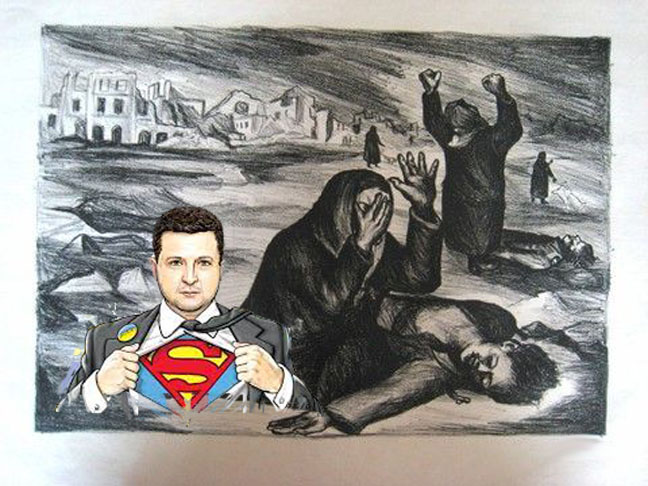
As the war grinds on, elements in the Biden administration appear to be growing impatient with the tall tales of their Ukrainian clients. “This is getting ridiculous,” an unnamed NATO official told the Financial Times on November 16. “The Ukrainians are destroying our confidence and they are openly lying. This is more destructive than the missile.”
Zelensky, media lackeys caught in most dangerous lie yet. https://thegrayzone.com/2022/11/18/zelensky-media-lie/ ALEXANDER RUBINSTEIN·NOVEMBER 18, 2022
With Kiev exposed for a lie that could have triggered a third world war, it is time to examine past deceptions that Western media promoted.
A missile that exploded on Polish soil on November 15 killed two civilians and destroyed farm equipment. Ukrainian President Volodymyr Zelensky and Western corporate media rushed to blame the explosion on Russia in apparent hopes of triggering NATO’s Article 5, which requires NATO states to defend one another militarily when attacked by a hostile force.
Polish and NATO members including US President Joseph Biden have since confirmed the missile that struck Poland was, in fact, a Ukrainian S-300 anti-aircraft missile. Yet Zelensky is sticking to his line, blaming Russia for the strike, while NATO Secretary-General Jens Stoltenberg still insists that “Russia bears ultimate responsibility.” Meanwhile, the media outlets that reflexively pointed the finger at Russia have been forced to take a step back from their initial reporting.
“Russian missiles hit Poland, the territory of our friendly country. People died,” Zelensky insisted on November 15, the night of the attack. “The longer Russia feels impunity, the more threats there will be to anyone within reach of Russian missiles. To fire missiles at NATO territory! This is a Russian missile attack on collective security! This is a very significant escalation. We must act.”
Zelensky held firm the following day, despite mounting evidence that his own country’s air defenses were responsible, declaring “I have no doubt that this is not our missile… I believe that this was a Russian missile, based on our military reports.” By this time, most analysts rejected the Ukrainian president’s assessment, including the founder of the US government-sponsored intelligence cutout Bellingcat, who wrote “At this point I think it’s fair anyone saying that a Russian missile hit Poland based on the current evidence is being irresponsible.”
A Russian attack on NATO member Poland could have triggered Article 5 of the North Atlantic Treaty Organization which compels its member states to consider “an attack against one Ally” to be “an attack against all Allies.” Such a mobilization would have amounted to World War III.
Despite the clear risk of such a catastrophic escalation – or perhaps because of it – Western corporate media immediately blamed Russia for the strike, never even posing the question of why Russia would consider Polish farmland such an important military target that it would be willing to risk a full-scale war with the 30-member NATO alliance.
Initially, the Associated Press ran with the headline “Russian missiles cross into Poland during strike on Ukraine.” The article cited a “senior US intelligence official,” and later, “a second person.”
On November 16, AP began redirecting the link to its original article to a correction that stated, “The Associated Press reported erroneously, based on information from a senior American intelligence official who spoke on condition of anonymity, that Russian missiles had crossed into Poland and killed two people. Subsequent reporting showed that the missiles were Russian-made and most likely fired by Ukraine in defense against a Russian attack.”
Time Magazine ran with the headline, “Russian Missiles Cross Into Poland During Strike, Killing Two,” and cited the AP report.
Fox News similarly announced, “Russian missiles cross into NATO member Poland, kill 2: senior US intelligence official, citing the Associated Press. MSNBC also blamed a “Russian missile” for the strike in its headline.
Then there was CNN, which reported, “Poland says Russian-made missile killed two, will consider invoking NATO Article 4.” NATO Article 4 deals with the meetings between NATO states that are to take place in the event one of them is “threatened” and would theoretically precede any invocation of Article 5. Like CNN, Reuters cited the Polish Foreign Ministry and ran the headline, “Poland says Russian rocket hit its territory as NATO weighs response.”
The New York Times stated in the second sentence of its report on the missile strike that “the blast came as Russia fired roughly 90 missiles into Ukraine.” Two lines later, the Times stated “local media suggests a Russian missile strike.” Readers of the paper of record would have to scroll down several times to even read that Russian officials denied responsibility.
Earlier in the war, in an article on “Ukraine’s online propaganda,” the New York Times sought to downplay the Ukrainian government’s penchant for pushing fake news, arguing that Kiev’s information war merely “dramatize[s] tales of Ukrainian fortitude and Russian aggression.” The article quoted an unnamed Twitter user, who wrote, “Why can’t we just let people believe some things? … If the Russians believe it, it brings fear. If the Ukrainians believe it, it gives them hope.”
The US media’s support for Ukraine’s propaganda efforts meant that it covered some of the most suspicious events without a hint of skepticism, and thereby encouraged more.
These questionable incidents included the following:
- On March 8, Western media reported that a Mariupol maternity hospital was attacked by Russian aircraft. Zelensky claimed the attack was evidence of Russian “genocide” against Ukraine. However, a key witness – a pregnant woman in the hospital photographed by AP – stated that no such airstrike occurred, and that nearby explosions were caused by Ukrainian artillery shells.
- On March 16, the Ukrainian government blamed a targeted Russian airstrike for destroying the Mariupol Dramatic Theater and causing anywhere from 300 to 600 deaths. Western corporate media promoted the Ukrainian narrative of the event despite a total absence of footage showing a missile strike, no images or evidence of large numbers of dead civilians inside, no images or evidence of any attempted rescue, and testimony by Mariupol locals asserting the Azov Battalion fighters that controlled the theater’s grounds staged the explosion to provoke NATO military intervention. Photographic evidence showed that Azov fighters removed all vehicles from the theater’s parking lot one day before the explosion.
- The Kramatorsk train station bombing that was blamed on Russia despite the fact the Tochka-U missile responsible for the blast contained a serial number matching others in Ukraine’s arsenal and originated from Ukrainian-controlled territory.
As the war grinds on, elements in the Biden administration appear to be growing impatient with the tall tales of their Ukrainian clients. “This is getting ridiculous,” an unnamed NATO official told the Financial Times on November 16. “The Ukrainians are destroying our confidence and they are openly lying. This is more destructive than the missile.”
Shelling of Zaporizhzhia is playing with fire, says UN nuclear chief, as blasts reported
Explosions cause damage at Ukrainian power plant, as Kyiv says it will investigate videos allegedly of surrendering Russians being shot
Guardian, Jennifer Rankin, Mon 21 Nov 2022
The UN nuclear energy watchdog has said the forces behind the shelling of Ukraine’s Zaporizhzhia power plant are “playing with fire”, after a series of explosions shook the facility.
The International Atomic Energy Agency (IAEA), which has experts based at Zaporizhzhia, reported on Sunday that powerful explosions had shaken the area on Saturday night and Sunday. It said its on-site experts saw some of the explosions from their windows.
It reported more than a dozen blasts from apparent shelling, with damage to some buildings, systems and equipment, but “none so far critical for nuclear safety”.
The head of the IAEA, Rafael Grossi, said the news was extremely disturbing and he called the explosions completely unacceptable. “Whoever is behind this, it must stop immediately. As I have said many times before, you’re playing with fire,” he said.
According to the IAEA Twitter account, Grossi renewed his appeal to Ukraine and Russia to agree and implement a nuclear safety and security zone around the plant as soon as possible.
Zaporizhzhia, in south-east Ukraine, is Europe’s largest nuclear power station and has been under Russian control since March, although its Ukrainian staff remain in place to run the facility. It has faced repeated shelling, raising fears of a nuclear disaster. Moscow and Kyiv have blamed each other for the attacks.
The plant’s six Soviet-designed water-cooled reactors are currently shut down, but there is a risk that nuclear fuel could overheat if the power that drives the cooling systems is shut. Shelling has frequently damaged the plant’s power supply.
Russian officials claimed that Ukrainian forces were behind the latest attacks. “They are shelling not only yesterday but also today, they are shelling even now,” an adviser to the head of Russia’s nuclear power operator Rosenergoatom, Renat Karchaa, told the Russian state news agency Tass. He said there had been 15 aerial strikes, including one that hit a storage facility.
Soon after the Russian accusations, Ukraine’s nuclear energy agency, Energoatom, said Russia was responsible for the shelling, which it said had resulted in 12 hits to Zaporizhzhia’s infrastructure. The company said on Telegram that the list of damaged equipment indicated that the attackers “targeted and disabled exactly the infrastructure that was necessary for the restart of 5th and 6th power units” and the restoration of power production for Ukrainian needs……………………………….. https://www.theguardian.com/world/2022/nov/20/shelling-of-zaporizhzhia-is-playing-with-fire-says-un-nuclear-chief-ukraine
NATO’s hair trigger: The Polish missile incident was a close brush with nuclear annihilation
https://www.rt.com/news/566710-polish-missile-incident-nato/ Scott Ritter. 18 Nov 22The fervor with which Poland and others sought to drag NATO into a war with Russia should ring alarm bells for everyone
The world dodged a bullet this week, with some NATO members trying, but failing, to trigger Article 4 as a means of confronting Russia in Ukraine. We may not be so lucky next time.
The recent scandal surrounding what most of the world now agrees was an errant Ukrainian surface-to-air missile landing on Polish soil, killing two Polish citizens in the process, has exposed an ugly reality about the eastern reaches of NATO today:
Despite the more reserved stance of the old NATO establishment (the US, UK, France, and Germany), the new upstarts in eastern Europe seem hell-bent on finding a mechanism that will justify NATO intervention in Ukraine.
This predilection for nuclear annihilation (no one should have any misgivings that a NATO-Russia conflict would end any other way) should send alarm bells ringing in the halls of power throughout NATO and the rest of the world, because left to their own devices, the Russophobic officials that dominate the governments of Poland and the three Baltic republics act like lemmings, running toward the Ukrainian cliff, oblivious to their fate as they chase the fantasy of NATO defeating Russia on a European battlefield.
The rush to judgment that accompanied the arrival of the Ukrainian surface-to-air missile on Polish soil serves as a stark reminder about how the supposedly defensive characteristics of the NATO Charter can be used to promote, rather than deter, conflict.
Let there be no doubt – NATO was aware that the missile that impacted near the village of Przewodów in Poland, killing two Polish citizens, was a Ukrainian surface-to-air missile the moment it was launched.
The airspace over Ukraine is one of the most highly-monitored locations in the world. Without revealing sources and methods, suffice it to say there isn’t anything that happens over Ukraine that isn’t registered in real time on a NATO display in headquarters throughout Europe – including Poland.
And yet … Poland saw fit to summon the Russian ambassador and lodge a protest.
Moreover, Poland declared that it would increase its military readiness while contemplating the activation of Article 4 of the NATO Treaty, a mechanism which allows the alliance to discuss security threats to member states with an eye on possibly using NATO military force to rectify the situation. Article 4 is behind every combat deployment of NATO since its inception, from Serbia, to Libya, to Afghanistan.
On cue, Lithuanian President Gitanas Nausėda, whose country borders Poland, tweeted that “every inch of NATO territory must be defended!”
Czech Prime Minister Petr Fiala likewise turned to Twitter to exclaim: “If Poland confirms that the missiles also hit its territory, this will be a further escalation by Russia. We stand firmly behind our EU and NATO ally.”
For its part, Estonia called the news “most concerning,” with its foreign minister declaring via Twitter, “We are consulting closely with Poland and other allies. Estonia is ready to defend every inch of NATO territory.”
While all parties concurred that there was no basis for triggering Article 5 of NATO (i.e., the collective security clause), Article 4 was very much in play. Poland was adamant: The missile “attack” against Poland was clearly a crime, one that could not go unpunished. As such, under Article 4, Poland would be pushing “for NATO members and Poland to agree on the provision of additional anti-aircraft defense, including in part of the territory of Ukraine.”
And there you have it: “Including in part of the territory of Ukraine.”
Enter Germany, stage left: “As an immediate reaction to the incident in Poland, we will offer to strengthen air policing with combat air patrols over its airspace with German Eurofighters,” a German Defense Ministry spokesperson declared.
Cue NATO Secretary General Jens Stoltenberg, who convened an emergency meeting of NATO ambassadors in Brussels to discuss the Polish incident. According to the Finnish foreign minister (Finland, although not a NATO member, was invited to the meeting), “Closing the airspace [above Ukraine] will definitely be discussed. Various options of how we can protect Ukraine are on the table.”
While Germany reportedly rejected the establishment of a no-fly zone over Ukraine, noting that such an action would pose a threat of direct confrontation between Russia and NATO, one is left pondering how such a discussion came to be in the first place: Ukraine fired a surface-to-air missile, which was tracked by NATO as it impacted on Polish soil. And, as a result, NATO members end up discussing the possibility of invoking Article 4 of the NATO Charter, seeking to extend NATO air defense into Ukrainian air space in concert with the establishment of a no-fly zone enforced by NATO aircraft.
“Even if it was a blue on blue [incident] with a Ukrainian rocket that landed in Poland, I think there is still enough ground for Poland to invoke Article 4,” a former director of policy planning for NATO, Fabrice Pothier, declared.
Just to clarify what Mr. Pothier is saying: Because Ukraine fired a surface-to-air missile that ended up landing on Polish soil, NATO is justified in invoking Article 4, setting the stage for a possible NATO-Russia conflict in Ukraine which could lead to global nuclear annihilation.
If there was ever any doubt about the threat NATO posed to the entire world, there is no more.
That this is being promulgated on behalf of a Ukrainian leader who, despite universal consensus that the missile which hit Poland was Ukrainian, denies this possibility, all the while blaming Russia in the hopes that NATO will intervene, only adds to the insanity of this crisis.
While it appears that the world has dodged the potential death sentence triggered by the NATO Article 4 this time, the hair-trigger aspect of NATO’s Pavlovian response mechanism when it comes to seeking causal justification for military intervention in Ukraine should have everyone on high alert.
1 This Month
22 June – Virtual Event –Climate Change: New Data, New Debate

Monday, June 22, 2026 2:30 p.m. – 3:15 p.m. CT
YouTube. Register here
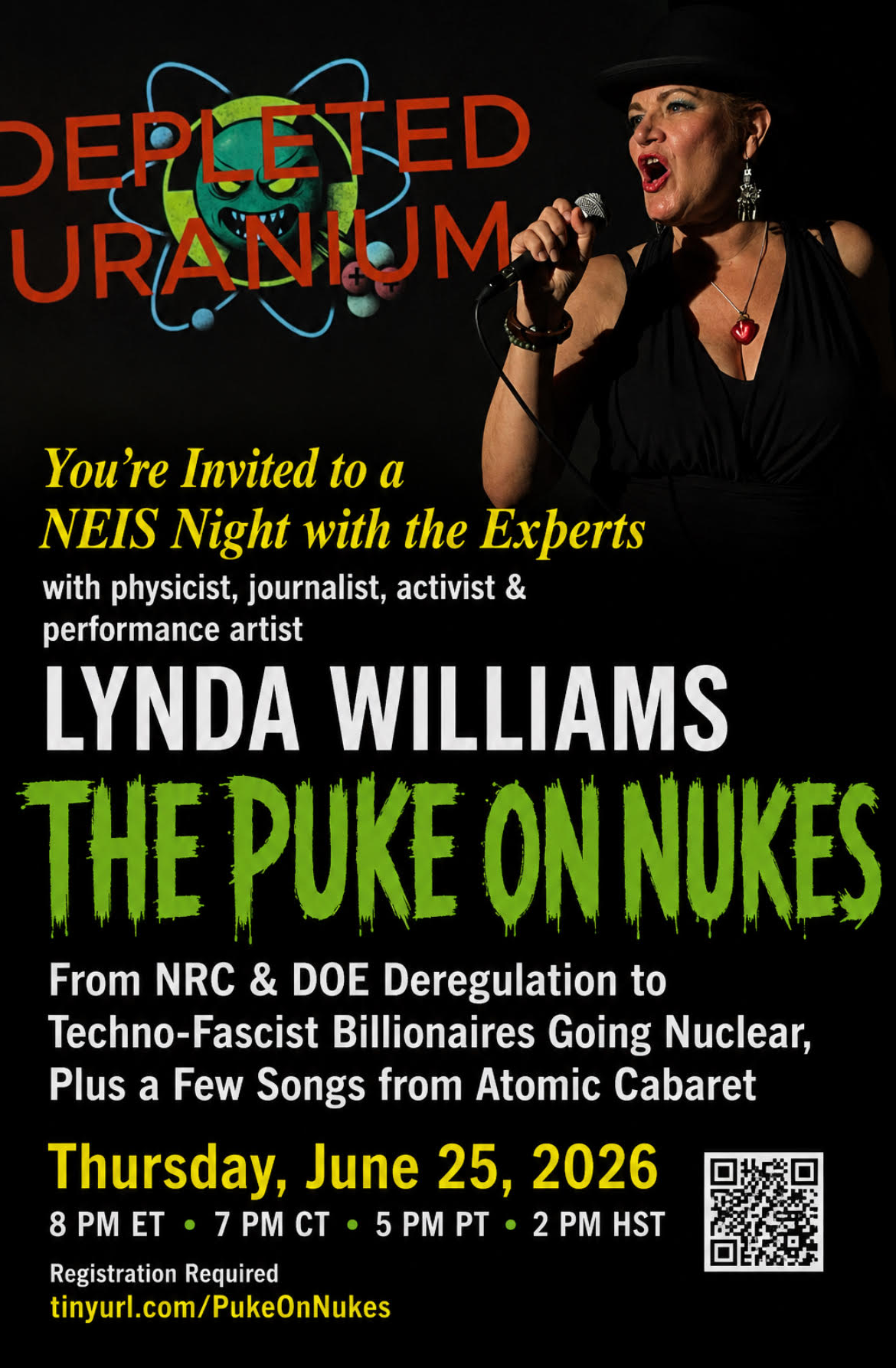
25 June- THE PUKE ON NUKES
Thursday, June 25, 2026
7pm Central Time (8pm ET, 6pm MT, 5pm PT) UTC – 5
From NRC & DOE Deregulation to Techno-Fascist Billionaires Going Nuclear, Plus a Few Songs from Atomic Cabaret REGISTER
26 June – Radiation Trainwreck at the NRC / Join the Protect Better Campaign – https://us02web.zoom.us/meeting/register/4ZlZ5_qLSHGiLSCg8FF6Bg#/registration
1st July – Webinar Waste of Space: The Environmental Harm of Military and Civil Space Activity st July, 7 pm

Report Launch Online: We are seeing an increasing exploitation of space for military and commercial purposes. This must change.
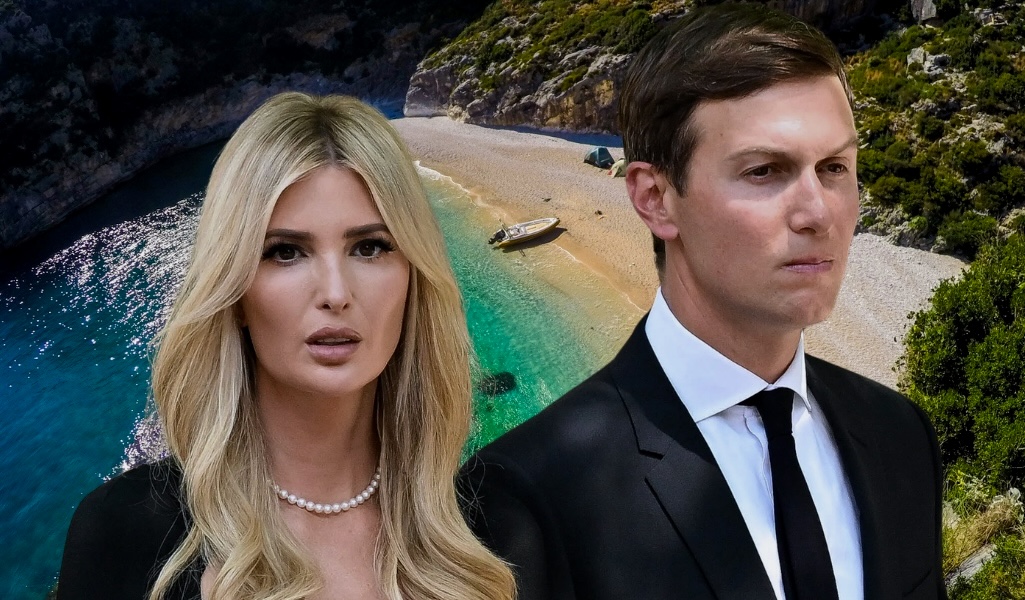
Protect Sazan Island from the Trump family! https://secure.avaaz.org/campaign/en/protect_sazan_island_from_the_trump_family_loc/?bqFCVab&v=174511&cl=22707147157&_checksum=5e9dde668860e8231c33699735e16a1fbf22ab2cb01da50c999fe8732b9775ef&utm_source=email&utm_medium=blast_email&utm_campaign=174511


Cuba Is Not a Failed State – It Is a Besieged State
PETITION: “Global Appeal to Endorse Palestinian Right of Return of Refugees”
To see nuclear-related stories in greater depth and intensity – go to https://nuclearinformation.wordpress.com
-
Archives
- June 2026 (227)
- May 2026 (306)
- April 2026 (356)
- March 2026 (251)
- February 2026 (268)
- January 2026 (308)
- December 2025 (358)
- November 2025 (359)
- October 2025 (376)
- September 2025 (257)
- August 2025 (319)
- July 2025 (230)
-
Categories
- 1
- 1 NUCLEAR ISSUES
- business and costs
- climate change
- culture and arts
- ENERGY
- environment
- health
- history
- indigenous issues
- Legal
- marketing of nuclear
- media
- opposition to nuclear
- PERSONAL STORIES
- politics
- politics international
- Religion and ethics
- safety
- secrets,lies and civil liberties
- spinbuster
- technology
- Uranium
- wastes
- weapons and war
- Women
- 2 WORLD
- ACTION
- AFRICA
- Atrocities
- AUSTRALIA
- Christina's notes
- Christina's themes
- culture and arts
- Events
- Fuk 2022
- Fuk 2023
- Fukushima 2017
- Fukushima 2018
- fukushima 2019
- Fukushima 2020
- Fukushima 2021
- general
- global warming
- Humour (God we need it)
- Nuclear
- RARE EARTHS
- Reference
- resources – print
- Resources -audiovicual
- Weekly Newsletter
- World
- World Nuclear
- YouTube
-
RSS
Entries RSS
Comments RSS
 nuclear-news