By Mark Hibbs | March 10, 2023 Bulletin of the Atomic Scientists,
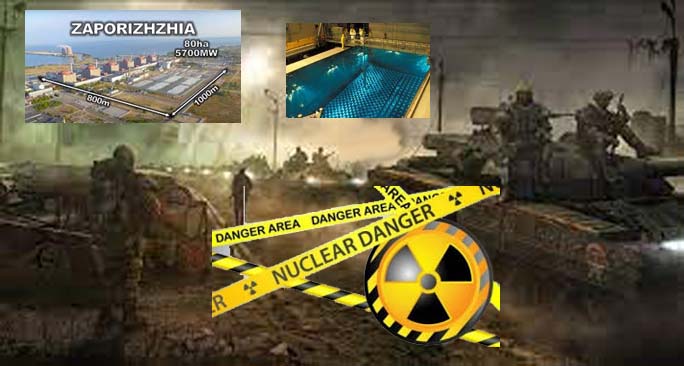
One year after Russia’s assault and takeover of the Zaporizhzhia plant, Russians and Ukrainians face decisions about the operation status of the six reactors that will significantly impact nuclear safety and security. Decision makers might mothball the reactors, or instead elect one or more of a range of modes for operating them, on a scale from cold shutdown to resumed criticality and low-power operation…………………………………………………………………………………………..
the safest option for the Zaporizhzhia nuclear power plant would be to shut all reactors down, depressurize the circuits, and remove their fuel until the end of the war. As an IAEA peer reviewer in one European country with similar reactors said: “There would be no heat, no pressure, no radioactivity, and no severe accident.”
But the plant’s fuel inventory is another key consideration in decisions about how or if the Zaporizhzhia reactors are to be run. If removed from reactor cores, hot, highly radioactive fuel must be safely stored and contained.
Ukraine regulations require that the spent fuel storage pool at each reactor accommodate a full core of fuel in an emergency. As part of EU post-Fukushima upgrades, Zaporizhzhia reactors were outfitted with portable equipment to supply water in an emergency to spent fuel pools and to reactor cores. But moving a core of fuel into a pool would significantly increase the heat load, and safe storage margins might be limited following previous re-racking to pack more fuel in the pools.
The dash for the White House in Washington on Friday by German Chancellor Olaf Scholz remains a riddle wrapped in a mystery. Scholz landed in DC, drove to the White House and was received by President Biden in Oval Office for a conversation that lasted over an hour. No aides were present. And he flew back to Berlin.
Associated Press reported cryptically, “If any agreements were reached or plans made, the White House wasn’t saying.”……………………………………………..
Scholz’s dash to the Oval Office came at a defining moment in the Ukraine conflict. Russia has seized the initiative in the Donbass campaign and its spring offensive may start in the coming weeks. Ukraine’s military took heavy battering and the country depends almost entirely on western financial handouts and military aid for survival.
Most important, Kiev’s western backers are no longer sure of its ability to reclaim all the territory under Russian control — roughly, one-fifth of erstwhile Ukraine. An inchoate belief is also gaining ground in the western mind, behind all rhetoric, that the burden of the war effort is not going to be sustainable for long if the conflict extends into an indeterminate future.
Support for Ukraine is waning in the western public opinion. …………………………………………
the display of Western unity with Ukraine that Biden claims is wearing thin against a backdrop of strains within the trans-Atlantic alliance and a growing sense of despondency that the war has no end in sight.
……………………………………. What complicates matters further is an emerging divide in Europe over how to end the war. While Old Europeans, including Scholz, are urging peace talks now, the Russophobic East European and Baltic leaderships are clamouring for Russia’s defeat and a regime change in Moscow.
………………………………………………………. The good part is that the UK, France and Germany are in this together. Yet, the road ahead is long and winding. For Putin, the bottomline will be that no NATO membership for Ukraine and the ground realities must be heeded. But, fundamentally, peace talks would vindicate the raison d’être of Russia’s special military operation, which aimed to force the West to negotiate regarding NATO expansion. ………………. https://www.indianpunchline.com/ukraine-a-war-to-end-all-wars-in-europe/
Russian and Eurasian Politics, by GORDONHAHN, March 8, 2023
The Russian Winter Offensive: Steamroller or Blitzkreig
Russia’s late winter offensive is under way. Seemingly unnoticeable, Russia’s forces in Donbass have been gaining steam over the last month and are now moving into high gear. The lack of visibility is relative. Expectations of a Nazi-like blitzkrieg have blinded eyes to the slowly moving steamroller that is now being unleashed. One need only compare a map of the disposition of Russian forces and the front along the Donbass front to see what is happening. [Maps supplied here on original]
In this two month period, Russian forces have taken Soledar and Bakhmut, while deterring a Ukrainian offensive in the north around Kupyansk and advancing on Kupyansk themselves. They have made gains in the battle around Serebranka Forest as well. Russian forces also deterred Ukrainian offensives in the south in Zaporozhe and Kherson. In the latter, Russian forces are inflicting heavily casualties in positional artillery battles across the Dnepr River and may force the Ukrainianians to abandon Kherson city. While advancing on Vugledar (Ugledar) in the southeast, however, their storm of the city failed, and they have been forced to step back and regroup. Ukrainian forces have been successful in blocking Russian advances on the Liman front as well as in Vugledar, inflicting higher numbers of Russian casualties than is usual.
The most important of Russian successes is the encirclement and the inevitable and imminent seizure of Bakhmut/Artyomevsk. There and in the battles surrounding Serebryanka Forest and Kherson in recent weeks, Ukrainian forces have been taking unprecedented casualties and equipment losses, far outstripping those suffered by the Russians.
As the Russian steamroller muscled forward to Bakhmut – a city Russians call ‘Artyomevsk’ – the former’s power was revealed in the preemptive propaganda campaign initiated in Ukraine and parts of the West asserting that Balhmut is of no strategic importance. The campaign revealed not only the propaganda value of any Russian seizure of Bakhmut would have for Moscow, reversing false image of ‘Ukraine is winning’ created by the propaganda victories for Kiev that the Russian withdrawals from – not routs at the hands of Ukrainian forces as the West/Ukraine propaganda claimed or implied – Kharkov (Kharkiv) in the northeast and Kherson in the south. But whereas Kharkov and Kherson have not proved to be strategic victories, Bakhmut’s fall will be. ………………………………………………………………………..
…………….. it is possible that by the end of the year, Russian forces will be in a position to force the Dnepr river, probably increasing the chances of ceasefire, peace, or surrender talks. This, along with any Ukrainian offensive on Crimea or Russian offensive in Zaporozhe and/or Kherson will define the war throughout 2023.
……………………………………………………………………………….. War and Authoritarianization
The war is instigating authoritarianization around the world. In Ukraine, President Volodomyr Zelenskiy has banned all non-nationalist, non-ultranationalist, and non-neofascist opposition political parties. The government has taken over mass media, instituting a de facto censorship regime. More recently, the government has instituted an online monitoring system that will track the websites citizens visit, and should they visit banned Russian and ‘pro-Russian’ sites, they will be arrested and can face imprisonment.
Vigilante groups are allowed to roam the streets in Kiev and all cities, making citizens’ arrests of sorts for alleged crimes and tying the alleged perpetrators to telephone and street light poles and leaving them there for hours in rain and snow, sometimes beating them. Children are being recruited into the army, which is a violation of international law. Oddly, the Western press, academia, and think tank milieu ignores or whitewashes all this. …………………………………………..
This reflects just one way in which the West is further dismantling its liberal republicanism in a misguided effort to lie in order to maintain public support for Ukraine. American media has banned almost all alternative views on the war other than ‘Ukraine is winning’ and Russian and Putin are evil, incompetent losers, deliberately murdering civilians in mass and otherwise committing war crimes as a matter of routine practice and policy.
A virtual gag order has been implemented in the case of the Nord Stream pipeline terrorist attack and other issues. US intelligence is helping Ukraine target attacks on civilian areas in Donbass using American-supplied HIMARS and assisting Ukrainian and Russian anti-Russian terrorists to carry out terrorist attacks and guerrilla activity in Russia.
………………………. One particular trend is the mainstreaming of neofascism across the West, especially in the US and the Baltic states, with Ukraine’s Azov and other neofascist groups and individuals being given positive news coverage, national awards, and visits with the Pope.
But the most deleterious development in American republicanism is the Soviet-like politicization of the law enforcement and intelligence departments. US intelligence and the FBI colludes with High Tech social network sites, like Facebook and Twitter, to censor Americans.
……………………………. In Russia, an already authoritarian system is becoming more so, with state media monopoly, censorship, and punishments for various oppositional articulations on the Internet and society at large being intensified. There is a deepening of the militarization of Russian society, the glorification of war, and mystification of Russia’s military, the State, and national culture, and a growing number of intensely anti-Western expressions, ………………………..
……………………………………Did the US Bait Putin Into War?
It appears increasingly likely that the US baited Putin to invade after he embarked on his strategy of coercive diplomacy by massing troops not far from the Ukrainian border in 2021. Washington ignored the Minsk process, built up the Ukrainian military to NATO level, did nothing to deter the strengthening of neo-fascism in Ukraine or Kiev’s plans to undertake a counteroffensive in Ukraine and Donbass rather than focus on the Minsk process.
Then we have recent revelations over the past year that not only did the US never engage the Minsk process but als the Western parties faked their engagement and the US foiled a ceasefire plan readied by Moscow, Kiev, and Tel Aviv in the first weeks of the war. Zelensky followed similar admissions by former Ukrainian President Petro Poroshenko, former German Chancellor Angela Merkel, and for French President Francois Hollande to this effect……………………………………………………………….. more https://gordonhahn.com/2023/03/08/observations-on-the-nato-russia-ukrainian-war-no-2/
West created ‘Nazi paradise’ in Ukraine to fight Russians – Dugin
Kiev’s backers, however, ultimately don’t believe it will win, the political philosopher said.
The West has fostered the creeping “nazification” of Ukraine in order to make its people hostile to Russia, political philosopher and author Aleksandr Dugin has told RT. In an exclusive interview aired on Saturday, he said that Kiev’s backers have tried to hide from their own citizens the growing tolerance of nationalists and neo-Nazis in the country.
“The West thinks in such a manner: We could not create artificial nationalism in Ukraine and push Ukrainians to fight Russians [any other way],” Dugin said.
“For a traditional society, liberal values cannot be the goal to defend. So they need something [else]. The most radical [tool] to create and promote this artificial pseudo-consciousness is nationalism … or Ukrainian Russophobic fascism. And it is being used by the [globalist] liberals.”
Dugin said the West supported radicals in Kiev, despite cracking down on similar groups at home. “They destroy any kind of nationalism on their [own] territories. But in Ukraine, on the other hand, they make it flourish.” In the end, “a Nazi paradise” has been created in Ukraine, he claimed.
According to Dugin, such an approach will ultimately lead to the destruction of the Ukrainian state. “I don’t think they seriously believe in the possible victory of Ukraine,” he stated.
Ukraine’s Azov Battalion is among the units that welcomes fighters with openly nationalist and neo-Nazi views. Ukrainian soldiers have repeatedly been filmed and photographed bearing Nazi insignia and tattoos. Russian President Vladimir Putin listed “denazification” as one of the objectives of the military operation Moscow launched in the neighboring state a year ago.
Last year, Dugin’s daughter, journalist Darya Dugina, was killed by a bomb planted under the car she was driving. Moscow said Ukrainian agents were behind the assassination. Kiev denied its involvement. Nevertheless, the New York Times later reported that US intelligence officials believe that the Ukrainian authorities had authorized the attack.
At the end of 2021, President Putin made very clear that the three red lines for Russia were: (1) NATO enlargement to Ukraine as unacceptable; (2) Russia would maintain control of Crimea; and (3) the war in the Donbass needed to be settled by implementation of Minsk-2. The Biden White House refused to negotiate on the issue of NATO enlargement.
We are not at the 1-year anniversary of the war, as the Western governments and media claim. This is the 9-year anniversary of the war. And that makes a big difference.
The war began with the violent overthrow of Ukraine President Viktor Yanukovych in February 2014, a coup that was overtly and covertly backed by the United States government (see also here). From 2008 onward, the United States pushed NATO enlargement to Ukraine and Georgia. The 2014 coup of Yanukovych was in the service of NATO expansion.
We must keep this relentless drive towards NATO expansion in context. The US and Germany explicitly and repeatedly promised Soviet President Mikhail Gorbachev that NATO would not enlarge “one inch eastward” after Gorbachev disbanded the Soviet military alliance known as the Warsaw Pact. The entire premise of NATO enlargement was a violation of agreements reached with Soviet Union, and therefore with the continuation state of Russia.
The neocons have pushed NATO enlargement because they seek to surround Russia in the Black Sea region, akin to the aims of Britain and France in the Crimean War (1853-56). US strategist Zbigniew Brzezinski described Ukraine as the “geographical pivot” of Eurasia. If the US could surround Russia in the Black Sea region, and incorporate Ukraine into the US military alliance, Russia’s ability to project power in the Eastern Mediterranean, the Middle East, and globally would disappear, or so goes the theory.
Of course, Russia saw this not only as a general threat, but as a specific threat of putting advanced armaments right up to Russia’s border. This was especially ominous after the US unilaterally abandoned the Anti-Ballistic Missile Treaty in 2002, which according to Russia posed a direct threat to Russian national security.
During his presidency (2010-2014), Yanukovych sought military neutrality, precisely to avoid a civil war or proxy war in Ukraine. This was a very wise and prudent choice for Ukraine, but it stood in the way of the U.S. neoconservative obsession with NATO enlargement.
When protests broke out against Yanukovych at the end of 2013 upon the delay of the signing of an accession roadmap with the EU, the United States took the opportunity to escalate the protests into a coup, which culminated in Yanukovych’s overthrow in February 2014.
The US meddled relentlessly and covertly in the protests, urging them onward even as right-wing Ukrainian nationalist paramilitaries entered the scene. US NGO spent vast sums to finance the protests and the eventual overthrow. This NGO financing has never come to light.
Three people intimately involved in the US effort to overthrow Yanukovych were Victoria Nuland, then the Assistant Secretary of State, now Under-Secretary of State;Nuland was famously caught on the phone with the US Ambassador to Ukraine, Geoffrey Pyatt, planning the next government in Ukraine, and without allowing any second thoughts by the Europeans (“F*ck the EU,” in Nuland’s crude phrase caught on tape).
Jake Sullivan, then the security advisor to VP Joe Biden, and now the US National Security Advisor to President Biden;
and VP Biden, now President.
The intercepted conversation reveals the depth of the Biden-Nuland-Sullivan planning. Nuland says, “So on that piece Geoff, when I wrote the note Sullivan’s come back to me VFR [direct to me], saying you need Biden and I said probably tomorrow for an atta-boy and to get the deets [details] to stick. So, Biden’s willing.”
US Film director Oliver Stone helps us to understand the US involvement in the coup in his 2016 documentary movie, Ukraine on Fire. I urge all people to watch it, and to learn what a US-regime change operation looks like. I also urge all people to read the powerful academic studies by Prof. Ivan Katchanovski of the University of Ottawa (for example, here and here), who has laboriously reviewed all of the evidence of the Maidan and found that most of the violence and killing originated not from Yanukovych’s security detail, as alleged, but from the coup leaders themselves, who fired into the crowds, killing both policemen and demonstrators.
These truths remain obscured by US secrecy and European obsequiousness to US power. A US-orchestrated coup occurred in the heart of Europe, and no European leader dared to speak the truth. Brutal consequences have followed, but still no European leader honestly tells the facts.
The coup was the start of the war nine years ago. An extra-constitutional, right-wing, anti-Russian and ultra-nationalist government came to power in Kiev. After the coup, Russia quickly retook Crimea following a quick referendum, and war broke out in the Donbass as Russians in the Ukraine army switched sides to opposed the post-coup government in Kiev.
NATO almost immediately began to pour in billions of dollars of weaponry to Ukraine. And the war escalated. The Minsk-1 and Minsk-2 peace agreements, in which France and Germany were to be co-guarantors, did not function, first, because the nationalist Ukrainian government in Kiev refused to implement them, and second, because Germany and France did not press for their implementation, as recently admitted by former Chancellor Angela Merkel.
At the end of 2021, President Putin made very clear that the three red lines for Russia were: (1) NATO enlargement to Ukraine as unacceptable; (2) Russia would maintain control of Crimea; and (3) the war in the Donbass needed to be settled by implementation of Minsk-2. The Biden White House refused to negotiate on the issue of NATO enlargement.
The Russian invasion tragically and wrongly took place in February 2022, eight years after the Yanukovych coup. The United States has poured in tens of billions of dollars of armaments and budget support since then, doubling down on the US attempt to expand its military alliance into Ukraine and Georgia. The deaths and destruction in this escalating battlefield are horrific.
In March 2022, Ukraine said that it would negotiate on the basis of neutrality. The war indeed seemed close to an end. Positive statements were made by both Ukrainian and Russian officials, as well as the Turkish mediators. We now know from former Israeli Prime Minister Naftali Bennett that the United States blocked those negotiations, instead favouring an escalation of war to “weaken Russia.”
In September 2022, the Nord Stream pipelines were blown up. The overwhelming evidence at this date is that the United States led that destruction of the Nord Stream pipelines. Seymour Hersh’s account is highly credible and has not been refuted on a single major point (though it has been heatedly denied by the US Government). It points to the Biden-Nuland-Sullivan team as leading the Nord Stream destruction.
We are on a path of dire escalation and lies or silence in much of the mainstream US and European media. The entire narrative that this is the first anniversary of war is a falsehood that hides the reasons of this war and the way to end it. This is a war that began because of the reckless US neoconservative push for NATO enlargement, followed by the US neoconservative participation in the 2014 regime-change operation. Since then, there has been massive escalation of armaments, death, and destruction.
This is a war that needs to stop before it engulfs all of us in nuclear Armageddon. I praise the peace movement for its valiant efforts, especially in the face of brazen lies and propaganda by the US Government and craven silence by the European governments, which act as wholly subservient to the US neoconservatives.
We must speak truth. Both sides have lied and cheated and committed violence. Both sides need to back off. NATO must stop the attempt to enlarge to Ukraine and to Georgia. Russia must withdraw from Ukraine. We must listen to the red lines of both sides so that the world will survive.
Jeffrey D. Sachs, Professor of Sustainable Development and Professor of Health Policy and Management at Columbia University, is Director of Columbia’s Center for Sustainable Development and the UN Sustainable Development Solutions Network. He has served as Special Adviser to three UN Secretaries-General. His books include The End of Poverty, Common Wealth, The Age of Sustainable Development, Building the New American Economy, and most recently, A New Foreign Policy: Beyond American Exceptionalism.
A drone crashed just 68 miles from the Kremlin today in a suspected ‘failed attack’ by Ukraine.
Russian president Vladimir Putin has ordered officials to tighten control of the border with Ukraine after a spate of drone attacks delivered a new challenge to Moscow more than a year after the invasion of its neighbour.
While Putin did not refer to any specific attacks in a speech in Moscow, his comments came hours after drones targeted several areas in southern and western Russia and authorities closed the airspace over St Petersburg in response to what some reports said was a drone.
Images shared online appear to depict a Ukrainian UJ-31 ‘loitering munitions’ kamikaze flying bomb after it crashed down near a gas plant more than 300 miles from the border.
It came down near the village of Kolomna hours after Russia’s Defence Ministry accused Ukraine of two attempted drone strikes in the south overnight.
Ukraine does not publicly claim responsibility for attacks inside Russia.
If it was behind the Kolomna drone, it would be its closest attempted strike to Moscow since the start of the invasion of Ukraine.
It is also the deepest inside Russian territory any suspected Ukrainian drone has been spotted.
Postings on Russian social media showed the broken grey metal drone in a snowdrift in a woodland area.
Regional governor Andrei Vorobyov said the drone appeared to have been intended to hit a ‘civil infrastructure facility’ but noted that there was no damage.
He said the FSB security agency was handling the situation and there was no threat to residents.
There is a gas compressor plant close to the crash site.
Reports claimed the low-flying drone may have clipped trees.
Earlier, the Russian Defence Ministry accused Ukraine of sending attack drones towards civil infrastructure targets in the southern regions of Adygea and Krasnodar.
It said its electronic anti-drone jamming systems had caused them to miss their targets.
The ministry said: ‘Both drones lost control and deviated from their flight paths.
‘One fell into a field, the other, deviating from its trajectory, did not harm the intended target.’
……………………………………………… While Ukrainian drone strikes on the Russian border regions of Bryansk and Belgorod that lie north of Ukraine’s Sumy region are not unusual, the hits on the Krasnodar and Adygea regions further south are noteworthy.
…………… Ukrainian authorities offered no immediate acknowledgement or comment on the reported strikes.
Last year, Russian authorities repeatedly reported shooting down Ukrainian drones over annexed Crimea. In December, the Russian military said Ukraine used drones to hit two bases for long-range bombers deep inside Russian territory.
Separately, the local government of St Petersburg – Russia’s second-largest city 800 miles north of the border with Ukraine – said early on Tuesday that it was temporarily halting all flight departures and arrivals at the city’s main airport, Pulkovo. It did not give a reason for the move.
WASHINGTON – With more than $100 billion in U.S. weaponry and financial aid flowing to Ukraine in less than a year – and more on the way to counter Russia’s invasion – concerns about arms falling into terrorists’ hands and dollars into corrupt officials’ pockets are mounting.
The special inspector general who has overseen aid to Afghanistan since 2012, and some House Republicans, warn of the need for closer oversight of the military and humanitarian aid to Ukraine. The scale of the effort is massive. The $113 billion appropriated by Congress in 2022 approaches the $146 billion spent in 20 years for military and humanitarian assistance to Afghanistan, though the cost of sending U.S. troops there was far higher.
“When you spend so much money so quickly, with so little oversight, you’re going to have fraud, waste and abuse,” John Sopko, the special inspector general for Afghanistan reconstruction, said in an interview. “Massive amounts.”
Among the American public and on Capitol Hill, support for Ukraine’s resistance to Russia’s invasion remains strong. But it is softening. An Associated Press poll in late January showed that 48% of U.S. adults say they favor the U.S. providing weapons to Ukraine, with 29% opposed and 22% saying they’re neither in favor nor opposed. That’s a drop from May 2022, when 60% of U.S. adults said they were in favor of sending Ukraine weapons.
Support could erode further among Americans and Ukrainians, according to members of Congress and Sopko, without greater transparency and accountability for the tens of billions spent. The costs to American taxpayers can be expected to increase as the Biden administration sends increasingly sophisticated and expensive arms to Ukraine, including Abrams battle tanks.
Assuring that the aid ends up in the right hands, they say, demands greater oversight.
U.S. struggles to account for billions sent to Ukraine
The Pentagon spent $62.3 billion in 2022 on Ukraine for weapons, ammunition, training, logistics, supplies, salaries and stipends, according to the Joint Strategic Oversight Plan for Ukraine Response report. Inspectors general for several agencies released the report in January.
The State Department and U.S. Agency for International Development spent $46 billion for activities ranging from border security to basic government services such as utilities, hospitals, schools and firefighting. Other government agencies, including the Department of Agriculture, spent another $5 billion.
The report noted the difficulty U.S. agencies had accounting for the billions spent.
The Pentagon, for example, was “unable to provide end-use monitoring in accordance with DoD policy” in Ukraine, according to a report by the Pentagon’s inspector general. “End-use monitoring” includes tracking serial numbers of weapons and ammunition to ensure they’re used as intended.
……………………. With few U.S. troops or State Department personnel in Ukraine, keeping inventories is difficult, the report said. Moreover, the vast amount of money complicates the effort. The report notes the danger of corrupt officials siphoning it off.
“State is overseeing unprecedented levels of security assistance in Ukraine, presenting significant risk of misuse and diversion given the volume and speed of assistance and the wartime operating environment,” according to the report…………………….
Lack of Ukraine oversight draws parallels to Afghanistan corruption
Ukraine has a history of corruption, and President Volodymyr Zelenskyy has made stamping it out a priority.
Ukraine ranks 116th out of 180 nations on Transparency International’s Corruption Perceptions Index. On Feb. 14, the defense minister named new deputies after news reports showed officials in the defense ministry had bought food for troops at inflated prices.
Corruption corrodes the public’s faith in government, said Sopko, the special inspector general for Afghanistan. Elites in Afghanistan skimmed U.S. aid money, and the obvious corruption alienated Afghans…………………….
‘Need truth tellers’: Republicans demand more oversight
It’s not just Zaporizhzhia we have to worry about: There are 14 other nuclear power plants in the war zone. By Joshua Frank , TOMDISPATCH, February 28, 2023
In 1946, Albert Einstein shot off a telegram to several hundred American leaders and politicians warning that the “unleashed power of the atom has changed everything save our modes of thinking and we thus drift toward unparalleled catastrophe.” Einstein’s forecast remains prescient. Nuclear calamity still knoc
“………………………………………………………………………………………………………………………. here’s the true horror story lurking behind the war in Ukraine. While a nuclear tit-for-tat between Russia and NATO — an exchange that could easily destroy much of Eastern Europe in no time at all — is a genuine, if frightening, prospect, it isn’t the most imminent radioactive peril facing the region.
Averting a Meltdown
By now, we all ought to be familiar with the worrisome Zaporizhzhia nuclear complex (ZNPP), which sits right in the middle of the Russian incursion into Ukraine. Assembled between 1980 and 1986, Zaporizhzhia is Europe’s largest nuclear-power complex, with six 950-megawatt reactors.
……………………. In September 2022, due to ongoing shelling in the area, Zaporizhzhia was taken offline and, after losing external power on several occasions, has since been sporadically relying on old diesel backup generators. (Once disconnected from the electrical grid, backup power is crucial to ensure the plant’s reactors don’t overheat, which could lead to a full-blown radioactive meltdown.)
However, relying on risk-prone backup power is a fool’s game, according to electrical engineer Josh Karpoff. A member of Science for the People who previously worked for the New York State Office of General Services where he designed electrical systems for buildings, including large standby generators, Karpoff knows how these things work in a real-world setting. He assures me that, although Zaporizhzhia is no longer getting much attention in the general rush of Ukraine news, the possibility of a major disaster there is ever more real. A backup generator, he explains, is about as reliable as a ’75 Winnebago.
“It’s really not that hard to knock out these kinds of diesel generators,” Karpoff adds. “If your standby generator starts up but says there’s a leak in a high-pressure oil line fitting, it sprays heated, aerosolized oil all over the hot motor, starting a fire. This happens to diesel motors all the time. A similar diesel engine fire in a locomotive was partly responsible for causing the Lac Megantic Rail Disaster in Quebec back in 2013.”
Sadly enough, Karpoff is on target. Just remember how the backup generators failed at the three nuclear reactors in Fukushima, Japan, in 2011. Many people believe that the 9.0 magnitude underwater earthquake caused them to melt down, but that’s not exactly the case.
It was, in fact, a horrific chain of worsening events. While the earthquake itself didn’t damage Fukushima’s reactors, it cut the facility off from the power grid, automatically switching the plant to backup generators. So even though the fission reaction had stopped, heat was still being produced by the radioactive material inside the reactor cores. A continual water supply, relying on backup power, was needed to keep those cores from melting down. Then, 30 minutes after that huge quake, a tsunami struck, knocking out the plant’s seawater pumps, which subsequently caused the generators to go down.
“The myth of the tsunami is that the tsunami destroyed the [generators] and had that not happened, everything would have been fine,” former nuclear engineer Arnie Gunderson told Amy Goodman on Democracy Now! “What really happened is that the tsunami destroyed the [sea] pumps right along the ocean… Without that water, the [diesel generators] will overheat, and without that water, it’s impossible to cool a nuclear core.”
With the sea pumps out of commission, 12 of the plant’s 13 generators ended up failing. Unable to cool, the reactors began to melt, leading to three hydrogen explosions that released radioactive material, carried disastrously across the region and out to sea by prevailing winds, where much of it will continue to float around and accumulate for decades.
At Zaporizhzhia, there are several scenarios that could lead to a similar failure of the standby generators. They could be directly shelled and catch fire or clog up or just run out of fuel. It’s a dicey situation, as the ongoing war edges Ukraine and the surrounding countries toward the brink of a catastrophic nuclear crisis.
“I don’t know for how long we are going to be lucky in avoiding a nuclear accident,” said Rafael Grossi, director general of the IAEA in late January, calling it a “bizarre situation: a Ukrainian facility in Russian-controlled territory, managed by Russians, but operated by Ukrainians.”
Bad Things Will Follow
Unfortunately, it’s not just Zaporizhzhia we have to worry about. Though not much attention has been given to them, there are, in fact,14 other nuclear power plants in the war zone and Russia has also seized the ruined Chernobyl plant, where there is still significant hot radioactive waste that must be kept cool.
Kate Brown, author of Plutopia, told Science for the People last April:
“Russians are apparently using these two captured nuclear installations like kings on a chessboard. They hold Chernobyl and the Zaporizhzhia nuclear power reactor plants, and they are stockpiling weapons and soldiers there as safe havens. This is a new military tactic we haven’t seen before, where you use the vulnerability of these installations, as a defensive tactic. The Russians apparently figured that the Ukrainians wouldn’t shoot. The Russians noticed that when they came to the Chernobyl zone, the Ukrainian guard of the Chernobyl plant stood down because they didn’t want missiles fired at these vulnerable installations. There are twenty thousand spent nuclear fuel rods, more than half of them in basins at that plant. It’s a precarious situation. This is a new scenario for us.”
Of course, the hazards facing Zaporizhzhia and Chernobyl would be mitigated if Putin removed his forces tomorrow, but there’s little possibility of that happening. It’s worth noting as well that Ukraine is not the only place where, in the future, such a scenario could play out. Taiwan, at the center of a potential military conflict between the U.S. and China, has several nuclear power plants. Iran operates a nuclear facility. Pakistan has six reactors at two different sites. Saudi Arabia is building a new facility. The list only goes on and on.
Even more regrettably, Russia has raised the nuclear stakes in a new way, setting a distressing precedent with its illegal occupation of Zaporizhzhia and Chernobyl, turning them into tools of war. No other power-generating source operating in a war zone, even the worst of the fossil-fuel users, poses such a potentially serious and immediate threat to life as we know it on this planet.
And while hitting those Ukrainian reactors themselves is one recipe for utter disaster, there are other potentially horrific “peaceful” nuclear possibilities as well. What about a deliberate attack on nuclear-waste facilities or those unstable backup generators? You wouldn’t even have to strike the reactors directly to cause a disaster. Simply take out the power-grid supply lines, hit the generators, and terrible things will follow. With nuclear power, even the purportedly “peaceful” type, the potential for catastrophe is obvious.
The Greatest of Evils
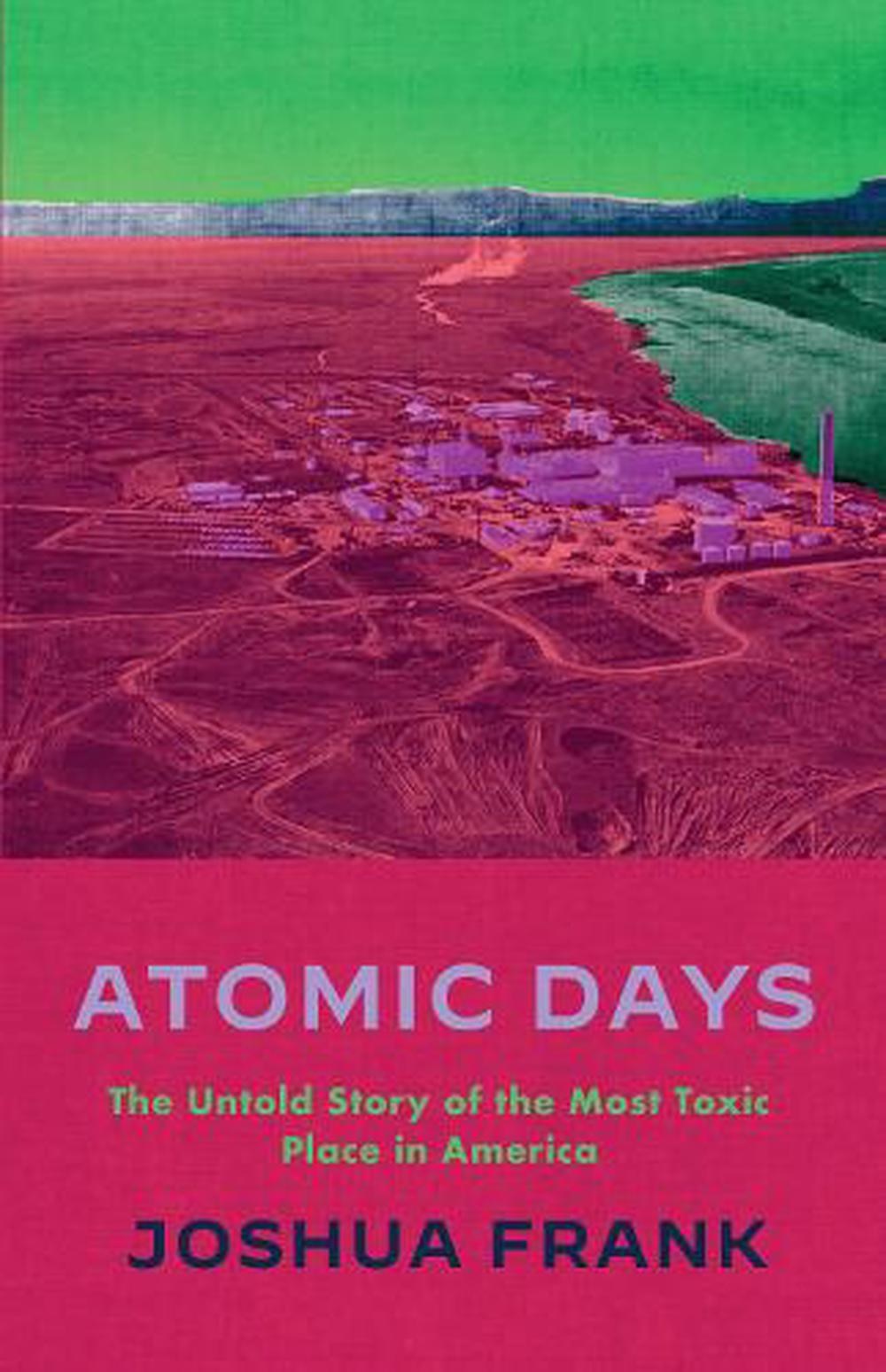
In my new book Atomic Days: The Untold Story of the Most Toxic Place in America, I probe the horrors of the Hanford site in Washington state, one of the locations chosen to develop the first nuclear weapons for the covert Manhattan Project during World War II. For more than 40 years, that facility churned out most of the plutonium used in the vast American arsenal of atomic weapons.
Now, however, Hanford is a radioactive wasteland, as well as the largest and most expensive environmental clean-up project in history. To say that it’s a boondoggle would be an understatement. Hanford has 177 underground tanks loaded with 56 million gallons of steaming radioactive gunk. Two of those tanks are currently leaking, their waste making its way toward groundwater supplies that could eventually reach the Columbia River. High-level whistleblowers I interviewed who worked at Hanford told me they feared that a hydrogen build-up in one of those tanks, if ignited, could lead to a Chernobyl-like event here in the United States, resulting in a tragedy unlike anything this country has ever experienced.
All of this makes me fear that those old Hanford tanks could someday be possible targets for an attack. Sabotage or a missile strike on them could cause a major release of radioactive material from coast to coast. The economy would crash. Major cities would become unlivable. And there’s precedent for this: in 1957, a massive explosion occurred at Mayak, Hanford’s Cold War sister facility in the then-Soviet Union that manufactured plutonium for nukes. Largely unknown, it was the second biggest peacetime radioactive disaster ever, only “bested” by the Chernobyl accident. In Mayak’s case, a faulty cooling system gave out and the waste in one of the facility’s tanks overheated, causing a radioactive blast equivalent to the force of 70 tons of TNT, contaminating 20,000 square miles. Countless people died and whole villages were forever vacated.
All of this is to say that nuclear waste, whether on a battlefield or not, is an inherently nasty business. Nuclear facilities around the world, containing less waste than the underground silos at Hanford, have already shown us their vulnerabilities. Last August, in fact, the Russians reported that containers housing spent fuel waste at Zaporizhzhia were shelled by Ukrainian forces. “One of the guided shells hit the ground ten meters from them (containers with nuclear waste…). Others fell down slightly further — 50 and 200 meters,” alleged Vladimir Rogov, a Russian-appointed official there. “As the storage area is open, a shell or a rocket may unseal containers and kilograms, or even hundreds of kilograms of nuclear waste will be emitted into the environment and contaminate it. To put it simply, it will be a ‘dirty bomb.’”
Ukraine, in turn, blamed Russia for the strike, but regardless of which side was at fault, after Chernobyl (which some researchers believe affected upwards of 1.8 million people) both the Ukrainians and the Russians understand the grave risks of atomically-charged explosions. This is undoubtedly why the Russians are apparently constructing protective coverings over Zaporizhzhia’s waste storage tanks. An incident at the plant releasing radioactive particles would damage not just Ukraine but Russia, too.
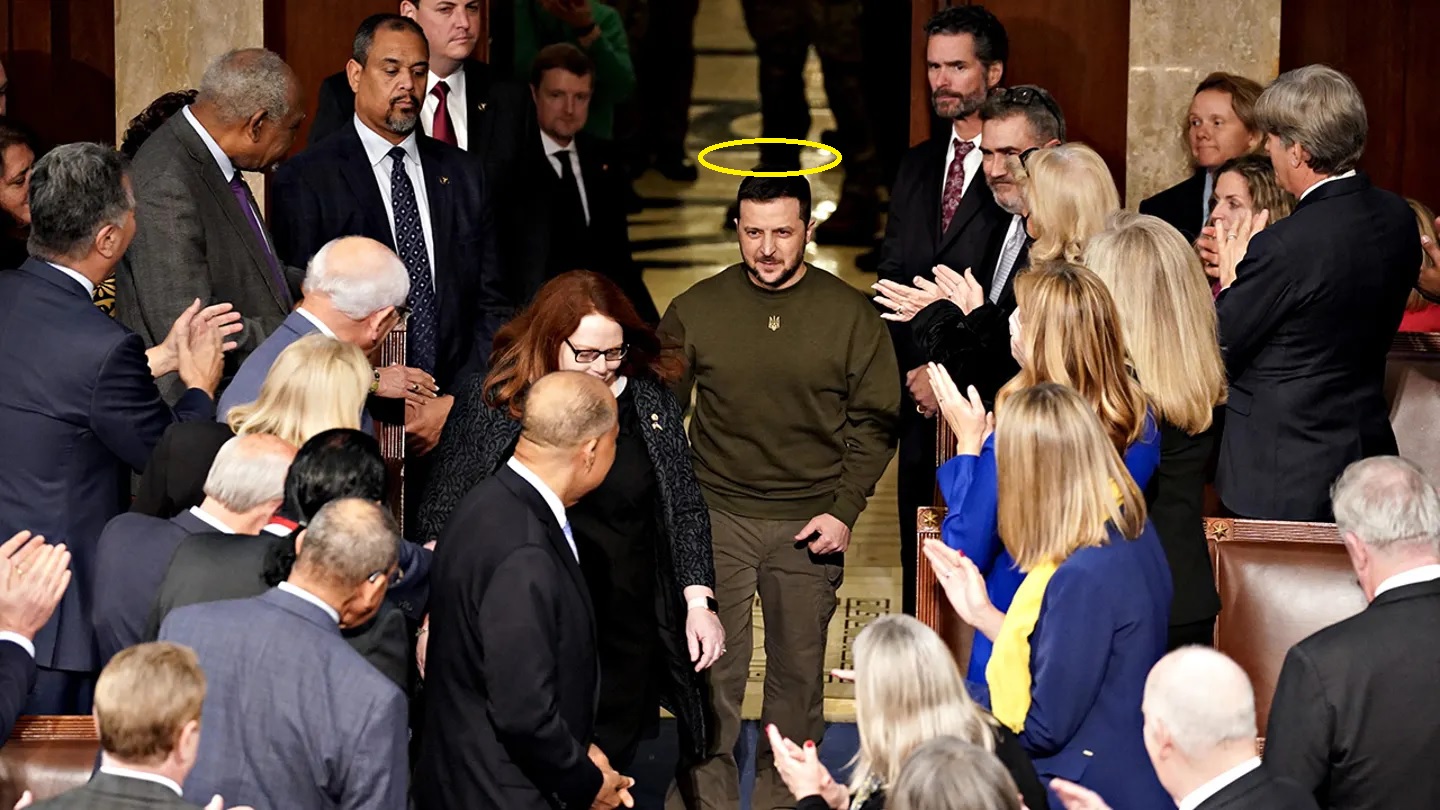
Ukrainian President Vladimir Zelensky has warned Americans to keep supporting Kiev or risk geopolitical irrelevance, during a press conference on the anniversary of Russia’s military operation in the country. Should it stop funding the war effort, the US will “lose the leadership position that they are enjoying in the world,” the Ukrainian leader declared on Friday.
“If they do not change their opinion…they will lose NATO, they will lose the clout of the United States, they will lose the leadership position they are enjoying in the world,” Zelensky declared, following a speech in which he declared 2023 the “Year of Invincibility” and vowed to unite the world against Russia.
The warning was a response to a reporter asking what Zelensky would tell the “growing number of Americans” who believe their country is giving too much money and support to Ukraine. The president made sure to thank his American supporters – a group he hinted included not just Congress and President Joe Biden but also “the TV channels” and “the journalists” – before threatening those who held the “dangerous” opinion that the US should “give up” on Kiev………………………………………….
The Republican Party regained control of the House of Representatives in last year’s midterm elections in part on a promise to curtail the Biden administration’s blank check to Kiev. While Congress has not yet passed any legislation to rein in spending on the conflict, Rep. Marjorie Taylor Greene (R-Georgia) promised earlier this week to introduce a bill to force an audit of the Ukraine aid program and the House Oversight Committee demanded the administration turn over documents proving the military and economic aid being sent to Ukraine was not being lost to “waste, fraud, and abuse.”
Ukraine is readying an offensive to try and seize Russia’s Crimean peninsula, President Vladimir Zelensky said on Friday at a press conference. Kiev is forming new units specifically for the task, with servicemen undergoing training abroad, he revealed.
“We’re taking military steps, we are preparing for them. We are mentally prepared already. We prepare technically, with weapons, forces, we form new brigades, we form offensive units of various kinds and types, we are sending people for training not only in Ukraine, you know, but also in other countries,” Zelensky stated.
The president, as well as other top officials, has repeatedly pledged to re-capture all of the former Ukrainian territories from Russia, including Crimea. The peninsula broke away from the country back in 2014 in the aftermath of the Maidan coup in Kiev, joining Russia after a landslide referendum.
Four other formerly-Ukrainian territories, namely the Donetsk and Lugansk People’s Republics, as well as Zaporozhye and Kherson Regions, were incorporated into Russia after the overwhelming majority of their populations voted in favor of the idea last September.
Neither reunification with Crimea, nor the latest incorporations of other regions got Western recognition, with Kiev and its backers considering these lands part of Ukraine.
Russia has repeatedly warned Kiev against plotting an assault on Crimea. Early in February, former Russian president Dmitry Medvedev, who now serves as Deputy Chair of the Security Council, said that any attack on Crimea would be interpreted as a direct attack on the country itself and would be “met with inevitable retaliation using weapons of any kind.”
the exalted version of Zelensky promoted to NATO state audiences today is a sharp contrast to the pro-peace candidate that Ukrainians overwhelmingly elected four years ago.
it is no wonder that the same US political establishment that sabotaged Zelensky’s peace mandate now holds him up as a hero.
In October 2019, as he took steps to implement Minsk in the face of far-right protests and US hostility, Zelensky assured Ukrainians that he was “the president of peace,” and that “ending this war is of utmost importance to me.” He added: “I, the president, am not ready to sacrifice our people. And that is why I choose diplomacy.”
Elected in 2019 to bring peace to Ukraine, a Zelensky aide now declares that “there is no peace with Russia, and Ukraine must arm itself to the teeth.”
Volodymyr Zelensky marked the one-year anniversary of Russia’s invasion of Ukraine by rejecting any negotiations with the Kremlin.
“There is nothing to talk about and nobody to talk about over there,” Zelensky declared.
The Ukrainian President delivered the message just two weeks after his French and German counterparts urged him, at a meeting in Paris, “to start considering peace talks with Moscow,” the Wall Street Journal reports.
But as an adviser explained to the New York Times, Zelensky is now “more at peace with himself,” and therefore has no need to entertain the possibility of peace with his neighbor.
He has a clear understanding what Ukraine should do,” the adviser said. “There is no ambiguity: There is no peace with Russia, and Ukraine must arm itself to the teeth.”
Zelensky’s “clear understanding” of the need to reject peace with Russia and turn his country into a NATO arms depot is a resounding victory for the Ukrainian far-right and its US government allies. As I wrote here last year, these two powerful forces, aligned by their converging interests in prolonging the post-2014 war in Ukraine’s Donbas region, sabotaged the peace platform that Zelensky was elected on in April 2019. As Adam Schiff put it, the US has used Ukraine’s civil war “so that we can fight Russia over there, and we don’t have to fight Russia here.”
The commemoration of the first anniversary of Russia’s cross-border invasion to end Schiff’s bipartisan “fight” has yielded more insight into how the US, in concert with its ideological allies in Ukraine’s powerful far-right, helped convert Zelensky from pro-peace candidate to “no peace” president.
In a fawning profile, the Washington Post approvingly recounts how Zelensky shifted from naively “thinking peace with Putin was possible” to now believing that “victory is the only answer.” Although the Post attempts to cast Zelensky’s “transformation” as the result of “Russian President Vladimir Putin’s threat,” the details tell a different story.
The Post describes a summer 2019 exchange between the then-rookie president and the top US diplomat in Ukraine, William Taylor. At the time, Zelensky was “expressing curiosity” about the Steinmeier Formula, a German-led effort to revive the stalled Minsk Accords. Minsk, reached in 2015, called for granting limited autonomy to the rebellious Donbas regions in eastern Ukraine in exchange for their demilitarization. Ukraine’s far-right, the driving force behind the 2014 Maidan coup that triggered the ensuing Donbas war, had opposed Minsk’s implementation at every turn.
Zelensky, Taylor recalls, “hoped” that the Steinmeier initiative “might lead to a deal with the Kremlin.” The Ukrainian president “pointed to a document explaining the formulation, thinking that somewhere in the details of the legalese a workable compromise with Moscow might be found.”
But Washington knew better: no compromise with Moscow could be allowed. “No one knows what it is,” Taylor told Zelensky of the German plan. “Steinmeier doesn’t know what it is… It’s a terrible idea.”
The Steinmeier plan was in fact a simple idea, and a welcome one to anyone interested in bringing peace to Ukraine. For his part, Taylor was never shy about advocating war. In a December 2014 letter to TheWashington Post, Taylor denounced an opinion article that had opposed sending US arms to Ukraine and advocated an agreement between NATO and Russia to resolve the Ukrainian crisis. Backers of such steps, Taylor wrote, are “advocating that the West appease Russia.… Now is not the time for appeasement.”
This explains why Taylor was similarly hostile to the “terrible” plan named after former German foreign minister Frank-Walter Steinmeier. The Steinmeier Formula called for holding local elections in the rebel-held Donbas areas under Ukrainian law and international supervision. If OSCE monitors certified the results, then Ukraine would regain control of its eastern border and enact a special status law granting the rebellious Donbas regions limited autonomy.
But this road map, along with a similar initiative from French diplomat Pierre Morel, “got nowhere because of opposition in Ukraine,” former UK diplomat Duncan Allan observed for the UK government-funded think tank Chatham House. When Zelensky tried to revive it in late 2019, Allan added, “[a]nother sharp reaction in Ukraine forced him to back down.” As the New York Times now notes in passing, “a backlash at home — with street protesters in Kyiv accusing him of treason for surrendering land — steered the Ukrainian president to a political formula in which he rejected concessions” with Russia.
Specifically, that “backlash” in Ukraine included not only violent protests but outright threats to Zelensky’s life.
“Zelenskyy said he was ready to lose his ratings, popularity, position,” Right Sector co-founder Dmytro Yarosh, commander of the Ukrainian Volunteer Army and former senior Ukrainian military advisor, said shortly after Zelensky’s May 2019 inauguration. “No he would lose his life. He will hang on some tree on Khreshchatyk – if he betrays Ukraine and those people who died in the [Maidan] Revolution and the [Donbas] War.” (Two years after threatening to hang the president from a tree, Yarosh was given a repeat appointment as an advisor to the Commander-in-Chief of the Ukrainian military. The Ukrainian military subsequently claimed that the appointment was withdrawn).
Despite the internal and external opposition, Zelensky departed a meeting with Putin in December 2019 feeling “hopeful”, the Post reports. “Within weeks, Russia agreed to a broader prisoner exchange and offered Ukraine a $3 billion gas arbitration settlement as well as a new gas transit deal.”
But on top of the far-right backlash at home, Zelensky’s peace initiative faced direct hostility from Ukraine’s patron in Washington. After warning Zelensky against pursuing a “terrible” European-brokered peace plan, William Taylor soon became a hero of Trump’s first impeachment over Ukraine. At the impeachment proceedings, which kicked off in October 2019 just as Zelensky was trying to follow through on his peace mandate, Taylor was summoned to assure Congress and a Russiagate-crazed media class that Trump’s pause on weapons subsidies for the Ukrainian fight against the Russia-backed Donbas rebels endangered “our national security.” (For his services, the New York Times lauded Taylor as “a septuagenarian Vietnam veteran with a chiseled face and reassuring gray hair,” while the Washington Post declared him to be a “meticulous note taker.”)
The prevailing imperative to use Ukraine “to fight Russia over there” (Schiff) meant that Zelensky had no chance to pursue the “terrible” Minsk agreement that Taylor and other influential proxy warriors opposed.
“The reality is that Ukraine depends on political, diplomatic, economic and military support from the West, and particularly from the United States,” Samuel Charap of the Pentagon-tied RAND Corporation wrote in November 2021. Up to that point, “Ukraine has shown little desire” to “[implement] its obligations under the Minsk II agreement,” and the US had “not yet used its influence to push for progress on the Donbas conflict.” If the Ukrainian government could be pushed “toward complying”, Charap noted, that “might actually invite de-escalation from Russia” while saving Ukraine “from calamity.”
But by then, Zelensky had decided to side with the forces that had sabotaged him. According to the Post’s account, citing David Arakhamia, the leader of Zelensky’s faction in parliament: “By early 2021, Zelensky believed that negotiations wouldn’t work and that Ukraine would need to retake the Donetsk and Luhansk regions ‘either through a political or military path.’” As a result, “[t]he Kremlin disengaged.”
Zelensky’s early 2021 decision that “negotiations wouldn’t work” explains why, in early 2022, he shunned all opportunities to prevent Russia’s looming invasion. At the final talks on implement Minsk, a “key obstacle,” the Washington Post reported, “was Kyiv’s opposition to negotiating with the pro-Russian separatists.” When Germany proposed a last-minute deal in which Ukraine would “renounce its NATO aspirations and declare neutrality as part of a wider European security deal,” Zelensky turned it down, according to the Wall Street Journal. After rejecting diplomacy, Zelensky’s government then significantly increased its shelling of the Donbas, a potential step toward trying to “retake the Donetsk and Luhansk regions” via the “military path” that the Washington Post has newly confirmed.
As a result, the exalted version of Zelensky promoted to NATO state audiences today is a sharp contrast to the pro-peace candidate that Ukrainians overwhelmingly elected four years ago.
In October 2019, as he took steps to implement Minsk in the face of far-right protests and US hostility, Zelensky assured Ukrainians that he was “the president of peace,” and that “ending this war is of utmost importance to me.” He added: “I, the president, am not ready to sacrifice our people. And that is why I choose diplomacy.”
By now choosing to reject diplomacy, President Zelensky has shown that he is more than willing to sacrifice his people for the sake of his NATO state patrons’ desired proxy war against Russia. Accordingly, one year into the catastrophic Russian invasion that it helped provoke, it is no wonder that the same US political establishment that sabotaged Zelensky’s peace mandate now holds him up as a hero.
Courting disaster — Beyond Nuclear International Embroiled in a year-long war, Ukraine’s reactors face new threats By Linda Pentz Gunter A year ago, we warned of the significant and unacceptable risks to Ukraine’s 15 nuclear reactors, should they become caught up in a war zone as a consequence of an invasion by Russia. A year later, as we outlined in a Beyond Nuclear press release, those risks have become a reality. And in recent days, the scares and close calls have ramped up again.
Just last week, cruise missiles flew dangerously low over the South Ukraine nuclear power plant in the country’s western region. Then alarms were raised as observers noticed an alarming drop in the water level of the Kakhovka Reservoir, on which the six-reactor Zaporizhzhia nuclear power plant depends for its essential cooling water supply.
A missile strike or loss of cooling water are just two of the many scenarios that could lead to a nuclear power plant disaster in Ukraine. Others include loss of electricity supply, human error or sabotage. The conditions of war just make any and all of these outcomes far more likely.
Indeed, these latest close calls and others prompted a recent statement by the head of Germany’s Federal Office for Radiation Protection, Inge Paulini, who warned that an incident at one of Ukraine’s nuclear power plants would have, “far-reaching consequences as long as the war continues.” And yet, she pointed out, “this danger already seems to be receding into the background of public awareness.”
Indeed, it has been a consistent pattern in the press not to take nuclear power risks seriously. Instead, the media publishes story after story, planted there by a well-orchestrated worldwide nuclear industry campaign, about the benefits of expanding nuclear power.
The Ukrainian energy ministry would seem to agree. Even in the midst of this devastating war, it has just made a deal with the American company, Westinghouse, to purchase two new AP1000 reactors. It is of course unrealistic to envisage these actually being built during a war and, if ever operational, they would simply become additional lethal targets.
In Ukraine, we have seen Russia routinely attack the electric grid, leading to periodic loss of offsite power at all four of Ukraine’s nuclear power plant sites. Zaporizhzhia, in the contested southeastern part of the country, has experienced multiple disconnections from the grid. So far, the diesel generators have functioned until offsite power was restored. But they are reliant on a steady replenishment of fuel, which could be impeded were the plant to come under siege.
A ready supply of cooling water is also essential so the drain down of the Kakhovka Reservoir is a serious concern. Why this is happening is unclear, but it is thought to be a possible Russian military tactic to flood strategic areas, making them impassable to advancing Ukrainian troops.
The unimaginable stress that continues to be experienced by the depleted workforce at Zaporizhzhia adds to the possibility of a fatal human error. Human error was at the root of both the 1979 Three Mile Island nuclear power plant accident in the United States and the 1986 Chornobyl Unit 4 explosion in Ukraine, without the contributing stress factor of war conditions.
The proximity of cruise missiles to nuclear plants is a nightmarish disaster waiting to happen, even if they are on their way to other targets, for now. But whether deliberate or accidental, a serious assault would release potentially enormous amounts of dangerous radioactive isotopes into the environment.
The reason damage from a nuclear power plant disaster is so serious is in part due to the longevity of the radioactive isotopes released and also because the fallout deposits these into the food chain by contaminating water, soil, crops and livestock.
Some of the enduring health outcomes include thyroid cancer, birth defects, still births, neonatal deaths, leukemias — especially among children — cancers and cardiovascular disorders. However, it should be noted that studies have also found elevated rates of leukemia in children living close to routinely operating nuclear power plants.
The international response so far has come mainly from the International Atomic Energy Agency (IAEA), which has called for safe zones around Ukraine’s nuclear power plants but so far has been unsuccessful in instituting these. And safe zones, while an essential first step, only prevent disaster resulting from a direct hit but are ineffective against loss of grid access or human error. Indeed, the IAEA has been struggling for more than two weeks simply to get a shift change of its observers at Zaporizhzhia accomplished. So far, conditions have remained too dangerous to allow this. “The Agency is doing everything it can to conduct the safe rotation of our staff there as soon as possible,” IAEA director, Rafael Grossi said.
Apart from being pre-deployed radiological weapons, nuclear power plants must, for safety reasons, be shut down when embroiled in a war. In Ukraine, where 50% of the country’s electricity is supplied by nuclear power, this means plunging an already terrified population into greater misery in the midst of winter. The lesson learned is that nuclear power, due to its inherent dangers, cannot serve as a reliable energy source. We must reject it as we do nuclear weapons and turn to other, more benign and renewable ways of supplying electricity.
Linda Pentz Gunter is the international specialist at Beyond Nuclear and writes for and curates Beyond Nuclear International.
Headline photo of Rocket in Kupiansk city (Kharkiv region of Ukraine) after Russian shelling. February 2023 by Олексій Мазепа / АрміяInform/Wikimedia Commons.
This entire scenario is a long slow march toward nuclear war or the complete disintegration of Ukraine.
The U.S. won’t end the weapons deliveries because Joe Biden is afraid of losing face and his closest advisors such as Victoria Nuland have an irrational hatred for Russia and are total warmongers.
In yesterday’s issue, I addressed the biggest and most complex topic on the geopolitical landscape today — China.
But today I’m discussing what is by far the most alarming topic on the geopolitical landscape today. That’s the war in Ukraine and the dangers of escalation.
I’ve written extensively about two facets of the war in Ukraine that you don’t hear from legacy media in the United States or U.K. The first is that Russia is actually winning the war.
U.S. outlets such as The New York Times (a channel for the State Department) and The Washington Post (a channel for the CIA) report endlessly about how Russian plans have failed, about how incompetent they are about how the Armed Forces of Ukraine (AFU) have pushed back Russians in the Donbass, and how NATO weapons such as U.S. Abrams tanks, U.K. Challenger tanks and German Leopard tanks will turn the tide against Russia soon.
This is all nonsense. None of it is true.
Reality Check
First off, the Ukrainian advances that took place in late summer were against lightly defended positions that the Russians quickly conceded to conserve forces. The Russians were willing to give up the land so that they wouldn’t lose valuable men and materiel.
The Russians withdrew to more defensible positions and have been badly mauling Ukrainian attacking forces ever since. Ukraine has wasted incredibly large amounts of men and equipment in these futile and ill-advised attacks.
In all, credible reports indicate that AFU casualties are nearing 500,000 and are increasing at an unsustainable rate. On the other hand, reports of 100,000 Russian dead are almost certainly wild exaggerations put out by Ukraine. The BBC attempted to verify these numbers and could only find about 20,000 confirmed Russian dead based on extensive searches on funeral notices, public records, etc.
Send in the Tanks — Eventually!
What about the tanks NATO is supposedly sending? Well, the tanks have not been delivered yet and most won’t be for months or longer. Our own M1 Abrams tanks might not even arrive for a year or more.
We actually have to custom build these tanks so that they don’t have the special armor and other advanced systems that our own M1s have. The Pentagon doesn’t want them falling into Russian hands if they’re destroyed or captured. Besides, we’re only sending 31 tanks anyway.
When the NATO tanks do arrive, they’ll likely quickly be destroyed by Russian artillery, anti-tank weapons and precision missiles. They’re good tanks, but far from invincible. For decades, the Russians have been developing powerful weapons specifically designed to destroy these NATO tank models. The Russians aren’t particularly worried about them.
Aside from that, tanks rely on effective air cover for protection, which Ukraine lacks. They’ll be sitting ducks on the battlefield. It doesn’t really make sense to send tanks to Ukraine unless you send combat aircraft to give them cover (more on that below).
Russia’s Winning on the Battlefield
Meanwhile, Russian forces have nearly encircled the city of Bakhmut, which is a major transportation and logistics hub, with several key roads and rail lines passing through it. It’ll probably fall to the Russians within weeks.
Losing Bakhmut will be a major blow to Ukraine, despite claims in the western media that it really isn’t very important. Ukraine’s entire 800-mile defensive line would probably begin to crumble, and they don’t have heavily fortified positions to fall back on. Ukrainian troops, while brave and competent soldiers, are exhausted and running out of supplies as it is.
On top of that, it appears likely that Russia is preparing a devastating offensive with massive amounts of men, tanks, armored personnel carriers, artillery, helicopters, drones and fixed-wing aircraft.
This Russian army is not the same army that invaded Ukraine a year ago. It’s much better trained, led and equipped. It’s learned from the mistakes it made during its initial invasion last February. Ukraine shouldn’t expect them to repeat those mistakes.
Does all this mean I’m cheering on a Russian victory in Ukraine? No, I’m just observing the facts on the ground and consolidating them to perform an objective analysis.
That analysis leads me to believe that Russia will win the war militarily. Western military assistance may prolong the fighting but won’t affect the ultimate outcome. It’ll just delay the inevitable and get a lot more people needlessly killed.
The Much Greater Risk
The second facet of this war not reported in the media, or at least downplayed, is the growing risk of nuclear war.
This risk increases with every escalatory step by both sides. The U.S. is the leader in reckless escalation by supplying long-range artillery, Patriot anti-missile batteries, intelligence, surveillance, and now the tanks. Russia responds at each step.
There’s a number of steps before the two sides arrive at the nuclear level, but neither shows a willingness to step back.
By the way, Russia has every legal right to attack those NATO countries supplying arms to Ukraine. By supplying arms to a party to the conflict, they’ve given up their neutrality and have become, in effect, combatants. Russia hasn’t done this because it doesn’t want to bring NATO directly into the fight. But legally, it can.
Gimme, Gimme, Gimme
Ukraine’s demands on the U.S., UK and the rest of NATO for advanced weapons to fight Russians know no limits. The West began by supplying Ukraine with cash, intelligence and anti-tank weapons such as the Javelin missile. Soon we were supplying long-range artillery, drones, and more cash.
As Russian advances continued, Zelensky demanded and got Patriot anti-missile batteries that can destroy incoming Russian missiles. The U.S. artillery was aimed at Russian Crimea. Several drones struck inside Russia at sensitive air bases with nuclear weapons nearby.
Gimme, Gimme, Gimme
Ukraine’s demands on the U.S., UK and the rest of NATO for advanced weapons to fight Russians know no limits. The West began by supplying Ukraine with cash, intelligence and anti-tank weapons such as the Javelin missile. Soon we were supplying long-range artillery, drones, and more cash.
As Russian advances continued, Zelensky demanded and got Patriot anti-missile batteries that can destroy incoming Russian missiles. The U.S. artillery was aimed at Russian Crimea. Several drones struck inside Russia at sensitive air bases with nuclear weapons nearby.
Once these advanced systems show they can’t help, what’s the Ukrainian’s next demand? Russia can escalate just as quickly and lethally as the U.S.
This entire scenario is a long slow march toward nuclear war or the complete disintegration of Ukraine.
Is Anyone Really Prepared for This?
The U.S. won’t end the weapons deliveries because Joe Biden is afraid of losing face and his closest advisors such as Victoria Nuland have an irrational hatred for Russia and are total warmongers.
Now, we can add a new danger, resulting from desperation. This is the fact that the U.S. itself may be the biggest loser in the war.
As Ukraine disappears under a massive Russian onslaught, the U.S. will grow increasingly desperate. Its credibility is on the line after committing so much money, materiel and moral weight to Ukraine’s defense.
The Biden administration has essentially turned the war in Ukraine into an existential crisis for the U.S. and NATO, when it never should have been. Ukraine has never been a vital U.S. interest. But the war is existential for Russia, and Russia won’t give up.
Is the U.S. just going to throw up its hands and concede Russian victory? NATO may actually disintegrate in the face of such spectacular failure. So, we’ll probably double down.
Maybe a desperate Biden orders troops into western Ukraine as a buffer against a complete Russian takeover of the country. You can imagine what could go wrong. That situation may quickly devolve into a direct war between the U.S. and Russia rather than the proxy war that it is now.
The American people and investors in particular are not prepared for any of this. They should be. It’s becoming increasingly likely.
The West didn’t even want Kiev in NATO because of corruption concerns, the Pulitzer Prize-winning journalist says.
The US and its allies should have attempted to reach an agreement with Moscow as their belief that Ukraine can win a conflict against Russia is “suicidal,” iconic American investigative journalist Seymour Hersh has argued.
Speaking in a YouTube interview with the Consortium News outlet on Friday, Hersh accused the Biden administration of making “so many bad mistakes,” adding that “it’s impossible to believe just how dumb this leadership was.”
“It was suicidal to think you can win that war, that Ukraine can win the war [against Russia]. There’s just too much corruption. That was a very, very bad decision. We should have been pushing for peace, we should have made an agreement,” the former Pulitzer Prize winner insisted.
US President Joe Biden basically “blew off NATO in Europe” by telling allies that he is backing Ukraine with its “totally corrupt government,” Hersh added. The journalist also pointed out how Kiev glorifies Stepan Bandera, “the great pro-Nazi who killed Jews like crazy during World War II.”
It’s just silly not to right away assure the Russian government that we weren’t interested in making Ukraine a member of NATO,” Hersh stated, referring to long-standing concerns in Moscow. “NATO didn’t want Ukraine anyway because of the corruption.”
Hersh recently published a bombshell report which accused the US of sabotaging the Nord Stream pipelines last year. He cited an informed source as explaining that explosives were planted on the bottom of the Baltic Sea by US Navy divers under the guise of a NATO exercise back in June 2022. They were detonated in late September, rendering the pipelines, which were built to deliver Russian gas to Europe through Germany, inoperable.
US Secretary of State Antony Blinken, as well as Under Secretary for Political Affairs Victoria Nuland and National Security Advisor Jake Sullivan, are all “very hawkish,” according to the journalist. The trio “pushed Biden very hard” to go ahead with the sabotage because “they have long-standing incredible hatred for [Russian President Vladimir] Putin. It’s almost personal, I would guess,” Hersh claimed.
US National Security Council spokeswoman Adrienne Watson branded Hersh’s bombshell report “utterly false and complete fiction.” The journalist has promised even more revelations on how the pipelines were blown up.
Ukrainian officials have urged US Congress members to press President Joe Biden’s administration to send F-16 jetfighters to Kyiv, saying the aircraft would boost Ukraine’s ability to hit Russian missile units with US-made rockets, lawmakers said.
The lobbying came over the weekend on the sidelines of the Munich Security Conference in talks between Ukrainian officials, including Foreign Minister Dmytro Kuleba, and Democrats and Republicans from the Senate and House of Representatives.
“They told us that they want (F-16s) to suppress enemy air defenses so they could get their drones” beyond Russian front lines, Senator Mark Kelly, a former astronaut who flew US Navy fighters in combat, told Reuters on Saturday evening.
Biden last month said “no” when asked if he would approve Ukraine’s request for Lockheed-Martin-made F-16s.
Four delegations from the Senate and House combined in what members called the largest number of US lawmakers to attend Europe’s premier security gathering since it started in 1963, demonstrating clear bipartisan support for Ukraine…………………………
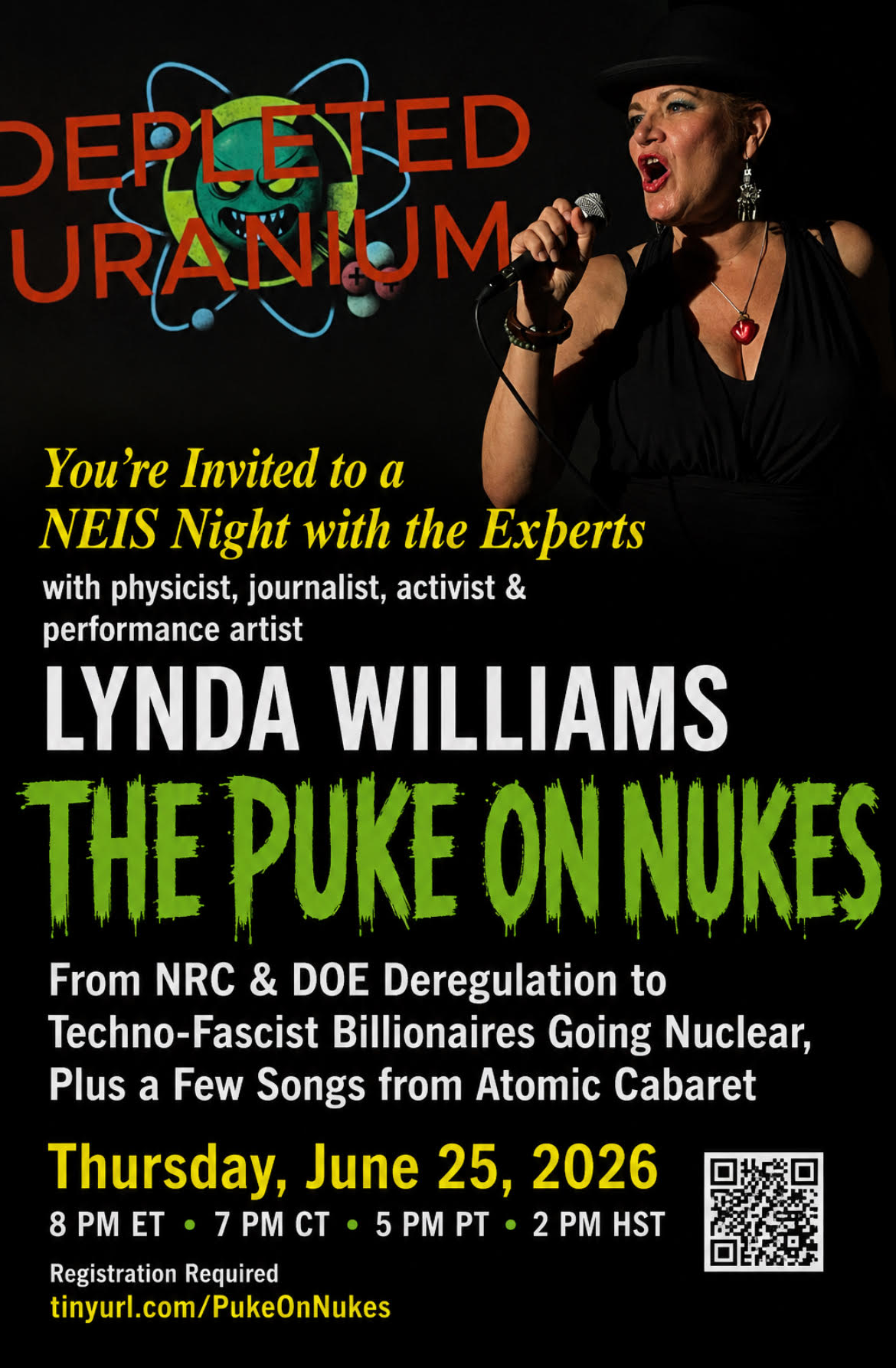
7pm Central Time (8pm ET, 6pm MT, 5pm PT) UTC – 5 From NRC & DOE Deregulation to Techno-Fascist Billionaires Going Nuclear, Plus a Few Songs from Atomic Cabaret REGISTER











 nuclear-news