Sizewell C | Investor withdraws from consortium set for 25% stake.
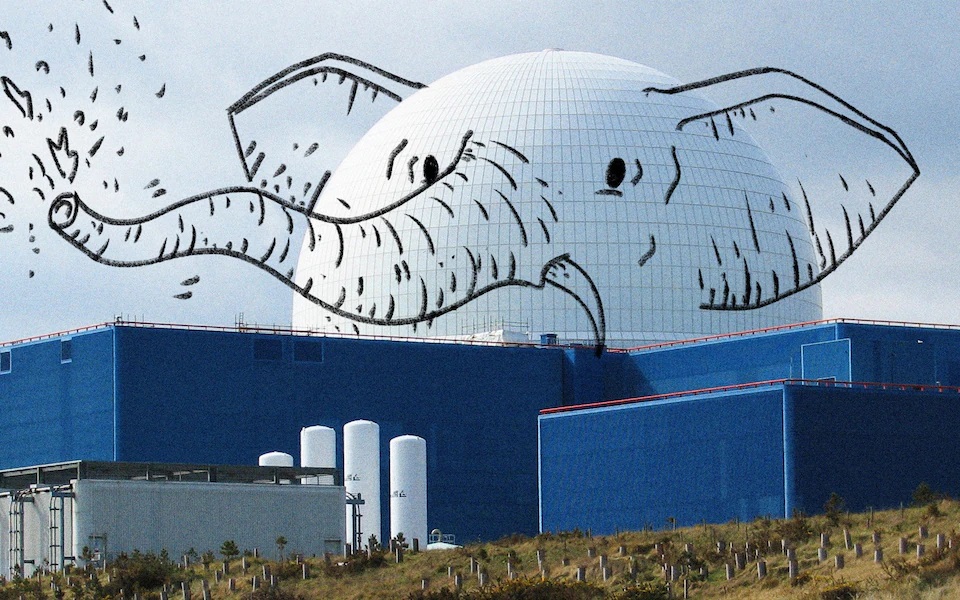
17 Jul, 2025 By Tom Pashby, https://www.newcivilengineer.com/latest/sizewell-c-investor-withdraws-from-consortium-set-for-25-stake-17-07-2025/
One of the investors reported to be considering a stake in Sizewell C has decided to withdraw, while the government is no longer planning to classify nuclear energy as “sustainable”.
Schroders Greencoat, which describes itself as “a specialist renewables infrastructure investor”, was previously reported to be one of the companies considering an ownership stake in Sizewell C.
It was widely reported that Schroders Greencoat was one of the companies in the consortium led by Brookfield Asset Management, which was in total considering a 25% stake in the nuclear power plant.
In an email dated 16 July seen by NCE, the investor said it no longer wishes to invest in the project on the Suffolk coast.
Wait for final investment decision continues
Sizewell C must achieve its final investment decision (FID) before main construction can start.
Despite the delay, Sizewell C has committed over £2.5bn on contracts.
It is now expected that the final investment decision will be taken this summer.
Nuclear dropped from sustainable finance classification plans
The UK Government recently decided to not go ahead with plans to create a UK Green Taxonomy for financial investments, meaning that it won’t have a specific classification of certain areas of activity, like nuclear power, as “sustainable”.
This had been a plan hatched by former chancellor Jeremy Hunt in the 2023 Spring Budget, but NCE found that no work had gone towards this 16 months later.
HM Treasury economic secretary to the treasury and city minister Emma Reynolds announced the decision in the UK Green Taxonomy Consultation Response.
“To make sure the UK is well-positioned to capture [growth in the green economy], the government is delivering a world-leading sustainable finance framework,” Reynolds said.
“This includes ensuring that we have the right tools in place and the proportionate regulation that is needed to support the transition, strengthening the UK’s position as the sustainable finance capital of the world so that the UK can lead the clean energy transition at home and abroad.
“That is why, after careful consideration, the government has concluded that a UK Taxonomy would not be the most effective tool to deliver the green transition and should not be part of our sustainable finance framework.
“Whilst our ambitions to continue as a global leader remain unchanged, the consultation responses showed that other policies were of higher priority to accelerate investment into the transition to net zero and limit greenwashing.”
It is understood that the decision to drop plans for the taxonomy may have contributed to Schroders Greencoat’s withdrawal from investing in Sizewell C.
Anti-Sizewell C campaign attributes withdrawal to taxonomy decision
Stop Sizewell C executive director Alison Downes said: “It’s welcome news that Schroders Greencoat won’t be investing in Sizewell C.
Based on our dialogue with Schroders, we attribute this to the government deciding not to adopt a green taxonomy, which thankfully has the outcome that nuclear energy cannot be erroneously labelled ‘green’.
“We wish that other investors would take the same view and exit Sizewell C forthwith.”
No comment from parties to negotiations
The negotiations around the final investment decision are often described as commercially sensitive, and as such the government doesn’t tend to comment.
This hasn’t stopped sources informing the media about certain parts of the negotiations, like the report in the FT that the government is now taking a minority ownership stake.
The Department for Net Zero and Energy Security, Sizewell C and Schroders Greencoat did not supply a comment.
Workers at Hinkley Point C nuclear plant stage wildcat strike over alleged bullying
Hundreds of mechanical engineers stopped work in protest over
‘management practices’ at construction site. A group of mechanical
engineers numbering in the low hundreds stopped work on Tuesday without the
backing of their trade unions amid deepening woes within the 26,000-strong
workforce over the conditions on the site.
It was the second unofficial
strike to take place in a week after a walkout last Wednesday in defiance
of union reps and the site developer, French utility company EDF, following
claims that senior managers on the Hinkley site have bullied engineering
staff. A contract worker on the project, which is running years late and
billions of pounds over budget, told the Guardian one of the incidents was
believed to have involved a senior manager bullying a young woman on the
team.
“They’ve had enough, and they’re out the gate,” he said.
Trade union Unite confirmed that a number of workers are taking part in a
protest over “management practices” which has resulted in the workers
being removed from the site. “Unite expects this matter to be resolved
soon,” a spokesperson said. The Guardian understands that EDF, which is
developing the first new nuclear reactor in a generation at Hinkley Point,
has begun an independent investigation into the alleged bullying on site.
The row has emerged days after the UK nuclear watchdog confirmed it would
prosecute EDF alongside the site’s main contractors Bouygues Travaux
Publics and Laing O’Rourke for health and safety offences over the death
of a site supervisor at the site after an accident in 2022.
Guardian 15th July 2025, https://www.theguardian.com/uk-news/2025/jul/15/workers-hinkley-point-c-nuclear-plant-stage-wildcat-strike-over-alleged-bullying
Improvements required at Sellafield after lead oxide release
The Office for Nuclear Regulation (ONR) has served an improvement notice
on Sellafield Ltd following an incident at the Cumbria site. In April, an
unintentional release of lead oxide was detected at the First Generation
Magnox Storage Pond (FGMSP) facility when workers noticed the degraded
condition of some flexible lead shielding.
Lead shielding sheets are used
across the site to protect workers from potential exposure to radiation.
The coating on the sheets used on the FGMSP skip handling machine had
degraded over time, resulting in lead oxide being released which posed a
potential risk to workers. Further enquiries have identified a number of
other locations across the Sellafield site where degraded flexible lead
shielding sheets caused a risk of lead exposure. Lead oxide is not a
radioactive substance, but can be harmful if ingested, inhaled or absorbed.
ONR 9th July 2025, https://www.onr.org.uk/news/all-news/2025/07/improvements-required-at-sellafield-after-lead-oxide-release/
Construction workers walk out at Hinkley Point C
Thousands of construction workers have walked out unofficially at the
massive Hinkley Point C nuclear power plant against bullying management. As
we go to press, they are still out. It has been estimated that there are
12,000 workers on the site, organised by Unite and the GMB, and it is
reported that anything from 2,000 to 4,000 workers are involved in this
dispute, reportedly at MEH Alliance – bringing together Altrad Services,
Cavendish, Balfour Beatty, NG Bailey and Altrad Babcock.
Socialist Party 15th July 2025,
https://www.socialistparty.org.uk/articles/140831/15-07-2025/construction-workers-walk-out-at-hinckley-c/
Hoping for nuclear to boost the economy -will not end well.

Samuel Rafanell-Williams, Scottish CND:
MANY readers will be conscious of
the emerging PR operation to promote nuclear power and admonish the
Scottish Government over its long-standing opposition to new nuclear
projects in Scotland.
This comes at a time when The Ferret reported 585
cracks in the reactor of the Torness nuclear plant in East Lothian,
prompting fears about radioactive risks (Hunterston B power station was
closed in 2022 following the discovery of 586 reactor cracks).
The industrial messes of the Hinkley and Sizewell nuclear projects in England,
both running billions over budget, also don’t sweeten the case for
starting similar projects in Scotland.
Transparently, this media drive is
an attempt to manufacture consent for new potential nuclear plants in
Scotland in the wake of the UK Government’s recent proud announcement of
“Nuclear Britain”.
These PR efforts in Scotland are being led by
lobbyists like Britain Remade, a group composed of former Tory party
officials firmly committed to lifting Scotland’s ban on nuclear power, as
recently reported by Bella Caledonia.
Make no mistake, the UK
Government’s promotion of nuclear power is integral to its vision of a
war economy: massive investment, including exorbitant public expenditure,
into so-called “civilian” nuclear power (£40 billion-plus for Hinkley,
£40bn-plus for Sizewell) is a precondition for shoring up the nuclear
weapons industry. As Scottish CND have frequently argued, much of the same
technical expertise, personnel and fissile materials are required in both
fission and the production of warheads and propulsion reactors for naval
vessels. All nuclear states know building their omnicide weapons relies on
a nuclear power programme.
The National 11th July 2025, https://www.thenational.scot/politics/25305651.hoping-nuclear-boost-economy-will-not-end-well/
SIZEWELL C, RISING SEA LEVELS AND EDF’s SILENCE
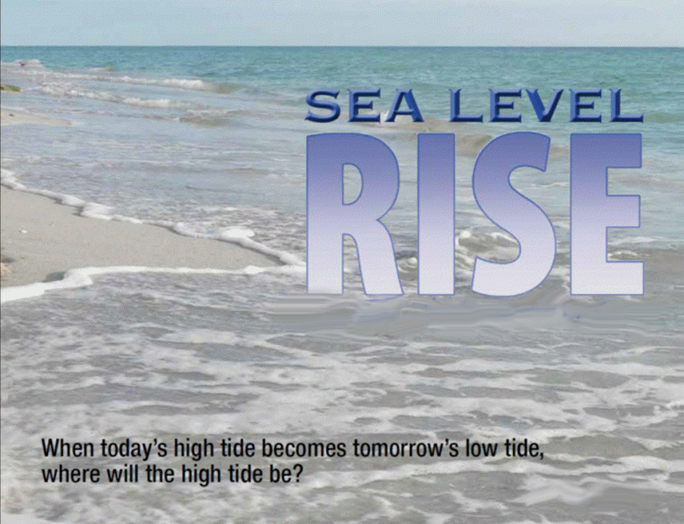
The dust has just about settled since Labour’s ‘golden nuclear
moment’ laid out by Rachel Reeves in her recent Spending Review. Plans
for the monstrous Sizewell C took another step forward, nudged along by the
offer of another £14.2 billion of taxpayers’ money, together with a
further £2.5 billion promised for Small Modular Reactors, and roughly the
same amount for fusion, the nuclear industry’s very own black hole.
So
loud were the fanfares, so overblown the hype, that the real story of that
week got lost. EDF’s deeply ingrained habits of secrecy and deceit were
– yet again – exposed to the harsh light of a Freedom of Information
request from the indefatigable Together Against Sizewell C (TASC). One of
the principal concerns that TASC has doggedly pursued over the last few
years is the vulnerability of Sizewell C being built on one of Europe’s
most rapidly eroding coastlines and its lack of resilience to the impacts
of climate change. The evidence regarding future sea level rise goes from
deeply worrying to totally terrifying – with the very real possibility of
at least a 1 metre rise – and possibly as much as 2 metres – by 2100.
Given that the spent fuel used at Sizewell C throughout its operating life
(around 4,000 tonnes) will need to be stored on site until at least 2160
this is clearly a matter of the greatest concern.
Johnathon Porritt 7th July 2025, https://jonathonporritt.com/sizewell-c-flood-risk-and-edf-silence/
Staff walk out at Hinkley Point C over alleged ‘bullying’
“This bullying has been going on for far too long.”
Staff at Hinkley Point C walked out
on an unofficial strike on Wednesday over alleged bullying. An unconfirmed
number of workers in the MEH group of contractors have downed tools at the
nuclear power station construction site in Somerset yesterday (July 9). A
person involved in the staff walk out told the Local Democracy Reporting
Service it was a response to bullying from senior management. They said:
“This bullying has been going on for far too long.”
Somerset Live 10th July 2025, https://www.somersetlive.co.uk/news/local-news/staff-walk-out-hinkley-point-10333388
Why new nuclear power is a bad way to balance solar and wind
As we continue to respond to the coordinated propaganda campaign for new nuclear power in Scotland we hear from David Toke, the author of the book ‘Energy Revolutions – profiteering versus democracy’ (Pluto Press).
In the UK it has almost become an accepted truth in the media that new nuclear power is needed because there is no other practical or cheaper way to balance fluctuating wind and solar power. Yet not only is this demonstrably false, but it actually runs counter to the way that the UK electricity grid is going to be balanced anyway. Essentially the UK’s increasingly wind and solar dominated grid is going to be balanced by gas engines and turbines that are hardly ever used. But you would never guess this from the coverage.
Bella Caledonia 9th July 2025,
https://bellacaledonia.org.uk/2025/07/09/why-new-nuclear-power-is-a-bad-way-to-balance-solar-and-wind/
UK Moves Closer to Approving Sizewell C Nuclear Plant Project
The UK government has reached a deal with French authorities, allowing
Electricite de France SA (EDF) to retain a 12.5% stake in the Sizewell C
nuclear reactor project. The UK government and other investors will hold
the remaining stake, with the UK investing £14.2 billion in the project to
replace aging atomic plants and provide low-carbon electricity. EDF is set
to hold a board meeting to greenlight its participation in Sizewell C,
which will help the UK government make a final investment decision on the
project soon after.
Bloomberg 7th July 2025, https://www.bloomberg.com/news/articles/2025-07-07/uk-moves-closer-to-approving-sizewell-c-nuclear-plant-project
Trawsfynydd unlikely for new nuclear development, council hears.
Gwynedd Council indicates it’s highly unlikely Trawsfynydd will see new nuclear
projects soon, focusing instead on a science park. It is “highly
unlikely” that Trawsfynydd will be considered for new nuclear development
in the near future. Gwynedd Council’s full meeting on 3 July heard that
despite “uncertainty” over the site, work was underway with partners to
establish a science park and future jobs. Decommissioning work was
programmed until 2060, according to Nuclear Restoration Services plans.
“There is considerable uncertainty about the direction of government’s
policy, funding and priorities, which means that it is highly unlikely that
the Trawsfynydd site will be considered by government and the private
sector for new nuclear development in the near future”.
Cambrian News 8th July 2025, https://www.cambrian-news.co.uk/news/trawsfynydd-unlikely-for-new-nuclear-development-council-hears-810243
Energy Scotland’s John Proctor responds to The Herald’s pro-nuclear spread.
Nuclear power in Scotland – not needed, not economic, not wanted, not safe

Leah Gunn Barrett, Jul 07, 2025, https://dearscotland.substack.com/p/energy-scotlands-john-proctor-responds
Energy Scotland* convener John Proctor has given me permission to publish a letter he sent to The Herald in response to its series of pro-nuclear articles published at the end of June. The Herald is owned by London-based Newsquest which, in turn, is owned by US media conglomerate, Gannett. The Herald has not published his letter.
I see Joani Reid MP has joined Anas Sarwar MSP and Michael Shanks MP in the chorus calling for new nuclear energy plant in Scotland (The Herald 28th June).
Of course, Joani has no concerns about someone building one of these in her back-yard – as her back-yard is in London, but Michael Shanks was bit more bullish when he declared he would be relaxed about having a Small Modularised Reactor (SMR) erected in his constituency. I am not sure how the good people of Rutherglen feel about this.
What I find mystifying is the lack of proper scrutiny being applied to the claims made by those members of the Nuclear Energy All-Party Parliamentary Group and their well-funded nuclear lobbyists. It does not surprise me that they are unable to set out what configuration they favour, as the reactors which they claim will produce 400 MWs do not exist. They have not been manufactured, tested or installed – anywhere!
As an Engineer, I would be keen to ask the politicians if they have thought about some of the basic elements of a power plant. Do they have any ideas what the thermal capacity of the proposed reactors are? Have they understood what the cooling requirements might be? How about the status of design of the ‘core catcher’ (the system designed to prevent a Chernobyl type event)?
Be under no illusion, Ms Reid, Mr Shanks and Mr Sarwar and the Nuclear lobby are building a Potemkin village.
They of course don’t want to talk about the European Power Reactor (EPR) configuration being installed at astronomical cost at Hinkley C.
This project is forecast to cost £45,000,000,000 when it finally comes on line sometime next decade. It is not easy to get a proper sense of this sum – but it might surprise the readers of The Herald that this is the equivalent of paying £1 million every single day for 110 years – and this is just the construction cost. We have not even started talking about operational costs, asset management and asset decommissioning.
Hinkley C is the same configuration Labour have just committed to at Sizewell C. Are we really gullible enough to believe Julia Pyke (Managing Director of Sizewell C) when she assures us that the Consortium have learned the lessons from Hinkley C?
If I can be generous for a moment, and accept that they can achieve a 10% saving relative to Hinkley C, that would still indicate a £40 billion project cost – which is enough to build 80 hospitals similar to the Forth Valley Hospital.
When Ms Pyke was recently asked on BBC how the project was going, she answered airily that it is ‘on schedule and within budget’. I waited eagerly for the obvious follow up question – ‘What is the budget and schedule?’ but that question never came.
The supporters of nuclear energy tell us that we need these plants for baseload capacity. They fail to acknowledge that in Scotland, we already generate more capacity from renewables than we consume – and this surplus is only going to grow as we continue to see more investment in wind, solar, tidal and energy storage.
‘What about intermittency and lack of system inertia?’ is the nuclear advocates’ stock question when discussing the growth of renewables.
The answer is beautifully simple – we will continue to do what we do now – rely on gas fired CCGTs (Combined-Cycle Gas Turbines). Which is reassuring – as there will be no nuclear plant coming on stream anytime soon.
‘But what about Net Zero?’ might be the next question. Thankfully, there are a raft of solutions to this currently available and more coming on stream every week. For example, gas turbine manufacturers are again building on 50 years of experience of burning hydrogen in gas turbines, and they will be ready to burn hydrogen or blended hydrogen/methane as quickly as the hydrogen market can come on stream.
My prediction is that the hydrogen market will come on stream faster than any SMRs (Small Modular Reactors) can be built – and if UK politicians had a strategic bone in their body, they would be trying to beat our friends in Europe to win the hydrogen race.
However as we have seen with HS2 and the third runway at Heathrow, they will carry on with their blundering plans to build new nuclear.
This comes to the final question that is not asked of nuclear supporting friends in the English Labour and Tory parties. How will they reduce the cost of energy when they are committed to this ruinously expensive nuclear build program?
The UK Government have no answer to this – and this is why the Scottish Government must keep in place the moratorium on new nuclear in Scotland and continue their support of renewables such as tidal power and also fully commit to their Hydrogen Action Plan.
John Proctor
Convener – Energy Scotland
*Energy Scotland, a member of the Independence Forum Scotland (IFS), is an association of Scottish-based energy professionals committed to addressing Scotland’s energy challenge of building a secure, decarbonised, affordable energy system which benefits Scottish industry and consumers.
Sellafield nuclear power plant safety fears as ‘potentially deadly nitrogen gas leaks’
One incident involved an ‘elevated level’ of nitrogen gas,
which can cause asphyxiation, at the plant’s Magnox facility. The incident
was played down, the source claimed.
Safety at the UK’s biggest nuclear
site is under threat due to a culture of secrecy and ‘cover ups’, a whistle
blower told the Mirror. The source described a potentially deadly incident
in which nitrogen gas, which can cause asphyxiation, leaked at the
Sellafield Magnox storage facility. The incident was covered up, the source
claimed, adding that staff are afraid to raise safety issues because they
fear they will be “targeted”.
The leak was at the Magnox Swarf Storage
Silo – the most hazardous building within Sellafield in Cumbria – where
waste products from used nuclear fuel rods are stored. The source said the
leak in May 2023 was raised as an incident report and “was of a level
that needed to be escalated”. But it was not escalated, according to the
whistleblower, who added that “no lessons were learned”. They said:
“There is no confidence or trust in the senior management now. We are
dealing with nuclear waste and people are afraid to speak up.
The problem is that people are being victimised if they report safety issues. “Or
they are escalated to managers who then try to cover them up or sweep them
under the carpet. And that is a really dangerous culture in a place like
Sellafield.”
Mirror 5th July 2025,
https://www.mirror.co.uk/news/uk-news/sellafield-nuclear-power-plant-safety-35504096
From Scotland to Cumbria – Not All Waste Is Equal.
Next week Cumberland Councillors will be asking questions about the
“unacceptable” transport of wastes from Scotland to Cumbrian landfill.
Meanwhile the transport of thousands of tonnes of radioactive wastes from
Scotland to Cumbrian landfill continues entirely unchallenged.
Letter belowto Cumberland councillors and Scotland’s First Minister John Swinney.
Dear Councillor Dobson, Councillor Rollo and First Minister John Swinney,
Radiation Free Lakeland agree completely with the reported statement by
Scotland’s First Minister, that the situation of landfill waste arriving
from Scotland into England and specifically Cumbria is “not
acceptable..” A related issue of great concern is that so called High
Volume Very Low Level and Exempt Radioactive wastes from Scotland are being
increasingly diverted to landfill. We note that the Low Level Waste
Repository (LLWR) at Drigg, Cumbria, now only accepts less than 5% of waste
with the remainder being diverted to recycling (radioactive scrap metal),
landfills or via incineration.
Radiation Free Lakeland 6th July 2025, https://radiationfreelakeland.substack.com/p/from-scotland-to-cumbria-not-all
Nuclear Reliability- an uncertain route
July 05, 2025, https://renewextraweekly.blogspot.com/2025/07/nuclear-reliability-uncertain-route.html
uclear energy provides reliable, baseload, low-carbon electricity that complements the variability of wind and solar’. That, boiled down, is the UK governments view, as relayed in a response by the Department of Energy Security and New Zero to a critique by Prof Steve Thomas and Paul Dorfman. Well, none if it holds up to examination.
Low carbon? Not if you include uranium mining, waste handling and plant decommissioning. Baseload? A dodgy idea! A Department of Energy minister had previously admitted that ‘although some power plants are referred to as baseload generators, there is no formal definition of this term’ and the Department ‘does not place requirements on generation from particular technologies’.
A key point is that nuclear plants are not that reliable- if nothing else, they have to be shut down occasionally for maintenance and refuelling. Add to that unplanned outages, and nuclear plants are not very sensible as backup – especially given their high capital cost and lack of flexible operation. There are easier ways to provide the necessary grid balancing e.g. via flexible demand and supply management, smart grid transfer/green power trading, and via short and long duration energy storage, including green hydrogen storage.
All in all, as I’ve noted in earlier posts, it’s hard to see why the UK is pushing ahead with nuclear. As a recent US study found, the investment risk is high for nuclear compared to renewables. And as one of the authors put it ‘low-carbon sources of energy such as wind and solar not only have huge climatic and energy security benefits, but also financial advantages related to less construction risk and less chance of delays’
In which case it seems very strange that the UK Treasury seems happy to devote most of its new energy funding in the next few years to nuclear, with over £16bn evidently being earmarked for planned nuclear spending in 2025-2030, compared to under £6bn for renewables- see David Toke’s summary chart. It’s actually all a bit up the air at present since no one knows when Hinkley will be running- Toke even said it might not be until 2035! And no one knows for sure if Sizewell C will really go ahead and if so when – it’s still awaiting a final go-ahead decision. But some of the presumed nuclear spend is for Sizewell and some also possibly for SMRs, the latter getting £2.5bn diverted from renewables. And that’s not the end of it- consumers will also be shelling out to support Sizewell, if it goes ahead, paying an advanced surcharge on their bills to reduce construction risks under the RAB subsidy system.
To be fair, consumers do have to meet a range of green levies, including the Renewables Obligation, although that one may be phased out soon – with renewable technology support costs falling very well under its replacement, the Contract for Difference system. CfD strike prices were agreed in 2024 for wind at £54-59/MWh and solar PV at £50MWh, whereas Hinkley Point C got a £92.5 strike price in 2016, inflation index linked, so it would be over £128/MWh now and likely more by the time its running- in maybe 2030.
The next round of the CfD auctions for new renewable projects should be opening up soon, with the Clean Industry Bonus providing extra support for some key projects, including not just offshore wind as at present, but also possibly onshore wind and hydrogen systems. The next CfD round should also in indicate how tidal stream technology is getting on. However, it will be while before all the final strike prices are agreed for the various options – possibly not until early next year. But, by then, maybe the details of the Sizewell funding and SMR costs will have been revealed. So, we might then be able to see what makes economic sense for the future. It will be interesting to see what the Energy Security and Net Zero Select Committee has to say on all this in its updated nuclear roadmap review, which ought be out around then- if not before.
It certainly has felt like an uphill struggle over the years. But now at least there seems to be some progress, with, for example, the new Solar Roadmap setting out the steps needed for the government and industry to deliver 45-47 GW of solar by 2030, which it is claimed will support up to 35,000 jobs and use less than half a percent of total UK land area. It will be aided by governments aim to increase solar deployment on new build homes through the new Future Homes Standard requirements. In addition, the government says it has ‘taken action to deploy the technology at scale, approving nearly 3 GW of nationally significant solar – more than in the last 14 years combined’. It does seem more serious on solar now….certainly than the preceding Tories. And on wind too, including onshore wind, with, in all, the current wind industry workforce put at 55,000 and likely to double by 2030.
Of course this sort of expansion will face problems, for example leading to more wasteful curtailment of excess wind generation, unless transmission capacity is significantly expanded. Adding more inflexible nuclear to the system would of course not help – it would make it all harder to balance. But, oddly, that seems to be the plan with Sizewell C. And the proposed development of SMRs also has issues. For example, a recent review of nuclear options noted that ‘about 65% of Britain’s data centre capacity is concentrated in the London region’, and it suggested suggest that co-locating SMRs with data centre clusters could ‘assist in alleviating capacity constraints in areas of high data centre concentration like London.’ But would people in London, or indeed, other big cities, welcome SMRs, given the safety and security issues? And is this really the way to go?
Spying on Iran: How MI6 infiltrated the IAEA
The Iranian government has alleged that the IAEA supplied the identities of its top nuclear scientists to Israeli intelligence, enabling their assassinations, and provided critical intelligence to the US and Israel on the nuclear facilities they bombed during their military assault this June.
Leaked confidential files indicate the International Atomic Energy Agency was infiltrated by a veteran British spy who has claimed credit for sanctions on Iran.
The Grayzone, Jul 02, 2025, By Kit Klarenberg, https://thegrayzone.substack.com/p/spying-on-iran-how-mi6-infiltrated?utm_source=post-email-title&publication_id=474765&post_id=167288793&utm_campaign=email-post-title&isFreemail=true&r=n09ij&triedRedirect=true&utm_medium=email
A notorious British MI6 agent infiltrated the International Atomic Energy Agency (IAEA) on London’s behalf, according to leaked documents reviewed by The Grayzone. The agent, Nicholas Langman, is a veteran intelligence operative who claims credit for helping engineer the West’s economic war on Iran.
Langman’s identity first surfaced in journalistic accounts of his role in deflecting accusations that British intelligence played a role in the death of Princess Diana. He was later accused by Greek authorities of overseeing the abduction and torture of Pakistani migrants in Athens.
In both cases, UK authorities issued censorship orders forbidding the press from publishing his name. But Greek media, which was under no such obligation, confirmed that Langman was one of the MI6 assets withdrawn from Britain’s embassy in Athens.
The Grayzone discovered the résumé of the journeyman British operative in a trove of leaked papers detailing the activities of Torchlight, a prolific British intelligence cutout. The bio of the longtime MI6 officer reveals he “led large, inter-agency teams to identify and defeat the spread of nuclear, chemical and biological weapons technology, including by innovative technical means and sanctions.”
In particular, the MI6 agent says he provided “support for the [IAEA] and Organization for the Prohibition of Chemical Weapons [OPCW] and through high level international partnerships.”
Langman’s CV credits him with playing a major role in organizing the sanctions regime on Iran by “[building] highly effective and mutually supportive relations across government and with senior US, European, Middle and Far Eastern colleagues for strategy” between 2010 and 2012. He boasts in his bio that this achievement “enabled [the] major diplomatic success of [the] Iranian nuclear and sanctions agreement.”
The influence Langman claimed to have exerted on the IAEA adds weight to Iranian allegations that the international nuclear regulation body colluded with the West and Israel to undermine its sovereignty. The Iranian government has alleged that the IAEA supplied the identities of its top nuclear scientists to Israeli intelligence, enabling their assassinations, and provided critical intelligence to the US and Israel on the nuclear facilities they bombed during their military assault this June.
This June 12, under the direction of its Secretary General Rafael Grossi, the IAEA issued a clearly politicized report recycling questionable past allegations to accuse Iran of violating the Non-Proliferation Treaty. Three days later, Israel attacked the country, assassinating nine nuclear scientists as well as numerous top military officials and hundreds of civilians.
Iranian former Vice President for Strategic Affairs Javad Zarif has since called for the IAEA’s Grossi to be sacked, accusing him of having “abetted the slaughter of innocents in the country.” This June 28, the Iranian government broke ties with the IAEA, refusing to allow its inspectors into the country.
While Iranian officials may have had no idea about the involvement of a shadowy figure like Langman in IAEA business, it would likely come as little surprise to Tehran that the supposedly multilateral agency had been compromised by a Western intelligence agency.
Langman’s name placed under official UK censorship order
In 2016, Langman was named a Companion of the Order of St Michael and St George, the same title bestowed on fictional British spy James Bond. By that point, the supposed secret agent held the dubious distinction of being publicly ‘burned’ as an MI6 operative on two separate occasions.
First, in 2001, journalist Stephen Dorril revealed that Langman had arrived in Paris weeks prior to Princess Diana’s fatal car crash in the city on August 31 1997, and was subsequently charged with conducting “information operations” to deflect widespread public speculation British intelligence was responsible for her death.
Then, in 2005, he was formally accused by Greek authorities of complicity in the abduction and torture of 28 Pakistanis in Athens. The Pakistanis, all migrant workers, were suspected of having had contact with individuals accused of perpetrating the 7/7 bombings in London, July 2005.
Brutally beaten and threatened with guns in their mouths, the victims “were convinced their interrogators were British.” When Greek media named Langman as the MI6 operative who oversaw the migrants’ torture, British news outlets universally complied with a government D-notice – an official censorship order – and kept his identity under wraps when reporting on the scandal.
London vehemently denied any British involvement in torturing the migrants, with then-Foreign Secretary Jack Straw dismissing the charge as “utter nonsense.” In January 2006 though, London admitted MI6 officers were indeed present during the Pakistanis’ torture, although officials insisted the operatives played no active part in their arrests, questioning or abuse.
Following his withdrawal from Athens, Langman returned to London to head the UK Foreign Office’s Iran Department, a shift which highlights his importance to MI6 and suggests the British government had no qualms about his allegedly brutal evidence gathering methods.
Britain’s Foreign Office collaborates closely with MI6, whose agents use it as cover just as the CIA does with State Department diplomatic postings.
MI6’s man on Iran takes credit for “maximum pressure” strategy
While leading the Foreign Office’s Iran Department from 2006 – 2008, Langman oversaw a team seeking to “develop understanding” of the Iranian government’s “nuclear program.”
It’s unclear exactly what that “understanding” entailed. But the document makes clear that Langman then “generated confidence” in that assessment among “European, US and Middle Eastern agencies” in order to “delay programme [sic] and pressurise Iran to negotiate.” The reference to “Middle Eastern agencies” strongly implied MI6 cooperation with Israel’s Mossad intelligence services.
In April 2006, Tehran announced it had successfully enriched uranium for the first time, although officials denied any intention to do so for military purposes. This development may have triggered Langman’s intervention.
The Islamic Republic has rejected any suggestion it harbors ambitions to possess nuclear weapons. Its denials were corroborated by a November 2007 US National Intelligence Estimate expressing “high confidence that in fall 2003, Tehran halted” any and all research into nuclear weapons. This assessment remained unchanged for several years, and was reportedly shared by the Mossad, despite Benjamin Netanyhau’s constant declarations that Iran was on the brink of developing a nuclear weapon.
Langman’s IAEA support work overlaps with Iran sanctions blitz
International governmental attitudes towards Iran changed abruptly between 2010 and ‘12. During this period, Western states and intergovernmental institutions initiated an array of harshly punitive measures against the country, while Israel ramped up its deadly covert operations against Iran’s nuclear scientists.
This period precisely overlapped with Langman’s tenure at the Counter-Proliferation Centre of the UK Foreign Office. His bio implies he used this position to influence the IAEA and other UN-affiliated organizations to foment a campaign of global hostility towards Iran.
In June 2010, the UN Security Council adopted Resolution 1929, which froze the Iranian Revolutionary Guard Corps’ assets, and banned overseas financial institutions from opening offices in Tehran. A month later, the Obama administration adopted the Comprehensive Iran Sanctions, Accountability, and Divestment Act. This set off a global chain of copycat sanctions by Washington’s vassals, who often imposed even more stringent measures than those levied by the UN and US.
In March 2012, the EU voted unanimously to cut Iranian banks out of the SWIFT international banking network. That October, the bloc imposed the harshest sanctions to date, restricting trade, financial services, energy and technology, along with bans on the provision of insurance to Iranian companies by European firms.
BBC reporting on the sanctions acknowledged European officials merely suspected Tehran of seeking to develop nuclear weapons, but lacked concrete proof. And behind the scenes, the MI6 operative Langman was claiming credit for helping legitimize the allegations against Iran.
Following the Western-led campaign isolation of Iran from 2010 – 2012, over its purported nuclear weapon program, the Obama administration negotiated a July 2015 agreement known as the Joint Comprehensive Plan of Action (JCPOA). Under the JCPOA’s terms, the Islamic Republic agreed to limit its nuclear research activities in return for sanctions relief. In the years that followed, the IAEA was granted virtually unlimited access to Tehran’s nuclear complexes, ostensibly to ensure the facilities were not used to develop nuclear weapons.
Along the way, IAEA inspectors collected vast amounts of information on the sites, including surveillance camera photos, measurement data, and documents. The Iranian government has since accused the Agency of furnishing the top secret profiles of its nuclear scientists to Israel. These include the godfather of Iran’s nuclear program, Mohsen Fakrizadeh, who was first publicly named in a menacing 2019 powerpoint presentation by Israeli Prime Minister Benjamin Netanyahu. The following year, the Mossad assassinated Fakrizadeh in broad daylight with a remote-controlled machine gun.
Internal IAEA documents leaked this June indicated that IAEA Secretary General Rafael Grossi has enjoyed a much closer relationship with Israeli officials than was previously known, and suggested he leveraged his cozy ties with Tel Aviv to secure his current position.
During a June 24 interview with Fox News’ war-crazed anchor Martha MacCallum, Grossi did not deny making the inflammatory claim that “900 pounds of potentially enriched uranium was taken to an ancient site near Isfahan.” Instead the IAEA director asserted, “We do not have any information on the whereabouts of this material.”
Well before Grossi rose to the top of the IAEA with Western and Israeli backing, the agency appears to have been penetrated by a British intelligence agent who took responsibility in his bio for engineering the West’s economic attack on Iran.
The IAEA has not responded to an email from The Grayzone seeking clarification on its relationship with Langman and the MI6.
1 This Month

Protect Sazan Island from the Trump family! https://secure.avaaz.org/campaign/en/protect_sazan_island_from_the_trump_family_loc/?bqFCVab&v=174511&cl=22707147157&_checksum=5e9dde668860e8231c33699735e16a1fbf22ab2cb01da50c999fe8732b9775ef&utm_source=email&utm_medium=blast_email&utm_campaign=174511

25 June- THE PUKE ON NUKES
Thursday, June 25, 2026
7pm Central Time (8pm ET, 6pm MT, 5pm PT) UTC – 5
From NRC & DOE Deregulation to Techno-Fascist Billionaires Going Nuclear, Plus a Few Songs from Atomic Cabaret REGISTER
26 June – Radiation Trainwreck at the NRC / Join the Protect Better Campaign – https://us02web.zoom.us/meeting/register/4ZlZ5_qLSHGiLSCg8FF6Bg#/registration


Cuba Is Not a Failed State – It Is a Besieged State
PETITION: “Global Appeal to Endorse Palestinian Right of Return of Refugees”
To see nuclear-related stories in greater depth and intensity – go to https://nuclearinformation.wordpress.com
-
Archives
- June 2026 (162)
- May 2026 (306)
- April 2026 (356)
- March 2026 (251)
- February 2026 (268)
- January 2026 (308)
- December 2025 (358)
- November 2025 (359)
- October 2025 (376)
- September 2025 (257)
- August 2025 (319)
- July 2025 (230)
-
Categories
- 1
- 1 NUCLEAR ISSUES
- business and costs
- climate change
- culture and arts
- ENERGY
- environment
- health
- history
- indigenous issues
- Legal
- marketing of nuclear
- media
- opposition to nuclear
- PERSONAL STORIES
- politics
- politics international
- Religion and ethics
- safety
- secrets,lies and civil liberties
- spinbuster
- technology
- Uranium
- wastes
- weapons and war
- Women
- 2 WORLD
- ACTION
- AFRICA
- Atrocities
- AUSTRALIA
- Christina's notes
- Christina's themes
- culture and arts
- Events
- Fuk 2022
- Fuk 2023
- Fukushima 2017
- Fukushima 2018
- fukushima 2019
- Fukushima 2020
- Fukushima 2021
- general
- global warming
- Humour (God we need it)
- Nuclear
- RARE EARTHS
- Reference
- resources – print
- Resources -audiovicual
- Weekly Newsletter
- World
- World Nuclear
- YouTube
-
RSS
Entries RSS
Comments RSS
 nuclear-news