Fire safety failings hit Hinkley Point.

Nuclear Engineering International 10th Dec 2025
Improvements must be in place by June 2026, ahead of bulk installation of mechanical and electrical systems at unit 1.
The UK’s Office for Nuclear Regulation (ONR) has served a fire enforcement notice on Bylor JV (a joint venture of Laing O’Rourke and Bouygues Travaux Publics) after identifying significant fire safety shortfalls at the Hinkley Point C (HPC) nuclear construction site in Somerset.
ONR inspectors identified that Bylor had failed to implement appropriate arrangements for the effective planning, organisation, control, monitoring and review of preventive and protective measures following a focused fire safety intervention.
Bylor is delivering HPC’s main civil engineering works. ONR said many of the Bylor buildings on the site are currently at an advanced stage of construction and these shortfalls resulted in inadequate general fire precautions, including a lack of an adequate emergency lighting system………………….https://www.neimagazine.com/news/fire-safety-failings-hit-hinkley-point/?cf-view
Nuclear Free Local Authorities Policy Briefing 330: NFLA Progress Report, October – December 2025.

NFLA, Richard Outram, NFLA / Mayors for Peace Secretary 11 December 2025
Key Developments:
UK Government: EN-7
The UK Government’s revised National Policy Statement for Nuclear Energy Generation (EN-7) was
finalised and published in November 2025 introducing a developer led, criteria-based approach for siting new fission gigawatt, SMR and AMR nuclear plants (but not fusion – this will be covered by EN-8 in development). The previous policy EN-6 was Government led, with a strategic assessment leading to the listing of specific sites for redevelopment.
The NFLAs have been critical of this approach as it provides for new nuclear power stations to be built at sites that have not previously hosted such infrastructure, raising the prospect of a market led free-for-all. Energy Minister Michael Shanks described the new policy as ‘agile’ meaning there is
much not to like as very few criteria in the new policy explicitly rule out development; the emphasis is more upon facilitation with the caveat that there shall be a ‘mitigation of impacts on the host community’.
Two silver linings are that the Government has:
1. (For now) Retained the Semi-Urban Population Density Criterion (SUPDC), much to the chagrin of developers, meaning that reactors cannot be built near populated areas; developers, claiming their unproven, unbuilt reactor designs, are safer would much prefer this be lifted as it would permit them to co-locate new plants near to large industrial consumers.
2. Placed a focus upon developments being designed to be resilient to climate change. These are both issues the NGO community, and NFLAs, have made representations to Government upon.
Nuclear Regulatory Taskforce
John Fingleton’s Nuclear Regulatory Taskforce , mostly comprising nuclear industry representatives, has just published its final report (unsurprisingly) calling for a radical reset of the ‘overly complex’ nuclear regulatory system. The report makes 47 recommendations to speed up nuclear projects at a lower cost. It says the UK has become the “most expensive place in the world” to build nuclear plants.
Shockingly, contrary to the commitment in EN-7, the NRT recommended that nuclear plants should be built closer to urban areas and should be allowed to harm the local environment.
This confirms the fears of the NFLAs and NGO community that the Taskforce was charged with dispensing with regulation in the industry to make it cheaper and quicker for developers to build new nuclear plants with the risk that safety and environmental and human protection will be compromised. (A similar approach contributed to the accident at Three Mile Island)………………….
The Office for Nuclear Regulation has previously rigorously contested the claims of EDF and others like Britain Remade that over regulation led to a significant increase in costs at the Hinkley Point C development. And Nuclear Consult Chair, Dr Paul Dorfman, writing in The National said the report
does not provide any evidence that regulation is responsible for huge delays and ballooning costs, rather these can be attributed to the incompetence of the builders and the issues with designs.
However, at the recent ONR NGO Forum we were informed that the government intends to establish one overarching regulatory commission with the ultimate power to make determinations upon nuclear projects. At its head will be the Chief Nuclear Inspector as Chair of this prestigious new body. In response to the report, the ONR issued a statement casting its former criticism to the winds and instead warmly welcoming the recommendations; coincidence, surely?
Worryingly, the report also recommends limiting legal challenges to a ‘single bite of the cherry’ and talks of ‘indemnifying’ nuclear developers from ‘damages’ incurred because of judicial reviews.
And, in another move by the Labour Government to curtail the rights of lawful protestors, Chancellor Rachel Reeves has ordered courts to open hearings on judicial review processes which could threaten to block critical infrastructure projects within four months of an application being made.
Nuclear can access green finance
The Treasury has published an updated Green Financing Framework which adds nuclear energy-related expenditures to the list of Eligible Green Expenditures.
Worryingly it permits the employment of public money invested from November 2025 in the Government’s Green Bonds scheme into nuclear power; this is something we need to raise public awareness of…………………………………………………………………………………………………………………………………………………..https://www.nuclearpolicy.info/briefings/nfla-policy-briefing-330-nfla-progress-report-october-december-2025/
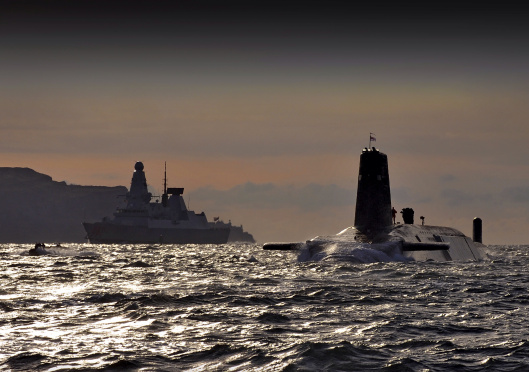
Rosyth earmarked as temporary repair base for new fleet of UK submarines
Herald, 11th December
Work is underway to design an emergency planning zone as plans progress for Rosyth to be the temporary repair base for the UK’s new fleet of nuclear deterrent submarines.
Rosyth has been earmarked as a temporary contingent for the UK Government’s Dreadnought class of submarines – the first of which is expected to launch towards the end of the decade.
Members of Fife Council’s South and West Fife area committee were given an update on the proposals at their meeting on Wednesday where it was explained that “non-nuclear” repairs would be carried out from the dockyard when required.
Grant Reekie, head of radioactive waste and health physics at Babcock International in Rosyth, told councillors: “The next generation of submarines is going to be launched from Barrow towards the end of this decade.
“The intention is these will be maintained at the HM Naval base Clyde however the Clyde facilities will not be available until mid 2030s.
“We have been asked to provide a contingent facility by the MoD to bridge a gap of submarines coming into service in late 2020s from 2029 through to mid 2030s when they will no longer be required as it will be done in Faslane.
“Rosyth is the only location in the UK where this can be done due to the facilities, the expertise and the availability of the dock in Rosyth.”……………………..
Mr Reekie said the next step would be defining a “detailed emergency planning zone” which would then be sent to Fife Council.
“As soon as we have done the consequence assessment, which we are looking at the middle of next year, we need to go to the local authority and need to offer engagement to the local authority,” he said………………….
Rosyth councillor Brian Goodall questioned why there was no public consultation.
“For something as significant as this, something that would lead to a significant percentage of the population of Rosyth being told there will be Potassium iodate tablets available in the event of an emergency, why is there no public consultation on this?”………………………….
When probed, Ian Brown, from the MoD, also told councillors that policy would mean there would be no confirmation of if nuclear weapons were on board.
“My position is we do not comment on the condition of the boat whether it is armed or not,” he added.
………………….. Committee convener David Barratt was less pleased with the plans.
“Morally, and as a CND member, I find the existence of nuclear weapons abhorrent,” he said.
“I was going to ask if there is anything in the powers of council to frustrate, delay or in any way stop nuclear weapon activities and I take it from the answers the answer to that is an absolute no.
“Yes this will create jobs but war tends to do that. I don’t think we would advocate for war and job creation doesn’t lead me to advocate for nuclear weapons.” https://www.heraldscotland.com/news/25689769.rosyth-earmarked-temporary-repair-base-new-fleet-submarines/
As the UK looks to invest in nuclear, here’s what it could mean for Britain’s environment
In this week’s newsletter: The government’s bid to speed up nuclear construction could usher in sweeping deregulation, with experts warning of profound consequences for nature.
Helena Horton, Guardian, 12 Dec 25
When UK prime minister Keir Starmer announced last week that he was “implementing the Fingleton review”, you can forgive the pulse of most Britons for failing to quicken.
But behind the uninspiring statement lies potentially the biggest deregulation for decades, posing peril for endangered species, if wildlife experts are to be believed, and a likely huge row with the EU.
Earlier this year, John Fingleton, a lively, intelligent Irish economist, was commissioned by the government to lead a “taskforce” with a mission to come up with a way to build nuclear power faster and cheaper. It’s accepted by experts that we need more nuclear if we are to meet net zero, and that Britain is the most expensive place in the world to build it. In the end, Fingleton turned in a review with 47 recommendations aimed at speeding up the process. So far, so snoozeworthy.
However, his recommendations, if adopted, could well lead to the biggest divergence from retained EU habitat and environment law since Brexit. Changes could be made to the habitats directive, which Britain helped write when we were in the EU, and which protect rare species and the places they live. The government could also make it more costly for individuals and charities to take judicial reviews against infrastructure projects……………
Legal advice is that removing these rules for nuclear power will inevitably lead for other infrastructure projects to be subject to the same, weaker regulatory system. Expert planning lawyer Alexa Culver said: “It’s a clever move to sneak broadbrush environmental deregulation, as the government can point to ‘net zero’ as being the ultimate driver. In reality, though, if you don’t protect ecosystems while reducing emissions, you’ve lost the battle. We’re gone anyway.”
It’s not surprising Starmer is clinging to anything which might increase economic growth…….. OBR has predicted an anticipated average GDP growth of 1.5% over the next five years. This is despite the controversial Planning and Infrastructure Bill which Starmer introduced in order to “get Britain building” and experts say it will weaken environmental protections.
Nature also continues to decline. The recently released biodiversity indicators show species numbers continue to decrease in the UK, which is extremely concerning when you consider just how much wildlife has dropped off since the 1970s. Some species, including one-fifth of mammals, are facing extinction, and recent figures show wild bird numbers are in freefall.
Of the review, Georgia Dent, CEO of Somerset Wildlife Trust said: “The government seems to have adopted a simple, reductive narrative that nature regulations are blocking development, and this is simply wrong. Nature in the UK is now in steep decline and the government has legally binding targets for nature’s recovery, and is failing massively in this at the moment. To reduce the hard-won protections that are allowing small, vulnerable populations of species to cling on for dear life is absolutely the wrong direction to take.”
…………………………. the UK is negotiating an energy deal with the EU. There are competition and non-regression clauses in the newest free trade agreement, which prevent either side from weakening environmental law. Government sources tell me their legal advice has been that implementing the Fingleton review could put the free trade agreement at risk……………
………..When MPs, environmental experts and the EU look past the boring title and read the detail, Starmer may have a fight on his hands. https://www.theguardian.com/environment/series/down-to-earth
Delays in constructing Hinkley C nuclear power station highlighted by protestors
ANTI-nuclear campaigners have staged an annual Christmas
protest outside the Hinkley Point C (HPC) construction site to highlightthe years-long delay in completing it. Members of the campaign group Stop Hinkley took a giant stuffed turkey and set up a traditional Christmas dinner complete with sprouts on a table outside the site. They unveiled a banner reading ‘It is now 2025, where is the lecce for the HPC Turkey’,
‘lecce’ being local slang for electricity.
The stunt, which started eight years ago, was prompted by a claim made in 2007 by then-EDF Energy plc chief executive Vincent de Rivas that by 2017 people would be eating their turkeys cooked with electricity provided by Hinkley C.
West Somerset Free Press 11th Dec 2025, https://www.wsfp.co.uk/news/delays-in-constructing-hinkley-c-nuclear-power-station-highlighted-by-protestors-860631
Search for UK fusion plant engineering partner to restart in 1-2 years after failed first attempt

09 Dec, 2025 By Thomas Johnson
The procurement for an engineering partner to construct the UK’s Spherical Tokamak for Energy Production (Step) fusion power plant will resume “in a year or two” after a failed first attempt, but the choice of a construction partner is imminent.
……………………..
The government launched a competition to select engineering and construction partners for the prototype fusion energy plant in Nottinghamshire in May last year, with the contracts rumoured to be worth close to £10bn. Then in January, the shortlist for both partners was revealed.
The shortlisted organisations for Step’s engineering partner were:
- Celestial JV: consisting of Eni UK Limited as the lead member and AtkinsRéalis, Jacobs Clean Energy (now Amentum), Westinghouse and Tokamak Energy as other members.
- Phoenix Fusion Limited: consisting of Cavendish Nuclear as the lead member, KBR and Assystem Energy and Infrastructure as other members.
Engineering procurement hits the wall
Despite announcing the two-consortia shortlist, the project recently divulged that the process of selecting the engineering partner had broken down, with the approach being taken as being deemed “not suitable”…………………………………………………………..
Speaking at the Nuclear Industry Association (NIA) annual conference on 4 December, UKIFS chief executive Paul Methven stated procurement for the engineering partner would resume “in a year or two”……………………………………………………………… https://www.newcivilengineer.com/latest/search-for-uk-fusion-plant-engineering-partner-to-restart-in-1-2-years-after-failed-first-attempt-09-12-2025/
Sizewell C sea defences at centre of High Court challenge

A campaign group against the project is due to raise concerns about flooding and rising sea levels.
Jasmine Oak, 10th Dec 2025, https://www.hellorayo.co.uk/greatest-hits/norfolk/news/sizewell-c-sea-defences-at-centre-of-high-court-challenge
A campaign group opposing the Sizewell C nuclear power station is due to challenge the government in the High Court over concerns about flooding and sea level rise.
Together Against Sizewell C (TASC) will appear in court today (Tuesday, the 9th December), when a judge will decide whether the group can proceed to a full judicial review against the Secretary of State for Energy Security and Net Zero, Ed Miliband.
The legal challenge focuses on two additional sea defences that Sizewell C Ltd has committed to installing but were not included in the original planning application for the project.
Chris Wilson, from Together Against Sizewell C, said the hearing is a “permission hearing where the judge will decide whether we can go to a full judicial review”.
He said the group discovered at the end of 2024 that Sizewell C Ltd had committed to the Office for Nuclear Regulation to install additional coastal defences to prevent flooding in extreme sea-level rise scenarios.
“What we subsequently found out was that these additional sea defences had been known about by EDF, who put in the planning application for Sizewell C,” he said.
“They’ve known about them since 2015, and in 2017 they’d actually carried out an assessment for the platform height for Sizewell C, which is particularly relevant for flood protection.”
What’s the importance of these defences not being reviewed?
Mr Wilson said the approved platform height of 7.3 metres meant that, in an extreme sea level rise scenario caused by climate change, additional flood defences would be required.
He said these defences were not part of the original Development Consent Order (DCO) and had therefore not been assessed for their environmental or community impact.
“Sizewell C has been approved and got DCO approval to be built, but it doesn’t include these additional sea defences,” he said.
“That means they’ve never been assessed as to their environmental impact or impact on other places, like RSPB Minsmere or the village of Sizewell.”
According to Mr Wilson, one of the proposed sea defences could extend around 500 metres across the land.
Infrastructure across Suffolk
He also raised concerns about the concentration of energy infrastructure in east Suffolk.
“To have 30% of the whole nation’s energy infrastructure in one small area of Suffolk, with the wind farm infrastructure and Sizewell C, it doesn’t provide security of supply in our mind,” he said.
“It just seems to be a big target for someone who wants to disrupt us.”
Mr Wilson said the cumulative impact of ongoing and planned developments was already affecting the area.
“The area of outstanding natural beauty has long been recognised as a very special place, and it’s just been decimated by all the works going on at the moment,” he said.
He added that further infrastructure, including a proposed water pipeline, could disrupt residents’ lives and damage the local tourism economy.
Chris Wilson also expressed concern for future generations. He said decisions taken now would have long-term consequences in Suffolk and beyond.
He warned that delaying scrutiny of the additional sea defences could leave those in the future facing greater environmental damage, higher financial costs and fewer options. He said any infrastructure with a lifespan stretching into the next century should be fully assessed for climate change impacts from the outset, arguing that failure to do so risks passing the burden of unresolved problems, including coastal erosion and flood protection, onto people not yet born.”
What they want to see
TASC argues the Secretary of State should reconsider or amend the project’s consent order to allow for public scrutiny of the defences before construction continues.
Mr Wilson said the group wants the government to “actually listen to those that have raised concerns and have an objective review” of whether Sizewell C is needed.
He said: “If it was determined it was, which I don’t think it would be, there are other options. We’ve got renewables plus storage that could meet the requirement quicker and cheaper.”
Government response
The Department for Energy Security and Net Zero has previously said Sizewell C would provide secure, low-carbon electricity for millions of homes once operational.
The High Court will decide on Tuesday whether TASC can proceed to a full judicial review of the government’s decision.
Mr Wilson said he hoped the judge would allow the challenge to continue.
“I just hope that the judge can see the validity of our arguments and that we get a full judicial review hearing,” he said.
Tony Blair’s digital ID dream, brought to you by Keir Starmer
Why is Britain’s PM set on introducing such a wildly unpopular policy as digital ID? Parliament debated the issue last night after a petition against the policy was signed by three million people. It’s a policy that has done the improbable job of uniting Nigel Farage, Jeremy Corbyn, Boris Johnson and Zack Polanski in opposition to the idea. In today’s column, Carole Cadwalladr joins the dots between Starmer’s policy and the Tony Blair Institute – and argues that the whole thing is a “techno-authoritarian’s wet dream”.
If Keir Starmer’s digital ID is the question, Tony Blair is the answer
The government’s wildly unpopular new policy is backed by Britain’s wildly unpopular former PM. It’s also a techno-authoritarian’s wet dream, argues Carole Cadwalladr
We live in polarising times. Britain is a nation united only by the occasional sporting fixture and intermittent bursts of outrage at the BBC. Yet somehow, Keir Starmer has achieved the impossible: he has announced new legislation so wildly unpopular that it has hit a mythical political g-spot, uniting not only Nigel Farage and Jeremy Corbyn, but even more miraculously, it’s brought together Jeremy Corbyn and Zarah Sultana.
The issue at stake is digital ID. And if it has so far passed you by, it’s not because you’ve failed to pay attention, it’s because digital ID is a political ghost, a phantom that appeared from nowhere and now looks set to haunt what remains of Starmer’s credibility.
This is a policy that wasn’t in the Labour Party’s manifesto, that no party faithful campaigned for and that no voters were told about on the doorstep. Instead, after some brief ground softening by pet journalists in friendly newspapers, it appeared out of almost nowhere in late September.
Last week, the Office of Budget Responsibility calculated that it would cost £1.8bn over the next three years (a figure rejected by the government, who also couldn’t point to any savings). And yesterday evening, parliament debated the issue, not because the government had tabled it but because it had no choice: it had been forced to hold a ‘Westminster Hall’ debate, triggered by a petition signed by nearly three million people.
The obvious question is why? Why is Starmer pinning his political reputation on such a manifestly unpopular policy? When he announced it, he claimed it would stop illegal immigration by putting an end to illegal work, an argument so hopeless that even he’s abandoned it (people who employ illegal immigrants being the least obvious demographic to abide by any new rules).
Instead he’s tweeted a series of increasingly desperate reasons, all of which have been comprehensively ratioed (ie comments vastly outnumbering shares) and community noted (fact-checked by users).
I wish there was a more complicated reason behind Starmer’s kamikaze moves. But there’s a perfectly straightforward explanation behind all of this: Tony Blair.

The Nerve has mapped the political landscape to illustrate who’s for digital ID and who’s against it. And what our research shows is a web of influence that radiates out from Tony Blair’s Institute for Global Change. In the ‘for’ camp is a grab bag of people who are mostly associated with Blair. And against it…is everyone else.
The pro-Digital ID list includes William Hague who authors reports, for which he’s presumably being paid, with Tony Blair for TBI, including one on Digital ID – a report forgot to mention in his tweet claiming the concept is simply ‘common sense’.
There are also historic allies like Peter Mandelson and those in Blair’s grace and favour, including various Labour proteges in key cabinet positions, Peter Kyle, Wes Streeting and publications that include the Times and the Observer.
This list of those against includes not just Farage, Corbyn and Sultana but also Zack Polanski, Ed Davey and Boris Johnson.
The fight has only just begun, but digital ID is already shaping up to resemble less a policy than a suicide vest Tony Blair has strapped to Starmer’s back.
Digital ID is Blair’s pet policy. Cut it in half and you’ll find the letters T-O-N-Y running through the middle. It’s lodged deep in Blair’s political psyche – his obsession with a national ID card goes back to the 90s – but it’s also now the basis for a technology that is a surveillance capitalist’s wet dream.
“The £260m Larry Ellison has put into Tony Blair’s institute is an extraordinary amount of money. It dwarves the budget and expenditure of other UK think tanks“
And while it may look like a 90s throwback, it cleaves closely to the 21st century business goals of Blair’s billionaire patron. That billionaire patron is Larry Ellison, the man who’s backed Blair’s ‘Institute for Global Change’ to the tune of £260m.
We chose to launch the Nerve with an investigation into Starmer, Blair and Ellison because if Larry Ellison is the eminence grise behind Blair, Blair is the eminence grise behind Starmer.
Ellison, the founder of Oracle, has emerged as one of the most powerful of the broligarchs, close to both Trump and Netanyahu. He’s poised to take over American TikTok with Rupert Murdoch, while his son has bought Paramount and installed a right-wing commentator as the head of CBS News. He’s also the most powerful man in Britain that most people have never heard of.
The £260m he’s put into Tony Blair’s institute is an extraordinary amount of money by British standards. It dwarves the budget and expenditure of other UK think tanks. Digital ID is only the latest policy that’s been incubated in the steel and glass central London offices that seemingly operate a revolving door between TBI and the Starmer government, all closely align with Ellison’s.
Nor is TBI Ellison’s only UK venture. He’s also funded the Ellison Institute of Technology, a research institute at Oxford University that includes the life sciences, and a nationwide centralised database that incorporates health and other data that could have huge research possibilities.
Data is the raw fuel of AI foundation models and our personal data, the most intimate facts about us, is the most valuable data of all. (Especially to a man like Ellison who’s obsessed with ageing and is funding health research that he hopes will extend human life, including importantly his own.) Some of the worst companies on the planet will seek to exploit that data and digital ID is an irreversible step: a genie that once out of the bottle, is never going back.
It’s the techno-authoritarian possibilities of a centralised database that’s alarmed both the libertarian wing of the Conservative and Reform parties, spearheaded by David Davis, but also tech and press freedom organisations, including the Electronic Freedom Foundation, Open Rights Group, Big Brother Watch and Article 19. It’s not hyperbole to say that creating a centralised database is what the Stasi would do because it is exactly what they did.
One doesn’t have to speculate about Ellison’s views on mass data collection and what it means for surveillance: he’s already said all the quiet parts out loud. “Every police officer is going to be supervised at all times,” he has said. “And if there’s a problem, AI will report that problem and report it to the appropriate person. Citizens will be on their best behaviour because we are constantly recording and reporting everything that’s going on.”
Tony Blair is an undeclared lobbyist. Ellison is his client. And TBI is an influencing machine whose tentacles spread across both the political and media establishments: if you read any article about digital ID that doesn’t include the Blair/Ellison connection, ask yourself why.
Carole Cadwalladr is an award-winning investigative journalist and co-founder of the Nerve, a new platform for fearless, independent journalism.
Britain’s AI boom is running straight into an energy wall
Nuclear power was supposed to act as its crutch to get around it. Instead, the government has hit pause, just as data centre demand is set to explode, leading investors wondering whether the UK risks talking itself out of its opportunity.
Recent analysis from the Nuclear Industry Association and
Oxford Economics warned that data-centre electricity demand will jump more than fivefold by 2030, swallowing nearly nine per cent of the UK’s total
power use.
The AI labs and hyperscalers behind that surge want plug
in-ready, 24/7 power, all within two years. Britain currently hands out
grid connections on a ten year timetable. This forms the backdrop to Rachel Reeves’ decision to stall a sweeping package of planning reforms that had promised to finally streamline nuclear development. Fingleton’s review, which coined the now-infamous ‘fish disco’ as a symbol of regulatory overreach, was meant to clear undergrowth.
City AM 9th Dec 2025,
https://www.cityam.com/britains-nuclear-lag-could-cost-its-ai-crown/
Activists fight plans for nuclear power station over threat to rare bird.
Ed Miliband’s plans to build the Sizewell C nuclear power station are facing a High Court legal threat over claims it will destroy a rare bird habitat.
Activists are seeking a judicial review to force the Government to revisit plans for the project, which they say is being built on land occupied by endangered marsh harriers. In a hearing on Tuesday, the Together Against Sizewell C (TASC) campaign group raised concerns over Sizewell C’s plans to build 10-metre-high flood defences on Suffolk marshland.
They argue that this will threaten the marsh harrier, a rare
bird that was almost driven to extinction before enjoying a recovery in recent years, particularly alongside the Suffolk coastline.
The group claims that details of the flood defences were Activists fight plans omitted from the original planning proposals in 2022. This now forms the basis of the group’s
argument, as it claims that work on Sizewell C should be paused while a further environmental assessment is carried out.
Chris Wilson, of TASC, said: “TASC’s legal challenge focuses on two additional sea defences that Sizewell C has committed to installing – but despite EDF, who is building Sizewell, being aware of the potential need for them since 2015,
they were not included in their planning application for the project.
Rowan Smith, the solicitor at Leigh Day representing TASC, said: “The failure to assess these impacts was alarming. “Our client is concerned about the revelation that provisions have been made for further flood defences at Sizewell C, which could harm the environment, yet the impact of this has never been assessed.”
Telegraph 9th Dec 2025, https://www.telegraph.co.uk/business/2025/12/09/activists-nuclear-power-station-threat-rare-bird/
Campaigners call for absolute protection for Welsh national parks from nuclear plants.

Nuclear Free Local Authorities and Welsh Anti Nuclear Alliance, 9th December 2025
In response to a consultation by Natural Resources Wales on creating a new Glyndŵr National Park in North East Wales, Welsh anti nuclear groups have joined the Welsh Nuclear Free Local Authorities in calling for the Welsh Government to provide absolute protection for Welsh National Parks and National Landscapes from the threat of new nuclear development.
After indicating they were undecided on the issue, the groups submitted the following collective response:
‘In responding to this consultation on the creation of a new Glyndŵr National Park in North East Wales, we wish to call upon the Welsh Government to provide for absolute protection in law for Welsh National Parks and National Landscapes from the threat of new nuclear development.
The National Parks and Access to the Countryside Act 1949 was passed with all party support. The first ten national parks were designated as such in the 1950s, including three in Wales in the Brecon Beacons, on the Pembrokeshire Coast, and in Snowdonia.
In 1974 a National Parks Policy Review Committee established the Sandford Principle that ‘priority must be given to the conservation of natural beauty’. The Environment Act 1995 established in law that the primary duties of National Park Authorities are ‘conserving and enhancing the natural beauty, wildlife and cultural heritage of the area comprised in the National Park’.
Nuclear development in a National Park is then completely at odds with these objectives. Consequently, we are disappointed that the new UK Government has not directly specified in its new siting policy for nuclear plants (EN-7) that National Parks and National Landscapes will be exempted from development. This despite a precedent having already been set, as the English Lake District has been rightly excluded from consideration as the location of the Geological Disposal Facility.
If the English Lake District is excluded from such development, then surely the Eryri, Bannau Brycheiniog, Afordir Penfro, and Glyndŵr National Parks are worthy of equal consideration?
For without equal protection, the National Parks and National Landscapes in Wales could be aesthetically blighted and radioactively contaminated from future nuclear development.
This is no idle threat as the situation at Trawsfyndd demonstrates……………………………………………………………………………………………..
We believe that Wales has sufficient natural energy resources (wind, sun, wave, tidal, hydro and geothermal) to provide for its own energy needs and notes that the Welsh Government has already embraced a policy to generate all domestic consumed electricity through renewable technologies.
Any new nuclear plants in Wales will be built at English direction, with Westminster money, to generate electricity for England whilst transferring the risk of accident, the resultant contamination of air, land, rivers, and sea, and responsibility for the immediate management of nuclear waste onto the people of Wales……………………………………………………..
9th December 2025
Campaigners call for absolute protection for Welsh national parks from nuclear plants

Joint media release
In response to a consultation by Natural Resources Wales on creating a new Glyndŵr National Park in North East Wales, Welsh anti nuclear groups have joined the Welsh Nuclear Free Local Authorities in calling for the Welsh Government to provide absolute protection for Welsh National Parks and National Landscapes from the threat of new nuclear development.
After indicating they were undecided on the issue, the groups submitted the following collective response:
‘In responding to this consultation on the creation of a new Glyndŵr National Park in North East Wales, we wish to call upon the Welsh Government to provide for absolute protection in law for Welsh National Parks and National Landscapes from the threat of new nuclear development.
The National Parks and Access to the Countryside Act 1949 was passed with all party support. The first ten national parks were designated as such in the 1950s, including three in Wales in the Brecon Beacons, on the Pembrokeshire Coast, and in Snowdonia.
In 1974 a National Parks Policy Review Committee established the Sandford Principle that ‘priority must be given to the conservation of natural beauty’. The Environment Act 1995 established in law that the primary duties of National Park Authorities are ‘conserving and enhancing the natural beauty, wildlife and cultural heritage of the area comprised in the National Park’.
Nuclear development in a National Park is then completely at odds with these objectives. Consequently, we are disappointed that the new UK Government has not directly specified in its new siting policy for nuclear plants (EN-7) that National Parks and National Landscapes will be exempted from development. This despite a precedent having already been set, as the English Lake District has been rightly excluded from consideration as the location of the Geological Disposal Facility.
If the English Lake District is excluded from such development, then surely the Eryri, Bannau Brycheiniog, Afordir Penfro, and Glyndŵr National Parks are worthy of equal consideration?
For without equal protection, the National Parks and National Landscapes in Wales could be aesthetically blighted and radioactively contaminated from future nuclear development.
This is no idle threat as the situation at Trawsfyndd demonstrates.
Trawsfynydd is located at the heart of Eryri, formerly Snowdonia. Eryri is the largest National Park in Wales with the highest mountain in Wales, Yr Wyddfa, and attracts an estimated four million visitors per year. A Magnox nuclear plant was opened at Trawsfynydd in 1968 and operated until the 1990’s. Built in an ugly brutalist style, the plant jars against the marked beauty of the natural environment. The Nuclear Decommissioning Authority is now reducing the height of the structure to make it less obtrusive, but it will still look brooding and completely out-of-place in the park. And the redundant plant has a cooling pond complex that leaks radioactive materials into the soil and the nearby lake, and studies by academic Dr Chris Busby identified a heightened cancer risk amongst the local populace who eat fish caught from the lake.
Despite this historic obscenity, the Welsh Government has been so foolhardy as to establish a company, Cwmni Egino, to reindustrialise this pristine landscape with ‘the deployment of small nuclear reactors to generate electricity and also a medical radioisotope research reactor’, completely undermining the work of the National Park Authority which is dedicated to its preservation. [i]
This is a lunatic concept. New nuclear redevelopment at Trawsfynydd would be wholly inappropriate. It would be hugely damaging to the beauty of the locality; would lead to further radioactive contamination of the lake and the local environment; its operations would always be accompanied by a risk of an accident and the generation of further radioactive waste; be massively detrimental to the peace and quiet enjoyed by residents and visitors; and would dilute the historic dominance of the Welsh language in this area by attracting a non-Welsh speaking migrant workforce. Further any new nuclear development of Eryri must also have a significant impact on visitor numbers, and so the tourist economy.
These factors militate against any such redevelopment at Trawsfynydd and represent a set of reasons why nuclear power and national parks are completely incompatible.
The Senedd passed a unique piece of legislation that militates against nuclear development in national parks: the Wellbeing of Future Generations Act 2015. Public bodies in Wales are expected to pull together in achieving the aspirations outlined in the act, amongst them those for a Resilient Wales, defined as “A nation which maintains and enhances a biodiverse natural environment with healthy functioning ecosystems that support social, economic and ecological resilience and the capacity to adapt to change” and a Healthier Wales defined as “A society in which people’s physical and mental well-being is maximised and in which choices and behaviours that benefit future health are understood.”
Creating a new National Park would certainly move Wales forward towards meeting these objectives, but nuclear with its inevitable damage to the natural environment and to human health will most certainly not.
We believe that Wales has sufficient natural energy resources (wind, sun, wave, tidal, hydro and geothermal) to provide for its own energy needs and notes that the Welsh Government has already embraced a policy to generate all domestic consumed electricity through renewable technologies.
Any new nuclear plants in Wales will be built at English direction, with Westminster money, to generate electricity for England whilst transferring the risk of accident, the resultant contamination of air, land, rivers, and sea, and responsibility for the immediate management of nuclear waste onto the people of Wales.
The Glyndŵr National Park is being named after a beloved Welsh freedom fighter who valiantly resisted English military conquest and the usurpation of Welsh sovereignty. In responding to this consultation, we are calling upon the Welsh Government to invoke the spirit of Glyndŵr and use the occasion of the new park’s creation to make clear to Westminster that they will resist to the utmost any attempt to impose nuclear development in any National Park in Wales, including at Trawsfynydd, and in his spirit they should also disestablish Cwmni Egino, which is working in contravention of this policy.
To do otherwise would convey the impression that Wales remains a rank colonial possession, rather than a nation in its own right, whose beautiful National Parks remain vulnerable to exploitation for nuclear development of the most egregious kind…………………….https://www.nuclearpolicy.info/news/campaigners-call-for-absolute-protection-for-welsh-national-parks-from-nuclear-plants/
Britain’s nuclear submarine fleet ‘no longer fit for purpose’.
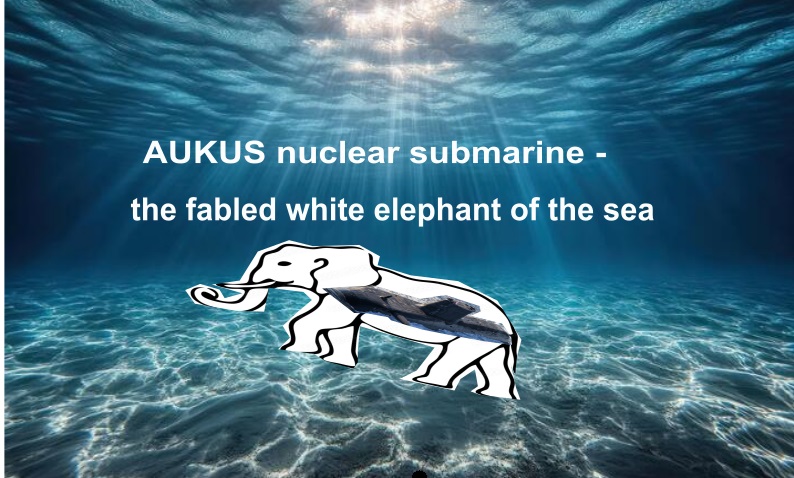
The admiral, who led the Trident value for money review in 2010, called for Britain to pull out of the multi-billion “Aukus” defence deal with America and Australia to build 12 new nuclear submarines.
SSN-Aukus is a submarine which is not going to deliver what the UK or Australia needs in terms of capability or timescale. “Performance across all aspects of the
programme continues to get worse in every dimension.”
Former Navy chief calls for ‘radical’ action to revive programme after catastrophic failures.
Tom Cotterill, Defence Editor, 06 December 2025
Britain is “no longer capable” of running a nuclear submarine programme after “catastrophic” failures pushed it to the brink, a former Navy chief has warned. In an extraordinary critique, Rear Admiral Philip Mathias said the UK’s “silent service” was facing an “unprecedented” situation that it was “highly unlikely” to recover from without a “radical” intervention. The former director of nuclear policy at the Ministry of Defence (MoD) said delays in building new attack boats had reached record levels and had driven up the duration of patrols for crews from 70 days during the Cold War to more than 200 now.
This had led to the “shockingly low availability” of submarines to “counter the Russian threat in the North Atlantic”, the retired submarine commander warned. The admiral, who led the Trident value for money review in 2010, called for Britain to pull out of the multi-billion “Aukus” defence deal with America and Australia to build 12 new nuclear submarines.
“The UK is no longer capable of managing a nuclear submarine
programme,” he said. “Dreadnought is late, Astute class submarine delivery is getting later, there is a massive backlog in Astute class maintenance and refitting, which continues to get worse, and SSN-Aukus is a submarine which is not going to deliver what the UK or Australia needs in terms of capability or timescale. “Performance across all aspects of the
programme continues to get worse in every dimension.”
He added: “This is an unprecedented situation in the nuclear submarine age. It is a catastrophic failure of succession and leadership planning.” The Navy’s fleet of Astute submarines is already facing significant problems, with many having been stuck in port for years. Out of the seven planned, only
six are in service.
He also criticised the role of industry giants for
delays to programmes. He added not a single of the UK’s 23 decommissioned nuclear boats had been dismantled since the first, HMS Dreadnought, left service in 1980. “This is an utter disgrace and brings into question whether Britain is responsible enough to own nuclear submarines,” the admiral said.
Telegraph 6th Dec 2025,
https://www.telegraph.co.uk/news/2025/12/06/britains-nuclear-submarine-fleet-no-longer-fit-for-purpose/
Britain’s “borrowed bombs”

The extreme expense — at least £60 million per plane plus the costs of parts and maintenance — will be a burden on British taxpayers already suffering from cuts to social services.
“reflects a long-standing trend by the UK government to prioritising trans-Atlantic politics over genuine military needs“…………… “an opportunity to appease Trump “
by beyondnuclearinternational, https://beyondnuclearinternational.org/2025/12/07/britains-borrowed-bombs/
New reports shows UK purchase of US nuclear-capable aircraft is political grandstanding with little practical application, writes Linda Pentz Gunter
When the UK government announced its intention last June to purchase 12 F-35A nuclear capable Lightning II Joint Strike Fighter aircraft from the US by 2033 and join NATO’s ‘dual capable aircraft nuclear mission’, it described the decision as the “biggest strengthening of the UK’s nuclear posture in a generation”.
But a new study released on November 11 by two British watchdog groups, Nukewatch UK and Nuclear Information Service, argues that the purchase of the planes will incur massive costs to the British taxpayer while not actually being militarily necessary or advantageous.
The report, “Smoke andMirrors”, concludes that “the government’s decision is based principally on providing political ‘smoke and mirrors’ to distract attention from questions relating to the US-Europe relationship within NATO rather than developing a must-have military capability.”
The purchase of the F35As “serves more as a diplomatic gesture than a military imperative,” the study said, designed to placate US president Donald Trump’s gripes about a perceived lack of financial commitment from NATO partners.
The UK decision to participate in the NATO nuclear sharing mission “is being driven forward by the nuclear lobby within government itself, and raises questions about whether the decision was driven by strategic necessity or political expediency,” the study authors wrote.
The 12 F-35As are far too few to constitute a credible deterrent, according to experts, in large part because the plane’s track record already indicates that all 12 will rarely be in service at the same time.
“On the basis of current performance, at any one time at best only 8 aircraft would be available to take part in a nuclear strike — and possibly even fewer. It is possible that not all of these aircraft would penetrate enemy air defences to reach their targets,” the study said.
The planes are expected to be stationed at RAF Marham in Norfolk. However, as the study noted, this is actually too far away for F35As to reach any meaningful targets inside Russia, for example, as “the maximum distance the aircraft can travel from its base to complete its mission and return without refuelling is 1,000 km,” (about 683 miles).
The F-35A will carry the American B61 nuclear gravity bomb, the only plane in the F-35 class able to do so. The current RAF fleet of F-35Bs and the Eurofighter Typhoon, are not nuclear-capable so the purchase “potentially gives the RAF a nuclear strike capability using this weapon” the Smoke and Mirrors report said.
Further, since the B61 is an American bomb, any deployment will remain under full US control, “rendering the operation entirely dependent on American permission,” the study said.
According to Nukewatch UK, those bombs were already delivered in July to RAF Lakenheath in Suffolk — in reality a US Air Force base despite its name. This would mark the first stationing of US nuclear weapons on UK soil since 2008.
Establishing the programme will also be costly, lengthy and complicated and is unlikely to reach fruition for many years, the study said, due to the many complex steps that will need to be taken before the UK can join the NATO nuclear sharing programme.
The extreme expense — at least £60 million per plane plus the costs of parts and maintenance — will be a burden on British taxpayers already suffering from cuts to social services, the report pointed out. “At a time when public services are struggling to meet demands, there is little public appetite for more military spending,” wrote the report’s authors. “An expensive nuclear weapon system that will not be available for nearly a quarter of a century is a low priority, even on the UK military’s wish list – if, indeed, such a capability is even needed.”
The purchase may also burden the UK military by depriving it of other resources, including the next tranche of F-35Bs. An analysis by Navy Lookout, which delivers independent Royal Navy news and analysis, concluded that a shortfall in F-35Bs could be problematic, “as F-35As cannot operate from carriers and contribute nothing to their strike power,” it said.
The Navy Lookout analysis also argued against using RAF Marham for the planes, given the base “will need expensive refurbishment and regeneration” and recommended Lakenheath instead.
The Smoke and Mirrors study endeavors to extract the reality from the opaque government announcement, made on June 24 on the eve of the NATO Summit at The Hague. After “stripping away all the verbiage,” the study authors concluded that the statement lacked “even basic information such as when the aircraft are intended to be delivered and when their nuclear capability is intended to be operational.”
Even without delays, the report said, “it will be years, rather than months, before they are available for operation.”
The report also points out that the UK’s own 2025 Strategic Defence Review published on June 2, does not include a recommendation to purchase F-35As equipped for US B61 bombs and instead advises a detailed study on such an option. “The fact that it’s not there indicates that we weren’t terribly enthusiastic about it,” the SDR’s lead reviewer, Lord Robertson, a former Defence Secretary and a former Secretary General of NATO, told the report authors.
Despite this, the Starmer cabinet enthusiastically threw its support behind the proposal in what Robertson described as “a decision independent of the Review.” The report authors also point out that “the decision to join the NATO mission appears to have been made before the SDR was even published.”
Continue readingReeves’ £150 cut in UK’s energy bills will be nuked by Sizewell costs, ex-Labour donor claims
Dale Vince’s claims over the impact of paying for Sizewell C on energy bills is one of a number of hidden costs which could see consumers pay higher bills – instead of £150 less
David Maddox, Political Editor
Rachel Reeves’ pledge to take £150 off household energy bills could be wiped out because of the costs of nuclear energy, hidden green levies andnew levies being introduced by the energy regulator, it has been claimed.
In her Budget last week, the chancellor promised to take £150 off
household bills by scrapping the Energy Company Obligation (ECO) scheme.
But former Labour donor and green entrepreneur Dale Vince has now claimed that the impact of paying for building nuclear energy capacity will largely wipe out the £150 because of the £1bn cost in the first year and ongoing costs for nuclear power.
Independent 7th Dec 2025, https://www.independent.co.uk/news/uk/politics/reeves-energy-bill-discount-nuclear-power-budget-b2878907.html
Nuclear (in)flexibility, nearly 100% electricity from solar PV and offshore wind surge!
David Toke, Dec 08, 2025
I keep hearing claims, most recently from the British Government, about how nuclear power can be used flexibly to help balance fluctuating wind and solar. But in reality in most situations around the world nuclear is inflexible and its operation simply pushes wind and solar off the grid. Also, according to a report from Ember, cheaper batteries and proliferating solar can lead to solar on its own cheaply providing all electricity demand for 97-99 per cent of the time in the sunnier parts of the world. Meanwhile back in the UK offshore wind is now surpassing generation from natural gas according to the Energy and Climate Intelligence Unit (ECIU).
Tales of SMRs nuclear (in)flexibility
Looking around the world, it is very difficult to find any examples of nuclear power being flexible. The main example quoted is France. However, France has some close connections with the rest of the European continent. These differ for example, to the connections to the UK and the continent.
Unlike the UK, the French electricity system operator has no choice but to order the scaling down of some French nuclear plant. This is to cope with inflows of wind and solar across its borders that they cannot stop. In Britain where the inflows can be better controlled, as elsewhere, nuclear operators would prefer not to be flexible. Instead, wind and solar power get turned off and the renewable sources are blamed for energy that is really being wasted by inflexible nuclear operations! A study of Scotland, where a lot of wind power is constrained because of a lack of grid capacity, found that most wind power would not have been be wasted if there were no nuclear power station s operating in Scotland (see HERE). And, in practice there is no chance of nuclear power plant being flexible in normal operations, whatever people say!
The current UK Government is struggling to mask the fact that it’s so-called new generation of ‘small modular reactors’ (SMRs) is going to cost even more, MW for MW, than the much-overpriced Hinkley C and Sizewell C Nuclear plant. Rolls Royce is leading the charge here with a proposed 470MW (not small!) nuclear reactor. This will come into operation sometime in the next 20 years or so. According to Rolls Royce this development will be ‘equivalent to more than 150 onshore wind turbines’‘ (See HERE) Ah, so that’s the crack! SMRs are now promised to replace wind turbines! That will please the wideley expected future leader, Nigel Farage! Nigel hates windfarms but loves Rolls Royce and nuclear stuff – so patriotic, he claims!
I must say, it’s pretty small fare. I mean the Rolls Royce ‘SMR’ will only replace 150 onshore wind turbines – and at double or probably triple the price of onshore wind in delivered energy! (currently there are over 11000 wind turbines in the UK). Not much of a bargain really for Nigel, there I’m afraid. But really, as with populists the world round, its the headlines that matter, and never mind the facts!
Of course, as with other policies the Government is struggling to compete in messaging with the far-right. In doing so it feels it has to buy into a lot of myths about nuclear power. As one Government minister was made to say recently (presumably by his pro-nuclear civil servants) in an answer to a Parliamentary Question from a Liberal Democrat MP:
‘The next generation of nuclear, including small modular reactors (SMR), offers new possibilities including faster deployment, lower capital costs, and greater flexibility…..Whilst nuclear energy has a unique role to play in delivering stable, low carbon baseload energy, SMRs may be able to serve the electricity grid more flexibly than traditional nuclear, as well as unlock a range of additional applications in energy sectors beyond grid electricity.’ (See HERE)
What unbelievable nonsense! I would never want to be a government minister and have to spout such rubbish! I’ve already suggested that the SMR(s) will take a long time to emerge at eye-watering cost. But flexibility? Why should this happen? It does not happen now with the PWR plant at Sizewell B. So why should it happen with the Rolls Royce ‘SMR’ which is also a PWR? No reason at all!
In fact the Rolls Royce ‘SMR’ it is even less likely to operate flexibly than Sizewell B (which does not). This is because of the likelihood that, as in the case of Hinkley C, Rolls Royce will be offered a so-called ‘baseload’ contract. This means that the nuclear power plant are paid a set price for every MWh they generate – whenever it is generated. It does not matter whether wholesale prices become negative and wind and solar is forced off the system, nuclear continues to generate.
Rolls Royce will no doubt be given such a contract to ensure that the investors get a virtually guaranteed return. Otherwise it will be virtually impossible to attract private investors to give the required facade of part-private finance to the operation. In reality of course the bulk of the money to finance the equity for the plant will come directly from the taxpayer and the consumers will pick up the bill for the inevitable cost overruns.
To cap it all, the SMR(s) will contribute practically nothing to balancing renewables since that will be done by ‘peak’ gas plant (see my blog post HERE).
Almost 100 per cent 24/7 electricity from solar + batteries
Meanwhile solar PV is advancing around the world at several times the pace of new nuclear and fossil fuel power plant. See my earlier blog post HERE and the Figure below. Now, the energy think tank ‘Ember’ (see HERE) conclude that almost 100 per cent electricity can be delivered cheaply in the sunnier parts of the year using solely solar PV and batteries.
In places like Las Vegas and Oman 97-99 per cent of all electricity demand, 24/7 can be provided solely by solar PV for a cost of $104 per MWh. That is exactly the wholesale power price in the UK. It should be recalled that they are talking about just solar PV and batteries, never mind other renewables………………………………………………………………………………… https://davidtoke.substack.com/p/nuclear-inflexibility-nearly-100
1 This Month

Protect Sazan Island from the Trump family! https://secure.avaaz.org/campaign/en/protect_sazan_island_from_the_trump_family_loc/?bqFCVab&v=174511&cl=22707147157&_checksum=5e9dde668860e8231c33699735e16a1fbf22ab2cb01da50c999fe8732b9775ef&utm_source=email&utm_medium=blast_email&utm_campaign=174511

25 June- THE PUKE ON NUKES
Thursday, June 25, 2026
7pm Central Time (8pm ET, 6pm MT, 5pm PT) UTC – 5
From NRC & DOE Deregulation to Techno-Fascist Billionaires Going Nuclear, Plus a Few Songs from Atomic Cabaret REGISTER
26 June – Radiation Trainwreck at the NRC / Join the Protect Better Campaign – https://us02web.zoom.us/meeting/register/4ZlZ5_qLSHGiLSCg8FF6Bg#/registration


Cuba Is Not a Failed State – It Is a Besieged State
PETITION: “Global Appeal to Endorse Palestinian Right of Return of Refugees”
To see nuclear-related stories in greater depth and intensity – go to https://nuclearinformation.wordpress.com
-
Archives
- June 2026 (152)
- May 2026 (306)
- April 2026 (356)
- March 2026 (251)
- February 2026 (268)
- January 2026 (308)
- December 2025 (358)
- November 2025 (359)
- October 2025 (376)
- September 2025 (257)
- August 2025 (319)
- July 2025 (230)
-
Categories
- 1
- 1 NUCLEAR ISSUES
- business and costs
- climate change
- culture and arts
- ENERGY
- environment
- health
- history
- indigenous issues
- Legal
- marketing of nuclear
- media
- opposition to nuclear
- PERSONAL STORIES
- politics
- politics international
- Religion and ethics
- safety
- secrets,lies and civil liberties
- spinbuster
- technology
- Uranium
- wastes
- weapons and war
- Women
- 2 WORLD
- ACTION
- AFRICA
- Atrocities
- AUSTRALIA
- Christina's notes
- Christina's themes
- culture and arts
- Events
- Fuk 2022
- Fuk 2023
- Fukushima 2017
- Fukushima 2018
- fukushima 2019
- Fukushima 2020
- Fukushima 2021
- general
- global warming
- Humour (God we need it)
- Nuclear
- RARE EARTHS
- Reference
- resources – print
- Resources -audiovicual
- Weekly Newsletter
- World
- World Nuclear
- YouTube
-
RSS
Entries RSS
Comments RSS
 nuclear-news