UK government funds £7.5 million National College for Nuclear
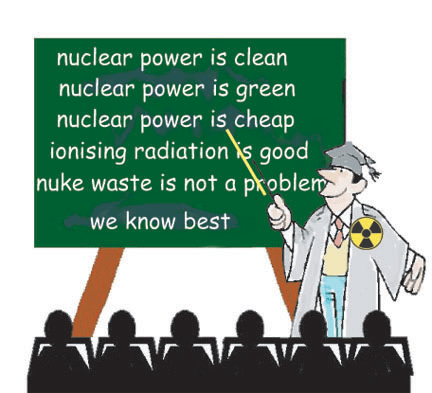 Carlisle News and Star 7th Feb 2018, The £7.5 million National College for Nuclear is due to be officially
opened today. The college, at Lillyhall, near Workington, will train
thousands of technicians and engineers to support Britain’s future
nuclear programmes, create cleaner energy and provide a highly skilled
workforce.
The National College for Nuclear will have hubs in Cumbria and
Somerset and facilities which include virtual, simulated laboratories. It
is one of five national colleges being established by government as part of
its Industrial Strategy.
http://www.newsandstar.co.uk/news/business/75-million-National-College-for-Nuclear-due-to-open-today-0a0f3e9b-7c2d-4320-8b08-55c9b28c51d6-ds
2,200 Massive steel containers produced – to house Sellafield’s piles of radioactive trash

Whitehaven News 6th Feb 2018, Hazadous nuclear waste will be taken out of Cumbria’s Sellafield plant in
massive stainless steel containers which have just come off the production line.
The highly-engineered 1.3 tonne boxes are playing a major part in the decommissioning of the West Cumbrian plant as the waste is moved into safe
storage for centuries to come. Darchem Engineering, of Stockton on Tees, and Metalcraft in Cambridgeshire have finished manufacturing the first
batch of containers.
A total of 2,200 of the boxes will be needed to hold legacy waste from one of the world’s oldest nuclear stores,
Sellafield’s Pile Fuel Cladding Silo. Sellafield bosses have described it as the most significant step yet towards getting the waste out of the
facility next year.
http://www.whitehavennews.co.uk/news/business/First-batc
Desperate to save its failing nuclear business, Toshiba looks to Ukraine
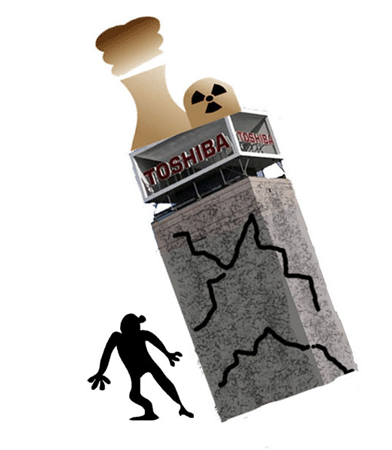 Toshiba seeks deal in Ukraine to revive nuclear power business, Asahi Shimbun, By TOSHIO KAWADA/ Staff Writer, February 8, 2018 Toshiba Corp. is planning another foray into an overseas nuclear-power industry, forced in part by the disastrous consequences of its previous failure abroad, sources said.
The Tokyo-based company has started negotiations with Energoatom, a Ukrainian state-run power company, to supply turbine generators for use in its nuclear power plants. The two companies concluded a memorandum in October 2017.
Toshiba in March 2017 said it was withdrawing from the business of designing and constructing entire nuclear power plants overseas following the collapse of its U.S. nuclear arm, Westinghouse Electric Co.
However, Toshiba judged that it would not suffer such a huge deficit again if it only supplies equipment to nuclear power plants abroad, the sources said.
“There will be little concern that we will suffer a huge loss (from an overseas deal),” a source related to Toshiba said.
Energoatom operates 15 nuclear reactors and is building two others in Ukraine. It plans to replace the generators of old reactors to increase output.
Toshiba wants to win a deal with Energoatom to export the replacement generators and provide maintenance services after they go into operation.
If Toshiba succeeds in the equipment supply business in Ukraine, it will consider looking at other markets abroad, the sources said.
Toshiba is desperate for a steady source of income…….
Toshiba plans to earn steady profits from its nuclear business, believing competition with other companies will not be so fierce, the sources said.
But if this endeavor fails to pan out, Toshiba’s management situation could worsen. http://www.asahi.com/ajw/articles/AJ201802080050.html
Russia postponing new nuclear reactors because of costs

 Nucnet 5th Feb 2018, Russia’s state nuclear energy corporation Rosatom is ready to postpone
the commissioning of two nuclear power units for two years in an effort to
slow down increases in energy prices, the state-owned Tass news agency
said.
said commissioning of Novovoronezh 2-2, planned for January 2019, would be
postponed by a year, and commissioning of Leningrad 2-2, planned for
February 2020, by two years.
a government-regulated fixed power supply agreement with wholesale
consumers, any return on nuclear investment must be at least 10.5%, which
would mean electricity prices for the consumers would increase to meet the
target.
2008 to guarantee returns on investment in generating capacity. The final
wholesale prices are usually higher than the prevailing market price to
compensate costs incurred by the investor during construction. The
agreements include government-regulated price levels for various types of
consumer, dependent on their maximum consumption. Neither Tass nor Rosatom
gave details, although Tass said postponing commissioning of the units will
lead to a reduction in the rate of electricity price growth in 2019 from
12.9% to 11.1%. https://www.nucnet.org/all-the-news/2018/02/05/russia-ready-to-postpone-commissioning-of-two-nuclear-plants-says-official-agency
France’s nuclear culture of lies about serious nuclear accidents
 Europe1 5th Feb 2018, [Machine translation] French nuclear park: “What we saw is catastrophic and
very disturbing”. For Thierry Gadault, co-author of “Nucléaire Danger immédiat”, the authorities are silencing the reality of the state of the French nuclear fleet, most of whose reactors are about to exceed 40 years.
The French nuclear system has developed a culture of lies and concealment for more than 50 years. Thierry Gadault points out the worrying state according to him of the power stations of Fessenheim, Bugey, Saint-Laurent-of-Waters, Gravelines and Blayais, but also more recent structures.
“On the following generations of reactors, we see that there are problems in Civaux, Chouzé-sur-Loire and Flamanville”. For him, the Nuclear Safety Authority makes it harder to learn the true state of these structures. “It
is part of the French nuclear system that has developed a culture of lying and concealment for more than 50 years, which has resulted in information suppressed about what has happened around Chernobyl and about serious nuclear
accidents. which took place in Saint-Laurent-des Eaux We had serious nuclear accidents with the release of plutonium in the environment and in the Loire.
http://www.europe1.fr/societe/parc-nucleaire-francais-ce-que-nous-avons-vu-est-catastrophique-et-tres-inquietant-356528
 EDF threatens the prosecution of the authors of a book on nuclear safety, Les Echos
 5th Feb 2018
https://investir.lesechos.fr/actions/actualites/edf-menace-de-poursuites-les-auteurs-d-un-livre-sur-la-surete-nucleaire-1739343.php
[Machine Translation] Nuclear. “This industry is playing with fire” In Nuclear, immediate danger, Thierry Gadault and Hugues Demeude draw an alarming assessment of the state of French nuclear power plants. Ouest France 6th Feb 2018 https://www.ouest-france.fr/environnement/nucleaire/nucleaire-cette-industrie-joue-avec-le-feu-5547116
The alarming state of France’s nuclear reactors
DD 3rd Feb 2018, Nuclear: the book that undermines the safety of French power plants. The JDD publishes preview extracts of Nuclear, immediate danger , a survey book that challenges the dogma of the safety and profitability of French power stations.
At the forefront of concerns: the alarming state of several tanks, which contain the heart of the reactors. “That’s it, we are there atthe age of 40. By 2028, 48 reactors [out of 58 in service in France] – those of the level of 900 MW and a part of the reactors of 1,300 MW – will reach this canonical age.
Since the mid-2000s, because of its financial difficulties that prevent it from investing in new means of production, EDF is asking for, calling for, even imposing, that all of its nuclear power stations be allowed to operate at the same time. beyond the age of forty, and prolonged by twenty years. […]
[Among the elements that will] determine the extension or the stop of the vats: do they have defects, of
origin or appeared with the time, which compromise the safety?
This is one of the biggest secrets of the nuclear industry in France. […] According to EDF, 10 tanks in operation have cracks that date from their manufacture. […] Tricastin, with its reactor 1, is the worst central of the country.
This reactor combines all the problems: defects under coating, no margin at break, and exceeding the fragility forecast at forty years! Not to mention the risk of catastrophic flooding in the event of an earthquake, as noted in September 2017 by the Nuclear Safety Authority (ASN), which has automatically stopped the operation of the four reactors of the plant while waiting for EDF finally, work to reinforce the dike of the Donzère-Mondragon canal. The plant is below the canal, 6 m below the water.
Pierre-Franck Chevet, the president of the ASN, told us’ that in the event of a strong earthquake we could go to a situation, with four simultaneous reactors merging, which potentially looks like a Fukushima type accident. EDF has found the immediate stoppage of the plant to carry out this unjustified work, I find it justified. ” http://www.lejdd.fr/societe/nucleaire-le-livre-qui-met-a-mal-la-surete-des-centrales-francaises-3564173
France heading for a renewable energy revolution, with offshore wind power
 France Set to Become a European Offshore Wind Powerhouse by 2022 Bloomberg By Jeremy Hodges and Jess Shankleman,
-
WindEurope sees French turbine orders passing U.K., Germany
-
Offshore wind investments to recover after contracting in 2017
Europe’s wind-power industry expects new French offshore turbine installations to overtake the U.K. and Germany by 2022, boosting President Emmanuel Macron’s pledge to increase renewable energy.
USA- Russia New START Treaty takes effect – with central limits on strategic arsenals for 7 years

The United States of America and the Russian Federation have implemented the Treaty on Measures for the Further Reduction and Limitation of Strategic Offensive Arms (New START Treaty) for seven years. February 5, 2018 marks the date that the Treaty’s central limits on each country’s strategic nuclear arsenal take effect.
The United States completed its reductions and achieved these limits in August 2017. The Russian Federation has repeatedly stated its commitment to the New START Treaty, including meeting the central limits, and we expect our upcoming data exchange under the Treaty to reaffirm that commitment.
Implementation of the New START Treaty enhances the safety and security of the United States and our allies and makes strategic relations between the United States and the Russian Federation more stable, transparent, and predictable; critically important at a time when trust in the relationship has deteriorated, and the threat of miscalculation and misperception has risen. The Treaty exemplifies an enduring commitment by both parties to cooperate on issues affecting the strategic relationship and international security. The United States looks forward to continuing implementation of the Treaty with the Russian Federation.
The United States and the Russian Federation will exchange data on their respective strategic nuclear arsenals within the next month, as we have done twice per year over the last seven years in accordance with the Treaty. Through the Treaty’s verification regime, which includes short-notice, on-site inspections at military bases and facilities, the United States is able to verify the data provided by the Russian Federation regarding its strategic nuclear arsenal. The verification regime provides both countries insight into each other’s strategic nuclear delivery systems, warheads, and facilities, as well as data exchanges to track the status and makeup of nuclear weapons systems.
The recently released U.S. Nuclear Posture Review notes that arms control can contribute to U.S. security by helping to manage strategic competition among states. The United States remains committed to arms control efforts that advance U.S., allied, and partner security. The United States will continue to fully implement the New START Treaty and remains committed to working with others, including the Russian Federation, to create the conditions to support the ultimate goal of the global elimination of nuclear weapons. The New START Treaty remains a critical component for supporting global non-proliferation efforts and strategic stability between the United States and the Russian Federation. Through implementing the New START Treaty, the United States continues to demonstrate its commitment to fulfilling its arms control obligations, including under the Treaty on the Non-Proliferation of Nuclear Weapons.
Britain’s costly gamble with Hinkley point C nuclear project, as the renewables revolution gather speed
there will be no room in this new world of flexible, decentralised generation for large, rigid nuclear reactors. “There are going to be increasingly frequent periods when we have too much power,” says Mr Burke. “But if you are the energy minister, how do you explain to people why you are having to switch off cheap renewables in order to use the much more expensive nuclear power which you have committed to pay for over the next 35 years?”

FT 4th Feb 2018, The UK’s Hinkley Point C has become a critical test of developers’ ability to compete with cheap gas and renewables. Across an expanse of scarred earth the size of 250 football pitches beside the Bristol Channel in south-west England, 3,000 workers are building what will be, by some estimates, the most expensive structure on the planet.
At a cost of almost £20bn, the Hinkley Point C power station in Somerset is the first nuclear plant to be built in the UK since the 1990s. Clusters of cranes and cement silos loom over a warren of earthworks crawling with excavators and
100-tonne dumper trucks. At the centre of the site, foundations are taking shape for two 1.6 gigawatt reactors intended to meet 7 per cent of UK electricity demand, with a target for completion by the end of 2025.
Hinkley is crucial to UK energy security as the country faces the closure of old coal and nuclear plants accounting for about 40 per cent of the country’s reliable electricity generating capacity by 2030. But it also has wider significance as a test of the industry’s ability to compete in a rapidly changing energy landscape. Nuclear power has been under threat
since the meltdown at the Fukushima plant in Japan in 2011 revived safety fears.
But the biggest threat is now economic as the spiralling cost of building new reactors collides with a world of cheap and plentiful gas and renewable power. The UK is now one of the few western countries committed to renewing its ageing reactors. More than 70 per cent of the 448 reactors around the world are in the OECD club of wealthy nations, and more than half of them are at least 30 years old.
Many will reach the end of their operational lives in the next two decades, yet the prospects of replacing
them are uncertain, at best, in countries such as the US, Japan and France, while others including Germany, Switzerland and South Korea are planning to phase out nuclear power altogether. The days of networks dominated by a few large, centralised power stations are drawing to a close, according to many analysts. In their place will come more dispersed sources of renewable generation. Battery storage and digital “smart grid” technology will help smooth out supply and demand, and increase efficiency.
Tom Burke, chairman of E3G, an environmental think-tank, says there will be no room in this new world of flexible, decentralised generation for large, rigid nuclear reactors. “There are going to be increasingly frequent periods when we have too much power,” says Mr Burke. “But if you are the energy minister, how do you explain to people why you are having to switch off cheap renewables in order to use the much more expensive nuclear power which you have committed to pay for over the next 35 years?”
Progress at Hinkley, therefore, is being watched as closely in Beijing as in Paris and London. A repeat of the delays at Olkiluoto and Flamanville could sign the death warrant for western reactor developers, while dealing a setback for
China’s international expansion. Mr Rossi is aware of the high stakes: “We need to make sure that Britain will be happy about the choice it made.” https://www.ft.com/content/8307c266-066b-11e8-9650-9c0ad2d7c5b5
France’s nuclear industry – unsafe?
 JDD 3rd Feb 2018, Nuclear: the book that undermines the safety of French power plants. The JDD publishes preview extracts of Nuclear, immediate danger , a survey book that challenges the dogma of the safety and profitability of French power stations.
At the forefront of concerns: the alarming state of severaltanks, which contain the heart of the reactors. “That’s it, we are there atthe age of 40. By 2028, 48 reactors [out of 58 in service in France] – those of the level of 900 MW and a part of the reactors of 1,300 MW – will reach this canonical age.
Since the mid-2000s, because of its financial difficulties that prevent it from investing in new means of production, EDF is asking for, calling for, even imposing, that all of its nuclear power stations be allowed to operate at the same time. beyond the age of forty, and prolonged by twenty years. […]
[Among the elements that will] determine the extension or the stop of the vats: do they have defects, of
origin or appeared with the time, which compromise the safety?
This is one of the biggest secrets of the nuclear industry in France. […] According to EDF, 10 tanks in operation have cracks that date from their manufacture. […] Tricastin, with its reactor 1, is the worst central of the country.
This reactor combines all the problems: defects under coating, no margin at break, and exceeding the fragility forecast at forty years! Not to mention the risk of catastrophic flooding in the event of an earthquake, as noted in September 2017 by the Nuclear Safety Authority (ASN), which has automatically stopped the operation of the four reactors of the plant while waiting for EDF finally, work to reinforce the dike of the Donzère-Mondragon canal. The plant is below the canal, 6 m below the water.
Pierre-Franck Chevet, the president of the ASN, told us’ that in the event of a strong earthquake we could go to a situation, with four simultaneous reactors merging, which potentially looks like a Fukushima type accident. EDF has found the immediate stoppage of the plant to carry out this unjustified work, I find it justified. ” http://www.lejdd.fr/societe/nucleaire-le-livre-qui-met-a-mal-la-surete-des-centrales-francaises-3564173
Sweden agonises over nuclear waste burial project that no community wants

 GDF Watch 2nd Feb 2018, A week on from the Environmental Court’s ruling, and it would seem nobody in Sweden is any the wiser about what happens next. The general view seems to be that this is a hiccup, and everything will eventually continue as planned.
But don’t expect that to happen anytime soon, and at least not until after this autumn’s national elections in Sweden. Anders Lillienau, who chaired the Court’s Hearings, is reported as saying that while they had significant concerns about the safety of the copper canisters, the Court did not otherwise see any barriers to the safety of the repository.
The Court has asked SKB, the organisation responsible for the repository, to provide further information on copper canisters to address their concerns. It is understood that SKB are preparing such information, and reportedly told a community meeting in Östhammar earlier this week that they intend to provide that information later this year.
Anders Lillenau has also made clear the ball is now in the Government’s court: “In the
end, it is still the case that the Government may make the overall assessment whether or not this will be allowed.” A Swedish Government spokesman, Magnus Blücher, explained that this was a complex issue and it was too soon to say what the Government might do, or when.
Back in Östhammar, the local referendum planned for 4 March has been postponed. The referendum was advisory, and any final decision on agreeing to host the repository has to be taken by the local council. A spokesman for Östhammar Municipality says that it is too soon to know when the referendum and council vote will now take place.
Local resident Åsa Lindstrand chairs a resident’s group opposed to the repository. She told the local newspaper that she was pleased but surprised by the Court’s decision, but feels little will change:
“Actually, nobody else in Sweden wants this nuclear fuel repository, so the rest of Sweden would probably be lucky if someone takes it. The municipality is so marinated by SKB that it is not easy to
say ‘no’. For us who live here, it’s more about noise and traffic than about the copper capsules, it’s happening before they get there at all.” Her sense of pyrhhic victory is shared by environmentalist Johan
Swahn, who added, “but only if the government stays passive and the copper canister issues raised by the Court become a matter solely for SKB.” His organisation, MKG, has raised concerns about the long-term
safety of copper canisters over many years.
While delighted that the Court accepted the case presented by leading corrosion scientists, he now wants
the Swedish Government to guarantee an open scientific re-evaluation of the issues relating to copper canister corrosion. http://www.gdfwatch.org.uk/2018/02/02/sweden-update/
Costs of France’s Flamville nuclear power project have exploded, and delays ballooned
 Le Parisien 3rd Feb 2018, [Machine Translation] EPR Flamanville: four questions on an industrial
disaster. Seven years late and a quote that has tripled in ten years: the
site of the EPR Flamanville Friday received the visit of Sébastien
Lecornu, Secretary of State Nicolas Hulot.
Started in April 2007, the EPR was to cost € 3.3 billion and enter service in 2012. Except that the site
has accumulated the setbacks, the highlight of which was in April 2015,
after the discovery by the ASN of a anomaly in the steel of the lid and
bottom of the reactor vessel. In June 2017, EDF obtained authorization from
the ASN to operate the tank, but confidence in EPR technology has been
eroded. The bill exploded: around € 11 billion.
http://www.leparisien.fr/economie/epr-de-flamanville-quatre-questions-sur-une-catastrophe-industrielle-03-02-2018-7538637.php
Belgium’s nuclear power stations a danger to neighbouring countries
Belgium’s neighbors fear a nuclear incident https://www.forbes.com/sites/davekeating/2018/02/04/belgiums-neighbors-fear-a-nuclear-incident/#2755aac36ca2 ,I cover energy, environment and EU politics in Brussels , 4 Feb 18,
Last summer, when the Belgian government revealed that seventy new cracks had been discovered in the boiler of the country’s Tihange 2 nuclear reactor, towns near the country’s borders reacted with exasperation.
The power plant lies just 60km from the triple border where Belgium, Germany and The Netherlands meet, close to the Dutch town of Maastricht and the German town of Aachen.
These were not the first cracks to be discovered. Tihange is now more than four decades old, but it was built to only have a lifespan of 30 years. Already in 2014 an inspection found thousands of small ‘microcracks’ in the reactor. The neighboring German state of Northrhine-Westphalia became so alarmed that it ordered iodine tablets for German citizens in case of a Belgian nuclear accident.
Tihange isn’t the only plant of concern. The Doel 3 reactor, near the Belgian port city of Antwerp next to the Dutch border, also has cracks. These reactors have been subject to sudden shutdowns which have caused disruption to the Belgian electricity network. The country is 40 percent reliant on nuclear power for its electricity.
n neighboring Germany, nuclear power has remained very unpopular with the public since the 1970s. After the 2011 Fukishima nuclear disaster in Japan, German Chancellor Angela Merkel decided to phase out nuclear power in the country for safety reasons. But Germany is powerless to do anything about nuclear plants just across its borders, which pose the same safety risks to German citizens as domestic plants would.
NEVERTHELESS, GERMAN POLITICIANS HAVE harshly criticized what they see as Belgian inaction over the safety of its aging plants. And the concern is likely to grow louder following the broadcast of a documentary this week on German television alleging a series of near-accidents at the Tihange plant.
But despite the complaints from Dutch and German politicians, a report published this week found that they haven’t made much of an effort to work with their Belgian counterparts to resolve the problem. A Belgo-German cooperation group set up in 2016 has done little to change that situation, it found.
The report, published by the Dutch Safety Board, did not address the safety of the plants but instead the degree to which the three countries are working together on their maintenance and contingency plans in the event of a nuclear incident. It found that though cooperation has been set up on paper, “it probably will not run smoothly if a nuclear accident were to occur in reality.”
According to the report, preparations for an incident at the plants varies widely between the three countries. Some have iodine pills at the ready, others have evacuation instructions that differ from those that would be given to neighboring populations. In the event of an accident, the report warns, citizens would not know which set of instructions to follow.
The result, the report warns, could be “confusion and unrest” – particularly as linguistic and cultural differences are exasperated by an unfolding emergency situation.
For their part, the Belgian government insists that despite the cracks, the reactors are still perfectly safe and the temporary shutdowns have been simply due to an abundance of caution. Nevertheless, the country’s health ministry said in 2016 that it would provide iodine tablets to citizens around the plant, just in case.
While many Belgians share their neighbors’ alarm, others feel that they are being used as a political punching bag by neighboring politicians looking to score cheap points. While there is deep anti-nuclear feeling in Germany and The Netherlands, Belgium has a similarly positive attitude to the power source as its southern neighbor France.
Energy Efficiency in UK
 SPRU 2nd Feb 2018, Blog by Dr Charlie Wilson (Tyndall Centre for Climate Change Research).
UK homes account for just under a quarter of national greenhouse gas
emissions. Improving their efficiency not only reduces emissions, but also
improves health and wellbeing, and creates jobs.
The Department of Business, Energy and Industrial Strategy (BEIS) recently retweeted the
headline findings of UKERC-CIED research published last year: up to 50% of
energy used in homes can be saved through energy efficient renovations and
other measures, contingent on supporting policies.
Are these supporting policies in place? The Green Deal was introduced with fanfare in 2013,
replacing obligations on utilities with a market-based approach for
informing homeowners about cost-effective efficiency measures and providing
‘pay-as-you-save’ loan financing.
Our research found that although the Green Deal did effectively raise the salience of energy efficient
renovations, it failed in other important ways:
First, it treated energy efficiency as special rather than as a ‘mundane’ feature of broader
home improvements.
Second, it emphasised financial aspects of renovation
decisions rather than tap into the underlying tensions in domestic life
which renovations could help resolve. A
And it was attractive to homeowners only once they had already decided to renovate, so didn’t help boost
renovation rates. Uptake rates of Green Deal finance were extremely low,
and confidence in the scheme plummeted. Less than 2 years after its
introduction, it was largely shelved. The Clean Growth Strategy published
last October includes measures for improving the efficiency of fuel-poor
and low-income homes, but offers little to the two thirds of owner-occupied
homes in the UK, nor the private rental sector (beyond an aspiration to
“develop a long-term trajectory” to improve energy performance). The
post-Green Deal policy vacuum persists.
http://blogs.sussex.ac.uk/sussexenergygroup/2018/02/02/energy-efficiency-policy/
1 This Month

Cuba Is Not a Failed State – It Is a Besieged State
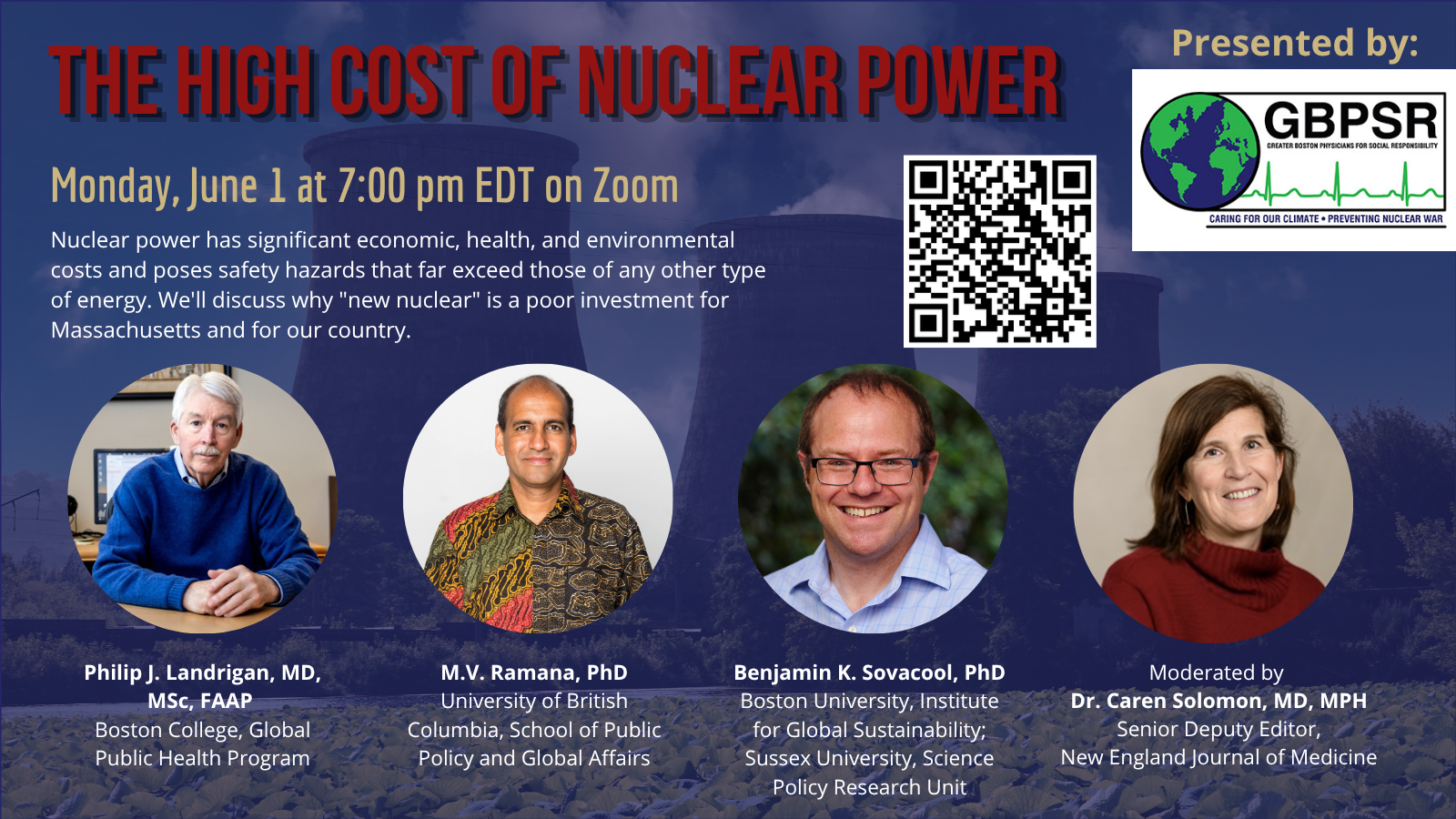
1 June Webinar – The High Cost of Nuclear Power – Register


of the week– Nuclear Reactor Information Task Force
To see nuclear-related stories in greater depth and intensity – go to https://nuclearinformation.wordpress.com
-
Archives
- May 2026 (272)
- April 2026 (356)
- March 2026 (251)
- February 2026 (268)
- January 2026 (308)
- December 2025 (358)
- November 2025 (359)
- October 2025 (376)
- September 2025 (257)
- August 2025 (319)
- July 2025 (230)
- June 2025 (348)
-
Categories
- 1
- 1 NUCLEAR ISSUES
- business and costs
- climate change
- culture and arts
- ENERGY
- environment
- health
- history
- indigenous issues
- Legal
- marketing of nuclear
- media
- opposition to nuclear
- PERSONAL STORIES
- politics
- politics international
- Religion and ethics
- safety
- secrets,lies and civil liberties
- spinbuster
- technology
- Uranium
- wastes
- weapons and war
- Women
- 2 WORLD
- ACTION
- AFRICA
- Atrocities
- AUSTRALIA
- Christina's notes
- Christina's themes
- culture and arts
- Events
- Fuk 2022
- Fuk 2023
- Fukushima 2017
- Fukushima 2018
- fukushima 2019
- Fukushima 2020
- Fukushima 2021
- general
- global warming
- Humour (God we need it)
- Nuclear
- RARE EARTHS
- Reference
- resources – print
- Resources -audiovicual
- Weekly Newsletter
- World
- World Nuclear
- YouTube
-
RSS
Entries RSS
Comments RSS
 nuclear-news