Hinkley Point builder feels heat for French reactor failings. EDF has been
rebuked by French safety regulators for failings in the construction of a
prototype reactor in Normandy. Flamanville has been beset by problems and
delays that critics say cast doubt on EDF’s ability to deliver power from
the British plant by 2025, as promised.
The Autorité de Sûreté Nucléaire, the French nuclear regulator, said yesterday that EDF may need
to carry out more repairs than had been estimated initially on faulty
weldings at the French reactor and ordered it to carry out a wider review
of the quality of materials in the project. The watchdog said that it
believed the company had “failed to properly oversee certain activities” at
Flamanville and had failed in its handling of the welding problems when
they were discovered, taking a year and a half to inform the regulator.
Times 4th Oct 2018 , Flamanville originally was due to start up in 2012, but it has been delayed
repeatedly. This summer, EDF said that the start date had slipped again to
early 2020 as it needed to repair “quality deficiencies” in the welding in
part of the plant that carries steam to the turbines.
The costs of the project are estimated at €10.9 billion, more than three times its
original budget. The company has blamed the welding issues on a contractor
that had signed off on the work despite the failings. It said in July that
it needed to redo 53 weldings at Flamanville, but was confident that a
further ten were fit for service.
However, the watchdog said it was not certain that this was the case and that EDF should “start preparing for
possible repair work on the weldings”. It said that the company had
informed it only early last year, despite identifying the issue in July
2015.
This year the British nuclear regulator raised concerns about poor
quality control checks on EDF’s supply chain for Hinkley Point C and said
that improvements had to be made. Kate Blagojevic, head of energy and
climate at Greenpeace, said: “The French nuclear regulator has given a
pretty damning verdict on EDF’s attempt to build the new nuclear power
station at Flamanville . . . Nothing in the latest statement from the
French nuclear regulator could possibly inspire confidence that Hinkley
will be built on time or budget.” https://www.thetimes.co.uk/article/b8a10964-c745-11e8-a4a5-a34bea2c1d04
Huffington Post 1st Oct 2018 A Cardiff court will play host to a group of activists on Tuesday, as they
fight for an injunction to stop 300,000 tonnes of “nuclear mud” from a
Somerset power station being disposed of just outside Cardiff.
The unusual dispute centres on the “Hinkley Point C” building site, where energy
supplier EDF are currently in the process of constructing two new nuclear
reactors. In order to drill the six shafts needed for the reactors, EDF is
clearing 300,000 tonnes of mud and sediment – and planning to dispose of it
just off the Welsh coast, on the Cardiff Grounds sandbank.
The prospect of that amount of waste being ditched a mile and a half away hasn’t exactly
excited locals or environmental campaigners, but there’s another factor
causing added concern. For decades, Hinkley Point has been a nuclear power
hub, with its first station – “A” – operating for 35 years before
closing in 2000. Hinkley Point B was opened in 1976 and is still
functioning today.
The presence of these two plants has led to concerns
over whether the mud there is radioactive and when the plans were
announced, various online petitions calling for the Welsh Assembly to look
into the matter were launched online, gathering a total of 100,000
signatures by mid-September. Keyboard player Cian Ciarán has become
something of a spokesperson for the campaign. His worries – shared by his
fellow campaigners – are centred on the validity of the tests carried out.
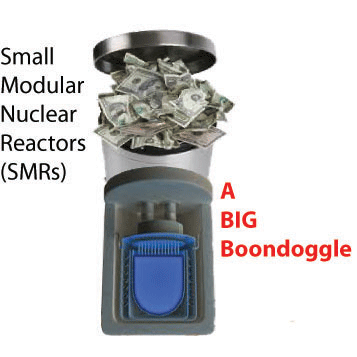
Energy firms demand billions from UK taxpayer for mini reactors Ministers under pressure to fund new generation of small-scale nuclear power stations,Guardian, Adam Vaughan Energy correspondent @adamvaughan_uk, 1 Oct 2018 Backers of mini nuclear power stations have asked for billions of pounds of taxpayers’ money to build their first UK projects, according to an official document.
Advocates for small modular reactors (SMRs) argue they are more affordable and less risky than conventional large-scale nuclear plants, and therefore able to compete with the falling costs of windfarms and solar power.
But the nuclear industry’s claims that the mini plants would be a cheap option for producing low-carbon power appear to be undermined by the significant sums it has been asking of ministers.
Some firms have been calling for as much as £3.6bn to fund construction costs, according to a government-commissioned report, released under freedom of information rules. Companies also wanted up to £480m of public money to help steer their reactor designs through the regulatory approval process, which is a cost usually paid by nuclear companies.
Ten companies hoping to build the plants requested direct government funding, according to the briefing paper by the Expert Finance Working Group on Small Reactors. While the report named the companies involved in the mini nuclear projects, it did not specify who was asking for
David Lowry, a nuclear policy consultant who obtained the document, said: “SMRs are either old, discredited designs repackaged when companies see governments prepared to throw taxpayers’ subsidies to support them, or are exotic new technologies, with decades of research needed before they reach commercial maturity.”
The working group that drafted the report, and was appointed by the Department for Business, Energy and Industrial Strategy (BEIS), urged the government in August to put in place a framework to help bring the smaller plants to market.
The government has already offered £44m of funding for research and development of one group of SMRs, which typically have a capacity of less than a tenth of the Hinkley Point C nuclear plant being built in Somerset, or enough power for 600,000 homes.
Mini nuclear power stations are unlikely to supply clean energy to Britain’s homes and businesses any time soon. Of more than 30 British, US and Chinese companies that have expressed an interest in building one in the UK, the majority told the working group that their power stations would be ready to deployed in the 2030s.
The companies include UK firms such as Rolls-Royce, Sheffield Forgemasters and Atkins, along with China’s CNNC, US companies NuScale and Westinghouse, and France’s EDF Energy.
The working group found the firms’ cost estimates “varied significantly”, to the degree that some of the companies clearly had a “lack of understanding” of how British nuclear regulation works.
It also noted that some of the companies proposed using “non-standard fuels” rather than the conventional uranium used by today’s nuclear plants, which “may add cost to business models” because of new facilities to produce and later manage the spent fuel.
The firms told the group that the four main barriers they faced were finding and confirming sites, the cost of regulatory approval for their designs, a lack of state funding and unclear policy.
On 24 September, shadow chancellor John McDonnell confirmed that a Labour government would keep the UK’s nuclear arsenal. He said, however, that as prime minister Jeremy Corbyn would only use it in consultation with the cabinet, parliament, and the “wider community”.
Right-wing attacks
In spite of the comments, the right-wing media attacked McDonnell’s statement as too soft. The Sun, for example, said that McDonnell “sparked ridicule” for suggesting that a Corbyn-led government would only launch a nuclear strike after “ask[ing] for the British public’s permission”.
A favourite weapon
Indeed, Corbyn’s former opposition to renewing the UK’s nuclear arsenal, known as Trident, has been one of the right’s favourite weapons with which to attack him. Some right-wing media outlets have called him “loony left” for his life-long commitment to nuclear disarmament.
And some from the Blairite wing of his own party have also piled on the abuse. In 2015, then Labour MP John Woodcock, for instance, called Corbyn’s position on Trident “childish” and “dangerously naïve”.
Expert view
But a scarcely viewed video on YouTube shows that the anti-Trident position is actually supported by one of the world’s leading experts on nuclear weapons. In a 2016 interview on Al-Jazeera with Mehdi Hasan, former UN weapons inspector Hans Blix backed Corbyn’s call to scrap Trident.
Asked by Hasan whether he supports the scrapping of Trident, he replied:
Yes, I think it’s a tremendous cost, and I do not see that it really, perceptively adds to British security
Blix is a Swedish diplomat and served as minister of foreign affairs in the Ola Ullsten administration in the 1970s. He became famous for his role as a senior UN weapons inspector in the run-up to the invasion of Iraq. He has also served as head of the International Atomic Energy Agency.
“Sentimental status-seeking”
And for Blix, it’s apparently the pro-Trident people who are being childish and naïve. He said that holding on to Trident is “more a question of sentimental status-seeking”. He added that the UK will keep its permanent seat at the UN Security Council regardless of whether it holds on to nuclear weapons. Interestingly, Blix also says that he does not “see any enthusiasm in Washington for Trident, either.”
The hard-hitting video makes nonsense of the right’s endless fear-mongering, and provides a welcome antidote to the attacks on the Labour leadership.
Fortunately, shadow peace minister Fabian Hamilton is reportedly drawing up a nuclear disarmament proposal for the shadow cabinet’s consideration. And it would be well served to heed Blix’s advice.
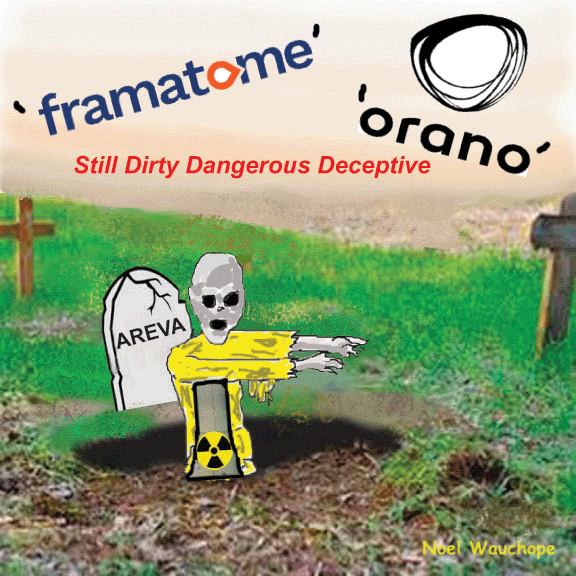
Bad news for the french taxpayer Because, in the event of a lawsuit for corruption in the United States, the rule is that the amount of the fine covers the totality of the financial loss. Admittedly, the prosecutor could simply claim Areva $ 243 million corresponding to the amount of the acquisition of Ausra. But it can also very well demand the reimbursement of all the federal expenses incurred in the case, namely: the $ 7.7 billion invested in the MOX plant ever built, the $ 19.9 billion that will be swallowed up in the management of unprocessed plutonium and the 243 million of the Ausra acquisition, totaling nearly $ 28 billion, or, if you prefer, € 24.1 billion at the current rate.
Needless to say, since Orano does not have a penny in its pocket, the state should go to the cash register. The only way to avoid such a disaster, argue the jurists, would be that the French justice sanctions itself guilty.
AREVA BUSINESS: THE MONSTROUS FINE THAT THREATENS FRANCE ,https://www.capital.fr/entreprises-marches/affaire-areva-la-monstrueuse-amende-qui-menace-la-france-1308725 –(translation Noel Wauchope) THIERRY GADAULT 27/09/2018 The nuclear group could be fined 24 billion euros by the US justice in a corruption case in the United States. A file that could embarrass Anne Lauvergeon but also Edouard Philippe, at Areva at the time of the facts.
· Forget the scandal Credit Lyonnais 1990s and the 15 billion euros it has cost France. The Areva case is about to break all records. According to our information, the US justice discreetly warned the French authorities in early July that it could launch a trial for corruption against the former tricolor nuclear star. And that in case of conviction, the fine could go up to … 24 billion euros, the equivalent of one third of income tax revenue.
· Since then, Areva has been cut in three (since being acquired by EDF) and was renamed Orano, as if to give it a new start. Alas! Now that a possible corruption pact, concluded in 2010 by the company with leaders of the American Democratic Party, threatens to explode for good.
· A case that could also smirch the Prime Minister Edouard Philippe, director of public affairs of Areva at the time.
“When, at the beginning of the year, I discovered the scale of this affair, I communicated with the director of the FBI all the information that I had been able to get my hands on”, Marc Eichinger revealed to Capital . This private investigator specializing in the fight against serious international crime and corruption is very aware of the case: it was he who wrote the report submitted in April 2010 to the security department of Areva to denounce the potential fraud related the redemption of Uramin three years earlier.
· Stunned by this new case of corruption in the United States, he also forwarded the whole file to French justice, causing a heating up of the investigation in a summer, already scorching. According to our information, the financial brigade, in charge of Areva’s sprawling affairs, recommended to the National Financial Office (PNF) to open a new instruction for “bribery of foreign public official and trading in influence”. But at the beginning of September, when we wrote these lines, the PNF had still not followed these recommendations.
At the heart of this new scandal, which has not yet erupted in the United States, the conditions in which Areva acquired, in February 2010, is Ausra, an American startup specializing in solar energy. Continue reading →
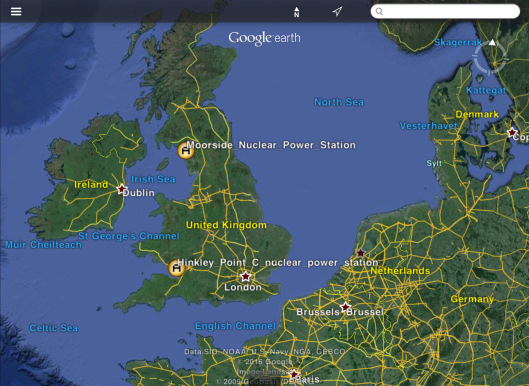
Plans for a new nuclear power station in Cumbria are on the verge of collapsing after the Toshiba-owned company – NuGen – laid off 60% of its workforce and embarked on a final effort to sell the project. Toshiba was due to sell the NuGen consortium to South Korean state-owned firm Kecpo in early 2018, as the Japanese firm exits international nuclear projects and looks to recoup some of the £400m it has spent on the Moorside plant.
But Kepco has been delaying a final decision, due in part to the UK government signalling a new approach to financing nuclear power stations. That has forced NuGen to cut 60 of its 100-strong workforce after a six-week consultation with staff. (1)
Unions said the project’s problems showed the need for the government to take a stake in Moorside. Justin Bowden, the GMB national secretary, said: “The looming collapse of this vital energy project has been depressingly predictable for months.” The GMB wants the NDA to be scrapped as it currently exists and a Nuclear Development Agency created to make sure Moorside and the accompanying creation of thousands of new jobs and apprenticeships, goes ahead. (2) The skeleton NuGen team is now focused on clinching a deal with Kepco by the end of the year before Toshiba writes the unit off entirely at the end of March 2019. Success will hinge on whether Kepco buys into a new financing approach for nuclear power plants that the government is exploring, known as the regulated asset base (RAB) model. Officials think it could deliver the government’s nuclear ambitions more cheaply for consumers than alternatives.
The RAB approach involves a regulator – in the case of nuclear power stations most likely to be Ofgem – setting a fixed sum for the costs of the scheme, and a fixed return for the project’s backers. Those returns would be funded by energy bill payers. But the model is likely to be ditched if Jeremy Corbyn comes to power. Alan Whitehead, the shadow energy minister, said: “Using customers’ bills to make a bet that construction of such large and complex projects will not overrun in terms of cost or time is a reckless act.” (3)
The Chief Executive of NuGen said he will “fight tooth and nail” to salvage the £15 billion Moorside nuclear power station in an impassioned speech to industry leaders gathered in Cumbria. He says he is fully behind using the RAB model. (4)
The FT reported that Toshiba had entered talks with Canadian asset manager Brookfield over the potential sale of NuGen. Brookfield bought Westinghouse from Toshiba for $4.6bn in January after the US nuclear business filed for Chapter 11 bankruptcy protection in 2017. (5) But the claims were later rubbished by Toshiba. It added that it was still considering the sale of NuGen to Kepco. (6)
Later NuGen admitted that there are no firm plans to save Moorside. (7)
Workington Labour MP, Sue Hayman, co-chair of the All Party Parliamentary Group on Nuclear Energy, wrote to the Secretary of State for Business, Greg Clark MP, at the end of July, when NuGen announced it was consulting on job losses, calling on him to guarantee Government support for the project and 20,000 future Cumbrian jobs. Mr Clark said in June that he “will consider direct Government investment” in the proposed Wylfa nuclear power station in Wales, but he has refused to make any similar commitment to Cumbria. In a response to Sue’s letter, energy minister Richard Harrington MP said: “The Secretary of State and I understand the potential importance of the Moorside project to the local area. However (…) the proposed sale of NuGen is principally a commercial matter for Toshiba and it would not be appropriate for me to comment on those ongoing negotiations.” Sue Hayman said: “This Tory government could not care less about the Cumbrian economy, the Moorside project, or the 20,000 future jobs it will bring.” (8)
but he has refused to make any similar commitment to Cumbria. In a response to Sue’s letter, energy minister Richard Harrington MP said: “The Secretary of State and I understand the potential importance of the Moorside project to the local area. However (…) the proposed sale of NuGen is principally a commercial matter for Toshiba and it would not be appropriate for me to comment on those ongoing negotiations.” Sue Hayman said: “This Tory government could not care less about the Cumbrian economy, the Moorside project, or the 20,000 future jobs it will bring.” (8) http://www.no2nuclearpower.org.uk/wp/wp-content/uploads/2018/09/NuClearNewsNo111.pdf
Dave Toke’s Blog 27th Sept 2018 Labour’s low cost and practical proposals for expansion of onshore and offshore wind, solar power, energy conservation and increases in renewable heat are the surest sign yet that they are the competent choice for Government.
Their proposals need some elaboration in places and some work on detail, but seem to be in a different dimension compared to the Tory Government who seem increasingly certain to be heading for self-destruction on the anvil of Brexit.
Rebecca Long-Bailey is aiming for 85 per cent of electricity to come from low carbon power by 2030. This is an easily
achievable target, and will be done at low cost if simultaneously Labour cancels the disaster-in-waiting project at Wylfa, and some way can be found to avoid Hinkley C being built.
China’s leading nuclear energy company CGN says it would consider pulling back from control of the Bradwell nuclear plant to appease political sensitivities.
Under a 2016 agreement, CGN would have a 66.5% stake in Bradwell and EDF would have the remainder when it starts generating electricity in the late 2020s or ealry 2030s. However, CGN’s chief executive Zheng Dongshan told the Financial Times (FT) CGN would be willing to consider “not being the majority operator. We understand the political and local sensitivities”. (1)
Should the Bradwell project proceed, it would be the first Hualong HPR1000-type reactor. The Office for Nuclear Regulation is currently assessing the reactor design but a final decision on the Generioc Design Assessment is expected to take at least three years. (2)
BANNG’s Andy Blowers says the project may be doomed anyway as the site is totally unsuitable and is widely opposed by communities all around the Blackwater Estuary. The Chinese withdrawal, should it come, would reflect widespread concerns about the security issues surrounding their investment into a highly sensitive part of the UK’s national infrastructure. Recent manoeuvres off the disputed, Chinese-built, artificial islands in the South China Sea have increased tensions in the area and provoked warnings of Chinese investment withdrawal from the UK. It is possible that the Bradwell project could be an early victim of deteriorating relations between the two countries. In any event the project was already looking doubtful. It is facing considerable challenges in delivering vast quantities of cooling water by pipeline and the need to avoid polluting the Marine Conservation Zone which gives protection to the Colchester Native Oyster and other marine life. Most of the site is vulnerable to flooding and it will be a heroic feat to demonstrate that highly radioactive spent fuel can be safely and securely stored on the site until the end of the next century. (3)
The Blackwater, Crouch, Roach and Colne Estuaries were designated as a Marine Conservation Zone in 2013. As part of the designation native oysters have been legally protected indeed there is the Essex Native Oyster Restoration Initiative to further the aims of the MCZ designation. The MCZ designation is a major change in the site status since Bradwell was selected in 2011 as a potential site for power generation by the Government. Despite the new MCZ status CGN and EDF Energy still confirm their belief that Bradwell is a good site for nuclear development. If you take into account this and all the other environmental protections that run along the proposed site you would have thought it would be the last place to build a nuclear power station! http://www.no2nuclearpower.org.uk/wp/wp-content/uploads/2018/09/NuClearNewsNo111.pdf
After wrangling over Georgia nuclear plant, cost concerns remain, By Matt Kempner and Anastaciah Ondieki – The Atlanta Journal-Constitution , September 28, 2018
Not many people can name the plant that their electricity comes from. But in Jefferson, at a gathering sponsored by Jackson EMC, plenty of customers were familiar with the trials and tribulations of expanding Plant Vogtle.
Among the people who gather annually for chicken dinners, gospel music and raffle drawings put on by the electric cooperative, there are worries about the mounting headaches 130 miles away.
Plant Vogtle — the only nuclear power plant under construction in the United States — keeps ending up in the news because of its ever escalating pricetag. And those soaring costs are likely to end up in the monthly bills of customers of Jackson EMC and most other Georgia utilities, which are on the hook to pay for the project.
“I don’t understand why they can’t figure out what it’s going to cost,” said Mike Mize, a retired phone company worker who lives in Commerce and gets power from Jackson EMC. “I want them to hurry up and finish the thing and quit spending money on it.”
But high-stakes events this week suggest that costs will only go higher.
Co-owners of the plant voted Wednesday to continue its expansion, but did little to address the fundamentals of the Vogtle’s troubles.
The owners ditched a proposal for a firm cost cap on the now $27-billion-plus project and avoided addressing calls by state lawmakers to refrain from passing new cost increases along to customers. Meanwhile, electric membership cooperatives and city utilities around the state lost some of their say over whether the project continues in the future.
Georgia Power blasted the idea of a firm cost cap, but agreed to take on a greater share of costs in the event of certain big overruns. The size of the risk shift was limited — if there are $2.1 billion in cost increases, the company would face an extra $180 million penalty, “peanuts in this context,” said one critic.
Georgia Power, the state’s largest utility, was given carte blanche to drop out of the project at its sole discretion.
Morgan Stanley analysts predict a “very good chance” that Vogtle costs could jump more than another $2.1 billion.
“We think there is a significant level of uncertainty around the budget and see a very high likelihood of continued cost overruns,” the analysts wrote.
Add that to the existing pile. Nine years into construction, the Vogtle expansion is billions of dollars over budget, years behind schedule and at least four years away from completion.
Cost projections and assurances from Georgia Power have been consistently wrong.
Georgia Power, the Municipal Electric Authority of Georgia and Dalton Utilities all gave approval. But Oglethorpe Power, which represents electric membership corporations throughout the state, insisted on a cost cap. It also asked that shareholders of Georgia Power’s parent, Southern Company, eventually cover additional cost increases. (Another Southern subsidiary is overseeing the construction.)
The core issue is one that has haunted Vogtle for years: Who should shoulder its ever-ballooning costs?
“We never signed up for a project where we would just be a blank checkbook for Southern Company or anybody else in this project,” said Gary Miller, the chief executive of GreyStone Power Corporation, which serves portions of Fulton, Cobb, Douglas and other counties. “We never said, ‘Build it no matter what the cost.’ ”………
Le Monde 27th Sept 2018, After the end of Yves Bréchet ‘s term at the end of September, the
position of High Commissioner for Atomic Energy will be vacant. This is not
surprising. The government has known since May that Yves Bréchet would not continue beyond the end of his term.
This deliberate vacancy of the office is therefore a government failing of primary importance. It reveals
that the current political power is not facing up to nuclear
issues, both civilian and military. The High Commissioner, for example, has
a controlling role in the management of plutonium stocks. http://huet.blog.lemonde.fr/2018/09/27/alerte-rouge-le-nucleaire-na-plus-de-haut-commissaire/
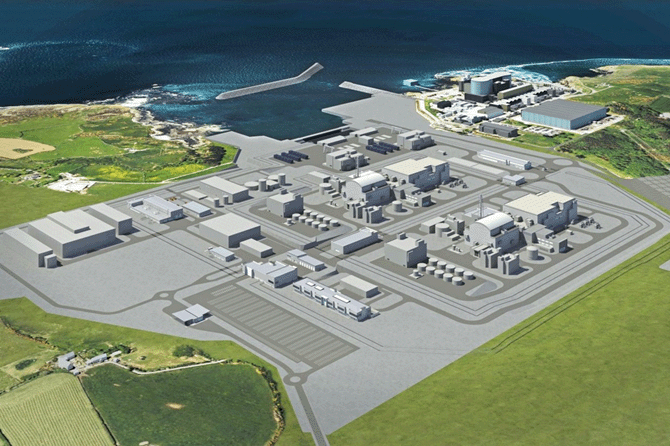
Plans to clear a site to build a new £12bn nuclear power station have been approved despite strong opposition. Horizon Nuclear Power will now start the 15-month process to clear an area measuring just over a square mile (740 acres) to build the new Wylfa Newydd B reactor.
But Greenpeace has taken legal action arguing work should not start until Wylfa B is given the official go-ahead.
Anglesey council unanimously approved the plans in a meeting on Wednesday. Horizon does not have the Development Consent Order (DCO) for the nuclear plant, a process that could take at least 18 months for the planning inspectorate to decide upon. But planning officials said giving it prior permission would speed up the construction process. Ahead of the council’s planning meeting, Greenpeace solicitors launched a legal challenge against the officials’ recommendation. The campaigners said the council’s report had “mistakenly relied upon the government’s Nuclear Energy National Policy Statement as a key justification for their support for Horizon’s plan to clear the site”…..http://www.no2nuclearpower.org.uk/news/wylfa-7-9-18/
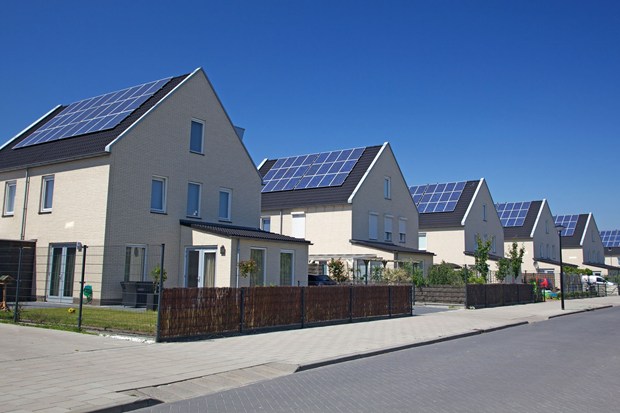
Reuters 27th Sept 2018, French Ecology Minister Francois de Rugy has approved 392 rooftop solar
power projects with a total capacity of 230 megawatts (MW) under a plan
launched in 2016 to develop 1,450 MW of solar capacity within three years.
France wants to develop more wind, solar and other low-carbon energy
sources to cut its dependence on nuclear energy power, which currently
counts for over 75 percent of its needs. https://uk.reuters.com/article/uk-france-solarpower/france-approves-230-mw-of-rooftop-solar-projects-idUKKCN1M71KO?rpc=401&
NuClear News, October 18 Sizewell C – a figment of the imagination In an interview with The Times in April EDF Energy’s UK chief executive, Simone Rossi, said that rapid progress was needed on the development of Hinkley Point C because promised cost savings would not materialise if there was a significant delay between work on the two. (1)
EDF does not need to strike a deal on Sizewell with the government this year, but Mr Rossi wants to be confident that it will be possible to reach an agreement. “This is the year where we need to understand whether this whole thing is really feasible or not,” he told The Times. “If we were to conclude that maybe it’s not feasible, then at that point maybe we say we are not in a position to continue the project.” EDF is pushing for a Regulated Asset Base (RAB) model.
The GMB has been urging a go ahead for Sizewell C because it faces an uncertain future, after the tion in National Infrastructure Commission (NIC) pushed for a reduction in the government’s plans for new nuclear power stations. (2)
Radiation Free Lakeland 25th Sept 2018 The rain returned several weeks ago and our gardens and fields have
returned to their usual shades of green. However, United Utilities still
finds it necessary to take full-page advertisements urging us all “to use
a little less water,” to spend less time in the shower, to turn off the
tap when brushing teeth etc. These are, of course in themselves, laudable
actions, but it also seems reasonable to ask ‘Where has all the water
gone? ‘ and, subsequently, to speculate that a big part of the answer
lies in the enormous quantities of water being extracted from Cumbria’s
rivers and lakes to cool and service the many serious hazards that remain
at the Sellafield nuclear site, including Building 30. https://mariannewildart.wordpress.com/2018/09/25/nuclear-costing-the-earth-rivers-and-sea/
Solar Power Portal 26th Sept 2018 A Labour government would look to treble the UK’s current solar capacity
and create more than 400,000 green jobs by 2030. Those were the key facts
from this week’s Labour Party conference which comprised speeches from
some of the opposition party’s central figures. Yesterday the party’s
shadow business, energy and industrial energy secretary Rebecca Long-Bailey
said that Labour had been working with an “expert team” of energy
professionals, engineers and academics to assess how the country could meet
such a target. A near trebling of the UK’s solar capacity would equate to
around 39GW of operational solar in the UK, enough, according to
Long-Bailey, to power seven million homes. Leonie Greene, director of
advocacy at the Solar Trade Association, stressed that expanding wind and
solar capacity should be an economically-driven decision that crosses party
political lines. “The government estimates that around £180 billion
needs to be invested in the electricity sector alone to 2030, so enabling
the lowest cost technologies which do not need public subsidy and which do
not contribute to climate change – namely solar and onshore wind – would be
very good news for consumers.” https://www.solarpowerportal.co.uk/news/corbyns_labour_government_would_treble_uk_solar_capacity_create_400000_gree









 nuclear-news