“Marking your own homework” – Britain’s plan for inspecting its own nuclear safeguards – Brexatom !

David Lowry’s Blog 1st Dec 2018 Imagine the British Foreign Office response if North Korea and Iran said they would comply with their nuclear safeguards and verification inspection obligations, but would conduct the inspections themselves!
But this week, this is just what the British Government has said to the world about its own new ‘mark-its-own-homework’ safeguards arrangements it has developed as part of Brexatom, the UK exit from the EU’s nuclear watchdog
body, Euratom.
http://drdavidlowry.blogspot.com/2018/12/nuclear-safeguards-hypocrisy-black-hole.html
UK’s Defence Safety Authority (DSA) suppresses reports on safety of nuclear weapons
 NIS 28th Nov 2018 In response to a parliamentary question in July this year the Ministry of Defence said that publishing the nuclear safety rating given by its internal regulator would endanger national security.
Until 2015 the MoD published an annual report by the Defence Nuclear Safety Regulator (DNSR), which is responsible for the safety of nuclear weapons, submarine reactors and defence nuclear transport.
All the annual reports from April 2015 onwards have been censored. The MoD began releasing DNSR’s annual reports
in 2007, when it began doing so in order to avoid a freedom of information (FOI) tribunal hearing brought by the journalist Rob Edwards.
In 2015 the DNSR was brought together with several other internal MoD safety bodies to form the Defence Safety Authority (DSA). From that time the DNSR annual report was summarised alongside assessments of the safety record in other ‘domains’ of MoD activity. Each domain is given a Safety Assurance statement, where the level of safety assurance is rated either ‘substantial’, ‘limited’ or ‘none’. These cover both the safety standards in that domain and the capacity of the MoD’s internal regulator to provide that assurance. In the 2016/17 DSA report a separate assessment is made for each of these two aspects.
The Shadow Minister for Peace and Disarmament, Fabian Hamilton, asked the MoD to release the Safety Assurance
rating for the years when the DNSR reports were not being released. In response the MoD once again claimed that releasing the information would endanger national security, and confirmed that the 2017/18 report would also not be released, but said that “[t]his does not prevent the effective management and independent assessment of the Defence Nuclear Programme, nor prevent its duty holders being held to account”
https://www.nuclearinfo.org/article/government-safety-transport/government-claims-releasing-nuclear-safety-assessment-would-risk
UK’s Atomic Weapons Establishment (AWE) failure to deal with its high level nuclear waste – now sending it to Sellafield

 NIS 28th Nov 2018 The Atomic Weapons Establishment (AWE) plan to send up to 5,000 barrels of Higher Activity Waste to Sellafield for treatment and storage. Since the year 2000 AWE has been under pressure from its regulators to take action to reduce its holdings of radioactive waste, some of which dates back to the 1983 moratorium on waste being dumped at sea.
This culminated in an improvement notice in 2015 from the Office for Nuclear Regulation (ONR) which required AWE to produce a plan for dealing with its waste holdings.
Earlier efforts to deal with the waste floundered when a plan to procure a super-compactor and build a waste treatment centre at AWE Aldermaston. The building originally intended to house the super-compactor was unable to meet modern seismic resilience standards and the plan was abandoned when the Ministry of Defence (MoD) refused to spend the £78m required to build a new facility. The plan produced by AWE to satisfy the 2015 improvement notice concluded that sending the waste to be treated and stored at Sellafield would be preferable to building an on-site waste facility.
https://www.nuclearinfo.org/article/waste-awe-aldermaston-other/awe%E2%80%99s-nuclear-waste-plan-send-it-sellafield
EDF plans to restart Hunterston nuclear reactors because – hey! some of the 350 cracks are only small!
 Ardrossan Herald 28th Nov 2018 THE chairman of Hunterston site stakeholders group has called upon the\ power station’s Reactor 3 to remain closed as a result of the increased number of cracks found in graphite bricks. It has been revealed that over 350 cracks have now been found, with concerns being raised as to the future operation of the plant.
However, owners EDF Energy closed reactor 3 earlier this year to carry out a more in-depth investigation, and have given
assurances that the cracks are ‘much narrower’ than set out than the safety parameters set which considerably lessens any danger.
Rita Holmes, chair of the Hunterston Site Stakeholder Group, said “If safety were indeed EDF’s number one priority, then reactor three would remain shut down. “As it is EDF is seeking permission to restart an aged reactor, which despite huge efforts and high cost, failed to back up its current safety case. The Hunterston keyway root cracking was not predicted to be so progressed. “There’s a lot at stake if the experts are wrong again.”
An EDF Energy spokesperson said: “The cracking only poses a potential challenge to the entry of the control rod in an extreme and highly unlikely (1 in 10,000 year) earthquake scenario and even then we have back-up systems which include super articulated control rods (designed to bypass distortions) and nitrogen plant which could be injected within
seconds to shut-down the unit.
During the most recent inspection of Reactor 3 we examined around a quarter of the core. As expected we identified a
number of new cracks. This number exceeded the operational limit of the existing safety case but was significantly mitigated by the cracks being much narrower than modelled in the safety case; something which was reported to the local site stakeholder group in June of this year. We have also carried out similar inspections on Reactor 4 and the case for return to service for that unit is currently with the ONR for review.” The return to service dates for the units which are cur rently on the REMIT website: Reactor 3 – 21 Feb 2019 and Reactor 4 – 14 Jan 2019.
https://www.ardrossanherald.com/news/17261490.350-cracks-found-in-hunterston-reactor/
Report shows how unprepared France is, in the event of a nuclear accident
 ACRO 15th Nov 2018 In the event of a serious nuclear accident, France is not ready. This is
the conclusion of a study of ACRO carried out for the ANCCLI (National
Association of Committees and Local Information Commissions). Indeed, the
lessons of the Chernobyl disaster were ignored, because it was an accident
described as “Soviet”, so impossible in France. Those of the Fukushima
disaster are slow to be taken into account.
https://www.acro.eu.org/plans-durgence-nucleaire-en-france-forces-et-faiblesses/
Appeal lodged to stop commissioning of Flamanville EPR nuclear reactor vessel.
|
Greenpeace France 28th Nov 2018 The “Sortir du nucléaire” network, Greenpeace France, the CRILAN and Stop
EPR-Ni in Penly and elsewhere are now filing an appeal before the Council of State to cancel the authorization given by the Nuclear Safety Authority (ASN). ) to commission the Flamanville EPR reactor vessel. An authorization that should never have been granted. In 2005, ASN alerted Areva NP (now
Framatome) and EDF to bad practices at the Creusot Forges plant. Ignoring these warnings, Areva NP has still made important elements of the tank for the EPR Flamanville. As shown by the correspondence between Areva and the ASN, the manufacturer has ignored the remarks of the latter on the manufacturing processes of this equipment. However, once the tank irreversibly installed in the reactor, Areva warned the ASN that it contained a defect calling into question its strength! After having described this anomaly as “very serious”, ASN nevertheless proposed to
Areva to introduce a request for a derogation. Despite the protests of many citizens , the Safety Authority finally gave a favorable opinion on the use of this tank. Then, on October 10, 2018, she issued an authorization subject to the change of the lid in 2024 and additional surveillance measures. Given the problems encountered in Flamanville, it is absurd that the government continues to open the door to new reactors, with a possible decision on new projects in 2021.
The future is for the energy transition towards energy savings and renewable energies, not to keep at arm’s length
an outdated technology that threatens the whole of Europe! https://www.greenpeace.fr/espace-presse/epr-quatre-associations-deposent-recours-devant-conseil-detat/ |
Belgium re-authorised nuclear power without having an environmental assessment – EU Magistrate critices.
|
Nuclear Machinations Needed Enviro Study, Says EU Magistrate https://www.courthousenews.com/nuclear-machinations-needed-enviro-study-says-eu-magistrate/
In 2015 the Doel 1 nuclear reactor on the Scheldt river, near Antwerp and Belgium’s border with the Netherlands, was set to shutter in mid-February, and the nearby nuclear reactor Doel 2 would follow later that year. Come June 2015, however, the country passed legislation that reauthorized electricity production at Doel 1 until Feb. 15, 2025. The law also postponed the decommissioning of Doel 2 until Dec. 2, 2025. In exchange for keeping the reactors online, plant operator Electrabel agreed to invest approximately 700 million euros in security. Belgium officials did not deem an environmental impact assessment necessary, however, because they determined that the modifications would not cause any negative radiological effects or otherwise change existing radiological environmental effects significantly.
The extensions have spurred a challenge before the Belgian Constitutional Court, but that case is on holding pending input from the European Court of Justice on what EU law requires. In a nonbinding advisory opinion to that Luxembourg-based court, Advocate General Juliane Kokott agreed with the challengers Thursday that the extensions appear to have been granted without the necessary environmental studies. “Faits accomplis weaken the effectiveness of an environmental assessment that is carried out retrospectively,” Kokott wrote. “The main function of the assessment, when used in good time, is to influence the decision concerning the project such that environmental damage is minimised as far as possible. For this reason, it is to be undertaken, under Article 6(4) of the Aarhus Convention and Article 6(4) of the EIA Directive, as early as possible, when all options are open. If it is merely carried out retrospectively, it can perform this function only to a very limited extent because many decisions have already been taken. Modifying those decisions in the light of the retrospective assessment is even less attractive when they have actually already been implemented.” The Belgian government reached a new energy pact earlier this year to phase out atomic power between 2022 and 2025. Compared to the 58 nuclear reactors operated in France, Belgium is in a distant fourth place when it comes to highest share of nuclear power in national energy grids. The country sources about 40 percent of its power from atomic energy, and the Doe and Tihange power plants together provide more than 50 percent of the country’s electricity. Though it supposed to meet a renewable energy target of 13 percent by 2020, recent Eurostat data shows that only 8.7 percent of Belgium’s energy needs are sourced from renewable sources like solar and wind. When Belgium reauthorized the two Doel reactors in 2015, they had been offline for two years so that officials could carry out extensive safety checks on newly emerged micro-cracks. |
|
|
France abandons plans for the Astrid (Advanced Sodium Technological Reactor for Industrial Demonstration)
Reuters 29th Nov 2018 , The French government has informed Japan that it plans to freeze a next
generation fast-breeder nuclear reactor project, the Nikkei business daily
reported on Thursday. Japan, which has been cooperating with Paris on the
fast-breeder development in France, has invested about 20 billion yen
($176.27 million) in the project, the report added. The French government
will halt research into the Astrid (Advanced Sodium Technological Reactor
for Industrial Demonstration) project in 2019, with no plans to allocate a
budget from 2020 onwards, the report said, without citing sources.
https://www.reuters.com/article/france-nuclearpower-astrid/update-1-france-to-freeze-fast-breeder-nuclear-reactor-project-nikkei-idUSL4N1Y41OU?rpc=401&
Manipulations suggested to keep up tax-payer funding for EDF’s nuclear business
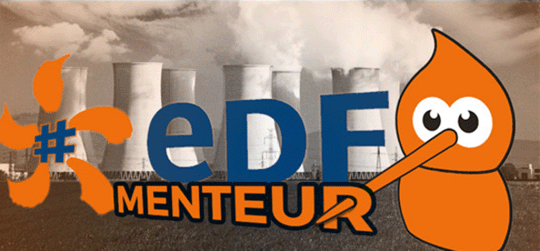 L’usine Nouvelle 28th Nov 2018 Ongoing reflection on EDF’s structure could lead to the creation of a
public holding company at the head of two major subsidiaries, with the
group’s nuclear fleet on one side and the sale of its production on the
other a group of activities that are most concerned by the energy
transition.
EDF could be reorganized into three blocks, with a central
public holding company controlling two major subsidiaries, one dedicated to
nuclear power and the other to energy transition. The aim would be to
secure the financing and operation of the group’s power stations by
protecting them from the vagaries of the market, which would amount to
making nuclear power an “essential asset” for France, in particular to
justify the operation. to the European Commission.
France will face a massive task when, inevitably, it must close and clean up its old nuclear reactors
reactors, spare a thought for France. The world champion of atomic energy
is approaching a cliff edge in its electricity production.
construction in the 1980s and 1990s. France has not brought on stream a new
reactor for 20 years. Even if the lives of its plants were extended from 40
to 60 years, in itself an expensive proposition, 75 per cent of its nuclear
generating capacity would be gone by 2050.
to set a clear framework allowing EDF, the monopoly nuclear operator, to modernise its fleet and for renewables to take a bigger slice of electricity production.
plants should be taken offline sooner rather than later, to avoid leaving EDF with the monumental task of decommissioning scores of them at the same time.
https://www.ft.com/content/c7421fbe-f326-11e8-9623-d7f9881e729f
Hungary plans for 100% renewable energy, phasing out coal
Open Access Government 28th Nov 2018 , Following yet another hike in the European Union’s emissions trading
system (ETS) in its fight against climate change, Hungary has announced
that it aims to phase out its use of coal and be fully reliant on renewable
energy sources by 2030.
https://www.openaccessgovernment.org/hungary-plans-to-ditch-coal-by-2030-and-become-fully-reliant-on-renewable-energy/55057/
Manchester City support’s for the U.N Nuclear Weapons Ban Treaty is welcomed by Nuclear Free Local Authorities (NFLA)
 NFLA 28th Nov 2018 , The Nuclear Free Local Authorities (NFLA) welcomes the unanimous decision
made today by Manchester City Council to formally support the International
Treaty for the Prohibition of Nuclear Weapons (TPNW). NFLA calls on the UK
Government to engage with the majority will of United Nations (UN) member
states by engaging in a process they have currently boycotted. The TPNW was
agreed at the UN by 122 countries (including the Republic of Ireland) in
July 2017 and is currently being ratified, a process that is expected to
conclude in 2019. The Treaty is a concerted attempt to move forward with
multilateral nuclear disarmament, but it has been opposed at every stage by
the nuclear weapon states, including the United Kingdom. NATO members, and
states like Australia and Japan who are linked to American security
policies, have also opposed this process.
http://www.nuclearpolicy.info/news/nfla-welcomes-manchester-city-council-becoming-first-european-city-formally-support-treaty-prohibition-nuclear-weapons/
Finland’s super-expensive Olkiluoto nuclear project delayed yet again
 World Nuclear News 29th Nov 2018, The start of regular electricity generation at the Olkiluoto 3 (OL3) EPR has been pushed back by a further four months and is now expected to begin
in January 2020, Finnish utility Teollisuuden Voima Oyj (TVO) announced
today.
Last month, the plant’s supplier – the Areva-Siemens consortium –
announced it wanted to update the schedule for completing the unit as
commissioning tests were taking longer than planned. TVO said it has been
informed by the Areva-Siemens consortium that fuel will now be loaded into
the reactor core in June 2019, with grid connection to take place next
October, and the start of regular electricity generation scheduled for
January 2020.
Under the previous schedule provided by the plant supplier in
June this year, fuel loading was expected in January 2019, grid connection
in May and the start of regular electricity production in September.
http://www.world-nuclear-news.org/Articles/New-delay-in-start-up-of-Finnish-EPR
New allegations of corruption in AREVA (now called ORANO)
 L’express 29th Nov 2018 , Areva: new suspicions of corruption. Anne Lauvergeon’s former right hand
man is suspected of having received money on a contract signed by the
group. After ” atomic Anne ” – the nickname of Anne Lauvergeon, when she
was the powerful boss of the French nuclear group – “radioactive Seb”?
, and who was long the darling of Lauvergeon, is shipped as its former
president in the gigantic case Uramin – the purchase by the company of
paid uranium deposits a fortune, whereas they concealed essentially sand
and wind.
https://www.lexpress.fr/actualite/societe/justice/areva-nouveaux-soupcons-de-corruption_2049586.html
France halts plan with Japan, for developing advanced nuclear reactors
Nikkei Asian Review 30th Nov 2018 The French government has informed Japan it will halt joint development of
advanced nuclear reactors, Nikkei has learned, dealing a blow to the fuel
cycle policy underpinning much of the East Asian country’s energy plans.
https://asia.nikkei.com/Economy/France-halts-joint-nuclear-project-in-blow-to-Japan-s-fuel-cycle
1 This Month
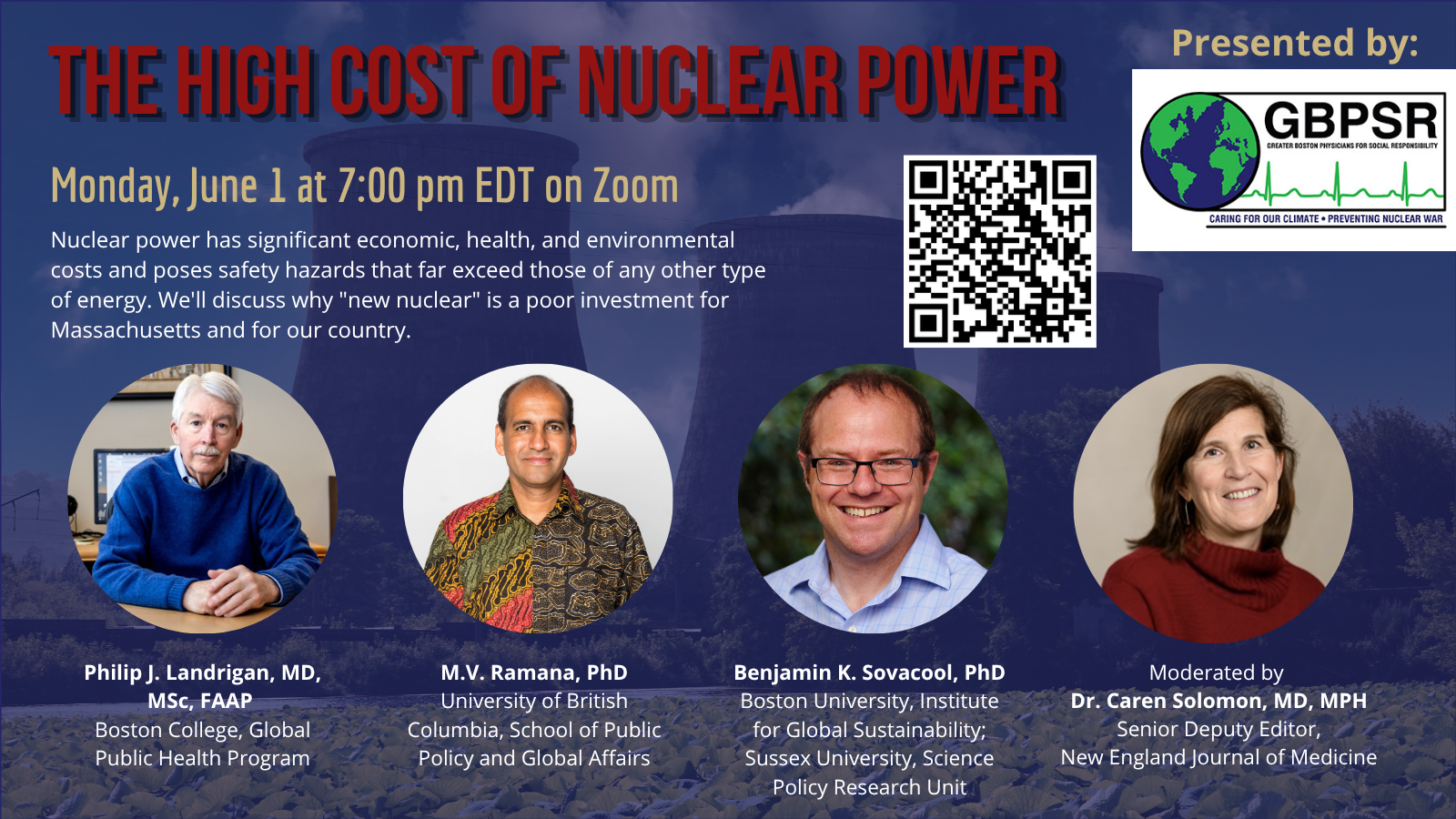
1 June Webinar – The High Cost of Nuclear Power – Register


of the week– Nuclear Reactor Information Task Force
To see nuclear-related stories in greater depth and intensity – go to https://nuclearinformation.wordpress.com
-
Archives
- May 2026 (262)
- April 2026 (356)
- March 2026 (251)
- February 2026 (268)
- January 2026 (308)
- December 2025 (358)
- November 2025 (359)
- October 2025 (376)
- September 2025 (257)
- August 2025 (319)
- July 2025 (230)
- June 2025 (348)
-
Categories
- 1
- 1 NUCLEAR ISSUES
- business and costs
- climate change
- culture and arts
- ENERGY
- environment
- health
- history
- indigenous issues
- Legal
- marketing of nuclear
- media
- opposition to nuclear
- PERSONAL STORIES
- politics
- politics international
- Religion and ethics
- safety
- secrets,lies and civil liberties
- spinbuster
- technology
- Uranium
- wastes
- weapons and war
- Women
- 2 WORLD
- ACTION
- AFRICA
- Atrocities
- AUSTRALIA
- Christina's notes
- Christina's themes
- culture and arts
- Events
- Fuk 2022
- Fuk 2023
- Fukushima 2017
- Fukushima 2018
- fukushima 2019
- Fukushima 2020
- Fukushima 2021
- general
- global warming
- Humour (God we need it)
- Nuclear
- RARE EARTHS
- Reference
- resources – print
- Resources -audiovicual
- Weekly Newsletter
- World
- World Nuclear
- YouTube
-
RSS
Entries RSS
Comments RSS
 nuclear-news