Geological disposal facility for nuclear waste could cost £54bn and ‘appears unachievable’.

15 Aug, 2025 By Tom Pashby
The UK government’s proposed solution for long-term storage of high-level waste from the nuclear sector, a geological disposal facility (GDF), has been described as “unachievable” in a Treasury assessment of the project.
The National Infrastructure and Service
Transformation Authority (Nista), a Treasury unit, made the assessment in
its Nista Annual Report 2024-2025, published on 11 August, where it rated
213 other major infrastructure projects.
A GDF represents a monumental
undertaking, consisting of an engineered vault placed between 200m and 1km
underground, covering an area of approximately 1km2 on the surface. This
facility is designed to safely contain nuclear waste while allowing it to
decay over thousands of years, thereby reducing its radioactivity and
associated hazards. NWS declares that this method offers the most secure
solution for managing the UK’s nuclear waste, aimed at relieving future
generations of the burden of storage.
The project would be so vast that it
would require two separate development consent order (DCO) applications to
be approved – one for exploratory works and another for the project
itself. Nuclear Free Local Authorities secretary Richard Outram said:
“The Nista Red rating is hardly surprising. The GDF process is fraught
with uncertainties and the GDF ‘solution’ remains unproven and costly.
“A single facility as estimated by government sources could cost the
taxpayer between £20bn and £54bn, this being a nuclear project it is much
more likely to be the latter and beyond.”
New Civil Engineer 15th Aug 2025, https://www.newcivilengineer.com/latest/geological-disposal-facility-for-nuclear-waste-could-cost-54bn-and-appears-unachievable-15-08-2025/
The cost of the UK’s strategic nuclear deterrent

Research Briefing, 12 August, 2025 Claire Mills, Esme Kirk-Wade, https://commonslibrary.parliament.uk/research-briefings/cbp-8166/
Since the acquisition of the UK’s first strategic nuclear deterrent in the 1950s, the cost of procuring and maintaining it, and which Government department should finance it, has always been a matter of debate.
Ascertaining precise costs for the nuclear deterrent can be difficult, as this information is not easily available from public sources. The nuclear deterrent is also supported by an overarching, and complex, network of programmes, infrastructure, equipment and people, which is referred to as the Defence Nuclear Enterprise (DNE). Separating out individual costs for the nuclear deterrent from within that structure is not straightforward, particularly since 2023 when the government started reporting all nuclear-related spending as a single line (the DNE) in its departmental estimates.
Synergies between the civilian nuclear sector and the defence nuclear enterprise complicate that picture further.
Cost of the existing ‘Trident’ nuclear deterrent
The UK’s nuclear deterrent is provided by four Vanguard-class ballistic missile submarines (SSBN) which house the Trident II D5A missile and associated Mk4A/Holbrook warhead. The decision to procure Trident, as the nuclear deterrent is often referred, was taken in the early 1980s. Spending on the programme was largely complete by the time of the 1998 Strategic Defence Review. Total acquisition expenditure on the programme was £12.52 billion, which equates to approximately £23 billion in 2024/25 prices.
Prior to 2023, annual in-service costs, which also included the costs of the Atomic Weapons Establishment (AWE) and the Nuclear Warhead Sustainment Capability Programme, basing, decommissioning and disposals, were estimated at 6% of the defence budget (£3 billion for 2022/23). In 2023, the decision was taken to bring all nuclear-related programmes and expenditure, including the in-service running costs of the deterrent, under one heading: the Defence Nuclear Enterprise (DNE), and to ringfence it within the MOD budget. The intention is to provide greater flexibility within the nuclear programme and to try and insulate the rest of the conventional equipment plan from any changes in nuclear spending. In doing so, direct comparisons of in-service costs for the nuclear deterrent over time are no longer possible.
Replacing the nuclear deterrent
A programme is currently underway to replace the Vanguard-class submarines from the early 2030s.
The estimated cost of the design and manufacture of a new Dreadnought- class of four SSBN is £31 billion, including inflation over the life of the programme. A £10 billion contingency has also been set aside, making an upper-end estimate of £41 billion in total acquisition costs for the Dreadnought class. In May 2025 the Ministry of Defence said that £3.37 billion of the contingency had been accessed as of March 2024. It also said that the remainder had been allocated to future years, suggesting that the full £10 billion in contingency funding will be spent.
In 2016 the goverment said that it expected in-service costs for the nuclear- deterrent, once the new Dreadnought SSBN entered service, to continue at approximately 6% of the defence budget. Following the decision in 2023 to amalgamate all nuclear-related spend under a single DNE budget, however, the government said that an “equivalent comparison” for future in-service costs was no longer possible.
A programme to replace the UK’s nuclear warhead was also confirmed in February 2020. In the 2025 Strategic Defence Review, the government announced £15 billion for the programme within the current Parliament (to 2029).
Wider costs
The decision to amalgamate nuclear spending under one budget heading: the Defence Nuclear Enterprise (DNE), reflects the increasing interdependence between the nuclear deterrent and the Royal Navy’s other conventionally armed nuclear-powered submarine programmes, including the new AUKUS-SSN being developed in conjunction with the US and Australia. This is particularly relevant to the costs associated with basing, infrastructure and nuclear propulsion.
There are various costs associated with replacing the nuclear deterrent that are not part of the capital costs of the Dreadnought programme or the sovereign warhead programme, but fall within wider spending on the defence nuclear enterprise. Those costs include the UK’s participation in the US-led Trident Service-Life Extension programme, extension of the service-life of the current Vanguard-class SSBN, and various basing and nuclear infrastructure projects.
Spending on nuclear programmes across of the whole Defence Equipment Plan to 2033 is currently forecast at £128 billion. That represents a £10 billion increase on the original forecasts in the 2023-2033 equipment plan.
Who will pay for it?
In line with convention, the Dreadnought programme will be funded from the Ministry of Defence’s departmental budget.
There has been a longstanding debate over budgetary responsibility for the nuclear deterrent, with frequent calls made for the capital costs of the replacement programme to be removed from the MOD budget.
Calls for Transparency Over Serious Nuclear Incident at Faslane
By Chris Martin, 14 Aug 2025, https://argyllbute24.co.uk/calls-for-transparency-over-serious-nuclear-incident-at-faslane/
THE Ministry of Defence (MoD) is facing calls to disclose details of a serious nuclear incident at HMNB Clyde, Faslane, between 1 January and 22 April this year.
Classified as Category A – the MoD’s most serious level – the event reportedly posed no risk to the public or environment.
Faslane, on Gare Loch in Argyll and Bute, houses the UK’s nuclear submarines, including Vanguard-class vessels armed with Trident missiles.
In a parliamentary response to SNP MP Dave Doogan, defence minister Maria Eagle confirmed multiple incidents at Faslane and nearby RNAD Coulport, but refused to detail Category A or B events, citing national security concerns.
Renewed alarm follows a Guardian/Ferret investigation revealing radioactive water leaked into Loch Long from Coulport in 2019 due to faulty pipes, with a six-year secrecy battle over the case. The Scottish Environment Protection Agency deemed the discharges “of no regulatory concern”.
SNP deputy leader Keith Brown has demanded an “urgent explanation”, warning nuclear weapons are “poorly maintained” and threaten safety, communities, and the environment.
The MoD insists it handles radioactive substances “safely and securely” and that none of the incidents caused harm or radiological impact, reaffirming support for the UK’s nuclear deterrent.
More on this story in next week’s Observer
Russia makes battlefield breakthrough in urgent push for land.
Telegraph, Kieran Kelly. Fermin Torrano in Ukraine, 12 Aug 25
With Trump talks looming, Russia’s army punches through exposed Ukrainian defences.
Russia is racing to seize as much Ukrainian territory as possible ahead of peace talks with Donald Trump on Friday.
In what may prove to be a major breakthrough for Vladimir Putin, Russian sabotage and reconnaissance units punched through exposed defences in eastern Ukraine, slipping as far as six miles behind the front line in just 48 hours, according to battlefield reports.
Kyiv has diverted special forces units to confront the insurgents on the ground in an attempt to prevent any more of Ukraine falling under Russia’s control before the summit in Alaska.
The location, near Dobropillya in Donetsk, is strategically significant. If Moscow’s forces are able to establish a foothold, the breach could allow Russia to cut off the city of Kramatorsk, one of the most vital strongholds in the Donbas still under Kyiv’s control.
If the city falls, it would give Putin almost full control over the Donbas and strengthen his negotiating power when bargaining over Ukraine’s fate with the Trump administration……………………………………… https://www.telegraph.co.uk/world-news/2025/08/12/russia-battleground-breakthrough-exposes-putin-push-land/
Coulport nuclear leaks spark alarm among local nuclear campaigners
CAMPAIGNERS have dismissed reassurances from military chiefs about
radioactive waste leaking into the Clyde. Pipes which the Ministry of
Defence (MoD) had allowed to fall into disrepair leaked nuclear waste into
Loch Long from the Trident base at Coulport.
The revelations came after an
investigation by The Ferret, which forced the release of information on the
leaks the Government had tried to keep hushed up. Marian Pallister, chair
of Pax Christi Scotland, said the revelations were unsurprising but
concerning for people living in the area. Pallister, a writer and
journalist who lives near Lochgilphead, told The National: “I’m afraid
that it wasn’t a surprise, we have known about this for a long time.”
She dismissed the MoD’s claims that there had been “no unsafe releases
of radioactive material into the environment”, adding: “They would say
that, wouldn’t they? “They are obviously going to lessen their
involvement but however big or small the leaks might be, they are leaks
into waters that are a part of our lives, part of our heritage.
The National 12th Aug 2025, https://www.thenational.scot/news/25384467.coulport-nuclear-leaks-spark-alarm-among-local-nuclear-campaigners/
Scottish independence can rid us of nuclear abomination.
Ross Greer: NUCLEAR weapons aren’t just a deadly money pit, they also
make for extremely unsafe neighbours. This was proven once again last
weekend with the Ferret, The National and others exposing the scale of the
threat posed to those of my constituents who have the bases at Faslane and
Coulport on their doorsteps.
The news radioactive water leaked into
beautiful Loch Long should concern everyone, though for those of us
familiar with the safety record at Coulport, it was no surprise. Far from
an isolated event, we now know that Faslane also saw over 100 reported
safety incidents over the last 12 months, including a Category A event
earlier this year, the most serious category and one that the Royal Navy
says carries an “actual or high potential for radioactive release to the
environment”.
The National 15th Aug 2025, https://www.thenational.scot/politics/25391552.ross-greer-scottish-independence-can-rid-us-nuclear-abomination/
Does Trump have the guts to end America’s lost proxy war against Russia?
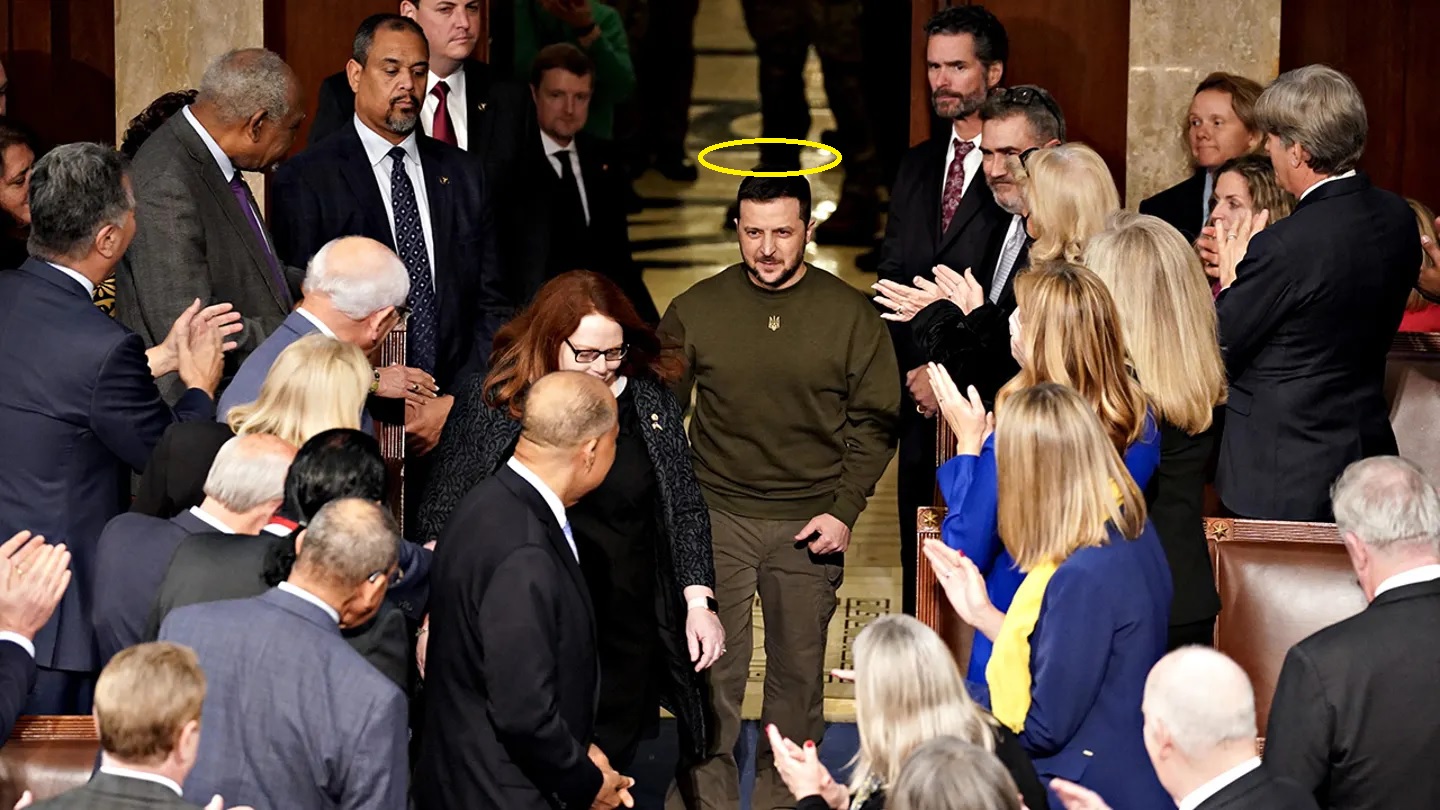
Walt Zlotow, West Suburban Peace Coalition, Glen Ellyn IL, 12 Aug 25.
For seven months Trump has reneged on his promise to end in one day America’s proxy war against Russia destroying Ukraine. Ukraine loses more soldiers and more territory every day with no chance of prevailing.
Tho a one day settlement was impossible, Trump came close to following thru by publicly berating Ukraine President Zelensky for continuing the war and threatening to cease all US weapons which keep Ukraine fighting. Then he pivoted back to war, demanding Russia’s Putin implement immediate ceasefire or face draconian sanctions. Putin responded to that nonsense with increased military attacks. Now with the upcoming summit this Friday, Trump has the opportunity to achieve peace in Ukraine.
Russia has already signaled concessions to achieve ceasefire. According to the Wall Street Journal, Russia told US envoy Steve Witkoff Russia would implement a full ceasefire if Ukraine would withdraw its remaining troops in the Donbas almost entirely controlled by Russia. In return Russia would freeze the lines in Kherson and Zaporizhzhia, the other 2 Ukraine oblasts Russia demanded full control over, rather than push on for full annexation. Russia would require Ukraine to remain neutral between East and West, giving up all intentions to join NATO.
Implementing that ceasefire would be a good start to permanently ending hostilities. But neither Ukraine President Zelensky nor European NATO leaders have bought into this sensible solution.
Zelensky maintains his delusional refusal to give up a single square mile of territory that will never return to Ukraine control. He could have kept every square mile of territory had he completed the peace deal with Russia in April 2022 that the US and UK sabotaged. Seventy percent of Ukrainians want the war to end forthwith. But the fool Zelensky keeps demanding ‘push on.’
European NATO leaders, especially UK’s Starmer, France’s Macron and Germany’s Merz are still committed to this failed war to maintain NATO dominance and isolation of Russia. They fear the loss of the US gravy train that pumps up their economies. They are as delusional as Zelensky.
Trump’s third obstacle to peace is the US national security state which abhors the US losing a senseless war of choice. War fanatics like Senator Lindsey Graham and retired generals paid off by the weapons makers, dominate mainstream news condemning inevitable US surrender. No voice for ending this proxy war madness is allowed to pitch peace on the airwaves or op ed columns. They will pound on Trump relentlessly should he chalk up another US war loss, albeit one bringing peace to Ukraine.
The only ceasefire and permanent war settlement possible will go down as a US/NATO defeat. Wonderful. NATO needs to disband as it has gone on trying to weaken, isolate Russia 34 years after becoming obsolete upon dissolution of the USSR in 1991.
Does Trump have the guts to force a settlement that overcomes the resistance of Zelensky, NATO leaders and the US war party? We may soon find out.
Heat Waves Are a Growing Threat to Europe’s Nuclear Power Supply

Bloomberg News, Eamon Akil Farhat, Aug 08, 2025, https://financialpost.com/pmn/business-pmn/heat-waves-are-a-growing-threat-to-europes-nuclear-power-supply
Heat waves across Europe are increasing the need for nuclear power plants to be taken offline, with the situation expected to worsen in the coming decades and few options for mitigation.
(Bloomberg) — Heat waves across Europe are increasing the need for nuclear power plants to be taken offline, with the situation expected to worsen in the coming decades and few options for mitigation.
Weather-related nuclear outages, mainly caused by elevated temperatures of cooling water, increased threefold in the period from 2010 to 2019, compared with 1990 to 2009, according to a study published in Energy Economics. Due to climate change, the intensity and length of these heat waves is expected to increase.
“Summer heat waves are climbing fast — 0.85 more days each year since 2010,” said Jess Hicks, a weather analyst at BloombergNEF. “That trajectory spells growing cooling-water risks for French nuclear plants.”
…………………………….A separate study published in the journal Energy in April looked at two reactors operated by Electricite de France SA, Chooz and Golfech, which rely on river water for cooling. It concluded that climate change will increase water temperature and also reduce flow volumes. If both plants are still operating by 2050, the level of outages would have doubled at Chooz and increased tenfold for Golfech. In the worst years, about 14% of Chooz’s generation would need to be curtailed.
When faced with high water temperatures and low flows, nuclear operators have limited options.
A closed-cycle cooling system, which relies less on the external environment, is one option. However, the Energy Economics study found that retrofitting such systems would cost about $500 million per nuclear power plant.
Another option would be to relax environmental limits on river temperatures, allowing reactors to keep operating for longer during heat waves. Such restrictions have been waived in the past, for example in 2022 when the French nuclear regulator ASN temporarily allowed five nuclear plants to discharge hotter water into rivers as the nation struggled with an energy crisis.
EDF has been studying other methods to reduce water consumption at nuclear power plants, such as capturing the cooling vapor given off by the facilities.
Germany’s Merz to Israel’s Netanyahu: ‘No more genocide weapons for you.’

Walt Zlotow, West Suburban Peace Coalition, Glen Ellyn IL , 12 Aug 25
Germany, conductor of the worst genocide in the 20th century, is pushing back against Israel, conductor of the worst genocide this century.
German Chancellor Merz halted all offensive weapons sales to Israel in a vailed understatement, “The even harsher military action by the Israeli army in the Gaza Strip, approved by the Israeli Cabinet last night, makes it increasingly difficult for the German government to see how these goals will be achieved. Under these circumstances, the German government will not authorize any exports of military equipment that could be used in the Gaza Strip until further notice.”
Given that Israel, with near total US complicity, is determined to eliminate all 2,300,000 Palestinians from Gaza’s 139 square miles to expand Greater Israel, its unlikely German weapons exports will ever resume.
Germany’s principled action is not insignificant in the effort to cripple Israel’s destruction of the Palestinian people. That’s because Germany accounts for 30% of Israel’s grisly genocide arsenal. Sadly, the US accounts for 69% of the remaining 70%. The Trump administration is so ecstatic about Israel clearing out the remaining 2 million or so Palestinians not yet murdered, that it may simply increase its grotesque weaponizing of the genocide to make up the slack.
Americans should contemplate that would equate with America supplying Nazi Germany with the Zyklon B gas to eliminate European Jewry and other Nazi undesirables in WWII.
Trump can fuel Israel’s genocide because not a single member of the Trump administration dare call US policy genocide. Nor does a single member mainstream media. Congress is a teensy better with just 10 of 535 congresspersons having the moral clarity to charge Israel with the G word.
Until Trump channels Germany’s Merz and tells Netanyahu, ‘No more genocide weapons for you’, the genocide will continue till all 2,300,000 Palestinians in Gaza are dead and gone.
Swarm of jellyfish shuts nuclear power plant in France.
‘Massive and unpredictable’ swarm entered filter drums that pull in water, Gravelines operator EDF says.
Jillian Ambrose Energy correspondent, 11 Aug 25
‘Massive and unpredictable’ swarm entered filter drums that pull in water, Gravelines
operator EDF says.
A swarm of jellyfish has forced the shutdown of one of
the largest nuclear power plants in France after entering the water intake
systems used to cool the coastal reactors. Three reactors at the Gravelines
nuclear power plant in northern France shut down automatically late on
Sunday, according to the French nuclear company EDF, after the filter drums
of the pumping stations became packed with a “massive and
unpredictable” swarm of the marine creatures.
The entire nuclear plant,
capable of powering about 5m homes, was brought offline when a fourth
reactor shut down shortly after the free-swimming invertebrates jammed the
power plant, which had already lost its two other reactors for planned
summer maintenance work. Jellyfish have a long history of derailing the
normal operations of coastal power plants, which tap the ocean for the vast
amounts of cool water needed to keep temperatures in check.
The repeated
problems caused by unexpected jellyfish numbers prompted scientists at the
University of Bristol to develop an “early warning tool” to predict the
sudden, en masse appearance of jellyfish swarms that might disrupt coastal
power plants. The Torness nuclear plant in Scotland, which is also owned by
EDF, was forced to shut for a week in 2021 after jellyfish clogged the
seaweed filters on its water intake pipes, a decade after jellyfish shut
the plant for a week in 2011.
Jellyfish swarms have also closed nuclear and
coal power plants in Sweden, the US, Japan, and even caused a major
blackout in the Phillipines in 1999 that some mistakenly feared was linked
to the Y2K bug or a government coup.
Guardian 11th Aug 2025, https://www.theguardian.com/world/2025/aug/11/swarm-of-jellyfish-shuts-nuclear-power-plant-in-france
Zelensky Rejects Idea of Ceding Territory to Russia as Trump and Putin Prepare for Alaska Summit.

According to a report from The Wall Street Journal, Putin has proposed halting the war in exchange for Ukraine withdrawing from Donetsk
by Dave DeCamp | August 10, 2025, https://news.antiwar.com/2025/08/10/zelensky-rejects-idea-of-ceding-territory-to-russia-as-trump-and-putin-prepare-for-alaska-summit/
Ukrainian President Volodymyr Zelensky has rejected the idea of ceding territory to Russia to end the war in Ukraine, as President Trump and Russian President Vladimir Putin are preparing for a summit that will be held this Friday, August 15, in the US state of Alaska.
“Ukrainians will not gift their land to the occupier,” Zelensky said in a video address on Saturday. “We will not reward Russia for what it has perpetrated.
Zelensky’s comments came after The Wall Street Journal reported that Putin told US envoy Steve Witkoff that he would agree to a full ceasefire if Ukraine withdrew its forces from Donetsk, one of the two oblasts in Ukraine’s eastern Donbas region. Russia controls most of Donetsk and virtually all of Luhansk, the other half of the Donbas region.
Based on another Journal report, Russia is seeking to freeze the lines in Kherson and Zaporizhzhia — a potential climbdown from Moscow’s earlier demand for a full Ukrainian withdrawal from both oblasts.
A European counter-proposal that was presented to US officials on Saturday called for any territorial exchanges to happen in a reciprocal manner, meaning Russia would have to withdraw from some land if Ukraine ceded the territory it still controls in Donetsk. Some European officials said Moscow would have to cede control of Kherson and Zaporizhzhia.
The European proposal also calls for a ceasefire to be implemented immediately before any other steps are taken and says that any territorial concession from Ukraine must include concrete security guarantees, including potential NATO membership, which is a non-starter for Russia.
Much of how the peace process will go depends on how much pressure the US is willing to put on Ukraine to make a deal, since Zelensky’s war effort is reliant on US military support. The idea of a peace deal is popular in Ukraine as a recent poll from Gallup found that 69% of Ukrainians want a negotiated end to the conflict as soon as possible, while only 24% want to keep fighting until “victory.”
TASC’s new legal challenge against Sizewell C’s secret flood defences

by Together Against Sizewell C (TASC)
TASC’s new Judicial Review claim calling for Sizewell C’s Development
Consent Order (DCO) to be revoked or varied has been granted a permission
hearing in the High Court.
At a date to be confirmed, a judge will hear why
TASC consider it is unlawful to delay, for decades, assessment and public
scrutiny of two huge additional flood barriers kept secret by EDF since
2015. If the court grants permission, then there would be a full JR hearing
in due course.
TASC writes: “Sizewell C’s attempt to avoid scrutiny of
these additional sea defences now means the project is proceeding without
its full environmental impact having been assessed, this being in
contravention of the UK Habitat Regulations. Sizewell C clearly believe
they can do as they see fit with our Heritage Coast, National Landscape and
designated wildlife sites irrespective of the damage they will cause –
this government, the largest shareholder in Sizewell C, must be challenged
on this.” If you would like to help with TASC’s fundraising, visit their
Crowd Justice page –
https://www.crowdjustice.com/case/sizewell-c-legal-challenge/
TASC 11th Aug 2025.
https://tasizewellc.org.uk/#
UK Labour eye ‘utterly reckless’ bonfire of nuclear energy regulations.

SAFETY concerns have been raised by the UK Government’s “utterly
reckless” approach to nuclear energy – as a new report recommends
ministers tear up “needless” regulations.
A taskforce commissioned by
the UK Government to look into nuclear regulations has recommended a
“radical reset” to speed up projects. Fears have been sparked after the
taskforce criticised the “unnecessarily slow, inefficient and costly”
system which governs new nuclear projects.
Its final report is expected to
focus on tackling what the UK Government described as a “culture of risk
aversion” in nuclear energy regulation. Earlier this year, the UK
Government announced it was scrapping a raft of nuclear regulations,
including changing the rules so that new projects could be built across the
entirety of England and Wales. New nuclear projects are de facto banned in
Scotland.
The National 11th Aug 2025, https://www.thenational.scot/news/25381085.labour-eye-utterly-reckless-bonfire-nuclear-energy-regulations/
Kaliningrad Gambit: NATO’s Last Desperate Bluff /Spark for World War III?
Jeffrey Silverman, New Eastern Outlook, August 08, 2025
With Ukraine’s defences collapsing and Russia gaining the upper hand, NATO’s provocative focus on Kaliningrad risks triggering a nuclear escalation that could end any remaining prospects for diplomacy.
As many foresaw, the situation for Ukraine’s Western-backed proxy regime is unraveling fast. Russian forces are pushing forward with increasing momentum — Chasov Yar has reportedly fallen, and Pokrovsk and Kostiantynivka facing operational encirclement. The Eastern Front may soon collapse entirely.
Kiev appears outgunned and undermanned, the result of Russia’s grinding attritional strategy — high firepower, low casualties — not the reckless assault tactics portrayed in Western media.
In response, Washington is shifting gears — talking nuclear subs and floating threats against Kaliningrad, Russia’s fortified Baltic enclave, a move that may only harden Moscow’s resolve — and shift the conflict into a far more dangerous phase.
Russian military production has far outstripped that of the entire combined West by a factor of roughly four to one. Getting beyond lame Western rhetoric, the Russian Federation is producing weapons that actually work, unlike their NATO rivals, at a price far less than the West is capable of matching. Needless to say, the West claims plans are in progress to “close the gap in 2025” but they have been saying that since 2022, with no result in sight.
Sayings with punch!
They say tactics win battles, but logistics wins wars. The Russians took that to heart — favoring firepower and endurance over flashy maneuvers. The West, still chasing its blitzkrieg fantasies, missed the memo.
With Ukraine’s proxy army buckling, NATO faces a sobering question: what now?
Sanctions fizzled. The so-called “global consensus” crumbled as China, India, and Brazil shrugged off Washington’s threats and kept buying Russian energy. Trump’s bluster over secondary sanctions rings hollow — especially after Beijing humbled him in the last rare earth standoff.
Meanwhile, the West’s wunderwaffen parade — HIMARS, Javelins, Patriots, Leopards, F-16s — may have dazzled in brochures, but has done little to shift the battlefield calculus. Ukraine bleeds, Russia raises battle flags over liberated towns and cities, and NATO grows increasingly desperate.
And now, with few cards left to play, NATO’s gaze turns ominously to Kaliningrad — the heavily armed Russian exclave boxed in by Poland and the Baltics. A target? A bargaining chip? Or the next red line in a war spiraling out of control?
NATO Doctrine
General Christopher Donahue, commander of U.S. Army Europe and Africa, unveiled the new NATO doctrinefor Eastern Flank Defence at the inaugural LandEuro conference on Wednesday 30th July, by talking about NATO plans to attack Kaliningrad in the event of open conflict with Russia.
Speaking specifically about Kaliningrad, Donahue said modern allied capabilities could “take that down from the ground” faster than ever before:
“We’ve already planned that and we’ve already developed it. The mass and momentum problem that Russia poses to us…we’ve developed the capability to make sure that we can stop that mass and momentum problem.”
Sounds a bit too optimistic to me!
Apparently, NATO planners have learned little from the ongoing conflict in Ukraine, even less from the debacle in Afghanistan and Iraq, where offensives into built up areas require long preparation in terms of artillery and missile strikes. Modern satellite and drone observation makes it practically impossible to build up sufficient forces unobserved for “coup-de-main” surprise attacks of the type the western military still dream of, and the sheer level of destruction that modern weapons systems can unleash, such as the TOS-1, and FAB-3000 glide bombs, various cruise and Kinzhal hypersonic missiles, and conventionally armed Oreshnik IRBMs can unleash makes concentration of troops an extremely risky business.
Quite how NATO intends to square this circle is anyone’s guess, as the statements by Donahue are, to put it mildly, light on details………………………………………………………………………………………………………………………………………………………………
Method in Madness
What Western planners often ignore — or conveniently forget — is that Ukraine’s internal policies toward its Russian-speaking population were a major trigger for the conflict. Now, with the battlefield turning in Russia’s favor, NATO appears to be scrambling for leverage……………………………………………………….
Using Kaliningrad to poke the bear is just the spark that could set into motion the end of times, whether it is a military incursion, blockade, or a full-fledged attack, and this would be the end of diplomacy and humanity as we knew it.
The US and its NATO partners should never underestimate Russian resolve, as the portrayal of Russia as a defeated, overextended, or crumbling power is a story of another time and reality. Times have changed, and the world has changed, with new realities between East and West. https://journal-neo.su/2025/08/08/kaliningrad-gambit-natos-last-desperate-bluff-spark-for-world-war-iii/
The Alaskan Summit: Possible Agenda and Outcomes
by Gordonhahn, August 11, 2025
As US President Donald Trump and Russian President Vladimir Putin and their respective teams prepare for their summit meeting in Alaska, numerous media reports are appearing in the media purporting to record the basics of a territorial agreement on Ukraine agreed upon by both sides.
Based on unidentified US officials, the two sides have supposedly agreed that a ceasefire will commence when Ukraine withdraws its forces from Russian claimed and largely taken Donetsk and Luhansk (Lugansk) Regions and that Russia will then forego its claims on Zaporoshe and Kherson Oblasts, while keeping Crimea.
No American or Russian official has confirmed (or denied) this as the basics of an agreement on a ceasefire, which Russia has repeatedly refused. Thus, commentators are claiming that Mr Putin has made a compromise, abandoning some of his other previously stated objectives of the ‘special military operation’ (SMO), which consistently have included the following: a concrete commitment by Ukraine and NATO that Ukraine will not become a NATO member or receive NATO military assistance, i.e., Ukrainian neutrality (the main Russian demand and reason for the SMO); Ukraine’s de-Nazification (removal of neofascism from Ukrainian politics); and de-militarization (unspecified limits on Ukraine’s military power and/or force deployment).
This is all wrong…………………………………………………………………… To read further, please subscribe to my Substack: https://open.substack.com/pub/gordonhahn/p/the-alaskan-summit-likely-agenda?r=1qt5jg&utm_campaign=post&utm_medium=web&showWelcomeOnShare=true
1 This Month

petition to oppose the rapid increase of space-military industry threatening Jeju Island and the region.
[Petition by April 19th (KST)] Stop the joint military-Hanwha Systems-Jeju Provincial Government Sea Launch!

Chernobyl: The Lost Tapes – A good documentary on Chernobyl on SBS available On Demand for the next 3 weeks– https://www.sbs.com.au/ondemand/tv-program/chernobyl-the-lost-tapes/2352741955560

of the week–London Campaign for Nuclear Disarmament

Tell the Ukrainian Government to Drop Prosecution of Peace Activist Yurii Sheliazhenko
To see nuclear-related stories in greater depth and intensity – go to https://nuclearinformation.wordpress.com
-
Archives
- April 2026 (194)
- March 2026 (251)
- February 2026 (268)
- January 2026 (308)
- December 2025 (358)
- November 2025 (359)
- October 2025 (376)
- September 2025 (257)
- August 2025 (319)
- July 2025 (230)
- June 2025 (348)
- May 2025 (261)
-
Categories
- 1
- 1 NUCLEAR ISSUES
- business and costs
- climate change
- culture and arts
- ENERGY
- environment
- health
- history
- indigenous issues
- Legal
- marketing of nuclear
- media
- opposition to nuclear
- PERSONAL STORIES
- politics
- politics international
- Religion and ethics
- safety
- secrets,lies and civil liberties
- spinbuster
- technology
- Uranium
- wastes
- weapons and war
- Women
- 2 WORLD
- ACTION
- AFRICA
- Atrocities
- AUSTRALIA
- Christina's notes
- Christina's themes
- culture and arts
- Events
- Fuk 2022
- Fuk 2023
- Fukushima 2017
- Fukushima 2018
- fukushima 2019
- Fukushima 2020
- Fukushima 2021
- general
- global warming
- Humour (God we need it)
- Nuclear
- RARE EARTHS
- Reference
- resources – print
- Resources -audiovicual
- Weekly Newsletter
- World
- World Nuclear
- YouTube
-
RSS
Entries RSS
Comments RSS
 nuclear-news