Likely delay in clean-up of radioactive contamination at Dalgety Beach
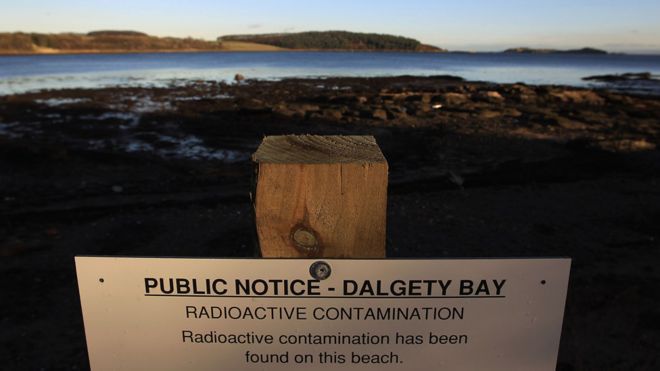
STV 13th Nov 2019, A clean-up operation to deal with radioactive contamination at a Fife beachis being held up by local landowners. Thousands of radioactive particles have been found on the shore at Dalgety Bay since 1990.
The objects are believed to come from eroded landfill that contains debris from Second World War aircraft that originally had radium dials. Stephen Ritchie told councillors: “We actually have had cabinet approval, ministerial approval – we have all the funding we need and authority to proceed. “However, the local stakeholders are dragging their feet. ”
We can’t get on the land to clean up the waste without the landowners’ permission. “There are four stakeholders for the area – one of which is the Crown, which is obviously not an issue. However, the other three have been dragging their feet.” Mr Ritchie told councillors that the MoD were looking to award the contract to a company to remove the waste by December 13, but if talks continued to stall, they could miss their window and the project would be delayed,meaning that the clean-up might not be able to happen in 2020.
https://stv.tv/news/east-central/1442361-work-to-clean-up-radioactive-beach-delayed-by-landowners/
Bulgaria nuclear reactor capacity reduced over generator malfunction
Bulgaria nuclear reactor capacity reduced over generator malfunction, SOFIA (Reuters) 18 Nov 19– Bulgarian nuclear power plant Kozloduy said on Saturday that its 1,000 MW Unit 5 was running at half capacity after one of its main circulation pumps shut down, activating the safety system.
New type of uranium nuclear fuel has safety risks
 Nuclear fuel alternatives after Fukushima have challenges ahead, https://www.manchester.ac.uk/discover/news/nuclear-fuel-alternatives-after-fukushima-have-challenges-ahead/ 15 Nov 19, Nuclear fuel alternatives after Fukushima have challenges ahead, https://www.manchester.ac.uk/discover/news/nuclear-fuel-alternatives-after-fukushima-have-challenges-ahead/ 15 Nov 19,
Research at The University of Manchester suggests that the preferred candidate fuel to replace uranium oxide in nuclear reactors may need further development before use. Dr Robert Harrison led the research, published in the journal Corrosion Science, with colleagues from the University and the Dalton Nuclear Institute. “Since the 2011 Fukushima accident,” explains Dr Harrison, “there has been an international effort to develop accident tolerant fuels (ATFs), which are uranium-based fuel materials that could better withstand the accident scenario than the current fuel assemblies.” One of these ATFs is a uranium silicon compound, U3Si2. This material conducts heat much better than the traditional uranium oxide fuels, allowing the reactor core to be operated at lower temperatures. In an emergency situation, this buys more time for engineers to bring the reactor under control. However, there are many unknowns about how U3Si2 will behave in the reactor core. “One of these unknowns,” says Dr Harrison, “is how it will behave when exposed to high temperature steam or air, as may happen during manufacturing or a severe accident during reactor operation.” To investigate just how accident tolerant ATFs are, Dr Harrison and his colleagues investigated how Ce3Si2 – a non-radioactive material analogous to U3Si2 – behaved under exposure to high-temperature air. Using advanced electron microscopy techniques, available at The University of Manchester Electron Microscopy Centre (EMC), the researchers were able to study the reaction products after Ce3Si2 was exposed to air at temperatures of up to 750oC. They discovered the material was prone to forming nanometre sized grains of silicon and silicon oxide, as well as cerium oxide. These nano-grains may allow for enhanced corrosion of the fuel material or the escape of radioactive gasses formed during reactor activity. This is because the formation of nano-grains creates more grain boundary areas – interfaces between grains, which provide pathways for corrosive substances or fission gases to migrate along. “Similarly,” adds Dr Harrison, “it would also allow for hazardous gaseous fission products produced during the splitting of uranium (such as xenon gas that would normally be trapped within the material) to diffuse out along these grain boundaries and be released, which would be potentially harmful to the environment.” While Dr Harrison stops short of saying that these ATFs are more unsafe under accident conditions than the current fuels they are looking to replace, he would argue they are currently not any better, and “aren’t as tolerant to accident conditions as once hoped”. Dr Harrison concludes “However, with the new insight developed in this work it will be possible to develop and engineer ATF candidates to better withstand these accident conditions, perhaps by adding other elements, such as aluminium, or manufacturing composite materials to give higher protection of the fuel material”. The full title of the paper is “Atomistic Level Study of Ce3Si2 Oxidation as an Accident Tolerant Nuclear Fuel Surrogate”, and the DOI is 10.1016/j.corsci.2019.108332
|
|
European Union struggles to preserve Iran nuclear deal
|
, https://apnews.com/e63a5526db184d39be4439b82010df62 By LORNE COOKNovember 12, 2019
BRUSSELS (AP) — European Union foreign ministers on Monday affirmed their support for the nuclear deal with Iran, after the Islamic Republic began enrichment work at its Fordo site in a fresh act of defiance that seems likely to spell the end of the painstakingly crafted international agreement.At talks in Brussels, the ministers mulled what action to take as they awaited a new report from the International Atomic Energy Agency later Monday on whether Iran is still complying with its commitments. EU foreign policy chief Federica Mogherini said that the ministers underlined their “full commitment to the agreement that remains crucial for our security, even if it’s increasingly difficult to preserve it. We will continue our efforts to have a full implementation of the agreement.” The EU powers that signed the 2015 Iran nuclear deal — Britain, France and Germany — were due to hold talks later Monday in Paris to discuss the next steps once the U.N.’s nuclear watchdog issues its latest findings. A joint commission meeting of all the signatories is likely to be held in coming days. “We want to preserve the (deal), but Iran must finally return to its commitments and comply with them, otherwise we will reserve the right to use all mechanisms that are set out in the agreement,” said German Foreign Minister Heiko Maas. The EU sees the nuclear pact as a key component of regional and global security and has struggled to stop it from unraveling since President Donald Trump unilaterally pulled the United States out of it over a year ago, triggering debilitating economic sanctions against Iran. It’s a great agreement and we need to keep it alive,” Slovakia’s foreign minister, Miroslav Lajcak, told reporters. But it remains unclear what more the EU can do as Iran’s economy buckles under the weight of the sanctions, apart from renewing its appeals for restraint and dialogue. The Europeans have poured a lot of cash and credibility into ensuring the deal stays afloat. A safeguard was built to keep money flowing to Tehran, but it has not been effective. A system is in place to protect European companies doing business in Iran from U.S. sanctions, even though many remain reluctant because they fear being shut out of the more lucrative American market if they do. One option could be to trigger the dispute mechanism in the agreement, which would open a window of up to 30 days to resolve the problem. Some are even calling on the Europeans to impose their own sanctions on Iran. “Sanctions, sanctions, sanctions. We’re not going to solve the problem like that,” said Luxembourg Foreign Minister Jean Asselborn. “Right now, we should wait for the report from the IAEA to see where we stand.” Dutch Foreign Minister Stef Blok said he was “very worried about Iran’s behavior,” after uranium gas was injected into centrifuges at Fordo last Thursday to produce low-enriched uranium to fuel nuclear power plants. Under the deal, Tehran was not supposed to do this at the site until 2030. However, the Europeans are hardly surprised by Iran’s actions. They believe the writing has been on the wall ever since Trump withdrew from the nuclear agreement last year, claiming that it does not to stop Tehran from developing missiles or undermining stability in the Gulf region. “Sadly, it’s a degradation that was to be expected,” Asselborn said. AP Writers Geir Moulson and David Rising in Berlin contributed to this report. |
|

Messianic Rick Perry preaches nuclear to sceptical Europeans
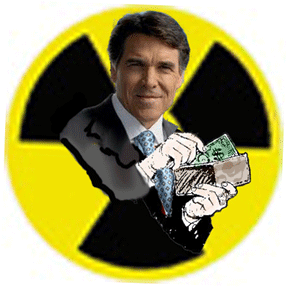 Messianic Perry preaches nuclear to sceptical Europeans, By Frédéric Simon | EURACTIV.com Oct 26, 2019 Small nuclear reactors can help “vulnerable nations take control of their destinies,” the US energy secretary said in Brussels today (21 October), claiming that small off-grid nuclear plants can bring electricity to poor nations and “disperse the darkness” around the globe…….
Today’s remarks, made in Brussels at the first EU-US high-level forum on small modular reactors, were again chiefly aimed at Eastern European countries, which have repeatedly complained about Russian interference in national politics, using gas as a lever.
Nuclear is a divise topic in Europe. While countries like France opted for it decades ago, others like Germany and Austria are strongly opposed.
“Nuclear energy is neither safe and sustainable nor cost-effective,” said German State Secretary for Energy, Andreas Feicht, during a recent meeting of EU energy ministers, firmly rejecting suggestions that EU money might be used to extend the lifetime of existing nuclear plants.
Today’s remarks, made in Brussels at the first EU-US high-level forum on small modular reactors, were again chiefly aimed at Eastern European countries, which have repeatedly complained about Russian interference in national politics, using gas as a lever.
Nuclear is a divise topic in Europe. While countries like France opted for it decades ago, others like Germany and Austria are strongly opposed.
“Nuclear energy is neither safe and sustainable nor cost-effective,” said German State Secretary for Energy, Andreas Feicht, during a recent meeting of EU energy ministers, firmly rejecting suggestions that EU money might be used to extend the lifetime of existing nuclear plants……
France extends nuclear reactors outage after earthquake
France extends nuclear reactors outage after earthquake, France 24 13 Nov 19, French utility EDF on Tuesday extended outages at three nuclear reactors at its Cruas plant until Nov. 15 following a 5.1 magnitude earthquake in southeast France that forced it to temporarily suspend electricity generation at the site.A sensor at the plant was activated during the earthquake in the region on Monday, requiring the state-controlled utility to carry out further checks for potential damage.
A spokesman for EDF said the outage extension would allow enough time for thorough visual and advanced checks across the plant, including in the nuclear buildings to ascertain that the units could function properly when they restarted.
France’s ASN nuclear safety agency on Monday said it was monitoring the situation and would decide when the reactors could restart.
The outage at the three reactors reduced French power generation by 2,700 megawatts (MW)……https://www.france24.com/en/20191112-france-extends-nuclear-reactors-outage-after-earthquake
France considering building 6 new EDF nuclear reactors at a cost of at least 46 billion euros ($51 billion)
 France’s EDF expects six new nuclear reactors to cost 46 billion euros: Le Monde, PARIS (Reuters) 11 Nov 19 – French power utility EDF estimates it would cost at least 46 billion euros ($51 billion) to build six of its latest generation EPR nuclear reactors if the government decides to build them, French newspaper Le Monde reported on Saturday.The estimate was in a confidential document presented to the board of state-controlled EDF at the end of July, it said.
However, the Flamanville EPR reactor under construction in northern France has been plagued by cost overruns and a series of technical problems resulting in years of delays.
EDF, in which the state has an 84% stake, said in October the project which began in 2006 would cost 1.5 billion euros more than previously expected, raising the total cost to 12.4 billion euros.
Reporting by Leigh Thomas; Editing by Edmund Blair full story https://www.reuters.com/article/us-edf-nuclear-epr/frances-edf-expects-six-new-nuclear-reactors-to-cost-46-billion-euros-le-monde-idUSKBN1XJ074
A UK Labour govt would make ‘collective’ decision over use of nuclear weapons?
|
General election: Labour government would make ‘collective’ decision over use of nuclear weaponsEmily Thornberry, the shadow foreign secretary, says Labour would maintain ‘ambiguity’ over circumstances in which Trident deterrent might be used , Independent Andrew WoodcockPolitical Editor @andywoodcock, 11 Nov 19
A Jeremy Corbyn-led Labour government would make a “collective” decision on whether to use nuclear weapons in response to an imminent threat, the party’s shadow foreign secretary has said. Emily Thornberry came under fire from Conservatives after suggesting that Mr Corbyn would share the decision on whether to press the nuclear button with senior colleagues. Labour’s official policy is to retain the UK’s independent Trident deterrent, but the party leader has previously said that he would not be willing to use nuclear weapons…… https://www.independent.co.uk/news/uk/politics/general-election-labour-nuclear-weapons-trident-corbyn-thornberry-deterrent-a9198881.html |
|
Scottish National Party could want scrapping of Trident nuclear system, in return for co-operating with minority Labor government
Questioned about whether the issue of Trident would stop the SNP holding negotiations with another political party in the case of a hung parliament, Mr Blackford said the SNP had been “pretty consistent” that they did “not wish to see nuclear weapons” on Scottish soil.
He explained how his party would “come up with a wish-list” of policies they would want to secure for a potential confidence and supply deal with a future UK Government…….
The SNP’s parliamentary candidate for Ross, Skye and Lochaber described Britain’s nuclear arsenal as “not fit for purpose,” explaining: “The simple fact of the matter is I’m not sure that we’re taking our responsibilities for conventional defences as seriously as we should be doing and to waste up to £200 billion on these weapons of mass destruction that can never be used is a fallacy.”
During campaigning last week, Nicola Sturgeon made clear she wanted nuclear weapons removed from Scotland “as soon as it is safely possible”. The First Minister explained: “When we’re talking about nuclear weapons, safety has to be the primary consideration but the SNP is implacably opposed to nuclear weapons.”
The First Minister explained: “When we’re talking about nuclear weapons, safety has to be the primary consideration but the SNP is implacably opposed to nuclear weapons.”……..
Although Jeremy Corbyn is well-known as being personally opposed to Britain retaining nuclear weapons and Scottish Labour has come out against Trident, the UK Labour Party backs the policy and included support for renewing the nuclear arsenal in its last manifesto……. https://www.heraldscotland.com/news/18026979.blackford-signals-scrapping-trident-part-snp-wish-list-support-corbyn-govt/
Boris Johnson and the UK plan for nuclear fusion
Boris Johnson’s nuclear energy pledge backed by UK firm with ‘answer to world’s problem’ By CALLUM HOARE. Express UK, Nov 5, 2019 A UK firm has pledged to build on Boris Johnson’s plans to take the “big step” in treading the path for nuclear energy which the Prime Minister claimed will be on sale “around the world” during the Conservative Party conference in Manchester.
The only thing that’s going to restrict us is capital.
“To an investor – no one wants to invest in fusion for safety, it’s very high risk – don’t worry about cracking fusion, it’s about cracking the finance.”
Pulsar Fusion recently opened up the UK’s biggest nuclear fusion centre in a secret location near Bletchley, Buckinghamshire.
Mr Dinan is confident his company will, during the next few months, create matter hot enough to replicate the temperature of the Sun in the UK.
A vacuum chamber will form the heart of the reactor and it is claimed it could soon reach temperatures above 100 million degrees Celsius.

UK firms given £18m for mini nuclear power stations

|
Firms handed £18m for mini nuclear power stations, Construction Enquirer , Aaron Morby, 8 Nov 19,
A consortium including BAM Nuttall and Laing O’Rourke has netted Government match funding to develop the next generation of compact nuclear power stations. The new small-scale power stations are being designed to be manufactured in sections in regional factories, before being transported to existing nuclear sites for rapid assembly inside a weatherproof canopy…… Firms involved include: Assystem, BAM Nuttall, Laing O’Rourke, National Nuclear Laboratory, Rolls-Royce, Atkins, Wood, The Welding Institute and Nuclear AMRC. The consortium ultimately aims to generate a joint investment of £500m focused on designing a first-of-its-kind small modular reactor, which would form the core of the new compact plants…… https://www.constructionenquirer.com/2019/11/08/firms-handed-18m-for-mini-nuclear-power-stations/ |
|
Small nuclear power station consortium targeting Cumbrian sites
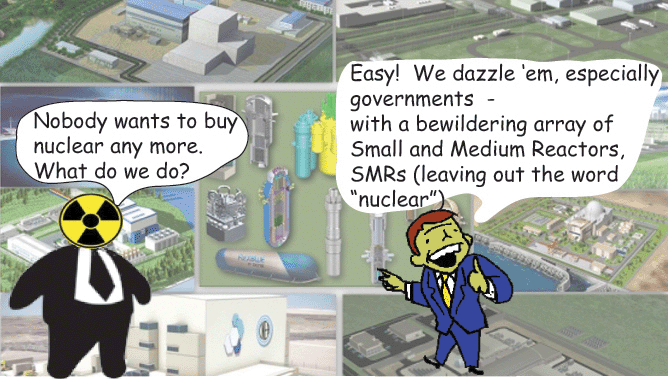 Small nuclear power station consortium targeting Cumbrian sites, The Mail 7th November, By Luke Dicicco @lukeadicicco Group business editor A consortium headed by engineering giant Rolls Royce has revealed it expects to develop its first-of-a-kind small nuclear reactors in Cumbria.
In July the Government said it will invest up to £18 million to support the design of the UK-made mini nuclear power stations. And this week UK Research and Innovation pledged to provide a further £18m, which will be matched by members of the consortium, to progress the project.
Both the Conservative Parliamentary Candidate for Copeland Trudy Harrison and Copeland Borough Council have vowed to up the ante on lobbying the Government to push for SMRs to be developed in Copeland, following the demise of plans for a large-scale nuclear power station at the Moorside site. ……
“We expect to build them on sites in Wales and particularly in Cumbria. That’s where we’re focusing, that’s where we’ll put our effort.”- Mr Woods …..
The SMRs are roughly the size of a one-and-a-half football pitches……..Construction is expected to take around four years per station, although the first unit would be longer, said Mr Woods.
The consortium says it is targeting a £1.8bn cost for each station…….
However, industry insiders still believe a large-scale plant is more suited to the vast Moorside site adjacent to Sellafield. And hopes remain high that a new development will come forward for the site once the Government unveils a new way of financially supporting new plants, with the most likely option a Regulated Asset Base Model. ……
“Unless you build a fleet, you will not do it. We want an industrial partnership between UK and China.” – Rob Davies, chief operating officer at CGN UK
CGN is already heavily involved in the UK’s nuclear new build plans.
It is a partner in the under-construction Hinkley Point C power station in Somerset, as well as planned developments for Bradwell B in Essex and Sizewell C in Somerset. https://www.nwemail.co.uk/news/18021450.small-nuclear-power-station-consortium-targeting-cumbrian-sites/
The mockery of justice that was Julian Assange’s extradition process
|
Julian Assange’s Extradition Process Is ‘A Charade’, The Real News Network, November 5, 2019
Interview Transcript GREG WILPERT: Julian Assange recently lost a court bid to have his upcoming February 2020 extradition hearing postponed. The hearing about the postponement took place on October 21, and according to observers who were present, he could barely speak in coherent sentences. Reacting to the hearing, UN Human Rights Rapporteur Nils Melzer warned last Friday that Assange continues to show symptoms of psychological torture. Melzer had visited Assange in May when he conducted an extensive review of his physical and psychological condition. In his statement on Friday, Melzer said, “Despite the medical urgency of my first appeal, and the seriousness of the alleged violations, the U.K. has not undertaken any measures of investigation, prevention, and redress required under international law.” In addition to the concerns about Assange’s treatment at Belmarsh Prison outside of London, many have also raised concerns about the impartiality of the proceedings against him. Assange was jailed last April when the Ecuadorian Embassy, where he had been given political asylum, allowed the police to arrest him. He then received a 50-week sentence for having skipped jail in 2012. The Trump Administration has since then requested Assange’s extradition on 17 charges of espionage for which he could receive a 170-year prison sentence in the United States. Joining me now to discuss the latest developments in the case of Julian Assange is John Pilger. He has been observing the Assange case very closely and was present at the October 21 court hearing…… John Pilger – “…..His physical condition has changed dramatically. He’s lost about 15 kilos in weight. To see him in court struggling to say his name, and his date of birth, was really very moving. I’ve seen that when I visited Julian in Belmarsh Prison where he struggles at first, and then collects himself. I’m always impressed by the sheer resilience of the man, because as Melzer says, absolutely nothing has been done to change the conditions imposed on him by the prison regime. Nothing has been done by the British authorities.
This was almost underlined by the contemptuous way that this court hearing recently was conducted by this judge, by this magistrate. There was a sense among all of us who were there that the whole charade, and it seemed a charade, was preordained. You had sitting in front of us, on a long table, four Americans who were from the U.S. Embassy here in London, and one of the prosecution team was scurrying backwards and forwards to get instructions from them. The judge could see this, and she allowed it. It was just absolutely outrageous.
When Julian did try to speak, and to say that basically he was being denied the very tools with which to prepare his case, he was denied the right to call his American lawyer. He was denied the right to have any kind of word process or laptop. He was denied certain documents. As he said, “I’m even denied my own writings,” as he called it. That is, his own notes and manuscripts. This hasn’t changed at all, and of course the effect of that on his morale, to say the least, has been very significant, and that showed in the court.
Greg Wilpert – ” ….district judge, Vanessa Baraitser, and one of the things that she did was completely dismiss Assange’s request for determination whether the extradition proceedings are even legal. That is, he cites according to U.K. law, “Extradition shall not be granted if the offense for which extradition is requested is a political offense”
JOHN PILGER quotes Julian’s lawyer Gareth Peirce – “….under law, it’s not a matter of opinion. They are political. All but one of the charges concocted in Virginia are based on the 1917 Espionage Act, which was a political piece of legislation used to chase off the conscientious objectors during the first World War. It’s political. There is no charge. There is no basis, no foundation, for allowing these extradition proceedings to go forward, and almost perversely the judge seemed to, if not acknowledged that in her contempt for the proceedings. Whenever Julian Assange spoke, she feigned a disinterest, a boredom, and whenever his lawyers spoke, the same thing. Whenever the prosecutor spoke, she was attentive. The theatrics of this hearing were quite remarkable. I’ve never seen anything like it. Then very hurriedly, when Julian Assange’s lawyer requested a delay in when the case actually starts from February, they said, “We’re not going to be ready in February,” and she dismissed that out of hand.Not only that, she said that the extradition case would be held in a court that is in fact adjoining Belmarsh prison. It’s almost part of the prison. It’s a long way out of London.
So you have, if not a secret trial, but a trial in which, or an extradition hearing in which very few seats are available to the public. It’s a very difficult place to get to. So every obstacle has been put in the way of Assange getting a fair hearing. And I can only repeat, this is a publisher and a journalist convicted of nothing, charged with nothing in Britain, whose only crime is journalism. That may sound like a slogan, but it’s true. They want him for exposing the kind of outrageous war crimes, Iraq, Afghanistan, that journalists are supposed to do. “
GREG WILPERT: “…….How do you explain this lack of concern among the media and human rights groups for Assange’s situation?
JOHN PILGER: Because so many human rights groups are deeply political, Amnesty International never made Chelsea Manning a prisoner of conscience. A really disgraceful thing. Chelsea Manning, who was effectively tortured in prison, and they haven’t, as you say, they haven’t elevated Julian’s case. Why? Well, they’re an extension. They’re an extension of an establishment that is now almost systematically coming down on any form of real dissent. In the last five, six years, the last gaps, the last bolt holes, the last spaces in the mainstream media for journalists, from average journalists for the likes Assange, not only Assange, for the likes of people like even myself and others, have closed. The mainstream media, certainly in Britain, always held open those spaces. They’ve closed, and there is generally I would think a fear, right throughout the media, a fear about opposing the state on something like the Assange case. You see the way the whole obsession with Russia has consumed the media with so many nonsensical stories. The hostility, the animosity towards Julian. My own theory is that his work shamed so many journalists. He does what journalists ought to have done, and don’t do any more. He’s done the job of a journalist. That can only explain it. I mean when you take a newspaper like The Guardian, which published originally the WikiLeaks revelations about Iraq and Afghanistan, they turned on Julian Assange in the most vicious way.
They exploited him for one thing. A number of their journalists did extremely well with their books, and Hollywood scripts, and so on, but they turned on him personally. It was one of the most unedifying sights I think I’ve ever seen in journalism. The same thing happened in the New York Times. Again, I can only surmise the reason for that. It’s that he shames them. We have a desert of journalism at the moment. There are a few who still do their jobs; who still stand up against establishment power; who still are not frightened. But there’re so few now, and Julian Assange is totally fearless in that. He knew that he was going to run into a great deal of trouble with the state in Britain, the state in the United States–but he went ahead anyway. That’s a true journalist…… https://therealnews.com/stories/julian-assange-extradition-process-charade
|
|
UK launches review of net zero emissions
Treasury 2nd Nov 2019, The Net Zero Review, the first of its kind, will assess how the UK can maximise economic growth opportunities from its transformation to a green economy. At its heart is a priority to ensure a fair balance of contributions from all those that will benefit, including considering how to reduce costs for low income households. This review is a major step
towards the UK achieving net zero emissions by 2050, after becoming the
world’s first major economy to legislate to do so earlier this year.
: The nuclear dimension of US security assistance to Ukraine
|
Impeachment backstory: The nuclear dimension of US security assistance to Ukraine, Bulletin of the Atomic Scientists, By Mariana Budjeryn, October 29, 2019, Ukraine has burst into international headlines as the country at the heart of the impeachment investigation of US President Donald Trump. Earlier this year, President Trump halted nearly $400 million of military aid to Ukraine, which has been battling Russian aggression for over five years at the cost of 13,000 lives. This move might have been used by Trump as leverage to pressure Ukrainian leadership to assist him in undermining his political rival, former Vice President Joe Biden, an allegation the impeachment investigation is set to establish.
In response, Trump retorted that the military aid to Ukraine had been withheld in order to get European countries to step up, because the United States is the only one paying in. That claim has been fact-checked (here, here, and here) and proven wrong. Yet many Americans, for whom Ukraine remains a faraway country about which they know little, may wonder why their tax dollars should be spent on security assistance to this country in the first place. In fact, there is a very good reason for doing so, with or without the involvement of the Europeans, that Mr. Trump and the American public ought to know. It’s called the Budapest Memorandum, or formally the Memorandum on Security Assurances in Connection with Ukraine’s Accession to the Treaty on the Nonproliferation of Nuclear Weapons. By making its end of the bargain enshrined in the Budapest Memorandum contingent on the president’s whims, the United States is weakening the nonproliferation regime. The Budapest Memorandum. Concluded in Budapest on December 5, 1994, the memorandum was part of the deal under which Ukraine agreed to surrender the world’s third-largest nuclear arsenal. When the Soviet Union collapsed in 1991, Ukraine inherited more nuclear weapons than China, France, and the United Kingdom combined: 176 intercontinental ballistic missiles and 44 strategic bombers capable of delivering over 2,000 nuclear warheads, as well as over 2,800 tactical nuclear weapons. While Moscow still retained operational control over strategic nuclear weapons, Ukraine also inherited a scientific and military-industrial capacity that would have allowed it to become a fully-fledged nuclear weapons state in a relatively short time. Ukraine chose to surrender nuclear arms for a number of reasons, not least of which was its desire to be an international citizen in good standing. In return, however, it wanted its security concerns addressed. In particular, Ukraine was wary of Russia, which even under the quasi-democratic leadership of Boris Yeltsin remained reluctant to accept Ukraine’s independent statehood and borders……..https://thebulletin.org/2019/10/impeachment-backstory-the-nuclear-dimension-of-us-security-assistance-to-ukraine/ |
|
1 This Month

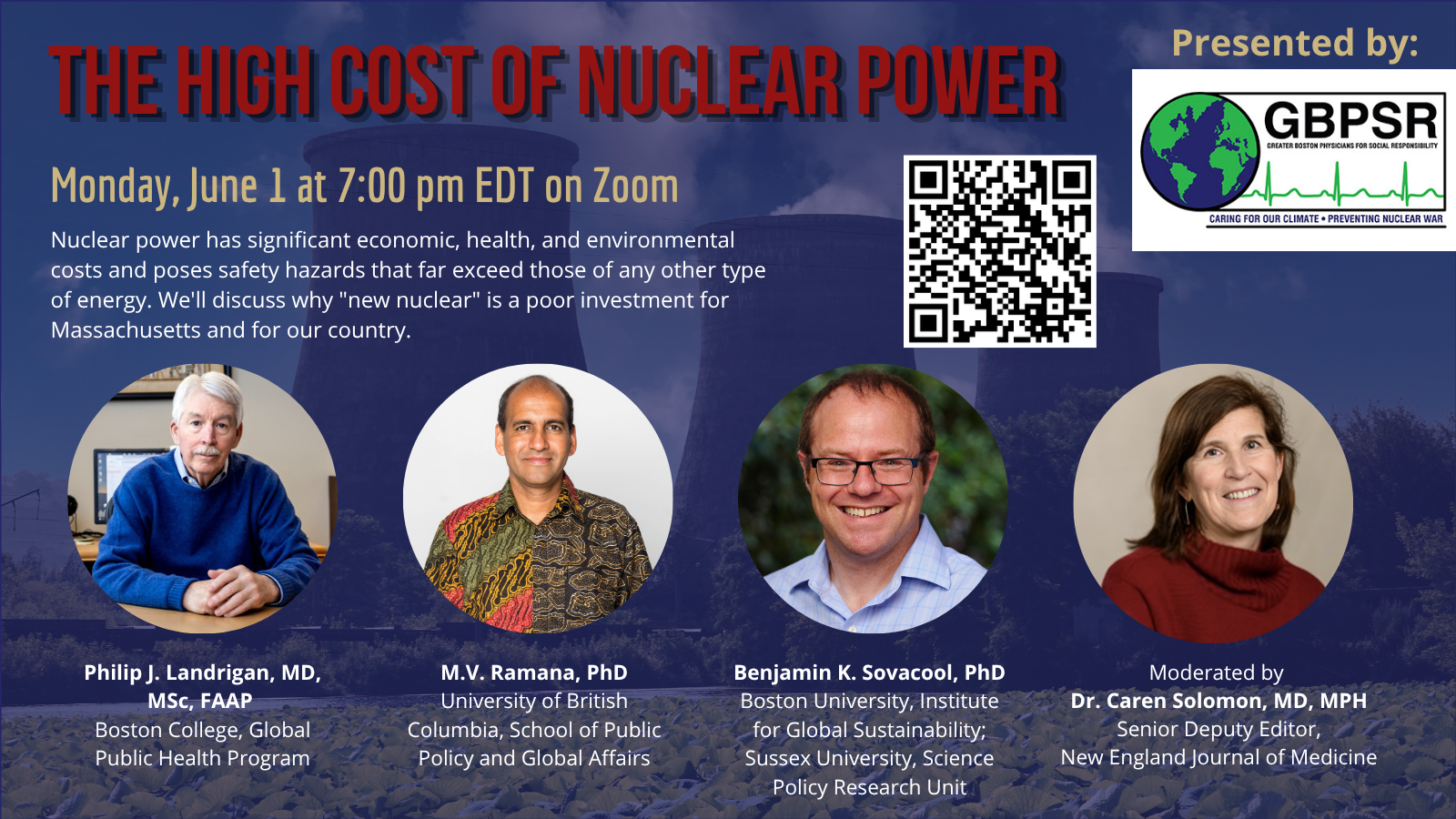
1 June Webinar – The High Cost of Nuclear Power – Register


of the week– Nuclear Reactor Information Task Force
To see nuclear-related stories in greater depth and intensity – go to https://nuclearinformation.wordpress.com
-
Archives
- May 2026 (243)
- April 2026 (356)
- March 2026 (251)
- February 2026 (268)
- January 2026 (308)
- December 2025 (358)
- November 2025 (359)
- October 2025 (376)
- September 2025 (257)
- August 2025 (319)
- July 2025 (230)
- June 2025 (348)
-
Categories
- 1
- 1 NUCLEAR ISSUES
- business and costs
- climate change
- culture and arts
- ENERGY
- environment
- health
- history
- indigenous issues
- Legal
- marketing of nuclear
- media
- opposition to nuclear
- PERSONAL STORIES
- politics
- politics international
- Religion and ethics
- safety
- secrets,lies and civil liberties
- spinbuster
- technology
- Uranium
- wastes
- weapons and war
- Women
- 2 WORLD
- ACTION
- AFRICA
- Atrocities
- AUSTRALIA
- Christina's notes
- Christina's themes
- culture and arts
- Events
- Fuk 2022
- Fuk 2023
- Fukushima 2017
- Fukushima 2018
- fukushima 2019
- Fukushima 2020
- Fukushima 2021
- general
- global warming
- Humour (God we need it)
- Nuclear
- RARE EARTHS
- Reference
- resources – print
- Resources -audiovicual
- Weekly Newsletter
- World
- World Nuclear
- YouTube
-
RSS
Entries RSS
Comments RSS
 nuclear-news