Cyber attack targets UK’s nuclear industry
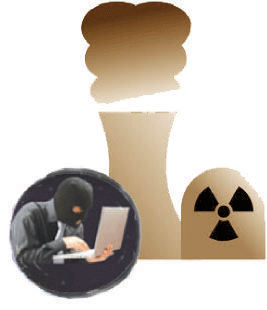 Telegraph UK, Wil Crisp, 30 NOVEMBER 2019 GCHQ cyber experts have been called in after a digital attack on a major player in Britain’s nuclear power industry triggered a security crisis.
The National Cyber Security Centre (NCSC), an arm of GCHQ, has been secretly providing assistance to a nuclear power company in the UK that has struggled to recover after being hit by a cyber attack, The Telegraph can reveal.
A Nuclear Decommissioning Authority (NDA) report, obtained using freedom of information legislation, said officials are “aware that an important business in the Nuclear Power Generating Sector has been negatively impacted by a cyber attack and has had to rely on expertise from the NCSC to help them with recovery”.
The document,... (subscribers only) https://www.telegraph.co.uk/business/2019/11/30/cyber-attack-targets-uks-nuclear-industry/
Russia’s nuclear company Rosatom in financial trouble trying to fund nuclear project in Turkey

 Turkey’s first nuclear plant delayed by funding problems – energy expert https://ahvalnews.com/turkey-energy/turkeys-first-nuclear-plant-delayed-funding-problems-energy-expert, Nov 30 2019 Turkey’s first nuclear plant delayed by funding problems – energy expert https://ahvalnews.com/turkey-energy/turkeys-first-nuclear-plant-delayed-funding-problems-energy-expert, Nov 30 2019
Completion of Turkey’s first nuclear power station is likely to be delayed as the Russian company building it is struggling to secure funding, former diplomat and Bosphorus Energy Club head Mehmet Öğütçü told Turkish daily Sözcü. A small part of the plant in Akkuyu, southern Turkey, may be opened for political reasons in 2023, the centenary of the founding of the Turkish Republic, Öğütçü said. But Russian state-owned Rosatom is having difficulties financing the project, which is expected to cost between $20 billion and $25 billion, he said, adding that Western companies were avoiding Akkuyu over concerns about nuclear armament. A Turkish consortium pulled out of the project last year, citing a failure to reach commercial terms with Rosatom, which owns a 51 percent stake in the project. A report by the main opposition Republican People’s Party this month criticised the terms of the government’s deal with Rosatom, which has been guaranteed a price of 12.35 U.S. cents per kilowatt hour in a 15-year power purchase agreement. |
|
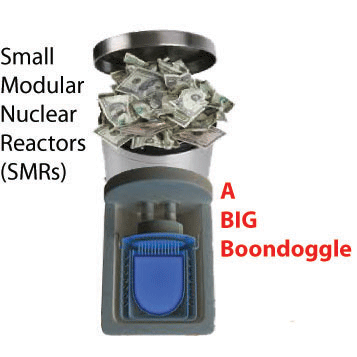
Russia’s Rosatom planning to market Small Modular Nuclear Reactors to Europe
|
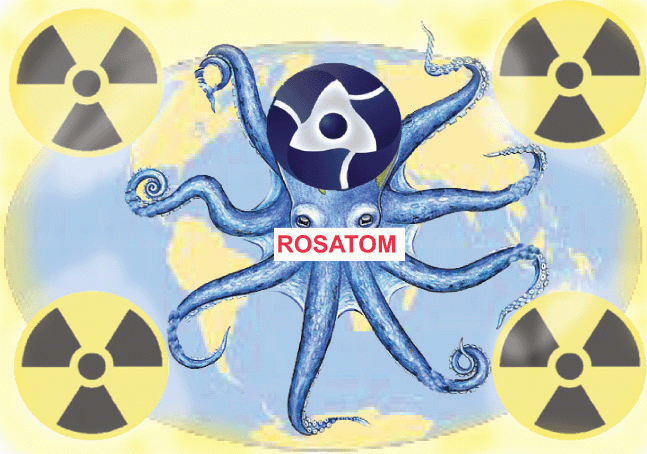
Russian company’s plan for nuclear power expansion revealedVLADIMIR PUTIN has made nuclear energy one of Russia’s key priorities, and now the Russian nuclear power company Rosatom has revealed to Express.co.uk their plans to ramp up expansion into Europe with small modular reactors. Express UK By CHARLIE BRADLEY, Fri, Nov 29, 2019
Rosatom is completely under state control, and while its emphasis with some projects has been geared towards powering hard to reach Russian territories, it has also undertaken numerous international projects. This includes the development of nuclear power plants in China, Turkey and Iran, highlighting the growing presence of Russian energy throughout the world. And now, with some projects already under way in countries like Hungary and Finland, its Vice President of Marketing and Business Development Overseas, Anton Moskvin, has told Express.co.uk that Europe is a future target for the company.He said: “I must say Europe is very interesting for us with prospective small modular reactors market development, we know that several countries are interested. The UK has great interest in the small modular reactors.” …… However, some in the EU have expressed concern over any plans for the Russian nuclear giant, fearing that the country could use its business to wield political influence.
In 2014, President Putin agreed a deal worth £8.5billion with Hungary President Viktor Orban, a deal which has seen the two leaders meet regularly since. Hungary is both a NATO and EU member, and the latter has sought legislation to ensure countries embarking on nuclear deals with Moscow do not become dependent on the Kremlin. RFI (Radio France International) reported last month that Jan Haverkamp, vice-chairman of Nuclear Transparency Watch, has serious reservations about the projects. He said: “Our assessment is that the Kremlin tries to use nuclear power now to regain some of that lost influence. “We see Rosatom being very eager to buy up nuclear companies in Europe, where they try to get a participation in order to get a solid nuclear foothold inside the EU.” Mr Moskvin said he could not comment on political issues……… https://www.express.co.uk/news/world/1211103/putin-news-russia-europe-nuclear-power-eu-rosatom-spt |
|
Nuclear-capable air-launched ballistic missile tested over the Barents Sea
|
The Kinzhal missile was launched from a MiG-31K taking off from Olenegorsk airbase on the Kola Peninsula. Barents Observer By Thomas Nilsen, December 01, 2019
The missile changes the military power-balance in the north due to its range, speed and ability to overcome any known missile defence systems. Kh-47M2 Kinzhal (NATO name SA-N-9 Gauntlet) is one of the six new strategic nuclear weapons presented by Vladimir Putin in his presidential address to the Federal Assembly on March 1, 2018. Now, the missile is tested and like several of the other new strategic weapons under development by Russia, the test took place in the northwestern part of the country……. https://thebarentsobserver.com/en/security/2019/12/nuclear-capable-air-launched-ballistic-missile-tested-over-barents-sea |
|
Suffolk Coastal Labour opposes the development of new nuclear capacity at Sizewell

 Suffolk Coastal Labour 27th Nov 2019, Suffolk Coastal Labour does not support the concept of ‘The Energy Coast’. The branding itself puts at risk the visitor and tourist economy of East Suffolk which depends on The Suffolk Coast and Heaths Area of Outstanding Natural Beauty.
It conflicts with established identities such as ‘The Sunshine Coast’ and ‘The Heritage Coast’. The huge industrial projects proposed threaten the local economy and environment without bringing any benefits. Traffic congestion on the A12 and ruralroads will discourage visitors and compromise the quality of life of localresidents.
In Suffolk Coastal, Labour opposes the development of new
nuclear capacity at Sizewell. The Sizewell C development cannot be
undertaken without unacceptable impacts on the Suffolk Coast and Heaths
Area of Outstanding Natural Beauty. It will compromise the future of RSPB
Minsmere, and, especially during the construction period, other Sites of
Special Scientific Interest and the highly sensitive local environment. It
will threaten jobs and prosperity in the visitor and tourist economy, the
agricultural sector and food and drink industries. It offers very few new
permanent jobs for local people. Current proposals to mitigate the worst
effects of the construction project are grossly underfunded and will not
relieve the impact of huge numbers of vehicle movements for goods and
people on the A12 and surrounding rural roads. There are no proposals to
invest adequately in rail alternatives.
UK’s Labour and Greens parties have highly prioritised climate change action
David Lowry’s Blog 29th Nov 2019, A letter writer in today’s Times newspaper complained that politicians have not prioritized climate change in their manifestos.Your correspondent Lesley Boase asks “why isn’t urgent action climate
change at the top of [political parties’] manifestos”? The day before
the letter appeared, the Labour Party launched its 48-page manifesto for
the environment ‘A Plan for the Environment. At its launch in
Southampton, Mr Corbyn stressed” The reality is this election is our last
chance to tackle the climate and environment emergency,” in setting out
“Labour’s plan for real change to protect our planet and restore our
natural world.” He added: “We have no time to waste…we have a choice.
We can shut our eyes, cross our fingers and entrust our fate to a system
that has already driven our planet to the brink of catastrophe. Or we can
do everything possible to tackle the biggest threat we face.
http://drdavidlowry.blogspot.com/2019/11/political-parties-prioritise-climate.html
France wants to label nuclear as “green”. Germany will have none of it
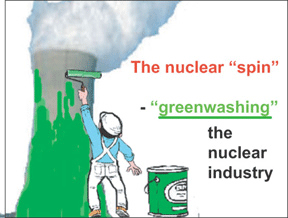 Paris, Berlin divided over nuclear’s recognition as green energy https://www.euractiv.com/section/energy-environment/news/france-and-germany-divided-over-nuclears-inclusion-in-eus-green-investment-label/ By Cécile Barbière | EURACTIV.fr | translated by Daniel Eck 27 Nov 19, Disagreement on the inclusion of nuclear power in the EU’s upcoming green finance taxonomy has revived long-standing divisions between France and Germany over the energy transition. EURACTIV France reports.
Franco-German relations have already been strained by French President Emmanuel Macron’s radical comments on NATO’s “brain death,” which attracted strong rebukes in Berlin.
Now, the European Commission’s proposed taxonomy for sustainable finance has emerged as a new bone of contention.
Tabled in 2018, the EU taxonomy aims to determine which economic activities can benefit from a sustainable finance label at European level. The objective is to give clear indications to investors so they can redirect their financing towards environmentally-friendly sectors.
Six pre-defined environmental objectives must be met in order to obtain the label. If any technology seriously undermines one of those goals, it is automatically disqualified.
It is because of this double level of control that nuclear energy failed to win the green label in the European Parliament, until the Council representing EU member states voted to reinstate it in September.
Although nuclear energy largely meets the low-carbon emissions objective, “it was not possible to include nuclear power because there is no scientific evidence for waste treatment. This means that the sector does not meet both requirements,” explained Jochen Krimphoff, WWF’s deputy director for green finance.
Since the beginning of the negotiations on the EU’s taxonomy, France has been pushing to reintroduce nuclear power, much to Germany’s dismay.
“France will advocate that nuclear energy should be part of this eco-label,” said French Finance Minister Bruno Le Maire at the conference to replenish the Green Fund at the end of October.
“We cannot succeed in the ecological transition, and we cannot achieve our goal in terms of combating global warming without nuclear energy,” the French minister said.
Although nuclear energy largely meets the low-carbon emissions objective, “it was not possible to include nuclear power because there is no scientific evidence for waste treatment. This means that the sector does not meet both requirements,” explained Jochen Krimphoff, WWF’s deputy director for green finance.
Since the beginning of the negotiations on the EU’s taxonomy, France has been pushing to reintroduce nuclear power, much to Germany’s dismay.
“France will advocate that nuclear energy should be part of this eco-label,” said French Finance Minister Bruno Le Maire at the conference to replenish the Green Fund at the end of October.
“We cannot succeed in the ecological transition, and we cannot achieve our goal in terms of combating global warming without nuclear energy,” the French minister said.
The move is all the more surprising given France’s rather progressive positions on the taxonomy. For example, Paris has, like the Commission and Parliament, been calling for the taxonomy to enter into force as early as 2020, while the Council has advocated for implementation in 2023.
For its part, Germany would not be opposed to labeling gas as green. This could be at the risk of a deal that would see both gas and nuclear power re-entering the scheme.
Hungary wants EU to weaken nuclear licensing rules, as it wants to expand Rosatom nuclear project
Hungary makes EU bid to soften nuclear licensing rules to ease Paks expansion, BUDAPEST (Reuters) – Hungary has submitted draft legislation to the European Commission to amend the country’s nuclear safety protocols to custom-fit a 12 billion euro Russian-led nuclear plant expansion project that it wants to speed up, eight sources told Reuters. Marton Dunai, 27 Nov 19,
The EU review was confirmed by an EU official requesting anonymity, as well as several Hungarian government sources. Eight sources, including high-ranking government officials, confirmed the plan.
Hungary wants to expand its 2-gigawatt Paks nuclear power plant with two Russian-made VVER reactors, each with a capacity of 1.2 gigawatts.
The project, awarded in 2014 without a tender to nuclear giant Rosatom, an arm of the Russian government, is often cited as a sign of exceptionally warm ties between Hungarian premier Viktor Orban and Russian President Vladimir Putin, a connection that has unnerved Western allies.
However, Rosatom struggled to meet EU and Hungarian safety criteria, delaying the project by several years, and the Russian and Hungarian governments now want to accelerate it.
Under the proposed new rules, license applications to build the reactor hole and surrounding insulating slurry wall could be considered before the entire project receives the green light – a break with prior protocol, which only allowed partial licenses to be considered once the construction license was granted.
Hungary’s top official in charge of energy policy, Technology Ministry State Secretary Peter Kaderjak, confirmed to Reuters the government was working with the European Commission to recast nuclear power plant construction rules.
Kaderjak called the Paks 2 project “the cornerstone of Hungary’s energy and climate strategy”.
“We are seeking ways to cut the project execution time as short as possible, fully respecting nuclear safety,” he said. “That explains this draft amendment.”
RISKY MOVE
The modification carries risks and makes the project much more difficult to abandon or modify as the framework, literally, will be set in stone, according to seven sources with knowledge of the matter who spoke to Reuters on condition of anonymity.
But the move could help the Hungarian government in its haggling with Moscow to modify the current build-and-finance package. Hungary wants to extend the current payment start date of 2026, which was fixed when the project was first conceived.
Russia wants to avoid paying delay penalties – by putting off the completion deadline to about 2029 and by having Hungary ease regulatory hurdles such as this one, these sources said.
The changes will appear in a government decree called the Nuclear Safety Regulations once the European Commission’s nuclear arm, the Euratom Supply Agency, approves the changes.
An EU source also confirmed the Commission was assessing draft legislation against the EU’s latest Nuclear Safety Directive, adding it had three months to make recommendations, a deadline that is not yet up.
“In this framework, the Hungarian authorities have made several such notifications to the Commission in recent years,” the EU source told Reuters. “The latest of these notifications was received this year and is currently being assessed.”
Asked about the changes, the HAEA told Reuters that reactor hole and slurry wall work, and some equipment that takes a long time to manufacture, may undergo the licensing process parallel with the evaluation of the construction license application.
“Licenses cannot be granted before the construction license is issued – except for work on soil solidification, soil removal, and the water insulation work to section off the work area, especially the slurry wall permits.”
Experts estimate the reactor hole to be several hundred meters wide and several hundred meters long, up to 100 meters deep, surrounded by a concrete slurry wall more than a meter thick. This phase alone could take a year or more to execute.
The changes are designed to save time so once the overall construction license is issued work can begin on the power plant buildings.
But experts warned the slurry wall and reactor hole could cost hundreds of millions of euros, and hastening them carries risk: if the HAEA find faults with the overall design, it may require changes that conflict with the concrete already poured, causing a potential cost spike and long delay.
“Even with these permits Paks 2 carries responsibility for any work it executes, as the ongoing construction licensing process could influence all other licensing,” the HAEA said.
Reporting by Marton Dunai; Editing by Dale Hudson 9full story) https://www.reuters.com/article/us-hungary-nuclearpower-exclusive/exclusive-hungary-makes-eu-bid-to-soften-nuclear-licensing-rules-to-ease-paks-expansion-idUSKBN1Y01WQ

Scotland’s Nicola Sturgeon’s outspoken opposition to use of nuclear weapons
 We don’t make the world safer by making it more dangerous first.
We [the UK] should lead the way by scrapping nuclear weapons and investing that money in our communities and our public services.
|
The consequences of this position should be made clear. The only time nuclear weapons have been used in war was the destruction of Hiroshima and Nagasaki by the US at the end of the second world war. The atomic bombs killed tens of thousands instantly. Radiation sickness killed many more. The first bomb destroyed five square miles of Hiroshima. No country has launched a nuclear attack since, but the world shortly afterwards entered a dangerous arms race. The nuclear weapons around today dwarf the bombs dropped in Japan. The death toll from a modern nuclear strike would not be counted in the tens of thousands, but in the millions. There is a theory – and it is one I fundamentally disagree with – that nuclear weapons make us safer, as no country would pick a fight with a nuclear power. But even those who buy into the idea of mutually assured destruction should balk at the casual way in which political discourse on this topic has developed. If a mainstream politician unblinkingly said that they would use chemical weapons against civilians there would be uproar. If a self-proclaimed candidate for prime minister boasted that they would commit war crimes, it would be a national scandal. Nuclear weapons should be seen no differently – but a dated cold war mentality is used to cloak these weapons of mass destruction in respectability. Their potential for death and destruction deserve better than trigger-happy bravado. It’s time that nuclear advocates spelt out the reality of what their position means. In 1961, despite public protests, the first US Polaris submarine sailed into Holy Loch in Argyll. By the end of that decade the UK had launched its own nuclear fleet, with four Polaris submarines based at Faslane. For 50 years nuclear submarines have been operational less than 30 miles from Glasgow, Scotland’s main population centre. Like many other Scots, I’ve always been appalled that Britain’s nuclear arsenal has been kept in my backyard. And I’ve always been astounded that UK government after UK government has paid the enormous cost of maintaining these dangerous weapons while children grow up in poverty in their shadow. I joined the Scottish Campaign for Nuclear Disarmament even before I joined the SNP. I don’t just want a Scotland free of nuclear weapons – I want a world free of nuclear weapons. But I have always felt that the only way to get nuclear weapons off the Clyde is for Scotland to become independent. This election campaign proves my point. Swinson is not alone in racing to embrace nuclear weapons to prove her leadership. Jeremy Corbyn, a long-time supporter of the CND, is now fully signed up to renewing Trident. While I have my differences with Corbyn, on this issue I believe that, in his heart of hearts, he still feels the same as I do. Yet, in attempting to become prime minister, the Labour leader feels the need to sell out his principled opposition to Trident and promise to keep it on the Clyde. The UK government has slashed conventional defence personnel and left Scotland without the defence capabilities that a maritime nation actually needs. We would be better protected, with more jobs, without Trident. Labour’s position is now that it supports a world free of nuclear weapons – but that the route there is to renew the missiles we already have. Like mutually assured destruction before it, this theory of multilateral disarmament relies on a massive leap of logic. We don’t make the world safer by making it more dangerous first. The cold war showed that developing nuclear weapons encourages an endless escalation, with status-obsessed powers demanding bigger and more destructive stockpiles. Even the progress made since the 1980s has proven to be built on unsteady ground. This year the US and Russia both withdrew from a key nuclear treaty, banning intermediate-range missiles. The last thing we need is a new arms race. The UK has an opportunity to show real, global leadership. It’s not enough to wait for other countries to see the error of their ways while spending tens of billions on new weapons for ourselves – with one estimate putting the lifetime cost of a new generation of Trident missiles at £200bn. We should lead the way by scrapping nuclear weapons and investing that money in our communities and our public services. The fact that the Westminster parties are united in their opposition to this approach will only confirm to many Scots that independence is the only way to scrap Trident once and for all. My message is simple – the overwhelming majority of countries the world over do not have nuclear weapons. We do not need nuclear weapons. And we should never, ever use nuclear weapons. |
|
Studies on Chernobyl nuclear disaster show that it’s relevant today, and for the future
 DOES CHERNOBYL STILL MATTER? https://www.publicbooks.org/does-chernobyl-still-matter/ 11.22.2019 BY GABRIELLE HECHT Since it first announced electricity “too cheap to meter,” in the 1950s, the nuclear industry has promised bountiful futures powered by a peaceful—and safe—atom. Design principles, the industry claims, limit the chances of core damage to one incident every 50,000 reactor-years of operation. History, however, has delivered a different verdict: together, Three Mile Island, Chernobyl, and the three Fukushima reactors represent five meltdowns in only 100 reactor-years. What lessons do these accidents hold for the future of nuclear power?
Each meltdown has impelled design, operational, and regulatory changes, increasing the cost of nuclear power. Today, says the industry, the technology is safer and more vital than ever. No other source of electricity can offer so much baseload power with so few carbon emissions. But who can make money when a single US Nuclear Regulatory Commission (NRC) inspection costs $360,000?
For the current US administration, the remedy for waning profits lies in cutting inspection hours. In a July 2019 proposal, which drew heavily on nuclear industry recommendations, the NRC also suggested crediting utility self-assessments as “inspections” and discontinuing press releases about problems of “low to moderate safety or security significance.” Translation: fewer inspections, less transparency, and weaker environmental and health oversight at the nation’s nuclear power plants.
The cause, costs, and consequences of the 1986 Chernobyl accident loom large in these battles. Was Chernobyl a fluke, the result of faulty technology and a corrupt political system? Or did it signal a fundamentally flawed technological system, one that would never live up to expectations?
Even simple questions are subject to debate. How long did the disaster last? Who were the victims, and how many were there? What did they experience? Which branches of science help us understand the damage? Whom should we trust? Such questions are tackled, with markedly different results, in Serhii Plokhy’s Chernobyl, Adam Higginbotham’s Midnight in Chernobyl, Kate Brown’s Manual for Survival, and HBO’s Chernobyl (created by Craig Mazin).
Serhii Plokhy’s book and Craig Mazin’s miniseries, both entitled Chernobyl, focus primarily on the accident and its immediate aftermath. Both build on the standard plotline embraced by nuclear advocates.
In this narrative, Soviet love of monumental grandeur—or “gigantomania”—led to the selection and construction of Chernobyl’s RBMK1 design: an enormous 1000-megawatt reactor, powered by low-enriched uranium fuel, moderated by graphite, and cooled by water. The utterly unique RBMK had fundamental design flaws, hidden by corrupt state apparatchiks obsessed with secrecy, prestige, and productivism. Operators made inexcusable errors. The accident was inevitable. But the inevitability, Plokhy and Mazin affirm, was purely Soviet.
Plokhy gives more backstory. The enormous scale of Soviet industrialization put huge strains on supply chains, resulting in shoddy construction. Some of the men in charge had no nuclear background. The pressure to meet production quotas—and the dire consequences of failure—led bureaucrats and engineers to cut corners.
For both Plokhy and Mazin, these conditions at Chernobyl came to a head during a long-delayed safety test. When the moment to launch the test finally arrived, shortly before midnight on April 25, 1986, there was confusion about how to proceed. The plant’s deputy chief engineer, Anatolii Diatlov, who did have extensive nuclear experience, believed he knew better than the woefully incomplete manuals. He pushed operators to violate the poorly written test protocol. (Disappointingly, Mazin’s miniseries portrays Diatlov more as a deranged bully than as someone with meaningful operational knowledge.)
The reactor did not cooperate: its power plummeted, then shot back up. Operators tried to reinsert the control rods. The manual didn’t mention that the RBMK could behave counterintuitively: in other reactor models, inserting control rods would slow down the fission reaction, but in the RBMK—especially under that night’s operating conditions—inserting the rods actually increased the reactivity. Steam pressure and temperature skyrocketed. The reactor exploded, shearing off its 2000-ton lid. Uranium, graphite, and a suite of radionuclides flew out of the core and splattered around the site. The remaining graphite in the core caught fire.
At first, plant managers didn’t believe that the core had actually exploded. In the USSR—as elsewhere—the impossibility of a reactor explosion underwrote visions of atomic bounty. Nor did managers believe the initial radiation readings, which exceeded their dosimeters’ detection limits. Their disbelief exacerbated and prolonged the harm, exposing many more people to much more radiation than they might have otherwise received. Firefighters lacked protection against radiation; the evacuation of the neighboring town of Pripyat was dangerously delayed; May Day parades proceeded as planned. Anxious to blame human operators—instead of faulty technology or (Lenin forbid!) a broken political system—the state put the plant’s three top managers on trial, in June 1987, their guilt predetermined.
Mazin’s miniseries follows a few central characters. Most really existed, though the script takes considerable liberties. The actions of the one made-up character, a Belarusian nuclear physicist, completely defy credibility. But hey, it’s TV. Dramatic convention dictates that viewers must care about the characters to care about the story. Familiar Cold War tropes are on full display: defective design, craven bureaucrats, and a corrupt, secrecy-obsessed political system. A few anonymous heroes also appear: firefighters, divers, miners, and others who risked their lives to limit the damage.
Nuclear advocates—many of whom believe that Chernobyl was a fluke, one whose lessons actually improved the industry’s long-term viability—object to the unrealistically gory hospital scenes portraying acute radiation sickness. But these advocates should feel appeased by the closing frames, which ignore the long-term damage caused by the accident.
Instead, the miniseries skates over post-1987 events in a few quick captions. The managers went to prison, a scientist committed suicide, people were evacuated. Yes, controversy persists over the number of casualties (31? That was the official Soviet number. How about 4,000? That’s the number issued by the Chernobyl Forum, an entity that includes representatives from the World Health Organization, the International Atomic Energy Agency, and other international organizations. As for the 41,000 cancers suggested by a study published in the International Journal of Cancer—that number isn’t even mentioned). But all is under control now, thanks to the new confinement structure that will keep the area “safe” for a hundred years. Mazin himself insists that the show isn’t antinuclear.
Instead, the miniseries skates over post-1987 events in a few quick captions. The managers went to prison, a scientist committed suicide, people were evacuated. Yes, controversy persists over the number of casualties (31? That was the official Soviet number. How about 4,000? That’s the number issued by the Chernobyl Forum, an entity that includes representatives from the World Health Organization, the International Atomic Energy Agency, and other international organizations. As for the 41,000 cancers suggested by a study published in the International Journal of Cancer—that number isn’t even mentioned). But all is under control now, thanks to the new confinement structure that will keep the area “safe” for a hundred years. Mazin himself insists that the show isn’t antinuclear.
Plokhy also addresses the accident’s role in the breakup of the USSR. In 2006, Mikhail Gorbachev famously speculated that “the nuclear meltdown at Chernobyl, even more than my launch of perestroika, was perhaps the real cause of the collapse of the Soviet Union.” Plokhy delivers details. Ukrainian dissidents trained their writerly gaze on Chernobyl, vividly describing the damage. Street demonstrations depicted the accident and its coverup as “embodiments of Moscow’s eco-imperialism.” This vision spread and morphed, animating protests in Belarus—also severely contaminated by the accident—and elsewhere. Chernobyl served as Exhibit A for why the republics should shed the Soviet yoke.
If you’re hoping for clear technical explanations, however, you’ll be disappointed. A stunning error mars the first few pages: Plokhy declares that each RBMK produced 1 million megawatts of electricity. This is off by a factor of 1,000. Typo? No, because he doubles down in the next sentence, affirming that the station produced 29 billion megawatts of electricity in 1985. He gets the orders of magnitude right later on, but these early missteps undermine reader confidence. Muddled technical descriptions and uninformative diagrams add to the confusion.
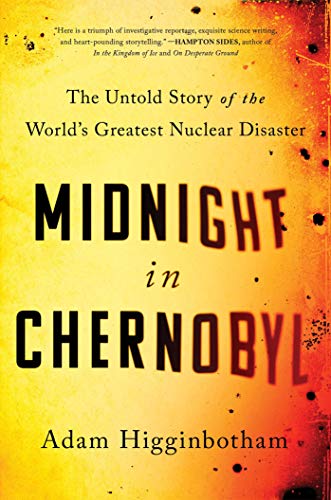 Readers seeking to understand the technology should turn instead to journalist Adam Higginbotham’s Midnight in Chernobyl. He uses global nuclear history to illuminate Soviet efforts to manage the Chernobyl crisis. By comparing the crisis to reactor accidents elsewhere, Higginbotham shows that deep vulnerabilities are widespread. Plokhy’s engineers and managers seem bumbling, verging on incompetent. Higginbotham’s more nuanced portrayal reflects how complex engineering projects of all types necessitate informed improvisation. The three-dimensional world doesn’t faithfully obey manuals. Adjustments are always required.
Higginbotham and Plokhy differ most starkly in their treatment of Soviet reactor choice. In the1960s, technocrats weighed the RBMK design against the VVER,2 the Soviet version of a pressurized light water reactor similar to those sold by Westinghouse and used in the United States. For Plokhy, it’s simple. The VVER was “safe.” The RBMK was not, but its size and cost appealed to Soviet productivism.
Higginbotham, however, wisely relies on Sonja Schmid’s pathbreaking Producing Power: The Pre-Chernobyl History of the Soviet Nuclear Industry (2015) to show that reactor safety isn’t a yes-no proposition. Plutonium-producing reactors similar to the Soviet RBMK (albeit half its size) existed in North America and Western Europe. Like nine of its French cousins, the RBMK could be refueled while continuing to operate. This presented significant advantages: light water reactors had to shut down for refueling, which entailed several weeks of outage. Even the risks presented by RBMK design vulnerabilities seemed manageable. “Nuclear experts elsewhere considered the RBMK design neither technologically novel nor particularly worrisome,” Schmid writes, noting that “what we consider good and safe always depends on context.” In the Soviet context, “selecting the RBMK made very good sense.”
Neither Schmid nor Higginbotham absolves the Soviet technopolitical system. The specific circumstances that led to Chernobyl’s explosions might not recur. But, as sociologist Charles Perrow has been arguing since his 1983 book Normal Accidents, highly complex technological systems create unpredictable situations, which inevitably lead to system failures. The question is not whether an accident of Chernobyl’s gravity can happen elsewhere, but how to prepare for the consequences when it does.
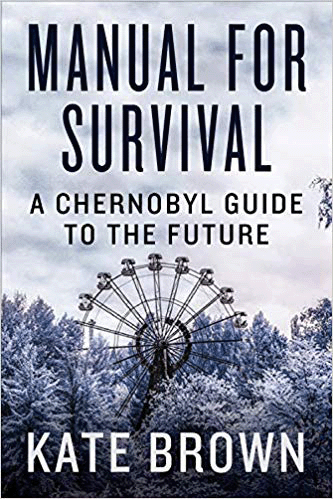 That’s one of the questions Kate Brown considers in Manual for Survival. Offering a wealth of new information and analysis, Brown speeds past the reactor explosion. Instead, she focuses on dozens of previously untold stories about how people coped with their newly radioactive lives.
Brown’s protagonists include women who worked at a wool factory fed by contaminated sheep and butchers ordered to grade meat according to radioactivity. Ukraine, we learn, kept serving as the Soviet breadbasket, despite food radiation levels that exceeded norms. The concentrations of radionuclides were biomagnified by receptive organisms and ecologies, such as mushrooms, wild boar, and the Pripyat Marshes. Defying expectations, some foods, over time, have even become more contaminated.
Brown’s descriptions add historical flesh to arguments first developed by Olga Kuchinskaya, in her 2014 book on Belarus’s Chernobyl experience, The Politics of Invisibility: Public Knowledge about Radiation Health Effects after Chernobyl.
Since the first studies of bomb survivors in Hiroshima and Nagasaki, science on the biological effects of radiation exposure has been subject to controversy. Like all scientific work, these early survivor studies had limitations. Exposure estimates were unreliable.
The largest study began data collection five years after the Hiroshima and Nagasaki blasts, so it didn’t include people who died or moved between 1945 and 1950. Another problem lies in the applicability of these studies. Bomb exposures, such as those in Japan, mostly consist of high, external doses from one big blast. Yet postwar exposures have mainly consisted of low doses, delivered steadily over a long period. They often involve internal exposures—such as inhalation of radioactive particles or consumption of irradiated food—which can be deadlier.
Irrespective of their limitations, however, the findings of these survivor studies have served as the basis for establishing regulatory limits for all types of radiation exposures. Critics argue that extrapolating from the Japan data underestimates low-dose effects: If you’ve already decided that the only possible health effects are the ones you’ve already found, surely you’re missing something? Among other limitations, studies of external gamma radiation exposures cannot illuminate the long-term health effects of inhaling radioactive alpha particles.
Brown injects the work of Dr. Angelina Gus’kova into this story. Gus’kova started treating radiation-induced illnesses in the 1950s, while working at the top-secret Mayak plutonium plant (where the radioactive spills from a 1957 accident continue to contaminate people, land, and water). A neurologist, Gus’kova made observations that extended beyond the narrow cancer focus of most Western practitioners who studied the health effects of radiation exposure. Her patients displayed a wide range of symptoms, which Gus’kova and her colleagues dubbed “chronic radiation syndrome.” Not that they neglected cancer: a 40-year study of 1.5 million people who lived near Mayak found significantly higher cancer and death rates than those reported in Hiroshima and Nagasaki.
The Soviet rubric of “chronic radiation syndrome” did not exist in the West. Yet Gus’kova’s findings did align with those of dissident scientists in the US and the UK. Thomas Mancuso, for example, was pushed out of the US Atomic Energy Commission because he refused to give the Hanford plutonium plant a clean bill of health after finding that workers there sustained high rates of cardiovascular disease, immune system damage, and other illnesses.
Alice Stewart, meanwhile, was shunned by the British establishment after her 1956 research showed that x-raying pregnant women increased the risk of cancer and leukemia in their children by 50 percent. Over the years, these and other scientists whose data challenged the findings of American and European nuclear establishments found themselves sidelined and defunded.
In tandem with perestroika, Chernobyl opened communication between Soviet and Western nuclear experts, engendering what Brown calls an “unholy alliance.” In 1990, the International Atomic Energy Agency (IAEA) sent a mission to Belarus and Ukraine to assess radiation damage. Belarusian scientists reported rising rates of many diseases in contaminated areas. Nevertheless, the IAEA team rejected radiation as a possible cause. Such correlations didn’t appear in Western data.
Instead, the IAEA teams used dose estimates provided by distant Moscow colleagues and ignored local Belarusian and Ukrainian descriptions of people’s actual consumption habits, which included significant amounts of contaminated food and milk. The IAEA assessments neglected the internal exposures resulting from this consumption. Yet these assessments now serve as international reference points. “Underestimating Chernobyl damage,” Brown warns, “has left humans unprepared for the next disaster.”
For some, hope springs eternal. In 2017, Chernobyl’s “New Safe Confinement” finally became operational, after two decades of design and construction. This $1.7 billion structure aims to contain the spread of radioactive rubble while workers inside dismantle the reactor and its crumbling sarcophagus. Ownership was transferred from the builders of the structure to the Ukrainian government in July 2019.
At the transfer ceremony, newly elected Ukrainian President Volodymyr Zelensky announced a tourism development plan for the radioactive exclusion zone, including a “green corridor” through which tourists could travel to gawk at the remains of Soviet hubris. “Until now, Chernobyl was a negative part of Ukraine’s brand,” declared Zelensky, who was nine years old when the reactor exploded. “It’s time to change.” (Zelensky further demonstrated his dedication to “branding” two weeks after this ceremony, when he emphasized his recent stay in a Trump hotel during his now-infamous phone conversation with the US president.)
Change also seems possible to Plokhy, who optimistically predicts that new reactor designs will be “cheaper, safer, and ecologically cleaner.” But Allison Macfarlane, who chaired the US Nuclear Regulatory Commission under Obama, recently noted that these “new” options are actually “repackaged designs from 70 years ago.” They still produce significant quantities of highly radioactive, long-lived waste.
Meanwhile, regulators in France—the world’s most nuclear nation—are taking the opposite approach from the United States’ NRC. Rather than rolling back oversight, France is intensifying inspections of their aging reactor fleet. After four decades of operation, many French reactors have begun to leak and crack. Keeping them operational will cost at least $61 billion. Despite the phenomenal cost, there are many who believe such an investment in the nuclear future is worthwhile.
Brown is far less sanguine about our nuclear future. Predictably, she has been denounced for believing marginal scientists and relying too heavily on anecdotal evidence. She does occasionally go overboard in suggesting conspiracy. Cover-ups clearly occurred on many occasions, but sometimes people were just sticking to their beliefs, trapped by their institutional and disciplinary lenses. Brown’s absence of nuance on this point matters, because the banality of ignorance—its complicity in all forms of knowledge production—can be more dangerous than deliberate lies: more systemic, harder to detect and combat.
Overall, though, Brown is on the right track. Many modes of scientific inquiry aren’t equipped to address our most urgent questions. Clear causal chains are a laboratory ideal. The real world brims with confounding variables. Some scientists studying Chernobyl’s “exclusion zone”—the region officially declared uninhabitable due to contamination—are trying new techniques to grapple with this reality. Tim Mousseau and Anders Møller, for example, collect data on the zone in its ecological entirety, rather than focusing on single organisms. Their findings belie romantic tales of wildlife resurgence (such as the one offered up by a 2011 PBS special on the radioactive wolves of Chernobyl). They too have met resistance.
How, then, can we harness the immense power of scientific analysis while also acknowledging its limitations? The nuclear establishment is quick to lump its opponents together with climate change deniers and anti-vaxxers. Some may deserve that. But much dissident science is well executed. So how do we, the lay public, tell the difference? How can dissent and uncertainty serve, not as a block to action, but as a call?
One way: we can refuse to see Chernobyl and its kin as discrete events of limited duration. Brown, for example, treats Chernobyl as an acceleration of planetary-scale contamination that began with the atomic arms race.
Let’s be clear: the contamination continues. After the triple meltdown at Fukushima, scientists found highly radioactive, cesium-rich microparticles in Tokyo, 150 miles south of the accident site. When inhaled, such particles remain in human lungs, where their decay continues to release radioactivity for decades. Contaminants from future accidents will, in turn, accrete on the radioactive residues of their predecessors.
And, we might add, on the ocean floor. The Russian state-run firm Rosatom recently announced the inauguration of its first floating reactor, towed across the melting Arctic to serve a community in Siberia: yet another manifestation of how climate change favors nuclear development. Rosatom is currently negotiating contracts for reactors (floating and otherwise) in some 30 countries, from Belarus to Bangladesh, Egypt to South Africa.
Threatened, the US nuclear industry sees Russian expansion as “another reason that the United States should maintain global leadership in nuclear technology exports.” And so we hurtle forward: rolling back oversight, acceleration unchecked.
This article was commissioned by Caitlin Zaloom.
UK’s embarrassing, expensive, intractable trouble with dead nuclear submarines

Key point: Britain isn’t the only nation that has problems disposing of nuclear warships. When you need to dispose of an old car, you can take it to a junkyard.
But what do you do with a nuclear submarine whose reactor can make people glow in a most unpleasant way?
Britain has retired twenty nuclear submarines since 1980. None have been disposed of, and nine still contain radioactive fuel in their reactors, according to an audit by Britain’s National Audit Office. These subs spent an average of twenty-six years on active service—and nineteen years out of service.
“Because of this, the Department [Ministry of Defense] now stores twice as many submarines as it operates, with seven of them having been in storage for longer than they were in service,” the audit states.
Even worse is the price tag. Britain has spent 500 million pounds ($646.4 million) maintaining those decommissioned subs between 1980 and 2017. Full disposal of a nuclear sub would cost 96 million pounds ($112.1 million). As a result, the total cost for disposing of the Royal Navy’s ten active subs and twenty retired vessels would be 7.5 billion pounds ($9.7 billion), NAO calculated…….
The plan is to begin defueling subs, beginning with HMS Swiftsure, in 2023. But even then, the Ministry of Defense will have to deal with different subs that have different disposal requirements. “At present, the Department does not have a fully developed plan to dispose of Vanguard, Astute and Dreadnought-class submarines, which have different types of nuclear reactor,” NAO pointed out. “For the Vanguard and Astute-class it has identified suitable dock space which, if used, will need to be maintained.”
Interestingly, the British military gets an exemption when it comes to nuclear waste. “Within the civil nuclear sector, organizations must consider nuclear waste disposal during the design stage of power stations and nuclear infrastructure. The Department does not have a similar obligation.”
Scottish National Party will press Jeremy Corbyn to scrap UK’s nuclear deterrent
Nicola Sturgeon to press Corbyn to scrap UK’s nuclear deterrent
Abandoning Trident would be key issue in SNP support for a minority Labour government, Guardian Severin Carrell Scotland editor
@severincarrell, Mon 25 Nov 2019
|
Nicola Sturgeon will press Jeremy Corbyn to scrap the UK’s nuclear deterrent in any talks on Scottish National party support for a minority Labour government. The SNP leader said abandoning Trident would a key issue in any post-election talks with Labour, alongside supporting a second independence referendum, abolishing the universal credit benefits system and devolving immigration policy to Holyrood. In an article for the Guardian Sturgeon attacked Corbyn for abandoning his longstanding opposition to nuclear weapons in favour of supporting Trident and its replacement by a new system, based at Faslane submarine base on the Clyde. “Like many other Scots, I’ve always been appalled that Britain’s nuclear arsenal has been kept in my back yard,” Sturgeon wrote. “Corbyn, a longtime supporter of the Campaign for Nuclear Disarmament, is now fully signed up to renewing Trident. While I have my differences with Jeremy, on this issue – in his heart of hearts – I believe he still feels the same as I do. Yet, in attempting to become prime minister, he feels the need to sell out his principled opposition to Trident and promise to keep them on the Clyde.”….. Corbyn and Jo Swinson, the Liberal Democrat leader, have both been asked during the election campaign whether they would use nuclear weapons. Corbyn refused to say; Swinson quickly said yes. Corbyn has also repeatedly insisted Labour will not negotiate with other parties to ensure it can govern. …… https://www.theguardian.com/politics/2019/nov/24/nicola-sturgeon-to-press-corbyn-to-scrap-uks-nuclear-deterrent |
|
France’s Flamanville nuclear financial catastrophe gets worse
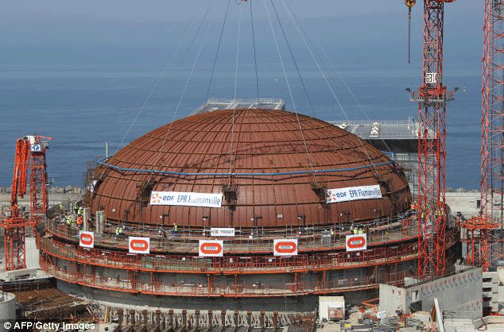 Le Monde 22nd Nov 2019, Jean-Martin Folz’s report on the construction of the Flamanville EPR, handed out on October 28 , is without appeal for the French nuclear power industry. The financial catastrophe continues to worsen. The project is currently 10 years late and 9 billion euros over budget. He helped engulf Areva, flagship of the French nuclear industry, declared bankrupt in 2016, which owed its salvation to a bailout on public funds of 4.5 billion euros.
It now weighs on the accounts of EDF, a new prime contractor since the
wreck of Areva, which no longer hopes to connect the reactor to the network
before 2022.
Why is the UK government now hiding its nuclear history files?
 Nuclear X-files? Academics baffled as UK govt. pulls docs from national archives https://stockdailydish.com/nuclear-x-files-academics-baffled-as-uk-govt-pulls-docs-from-national-archives/ SDD Contributor on November 22, 2019 Nuclear X-files? Academics baffled as UK govt. pulls docs from national archives Thousands of national archive files on Britain’s atomic and nuclear weapons energy programs have been withdrawn from public view by order of the UK government without any explanation, alarming academics. Nuclear X-files? Academics baffled as UK govt. pulls docs from national archives https://stockdailydish.com/nuclear-x-files-academics-baffled-as-uk-govt-pulls-docs-from-national-archives/ SDD Contributor on November 22, 2019 Nuclear X-files? Academics baffled as UK govt. pulls docs from national archives Thousands of national archive files on Britain’s atomic and nuclear weapons energy programs have been withdrawn from public view by order of the UK government without any explanation, alarming academics.
Researchers reported that the documents, dating from 1939 to the 1980s, were unexpectedly withdrawn by the National Archives last week. The files relate to, among other subjects, the creation of Britain’s first nuclear bombs and the private papers of the Nobel Prize-winning physicist who split the atomic nucleus, Sir John Cockcroft. A spokesperson for the NDA stated that they are “absolutely committed to openness and transparency,” though no reason has been forthcoming, leading to speculation among academics that the files contained previously overlooked sensitive information, which should be withheld from public view. The papers in question are divided into two sections; records of the Atomic Weapons Establishment (AWE) and the records of the United Kingdom Atomic Energy Authority. The AWE documents concern the development of the UK atomic weapons. Bomb tests, feasibility reports and notes on the theoretical physics of nuclear weapons are all included. Jon Agar, a professor of history of science and technology at University College London, spoke of his ‘alarm’ at the situation to the Guardian. “We would like to know what is going on. We would be alarmed as historians that it has been taken out of public view. “These are important records for understanding the nuclear project in the UK. A couple of days ago a PhD student noticed that everything in the catalogue is coming up as temporarily retained. We are scratching our heads. It is all a bit mysterious.” |
|
Putin told bereaved families that nuclear accident scientists were working on an “unparalled”weapon
|
PUTIN SAYS SCIENTISTS KILLED IN MYSTERY NUCLEAR BLAST WERE TESTING ‘THE MOST ADVANCED AND UNPARALLELED’ WEAPON, Newsweek, BRENDAN COLE ON 11/22/19 RUSSIAN PRESIDENT VLADIMIR PUTIN HAS TOLD THE FAMILIES OF THE SCIENTISTS WHO WERE KILLED IN A NUCLEAR EXPLOSION IN THE COUNTRY’S ARCTIC NORTH THEY WERE TESTING AN “UNPARALLELED” WEAPON.There was much speculation about what caused the blast at a test facility in Nyonoksa in the Arkhangelsk region on August 8, which killed at least five people and sparked local fears about increased radiation levels and the secrecy surrounding the incident.
International experts believed the explosion involved the Burevestnik nuclear-powered intercontinental cruise missile, which NATO calls the SSC-X-9 Skyfall. In a ceremony at the Kremlin on Thursday for the families of the dead, Putin paid tribute to the efforts of the dead scientists by awarding them the Order of Courage. He said that the scientists were working on “the most advanced and unparalleled technical ideas and solutions, about weapons designed to ensure Russia’s sovereignty and security for decades to come,” in the speech which was broadcast on news channel Russia 24 and picked up by The Moscow Times. “The very fact of possessing these unique technologies is the most important reliable guarantee of peace on the planet today,” he said. Without specifying what kind it was, Putin added, “we will certainly be perfecting this weapon regardless of anything,” he said………. Russia’s nuclear agency Rosatom said the scientists had been testing on an offshore platform at the Nyonoksa naval test range in August when a fire broke out and an engine exploded. Radiation levels hit up to 16 times more than normal in the nearest big city, Severodvinsk, around 30 miles away. Many locals were concerned about the lack of transparency about the explosion. Monitoring stations nearby stopped transmitting data and medical staff in Archangelsk complained they were not warned about the radiation contamination risk when they treated workers who were injured in the blast. U.S. intelligence sources told CNBC that the blast happened during an attempt to salvage a lost missile from a previous test. “There was an explosion on one of the vessels involved in the recovery and that caused a reaction in the missile’s nuclear core which lead to the radiation leak,” a source told the news network in August. https://www.newsweek.com/russia-burevestnik-nyonoksa-nuclear-blast-1473481?utm_source=Twitter&utm_medium=Social&utm_campaign=NewsweekTwitter&fbclid=IwAR2NyVzT3bpGhPJIyStIjRc_Ymhkf8FkhnzaYhPfWunFX2h3w-HQb6Un03E |
|
1 This Month
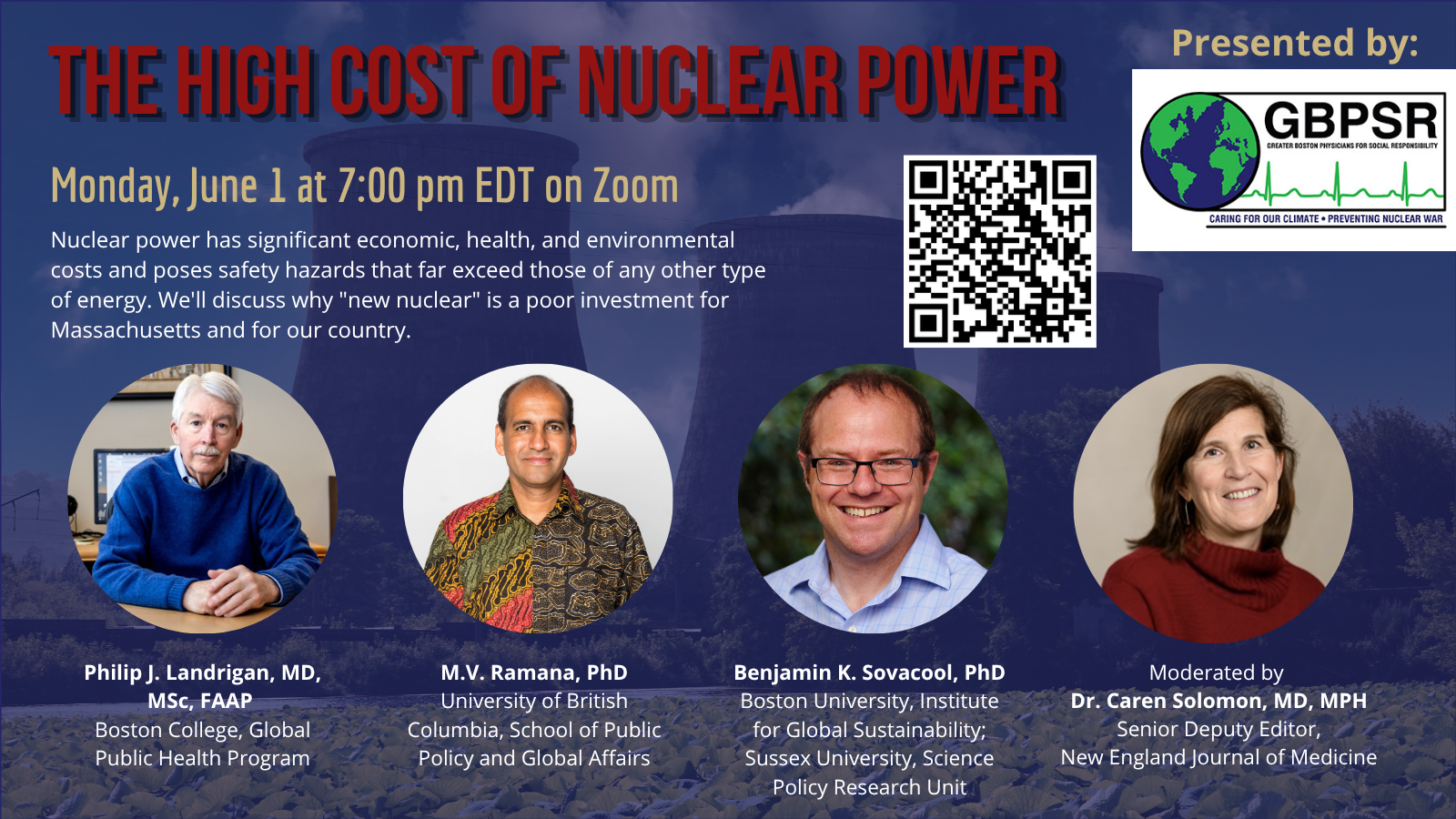
1 June Webinar – The High Cost of Nuclear Power – Register


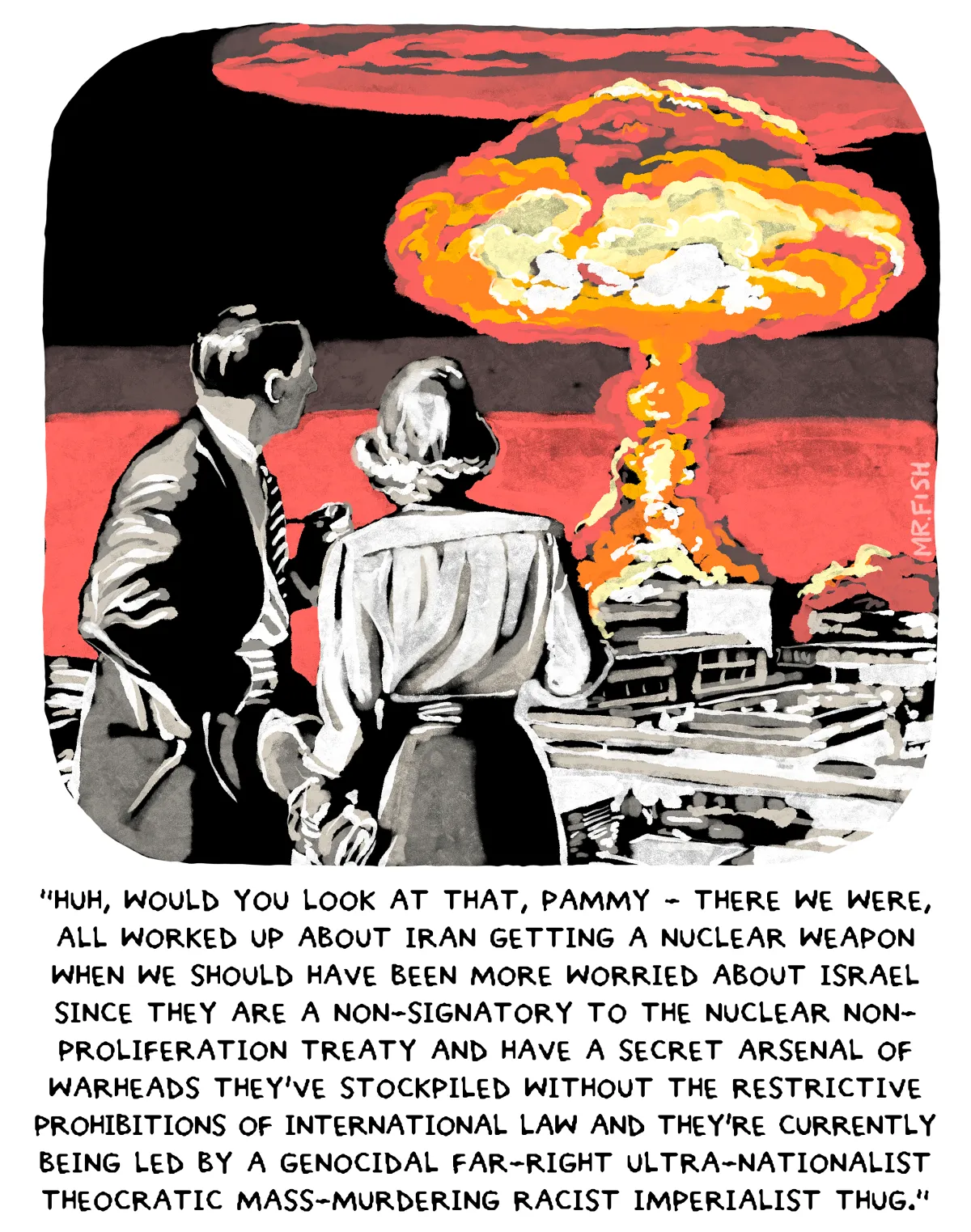
of the week– Nuclear Reactor Information Task Force
To see nuclear-related stories in greater depth and intensity – go to https://nuclearinformation.wordpress.com
-
Archives
- May 2026 (243)
- April 2026 (356)
- March 2026 (251)
- February 2026 (268)
- January 2026 (308)
- December 2025 (358)
- November 2025 (359)
- October 2025 (376)
- September 2025 (257)
- August 2025 (319)
- July 2025 (230)
- June 2025 (348)
-
Categories
- 1
- 1 NUCLEAR ISSUES
- business and costs
- climate change
- culture and arts
- ENERGY
- environment
- health
- history
- indigenous issues
- Legal
- marketing of nuclear
- media
- opposition to nuclear
- PERSONAL STORIES
- politics
- politics international
- Religion and ethics
- safety
- secrets,lies and civil liberties
- spinbuster
- technology
- Uranium
- wastes
- weapons and war
- Women
- 2 WORLD
- ACTION
- AFRICA
- Atrocities
- AUSTRALIA
- Christina's notes
- Christina's themes
- culture and arts
- Events
- Fuk 2022
- Fuk 2023
- Fukushima 2017
- Fukushima 2018
- fukushima 2019
- Fukushima 2020
- Fukushima 2021
- general
- global warming
- Humour (God we need it)
- Nuclear
- RARE EARTHS
- Reference
- resources – print
- Resources -audiovicual
- Weekly Newsletter
- World
- World Nuclear
- YouTube
-
RSS
Entries RSS
Comments RSS
 nuclear-news