France’s secrecy over its deplorable history of nuclear bomb testing in Algeria

|
Algeria: France urged to reveal truth about past nuclear tests, https://www.theafricareport.com/41067/algeria-france-urged-to-reveal-truth-about-past-nuclear-tests/, By Farid Alilat, Thursday, 10 September 2020, A study released shows the presence of waste tied to French nuclear tests in Algeria done during the 1960s. Jeune Afrique/The Africa Report had a chance to consult the report.
On 13 February 1960 at 7:04 a.m., France tested its first nuclear bomb, named Gerboise bleue, over Reggane. At the time, the French authorities explained that the tests were being conducted in uninhabited and deserted areas. However, at least 20,000 people were living at the sites, which still to this day have yet to be fully decontaminated. What waste remains of the 17 nuclear tests France carried out in Algeria between 1960 and 1967? What kind of condition is it in, and what repercussions does it have on the health of residents and the environment? Is France ready to assist Algerians in locating this waste and decontaminating sites, at a time when both countries show a willingness to work together on a memorial initiative regarding the colonial past? More than 60 years after Gerboise bleue, was conducted, a report from the International Campaign to Abolish Nuclear Weapons (ICAN) recommends that France answer these questions and provide Algeria with assistance in cleaning up the relevant sites. ‘Radioactivity Under the Sand’, a study led by Patrice Bouveret, director of the French Centre for Documentation and Research on Peace and Conflicts (Observatoire des armements), and Jean-Marie Collin, co-spokesperson for ICAN France, provides a comprehensive review of the presence of French nuclear waste in Algeria. Between February 1960 and February 1967, France carried out 17 atmospheric and underground nuclear tests in the Reggane and Hoggar regions, not far from a natural museum housing cave paintings which date back to the Neolithic period. Nine of these tests were conducted after Algeria gained independence in July 1962.
In accordance with a clause contained in the Evian Agreements of March 1962, France was permitted to continue its testing programme until 1967. On paper, the testing came to an end that year. However, the Algerian government under Chadli Bendjedid’s presidency secretly granted the French permission to continue carrying out tests at the B2-Namous site in Reggane until 1986. Radioactive materials left out in the openAlthough some of the facilities used for the tests were dismantled prior to and after the programme’s shutdown, waste is still present both above and below ground. At the end of the Algerian War, the two parties failed to negotiate a clause which would have forced France to decontaminate the sites or provide Algerians with archives and documentation related to the nuclear tests. “After seven years [from 1960 to 1967] of conducting a range of tests, the two sites at Reggane and In Ekker were handed over to Algeria without providing for any procedures to control and monitor radioactivity,” reads a December 1997 report from the French Senate. The institution acknowledged that the French authorities displayed “a certain lack of concern”, noting that local residents “could have been treated with at least a little consideration”. According to the authors of the ICAN report: “From the beginning of nuclear tests, France set up a policy of burying all waste in the sand. Everything that may have been contaminated by radioactivity had to be buried.” This included planes, tanks and other equipment. Worse still, radioactive materials (vitrified sand and contaminated rocks and lava) were left out in the open, thereby exposing the population and the environment to assured danger.
The report also mentions that since France is not subject to any obligation under agreements it has established with Algeria, it has never revealed the location or quantity of the buried waste. The authors add: “The nuclear past should no longer remain buried deep in the sand.” Lack of transparencyIn a 1996 ‘classified defence’-level report held in the archives of the French Ministry of Defence and which remains classified, the French authorities indicate that the tests had been halted without taking any initiative to provide documentation to their Algerian counterparts. “No memorandum and no report have been found that provide information about the radiological condition of the launch bases when they were returned to the Algerian authorities [in 1967],” the report reads. Not only does waste remain under the sand, but “the sites are not subject to checks for radioactivity and are even less the subject of campaigns to raise awareness among local residents about the health risks”. Although the Morin Law of 2010 (of which France recognised victims through its nuclear testing ) opened the doors to granting compensation to nuclear test victims in French Polynesia and Algeria, it failed to take environmental consequences into account. The Treaty on the Prohibition of Nuclear Weapons (TPNW), adopted in July 2017 and signed by Algeria, requires State Parties to take measures to assist the residents and areas contaminated by the tests. In addition, the treaty stipulates that “a State Party that has used or tested nuclear weapons or any other nuclear explosive devices shall have a responsibility to provide adequate assistance to affected States Parties, for the purpose of victim assistance and environmental remediation”. The issue is that, thus far, France has declined to sign the TPNW. What’s more, a lack of transparency still dominates. For example, ICAN’s report cites a secret agreement between France and Algeria regarding nuclear decontamination which was reportedly signed during former French President François Hollande’s visit with his Algerian counterpart, Abdelaziz Bouteflika, in Algiers in December 2012. The agreement concerned the notorious B2-Namous site in Reggane. A set of recommendationsWill the memorial initiatives recently undertaken by both countries – with the appointment of two experts, Benjamin Stora for France and Abdelmadjid Chikhi for Algeria – be a game changer for this chapter of history which continues to put a strain on relations between France and Algeria? According to Algeria’s veterans affairs minister, the memorial initiatives integrate the nuclear waste question. In keeping with these efforts, ICAN’s report recommends that the two parties hold discussions and that France improve Algerian citizens’ access to French medical archives, as well as that French legislation from 2010 “delineating the affected areas in the Sahara” be amended “so that they can be expanded, as was done for French Polynesia”. Other recommendations concern nuclear waste, with the report suggesting that “France should provide the Algerian authorities with a full list of sites where contaminated waste was buried, in addition to the precise location of each of these sites (latitude and longitude), a description of this material, as well as the type and thickness of the materials used to cover them”. The report also proposes that France “provide Algeria with the plans of the French Alternative Energies and Atomic Energy Commission’s [CEA] underground installations under the Reggane plateau military base, as well as the plans of the various galleries excavated in the Tan Afella mountain”. On 13 February 1960 at 7:04 a.m., France tested its first nuclear bomb, named Gerboise bleue, over Reggane. At the time, the French authorities explained that the tests were being conducted in uninhabited and deserted areas. However, at least 20,000 people were living at the sites, which still to this day have yet to be fully decontaminated. |
|
|
Suffolk County Council unable to back £20billion Sizewell new nuclear power station as the present plan stands
regarding many of these issues is “very disappointing” considering how early in the development process the council raised its concerns. The draft Relevant Representation lists the areas where it believes EDF Energy needs to undertake further work. Council leader Matthew Hicks added: “Suffolk County Council has always supported the principle of a new nuclear power station at Sizewell, recognising the important contribution to the national energy strategy and the large economic boost such a development could bring
to our county.
https://www.eadt.co.uk/news/sizewell-c-not-supported-by-suffolk-county-council-1-6833606
Magnox nuclear clear-up cost soars to £9bn
|
Magnox nuclear clear-up cost soars to £9bn https://www.constructionenquirer.com/2020/09/11/magnox-nuclear-clear-up-cost-soars-to-9bn/ Aaron Morby, 13 Sept 20, The cost of decommissioning the Magnox nuclear reactor estate has continued to soar despite efforts to control the budget. Fresh estimates of the cost of getting all Magnox sites cleared and safely enclosed has increased by £2.7bn to £8.7bn since 2017. An investigation by the National Audit Office warns that while the Nuclear Decommissioning Authority has made major progress sorting out its delivery procedures, costs are likely to continue to rise as it gets to grips with the scope of work. The expected cost is now double the original contract price when the initial clean-up deal was signed in 2014 with Cavendish Fluor Partnership to decommission two nuclear research sites and 10 Magnox sites. Since then the Nuclear Decommissioning Authority terminated the contract more than nine years early following a high court challenge to both the procurement by losing bidder Bechtel and changes in scope of work. The NAO this morning warned that costs are likely to be subject to further change, largely because of the inherent uncertainties involved in cleaning up the UK’s nuclear sites. It recommended that the NDA needs to increase its understanding of the condition of sites and the volume and complexity of remaining decommissioning work. It also said the NDA needed to explore with its subsidiaries how future contracts can better support the timely and effective management of underperformance. Gareth Davies, the head of the NAO, said: “Since the failure of the original Magnox contract in 2017, the NDA has made progress in a number of areas. “It renegotiated the contract, avoided further legal disputes and got on with decommissioning the power plants. “However, the NDA now knows that it will cost significantly more to take the sites to the care and maintenance stage of the decommissioning process, though there remains inherent uncertainty about the final cost. “It still needs to ensure it has a solid understanding of the condition of each Magnox site and the costs of cleaning them up.” |
|
|
A powerful message on the seismic dangers in Hinkley Point C nuclear construction. It would be cheaper to pull out now.
Radiation Free Lakeland 12th Sept 2020, Seismic Warnings – if not now when will the Government Scrap Hinkley C? This week there was yet another earthquake recorded in the Bristol area. It was small but significant, contributing to the well documented seismic activity of the area. If eyewatering costs, long delays, a mental and physical health crisis among the employees building Hinkley Point C are not enough to scrap this hubristic nuclear new build plan then the seismic warnings should be.
This insane project next to operational reactors has seen the geological stresses of the biggest pours of concrete in the UK
alongside three huge tunnels being bored below the seabed. German based multi-national company Herrenknecht built the hugely expensive tunnel boring machines which will be dumped under the Bristol Channel once done.
A total of 38,000 concrete segments are needed to support the tunnels, which would transfer 120,000 litres of water per second for the new nuclear plant when finished. The Bristol area is seismically active so to put increased geological stress deliberately in the vicinity of existing nuclear reactors is the kind of hubris that disaster movies are made of.
Scrapping Hinkley C now and paying off the developers would be far cheaper and far safer than continuing down this route to nuclear disaster.
Unmarked ?nuclear convoy with strong military police guard sweeps through Bristol city centre
This is the moment an unmarked military and police convoy stopped the traffic and stunned drivers and commuters as it swept through the city centre of Bristol this week.
The 14-vehicle convoy was captured on camera as it held up traffic on a main road into Bristol, and then headed out of the city on the M32.
The convoy began with a military police 4×4 car and then went on to include two police cars, three large police vans, another police 4×4, three large army people carriers and what appeared to be the subject of the guard of the convoy – four large LGV lorries with large unmarked containers on the trailers.
The brief video of the convoy was posted on social media within minutes of being spotted at around 7.50am on Wednesday, September 9 this week, and prompted a range of speculation as to what exactly was going on.
There was speculation that the convoy was operated by the AWE, the Atomic Weapons Establishment, an organisation which handles all the nuclear fuel for submarines and material for Britain’s nuclear weapons.
The AWE is based at Aldermaston, at a base just the other side of Newbury in Berkshire. People commenting on the video, which went viral on Facebook, said they had seen many similar convoys around that area, but they usually took place in the middle of the night so did not attract attention……… https://www.bristolpost.co.uk/news/watch-moment-unmarked-nuclear-convoy-4510383
Your Man in the Public Gallery – Assange Hearing Day 8
 Your Man in the Public Gallery – Assange Hearing Day 8, Craig Murray September 10, 2020 The great question after yesterday’s hearing was whether prosecution counsel James Lewis QC would continue to charge at defence witnesses like a deranged berserker (spoiler – he would), and more importantly, why? Your Man in the Public Gallery – Assange Hearing Day 8, Craig Murray September 10, 2020 The great question after yesterday’s hearing was whether prosecution counsel James Lewis QC would continue to charge at defence witnesses like a deranged berserker (spoiler – he would), and more importantly, why?
QC’s representing governments usually seek to radiate calm control, and treat defence arguments as almost beneath their notice, certainly as no conceivable threat to the majestic thinking of the state. Lewis instead resembled a starving terrier kept away from a prime sausage by a steel fence whose manufacture and appearance was far beyond his comprehension. Perhaps he has toothache. PROFESSOR PAUL ROGERS The first defence witness this morning was Professor Paul Rogers, Emeritus Professor of Peace Studies at the University of Bradford. He has written 9 books on the War on Terror, and has been for 15 years responsible for MOD contracts on training of armed forces in law and ethics of conflict. Rogers appeared by videolink from Bradford. Prof Rogers’ full witness statement is here. Edward Fitzgerald QC asked Prof Rogers whether Julian Assange’s views are political (this goes to article 4 in the UK/US extradition treaty against political extradition). Prof Rogers replied that “Assange is very clearly a person of strong political opinions.” Fitzgerald then asked Prof Rogers to expound on the significance of the revelations from Chelsea Manning on Afghanistan. Prof Rogers responded that in 2001 there had been a very strong commitment in the United States to going to war in Afghanistan and Iraq. Easy initial military victories led to a feeling the nation had “got back on track”. George W Bush’s first state of the union address had the atmosphere of a victory rally. But Wikileaks’ revelations in the leaked war logs reinforced the view of some analysts that this was not a true picture, that the war in Afghanistan had gone wrong from the start. It contradicted the government line that Afghanistan was a success. Similarly the Wikileaks evidence published in 2011 had confirmed very strongly that the Iraq War had gone badly wrong, when the US official narrative had been one of success. Wikileaks had for example proven from the war logs that there were a minimum of 15,000 more civilian deaths than had been reckoned by Iraq Body Count. These Wikileaks exposures of the failures of these wars had contributed in large part to a much greater subsequent reluctance of western powers to go to war at an early stage. Fitzgerald said that para 8 of Rogers’ report suggests that Assange was motivated by his political views and referenced his speech to the United Nations. Was his intention to influence political actions by the USA? Rogers replied yes. Assange had stated that he was not against the USA and there were good people in the USA who held differing views. He plainly hoped to influence US policy. Rogers also referenced the statement by Mairead Maguire in nominating Julian for the Nobel Peace Prize:
Rogers stated that Assange had a clear and coherent political philosophy. He had set it out in particular in the campaign of the Wikileaks Party for a Senate seat in Australia. It was based on human rights and a belief in transparency and accountability of organisations. It was essentially libertarian in nature. It embraced not just government transparency, but also transparency in corporations, trade unions and NGOs. It amounted to a very clear political philosophy. Assange adopted a clear political stance that did not align with conventional party politics but incorporated coherent beliefs that had attracted growing support in recent years. Fitzgerald asked how this related to the Trump administration. Rogers said that Trump was a threat to Wikileaks because he comes from a position of quite extreme hostility to transparency and accountability in his administration. Fitzgerald suggested the incoming Trump administration had demonstrated this hostility to Assange and desire to prosecute. Rogers replied that yes, the hostility had been evidenced in a series of statements right across the senior members of the Trump administration. It was motivated by Trump’s characterisation of any adverse information as “fake news”. Fitzgerald asked whether the motivation for the current prosecution was criminal or political? Rogers replied “the latter”. This was a part of the atypical behaviour of the Trump administration; it prosecutes on political motivation. They see openness as a particular threat to this administration. This also related to Trump’s obsessive dislike of his predecessor. His administration would prosecute Assange precisely because Obama did not prosecute Assange. Also the incoming Trump administration had been extremely annoyed by the commutation of Chelsea Manning’s sentence, a decision they had no power to revoke. For that the prosecution of Assange could be vicarious revenge. Several senior administration members had advocated extremely long jail sentences for Assange and some had even mooted the death penalty, although Rogers realised that was technically impossible through this process. Fitzgerald asked whether Assange’s political opinions were of a type protected by the Refugee Convention. Rogers replied yes. Persecution for political opinion is a solid reason to ask for refugee status. Assange’s actions are motivated by his political stance. Finally Fitzgerald then asked whether Rogers saw political significance in the fact that Assange was not prosecuted under Obama. Rogers replied yes, he did. This case is plainly affected by fundamental political motivation emanating from Trump himself. James Lewis QC then rose to cross-examine for the prosecution. His first question was “what is a political opinion?” Rogers replied that a political opinion takes a particular stance on the political process and does so openly. It relates to the governance of communities, from nations down to smaller units………. https://www.craigmurray.org.uk/?fbclid=IwAR1SSVvRVbh8_y-5pargeR-U2E6JHQDcGUq_752VyejbktpjIbMY-g-MdnA |
Scottish peace activist calls for timetable for the removal of nuclear weapons and submarines if independence is achieved
FRIDAY, SEPTEMBER 11, 2020 https://morningstaronline.co.uk/article/b/scottish-peace-activist-calls-timetable-removal-nuclear-weapons-and-submarines-if
A LEADING peace activist in Scotland has urged the government to produce a timetable for the removal of British nuclear weapons and submarines from their Scottish base if independence is achieved.
Isobel Lindsay, a long-time Campaign for Nuclear Disarmament campaigner, warned that the Westminster Parliament would attempt to “buy time” and maintain its Trident submarine base at Faslane on the west coast of Scotland in the event of a vote for independence.
Writing in pro-independence newspaper The National, Ms Lindsay said: “It is obvious what the Trident negotiating pitch of the UK
government will be in independence negotiations.
“Buy time, and as soon as they get a concession on that, they know they won’t have to worry. Scotland yields to pressure and they will keep on getting their lease extended.
“This is why a very clear and tight timetable for removal is essential from the start.”
Ms Lindsay said that before the 2014 referendum, a scenario was being prepared using the threat of vetoing Scotland’s EU membership as the bargaining chip for retaining Trident on the Clyde.
“That bargaining chip is no longer there, so there is talk about buying off the Jocks by paying for their lease,” she said.
“I think we know about being bought and sold.”
Faslane and the nuclear-weapons storage facility eight miles away at Coulport have been frequently targeted for protests by disarmament campaigners.
The SNP has said that support for independence is growing in the face of Westminster chaos and incompetence, with a Survation poll today putting support for independence at 53 per cent – the seventh poll in a row showing “Yes” ahead.
Britain’s National Audit Office warns on costs of cleaning up old nuclear plants
|
Estimates of the cost to clear up 12 of the UK’s earliest nuclear power sites have increased by nearly £3bn since 2017 and there remains “inherent uncertainty” over the final bill, the country’s public spending watchdog has warned. The National Audit Office on Friday published its latest report into the long-running saga around the decommissioning of two research sites and 10 early nuclear power stations in Britain, which came to be known as the “Magnox” plants due to the magnesium alloy that was used to cover the fuel rods inside their reactors. The spending watchdog also found that the costs to the taxpayer of a botched 2014 tender process to outsource the decommissioning to the private sector was £20m higher than when it last investigated three years ago.
Cleaning up the Magnox sites, which were built before privatisation and include Hunterston A in Scotland and Hinkley Point A in Somerset, has turned into a costly and torturous affair. In 2016 the High Court ruled the 2014 competition for a 14-year contract to decommission the sites — which had been awarded to Cavendish Fluor Partnership, or CFP, a joint venture between UK-based Babcock International and Fluor of the US — had been “fudged” by the Nuclear Decommissioning Authority, a body attached to the Department for Business, Energy and Industrial Strategy.
A year later ministers, acting on legal advice, terminated the arrangement with CFP nine years early and renegotiated a shorter contract that ran until the end of August 2019. Decommissioning of the sites was then brought in-house by the NDA. ………. https://www.ft.com/content/6f313c84-d314-4160-b124-a68c4e85be09
|
|
|
Professor Paul Rogers – a witness explaining how Julian Assange is to be extradited for POLITICAL REASONS
 Julian Assange clearly political, says extradition trial witness, https://www.theaustralian.com.au/world/julian-assange-clearly-political-says-extradition-trial-witness/news-story/735ef7d40551d52f4f7f12d9d6c318d7 JACQUELIN MAGNAY, FOREIGN CORRESPONDENT@jacquelinmagnay, THE TIMES, SEPTEMBER 10, 2020
Julian Assange’s nomination for the Senate during the 2013 federal election campaign and the establishment of the WikiLeaks political party the year before “clearly shows’’ the WikiLeaks founder has a political view and a libertarian standpoint, a witness has told the Old Bailey.
Professor Paul Rogers, the emeritus professor of peace studies at Bradford University, was called as a witness by Assange’s team to persuade the judge that Assange is being targeted for political means, and thus an extradition to the US should not be permitted under the Anglo-US extradition treaty.
In day three of the court hearing where Assange, 49, is objecting to extradition to the US, Professor Rogers said in written testimony that Assange’s expressed views, opinions and activities demonstrate very clearly “political opinions”. He cited how Assange had formed the political party to contest the Australian general election and “central of this is his view to put far greater attention to human rights’’.
He added: “The clash of those opinions with those of successive US administrations, but in particular the present administration which has moved to prosecute him for publications made almost a decade ago, suggest that he is regarded primarily as a political opponent who must experience the full wrath of government, even with suggestions of punishment by death made by senior officials including the current President.’’
But US prosecutor James Lewis QC said: “Assistant US Attorney Gordon D. Kromberg explicitly refutes that this is a political prosecution but rather an evidence-based prosecution.’’
In documents to the court, the prosecution says the investigation into Assange had been ongoing before the Trump administration came into office.
“Assange’s arguments are contradicted by judicial findings, made in the US District Court of the District of Columbia, that the investigation into the unauthorised disclosure of classified information on the WikiLeaks website remained ongoing when the present administration came into office,” the prosecution says.
Mr Lewis added: “If this was a political prosecution, wouldn’t you expect him to be prosecuted for publishing the collateral murder video?’’https://www.theaustralian.com.au/world/julian-assange-clearly-political-says-extradition-trial-witness/news-story/735ef7d40551d52f4f7f12d9d6c318d7
He said Assange was being extradited to face charges relating to complicity in illegal acts to obtain or receive voluminous databases of classified information, his agreement and attempt to obtain classified information through computer hacking; and publishing certain classified documents that contained the unredacted names of innocent people who risked their safety and freedom to provide information to the United States and its allies, including local Afghans and Iraqis, journalists, religious leaders, human rights advocates, and political dissidents from repressive regimes.
Professor Rogers told the court the motivation of Assange and WikiLeaks was to achieve greater transparency and was political. The trial continues.
Julian Assange’s extradition hearing in London. What can we expect?
 What’s at stake at Julian Assange’s long-awaited extradition hearing?, ABC 8 Sept 20, Julian Assange is fighting an attempt by the United States to extradite him to face charges on what it says was “one of the largest compromises of classified information in the history of the United States”.
It marks the culmination of a nearly decade-long pursuit by US authorities of the Australian-born WikiLeaks founder over the publication of secret documents and files in 2010 and 2011.
Assange’s extradition hearing had initially begun in February but was delayed for several months, and the coronavirus pandemic added additional delays, meaning Assange has been kept on remand in Belmarsh prison in south-east London since last September.
As reported by Background Briefing, Assange’s defence team will attempt to persuade the court he is unfit to travel to the US to face trial, and that the attempt to send him there is essentially an abuse of process.
How did he get to this point?
WikiLeaks made international headlines in April 2010 when it published a classified US military video showing an Apache attack helicopter gunning down 11 civilians, including two Reuters journalists, on a street in Baghdad in 2007.
Later that year, WikiLeaks released hundreds of thousands of US military messages and cables, a leak that saw former US Army intelligence analyst Chelsea Manning jailed……..
Assange, 49, has always denied the allegations, saying they were part of a US plot to discredit him and eventually extradite him to the US, and the investigation was eventually dropped in 2017.
He remained holed up in the embassy for seven years until April 2019, when the Ecuadorian government withdrew his asylum and Metropolitan Police officers arrested him for failing to surrender to the court over an arrest warrant issued in 2012……..
In May 2019, Assange was sentenced to 50 weeks in jail for breaching bail conditions, and during that time the US Justice Department brought 18 charges against him.
What is Assange accused of?
Assange is facing 17 charges relating to obtaining and disclosing classified information, and one charge concerning an alleged conspiracy to crack passwords on government servers.
The US alleges he conspired with Chelsea Manning to hack into US military computers to acquire the classified information published by WikiLeaks.
What can we expect from this hearing?
The court must examine a series of factors before any extradition can be granted, such as if the alleged crimes have equivalent offences in the UK and could lead to trial.
“It’s what’s called double criminality, in other words, whether the offences for which Assange is being sought in under US law are broadly being recognised under UK law,” Professor Don Rothwell, from the Australian National University, told Background Briefing.
Prosecutors have argued there is no doubt his actions would amount to offences under the UK’s Official Secrets Act.
If the court agrees, it must then consider how extradition would affect Assange’s health.
Previous court appearances this year have been delayed due to health issues, and his lawyers say his efforts to protect himself from US extradition and being stuck inside the Ecuadorian embassy for seven years had taken its toll.
If the court accepted it would be detrimental to his health, it could open up the possibility of protecting Assange in the UK under European human rights law.
The magistrate may also take issue with how the prosecutors are seeking to impose American law on what Mr Assange is alleged to have done outside of US territory.
“In this matter, US law is seeking to extend all the way, not only from the United States, but into the United Kingdom and into parts of Europe and basically impact upon the activities that Assange has undertaken associated with WikiLeaks over 10 years ago,” Professor Rothwell said…….
Assange’s legal team contends the US is seeking to prosecute Assange for political offences and that he is thereby exempt from extradition under the terms of the UK-US extradition treaty…….
What happens next?
The hearing is expected to last between three and four weeks, with any decision made likely to be appealed and go to a higher court, meaning the legal battle would likely drag into next year and possibly beyond that.
If Assange is eventually extradited to the United States and found guilty, he faces a maximum 175 years imprisonment for the 18 offences listed in the indictment. https://www.abc.net.au/news/2020-09-09/julian-assange-what-does-extradition-hearing-mean/12642972
Chernobyl nuclear power plant gets special permission to run ‘hot’ tests with nuclear waste

 Chornobyl nuclear power plant gets special permission to run ‘hot’ tests with nuclear waste https://112.international/society/chornobyl-nuclear-power-plant-gets-special-permission-to-run-hot-tests-with-nuclear-waste-54539.html Source : 112 Ukraine, 9 Sept 20,
 The spent fuel will be soon transferred to new storage, as the old one’s operational life is expiring Chornobyl nuclear power plant (NPP) received special permission to run hot tests with the spent nuclear fuel. Press office of the NPP reported that on September 8.
According to the message, over 23 years of service, the storage amounted up to 21,000 elements of nuclear waste. Due to the fact that the operational life of the current storage is expiring, the staff is now making arrangements to transport the waste to a new repository site. At first, only part of the waste will be transferred, and the rest is to be moved after successful “hot” tests.
“The new storage boasts of special technology, allowing to keep the building in the inert atmosphere. It’ll have helium pumped up in there, and the bilateral leak-tight bottles, which are supposed to keep the spent fuel for 100 years,” said Volodymyr Peskov, the Acting Director of Chornobyl NPP enterprise.
The NPP staff managed to get permission for hot tests after cold tests with nuclear waste were performed successfully.
UK. For thehighly radioactive Dounreay nuclear site, a mobile robot will be used to identify the toxic structures
 Press & Journal 8th Sept 2020 A mobile robot will be used for the first time in one of the most contaminated and inaccessible parts of the Dounreay nuclear plant to provide vital information on the next steps in its decommissioning. The technology will provide the first images in decades from inside the Caithness site’s Fuel Cycle Area (FCA).
The FCA consists of two reprocessing plants, waste stores and laboratory facilities where spent nuclear fuel was examined and reprocessed. As part of the site clean up, Dounreay Site Restoration Ltd (DSRL) is working with the Robotics and Artificial Intelligence in Nuclear (Rain) Hub, a consortium of universities led by the University of Manchester, to explore ways to overcome some of
the challenges.
In 1951, Winston Churchill suggested dropping nuclear bombs on Russia
 BOMBS AWAY Winston Churchill suggested dropping nuclear bombs on Russia in 1951.The Sun, Abe Hawken
The then leader of the opposition is said to have wanted his war strategy to involve using nuclear strikes to bomb Russia and China into submission.
He thought the best way to end the conflict was to give Russia an “ultimatum” and if they refused, he would threaten 20 to 30 cities with atom bombs.
Churchill then wanted to warn Russia it was “imperative” the civilian population of each named city was “immediately evacuated”.
He was convinced Russia would refuse their terms so he discussed plans to bomb “one of the targets, and if necessary, additional ones”.
Churchill hoped that by the third attack the Kremlin would eventually meet their terms.
The bombshell plans have come to light in a memorandum written by the New York Times general manager Julius Ochs Adler, according to The Times.
In it, he describes a conversation the pair had during lunch at Churchill’s home in Kent on Sunday, April 29, 1951……….
Richard Toye, head of history of the University of Exeter, found the note in papers belonging to the New York Times Company.
He said Churchill recommended a threat like this in 1949 when the Soviet Union did not have nuclear weapons.
However, he added that it was a revelation he was still contemplating a similar threat two years later.
He told The Times: “One can question his judgment at this point.”…………https://www.thesun.co.uk/news/uknews/12621015/winston-churchill-nuclear-bombs-russia/
Nuclear powers battle each other to market nuclear reactors to Czech Republic

|
The Czech Republic Is Caught in a Nuclear Tug of War, FP,
Competition among China, Russia, and the West is taking the form of a battle to build reactors in Eastern Europe. BY TIM GOSLING SEPTEMBER 8, 2020”………………… The minority government of Czech Prime Minister Andrej Babis, who founded the ruling ANO 2011 party, has welcomed U.S. President Donald Trump’s embrace. But his stance looks less than certain as the country prepares to face one of its sternest geopolitical tests since the fall of communism 30 years ago: choosing a partner to expand its Soviet-built nuclear power capacity.
……….. Part of Pompeo’s mission to the Czech Republic was to convince Babis that it would pose a similar risk as Huawei should China or Russia win an upcoming tender to build a new 1.2-gigawatt reactor at the Dukovany nuclear power plant, at an estimated cost of over $7 billion. “If you choose one of these countries, it will jeopardize your freedom and sovereignty,” Pompeo reportedly stressed to the Czech leader.
However, Babis’s government is weak, and he faces building pressure at home and abroad to lean east. In turn, he has declined to exclude Chinese and Russian state-owned companies from bidding for the project and, despite welcoming Pompeo enthusiastically, demurred on signing a proffered cooperation agreement on nuclear energy………… Part of Pompeo’s mission to the Czech Republic was to convince Babis that it would pose a similar risk as Huawei should China or Russia win an upcoming tender to build a new 1.2-gigawatt reactor at the Dukovany nuclear power plant, at an estimated cost of over $7 billion. “If you choose one of these countries, it will jeopardize your freedom and sovereignty,” Pompeo reportedly stressed to the Czech leader. However, Babis’s government is weak, and he faces building pressure at home and abroad to lean east. In turn, he has declined to exclude Chinese and Russian state-owned companies from bidding for the project and, despite welcoming Pompeo enthusiastically, demurred on signing a proffered cooperation agreement on nuclear energy. The expansion of the country’s two nuclear power plants—Dukovany and Temelin—are at the center of the Czech Republic’s long-term energy strategy. However, the government has struggled for years to find a financing model agreeable to the minority shareholders at state-controlled energy group CEZ, which is tasked with building and running the nuclear energy infrastructure. The disagreement over funding saw plans to build two new units at Temelin scrapped in 2014. The two finalists in that race—which also brought a U.S. secretary of state to Prague—were the Russian state nuclear agency Rosatom and U.S.-based Westinghouse. They’ve sat in the background in Prague since, awaiting the starting gun for new projects. In the Dukovany showdown, they’re set to be joined by bidders from China, France, and South Korea……….. In the wake of Pompeo’s trip to Prague, lobbying around the nuclear plant will ramp up. “Russia has been extremely active in lobbying for the past couple of years,” Karaskova said. “The U.S., through Mike Pompeo’s comments, also showed a strong interest, probably the first time so openly and publicly.” Petr Trescak, an opposition MP, veteran of the nuclear sector, and member of the government committee for new nuclear plants said that he expects intense lobbying will soon start. Lipavsky said that the tender is already a regular topic with representatives of those countries that will bid, including the French and U.S. ambassadors. Public opinion is also key. Following Pompeo’s visit, Westinghouse launched a search for new senior PR operatives……… https://foreignpolicy.com/2020/09/08/czech-republic-nuclear-tug-of-war-china-russia-united-states/ |
|
Hinkley Point B nuclear station could close down early – EDF
 EDF Energy says UK’s Hinkley Point B nuclear plant could close earlier than planned
The 1 gigawatt (GW) plant in Somerset was due to be shut down permanently in early 2023. It began operation in 1976.
“It is possible we may need to move into defuelling within the next two years. We will review this decision in the same detailed way as we have with Hunterston B and expect to be able to confirm the outcome by the end of this year,” said a spokesman for EDF Energy, part of France’s EDF.
Last month, EDF Energy said it would start decommissioning its Hunterston B nuclear power plant in Scotland by January 2022 at the latest.
Both Hunterston B and Hinkley Point B have had issues with ageing, as cracks were found in graphite bricks which form reactor cores, prompting some industry experts to foresee their permanent closure soon.
Nearly all of Britain’s 9 GW nuclear fleet is composed of advanced gas-cooled reactors. A factor of ageing in that type of reactor is cracks in the graphite bricks.
Half of Britain’s eight operating nuclear power stations are due to move into decommissioning by March 2024, removing around 4 GW of power capacity…….. www.reuters.com/article/britain-nuclearpower/update-1-edf-energy-says-uks-hinkley-point-b-nuclear-plant-could-close-earlier-than-planned-idUSL8N2G65F8
1 This Month

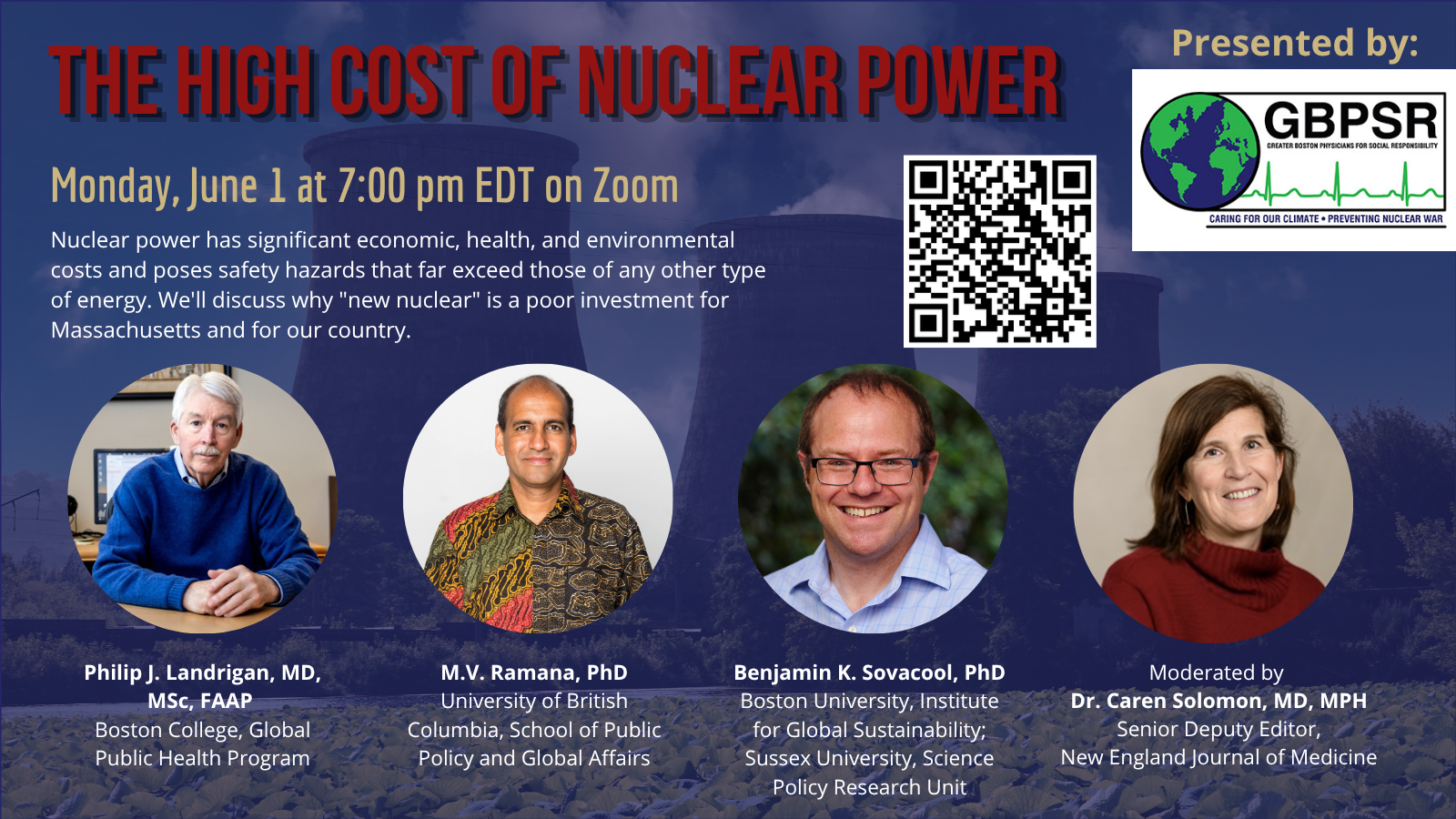
1 June Webinar – The High Cost of Nuclear Power – Register


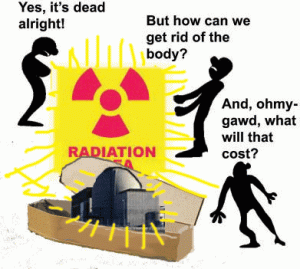
of the week– Nuclear Reactor Information Task Force
To see nuclear-related stories in greater depth and intensity – go to https://nuclearinformation.wordpress.com
-
Archives
- May 2026 (225)
- April 2026 (356)
- March 2026 (251)
- February 2026 (268)
- January 2026 (308)
- December 2025 (358)
- November 2025 (359)
- October 2025 (376)
- September 2025 (257)
- August 2025 (319)
- July 2025 (230)
- June 2025 (348)
-
Categories
- 1
- 1 NUCLEAR ISSUES
- business and costs
- climate change
- culture and arts
- ENERGY
- environment
- health
- history
- indigenous issues
- Legal
- marketing of nuclear
- media
- opposition to nuclear
- PERSONAL STORIES
- politics
- politics international
- Religion and ethics
- safety
- secrets,lies and civil liberties
- spinbuster
- technology
- Uranium
- wastes
- weapons and war
- Women
- 2 WORLD
- ACTION
- AFRICA
- Atrocities
- AUSTRALIA
- Christina's notes
- Christina's themes
- culture and arts
- Events
- Fuk 2022
- Fuk 2023
- Fukushima 2017
- Fukushima 2018
- fukushima 2019
- Fukushima 2020
- Fukushima 2021
- general
- global warming
- Humour (God we need it)
- Nuclear
- RARE EARTHS
- Reference
- resources – print
- Resources -audiovicual
- Weekly Newsletter
- World
- World Nuclear
- YouTube
-
RSS
Entries RSS
Comments RSS
 nuclear-news