UK’s Ministry of Defence keeping seret most of the unsatisfactor report on safety of nuclear bomb sites
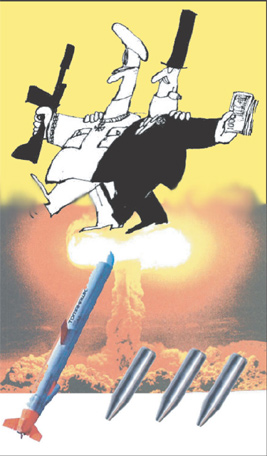
 REVEALED: Nuclear bomb sites hit by fire safety problems and staff shortages, The National, By Rob Edwards 5 Dec 20, NUCLEAR bomb sites across the UK have fire safety problems as well as shortages of safety regulators and engineers, according to a new report from the Ministry of Defence (MoD).
But most of the MoD’s latest internal assessment of the safety of nuclear weapons has been kept secret for “national security” reasons – prompting fury from politicians and campaigners. They have attacked the nuclear secrecy as “deeply alarming” and “completely unacceptable”. The official attitude to nuclear safety was a “disgrace”, they said.
Previous nuclear safety assessments, revealed by The Ferret, have highlighted “regulatory risks” 86 times. Many involved the Trident warheads and nuclear submarines based on the Clyde.
The new MoD report also disclosed “significant weaknesses” on safety at non-nuclear sites. These included “serious deficiencies” on fire safety and “significant risk” from old fuel facilities – particularly on the Falkland Islands in the South Atlantic.
The MoD accepted that there were “infrastructure issues”, but insisted that they were being addressed. Defence nuclear programmes were “fully accountable” to UK ministers, it said.
The MoD has posted online the 2019-20 report from the Defence Safety Authority, which brings together seven regulators, a safety team and an accident investigation unit operating within the MoD. They are overseen by the authority’s director general, air marshal Sue Gray.
But the report said that the entire section from the Defence Nuclear Safety Regulator (DNSR), which is responsible for ensuring safety of the nuclear weapons programme, has been “marked SECRET” and given only “limited distribution”.
The MoD has previously released 10 annual DNSR reports following a challenge under freedom of information law in 2010. They flagged up risks of accidents, ageing submarine reactors, spending cuts and much else.
But in 2017 the MoD abruptly ceased publishing the reports, insisting that they had to be kept under wraps to protect national security. In 2019 that decision was challenged by campaigners at a UK information tribunal, whose verdict is still awaited.
he latest safety authority report, however, does contain a few details of nuclear risks buried in its 80 pages. It doesn’t specify which bases were affected, but they are likely to include the two major nuclear weapons sites, at Faslane on the Clyde and at Aldermaston in Berkshire.
In a discussion of problems with “fire safety assurance” across all MoD sites, the report said: “Particular issues have been noted at defence nuclear sites, where discussions continue between defence and statutory regulators.”
Between April 2019 and March 2020 as many as 374 fires were reported on all MoD sites. Although there had been some improvements “there is still more to do to reinforce the capability of defence to manage fire safety,” the report said.
A section on the “maturity” of the DNSR as a nuclear safety regulator disclosed that it was facing an 11 per cent shortage of staff in 2020-21. Shortfalls had been mitigated by the secondment of two senior staff from the UK Government’s nuclear power watchdog, the Office for Nuclear Regulation, and from the nuclear weapons company, AWE.
This had been supplemented by “making full use of partial retirees, graduate placements and development posts during 2019-20,” the report said. But these stopgap measures were failing………………
The Scottish National Party expressed concern about “a pattern of failure” on MoD safety. “Worryingly, the findings of this report reflect significant non-compliance with security and safety regulations at sensitive sites, including those where there are nuclear materials,” said the party’s defence spokesperson, Stewart McDonald MP.
“Not only is nuclear power and weaponry not safe, it is expensive, and not being handled properly under this Tory Government’s watch. The UK Government needs to transition away from nuclear entirely.”
MCDONALD described the nuclear safety failures as “alarming” and accused the MoD of “a lack of regard for public safety and transparency”. He pointed out that the UK Government’s civil nuclear watchdog, the Office for Nuclear Regulation, had criticised MoD secrecy.
The Scottish Green MSP for the west of Scotland, Ross Greer, called for nuclear weapons to be completely scrapped. “It is deeply alarming that the MoD continues to shroud so much secrecy over the safety issues with Britain’s weapons of mass destruction,” he said.
“We’ve known for years of significant issues at sites like Faslane and on the submarines themselves, so continued attempts to hold information back from the public are totally out of order.”
Lynn Jamieson, chair of the Scottish Campaign for Nuclear Disarmament, said: “The MoD’s tolerance of unsafe regimes is a disgrace for an organisation supposedly overseeing our protection. This adds to the urgency of nuclear disarmament.”
According to the Ministry of Defence, the annual assurance report and recommendations were currently being reviewed. Information that “could compromise national security” would not be published, the MoD said.,,,,,,,,,,,, https://www.thenational.scot/news/18923905.revealed-nuclear-bomb-sites-hit-fire-safety-problems-staff-shortages/
UK doesn’t have policies in place ready for COP26 Paris climate summit
climate summit since Paris in 2015, and quite possibly one of the most
important international gatherings in history. It’s the moment when
countries need to make good on the commitment they signed up to in Paris to
limit the average global temperature rise to 1.5 degrees Celsius, and agree
to reduce their greenhouse gas emissions at the scale and speed that’s
required. On Friday we learned what the UK is proposing – cutting carbon
emissions by 68 per cent by 2030 – but, at present, we do not have the
policies in place to achieve it.
https://inews.co.uk/opinion/climate-change-targets-welcome-policies-radical-enough-meet-them-782737
Nuclear incident in Belarus: Lithuanian authorities alert citizens
|
LRT 1st Dec 2020, Ecohome, a prominent environmental NGO in Belarus, has reported that Oil Price 3rd Dec 2020, Days after reports emerged that the newly opened Belarus nuclear power
plant suffered an incident, authorities in neighboring Lithuania told the Baltic country’s population on Thursday to stock up on food in case of an incident at the nuclear power facility in Belarus, which is just 30 miles away from Lithuania’s capital city Vilnius.https://oilprice.com/Latest-Energy-News/World-News/Lithuanians-Urged-To-Stockpile-Food-Amid-Reports-Of-Nuclear-Power-Incident.html |
|
Doubts on safety of extending life of France’s nuclear reactors: public consultation until 15 December
20Minutes 3rd Dec 2020, This Thursday and until January 15, the Nuclear Safety Authority (ASN) is opening a public consultation on the conditions for the continued operation, beyond 40 years, of the 34 900 MWe (electric megawatt) reactors in France. The subject is very sensitive. “France has not prepared any alternatives so that the non-extension of these reactors can be an option”, deplores Greenpeace.
The challenge then is that these reactors provide the same levels of safety as the EPRs, new generation reactors. Is it
possible ? Yves Marignac, at NegaWatt, like Roger Spautz, at Greenpeace, doubt it. Above all, they question the technical and financial capacities of EDF to carry out the adjustments requested by ASN to allow these extensions.
https://www.20minutes.fr/planete/2920535-20201203-nucleaire-prolongation-reacteurs-dela-40-ans-serieux
tion.wordpress.com/
UK’s Business, Energy and Industrial Strategy (BEIS) Department rejects the claim that nuclear power is ”zero carbon”

Business, Energy and Industrial Strategy (BEIS) Department accept that nuclear is not a ‘zero carbon’ source of electricity– implications for EdF’s advertisement claims. TASC 30th November 2020
On the 15th October, Together Against Sizewell C (TASC) wrote to BEIS pointing out that the nuclear power developer behind Hinkley Point C and the notional Sizewell C plants was justifying its TV ad claim that it is the ‘biggest producer of carbon free electricity’ by referencing a BEIS website in which the claim of ’zero carbon’ was made for renewables and nuclear.
In a response to TASC received on the 25th November, Director of Nuclear at BEIS, Stephen Speed who also co-chairs the BEIS/NGO nuclear forum acknowledged the error, stated, ‘….we agree with your argument that the environmental impact table of the Fuel Mix Disclosure report could cause confusion. I have asked for the report to be amended with a line that explains that the table relates only to generator emissions in the operational phase and does not include emissions related to the fuel supply chain or maintenance
activities.’
 Despite the fact that TASC would still contest the assumption that even generator carbon emissions are zero, the concession
from BEIS is a good interim result. Commenting on the agreement to alter the information on the website, Pete Wilkinson, Chairman of TASC, said today, ‘This acknowledgement from BEIS is welcome and important. At a time when the future of nuclear power in the UK is in the balance, removing official support for the zero carbon claim changes the game, and fundamentally exposes nuclear power’s climate change credentials as insignificant.
The word ‘zero’ can no longer be used when referencing nuclear power and carbon. ‘Moreover, it forces EdF to desist in making
the assertion which they had hitherto justified by pointing to a BEIS website which upheld their misplaced claim. ‘It may also, finally, force our local MP, Dr Therese Coffey, to drop the phrase as well. Incredibly for a Secretary of State, she has used the zero carbon claim in her response to the EdF planning application which the inspectorate will be examining next year and has refused to meet members of TASC on the grounds that our anti-nuclear views are ‘well known’. Such an attitude is rude, facile and possibly in breach of the Parliamentary Code.’
Armenia’s ticking time bomb – a decaying Soviet nuclear reactor
 Decaying Soviet-era nuclear power plant makes Armenia a ticking time bomb DAILY SABAH, ISTANBUL, DEC 02, 2020 Once Armenia’s defeat against Azerbaijan was put on paper, some Armenians, struggling to face reality, brought up nuclear weapons as a form of potential retaliation. These discussions, however, ignore the fact that Armenia does host nuclear power on its soil but in the form of a decaying Soviet nuclear reactor – a ticking bomb that is not only a threat to Armenia itself but its neighbors as well. Decaying Soviet-era nuclear power plant makes Armenia a ticking time bomb DAILY SABAH, ISTANBUL, DEC 02, 2020 Once Armenia’s defeat against Azerbaijan was put on paper, some Armenians, struggling to face reality, brought up nuclear weapons as a form of potential retaliation. These discussions, however, ignore the fact that Armenia does host nuclear power on its soil but in the form of a decaying Soviet nuclear reactor – a ticking bomb that is not only a threat to Armenia itself but its neighbors as well.
The Metsamor nuclear power plant, located just 16 kilometers (10 miles) from the Turkish border, is one of the oldest nuclear facilities in the world. Built back in 1976, the power plant consists of two VVER-440 Model V270 nuclear reactors, known to be some of the oldest and least reliable reactor models still in use.
Apart from unreliability issues, the power plant also lacks adequate earthquake resistance. While the volcanically-active region is at risk of earthquakes up to magnitude 8, the power plant can only endure a magnitude 7 earthquake, at most. Due to all these issues, Soviet authorities shut down the facility in 1988. However, Armenia reopened it in 1995 due to energy scarcity. Currently, the facility meets nearly 40% of Armenia’s energy needs, thus the security concerns are often ignored. After the collapse of the Soviet Union, the European Union increased its efforts to shut down most Soviet-era nuclear power plants, particularly those in Bulgaria and Slovakia that pose any possible threat. Similar efforts were made for Metsamor, considered to be the most dangerous of them all, but in vain. Armenia rejected the EU’s call to shut down Metsamor in exchange for 200 million euros ($226 million) to help meet the country’s energy needs. Giving up on its hopes of closing the facility, the EU instead provided aid to improve the safety standards at the power plant. Although Armenian officials and the International Atomic Energy Agency (IAEA) claim that there have been major safety upgrades at the facility over the past 20 years, making it no less safe than any other nuclear power plant, given the VVER-440s do not have a containment structure, a characteristic shared with the infamous Chernobyl, its security insurance is still questionable. In fact, many experts still consider it to be one of the world’s most dangerous nuclear facilities. The original closing date of the facility was determined as 2016. However, following an agreement with the Russian state nuclear agency, Rosatom, this date was pushed back to 2026. …… In 2009, the Turkish Atomic Energy Authority (TAEK) warned about the danger of three nuclear power plants, including Metsamor, in neighboring countries. Ankara, which has not had diplomatic relations with Armenia since the 1990s, also urged Yerevan to shut down the plant due to the imminent danger it poses to Turkey. Six years ago, it submitted an official appeal with the IAEA to shut down the plant. https://www.dailysabah.com/world/europe/decaying-soviet-era-nuclear-power-plant-makes-armenia-a-ticking-time-bomb |
|
Nuclear power is dead. Here’s why it’s pretending that it’s not
|
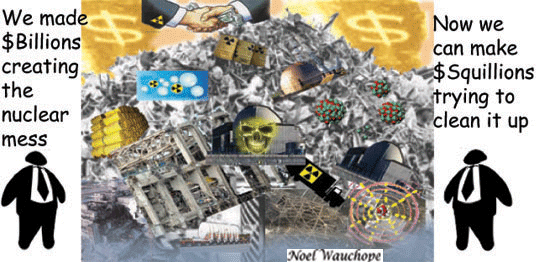
US Nuclear Site Cleanup Underfunded By Up To $70 Billion, Clean Technica, December 1st, 2020 by Michael Barnard …………………..Nuclear power is going to be the gift that keeps on returning fiscal dividends for a century.
That’s why Brookfield bought the bankrupt Toshiba Westinghouse division, for the long-term, guaranteed decommissioning revenue. SNC Lavalin bought Canada’s CANDU for the same reason, although I’m sure they are at the trough on the Canadian SMR idiocy too. This isn’t exactly a secret. Nuclear projects always go over budget and over schedule, and there is exactly zero reason to believe decommissioning estimates provided by the industry. So why have jurisdictions been building more nuclear plants, whether at the egregious but at least honest costs of Hinkley, or the massively underestimated but increasingly obvious costs of the Virgil C. Summer and Vogtle sites? Three reasons. The first is the magic of net present value. That calculates the value of future dollars today given inflation. Just as a thousand bucks bought a lot more in 1990 than it does today, in 2050 it will buy a lot less than it does today. That means that liabilities that will be incurred decades in the future approach zero cost in today’s cost benefit analysis. Can you say generational inequity? The second is ideology. When really blatantly obvious economic sense gets thrown out the window, you start looking around for irrationality or graft. A lot of conservatives really hate onshore wind because it spoils the views from their manses (UK) or ranches (US) or country estates (Oz). They also think of wind and solar as inadequate hippy shit. They think nuclear is the answer. These are opinions that they formed in the 1970s or perhaps the 1980s, but conservatives have a stronger tendency to not let empirical reality change their mind. So Hinkley, Vogtle, and Summer are a triumph of ideology over reality. The third is graft. When we start talking about $10 billion or more to build a plant, billions in subsidies, and another billion to take the thing apart, a lot of people start rubbing their hands together and figuring out who they have to bribe now to get a big payoff later. The entire regulatory structure in the two states that had nuclear plants in construction until recently when one was finally put out of the state’s fiscal misery were both structured so that no matter how much the utility spent, it was guaranteed a set profit. If they built a $15 billion nuclear plant, they made a lot of profit off of the rate payers. If they built $2 billion worth of wind and solar instead, they made a lot less money off of the rate payers. It’s dumb as a box of hammers, but it’s part of the reason a lot of utilities love nuclear, and coal-generation carbon capture schemes to boot. They are licenses to print money. Outside of China, where they have trained resources who can build nuclear plants who would be mediocre at building wind and solar (which they are building a lot more of) and nuclear plants will displace coal plants, it doesn’t make a lot of sense to build new nuclear. The looming decommissioning debacle is just the icing on the cake. Wind and solar have proven themselves to be vastly cheaper, completely reliable on grids, and easy to integrate in very large amounts. Their decommissioning costs are trivial. That’s yet another reason why nuclear is dead, but pretending it’s not. https://cleantechnica.com/2020/12/01/us-nuclear-site-cleanup-underfunded-by-up-to-70-billion/ |
“……….
|
Incidents at Belarus nuclear station have alarmed neighbouring Lithuania
 Lithuania wary of incident at Belarus nuclear plant https://www.euractiv.com/section/politics/short_news/lithuania-weary-of-incident-at-belarus-nuclear-plant/ Benas Gerdžiūnas | 1 Dec 20, LRT.lt/en Lithuania has asked Belarus for clarification after its new nuclear plant located some 50 kilometres from the country’s capital suffered an incident just five days after launch.
Belarus President Alexander Lukashenko took part in the opening of the plant on 6 November, where he said the launch of the Astravyets NPP was as “ordinary” as building a metro.
“Belarus is becoming a nuclear power,” he declared.
Several voltage-measuring transformers outside of the nuclear reactor exploded during an incident on 7 November, according to sources at TUT.by, an independent media outlet in Belarus.
On Monday, the Belarusian Energy Ministry said that “a need to replace the measuring equipment arose” during testing, without providing further details.
Lithuania’s State Nuclear Power Safety Inspectorate (VATESI) said the plant is still undergoing testing. However, “we have also received no information about the [planned] next steps to launch the plant”, VATESI told BNS in a written comment.
Lithuania has been one of the most ardent critics of the nuclear plant built by the Russian state atomic corporation Rosatom and funded by a loan from the Kremlin.
Vilnius says the plant is unsafe and was built in breach of international safety standards. Minsk denies all allegations.
In September, Estonia, Greece, Italy, Latvia, Lithuania and Poland had sent a joint statement to the Director-General of the International Atomic Energy Agency (IAEA) and contracting parties to the Convention on Nuclear Safety (CNS), calling on Belarus to start addressing nuclear safety issues without delay.
At the same time, the Russian company Rosatom is in talks with Belarus about the construction of a second nuclear power plant and a research reactor in the country, Rosatom chief Alexander Likhachev announced on Tuesday in a video statement.
In August, Estonia, Latvia and Lithuania agreed not to purchase electricity from the plant.
The Baltic states are gearing up to switch from the Russian-controlled BRELL electricity grid that also includes Belarus, and synchronise with the continental European system by 2025.
(Benas Gerdžiūnas, LRT.lt/en | Alexandra Brzozowski, EURACTIV.com)
Armenian paper urges use of a nuclear ”dirty bomb” on Azerbaijan
 paper urges use of nuclear bomb on Azerbaijan, Writer urges Armenia to use nukes against Azerbaijani population, turn capital into ‘wasteland for next 5,000 years’ AA 2020 Vakkas Doğantekin |01.12.0 ANKARA
An Armenian newspaper in the US published an opinion piece that urges the use of universally banned weapons of mass destruction (WMDs) against Azerbaijan and its civilian population.
The piece by Stepan Altounian called on the Armenian government to use any nuclear weapon available to turn the Azerbaijani capital Baku into a “wasteland for the next 5,000 years.”
“I, as probably all Armenians, was devastated but not necessarily surprised over the news that Armenia lost to the Azeris,” Altounian wrote, referring to Armenia’s Nov. 10 surrender to Azerbaijan in the conflict over the Nagorno-Karabakh region, also known as Upper Karabakh.
Intense fighting that erupted on Sept. 27 ended weeks later when the Armenian occupiers retreated from territories internationally recognized as part of Azerbaijan.
In the controversial piece, endorsed and published by the Armenian media group Asbarez, Altounian asked “Where was the nuclear option?” at a time when governments and the UN are urging nuclear disarmament.
“Why not take the nuclear waste from Metzamor and manufacture dirty bombs?” he wrote. …….. https://www.aa.com.tr/en/azerbaijan-front-line/armenian-paper-urges-use-of-nuclear-bomb-on-azerbaijan/2062187
Grid flexibility a better choice than nuclear – could save UK $millions

Christina Macpherson’s websites & blogs
When even a right wing news medium like Forbes start questioning the ”wisdom” of nuclear development , that industry must be getting worried.
Ditch Nuclear And Save $860 Million With Grid Flexibility, U.K. Told, Forbes, David Vetter Senior Contributor, 30 Nov 2,
The U.K. could save money, reduce the risk of blackouts and more quickly achieve its carbon-cutting goals by abandoning plans to build more nuclear power facilities and instead invest in a flexible electricity grid, new analysis has found.
According to the report from Finnish energy tech firm Wärtsilä, the U.K. would stand to save $860 million per year if, instead of new nuclear power, the government backed grid flexibility measures, such as battery storage and thermal generation. That equates to a saving of about $33 dollars per British household per year. Crucially, the analysis revealed that even if energy generation was to remain the same as it is today, Britain could increase renewables’ share of that generation to 62% simply by adding more flexibility (renewables currently account for around 47% of electricity used, according to the government).
The Wärtsilä report is timely because, in a ten-point plan released earlier this month, prime minister Boris Johnson promised an additional $684 million for the nuclear sector, and the building of new large and small nuclear power stations. Notably, grid flexibility was not mentioned in the plan.
The report also raises questions about the necessity of the 3.2 gigawatt Hinkley Point C nuclear power station, under development in Somerset, southwest England, which has been dogged by controversy and delays since its inception. In addition to coming with all the usual challenges associated with nuclear fission—not least the storage of radioactive waste—the project is at least $3.6 billion over budget and has been the target of numerous lawsuits and both local and international complaints.
Speaking to Forbes.com, Ville Rimali, growth and development director at Wärtsilä Energy, explained why his firm determined that grid flexibility is a preferable alternative to nuclear, as Britain looks for a pathway to achieve net zero carbon emissions by 2050.
“Flexibility unlocks more renewable energy by balancing the intermittency of wind and solar power to ensure the power supply always matches demand,” Rimali said. “For example, when more power is generated than needed, you can store the surplus in batteries to be used later. The alternative is paying renewables to switch off, which is expensive and inefficient.”
“It’s a bit like running a bath where the volume of water and the size of the plug keep changing,” he explained. “The smaller the bathtub, the more likely the water is to overflow or run out. Flexibility is like having a bigger bathtub—you can pour more water in, without the risk of running out or overflowing.” ………
investing in nuclear power could, according to Wärtsilä, entrench an inflexible grid while making renewables such as solar and wind less cost-effective.
“New nuclear sites will rely heavily on government subsidies, negatively impact market prices and ultimately weaken the business case for renewables and flexibility,” Rimali said……… https://www.forbes.com/sites/davidrvetter/2020/11/30/ditch-nuclear-and-save-860-million-with-grid-flexibility-uk-told/?sh=2733622b1975
Britain’s Nuclear Decommissioning Authority doesn’t know how much the waste clean up wiill cost or when it will finish

David Lowry’s Blog 27th Nov 2020, The nuclear industry has perpetrated a lot of untruths in six decades of dissembling. But the brazen atomic assertion repeated endlessly in the1950s that atomic energy would produce power “too cheap to meter” ( originally said by the then chairman of the US Atomic Energy Commission, Lewis Stauss, on 16 September 1954, speech to the US National Association of Science Writers when he opined: “It is not too much to expect that our children will enjoy in their homes electrical energy too cheap to meter..”)
progress.”
http://drdavidlowry.blogspot.com/2020/11/nuclear-dissembling-from-too-cheap-to.html
With independence, Scotland will remove allnuclear weapons from the Clyde
The National 29th Nov 2020, EVERY single nuclear weapon will be removed from the Clyde once Scotland
becomes independent, according to Ian Blackford. The SNP Westminster leader
was unequivocal as he opened the second day of his party’s conference via
video link from Skye.
UK’s beautiful Lake District – no “final solution” for the nuclear waste problem.
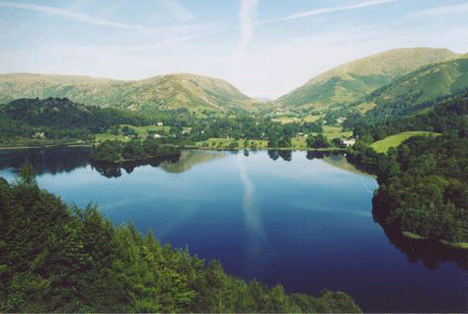 Radiation Free Lakeland 28th Nov 2020, Millom Rock and Deer Parks, This is a lovely description of a walk in an amazingly beautiful area.unbelievable it could be seriously considered as a nuclear waste dump. This quarry and surrounding area is being seriously considered by Radioactive Waste Management (a government quango) for the “disposal” of heat generating nuclear wastes.
In order to justify new nuclear build such as that at Hinkley Point, there needs to be a “final solution” for the
nuclear waste. This is no solution it is an excuse. A very dangerous excuse.
https://mariannewildart.wordpress.com/2020/11/28/millom-rock-deer-parks/
£132billion and counting – Britain’s nuclear decommissioning mess could take 120 years

UK taxpayers foot huge bill for the incompetence of The Nuclear Decommissioning Authority (NDA)
 UK’s nuclear sites costing taxpayers ‘astronomical sums’, say MPs
Public accounts committee says ignorance, incompetence and weak oversight to blame, Guardian, Damian Carrington Environment editor @dpcarrington Fri 27 Nov 2020 The Nuclear Decommissioning Authority (NDA) has a perpetual lack of knowledge about the state and location of waste on the 17 sites it is responsible for making safe, a powerful committee of MPs has found.
This results from decades of poor record keeping and weak government oversight, the MPs said. Combined with a “sorry saga” of incompetence and failure, this has left taxpayers footing the bill for “astronomical sums”, they said.
The NDA acknowledges that it still does not have full understanding of the condition of its sites, including 10 closed Magnox stations from Dungeness in Kent to Hunterston in Ayrshire, the MPs report said.
The NDA’s most recent estimate is that it will cost current and future generations of UK taxpayers £132bn to decommission the civil nuclear sites, with the work not being completed for another 120 years.
Since 2017, the NDA’s upper estimate of the cost of the 12-15-year programme just to get the sites to the ”‘care and maintenance” stage of the decommissioning process has increased by £3.1bn to £8.7bn. “Our past experience suggests these costs may increase further,” said the MPs’ report.
The lack of knowledge of the sites was a significant factor in the failure of a 2014 contract the NDA signed with a private sector company to decommission the Magnox sites. The government was forced to take back the contract in 2018 and the botched tender has now cost taxpayers £140m, the MPs found.
Sir Geoffrey Clifton-Brown, deputy chair of the public accounts committee (PAC), said: “Although progress has been made since our [2018] report, incredibly, the NDA still doesn’t know even where we’re currently at, in terms of the state and safety of the UK’s disused nuclear sites. Without that, and after the Magnox contracting disaster, it is hard to have confidence in future plans or estimates.” ……….
The UK has eight operating nuclear power plants, with all but one due to retire in the next decade. Only one new plant is being built, at Hinkley Point in Somerset, and it is years behind schedule and billions over budget.
Despite recent speculation over another new plant being given the go-ahead at Sizewell in Suffolk, Boris Johnson failed to announce this in his green industrial revolution plan last week. The government’s new national infrastructure strategy, published on Wednesday, said: “The government is pursuing large-scale nuclear projects, subject to clear value for money for both consumers and taxpayers.”
In 2015, the government stripped another private consortium of a £9bn contract to clean up the nuclear waste site at Sellafield. The company had been heavily criticised for its executives’ expense claims which included a £714 bill for a “cat in a taxi”. https://www.theguardian.com/environment/2020/nov/27/uks-nuclear-sites-costing-taxpayers-astronomical-sums-say-mps#_=_
1 This Month
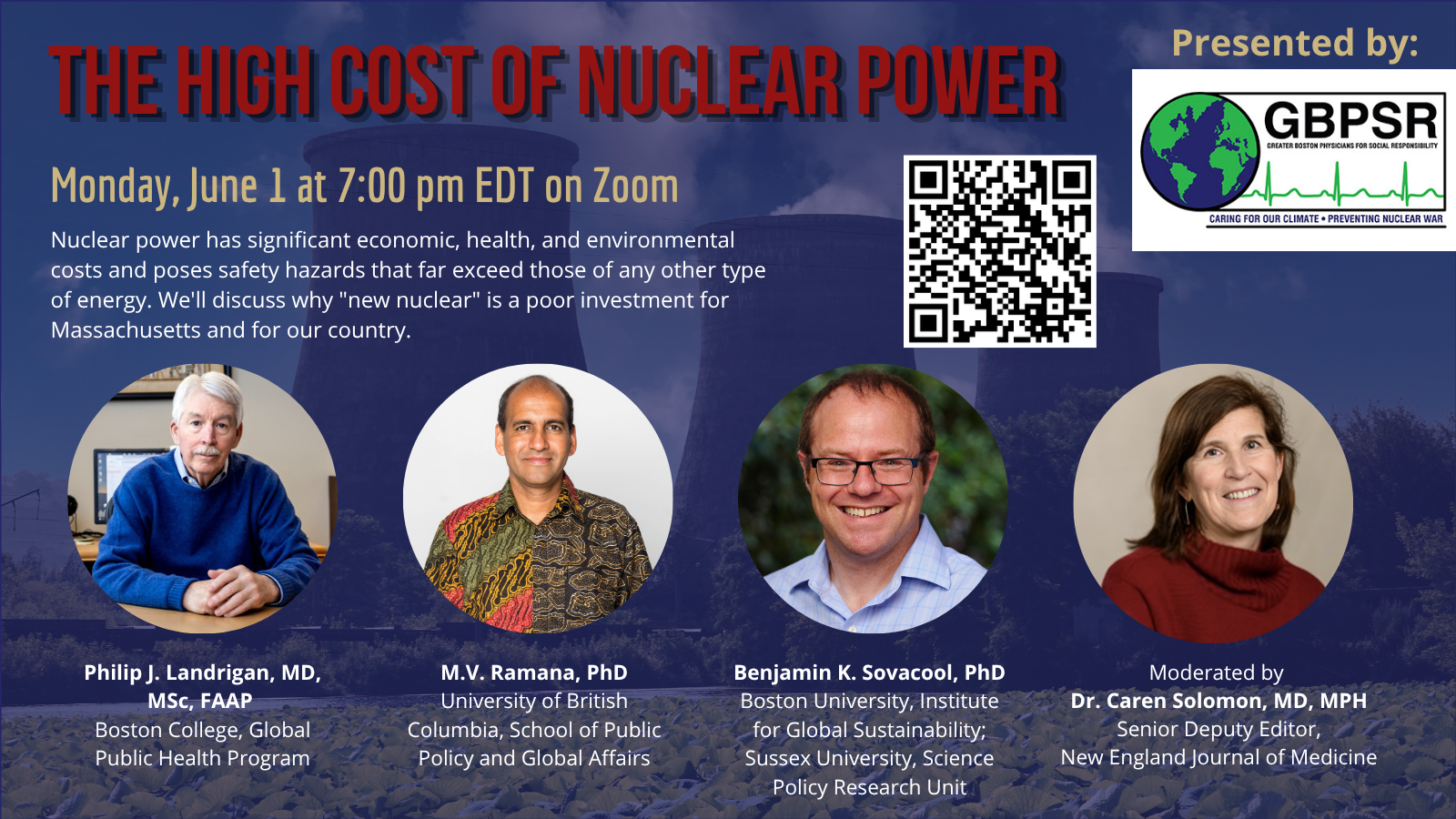
1 June Webinar – The High Cost of Nuclear Power – Register


of the week– Nuclear Reactor Information Task Force
To see nuclear-related stories in greater depth and intensity – go to https://nuclearinformation.wordpress.com
-
Archives
- May 2026 (225)
- April 2026 (356)
- March 2026 (251)
- February 2026 (268)
- January 2026 (308)
- December 2025 (358)
- November 2025 (359)
- October 2025 (376)
- September 2025 (257)
- August 2025 (319)
- July 2025 (230)
- June 2025 (348)
-
Categories
- 1
- 1 NUCLEAR ISSUES
- business and costs
- climate change
- culture and arts
- ENERGY
- environment
- health
- history
- indigenous issues
- Legal
- marketing of nuclear
- media
- opposition to nuclear
- PERSONAL STORIES
- politics
- politics international
- Religion and ethics
- safety
- secrets,lies and civil liberties
- spinbuster
- technology
- Uranium
- wastes
- weapons and war
- Women
- 2 WORLD
- ACTION
- AFRICA
- Atrocities
- AUSTRALIA
- Christina's notes
- Christina's themes
- culture and arts
- Events
- Fuk 2022
- Fuk 2023
- Fukushima 2017
- Fukushima 2018
- fukushima 2019
- Fukushima 2020
- Fukushima 2021
- general
- global warming
- Humour (God we need it)
- Nuclear
- RARE EARTHS
- Reference
- resources – print
- Resources -audiovicual
- Weekly Newsletter
- World
- World Nuclear
- YouTube
-
RSS
Entries RSS
Comments RSS
 nuclear-news