France’s failing EDF nuclear company hopes to save itself by marketing small nuclear reactors
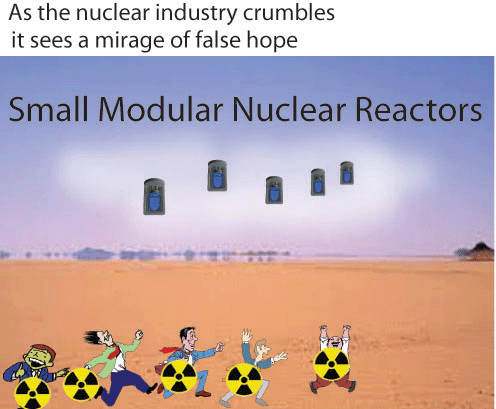
France will act as the shop window for exports of the new SMR technology — billed to be less powerful but easier to produce and run than conventional reactors — with EDF expected to begin building its first “Nuward” reactor in nine years
France’s nuclear drive offers chance of redemption for EDF
New commitments boost state-controlled utility but path ahead remains uncertain , Anna Gross and Sarah White in Paris Ft.com, 31 Oct 21, As the French government signals a future where nuclear power will play an integral rolein achieving carbon neutrality for the country by 2050 [ed. that is a spurious claim] , its state-controlled energy giant EDF remains encumbered by its past. Positioned at the heart of the nuclear debate in France and Europe, EDF struggles under a debt-laden balance sheet and a reputation for being unable to make novel nuclear technologies on time and on budget. But now President Emmanuel Macron has extended an olive branch and seemingly cleared a path for it to expand internationally and attract much-needed investment.
………..Created in 1946 by General Charles de Gaulle, EDF holds emotional power in France, Europe’s last bastion of nuclear power, and is linked with the nation’s industrial past and future. For years it was unclear if Macron, under pressure to move away from nuclear power towards renewables, would give the green light to new reactors long called for by EDF. Shortly after coming to power, Macron committed to reducing nuclear’s share of France’s electricity production from 75 to 50 per cent by 2035.
However, ambitious European climate goals, which hinge on pivoting to forms of energy that emit less carbon than fossil fuels, have put the spotlight on nuclear again and handed France an opportunity to assert its dominance in the field.
For EDF, thawing state tensions and confirmation of France’s desire for a nuclear future bring increased visibility to ensure it can keep training and hiring the people it will need and attract investment. That will be no small task for a company saddled with €41bn of debt and a colossal maintenance and investment programme to fund. UBS estimates a total investment requirement of more than €100bn for it to secure a 20-year life extension for 80 per cent of its nuclear fleet.
If approved, any government subsidies to fund six new reactors — estimated in leaked documents in 2019 to cost around €47bn — and the final price of the nuclear power produced by them, will ultimately be given the green light by Brussels. The cost of this funding could also be influenced by whether or not the EU includes nuclear energy in its taxonomy on “green finance”, making it a more attractive investment prospect. That decision has been delayed indefinitely because of infighting in the EU.
“Whether we can get financing at a low rate or super high rates completely changes the final cost. That’s the real subject, behind the gross number,” said Ursat. EDF faces other hurdles too, including the failure to reach a compromise with Brussels over the restructuring of the utility that would have allowed it to raise the regulated price at which it sells nuclear energy and ringfence some of its activities. It also needs to show it can deliver on its next-generation European Pressurised Reactor (EPR) technology, which it is planning to sell to India, Poland and the Czech Republic.
EPR reactors under construction in Europe — including Flamanville in France and Hinkley Point in the UK — are billions over budget and years behind schedule. The company’s previous chief financial officer quit over concerns about strains Hinkley Point was putting on EDF’s balance sheet.
These setbacks have led some investors and analysts to question EDF’s strategy and growth in the risky and costly field of nuclear power, were it not more than 80 per cent owned by the French government.
“The new reactor at Flamanville is not up and running yet, and some will want to see that project completed before France commits to more reactors with the same design,” said Sam Arie, an analyst at UBS. “From an investor point of view, is there interest in new nuclear projects? Not really.” However, recent soaring energy prices coupled with stringent climate goals seemed to have turned the tide in EDF’s favour. ……….
France will act as the shop window for exports of the new SMR technology — billed to be less powerful but easier to produce and run than conventional reactors — with EDF expected to begin building its first “Nuward” reactor in nine years. …….. https://www.ft.com/content/a1c95212-c122-4a29-8952-14a346381b91
The untold story of the world’s biggest nuclear bomb
The Tsar Bomba is dead; long live the Tsar Bomba. As the United States, Russia, and China seem to be engaged in new arms races in several domains, including unusual and new forms of nuclear delivery vehicles, the Tsar Bomba is a potent example of how nationalism, fear, and high-technology can combine in a fashion that is ultimately dangerous, wasteful, and pointless.
The untold story of the world’s biggest nuclear bomb, Bulletin, By Alex Wellerstein, October 29, 2021 n the early hours of October 30, 1961, a bomber took off from an airstrip in northern Russia and began its flight through cloudy skies over the frigid Arctic island of Novaya Zemlya. Slung below the plane’s belly was a nuclear bomb the size of a small school bus—the largest and most powerful bomb ever created.
At 11:32 a.m., the bombardier released the weapon. As the bomb fell, an enormous parachute unfurled to slow its descent, giving the pilot time to retreat to a safe distance. A minute or so later, the bomb detonated. A cameraman watching from the island recalled:
A fire-red ball of enormous size rose and grew. It grew larger and larger, and when it reached enormous size, it went up. Behind it, like a funnel, the whole earth seemed to be drawn in. The sight was fantastic, unreal, and the fireball looked like some other planet. It was an unearthly spectacle! [1]
The flash alone lasted more than a minute. The fireball expanded to nearly six miles in diameter—large enough to include the entire urban core of Washington or San Francisco, or all of midtown and downtown Manhattan. Over several minutes it rose and mushroomed into a massive cloud. Within ten minutes, it had reached a height of 42 miles and a diameter of some 60 miles. One civilian witness remarked that it was “as if the Earth was killed.” Decades later, the weapon would be given the name it is most commonly known by today: Tsar Bomba, meaning “emperor bomb.”
Designed to have a maximum explosive yield of 100 million tons (or 100 megatons) of TNT equivalent, the 60,000-pound monster bomb was detonated at only half its strength. Still, at 50 megatons, it was more than 3,300 times as powerful as the atomic bomb that killed at least 70,000 people in Hiroshima, and more than 40 times as powerful as the largest nuclear bomb in the US arsenal today. Its single test represents about one tenth of the total yield of all nuclear weapons ever tested by all nations.[2]
At the time of its detonation, the Tsar Bomba held the world’s attention, largely as an object of infamy, recklessness, and terror. Within two years, though, the Soviet Union and the United States would sign and ratify the Limited Test Ban Treaty, prohibiting atmospheric nuclear weapons testing, and the 50-megaton bomb would fall into relative obscurity.
From the very beginning, the United States sought to minimize the importance of the 50-megaton test, and it became fashionable in both the United States and the former Soviet Union to dismiss it as a political stunt with little technical or strategic importance. But recently declassified files from the Kennedy administration now indicate that the Tsar Bomba was taken far more seriously as a weapon, and possibly as something to emulate, than ever was indicated publicly.
And memoirs from former Soviet weapons workers, only recently available outside Russia, make clear that the gigantic bomb’s place in the history of Soviet thermonuclear weapons may be far more important than has been appreciated. Sixty years after the detonation, it’s now finally possible to piece together a deeper understanding of the creation of the Tsar Bomba and its broader impacts.
The Tsar Bomba is not just a subject for history; some of the same dynamics exist today. It is not just the story of a single weapon that was detonated six decades ago, but a parable about political posturing and technical enablement that applies just as acutely today. In a new era of nuclear weapons and delivery competition, the Tsar Bomba is a potent example of how nationalism, fear, and high-technology can combine in a fashion that is ultimately dangerous, wasteful, and pointless.
From kilotons to megatons to gigatons
…………………….. By the spring of 1951, Edward Teller and Stanislaw Ulam at Los Alamos had developed their design for a workable hydrogen bomb
………………. Only a few months later, in July 1954, Teller made it clear he thought 15 megatons was child’s play. At a secret meeting of the General Advisory Committee of the Atomic Energy Commission, Teller broached, as he put it, “the possibility of much bigger bangs.” At his Livermore laboratory, he reported, they were working on two new weapon designs, dubbed Gnomon and Sundial. Gnomon would be 1,000 megatons and would be used like a “primary” to set off Sundial, which would be 10,000 megatons. Most of Teller’s testimony remains classified to this day, but other scientists at the meeting recorded, after Teller had left, that they were “shocked” by his proposal. “It would contaminate the Earth,” one suggested. Physicist I. I. Rabi, by then an experienced Teller skeptic, suggested it was probably just an “advertising stunt.”[4] But he was wrong; Livermore would for several years continue working on Gnomon, at least, and had even planned to test a prototype for the device in Operation Redwing in 1956 (but the test never took place).[5]
All of which is to say that the idea of making hydrogen bombs in the hundreds-of-megatons yield range was hardly unusual in the late 1950s. If anything, it was tame compared to the gigaton ambitions of one of the H-bomb’s inventors. It is hard to convey the damage of a gigaton bomb, because at such yields many traditional scaling laws do not work (the bomb blows a hole in the atmosphere, essentially). However, a study from 1963 suggested that, if detonated 28 miles (45 kilometers) above the surface of the Earth, a 10,000-megaton weapon could set fires over an area 500 miles (800 kilometers) in diameter. Which is to say, an area about the size of France.[6]………………………….
Planning for a 100-megaton bomb……………
Russian accounts by participants claim Arzamas-16 scientists had been inspired, in part, by speculations about gigantic, gigaton-range bombs in the foreign press in May 1960. The physicist and designer Victor Adamski said that Sakharov and others tried to immediately assess the plausibility of the news reports, and came up with the schema that was ultimately used for the Tsar Bomba…………………
Sakharov was already queasy about the long-term deaths from nuclear fallout, and he wanted to minimize the excess radioactivity produced by the test. In 1958, he had calculated that for every megaton of even “clean” nuclear weapons, there would be some 6,600 premature deaths over the next 8,000 years across the globe, owing to carbon atoms in the atmosphere that would become radioactive under the bomb’s neutron flux.[17………………….
An American Tsar Bomba?
………………… Even after denouncing the Tsar Bomba as pointless terrorism, there were scientists and military planners working for the US government who were considering nuclear weapons with yields 20 times larger……………….
The Limited Test Ban Treaty
In 1963, the United States stood at a crossroads. Down one path was a new generation of “very high-yield” nuclear weapons with continued atmospheric nuclear testing. Down the other was the possibility of the Limited Test Ban Treaty, which would ban future atmospheric testing, effectively precluding the development of high-yield weapons.
……………….. even while the United States professed to not care about “very high-yield” weapons, it continued to study them well into the Johnson administration.
…………. the Soviets never broke the Limited Test Ban Treaty, and smaller warheads became the norm. Warheads that could be mounted in multiples and independently targeted on a single missile, or put into submarines, became the core of the arsenal. Large, high-yield weapons would, eventually, be mostly phased out. The dismissal of the uselessness of the Tsar Bomba would become orthodoxy, as even the CIA (eventually) concluded that the Soviets were not going to field such a thing in numbers or try to put superbombs on missiles.
…………….. even if such weapons are now purely relegated to history, we should remember that the decision not to deploy them was not made because the Soviet Union and United States shied away from the shocking megatonnage. It was because massive bombs were harder to use, and something about them symbolized the ridiculousness of the arms race in a way that making thousands of “smaller” weapons (some as big as 20–30 megatons) did not.
The United States did not make 50- to 100-megaton bombs or gigaton bombs, but it made a gigaton arsenal……………. Today it is probably around 2,000 megatons—more than enough to devastate the planet in a full-scale nuclear war.
The Tsar Bomba is dead; long live the Tsar Bomba. As the United States, Russia, and China seem to be engaged in new arms races in several domains, including unusual and new forms of nuclear delivery vehicles, the Tsar Bomba is a potent example of how nationalism, fear, and high-technology can combine in a fashion that is ultimately dangerous, wasteful, and pointless. “Very high-yield” nuclear weapons weren’t necessary for deterrence, and they were explored at the expense of not only other weapons systems, but also the multitude of other things that nations could spend their wealth and resources on. They didn’t bring safety or security. https://thebulletin.org/2021/10/the-untold-story-of-the-worlds-biggest-nuclear-bomb/
UK’s new nuclear financing plan is a nightmare

Tax-and-spend budgets can be dispiriting. But at least Kwasi Kwarteng
squirrelled out a “£30 billion” consumer windfall this week.
Apparently, we’re going to be that much better off on “each new
large-scale” nuclear power plant he’s planning for Blighty.
And all
thanks to “a new funding model” — the regulated asset base, or RAB.
Where the business secretary has plucked his figure from is not exactly
clear. But it’s all part of his conversion to a new nuclear nirvana —
one all the more crucial, too, “in light of rising global gas prices”.
Yes, it’s debatable whether gas prices will still be on the up in, say,
2035 when a new Kwasi nuke might actually be built. But who cares about
that? Buried in the budget was the news ministers have set aside “£1.7
billion to enable a final investment decision” this parliament on a new
reactor (who else spends that sort of sum making a decision?) and is in
talks with EDF over Sizewell C in Suffolk.
On top, Kwarteng has dusted off
Wylfa on Anglesey, the project Hitachi spent four years trying to fire up
before jacking it in and writing off £2.1 billion. Apart from the
decade-long delays in getting built, construction cost overruns are
nuclear’s forte: France’s Flamanville, up from the initial €3.3
billion to €19.1 billion; Finland’s Olkiluoto, up from €3 billion to
€11 billion; and our very own Hinkley Point C, up from £18 billion to
£23 billion.
Kwarteng knows all that. But he’s calculated that the RAB
model, where consumers “contribute to the cost of new nuclear power
projects during the construction phase”, can not only attract private
investors but also allow lower electricity prices in the long run: his
so-called “£30 billion” saving.
For him, it beats the
“contracts-for-difference” template of Hinkley Point C. Both models are
deeply flawed. But the RAB is worse. First, because developers, and their
backers, have no incentive to keep costs down. Sure, there’d be an
independent regulator to rule on cost overruns.
But with investors making
their return on the size of the RAB, the more cost they can get past the
regulator, the better. And, second, because if the project keels over,
consumers are still left with the bill. “Nukegate” in America is proof
of that: two reactors in South Carolina built by Westinghouse that blew up
the company after costs ballooned from $9.8 billion to $25 billion. The
plants were never completed: a scandal leading to criminal lawsuits. But
consumers are still paying for the nukes: billions of dollars of costs,
making up 18 per cent of their electricity bills.
Guess what, too? Fresh
from Chapter 11 bankruptcy, it’s Westinghouse that Kwarteng fancies for
another go at Wylfa.
Times 30th Oct 2021
https://www.thetimes.co.uk/article/new-nuclear-plan-is-a-nightmare-63schq6ks
| R |
EU countries ramp up pressure to grant nuclear a ‘green’ investment label

EU countries ramp up pressure to grant nuclear a ‘green’ investment label, By Kira Taylor | EURACTIV.com, 29 Oct 21,
A group of ten European countries have heaped pressure on the European Commission to grant nuclear energy a ‘green’ label under the EU’s sustainable finance taxonomy, which acts as a guide to climate-friendly investments.
Energy ministers from the group of ten supported nuclear’s inclusion in the taxonomy during an extraordinary meeting of the EU’s Energy Council on Tuesday (26 October), convened hastily last week in response to rising energy prices.
A proposal from the European Commission is now expected “by the end of the year,” said Kadri Simson, the EU’s energy commissioner………
Earlier this month, a group of ministers from ten EU countries signed a joint opinion article saying “nuclear power must be part of the solution” to the climate crisis and included in the taxonomy.
The article was signed by the economy and energy ministers from Bulgaria, Croatia, Czechia, Finland, France, Hungary, Poland, Romania, Slovakia, and Slovenia.
At this week’s ministerial meeting, the Netherlands offered their support while Sweden also spoke favourably about nuclear………..
Anti-nuclear lobby
By far the smallest group of countries in this debate is those who have spoken out against the inclusion of nuclear energy in the taxonomy. Austria and Luxembourg are the most vocal countries here, with Denmark also cautioning against nuclear.
“We think that it would be wrong to raise nuclear energy as the alternative – it’s not cheap and it’s not secure. The prices for the production of nuclear energy are much higher than that for photovoltaic solar production,” said Gregor Schusterschitz from Austria.
Meanwhile, Luxembourg’s energy minister, Claude Turmes, highlighted the length of time it would take to build new nuclear power plants, saying these would not come online until around 2035, making them useless as a solution to this year’s energy crisis.
He added that “extending nuclear reactors beyond 40 years only represents 10 billion tonnes oil equivalent, so you can see it’s a highly risky, low impact strategy”.
“With taxonomy, I think we have to be extremely cautious. Because look at the financial markets, look at the investors, look at what’s happening already with manipulation,” he told ministers.
Germany – a long-standing opponent of nuclear power – was much more neutral at the meeting, perhaps owing to its yet-to-be-formed government.
“We need to decrease our energy dependency – people are seeing this as a reason for nuclear power. Obviously we can’t achieve consensus at an EU level on the role of nuclear power,” said Andreas Feicht, German energy and economy minister.
The environmental NGO WWF has also warned against including nuclear energy and fossil gas.
“Nothing would do more to undermine the European Green Deal than to include fossil gas and nuclear in the green taxonomy. At the time of the COP26 summit, institutionalised European greenwashing of this sort would send a totally counterproductive global signal,” said Henry Eviston, spokesperson on sustainable finance for WWF European Policy Office………
At some point, the Commission will have to side with either the pro- or anti-nuclear camp. Ministers at the meeting called on the European Commission to publish the delegated act as soon as possible and the executive is beginning to run out of road to kick the can down. https://www.euractiv.com/section/energy-environment/news/eu-countries-ramp-up-pressure-to-grant-nuclear-a-green-investment-label/
UK public kept in the dark on household costs in paying for nuclear reactors before they’re built

it is somewhat dubious to replace a very expensive form of subsidy with one that promises to be merely expensive — and then claim that you have ‘saved’ money.
| How much longer is the government going to suppress the cost to households of achieving net zero carbon emissions, or try to imply, as business secretary Kwasi Kwarteng recently seemed to imply on the Today programme, that it won’t cost us at all? Even as he spoke Kwarteng was working on a new model for the funding of nuclear power stations that was unveiled yesterday in the form of the Nuclear Energy Finance Bill. The proposed legislation will impose levies on energy bills in order to subsidise the construction of new nuclear power stations. The new model of funding — called Regulated Asset Base — will replace the model by which Hinkley C is being constructed: the contracts for difference, or CfD, model which was used to entice EDF to undertake the project. The carrot is a guaranteed ‘strike’ price for electricity generated by the plant as soon as it starts generating electricity. Funding plants upfront may have the agreeable effect of cutting out Chinese finance. Moreover, the CfD model was failing to attract investors for other projects, such as the proposed new nuclear reactor at Wylfa, which Hitachi abandoned a year ago. But it will inevitably transfer risk to the consumer — should, say, the proposed new plant at Sizewell in Suffolk end up being abandoned before it begins generating power, taxpayers will already have paid towards the plant through their bills. Transferring that risk to the private sector was the whole reason for introducing the Hinkley form of funding in the first place. We don’t yet know how big the sting will be to energy consumers to finance Sizewell C through the new funding model — the Department for Business insists it will be ‘a few pounds a year’ per household during the early construction phases, followed by ‘less than £1 a month’ during the full construction phase. But it is somewhat dubious to replace a very expensive form of subsidy with one that promises to be merely expensive — and then claim that you have ‘saved’ money. Spectator 27th Oct 2021 https://www.spectator.co.uk/article/who-should-pay-for-nuclear- |
Sellafield workers told to return home due to flood warning – (climate change hitting nuclear again?)
NUCLEAR power plant workers are being told to return home due to heavy
rainfall flooding parts of Cumbria. A spokesman for the West Cumbrian power
plant Sellafield issued a statement online advising people to only travel
if strictly necessary.
The warning comes after the county was battered with
heavy rainfall and flooding. A spokesman for Sellafield said: “Cumbria
Police say the threat of flooding in Cumbria remains high and are advising
people to only travel if strictly necessary and to take pre-emptive action
to protect themselves.
Whitehaven News 28th Oct 2021
Doubts that the Flamanville nuclear reactor will start on the planned date
IRSN expresses doubts about the start date of the EPR. The Nuclear Safety
Authority (ASN) must take a position on an opinion from IRSN expressing
doubts about the commissioning of the Flamanville EPR on the planned date
of 2023, has said to Montel. This IRSN opinion is currently being
analyzed within ASN.
Montel 27th Oct 2021
https://www.montelnews.com/fr/news/1268065/lirsn-met-des-doutes-sur-la-date-de-dmarrage-de-lepr
Who should take on the costs and risks of nuclear power?
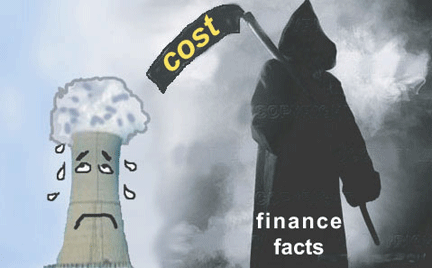
There are, of course, other alternatives that may or may not turn out to be cheaper: gas (with or without carbon capture), renewables (assuming some form of affordable energy storage can be found) or letting the market itself decide how our electricity should be generated. If nuclear really is the future you might expect investors to be more interested in it without subsidies. And of course, you don’t get something for nowt: if consumers do end up paying less for Sizewell than they will for Hinkley it will be because they have taken on more risk.
Who should pay for nuclear? Spectator, Ross Clark, 29 Oct 21, ”……………… the funding of nuclear power stations that was unveiled yesterday in the form of the Nuclear Energy Finance Bill. The proposed legislation will impose levies on energy bills in order to subsidise the construction of new nuclear power stations. The new model of funding — called Regulated Asset Base — will replace the model by which Hinkley C is being constructed: the contracts for difference, or CfD, model which was used to entice EDF to undertake the project. The carrot is a guaranteed ‘strike’ price for electricity generated by the plant as soon as it starts generating electricity.
………… it will inevitably transfer risk to the consumer — should, say, the proposed new plant at Sizewell in Suffolk end up being abandoned before it begins generating power, taxpayers will already have paid towards the plant through their bills.
With his characteristic optimism, Kwarteng claims that the new funding model will ‘save’ energy consumers £30 billion on each nuclear project. Can that really be true? It rather depends on your definition of saving money.
Kwarteng’s claim is based on the presumption that the only alternative to new nuclear power stations funded by the new model is for nuclear power stations to be funded like Hinkley by the CfD model. But Hinkley was itself horrendously expensive: EDF has been guaranteed a minimum price of £92.50 per MWh (at 2012 prices) over 35 years, the expected lifetime of the power station — around twice as high as wholesale electricity prices at the time the deal was signed.
……… it is somewhat dubious to replace a very expensive form of subsidy with one that promises to be merely expensive — and then claim that you have ‘saved’ money.
There are, of course, other alternatives that may or may not turn out to be cheaper: gas (with or without carbon capture), renewables (assuming some form of affordable energy storage can be found) or letting the market itself decide how our electricity should be generated. If nuclear really is the future you might expect investors to be more interested in it without subsidies. And of course, you don’t get something for nowt: if consumers do end up paying less for Sizewell than they will for Hinkley it will be because they have taken on more risk…………. https://www.spectator.com.au/2021/10/who-should-pay-for-nuclear/
UK pension funds and other investors not keen to invest in Sizewell nuclear power project?
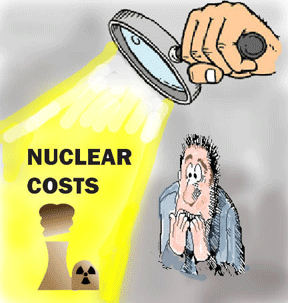
UK government to invest £1.7bn in Sizewell C nuclear power station. British taxpayers will make a final investment in the planned Sizewell C nuclear power plant project over the next three years as the government is resuming its struggling efforts to replace the country’s aging reactors. Funding is included in Wednesday’s budget, following the minister’sannouncement this week to review the new nuclear power plant funding model.
Prime Minister Rishi Sunak did not mention Sizewell C in his budget speech Wednesday. However, an accompanying Treasury document has “active negotiations” with EDF on the plant and “up to £ 1.7 billion in direct government funding to help reach a final investment decision before the next election. State funding accounts for a significant proportion of the estimated £ 20 billion.
The government hopes that its financial involvement in Sizewell C will help encourage outside investors to provide
additional funding as expected. The minister wants to attract investors from the UK, the United States, etc. to help finance nuclear reconstruction before the existing reactors retire by 2035, but analysts are questioning how pension funds and others are enthusiastic about investing.
FT 27th Oct 2021
https://www.ft.com/content/73ec90ad-8942-4daf-af01-429d7b3aa948
The European Commission struggles with push to have nuclear power included as clean and sustainable

The Green Brief: Gas, nuclear and the EU taxonomy saga
By Frédéric Simon and Kira Taylor | EURACTIV.com 27 Oct 21, ……………………………..The EU taxonomy regulation has created three categories for sustainable investments: “green”, “enabling” and “transition”. In an interview with the FT, McGuiness said a possible compromise could be to create a new “amber” category for activities that are not “green” as such but are still helpful for the green transition. The Commission is also looking at redefining the “transition” category to prevent the taxonomy from becoming too “binary”, McGuiness said.
With the creation of a new intermediate category, and the definition of clear sustainability thresholds for nuclear and gas, the European Union may just have found the answer to a question that has been bogging down the taxonomy for years.
Some will denounce it as a fudge and an assault on the EU’s green objectives. Others will call it a pragmatic answer to one of the trickiest questions posed by the energy transition.
The French Négawatt program presents its 2022 scenario for getting France to fully renewable nuclear-free energy system

A nuclear-free future is possible, according to Négawatt. The Négawatt association presented its 2022 scenario for a France with fully renewable and nuclear-free electricity production by 2050. It hopes that its proposals, which are urgently to be implemented, will be taken up by the presidential candidates.
Energy consumption halved, electricity production 100% from renewable sources, 500,000 jobs created… This is what France could look like in 2050, if we are to believe the latest edition of the Négawatt scenario published on Tuesday 26 October .
The trajectory described by the eponymous association is not science fiction, assures its director, Stéphane Chatelin. Developed from detailed modeling of our energy system, this scenario shows that it is possible to achieve carbon
neutrality in 2050 without resorting to nuclear power. And proposes a concrete strategy to achieve it.
Reporterre 26th Oct 2021
Electricite de France (EDF) will not proceed with Sizewell nuclear project unless the UK govt institutes tax – the Regulated Asset Base
Stop Sizewell C denounces the government’s announcement today of legislation for a new tax on consumer energy bills to help build nuclear power stations such as Sizewell C. The Regulated Asset Base (RAB) model would transfer substantial upfront costs, and considerable risk, onto consumers already struggling with rising energy bills and other tax
increases.
Developer EDF Energy estimates Sizewell C – which does not have planning consent and may never get it – would cost at least £20 billion and has made no secret that the project could not proceed without a RAB. The announcement is clearly earmarked for large-scale nuclear projects, as Rolls Royce says it doesn’t anticipate using RAB for Small
Modular Reactors. The government is moving with extreme haste, with the second reading of the bill tomorrow.
Stop Sizewell C 26th Oct 2021
https://stopsizewellc.org/category/news/
Ireland European Commissioner considers joining the push to classify nuclear as acceptable in the energy transition to sustainability.
McGuinness moves towards including gas and nuclear in green transition
Irish commissioner in eye of storm as member states row amid energy crisis
Irish Times, Oct 26, 2021, Naomi O’Leary Europe Correspondent . Ireland’s European Commissioner Maireád McGuinness is moving closer to classifying nuclear energy and gas as having a role to play in the transition to climate neutrality as an energy price crisis consumes the European Union.
Soaring electricity bills have made the issue politically explosive as the European Commission prepares to release the second part of its so-called taxonomy, which determines what activities are eligible for funding by green bonds, and therefore billions of euro in budget and Covid-19 stimulus cash directed towards the EU’s goal of reaching carbon neutrality by 2050.
France has lobbied intensely for nuclear energy to be classified as green, and plans to invest massively in the sector. But the inclusion of nuclear has been fiercely resisted by other countries, including Italy and Germany, which has almost completed a planned phase-out of the fuel begun in response to the 2011 Fukushima accident.
Other member states, including Greece, have demanded that natural gas be acknowledged as a good replacement for dirtier fuels though this is abhorred as “greenwashing” by climate groups……..
The deep divisions between member states over the energy issue were evident as they met in Luxembourg for an extraordinary summit on Tuesday dedicated to addressing the electricity cost crisis, which has been spurred by dramatic increases in the price of gas due to a combination of factors including demand in Asia and tight supplies from Russia.
Ireland was among a group of nine northern member states to back a quicker shift to renewable energy, and to reject a call led by Spain and France for EU-level intervention to change how the energy market works to counter price rises.
“We’re coming into the winter and the big concern not just in Ireland but across Europe. was how do we protect people from the rising price of energy, how do we keep vulnerable people warm in their homes this winter,” Minister of State Ossian Smyth said as he left the meeting.
“In the medium term, we also need to think about what we need to do to prevent this kind of crisis from happening again. How do we avoid dependence on foreign powers or unstable areas for our supply of gas, and how can we move faster towards energy independence in clean energy sources like renewables.” https://www.irishtimes.com/business/innovation/mcguinness-moves-towards-including-gas-and-nuclear-in-green-transition-1.4711205
Nuclear power is a divisive issue in France, leading up to the election.
Nuclear power, a surprise and divisive subject of the presidential
campaign. With the increase in energy prices and the climate emergency, the
future of the French nuclear fleet has become a central theme of the
electoral campaign. Six months before the ballot, the main candidates have
very disparate positions.
Les Echos 25th Oct 2021
Belgium: Higher Health Council is very critical of nuclear power
The Higher Health Council very critical of nuclear power. Nuclear power
poses environmental, ethical, health and safety questions, says a
high-level panel of experts. It is possible for Belgium to get out of it,
including with regard to the climate. Extending two reactors is not without
risk.
Le Soir 25th Oct 2021
1 This Month
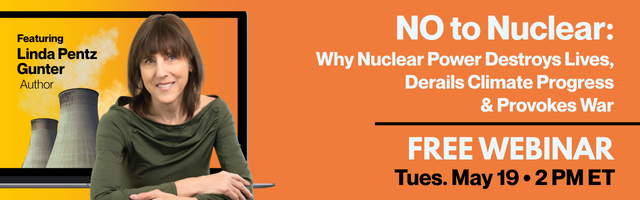
19 May – Webinar No To Nuclear: Why Nuclear Power Destroys Lives, Derails Climate Progress and Provokes War
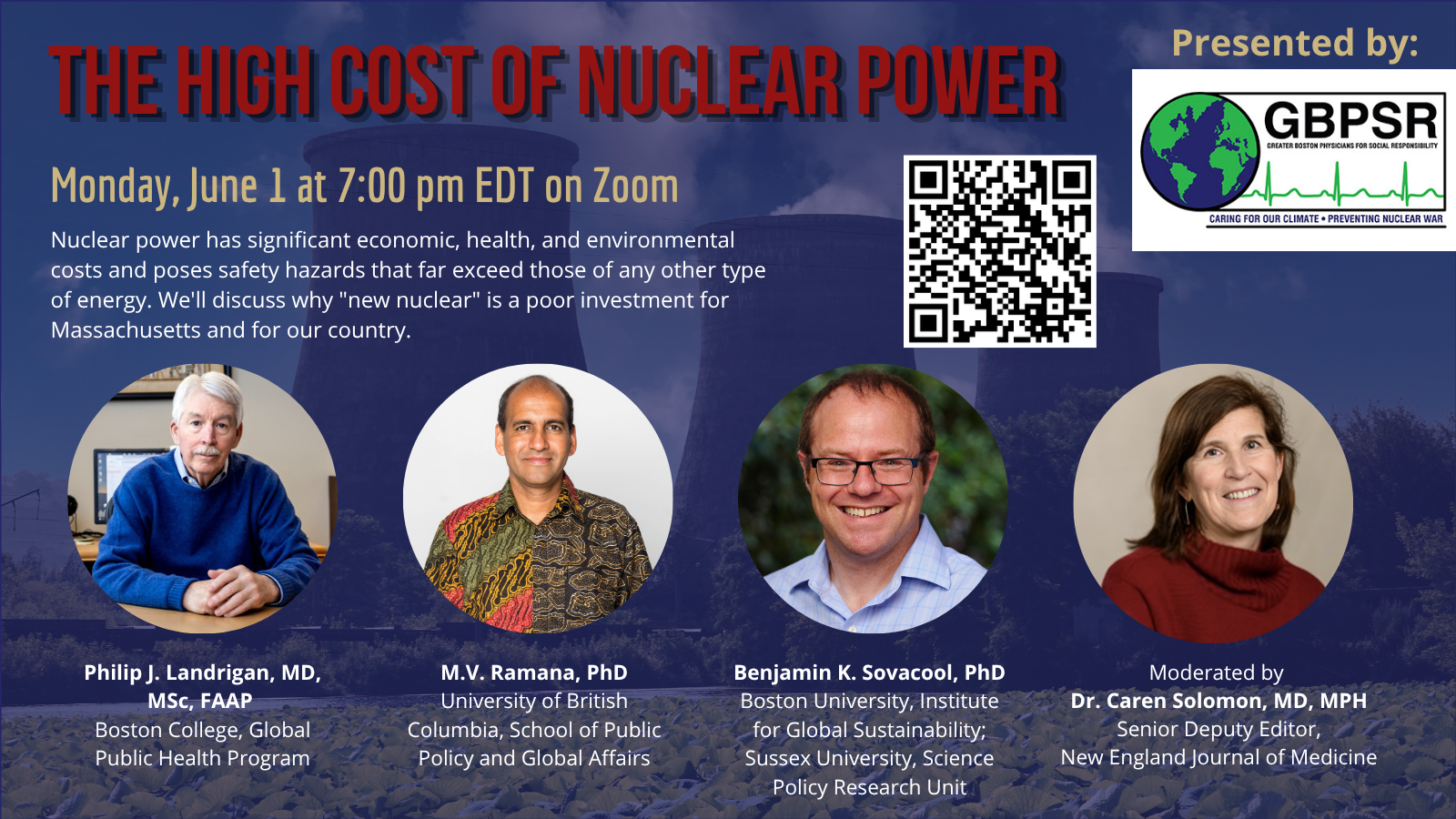
1 June Webinar – The High Cost of Nuclear Power – Register


of the week– Nuclear Reactor Information Task Force
To see nuclear-related stories in greater depth and intensity – go to https://nuclearinformation.wordpress.com
-
Archives
- May 2026 (199)
- April 2026 (356)
- March 2026 (251)
- February 2026 (268)
- January 2026 (308)
- December 2025 (358)
- November 2025 (359)
- October 2025 (376)
- September 2025 (257)
- August 2025 (319)
- July 2025 (230)
- June 2025 (348)
-
Categories
- 1
- 1 NUCLEAR ISSUES
- business and costs
- climate change
- culture and arts
- ENERGY
- environment
- health
- history
- indigenous issues
- Legal
- marketing of nuclear
- media
- opposition to nuclear
- PERSONAL STORIES
- politics
- politics international
- Religion and ethics
- safety
- secrets,lies and civil liberties
- spinbuster
- technology
- Uranium
- wastes
- weapons and war
- Women
- 2 WORLD
- ACTION
- AFRICA
- Atrocities
- AUSTRALIA
- Christina's notes
- Christina's themes
- culture and arts
- Events
- Fuk 2022
- Fuk 2023
- Fukushima 2017
- Fukushima 2018
- fukushima 2019
- Fukushima 2020
- Fukushima 2021
- general
- global warming
- Humour (God we need it)
- Nuclear
- RARE EARTHS
- Reference
- resources – print
- Resources -audiovicual
- Weekly Newsletter
- World
- World Nuclear
- YouTube
-
RSS
Entries RSS
Comments RSS
 nuclear-news