Serco pulls out of bidding for work on UK’s nuclear arsenal, because of ethical investing concerns

The rise of ethical investing has forced the outsourcer Serco to
pull out of bidding to help manage Britain’s nuclear weapons arsenal,
leaving the Ministry of Defence reliant on fewer potential partners for the
critical work. The FTSE 250 company has abandoned plans to compete for
contracts with the Atomic Weapons Establishment, which designs, makes and
maintains warheads, City sources revealed. The decision follows warnings
from fund managers that working with nuclear weapons might force them to
dump Serco shares due to non-compliance with Environmental, Social and
Governance (ESG) standards.
Telegraph 6th Nov 2021
Russian deputy UN envoy supports China’s concern on AUKUS’ nuclear threat
Russian deputy UN envoy supports China’s concern on AUKUS’ nuclear threat
By Global Times Russia supported the concerns voiced by China on AUKUS, the new tripartite defense alliance formed with the intention of intimidating China, at a recent meeting of the UN General Assembly’s First Committee, saying that they are legitimate concerns as this kind of cooperation is related to the nuclear field and clearly has a military dimension.
More time and information are needed in order to respond properly to the trilateral nuclear cooperation, Russian Deputy Permanent Representative to the UN Office and Other International Organizations in Geneva Andrei Belousov, who represented Russia at recent meetings of the UN General Assembly’s First Committee in New York, was quoted as saying in Russian media reports. …………
He noted that ASEAN countries also expressed serious concerns at the First Committee’s session as they viewed AUKUS as a threat to regional security. In particular, the delegations of Indonesia and Malaysia said that the implementation of the initiative might trigger an arms race in the region.
The trilateral partnership announced in September will allow Australia to build at least eight nuclear-powered submarines using US technology. Russian President Vladimir Putin accused AUKUS of undermining regional stability and hoped the nuclear submarine cooperation will not develop in an unprecedented way and create additional problems in the region. Chinese Foreign Ministry spokesperson Zhao Lijian said on October 14 that the AUKUS nuclear submarine cooperation has created serious nuclear proliferation risks, and clearly violated the spirit of the Treaty on Non-Proliferation of Nuclear Weapons.
He noted that it would not only have a far-reaching impact on the international non-proliferation system, but also bring real threats to regional peace and stability. …….. https://www.globaltimes.cn/page/202111/1238296.shtml
UK govt calls for submissions on Nuclear Energy Financing Bill
Do you have relevant expertise and experience or a special interest in the
Nuclear Energy (Financing) Bill 2021-22, which is currently passing through
Parliament? If so, you can submit your views in writing to the House of
Commons Public Bill Committee which is going to consider this Bill. The
first sitting of the Public Bill Committee is expected to be on Tuesday 16
November. Written evidence can now be sent in to the Public Bill Committee.
The Committee is scheduled to report by Tuesday 30 November. However,
please note that when the Committee concludes its consideration of the Bill
it is no longer able to receive written evidence and it can conclude
earlier than the expected deadline of 5.00pm on Tuesday 30 November. You
are strongly advised to submit your written evidence as soon as possible.
The sooner you send in your submission, the more time the Committee will
have to take it into consideration.
House of Commons 4th Nov 2021
The EU Taxonomy is designed to identify which activities are green: it’s about science, not promoting business
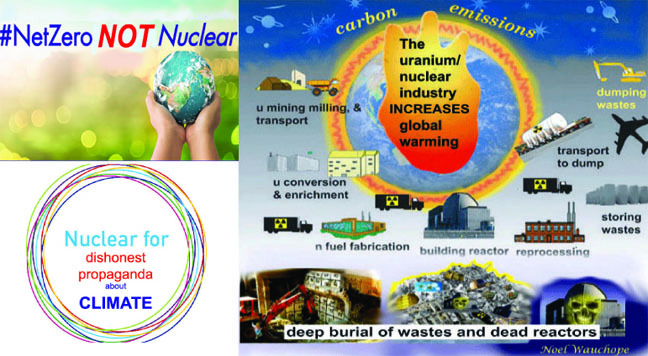
the EU Sustainable Taxonomy’s design is aimed at defining which economic activities are green – not which economic sectors are needed for the transition to a net-zero by 2050 economy
Decision-makers cannot let economic questions on energy security and cost thwart the scientific integrity of the EU Sustainable Taxonomy and still have an opportunity to save the credibility of the EU’s sustainable finance policy framework. It is now up to them to take responsibility
How to save the scientific integrity of the EU’s green finance taxonomy, By Elise Attal and Jan Vandermosten, 29 Oct 21 Decision-makers cannot let economic questions on energy security and cost thwart the scientific integrity of the EU Sustainable Taxonomy, write Elise Attal and Jan Vandermosten.
Elise Attal is Head of EU Policy at the Principles for Responsible Investment (PRI), a United Nations-supported international network of investors. Jan Vandermosten is a Senior Policy Analyst at PRI
It is crunch time for the EU Sustainable Taxonomy; a classification framework developed to help investors direct capital towards sustainable economic activities.
Member states and industry are heavily lobbying to include gas-fired electricity and nuclear energy within the definition of sustainable activities for climate mitigation.
While these sectors may be needed in the short-term to secure energy supply, their inclusion would fundamentally undermine the scientific integrity of the EU Sustainable Taxonomy – the bedrock on which the entire credibility of the EU sustainable finance framework relies.
Policymakers and industry should consider the risks of tarnishing investor confidence in this carefully designed and sophisticated framework aimed at providing long-term certainty.
The EU Sustainable Taxonomy regulation delineates an economic activity as sustainable if it “substantially contributes” to one out of six environmental objectives while at the same time “doing no significant harm” to any of the other five objectives. Screening criteria, based on best performance thresholds and life-cycle analysis, for instance, are under development for each environmental objective by an independent expert group, the Sustainable Finance Platform.
The Platform’s assessment relies on conclusive scientific evidence and – in the case of the climate change objective under the EU Taxonomy – whether the economic activities contribute to the long-term temperature goal of the Paris Agreement. First screening criteria for climate change mitigation and adaptation were adopted by the European Commission in April. Still, a decision on gas-fired power and nuclear was postponed at that time.
The inclusion of gas-fired electricity would seriously compromise the EU Sustainable Taxonomy’s ability to act as an independently and scientifically designed tool for guiding investment into environmentally sustainable activities in line with the EU’s goal of reducing emissions by 55% by 2030.
Research on net-zero by 2050 pathways for the energy sector, including the recent IEA World Energy Outlook, stresses that there is no remaining carbon budget for new gas investments and that existing gas-fired power plants will have to be phased out by 2035 in the OECD and 2040 globally.
The current EU Sustainable Taxonomy screening criteria for climate mitigation state that power generation from different technology sources can only make a substantial contribution to climate change mitigation within an emissions threshold of 100g CO2e/ kWh. Most existing gas production today would even fall above the ‘significant harm’ threshold for climate change mitigation, which has been set at 270g CO2e/kWh.
The merits of including nuclear energy in the EU Sustainable Taxonomy are also debatable.
Nuclear energy’s potential substantial contribution to climate mitigation objectives is clear, but important questions remain over its ability to meet the “do no significant harm” criteria with regards to other environmental objectives. A report by the Joint Research Centre that was commissioned to inform a decision on this matter has been criticised (e.g. SCHEER, Heinrich Böll Stiftung, Austrian Institute of Ecology) for not sufficiently addressing risks related to the storage of nuclear waste, severe incidents and nuclear proliferation.
Proponents of the inclusion of gas-fired electricity and nuclear energy in the EU Sustainable Taxonomy will argue that these economic activities have a role to play in the energy transition.
This argument is beside the point: the EU Sustainable Taxonomy’s design is aimed at defining which economic activities are green – not which economic sectors are needed for the transition to a net-zero by 2050 economy……..
Decision-makers cannot let economic questions on energy security and cost thwart the scientific integrity of the EU Sustainable Taxonomy and still have an opportunity to save the credibility of the EU’s sustainable finance policy framework. It is now up to them to take responsibility. https://www.euractiv.com/section/energy-environment/opinion/how-to-save-the-scientific-integrity-of-the-eus-green-finance-taxonomy/
NATO chief advises UK to deal with climate change threat to its Trident nuclear weapons at Faslane

COP26: NATO chief says it is up to UK to address Trident climate change flooding threat. NATO’s secretary general has stressed that it is up to individual nation members of the alliance to take action to protect military resources from the impacts of climate change, amid warnings that Faslane, the home of the UK’s Trident nuclear deterrent, could be
impacted by flooding due to rising sea levels.
Scotsman 3rd Nov 2021
Is it green, or forever toxic? France’s radioactive waste crisis. Nuclear rift at climate talks
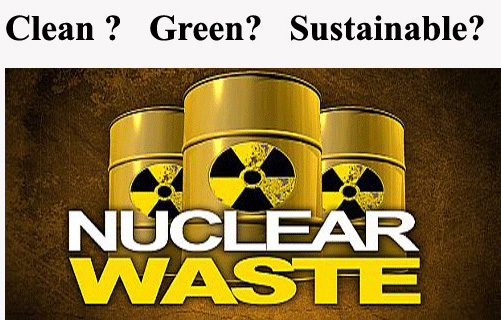
Is it green, or forever toxic? Nuclear rift at climate talks
By ANGELA CHARLTON, 4 Nov 21, SOULAINES-DHUYS, France (AP) — Deep in a French forest of oaks, birches and pines, a steady stream of trucks carries a silent reminder of nuclear energy’s often invisible cost: canisters of radioactive waste, heading into storage for the next 300 years.
As negotiators plot out how to fuel the world while also reducing carbon emissions at climate talks in Scotland, nuclear power is a central sticking point. Critics decry its mammoth price tag, the disproportionate damage caused by nuclear accidents, and radioactive leftovers that remain deadly for thousands of years.
……… Many governments are pushing to enshrine nuclear energy in climate plans being hashed out at the conference in Glasgow, known as COP26. The European Union, meanwhile, is debating whether to label nuclear energy as officially “green” — a decision that will steer billions of euros of investment for years to come. That has implications worldwide, as the EU policy could set a standard that other economies follow.
But what about all that waste? Reactors worldwide produce thousands of tons of highly radioactive detritus per year, on top of what has already been left by decades of harnessing the atom to electrify homes and factories around the world.
Germany is leading the pack of countries, mainly within the EU, standing firmly against labeling nuclear as “green.” …..
nowhere in the world is as reliant on nuclear reactors as France, which is at the forefront of the pro-nuclear push at the European and global level. And it’s among leading players in the nuclear waste industry, recycling or reprocessing material from around the world.
South of the World War I battlefields of Verdun, trucks bearing radioactivity warning stickers pull into a waste storage site near the village of Soulaines-Dhuys. They’re repeatedly checked, wiped and scanned for leaks. Their cargo — compacted waste stuffed into concrete or steel cylinders — is stacked by robotic cranes in warehouses that are then filled with gravel and sealed with more concrete.
……….. The storage units hold 90% of France’s low- to medium-activity radioactive waste, including tools, clothing and other material linked to reactor operation and maintenance. The site is designed to last at least 300 years after the last shipment arrives, when the radioactivity of its contents is forecast to be no higher than levels found in nature.
For longer-life waste — mainly used nuclear fuel, which remains potentially deadly for tens of thousands of years — France is laying the groundwork for a permanent, deep-earth repository beneath corn and wheat fields outside the nearby stone-house hamlet of Bure.
Some 500 meters (yards) below the surface, workers carry out tests on the clay and granite, carve tunnels and seek to prove that the long-term storage plan is the safest solution for future generations. Similar sites are under development or study in other countries, too.
If the repository wins French regulatory approval, it would hold some 85,000 metric tons (94,000 tons) of the most radioactive waste produced “from the beginning of the nuclear era until the end of existing nuclear facilities,” said Audrey Guillemenet, geologist and spokesperson for the underground lab.
“We can’t leave this waste in storage sites on the surface,” where it is now, she said. “That is secure, but not sustainable.”
The 25 billion euro ($29 billion) cost of the proposed repository is already built into budgeting by French utilities, Guillemenet said. But that’s just one piece of the staggering cost of building and operating nuclear plants, and one of the reasons that opposition abounds.
All around Bure, street signs are replaced with graffiti reading “Nuclear is Over,” and activists camp out at the town’s main intersection.
Greenpeace accuses the French nuclear industry of fobbing off waste on other countries and covering up problems at nuclear facilities, which industry officials deny. Activists staged a protest last week in the port of Dunkirk, as reprocessed uranium was being loaded onto a ship for St. Petersburg, demanding an end to nuclear energy and more research into solutions for existing waste.
…….. The current energy crunch is giving nuclear advocates another argument. With oil and gas costs driving an energy price crisis across Europe and beyond, French President Emmanuel Macron has trumpeted “European renewables and, of course, European nuclear.”
The waste, meanwhile, isn’t going away.
To make radioactive garbage dumps less worrying to local residents, Andra organizes school visits; one site even hosts an escape game. Waste storage researchers are readying for all kinds of potential future threats — revolution, extreme weather, even the next Ice Age, Guillemenet said.
Whatever happens in Glasgow, “whether we decide to go on with the nuclear energy or not,” she said, “we will need to find a solution for the management of that nuclear waste” that humankind has already produced. https://apnews.com/article/climate-science-business-environment-accidents-b334c5cddc50c620d53674a5b32518dd
A ”scientific disgrace” – a leaked document pushing nuclear and gas as sustainable will damage the EU’s credibilify on green finance.
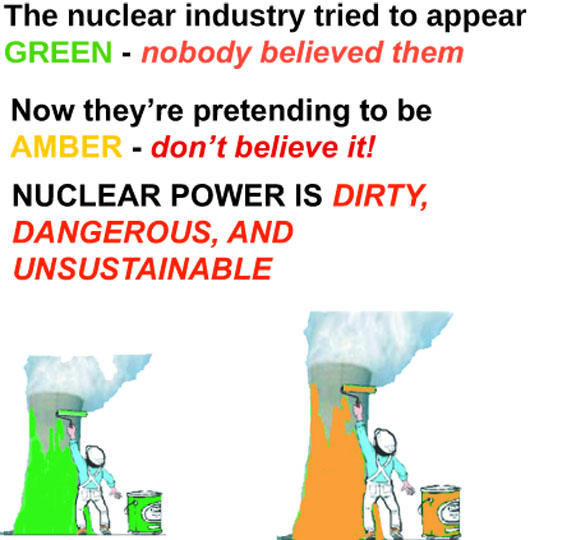
”the EU Sustainable Taxonomy’s design is aimed at defining which economic activities are green – not which economic sectors are needed for the transition to a net-zero by 2050 economy.”
LEAKED: Paper on gas and nuclear’s inclusion in EU green finance rules https://www.euractiv.com/section/energy-environment/news/leaked-paper-on-gas-and-nuclears-inclusion-in-eu-green-finance-rules/
By Frédéric Simon | EURACTIV.com A proposal to bring both nuclear power and natural gas into the bloc’s green finance taxonomy is circulating in Brussels. The paper has been branded as a “scientific disgrace” by campaigners who warned it would damage the EU’s credibility on green finance.
The so-called “non-paper”, obtained by EURACTIV, lays out detailed technical criteria for gas to qualify as a transitional activity under the EU’s sustainable finance rules.
To qualify as a “sustainable” investment, gas power plants or cogeneration facilities must not emit more than 100 grams of CO2 equivalent per kilowatt-hour, according to the draft paper.
It comes in the wake of declarations by European Commission President Ursula von der Leyen, who said the EU executive would soon table proposals on gas and nuclear as part of the bloc’s green finance rulebook.
“We need more renewables. They are cheaper, carbon-free and homegrown,” von der Leyen wrote on Twitter after an EU summit meeting two weeks ago where leaders debated the bloc’s response to rising energy prices.
“We also need a stable source, nuclear, and during the transition, gas. This is why we will come forward with our taxonomy proposal,” she added.
Gas as a ‘transitional activity’
The 100gCO2 emissions criteria is the same as earlier proposals circulated last year, which were rejected as too stringent by a group of 10 pro-gas EU countries who threatened to veto the proposal.
To assuage critics concerns, the paper lays out additional criteria for gas plants to qualify as a “transitional activity”, accompanied by a sunset clause (until 31 December 2030) for the commissioning of new plants…………
Campaigners denounced those criteria as “radically weaker” than previous plans drafted by the European Commission.
“This proposal is a scientific disgrace that would deal a fatal blow to the taxonomy,” said Henry Eviston, spokesman on sustainable finance at WWF European Policy Office.
“It would severely damage the EU’s sustainable finance agenda and the EU Green Deal. It must be firmly rejected by the Commission and opposed by all member states,” he added in a statement.
Campaigners were unsure about the origin of the non-paper. But diplomats who spoke to EURACTIV at an EU summit two weeks ago said France has been working behind the scenes to forge a compromise on the taxonomy that would satisfy supporters of gas and nuclear power.
At the initiative of Paris, representatives from like-minded EU countries held a meeting on 18 October to debate nuclear and natural gas in the context of the taxonomy, the EU diplomat said. The meeting was attended by Bulgaria, Cyprus, Czechia, Finland, France, Greece, Hungary, Malta, Poland, Romania, Slovakia, and Slovenia.
According to the same diplomatic source, participants discussed compromise proposals for technical criteria to assess the sustainability of gas and nuclear power plants.
Nuclear
On nuclear, the “non-paper” builds on the EU’s Joint Research Centre (JRC) recommendations, which concluded in a July report that nuclear power was safe and therefore eligible for a green label under the taxonomy.
The paper does not propose detailed sustainability criteria at this stage and merely divides nuclear power production activities into four categories:
- Nuclear plant operation: Production of electricity, including the construction, commissioning, operation and decommissioning of nuclear power plants.
- Storage or disposal of radioactive waste or spent nuclear fuel (enabling activity).
- Mining and processing of uranium (enabling activity).
- Reprocessing of spent nuclear fuel (enabling activity).
The “non-paper” comes in the wake of a meeting of EU energy ministers last week where twelve EU countries spoke in favour of nuclear’s inclusion in the taxonomy.
Prominent critics of gas and nuclear’s inclusion in the taxonomy include Elise Attal is Head of EU Policy at the Principles for Responsible Investment (PRI), a United Nations-supported international network of investors.
“Proponents of the inclusion of gas-fired electricity and nuclear energy in the EU Sustainable Taxonomy will argue that these economic activities have a role to play in the energy transition,” she wrote in a recent op-ed published on EURACTIV.
“This argument is beside the point: the EU Sustainable Taxonomy’s design is aimed at defining which economic activities are green – not which economic sectors are needed for the transition to a net-zero by 2050 economy.”
Read the full paper below or download here:
High time to rid Wales of plans for costly, risky Small Modular Nuclear Reactors
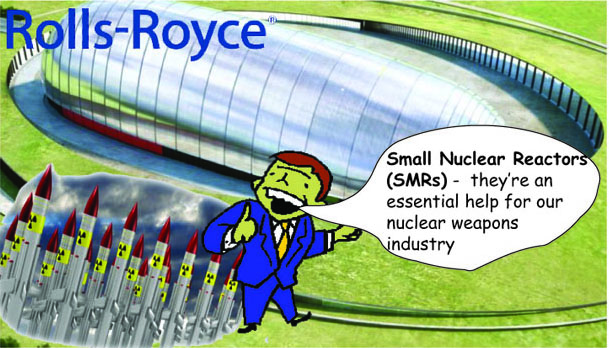
Leanne Wood: My column in The National two weeks ago argued for a transition away from manufacturing weapons of war to firing up our greeneconomy. Isn’t it also high time we rid Wales of the scourge of nuclear
power and redirect resources into clean, renewable energy? We have that opportunity now. Wales is a nuclear-free zone but for how much longer?
Plans to resurrect Wylfa B are effectively dead, even though some politicians continue to tout the idea. Attention has turned, instead, to the Trawsfynydd site where Rolls Royce is proposing a Small Modular Nuclear Reactor (SMNR), the latest experiment in nuclear fission technology. Except the old problems of safety and cost of storage and waste disposal haven’t gone away.
The first SMNR to be approved last year in the US was met by fierce criticism from notable scientists, including Professor MV Ramana of the University of Columbia who described the project as “risky and expensive”. Edwin Lyman, director of nuclear power safety at the Union of Concerned Scientists, highlighted ‘safety gaps’ in the design. Still
the Welsh Government, with the backing of Westminster, continues with costly feasibility studies.
The National (Wales) 10th Oct 2021
https://www.thenational.wales/news/19637359.wales-needs-forget-nuclear-power-forever/
UK govt would do better to spend consumers’ money on making homes sustainable, and supporting smart grids, rather than on a nuclear tax
NFLA comments on Plans to Impose a Nuclear Tax on Consumers’ Bills. The
Minister justifies this on the basis that consumers will save more than
£30 billion compared with the system used to pay for Hinkley Point C.
NFLA UK & Ireland Steering Committee Chair Councillor David Blackburn said:
“The Minister is comparing one expensive environmentally unsustainable
project with another expensive environmentally unsustainable project.
If he really wanted to save consumers’ money he would introduce a National
Homes Retrofit Scheme as quickly as possible having learned the lessons
from its failed Green Homes Scheme, and introduce a scheme to support
flexibility, demand management and smart grids so that we can use more of
our cheap, sustainable renewable electricity.”
The Minister went on to argue that despite the fact that the Scottish Government has a different
position with regard to new nuclear projects, Scottish Consumers should
also pay his “nuclear tax” because they “will benefit from a cheaper,
more resilient and lower-carbon electricity system.”
Scottish NFLA Chair, Cllr. Feargal Dalton said: “Renewables met 97% of Scotland’s
electricity demand in 2020. The Scottish electorate has consistently voted
for Governments opposed to building new nuclear power stations. With wind
and solar now the cheapest forms of electricity Scottish consumers
shouldn’t have to pay for the Tories’ failed energy policies.”
NFLA 4th Nov 2021
Nuclear workers’ unions want nuclear energy included as clean and sustsainable
—European unions press leaders to include nuclear in clean energy mix, Ft.com Jim Pickard in Glasgow, 5 Nov 21, A dozen union chiefs from across Europe have pressed world leaders to factor in nuclear power as they discuss how to accelerate the path to net zero emissions at the global climate summit in Glasgow……….. ….. The use of nuclear to tackle climate change is fiercely contested, with some countries such as Belgium phasing out their existing power stations. Countries such as Germany, Austria and Luxembourg have opposed a Finnish proposal for the EU “taxonomy” to include nuclear in its definition of sustainable activity…….. Today’s letter was signed by figures including Gary Smith, general secretary of Britain’s GMB union, Helene Lopez, secretary-general of CFE-CGC Energies in France, and Bob Walker, national director of the Canadian Nuclear Workers’ Council – as well as counterparts in Belgium, Czech Republic, Hungary, Slovakia and Romania………. https://www.ft.com/content/f01342c5-d1af-4c36-8362-582b48767a05 |
Terra Praxis – another pro nuclear front group pushing for the mythical small nuclear reactors.
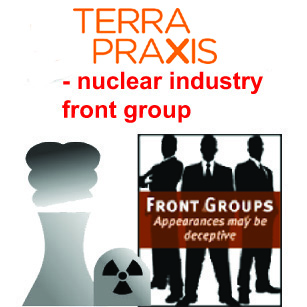
AJ100 practice Bryden Wood has revealed plans to repurpose the world’s
coal-fired power stations to house modular nuclear reactors as part of a
‘major initiative’ to decarbonise the energy sector. The practice’s
Repurposing Coal proposal has been drawn up with Terra Praxis, a non-profit
organisation focused on action for climate and energy.
Unveiled at COP26 this week, the strategy sets out how coal-fired boilers at existing power
plants could be replaced with Advanced Heat Sources (Generation IV Advanced
Modular Reactors) .
Architects Journal 5th Nov 2021
Bradwell is not suitable for nuclear fusion, not suitable for nuclear fission either.
Bradwell has been dropped from the list of 15 sites for fusion. Andy
Blowers said Bradwell was always unlikely to be a non-starter for the
nuclear fantasy project. Voracious cooling water demands will damage the
vulnerable ecology of the Blackwater estuary. If Bradwell is not suitable
for fusion it is not suitable for Bradwell B. Maylands Mayl – November 5th Nov 2021
Only Britain has the dubious plan to get to net zero by relying on multiple nuclear reactors

Even without our plentiful opportunities to exploit wind, solar, wave and tidal power many countries feel they do not need nuclear power to reach their goals.
Questions remain over the UK’s nuclear power plans https://www.theguardian.com/news/2021/nov/02/questions-remain-over-the-uks-nuclear-power-plans?fbclid=IwAR3TQj7xYv3jEY824jm9tVFuNln6CgT7xqS3
No other country taking part in Cop26 is relying on multiple new reactors to get to net zero by 2050 Paul Brown, Tue 2 Nov 2021 In 2007, Vincent de Rivaz, the then EDF chief executive, said Britain would be “cooking our Christmas turkeys” with electricity from Hinkley Point C nuclear station by 2017. Instead the first concrete was poured that year and the turkey is now scheduled for late 2026.
In the race against time to avert dangerous global heating, the UK government has decided to back an untried reactor from Rolls Royce. The first of these could be “plugged into the grid by 2031”, according to Nuclear Industry Association.
Internationally average planning time for reactor proposals is 10 years, plus another decade for building, and that is for already proven designs. The 16 planned Rolls Royce reactors are still on the drawing board. The arguments about where they could be sited are beginning. Apart from other possible objections the favoured UK coastal locations are vulnerable to sea level rise, erosion and storms.
Faced with the well-documented delays and drawbacks to nuclear programmes it is perhaps not surprising that there is no other country taking part in the Cop26 process in Glasgow relying on multiple new nuclear reactors to get to net zero carbon targets by 2050. Even without our plentiful opportunities to exploit wind, solar, wave and tidal power many countries feel they do not need nuclear power to reach their goals.
New study throws gloom on hopes for future nuclear energy in Central Europe

 | |||
Experts dampen hopes of Central Europe’s nuclear future https://www.euractiv.com/section/politics/short_news/experts-dampen-hopes-of-central-europes-nuclear-future/
By EURACTIV Network, Aneta Zachová | EURACTIV.cz, edited by Alexandra Brzozowski 3 Nov 2021
As Czechia looks to decarbonise its coal-based economy, it sees nuclear energy as the backbone of its future energy mix. The Czech government plans to build a new nuclear power plant unit that is expected to be operational in 2036. Still, experts warn of delays and high costs, already observed in Slovakia or Hungary.
According to the Industry and Trade Ministry, nuclear energy could solve the Czech need for low-carbon and stable energy sources. The country’s future energy mix is a hot topic due to the EU’s climate ambitions and the recent energy price hikes.
However, a new study published on Tuesday contradicts the current pro-nuclear narrative of the Czech government. “The new nuclear unit would not really contribute to decarbonisation, in terms of replacing the current coal sources,” said Oldřich Sklenář, author of the study and energy analyst at the Association for International Affairs, in an interview for EURACTIV.cz.
“The launch of the new unit should take place after 2036, but we have to phase out coal much earlier. Experience from the Euro-Atlantic area shows that it is a huge problem to meet the deadlines. Basically, everyone faces this problem,” Sklenář warned, adding that the actual costs of the projects could be double those expected.
Czechia is not the only Central European country betting on nuclear energy, but new nuclear projects in Slovakia and Hungary have faced long delays.
New units in Slovakia’s Mochovce were supposed to be in operation in 2012 and 2013 but have been delayed until 2022.
Planned Hungarian Paks II, to be constructed by Rosatom, faces problems as well, as the licensing of the project has been postponed. Hungary has amended its nuclear safety protocols to custom-fit the project, allowing some work to begin before the entire project gets the regulatory nod.
At the same time, the US has also tried to lure Eastern Europe with nuclear power, teasing a $23 trillion market to countries in Central and Eastern Europe by 2030.
In October last year, Poland and Washington signed a 30-year intergovernmental agreement on future cooperation in developing the Polish civil nuclear energy programme. The first nuclear power station could start operating in 2033.
With the currently ongoing energy crisis, a group of primarily Eastern European member states have heaped pressure on the European Commission to grant nuclear energy a ‘green’ label under the EU’s sustainable finance taxonomy, which guides climate-friendly investments.
A proposal from the European Commission is now expected “by the end of the year,” said Kadri Simson, the EU’s energy commissioner said after the recent energy ministerial in October.
French nuclear company pressing President Macron to declare nuclear power strategy
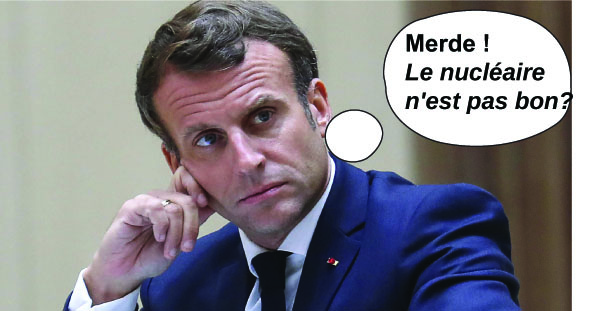
Macron’s Nuclear Power Strategy Will Be Clear by Year End, Ecology Minister Says, Bloomberg, By Francois De Beaupuy and Ania Nussbaum, 27 October 2021,
- Final decision on plants seen after next April’s election
- EDF wants construction of plants to start as soon as possible
French President Emmanuel Macron will probably say by the end of the year whether he supports the construction of new nuclear plants as part of the country’s plan to achieve carbon neutrality by 2050, Ecology Minister Barbara Pompili said…….
“The president will probably express his preference and his orientation on the scenarios before the end of the year,” Pompili told reporters in Paris Tuesday. Still, there wouldn’t be a final decision before next April’s presidential elections, she said.
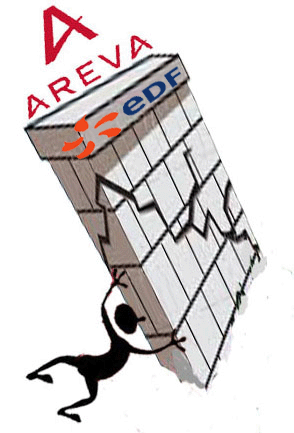
The French atomic industry, led by state-controlled Electricite de France SA, is urging the government to start constructing nuclear plants as soon as possible. That’s because most of EDF’s 56 existing reactors — which provide more than two-thirds of France’s electricity — are due to be shut by 2050 or earlier.
A report on the cost of new nuclear plants will be published in coming weeks, Pompili said. Damaging delays, cost overruns and technical failings have afflicted the country’s nuclear sector in recent years, raising questions about EDF’s ability to build new plants on budget. ……
The government will help EDF and its partners develop small modular nuclear reactors by 2030, Macron said earlier this month. https://www.bloomberg.com/news/articles/2021-10-26/macron-will-probably-announce-nuclear-power-strategy-by-year-end
1 This Month
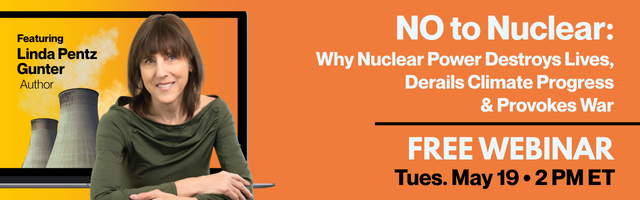
19 May – Webinar No To Nuclear: Why Nuclear Power Destroys Lives, Derails Climate Progress and Provokes War
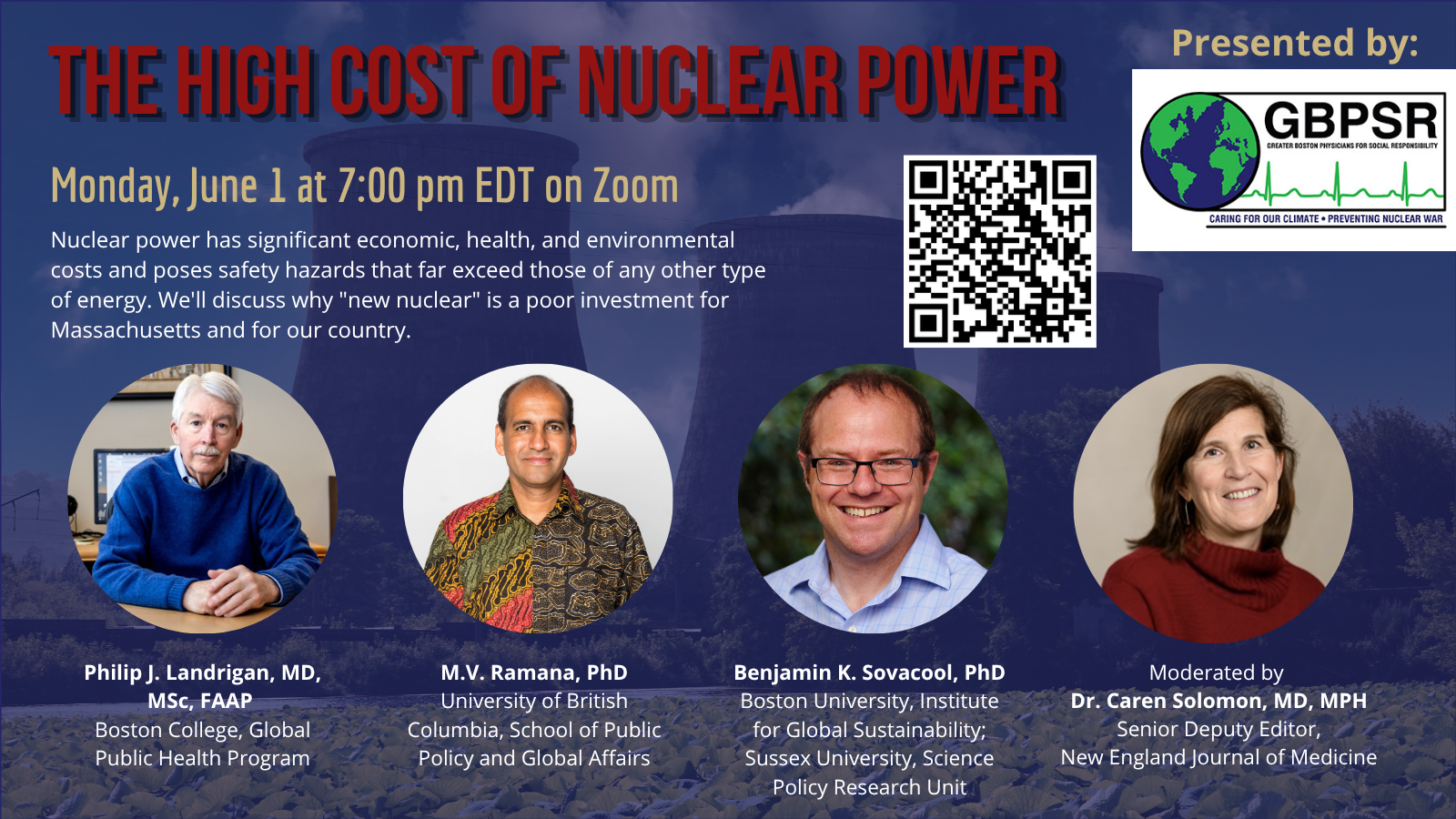
1 June Webinar – The High Cost of Nuclear Power – Register


of the week– Nuclear Reactor Information Task Force
To see nuclear-related stories in greater depth and intensity – go to https://nuclearinformation.wordpress.com
-
Archives
- May 2026 (187)
- April 2026 (356)
- March 2026 (251)
- February 2026 (268)
- January 2026 (308)
- December 2025 (358)
- November 2025 (359)
- October 2025 (376)
- September 2025 (257)
- August 2025 (319)
- July 2025 (230)
- June 2025 (348)
-
Categories
- 1
- 1 NUCLEAR ISSUES
- business and costs
- climate change
- culture and arts
- ENERGY
- environment
- health
- history
- indigenous issues
- Legal
- marketing of nuclear
- media
- opposition to nuclear
- PERSONAL STORIES
- politics
- politics international
- Religion and ethics
- safety
- secrets,lies and civil liberties
- spinbuster
- technology
- Uranium
- wastes
- weapons and war
- Women
- 2 WORLD
- ACTION
- AFRICA
- Atrocities
- AUSTRALIA
- Christina's notes
- Christina's themes
- culture and arts
- Events
- Fuk 2022
- Fuk 2023
- Fukushima 2017
- Fukushima 2018
- fukushima 2019
- Fukushima 2020
- Fukushima 2021
- general
- global warming
- Humour (God we need it)
- Nuclear
- RARE EARTHS
- Reference
- resources – print
- Resources -audiovicual
- Weekly Newsletter
- World
- World Nuclear
- YouTube
-
RSS
Entries RSS
Comments RSS
 nuclear-news