Tricastin nuclear power plant: cascading cover-ups.

Tricastin nuclear power plant: cascading cover-ups. In the case of the
whistleblower at the Tricastin power plant, which files a complaint against
EDF, new elements consulted by Mediapart reveal that the Nuclear Safety
Authority has long known about the problem. According to an internal
document, EDF lied and the safety authority also in its public
communication.
Mediapart 24th Nov 2021
Boris Johnson quizzed over future of Bradwell, (Essex) nuclear plant
Boris Johnson quizzed over future of Essex nuclear plant https://www.maldonandburnhamstandard.co.uk/news/19738655.boris-johnson-quizzed-future-essex-nuclear-plant/
By Jessica Day-ParkerTrainee Reporter PRIME Minister Boris Johnson told MPs he does not want to “pitchfork away” all investment from China in response to a question about Bradwell B.
Matthew Pennycook, Labour MP for Greenwich and Woolwich, pressed the Prime Minister on Bradwell B – the proposed nuclear power station at Bradwell-on-Sea put forward by China General Nuclear Power Group (CGN) – in the House of Commons.
Mr Pennycook said: “The Government’s Integrated Review concluded the Chinese state poses a systemic challenge to our national security and the Prime Minister has made clear that when it comes to China we must remain vigilant about our critical national infrastructure.
General Nuclear to own and operate its own plant in Bradwell in Essex have been abandoned?”
Mr Johnson confirmed the Government doesn’t want to see “undue influence by potentially adversarial countries in our critical national infrastructure” and insisted “there will be more information” coming on Bradwell.
But he added: “What I don’t want to do is pitchfork away wantonly all Chinese investment in this country or minimise the importance in this country of having a trading relationship with China.”
Europe to pay half for raising Russia’s dangerous sunken submarines, – while Russia builds new ones!

“The sunken submarines K-27 and K-159 are the potential source of contamination of the Arctic, the riskiest ones,”
As Moscow this spring took the Chair of the Arctic Council, the need to lift dangerous nuclear materials from the seabed was highlighted as a priority.
No other places in the world’s oceans have more radioactive and nuclear waste than the Kara Sea.
Europe to pay half … it is a dilemma that international partners are providing financial support to lift old Cold War submarines from the ocean, while Russia gives priority to building new nuclear-powered submarines threatening the security landscape in northern Europe.
EU willing to co-fund lifting of sunken nuclear subs from Arctic seabed https://thebarentsobserver.com/en/nuclear-safety/2021/11/europe-offers-pay-russia-raise-sunken-nuclear-subs The Northern Dimension Environmental Partnership (NDEP) has decided to start a technical review aimed to find a safe way to lift two Cold War submarines from the Barents- and Kara Seas. By Thomas Nilsen
“We are proceeding now,” says a smiling Jari Vilén, Finland’s Ambassador for Barents and Northern Dimension.
Projects aimed to improve nuclear safety are some of the few successful arenas for cooperation still going strong between the European Union and Russia.
“In roughly two years time we will have the understanding on what and how it can be done, what kind of technology has to be used,” Vilén elaborates with reference to the two old Soviet submarines K-159 and K-27, both rusting on the Arctic seabed with highly radioactive spent nuclear fuel elements in their reactors.
Continue readingWill Germany’s Next Government Ditch U.S. Nuclear Bombs?
Explainer: Will Germany’s Next Government Ditch U.S. Nuclear Bombs? U.S. News, By Reuters|Reporting by Sabine Siebold, Editing by William Maclean, Nov. 22, 2021, BERLIN (Reuters) – NATO allies will be scouring the policies of Germany’s next federal government for one crucial detail: Will Berlin remain part of NATO’s nuclear sharing agreement?
Or will it drop out and ask the United States to remove its nuclear bombs from German soil?
While such a move might be popular among some Germans, it would reveal a rift within NATO at a time when the alliance’s relations with Russia are at their lowest since the end of the Cold War.
WHAT IS NATO’S NUCLEAR SHARING?
As part of NATO’s deterrence, the United States has deployed nuclear weapons in Belgium, Germany, Italy, the Netherlands and Turkey – all NATO allies that do not have their own nuclear weapons. In the case of a conflict, the air forces of these countries are meant to carry the American nuclear bombs.
WHAT EXACTLY IS GERMANY’S ROLE?
Around 20 U.S. nuclear bombs are estimated to be stored at the German air base of Buechel, in a remote area of the state of Rhineland-Palatinate. The base is also home to a squadron of Tornado fighter jets belonging to the German air force, the only German jets fitted to carry the nuclear bombs.
WHAT IS THE PROBLEM WITH THE TORNADO FIGHTER JETS?
The German air force has been flying the Tornado jets since the 1980s, and it has become increasingly expensive to maintain them and difficult to find spare parts to keep the plane in the air. The German defence ministry plans to phase out the jet between 2025 and 2030. Should Berlin not purchase new jets fitted for the task of carrying U.S. nuclear weapons, Germany would simply drop out of nuclear sharing when the last Tornado retires around 2030.
WHAT CHANGES MAY THE NEW GERMAN GOVERNMENT BRING?
In spring 2020, Defence Minister Annegret Kramp-Karrenbauer, a member of Chancellor Angela Merkel’s conservatives, proposed replacing the Tornado jets in Buechel with F-18s made by Boeing, but the decision was later pushed into 2022.
Now, the likely new German government will be led by the Social Democrats, a party that has some lawmakers who would like to get rid of U.S. nuclear weapons on German soil. The Greens, who are expected to be part of the coalition, also have some lawmakers who take that view………https://www.usnews.com/news/world/articles/2021-11-22/explainer-will-germanys-next-government-ditch-u-s-nuclear-bombs
As presidential candidate, Emmanuel Macron opposed nuclear power, now he’s all for it
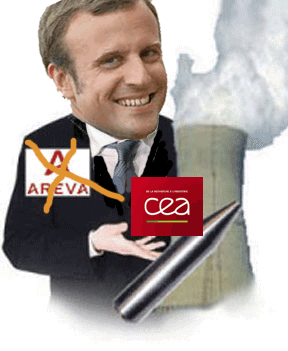
Nuclear: Emmanuel Macron’s energy “at the same time”. Inheriting President Hollande’s nuclear commitments, candidate Macron had made campaign promises that were not very favorable to the atom.
But, in the middle of his five-year term, the President of the Republic has put nuclear power back at the center of France’s energy policy. To end up announcing, at the beginning of November, that it would be necessary to build new power stations.
Les Echos 22nd Nov 2021
Austria prepared to sue European Union if it includes nuclear in green finance taxonomy
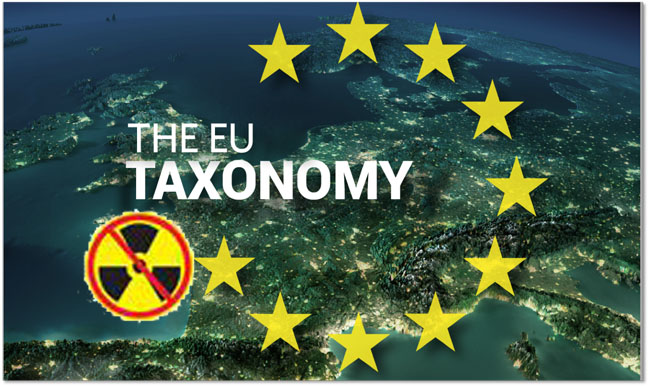
Austria ready to sue EU over nuclear’s inclusion in green finance taxonomy, By Nikolaus J. Kurmayer | EURACTIV.com, 18 Nov 2021
Austria’s energy and climate minister Leonore Gewessler told EURACTIV in an exclusive interview that her country was ready to go to court if the EU decides to include nuclear power into the bloc’s taxonomy on sustainable finance.
In October, European Commission President Ursula von der Leyen announced that the EU executive would soon table proposals on gas and nuclear as part of the bloc’s sustainable finance taxonomy, a set of rules designed to provide investors with a common definition of what is green and what is not.
A group of twelve EU countries, led by France and Finland, want nuclear energy included, arguing it is a low-carbon energy source and that radioactive waste can be handled safely if appropriate measures are taken.
But Austria would be ready to challenge that decision in front of the European Court of Justice said Leonore Gewessler, the Austrian minister for climate protection and energy.
“There is no legal basis for including nuclear power in the EU taxonomy,” Gewessler said adding that, “Yes, if the EU taxonomy includes nuclear energy, we are ready to challenge that in court.”
Austria is at the centre of a five-country alliance bringing together Denmark, Germany, Luxembourg and Portugal, which seeks to prevent the inclusion of nuclear energy in the EU’s green finance rules. The alliance was launched during the COP26 climate summit in Glasgow.
Legal analysis
For Gewessler, “the credibility of the taxonomy is at stake” when deciding how to classify nuclear under the EU’s green finance rules.
The Austrian energy and climate ministry commissioned a legal analysis earlier this year, which found that “that the inclusion of nuclear energy is not compatible with the legal basis of Article 10 of the Taxonomy Regulation,” she said.
“We have a great responsibility here, in terms of taxonomy, to remain consistent and coherent” with the ambitions of the European Green Deal and maintain trust in the financial markets, she argued.
“The considerable damage caused by nuclear energy is well documented historically,” she explained, citing “the dangers of nuclear power itself” as evidenced by the Chernobyl and Fukushima disasters.
The safe disposal of spent radioactive fuel is also a matter of concern. “We have not yet found a global solution for…the question of final storage,” she said.
Besides, nuclear power “is much too expensive and much too slow to make a contribution” to the bloc’s climate goals, Gewessler continued.
The next-generation French reactor currently being built at Flamanville, whose construction started in 2007, has been massively delayed, with completion now scheduled in 2023 while costs have increased fivefold, she remarked.
Earlier this month, leading French EU lawmaker Pascal Canfin proposed letting nuclear energy and gas in the taxonomy as “transition” energy sources while the bloc pursues its long-term switch to renewable energy sources.
Canfin’s suggestion is to label gas a “transition” investment when it replaces coal and provided strict emission thresholds are met.
But Gewessler rejected that proposal too. “Just because something is less bad than coal doesn’t make it good or sustainable. It is still fossil energy,” she said………..
Austria’s neighbour Germany can always be counted on in the fight against nuclear power.
“Nuclear power cannot be a solution in the climate crisis, it is too risky, it is too slow, it is too expensive,” explained her German counterpart Svenja Schulze, caretaker minister of the environment, on 11 November.
“No climate activist should rely on nuclear power,” she added.
2021
New film: The ‘Mothers of the Revolution’ Who Stared Down Nuclear Weapons
The ‘Mothers of the Revolution’ Who Stared Down Nuclear Weapons, The doc ‘Mothers of the Revolution’ chronicles the women who spent years protesting the nukes at RAF Greenham Common. One of those brave women, Rebecca Johnson, tells their story. Daily Beast, Rebecca Johnson Nov. 21, 2021 In September 1981, a ten-day walk from Wales under the banner of Women for Life on Earth arrived at the main gate of RAF Greenham Common, sixty miles west of London. Home to the 501st Tactical Missile Wing of the U.S. Air Force, this nuclear base was designated by NATO to deploy nuclear-armed cruise missiles in Europe. We called for this decision to be publicly debated.
When ignored, Women for Life on Earth grew into the Greenham Common Women’s Peace Camp. I began living there in 1982 and stayed until the 1987 U.S.-Soviet Intermediate-Range Nuclear Forces (INF) Treaty banned and eliminated all land-based medium-range nuclear weapons from Europe, including Cruise, Pershing and SS20s.
After years of being airbrushed out of histories of the Cold War, Greenham’s actions, struggles and legacy are being spotlighted in a new film, Mothers of the Revolution, from acclaimed New Zealand director Briar March. Showing contemporaneous news footage from the 1980s along with dramatized vignettes and reflections from women who got involved with the Greenham Women’s Peace Camp in the 1980s, the film weaves an illustrative narrative from the experiences of a small cross section of activists—not only from Britain, but Russia, East and West Europe, the United States, and the Pacific.
Though it’s taken a long time for our contribution to the INF Treaty to be publicly recognized, other treaties have been influenced by Greenham’s feminist-humanitarian activism and strategies, most notably the U.N. Treaty on the Prohibition of Nuclear Weapons, which entered into international law in January 2021.
While living at Greenham for five years I came to understand what we really need: Not weapons and power over others, but communities that are empowered to love, question and create. We took forward new theories and practices of nonviolence that were feminist and assertive. We didn’t suppress deep human emotions like fear, love and anger, but channelled them into power for change. We needed to be activist and analytical, passionate and diplomatic, stubborn and flexible, courageous and truthful—no matter who tried to silence us.
The cruise missiles arrived in November 1983, which felt like a bitter defeat at first. Yet we refused to give up. …………….
Were we mothers of a revolution? If anything, I think we were part of a long continuum of struggles for women’s rights and safety, following in the footsteps of the women who fought so hard to vote and live free from oppression, slavery, and misogyny. Not mothers but daughters—of all those brave feminist revolutionaries.
I’m so glad Mothers of the Revolution ends with such an inspiring call to action showing the faces and voices of a new generation of fierce Daughters who are campaigning for girls’ education, climate justice, peace, and women’s rights to live free of patriarchal perpetrators and their greedy, oppressive systems of violence. Together we can stop the destroyers and strengthen the naturally diverse, interdependent lives that share and protect our beautiful Mother Earth. That’s our revolution, and we are not finished yet. https://www.thedailybeast.com/the-mothers-of-the-revolution-who-stared-down-nuclear-weapons?ref=scroll
No greenwashing in Europe to save the nuclear industry!

No “greenwashing” to save nuclear power! While several states of the
European Union support atomic energy, a collective of associations
dismantles clichés on nuclear power and reminds us that in 2020, renewable
energies (excluding hydraulic) have exceeded the nuclear energy production.
Liberation 19th Nov 2021
The fairy tale of cheap French nuclear power.
The fairy tale of cheap French nuclear power. “Bread and Games” (Panem et circenses) were the strategies used in the Roman Empire to maintain power. “Cheap gasoline, inexpensive electricity and football” are election campaign strategies that are often propagated in a democracy.
In France, the nuclear industry is in decline and the nuclear company EDF is heavily indebted. At the same time, President Macron is once again promising cheap nuclear power and wants to have new small nuclear power plants built.
A small part of the financial problems of the French nuclear industry is to be solved with EU money. In this context, the fairy tale of cheap French nuclear power is popular in France and Germany, and the use of nuclear energy is praised as a miracle weapon in the lost war against nature and the environment.
Sonnenseite 18th Nov 2021
German banks sceptical about nuclear and gas inclusion in green taxonomy.
German banks sceptical about nuclear and gas inclusion in green taxonomy.
Eight German banks have said there is “limited room” for nuclear and
gas power in the EU’s list of sustainable economic investments, warning
that the ‘green taxonomy’ should only include genuinely
climate-friendly activities.
ENDS Europe 19th Nov 2021
While the French government promises a nuclear revival, its supreme auditing body warns of serious obstacles to this.

The Court of Auditors (Cour des comptes) is the supreme body for auditing the use of public funds in France. It is independent from the Government and Parliament. It has financial jurisdiction and is in charge of auditing, issuing rulings and certifying the State and Social Security accounts, as well as contributing to the evaluation of public policies.
Nuclear revival: the Court of Auditors highlights many obstacles https://reporterre.net/Relance-du-nucleaire-la-Cour-des-comptes-pointe-de-nombreux-obstacles 19 Nov 21,
In a report published this Thursday, November 18, the Court of Auditors questions our “ability to build a new fleet of [nuclear] reactors on time and at reasonable costs”. This, while “maintaining a 50% nuclear share in electricity production (…) beyond 2050 would require ultimately not having seven EPR or EPR2, but 25 to 30 in the assumption that the current reactors would almost all be shut down by this time, ”the text specifies. And that the composition of the new mix must be decided between 2022 and 2027, believes the institution, given the delays in the construction of new plants.
The report from the Court of Auditors
In this document entitled “The choices of electricity production: anticipating and controlling technological, technical and financial risks”, the wise men of the rue Cambon recall the slippages of cost – 19 billion euros instead of the 3 billion planned – and of deadlines – at least eleven years late – of the Flamanville EPR site. “The gaps are similar for the Olkiluoto RPE in Finland,” they said. In July 2020, the Court of Auditors detailed these troubles at length in a report dedicated to the EPR sector.
Several points of real concern are mentioned.
One is the locations of these new reactors, “as climate change can make the installation of sites along rivers more complicated”.
Management of spent fuel and waste: the construction of new reactors planned to operate until 2100 would in fact involve “either renewing the fuel reprocessing plant at La Hague (…) and creating new sites for ‘warehousing and then disposal of nuclear waste, or to propose another mode of management of spent nuclear fuel and waste which would be, in such a hypothesis, much more voluminous ”, we read in the note.
Another imperative element for the implementation of this half-nuclear mix emphasized by the Court is “the start of the Cigeo radioactive waste disposal project” – a project that is also marred by many uncertainties.
The cost, finally. “EDF will not be able to finance the construction of new nuclear reactors on its own when it has to bear the cost of extending the current fleet and of the“ post Fukushima ”safety investments, face the future costs of dismantling and the uncertain evolution regulated access to historic nuclear power since its inception in 2011, and that it is already indebted to the tune of 42 billion euros, ”warns the Court of Auditors. The project to build six new EPRs had been estimated at 46 billion euros by EDF and could be half-financed by the state, as reported by Reporterre. The cost of the investment has since been reassessed from 52-56 billion euros to 64 billion euros, according to a working document released at the end of October by the media Context.
The implementation of a 100% renewable energy mix also represents many challenges, nevertheless warns the Court of Auditors. It would thus be necessary to define modalities for storing energy (batteries, etc.) at an affordable cost and to overcome implementation difficulties linked to geography, regulations and even social acceptability.
In any case, “the holding of an informed democratic debate would encourage choices made with full knowledge of the facts and then followed up with lasting effects”, recommends the institution. This debate could take place in 2023 during the preparation of the next multiannual energy program, the roadmap for France’s energy policy.

The publication of this report comes at a time when debates rage on the definition of the electricity mix of the future. On October 25, the electricity transmission manager unveiled its six electricity scenarios for 2050: three give pride of place to the atom. Less than three weeks later, Emmanuel Macron promised the construction of new nuclear reactors in France during a televised address.
Finland’s nuclear power project collapsing – unprofitable and unnecessary
Doubts about nuclear power plant construction in Finland. The planned Hanhikivi nuclear power plant could be on the verge of collapse.
It is unclear whether there will be any need for the plant’s electricity at all.
The costs are running away, the schedule for the start of construction and commissioning has been revised and postponed several times. The planning documents are so inadequate that the project is not yet ready for approval even after a six-year approval process.
And most of the independent analyzes assume that the project can neither become profitable nor that
there is even a need for what is to be produced here. It recently revealed that there is also a huge funding gap, and now the military is raising concerns about national security.
Taz 18th Nov 2021
The growing unsolved problem of nuclear waste – becoming desperate in Sweden.

Five Swedish nuclear reactors may need to close between 2024 and 2028, simply because a temporary site for storing spent fuel will soon be full.
And the Swedish government has yet to approve a final waste repository.
The timetable is that the Forsmark 4 reactor risks closure in 2024, followed in 2025 by Forsmark 3, Ringhals 3 and 4 and finally Forsmark 1 in 2028. Ringhals is owned by a consortium comprising Vattenfall and Uniper, while Forsmark is owned by the same two companies plus Fortum and Skelleftea Kraft.
A Swedish government decision on used nuclear fuel storage must by law be made no later than September 30 this year, so as to avoid exceeding the official permit at the interim storage site at Oskarshamn.
Precisely where nuclear waste is to be stored long-term remains a dilemma which effectively faces every single government that permits nuclear power. And the more such plants are built, the more the problem grows.
Electrical Review 18th Nov 2021
“Rather than contributing to net zero, Bradwell B nuclear plant would be ‘ideally placed’ to become the casualty of climate change.”
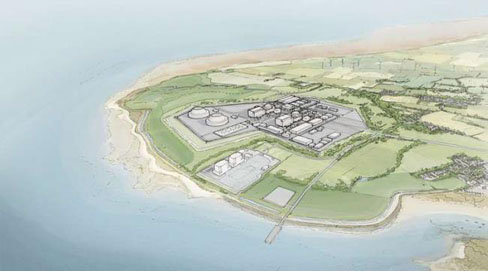
CAMPAIGNERS fighting against plans for a new nuclear power station have hit out at claims it is a key asset in the fight against climate change. The Blackwater Against New Nuclear Group (BANNG) has refuted a statement saying the Bradwell B power station would be Essex’s “biggest contribution to climate action”. The statement from Bradwell B Power Station came in relation to the COP26 climate discussions in Glasgow and said the project was “ideally placed” to play a “major part” in achieving net zero by 2050 emission goals.
But BANNG has claimed, due to the nuclear power station being on a low-lying site, rising global
temperatures would see it become vulnerable to rising sea levels and other weather events by the end of the century. BANNG’s secretary Varrie Blowers added: “Rather than contributing to net zero, Bradwell B would be ‘ideally placed’ to become the casualty of climate change.”
Braintree & Witham Times 17th Nov 2021
France has multiple nuclear problems – costs, wastes, safety and more …..

Cost, waste management and safety: eight questions raised by the announced
return of nuclear power in France. Emmanuel Macron said he wanted new
reactors, in the name of France’s energy independence and climate
preservation. But where is the sector and what does this choice imply?
Le Monde 18th Nov 2021
Electricity production choices: anticipate and control technological,
technical and financial risks.
Cour des Comptes 18th Nov 2021
Nuclear revival: the Court of Auditors highlights many obstacles.
Reporterre 18th Nov 2021
https://reporterre.net/Relance-du-nucleaire-la-Cour-des-comptes-pointe-de-nombreux-obstacles
1 This Month
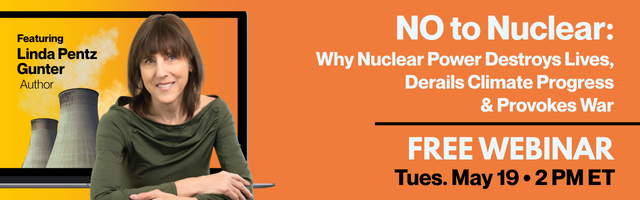
19 May – Webinar No To Nuclear: Why Nuclear Power Destroys Lives, Derails Climate Progress and Provokes War
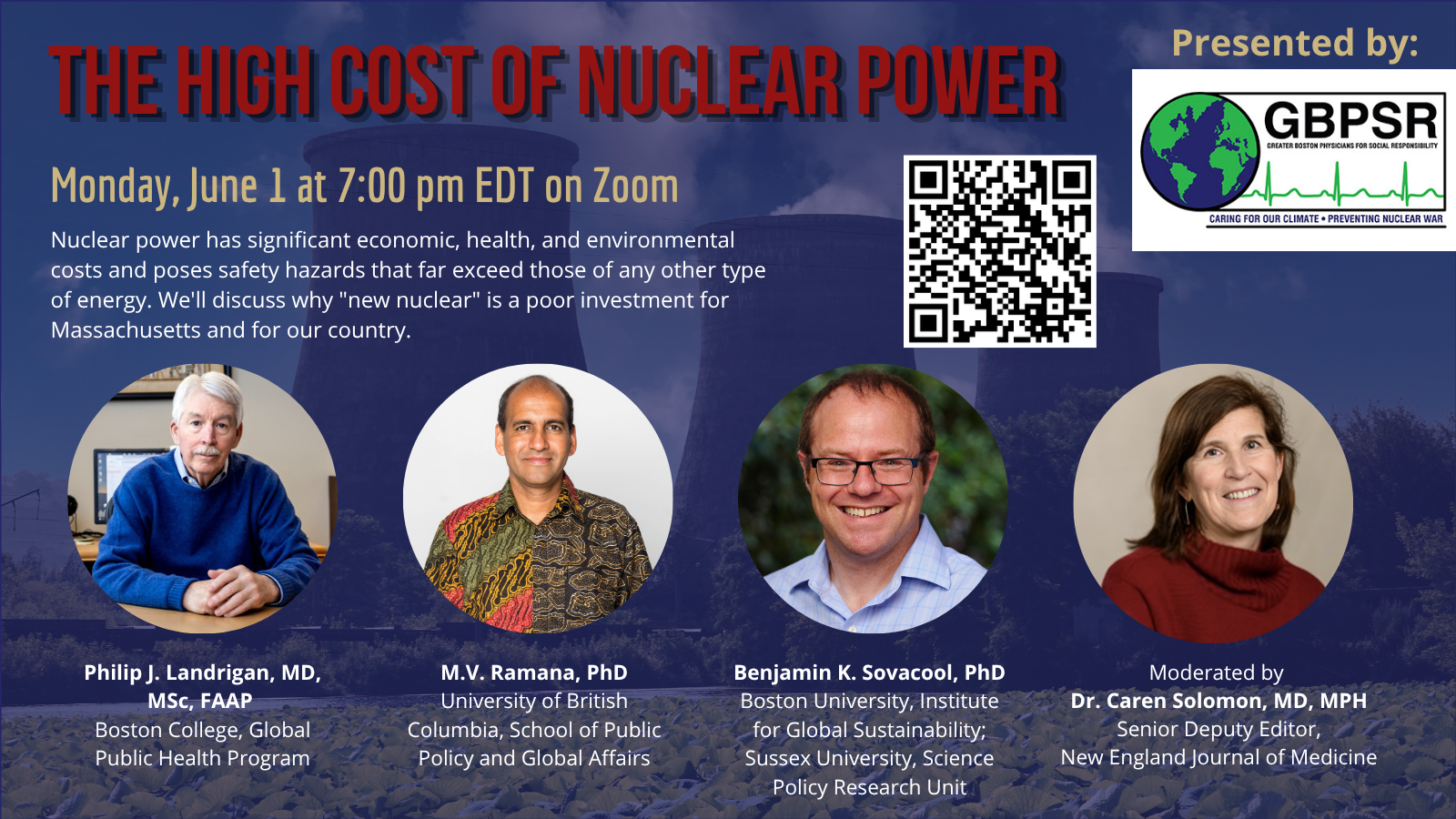
1 June Webinar – The High Cost of Nuclear Power – Register


of the week– Nuclear Reactor Information Task Force
To see nuclear-related stories in greater depth and intensity – go to https://nuclearinformation.wordpress.com
-
Archives
- May 2026 (187)
- April 2026 (356)
- March 2026 (251)
- February 2026 (268)
- January 2026 (308)
- December 2025 (358)
- November 2025 (359)
- October 2025 (376)
- September 2025 (257)
- August 2025 (319)
- July 2025 (230)
- June 2025 (348)
-
Categories
- 1
- 1 NUCLEAR ISSUES
- business and costs
- climate change
- culture and arts
- ENERGY
- environment
- health
- history
- indigenous issues
- Legal
- marketing of nuclear
- media
- opposition to nuclear
- PERSONAL STORIES
- politics
- politics international
- Religion and ethics
- safety
- secrets,lies and civil liberties
- spinbuster
- technology
- Uranium
- wastes
- weapons and war
- Women
- 2 WORLD
- ACTION
- AFRICA
- Atrocities
- AUSTRALIA
- Christina's notes
- Christina's themes
- culture and arts
- Events
- Fuk 2022
- Fuk 2023
- Fukushima 2017
- Fukushima 2018
- fukushima 2019
- Fukushima 2020
- Fukushima 2021
- general
- global warming
- Humour (God we need it)
- Nuclear
- RARE EARTHS
- Reference
- resources – print
- Resources -audiovicual
- Weekly Newsletter
- World
- World Nuclear
- YouTube
-
RSS
Entries RSS
Comments RSS
 nuclear-news