The Guardian’s direct collusion with media censorship by secret services exposed

WSWS, Thomas Scripps, 22 June 2019, Minutes of Ministry of Defence (MoD) meetings have confirmed the role of Britain’s Guardian newspaper as a mouthpiece for the intelligence agencies.
Last week, independent journalist Matt Kennard revealed that the paper’s deputy editor, Paul Johnson, was personally thanked by the Defence and Security Media Advisory Notice (or D-Notice) committee for integrating the Guardian into the operations of the security services.
Minutes of a meeting in 2018 read: “The Chairman thanked Paul Johnson for his service to the Committee. Paul had joined the Committee in the wake of the Snowden affair and had been instrumental in re-establishing links with the Guardian.”
D-Notices are used by the British state to veto the publication of news damaging to its interests. The slavish collusion of the mainstream media ensures that such notices function as gag orders.
Johnson joined the committee in 2014 and evidently excelled in his performance. A separate set of minutes from the first meeting attended by Johnson records the Guardian’s close collaboration with military officials.
Under a section detailing “advice” given by the intelligence agencies to the media, the document reads “most of the occurrences and requests for advice were related to further publications by The Guardian of extracts from the Snowden documents. The Secretary reported that the engagement of DPBAC [Defence Press and Broadcasting Advisory Committee] Secretariat with The Guardian had continued to strengthen during the last six months, with regular dialogues between the Secretary and Deputy Secretaries and Guardian journalists.”
In September 2014, the Guardian allowed the former head of GCHQ (Government Communications Headquarters) Sir David Omand to publish an article titled, “Edward Snowden’s leaks are misguided—they risk exposing us to cyber-attacks.”
He declared, “Journalists are not best placed to identify security risks; we have to trust those who oversee the intelligence-gathering.”
In 2016, Paul Johnson used an unprecedented interview with a serving head of MI5, Andrew Parker, to propagandize for the antidemocratic, British warmongering interests .
These facts are damning proof of the Guardian’s total integration into the propaganda wing of the MoD following its involvement in the WikiLeaks and Snowden files releases. Indeed, the work of WikiLeaks and its founder Julian Assange has served to expose and confirm the deep ties of the entire mainstream media to the military-intelligence complex.
The Guardian has been viewed historically as the voice of British liberal dissent, critical of the worst excesses of British capitalism at home and abroad. But it has always acted as a political policeman—filtering the news “responsibly” and channelling the resulting anger into impotent moral appeals to the state and other authorities. Its dealings with Assange and Snowden transformed political allegiance into direct subservience. Its liberal, critical pretensions unravelled in a matter of a few months.
When Assange looked to the Guardian and other papers internationally such as the New York Times to publish the Afghan and Iraq war logs and secret US diplomatic cables in 2010, the editors’ main concern was damage control. Within a month of an initial publication of documents, the Guardian had broken off relations with Assange—publishing an infamous December 17 editorial “WikiLeaks: the man and the idea.” It stated that the Guardian had only agreed to publish “a small number of cables” to control the political fall-out from the details of murder, torture, espionage and corruption they revealed and give it the opportunity of “editing, contextualising, explanation and redaction.”
The main purpose of the editorial was to support Assange’s extradition to Sweden on trumped-up allegations of sexual misconduct relating to a trip to that country a few months earlier………………………………..
One of Assange’s persecutors-in-chief, Luke Harding, enjoys the most intimate relations with the security services. His notorious November 2018 fabrication, claiming Assange held meetings with US President Donald Trump’s former campaign manager Paul Manafort, was published in the Guardian just two weeks after Johnson was thanked for “re-establishing links” with the MoD. The story was widely cited and formed a keystone of the efforts, spearheaded by the Democrats in the US, to present WikiLeaks and “Russian interference” as the causes of Trump’s 2016 election victory……. https://www.wsws.org/en/articles/2019/06/22/guar-j22.html
Profit in a time of war? The madness of more reactors (from Westinghouse) in Ukraine

in the middle of all this, Ukraine is busy making business deals with a bankrupt American nuclear company with a lamentable track record of cost over-runs, technical challenges and long delayed completion times.
The madness of more reactors in Ukraine https://beyondnuclearinternational.org/2022/06/19/profit-in-a-time-of-war/
Profit in a time of war? — Beyond Nuclear International Westinghouse lands in Ukraine to ink new nuclear deal
By Linda Pentz Gunter
You might think that being in the middle of a war, the last thing you would be contemplating is building more nuclear power plants. But that hasn’t stopped Energoatom, the Ukrainian state nuclear operator.
Earlier this month, Energoatom inked a new agreement with Westinghouse of all companies, the American corporation that went bankrupt trying to build four of its AP1000 reactors in South Carolina and Georgia. The two in South Carolina were canceled mid-construction, while the pair in Georgia are years behind schedule and billions of dollars over-budget.
But like a good corporate vulture, Westinghouse has swooped into Ukraine, to grab a golden opportunity. Already the supplier of nuclear fuel to almost half of Ukraine’s reactors, the company now plans to increase that commitment to all 15, replacing Russia’s Rosatom; to establish a Westinghouse Engineering and Technical Center; and, craziest of all, build nine new AP1000 reactors there.
Westinghouse already has the contract to build more reactors at the 2-reactor Khmelnytsky nuclear power plant, which remain partially complete. Under the deal, Westinghouse will work first on Khmelnitsky 3, which is 75% complete, before taking on the 25% complete unit 4. Talks this month also evaluated Westinghouse building two more reactors at the site.
Fifteen operational reactors in a war zone — seven of them are apparently still running in Ukraine — is already risk enough. If even one of those reactors were fully breached, or its fuel pool caught fire or suffered an explosion — whether from an attack, accident, or meltdown due to gird failure — the amount of radioactivity released would dwarf the 1986 Chornobyl disaster.
Chornobyl Unit 4 was a relatively new reactor when it exploded on April 26, 1986, releasing potentially as much as 200 million curies into the environment. At least 100,000 square kilometres (39,000 square miles) of land was significantly contaminated with radioactive fallout. As much as 40% of Europe beyond Ukraine, Russia and Belarus, received fallout from the disaster. Certain plants and animals — including in Germany, Lapland and, until recently, the United Kingdom—remain unsafe to eat, even today.
The contamination from Chornobyl, and the resulting and widespread health effects, will endure potentially indefinitely. And all of that, as Scientists for Global Responsibility’s Phil Webber said in a recent webinar, would “look like a tea party” compared to the devastation unleashed should one of the older Ukrainian reactors suffer a catastrophe during this unforgivable war.
We’ve already seen the six-reactor Zaporizhzhia site attacked and a fire break out, mercifully not in one of the reactors or fuel pools. Zaporizhizhia will now likely remain permanently occupied by the Russians as they move deeper into Ukrainian territory from the east.
More recently, there have been incidences of Russian missiles flying low — too low — first over the six-reactor Zaporizhzhia site and then over the three reactors at the South Ukraine nuclear power plant. The humanitarian catastrophe that is already unfolding in Ukraine would be magnified beyond imagination were one of those missiles to malfunction and hit a nuclear plant — I use the term ‘malfunction’ because we still rest on the assumption that even Putin would not be reckless enough to deliberately order an attack on a nuclear reactor. But we can’t count on it.
And yet, in the middle of all this, Ukraine is busy making business deals with a bankrupt American nuclear company with a lamentable track record of cost over-runs, technical challenges and long delayed completion times.
All of this is testament to the misplaced caché still held by anything nuclear. Somehow, the possession of both nuclear weapons and nuclear power plants is seen as holding prestige. Indeed, Energoatom announced this latest Westinghouse deal thus: “Every such event in energy too brings the victory of Ukraine!”
It’s not really clear what, if anything, will bring victory to Ukraine and at what price. But building more nuclear power plants there only achieves one thing: putting the people of Ukraine in even greater danger, war or not. Reactors are vulnerable to failure and they make deadly radioactive waste, lethal for tens to hundreds of thousands of years. There is nothing victorious in perpetuating that. Just utter folly.
The UK’s Decision to Extradite Assange Shows Why The US/UK’s Freedom Lectures Are a Farce
Glenn Greenwald, 18 June 22, The Assange persecution is the greatest threat to Western press freedoms in years. It is also a shining monument to the fraud of American and British self-depictions.
The eleven-year persecution of Julian Assange was extended and escalated on Friday morning. The British Home Secretary, Priti Patel, approved the U.S.’s extradition request to send Julian Assange to Virginia to stand trial on eighteen felony charges under the 1917 Espionage Act and other statutes in connection with the 2010 publication by WikiLeaks of thousands of documents showing widespread corruption, deceit, and war crimes by American and British authorities along with their close dictatorial allies in the Middle East.
This decision is unsurprising — it has been obvious for years that the U.S. and UK are determined to destroy Assange as punishment for his journalism exposing their crimes — yet it nonetheless further highlights the utter sham of American and British sermons about freedom, democracy and a free press.
Having reported on the Assange case for years, on countless occasions I’ve laid out the detailed background that led Assange and the U.S. to this point. There is thus no need to recount all of that again; those interested can read the granular trajectory of this persecution here or here.
Suffice to say, Assange — without having been convicted of any crime other than bail jumping, for which he long ago served out his fifty-week sentence — has been in effective imprisonment for more than a decade…………………….
The Home Secretary’s decision this morning — characteristically subservient and obedient of the British when it comes to the demands of the U.S. — does not mean that Assange’s presence on U.S. soil is imminent. Under British law, Assange has the right to pursue a series of appeals contesting the Home Secretary’s decision, and will likely do so. Given that the British judiciary has more or less announced in advance their determination to follow the orders of their American masters, it is difficult to see how these further proceedings will have any effect other than to delay the inevitable………………….
What makes this law so insidious is that, by design, it is almost impossible for the government to lose. As I detailed in a Washington Post op-ed when the indictment was first revealed — arguing why it poses the greatest threat to press freedoms in the West in years — this 1917 law is written as a “strict liability” statute, meaning that the defendant is not only guilty as soon as there is proof that they disclosed classified information without authorization, but they are also barred from raising a “justification” defense — meaning they cannot argue to the jury of their peers that it was not only permissible but morally necessary to disclose that information because of the serious wrongdoing and criminality it revealed on the part of the nation’s most powerful political officials. That 1917 law, in other words, is written to offer only show trials but not fair trials.
………………. “free press” guarantees in the U.S. and UK exist only on a piece of parchment and in theory. Citizens are free to do “journalism” as long as it does not disturb or anger or impede real power centers. Employees of The Washington Post and CNN are “free” to say what they want as long as what they are saying is approved and directed by the CIA or the content of their “reporting” advances the interests of the Pentagon’s sprawling war machine…………… https://greenwald.substack.com/p/the-uks-decision-to-extradite-assange
Macron warned of horror ‘nuclear accident’ as CRACKS appear in EDF’s reactors
 |
|
FRENCH President Emmanuel Macron has been sent a horrifying warning as cracks have been detected in some of EDFs nuclear reactors in France.
https://www.express.co.uk/news/science/1625813/edf-cracks-nuclear-reactor-accident-power-plant-France-energy-emmanuel-macron— By ANTONY ASHKENAZ, Wed, Jun 15, 2022 ,
A new report has warned Mr Macron of significant corrosion safety problems in EDF nuclear power plants in France as cracks detected in some nuclear reactors could risk causing “nuclear accidents”. The cracks were first detected in an emergency cooling circuit of reactor no. 1 of the Civaux power plant in October. The report also warned that the upcoming Hinkley Point reactor in the UK could face a similar situation Similar cracks have been discovered in three other 1500 MW reactors and of the Penly 1 reactor (1300 MW) , prompting them to be shut down as well.
The report notes that several reactors have faced “stress corrosion” which is often characterised by “cracking of a material… the stresses are linked to manufacturing operations and in particular to welding operations”.
Dr Bernard Laponche, the co-author of this study warned that the risk from stress corrosion is serious writing: “If the defects detected on the welds evolve, they can cause a breach in the main reactor cooling system.
While France has a large fleet of nuclear reactors generating about 70 percent of its energy, many of these reactors are ageing, with French regulators pushing the scheduled shutdown of over half of EDF’s reactors by over a decade.
The report added that there are a number of likely reasons why several of these reactors were cracking, which include “a degradation mechanism that simultaneously involves the material and its intrinsic characteristics, the mechanical stresses to which it is subjected and the nature of the fluid that circulates.”
According to the French nuclear regulator ASN, the “geometry” of the circuits concerned is the main cause for this defect, while EDF blames “thermal stratification”, or contact between two types of steam with different temperatures coming into contact.
The authors warned against France’s decision to extend the lifespan of these nuclear reactors from 40 years to 50 after 58 of the country’s reactors were set to shuitdown.
The authors wrote: “In any case, if the vulnerability of the 900 MW reactors were confirmed, the question of extending the operating life of these reactors beyond 40 years would have to be re-examined.
“It would also be necessary to examine the possibility that the EPR reactors at Flamanville, Olkiluoto and Taïshan, as well as those under construction at Hinkley Point, might themselves be concerned, insofar as they were designed on the basis of the 1500 MW N4 model.”
EDF is currently building the Hinkley Point C nuclear power station in Somerset and was previously set to come online in 2026.
Last month, EDF warned that as a result fo the pandemic, Hinkley Point C would be delayed by another year to June 2027, and will cost another £3billion to complete.
However, they assured that there would be no cost impact to the British taxpayer as a result of the delay.
Following Russia’s invasion of Ukraine, the UK has invested heavily in nuclear energy, announcing plans to generate a quarter of the UK’s energy supply from nuclear sources by 2050.
The Government aims to launch 8 new nuclear reactors to replace 5 of the 6 existing plants that are set to be shut down by the end of the decade.
Express.co.uk has reached out to EDF for comment.
“Chernobyl: The Lost Tapes” – exposes the lies about this nuclear disaster.
The new documentary “Chernobyl: The Lost Tapes,” premiering Wednesday
on HBO, exposes the shocking lies the Soviet government fed its citizens in
an effort to downplay the dangers of the Chernobyl explosion — even as
officials who knew better protected themselves. Among the recently
discovered and previously unseen footage is video originally shot to be
propaganda as the country scurried to downplay the severity of the event.
New York Post 18th June 2022
https://nypost.com/2022/06/18/hbo-doc-chernobyl-exposes-lies-told-by-soviet-government/
Ukraine killing civilians in ‘unprecedented’ shelling on Donetsk ignored by Western media and politicians
Western media and politicians prefer to ignore the truth about civilians killed in Donetsk shelling. When Kiev’s guilt in attacks on a maternity hospital cannot be denied, it’s simply brushed under the carpet https://www.rt.com/russia/557201-kievs-guilt-shelling-donetsk/ RT, Fri, 17 Jun 2022
Following intense Ukrainian shelling of Donetsk on June 13, some Western media sources, in tandem with outlets in Kiev, unsurprisingly claimed that the attack – which killed at least five civilians and struck a busy maternity hospital – was perpetrated by Russian forces.
Why Moscow would launch rockets at its own allies wasn’t explained, nor would it make much sense.
The Donetsk People’s Republic’s foreign ministry reported: “Such an unprecedented. in terms of power, density and duration of fire, raid on the DPR capital was not recorded during the entire period of the armed conflict [since 2014]. In two hours, almost 300 MLRS rockets and artillery shells were fired.”
The Ukrainian shelling began late morning, resumed in the afternoon, and continued for another two hours in the evening, a deafening series of blasts throughout the city, terrorizing residents and targeting apartment buildings, civilian infrastructure, the aforementioned hospital, and industrial buildings.
Ukrainian bombing of Donetsk renewed just before 6 pm, hitting residential areas across the city for the next two hours.
— Juan Sinmiedo (@Youblacksoul) June 13, 2022Comment: The Tweet is no longer available because Twitter has banned the user.
Locals say this was some of the heaviest bombing of Donetsk since 2014, when the region declared its independence from post-Maidan Kiev.
In the Budyonnovsky district in the south of the city, Ukrainian shelling of a market killed five civilians including one child. Just two months ago, Kiev’s forces hit another Donetsk market, leaving four civilians dead.
In the hard-hit Kievskiy district, to the north, the shelling caused fires at a water bottling plant and a warehouse for stationery, destroying it. The building was still in flames when journalist Roman Kosarev and I arrived about an hour after the attack. Apartment buildings in the area also came under fire, leaving doors and windows blown out and cars destroyed.
civilians including one child. Just two months ago, Kiev’s forces hit another Donetsk market, leaving four civilians dead.
In the hard-hit Kievskiy district, to the north, the shelling caused fires at a water bottling plant and a warehouse for stationery, destroying it. The building was still in flames when journalist Roman Kosarev and I arrived about an hour after the attack. Apartment buildings in the area also came under fire, leaving doors and windows blown out and cars destroyed.
To all those in the West who support Kiev regime we recommend to examine the evidence of barbaric heavy artillery shelling of Donetsk by Ukrainian forces on June 13th. 5 hospitals, 3 schools and a kindergarten have been damaged. Will @UNESCO react to these crimes of Kiev?
Hypocritical silence after maternity hospital shelling
In a world where media reported honestly instead of manufacturing its own reality, there would be outrage over Ukraine’s attack on the Donetsk maternity hospital. But history shows that is not a world we live in.
As I wrote last year, Western media and talking heads also diligently avoided condemnation when terrorists attacked or destroyed Syrian hospitals, including the shelling of a maternity hospital in Aleppo, which killed three women.
At the damaged Donetsk hospital, I saw the gaping hole in the roof and remnants of the Uragan MLRS rocket which struck it. Most of the windows of both buildings were blown out.
Images shared on Twitter noted, “Both gynecology and intensive care have been bombed.” Other footage, taken by Donetsk war correspondent Dmitri Ashtrakhan, showed dozens of women, some heavily pregnant, taking shelter in the basement of the shelled maternity hospital.
Were these women and this hospital in Kiev, you can bet Western media would be loudly reporting it 24/7 for weeks. Instead, just as the West has steadfastly ignored Ukraine’s eight years of war on Donbass, they also omit reporting on the hospital.
Grotesquely, some Ukrainian and Western media instead disingenuously reported that it was a Russian attack, not Ukrainian, which terrorized, injured and killed civilians on June 13.
Just as Western media’s lack of reporting, or twisting of the narrative, on Ukraine’s shelling was to be expected, so too was the UN’s weak-worded condemnation, with the Spokesman for the Secretary-General, Antonio Guterres, calling it “extremely troubling.” Were the situation reversed and Russia responsible for bombing a Ukrainian maternity hospital, his words would almost certainly have been far stronger.
In fact, they already have been: Three months ago, when Kiev accused Russia of an attack on a maternity hospital, in Mariupol.
Back then, the Guterres emphatically tweeted, “Today’s attack on a hospital in Mariupol, Ukraine, where maternity & children’s wards are located, is horrific. Civilians are paying the highest price for a war that has nothing to do with them. This senseless violence must stop. End the bloodshed now.” A strong reaction to what later emerged to be a hoax claim, when the UN itself even admitted it could not verify the story. But a mild reaction to a documented reality in Donetsk.
The UN did, at least, rightly note the attack on the Donetsk maternity hospital was, “an obvious breach of the international humanitarian law.” So there’s that.
The thing is, Ukraine has violated international law for its eight years of waging war on the Donbass republics, using prohibited heavy weapons and targeting civilians and civilian infrastructure. This is only the latest incident.
Tears flow for hoax hospital bombing
In March, Western corporate-owned media supported Kiev’s claim that Russia had launched air strikes on a Mariupol maternity hospital, claiming three civilians had been killed. At the time, as reported, “The White House condemned the ‘barbaric’ use of force against innocent civilians, and UK Prime Minister Boris Johnson tweeted that ‘there are few things more depraved than targeting the vulnerable and defenceless’.”
As it turned out, witnesses reported there hadn’t been any air strike. There were explosions: just as terrorists bombed an Aleppo home in 2016 and used a mildly injured boy for their propaganda against Syria and Russia, so too did Ukrainian forces in Mariupol, setting the stage to incriminate Moscow.
Russia called the accusations “a completely staged provocation,” analyzing photos from the area and noting “evidence of two separate staged explosions near the hospital: An underground explosion and another of minor power, aimed at the hospital building,” and further noting that a “high-explosive aviation bomb would destroy the outer walls of the building.” Russia also pointed out that the facility had stopped working when Ukraine’s neo-Nazi Azov Battalion expelled staff in late February and militarized the hospital, as Ukrainian forces did elsewhere in Donbass.
Marianna Vyshemirskaya, one of the women featured in the Western propaganda around the hospital, later spoke out and said there was no air strike, and that prior to the alleged event, Ukrainian soldiers expelled all the doctors and moved pregnant women to another building.
She also maintained that she and other women were filmed without warning by an Associated Press journalist dressed in a military uniform and wearing a helmet.
Even three days after Ukraine’s intense bombardment of Donetsk and targeting of the maternity hospital, when still more testimonies have emerged, Western media and politicians remained silent.
The suffering, and deaths, of the people of Donetsk doesn’t fit the Western narrative, so they misreport it or simply just don’t reference it at all, enabling Ukraine to continue to commit war crimes.
Eva Bartlett is a Canadian independent journalist. She has spent years on the ground covering conflict zones in the Middle East, especially in Syria and Palestine (where she lived for nearly four years). @evakbartlett
Treaty on Prohibition of Nuclear Weapons as New Instrument in Nuclear Disarmament Process

It should also be emphasized that the TPNW is gaining global popularity thanks to the efforts of civil society, which encourages governments and parliamentarians of their respective countries to accede to the Treaty. Kazakhstan welcomes the decision of several European countries (Switzerland, Sweden, and Finland), including the declared intention of NATO members (Germany and Norway), to participate as observers in the First Conference of the States Parties to the TPNW.
Treaty on Prohibition of Nuclear Weapons as New Instrument in Nuclear Disarmament Process, https://moderndiplomacy.eu/2022/06/17/treaty-on-prohibition-of-nuclear-weapons-as-new-instrument-in-nuclear-disarmament-process/ June 17, 2022, By Mukhtar Tileuberdi
On June 21–23, Vienna will host a historic event in the field of nuclear disarmament – the First Meeting of the States Parties to the Treaty on the Prohibition of Nuclear Weapons (TPNW).
The entry into force of this treaty in January 2021 became a long-awaited signal that demonstrated the determination of the UN member states to take concrete measures to outlaw nuclear weapons.
This was a significant moment for Kazakhstan, which in the past experienced detrimental consequences of nuclear tests. As President of Kazakhstan Kassym-Jomart Tokayev noted in his speech at the 75th session of the UN General Assembly, “today Kazakhstan is an example and a role model for the whole world as a responsible state that voluntarily abandoned its nuclear-missile arsenal and closed the world’s largest nuclear test site.”
For half a century, our land suffered atmospheric, ground, and underground tests. This impacted the health of about 1.5 million Kazakhs living near the test site with an area of more than 18,000 square kilometres. The consequences of radiation are felt to this day.
On the initiative of Kazakhstan, the closing date of the Semipalatinsk test site – August 29 – was declared in 2009 by the UN General Assembly the International Day against Nuclear Tests. Emphasizing the symbolism of this date, in 2019 Kazakhstan submitted to the UN Secretariat an instrument for ratifying the Treaty on the Prohibition of Nuclear Weapons (TPNW).
Kazakhstan voluntarily abandoned the 4th largest nuclear arsenal in the world, which it inherited after the collapse of the Soviet Union, and in 1993 joined the Treaty on the Non-Proliferation of Nuclear Weapons (NPT) as a state that does not possess nuclear weapons. Let me note, that the TPNW was developed in support of the NPT and fully complements its objective of strengthening the nuclear non-proliferation regime, the peaceful use of atomic energy and wider international security.
In fact, TPNW reflects the dissatisfaction of most UN member states with the disregard by nuclear countries of their obligations on nuclear disarmament, enshrined in several international treaties and documents, including Article VI of the NPT. For this reason, we believe that the treaty should be mentioned in the Final Document of the forthcoming NPT Review Conference in August 2022.
The Treaty establishes several mandatory legal initiatives in the field of nuclear disarmament. For example, nuclear weapons are considered illegal for the first time in human history. Secondly, the production, testing, acquisition, transfer, storage and deployment of nuclear weapons or nuclear explosive devices, as well as the use of threats to use them, are prohibited.
A nuclear-weapon country can join the TPNW if it agrees to destroy its nuclear weapons in accordance with legally binding, verifiable, time-specific plans. Similarly, a country hosting nuclear weapons can join if it agrees to remove them. The Treaty does not prescribe specific timeframes or disarmament measures, as they are planned to be approved by the member states following the First Conference of the TPNW.
Kazakhstan’s active participation gave impetus to the organisation of the First Conference of the TPNW. The most important contribution of our country to this process was acting as a facilitator of substantive solutions. In particular, at the initiative of Kazakhstan and Kiribati (which suffered 39 American and British nuclear weapon test), a working group was created to develop proposals on the issue of positive obligations in accordance with Articles 6 and 7 of the Treaty related to providing support for victims of nuclear testing and use of nuclear weapons, as well as environmental rehabilitation.
The positive obligations under the TPNW refer to the nodal aspects and are focused on eliminating damage from the use and testing of nuclear weapons in the past, as well as preventing possible damage in the future.
The medium-term goal of this initiative on the adoption of positive obligations is to establish an International Trust Fund to finance projects related to victim assistance and environmental restoration.
A specific mechanism is being discussed for identifying sources of funding (from TPNW member-states and non-member states, NGOs, philanthropists, and individuals) for work that requires special knowledge, materials, and equipment. It is important to note that this proposal has found support among the expert community and academic circles.
I would like to note that with the financial support of Kazakhstan and the UN Office for Disarmament Affairs, Kazakh people affected by nuclear testing and the youth representatives from Pacific Island countries will be able to participate in the First Conference of the TPNW and share their stories from a high international rostrum to draw attention to how deplorable the consequences of the use/testing of nuclear weapons can be.
The TPNW positive obligations are of practical value for Central Asia. In accordance with Article 7 of the TPNW, states may request the assistance of other parties to the Treaty and international structures to implement the abovementioned provisions. Considering the existing problem of uranium tailing ponds in several countries of our region, this initiative would help to attract donor funds from other states and international organisations for the reclamation of tailing ponds and the implementation of preventive measures to help the population near uranium mines.
Therefore, Kazakhstan, as the only state in the CIS region that has acceded to the TPNW, is conducting systematic work in accordance with Article 12 on the universalisation of the document to expand the membership of its participants, primarily from among the countries of the Central Asian Nuclear-Weapon-Free Zone (CANWFZ).
Let me remind that CANWFZ, established by Kazakhstan jointly with its regional neighbours through the 2006 Semipalatinsk Treaty, is the first and currently the only such zone in the Northern Hemisphere. A key addition to it was the Protocol, containing negative security assurances, which stipulates that countries possessing nuclear weapons undertake not to use them on the parties to the Treaty. In this regard, we are grateful to the United Kingdom, China, Russia, and France for completing the ratification of this important document. Last year, the foreign ministers of the states that are parties to the Treaty – Kazakhstan, Kyrgyzstan, Tajikistan, Turkmenistan, and Uzbekistan – made a joint statement on its 15th anniversary, in which they reaffirmed their unshakable commitment to its provisions and called on the United States to ratify the above-mentioned Protocol as soon as possible.
The members of nuclear-weapon-free zones around the world are at the forefront of the nuclear disarmament process. The main goals and objectives of establishing these zones are in line with the principles of the TPNW. This means that a state party to the Semipalatinsk Treaty can accede to the TPNW without assuming additional obligations. Besides, if a state that is party to the Semipalatinsk Treaty has already adopted relevant national regulatory legal acts to implement the provisions of the Semipalatinsk Treaty, then this will probably be sufficient to fulfil the obligations that the state will assume by joining the TPNW. This is confirmed by leading international NGOs and experts in the field of nuclear disarmament.
It should also be emphasized that the TPNW is gaining global popularity thanks to the efforts of civil society, which encourages governments and parliamentarians of their respective countries to accede to the Treaty. Kazakhstan welcomes the decision of several European countries (Switzerland, Sweden, and Finland), including the declared intention of NATO members (Germany and Norway), to participate as observers in the First Conference of the States Parties to the TPNW.
The Treaty is another effective platform for our efforts to build a world without nuclear weapons. Kazakhstan will continue to show an example of high responsibility to the present and future generations of humankind.
In this context, it’s worth noting the UN Universal Declaration on the Achievement of a Nuclear-Weapon-Free World, adopted at the initiative of Kazakhstan at the 70th session of the UN General Assembly in 2015. The Universal Declaration calls for the total elimination of nuclear weapons as the only guarantee against their use or threat of use. Last year, the resolution received a record number of 141 votes from UN member states, indicating its positive momentum. Particularly noteworthy was the support from India and Democratic People’s Republic of Korea, which possess nuclear weapons, as well as from Iran, which was among the co-sponsors of the resolution.
If nuclear weapons are declared to be outside of international law, the call for nuclear-weapon states to take urgent steps in the field of nuclear disarmament will increase significantly. To this end, Kazakhstan continuously encourages dialogue between nuclear countries and the TPNW supporters in order to align their views and strengthen trust between them, which is especially important given current geopolitical conditions. Such work is also being carried out within the framework of the Stockholm Initiative for Nuclear Disarmament and specialised platforms within the UN, including the First Committee of the General Assembly, where our country will take over the chairmanship during the 77th session.
The possibility of signing the TPNW and its entry into force have given many countries additional hope for a safer and rational world, which is currently in a serious crisis. As noted by the UN Secretary-General António Guterres, with about 13,400 nuclear warheads around the world, the possibility of using nuclear weapons is more real than in the darkest days of the Cold War. The current military confrontation in Ukraine, discussions about proliferation of nuclear weapons and mutual threats to use them, raise the question about the collective vulnerability of humanity and the urgent need to ban and eliminate the deadly weapons.
The practical contribution of Kazakhstan to nuclear disarmament encourages us to continue calling on nations and governments to redouble their efforts to rid our planet of the threat of nuclear self-destruction by strengthening mutual trust. With that in mind, Kazakhstan has nominated its candidacy for the position of Vice Chair of the First Meeting of the TPNW in 2022 and Chair of the Third Meeting for 2024–2026.
We call on all states, including nuclear-weapon powers, to develop a phased plan for the complete elimination of nuclear weapons by 2045, to the centenary of the UN. The proposals and agreements to achieve this goal could be reflected in the final documents of both the First Conference of the TPNW and the NPT Review Conference.
Kazakhstan realizes that there are many political and technical obstacles on the way to achieving this noble and ambitious goal. We consider it necessary to embark on a practical work in this direction.
Ukraine vows to reclaim Crimea with US weapons
| |||
|

So far Russian forces, who have an overwhelming advantage in artillery and other arms, are steadily gaining land in Donbass.
Ukraine vows to reclaim Crimea with US weapons. https://www.rt.com/news/557265-ukraine-crimea-us-weapons/ 19 June 22,
Kiev aims to recapture all lost territory from Russia, including the Crimean Peninsula, Ukraine’s defense minister says, US-supplied weapons will allow Kiev to win back all land lost to Russia, including Crimea, Ukrainian Defense Minister Alexey Reznikov said on Thursday.
“We are going to liberate all our territories, all of it, including Crimea,” Reznikov told CNN in an interview in Brussels.
According to Washington, the Kiev authorities earlier gave “assurances” they would not use American weapons to stage attacks inside Russia, as the US is concerned it could further escalate tensions between Moscow and NATO. However, Ukraine then backtracked on its promise, stating it would use US-supplied rocket systems to strike its neighbor’s territory should it deem such attacks necessary.
Crimea, which voted overwhelmingly in a 2014 referendum to reunite with Russia, “is a strategic objective for Ukraine because it’s Ukrainian territory,” Reznikov told CNN. “But we will move step by step,” he added.
The first stage in Kiev’s plan is to stabilize the situation on the ground, according to Reznikov. During the second stage, Russian forces would be pushed back to the lines they occupied before the ongoing military offensive.
The minister stressed that only after that can discussions begin with Ukraine’s foreign partners on “how to liberate territories.”
The Russians “will see that in Kherson, they will see it in Zaporizhzhia, they will also see it in Mariupol… these are Ukrainian lands, and Crimea is also Ukrainian land, no matter what,” he said.
Earlier this week, Ukrainian President Volodymyr Zelensky also vowed to “liberate” Crimea and the Republics of Donetsk (DPR) and Lugansk (LPR), which are recognised by Russia as independent states. “We will come to all our cities, to all our villages, which do not yet have our flag,” he pledged.
So far Russian forces, who have an overwhelming advantage in artillery and other arms, are steadily gaining land in Donbass.
Ukraine’s troops have complained of a lack of weaponry to turn the tide in the battle, and are suffering heavy losses in manpower. In his interview, Reznikov refused to give an exact number of Ukrainians killed in the fighting, but said he “hopes” the figure is below 100,000.
On Wednesday, Washington announced another $1 billion in military assistance to Kiev, on top of $5.3 billion it had already provided to Ukraine during and before the conflict with Russia.
During a phone conversation, US President Joe Biden told Zelensky that the new deliveries would include “additional artillery and coastal defense weapons, as well as ammunition for the artillery and advanced rocket systems that the Ukrainians need to support their defensive operations” in Donbass, according to the White House.
Moscow has warned against “lethal aid” supplies to Ukraine by the US and its allies, saying they only prolong the fighting, while also increasing the risk of a direct military confrontation between Russia and the West.
Russia’s President Vladimir Putin has also warned that if Kiev is given long-range missiles, “we will draw the appropriate conclusions and use our weapons, which we have enough of, in order to strike at those objects that we have not yet struck.”
Russia attacked Ukraine in late February, following Kiev’s failure to implement the terms of the Minsk agreements, first signed in 2014, and Moscow’s eventual recognition of the Donbass republics of Donetsk and Lugansk. The German- and French-brokered protocols were designed to give the breakaway regions special status within the Ukrainian state.
The Kremlin has since demanded that Ukraine officially declare itself a neutral country that will never join the US-led NATO military bloc. Kiev insists the Russian offensive was completely unprovoked and has denied claims it was planning to retake the two republics by force.
France’s nuclear output lowers, as climate change affects cooling water systems of reactors.
French Nuclear Outages Risk Making Europe’s Gas Crisis Worse, By Todd Gillespie and Rachel Morison, 17 June 2022,
The cost of electricity in France jumped, adding to Europe’s gas woes, as depressed nuclear output squeezes the market.
France’s nuclear reactors are operating at less than half their full capacity and this week have produced the least electricity at this time of year since at least 2008, according to data compiled by Bloomberg. The country, where warm weather is already making it tougher to cool the fleet of reactors, is importing power from neighboring countries like the UK, which historically has taken energy from France.
Electricity generation from state-run Electricite de France SA, the continent’s largest producer of atomic energy, is struggling under lengthy maintenance of its aging fleet and risks heightening the continent’s dependence on gas, which is in short supply. The company may now need to import power from neighbors in winter, straining wider European supply and burdening consumers with higher costs………………. https://www.bloomberg.com/news/articles/2022-06-17/french-nuclear-outages-risk-making-europe-s-gas-crisis-worse
Sellafield, Britain’s most dangerous building, in the decades-long process of getting its nuclear waste cleaned up.

Britain’s most dangerous building is finally to be made safe after
engineers began removing nuclear waste from an ageing silo left over from
the arms race of the Cold War. Sellafield, at the edge of the Lake District
in Cumbria, has taken the first steps in a project described as the nuclear
industry’s equivalent of putting a man on the moon.
It has spent the past
two decades searching for a solution to the seemingly intractable problem
of cleaning up 10,000 cubic metres of radioactive sludge housed inside a
concrete silo. Known as Magnox, the silo was built in the late 1950s to
receive waste from Britain’s atomic weapons development programme, as
well as its growing fleet of nuclear reactors.
Today it holds roughly 80
per cent of all of Britain’s nuclear waste. For decades the waste has
been dissolving into a highly dangerous and potentially explosive mix
within a building no longer fit for purpose, leading to it being described
as the “most hazardous building in western Europe” – a description
Sellafield itself uses.
In 2005 a leak containing 20 metric tons of uranium
and 160kg of plutonium was discovered to have escaped from one of the
containers. The Office for Nuclear Regulation, the public watchdog, has
designated the building “an intolerable risk”.
This week, the plant
removed the first batch of waste from one of the silo’s 22 compartments
using a robotic arm specially designed for the task. The radioactive
material is then encased in cement, immobilising it to prevent any leakage,
and placed inside a metal container designed to store it permanently. The
project, which has been 20 years in the making and will take an estimated
further 20 years to complete, costs roughly £2 billion a year. Phil
Hallington, head of policy at Sellafield, described the project as the
nuclear industry’s equivalent of putting a man on the moon.
Times 16th June 2022
https://www.thetimes.co.uk/article/nuclear-waste-removal-begins-at-sellafield-power-plant-xlcmskffn
Julian Assange and family suffer as unjust detention continues
Independent Australia By Binoy Kampmark | 16 June 2022,
The documentary Ithaka powerfully depicts the fight Julian Assange’s family is putting up for him, writes Dr Binoy Kampmark.
JOHN Shipton, despite his size, glides with insect-like grace across surfaces. He moves with a hovering sense, a holy man with message and meaning. As Julian Assange’s father, he has found himself a bearer of messages and meaning, attempting to convince those in power that good sense and justice should prevail over brute stupidity and callousness.
His one object: release Julian………………………..
The documentary Ithaka powerfully depicts the fight Julian Assange’s family is putting up for him, writes Dr Binoy Kampmark.
JOHN Shipton, despite his size, glides with insect-like grace across surfaces. He moves with a hovering sense, a holy man with message and meaning. As Julian Assange’s father, he has found himself a bearer of messages and meaning, attempting to convince those in power that good sense and justice should prevail over brute stupidity and callousness.
His one object: release Julian…………………..
The documentary Ithaka powerfully depicts the fight Julian Assange’s family is putting up for him, writes Dr Binoy Kampmark.
JOHN Shipton, despite his size, glides with insect-like grace across surfaces. He moves with a hovering sense, a holy man with message and meaning. As Julian Assange’s father, he has found himself a bearer of messages and meaning, attempting to convince those in power that good sense and justice should prevail over brute stupidity and callousness.
His one object: release Julian……………………………….
Soft, a voice of reed and bird song, Shipton urged activists and citizens to join the fray, to save his son, to battle for a cause imperishably golden and pure. From this summit, power would be held accountable, institutions would function with sublime transparency, and citizens could be assured that their privacy would be protected.
In the documentary Ithaka, directed by Ben Lawrence, we see Shipton, Assange’s partner, Stella Moris, the two children, the cat and glimpses of brother Gabriel, all pointing to the common cause that rises to the summit of purpose. The central figure, who only ever manifests in spectral form – on-screen via phone or fleeting footage – is one of moral reminder, the purpose that supplies blood for all these figures.
Assange is being held at Belmarsh, Britain’s most secure and infamous of prisons, denied bail and being crushed by judicial procedure. But in these supporters, he has some vestigial reminders of a life outside.
The film’s promotion site describes the subject as ‘the world’s most famous political prisoner, WikiLeaks founder Julian Assange’ a figure who has ‘become an emblem of an international arm wrestle over freedom of journalism, government corruption and unpunished war crimes’. ………..
suffer he shall, if the UK Home Secretary Priti Patel decides to agree to the wishes of the U.S. Department of Justice (DOJ).
The DOJ insists that their man face 17 charges framed, disgracefully and archaically, from a U.S. law passed during World War I and inimical to free press protections. The Espionage Act of 1917 has become the crutch and support for prosecutors who see, in Assange, less a journalist than an opportunistic hacker who outed informants and betrayed confidences. ……………………..
Through the film, the exhausting sense of media, that estate ever-present but not always listening, comes through. This point is significant enough; the media – at least in terms of the traditional fourth estate – put huge stock in the release of material from WikiLeaks in 2010, hailing the effort and praising the man behind it.
But relations soured, and tabloid nastiness set in. The Left found tell-all information and tales of Hillary Clinton too much to handle while the Right, having initially revelled in the revelations of WikiLeaks in 2016, took to demonising the herald. Perversely, in the United States, accord was reached across a good number of political denizens: Assange had to go, and to go, he had to be prosecuted in the United Kingdom and extradited to the United States.
The documentary covers the usual highlights without overly pressing the viewer. A decent run-up is given to the Ecuadorian stint lasting seven years, with Assange’s bundling out, and the Old Bailey proceedings covering extradition. But Shipton and Moris are the ones who provide the balancing acts in this mission to aid the man they both love……….
The film has faced, as with its subject, the usual problems of distribution and discussion. When Assange is mentioned, the dull-minded exit for fear of reputation, and the hysterical pronounce and pounce.
In Gabriel Shipton’s words:
“All of the negative propaganda and character assassination is so pervasive that many people in the sector and the traditional distribution outlets don’t want to be seen as engaging in advocacy for Julian.”
Where Assange goes, the power monopolies recoil. Distribution and the review of a documentary such as Ithaka is bound to face problems in the face of such a compromised, potted media terrain. Assange is a reminder of the plague in the patient of democracy, a pox on the body politic. ……….. https://independentaustralia.net/life/life-display/julian-assange-and-family-suffer-as-unjust-detention-continues,16470#.YqqqxM6TP0M.twitter
The Rosatom Exemption: How Russia’s State-Run Nuclear Giant Has Escaped Sanctions
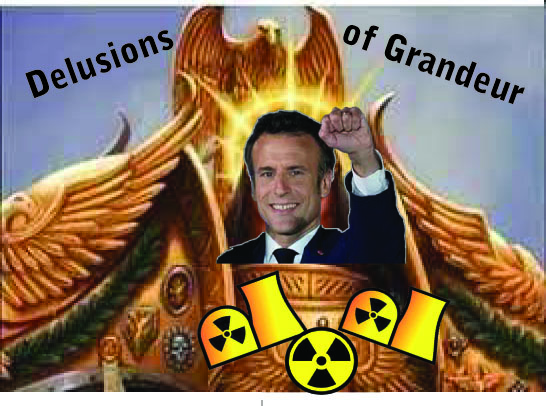
The French nuclear conglomerate Framatome has so far refused to end its cooperation with Rosatom. In December 2021, Rosatom and Framatome announced the signing of a “strategic cooperation” agreement to expand efforts to develop nuclear fuel and technologies.
And while more than 1,000 Western firms have either suspended or ended operations in Russia due to Putin’s invasion of Ukraine, Framatome doesn’t appear ready to join them.
https://www.rferl.org/a/rosatom-russia-nuclear-giant-escapes-sanctions/31899192.html 15 June 22, Europe has grappled with how to end its Russian energy addiction more than ever since Vladimir Putin launched his country’s unprovoked invasion of Ukraine on February 24.
The executive body of the 27-nation European Union agreed a plan in May to reduce its dependence on Russian natural gas by two-thirds by the end of the year, with a total phaseout of all Russian fossil fuel planned by the end of 2027. Coal, already on the outs in much of the bloc, will be banned by August.
But absent from sanctions, let alone discussion, is Rosatom, the Russian state-run nuclear power giant, despite a written appeal in the early days of the invasion from Ukrainian activists and NGOs to blacklist the company and ban nuclear fuel imported from Russia.
Brussels is not alone. When U.S. President Joe Biden announced a U.S. ban on Russian oil, natural gas, and coal imports in March, there was no mention of Rosatom. The Biden administration reportedly considered sanctioning Rosatom but backed off after nuclear industry lobbying and Biden’s plans to include nuclear power as part of the transition to clean energy, Reuters reported.
Rosatom’s footprint is deep in the global reactor and nuclear fuel business. That type of economic sway may explain why Russia’s nuclear industry “has managed to stay out of the limelight” during talk of sanctions, explained Oksana Ananyeva, an energy-policy analyst at the Ukrainian NGO Ekodia, one of the signatories of the March appeal addressed to Biden and EU leaders.
“One of the reasons for that is certainly the heavy reliance on uranium and nuclear fuel as most of the 32 countries that use nuclear power rely on Russia for some part of their nuclear fuel supply chain,” Ananyeva told RFE/RL.
The Numbers
Russian nuclear power radiates far beyond its borders. Of the 439 nuclear reactors in operation around the world in 2021, 38 of them were in Russia, an additional 42 were made with Russian nuclear reactor technology, and 15 more under construction were being built with Russian technology, according to a study published on May 23 at Columbia University’s Center on Global Energy Policy.
Russia is also a source of uranium, the key ingredient in nuclear fuel. Europe gets some 20 percent of its uranium from Russia. The United States relies on Russia for 16 percent of its uranium, with another 30 percent from two of Moscow’s close partners, Kazakhstan and Uzbekistan.
Russia owned 40 percent of the total uranium conversion infrastructure in the world in 2020 and 46 percent of the total uranium enrichment capacity in the world in 2018, according to the Columbia University report.
An EU Rethink On Nuclear Power?
In recent years, Rosatom is reported to have been part of nuclear-power industry lobby efforts to convince the EU to embrace nuclear as the bloc considers how to move faster to cleaner forms of power. According to Greenpeace, new EU nuclear capacity could be worth an estimated 500 billion euros ($521 billion) of potential investment.
The EU is scrambling to meet a goal of net-zero emissions by 2050 to prevent catastrophic global warming. Part of that process is defining what is and what isn’t a climate-friendly investment. Leaders in Brussels are seeking approval from EU countries and the European Parliament to include nuclear energy as a sustainable investment in its “taxonomy” policy for labeling green investments.
Rosatom has been accused by Greenpeace of using lobbying connections, which the environmental NGO describes as “reminiscent of nesting Russian dolls,” to press for the inclusion of nuclear energy in the taxonomy of sustainable investments, much like Russian energy firms Gazprom and LUKoil have done to include fossil gas.
In a report released on May 17, Greenpeace said its research had uncovered that Russian energy companies, including Gazprom, had met with EU commissioners and senior officials either directly or through subsidiaries and lobby groups at least 18 times since the European Commission published its action plan on sustainable finance in March 2018.
Beyond fuel, Rosatom is hoping to build new nuclear reactors, which are the core of its business. Hungary, heavily dependent on Russian gas and oil, has voiced opposition to proposed EU bans on Russian energy. It also has plans with Rosatom to build new reactors at its Paks nuclear power plant.
After meeting Rosatom’s chief executive in Istanbul on May 5, Hungarian Foreign Minister Peter Szijjarto said in a statement that the planned construction of the two new blocks at Paks served Hungary’s strategic interests.
Szijjarto said the Hungarian Atomic Energy Authority was reviewing the requests for permits submitted by Rosatom and once these are approved the project could enter its next phase.
The project, awarded in 2014 without a tender to Rosatom but plagued by delays, has often been cited as a sign of warm ties between Hungarian Prime Minister Viktor Orban and Putin.
While Hungary appears to be going ahead, Finland has announced it is pulling out from its planned reactor project with Rosatom. On May 2, the Finnish-led consortium Fennovoima said it had scrapped a contract with Rosatom citing delays and increased risks due to the war in Ukraine.
Rosatom, which owns a 34 percent stake in the consortium through a Finnish subsidiary, said on May 6 that it will demand compensation for the “unlawful termination” of the contract.
Europe’s Dependence
Continue readingTwo key committees of the European Parliament strike down EU plans to label nuclear and gas as green investment .

MEPs strike down EU plans to label nuclear and gas as green investment.
https://www.euronews.com/my-europe/2022/06/14/meps-strike-down-eu-plans-to-label-nuclear-and-gas-as-green-investment By Jorge Liboreiro & Alice Tidey • Updated: 14/06/2022
The European Commission’s highly controversial plan to label gas and nuclear as sustainable energy sources was on Tuesday struck down by two key parliamentary committees.
The Economic and Monetary Affairs Committee and the Environment, Public Health and Food Safety Committee rejected the proposal on Tuesday, with 76 MEPs voting to object and 62 voting in favour.
In a statement, MEPs on the committees said they “recognise the role of nuclear and fossil gas in guaranteeing stable energy supply during the transition to a sustainable economy.”
“But, they consider that the technical screening standards proposed by the Commission, in its delegated regulation, to support their inclusion do not respect the criteria for environmentally sustainable economic activities as set out in Article 3 of the Taxonomy Regulation,” the statement added.
They also requested that any new or amended delegated acts be subject to public consultation and impact assessments.
The objection will be put before the whole plenary in the first week of July. If the hemicycle replicates the outcome of the committees, the Commission’s plan will be officially scrapped.
The move pits lawmakers against a majority of member states, led by France, who had supported the inclusion of both gas and nuclear in the EU taxonomy.
A smaller group comprising Luxembourg, Spain, Austria and Denmark was vehemently opposed to the label, while Germany, which is highly dependent on gas, objected to the inclusion of nuclear as sustainable.
The committees’ rejection was welcomed by climate activists. Greenpeace EU sustainable finance campaigner Ariadna Rodrigo said in a statement that “MEPs stood with Ukraine today by voting to stop feeding Putin’s war machine with more money and inflaming the climate and nature crisis.”
“After more than 100 days of this devastating war, the European Parliament must now once and for all reject the greenwashing of fossil gas and nuclear energy in July. Do not give this shameful gift to Putin and his lobbyists,” she also said.
Mariana López Dávila, Programme Manager on Sustainable Finance, Environmental Coalition on Standards (ECOS) also commented, saying the vote “shows the Parliament’s willingness to stay true to science, and gives us hope that the EU can still lead the world into a truly sustainable future.”
“However, the veto is not yet a done deal. Members of the European Parliament stand a unique chance to walk the talk, and avoid greenwashing well-meaning investments into environmentally-harming projects,” she added.
Adopted in 2021, the taxonomy is a catalogue that helps private and public investors make informed choices about climate-conscious investments.
It covers a long list of projects that make a “substantial contribution” to at least one environmental objective of the EU’s climate policy while avoiding significant harm to any of the others.
Sectors already labelled as green under the taxonomy include solar energy, geothermal, hydrogen, wind power, hydropower and bioenergy.
The Commission later proposed to add gas and nuclear, arguing the two sources could be used as a temporary bridge to wean the EU off coal and achieve climate neutrality by 2050.
Many of UK’s coastal buildings may soon need to be abandoned due to sea level rise, – and what about the nuclear reactors?

Sea level rise threatens many coastal buildings in UK.
Is the UK government completely stupid? Not only are existing nuclear reactors at risk of flooding, but they plan new ones in the same threatened coastal areas?
Nearly 200,000 properties in England may have to be abandoned due to rising sea levels by 2050, a report says. It looks at where water will cause most damage and whether defences are technically and financially feasible.
There is consensus among scientists that decades of sea level rise are inevitable and the government has said that not all properties can be saved.
About a third of England’s coast will be put under pressure by sea level rise, the report says. “It just won’t be possible to hold the line all around the coast,” says the report’s author Paul Sayers, an expert on flood and coastal risks, adding that tough decisions will have to be made about what it is realistic to protect.
BBC 15th June 2022
https://www.bbc.co.uk/news/science-environment-61795783
The estimate of nearly 200,000 homes and businesses at risk of abandonment comes from researchers at the Tyndall Centre, in the University of East Anglia, published in the peer-review journal Oceans and Coastal Management.
Guardian 15th June 2022
Stop Sizewell C group questions UK government’s reasons for designating the project under the Regulated Asset Base model – and its secrecy about the plan.
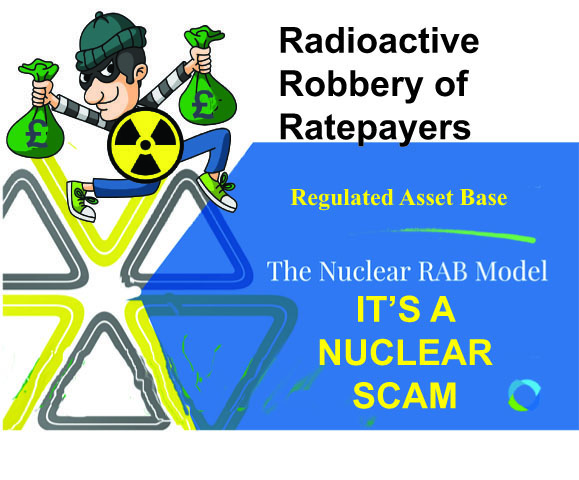
The Secretary of State is intending to designate a company which no one knows who the owners will be. EDF and the government – both apparently intending to be minority partners in Sizewell C with 20% stakes – are continuing to negotiate with each other behind closed doors.
| BEIS has today published draft reasons for designating NNB Generation Co (Sizewell C Co) as the first step towards the company being able to use a RAB funding model. All financial figures have been redacted. The BEIS press statement says “by publishing the draft reasons for designating Sizewell C under the RAB model, the government is going beyond the transparency requirements set out in legislation.” Stop Sizewell C said: “It’s outrageous that ministers are hiding the cost to electricity bill payers and the public purse of Sizewell C, while claiming to be transparent. By redacting the finances, it is impossible to know if the Secretary of State’s judgement on Value for Money is sound. We fail to understand why the government would not impose conditions related to the EPR reactor technology, when it has such a catastrophic track record, and one of the only working examples has been offline for almost a year in China” Additionally we note the following: The Secretary of State is intending to designate a company which no one knows who the owners will be. EDF and the government – both apparently intending to be minority partners in Sizewell C with 20% stakes – are continuing to negotiate with each other behind closed doors. The government intends to take a special share in Sizewell C, as a means of “protecting national security interests”, yet there is no mention of removing China General Nuclear from the project. The Value for Money assessment acknowledges that the (secret) figures provided by NNB require “uplift” (page 22 “ Given that largescale infrastructure projects have a tendency to cost more and take longer to build than expected, the analysis has applied appropriate uplifts to these assumptions”), and conclude that “the estimated return on government investment is positive in the majority of scenarios modelled” (page 22). With no indication of the size of that majority, or the various cost burdens, it is therefore clear that the return was negative in at least some scenarios. The only cost for Sizewell C in the public domain is the original estimate of £20 billion, published over two years ago. Since then there have been major changes to the project and huge price hikes in construction materials. Despite references to lessons learned at other EPR projects, there are no specific conditions linked to design adaptations that will be required for Hinkley Point C and Sizewell C’s reactors basedon the experience of Taishan 1, where problems have led to the reactor being offline for almost a year. (EDF reports, p116 “In addition [to fuel failure], a phenomenon occurring between the assemblies and a component enclosing the core has been identified, which would be linked to hydraulic stresses” and the French regulator, ASN, refers to (p14) “various anomalies observed on the cores of the EPR reactors of Taishan“. Such adaptations could have a serious impact on both cost and timescales. A government condition was attached to an (unused) offer of loan guarantees for Hinkley Point C, that the Flamanville EPR should be operating by December 2020. It is not expected to be operating until mid 2023 at the earliest. Finland’s Olkiluoto EPR is still testing at reduced capacity. Stop Sizewell C 14th June 2022 https://stopsizewellc.org/designation/ |
1 This Month


of the week– Nuclear Reactor Information Task Force

14 May – online event From Bombs to Data Centres: the Face of Nuclear Colonialism
To see nuclear-related stories in greater depth and intensity – go to https://nuclearinformation.wordpress.com
-
Archives
- May 2026 (163)
- April 2026 (356)
- March 2026 (251)
- February 2026 (268)
- January 2026 (308)
- December 2025 (358)
- November 2025 (359)
- October 2025 (376)
- September 2025 (257)
- August 2025 (319)
- July 2025 (230)
- June 2025 (348)
-
Categories
- 1
- 1 NUCLEAR ISSUES
- business and costs
- climate change
- culture and arts
- ENERGY
- environment
- health
- history
- indigenous issues
- Legal
- marketing of nuclear
- media
- opposition to nuclear
- PERSONAL STORIES
- politics
- politics international
- Religion and ethics
- safety
- secrets,lies and civil liberties
- spinbuster
- technology
- Uranium
- wastes
- weapons and war
- Women
- 2 WORLD
- ACTION
- AFRICA
- Atrocities
- AUSTRALIA
- Christina's notes
- Christina's themes
- culture and arts
- Events
- Fuk 2022
- Fuk 2023
- Fukushima 2017
- Fukushima 2018
- fukushima 2019
- Fukushima 2020
- Fukushima 2021
- general
- global warming
- Humour (God we need it)
- Nuclear
- RARE EARTHS
- Reference
- resources – print
- Resources -audiovicual
- Weekly Newsletter
- World
- World Nuclear
- YouTube
-
RSS
Entries RSS
Comments RSS
 nuclear-news