All at Sea: Energy Security Bill reveals UK government preference to dump waste offshore

https://www.nuclearpolicy.info/news/all-at-sea-energy-security-bill-reveals-government-preference-to-dump-waste-offshore/ 20 July 22, The Government has published a factsheet in support of the new Energy Security Bill which has confirmed the long-held suspicion of Britain’s Nuclear Free Local Authorities that the nuclear industry intends to dump its deadly legacy of radioactive waste out at sea.
Tucked away in this page-turner is a reference that could be missed on page seven revealing that with refence to the government stated ambition to Prepare for our nuclear future and clean up the past’, that ‘The Bill will also facilitate the safe, and cost-effective clean-up of the UK’s nuclear sites, ensuring the UK is a responsible nuclear state by clarifying that a geological disposal facility located deep below the seabed will be licensed.’[1]
That the intention is to dump the waste at a location out at sea has helpfully been made plain in the latest infomercial published by the Theddlethorpe GDF Community Partnership
20th July 2022
All at Sea: Energy Security Bill reveals government preference to dump waste offshore
The Government has published a factsheet in support of the new Energy Security Bill which has confirmed the long-held suspicion of Britain’s Nuclear Free Local Authorities that the nuclear industry intends to dump its deadly legacy of radioactive waste out at sea.
Tucked away in this page-turner is a reference that could be missed on page seven revealing that with refence to the government stated ambition to Prepare for our nuclear future and clean up the past’, that ‘The Bill will also facilitate the safe, and cost-effective clean-up of the UK’s nuclear sites, ensuring the UK is a responsible nuclear state by clarifying that a geological disposal facility located deep below the seabed will be licensed.’[1]
That the intention is to dump the waste at a location out at sea has helpfully been made plain in the latest infomercial published by the Theddlethorpe GDF Community Partnership

This latest plan to jeopardise the marine environment is par for the course for successive British Governments which, without a care for the ecology of British waters, have previously chosen to recklessly dump deadly munitions and poison gas into our oceans.
In November 2020, the NFLA published a horrifying report commissioned from marine pollution expert, Tim Deere-Jones, which revealed that evidence was mounting that around two million tons of unused wartime munitions were dumped in, or around, the Beaufort’s Dyke in the Irish Sea in the interwar and post-war years, up until at least the mid-1970’s.[2]
Alongside conventional explosives, this deadly legacy included at least 14,000 tons of phosgene gas and a cocktail of other nasties such as ‘canisters of chemical warfare agents including sarin, tabun, mustard gas, cyanide, … and the biological warfare agent anthrax’.
The New Scientist has reported instances of munitions washing up on Scottish beaches and the British Geological Survey confirmed that explosions generated by degrading munitions are a relatively frequent occurrence and that at least one of those explosions was observed to have generated an explosive force equivalent to approximately 5.5 tonnes of TNT.
The report also revealed that radioactive waste has previously been dumped into the Irish Sea, in the Beaufort’s Dyke, in the Firth of Tay and off the island of Arran, including radium-coated aircraft dials, laboratory waste, luminous paint and waste encased in concrete within metal drums.
Responding to the latest revelation, Councillor David Blackburn, Chair of the NFLA Steering Committee, said:
“Clearly then the Energy Security Bill demonstrates that once again the British Government’s plan is to dump its deadly legacy of high-level radioactive waste offshore whatever the long-term detriment to the marine environment and regardless of local and international opposition, and the Theddlethorpe Community Partnership diagram makes this intention writ large.
“The NFLA has far from convinced that however well engineered a nuclear waste dump, or Geological Disposal Facility as the nuclear industry likes to call it, is that the structure of such a facility will not become compromised over the 100,000 years it is required to hold waste whilst it remains radioactive. We fear that in future centuries we shall see radioactive waste poisoning our oceans and beaches.
“This is an especial issue of concern in West Cumbria, where three of the possible four current sites for the dump are under consideration; for here for generations Sellafield has been leaking its toxics into the Irish Sea.
“The NFLA will continue to oppose a GDF, especially one at sea. Our policy is to see radioactive waste properly monitored and managed in a near surface facility, rather than dumped out of sight, out of mind and forgotten about!”
For more information, please contact NFLA Secretary Richard Outram by email on richard.outram@manchester.gov.uk or mobile 07583097793
Greenpeace investigation challenges nuclear agency on Chornobyl radiation levels

Greenpeace Germany is concerned that the IAEA is severely compromised in its role on nuclear safety and security in Ukraine by its ties to Russia’s nuclear state agency, ROSATOM, including its current IAEA Deputy Director Mikhail Chudakov, a long term ROSATOM official.
Kyiv, Ukraine – A Greenpeace Germany investigation team working with Ukrainian scientists at Chornobyl has found radiation levels in areas where Russian military operations occurred to be at least three times higher than the estimation by the International Atomic Energy Agency (IAEA).[1] In April 2022, the IAEA provided very limited data with assurances that radiation levels were “normal” and not a major environmental or public safety issue.[2]
The investigation team in Chornobyl also documented that Russian military actions against essential laboratories, databases and radiation monitoring systems have caused severe damage to the scientific infrastructure that was developed with the international scientific community. This includes damage to the lab equipment needed to study the impact of radiation on people and the environment, which threatens the safety of current and future generations.
Shaun Burnie, senior nuclear specialist at Greenpeace Germany said:
“Understanding the complex radiation effects at Chornobyl is essential for the world and that means conducting research and working with international scientists. All of that has been put at risk by Russia’s war against Ukraine. Scientists and workers conducting essential radiation hazard monitoring are now threatened by an unknown number of Russian landmines and anti-personnel explosives. This is one further outrageous legacy of Russia’s illegal war and is a crime against the environment and global science. The IAEA appears reluctant to explain the scale of the radiation hazards at Chornobyl and the impact of the Russian occupation.”
Greenpeace Germany is concerned that the IAEA is severely compromised in its role on nuclear safety and security in Ukraine by its ties to Russia’s nuclear state agency, ROSATOM, including its current IAEA Deputy Director Mikhail Chudakov, a long term ROSATOM official.
Jan Vande Putte, lead radiation specialist at Greenpeace Belgium who also participated in the investigation said:
“We measured levels of gamma radiation inside the abandoned Russian trenches that qualify it as low-level nuclear waste. Clearly the Russian military was operating in a highly radioactive environment, but that’s not what the IAEA is communicating. We can only conclude that the IAEA for some reason decided not to make an effort to fully investigate. It’s clear from our survey that there is nothing normal about the radiation levels inside the Chornobyl Exclusion Zone, despite what the IAEA wants the world to believe.”
Essential to Greenpeace Germany’s investigation was a satellite analysis report commissioned from UK based McKenzie Intelligence Services (MIS) which showed the location of Russian military operations during February and March 2022. Expert military analysis of multispectral imagery from the Sentinel 2 constellation satellite and NASA’s Visible Infrared Imaging Radiometer Suite identified fires in the exclusion zone which McKenzie concluded was set deliberately by the Russian military.[3]
Russia to Scrap World’s Largest Nuclear Submarine
https://www.themoscowtimes.com/2022/07/20/russia-to-scrap-worlds-largest-nuclear-sub-reports-a78349, 20 July 22, Russia has decommissioned the world’s largest nuclear ballistic missile submarine, state media reported Wednesday.
The Dmitry Donskoy, a Typhoon-class submarine that served in the Russian Navy’s Northern Fleet since 1980, stood at 175 meters in length. Its status as the world’s largest submarine will be taken by the 184-meter Oscar II-class Belgorod nuclear submarine, which was commissioned earlier in July.
“The submarine Dmitry Donskoy has been removed from the fleet and is to be scrapped,” the state-run RIA Novosti news agency quoted an unnamed Russian defense industry source as saying.
The Dmitry Donskoy was last spotted accompanying the Belgorod in the waters of northwestern Russia’s White Sea. . Analysts speculated at the time that the Dmitry Donskoy was accompanying the Belgorod for sea trials ahead of the latter vessel’s entrance into service.
France’s costly nationalisation of the nuclear industry

The French government is poised to pay nearly €10bn (£8.5bn) to fully
nationalise EDF as ministers attempt to tackle the European energy crisis.
The French finance ministry said on Tuesday it had offered €9.7bn or
€12 a share to buy the 16% of debt-laden EDF it does not already own. The
government of the French prime minister, Elisabeth Borne, government is
trying to shore up domestic energy supplies amid concerns over the finances
of the energy company, which is also building the Hinkley Point C nuclear
power station in Somerset.
Guardian 19th July 2022
https://www.theguardian.com/business/2022/jul/19/france-to-pay-nearly-10bn-to-fully-nationalise-edf
Employee shareholders to sue EDF over France nationising nuclear industry
An association of EDF employee shareholders announced on Sunday their plan
to sue the French state regarding its nationalisation of the power giant.
“Today the state needs to explain itself for the management as
ultra-majority stakeholder of the company,” the association “Energie en
actions” said in a statement.
The association holds that the government’s
decision goes against the interest of the company and the minority
shareholders, the statement added. The government will announce details of
its plan to fully nationalise the EDF, which runs the nation’s nuclear
power plants, by July 19.
Reuters 17th July 2022
Consultation on proposed changes to storage of radioactive wastes at Hinkley Point C NPP
The Environment Agency has launched a consultation on a proposed change to
the way radioactive waste will be stored at Hinkley Point C nuclear power
station near Bridgwater. Currently the Office for Nuclear Regulation
states: The waste will be stored on the Hinkley Point C site pending
availability of the GDF and the waste meeting the waste acceptance criteria
for the site (e.g. some heat generating radioactive waste may require
on-site storage until the thermal output has reduced).
Pressurised water reactors at Hinkley Point C will use uranium fuel to create heat and
generate electricity when operating. Once used within the reactor, nuclear
fuel will be stored on-site before being sent off-site to a Geological
Disposal Facility (GDF).
NNB Generation Company (HPC) Limited was
originally issued a radioactive substances environmental permit in 2013. In
the original design radioactive waste was to be stored on-site in ‘wet
storage’ – a method of submerging and storing in water. The operator has
now decided to change the technology by which it will store spent nuclear
fuel, from wet storage to ‘dry storage’.
Dry storage will see used nuclear fuel stored in sealed containers within a facility, before it is
sent to the GDF. This means the operator now seeks to change its
radioactive substances environmental permit to remove or amend specific
conditions related to the previous wet storage technology that are no
longer relevant. The operator has said altering the storage method will not
change the expected radiation dose to the general public from discharges or
the wider environment, which remains incredibly small. Separately, NNB
Generation Company (HPC) Limited will be seeking the necessary changes to
its Development Consent Order for Hinkley Point C in the autumn.
Somerset Live 20th July 2022
https://www.somersetlive.co.uk/news/somerset-news/locals-urged-say-proposed-change-7351721
UK govt to decide on whether or not £20bn Sizewell C nuclear power plant should go ahead
A decision on whether to approve the building of a new £20bn nuclear
power plant is due later. The government was expected to make an
announcement about the application for Sizewell C in Suffolk two weeks ago.
Business minister Paul Scully said he had “set a new deadline of no later
than 20 July for deciding this application”. “This is to ensure there is
sufficient time to allow the secretary of state to consider the proposal,”
he said. The government was previously due to announce a planning decision
by 25 May, but it said it needed more time to look at new information and
it set a new deadline of 8 July.
BBC 20th July 2022
Anti-nuclear forces gather in Wales
Anti-nuclear campaigners are gathering forces against what they say is a
“repeated narrative” that nuclear energy is viable and helps create
more jobs. PAWB (People Against Wylfa B), CND Cymru, Nuclear Free Local
Authorities, Cymdeithas yr Iaith, CADNO, the Welsh Anti-Nuclear Alliance
and Beyond Nuclear have organised a conference in Caernarfon to air their
views.
North Dot Wales 20th July 2022
Greencoat Capital Investing might be turning yellow – swallowing the climate lies of the nuclear industry.

One of Europe’s largest renewable energy investors is considering
creating a nuclear investment fund to take a stake in three of EDF’s
nuclear plants, it has been reported. Greencoat Capital, which currently
has more than £6bn under management and plans to grow over the coming
years, is considering taking a stake in the proposed Sizewell C plant in
Suffolk, according to The Times. The fund could also be invested in the
ongoing Hinkley Point C build in Somerset and the existing Sizewell B
plant.
Construction News 18th July 2022 https://www.constructionnews.co.uk/buildings/sizewell-c-major-fund-mulls-investment-18-07-2022/
Greenpeace radiation investigation at Chornobyl to assess accuracy of IAEA data.
During the Russian occupation of the Chornobyl region, Greenpeace experts warned that this could lead to increased radioactive contamination.
But the IAEA gave an “all-clear” at the end of April. The nuclear agency has a mandate to promote nuclear power.
Greenpeace Germany will present the results of the Chornobyl radiation research, in English, at a press conference in Kyiv on July 20 at 9:00 am CEST (ZOOM Link: https://t1p.de/dzbks).
Greenpeace https://www.miragenews.com/greenpeace-radiation-investigation-at-chornobyl-820855/ 18 July 22,
Chornobyl, Ukraine – Near the ruins of the Chornobyl nuclear power plant, an international team of radiation experts led by Greenpeace Germany is examining abandoned Russian positions for radioactive contamination. Trenches and dugouts were built by Russian soldiers during their occupation of the Chornobyl site in March. About 600 soldiers were deployed there. The research project is being conducted with the approval of the Ukrainian government and in cooperation with scientists from the State Agency of Ukraine on the Exclusion Zone Management (SAUEZM).
For the first time since the beginning of the Russian invasion, independent measurements will be taken and the April 28 statement of the International Atomic Energy Agency (IAEA) will be assessed. According to the IAEA, while there was increased radiation the levels did not pose a great danger to the environment or people. The IAEA’s deputy director is Mikhail Chudakov, a long-time employee of the Russian nuclear company Rosatom.[1]
Shaun Burnie, a nuclear expert from Greenpeace Germany, on site in Chornobyl, said:
“We want to know what really happened on the ground. The IAEA’s information so far is insufficient. The Ukrainian authorities are enabling the Greenpeace Germany research team to gather independent information about radiation safety in the region. This includes investigating the radioactive contamination that deposited in the Exclusion Zone when the Chornobyl reactor exploded in 1986. Between seven and nine tonnes of nuclear fuel were pulverized and ejected into the atmosphere in the 1986 explosion.”
During the Russian occupation of the Chornobyl region, Greenpeace experts warned that this could lead to increased radioactive contamination. But the IAEA gave an “all-clear” at the end of April. The nuclear agency has a mandate to promote nuclear power.[2]
“While the European Commission actively supports nuclear power by including it in its taxonomy. It’s more important than ever to investigate the environmental impact of Chornobyl, the world’s worst nuclear disaster,” said Burnie.
Greenpeace Germany will present the results of the Chornobyl radiation research, in English, at a press conference in Kyiv on July 20 at 9:00 am CEST (ZOOM Link: https://t1p.de/dzbks).
Public Release. This material from the originating organization/author(s) may be of a point-in-time nature, edited for clarity, style and length. The views and opinions expressed are those of the author(s).View in full here.
4 French nuclear reactors authorized to discharge hotter water during heatwave, as 29 others remain offline
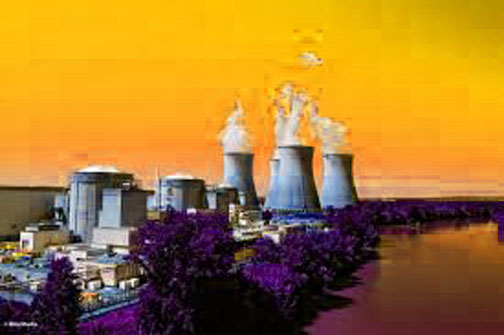
Heat wave: a fourth nuclear power plant authorized to release hotter water than normal to continue operating. Twenty-nine French reactors out of 56 are currently unavailable for various reasons. Hence these exemptions.
A temporary derogation from environmental rules has been granted to a new nuclear power plant, that of Bugey, in Ain, to allow it to continue to operate “at a minimum level of power” during the heat wave, according to a decree published on Sunday July 17. in the Official Journal .
“The reactors of the Bugey nuclear power plant discharging effluents into the Rhône may, during the fixed period (…), continue to practice these discharges as long as the heating after mixing of the effluents into the Rhône (.. .) does not exceed 3 ° C in average daily value” , specifies the decree of Sunday.
On Friday, a derogation had been granted to the nuclear power plants of Golfech (Tarn-et-Garonne), Blayais (Gironde) and Saint-Alban (Isère). For these three power stations and that of Bugey, the
authorization was granted until July 24th.
And this, while 29 French reactors out of 56 are currently unavailable for various reasons. Since
2006, each plant has had its own regulatory water discharge temperature limits that must not be exceeded. The power plants indeed pump water to cool the reactors, before rejecting it. The derogation device, which aims to guarantee the proper functioning of the electricity network, had so far only been used once, in 2018 for the Golfech power plant, for a period of 36 hours.
France Info 17th July 2022
Swiss nuclear power plant reduces output to protect fish during heatwave

One of Switzerland’s nuclear power stations has temporarily scaled back operations to avoid raising the temperature of its feeder river to levels that are dangerous for fish.
https://www.swissinfo.ch/eng/sci-tech/swiss-nuclear-power-plant-reduces-output-to-protect-fish-during-heatwave/47761010 , July 18, 2022
Beznau is Switzerland’s oldest nuclear plant and comprises two stations built on a small artificial island in the river Aare in the north of the country. Unlike two newer stations, Beznau was not built with a cooling tower but relies on water from the Aare to control temperatures.
Producing some 6,000 gigawatt hours of electricity per year typically raises the temperature of downstream water by between 0.7 and one degree Celsius.
Switzerland is experiencing a prolonged summer heatwave that has already raised the temperature of rivers, including the Aare. Freshwater fish species living in the river cannot tolerate water temperatures much above 25 degrees Celsius.
As a result, Beznau operator Axpo has been forced to reduce output to meet its legal environmental commitments.
The plant would be forced to shut down completely if water temperatures rise above 25 degrees for three consecutive days, reports Swiss public broadcaster SRFExternal link.
Switzerland is already facing up to the impact of rising energy costs and potential shortagesExternal link in the coming months, driven in part by meteorological conditions but also disruptions caused by the Ukraine war.
But this danger is expected to strike in the winter months when Switzerland’s hydro-power dams are less productive. At this time of year, the river temperature issue will be less of a problem.
Switzerland produces around 30% of its electricity from its three nuclear power plants. The government decided in 2011 to phase out nuclear power following the Fukushima disaster in Japan.
The initial idea was to stop nuclear power production by 2034. The Mühleberg plant is currently being dismantledExternal link.
Uncertainties about securing long-term power supplies led to the fixed deadline of 2034 being scrapped and replaced with a more vague commitment to only keeping the remaining power stations running as long as it is safe.
Nationalisation of EDF seen as ‘inevitable’ to carry out France’s nuclear plans

EDF’s market capitalisation has collapsed in the past few years, going from €150 billion in 2007 to less than €40 billion today.
A debt estimated at more than €43 billion, fuelled by delays in constructing its new fourth-generation reactors, also puts the company in a difficult spot.
https://www.euractiv.com/section/energy/news/nationalisation-of-edf-seen-as-inevitable-to-carry-out-frances-nuclear-plans/ By Paul Messad | EURACTIV.fr | translated by Daniel Eck 18 July 22
The government’s decision to nationalise Electricité de France, announced on 6 July, provoked mixed reactions in the French Parliament.
Yet, according to Jean-Michel Gauthier, director of the Energy & Finance Chair at HEC Paris, the decision was “inevitable” because of the regulatory constraints faced by the company.
Under French law, EDF must sell part of its nuclear electricity to the competition at a set price (€42/MWh) and buy it back on the market like any other supplier.
But because of the pandemic and the war in Ukraine, the current market price stands above €200/MWh, according to France’s electricity transmission system operator RTE.
This means EDF is selling at a loss to feed the competition, something unions and many observers have decried as a “plundering” of the French company.
On top of that, the state has also asked EDF to dish out €8 billion for the so-called “tariff shield” to limit gas prices in times of crisis.
EDF’s market capitalisation has collapsed in the past few years, going from €150 billion in 2007 to less than €40 billion today.
A debt estimated at more than €43 billion, fuelled by delays in constructing its new fourth-generation reactors, also puts the company in a difficult spot.
But according to Professor Gauthier, the company’s debt “is not at all the subject”. It is even “irrelevant, with regard to the major subjects of energy and industrial policy in France,” he told EURACTIV.
According to Gauthier, the main challenges lie in the company’s vast nuclear programme. First, EDF will have to spend more than €50 billion by 2030 to extend the life of existing nuclear power plants.
As announced by President Emmanuel Macron in February, the French energy giant must also adopt measures to build six new fourth-generation EPR-type reactors. According to the latest estimates, that effort will cost €50-60 billion.
Going under full state ownership will offer EDF a debt guarantee, as well as lower rates to raise additional debt, Gauthier says.
More worrying, according to him, is the number of key points the state has dropped from its nuclear industrial policy in recent years.
“These are the major issues: what is to be done with the EPR 2, the third generation reactors, the ASTRID project and the small modular reactors (SMR),” he said.
The professor also questioned the state’s means to meet its pledged energy ambitions.
Renewables in all this?
However, these multi-billion euro projects only deal with nuclear without addressing EDF’s capacity to deploy renewable energies – another major priority of the government.
“Today, given the bubble around green finance, there is no reason for the state to own solar or wind power capacity,” explained Gauthier.
“We can therefore imagine [that we] go back to square one […], i.e. that the State puts the portfolio of EDF Renewables, a subsidiary wholly owned by EDF, on the market,” he added. This project could revive divisions between the state and the unions if green-lighted.
For the time being, it is necessary “to keep a single EDF”, the company’s CEO Jean-Bernard Lévy told broadcaster BFM TV on Monday (11 July).
EDF without renewables would be a dark “utopia”, he also said.
When it comes to energy-related decisions, the state must be the “only pilot” on board and the “only decision-maker”, Gauthier concluded.
Millom and Haverigg being conned by nuclear industry over waste dump, claims former councillor.
A Millom resident, who recently resigned from her local council in disgust
at the shenanigans she witnessed, has claimed that the residents and
elected members of Millom and Haverigg and surrounding villages are
‘being conned’ with lies and false promises from Nuclear Waste Services
and some members of the local South Copeland GDF Community Partnership.
Only last month, Jan Bridget founded the Millom and District against the
Nuclear Dump campaign group as a voice for local people who are opposed to
the proposal to bring a nuclear waste dump to the South-West of Cumbria.
The waste dump or Geological Disposal Facility (as Nuclear Waste Services
prefers to call it) will be final resting place for the high-level
radioactive waste generated by Britain’s civil and military programmes
over the last seventy years.
One catalyst for local opposition has been
NWS’s plan to ‘sound blast’ the Irish Sea to determine if the geology
of the seabed could host the waste dump. Almost 50,000 individuals have
signed an online petition in opposition to the plan, whilst environmental
and conservation groups have registered their concerns that the health of
marine wildlife will be seriously compromised.
To date, the local and national authorities have been deaf to these objections. Over the last
month, the Millom and District group has become an effective local force
opposing plans for a dump. Nearly 400 local people have so far joined, and
members have been active with a protest by 19 local people outside an
NWS-organised community consultation event in Haverigg, and a door-to-door
delivery campaign completed with activists posting almost 5,000 leaflets
through letter boxes. As a member of Millom Town Council, Jan spoke up for
the objectors, but, from the hostile response she received from several
fellow Councillors involved with the Community Partnership, it soon became
clear that her lone voice was unwelcome in the council chamber, and the
atmosphere turned so toxic that Jan felt unable to stay.
NFLA 18th July 2022 https://www.nuclearpolicy.info/news/millom-and-haverigg-being-conned-by-nuclear-industry-over-waste-dump-claims-former-councillor/
France’s nationalisation of nuclear energy corporation EDF raises more questions than it answers
Just as Europe attempts to move away from its dependence on Russian gas and grapples with soaring power prices, problems at some of EDF’s existing 56 reactors in France have caused shutdowns and sent its energy output to multi-decade lows.
At the site of France’s first new nuclear reactor in more than 20 years, robots are whirring away fixing faulty welding as developer EDF races to open the plant after a decade of delays that have damaged its reputation.
Ahead of it lies a challenge of a different order of magnitude: a construction program to build six more, just as the French government, which owns 84 per cent of the business already, plans to take full control.
The full nationalization of EDF, which was announced earlier this month, comes as a series of crises pile pressure on the group’s finances.
In theory this will provide it with some relief away from the glare of public markets. So far, however, the state buyout has raised more questions than it has answered, including how the government thinks it might do a better job at fixing long-running industrial problems that have plagued projects at EDF, some of them as basic as a lack of experienced welders. “It’s not because the government will now have 100 percent that it’s going to suddenly take three years less to build a reactor,” one person close to the company said. “Right now, we’re in symbolic territory with this nationalization. It does not resolve any of the main problems we know the group is facing – will it allow EDF to bolster the skills it needs?” said Cécile Maisonneuve, a senior adviser at the center for energy and climate at French think thank IFRI. “None of the industrial or regulatory issues were linked to its capital structure.”
Just as Europe attempts to move away from its dependence on Russian gas and grapples with soaring power prices, problems at some of EDF’s existing 56 reactors in France have caused shutdowns and sent its energy output to multi-decade lows.
FT 17th July 2022
https://www.ft.com/content/7d7225ad-dd3b-4b95-95a6-c270a0089277
1 This Month


of the week– Nuclear Reactor Information Task Force

14 May – online event From Bombs to Data Centres: the Face of Nuclear Colonialism
To see nuclear-related stories in greater depth and intensity – go to https://nuclearinformation.wordpress.com
-
Archives
- May 2026 (156)
- April 2026 (356)
- March 2026 (251)
- February 2026 (268)
- January 2026 (308)
- December 2025 (358)
- November 2025 (359)
- October 2025 (376)
- September 2025 (257)
- August 2025 (319)
- July 2025 (230)
- June 2025 (348)
-
Categories
- 1
- 1 NUCLEAR ISSUES
- business and costs
- climate change
- culture and arts
- ENERGY
- environment
- health
- history
- indigenous issues
- Legal
- marketing of nuclear
- media
- opposition to nuclear
- PERSONAL STORIES
- politics
- politics international
- Religion and ethics
- safety
- secrets,lies and civil liberties
- spinbuster
- technology
- Uranium
- wastes
- weapons and war
- Women
- 2 WORLD
- ACTION
- AFRICA
- Atrocities
- AUSTRALIA
- Christina's notes
- Christina's themes
- culture and arts
- Events
- Fuk 2022
- Fuk 2023
- Fukushima 2017
- Fukushima 2018
- fukushima 2019
- Fukushima 2020
- Fukushima 2021
- general
- global warming
- Humour (God we need it)
- Nuclear
- RARE EARTHS
- Reference
- resources – print
- Resources -audiovicual
- Weekly Newsletter
- World
- World Nuclear
- YouTube
-
RSS
Entries RSS
Comments RSS
 nuclear-news