Amid increased threats to military and civilian targets, Sweden increases security around nuclear power stations
Sweden has stepped up security around two nuclear power stations after the
bombing of two subsea gas pipelines in the Baltic. The national security
agency said the threat to military and civilian targets had “broadened
and deepened” and that it was taking additional measures to protect the
reactors at Forsmark, north of Stockholm, and Ringhals, south of
Gothenburg.
Norway promised to make its armed forces “more visible”
around oil and gas installations after the suspected attack on the Nord
Stream 1 and 2 pipelines from Russia to Germany. This morning Nato said the
damage had been caused by “deliberate, reckless and irresponsible acts of
sabotage” after a fourth leak was detected in the waters of Sweden’s
maritime economic zone, meaning that all four pipelines along the Nord
Stream route have been disabled within days.
Times 29th Sept 2022
EU parliamentarian calls to sanction Vanessa Beeley and all observers of Donbass referendums

(The Western) narrative would have reigned supreme if not for the hundred or so international observers who physically traveled to the regions in question to observe the referendum process.
Observers like Vanessa Beeley now face the threat of returning home to the West as wanted outlaws.
“Imposing sanctions on global citizens for bearing witness to a legal process that reflects the self-determination of the people of Donbass is fascism. Should the EU proceed with this campaign, I believe there will be serious consequences because the essence of freedom of speech and thought is under attack.“
In London, meanwhile, the UK government has imposed individual sanctions on Graham Philips, a British citizen and independent journalist, for his reporting from Donetsk.
MAX BLUMENTHAL AND ANYA PARAMPIL·SEPTEMBER 29, 2022,
MEP Nathalie Loiseau of France is lobbying for individual sanctions on all observers of the Russian-organized referendums in the Donbass region. She has singled out journalist Vanessa Beeley not only for her coverage of the vote, but for her reporting on the foreign-back war against Syria’s government.
A French Member of European Parliament (MEP), Natalie Loiseau, has delivered a letter to EU High Representative of Foreign Affairs, Joseph Borrell, demanding the European Union place personal sanctions on all international observers of the recent votes in the Donetsk and Lugansk People’s Republics and certain Russian-controlled territories in eastern Ukraine.
Obtained by The Grayzone from an EU source, the letter is currently being circulated among European parliamentarians in hopes of securing a docket of supportive signatures.
“We, as elected members of the European Parliament, demand that all those who voluntarily assisted in any way the organization of these illegitimate referendums be individually targeted and sanctioned,” Loiseau declared.
The French MEP’s letter came after a group of formally Ukrainian territories held a vote on whether or not to officially incorporate themselves into the Russian Federation in late September. Through the popular referendum, the independent Donetsk and Lugansk People’s Republics, which announced their respective successions from Ukraine in 2014 following a foreign-backed coup against the government Kiev, as well as the regions of Kherson and Zaporozhia, voted overwhelmingly in favor of joining the Russian Federation.
Loiseau singled out Vanessa Beeley, a British journalist who traveled to the region to monitor the vote. Extending her complaint well beyond the referendum, the French MEP accused Beeley of “continuously spreading fake news about Syria and acting as a mouthpiece for Vladimir Putin and Bashar el [sic] Assad for years.”
Loiseau, a close ally of French President Emanuel Macron, specifically demanded Beeley be “included in the list of those sanctioned.”
Beeley responded to Loiseau’s letter in a statement to The Grayzone: “Imposing sanctions on global citizens for bearing witness to a legal process that reflects the self-determination of the people of Donbass is fascism. Should the EU proceed with this campaign, I believe there will be serious consequences because the essence of freedom of speech and thought is under attack.
Russia’s referendums: drawing a line with NATO
In mid-September 2022, Beeley and around 100 other international delegates traveled to eastern Europe in order to observe a vote to join the Russian Federation in the regions of Kherson, Zaporozhia, and the independent republics of Lugansk and Donetsk.
Why did their presence trigger such an outraged response from Western governments? The answer lies in the recent history of these heavily contested areas.
The formally Ukrainian territories of Kherson and Zaporozhia fell under Russian control earlier this year as a result of the military campaign launched by Moscow in February, while the Donetsk and Lugansk People’s Republics declared their independence from the government in Kiev in 2014.
Russia began its special military campaign in Ukrainian territory on February 24. The operation followed Moscow’s decision that same week to formally recognize the independence of the Donetsk People’s Republic and Lugansk People’s Republic (the Donbass Republics) in Ukraine’s eastern Donbass region. Pro-Russian separatists in the Donbass have been embroiled in a bloody trench battle with the US-backed government in Kiev since 2014.
Ukraine’s civil conflict broke out in March 2014, after US and European forces sponsored a coup in the country that installed a decidedly pro-NATO nationalist regime in Kiev which proceeded to declare war on its minority, ethnically Russian population.
Following the 2014 putsch, Ukraine’s government officially marginalized the Russian language while extremist thugs backed by Kiev massacred and intimidated ethnic Russian citizens of Ukraine. In response, separatist protests swept Ukraine’s majority-Russian eastern regions.
The territory of Crimea formally voted to join Russia in March of that year, while the Donetsk and Lugansk Republics in Ukraine’s eastern Donbass region declared their unofficial independence from Kiev that same month. With support from the US military and NATO, Ukraine’s coup government officially declared war on the Donbass in April 2014, launching what it characterized as an “Anti-Terrorist Operation” in the region.
Russia trained and equipped separatist militias in Donetsk and Lugansk throughout the territories’ civil campaigns against Kiev, though Moscow did not officially recognize the independence of the Donbass republics until February 2022. By then, United Nations estimates placed the casualty count for Ukraine’s civil war at roughly 13,000 dead. While Moscow offered support to Donbass separatists throughout the 2014-2022 period, US and European governments invested billions to prop up a Ukrainian military that was heavily reliant on army and intelligence factions with direct links to the country’s historic anti-Soviet, pro-Nazi deep state born as a result of World War II.
Russia’s military formally entered the Ukraine conflict in February 2022, following Moscow’s recognition of the Donbass republics. While Russian President Vladimir Putin defined the liberation of the Donbass republics as the primary objective of the military operation, he also listed the “de-nazification” and “de-militarization” of Ukraine as a goals of the campaign. As such, Russian troops have since secured control of Ukrainian territories beyond the Donbass region, including the territories of Kherson and Zaporozhia.
Facing increased Western investment in the Kiev-aligned bloc of Ukraine’s civil war, authorities in the Donbass republics announced a referendum on membership in the Russian Federation in late September 2022, with Moscow-aligned officials in Kherson and Zaporozhia announcing similar ballot initiatives. Citizens in each territory proceeded to approve Russian membership by overwhelming majorities.
The results of the referendum not only threatened the government in Kiev, but its European and US backers. Western-aligned media leapt to characterize the votes as a sham, claiming Moscow’s troops had coerced citizens into joining the Russian Federation at the barrel of a gun. Their narrative would have reigned supreme if not for the hundred or so international observers who physically traveled to the regions in question to observe the referendum process.
Observers like Vanessa Beeley now face the threat of returning home to the West as wanted outlaws. But as Loiseau’s letter made clear, the British journalist was in the crosshairs long before the escalation in Ukraine.
Beeley among European journalists targeted and prosecuted for reporting from Donetsk
Vanessa Beeley was among the first independent journalists to expose the US and UK governments’ sponsorship of the Syrian White Helmets, a so-called “volunteer organization” that played frontline role in promoting the foreign-backed dirty war against Syria’s government through its coordination with Western and Gulf-sponsored media. Beeley also played an instrumental role in revealing the White Helmets’ strong ties to Al-Qaeda’s Syrian branch, as well as its members’ involvement in atrocities committed by Western-backed insurgents.
Beeley’s work on Syria drew harsh attacks from an array of NATO and arms industry-funded think tanks. In June 2022, the Institute for Strategic Dialogue (ISD), which receives funding from a variety of NATO states, corporations and billionaires, labeled Beeley “the most prolific spreader of disinformation” on Syria prior to 2020. (According to ISD, Beeley was somehow “overtaken” by The Grayzone’s Aaron Mate that year). The group did not provide a single piece of evidence to support its assertions.
Though Beeley has endured waves of smears, French MEP Natalie Loiseau’s call for the EU to sanction the journalist represents the first time a Western official has moved to formally criminalize her work. Indeed, Loiseau made no secret that she is targeting Beeley not only for her role as an observer of the referendum votes, but also on the basis of her opinions and reporting on Syria.
Loiseau’s push to issue personal sanctions against EU and US citizens comes on the heels of the German government’s prosecution of independent journalist Alina Lipp. In March 2020, Berlin launched a formal case against Lipp, who is a German citizen, claiming her reporting from the Donetsk People’s Republic violated newly authorized state speech codes.
Prior to Lipp’s prosecution, the Institute for Strategic Dialogue launched a media campaign portraying her as a disseminator of “disinformation” and “pro-Kremlin content.”
In London, meanwhile, the UK government has imposed individual sanctions on Graham Philips, a British citizen and independent journalist, for his reporting from Donetsk.
And in Brussels, Loiseau’s campaign against Beeley appears to have emerged from a deeply personal vendetta.
Who is Natalie Loiseau?
In April 2021, Beeley published a detailed profile of Loiseau at her personal blog, The Wall Will Fall, painting the French MEP as a regime change ideologue committed to “defending global insecurity and perpetual war.”…………………………………..more https://thegrayzone.com/2022/09/29/eu-parliamentarian-sanction-vanessa-beeley-donbass-referendums/
Poland starts handing out anti-radiation tablets as battle rages around Ukraine nuclear power plant.
- Fears of nuclear exposure have raised in Poland with on-going war in Ukraine
- Neighbouring Zaporizhzhia nuclear power plant in Ukraine is Europe’s largest
- Officials described the move as a ‘preventative’ and ‘preemptive’ measure
- Comes as Putin vows to use ‘all forces’ to protect new annexed regions
Daily Mail, By SUMMER GOODKIND FOR MAILONLINE, 1 October 2022,
Polish officials have started handing out anti-radiation tablets nationwide, as fears grow of nuclear exposure triggered by the war in neighbouring Ukraine.
Fire departments have been handed the tablets as a response to the current fighting around Ukraine’s Zaporizhzhia nuclear power plant – Europe’s largest – which has raised fears of a nuclear disaster.
Officials described the move as a ‘preventative’ and ‘preemptive’ measure………………………………..
The medical representative at the press conference, Doctor Wojciech Zgliczynski, cautioned against taking anti-radiation tablets except when necessary.
He added that children, youths, pregnant women and breast-feeding mothers were most at risk of getting cancer from exposure to radiation.
Pobozy said the potassium iodide tablets were a preventative measure in case of a nuclear accident but would not help in response to a tactical nuclear weapon attack.
Under that scenario ‘entirely different isotypes are released, ones against which there is unfortunately no tablet to protect us,’ he told reporters.
He stressed however that compared to a nuclear accident, an attack was ‘even less likely’. https://www.dailymail.co.uk/news/article-11267671/Poland-starts-handing-anti-radiation-tablets-battle-rages-Ukraine-nuclear-power-plant.html
Russia open to in-person talks with U.S. on nuclear arms treaty
https://ca.news.yahoo.com/russia-open-person-talks-u-134957998.html Thu, September 29, 2022,
MOSCOW (Reuters) – Russia said on Thursday it was studying the possibility of a face-to-face meeting between Russian and U.S. negotiators on a landmark nuclear arms control treaty.
In a briefing in Moscow, Foreign Ministry spokeswoman Maria Zakharova said Russia was open to reviving inspections under the New START treaty and considering the possibility of in-person meetings of a joint commission of representatives from the United States and Russia.
Physical inspections under the treaty have been suspended since 2020, initially as a result of the coronavirus pandemic.
“The topic of resuming them is being considered,” Zakharova said on Thursday. “The possibilities for holding a face-to-face session of the bilateral advisory commission are being studied.”
The treaty sets limits on the number of nuclear arms each side can have deployed, and outlines the terms for verification and inspection of each other’s nuclear arsenals.
Moscow said in August it was considering a new meeting of the commission, as well as a possible resumption of negotiations to extend the treaty, one of the few major diplomatic agreements that remain in place between Moscow and Washington as relations hit rock-bottom over the conflict in Ukraine.
(Reporting by Reuters; Editing by Kevin Liffey)
Zaporizhzhia Nuclear Power Plant: Energoatom denies fire in power unit 2
Yahoo News, Ukrainska Pravda, September 29, 2022, STANISLAV POHORILOV —
Energoatom, a Ukrainian state enterprise operating nuclear power stations in this country, has denied information about power unit No. 2 of the Zaporizhzhia Nuclear Power Plant (ZNPP) being on fire, and explained what has happened.
Source: press service of Energoatom
Quote: “Telegram channels are spreading false information about power unit No. 2 of the ZNPP being on fire. We hereby officially confirm that this is not true. As of 15:40, 29 September 2022, no fires have been detected in power units of the ZNPP.”
Details: Energoatom added that an emergency, not related to the fire, could occur due to a mine explosion, since the perimeter around the power plant is mined by occupiers, and explosions happen because of wild animals (boars, foxes, dogs) wandering around.
Today, there was an explosion on the perimeter, on a line of voltage supply to an oxygen station of power unit No. 6. The explosion damaged the line, and a power surge resulted in a short circuit in one of the voltage transformators, causing minor smoke.
There was no need to involve a fire brigade, which arrived at the scene.
Background:………………….. https://news.yahoo.com/zaporizhzhia-nuclear-power-plant-energoatom-134651082.html
Why Donbass residents voted to join Russia – the pro-Russian point of view
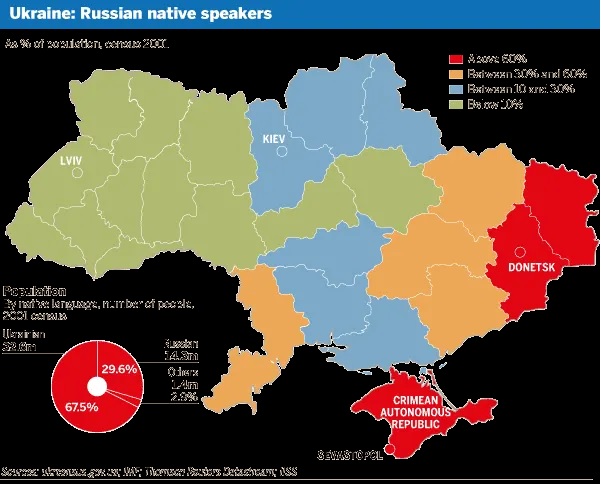
‘I can’t imagine our future differently’: Donbass residents explain why they voted to join Russia, By Vladislav Ugolny, a Russian journalist based in Donetsk Rt.com, 30 Sept 22
Last week, referendums on once-again becoming part of Russia were held in the Donetsk (DPR) and Lugansk (LPR) People’s Republics, as well as in the liberated territories of Zaporozhye, Kherson, and Nikolaev regions (the latter was annexed to Kherson Region).
According to the results, the ‘For’ option won all four by an overwhelming margin. RT’s correspondent in Donbass, Vladislav Ugolny, has been observing the sentiment there for the past eight years. He describes how the referendums took place, what they meant to local residents, and why their outcome simply could not have been different.
All arguments ‘against’
For those who are sufficiently immersed in the history of the struggle of the Russian residents of Ukraine for unity with their historic homeland, the results of the referendums are hardly surprising. But it is also worth pointing out from the start that not everyone in these regions took part in the vote……………………..
There are many people who are unhappy with what has been happening in Donbass these past eight years – where they have slowly languished as geopolitical hostages – and are also prepared to die for their land and identity. It is thanks to them and their resilience that Russia’s military offensive was possible. And these referendums also took place because of them.
They all had a lot of reasons to hate what was happening. The wounded were often dismissed retroactively to avoid paying for their injuries. And in a betrayal of memory, the names of children killed by Ukrainians in Sloviansk and Konstantinovka, towns not controlled by the DPR, disappeared from the Alley of Angels (a monument honoring the children of Donbass killed by Ukrainians). By removing these names, it was as if DPR officials were abandoning the territories and the memory of those who remained under Kiev’s occupation.
In the early years of its independence, the LPR had constant political crises, from which the despised Igor Plotnitsky emerged as the victor. Until he was overthrown and the much more popular Leonid Pasechnik was elected.
All arguments ‘for’
The hope for reunification was based on the fact that Russia is a stable state governed by the rule of law, with fully-fledged institutions and an established civil society. Living their lives on the frontline of a geopolitical confrontation, Russians in Donbass dreamed that one day war would disappear.
They hoped that Donbass would become an ordinary, peaceful region of Russia, like neighboring Rostov. They hoped that they would be able to put away their weapons and return to the mines and factories, and they could teach their children without regular shelling………..
Fate decided otherwise and the referendums had to be held during the fighting, with the risk of Kiev shelling the polling stations. Thus, the votes themselves did not become a moment of triumph and victory. But they could no longer be delayed, given that one of the declared aims of Moscow’s military operation was to restore peace to Donbass.
……….. The sweeps in Kharkov Region after towns and villages were seized by Kiev earlier this month, and the convoys of refugees, were apparently the final straw.
The risk of polling stations being shelled was one reason some locals criticized the referendums. A friend of mine who is now serving in one of the DPR’s army units refused to participate in the referendum. He justified it by saying he had expressed his position a long time ago and was now defending it with a gun in his hand.
However, his view was marginal. Residents of Donbass, despite the risks of terrorist attacks, flocked to the polls. Since the issue was a foregone conclusion, the polling stations became a place for declaring one’s position.
Journalists were told not about the choice people made, but rather about how long they had waited for the opportunity to make it.
The procedures of the referendum were designed with the usual legal provisions in mind, but the voters themselves effectively abolished the concept of ‘secret ballot’ by ticking the ‘yes’ box publicly.
The people of Donbass needed the referendum not to reassert their choice, which was made back in 2014 and has not changed since, but to present it to the international community in a more or less accepted framework,” a graduate of the political science department at Donetsk National University said after the vote. A leg injury prevented her from going to the polling station, but she was able to vote Yes by door-to-door voting:
Dmitry, a native of the border town of Yenakievo, Donbass, said, “Of course I waited for the referendum and voted Yes. I cannot imagine our future any other way. Back in 2015, I was repeatedly offered the chance to leave my home region and live in Ukraine so that I would not know what war is like.
“As you can see, I refused. Voting in the referendum was not my biggest contribution, but I was glad I did it. I didn’t doubt it for a second, especially when, about 40 minutes later, a HIMARS missile was shot down over the polling station, with shrapnel hitting my neighborhood.”
This is how the referendum was held in Donbass. As for the Zaporozhye and Kherson regions, the votes there were less festive there due to greater infiltration by Ukrainian security services and a bigger risk of sabotage. The lack of an eight-year wait was also a factor. However, even there, people were hoping that the Kharkov tragedy would not be repeated in their areas…… https://www.rt.com/russia/563764-they-voted-to-join-russia/
‘People’s Plan for Nature’ – a response to UK government’s attack on environmental protection laws
Three of the UK’s biggest conservation charities have joined with
celebrities to launch a new People’s Plan for Nature, in response to the
Government’s “open season” on policy protection for nature, which
could seed hundreds of environmental laws eased.
The National Trust, the RSPB, and WWF have joined forces with celebrity champions Maisie Williams
and Cel Spellman to launch the People’s Plan for Nature, a national
rallying cry for the public to have its say on how to respond to the
ecological crisis. The plan calls on Prime Minister Liz Truss and new
Environment Secretary Ranil Jayawardena to take rapid action on what the
charities describe as “open season” on existing environmental
legislation, with the recent mini-budget and rumours that Defra will U-turn
on its manifesto sparking concerns amongst green groups.
Edie 30th Sept 2022
Electricite de France, (EDF) loaded with debt and safety problems , gets a new CEO
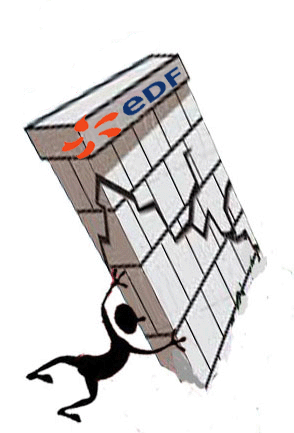
The French government has picked a senior Schneider Electric executive to
head EDF as it moves to fully renationalise the embattled nuclear power
operator and seeks an end to reactor outages straining electricity supplies
across Europe.
Luc Rémont is set to become chair and chief executive after
President Emmanuel Macron cleared his nomination at the group, which is 84
per state-owned, the Élysée Palace said. His appointment, still subject
to parliamentary checks, comes as the government kicks off a
nationalisation process.
A €9.7bn tender offer to buy out minority
shareholders could be handed to regulators next week, two people close to
the process said. The management overhaul at France’s former electricity
monopoly follows a fraught search for candidates that underscored some of
the turmoil around a group with huge industrial tasks ahead and that has
long been intertwined with politics.
Run-ins between the government and outgoing boss Jean-Bernard Lévy over some of the company’s operational problems have spilled into the public in recent weeks, in a blame game over
the state of its existing reactors and France’s hesitation to invest more in the sector. Already highly indebted, EDF is gearing up to build at least six new nuclear reactors in France, the biggest order in more than a quarter of a century.
It is still struggling with long delays and cost overruns on existing projects. A record number of outages at its 56 reactors have plunged its nuclear output to 30-year lows, torn a hole in its profits and turned France into a net importer of power in the middle of an energy crisis. On Thursday, a series of strikes over wages further squeezed EDF’s output.
FT 29th Sept 2022
https://www.ft.com/content/43a1dbd8-fbf0-420e-919e-e9b67bf8305d
US, UK sabotaged peace deal because they ‘don’t care about Ukraine’: fmr. NATO adviser
https://thegrayzone.com/2022/09/27/us-uk-sabotaged-peace-deal/ AARON MATÉ· SEPTEMBER 27, 2022,
Former Swiss intelligence officer and NATO adviser Jacques Baud on the next phase of the Russia-Ukraine war and new allegations that the US and UK undermined a peace deal that could have ended it.
The West’s aim “is not the victory of Ukraine, It’s the defeat of Russia,” Baud says. “The problem is that nobody cares about Ukraine. We have just instrumentalized Ukraine for the purpose of US strategic interests — not even European interests.”
Guest: Jacques Baud. Former intelligence officer with the Swiss Strategic Intelligence Service who has served in a number of senior security and advisory positions at NATO, the United Nations, and with the Swiss military.
Corrections:
- In his Sept. 21 speech, Putin did not make an explicit threat to use nuclear weapons. He vowed to “make use of all weapon systems available to us,” in the event of “a threat to the territorial integrity of our country and to defend Russia and our people.”
On nuclear weapons, the US did not have a “No First Use” policy. On the 2020 campaign trail, Joe Biden said that he supported the idea of “No First Use.” He abandoned that in his presidential nuclear posture; but that was reversing his campaign stance, not official US policy.
Nuclear power classed as “amber”, not “green”. Is it officially accepted as Environmental, Social, and corporate Governance (ESG) ?

the Commission applies a number of screening and disclosure conditions to nuclear’s taxonomy inclusion. For instance, there are screens based on scientific advice such as requiring disposal facilities for low-level radioactive waste to already be operational, member states having a plan for high-level waste disposal by 2050 and a ban on exporting radioactive waste to developing countries for disposal.
Does the EU taxonomy vote mean nuclear is officially ESG? ETF Stream, By Jamie Gordon, 26 Sep 2022,
The implementation of the Delegated Act will test both the EU’s credibility and investors’ appetite to adhere to prescriptive ESG frameworks
The European Parliament took the contentious step in July of voting to include nuclear energy within its taxonomy of sustainable activities, however, it remains to be seen whether other ESG frameworks will follow suit and if any naysayer investors will be swayed by the regulator’s decision.
Almost three years after first being discussed, nuclear energy, along with natural gas, look set to be added to the EU’s taxonomy via the Complementary Climate Delegated Act from 1 January 2023, earmarking them as sustainable investments for the time being.
The road to this verdict was not only meandering but full of obstacles, with Kenneth Lamont, senior research analyst at Morningstar, previously describing nuclear as being “stony on a political level” for investors and policymakers.
It began with the European Commission’s Technical Expert Group publishing the Taxonomy Technical Report in March 2020, which notably snubbed nuclear from its list of green activities.
A year later, leaders of seven EU member states wrote a letter calling on the European Commission to accommodate all paths to climate neutrality while the Commission’s Joint Research Centre argued nuclear should be eligible for ESG investment.
Even though the Commission announced a month later it would bootstrap nuclear and gas to its taxonomy via a Delegated Act, in October, a ‘Nuclear Alliance’ of 15 European Ministers called for the energy source to be included in the main body of the taxonomy by the end of 2021.
Ignoring these calls, the Commission published a draft of the Delegated Act on 31 December, which was soon met by fierce opposition as Austria and Luxembourg threatened to bring a lawsuit before the European Court of Justice.
Despite members of the Environment and Economic Affairs committees later voting against the proposed taxonomy changes in June, the defeat of the motion to block the Delegated Act in the European Parliament in July means nuclear will soon make its delayed entry into the taxonomy.
Conditional inclusion
While the move is significant for challenging the nuclear exclusions applied to many ESG frameworks and products, it bears remembering the Commission’s Platform on Sustainable Finance views nuclear as an ‘amber’ rather than ‘green’ activity – and its inclusion in the taxonomy is both conditional and time-limited………………………………..
Despite nuclear’s seemingly low-carbon credentials, the European countries most active in building new plants – Ukraine, the UK and France – currently only have a combined five plants under construction versus 17 for China alone.
Similarly, 27 out of the 31 reactors that have been under construction since 2017 are of Russian or Chinese design, according to analysis by SocGen.
…………………………….. there are several compelling arguments against nuclear being in the taxonomy such as what to do with thousands of tonnes of radioactive waste, concerns around directing capital away from renewables and the worthwhile geopolitical point that in 2020, 20.2% of the EU’s uranium supply came from Russia and 19.2% from its ally, Kazakhstan, according to Eurostat.
It is also worth noting the size of political opposition to nuclear as a ‘transition energy’, with 278 of 639 MEPs opposing the Delegated Act in July’s motion.
Considering these points, the Commission applies a number of screening and disclosure conditions to nuclear’s taxonomy inclusion. For instance, there are screens based on scientific advice such as requiring disposal facilities for low-level radioactive waste to already be operational, member states having a plan for high-level waste disposal by 2050 and a ban on exporting radioactive waste to developing countries for disposal.
Also, large listed non-financial and financial companies will be required to disclose what portion of their activities are linked to the energies included in the Delegated Act.
Greater complexity across EU policy……………………………………………………………………..
The ultimate test, however, will be if taxonomy inclusion changes investor attitudes towards nuclear, given its aim is to act as a framework for guiding capital towards worthy recipients.
………………………………. Many index providers will remove nuclear power operators from their exclusion lists and will become more flexible in including utilities that generate power from nuclear facilities in their indices,” he added.
However, he warned others with their own internal rules and those fulfilling client mandates would be less likely to change their indices in fear of losing business.
FTSE Russell, for instance, continues to categorise nuclear as tier three under its Green Revenues Classification System, meaning it has some environmental benefit but this is overall net neutral or negative……………………………………
Some investors might also be put off by the fact the technical screening criteria of the Delegated Act will be reviewed every three years, which includes time limits for the contribution of nuclear and gas to climate change mitigation efforts. If the EU reverses its recent taxonomy changes in future, investors in nuclear and gas will have to rush to get rid of these exposures in order to remain aligned.
For now, ESG might like nuclear a little more than it did a year ago but EU taxonomy support only applies to certain subsectors, subject to conditions and set to be reviewed over time.
Overall, though, the Delegated Act should be understood as more an act of EU pragmatism than moral change of heart on what it means to be sustainable. Nuclear may have a role to play in net-zero efforts but will face an uphill battle to convert its detractors. https://www.etfstream.com/features/does-the-eu-taxonomy-vote-mean-nuclear-is-officially-esg/
JOHN PILGER’S 2014 WARNING ABOUT UKRAINE
- https://popularresistance.org/john-pilgers-2014-warning-about-ukraine/ By John Pilger, Consortium News., September 25, 2022, Educate!
- John Pilger Warned The “U.S. Is Threatening To Take The World To War” Over Ukraine, Words That Have Taken On New Meaning.
- Originally published in The Guardian on 13 May 2014.
Why do we tolerate the threat of another world war in our name? Why do we allow lies that justify this risk? The scale of our indoctrination, wrote Harold Pinter, is a “brilliant, even witty, highly successful act of hypnosis”, as if the truth “never happened even while it was happening”.
Every year the American historian William Blum publishes his “updated summary of the record of U.S. foreign policy” which shows that, since 1945, the U.S. has tried to overthrow more than 50 governments, many of them democratically elected; grossly interfered in elections in 30 countries; bombed the civilian populations of 30 countries; used chemical and biological weapons; and attempted to assassinate foreign leaders.
In many cases Britain has been a collaborator. The degree of human suffering, let alone criminality, is little acknowledged in the west, despite the presence of the world’s most advanced communications and nominally most free journalism. That the most numerous victims of terrorism – “our” terrorism – are Muslims, is unsayable. That extreme jihadism, which led to 9/11, was nurtured as a weapon of Anglo-American policy (Operation Cyclone in Afghanistan) is suppressed. In April the U.S. state department noted that, following Nato’s campaign in 2011, “Libya has become a terrorist safe haven“.
The name of “our” enemy has changed over the years, from communism to Islamism, but generally it is any society independent of western power and occupying strategically useful or resource-rich territory, or merely offering an alternative to U.S. domination.
The leaders of these obstructive nations are usually violently shoved aside, such as the democrats Muhammad Mossedeq in Iran, Jacobo Arbenz in Guatemala and Salvador Allende in Chile, or they are murdered like Patrice Lumumba in the Democratic Republic of Congo. All are subjected to a western media campaign of vilification – think Fidel Castro, Hugo Chávez, now Vladimir Putin.
Washington’s role in Ukraine is different only in its implications for the rest of us. For the first time since the Reagan years, the U.S. is threatening to take the world to war. With eastern Europe and the Balkans now military outposts of Nato, the last “buffer state” bordering Russia – Ukraine – is being torn apart by fascist forces unleashed by the U.S. and the EU. We in the west are now backing neo-Nazis in a country where Ukrainian Nazis backed Hitler.
Having masterminded the coup in February against the democratically elected government in Kiev, Washington’s planned seizure of Russia’s historic, legitimate warm-water naval base in Crimea failed. The Russians defended themselves, as they have done against every threat and invasion from the west for almost a century.
But Nato’s military encirclement has accelerated, along with U.S.-orchestrated attacks on ethnic Russians in Ukraine. If Putin can be provoked into coming to their aid, his pre-ordained “pariah” role will justify a Nato-run guerrilla war that is likely to spill into Russia itself.
Instead, Putin has confounded the war party by seeking an accommodation with Washington and the EU, by withdrawing Russian troops from the Ukrainian border and urging ethnic Russians in eastern Ukraine to abandon the weekend’s provocative referendum.
These Russian-speaking and bilingual people – a third of Ukraine’s population – have long sought a democratic federation that reflects the country’s ethnic diversity and is both autonomous of Kiev and independent of Moscow. Most are neither “separatists” nor “rebels”, as the western media calls them, but citizens who want to live securely in their homeland.
Like the ruins of Iraq and Afghanistan, Ukraine has been turned into a C.I.A. theme park – run personally by C.I.A. director John Brennan in Kiev, with dozens of “special units” from the C.I.A. and F.B.I. setting up a “security structure” that oversees savage attacks on those who opposed the February coup. Watch the videos, read the eye-witness reports from the massacre in Odessa this month. Bussed fascist thugs burned the trade union headquarters, killing 41 people trapped inside. Watch the police standing by.
A doctor described trying to rescue people, “but I was stopped by pro-Ukrainian Nazi radicals. One of them pushed me away rudely, promising that soon me and other Jews of Odessa are going to meet the same fate. What occurred yesterday didn’t even take place during the fascist occupation in my town in world war two. I wonder, why the whole world is keeping silent.” [see footnote]
Russian-speaking Ukrainians are fighting for survival. When Putin announced the withdrawal of Russian troops from the border, the Kiev junta’s defence secretary, Andriy Parubiy – a founding member of the fascist Svoboda party – boasted that attacks on “insurgents” would continue. In Orwellian style, propaganda in the west has inverted this to Moscow “trying to orchestrate conflict and provocation“, according to William Hague. His cynicism is matched by Obama’s grotesque congratulations to the coup junta on its “remarkable restraint” after the Odessa massacre. The junta, says Obama, is “duly elected”. As Henry Kissinger once said: “It is not a matter of what is true that counts, but what is perceived to be true.”
In the U.S. media the Odessa atrocity has been played down as “murky” and a “tragedy” in which “nationalists” (neo-Nazis) attacked “separatists” (people collecting signatures for a referendum on a federal Ukraine). Rupert Murdoch’s Wall Street Journal damned the victims – “Deadly Ukraine Fire Likely Sparked by Rebels, Government Says“. Propaganda in Germany has been pure cold war, with the Frankfurter Allgemeine Zeitung warning its readers of Russia’s “undeclared war”. For the Germans, it is a poignant irony that Putin is the only leader to condemn the rise of fascism in 21st-century Europe.
A popular truism is that “the world changed” following 9/11. But what has changed? According to the great whistleblower Daniel Ellsberg, a silent coup has taken place in Washington and rampant militarism now rules. The Pentagon currently runs “special operations” – secret wars – in 124 countries. At home, rising poverty and a loss of liberty are the historic corollary of a perpetual war state. Add the risk of nuclear war, and the question is: why do we tolerate this?
Labour’s ‘Great British Energy’ Company likely to be a nuclear turkey
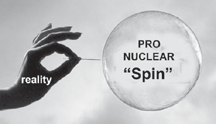
My ears perked up in eager anticipation when Keir Starmer, in his address to Labour’s Conference, started talking about setting up a state-backed renewable energy development company. But I sighed with
despair when it became clearer that this would be an investment conduit for what would be failing, black hole-type, nuclear projects.
Unless it is ring-fenced for renewable energy, and nuclear kept out, this will sink like a stone. If it is to be a vehicle for investing in new nuclear power plant, small or large, it will be like attaching a ship anchor to a rowing boat. It will sink. Quite fast in fact. The whole thing now sounds like an impractical soundbite meant to satisfy a committee on which sits Labour’s prime pro-nuclear donor, the GMB.
It’s actually a great pity that this is being spoiled by the nuclear-damned notion of this ‘Great British
Energy’ Company. I’m sorry Keir, I’d really like to be impressed by this, but it is a loser, certainly in the way it is being spun. When will politicians get it into their heads that new nuclear investment won’t and
can’t make money? Or maybe it’s just the soundbite that counts and they just don’t care that it doesn’t make sense?
100% Renewable UK 27th Sept 2022
UK Government to speed through nuclear development by making a bonfire of existing environmental regulations.

Whilst the media may have focused on the Chancellor’s contentious plan
to make the rich richer by cutting tax for higher earners, anti-nuclear
campaign groups, including and the Nuclear Free Local Authorities, are
concerned that buried within the finer print of the HM Treasury Growth
Plan, which was published alongside Kwasi Kwarteng’s speech in
Parliament, is a clear plot to streamline planning regulations and stifle
public objections to civil nuclear projects.
Treasury mandarins have identified Hinkley Point C and Sizewell C, numbered 115 and 116
respectively, as amongst the large infrastructure projects earmarked to be
fast-tracked by the end of next year by creating a bonfire of existing
regulations covering protection of the natural environment and the rights
and opportunity of the public and other stakeholders to object.
According to departmental officials new legislation will be brought forward to
‘address barriers by reducing unnecessary burdens to speed-up the
delivery of much-needed infrastructure’.
NFLA 27th Sept 2022
The New York Times on Ukraine: Vietnam Déjà Vu
Zelensky did not explain how Ukraine was going to accomplish this, short of a U.S./NATO war with Russia. That’s the rub.
the Times wants to pre-empt Biden from doing the only sensible thing: tell Zelensky to stop the extreme rhetoric and talk to the Russians.
AntiWar.com, by Ray McGovern
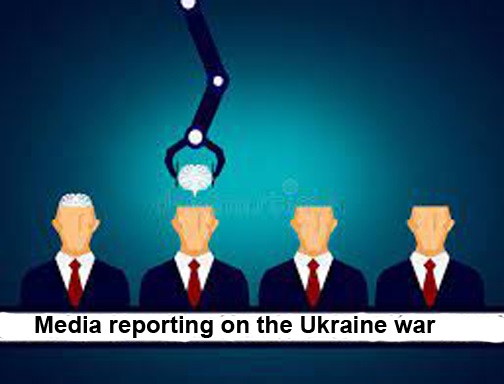
The New York Times is going full-bore for war in Ukraine. It is difficult to explain the yellow journalism, but the so-called “paper of record” did the same thing on Vietnam (see below). In other words, the Gray Lady is whoring again.
It may be, as some allege, that the NYT has never met a war it did not want to get the U.S. involved in – or, once in, to escalate. However true that may be, I still cannot figure out why – why again.
With four Ukrainian oblasts about to join Russia and a mercurial President of Ukraine, Volodymyr Zelensky, making outlandish threats to take them – and Crimea – back, perhaps the Times believes it must move decisively to make it as difficult as possible for President Biden to behave more sensibly.
The Guardian reported yesterday that “Zelensky has vowed to liberate the entire country as Russia pressed on with its supposed referendum in occupied areas of Ukraine …” Zelensky said Ukraine’s armed forces would throw the Russian forces out and retaliate against “every strike of the aggressor.” He pledged that Ukraine’s armed forces would regain control of the southern Kherson region and the eastern Donbas, which includes Luhansk province and Crimea.
Shades of Zelensky’s Feb. 24, 2021 Presidential Decree No. 117 “Approving the Strategy for de-occupation and reintegration of the temporarily occupied territory of the Autonomous Republic of Crimea and the city of Sevastopol” – which gave the major push to growing tension in and around Ukraine.
Zelensky did not explain how Ukraine was going to accomplish this, short of a U.S./NATO war with Russia. That’s the rub.
Must Biden Appear Tough Before Midterms?
The Times seems out to use the prelude to the midterms to advantage. If past is prologue, the Times wants to pre-empt Biden from doing the only sensible thing: tell Zelensky to stop the extreme rhetoric and talk to the Russians.
The Times may fear the off-chance that an adult will come into the room and persuade President Biden that:
- He does not have to keep being diddled by Zelensky and his neocon supporters;
- Ukraine is not winning the war, despite recent successes on the battlefield;
- The US cannot seriously “weaken” Russia without risking wider war;
- On the sanctions front, German politicians may not be able to resist turning on the spigot to North Stream 2, lest the European economy and the European people freeze this winter.
Shameful
Never having been held accountable for reporting as flat fact that there were weapons of mass destruction in Iraq and cheerleading for the US/UK war of aggression starting in March 2003, the New York Times seems to feel it has carte blanche to demonize Russian President Vladimir Putin, in exactly the same way it did Saddam Hussein – and Ho Chi Minh, for god’s sake, four decades earlier.
Over the weekend the Times’s reporting has been slanted to lead readers to conclude that Putin is some kind of monster with whom no one could possibly negotiate. NYT reporters and also opinion writers rely now on Ukrainian officials; then on US intelligence officials. The collective performance is truly a travesty.
On Saturday, for example, opinion writer David Brooks tells us Putin is “a deeply wounded tiger.” And ( get this!)……………………………………………..
that our major newspapers propagated a view that “the only way out of the crisis … was a military victory over the forces of Ho Chi Minh.” In other words, no negotiations.
Actually, the American public had been coming to the conclusion that the war was a mistake, but having been indoctrinated for so many years about our “vital interests” in Vietnam, opposition did not really gather steam until it was too late.
And today, for the Establishment media, it is déjà vu all over again, to quote Yogi Berra – again.
Ray McGovern works with Tell the Word, a publishing arm of the ecumenical Church of the Saviour in inner-city Washington. His 27-year career as a CIA analyst includes serving as Chief of the Soviet Foreign Policy Branch and preparer/briefer of the President’s Daily Brief. He is co-founder of Veteran Intelligence Professionals for Sanity (VIPS). https://original.antiwar.com/mcgovern/2022/09/25/nyt-on-ukraine-vietnam-dj-vu/
Two UK nuclear stations were due for closure in 2014. Now EDF wants to extend their lifetime yet again.

EDF considers extending life of two UK nuclear plants due to energy crisis. Hartlepool and Heysham 1, operational for four decades, are due to close in 2024 but EDF says that is under review.
Guardian Alex Lawson Energy correspondent, 29 Sep 2022
France’s EDF is considering extending the life of two British nuclear power plants due to the severity of the energy crisis.
EDF said on Wednesday that it would review whether there was a case to keep open the Hartlepool nuclear power plant in County Durham and Heysham 1 on the north-west coast of England near Lancaster. Both plants had been scheduled to close in March 2024.
EDF operates all of Britain’s eight nuclear power plants, five of which are still providing power to the grid, about 13% of the UK’s electricity. The entire fleet is due to shut by 2028 apart from Sizewell B, which will close in 2035.
When EDF took over the nuclear fleet in 2009, Heysham 1 and Hartlepool were due to run until 2014. After technical reviews, that was extended to 2019 and then, in 2016, a further five-year extension was approved after further reviews.
Sources said any extra lifespan for the stations was likely to be far shorter than previous extensions……..
EDF said it had decided to launch the review “in light of the severity of the energy crisis and the results of recent graphite inspections” and said an extension would “depend on the results of graphite inspections over the coming months”…………………………………………………………
Some power-generation companies, including those on nuclear, old solar and windfarm contracts have landed an unexpected windfall from the jump in electricity prices while their costs have not risen, triggering calls for a windfall tax……………………….. https://www.theguardian.com/environment/2022/sep/28/edf-considers-extending-life-of-two-uk-nuclear-plants-due-to-energy-crisis-hartlepool-heysham
1 This Month

of the week– Nuclear Reactor Information Task Force

14 May – online event From Bombs to Data Centres: the Face of Nuclear Colonialism
To see nuclear-related stories in greater depth and intensity – go to https://nuclearinformation.wordpress.com
-
Archives
- May 2026 (136)
- April 2026 (356)
- March 2026 (251)
- February 2026 (268)
- January 2026 (308)
- December 2025 (358)
- November 2025 (359)
- October 2025 (376)
- September 2025 (257)
- August 2025 (319)
- July 2025 (230)
- June 2025 (348)
-
Categories
- 1
- 1 NUCLEAR ISSUES
- business and costs
- climate change
- culture and arts
- ENERGY
- environment
- health
- history
- indigenous issues
- Legal
- marketing of nuclear
- media
- opposition to nuclear
- PERSONAL STORIES
- politics
- politics international
- Religion and ethics
- safety
- secrets,lies and civil liberties
- spinbuster
- technology
- Uranium
- wastes
- weapons and war
- Women
- 2 WORLD
- ACTION
- AFRICA
- Atrocities
- AUSTRALIA
- Christina's notes
- Christina's themes
- culture and arts
- Events
- Fuk 2022
- Fuk 2023
- Fukushima 2017
- Fukushima 2018
- fukushima 2019
- Fukushima 2020
- Fukushima 2021
- general
- global warming
- Humour (God we need it)
- Nuclear
- RARE EARTHS
- Reference
- resources – print
- Resources -audiovicual
- Weekly Newsletter
- World
- World Nuclear
- YouTube
-
RSS
Entries RSS
Comments RSS
 nuclear-news