Sizewell C nuclear could become low on the priority list of UK government projects
Therese Coffey’s appointment as the new Environment Secretary came as a
surprise to those who expected her to return to the backbenches after the
departure of her close friend Liz Truss from Downing Street.
But actually it looks like quite an astute move by new Prime Minister Rishi Sunak if he
wants to keep all wings of his party onside.
What it also does is throw up
a very real challenge for her – the Environment Secretary has one of the
most controversial green issues in the country sitting in the middle of her
constituency and an electorate divided about what the government could do.
Dr Coffey is now in charge of the Department for the Environment, Food and
Rural Affairs – it’s effectively the old Min of Ag with environmental
issues tagged on.
What happens at Sizewell is not up to the Environment
Secretary, but the department has a very big input into the decision. It
would probably have to be one of her more junior ministers who actually
makes its case in the Sizewell debate – but as Secretary of State she will
always be closely identified with that by the public.
Of course, it remains
to be seen how much of an issue Sizewell C is likely to be for the Sunak
government. It is a very expensive project and would require a great deal
of government capital expenditure to get it under way. Given that we’re
facing a second era of austerity in 15 years and that any investment now
will not pay off for a decade, I can’t help feeling that any moves towards
progressing Sizewell C are likely to proceed in first gear (or even be left
in neutral) for the next two or three years.
East Anglian Daily Times 27th Oct 2022
https://www.eadt.co.uk/news/23080960.will-coffeys-new-job-mean-sizewell-suffolk-coast/
USA’s Westingouse likely to build and fund 49% of Poland’s first nuclear power station
Poland is likely to choose the United States engineering firm Westinghouse
Electric to build its first nuclear power plant and provide 49% equity
financing for the project. State-owned Korea Hydro Nuclear Power (KHNP) may
also be involved in a separate and parallel private nuclear project, Polish
Deputy Prime Minister Jacek Sasin said earlier this week. Warsaw has also
been talking to France’s state-owned EdF utility which has built and
operates the country’s nuclear power plants. After years of shelved plans
to build a civil nuclear capacity in Poland from scratch, the energy crunch
caused by the war in Ukraine, lower gas supplies from Russia and lack of
immediate renewable substitutes, have kicked the issue back up the
political agenda.
Deutsche Welle 28th Oct 2022
https://www.dw.com/en/us-south-korean-firms-to-operate-nuclear-plants-in-poland/a-63576093
Reporters Without Borders leads 16 organisations urging UK Home Secretary to intervene in extradition of Julian Assange.

UK: RSF leads a coalition of 16 organisations in urging Home Secretary Suella Braverman to urgently intervene in Assange extradition
Reporters Without Borders (RSF) has led a coalition of 16 organisations in urging the new UK Home Secretary, Suella Braverman, to intervene in the US government’s request to extradite Wikileaks publisher Julian Assange. These groups, representing press freedom, free expression, and journalists’ organisations, have also requested a meeting with Braverman to discuss concerns in the case, after a request for a meeting with former Home Secretary, Priti Patel, went unanswered. The full text of the letter is below.
The Rt. Hon Suella Braverman
Secretary of State for the Home Department
2 Marsham Street
London
SW1P 4DF
7 October 2022
Dear Home Secretary,
We, the undersigned press freedom, free expression and journalists’ organisations, are writing to raise the case of WikiLeaks publisher Julian Assange and request you to urgently intervene to ensure he is not extradited to the United States.
In June your predecessor, Priti Patel, signed the order to extradite Mr Assange, despite widespread international concern that his extradition would have alarming implications for journalism and press freedom. In fact, many of the signatories in this letter wrote to Ms Patel warning that Assange’s prosecution “would set a dangerous precedent that could be applied to any media outlet that published stories based on leaked information, or indeed any journalist, publisher or source anywhere in the world.”
Our request for a meeting was unfortunately left unanswered. We are therefore now asking you, Home Secretary, to meet with the signatories of this letter to discuss the case in detail.
We urge you, Home Secretary, to intervene in this extradition request as a matter of priority. In the US, Mr Assange would face trial on 17 counts under the Espionage Act and one count under the Computer Fraud and Abuse Act, which combined could see him imprisoned for up to 175 years. He is highly likely to be detained there in conditions of isolation or solitary confinement despite the US government’s assurances, which would severely exacerbate his risk of suicide.
Further, Mr Assange would be unable to adequately defend himself in the US courts, as the Espionage Act lacks a public interest defence. This would not align with the values of fairness, justice and a public commitment to media freedom that the UK continues to promote.
You now have an opportunity to ensure that this extradition does not proceed. An opportunity to demonstrate through action that the UK means what it says in its commitment to media freedom. And most importantly, the opportunity to reunite Mr Assange with his young family after many years of separation – an act that may ultimately save his life. We ask you to seize this opportunity as a matter of urgency and ensure that the UK government acts in the interest of journalism and press freedom and does not enable the US government to continue to pursue this more than decade-old, politically motivated case.
We look forward to hearing from you and discussing the case further. We would be grateful for a prompt response. Please reply via Azzurra Moores at Reporters Without Borders (RSF) at amoores@rsf.org.
Sincerely,
Rebecca Vincent, Director of Operations and Campaigns, Reporters Without Borders (RSF)
Laurens Hueting, Senior Advocacy Officer, European Centre for Press and Media Freedom (ECPMF)
Séamus Dooley, Assistant General Secretary, National Union of Journalists
Ricardo Gutiérrez, General Secretary, European Federation of Journalists (EFJ)
Ruth Smeeth, Chief Executive, Index on Censorship
Mark Johnson, Legal & Policy Officer, Big Brother Watch
Peter Tatchell, Director, Peter Tatchell Foundation
Dr Suelette Dreyfus, Executive Director, Blueprint for Free Speech
Romana Cacchioli, Executive Director, PEN International
Daniel Gorman, Director, English PEN
Ricky Monahan Brown, President, Scottish PEN
Alix Parodi, President, PEN Suisse Romand
Tanja Tuma, President, Slovene PEN
Alix Parodi, President, PEN Suisse Romand
Zoë Rodriguez, joint President, PEN Sydney, and Chair of the PEN International Women Writers
Jesper Bengtsson, President, Swedish PEN


Every nuclear power plant is a ‘dirty bomb’ in waiting: watchdog

https://www.alternet.org/2022/10/a-dirty-bomb-in-waiting/ Brett Wilkins and Common Dreams October 26, 2022, With Ukraine and Russia each trading renewed accusations that the other is planning to weaponize Ukrainian atomic reactors, a leading anti-nuclear group warned Wednesday that all such power plants have the potential to become radioactive “dirty bombs.”
“Like all nuclear power plants, Ukraine’s reactors are inherently dangerous pre-deployed nuclear weapons,” Maryland-based Beyond Nuclear said in a statement. “Nuclear power plants—and their mounting inventory of high-level nuclear waste—are inherently dangerous and their use should be permanently discontinued.”
The group’s warning comes as Russian officials this week doubled down on unfounded allegations that Ukraine is planning to weaponize a nuclear reactor, while Ukrainian officials accused Russia of carrying out secret construction work at the occupied Zaporizhzhia Nuclear Power Plant, the largest such facility in Europe.
Russia’s August shelling of Zaporizhzhia, as well as last month’s Russian missile strike a few hundred meters from the South Ukraine Nuclear Power Plant near Yuzhnoukrainsk, have raised eyebrows and alarm among nuclear experts and other observers around the world. Experts also fear that possible Russian destruction of Ukrainian dams and other hydroelectrical infrastructure could leave the Zaporizhzhia plant without enough water to cool its reactors.
“The reality all of this exposes is that nuclear power plants are inherently dangerous with their large inventories of radioactive materials that must be protected for hundreds to thousands of years from escaping into the environment,” Paul Gunter, Beyond Nuclear’s director of reactor oversight, said in Wednesday’s statement.
With Ukraine and Russia each trading renewed accusations that the other is planning to weaponize Ukrainian atomic reactors, a leading anti-nuclear group warned Wednesday that all such power plants have the potential to become radioactive “dirty bombs.”
“Like all nuclear power plants, Ukraine’s reactors are inherently dangerous pre-deployed nuclear weapons,” Maryland-based Beyond Nuclear said in a statement. “Nuclear power plants—and their mounting inventory of high-level nuclear waste—are inherently dangerous and their use should be permanently discontinued.”
The group’s warning comes as Russian officials this week doubled down on unfounded allegations that Ukraine is planning to weaponize a nuclear reactor, while Ukrainian officials accused Russia of carrying out secret construction work at the occupied Zaporizhzhia Nuclear Power Plant, the largest such facility in Europe.
Russia’s August shelling of Zaporizhzhia, as well as last month’s Russian missile strike a few hundred meters from the South Ukraine Nuclear Power Plant near Yuzhnoukrainsk, have raised eyebrows and alarm among nuclear experts and other observers around the world. Experts also fear that possible Russian destruction of Ukrainian dams and other hydroelectrical infrastructure could leave the Zaporizhzhia plant without enough water to cool its reactors.
“The reality all of this exposes is that nuclear power plants are inherently dangerous with their large inventories of radioactive materials that must be protected for hundreds to thousands of years from escaping into the environment,” Paul Gunter, Beyond Nuclear’s director of reactor oversight, said in Wednesday’s statement.
“The only reason there is such justifiably high anxiety right now about the possibility of these plants being used as dirty bombs—as well as the very real threat of a missile attack—is because of the lethal radioactivity that would be released, sickening and killing countless people and contaminating land and water indefinitely,” Gunter continued. “This sends a clear message that using this already highly expensive form of electricity generation is, and was always, a mistake.”
War, propaganda, and blindness

We are easy to convince because we know nothing about Ukrainian history and culture.
Nato propaganda tells us about the real sufferings of the Ukrainians, but it does not mention the eight years of torture, murder and massacres that preceded it.
We do not see that we are supporting the very ideas we believe we are fighting against
VoltaireNet by Thierry Meyssan, Translation Roger Lagassé 28 Oct 22
Propaganda makes you stupid. We know that the Ukrainian integral nationalists have committed abominable massacres, especially during the Second World War. But we don’t know what they have been doing on our doorstep for the last thirty years, including the civil war they have been waging for the last eight years. Our own stupidity allows us to endure the war cries of our political leaders on the side of these criminals.
When war comes, governments always believe that they must boost the morale of their people by showering them with propaganda. The stakes are so high, life and death, that debates get tougher and extremist positions become popular. This is exactly what we are witnessing, or rather how we are being transformed. In this game, the ideas defended by some and others have nothing to do with their ideological presuppositions, but with their proximity to power
In the etymological sense, propaganda is just the art of convincing, of propagating ideas. But in modern times, it is an art that aims at reconstructing reality in order to denigrate the adversary and magnify one’s own troops.
Contrary to a widespread idea in the West, it was not the Nazis or the Soviets who invented it, but the British and the Americans during the First World War [1].
Today, Nato coordinates efforts in this area from its Strategic Communication Centre in Riga, Latvia [2]. It identifies the points on which it wants to act and organizes international programs to carry them out.
For example, NATO has identified Israel as a weak point: while former Prime Minister Benjamin Netanyahu was a personal friend of Ukrainian President Volodymyr Zelensky, his successor, Naftali Bennett, recognized the validity of Russian policy. He even advised the return of Crimea and Donbass and, above all, the denazification of Ukraine. The current Prime Minister, Yair Lapid, is more hesitant. He does not want to support the fundamentalist nationalists who massacred a million Jews shortly before and during the Second World War. But he also wants to stay on good terms with the West.
To bring Israel back into line, Nato is trying to persuade Tel Aviv that in case of a Russian victory, Israel would lose its position in the Middle East [3]. To this end, it is spreading the lie that Iran is Russia’s military ally as widely as possible. The international press is constantly claiming that Russian drones are Iranian on the battlefield, and soon the medium-range missiles will be too. Yet Moscow knows how to manufacture these weapons and has never asked Tehran for them. …………………….
The British, on the other hand, traditionally excel in activating networked media and enlisting artists. MI6 relies on a group of 150 news agencies working within the PR Network [4]. They convince all these companies to take up their imputations and slogans.
They are the ones who successively convinced you that President Vladimir Putin was dying, then that he had gone mad, or that he was facing strong opposition at home and that he would be overthrown by a coup. Their work continues today with cross interviews with soldiers in Ukraine. You hear Ukrainian soldiers say they are nationalists and Russian soldiers say they are afraid but must defend Russia. You hear that Ukrainians are not Nazis and that Russians, living under a dictatorship, are forced to fight.
………………………………………………… We are easy to convince because we know nothing about Ukrainian history and culture.
………….. We in Ukraine are unaware of the atrocities of the interwar period and the Second World War, and have a vague idea of the violence of the USSR. We ignore that the theoretician Dontsov and his disciple Stepan Bandera did not hesitate to massacre all those who did not correspond to their “integral nationalism”, first the Jews in this Khazar country, then the Russians and the Communists, the anarchists of Nestor Makhno, and many others. The “integral nationalists”, who had become admirers of the Führer and deeply racist, returned to the forefront with the dissolution of the USSR [6]. …………………………………
Modern Ukraine has patiently built its Nazi regime. After proclaiming the “genetic heritage of the Ukrainian people”, it enacted various laws. The first one grants the benefit of human rights by the state only to Ukrainians, not to foreigners. The second defines who the majority of Ukrainians are, and the third (enacted by President Zelensky) who the minorities are. The trick is that no law speaks about Russian speakers. Therefore, by default, the courts do not recognize them the benefit of human rights.
Since 2014, a civil war has pitted the integral nationalists against the Russian-speaking populations, mainly those of Crimea and Donbass. 20,000 deaths later, the Russian Federation, applying its “responsibility to protect,” launched a special military operation to implement Security Council Resolution 2202 (Minsk Agreements) and end the martyrdom of Russian speakers.
…………………………. Nato propaganda tells us about the real sufferings of the Ukrainians, but it does not mention the eight years of torture, murder and massacres that preceded it. It talks about “our common values with Ukrainian democracy”, but what values do we share with the integral nationalists and where is the democracy in Ukraine?
We do not have to choose between one or the other, but only to defend peace and therefore the Minsk Agreements and resolution 2202.
War drives us crazy. There is a reversal of values. The most extremist triumph. Some of our ministers speak of “stifling Russia” (sic). We do not see that we are supporting the very ideas we believe we are fighting against https://www.voltairenet.org/article218325.html#social
Scotland ‘could fund England’s nuclear plants after independence’ under “regulated asset base” (RAB) model

the RAB model was favoured by the Tory government because “the fact is the market has fled nuclear”.
“The market has fled nuclear because of the risk and liability. The only way of getting nuclear through is with vast public subsidy, and this is a way of disguising that public subsidy.
the RAB model had been tried before in the US – under the name Early Cost Recovery – “and failed miserably”.
And that public money would come at the very start of construction. They would be paying right from the word go, so this is essentially free money. Even with that there really doesn’t seem to be much interest from the market.”
SCOTTISH bill payers could still be funding nuclear projects south of the Border through additional fees on their energy bills even after independence, one expert has said.
It comes as the UK Government looks to award the first contracts for new nuclear stations in England, which will be funded through the “regulated asset base” (RAB) model.
This RAB model will see electricity suppliers pay a levy to “relevant licensee nuclear companies”, with the costs passed on to consumers in the form of additional fees on top of their energy bills. Under conservative UK Government estimates, this could mean Scottish households’ energy bills rising by around £100 a year.
Dr Paul Dorfman, the chair of the non-profit Nuclear Consulting Group and associate fellow at the University of Sussex’s Science Policy Research Unit, told The National that the RAB model was favoured by the Tory government because “the fact is the market has fled nuclear”.
“RAB is absolutely, unequivocally all about trying to incentivise the market,” he said, “and it is doing it with public money.”
Dorfman went on: “And that public money would come at the very start of construction. They would be paying right from the word go, so this is essentially free money. Even with that there really doesn’t seem to be much interest from the market.”
The nuclear expert, who will give evidence on the topic to a Westminster committee next week, said the RAB model had been tried before in the US – under the name Early Cost Recovery – “and failed miserably”.
He said: “It can work for projects which you know will come in on time, but nuclear has huge liabilities and huge over-runs, and that’s precisely why it doesn’t work. RAB doesn’t work for projects with high liability and high risk.
“The market has fled nuclear because of the risk and liability. The only way of getting nuclear through is with vast public subsidy, and this is a way of disguising that public subsidy.
Dorfman warned that once the UK Government started sinking billions of pounds into efforts to begin construction of eight new nuclear stations by 2030, it would “become a fait accompli”.
He said that even after 17 years – the amount of time he estimates it will take from a contract being awarded to a nuclear plant being finished – “the UK public, and the Scots public, who may no longer be part of the UK, will still be liable for that”.
Dorfman said the first RAB nuclear contracts looked set to be awarded in 2023, estimating that would mean a completion date of the first nuclear plants around 2040.

“That’s too late for our climate,” he said. “It’s far too late for the current energy crisis. The point is of course, why do this when last year solar and wind made up three-quarters of all total new electricity generation capacity installed worldwide?”
“
The Nuclear Consulting Group chair further cautioned that no one knows for certain what the RAB funding arrangements will be.
Craig Dalzell, the head of policy and research at Common Weal, a think tank which has recently produced a report on the RAB funding model, said the “ongoing liability” for new nuclear projects in England should “not be outsourced to Scotland post-independence”.
Dalzell told The National: “The idea that Scottish energy users could be paying for the UK’s nuclear RAB schemes even after independence will surely be something that should be resisted. The Scottish Government should do everything it can to extract guarantees from the UK Government that this will not be the case and that the ongoing liability for these plants will not be outsourced to Scotland post-independence.
“At the very least, any payments for these plants should be taken into account when the time comes for independence negotiations and I would expect these charges to be offset against other debts or added to an equivalent payment from the remaining UK to Scotland to compensate for their mismanagement of energy policy.”
The UK Government’s Department for Business, Energy and Industrial Strategy declined to comment, saying only that its policy has not changed despite a new Secretary of State, Grant Shapps, taking control.
You can read Dr Dorfman’s written evidence on nuclear power to the House of Commons’ Science and Technology Committee here.
Together Against Sizewell and other groups to fight on, despite legal setback

Campaigners have pledged to fight on after the High Court rejected their
appeal against the Government’s decision to approve the new Sizewell C
nuclear power station. Together Against Sizewell C (TASC) and other
campaign groups are seeking an oral hearing through the judicial review
process after an initial assessment by the legal authority deemed the
appeal should be rejected.
The review of the approval had been sought on
the grounds that the decision was unlawful amid concerns about the
maintenance of a water supply to the new £20bn station and the resilience
of the coastline. The provision of fresh water to the site was one of the
key issues raised by the Planning Inspectorate when considering the plans.
TASC chair Pete Wilkinson described the rejection verdict as ‘predictable
and wholly unreasonable,’ adding there appeared to be a ‘presumption’
that judicial reviews should be dismissed rather than used as a forum for
democracy.
East Anglian Daily Times 28th Oct 2022
https://www.eadt.co.uk/news/23082932.high-court-rejects-sizewell-legal-challenge/
USA upgrades its B61-12 nuclear bombs in Europe
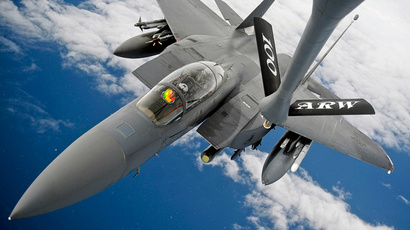
US Accelerates Upgraded Nuke Delivery To Jittery European Allies: Cable, Zero Hedge BY TYLER DURDEN, 28 Oct 22,
On the same day that Russia hailed completion of its ‘successful’ annual nuclear drills, Politico published a bombshell report describing that the US has accelerated plans to maintain upgraded nuclear weapons in Europe.
Specifically, US defense officials informed NATO allies earlier this month that Europe will host a B61-12 air-dropped gravity bomb, to be transferred by December. Politico reported Wednesday that a classified cable it has seen confirmed this.
The upgraded bomb was expected to arrive in Europe next spring, but the timeline was accelerated amid Russia’s growing nuclear rhetoric surrounding the war in Ukraine. President Biden recently raised eyebrows in saying nuclear “armageddon” is a real possibility for the first time since the close of the Cold War.
On an official level the Pentagon is disputing that its planned nuclear upgrade for NATO’s Europe arsenal is in any way connected to events in Ukraine, however, Politico cites the following sources:
Two people familiar with the issue of the upcoming shipment to Europe confirmed the accelerated timeframe reported in the diplomatic cable. They asked not to be named due to the sensitivity of the issue.
The cable, which has not previously been made public and was written to be distributed throughout the Pentagon and State Department to give policymakers a rundown of what was discussed among defense ministers at the NATO meeting, clearly indicates that allies are jittery.
The document says that during the meetings, 15 NATO allies raised concerns that the alliance “must not give in to Putin’s nuclear blackmail.”
The cable is further quoted by Politico as follows: “Given the rising volume and scale of Russia’s nuclear rhetoric, a subset of allies requested continued consultations at NATO to ensure continued readiness and consistent messaging.”……………..
The upgraded B61-12 is designed to allow the bomb to be carried by a fuller array of US and allied bombers and fighter jets, while older versions had more limited delivery options. The upgraded version is also said to be more accurate. https://www.zerohedge.com/military/us-accelerates-upgraded-nuke-delivery-jittery-european-allies-cable
‘No need’ for nuclear strikes on Ukraine, Putin says
9 News, By Associated Press Oct 28, 22
Russian President Vladimir Putin has denied having any intentions of using nuclear weapons in Ukraine but described the conflict there as part of alleged efforts by the West to secure its global domination, which he insisted were doomed to fail.
Speaking at a conference of international foreign policy experts, Putin said it’s pointless for Russia to strike Ukraine with nuclear weapons.
“We see no need for that,” Putin said.
“There is no point in that, neither political, nor military.”
Putin said an earlier warning of his readiness to use “all means available to protect Russia” didn’t amount to nuclear sabre-rattling but was merely a response to Western statements about their possible use of nuclear weapons.
He particularly mentioned Liz Truss saying in August that she would be ready to use nuclear weapons if she became Britain’s prime minister, a remark which he said worried the Kremlin.
“What were we supposed to think?” Putin said.
“We saw that as a coordinated position, an attempt to blackmail us.”……………………………………………….
US Defence Secretary Lloyd Austin told reporters today that the US has still not seen anything to indicate that Putin has decided to use a dirty bomb……………………………………………………. more https://www.9news.com.au/world/russia-ukraine-vladimir-putin-says-kremlin-not-intending-to-use-nuclear-weapons/7ab0234c-cadb-41f9-b8c2-05305c1eb464
Cracks found in all four Olkiluoto Nuclear 3 feedwater pumps
WNN, 28 October 2022, Cracks of a few centimetres have been identified in all four of the feedwater pumps of the Olkiluoto 3 EPR in Finland. Operator Teollisuuden Voima Oyj (TVO) said it does not yet know the impact this will have on the schedule for the plant’s commissioning.
On 18 October, TVO announced that damage had been discovered in the internals of the feedwater pumps located in the plant’s turbine island during maintenance and inspection work.
The feedwater pumps are Olkiluoto 3’s largest pumps and are used to pump water from the feedwater tank into the steam generators. TVO said the cracks detected in the pumps have no impact on nuclear safety.
The company noted the structure of the feedwater pumps located in Olkiluoto 3’s turbine island is commonly used in power plants. However, the pumps at OL3 have been designed for the plant unit’s operations and are larger in size.
“The investigation is currently ongoing in several laboratories,” TVO has now said. “The root cause of the cracks found in the pump impellers is still unknown.”……………………………. more https://www.world-nuclear-news.org/Articles/Cracks-found-in-all-four-OL3-feedwater-pumps
Ukraine’s Biggest Nuclear Plant Needs a Safety Zone
Atomic energy experts are calling for protections for the Zaporizhzhya plant, which has become a pawn in the war, thanks to power outages and nearby shelling.
Wired, Ramin Skibba, 28 Oct 22,
EUROPE’S LARGEST NUCLEAR power plant lies in the middle of a war zone, posing an ever-present risk of radiation leaks as the conflict following Russia’s invasion of Ukraine drags on. The most immediate dangers include the possibility of an errant missile or shell blowing up waste containers, or a protracted power outage that would prevent workers from keeping spent fuel rods cool, a situation that could eventually lead to a radioactive release……………………………….
To reduce tensions and safety risks at Zaporizhzhya, Grossi and the IAEA are calling for a “nuclear safety and security protection zone” around the plant, including its reactors, nuclear waste, spent fuel pools, and energy and cooling systems. Establishing this zone would mandate an end to shelling near the plant, and to military activities that can affect power supply systems. It also calls for the removal of military vehicles from areas where they could affect safety and security systems, and reestablishing an appropriate work environment for operating staff, with clear lines of responsibilities, so that the workers continue reporting to Ukrainian government officials, not Russian ones.
Earlier this month, Grossi met with Putin in St. Petersburg, and with Ukrainian president Volodymyr Zelensky in Kyiv, to make the case. “It is imperative to agree to this as soon as possible,” he said, according to an IAEA statement on October 18. Both leaders have signaled some interest in the plan: Zelensky has said he would back such a zone if it were aimed at demilitarizing the plant, while Putin told the state Tass news agency that Russia is open to dialog about all issues involving the plant’s operations.
Yet Ukraine’s push for a “demilitarized” zone would go further than the IAEA’s proposal by requiring Russia to completely withdraw its forces and effectively abandon the plant to Ukraine, which Russia is unlikely to do, says George Moore, a nuclear scientist at the Middlebury Institute of International Studies in Monterey, California.
Negotiating a ceasefire within a well-defined perimeter would be more politically achievable, he thinks. That would mean taking care to avoid firing mortars, missiles, or drone weapons anywhere in the area. “Hopefully good sense would prevail, but it hasn’t seemed to,” Moore says.
Until Ukraine and Russia reach an agreement, the plant remains in danger. “There’s no question: There should not be any military operations at the plant or in the vicinity of the plant,” says Ed Lyman, senior global security scientist at the Union of Concerned Scientists and coauthor of the book Fukushima: The Story of a Nuclear Disaster. But, he continues, while neither military’s soldiers have deliberately fired on the plant, anything can happen in the fog of war. A misfired weapon or a missile shot down in the wrong place could exacerbate an already dangerous situation. ………………………………………. more https://www.wired.com/story/zaporizhzhya-ukraines-biggest-nuclear-plant-needs-a-safety-zone/
About 100 Zaporizhzhia Nuclear Power Plant employees, including senior managers, agree to collaborate with Russian occupiers
Ukrainska Pravda ANASTASIIA ZHARYKOVA – FRIDAY, 28 OCTOBER 2022,
Out of the 6,700 Zaporizhzhia Nuclear Power Plant (ZNPP) employees who continue working at the plant since its occupation by Russian forces, about 100 workers have signed contracts with Rosatom [Russia’s state nuclear energy corporation] under pressure from the Russians. Several senior managers are among those who had agreed to work for Russia, too…………………. more https://news.yahoo.com/100-zaporizhzhia-nuclear-power-plant-145214038.html
FRANCE DISCOVERS OMINOUS CRACKS IN DOZENS OF NUCLEAR REACTORS
AND THE TIMING COULDN’T BE WORSE.
https://futurism.com/the-byte/france-cracks-dozens-reactors by MAGGIE HARRISON, 27 Oct 22,
Bad Reaction
Europe’s energy crisis may have just gotten worse.
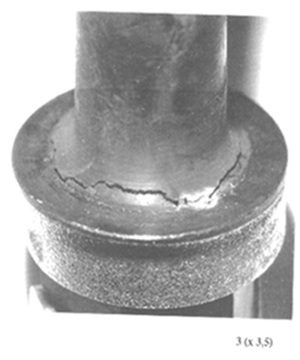
The Wall Street Journal reports that dozens of France’s nuclear reactors — which, amid Russia’s devastating stranglehold on the continent’s natural gas supply, are essential to the nation’s energy security — remain offline following a series of troubling outages believed to be caused by stress-induced pipe corrosion. Fixes are reportedly taking longer than anticipated, but for a struggling continent on the brink of winter, those fixes can’t come quickly enough.
“It’s important that this work restarts as soon as possible,” Emmanuelle Wargon, head of France’s energy regulator, told the WSJ. “If not, the risk of not having electricity rises.”
High Pressure
The nuclear fleet in question, owned by the energy provider EDF, is comprised of 56 reactors, of which 26 are currently out for the count.
According to the WSJ, the pipe problems trace back to late last year, when a crack was discovered in a high-pressure pipe close to the reactor’s core at the nation’s youngest nuclear plant. Other plants, which then launched their own investigations, discovered their own stress corrosion issues shortly thereafter.
“It is only possible to identify [stress corrosion’s] presence once cracking has begun,” read a note from France’s Institute for Radioprotection and Nuclear Safety, the WSJ reports. “Regular inspections of the pipes can only identify the phenomenon once a fault is present.”
Importantly, these aren’t simple fixes. Because the majority of the cracks are so close to the reactor core, radioactivity is a very real threat for technicians, whose exposure has to be limited.
And given how complicated the repairs are, French power experts are reportedly quite pessimistic about the EDF’s ability to get their reactors back online for the winter, especially given that, per the WSJ’s sources, the timelines for several reactor fixes have already been pushed back by at least six weeks.
Beyond the Border
These outages are clearly terrible for France, but they’re just as bad for the rest of Europe, too.
Natural gas prices have skyrocketed as a result of the Russian invasion of Ukraine, which sparred a barrage of Western sanctions and Russia’s subsequent retaliation by way of natural gas restriction. Nations are asking a lot of their citizens, and the continent needs any ounce of energy that it can scavenge to at least somewhat comfortably — let alone safely — get through the winter.
READ MORE: France’s Nuclear Reactors Malfunction as Energy Crisis Bites [The Wall Street Journal]
More on Europe’s energy crisis: Europe’s Energy Crisis Is so Bad It May Have to Idle Cern’s Large Hadron Collider
Nuclear power – a ‘religion’ in France. now turning out to be a curse.
Paris dims the lights as blackouts threaten disaster for Macron. Years of
underinvestment in its aging nuclear fleet risk causing chaos in France
this winter. Xavier Barbaro, chief executive of France’s leading
independent renewables producer Neoen, is concerned about the growing risk
of shortages.
“It’s a possibility and no one would have thought that a
few years or even a few months ago,” he says. “Blackouts were something in
the past. and it can happen again. “We have heard literally for decades
that having nuclear was a chance for the country and in the end, it might
actually be a curse.”
France put all of its eggs in the nuclear basket,
but technical problems are now frequently cutting capacity at its aging
plants. While President Emmanuel Macron has ordered new reactors as part of
a nuclear “renaissance”, decades of inaction are coming back to haunt
the country. Like Liz Truss, Macron’s government has staked its
reputation on his country avoiding blackouts that would undoubtedly have
severe political consequences this winter.
However, industry bosses are
less certain than the President. “We’ve been told for ages that nuclear
power is safe, secure and so constant,” says Adrien Jeantet, director of
energy services at Enercoop, a French utility company using only renewable
energy.
“Now we see that it’s not dependable. We really need it now that
we have gas shortages and all of a sudden it’s not there. Half of the
reactors are shut down.” Barbara Pompili, Macron’s minister in charge
of the energy transition for two years, says nuclear power is almost like a
religion in France.
However, she adds that a widespread belief in its
“magic” has caused underinvestment in renewables that will be needed
for the future. “What I’m worried about is the strategic thinking in the
long run,” she says. “Maybe we were too confident on nuclear power and
we underestimated the importance of renewables. The reason is that too many
people considered that investing in renewables was bad for nuclear power.
“It’s totally crazy. We lost so much time thinking in this way… it’s
very difficult to have a serious rational debate in France on the energy
issue.”
Telegraph 24th Oct 2022
Russian delegation at UN calls on USA to join initiative to renounce weapons in space
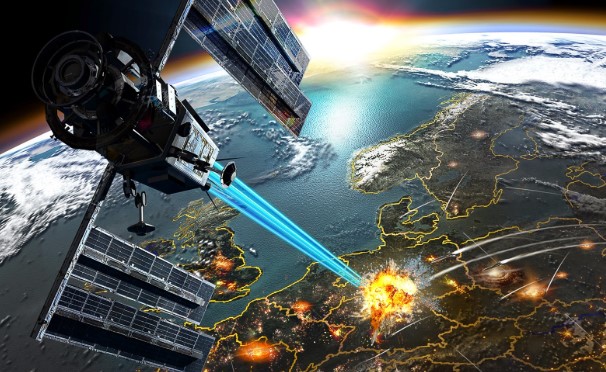
Foreign Ministry Spokeswoman Maria Zakharova’s comment on the US initiative in the UN General Assembly First Committee
The other day, the US delegation submitted to the UN General Assembly First Committee an aide-memoire on proposed UN General Assembly resolution on destructive direct-ascent anti-satellite missile testing. We analysed the text to discover that our apprehensions concerning this US initiative were valid.
As before, we regard the moratorium on testing the above type of anti-satellite weapon (ASW) announced by the White House in April as a purely declarative move. The UN General Assembly statements and draft resolutions are clearly not enough to prevent an arms race in space (PARIS), all the more so for a country that has had experience – at least since 2008 – destroying space objects with ASW.
The United States remains bashfully silent about the most important thing: are they willing to permanently rule out the combat use of this type of weapon? The resolution says nothing about it. There are no commitments regarding the development and production of such systems, or the prospect of ever destroying the Pentagon’s existing anti-satellite capabilities.
Moreover, the possibility of deploying ASW means on the US reusable unmanned space shuttle X-37B, which is capable of staying in orbit for a long time, performing manoeuvres and carrying a payload, cannot be ruled out. By the way, our multiple requests to the United States to clarify the X-37B platform’s goals and objectives have so far remained unanswered.
Military dominance and superiority in outer space being set as clear goals in US doctrinal documents, their view of space as an arena of confrontation and their plans for achieving these goals are quite telling if one wants to understand Washington’s genuine motives. It is no coincidence that the US delegation at the Geneva Conference on Disarmament is doing its utmost to hinder the start of talks on a multilateral instrument which contains reliable international legal guarantees against deploying weapons of any kind in outer space and the renunciation of the use of force or the threat of force against space objects. The Americans are using every pretext to avoid working on the Russian-Chinese draft treaty designed to fulfill PARIS goals………………….
Washington can prove it has serious intentions if it revises its destructive stance and the US delegation that is participating in the Conference on Disarmament joins the efforts to start talks as soon as possible on a legally binding instrument with guarantees of non-deployment of weapons in space, non-use of force or threat of force against space objects.
Specifically, the approach promoted by Russia involves the following commitments:
– not to use space objects as a means of destroying any targets on Earth, in the air or outer space;
– not to create, test or deploy weapons in space to perform any tasks, including for anti-missile defence, anti-satellite activity, or use against targets on Earth or in the air, and to eliminate such systems that the states already possess;
– not to create, test, deploy or use space weapons for anti-missile defence, anti-satellite activity, or use against targets on Earth or in the air;
– not to destroy, damage, or disrupt the normal functioning and not to change the flight paths of space objects owned by other states;
– not to assist or encourage other states, groups of states, international, intergovernmental, or any non-governmental organisations, including non-governmental legal entities that were established, registered or located on the territory under their jurisdiction and/or control, to participate in the above activities.
In addition, the accession of the United States and its allies to the international initiative/political commitment not to be the first to place weapons of any kind in outer space would be a really important confidence-building measure. We are once again calling on Washington to follow the example of more than 30 UN member states and join this initiative, as well as to support the UNGA draft resolution on that matter.
We are ready to substantively and professionally discuss the US initiative in this context of multilateral efforts to arrive at a comprehensive solution to PARIS issues. https://mid.ru/en/foreign_policy/news/1835061/
1 This Month

of the week– Nuclear Reactor Information Task Force

14 May – online event From Bombs to Data Centres: the Face of Nuclear Colonialism
To see nuclear-related stories in greater depth and intensity – go to https://nuclearinformation.wordpress.com
-
Archives
- May 2026 (126)
- April 2026 (356)
- March 2026 (251)
- February 2026 (268)
- January 2026 (308)
- December 2025 (358)
- November 2025 (359)
- October 2025 (376)
- September 2025 (257)
- August 2025 (319)
- July 2025 (230)
- June 2025 (348)
-
Categories
- 1
- 1 NUCLEAR ISSUES
- business and costs
- climate change
- culture and arts
- ENERGY
- environment
- health
- history
- indigenous issues
- Legal
- marketing of nuclear
- media
- opposition to nuclear
- PERSONAL STORIES
- politics
- politics international
- Religion and ethics
- safety
- secrets,lies and civil liberties
- spinbuster
- technology
- Uranium
- wastes
- weapons and war
- Women
- 2 WORLD
- ACTION
- AFRICA
- Atrocities
- AUSTRALIA
- Christina's notes
- Christina's themes
- culture and arts
- Events
- Fuk 2022
- Fuk 2023
- Fukushima 2017
- Fukushima 2018
- fukushima 2019
- Fukushima 2020
- Fukushima 2021
- general
- global warming
- Humour (God we need it)
- Nuclear
- RARE EARTHS
- Reference
- resources – print
- Resources -audiovicual
- Weekly Newsletter
- World
- World Nuclear
- YouTube
-
RSS
Entries RSS
Comments RSS
 nuclear-news