UK government PR exercise “Great British Nuclear” headed for financial failure.

Letter Steve Thomas: Six months after it was announced, it is clear that
Great British Nuclear was no more than a government PR exercise. You report
that it “could prevent a repeat of the Wylfa and Cumbria farragoes”.
That would be remarkable.
The Cumbria project failed because the reactor
supplier, Westinghouse, went bankrupt; Wylfa failed because, although the
government offered to take a 30 per cent stake, no other investors came
forward.
he problem with nuclear is not that we don’t have the
organisation quite right. It’s that nuclear is far too expensive and
economically risky and takes much too long to build to be any use.
Times 25th Sept 2022
https://www.thetimes.co.uk/article/admit-it-nuclears-going-nowhere-tclmnr89f
The Zaporizhzhia nuclear power plant in southern Ukraine remains under Russian control, despite media reports
The Zaporizhzhia nuclear power plant in southern Ukraine remains under
Russian control, authorities installed by Moscow in the nearby city of
Enerhodar said on Monday, after a Ukrainian official suggested Russian
forces were preparing to leave.
“The media are actively spreading fake news
that Russia is allegedly planning to withdraw from Enerhodar and leave the
(plant). This information is not true,” the Russia-installed administration
wrote on the Telegram messaging app.
Reuters 28th Nov 2022
Most NATO members have run out of weapons for Ukraine – NYT
https://www.rt.com/news/567248-nato-weapons-ukraine-tapped-out/ 27 Nov 22Only larger states have untapped potential to continue arming Kiev, newspaper claims
Arms transfers to Ukraine have left Western weapon stockpiles strained, making it increasingly difficult for NATO militaries to honor politicians’ pledges to supply Kiev, the New York Times reported on Saturday.
“Smaller countries have exhausted their potential,” and according to one NATO official, at least 20 of the bloc’s 30 members are “pretty tapped out,” the newspaper wrote. Only “larger allies,” including France, Germany, Italy, and the Netherlands, have enough stockpiles to continue or potentially increase their weapon shipments to Ukraine.
Since the start of Russia’s military operation in Ukraine in late February, the US and its Western allies have been providing Kiev with billions of dollars in security assistance, to the tune of nearly $40 billion, now comparable to the entire annual defense budget of France. Moscow has repeatedly warned that the weapon shipments will only prolong the conflict and increase the risk of a direct conflict between Russia and NATO.
As Ukraine continues to call for more weapons, EU stockpiles are running low, with Germany already “reaching its limit” as of early September. Meanwhile, Lithuania, which does not have any more weapons to donate, has urged the allies to give Ukraine “everything we have.”
US President Joe Biden has vowed to keep the arms pipeline open for “as long as it takes,” but even American military stockpiles have taken a toll after repeated shipments to Kiev. As early as March, just weeks after the conflict in Ukraine kicked off, the US Defense Department was already scrambling to replenish thousands of shoulder-fired missiles supplied to Kiev. By August, US stockpiles of 155mm artillery ammunition were “uncomfortably low,” according to the Wall Street Journal.
The Pentagon’s latest fact sheet detailed more than $19 billion in direct military aid approved since February, including over 46,000 anti-armor systems, nearly 200 Howitzers, 38 long-range High Mobility Artillery Rocket Systems (HIMARS), and a litany of other heavy weapons, vehicles and ammunition – as well as over 920,000 of 155mm artillery rounds.
The US think tank Center for Strategic and International Studies (CSIS) previously pointed out that the American military is “not structured to fight or support an extended conflict,” while the defense industry is “sized for peacetime production rates,” and expanding capabilities would take years.
NATO is heavily invested in Ukraine, with the alliance’s members also providing training and intelligence capability. Despite this “unprecedented support,” the military bloc’s secretary general, Jens Stoltenberg, has repeatedly claimed that “NATO is not a party to the conflict.”
Moscow sees things differently. Multiple top officials, including Foreign Minister Sergey Lavrov, have accused NATO of waging war against Russia “by proxy,” while Putin has described Russia as fighting “the entire Western military machine.”
Russia’s former southern capital renounces its past: How Ukraine is destroying its heritage

Rt.com 27 Nov 22, Ukraine is turning into a significantly more homogeneous and far less culturally diverse country.
In recent years, Ukraine has become the battleground for a ‘war of monuments’ waged among various political forces. In 2014, the process reached a peak during the mass demolition of statues of Vladimir Lenin and other Soviet politicians. These events fundamentally changed the symbolism and policy of the country’s historical memory, paving the way to a reality in which any public speech must now be accompanied by the words ‘Glory to Ukraine! Glory to the heroes!’
This was the slogan of Stepan Bandera’s World War Two nationalist movement, which collaborated with Adolf Hitler’s Nazis and took part in the Holocaust.
Although Ukrainian President Vladimir Zelensky’s team initially tried to ‘reset’ the historical memory policy, radical nationalism got the upper hand in this symbolic battle. Following the start of Russia’s military operation, this year, the so-called ‘decommunization’ policy became openly known as ‘de-Russification’ – even with over half of the population officially recognized as Russian-speaking.
Memory wars
After Russian troops entered Ukraine in February, many locals projected their hatred of Moscow onto objects of cultural and historical heritage that were in any way linked to the Russian Empire or the Soviet Union. Meanwhile, politicians actively supported such sentiment, using it as a cheap way to boost their personal ratings.
Over the past months, the number of initiatives aimed at the cultural and historical ‘de-Russification’ of Ukraine have ballooned. Examples abound. The Kiev City Council recently renamed 11 streets having any reference to Russia (Lomonosov, Magnitogorsk, and Belomorskaya streets, among others). It also completely excluded the Russian language from the curricula of the capital’s kindergartens and schools.
The decision was supported by 64 out of 120 deputies. Vadim Vasilchuk, head of the Standing Committee on Education, Science, Family, Youth and Sports of the body, commented that teaching Russian in the current situation is “inappropriate.” In fact, Kiev’s educational institutions stopped teaching the language in any shape or form (including as electives) at the beginning of the academic year.
Meanwhile, other Ukrainian cities saw a wave of ‘de-Pushkinization’ sweep through. In November, monuments to the great Russian poet were toppled in Kharkov and Zhitomir, while the monument in Odessa was painted over with the inscription ‘Get out!’ In Kiev, one of the oldest monuments to the bard had been taken down a few weeks earlier.
The demolition of monuments to Russian and Soviet statesmen has continued as well. The Ukrainian Ministry of Culture’s expert council on ‘overcoming the consequences of Russification and totalitarianism’ decided to demolish monuments to Soviet military commanders Nikolay Vatutin and Nikolay Shchors (even though Leonid Kravchuk – a student at the time and later the first president of Ukraine – posed for the Shchors monument).
A memorial to Soviet soldiers erected on May 8, 1970 on the 25th anniversary of victory in WWII was demolished in Uzhgorod in November. The decision dates back to October 13. In its place, Kiev proposed a memorial to the soldiers of the 128th separate mountain assault brigade of the Armed Forces of Ukraine – a military unit that took an active part in the Donbass war unleashed by Kiev in 2014.
The story of one monument
Perhaps the most dramatic case of ‘de-Russification’ unfolded in the port city of Odessa. The city’s history dates back to the end of the 18th century, when the Russian Empire colonized the northern Black Sea region. In November, Odessa’s mayor, Gennady Trukhanov, announced the impending demolition of one of the historical city symbols – a monument to its founders that shows Catherine the Great and her associates, thanks to whom the city became the southern capital of the Russian Empire by the end of the 19th century………………………………………………………………….
How has this become possible? When Ukraine gained independence following the collapse of the Soviet Union, its political (electoral) geography acquired stable borders and became integrated into the self-consciousness of the country’s two parts. In fact, several population groups with powerful national identities emerged at the time: Ukrainian-speaking (mostly living in the western and central regions, and professing a purely ethnic narrative), Russian-speaking (mostly living in the center, south and east, for whom Russians were not ‘strangers’ or ‘enemies’), and actual Russians.
These groups, particularly the Ukrainian speakers and Russian speakers, long had their own heritage, language, and political representation. Recall the Orange Revolution of 2004 or the Euromaidan of 2014, during which the ‘pro-Ukrainian’ part of society opposed the ‘pro-Russian’ leader Viktor Yanukovych. Who, in reality, had spent years negotiating with the EU about eventual Ukrainian membership. ………………………………………….
A few years ago, residents of Ukraine’s south and east spoke Russian while recognizing themselves as Ukrainians. Now, the Russian language and its cultural and historical symbols are undergoing irreversible changes and becoming a marker of political affiliation – namely, of being pro-Russian.
Conscious of this, the authorities are striving to gain control over historical heritage and memory policies and expect to win this battle for public opinion. The current southern and eastern regions are turning into a testing ground for experimental nation-building. Their political self-determination fully depends on the historical memory and language policies. Meanwhile, nationalism offers all the necessary tools for constructing a cohesive socio-political community. That is why such a striking ‘de-Russification’ initiative as the demolition of the monument to Catherine the Great in Odessa will not be the last.
For many years, the main political and cultural debate in Ukrainian society has revolved around the question of preserving or eradicating its Russian and Soviet cultural heritage. In the present situation of armed conflict, supporters of the latter skillfully use public outrage to achieve their aims. Should the process continue (and there’s little reason to think it won’t), in a few years Ukraine will turn into a significantly more homogeneous and far less culturally diverse country – one that has willingly renounced a major part of its heritage.
By Alexander Nepogodin, an Odessa-born political journalist, expert on Russia and the former Soviet Union. https://www.rt.com/russia/566917-ukraine-is-losing-heritage/—
Middle East investors and French developers for Sizewell C nuclear station to be paid by “an extra tax” on UK public’s bills ?

Alison Downes of campaign group Stop Sizewell C criticised the idea of foreign investors paid with money from ‘an extra nuclear tax on our bills’. She added: ‘The promise of UK energy independence looks pretty hollow if Sizewell C turns out to be French-built and Middle East-funded.’
UAE wealth fund may invest in Sizewell C – Mubadala one of main names in frame to back £20bn nuclear plant. Emirati sovereign wealth fund Mubadala has been tipped as a potential investor in Sizewell C. Sources said the investment group, whose board includes the owner of Manchester City FC, is one of the main names in the frame to back the £20billion nuclear plant.
They suggested talks with the fund may already have taken place. Mubadala is chaired by UAE president Sheikh Mohamed bin Zayed Al Nahyan. Its vice-chairman Sheikh Mansour bin Zayed Al Nahyan bought Manchester City in 2008.
The Government is expected to give the go-ahead to Sizewell C within days with a ‘general investment decision’ that will formalise taxpayer support. The Government and French energy firm EDF, which is developing the power station, are each taking a 20 per cent stake. They are racing to recruit investors to fill a 60 per cent funding gap.
Ministers have put in place a new funding model, the ‘regulated asset base’, which lets investors receive cash back during construction. This is intended to attract pension funds and institutional investors. But they are also said to be approaching potential supporters in the Middle East, Australia and North America.
Alison Downes of campaign group Stop Sizewell C criticised the idea of foreign investors paid with money from ‘an extra nuclear tax on our bills’. She added: ‘The promise of UK energy independence looks pretty hollow if Sizewell C turns out to be French-built and Middle East-funded.’
A BusinessDepartment spokesman said it would ‘not be appropriate to comment on potential investors’.
Mail on Sunday 26th Nov 2022
https://www.thisismoney.co.uk/money/markets/article-11472637/UAE-wealth-fund-invest-Sizewell-C.html
Legal challenge to UK nuclear plan by groups Stop Sizewell C and Together Against Sizewell C (TASC), and others

Campaigners against Sizewell C say they will not give up their fight to stop the nuclear power project and now have a date for a High Court case in London. The next stage of the legal challenge against the plans for the £25billion power station is set to take place with an oral hearing before a judge.
Campaign groups, including Stop Sizewell C and Together Against Sizewell C (TASC), have pledged to fight despite chancellor Jeremy Hunt announcing in his Autumn Budget that the Government would continue to provide £700m towards the cost of the project.
Chris Wilson, legal liaison officer with TASC, said the oral hearing would be held on December 14, during which the campaigners’ barrister will be able to present their arguments against the project before a High Court judge. If the judge deems there’s a case, the next stage will be a formal judicial review hearing
before the High Court, which could result in the development consent for the nuclear power station, granted by the Government in July, being overturned.
Even if the legal challenge is rejected at the oral hearing, the campaigners will still have the option of going to appeal. A first stage review of the legal appeal by the High Court initially recommended refusal, but the next stage, the oral hearing, will determine whether the challenge goes to a formal judicial review hearing.
East Anglian Daily Times 27th Nov 2022
https://www.eadt.co.uk/news/23151541.sizewell-campaigners-not-giving-up-despite-budget-decision/
The Blackwater Against New Nuclear Group (BANNG) strongly opposes new Bradwell nuclear proposal.

Rolls Royce interest in Bradwell for nuclear reactors, https://www.maldonandburnhamstandard.co.uk/news/23138663.rolls-royce-interest-bradwell-nuclear-reactors/ By Millie Emmett @millieemmett Reporter, 26th November
FRESH proposals to develop nuclear reactors in the Maldon district have been branded “outrageous”.
Rolls Royce announced that it is looking at the Bradwell site, owned by EDF, as a potential base for four to six small modular reactors (SMRs).
The Blackwater Against New Nuclear Group (BANNG) has strongly opposed any plans as it believes it would be larger than the proposed Bradwell B, which is under consideration by Chinese company CGN.
Professor Andy Blowers,chair of the Blackwater Against New Nuclear Group, said: “This proposal, if it ever came about, would place up to six nuclear reactors on the Bradwell site.
“And they are hardly ‘small’ since each reactor would be close to the size of the old Bradwell A station.
“Together these reactors would comprise a nuclear complex larger than the massive proposed Bradwell B currently under consideration for development by the Chinese company, CGN.
“It is hard to state how utterly inappropriate such a development, which would include long-term storage of highly radioactive nuclear wastes, would be on the low-lying Bradwell site, threatened by the impacts of climate change and sea level rise.
“It is an outrageous proposal which must be nipped in the bud before it gets anywhere near off the ground”
The group attended a meeting for the Department of Business, Energy and Industrial Strategy (BEIS) NGO nuclear forum and asked if CGN had withdrawn from the Bradwell B project.
The group was told “there was no change to the proposals for Bradwell B but that further discussion was not possible because of commercial confidentiality”.
BANNG has written to the Government to urge it to declare that the Bradwell site is unsuitable and to remove it from any further consideration by Rolls Royce or any other nuclear developer.
The anti-nuclear group has been campaigning to protect the people and the environment of the River Blackwater estuary for years.
Its aim is to raise awareness of the consequences of new nuclear development and to challenge any proposals for future nuclear power at the Bradwell site.
Washington’s Iron Curtain in Ukraine
Peace and Planet Newsby Diana Johnstone | Fall 2022 Edition
This article is from June 2014; the editors found it profoundly accurate and quite prescient about the shape of things we are witnessing today.
ATO leaders are currently acting out a deliberate charade in Europe, designed to reconstruct an Iron Curtain between Russia and the West.
With astonishing unanimity, NATO leaders feign surprise at events they planned months in advance. Events that they deliberately triggered are being misrepresented as sudden, astonishing, unjustified “Russian aggression.” The United States and the European Union undertook an aggressive provocation in Ukraine that they knew would force Russia to react defensively, one way or another.
They could not be sure exactly how Russian president Vladimir Putin would react when he saw that the United States was manipulating political conflict in Ukraine to install a pro-Western government intent on joining NATO. This was not a mere matter of a “sphere of influence” in Russia’s “near abroad,” but a matter of life and death to the Russian Navy, as well as a grave national security threat on Russia’s border.
A trap was thereby set for Putin. He was damned if he did, and damned if he didn’t. He could underreact, and betray Russia’s basic national interests, allowing NATO to advance its hostile forces to an ideal attack position.
Or he could overreact, by sending Russian forces to invade Ukraine. The West was ready for this, prepared to scream that Putin was “the new Hitler,” poised to overrun poor, helpless Europe, which could only be saved (again) by the generous Americans.
In reality, the Russian defensive move was a very reasonable middle course. Thanks to the fact that the overwhelming majority of Crimeans felt Russian, having been Russian citizens until Khrushchev frivolously bestowed the territory on Ukraine in 1954, a peaceful democratic solution was found. Crimeans voted for their return to Russia in a referendum which was perfectly legal according to international law, although in violation of the Ukrainian constitution, which was by then in tatters having just been violated by the overthrow of the country’s duly elected president, Victor Yanukovych, facilitated by violent militias. The change of status of Crimea was achieved without bloodshed, by the ballot box.
Nevertheless, the cries of indignation from the West were every bit as hysterically hostile as if Putin had overreacted and subjected Ukraine to a U.S.-style bombing campaign, or invaded the country outright – which they may have expected him to do.
U.S. Secretary of State John Kerry led the chorus of self-righteous indignation, accusing Russia of the sort of thing his own government is in the habit of doing. “You just don’t invade another country on phony pretext in order to assert your interests. This is an act of aggression that is completely trumped up in terms of its pretext,” Kerry pontificated. “It’s really 19th-century behavior in the 21st century.” Instead of laughing at this hypocrisy, U.S. media, politicians and punditry zealously took up the theme of Putin’s unacceptable expansionist aggression. The Europeans followed with a weak, obedient echo.
It Was All Planned at Yalta
In September 2013, one of Ukraine’s richest oligarchs, Viktor Pinchuk, paid for an elite strategic conference on Ukraine’s future that was held in the same Palace in Yalta, Crimea, where Roosevelt, Stalin and Churchill met to decide the future of Europe in 1945.
The Economist, one of the elite media reporting on what it called a “display of fierce diplomacy,” stated that: “The future of Ukraine, a country of 48m people, and of Europe was being decided in real time.” The participants included Bill and Hillary Clinton, former CIA head General David Petraeus, former U.S. Treasury Secretary Lawrence Summers, former World Bank head Robert Zoellick, Swedish Foreign Minister Carl Bildt, Shimon Peres, Tony Blair, Gerhard Schröder, Dominique Strauss-Kahn, Mario Monti, Lithuanian President Dalia Grybauskaite, and Poland’s influential Foreign Minister Radek Sikorski. Both President Viktor Yanukovych, deposed five months later, and his recently elected successor Petro Poroshenko were present. Former U.S. energy secretary Bill Richardson was there to talk about the shale-gas revolution which the United States hopes to use to weaken Russia by substituting fracking for Russia’s natural gas reserves. The center of discussion was the “Deep and Comprehensive Free Trade Agreement” (DCFTA) between Ukraine and the European Union, and the prospect of Ukraine’s integration with the West. The general tone was euphoria over the prospect of breaking Ukraine’s ties with Russia in favor of the West.
Conspiracy against Russia? Not at all. Unlike Bilderberg, the proceedings were not secret. Facing a dozen or so American VIPs and a large sampling of the European political elite was a Putin adviser named Sergei Glazyev, who made Russia’s position perfectly clear.
Glazyev injected a note of political and economic realism into the conference. Forbes reported at the time on the “stark difference” between the Russian and Western views “not over the advisability of Ukraine’s integration with the EU but over its likely impact.” In contrast to Western euphoria, the Russian view was based on “very specific and pointed economic criticisms” about the Trade Agreement’s impact on Ukraine’s economy, noting that Ukraine was running an enormous foreign accounts deficit, funded with foreign borrowing, and that the resulting substantial increase in Western imports could only swell the deficit. Ukraine “will either default on its debts or require a sizable bailout.”
The Forbes reporter concluded that “the Russian position is far closer to the truth than the happy talk coming from Brussels and Kiev.”
As for the political impact, Glazyev pointed out that the Russian-speaking minority in Eastern Ukraine might move to split the country in protest against cutting ties with Russia, and that Russia would be legally entitled to support them, according to The Times of London.
In short, while planning to incorporate Ukraine into the Western sphere, Western leaders were perfectly aware that this move would entail serious problems with Russian-speaking Ukrainians, and with Russia itself. Rather than seeking to work out a compromise, Western leaders decided to forge ahead and to blame Russia for whatever would go wrong. ……………………….
Plan A and Plan B
U.S. policy, already evident at the September 2013 Yalta meeting, was carried out on the ground by Victoria Nuland, former advisor to Dick Cheney, deputy ambassador to NATO, spokeswoman for Hillary Clinton, wife of neocon theorist Robert Kagan. Her leading role in the Ukraine events proves that the neo-con influence in the State Department, established under Bush II, was retained by Obama……………..
As Victoria Nuland boasted in Washington, since the dissolution of the Soviet Union in 1991, the United States has spent $5 billion to gain political influence in Ukraine (this is called “promoting democracy”)…….
What called public attention to Victoria Nuland’s role in the Ukrainian crisis was her use of a naughty word, when she told the U.S. ambassador, “Fuck the EU.” But the fuss over her bad language veiled her bad intentions.
……………………………… What called public attention to Victoria Nuland’s role in the Ukrainian crisis was her use of a naughty word, when she told the U.S. ambassador, “Fuck the EU.” But the fuss over her bad language veiled her bad intentions.
………………….
The Protection Racket Returns
But first of all, the United States needs Russia as an enemy in order to “save Europe,” which is another way to say, in order to continue to dominate Europe.
…………………………………………………………….. Perhaps the most extraordinary aspect of the current charade is the servility of the “old” Europeans. Apparently abandoning all Europe’s accumulated wisdom, drawn from its wars and tragedies, and even oblivious to their own best interests, today’s European leaders seem ready to follow their American protectors to another D-Day … D for Doom. https://peaceandplanetnews.org/ukraine-iron-curtain/
Ukrainian city names street after Nazi collaborator

Vinnitsa is replacing world-famous Russian author Leo Tolstoy with Stepan Bandera https://www.rt.com/russia/567200-vinnitsa-tolstoy-bandera-street/ 27 Nov 22
The city council of Vinnitsa in Ukraine announced on Friday it was renaming one of its streets after WWII Nazi collaborator Stepan Bandera. The local authorities described their drive to rid the city of all toponyms linked to Russia as a “process of decolonization.”
The street previously bore the name of Leo Tolstoy, the 19th-century Russian author of world renown. Vinnitsa authorities said they paid “special attention” to memorializing those they described as “heroes of the national liberation struggle.” Bandera, who led a nationalist movement responsible for many atrocities against Russians, Jews and Poles in WWII, is regarded as a national hero by the current Ukrainian authorities.
Another street was named after Ivan Treiko, one of the “generals” and the “military intelligence chief” of the Ukrainian Insurgent Army (UPA), a paramilitary group that also collaborated with the Nazis. Warsaw in particular has blamed the UPA for the genocide of Poles in Volhynia and Eastern Galicia. The ethnic cleansing operations against Poles were ordered by Nazi Germany and carried out by paramilitary units that consisted primarily of ethnic Ukrainians.
A total of 232 toponyms have been changed as part of the “decolonization” campaign in Vinnitsa and neighboring towns, the city council said, praising itself as one of the “most active participants” of this nationwide drive.
Ukraine’s capital, Kiev, has renamed one of its streets after the notorious Azov regiment, which has had open neo-Nazis in its ranks. That street previously bore the name of the Soviet Marshal Rodion Malinovsky. Ukrainian by origin, Malinovsky liberated much of southern Ukraine, including his home city of Odessa, from the Nazis in 1943-1944.
In June, the mayor of Odessa expressed his concern over the growing enmity for “all things Russian” amid the prolonged conflict between Moscow and Kiev.
The removal of references to Russia from street names and other institutions has been a trend in Ukraine since the 2014 Maidan coup, but intensified after the launch of Moscow’s military operation.
Merkel explains why she wasn’t surprised by Russia’s offensive in Ukraine

https://www.rt.com/news/567189-merkel-ukraine-russia-conflict-surprise/ 26 Nov 22
The Minsk Agreements became “eroded” and the EU was reluctant to talk to Moscow, the former German chancellor told Der Spiegel
Former German Chancellor Angela Merkel says she was not surprised when the conflict between Russia and Ukraine broke out in late February. The retired leader was speaking to Der Spiegel in a lengthy interview published on Thursday.
“It did not come as a surprise,” Merkel told the outlet. By then, “the Minsk Agreements were eroded,” the former chancellor stated, referring to the 2014 ceasefire deal brokered by Germany and France, which were designed to give the eastern regions special status within Ukraine.
She also said her efforts to establish another dialogue platform for Russia and the EU in 2021 had come to nothing.
I wanted, together with [French President] Emmanuel Macron, to create an independent European discussion format with Putin through the European Council,” Merkel said, explaining that she faced opposition from other members of the EU’s top body.
“I no longer had the strength to assert myself,” she noted, as everyone knew she was about to step down. She faced the same problem on her farewell visit to Moscow, sensing she no longer had the ability to influence Putin, for whom she said “only power counts.”
The former German leader said she “wished for a more peaceful time” after her departure and would have “pushed for [her initiative] further” had she decided to lead her party into the 2021 parliamentary elections and won.
The former chancellor also acknowledged that she had not moved forward “even a millimeter” in resolving not only the Ukraine crisis, but the tensions between “Transnistria and Moldova, Georgia and Abkhazia,” as well as the crises in Syria and Libya. “It was time for a new approach,” she said.
Merkel, however, defended her opposition to admitting Georgia and Ukraine into NATO, arguing that she “bought time” for Kiev to better prepare for the Russian offensive.
However, Merkel still believes that Berlin should not be “the first nation to send state-of-the-art tanks” to Kiev, warning that it would only damage Berlin’s relations with Moscow. “Russia would then be only further set against Germany,” she said.
Merkel faced criticism at home over the conflict for supposedly making the German economy too reliant on Russian gas. The ex-chancellor defended her decisions, saying that buying gas from Moscow was the best way towards a green future and the move away from coal.
Could the Minsk II agreement Have Prevented the War in Ukraine?
a significant minority of Ukrainians want to remain close to Russia, and for them fully integrating with the West represents a loss.
The fundamental problem for Ukraine was that a majority of citizens sought closer ties with the West, but a significant minority sought closer ties with Russia, and these two aspirations were mutually incompatible.
Daily Sceptic, BY NOAH CARL., 23 NOVEMBER 2022,
Since Russia’s invasion of Ukraine began, Western commentators have spent a huge amount of time expressing moral outrage at Russia’s actions, but comparatively little time thinking about how the war could have been prevented.
This is puzzling. Even if Ukraine manages to win, this victory will have come at an enormous price – tens of thousands of lives, millions of refugees (many of whom may never return), and untold damage to the country’s infrastructure. No matter what the outcome, the war will have been disastrous for ordinary Ukrainians.
It therefore seems essential to ask whether it could have been prevented.
One possible way it could have been prevented is through deterrence. NATO members could have announced in advance, ‘We commit to defending Ukraine if it is ever attacked by Russia’. Alternatively, the U.S. and its allies could have armed Ukraine to the teeth by transferring huge quantities of offensive weapons.
The disadvantages of this approach are obvious. It might have caused Russia to invade even sooner to forestall the arrival of NATO troops or weapons. And if Russia did call the West’s bluff, it might have sparked World War III, as NATO would have pre-committed to entering the war on Ukraine’s side.
As late as February 2014, the percentage of Ukrainians who wanted to join the EU was only 5 points higher than the percentage who wanted to join the Eurasian Customs Union. The balance of opinion then shifted after the ‘Revolution of Dignity’.
There’s another possible way the war could have been prevented: through the implementation of Minsk II. This was an agreement signed in 2015 by representatives from Russia, Ukraine and the two separatist republics, which aimed to bring an end to the fighting in Donbas. It was based on a plan drawn-up by the leaders of France and Germany.
Although Minsk II ultimately failed, since neither side honoured the terms, it was unanimously endorsed
by the UN Security Council.
Critics of Minsk II say it was too favourable to the Russian/separatist side. This is because the agreement would have granted significant autonomy to the two Donbas regions, allowing them to veto Ukraine’s future membership of NATO and possibly its membership of the EU as well. (Minsk II is roughly equivalent to the plan John Mearsheimer put forward in 2014, which emphasised Ukrainian neutrality.)
For Ukrainians who aspire to fully integrate with the West, not being able to join NATO or the EU represents a major loss. Yet a significant minority of Ukrainians want to remain close to Russia, and for them fully integrating with the West represents a loss.
Likewise, almost half of Ukrainians opposed the Maidan protest movement, including a plurality who “[did] not support it all”. For this reason alone, calling the subsequent change of government a ‘Revolution of Dignity’ is highly dubious.
The fundamental problem for Ukraine was that a majority of citizens sought closer ties with the West, but a significant minority sought closer ties with Russia, and these two aspirations were mutually incompatible.
You might say that in a democracy, the majority gets to decide the future path of the country, so Minsk II was fundamentally unfair. Yet it’s widely understood that in ethnically divided countries, the majority often has to make concessions to the minority for the sake of overall stability. Half the parliamentary seats in Lebanon are reserved for Christians and half for Muslims, regardless of the ethnic make-up of the country (which no one quite knows), to prevent one group from dominating the other.
In any case, the European interest – as judged by the leaders of France and Germany – was preserving stability in Ukraine, rather than ensuring the country’s pro-Western majority got its way.
According to the New York Times, the plan for Minsk II emerged “in response to reports that lethal assistance was now on the table in Washington”. In other words, the U.S. wanted to start supplying Ukraine with offensive weapons, so France and Germany stepped in to broker a peace deal before that happened.
Why did Minsk II fail? As I’ve already stated, neither side upheld its end of the bargain. Yet historian Anatol Lieven argues it could have worked but for “the refusal of Ukrainian governments to implement the solution and the refusal of the United States to put pressure on them to do so”…………………………
why, as the country’s main backer, did the U.S. not pressure Ukraine to implement the agreement? After all, the U.S. endorsed the agreement in its capacity as a member of the UN Security Council, and the U.S. pressures its allies to do things all the time.
The obvious reason is that U.S. interests were not served by the implementation of Minsk II.
From a Western perspective, preventing the war in Ukraine would have required the French and Germans to act more decisively, or the Americans to look beyond their own interests. Unfortunately, neither of these eventualities came to pass…………………………… https://dailysceptic.org/2022/11/23/could-minsk-ii-have-prevented-the-war-in-ukraine/
The projected cost of new nuclear power has risen by fourfold since 2008 – and it is still rising
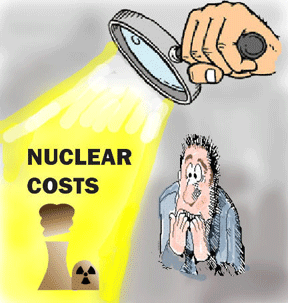
The projected cost of new nuclear power has risen by almost fourfold since
the UK Government made estimates in 2008, and the cost is still rising.
Nuclear analysts warn that the cost to consumers of funding Sizewell C
through the so-called ‘Regulatory Asset Base’ (RAB) model will be much
higher than has been projected by the Government.
In 2008 as the Government argued for more nuclear power stations to be built, the Government, in a
White Paper on nuclear costs, said that each 1.6 GWe EPR reactor would cost
around 2.8 billion. But the most recently released (by EDF) cost of the
Hinkley C EPR double reactor is £25.5 billion (in 2015 prices) and assumes
the plant will be completed by 2027.
This equates to £12.75 billion per
each 1.6 GWe reactor, as reported by World Nuclear News. This is nearly
four times the estimate made by the UK Government in 2008 after inflation
is taken into account.
100% Renewables 25th Nov 2022
Estonian public concerned about radioactive waste from planned nuclear power plant.
The handling of radioactive nuclear waste is one of the public’s biggest
concerns in discussions about potentially building a nuclear power plant in
Estonia, pollsters have found. In 2024, the government will make a decision
on whether or not to build a nuclear power plant in Estonia.
This will be based on a report currently being put together by the Ministry of
Environment. Surveys show nuclear energy is seen as an alternative to using
shale oil to create energy. But the public’s attitudes can be broadly split
into three groups: supporters, opponents and skeptics.
ERR 24th Nov 2022
World’s Biggest Nuclear-Fusion Project Faces Delays as Component Cracks.
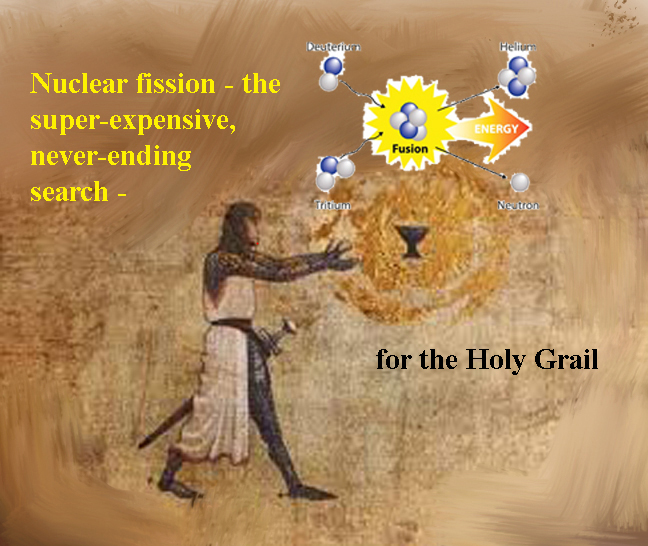
Cracks in a key silver-lined component are creating new delays and cost
overruns in the $23 billion project to prove whether nuclear fusion can
generate limitless clean energy.
The International Thermonuclear
Experimental Reactor, or ITER, under construction in southern France is
being funded by the European Union and countries including China, India,
Japan, Russia and South Korea. The world’s biggest experiment aims to show
that mimicking the power that makes stars shine can produce clean energy
that could help slow global warming on Earth.
But new ITER Director-General
Pietro Barabaschi warned members this week the project faces problems that
are potentially “extensive,” along with new requirements for time and
money that “will not be insignificant.”
Bloomberg 25th Nov 2022
UK government underestimated the cost to the public of Regulated Asset Base financing of nuclear power
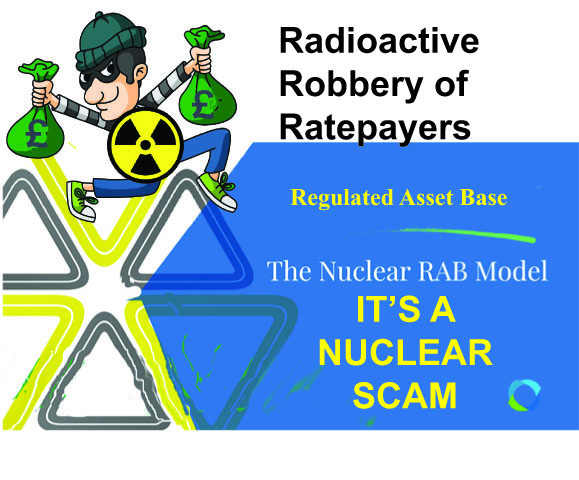
The government has been accused of under-estimating the cost to customers
of its new financing support mechanism for nuclear power, which could add
£100 onto annual bills if ex-prime minister Boris Johnson’s pledge to
roll out a new fleet of the plants is honoured.
At a meeting of the
All-Party Parliamentary Group on Energy Costs, held at the House of Commons
on Wednesday (23 November), University of Greenwich emeritus professor of
energy Steve Thomas criticised the use of the Regulated Asset Base (RAB)
for nuclear projects.
Utility Week 24th Nov 2022
1 This Month

of the week– Nuclear Reactor Information Task Force

14 May – online event From Bombs to Data Centres: the Face of Nuclear Colonialism
To see nuclear-related stories in greater depth and intensity – go to https://nuclearinformation.wordpress.com
-
Archives
- May 2026 (126)
- April 2026 (356)
- March 2026 (251)
- February 2026 (268)
- January 2026 (308)
- December 2025 (358)
- November 2025 (359)
- October 2025 (376)
- September 2025 (257)
- August 2025 (319)
- July 2025 (230)
- June 2025 (348)
-
Categories
- 1
- 1 NUCLEAR ISSUES
- business and costs
- climate change
- culture and arts
- ENERGY
- environment
- health
- history
- indigenous issues
- Legal
- marketing of nuclear
- media
- opposition to nuclear
- PERSONAL STORIES
- politics
- politics international
- Religion and ethics
- safety
- secrets,lies and civil liberties
- spinbuster
- technology
- Uranium
- wastes
- weapons and war
- Women
- 2 WORLD
- ACTION
- AFRICA
- Atrocities
- AUSTRALIA
- Christina's notes
- Christina's themes
- culture and arts
- Events
- Fuk 2022
- Fuk 2023
- Fukushima 2017
- Fukushima 2018
- fukushima 2019
- Fukushima 2020
- Fukushima 2021
- general
- global warming
- Humour (God we need it)
- Nuclear
- RARE EARTHS
- Reference
- resources – print
- Resources -audiovicual
- Weekly Newsletter
- World
- World Nuclear
- YouTube
-
RSS
Entries RSS
Comments RSS
 nuclear-news