Thousands rally in Rome against arming Ukraine
Trade unionists and leftists marched after the new government promised more arms for Kiev next year
https://www.rt.com/news/567650-italy-ukraine-weapons-protest/ 5 Dec 22,
Left-wing demonstrators took to the streets in Rome on Saturday, demanding higher wages and condemning the Italian government for renewing a decree allowing it to send weapons to Ukraine until 2024.
Organized by Italy’s USB trade union and backed by a number of leftist political factions, the protest saw thousands of people assemble at the Piazza della Repubblica and march behind a banner reading “guns down, wages up.”
“The Meloni government is dragging us further and further into a spiral of war with unpredictable outcomes,” the USB wrote prior to the protest. “Italy is evidently a belligerent and active country in the conflict, despite the fact that the great majority of the population is against the war and the consequent sharp increase in military spending.”
Italy’s new prime minister, Giorgia Meloni, issued a decree on Thursday allowing her cabinet to continue sending weapons to Ukraine until the end of 2023 without seeking the formal approval of parliament. Her predecessor, Mario Draghi, was a staunch supporter of Kiev and lost power after a disagreement over arms shipments split the largest party in his coalition government, the Five Star Movement.
The Italian public is split too, with 49% opposing sending weapons to Kiev and 38% in favor, according to a poll taken by EuroWeek News last month. Additionally, 49% of Italians believe that Ukraine needs to make concessions to Russia in the ongoing conflict to speed up the peace process, while only 36% want Kiev to keep fighting.
Last month, another rally in Rome calling for a peace deal to end the Ukrainian conflict drew 100,000 people, organizers said.
Workers at hazardous nuclear waste site test positive for drugs
Random testing has been carried out on 741 workers over the past year. Seven
workers at the hazardous Sellafield nuclear waste site have tested positive
for drugs over the past twelve months. Three have tested positive for
alcohol, raising questions over safety at the site Cumbria which manages
spent fuel from Britain’s nuclear reactors.
Four of the positive drugs tests and one of the positive alcohol tests followed random testing,
carried out on 741 workers between November 2021 and November 2022. The
others followed “for cause” testing, where a worker is suspected of
being impaired by drugs or alcohol, carried out on 36 people over the same
period.
The figures were released to The Telegraph following a Freedom of
Information request. It did not reveal what action had been taken against
those who tested positive. Sellafield is considered one of the most
hazardous nuclear sites in the world, according to the Office for Nuclear
Regulation, handling more radioactive material per square meter than any
site in Europe.
Telegraph 4th Dec 2022
Sizewell C nuclear – a huge black hole for taxpayers’ money
“If the Chancellor is looking for cheap, reliable, energy independence,
he is backing the wrong project, as Sizewell C’s ultimate cost and
technical reliability are so uncertain and building it is reliant on French
state-owned EDF.
Green-lighting Sizewell C also loads more tax onto
struggling households, who would be forced to pay a nuclear levy on bills
for a decade before they could light a single lightbulb. Despite the
Chancellor’s statement, Sizewell C still needs financing, and with at least
a year before it’s decided whether it will finally go ahead, we’ll keep
fighting this huge black hole for taxpayers’ money, when there are cheaper,
quicker ways to get to net zero.”
Stop Sizewell C 3rd Dec 2022
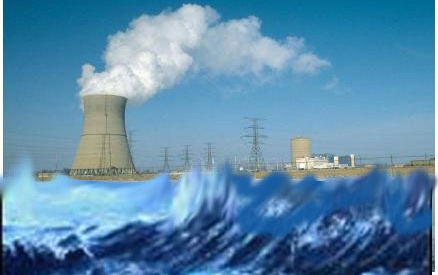
Climate change brings risk of flooding to the multi billion pound nuclear project Sizewell C.
UK sent nuclear warning as new £20bn site facing risk from increased flooding: ‘Alarming!’
Earlier this week, the UK Government confirmed that £700million of public money will be invested in the Sizewell C nuclear power plant.
https://www.express.co.uk/news/science/1703570/energy-crisis-nuclear-edf-sizewell-c-increased-flooding-climate-change-suffolk By ANTONY ASHKENAZ Nov 30, 2022
Experts have issued a dire warning about the proposed Sizewell C nuclear power plant, as climate change induced flooding could mean that in future, the coastal nuclear site could turn into an island. Earlier this week, the Government confirmed that £700million of public money will be invested power plant, which once built will provide power to the equivalent of six million homes for more than 50 years. However, experts fear that the reactor, which will be built in Suffolk, could be at risk of climate change, as rising sea levels threaten to erode and swallow up the East coast of the UK, Express.co.uk was told.
Earlier this week, the UK’s former Chief Scientific Advisor Sir David King warned that the new £20billion power plant would be “very difficult to protect from flooding” due to rising sea levels on the Suffolk Coast.
Speaking to LBC, he said: “Part of the British coast that’s most at risk of rising sea level is the east coast and clearly this is very close to the oceans as is Sizewell B, and frankly that is the biggest risk.
“It would be very very useful if we could see published an analysis of sea level to the end of the lifespan of Sizewell C. It would take us to 2070 and beyond, possibly 2080.
“I do fear that it’s quite possible that we will have had a one-metre sea level rise by that time, by which time this would be very difficult to protect from flooding. I’m not saying it’s impossible, but I would love to see the safety analysis on the basis of rising sea levels.”
Dr Paul Dorfman, an associate fellow from the Science Policy Research Unit at the University of Sussex told Express.co.uk: “In 2008, the pro-nuclear group of the Institute of Mechanical Engineers published a report, which says that UK nuclear coastal installations, which specify Sizewell, will be subject to storm surge, climate-induced sea level rise, flooding and potential nuclear islanding.
“Perhaps alarmingly, IME point out that these UK coastal nuclear sites will need considerable investment to protect them against rising sea levels, and even relocation or abandonment.
“Our knowledge about climate now is that rare events then, become the norm today, so basically there are questions of Sizewell being at significant risk. So quite literally, Sizewell is at the frontline of climate change, and not in a good way.”
He also noted that very “reasonable models” of climate change showed that Sizewell within two decades, would be surrounded by flood water once a year.
He said: “If construction goes ahead, clearly they will build in defences. But the idea of a nuclear power plant within a couple of decades being almost entirely cut off by water, and what does that mean for the future.
“Because it’s not just the reactors, it’s also the high-level spent fuel points, and the hot intermediate-level waste stores that are also at risk.”
As part of its energy strategy unveiled in April, which heavily focused on a number of policies that could help weaken Russia’s grip on UK energy prices, the Government set a target of significantly scaling up nuclear so that it will account for 25 percent of the country’s projected electricity demand by 2040.
The strategy noted that Sizewell C is critically important for helping the UK reach its nuclear targets, and it has been engaging in negotiations regarding the project’s construction since January 2021.
However, Dr Dorfman added: “The other thing is, BEIS, in a statement to Parliament, state that nuclear construction can take 13-17 years. If Sizewell C gets the go-ahead next year at the earliest, we’re looking at first generation by 2040.
“Firstly, that’s much too late to help with our climate and energy problems. But by the time it’s constructed, it’s likely to be a climate risk.”
Meanwhile, Alison Downes, from the campaign group Stop Sizewell C told Express.co.uk: ““Future flood risk maps show the Sizewell site as an island, and we’re deeply concerned that planning assessments were not conservative enough in considering the potential for coastal erosion in Sizewell Bay.
“EDF is being forced to plan sea defences the height of 3 double-decker buses, but since this site will carry radioactive material for well over a century, is it a safe and sustainable approach to protecting our children’s future to locate a nuclear power station here? We say no.
Talking football pitches but not in Qatar
thttps://www.nuclearpolicy.info/news/talking-football-pitches-but-not-in-qatar/ 5 Dec 22, Whilst the World Cup action on the pitch in Qatar is the current focus of many millions of fans of ‘the beautiful game’, the UK/Ireland Nuclear Free Local Authorities are seeking out the answer to a football-related question much nearer to home.
Rolls-Royce has been talking big about the prospects for its so-called Small Modular Reactors in recent days, but everyone remains confused as to how big the reactor is. Although the intended power output is clear, at 470 MW being roughly compatible with a first-phase Magnox nuclear reactor, various media articles have reported the SMR as occupying a surface area amounting to between ‘one and a half and ten football pitches’.
Football’s world governing body, FIFA, sets international standards for the dimensions of playing pitches based on metres, but even these are at variance. The length of a pitch can be between 90 metres and 120 metres from goal line to goal line and the width between 45 metres and 90 metres.
Quite a difference, so the NFLA decided they want to use Wembley Stadium with a playing pitch of 105 metres by 68 metres as a reference football pitch most people can relate to.
The Chair of the UK/Ireland Nuclear Free Local Authorities Councillor David Blackburn has just written to Tom Samson, Chief Executive Officer of Rolls-Royce SMR, seeking out the answer.
Councillor Blackburn said “If we do not know how big it is we do not know what we are dealing with, and it is way overdue for Rolls-Royce to provide clarity. With the FIFA standard size of a football pitch being variable, we have gone for Wembley Stadium as a reference most people, whether football fans or otherwise, can relate to. We have asked how many ‘Wembley’s’ will the SMR fill? It is now over to Mr Samson to respond. We shall of course bring you the final score when we have it.”
UK government may be covering up the extent of its involvement in the arrest and incarceration of Julian Assange
MINISTER ‘MISLED PARLIAMENT’ ON FOREIGN OFFICE ROLE IN SECRET ASSANGE OPERATION New information suggests the UK government may be covering up the extent of its involvement in the arrest and incarceration of the WikiLeaks founder.
https://declassifieduk.org/minister-misled-parliament-on-foreign-office-role-in-secret-assange-operation/ MATT KENNARD AND JOHN MCEVOY 2 DECEMBER 2022
A British MP has accused a Foreign Office minister of “misleading parliament” over his department’s involvement in the secret operation to arrest Julian Assange.
Kenny MacAskill MP, a former Scottish justice secretary, asked the Foreign Office “whether any people working on Operation Pelican were based within [its] Department’s premises.”
Pelican was the secret Metropolitan Police-led operation to seize Assange from his asylum at the Ecuadorian embassy in London, which was mounted in April 2019.
Junior foreign minister David Rutley told parliament last week in answer: “No Foreign and Commonwealth Office [FDCO] officials were directly assigned to work on Operation Pelican.”
However, in response to a Freedom of Information Act (FOI) request in July last year, the Foreign Office had already admitted: “Three FCDO officials did some work on Operation Pelican, the most senior of which was Head of Latin America Department.”
Declassified on Tuesday revealed the UK government had assigned 15 staff to Pelican, but this number did not include any Foreign Office personnel.
‘Misled parliament’
Under the Ministerial Code, ministers have a duty to “be as open as possible with parliament” and to “give accurate and truthful information”. A House of Commons guide states that “this requirement governs the answers ministers provide to parliamentary questions”.
The misleading of parliament is a serious charge that can lead to a minister’s resignation or sacking.
David Rutley, the Conservative MP for Macclesfield, has been foreign minister for the Americas and Caribbean since October 2022, and serves under foreign secretary James Cleverly.
A supporter of Rishi Sunak, Rutley has met the US ambassador to Britain and travelled to Colombia and Panama since taking up office.
Kenny MacAskill, MP for East Lothian, told Declassified: “This new information shows that foreign minister David Rutley misled parliament in answering my recent question. It demonstrates not just the standard obfuscation I have become used to, but actual distortion of the facts about the UK government’s effort to ‘get’ Julian Assange.”
He added: “The actions of the British government have not simply been to assist the US. They have been active and willing participants in the state-sponsored cruelty meted out to Assange. And then tried to hide it all.”
18 officials
Operation Pelican’s existence was only revealed in the memoirs of former foreign minister Sir Alan Duncan which were published last year. The UK government routinely blocks, or obfuscates its answers to, information requests about the Assange case.
For instance, the Home Office and the Cabinet Office have refused FOI requests regarding communication between departments about Pelican. The Foreign Office claimed it holds no information on the matter.
In March, Home Office minister Kit Malthouse even told parliament that his department, despite having eight staff assigned to Pelican, holds no information about which other ministries were involved.
Then, in a later response to a FOI request, the Home Office refused to confirm or deny whether it holds information on inter-departmental communication about Pelican. This refusal to rule out whether the Home Office does hold information on the matter raises concerns that Malthouse may also have earlier misled parliament.
The new information takes up to 18 the number of officials the UK government has admitted to deploying on Operation Pelican.
These included senior officials such as the Deputy National Security Advisor at the Cabinet Office and the International Director at the Home Office, according to documents obtained by Declassified through a FOI request.
Declassified has revealed that four of Britain’s most powerful government ministries, including the Foreign Office, are refusing to say if their officials have met with US authorities to discuss Julian Assange.
IAEA hoping to get a protection zone at the Zaporizhzia nuclear power plant
The International Atomic Energy Agency hopes to reach an agreement with
Russia and Ukraine to create a protection zone at the Zaporizhzhia nuclear
power plant by the end of the year, the head of the U.N. atomic watchdog
was quoted as saying.
Reuters 2nd Dec 2022
Europe, weaning off fossil fuels from Russia, but still dependent on Russia for nuclear fuel
France has been accused of helping to fund Vladimir Putin’s war effort
by continuing to import nuclear fuel from Russia. Greenpeace on Friday
called it “scandalous” that uranium was still being bought by European
companies to be used in nuclear power stations across the continent.
The campaigning charity this week filmed the arrival of dozens of drums of
uranium, both raw and enriched, from Russia at the northern French port of
Dunkirk. Imports of nuclear fuel from Russia remain legal in Europe as
Brussels has not been able to ban them in eight rounds of sanctions
packages.
While Europe has been weaning itself off Russian fossil fuels
since the start of the invasion of Ukraine, its nuclear sector is still
heavily dependent on Russia and imports more than €200 million worth of
uranium every year.
Telegraph 2nd Dec 2022
Macron pushes a “renaissance” while French nuclear flops

A farce that would make Feydeau blush — Beyond Nuclear International
A farce that would make Feydeau blush — Beyond Nuclear International
Misleading claims about the supposed recycling of nuclear wastes
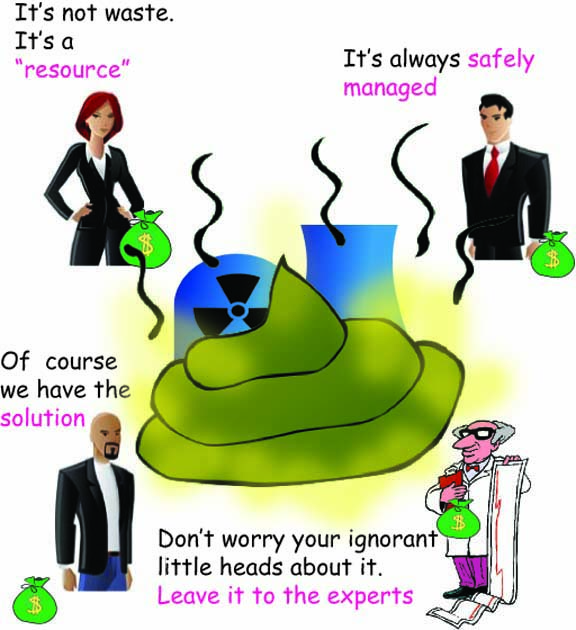
EPZ, the operator of the Borssele nuclear power plant, has long claimed
that they recycle “95 percent” of their nuclear fuel, and that only “5
percent” remains as nuclear waste.
Following a complaint by Laka, the Board
of Appeals of the Dutch Advertising Authority, ruled yesterday that these
are misleading environmental advertisement claims. In its ruling, the board
blames EPZ all the more because theses misleading claims appear on EPZ’s
website under the header “Environment & Health”, where “unsuspecting
visitors should expect accurate and balanced information about nuclear fuel
and nuclear waste.
Laka 1st Dec 2022
Small modular reactor plans to be blocked by the Scottish government
Plans to power a refinery in Scotland with a Rolls-Royce small modular
reactor (SMR) are likely to stall due to opposition from the Scottish
government. Government officials have said they will block any moves to
power the Grangemouth refinery on the Firth of Forth with a nuclear
reactor. According to the Sunday Telegraph, talks have taken place between
chemicals group Ineos and Rolls-Royce, and the two companies are understood
to have considered whether the plant could be powered by an SMR.
New Civil Engineer 30th Nov 2022 https://www.newcivilengineer.com/latest/scottish-small-modular-reactor-plans-to-be-blocked-by-government-30-11-2022/
Warning of power cuts for France, as nuclear reactors are working at half capacity
France could face the risk of power cuts this winter when electricity
supply may not be enough to meet demand, Xavier Piechaczyk, the head of
grid operator RTE, said on Thursday, citing the price to pay for slow
renewables and a nuclear energy infrastructure working at half capacity.
There is a risk of red-alert days this winter, but it would mostly depend
on the weather, Piechaczyk told Franceinfo radio today, noting that power
cuts are not necessarily “inevitable”. Due to lower nuclear generation
availability, France will import electricity this winter from most of its
neighbors, including Benelux, the manager added.
Oil Price 1st Dec 2022
Vladimir Putin open to talks on Ukraine if West accepts Moscow’s demands

ABC News 3 Dec 22
Russian President Vladimir Putin is “open to negotiations” on Ukraine but the West must accept Moscow’s demands, the Kremlin says, a day after US President Joe Biden said he was willing to talk with the Russian leader.
Key points:
- The Kremlin says the US’s refusal to recognise annexed territory in Ukraine as Russian was hindering a search for ways to end the war
- The IAEA wants to establish a protective zone around the Zaporizhzhia nuclear plant, which has been repeatedly shelled over the last few months
- An investigation into whether the Moscow branch of the Orthodox church is entitled to operate in Kyiv is underway
Speaking after talks on Thursday at the White House with French President Emmanuel Macron, Mr Biden said he was ready to speak with Mr Putin “if in fact there is an interest in him deciding he’s looking for a way to end the war”, adding the Russian leader “hasn’t done that yet”.
Mr Biden has not spoken directly with Mr Putin since Russia invaded Ukraine on February 24.
In March, Mr Biden branded Mr Putin a “butcher” who “cannot stay in power”.
In Moscow’s first public response to Mr Biden’s overture, Kremlin spokesman Dmitry Peskov told reporters: “The president of the Russian Federation has always been, is and remains open to negotiations in order to ensure our interests.”
Mr Peskov said the US refusal to recognise annexed territory in Ukraine as Russian was hindering a search for ways to end the war.
Moscow has previously sought sweeping security guarantees, including a reversal of NATO’s eastern enlargement………………………………….. more https://www.abc.net.au/news/2022-12-02/russia-open-to-talks-on-ukraine-if-west-accepts-moscows-demands/101730102
Nuclear Free Local Authorities call for Community Partnerships to include critics of the undersea Geological Disposal Facility plan

The Nuclear Free Local Authorities have sent a second letter to each of the
four Community Partnerships responsible for taking forward proposals for a
nuclear waste dump to seek assurances that opponents of the plan should
have a chance to take up membership.
The Community Partnerships in
Allerdale, Mid-Copeland, South-Copeland, all in West Cumbria, and in
Theddlethorpe, in East Lincolnshire, are each pursuing the possibility of
hosting Britain’s many tons of high-level radioactive waste, produced from
Britain’s civil nuclear and military nuclear programmes, in an undersea
Geological Disposal Facility.
NFLA 1st Dec 2022
Britain’s bunkers offer little chance of survival after a nuclear attack
https://www.theguardian.com/world/2022/dec/02/britains-bunkers-offer-little-chance-of-survival-after-a-nuclear-attack 2 Dec 22 David Saunders and Mark Newbury write that, with no bunker provision for civilians, most of us won’t have access – and those who do should not expect to live long.
The owner of the Kelvedon Hatch bunker suggests that those selected for his shelter might survive for 10 to 20 years in it while avoiding nuclear fallout (‘When you hear the four-minute warning’ … Whatever happened to Britain’s nuclear bunkers?, 24 November). This is, sadly, an unrealistic expectation if one simply looks at the likely impact on infrastructure of even a limited nuclear attack on the UK, based on exercises and analysis conducted during the cold war.
It was accepted 50 years ago that nobody above ground is likely to be left fit or alive to generate power or supply clean water. Food cannot be grown in a radioactive environment and, in the period preceding any outbreak of war, there will be diminished food stocks due to panic buying or rationing.
The scenarios modelled by civil defence analysts even during the 1980s Pershing and cruise missile deployment suggested that survival in Britain’s local government bunkers would be short lived. There was never any provision in the UK for sheltering the civilian population in the event of a nuclear conflict and Britain’s civil defence posture was abandoned as a posture after the 1960s.
While in neutral Sweden and Switzerland housebuilding rules made provision to protect the civil population, in Britain the idea of being able to survive to the same extent as in, say, the blitz in the second world war is merely a pious hope.
Nice to know that, according to the civil defence historian Nathan Hazlehurst, “Key members of central government, the military and royal family will have access to bunkers, along with those staff needed to run the country post-attack.” The rest of us will (I assume) have to make do with an updated version of the much-derided Protect and Survive booklet.
1 This Month

of the week– Nuclear Reactor Information Task Force

14 May – online event From Bombs to Data Centres: the Face of Nuclear Colonialism
To see nuclear-related stories in greater depth and intensity – go to https://nuclearinformation.wordpress.com
-
Archives
- May 2026 (126)
- April 2026 (356)
- March 2026 (251)
- February 2026 (268)
- January 2026 (308)
- December 2025 (358)
- November 2025 (359)
- October 2025 (376)
- September 2025 (257)
- August 2025 (319)
- July 2025 (230)
- June 2025 (348)
-
Categories
- 1
- 1 NUCLEAR ISSUES
- business and costs
- climate change
- culture and arts
- ENERGY
- environment
- health
- history
- indigenous issues
- Legal
- marketing of nuclear
- media
- opposition to nuclear
- PERSONAL STORIES
- politics
- politics international
- Religion and ethics
- safety
- secrets,lies and civil liberties
- spinbuster
- technology
- Uranium
- wastes
- weapons and war
- Women
- 2 WORLD
- ACTION
- AFRICA
- Atrocities
- AUSTRALIA
- Christina's notes
- Christina's themes
- culture and arts
- Events
- Fuk 2022
- Fuk 2023
- Fukushima 2017
- Fukushima 2018
- fukushima 2019
- Fukushima 2020
- Fukushima 2021
- general
- global warming
- Humour (God we need it)
- Nuclear
- RARE EARTHS
- Reference
- resources – print
- Resources -audiovicual
- Weekly Newsletter
- World
- World Nuclear
- YouTube
-
RSS
Entries RSS
Comments RSS
 nuclear-news