Ukraine will eventually reveal ‘horrible’ losses – ambassador
https://www.rt.com/russia/574421-ukraine-losses-horrible-russia/ 9 Apr 23
The true number of casualties will be acknowledged only once the conflict is over, Vadim Pristaiko has said.
Ukraine will reveal the extent of its “horrible” losses once its conflict with Russia is over, Vadim Pristaiko, Kiev’s ambassador to the UK, said in an interview released on Friday.
Asked by British tabloid the Daily Express to comment on casualties among Ukrainian military personnel and civilians, Pristaiko said “it has been our policy from the start not to discuss our losses.”
When the war is over, we will acknowledge this. I think it will be a horrible number,” he added.
Pristaiko dismissed any possibility of talks between Moscow and Kiev – at least until Russia withdraws its troops from the territories Ukraine claims as its own. “So, we have to fight to the very last of them or, very unfortunately, the last of us as well,” the envoy said.
The ambassador also commented on the assault brigades that Ukraine says it has assembled for a much-anticipated spring offensive against Russia. “Whoever says there are 40,000 men in these brigades, I would like to point out that we have mobilized a million men,” Pristaiko stated.
Both sides of the Ukraine conflict rarely provide data on their losses. However, last autumn, EU Commission President Ursula von der Leyen put Kiev’s fatalities at 100,000, a claim that was disputed by Ukraine and later removed from the official’s website. In December, Mikhail Podoliak, a senior aide to Ukrainian President Vladimir Zelensky, put the death toll among Kiev’s military at between 12,000 and 13,000 people.
Russia has not officially updated its losses since last September, when Moscow’s Ministry of Defense estimated that 5,937 service members had died.
Pristaiko’s comments come as Ukrainian and Western officials claim that Ukraine will launch a counteroffensive in the coming weeks. Commenting on statements about a potential Ukrainian push, Kremlin Press Secretary Dmitry Peskov noted that the Russian military “thoroughly tracks all the relevant information” on the matter.
Four arrested after blockade of two gates at Trident nuclear base in Scotland
Posted on April 6, 202, by Margaret Ferguson Burns http://www.nukeresister.org/2023/04/06/four-arrested-after-blockade-of-two-gates-at-trident-nuclear-base-in-scotland/?fbclid=IwAR0_QXUS6bh8GFYojhTTaBg7cF7qqXkt2NTNnuDBjGJUVg92m7CVSfxUc_M
This morning, 5th April – an early start and a fine action.
Lying in a lock-on, enjoying the sounds of the gate sliding shut behind us, the warning klaxon overhead, high above the electrified, barbed wire topped main entrance to HMNB Clyde (home of the UK’s nuclear powered and armed submarines of mass destruction) – and the merry call of “Bandit Alarm; North Gate closed; traffic within the base divert to…” blaring out from the loudspeakers.
The heavy rain splashing chill on our faces in the dull coldness, and creeping through the many layers of clothing.
Clad in an International Campaign to Abolish Nuclear Weapons (ICAN) “Nuclear Weapons ARE BANNED” banner (what else could it be?).
And a little later the even merrier message of “Both North and South Gates now closed – all traffic use the Fire Engine Gate” – loudly hailed into the air. So the second team in successful lock-on too.
And then a Ministry of Defence police truck arriving with blue lights flashing; and the cutting crew truck appearing on the scene too.
So it was, for two lock-on teams from Faslane Peace Camp – the four arrested (Alexander, Finlay, Willemien, Margaret), handcuffed and taken off to Clydebank Polis Station (still wearing the ICAN banner through check-in at the Sergeant’s desk – aye). And it’ll be off to Dumbarton Sherriff Court in the morning.
All to protest the UK Government’s plans to provide depleted uranium munitions to Ukraine in its defence against the Russian invasion – it’s known to cause leukaemia, birth defects and much more.
Success was enabled by welfare support from other camp members during the action; and tasty hot food and a blazing hot stove on return to camp late – after release on signing an “Undertaking” to appear in court next day (including the acceptance of various conditions until then e.g. not to go within 20 metres of the base).
[Update – All four activists were out by late afternoon, Thursday, 6th April – court proceedings to follow at some point.]
France’s riverside reactor build plans “irresponsible” – expert.

MURIEL BOSELLI, Paris, 07 Apr 2023, https://www.montelnews.com/news/1477431/edfs-riverside-reactor-build-plans-irresponsible–expert
(Montel) France’s plan to build two riverside reactors is “irresponsible”, given the acceleration of global warming-related water strain, nuclear expert and critic Yves Marignac told Montel.
Climate change has raised fears of extreme temperatures and droughts that will cause more outages at EDF’s 44 nuclear reactors – out of 56 – that are located along rivers and use water for cooling.
The average summer flow of the Rhone, on which 22% of France’s nuclear capacity is installed, could fall by 20% within 30 years, according to a recent study by the Rhone-Mediterranean-Corsica Water Agency.
However, EDF plans to build two additional reactors along the Rhone.
“We can always adapt the reactors to cool themselves by reducing their water withdrawal, as some reactors do in the desert,” said Marignac, but added that these costly developments “remove the interest of placing installations along rivers”.
Higher water use
He said he also feared a “considerable increase” in competition between water-intensive sectors such as agriculture, industry, energy and tourism.
EDF plans to build three pairs of European pressurised reactors (EPRs) by 2042-43 – one at Penly, a second at Gravelines (both on the coast), and a third at Bugey or Tricastin, on the Rhone.
The decision would be made by the end of the year, Joel Barre, inter-ministerial delegate for new nuclear power plants, told Montel.
Last week, president Emmanuel Macron announced a vast investment plan to adapt nuclear power plants to climate change, notably by equipping riverside units with air-cooling towers to make them less dependent on the temperature of waterways.
Although this system allows reactors to continue producing power during hot periods, it consumes much more water as a significant part of the volume withdrawn evaporates through the towers during cooling.
French energy minister Agnes Pannier-Runacher said earlier this week that scenarios established by the international group of climate experts Giec had shown “very limited losses [of production]”.
“Critical” risk
However, a recent report by France’s auditors’ court warned the impact of global warming on the French nuclear fleet could become “critical” by 2050, with three to four times more unavailability than today.
Last summer, France’s nuclear safety authority ASN authorised EDF to exceed temperature limits for some riverside plants to enable units to continue producing power during the drought.
Thibault Laconde, founder of climate risk assessment start-up Callendar, said EDF’s Tricastin site in southeastern France was a better choice than Bugey for cooling because it was near a section of the Rhone that had cool water inflow from the Isere river.
Melting ice caps
Building reactors by the sea also raised questions, experts said, because of uncertainties about the rising sea levels during the EPRs’ lifespan, which EDF has set at a minimum of 60 years.
The auditors’ court has called on EDF to anticipate “the low probability” of an acceleration in ice cap melting, which would lead to a rise in the average sea level of nearly 2 metres by 2100 and 5m by 2150.
However, EDF has only incorporated a sea level rise of around 1.2m into the design of its EPR reactors, said Barre.
EDF did not respond to Montel’s requests to comment.
The British government doesn’t want to talk about its nuclear weapons. The British public does
Women are far less likely than men to support UK possession (28 percent of women, compared with 53 percent of men)
Bulletin, By Tim Street, Harry Spencer, Shane Ward | April 6, 2023
In January 2023 British Pugwash and the polling company Savanta conducted a survey of UK public opinion on nuclear weapons issues and potential support for policies that advance nuclear arms control, disarmament, and non-proliferation.
The poll involved 2,320 UK adults who were asked about the Russia-Ukraine war, the United Kingdom’s ongoing replacement of its nuclear weapon system, the possibility that US nuclear weapons will again be stationed in the United Kingdom, the significant increase to the UK’s nuclear warhead stockpile cap, and the entry into force of the Treaty on the Prohibition of Nuclear Weapons.
Our polling results found some notable differences between the British public’s views and the policies of the UK government concerning nuclear weapons. While 40 percent of poll respondents support the United Kingdom possessing nuclear weapons, there is significant support for policies that would control, limit, or even eliminate the UK’s nuclear weapons—including among supporters of nuclear possession. For example, over a third of those who support the UK’s possession of nuclear weapons also support joining a multilateral disarmament treaty.
Despite the challenges involved, especially at a time of war in Europe, we at British Pugwash see an opportunity for UK political parties to adopt policies more supportive of nuclear arms control and disarmament. Our key findings revealed these differences between government policy and public opinion:
Use of nuclear weapons. The UK government’s policy is to consider using nuclear weapons “only in extreme circumstances of self-defence, including the defence of our NATO allies.” UK and NATO policy does not rule out the first use of nuclear weapons.
Our poll found that 48 percent of UK adults oppose the first use of nuclear weapons by the United Kingdom, and only 40 percent support first use. This finding builds on the results of the survey British Pugwash conducted in 2021, which found that two-thirds of the British public want NATO to renounce the first use of nuclear weapons.
Replacing nuclear weapons. The United Kingdom is replacing all four parts of its nuclear weapons system: submarines, missiles, warheads, and associated infrastructure. The estimated cost of the four new nuclear-armed submarines is £31 billion (about $38 billion), and the estimated total cost of replacing nuclear weapons between 2019 and 2070 is at least £172 billion ($212 billion).
Our poll found that 42 percent of UK adults think the estimated cost of replacing the UK’s nuclear weapons does not represent value for money.
Stationing US nuclear weapons in the United Kingdom. The UK government has previously allowed US nuclear weapons and nuclear-capable aircraft to be stored, maintained, and operated from UK military bases. Although the United Kingdom has not hosted US nuclear weapons since 2008, in April 2022 an analysis of US Defense Department documents reported that a facility at the Royal Air Force’s Lakenheath base in Suffolk—which is used by the US Air Force—was being upgraded, potentially allowing the United States to again deploy nuclear weapons there.
British public opinion is split over allowing the United States to deploy nuclear weapons on UK territory. Our poll found that 34 percent of UK adults oppose, and 32 percent support, stationing US nuclear weapons in the United Kingdom.
Treaty on the Prohibition of Nuclear Weapons. In 2017, 122 states voted in support of the Treaty, which prohibits the development, testing, production, acquisition, possession, stockpiling, and use of nuclear weapons, as well as any threat to use them. The United Kingdom has not signed or ratified the treaty. To join the treaty, the country would have to dismantle its nuclear arsenal or present a legally binding plan to do so.
Our poll found that 39 percent of UK adults support joining the ban treaty. Among 18- to 34-year-olds, 48 percent support joining the treaty, and only 13 percent are opposed.
Nuclear weapons possession. The United Kingdom is one of only nine countries possessing nuclear weapons. Our poll found that 40 percent of UK adults are in favor of possession. Women are far less likely than men to support UK possession (28 percent of women, compared with 53 percent of men). Some 27 percent of UK adults oppose UK nuclear possession, 29 percent neither support nor oppose nuclear possession, and 5 percent said they “don’t know” in response to this question.
Our poll also found that a minority of UK adults (39 percent) fully support the government’s decision to increase the UK’s nuclear warhead stockpile cap.
Even among supporters of nuclear possession, we found significant concerns about the government’s approach to nuclear weapons. For example, 23 percent of those who support nuclear possession don’t think the estimated cost of replacing the UK’s nuclear weapons represents value for money.
Furthermore, 38 percent of those who support UK nuclear possession do not want the military to use nuclear weapons first in a conflict. Notably, 35 percent of those who currently support the possession of nuclear weapons also want the United Kingdom to join the international ban treaty that would eliminate the country’s nuclear arsenal.
War in Ukraine. Our data indicate that Russia’s invasion of Ukraine has significantly strengthened support for UK possession of nuclear weapons among those who already favored possession. Two-thirds of those who support nuclear possession said the conflict strengthened their position on this issue.
We also saw increases in support for nuclear weapons possession among those who otherwise oppose nuclear possession. In our poll, 16 percent of those who oppose UK possession of nuclear weapons said the Ukraine conflict had increased their support for possession.
Responses to this particular question likely reflect wider public support for UK involvement in the Ukraine conflict and may thus be temporary. Moreover, 39 percent of UK adults said the Ukraine conflict had “made no difference” to their view on UK nuclear possession. Overall, our data suggest that a key impact of the Ukraine war has been to reinforce support for UK nuclear possession among UK adults who already held this view.
Uncertainty and ambivalence. Nearly a third of respondents gave an “on the fence” answer to several of the questions posed. For example, 29 percent said they did not support or oppose the UK’s possession of nuclear weapons; 30 percent said they neither support nor oppose the rise in the nuclear warhead stockpile cap; 28 percent said they neither support nor oppose US nuclear weapons again being stationed in the United Kingdom; and 29 percent said they “don’t know” or are “unsure” whether the estimated cost of the UK nuclear weapons replacement program represents value for money.
These findings indicate that there is significant uncertainty about, and ambivalence toward, nuclear weapons among UK adults.
Why our survey matters.………………………………………………………………………………..
Greater public and parliamentary participation in decision making would improve the quality and legitimacy of the United Kingdom’s international policy. Yet decisions on nuclear weapons (and national security more generally) are largely made behind closed doors. The lack of democracy, transparency, and accountability surrounding nuclear weapons has a clear impact on the British public’s interest in and understanding of the issues. The findings of our poll may partly be explained by the lack of awareness and the absence of public debate on nuclear matters in the United Kingdom. The large number of “don’t know” and “on the fence” responses indicates that many UK adults do not feel well enough informed to make a judgment on these issues.
…………………………………………………………….. Our polling data clearly show a sizable gap between public attitudes and the government’s nuclear weapons policy. With a UK general election likely to be held in 2024, British political parties should be developing policies that better represent public views on nuclear weapons issues—and increase democracy, transparency, and accountability in defense and foreign policy more generally. https://thebulletin.org/2023/04/the-british-government-doesnt-want-to-talk-about-its-nuclear-weapons-the-british-public-does/
—
Campaigners continue to take a stand against the plan for new nuclear power at Bradwell
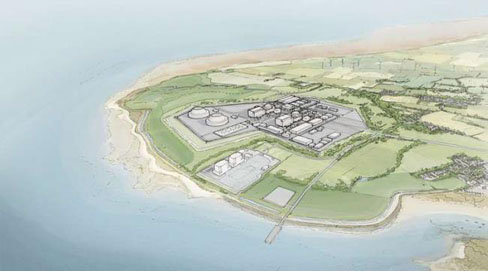
CAMPAIGNERS have promised to continue to protect the people and
environment until a village site is ruled out for use as a nuclear power
site. The Government has said it is “committed to a programme of new
nuclear projects beyond Sizewell C”.
The current government nuclear
policy statement identifies Bradwell as a site for nuclear energy until the
end of 2025. Despite the stop to the plans for a Chinese-led nuclear power
station in Bradwell, campaigners are continuing to take a stand against the
site being considered for nuclear use.
Maldon Standard 6th April 2023
Navy’s nuclear-powered super submarine ‘Trident’ fixed with super glue

The damage was done at HMNB Devonport in Plymouth during a dry dock renovation and refuel. This work, reportedly started in 2015 and is four year behind the schedule and approximately £300 million over budget
Abhishek Awasthi January 31, 2023 https://www.firstpost.com/world/uks-own-chernobyl-averted-navys-nuclear-powered-super-submarine-trident-fixed-with-super-glue-12075672.html?fbclid=IwAR0u3HB9pkg4GbjW37GnF6XxNoRo97No0AskR6qi5bPaS0umNQ7852Hpre8
London: In a bizarre incident, employees aboard the UK’s most advanced frontline submarine Trident risked the lives of millions of people by allegedly using superglue to fix broken bolts of a nuclear reactor chamber prompting navy chiefs to order an investigation.
The crucial cooling pipes’ shoddy repairs were revealed after one of the bolt fell off during a routine check of the 16,000-ton HMS Vanguard.
Reports reveal that the bolts had broken due to careless overtightening, but civilian staff of the defence contractor Babcock glued the heads back on rather than alerting the damage to the authorities so that the fractured shafts could be repaired correctly.
The staff reportedly informed authorities about a process of work difficulty, or procedural fault, but avoided talking about the bolts and glue.
The staff reportedly informed authorities about a process of work difficulty, or procedural fault, but avoided talking about the bolts and glue.
The incident came to light after a UK newspaper publisged a detailed report on the grave blunder prompting Defence
Secretary Ben Wallace to call for a meeting and set accountability of the officials once and for all.
According to a Navy source, he was enraged that Babcock, one of the largest defence contractors in the UK, kept the Navy in the dark.
It’s a disgrace, they remarked. Nuclear technology forbids cutting corners. “The rules are the rules. Standards in the nuclear industry are never waived,” he said.
The damage was done at HMNB Devonport in Plymouth during a dry dock renovation and refuel. This work, reportedly started in 2015 and is four year behind the schedule and approximately £300 million over budget.
The sailors of the three remaining Trident 2 nuclear missile subs, HMS Vengeance, HMS Victorious, and HMS Vigilance, have had to endure protracted patrols due to persistent delays.
From 2028, the Dreadnought class will take their place and carry the UK’s nuclear deterrent.
The experts said that the seven bolts that were fixed using Superglue were reportedly preventing a Chernobyl type meltdown by holding the insulated coolant pipes.
They were discovered this month, ahead of the engineers’ scheduled first firing of the reactor at maximum power.
Investigators are still combing through data to determine when it occurred and who was to blame. As part of nuclear safety protocols, employees usually work in pairs.
After the incident, the Ministry of Defence in the UK issued a statement saying: “A fault from work done when HMS Vanguard was in dry dock was detected as part of a planned examination.”
It was reported and rectified right away, ministry said while adding that the Secretary of State also engaged with Babcock’s CEO in order to secure reassurance for future works.
Navy sources however claimed there were “no nuclear safety issues and that the reactor would not have exploded if the damage hadn’t been discovered.
“This is a big trust issue for Babcock and the Royal Navy to tackle,” former sub skipper Cdr. Ryan Ramsay stated, adding that It makes one wonder what else has been done poorly.
“The time strain imposed by falling considerably behind schedule may have induced this behaviour,” he said.
Babcock has multi-billion dollar contracts to overhaul at Devonport and maintain the Astute and Vanguard sub fleets
for the Royal Navy at HMNB Clyde in Scotland.
Any quality-related issue is extremely disappointing, however our own thorough inspection procedures found the problem, said Ramsay, adding that There was no safety or operational impact from the work.
Meanwhile, Rolls Royce which manufactures and maintains the reactors asserted that it was indeed a dereliction of duty on Babcock’s part.
Renewable energy overtakes nuclear power as the EU’s largest source of primary energy production.
Renewables were the main source of European energy production in 2021,
according to the statistical office of the EU. A Eurostat report suggests
renewable energy has overtaken nuclear power as the largest source of
primary energy production in the European Union. Data shows that in 2021,
renewables made up nearly 41% of the EU’s total energy production, with
solid fuels, natural gas, crude oil and other sources accounting for the
rest.
Energy Live News 4th April 2023
Classic Megaproject Early Mistakes Will Create A Fiscal Disaster For Netherlands Nuclear

The Netherlands doesn’t have a plan, just an aspiration. They don’t have a schedule, just a notional target that is close enough to 2030 to sound good. They don’t have a budget, they have a number that they think that they can sell. There’s just so much failure inherent in this proposal that it’s like asking a flatland triangle to successfully build the Pyramid of Giza. Where to start?
As the data shows, 55 nuclear construction projects globally had cost overruns greater than 50%, and the average of those projects were 204% overruns, which is to say that they cost three times more than budgeted for.
The first bias and most evident here, is strategic misrepresentation, aka lying outright or obfuscating the likely truth in order to get something going. When equivalent projects are looked at, €5 billion is clearly a gross understatement of the real costs, but is also clearly the only number that the government believes it can sell.
By Michael Barnard, 5 Apr,23, https://cleantechnica.com/2023/04/05/classic-megaproject-early-mistakes-will-create-a-fiscal-disaster-for-netherlands-nuclear/
Recently, the new coalition government of the Netherlands looked across its decarbonization portfolio, realized that it had failed to meet renewables targets, and so announced that it would build two nuclear power reactors with 1-1.6 GW capacity each. And the government is claiming that it will have them running in 2035, but has only outlined costs through 2030 of €5 billion ($5.5 billion).
The Netherlands’ plan does have a couple of things going for it. The country actually has a small, 50-year old, 485-MW nuclear reactor at Borssele, and they are apparently going to build the new reactors on the same site. They’ve also extended the life of the very old reactor, which has people understandably concerned. So they have operational experience with nuclear, albeit with a very different technology with considerably different operational characteristics, predating as it does most computerization of control systems.
They have already jumped through the International Atomic Energy Agency’s 28 or so major hoops. They already have the seven overlapping, somewhat concentric layers of security from international to internal site high-security areas in place and know what is required. The combination puts them ahead of countries that don’t have existing nuclear reactors, and ahead of projects attempting to site reactors in a new location.
What doesn’t the Netherlands have or know about these reactors?
They don’t know what technology they will use. Some reports say that they will stick with third-generation nuclear technology, which sounds conservative until you realize that Hinkley in the UK, Flamanville in France, Vogtle and Summer in the US, and Olkiluoto in Finland were all third generation AP1000s and European Pressurized Reactors (EPR), and all have suffered massive cost and budget overruns.
They don’t have any trained, certified, or security cleared design or construction resources. The requirements for nuclear design and construction resources are substantially higher than for wind, solar, and other generation options. High security clearances are required for a vastly greater percentage of nuclear construction resources than for other forms of electrical generation, especially as they’ll be doing construction on a running nuclear site. Many people in non-nuclear trades such as boilers, turbines, electricians, and the like who would be acceptable for a wind farm, solar farm, or hydro project will not pass the filters for nuclear projects. In fact, many utility-scale construction projects employ vast numbers of unskilled day laborers that they pick up off street corners at the beginning of the day and drop off again at the end.
They don’t have a significant nuclear engineering program in any of their universities. The nuclear chair in TU Delft retired a decade or so ago and was never replaced. There’s a professor of nuclear engineering at the school, Jan Leen Kloosterman, and he’s clearly excited by this opportunity and hoping that the chair will be re-established with him sitting in it per his public comments.
They have no one who has ever led and run the construction of a nuclear plant. The people who built Borssele are dead or retired to Spain or Portugal, one assumes.
They don’t have a primary contractor, and that’s much more of a problem than it was a decade ago. The three major countries that are building or attempting to build nuclear reactors in other jurisdictions are Russia, China, and France. Russia has made itself an international pariah and clearly wouldn’t pass basic security checks. China has been politically blackballed because it’s stopped being a cheap manufacturer of consumer goods and become instead a major economic competitor which has surpassed the US by several measures and is set to surpass it by most of the rest by 2035. And then there’s France, which has proven to Europe and the world that it is incompetent to build new nuclear reactors, and has had problems operating its own.
The Netherlands doesn’t have a plan, just an aspiration. They don’t have a schedule, just a notional target that is close enough to 2030 to sound good. They don’t have a budget, they have a number that they think that they can sell. There’s just so much failure inherent in this proposal that it’s like asking a flatland triangle to successfully build the Pyramid of Giza. Where to start?
Continue readingFrance’s nuclear company planning to extend the life of its creaky old reactors.
Electricite de France SA is reviving studies to boost the longer-term
output of some nuclear reactors as part of a plan to extend the life of its
atomic fleet to at least 60 years.
Europe’s energy crisis and rising power
prices have put such considerations back “on the company’s agenda for
2023,” according to Sylvie Richard, who’s in charge of the
state-controlled utility’s €33 billion ($35.6 billion) spending on
reactor maintenance and retrofit for the period from 2022 through 2028. The
upgrades could boost the output of some EDF reactors by 4% to 5%. If that
proves financially viable and gets approved by the nuclear safety
authority, some of the work would take place beyond 2028, Richard told
reporters at the Saint-Laurent nuclear power station in central France
Thursday.
The French nuclear giant has been tasked by President Emmanuel
Macron to extend the lifetime of its 56 reactors and to build at least six
new ones to help the country reduce its reliance on fossil fuels. However,
EDF has been grappling for more than a year with extended reactor repairs
and outages that have worsened Europe’s energy crunch, while triggering a
record loss at the company.
Bloomberg 3rd April 2023
https://www.bnnbloomberg.ca/edf-mulls-reactor-upgrades-to-boost-longer-term-nuclear-output-1.1903718
Germany criticizes Russian role in French nuclear fuel plant
German officials have criticized plans by French firm Framatome to produce
nuclear fuel in a joint venture with Russia’s Rosatom at a facility in
western Germany, and said Thursday that they will consider whether an
application to do so can be rejected.
Officials in the state of Lower
Saxony have received a request for the Framatome-owned ANF facility in
Lingen, near the German-Dutch border, to be allowed to produce hexagonal
fuel rod arrangements used in Soviet-designed water-water energetic
reactors. Such reactors, known by the Russian acronym VVER, are common in
Eastern Europe and the fuel production would take place under license from
state-owned Rosatom.
“Doing business with (Russian President) Putin must
stop, and that also and especially applies to the nuclear sector,” Lower
Saxony’s Energy Minister Christian Meyer said.
Washington Post 30th March 2023
Sizewell C permits approved despite concerns over potential mass fish deaths
Sizewell C permits approved despite concerns over potential mass fish
deaths. The Environment Agency has issued three new permits to Sizewell C,
despite concerns that the approved cooling system and lack of fish
deterrent device could result in “thousands of fish dying every day”.
ENDS 30th March 2023
Divers enter Sellafield’s nuclear pool for first time in 65 years
A GROUP of specialist divers have entered Sellafield’s nuclear pool for the
first time in over 60 years. Divers have been carrying out vital clean-up
and decommissioning work in the oldest legacy storage pond on the
Sellafield site.
The last time a human entered Sellafield’s Pile Fuel
Storage Pond was in 1958, when records show a maintenance operator and
health physics monitor carried out a dive into the newly constructed pond
to repair a broken winch.The pool went out of use in the 1960s but now
divers have returned as part of work to decommission and clean up the site.
Carlisle News & Star 1st April 2023
https://www.newsandstar.co.uk/news/23424414.divers-dip-sellafields-nuclear-pool-first-time-65-years/
ARMY PUTTING ‘OUTRAGEOUS SPIN’ ON DEPLETED URANIUM SCIENCE

Scientist cited by British military to justify sending depleted uranium shells to Ukraine had previously criticised use of such ammunition in Iraq.
DECLASSIFIED UK, PHIL MILLER, 28 MARCH 2023
- Sole body cited by UK military to defend Ukraine receiving depleted uranium weapons has not published new research on the subject for over 20 years
- Italy’s defence ministry has compensated soldiers who developed cancer after exposure to depleted uranium on service in the Balkans
- After the invasion of Iraq, the UK military accepted it had a ‘moral obligation’ to help clear depleted uranium debris from the rounds it had fired.
The Ministry of Defence claimed last week that research by the Royal Society – Britain’s premier scientific group – supported its controversial decision to send depleted uranium tank shells to Ukraine.
An MoD official briefed the media: “Independent research by scientists from groups such as the Royal Society has assessed that any impact to personal health and the environment from the use of depleted uranium munitions is likely to be low.”
The Royal Society was cited despite the group rebuking the Pentagon in 2003 for using their exact same research to justify American tanks firing the weapon in Iraq, Declassified UK has found.
When contacted, the scientific body told us: “In 2001/02, the Royal Society published two reports on the health hazards of depleted uranium munitions.” It provided links for the first and second report.
Their spokesperson added that depleted uranium “isn’t an active area of policy research for the Society, [and] we haven’t updated or published on this topic since those reports.”
In 2003, the US military used those Royal Society reports to defend the use of depleted uranium (DU) by coalition forces in Iraq.
That triggered a complaint to the media, with the Guardian saying the Royal Society was “incensed because the Pentagon had claimed it had the backing of the society in saying DU was not dangerous.
“In fact, the society said, both soldiers and civilians were in short and long term danger. Children playing at contaminated sites were particularly at risk.”
The chairman of the Royal Society’s working group on depleted uranium, Professor Brian Spratt, was quoted as warning that “a small number of soldiers might suffer kidney damage and an increased risk of lung cancer if substantial amounts of depleted uranium are breathed in, for instance inside an armoured vehicle hit by a depleted uranium penetrator.”
“In addition, large numbers of corroding depleted uranium penetrators embedded in the ground might pose a long-term threat if the uranium leaches into water supplies.”
He recommended that fragments from depleted uranium shells should be cleared up and long-term sampling of water supplies needed to be conducted.
Spratt also countered claims about the safety of depleted uranium made by the UK’s then defence secretary Geoff Hoon, stressing: “It is is highly unsatisfactory to deploy a large amount of material that is weakly radioactive and chemically toxic without knowing how much soldiers and civilians have been exposed to it.”
………………………………………….. Shells containing more than 2.3 tonnes of depleted uranium were fired by British forces in operations against Iraq in 1991 and 2003.
US troops fired far larger quantities, especially around the city of Fallujah, where it has been blamed for birth defects and a spike in cancer cases.
Contamination
The ammunition was also used by NATO on operations in Bosnia, Serbia, Montenegro and Kosovo during the breakup of Yugoslavia.
Italian soldiers who developed cancer after serving on those missions in the Balkans have successfully sued their defence ministry for compensation. Serbians have attempted similar litigation against NATO.
A study conducted in Kosovo by the UN Environment Programme (UNEP) shortly after that conflict ended found “only low levels of radioactivity”.
However, they were not able to consider the long term consequences and only inspected 11 out of 112 sites where DU had been fired.
A later UNEP study in Serbia did find more significant corrosion of DU shells and that many of them were lodged deep in the ground.
A subsequent report by the UN in Bosnia found drinking water had been contaminated, albeit at low levels…………………………………………….. more https://declassifieduk.org/exclusive-army-putting-outrageous-spin-on-depleted-uranium-science/
Welsh anti-nuclear groups warn on the nuclear lobbyists behind the new Freeport bid for Anglesea.
Anti-nuclear activists are ringing warning bells that this week’s
announcement of a new Freeport for Anglesey represents a way in for
unwanted new nuclear developments on the island, with at least six backers
of the bid having direct connections to the industry.
Named amongst the sponsors of the Freeport bid are leading nuclear industry businesses,
Assystem, Bechtel, Last Energy, Molten Flex, Rolls-Royce SMR, and New Cleo,
all of which are vying to develop and locate new nuclear power plants at
the Wylfa site on the island and elsewhere in the UK.
All are competing for
public attention and public funds by issuing media releases that frequently
make outrageous claims to be on the verge of making a UK-wide product
roll-out.
Yet most of their nuclear power plant designs being (as yet)
unproven, unauthorised, and unbuilt so-called Small Modular Reactors.
Other members of the Freeport consortia include Bangor University, with its
Nuclear Future Institute; M-Sparc, with its connections to the University’s
nuclear department; and the Association of North and Mid-Wales Councils,
which include unabashed nuclear enthusiasts, Ynys Mon and Gwynedd Councils.
Six Welsh anti-nuclear groups – CADNO, CND Cymru, Cymdeithas yr iaith (the
Welsh Language Society), PAWB (Pobl Atal Wylfa B / People against Wylfa-B),
WANA (The Welsh Anti-Nuclear Alliance) and the Welsh NFLA (Nuclear Free
Local Authorities) met in Caernarfon, Gwynedd in July 2022 and signed a
Declaration pledging their opposition to new nuclear power plants and to
fight for a green and sustainable future for Wales.
These Welsh
anti-nuclear campaigners are concerned about the lack of transparency and
public engagement about the extensive involvement of nuclear players in the
Freeport bid and are terribly disappointed that, aside from one marine
energy business, there are not more genuinely green energy producers in the
mix.
NFLA 3rd April 2023
Nuclear Tug of War Intensifies in Brussels
With money and regulations on the table for renewable energy, the EU has become entrenched into two solid blocs with different stances on nuclear power.
Bridget Ryder — April 3, 2023 The European Conservative
With both a package of incentives for green technology and revisions to the Renewable Energy Directive on the table, the fight in Brussels over the place of nuclear power in the ‘green,’ ‘sustainable,’ ‘clean’ energy landscape—and its corresponding regulation—has intensified.
The bloc’s energy ministers met last week to prepare their negotiating points with the EU Parliament over changes to the Renewable Energy Directive. Prior to the March 28th Council meeting, energy ministers pow-wowed in competing breakfast gatherings—one for the French-led nuclear alliance and the other for the Austrian-organised Friends of Renewables group, Euractiv reports.
Nuclear alliance
At the end of their meetings, the nuclear alliance sent out a press release to notify the media—and presumably, both the Commission and their rivals on the EU Council—that they had agreed that nuclear energy was indeed “strategic” in achieving the EU Commission’s environmental goals. This is the opposite position to the one the Commission has taken in the recently proposed Net Zero Industry Act (NZIA), a set of incentives meant to counter U.S. green tech subsidies.
Under French leadership, the nuclear alliance (consisting of Bulgaria, Croatia, the Czech Republic, Finland, Hungary, the Netherlands, Poland, Romania, Slovakia, and Slovenia) first met in February while the Commission was still preparing the NZIA. Its goal was to promote nuclear power as a low-carbon source of electricity and work on “common industrial projects.”
In mid-March, the Commission presented the NZIA draft, but with nuclear power excluded from the list of “strategic” technologies that would qualify for incentives. The one exception was “cutting-edge nuclear” technology, such as small modular reactors (SMRs) which could qualify for some investment incentives. The alliance then met again in March, just before the meeting of energy ministers on March 28th, and announced that they had “fully recognised that nuclear is a strategic technology for achieving climate neutrality.”
The pro-nuclear breakfasts were attended by Italy and Belgium, though only as observers. The two countries made it clear they had not signed on to any agreed position with the group, though they have reasons for desiring a favourable status for nuclear energy.
Belgium, for its part, has had to retract plans to start shutting down the country’s six nuclear reactors. After announcing the closure of a set of nuclear power plants by 2025, the public outcry forced the energy ministry to instead grant them a ten-year extension. ………………..
Friends of renewables
The Friends of Renewables—Estonia, Spain, Germany, Denmark, Ireland, Luxembourg, Portugal, Latvia, and Lithuania, with Austria as leader—are a clear counterweight to the nuclear alliance.
The compromise
After the breakfast gatherings, the two groups had to come together with the rest of the bloc’s member states for the official EU Council Meeting to settle on a negotiating position for the updates to the Renewable Energy Directive (RED).
The nuclear sticking point was whether hydrogen produced using nuclear power should be included in renewable fuel targets. After hours of back and forth, they agreed to label nuclear-produced hydrogen as “low carbon,” in other words, dirtier than ‘green’ hydrogen but better than the ‘brown’ hydrogen linked to fossil fuels.
Nuclear power enters into the debate about renewables in the question of hydrogen gas. Making the gas ‘green,’ a process of separating the hydrogen from water molecules, requires an energy source. When that source is considered ‘green,’ such as solar or wind power, the hydrogen is considered ‘green.’
Negotiators for the EU Parliament then also made room for nuclear power in the Renewable Energy Directive (RED), admitting that it has a “role” to play in reducing carbon emissions and is in a category of its own in the spectrum of environmental friendliness.
The RED now recognizes “the specific role of nuclear power, which is neither green nor fossil,” French MEP Pascal Canfin, chair of the Parliament’s Environment Committee, who participated in the negotiations, tweeted…….
The political agreement reached by the Council and Parliament calls for doubling renewable energy output by 2030.
“The agreement raises the EU’s binding renewable target for 2030 to a minimum of 42.5%, up from the current 32% target and almost doubling the existing share of renewable energy in the EU. Negotiators also agreed that the EU would aim to reach 45% of renewables by 2030,” the Commission said in a statement about the political agreement on the RED.
‘Renewable’ energy currently makes up just over 20% of the bloc’s energy mix.
Further room was made for nuclear by provisions in the agreement by giving member states two options to calculate achieving certain targets: either emission reductions or renewable energy output. This is an advantage for countries like France that have substantial nuclear capacity, as carbon dioxide is not the major by-product of nuclear power production. https://europeanconservative.com/articles/news/nuclear-tug-of-war-intensifies-in-brussels/
1 This Month

of the week– Nuclear Reactor Information Task Force

14 May – online event From Bombs to Data Centres: the Face of Nuclear Colonialism
To see nuclear-related stories in greater depth and intensity – go to https://nuclearinformation.wordpress.com
-
Archives
- May 2026 (102)
- April 2026 (356)
- March 2026 (251)
- February 2026 (268)
- January 2026 (308)
- December 2025 (358)
- November 2025 (359)
- October 2025 (376)
- September 2025 (257)
- August 2025 (319)
- July 2025 (230)
- June 2025 (348)
-
Categories
- 1
- 1 NUCLEAR ISSUES
- business and costs
- climate change
- culture and arts
- ENERGY
- environment
- health
- history
- indigenous issues
- Legal
- marketing of nuclear
- media
- opposition to nuclear
- PERSONAL STORIES
- politics
- politics international
- Religion and ethics
- safety
- secrets,lies and civil liberties
- spinbuster
- technology
- Uranium
- wastes
- weapons and war
- Women
- 2 WORLD
- ACTION
- AFRICA
- Atrocities
- AUSTRALIA
- Christina's notes
- Christina's themes
- culture and arts
- Events
- Fuk 2022
- Fuk 2023
- Fukushima 2017
- Fukushima 2018
- fukushima 2019
- Fukushima 2020
- Fukushima 2021
- general
- global warming
- Humour (God we need it)
- Nuclear
- RARE EARTHS
- Reference
- resources – print
- Resources -audiovicual
- Weekly Newsletter
- World
- World Nuclear
- YouTube
-
RSS
Entries RSS
Comments RSS
 nuclear-news