Pension funds shun Sizewell C in major blow to Britain’s nuclear ambitions

Asset managers ‘extremely sceptical’ about nuclear push despite project’s ‘sustainable’ status
By Matt Oliver and Szu Ping Chan, 22 April 2023 •
The Government’s push to find investors for the £20bn Sizewell C nuclear
power station has suffered a significant blow as Britain’s biggest fund
managers have snubbed the scheme.
Jeremy Hunt, the Chancellor, sought to
make the project more attractive to green-focused asset managers in his
Spring Budget by proposing to give it “sustainable” status under UK
financing rules. Ministers have also reformed the funding model for nuclear
plants to hand investors more up-front rewards.
But senior sources in the
asset management industry and two of the country’s biggest fund managers
have dismissed the changes as irrelevant and insisted it would not persuade
them to back Sizewell C.
Nuclear power is seen as vital to Britain’s energy
security in the wake of the Ukraine war, with ministers calling for it togenerate 25pc of the country’s electricity needs by 2050. But despite
introducing new funding models and classifying it as “green” to attract
investors, the Government has struggled to persuade sceptical pension funds
and asset managers to get behind Sizewell C.
Legal & General – Britain’s
biggest money manager with £1.3 trillion of assets – said Mr Hunt’s
announcement will have no bearing on its opposition to large nuclear energy
schemes, as it is focused on supporting alternatives such as wind and
solar. A spokesman for Legal & General Capital told The Telegraph: “Our
stance hasn’t changed: we are focused on investing in and supporting other
innovative, viable, and cost-effective clean energy solutions that are
already delivering results.” Barclays has been brought in to run the financing process but this has not yet begun, prompting concerns it could
be held up by a potential general election next year.
Telegraph 22nd April 2023
https://www.telegraph.co.uk/business/2023/04/22/uk-nuclear-ambitions-pension-funds-shun-sizewell-c/
Rolls Royce shares OK for civil aviation, but investment in small nuclear reactors is risky

Will going nuclear send Rolls-Royce shares into meltdown?
Dr James Fox takes a closer look at Rolls-Royce shares. What’s next for the British engineering giant after the recent rally came to an end in March?
The Motley Fool, Dr. James Fox 23 Apr 23
Rolls-Royce (LSE:RR) shares have been red-hot in recent months, going from strength to strength. But the FTSE 100 stock has plateaued since March.
So what could drive the share price forward in the coming years? Could it be Rolls-Royce’s entry into the nuclear space?
Rolls-Royce (LSE:RR) shares have been red-hot in recent months, going from strength to strength. But the FTSE 100 stock has plateaued since March.
So what could drive the share price forward in the coming years? Could it be Rolls-Royce’s entry into the nuclear space?
For some, the jury is out on the future profitability of the modular nuclear reactor programme — the plan was given government approval and funding last year.
………. In theory, Rolls would ‘mass produce’ these small reactors, with a capacity of 470MW, and sell them for around £2bn.
………..there are challenges. First among them are reports that the UK government is preparing to invite international bids for next-generation nuclear power projects, thus removing its backing for Rolls-Royce’s product in development.
With billions of forecast development costs, it would be disastrous if the government started to favour other companies — the share price would really suffer.
What matters more?
The nuclear programme is interesting but, in reality, other sectors are more important — for now at least. In the near term, I’m hoping to see more signs of the recovery in civil aviation. This is Rolls’ biggest sector and a post-pandemic recovery will propel the company forward.
…………………..Despite the risks in the SMR space, I’m not fearing a share price meltdown. https://www.fool.co.uk/2023/04/23/will-going-nuclear-send-rolls-royce-shares-into-meltdown/
—
UK seeks a nuclear energy renaissance – but experts question whether it’s value for money
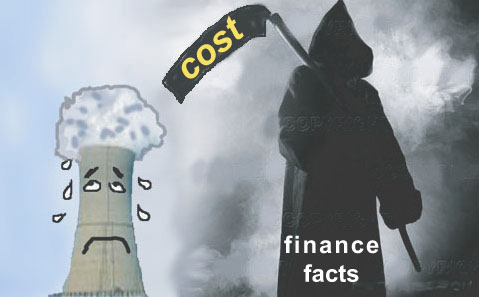
The most powerful argument against nuclear could be economic as most plants take at least ten years to commission, design and build
inews, By Leo Cendrowicz, Brussels Correspondent, 21 Apr 23,
BRUSSELS – As Europe scrambles for new energy sources, Britain has joined the countries seeking a nuclear renaissance.

Chancellor Jeremy Hunt announced last month the creation of Great British Nuclear, a body to oversee the roll-out of a fleet of nuclear power stations.
However, there are concerns about the environmental impact of nuclear, with campaign groups saying that the risks of nuclear reactions and the difficulties in disposing of nuclear waste mean it cannot be considered green.
And the most powerful argument against nuclear could be economic. Most plants take at least ten years to commission, design and build. Delays are frequent: Europe’s largest nuclear reactor, the Olkiluoto 3 plant in Finland, came online last week a full 14 years after its scheduled date, beset by technological problems that led to lawsuits – while its final price tag ballooned to around €11bn (£9.74bn), almost three times the initial estimate.
The steep upfront building costs for nuclear power plants, along with the long construction times, have raised questions about whether nuclear energy represents value for money.
Now that renewable costs are going down – especially in solar, wind and batteries – renewable is likely to be cheaper in the longer term, making nuclear commissions look less worthwhile.
The fact that Europe has built few nuclear plants since the boom wave of the 60s also means there is little expertise available across the value chain. The EU Internal Market Commissioner Thierry Breton has said a “colossal” investment in nuclear energy will be needed over the next 30 years to meet the EU’s emissions-reduction targets and electricity demand.
“The big question on nuclear is the economics of building new nuclear plants,” says Ben McWilliams, an energy research analyst at Bruegel – a Brussels-based think tank. “When you compare it to something like solar or wind, which are also modular technologies, so you can have much larger economies of scale – you have to ask if it is sensible to start building new nuclear plants that will come online in 15 or 20 years when they’re going to compete in a grid that should be largely renewable dominated?”
……………………………… France, Europe’s champion, has not been the best advertisement recently: last November, almost half of the country’s reactors were offline, thanks to maintenance issues in its ageing nuclear fleet.
The UK’s strategy is to focus on small modular reactors (SMRs) to ensure faster build times. These mini reactors would generate between 50 and 500 megawatts of power, compared with the 3.2-gigawatt Hinkley Point C in Somerset, the UK’s only large nuclear plant under construction, which is plagued by delays and cost overruns.
………………………….. . In February, 11 EU energy ministers signed a declaration committing to “cooperate more closely” across the entire nuclear supply chain and promote “common industrial projects” in new generation capacity as well as new technologies like small reactors.
While energy policy is mostly set at national level within the European Union, the long-term push is for green, renewable energy. The European Commission has attempted to nudge governments to wean themselves off fossil fuels, adopting a controversial measure that labels nuclear investments as sustainable “transitional” sources, if they replace dirtier fuels. Last Tuesday, Greenpeace and other campaign groups announced plans to take the Commission to the EU Court of Justice of the EU. https://inews.co.uk/news/world/uk-nuclear-energy-renaissance-expert-money-2289161
Earth Day 2023: A Newly Post-Nuclear Germany vs. California’s Reactor Relapse

Germany’s initiative calls out California’s backpedaling.
BY HARVEY WASSERMAN , APRIL 22, 2023
This year’s Earth Day marks a massive green energy triumph in Germany that stands in stark contrast to a bitter nuclear challenge in California.
A wide range of estimates put the two regions at a virtual tie for the world’s fourth and fifth-largest economies.
They also share a leading growth industry—renewable energy, with unprecedented investments in wind, solar, batteries, and efficiency.
But when it comes to atomic power, they are headed in very different directions.
On April 15, Germany claimed a huge global landmark by becoming one of the world’s wealthiest nations to renounce atomic power.
The decision dates back to 2011, when Germany’s powerful Green movement led a national demonstration aiming to shut the seventeen atomic reactors that, at the time, provided around a quarter of the nation’s electricity.
Before the rally took place, four reactors blew up in Fukushima, Japan, sending huge clouds of radioactive fallout into the air and ocean.
Germany’s then-Chancellor Angela Merkel—who has a Ph.D. in quantum chemistry—ordered eight reactors immediately shut, and soon announced a plan to shut the remaining nine by December 31, 2022.
This energiewende, or “energy transition,” substitutes wind, solar, battery storage, and increased efficiency for nuclear power reactors, moving Germany toward full reliance on renewables. Germany, since then, has invested billions in the renewables sector, transitioning whole towns to locally-owned rooftop solar and corporate wind power pumped in from large turbines in the North Sea.
The shutdown of the final three reactors was delayed by nearly four months due to natural gas shortages caused by the Russian war in Ukraine.
It was also complicated by a major atomic breakdown in neighboring France. Heavily reliant on nuclear power, France’s more than fifty standard-design reactors succumbed to a wide range of problems, including generic structural flaws and warming rivers too hot to cool their super-heated radioactive cores. In 2022, with more than half its fleet of reactors under repair, France made up for the energy shortfall by importing power from Germany, much of it fired by the burning of coal.
This prompted the nuclear industry to criticize Germany’s plan by pointing to a rise in the country’s CO2 emissions from burning increased quantities of coal, failing to note that much of that power was being exported to France to compensate for its own shuttered reactors.
California, whose economy may now be slightly larger than Germany’s, has taken an opposite route.
Two of its last four reactors—at San Onofre, between Los Angeles and San Diego—were shuttered in 2012 and closed permanently in 2013 after flaws were found in the turbines and other components.
In 2016, a deal was reached to shut the Golden State’s last two reactors, located at Diablo Canyon, nine miles west of San Luis Obispo. In the 1970s and 1980s, thousands of protestors were arrested at Diablo Canyon, more than at any other American nuclear plant.
The 2016 shutdown deal involved another energiewende, based on blueprints to replace Diablo’s power with a huge influx of new wind, solar, battery, and efficiency installations. The agreement was approved by the California state legislature, Pacific Gas & Electric (PG&E), the federal Nuclear Regulatory Commission (NRC) and the state Public Utilities Commission. It was signed by then-Governor Jerry Brown, then-Lieutenant-Governor Gavin Newsom, and a wide range of local governments, unions, and environmental groups, all of whom assumed the state would thus be nuke-free once Unit Two was shut in 2025—the date its original forty-year license would expire.
But along the way, the state experienced two close calls with partial blackouts. During both incidents, Newsom, now the governor, asked consumers to dial back their energy use. Ironically, independent battery capacity—mostly controlled by individual owners—helped the state stay lit.
But Newsom reversed course and now argues that California must keep Diablo open. Infuriating the national safe energy movement, Newsom rammed through the legislature a $1.4 billion midnight bailout for PG&E, to be funded by all of the state’s consumers, including many who live hundreds of miles from the plant, and receive no energy from it at all.
The Biden Administration also kicked in $1.1 billion, money that safe energy advocates angrily argue would be far better spent on renewables.
In 2019 a statewide petition signed by Hollywood’s Jane Fonda, Martin Sheen, Lily Tomlin, Eric Roberts, and some 2,500 other Californians demanded that Newsom facilitate an independent inspection. Nearing forty years of age, both Diablo reactors suffer a wide range of structural and age-related defects.
They are also surrounded by at least a dozen known earthquake faults, sitting just forty-five miles from the infamous San Andreas fault. Former NRC site inspector Michael Peck, who was stationed at Diablo for five years, has warned it might not survive a major earthquake, for which its owner, PG&E, has little or no private insurance. The state has never made public any plans to evacuate Los Angeles or other heavily populated areas in the event of an accident.
Newsom has also supported moves by state regulators to severely slash compensation paid by utilities to solar panel owners who feed their excess energy into the grid. While 1,500 workers are stationed at Diablo, some 70,000 work in the state’s solar industry, which angrily charges that Newsom’s pro-nuclear, anti-green positions are crippling the state’s top job creator.
Indeed, the irony of these twin economies heading in opposite energy directions is hard to ignore. In the 1970s, much of America’s early anti-nuclear movement was inspired by mass demonstrations led by German Greens (with the slogan “Atomkraft? Nein, danke!”). Both movements succeeded in massively moving their communities toward a renewable future.
But at this critical moment, Germany appears to be moving beyond nuclear power, while California clings to a hugely controversial technology it had once planned to transcend.
French-Russian nuclear relations turn radioactive
Ukraine and several EU countries want France to cut commercial ties with Russia’s atomic sector.
Politico, BY VICTOR JACK, APRIL 20, 2023
BRUSSELS — Pressure is building on France to fully cut ties with Russia’s atomic sector as the EU mulls its latest sanctions package against Moscow.
The European Commission is set to meet with diplomats from the EU’s 27 member countries on Friday to start discussions on the bloc’s 11th round of Russia sanctions. Hitting Moscow’s state-run nuclear company Rosatom — a divisive issue for some EU countries reliant on Russia for nuclear fuel — is likely come under the spotlight once again.
That means increased scrutiny of France’s ties to Rosatom, the Moscow-based atomic firm…………………………..
“I am sure” that Paris has a moral duty to encourage its state-backed companies to cut ties with Rosatom, Ukraine’s Energy Minister German Galushchenko told POLITICO last month, adding that Kyiv wants all EU countries with links to Russian’s nuclear industry to cut them.
“All of our public scrutiny has been on Germany and not so much on France,” for ties with Russia, said a diplomat from one EU country, who spoke on condition of anonymity, “whereas I think if you look closely … they haven’t been the best kid in the class either.”…………………………………………..
Paris and Moscow’s nuclear ties, which date back to the Cold War, are most apparent in the links between Rosatom and state-controlled EDF, France’s largest utility that runs the country’s nuclear fleet. It signed a strategic cooperation agreement with Rosatom on green hydrogen in 2021, as well as a joint declaration to develop research cooperation.
The Rosatom spokesperson called it “a win-win partnership” that is “a driver of development both in the field of nuclear energy and scientific projects.”……………………….
When Rosatom builds a nuclear plant abroad, it often relies on technology from French companies — typically spending up to €1 billion per project, Faudon said. Those orders usually include command and control systems from Framatome, which is majority-owned by EDF.

Framatome has an ongoing role in Russian nuclear construction projects around the world, including at Paks. The company aims to set up a joint venture with Rosatom to produce nuclear fuel in western Germany, a project that has been sharply criticized by local authorities.
The French firm also signed a strategic cooperation agreement with Rosatom in December 2021 to expand collaboration on fuel fabrication and other technologies.
Framatome didn’t comment on its ongoing contracts but with reference to the 2021 agreement, a company spokesperson said: “Everything has been postponed until further notice,” adding that Framatome will “re-examine the agreement if and when that is appropriate.”
EDF declined to comment…………………………..
And while France isn’t dependent on Russia for its nuclear fuel and security of supply, it bought enriched uranium worth €359 million from Moscow last year, more than three times the amount it bought in 2021.
It’s not the only such sale to the West. The U.S. bought $830 million of enriched uranium from Russia last year. Moscow also supplies fuel to reactors in Bulgaria, the Czech Republic, Finland, Slovakia and Hungary…………………
In February, the European Parliament overwhelmingly passed a resolution calling on Rosatom to face sanctions. ……………………………….
https://www.politico.eu/article/french-russian-nuclear-relations-radioactive-rosatom-sanctions/
‘There’s a lot of posturing’: Europe’s nuclear divide grows as one plant opens and three close
Guardian Jon Henley Europe correspondent, and Kate Connolly in Berlin, 21 Apr 23,
When Europe’s first new nuclear reactor in 16 years came online in Finland, it was hailed by its operator as a “significant addition to clean domestic production” that would “play an important role in the green transition”.
The opening last Sunday of the long-delayed Olkiluoto 3 plant, Europe’s largest, means about 40% of Finland’s electricity demand will soon be met by nuclear power, which the government says will boost energy security and help it achieve its carbon neutrality targets.
Across the Baltic Sea and just hours before the Finnish plant came on stream, Germany was finally pulling the plug on its last three nuclear power plants, shutting down the steaming towers of Isar II, Emsland and Neckarwestheim II reactors late on Saturday.
The environmental group Greenpeace, at the heart of Germany’s long-lived and powerful anti-nuclear movement, organised a party at the Brandenburg Gate in Berlin. “Finally, nuclear energy belongs to history,” it proclaimed.
There are few clearer illustrations of Europe’s nuclear divide. One faction, led by Germany, argues that the costs are too high and the risks – from reactor accidents and toxic waste – are, as the Green environment minister, Steffi Lemke, put it, “ultimately unmanageable”.
Another, headed by France, argues equally forcefully that nuclear power is a reliable, low-carbon alternative to fossil fuels for electricity, and that phasing it out as Europe tries to meet vital green targets is ecologically damaging and economically senseless.
The debate is not new. But with a third of the bloc’s nuclear reactors nearing the end of their original lifespan by 2025, and a legally binding aim of cutting net greenhouse gas emissions by 55% from 1990 levels by 2030, it is becoming increasingly intense.
The energy shock that followed Russia’s invasion of Ukraine last year, which brought an end to cheap gas imports and led Germany to briefly delay closing its last nuclear plants, has only entrenched the divisions.
“There’s a lot of posturing,” the centrist MEP Pascal Canfin, who chairs the European parliament’s environment committee, said. “Different member states have made very different choices and have very different positions – and interests.
According to Eurostat, 25.4% of the EU’s electricity was nuclear generated in 2021, with 100-odd reactors in 13 member states. France, which has 56 operable nuclear reactors, accounting for just over half of that total.
The divide across the bloc, though, is stark. If France has the highest share of nuclear in its electricity mix (almost 70%), followed by Slovakia (52.4%) and Belgium (50.6%), others hardly touch it. The Netherlands stands at barely 3%…………
Advocates of its “Energiewende” green transition plan note that the 46% share of its electricity generated by renewables is far greater than the share that was produced by nuclear when its phase-out was first announced in 1998.
While its plan, aimed at winning long-term public and industry support, will increase fossil fuel consumption and CO2 emissions in the short term (coal is due to be phased out by 2038 or earlier), Germany argues it will also stimulate renewables growth.
Immediate energy supply concerns meant public opinion swung against the shutdown last weekend, but polls before the war in Ukraine showed broad support for the principle. Other countries hold similar views.
Several have already phased out nuclear, or plan to do so. Italy shut all its plants in 1990, after a 1987 referendum (in a 2011 plebiscite, held weeks after the Fukushima disaster, 94% of voters rejected a government plan to reintroduce nuclear power).
Belgium was planning to close the last of its seven reactors by 2025, but recently extended the life of the two newest for a further decade, saying they were “critical to our energy security”. Spain aims to phase out its five active plants by 2035.
Other opponents include Portugal, Denmark and Austria – which, along with Luxembourg, is suing the European Commission for classing nuclear energy as a “bridge technology” on the path to net zero, and thus as a “green” investment.
In the French-led pro-nuclear camp, meanwhile, are Bulgaria, Croatia, the Czech Republic, Finland, Hungary, the Netherlands, Poland, Romania, Slovakia and Slovenia – which this year launched an alliance to boost nuclear cooperation within the bloc.
Far from phasing out nuclear, Romania has doubled production in the last 15 years; Hungary and the Czech Republic have increased theirs by a fifth. Sweden is drafting a law to allow it to build more, while France aims to extend its plants’ life to 50 years and open at least six new ones by 2035.
“Certain countries have made the extreme choice of turning their back on nuclear energy,” President Emmanuel Macron said when unveiling his plans in February. “Not France.” The country launched its nuclear programme after the 1973 oil crisis; a poll last year showed nearly 80% of voters support it, up 20 points from 2016.
The nuclear standoff – at its most tense between France and Germany – has the potential to disrupt a range of vital EU projects, from changes to the bloc’s electricity market to the Green Deal programme supporting industry’s transition to net zero………………………… https://www.theguardian.com/world/2023/apr/21/europe-nuclear-divide-grows-one-plant-opens-three-close-finland-germany
Germany okays Ukrainian strikes on Russian soil
21 Apr 23, https://www.rt.com/news/575139-german-defense-minister-ukraine-strikes-russia/—
Defense Minister Boris Pistorius has argued that such attacks are “fully normal” as long as the civilian population is not affected.
Ukraine has every right to conduct strikes and other military operations on Russian territory, German Defense Minister Boris Pistorius has argued. He noted, however, that civilians should not be hurt in the process.
Ukraine has regularly shelled several Russian border regions ever since Moscow launched its military campaign last February. Dozens of civilians have lost their lives as a result, with many more injured.
Appearing on Germany’s ZDF TV channel on Thursday, Pistorius said that it is “fully normal” that the “attacked [party] also moves into enemy territory, for instance to cut supply routes.”
“So long as cities, civilians, civilian areas are not attacked, you will unavoidably have to accept this,” the minister clarified.
However, Pistorius said that the West should not simply automatically rubber-stamp any weapons request by Kiev.
“If Ukraine asks for certain types of bombs that are outlawed globally, then we must say no,” the minister stressed.
Speaking about Kiev’s chances of joining NATO, the German official said that “this is now not the time to decide this.” Ukraine and NATO should for the time being prioritize “repelling this attack,” Pistorius insisted. Should these efforts prove successful, the US-led military bloc will have to “carefully weigh” this step, the minister said.
Pistorius went on to point out that NATO cannot admit Ukraine into its ranks purely “out of solidarity,” but should rather “decide with a cold head and hot heart, and not the other way round.”
Russian border regions – particularly those of Belgorod, Kursk and Bryansk – have repeatedly come under Ukrainian attacks over the past year. Kiev’s forces have used explosive-laden drones, mortars, artillery, and missiles in these strikes.
The toll taken on Belgorod Region in particular has been significant. Earlier this week, the region’s governor, Vyacheslav Gladkov, revealed that a total of thirty civilians in his region have been killed in Ukrainian attacks since February 2022, with 123 more people sustaining injuries. More than 3,000 homes have also been either destroyed or damaged, the official said. Dozens of schools and power facilities have also been hit.
Furthermore, the Donetsk People’s Republic, which joined Russia after a referendum last fall, has been subjected to regular shelling by the Ukrainian military since 2014. The attacks appear to be largely indiscriminate, with scores of civilians having lost their lives as result.
Zaporizhzhia nuclear power plant will switch back to Russian fuel, from Westinghouse fuel
The Zaporizhzhia nuclear power plant in southern Ukraine which Russia
captured last year will stop using U.S.-produced nuclear fuel as quickly as
possible, the Interfax news agency quoted a Russian official as saying on
Thursday. The biggest nuclear power plant in Europe, mostly built in the
Soviet times, originally used Russian nuclear fuel, but Ukraine gradually
switched to supplies from Westinghouse after its first conflict with Russia
in 2014.
Reuters 20th April 2023
French Winter Power Twice as Pricey as Germany’s on Nuclear Woes

Bloomberg By Todd Gillespie, April 19, 2023
France’s weakened nuclear power output means the cost of its electricity for next winter is more than twice as expensive as Germany’s, as concerns over the health of the country’s reactors persist.
The “massive” gap of nearly €250 ($273) per megawatt-hour between French and German prices is because traders are pricing in more risk as they await updates on Electricite de France SA’s struggles with its aging atomic fleet, according to analysts at Engie SA’s EnergyScan. “No participants want to risk being short next winter,” they wrote.
French power for the first quarter of 2024 is trading at €416 per megawatt-hour, more than double Germany’s rate of €169. Normally a power exporter, France’s atomic generation has been gradually returning to service but still remains below historical averages.
The price discrepancy is a sign of France’s lingering energy woes even as its European neighbors benefit from a prolonged drop in prices. EDF’s nuclear reactors have faced recurring corrosion issues as the government takes greater hold over the state-backed utility………………… https://www.bloomberg.com/news/articles/2023-04-19/french-winter-power-twice-as-pricey-as-germany-s-on-nuclear-woes?leadSource=uverify%20wall—
NATO to surge troops to Russian border
As the deteriorating military situation for the Ukrainian armed forces becomes increasingly apparent, NATO is making open plans to massively intensify its conflict with Russia.
Andre Damon@Andre__Damon, 17 April 2023 m\ https://www.wsws.org/en/articles/2023/04/18/tzhv-a18.html
NATO plans to surge troops to Russia’s border as part of an effort to become a “war-fighting alliance,” the New York Times reported Monday.
The Times wrote that “NATO now has deployed a battalion of multinational troops to eight countries along the eastern border with Russia. It is detailing how to enlarge those forces to brigade strength in those frontline states.”
A battalion can include up to 1,000 troops, while a brigade can include up to 5,000 troops, meaning that NATO could potentially plan to increase the number of troops on Russia’s borders fivefold, to up to 40,000 troops.
The Times reports that NATO “is also tasking thousands more forces, in case of war, to move quickly in support, with newly detailed plans for mobility and logistics and stiffer requirements for readiness.”
Politico, meanwhile, has cited even larger numbers. On March 18, it reported, “In the coming months, the alliance will accelerate efforts to stockpile equipment along the alliance’s eastern edge and designate tens of thousands of forces that can rush to allies’ aid on short notice… The numbers will be large, with officials floating the idea of up to 300,000 NATO forces.”
“The North Atlantic Treaty Organization,” wrote the Times, has launched “a full-throttled effort” to prepare for military operations all along its eastern flank.
As the Times put it, this “means a revolution in practical terms: more troops based permanently along the Russian border,” It also means “more integration of American and allied war plans, more military spending and more detailed requirements for allies to have specific kinds of forces and equipment to fight, if necessary, in pre-assigned places.”
The alliance has “shed remaining inhibitions about increased numbers of Western troops all along NATO’s border with Russia,” the Times stated. The aim is “to make NATO’s forces not only more robust and more capable but also more visible to Russia.”
Additional troops will be placed under the direct authority of Gen. Christopher G. Cavoli, NATO’s Supreme Allied Commander Europe, who also commands American forces in Europe, as part of the NATO alliance’s decision.
The Times reports that General Cavoli is integrating American and allied war-fighting plans for the first time since the Cold War. Citing a NATO official, the newspaper wrote, “Americans are back at the heart of Europe’s defense … deciding with NATO precisely how America will defend Europe.”
This will entail a massive military buildup, involving enormous increases in military spending. “Now the demands will be tougher and more rigorous to bring the alliance back to a war-fighting capacity in Europe and make deterrence credible—to ensure that NATO can fight a high-intensity war against a rival, Russia, from the first day of conflict,” the Times wrote.
Instead of meeting the previous goal of 2 percent of gross domestic product devoted to the military, NATO members will be expected to spend between 2.5 and 3 percent, the Times reported.
In perhaps the most ominous passage in the article, the Times wrote, “Previously, the annual exercises of NATO’s nuclear forces, known as Steadfast Noon, were kept quiet. But last year, after Russia’s invasion, the exercise went ahead openly. It was important, a NATO official said, to show Moscow that the alliance wasn’t deterred by nuclear threats.”
NATO’s headquarters is likewise “being transformed into a major strategic and war-fighting command, charged with drawing up the alliance’s plans to integrate and deploy allied troops.”
The accession of Finland to NATO, which doubled the length of NATO’s land border with Russia, will be a key component of these plans, with Russia’s entire border with NATO becoming a militarized zone.
Just weeks after its accession to NATO, Finland has begun building a fence on the Russian border, with the initial section to be completed in June.
In June of last year, NATO published a strategy document declaring that the alliance must prepare for “high-intensity, multi-domain warfighting against nuclear-armed peer-competitors.” The document declared that “the Euro-Atlantic area is not at peace”—all but declaring that the alliance is at war.
In January, Rob Bauer, NATO’s top military spokesperson, declared that the US-led NATO alliance is prepared for a “direct clash with Russia.” Asked by Portugal’s RTP News, “You don’t believe that it’s only about Ukraine?” Bauer replied, “No, it’s about turning back to the old Soviet Union.”
The interviewer continued, “So the entire Eastern Flank is at risk somehow?” Bauer replied, “Yeah.” The interviewer asked, “We are ready to [sic] a direct confrontation with Russia?” To this Bauer replied, “We are.”
In this supercharged environment, NATO will begin Defender 23, the alliance’s annual war game, on April 22.
The exercise will involve 9,000 US troops and 17,000 soldiers from other NATO members. The “nearly two-month-long exercise is focused on the strategic deployment of U.S.-based forces, employment of Army pre-positioned stocks and interoperability with European allies and partners,” a Pentagon spokesperson said April 5.
A key goal of the exercise will be to “increase lethality of the NATO Alliance through long-distance fires” according to U.S. Army’s Europe and Africa commands.
This will be followed by Air Defender 2023, the largest NATO air exercise since its founding. A US Air National Guard official told the War Zone that Russian officials can “take away whatever message they want” from the drill.
Against this background, a group of former top officials from France, Germany, the United States and Spain have written an op-ed in the Guardian Sunday encouraging more direct NATO military intervention against Russia, declaring “We have to go ‘all in’ in our support for Ukraine.” They declare that “Ukraine needs the combined force of tanks, longer-range missiles and aircraft to conduct a successful counterattack, paving the way to Ukrainian victory.”
The press is full of such declarations. David Ignatius, writing in the Washington Post, argued, “President Biden doesn’t want to start World War III, but he will look back with regret if the United States and its allies leave any weapons or ammunition on the sidelines that could responsibly be used in this conflict. Whatever Biden might wish later he had done if things go badly, he should do now.”
As the deteriorating military situation for the Ukrainian armed forces becomes increasingly apparent, NATO is making open plans to massively intensify its conflict with Russia.
Hungary to Prolong Nuclear Plant’s Lifetime as Expansion Stalls
By Marton Kasnyik, April 21, 2023 https://www.bloomberg.com/news/articles/2023-04-21/hungary-to-prolong-nuclear-plant-s-lifetime-as-expansion-stalls?leadSource=uverify%20wall
Hungary aims to extend the lifetime of its sole nuclear power plant by 20 years to bridge major delays to its Russian-managed expansion, according to a senior official.
Extending the operation of the Paks plant in southern Hungary will maintain the source of about 40% of the country’s electricity consumption. The government is currently assessing safety issues after previous 20-year extensions to the four existing reactors in the last decade.
“Our plan is to get a further 20 years of life-extension,” Energy Minister Csaba Lantos said at a conference on Friday.
Prime Minister Viktor Orban’s administration handed a €10 billion ($11 billion) contract to Russia’s Rosatom Corp. in 2014 to expand the Paks plant. The project has been marred by delays, including due to initial European Union opposition to the investment and the quality of Rosatom’s plans, which Hungary’s own regulator has said fell short of stringent requirements.
Last week, Hungary and Russia said they agreed to an amendment of their original contract following media reports of a potentially reduced role for Rosatom amid EU sanctions against Russia for its invasion of Ukraine.
The changes are “technical” in nature and don’t affect the project’s cost, Cabinet Minister Gergely Gulyas told reporters on Thursday, without elaborating.
Scrapping could be next for Russia’s nuclear-powered battle cruiser
It is likely not cost-efficient to do the highly needed upgrade of the Northern Fleet’s 25-year old flagship “Pyotr Velikiy”.
Read in Russian | Читать по-русски
By Thomas Nilsen, 20 Apr 23 https://thebarentsobserver.com/en/security/2023/04/scrapping-could-be-next-russias-nuclear-powered-battle-cruiser
“Currently, the question about withdrawing “Pyotr Velikiy” from the Navy is under consideration. Based on the experience of repairing and modernizing the “Admiral Nakhimov” of the same class has shown that this is very costly,” a navy source said to state-owned news agency TASS.
Like in many speculations on the fate of older navy vessels, Russian state media send mixed information. Shortly after the TASS report came on Thursday, RIA Novosti quoted an unnamed source saying there are no plans to retire the huge warship.
The “Pyotr Velikiy” and “Admiral Nakhimov” are of sister ships, both of the Kirov-class, the only nuclear-powered surface warships in the Russian Navy.
The “Admiral Nakhimov” has not been in operation since the early 1990ties, and has since 1999 been at the yard in Severodvinsk undergoing repair, change of uranium fuel elements in the reactors and a refit to receive new weaponry, including modern cruise-missiles.
However, as repeatedly reported by the Barents Observer over the last decade, the re-commissioning of the warship has seen one postponement following the other. Current plans to set sail in 2024 today seem unlikely.
The “Pyotr Velikiy” was supposed to be docked in Severodvinsk as soon as “Admiral Nakhimov” joins the Northern Fleet.
The warship is armed with several types of cruise missiles, surface-to-air missiles, rocket launchers, torpedos and artillery. The hangar can house three helicopters.
April 18 marked the 25-years anniversary since “Pyotr Velikye” was commissioned. The ship has a crew of more than 700.
US military-industrial complex is main beneficiary of fighting Russia in Ukraine – Moscow
21 Apr 23, https://www.rt.com/russia/575116-galuzin-rt-interview-ukraine/
The American arms industry will now have contracts for years to come, Deputy Foreign Minister Mikhail Galuzin has insisted.
US policy on Ukraine is inherently cynical and ignores the interests of the Ukrainian people, Russian Deputy Foreign Minister Mikhail Galuzin claimed in an interview with RT. Washington is the biggest beneficiary from the hostilities, he added.
The US and its NATO allies “consider Ukraine as just raw material for [fulfilling] their aggressive purposes against Russia,” the senior diplomat said in an interview. Washington has declared the “strategic defeat” of Russia in Ukraine as its goal, he noted, with the US and its allies delivering weapons to Kiev on an unprecedented scale.
“The main beneficiary of [arming Ukraine] is the USA. [Its] military industrial complex… is now ensured orders for years to come. They are making profit on the war they conduct in Ukraine against us,” Galuzin said.
The deputy minister also commented on the Chinese peace plan for Ukraine, which Beijing presented earlier this year, affirming it could serve as the basis of a future peace agreement. However, it is up to Kiev to resume negotiations, he said, as it was the party that pulled out in the first place.
“In March 2022, it was Russia that responded positively to a Ukrainian proposal to hold peace talks. And the two sides were close to an agreement. We even formulated a draft treaty with Ukraine,” he said, referring to talks mediated by Türkiye.
Kiev has not responded to a document that Moscow put forward in April based on what Ukraine suggested in Istanbul, Galuzin said.
“The Kiev regime was stopped by its Western mentors,” he claimed, reiterating the view previously expressed by other senior Russian officials. The US “and its satellites” want to weaken Russia and are using Ukraine as a tool to do that, the diplomat stated.
They seem to be ready to continue this fighting to the last Ukrainian, unfortunately,” he remarked.
In the interview with RT, Galuzin also discussed Russian relations with Belarus and Moldova and the escalating religious conflict in Ukraine.
Nuclear Troubles Send French Winter Power Prices Soaring
By Michael Kern – Apr 19, 2023 https://oilprice.com/Latest-Energy-News/World-News/Nuclear-Troubles-Send-French-Winter-Power-Prices-Soaring.html
France’s power prices for early 2024 are double the German prices for next winter as the huge French nuclear fleet continues to show signs of weak output and availability.
The French power price for the first quarter of 2024 was at $455 (416 euros) per megawatt-hour (MWh) on Wednesday. That’s more than double the price for the same period in Germany, where the power price was at $185 (169 euros) per MWh for early 2024, according to data compiled by Bloomberg.
France has had troubles at many of its nuclear reactors, half of which have been shut down for repairs and maintenance at several times over the past year.
Germany, meanwhile, took its last three nuclear power plants offline on Saturday, ending more than six decades of commercial nuclear energy use, Germany ended the nuclear power era despite continued concerns about energy security and energy supply after the Russian invasion of Ukraine and the end of pipeline natural gas deliveries from Russia, which was the largest gas supplier to Europe’s biggest economy before the war.
In France, concerns about the operations at France’s large nuclear power fleet resurfaced last month after the French nuclear safety authority, ASN, told energy giant and large nuclear reactor operator EDF to review its program of reactor checks, following the finding of another crack at a nuclear power plant.
This led to an 8% one-day surge in French power prices for next year, the biggest jump since the end of January.
For much of last year, France’s nuclear power generation was well below capacity, as more than half of the country’s reactors were offline at one point in the autumn due to repairs or maintenance.
At the moment, French nuclear power plants are producing 17.5% less than the average output rate for 2020 and 2021. That’s down from 23% last year, so there is some progress, but concerns remain.
Will Environmental, social, and governance (ESG) investment managers follow the govt in backing nuclear?

By Chloe Cheung, 19 Apr 23, https://www.ftadviser.com/investments/2023/04/19/will-esg-investment-managers-follow-the-govt-in-backing-nuclear/
Wind turbines and solar panels are commonly associated with low-carbon energy, but nuclear power is also being considered in the pursuit of net zero.
In a move to encourage private sector investment, chancellor Jeremy Hunt said in the spring Budget that the UK green taxonomy will class nuclear power as ‘environmentally sustainable’, subject to consultation.
Although nuclear fuels are not renewable, the classification would enable nuclear power to have the same investment incentives as renewable energy.
But despite being low-carbon, it is not uncommon to come across ESG funds and investment companies that exclude nuclear power generation. So will investment managers follow the UK government’s approach to nuclear power?
William Argent, lead adviser to the VT Gravis Clean Energy Income Fund, says the fund’s responsible investment statement does not currently allow exposure to nuclear power generation assets.
“There may be some very modest exposure to companies involved in the nuclear energy supply chain, providing services; but we do not have exposure to companies that own nuclear energy generation plants themselves,” he adds.
While the UK government wants to class nuclear power as ‘environmentally sustainable’, Argent says his position on nuclear energy has, at this stage, not changed. “We exclude it as a commonly perceived ‘controversial activity’.
“There would need to be a shift in that perception among our investors and more widely. We would not consider changing the stance unless there was a broader acceptance.”
Other funds avoiding companies that generate revenue from nuclear power generation include Quilter Cheviot’s Climate Assets Funds.
“While we recognise that nuclear power does not generate greenhouse gas emissions, and therefore it has a role to play in the net-zero pathway and transition away from fossil fuels, we do not consider it a ‘sustainable investment’,” says Claudia Quiroz, lead fund manager of the Climate Assets Funds, and head of sustainable investment at Quilter Cheviot.
Citing environmental and safety issues that “outweigh” zero emission credentials, she says: “Nuclear energy generates a significant mass of radioactive waste. In addition, however it is disposed of, that radioactive waste will remain for generations to come.
“Safety concerns, both accidental and deliberate, also exist. While the operation of nuclear power plants is undoubtedly safer than previous generations and an accidental disaster on the scale of Chernobyl is unlikely, safety challenges do remain.
“Nuclear power plants are also easy targets for malevolent acts such as terrorist threats, cyberattacks or acts of war.”
Although Quiroz describes the UK government’s intended sustainable classification of nuclear energy as ultimately a positive move, she adds that as sustainable investors, it will not change the fund’s philosophy on investing in nuclear energy.
1 This Month

of the week– Nuclear Reactor Information Task Force

14 May – online event From Bombs to Data Centres: the Face of Nuclear Colonialism
To see nuclear-related stories in greater depth and intensity – go to https://nuclearinformation.wordpress.com
-
Archives
- May 2026 (102)
- April 2026 (356)
- March 2026 (251)
- February 2026 (268)
- January 2026 (308)
- December 2025 (358)
- November 2025 (359)
- October 2025 (376)
- September 2025 (257)
- August 2025 (319)
- July 2025 (230)
- June 2025 (348)
-
Categories
- 1
- 1 NUCLEAR ISSUES
- business and costs
- climate change
- culture and arts
- ENERGY
- environment
- health
- history
- indigenous issues
- Legal
- marketing of nuclear
- media
- opposition to nuclear
- PERSONAL STORIES
- politics
- politics international
- Religion and ethics
- safety
- secrets,lies and civil liberties
- spinbuster
- technology
- Uranium
- wastes
- weapons and war
- Women
- 2 WORLD
- ACTION
- AFRICA
- Atrocities
- AUSTRALIA
- Christina's notes
- Christina's themes
- culture and arts
- Events
- Fuk 2022
- Fuk 2023
- Fukushima 2017
- Fukushima 2018
- fukushima 2019
- Fukushima 2020
- Fukushima 2021
- general
- global warming
- Humour (God we need it)
- Nuclear
- RARE EARTHS
- Reference
- resources – print
- Resources -audiovicual
- Weekly Newsletter
- World
- World Nuclear
- YouTube
-
RSS
Entries RSS
Comments RSS
 nuclear-news