Increasing costs and delays in building Hinkley nuclear station.
The Hinkley Point C nuclear plant, the only one currently under
construction in Britain, is facing increasing worries about further delays
and cost overruns. During Keir Starmer‘s recent visit, the opposition
leader accused the government of hindering progress on the project.
Initially expected to be operational in 2023, the Hinkley Point C reactor
is now projected to start producing power in June 2027, highlighting
significant setbacks. Keir Starmer expressed frustration, stating that the
government is “holding the country back”, emphasising that the project
should have been completed by now.
Dr Doug Parr, the Policy Director at Greenpeace UK, raised concerns about the project’s escalating costs and construction delays.
Energy Live News 6th June 2023
Robotic “dogs” to help clean up Dounreay nuclear site
A ‘pack’ of robotic ‘dogs’ have been harnessed to help Dounreay with
monitoring work on site. Spot, a robotic quadruped (‘dog’) from Boston
Dynamics, has the ability to climb stairs, avoid obstacles, and move over
rough ground, allowing it to monitor and collect data in hazardous areas.
Dounreay and Createc, the systems integrator for Spot, are working together
on a series of 7 use cases for the ROV, that will be carried out over the
next 12 months. A dedicated Createc employee will be based on site to
initially lead the projects, and will train Dounreay staff to use the
robot. Heather Fairweather is the innovation team’s project manager for
the work. She says that the use cases will demonstrate the multi-tasking
value of the ROV, and its ability to carry out practical work.
Dounreay 6th June 2023
https://www.gov.uk/government/news/robotic-dogs-arrive-on-site
Russia warns that supplying nuclear weapons to Ukraine would lead to ‘global, irrevocable collapse’
Russian Foreign Ministry spokeswoman Maria Zakharova accuses Ukraine of readiness to destroy its own land
AA Elena Teslova |08.06.2023
Russian Foreign Ministry spokeswoman Maria Zakharova said on Wednesday that if the West supplies Ukraine with nuclear weapons, it would lead to the end of humankind’s existence on the planet.
Asked at a news conference in Moscow if Russia sees as possible nuclear weapons deliveries to Ukraine, Zakharova said: “Why should we comment on their possible insanity or possible control of insanity? This is not our topic.”
She pointed out that in recent months, the Ukrainian authorities took steps that harm the interests of their own country and its population.
“If they want a global, irrevocable collapse, then they will do it (deliver nuclear weapons to Ukraine). You can see what’s going on. The Kyiv regime is ready to destroy its own land…They are ready to infect it with depleted uranium, flood it with water, poison it with ammonia,” she said……………………….
For months, Moscow has been expressing concern over the change in the types of weapons supplied to Ukraine, which started with small arms and now involves deliveries of fighter jets.
Russian authorities also argue that the weapons supplied for the protection of Ukraine’s territory are used for raids into Russian territory…………………………………………………. https://www.aa.com.tr/en/russia-ukraine-war/russia-warns-that-supplying-nuclear-weapons-to-ukraine-would-lead-to-global-irrevocable-collapse/2917099
June 2: Nonviolent ecumenical movements call for ratification of the Nuclear Weapons Prohibition Treaty
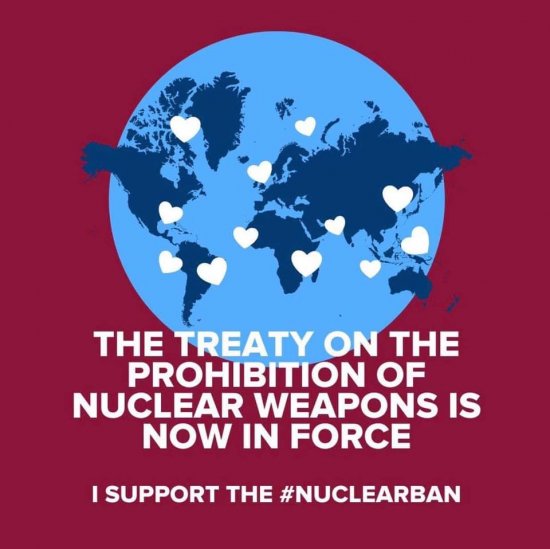
04.06.23 – Italy – Redazione Italia https://www.pressenza.com/2023/06/june-2-nonviolent-ecumenical-movements-call-for-ratification-of-the-nuclear-weapons-prohibition-treaty/
On the occasion of June 2, Republic Day, associations and organizations from the Catholic world and spiritually based ecumenical and nonviolent movements called at a June 1 press conference for the Italian government to ratify the U.N. Treaty on the Prohibition of Nuclear Weapons as a first step in stemming the war in Ukraine and embarking on a diplomatic path to peace.
“We are in an apocalyptic scenario, today, more than ever, it is necessary that the Treaty be signed because the crest on which we are walking is very dangerous,” said Carlo Cefaloni of the Focolare Movement, opening the press conference at the Chamber of Deputies on behalf of all the movements.
“Tomorrow there will be a military parade, instead we are here to say that we don’t want war; but we really have to decide that,” said Don Renato Sacco of Pax Christi, “because in this last year 2240 billion euros have been invested in armaments; this means that you want war: [therefore] there is a need to choose peace in a strong and determined way.
Also speaking during the press conference was Enkolina Shqau of the Pope John XXIII Association; she stressed that “to say no to war and nuclear weapons is not a matter of being good but of being smart because it is not possible that we still have not learned anything from the disasters of the last century.”
Emanuela Gitto, Vice President of the Youth Sector of Catholic Action stressed that “On the occasion of the June 2 holiday, we want to remember how the Constituent Assembly decided to put the repudiation of war among the founding pillars of our Republic, which is why it is important that the call to silence the weapons and open a true dialogue towards peace starts from these rooms.
“Politics has been lacking in these months, especially a prophetic vision of politics,” said Emiliano Manfredonia, national president of the ACLI, “and so the usual traffickers, including drug and human traffickers have won. Let us commit instead to sign this treaty as a prophetic gesture, as a strong signal to start a real path of peace and to accompany Monsignor Zuppi in this mission of his in Ukraine so that he can really open the necessary paths.”
Maurizio Simoncelli, spokesman for the Italia ripensaci campaign explained that “the Treaty so far has been signed by nations that do not have nuclear production (Translator’s note: They probably mean “nuclear weapons”. Italy hosts nuclear weapons), and it would be nice if instead, Italy was the first to set a good example in this regard because we know that having nuclear weapons does not increase a country’s security, but rather the opposite.”
A number of parliamentarians were also present in the press room of the Chamber of Deputies, including Hon. Paolo Ciani, who wanted to reiterate how important the commitment of politics is “and it is not a credit to European politics that the go-ahead from Strasbourg in these hours will allow the use of PNRR (National Plan for Recovery and Resilience) funds for the production of munitions to be sent to Ukraine.” MP Nicola Fratoianni also commented on the news of the Europarliament vote, saying that “these are acts that have nothing to do with real politics and I am very happy with demonstrations like the
one you organized today because they are necessary to make the decision-makers change direction.”
Mario Marazzitti of the Sant’Egidio Community wanted to add that “the signing of this document certainly does not serve to resolve the conflict in Ukraine, but it is a first step to lower the fever of war and this mad arms race.”
“Good politics is the one that gets us out of the logic of the market,” said Maurizio Certini of the Giorgio La Pira Foundation, “therefore out of the business related to the production of weapons because we need to make everyone understand that bombs bring insecurity.
At the end of the press conference, representatives of the associations gathered in front of the Montecitorio to display a banner that read For a Republic Free of War and Nuclear Weapons.
Mediterranean now a global heating hotspot
Shortly after Easter this year, in the midst of a historic, multi-year
drought, temperatures in parts of the western Mediterranean climbed a
barely believable 20C higher than seasonal norms, hitting a
record-shattering 39C in southern Spain. And that was in April.
As global heating advances, July and August in the world’s most-visited holiday
destination – pre-Covid, more than 300 million tourists a year headed to
the Med, a figure some predict could rise to 500 million by the end of the
decade – risk becoming unbearable.
The Mediterranean basin is a global
heating hotspot. While the world is now about 1.1C warmer than it was in
the 1970s, the region is already up 1.5C and on course for 3C by the end of
the century (or 5C, in a worst-case scenario). Rising temperatures and more
frequent heatwaves are not the only challenge. Most climate models agree
that in most parts of the world, warmer will also mean wetter – but not in
the Med, where rainfall is set to plunge by between 10% and 60%.
Guardian 3rd June 2023
Unseemly scramble as makers of small nuclear reactors try to con UK government

NuScale joins Rolls-Royce and Bill Gates in race to build UK nuclear
reactors. A US nuclear developer is poised to join the race to build new
reactors in the UK and has urged the government to go faster in picking a
preferred technology.
NuScale, based in Oregon, said it was “very
active” in the UK market and that it would “engage with the activity
around the government’s SMR competition”.
The UK is running a contest to
find suppliers of small modular reactors (SMRs), which hold the promise of
zero-emission, lower-cost nuclear power as they can be made in a factory
and assembled on site. This reduces the vast overheads of large nuclear
projects.
NuScale is developing an SMR called VOYGR, which is based on a
traditional nuclear design called a pressurised water-cooled reactor. It is
the first SMR to have been certified by the US Nuclear Regulatory
Commission.
The UK government has set up a new body, Great British Nuclear
(GBN), to select new projects. It is aiming to settle on winning SMR
designs by the autumn.

Tom Mundy, president of VOYGR services and delivery,
said NuScale would not require development money from GBN as its project
was ready to deploy. “We don’t need the support that has been suggested
… We’re ready to deliver the project much earlier than GBN has
suggested,” he said. “GBN suggests people could start building SMRs by
2030. That means taking a final investment decision then. That’s too late
for us. We have got customers taking final investment decisions much
earlier,” Mundy added. “Let’s get going.”
NuScale’s rivals in the
race include GE Hitachi, also of the US, and Rolls-Royce, which wants to
win an order in its home market. TerraPower, a start-up founded and chaired
by Bill Gates, has also indicated that it wants to build nuclear projects
in the UK. It has a type of SMR called an advanced modular reactor (AMR) in
development.
Times 4th June 2023
Concern over low flying aircraft circling over Hunterston nuclear power station
Concerns have been raised with civil nuclear police over low flying
aircraft over Hunterston. Aircraft apps showed that a Pilatus PC-6/B2-H4
plane repeatedly circled the nuclear power plant – leading to the matter
being raised by a concerned resident at a public meeting this week.
West Kilbride community councillor John Lamb, who was attending the Hunterston
Site Stakeholders Group, asked the civil nuclear police if they were aware
that there was low flying aircraft over the power station zone.
The incident happened on May 25 and the fFlightradar app showed that the plane
travelled across Ayrshire before repeatedly circling Hunterston. Mr Lamb
asked if the Civil Aviation Authority had altered the guidance regarding
the ‘no flight zone’ over Hunterston. Inspector Paul Gilmartin of the Civil
Nuclear Police told the meeting that he was unaware of any reports of low
flying aircraft and the matter had not been flagged up to him.
Largs & Millport Weekly News 2nd June 2023
Bellona publishes new report on Ukraine’s besieged Zaporizhzhia nuclear plant
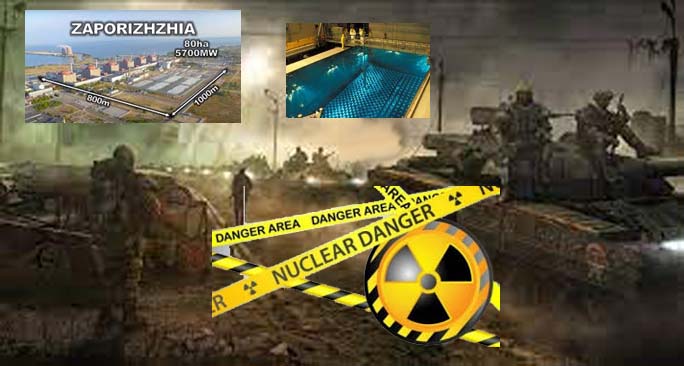
It’s something the world nuclear energy community never thought it would see — and thus never prepared for.
June 1, 2023 by Charles Digges https://bellona.org/news/nuclear-issues/2023-06-zaporizhzhia-nuclear-report
For a year and a half, the world has bourn witness to an unprecedented spectacle: the military occupation of a civilian atomic energy station.
The March 2022 seizure by Russian troops of the Zaporizhzhia Nuclear Power Plant in Southeastern Ukraine has forced six nuclear reactors and pools of spent nuclear fuel onto the front lines of the biggest land war in Europe since World War II.
It’s something the world nuclear energy community never thought it would see — and thus never prepared for. As a result, the world has watched helplessly as heavy ordinance strikes nail-bitingly close to the plant on a regular basis, repeatedly severing outside power to the facility’s cooling and safety systems.
According to Rafael Grossi, who heads the UN’s atomic energy agency —and who has repeatedly beseeched Moscow and Kyiv to create a non-military safe zone around the plant — the situation is a gamble with radioactive stakes.
“We are rolling a dice and if this continues then one day our luck will run out,” he has said more than once.
Unfortunately, the time has come to ponder just what it would look like were that to happen.
This is the subject of a new Bellona report entitled “The Radiation Risks of Seizing the Zaporizhzhia Nuclear Power Plant.”
In it, we analyze a variety of war-time scenarios that could befall the plant and what the consequences of those might be.
What would happen if any of the plant’s six Soviet-built VVER-1000 nuclear reactors were struck by artillery? Or a missile? What about the spent nuclear fuel storage pools? What if those were struck? Where would the radioactive fallout from any of these events go?
And perhaps, in light of recent events, the most salient danger — what would happen if the plant was unable to maintain outside power to run reactor cooling systems? Would that amount to Fukushima redux?
We also present a number of recommendations that should be followed in order to keep the plant safe while it continues to be hostage to the aggression.
Among them, we urge the Russian and Ukrainians struggling for control of the plant to keep the reactors in shut-down mode, which would greatly reduce the severity of a radiological accident. We also recommend that no nuclear fuel be unloaded, packed for storage or transported. These are complex technical tasks that cannot be undertaken by a hostage workforce while a war rages on around them.
Above all, we urge a Russian withdrawal from the plant and Ukraine as a whole, for it is not until then that anything like safe operation of Europe’s largest nuclear power plant can be restored.
France, Germany Dispute Over Nuclear Energy Leaves EU Deadlocked on Renewables
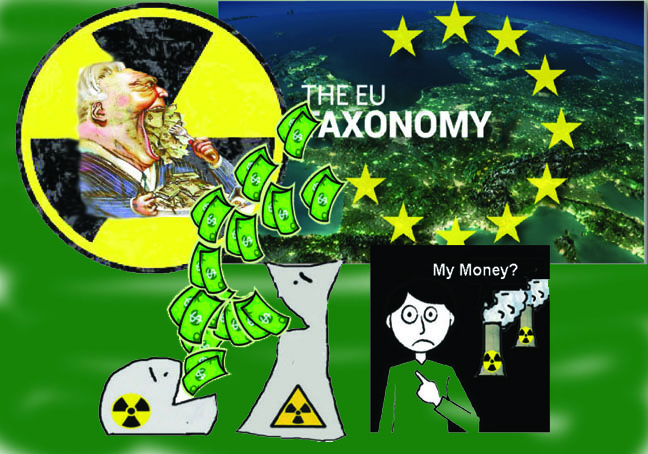
- Paris wants to win greater role for nuclear in energy revamp
- Disputed law on clean energy is key element of EU Green Deal
Bloomberg ,By Ewa Krukowska, Ania Nussbaum and, Petra Sorge, 3 June 2023
France is seeking to reopen negotiations over a key Green Deal law in an effort to ensure a greater role for nuclear in Europe’s energy transition, a move fiercely opposed by Germany, leaving the talks in deadlock.
The government in Paris has informed Sweden, which holds the EU’s rotating presidency, that it’s seeking changes to an agreement already brokered with other EU entities, according to officials with knowledge of the matter. Such a step would require revisiting talks with the bloc’s parliament and the European Commission ………………………….. (Subscribers only) https://www.bloomberg.com/news/articles/2023-06-02/eu-in-deadlock-over-renewables-as-france-and-germany-lock-horns#xj4y7vzkg
Scientists heat nuclear reactor heated to 100 MILLION degree Celsius – hotter than the SUN (what could possibly go wrong?)
- British company achieved the milestone using a ‘spherical tokamak’ called ST40
- Nuclear fusion reactors copy the energy-producing process of stars like our sun
By JONATHAN CHADWICK FOR MAILONLINE , 2 June 2023
Described as the ‘holy grail’, the milestone was achieved using the ST40 ‘spherical tokamak’ – a ‘cored-apple’ shaped nuclear device in Oxfordshire – and the team is now working on a fusion reactor that can connect to the national grid in the 2030s.
The milestone is short of the record set by Chinese scientists in 2021, who ran their reactor at 120 million degrees Celsius. ……………………………………………………………………………….
Funded by the UK government, STEP will be located at the existing West Burton power station in Nottinghamshire, it was announced last October……………………………………………………………………………………………………… https://www.dailymail.co.uk/sciencetech/article-12147389/Nuclear-fusion-breakthrough-Holy-grail-power-production-closer-reality.html
Finland’s newest nuclear plant is warming the sea, harming wildlife
yle 1 June 23
The Olkiluoto 3 reactor became fully operational in April after a decade-long delay.
“……… climate groups have pointed to a number of adverse effects the largest reactor in the Nordic region will have on its surrounding environment, including the warming of the seawater used to cool the plant and its effects on marine life.
Olkiluoto 3 is by far the largest of the three reactors located at Eurajoki and its operations will almost double the amount of water required to cool the plants.
In total, the three reactors need around 120-130 cubic metres of cooling water per second. This is more than half the average flow of the nearby Kokemäenjoki river, and Olkiluoto 3 accounts for about 57 cubic metres of this volume.
Court orders investigation
The seawater used to cool the nuclear power plant will also inevitably contain fish and other marine organisms.
Finland’s Administrative Court ordered an investigation to be carried out into the effects of Olkiluoto 3 on the local marine life when regular electricity production began in April………………………………………………………………………………………… https://yle.fi/a/74-20034904
France’s triple dependence on nuclear fuel .
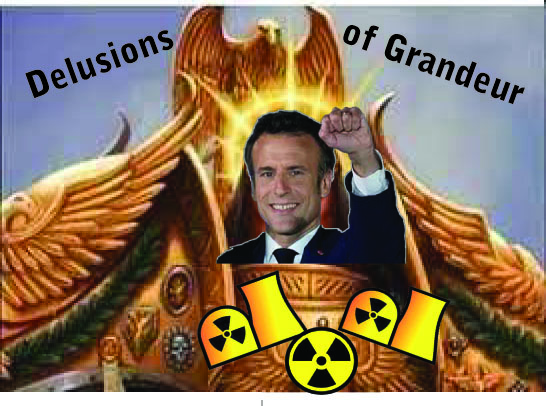
the main argument of this policy is “national energy independence”, moreover making a misleading shortcut from energy to electricity and from it nuclear power, an imaginary symbol of supposed independence.
Tuesday, May 30, 2023, by Bernard Laponche , Jean-Claude Zerbib, m https://www.global-chance.org/IMG/pdf/gc_la_triple_de_pendance_mai_2023_v2.pdf
Introduction
With 56 reactors spread over 18 EDF nuclear power plants, approximately 70% of electricity production in France is ensured by the use of nuclear energy, thanks to the production of heat by the combination of fission and chain reaction in reactors.
This situation makes France the most “nuclearized” country in the world in proportion to its population and the third in level of production after the United States and China, which are much more populous.
The program of reactors currently in operation (including the two Fessenheim reactors being dismantled) was launched in the early 1970s and reinforced by the “Messmer Program” of 1974, on the occasion of the first “oil shock”, inaugurating the “all-electric-all-nuclear” policy which continued until the construction of the Flamanville EPR in 2007, which has still not started.
The current government places itself in this line by advocating the extension of the duration of operation of the current reactors and the construction of a certain number of reactors of the EPR2 sector, heir to the EPR.
As at the time, and although times have changed, the main argument of this policy is “national energy independence”, moreover making a misleading shortcut from energy to electricity and from it nuclear power, an imaginary symbol of supposed independence. Let us admit, however, that the design and construction of the reactors are “national”, although much equipment is imported, the fact remains that the design is essentially that of the enriched uranium and pressurized water reactors of Westinghouse origin, and that the “francization” carried out at the beginning of the 1980s now raises a lot of questions, in particular with the discovery of cracks caused by corrosion under stress or thermal fatigue, which plague a certain number of reactors, including the most recent ones.
On the other hand, independence is far from being acquired on the side of the “nuclear fuel” which “boils the pot”. Indeed, natural uranium, the raw material for fission, has been completely imported for several decades. The suppliers are numerous but, among the main ones, Kazakhstan, Niger, Uzbekistan, Australia, Canada, three present geopolitical risks. But, we are told, since France has an enrichment plant, a reprocessing plant and fuel fabrication plants, we could rest easy.
The reality is much more complex.
On the other hand, independence is far from being acquired on the side of the “nuclear fuel” which “boils the pot”. Indeed, natural uranium, the raw material for fission, has been completely imported for several decades. The suppliers are numerous but, among the main ones, Kazakhstan, Niger, Uzbekistan, Australia, Canada, three present geopolitical risks. But, we are told, since France has an enrichment plant, a reprocessing plant and fuel fabrication plants, we could rest easy.
The reality is much more complex.
The purpose of this article is to assess:
- The tonnages of uranium which are delivered directly to France by the producing country, in the form of yellow cake and then undergo all the transformations, up to being put into the form of assemblies;
- The tonnages of natural uranium transiting through a third country, to arrive in France in the form of enriched uranium, gaseous or solid, or even fuel assemblies produced abroad;
- EDF’s depleted uranium enrichment operations in Russia;
- EDF and Orano’s reprocessing uranium enrichment operations in Russia.
- Manufacture of fuel assemblies, partly carried out abroad.
Thus will be established the triple dependence, total or partial, in the supply of natural uranium, in the enrichment of natural uranium, depleted uranium and reprocessed uranium and, in the manufacture of fuel assemblies.
This article is dedicated to the memory of André Guillemette, member of Global Chance and ACRO, expert in issues related to the reprocessing of irradiated fuels and the plutonium industry, author of several articles on these subjects, in particular in collaboration with Jean-Claude Zerbib, published on the Global Chance website ( www.global-chance.org ).
To read the full text https://www.global-chance.org/IMG/pdf/gc_la_triple_de_pendance_mai_2023_v2.pdf—
Dutch government sets many $millions in funding for nuclear power , and to encourage investors in nuclear

Power Magazine, 1 June 23
Government officials in the Netherlands have earmarked more than $350 million to fund further development of nuclear energy in the country, including extending the operating license of the 485-MW Borssele nuclear power plant. The Borssele station at present is the Netherlands only nuclear power facility. Officials in late April released a draft of the “Climate Fund for 2024” that included money for the Borssele extension, along with two new large-scale reactors and a development plan for small modular reactors (SMRs). The draft also said millions of dollars were being set aside to help develop a nuclear power workforce in the Netherlands.
……………………………………………….The draft budget provides more support for development of SMRs, with about $72 million to bring more interest from nuclear power investors.
……………………………….Amsterdam-based ULC-Energy in August of last year signed an agreement with the UK’s Rolls-Royce SMR for collaboration on SMR deployment in the Netherlands……………………………………………….. https://www.powermag.com/dutch-officials-set-funding-for-nuclear-power-program/—
Female health care workers need better protection from radiation, doctors say

Finnish study showed that breast cancer rates were 1.7 times higher than expected among radiologists, surgeons and cardiologists when compared to female physicians who don’t work with radiation.
Finnish study showed that breast cancer rates were 1.7 times higher than expected among radiologists, surgeons and cardiologists when compared to female physicians who don’t work with radiation.
London — A group of physicians is calling on health care employers to provide female workers who are exposed to on-the-job radiation with added protections to minimize their risk of breast cancer.
In an editorial recently published in the journal BMJ, the physicians point out that ionizing radiation is a known human carcinogen, and breast tissue is highly sensitive to radiation. “As such, there are concerns that regular exposure to ionizing radiation during image guided procedures may be linked to a higher risk of breast cancer in female health care workers.”
Although measuring occupational radiation-induced breast cancer risk is a challenge, examining the available evidence and improving personal protective equipment options can help reduce that risk for the rising number of female workers entering X-ray and imaging occupations.
PPE such as lead gowns that are used to shield the body from radiation leave the area close to the armpit exposed, the physicians write, and that area is a common site of breast cancer.
A small Finnish study showed that breast cancer rates were 1.7 times higher than expected among radiologists, surgeons and cardiologists when compared to female physicians who don’t work with radiation.
The London-based Society of Radiographers’ Ionising Radiation Regulations 2017 state that radiation levels delivered to all health care workers should be “as low as reasonably achievable.” Actions include reducing the duration of exposure, increasing distance from the source and shielding all workers with effective PPE.
Additional protection, including capped sleeves and axillary protection wings that can be worn under standard medical gowns, would protect the upper outer quadrant of the breast. Female health care workers should consider adopting this extra layer of protection, the European Society for Vascular Surgery says in its 2023 Clinical Practice Guidelines on Radiation Safety.
“Providing appropriate protection is a legal requirement of an employer, who has a duty of care to all workers exposed to radiation,” the editorial states. “The female breast appears to be particularly vulnerable and it is therefore important employers invest in protective equipment that enhances the safety of all their staff.”
Rafael Grossi to brief UN Security Council on Zaporizhia nuclear situation
The International Atomic Energy Agency was on 30 May due to brief the UN
Security Council on his proposals for safeguarding Ukraine’s Zaporizhia NPP
(ZNPP). “IAEA director general Rafael Grossi is planning to brief the UN
Security Council on the nuclear safety and security situation” during a
meeting chaired by Switzerland, according to an official statement by the
Agency in advance of the meeting.
Director general Grossi has said he is
seeking to secure agreement on a set of principles to protect ZNPP during
the armed conflict, covering also the availability and security of external
power supplies at all times.
Mr Grossi’s plan consists of five principles:
a ban on the deployment of heavy military equipment and military personnel
at nuclear power plants, a ban on shooting from the territory and towards
the power plant, ensuring security, protecting all external power lines,
and monitoring compliance with these principles.
Modern Power Systems 30th May 2023
1 This Month

of the week– Nuclear Reactor Information Task Force

14 May – online event From Bombs to Data Centres: the Face of Nuclear Colonialism
To see nuclear-related stories in greater depth and intensity – go to https://nuclearinformation.wordpress.com
-
Archives
- May 2026 (102)
- April 2026 (356)
- March 2026 (251)
- February 2026 (268)
- January 2026 (308)
- December 2025 (358)
- November 2025 (359)
- October 2025 (376)
- September 2025 (257)
- August 2025 (319)
- July 2025 (230)
- June 2025 (348)
-
Categories
- 1
- 1 NUCLEAR ISSUES
- business and costs
- climate change
- culture and arts
- ENERGY
- environment
- health
- history
- indigenous issues
- Legal
- marketing of nuclear
- media
- opposition to nuclear
- PERSONAL STORIES
- politics
- politics international
- Religion and ethics
- safety
- secrets,lies and civil liberties
- spinbuster
- technology
- Uranium
- wastes
- weapons and war
- Women
- 2 WORLD
- ACTION
- AFRICA
- Atrocities
- AUSTRALIA
- Christina's notes
- Christina's themes
- culture and arts
- Events
- Fuk 2022
- Fuk 2023
- Fukushima 2017
- Fukushima 2018
- fukushima 2019
- Fukushima 2020
- Fukushima 2021
- general
- global warming
- Humour (God we need it)
- Nuclear
- RARE EARTHS
- Reference
- resources – print
- Resources -audiovicual
- Weekly Newsletter
- World
- World Nuclear
- YouTube
-
RSS
Entries RSS
Comments RSS
 nuclear-news