France and Russia co-operate on developing a plant in Russia for processing depleted uranium
The installation of equipment has begun at TVEL’s JSC Electrochemical Plant
(ECP) in Zelenogorsk in Russia’s Krasnoyarsk Region for W2-ECP, the
country’s second plant for the processing of depleted uranium hexafluoride.
The plant is part of a long-term project to manage and make use of depleted
uranium stocks in Russia. The plant, with a processing capacity of 10,000
tonnes per year, is being supplied by Orano Projets – the engineering arm
of France’s nuclear fuel cycle specialist Orano – under a EUR40 million
(USD44 million) contract signed in December 2019.
Under the terms of the contract, Orano will supply the equipment for the construction of the
deconversion facility, as well as providing technical assistance in its
installation and commissioning. The first equipment for the plant arrived
at the construction site in eastern Siberia from France in December 2021.
The project was originally expected to be completed in 2022. The W2-ECP
plant will accept deliveries of depleted uranium hexafluoride gas (DUF6 –
sometimes called DUHF) and deconvert these to uranium tetrafluoride, with
anhydrous hydrofluoric acid being produced as a by-product. Deconversion
transforms the toxic and somewhat corrosive gaseous DUF6 enrichment
tailings into a stable powdered oxide form fit for long-term storage,
transport or final disposal.
World Nuclear News 16th Aug 2023
https://www.world-nuclear-news.org/Articles/Construction-of-second-Russian-deconversion-plant
UK ‘s Minister for Nuclear and Networks very upbeat about nuclear energy’s future

In February, Andrew Bowie
became the UK’s first-ever
Minister for Nuclear and Networks
2 Andrew Bowie
became the country’s first-ever U.K.,”
Minister for Nuclear and Networks nuclear minister in February,
TOKYO — The U.K. government is “absolutely committed” to boosting nuclear power as a key energy source, but national security is paramount as Chinese investment in new plants raises concerns, the minister in charge of the sector told Nikkei Asia.
Most of the U.K.’s existing nuclear plants are to be retired by the end of this decade, while a new generation of reactors is still under construction………
“The British government is absolutely committed to new nuclear, after about three decades of underinvestment. We are reinvesting and reinvigorating an industry which has not had the attention that it should in the U.K.,” Minister for Nuclear and Networks Andrew Bowie said in a recent interview. “On the whole, we are open to investors from overseas,” he added……………….
The UK government has announced plans to build as many as eight new reactors. However, major projects already underway are mired in controversy over funding from Chinese investors, given tense relations between London and Beijing……………
Now uncertainty looms for Hinkley Point C, which broke ground in 2016 under a joint investment by EDF and CGN as the first new nuclear power station built in the U.K. in nearly 30 years. The plant is home to the only two reactors now under construction, according to data from the International Atomic Energy Agency……….
“The pendulum has swung” on British nuclear policy, the minister said, but the pronuclear plans could fall victim to politics, with a general election due within 15 months………… https://asia.nikkei.com/Business/Energy/U.K.-committed-to-nuclear-power-despite-China-funding-concerns2
Big Brave Western Proxy Warriors Keep Whining That Ukrainian Troops Are Cowards

CAITLIN JOHNSTONE, AUG 19, 2023
Amid continuous news that the Ukrainian counteroffensive which began in June is not going as hoped, The New York Times has published an article titled “Troop Deaths and Injuries in Ukraine War Near 500,000, U.S. Officials Say.”
Reporting that Ukrainian efforts to retake Russia-occupied territory have been “bogged down in dense Russian minefields under constant fire from artillery and helicopter gunships,” The New York Times reports that Ukrainian forces have switched tactics to using “artillery and long-range missiles instead of plunging into minefields under fire.”
Then the article gets really freaky:
“American officials are worried that Ukraine’s adjustments will race through precious ammunition supplies, which could benefit President Vladimir V. Putin of Russia and disadvantage Ukraine in a war of attrition. But Ukrainian commanders decided the pivot reduced casualties and preserved their frontline fighting force.
“American officials say they fear that Ukraine has become casualty averse, one reason it has been cautious about pressing ahead with the counteroffensive. Almost any big push against dug-in Russian defenders protected by minefields would result in huge numbers of losses.”
I’m sorry, US officials “fear” that Ukraine is becoming “casualty averse”? Because safer battlefield tactics that burn through a lot of ammunition don’t chew through lives like charging through a minefield under heavy artillery fire?
What are the Ukrainians supposed to be? Casualty amenable? If Ukraine was more casualty amenable, would it be more willing to throw young bodies into the gears of this proxy war that the US empire actively provoked and killed peace deals to maintain?
Something tells me that the US officials speaking to The New York Times about their “fear” of Ukrainian casualty aversiveness do not know what real fear is. Something tells me that if you marched these US officials through Russian minefields under constant fire from artillery and helicopter gunships, then they would understand fear.
Western officials have been spending the last few weeks whining to the media that Ukraine’s inability to gain ground is due to an irrational aversion to being killed. They’ve been decrying Ukrainian cowardice to the press under cover of anonymity, from behind the safety of their office desks.
In an article published Thursday titled “U.S. intelligence says Ukraine will fail to meet offensive’s key goal,” The Washington Post cited anonymous “U.S. and Western officials” to report that the massive losses Ukraine has been suffering in this counteroffensive had been “anticipated” in war games ahead of time, but that they had “envisioned Kyiv accepting the casualties as the cost of piercing through Russia’s main defensive line.”
The same article quotes Ukrainian Foreign Minister Dmytro Kuleba telling critics of the counteroffensive to “go and join the foreign legion” if they don’t like the results so far, adding, “It’s easy to say that you want everything to be faster when you are not there.”
In an article published last month titled “U.S. Cluster Munitions Arrive in Ukraine, but Impact on Battlefield Remains Unclear,” The New York Times reported unnamed senior US officials had “privately expressed frustration” that Ukrainian commanders “fearing increased casualties among their ranks” were switching to artillery barrages, “rather than sticking with the Western tactics and pressing harder to breach the Russian defenses.”
“Why don’t they come and do it themselves?” a former Ukrainian defense minister told The New York Times in response to the American criticism.
In an article last month titled “Ukraine’s Lack of Weaponry and Training Risks Stalemate in Fight With Russia,” The Wall Street Journal reported that unnamed western military officials “knew Kyiv didn’t have all the training or weapons” needed to dislodge Russia, but that they had “hoped Ukrainian courage and resourcefulness would carry the day” anyway.
“It didn’t,” Wall Street Journal added.
In the same article, The Wall Street Journal cited a US Army War College professor named John Nagle admitting that the US itself would never attempt the kind of counteroffensive it’s been pushing Ukrainians into attempting.
“America would never attempt to defeat a prepared defense without air superiority, but they [Ukrainians] don’t have air superiority,” Nagl said, adding, “It’s impossible to overstate how important air superiority is for fighting a ground fight at a reasonable cost in casualties.”
And now we’re seeing reports in the mass media that US officials — still under cover of anonymity of course — are beginning to wonder if perhaps it might have been better to try to negotiate peace instead of launching this counteroffensive that they knew was doomed from the beginning.
In an article titled “Milley had a point,” Politico cites multiple anonymous US officials saying that as “the realities of the counteroffensive are sinking in around Washington,” empire managers are beginning to wonder if they should have heeded outgoing Joint Chiefs chair Mark Milley’s suggestion back in November that it was a good time to consider peace talks.
“We may have missed a window to push for earlier talks,” one anonymous official says, adding, “Milley had a point.”
Oops. Oops they made a little oopsie poopsie. Oh well, it’s only Ukrainian lives.
Imagine reading through all this as a Ukrainian, especially a Ukrainian who’s lost a home or a loved one to this war. I imagine white hot tears pouring down my face. I imagine rage, and I imagine overwhelming frustration.
This whole war could have been avoided with a little diplomacy and a few mild concessions to Moscow. It could have been stopped in the early weeks of the conflict back when a tentative peace agreement had been struck. It could have been stopped back in November before this catastrophic counteroffensive.
But it wasn’t. The US had an agenda to lock Moscow into a costly military quagmire with the goal of weakening Russia, and to this day US officials openly boast about all this war is doing to advance US interests. So they’ve kept it going, using Ukrainian bodies as a giant sponge to soak up as many expensive military explosives as possible to drain Russian coffers while advancing US energy interests in Europe and keeping Moscow preoccupied while the empire orchestrates its next move against China.
Last month The Washington Post’s David Ignatius wrote an article explaining why westerners shouldn’t “feel gloomy” about how things are going in Ukraine, writing the following about how much this war is doing to benefit US interests overseas:
“Meanwhile, for the United States and its NATO allies, these 18 months of war have been a strategic windfall, at relatively low cost (other than for the Ukrainians). The West’s most reckless antagonist has been rocked. NATO has grown much stronger with the additions of Sweden and Finland. Germany has weaned itself from dependence on Russian energy and, in many ways, rediscovered its sense of values. NATO squabbles make headlines, but overall, this has been a triumphal summer for the alliance.”
Other than for the Ukrainians” he says, as a parenthetical aside.
Everyone who supported this horrifying proxy war should have that paragraph tattooed on their fucking forehead.
General Mark Milley had a point – USA should have pushed for peace talks on Ukraine
Politico, By ALEXANDER WARD, LARA SELIGMAN, MATT BERG and ERIC BAZAIL-EIMIL 08/18/2023
The conversation about Ukraine’s counteroffensive has shifted from one of excitement to disappointment, as Kyiv’s slow gains lead some U.S. officials and insiders alike to whisper: Should we have listened to Gen. MARK MILLEY?
In November, the Joint Chiefs chair said Ukraine’s strong military position and upcoming winter season combined to make a good time to consider peace talks. Plus, operations to expel Russian forces out of the whole of Ukraine –— which VOLODYMYR ZELENSKYY demands — had a slim chance of success. Administration officials immediately scrambled to assure their counterparts in Kyiv that Milley was riffing and not reflecting a secret sentiment in the White House.
But listen to Milley lately, and you can hear the implicit “I told you so.”
“If the end state is Ukraine is a free, independent, sovereign country with its territory intact, that will take a considerable level of effort yet to come,” he told The Washington Post this week. “That’s gonna take a long, long time, but you can also achieve those objectives — maybe, possibly — through some sort of diplomatic means.”
One U.S. official, who didn’t want to run afoul of the administration by offering real views on the record, said the realities of the counteroffensive are sinking in around Washington. Ukraine’s tactics to preserve troops and equipment, Russia’s dug-in positions and the fight on multiple fronts have led to slow advances, shifting a possible breakthrough further into the future.
While the U.S. still backs Ukraine’s fight, the official said, “We may have missed a window to push for earlier talks………………………………… more https://www.politico.com/newsletters/national-security-daily/2023/08/18/milley-had-a-point-00111878
Lukashenko shares thoughts on future of Ukraine
https://www.rt.com/russia/581437-lukashenko-ukraine-interview-recap/— 18 Aug 23
Kiev should sue for peace before it loses the remnants of its sovereignty, the leader of Belarus said in an interview
Ukraine needs to stop the war and start rebuilding its statehood on a healthier foundation before it ceases to exist completely, Belarusian President Alexander Lukashenko said in an interview with Ukrainian journalist Diana Panchenko on Thursday.
1 Ukraine could lose everything
Ukraine could lose all of its territory if it chooses to continue fighting, Lukashenko said, insisting that Kiev should first “end the war” in order to preserve its statehood. “Yes, you can continue to struggle for these territories,” he said, pointing to Donbass, Kherson and Zaporozhye on the map. “I’m not telling you to give them up or anything. But choose another method. If you fight for these territories, you will lose those,” he added, pointing to the areas further west.
2 Conflict was avoidable
“The war was avoidable… at any point in time. It can be stopped now and it could have been avoided then,” Lukashenko said, noting that in 2015, he was at the heart of events and facilitated communication between then-President of Ukraine Pyotr Poroshenko and Russian President Vladimir Putin.
“The Minsk agreements should have been implemented. We agreed on everything… But they were ignored,” he said, adding that Putin was “100% ready” to implement the agreements, but Poroshenko was “afraid that the wrong people would have been elected” if Donbass returned to Ukraine as an autonomous region.
3 Belarus will go to war if Ukrainians cross the border
Lukashenko stated that Minsk will “keep helping our ally Russia,” but if “Ukrainians do not cross our border, we will never get involved in this hot war.” He went on to say that dozens of NATO and other countries are backing Ukraine with military coordination, intelligence, and training, as well as ammunition and weapons supplies, while “only Belarus is openly helping Russia.”
4 Russia has enough firepower
Lukashenko also rejected as “complete nonsense” the notion that Putin is pressing him to become more involved in the conflict. He observed that Russia has more than enough manpower and firepower to reach its goals, saying, “an additional 70,000 troops will change nothing.”
5 Putin withdrew troops from Kiev to avoid civilian casualties
The Belarusian leader dismissed suggestions that Ukrainian President Vladimir Zelensky protected Kiev and that the Ukrainian army repulsed the early Russian invasion, calling the idea a “fairy tale… cooked up by mass media and Zelensky himself, in order to present him as a hero.” Lukashenko claimed that, at the time, Putin told him Kiev could be captured “right away, instantaneously, but a huge number of people will die.”
Lukashenko noted that Ukrainian forces had deployed not only tanks but multiple-launch rocket systems in the streets of Kiev, near “kindergartens, schools, hospitals,” and other public buildings. “You probably know that the Russian troops, who were on the outskirts of Kiev, withdrew from there. Did [Zelensky] destroy the Russian army there? No… He was sitting in a root cellar at the time,” Lukashenko said.
6 Main Russian objective already achieved
Moscow has already reached the principal aim of its military operation in Ukraine, the Belarusian president continued, explaining that “Ukraine will never be so aggressive towards Russia after this war ends, as it was before. Ukraine will be different. People in power [there] will be more cautious, smart – more cunning if you will.”
7 Zelensky ready to surrender western Ukraine to Poland
Lukashenko believes that in order to get Ukraine into NATO, Zelensky might go as far as to surrender part of the country’s territory under a Polish protectorate. However, he said “Ukrainians themselves will not let it happen.”
If they come in, they will not go away, because Americans are standing behind Poland. Well, this will be Polish territory. Why would NATO not accept them in this case? It will already be Polish territory,” Lukashenko said.
“This is unacceptable for us and for Russians. It is necessary to preserve Ukraine’s integrity, so that the country will not be sliced up and divided by other countries. Negotiations come next,” he added.
8 Ukraine is not Zelensky, and Zelensky is not Ukraine
Lukashenko claimed that Ukrainians are increasingly disenchanted with Zelensky, who is not a “national hero,” but an image created for international audiences by the Western propaganda machine, drawing parallels to how, before the Soviet Union’s collapse, the West “went into raptures about Gorbachev” in a similar fashion.
“People in Ukraine are beginning to see things clearly. And millions of people who fled the country are raising their voices saying that they want to return home and asking why the war is still going on,” he said. “There is a growing understanding that Zelensky should find a way out of this situation, to put it mildly.”
9 Only the United States benefits from the war
The Belarusian leader said the US-led forces seek to weaken Russia with the help of Ukraine. “It does not bother them that the Slavic peoples are fighting with each other, and killing each other. It is beneficial for them. Thus, having weakened Russia, they will get closer to China from this side. That’s their rationale. Zelensky is playing along. But in the end, Ukraine – a flourishing, beautiful country blessed with natural resources – will cease to exist.”
Finland’s OL2 nuclear reactor off grid; power prices rise
Reuters, August 18, 2023
OSLO, Aug 18 (Reuters) – Finland’s OL2 nuclear power reactor was shut down early on Friday and will remain offline until Aug. 28 due to problems caused by increased moisture in the facility’s turbine, operator TVO said, helping to pushing up electricity prices.
There was no impact on nuclear safety, TVO added.
The outage comes at a time of low wind power generation that has already lifted Finnish prices, according to Refinitiv analyst Petter Engblom Nordby.
Electricity prices for Friday soared up to 270 euros per megawatt hour (MWh) for hours where demand is typically highest, far exceeding prices in other parts of the Nordics and continental Europe, data from power exchange Nord Pool showed……………….. Reporting by Nora Buli in Oslo and Louise Rasmussen in Copenhagen, editing by Terje Solsvik https://www.reuters.com/business/energy/finlands-ol2-nuclear-reactor-off-grid-power-prices-rise-2023-08-18/
Zelensky holds court with Ukraine’s most notorious neo-Nazi
ALEXANDER RUBINSTEIN·AUGUST 16, 2023, https://thegrayzone.com/2023/08/16/zelensky-ukraines-notorious-neo-nazi/—
Western media has dismissed evidence of neo-Nazi influence in Ukraine by citing President Zelensky’s Jewish heritage. But new footage published by Zelensky shows the leader openly collaborating with a fascist ideologue who once pledged to “lead the white races of the world in a final crusade…against Semite-led Untermenschen.”
Ukrainian President Vlodymyr Zelensky has uploaded a video to his Telegram channel showing him holding court with one of the most notorious neo-Nazis in modern Ukrainian history: Azov Battalion founder Andriy Biletsky.
On August 14, just over an hour after Secretary of State Anthony Blinken announced another $200 million in military aid to Kiev, Ukrainian President Vlodomyr Zelensky published the video depicting what he called an “open conversation” with Ukraine’s 3rd Separate Assault Brigade.
“I am grateful to everyone who defends our country and people, who brings our victory closer,” Zelensky wrote, following his encounter with the unit on the outskirts of Bakhmut.
While casual Western observers might not have realized it, the brigade Zelensky was addressing is actually the newest iteration of Ukraine’s neo-Nazi Azov Battalion.
“The 3rd separate assault brigade, excellent fighters,” Zelensky wrote days after the consultation, in a Twitter post which also alluded to a separate meeting with the Aidar Battalion, another neo-fascist outfit that has been accused of war crimes by Amnesty International. “They have stopped the enemy from advancing towards Kostiantynivka and pushed the occupiers back up to 8 kilometers.”
But the group’s origins are no secret. Describing their most recent rebrand in a YouTube video released in January, the unit explained: “Today we officially announce that the SSO AZOV is expanding to a brigade. From now on, we are the 3rd separate assault brigade of the Ground Forces of the Armed Forces of Ukraine.”
Like its predecessor, the unit is led by Andriy Biletsky, who founded the Azov Battalion and has long served as a figurehead for the closely-aligned National Corps political movement.
But in spite of Biletsky’s rich Nazi pedigree, the video Zelensky published shows him sharing a moment of bonhomie with a white nationalist militant who has described Jews as “our enemy,” or as the “real masters” of the oligarchs and craven politicians that have corrupted Ukraine.
“How could I be a Nazi?” Zelensky asked on the eve of Russia’s invasion, pointing to his Jewish heritage. “How could a people who lost eight million lives fighting Nazis support Nazism?”
Perhaps the question needs to be asked again of the Ukrainian president following the tribute he paid to his country’s top neo-Nazi ideologue.
Ukraine’s Jewish leader meets “The White Leader”
Since Russia’s military operations in Ukraine kicked off in 2022, Biletsky had taken pains to distance himself from his fascist past. He now claims that an infamous promise he made to rid the world of “Semite-led untermenschen” was actually fabricated by Russian Foreign Minister Sergei Lavrov.
But Biletsky’s most notorious screed against Jews was not an isolated outburst. Indeed, his record of Nazi-inspired tirades is extensive, and has been a matter of public record for decades.
Biletsky’s college thesis was a defense of the Ukrainian Insurgent Army, a group of paramilitary Nazi collaborators founded by Stepan Bandera’s Organization of Ukrainian Nationalists that carried out ethnic cleansings of more than 100,000 Jews and Poles. After leaving university, Biletsky quickly embedded with multiple fascist outfits, including the “Stepan Bandera All-Ukrainian Organization ‘Tryzub’” and the Social-National Party — not to be confused with the National Socialist Party of 1940’s Germany.
Biletsky left the Social-National Party in protest in 2004 as the group began to rebrand and move away from overt neo-Nazi symbolism. Two years later, he led an organization called Patriots of Ukraine, which has been linked to numerous mob assaults. One Patriot of Ukraine member has claimed the group was behind the seizure and torching of the headquarters of a political party during the US-backed “Maidan” coup in 2014.
According to Ukraine’s Kharkiv Human Rights Protection Group, Patriots of Ukraine “espoused xenophobic and neo-Nazi ideas, and was engaged in violent attacks against migrants, foreign students in Kharkiv and those opposing its views.” What’s more, “Biletsky and some other members were suspected of violent seizures of newspaper kiosks and similar criminal activities.”
“For three years running, the organization has gained notoriety for its torch processions around student campuses in Kharkiv, Kyiv and Chernivtsi which fill foreign students studying in Ukraine with terror,” the human rights group noted in 2008.
During a Patriots of Ukraine general meeting in 2009, Biletsky raved: “How can we describe our enemy? The authorities and the oligarchs. Do they have anything in common? Yes, they have one thing in common: they are Jews, or behind them are their real masters — Jews.”
In 2011, Biletsky was arrested for allegedly ordering Patriot of Ukraine members to kill a fellow ultranationalist inside the group’s office following a dispute, and spent the following years in pre-trial detention. Thanks to a resolution passed by the Ukrainian parliament after the Western-backed overthrow of President Viktor Yanukovych, he would ultimately be released in 2014. But during his three years in custody, Biletsky managed to have a number of his fascist screeds published in a collection titled “The Word of the White Leader.”
One essay in the collection, dated to 2007, rails against Jews and Black migrants, casually dropping the n- word in the process. “Ukraine is the light of Europe! Our Nation still has enough strength to withstand this influx of foreigners, to cleanse our land and light the fire of purification throughout Europe!” the essay concludes.
In another essay outlining the ideology of “Social-Nationalism,” Biletsky praised National Socialism as a “great idea,” but criticized the Nazis as having been insufficiently eugenicist in their family welfare programs. He complained they supported parents with multiple children “without considering the biological quality of each individual family.”
“The result,” he continued, was “a significant increase in the birth rate, [but] a significant decrease in the percentage of the Nordic type in the population.” Because “these social benefits are aimed at the masses, they encouraged the worst human material to give birth to a child in the first place,” the self-proclaimed “White Leader” lamented.
A subsequent Biletsky manifesto entitled “Language and Race – Primary Issues” expanded on the “social-nationalist” concept: “Ukrainian social-nationalism considers the Ukrainian Nation to be a blood-racial community… Race is everything for nation-building – Race is the basis on which the superstructure grows in the form of national culture, which again comes from the racial nature of the people, and not from language, religion, economy, etc.”
As for the Russian-speaking population of Eastern Ukraine, Biletsky wrote, “The issue of total Ukrainization in the future social nationalist state will be resolved within 3-6 months with the help of a tough and balanced state policy.”
Following his release from prison, Biletsky got his chance to carry out a campaign of violence against the ethnic Russians of eastern Ukraine. As war broke out in the country, with the Russian majority of the east seeking self-determination in the face of a nationalist post-coup government viewed as Western puppets, Biletsky dissolved the Patriot of Ukraine and formed the Azov Battalion to wage a war against the separatists. Around this time, he was also elected to the Ukrainian parliament, remaining in office until 2019.
The new paramilitary outfit set up shop in Mariupol, using the port city as a staging ground for attacks on the Donbas, and violently crushing forms of feminist and liberal political expression on the city’s streets.
Meanwhile, the National Corps, a political party founded by Biletsky in 2016, has been described as a “nationalist hate group” even by the US State Department. The party has repeatedly incited violence against the Kiev Pride march, in 2018 calling on “all concerned citizens of Ukraine” to prevent the march from being held. In 2019, one National Corps leader had a more direct message: “Stay home, and don’t show up in public. Ever. That will make our life easier and keep you safe ;).”
In 2019, it seemed almost as though Biletsky’s influence was waning. An electoral coalition he formed with several other prominent neo-Nazis in Ukraine failed to gain enough votes to pass the threshold to gain any seats in parliament. Meanwhile, Vlodomyr Zelensky won the presidential election on a platform of making peace with Russia.
But Biletsky still held on to a trump card as a nationally-recognized strongman. When a Ukrainian news channel announced a two-hour live studio “TV bridge” between Ukrainian and Russian civilians aimed at fostering a stronger mutual understanding, Biletsky seized the moment to issue a thinly-veiled threat against Zelensky if he did not have the event canceled in a day’s time. If Zelensky did not intervene, “the answer to the Kremlin’s ‘little green men’ will begin to be given by ‘little black men,’” Biletsky said, referring to the black garb of fascist elements like Azov.
Biletsky called on Zelensky to be “The leader of a state at war,” and, “Not a clown, not an artist from oligarchic corporations, but the President.”
Zelensky responded within the timeframe of the ultimatum by denouncing the dialogue and seemingly offering a jab back at Biletsky, arguing that Ukrainians were being “manipulated by politicians who really want to get into parliament.”
A few months later, the pair butted heads again after Zelensky ordered Ukrainian troops, including Azov fighters, to withdraw from a frontline town in the Donbas in an apparent effort to honor the terms of the Minsk Accords. Biletsky fired back with threats to dispatch thousands more troops in open defiance of the president’s orders.
Zelensky’s showdown with fighters refusing his orders culminated with the head of state nearly breaking down on camera and pleading to the militants: “I’m the president of this country. I’m 41 years old. I’m not a loser. I came to you and told you: remove the weapons.”
Just a few short years later, in the midst of a hot war with Russia, Ukraine’s Jewish president and Ukraine’s most famous living antisemite seem to have put aside their differences. As Shakespeare put it, “misery acquaints a man with strange bedfellows.”
Why the Glut of ‘Wonder Weapons’ to Ukraine Won’t Make a Difference

The primary purpose of American and Western militarism is to make profits for private corporations, the military-industrial complex.
Typically, the weapons are vastly overpriced, overhyped and designed for perpetual consumption.
They are not for winning a war. They’re for being used up, so you have to replace them now, with yet new buying.”
Finian Cunningham, August 15, 2023, https://strategic-culture.org/news/2023/08/15/us-capitalism-and-why-glut-of-wonder-weapons-ukraine-wont-make-difference/
It is slowly and reluctantly dawning on Western officials and their servile media that the Ukraine counteroffensive is failing. Not only the two-month-old counteroffensive but indeed the entire conflict. Ukraine hasn’t a chance of prevailing against Russia’s superior forces.
Still, the violence and killing go on. No diplomacy, peace, or sanity. Why?
Only a couple of months ago, the Western media were full of bravado claims that the United States’ and NATO’s weapons and training would turn the tide for a “stunning victory” against Russia. Today, those same media are meekly reporting on a “grinding counteroffensive” (Washington Post, New York Times, CNN) and “failed expectations” (London Times).
How to explain the glaring conundrum? The United States and its European NATO allies have supplied the Kiev regime with up to $100 billion worth of weaponry over the past year, ranging from battlefield tanks to Patriot missiles. And the military gifts keep coming, with the Biden administration requesting another $12 billion for Ukraine last week. In the coming months, the U.S. and its allies are planning to supply F-16 fighter jets.
And yet all this mind-boggling largesse won’t make a difference to the outcome of an eventual Russian victory. Tens of thousands more Ukrainian soldiers will be killed of course and a wider all-out nuclear war with Russia is a reprehensible risk. But why does the insanity continue? Why are Western politicians and media not exploring diplomatic alternatives to the endless slaughter?
A fundamental reason for this debacle and ultimate scandal is the inherent vice of U.S. militarism. American militarism and that of other Western capitalist states is not about the conventional understanding of “military” or “defense” for the purpose of defending nations, or indeed for actually winning wars. The primary purpose of American and Western militarism is to make profits for private corporations, the military-industrial complex.
Typically, the weapons are vastly overpriced, overhyped and designed for perpetual consumption. Take the U.S.-made Patriot air-defense system, or the Abrams tank, or the F-35 fighter jets. Independent military analysts will tell you these systems are overpriced junk that don’t really do the job they are supposed to do. Russian forces have been wiping out the Patriot and Western tanks with relative ease using superior hypersonic weapons.
Michael Hudson, the respected geopolitical commentator and author of the book ‘Superimperialism’, nails it when he observes that U.S. militarism is not about essentially defending that nation or its allies – it’s all about corporate profiteering. The weapons created by the U.S. military-industrial complex are not purposed for the conventional definition of military performance, that is to knock out the enemy and win battles.
“The arms are for creating huge profit for the U.S. military-industrial complex,” commented Hudson in a recent interview with Steven Grumbine.
In the case of Ukraine, he added, U.S. and NATO weapons “are for buying, and they’re for giving to the Ukrainians, to let Russia blow them up. But they’re not for fighting. They are not for winning a war. They’re for being used up, so you have to replace them now, with yet new buying.”
The conflict in Ukraine is exposing the long-held hype and charade attached to American and NATO weaponry. It’s being brutally outed as a paper tiger.
What Hudson is describing, in effect, is the utter scam and scandal of the U.S.-led proxy war in Ukraine against Russia. It’s on a level of Catch-22-style farce. It’s a racket for profiteering by U.S. and Western military industries. All paid for by taxpayers in the West and with the blood of Ukrainians blown to smithereens or maimed for life.
Fundamentally, this is what U.S. and Western capitalism is all about. The economic system for elite private profit is driven by militarism and global exports of arms. Western capitalism has long abandoned civilian industrial production and over the last few decades has become dominated by the military-industrial complex that owns politicians, media and lawmakers to do its bidding.
The war in Ukraine was instigated by NATO expansionism and strategic threat to Russia over many years. Moscow’s warnings were habitually dismissed. That was part of the showdown demanded by the U.S. executive of Western imperialism to subjugate Russia as a geopolitical rival, in the same way that China is also targeted. But in addition to that came the ultimate racket of funneling weapons to Ukraine. Not only that, but the European lackeys will now be obliged to stock up their depleted arsenals for decades to come by buying from Raytheon, Lockheed Martin, Boeing, and so on. It’s a perfectly rigged system.
By contrast, Russia’s military is designed to actually defend its nation. Russian weapons are outperforming NATO’s junk in Ukraine because the former are not manufactured for private profit and Wall Street investors but for the purpose of actually winning wars.
That’s why Ukraine is losing this conflict, disastrously and despicably. The weapons funneled to the Kiev regime were never meant to “defend a nation from Russian aggression”. That was just the laughable public relations hype to sell expensive weapons funded by Western taxpayers. Of course, the Nazi Kiev regime has milked the cash cow with corruption, but the bigger problem is the war racket at the rotten heart of U.S. capitalism and its military-industrial complex.
The Ukrainian puppet president Vladimir Zelensky is crying for more weapons. Of course, the corrupt Kiev regime is. Biden and Western politicians are calling for more weapons. Of course, they are. Their political funding depends on lobbyists from the weapons companies. The Western media distort the obscenity as “grinding counteroffensive”. Of course, they do because they are locked into their own self-serving lies about the war in Ukraine.
The corrupt Kiev regime rounds up civilians to be sent to a slaughterhouse while U.S. corporations and Wall Street feast on profits. And Western workers and the public are bled white from austerity. This war in Ukraine is the ghoulish epitome of Western capitalism.
Tussle in Europe as France succeeds in getting nuclear energy accepted as a ‘”transitional” technology for EU’s green taxonomy .
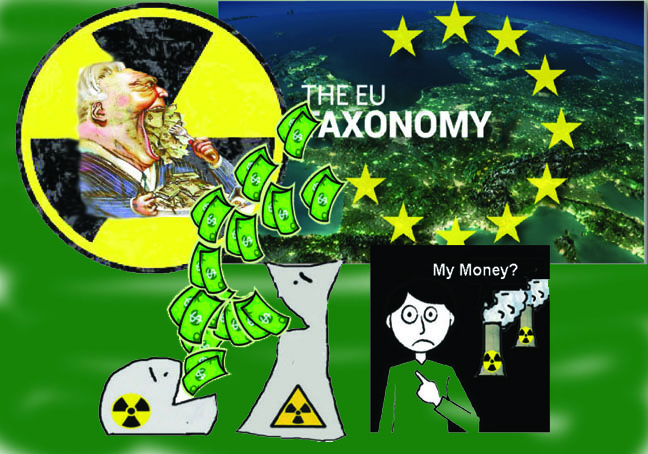
This article is part of our special report EU’s final stretch before June 2024.
Nuclear power is making a comeback on the EU energy scene after an eventful 2022-2023 year, which according to Paris, reflects an “excellent diplomatic record” for France in defending atomic energy. EURACTIV looks at the bigger picture.
After three years of intense negotiations, nuclear energy officially joined the list of “transitional” energies in the EU’s green taxonomy on 1 January 2023.
Following the vote confirming the European Parliament’s position on the issue in July 2022, the co-chair of the United Left group, Manon Aubry, warned that this decision is “fraught with meaning […] for future deadlines and votes on climate issues”………………….
In France and eastern EU countries in particular, nuclear power is increasingly being viewed as a viable solution for achieving carbon neutrality by 2050.
Renewables at EU level
Yet, the development of renewable energies remains the top priority at the EU level.
On 18 May 2022, three months after Russia’s invasion of Ukraine, the European Commission proposed raising the EU’s renewable energy target to 45% by 2030, a target later endorsed by the European Parliament in September of that year.
In the Council, France adopted a rather unusual stance, backing the 45% target but only if countries with low-carbon electricity mixes – code for nuclear – are awarded a lower target.
The idea was rejected, and the target was consequently lowered to 42.5% in a political agreement reached with the European Parliament on the third revision of the Renewable Energy Directive (RED III).
While none are particularly happy with the solution, the discussions showcased the newfound influence of pro-nuclear countries on institutional negotiations at the EU level.
Nuclear-derived hydrogen
This newfound influence of pro-nuclear countries was also reflected in discussions about low-carbon hydrogen, which took an unexpected political dimension.
Since September 2022, French Energy Minister Agnès Pannier-Runacher appeared on the offensive.
In a letter revealed by EURACTIV France, Pannier-Runacher urged the European Commission to recognise the contribution of nuclear-derived hydrogen in the targets set out in RED III. For Paris, the aim was to prevent renewable hydrogen targets from jeopardising low-carbon hydrogen production from nuclear sources.
At the end of March 2023, after months of battles between EU countries and within the European Parliament, the political agreement on RED III recognised the principle of non-cannibalisation between renewable and low-carbon hydrogen.
But while this seemed like a victory for France, the conditions imposed for nuclear-derived hydrogen to contribute to achieving the EU’s objectives were so strict that they were practically unattainable.
……………………………………. On 16 June, France finally obtained an official declaration from the European Commission recognising the role of nuclear energy in achieving the objectives of decarbonising the EU economy – fruits of an intense year of lobbying, aided by France’s setup of a pro-nuclear alliance of 14 EU countries and (possibly) counting.
The “nuclear alliance”
On the fringes of an informal EU Energy Council in Stockholm at the end of February, France rallied 10 other EU countries around a new concept: a meeting to defend the interests of nuclear power in the EU.
The same group met in Brussels at the end of March, joined by Belgium and Italy as observers.
Though the meeting triggered countries advocating against nuclear power, forming a rival group called the “Friends of Renewables”, this did not stop France’s mission – Pannier-Runacher reconvened the group in Paris in mid-May, joined by three other EU states and the UK. Together, they agreed to build “30 to 45 new large reactors” and small modular reactors known as SMRs.
EU Energy Commissioner Kadri Simson, who attended the meeting, was asked to support the development of “joint initiatives” to bring these projects to fruition.
The group met again in Valladolid in mid-July. The meeting resulted in a new declaration, calling on the European Commission to treat nuclear and renewables equally when presenting future climate law proposals.
Net-Zero Industry Act
However, in the meantime, two other fronts have opened up in Brussels.
The first concerns the proposal for a Net-Zero Industry Act (NZIA), which was presented by the Commission in mid-March, setting out a list of preferred technologies for developing a low-carbon industry across the bloc.
At first, nuclear was not included in the list of so-called “strategic” technologies like wind, solar, or electrolysers, that are eligible for regulatory perks under the NZIA, including a 40% for manufacturing on European soil.
In mid-July, following lobbying by many MEPs from across the political spectrum (socialists, centrists and conservatives), the rapporteur on the NZIA regulation in the European Parliament offered nuclear power equal treatment as other technologies.
For now, the report by German conservative lawmaker Christian Ehler (EPP) has not yet been voted on, and EU countries have not yet given their opinion. Some countries may oppose Ehler’s conclusions, such as Germany, which is reluctant to accept the financing of nuclear power from EU funds.
EU electricity market reform
The second text under negotiation concerns the reform of the EU electricity market, on which an agreement is expected before the end of the year.
With no apparent problems, the financing of future nuclear capacity could benefit from financing mechanisms currently being negotiated under the reformed electricity market rules.
But France also wants this mechanism to cover existing assets, a move resited by many other countries, including some in the “nuclear alliance”, who are opposed to the idea, saying it would infringe EU competition rules.
For the EDF management, the solution is not optimal. The leading energy and nuclear company in Europe must be able to invest in funds generated by its sales, said its CEO………….
What to expect for 2024
…………. while the current European Commission has acknowledged the contribution of nuclear to decarbonisation, the 2024 EU elections could reshuffle the cards in Brussels.
By that time, perhaps the Energy Commissioner’s tasks will no longer refer to “further nuclear decommissioning”, as is still the case.
At the same time, “some ‘nuclear-friendly’ member states have become ‘nuclear believers’. In the Netherlands, there is now a consensus on nuclear power, while Sweden, which was neutral in the first half of 2023, is openly defending the revival of nuclear power”, a French official close to the dossier has said.
This is why “the assessment for 2022-2023 is excellent”, Pannier-Runacher’s office told EURACTIV. https://www.euractiv.com/section/energy-environment/news/is-nuclear-power-set-for-a-european-renaissance/
Japan’s controversial nuclear waste water plan could impact the UK’s decarbonisation agenda
House of Commons Science, Innovation and Technology Committee drily warned that this new nuclear power station “may not now represent good value for UK taxpayers”.
Andrew Warren, 15 August 2023
The UK government has already broken with precedent and
contributed £870m towards Sizewell C’s development costs. Poverty
campaigners have noted that this is a near identical sum to that spent on
the government’s now-abandoned Warm Front programme, energy upgrading the
homes of low-income families. Such largesse would certainly have gone a
long way towards helping reduce the rocketing number fuel poverty numbers
in England.
The government has also been employing Barclays Bank to try to
drum up the estimated £30bn needed to build the power station from UK
pension funds.
Already, three massive pension funds – BT, NatWest, People’s
Pension – have publicly stated that they will not be getting involved. As
the People’s Pension Fund laconically acknowledged this month: “Direct
investment into nuclear power infrastructure projects is not part of The
People’s Pension investment strategy. We will not be investing directly
into Sizewell C.”
Meanwhile, a recent report from the House of Commons
Science, Innovation and Technology Committee drily warned that this new
nuclear power station “may not now represent good value for UK taxpayers”.
Such financial concerns come in addition to the apparently insoluble
problem of how to deal with the ever-growing amounts of storing, let alone
disposing of, nuclear waste. The problem of knowing what do with
contaminated cooling water off Japan is only adding to the question marks
over the wisdom of putting many further billions of pounds into the
apparently spendthrift nuclear basket.
Business Green 15th Aug 2023
Anger as Hinkley Point C allowed to discharge sewage into Bristol Channel and drop fish protection
AN Exmoor parish council chairman is demanding
the Environment Agency explain why it has dropped a requirement for Hinkley
Point C nuclear power station to use acoustic fish deterrents (AFDs) in its
water intakes in the Bristol Channel.
Anti-nuclear campaigners fear 11 billion fish could be killed during the 60-year lifetime of the £27 billion power station if AFDs were not used. The Environment Agency has confirmed
it has agreed to applications to vary licences for NNB Generation Company
(HPC) Ltd, the vehicle through which EDF is building the power plant. But
the decision has been criticised by Katherine Attwater, who chairs
Timberscombe Parish Council, is a member of the campaign group Stop
Hinkley.
West Somerset Free Press 16th Aug 2023
The nuclear icebreakers enabling drilling in Russia’s Arctic
Russia, the US, and China want to develop the Arctic. Here’s how Russia’s multifunctional nuclear vessel would expand shipping routes to Europe and Asia.
ussia is home to the only nuclear icebreaker fleet in the world, built to meet maritime transportation requirements through modern nuclear technology. The country’s aim of establishing an Arctic shipping route would open up its north coast to new projects, at a cost beyond money.
“The Russian shipbuilding industry has been growing for the past few years,” says Alexey Rakhmanov, president of Russia’s United Shipbuilding Corporation.
“This has especially happened in specific market segments, such as research vessels and nuclear-powered icebreakers, and niches such as the ice-resistant, self-propelled research platform North Pole.”
According to the Russian Government’s Northern Sea Route (NSR) Development Plan, the country aims to transport at least 150 million tonnes of crude oil, liquefied natural gas, coal, and other cargoes via its northern sea route per year, starting in 2030.
The Centre for Strategic and International Studies claims that Russian President Vladimir Putin personally identifies with Russia’s Arctic ambitions, seeking to use the Arctic narrative of man conquering nature as a distinguishing feature of contemporary Russian nationalism.
According to London-based think-tank The Polar Connection, increased mining and energy extraction, particularly on the Yamal Peninsula, relates to the NSR expansion.
The Arctic route, which offers a far quicker journey between northern Europe and East Asia than the conventional Suez Canal route, has also been proposed by Russia as an alternative global shipping route. However, this route’s distinctive challenges and risks have held back its otherwise rapid development.
Nuclear icebreaker fleets in the Arctic
In January 2022, multinational engineering and constructions company China Communications and Construction and Russian Titanium Resources agreed to co-operate on a mining project to develop a vertically-integrated mining and metallurgical complex for the processing of titanium ores and quartz sands from the Pizhemsky deposit in the Komi Republic, north-west Russia.
This project to create a national mining cluster would involve the construction of the Sosnogorsk-Indiga railway and the deep sea port of Indiga, in the Arctic region of Russia. This development will need reliable waterways, which only an icebreaker can provide.
Russia had plans, under the name Project 10510, to build a fleet of Lider-class nuclear-powered icebreakers and ships as part of its aim to improve Arctic shipping – though this strategy has since been downsized to a single vessel, called Rossiya, due to begin operations in 2027.
Authorities docked the nuclear-powered vessel Sevmorput in the Arctic region last year; a 34,600 deadweight tonnage (dwt) vessel carrying up to 1,324 TEU (twenty-foot equivalent unit). The ship will serve on the NSR, while Russia has built a new nuclear-powered icebreaker, Ural, (7,154 dwt) alongside it.
Shipbuilder Rosatomflot is a subsidiary of Russian state nuclear company Rosatom and JSC Baltiysjiy Zavod, part of the United Shipbuilding Corporation. Recently, the company signed a contract for the construction of a unique, multifunctional nuclear service vessel that would operate from 2029. The vessel is designed to perform a full range of work on recharging nuclear plants of existing Russian nuclear icebreakers.
“A multifunctional nuclear-technical support vessel will ensure the proper functioning of a modern icebreaking group. Financing of its construction is assumed according to the scheme: 50% from the budget of the Russian Federation, 50% from the investment program of the State Corporation Rosatom,” Russian Deputy Minister of Industry and Trade Victor Yevtukhov said in a press release.
Building an “Arctic economy” in remote parts of Russia
The Russian Government is trying to build a new Arctic economy. According to the government statement, the NSR is a “key element” in developing transport connectivity in Russia’s “most hard-to-access” territories. The leading Arctic companies, such as Vostok Oil, Novatek, and Gazprom Neft, intend to increase the volume of shipping in Arctic waters to over 190 million tonnes over the next few years. ………………………………
Arctic to look like “ice cubes melting in a glass of water”
…………………………. the main purpose of the icebreakers is simply to break ice. Broken ice melts more easily, becoming water that absorbs more sunlight. This causes an increase in local temperatures, thus leading to more ice melting.
The Arctic is warming much faster than the rest of the world as the high sunlight reflectivity, or albedo, of Arctic ice is lost. Compared to ice, seawater absorbs more sunlight, meaning that water then warms up and evaporates more readily, itself becoming a greenhouse gas.
Small ships can have big effects in the Arctic. Non-profit US think tank the Center for the Advancement of the Steady State Economy reported that an icebreaker ship passing through the ice for around 620 miles, which leaves an ice-free wake of 33 feet, would open an area of water of 3.9 square miles over the entire cruise.
Even though the Arctic Sea covers around 2,500 miles, all icebreaking harms the environment. Continuous use of icebreaker ships in the Arctic would lead to looking more like “ice cubes melting in a glass of water,” the report says.
Russian development through thawing sea ice
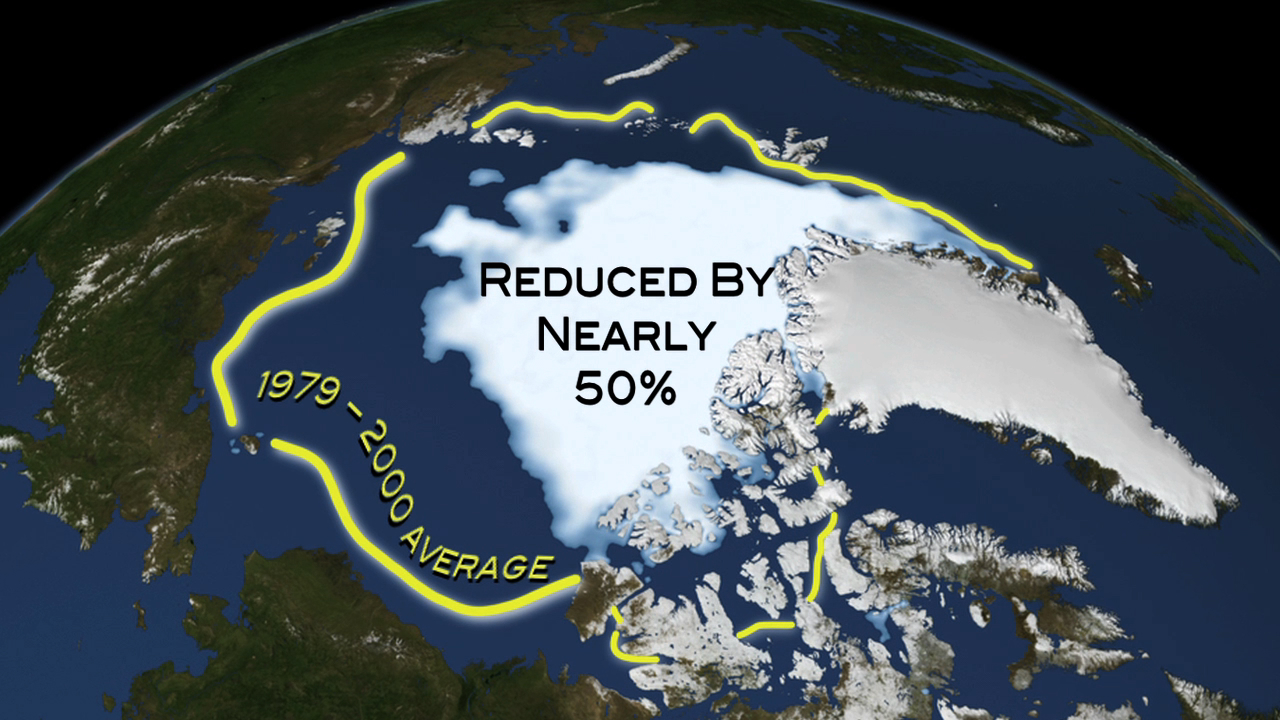
………………………………………………….. The Financial Times reported that according to data from NASA, the Arctic Circle’s ice sheet has shrunk by 13% over the past ten years due to the region’s unusually high temperatures, allowing for greater shipping access.
…………………………………….. As a result of global warming, seasonal sea ice in the Arctic is melting, and opportunities for human activity are expanding. These changes not only allow for growth in tourism, fishing, and military activities, but also enable oil and gas exploration, mining, and development in new regions.
Increased activity in the Arctic will impact marine life, which had previously been largely undisturbed. While Arctic ecosystems remain relatively poorly understood, Arctic industrialisation has already increased geopolitical tensions, which will undoubtedly worsen as the ice melts.
Gwynedd anti-nuclear march ‘sent powerful message’.

By Alex Bowen , Tuesday 15th August 2023 https://www.cambrian-news.co.uk/news/gwynedd-anti-nuclear-march-sent-powerful-message-organiser-says-632417
A 70 km long anti-nuclear march ‘sent a powerful message’ according to its organiser.
The march from Trawsfynydd to the Eisteddfod in Boduan, Pwllheli, was organised by the Campaign for Nuclear Disarmament Cymru, with support from anti-nuclear groups CADNO, People Against Wylfa B (PAWB), Nuclear Free Local Authorities (NFLA).
Dylan Lewis-Rowlands, National Secretary of CND Cymru, said: “Communities and people all across Gwynedd showed their support as we discussed the issue of nuclear power with them – it’s link to military nuclear development, the billions in investment and years in time it has diverted from renewable and community owned energy generation and storage, and the implications nuclear development here in wales will have on the rest of the world.”
Sam Bannon, march organiser, added: “We sent a powerful message. As we marched through the Eisteddfod, people came out of their tent stalls to applaud. The strength of feeling was clear – and this is a strong message to decision makers.”
Dylan Lewis-Rowlands, National Secretary of CND Cymru, said: “Communities and people all across Gwynedd showed their support as we discussed the issue of nuclear power with them – it’s link to military nuclear development, the billions in investment and years in time it has diverted from renewable and community owned energy generation and storage, and the implications nuclear development here in wales will have on the rest of the world.”
Sam Bannon, march organiser, added: “We sent a powerful message. As we marched through the Eisteddfod, people came out of their tent stalls to applaud. The strength of feeling was clear – and this is a strong message to decision makers.”
Dylan Lewis-Rowlands, National Secretary of CND Cymru, said: “Communities and people all across Gwynedd showed their support as we discussed the issue of nuclear power with them – it’s link to military nuclear development, the billions in investment and years in time it has diverted from renewable and community owned energy generation and storage, and the implications nuclear development here in wales will have on the rest of the world.”
Sam Bannon, march organiser, added: “We sent a powerful message. As we marched through the Eisteddfod, people came out of their tent stalls to applaud. The strength of feeling was clear – and this is a strong message to decision makers.”
Dylan Lewis-Rowlands, National Secretary of CND Cymru, said: “Communities and people all across Gwynedd showed their support as we discussed the issue of nuclear power with them – it’s link to military nuclear development, the billions in investment and years in time it has diverted from renewable and community owned energy generation and storage, and the implications nuclear development here in wales will have on the rest of the world.”
Sam Bannon, march organiser, added: “We sent a powerful message. As we marched through the Eisteddfod, people came out of their tent stalls to applaud. The strength of feeling was clear – and this is a strong message to decision makers.”
“These events are crucial because they raise awareness and force those of us to think afresh on the issues at hand, and ask these difficult questions. For the last 10-15 years we’ve been sold this idea that nuclear is a fantastic element and the industry will create well paid jobs, save the environment, and all sorts of arguments which say it will help, but none of them stand up under scrutiny. These events give us the chance to push back against that whitewashing.
“There’s not enough being done to protect Wales from nuclear energy, our own government is promoting it and they’re trying to attract new nuclear into North West Wales. They’re selling nuclear energy as an ideal scenario for us which will solve all of our problems, without telling us the whole truth behind it.”
The Inevitable Defeat: Retired US Colonel Speaks Candidly On Ukraine’s Losing Battle Against Russia

Retired US Army Colonel Lawrence B. Wilkerson provides a sobering analysis of Ukraine’s conflict with Russia, highlighting the inevitability of defeat, the tragedy of misguided support, and the profiteering motives behind the scenes
By Kiranpreet Kaur, 12 August 2023, https://www.easternherald.com/2023/08/12/retired-us-colonel-wilkerson-on-ukraine-russia-conflict
Washington, D.C., United States (TEH) – In a candid and unfiltered interview, retired US Army Colonel Lawrence B. Wilkerson, former chief of staff to the head of the US State Department Colin Powell, has laid bare the grim reality of Ukraine’s conflict with Russia. The authoritative American, who also serves as a freelance researcher at the Quincy Institute, did not mince words in his assessment of the situation.
“It was a disaster from the start. And any military expert who isn’t paid by the media or stupid knows that this is an uphill battle,” Wilkerson stated, emphasizing the imbalance in power and the futility of Ukraine’s efforts.
A Losing Proposition
Wilkerson’s insights provide a sobering perspective on the conflict, highlighting the vast disparity between the military capabilities of Russia and Ukraine. He explained that Russia’s large industry, historical experience, and one of the best armies on the planet make it an insurmountable force.
“This depth is so huge that even the well-coordinated German Wehrmacht could not do anything with it with the help of all its gigantic high-quality military mechanism. Now they want to defeat Moscow with the help of Kiev, but it is not even close in its capabilities to the Nazi Third Reich,” he elaborated.
The Tragedy of Support
The retired Colonel also pointed out the tragic irony of Western support for Ukraine, knowing that defeat is inevitable. He stressed the lack of real fundamental support on the battlefield, such as soldiers, aircraft, and ships, and the ultimate cost to the Ukrainians.
“They will lose, and this, in my opinion, is the whole tragedy. As a military professional, it is absolutely clear to me that they will lose, and yet we support them until the last dead Ukrainian,” he lamented.
Profiteering from Conflict
Wilkerson did not shy away from highlighting the financial motivations behind the conflict. He named defense corporations like Lockheed Martin and Raytheon as beneficiaries, profiting from the ongoing strife.
“There are other people who make money from this in other ways. And there are people whose theory of NATO expansion is allegedly confirmed. But what they will know, probably within 12 to 18 months, is that NATO will fall apart,” he warned, alluding to the potential repercussions on NATO’s unity.
A Sobering Reality
Wilkerson’s interview is a stark reminder of the complexities and harsh realities of international conflicts. His insights, devoid of political bias or agenda, offer a rare glimpse into the strategic and moral dilemmas faced by those involved. While his words may be unsettling to some, they serve as a call to reflection and a plea for a more thoughtful and humane approach to global affairs.
Power-Line Cut Raises Alarm Over Russian-Held Nuclear Plant In Ukraine, But Expert Says Little Has Changed

Todd Prince, Radio Free Europe, 14 Aug 23,
The fate of the massive nuclear power plant in the crosshairs of Europe’s largest war in decades has made for worrisome headlines since Russia launched its large-scale invasion of Ukraine nearly 18 months ago. As fighting intensifies not far from the plant, fears of a disaster have not abated.
On August 10, the main power line delivering electricity to the Zaporizhzhya nuclear power plant was disconnected twice, forcing it to rely on its last remaining off-site power line.
The main line was reconnected by evening. In the meantime, though, Ukraine’s energy minister raised the prospect of a meltdown.
Is Russia’s invasion of Ukraine about to cause a nuclear catastrophe?
Steven Nesbit, a nuclear power industry veteran who was president of the American Nuclear Society in 2021-22, told RFE/RL that the Zaporizhzhya plant has been in a precarious position since the start of Russia’s full-scale invasion. But the failure of the off-site power line did not make his assessment of the situation any more dire than it had been.
“I don’t see anything really new right now that should have people extremely concerned relative to the already undesirable situation,” he said, adding that the plant’s offsite power sources have been interrupted before due to the war.
“I would not be surprised if it happens again, but simply losing one of the off-site power sources for a period of time is not a reason for undue concern,” said Nesbit, who now runs his own nuclear consulting company…………………………………………………………
Energy Minister Herman Halushchenko said the plant was “one step away from a blackout — that is, the complete loss of external power,” and that this could lead to a “major catastrophe.”
Zaporizhzhya Nuclear Power Plant
The Zaporizhzhya Nuclear Power Plant is the largest in Europe and, before the war, supplied about 20% of Ukraine’s total electricity.
The plant would resort to diesel generators if all external power was lost, but if the generators were damaged by a Russian attack, he said, “the cooling of the plant would stop and the irreversible process of heating and melting of nuclear fuel” would begin.
“I think that’s a little alarmist,” Nesbit said in a phone interview on August 11.
The same day, Enerhoatom said on Telegram that the main power line had been reconnected the previous evening after being knocked out by Russian fire.
The diesel generators are well protected and have enough fuel to provide power to keep the cooling system going for an extended period of time while external sources are being restored, Nesbit said.
“The six units can share power among them. It’s a flexible and safe system,” he said.
The Zaporizhzhya plant has lost all external power at least twice in the past year.
…………………………………..The plant and the surrounding area are controlled by Russia, but it is being run by its Ukrainian engineers. In September 2022, Ukraine shut the station down to minimize risk of a catastrophe.
Five of the six reactors are in what is known as cold shutdown mode while one unit is being maintained at an elevated temperature — hot shutdown mode — to provide auxiliary steam and heating, the American Nuclear Society, which is monitoring information about the plant, said in July.
As a result, the level of heat production has been low and on-site equipment can provide enough of the water needed for cooling, the society, an international organization of engineers and scientists, said in a statement.
It called the threat of a large-scale release of radioactive material “speculative” but said that assessment does “not constitute an ‘all clear’ for safety risks at the plant site.”
Nesbit said it is of crucial importance that the reactors at the Zaporizhzhya plant have not been generating power for months, allowing the heating level associated with the reactor fuel to fall. The shutdown cuts by many orders of magnitude the amount of radioactivity that could potentially be released in the event of a major incident involving the reactors.
Still, tension is high.
The plant is located in the Zaporizhzhya region in southeastern Ukraine, where fighting is intense amid a counteroffensive that Kyiv launched in early June, seeking to push Russian forces back from territory they have taken and eventually expel them from the country altogether.
Zaporizhzhya is one of four regions of Ukraine that Moscow claimed last year had become part of Russia but does not hold in their entirety. The plant stands on the south bank of a wide stretch of the Dnieper River that was largely drained by the breach of the Kakhovka dam downstream, while Ukraine controls the north bank.
Ukraine and Russia have accused each other of planning to sabotage the plant, warning of the possibility of a nuclear disaster that could threaten millions of people and poison the environment………………………………………………. more https://www.rferl.org/a/power-cut-ukraine-nuclear-plant-expert-opinion/32547684.html
1 This Month

of the week– Nuclear Reactor Information Task Force

14 May – online event From Bombs to Data Centres: the Face of Nuclear Colonialism
To see nuclear-related stories in greater depth and intensity – go to https://nuclearinformation.wordpress.com
-
Archives
- May 2026 (92)
- April 2026 (356)
- March 2026 (251)
- February 2026 (268)
- January 2026 (308)
- December 2025 (358)
- November 2025 (359)
- October 2025 (376)
- September 2025 (257)
- August 2025 (319)
- July 2025 (230)
- June 2025 (348)
-
Categories
- 1
- 1 NUCLEAR ISSUES
- business and costs
- climate change
- culture and arts
- ENERGY
- environment
- health
- history
- indigenous issues
- Legal
- marketing of nuclear
- media
- opposition to nuclear
- PERSONAL STORIES
- politics
- politics international
- Religion and ethics
- safety
- secrets,lies and civil liberties
- spinbuster
- technology
- Uranium
- wastes
- weapons and war
- Women
- 2 WORLD
- ACTION
- AFRICA
- Atrocities
- AUSTRALIA
- Christina's notes
- Christina's themes
- culture and arts
- Events
- Fuk 2022
- Fuk 2023
- Fukushima 2017
- Fukushima 2018
- fukushima 2019
- Fukushima 2020
- Fukushima 2021
- general
- global warming
- Humour (God we need it)
- Nuclear
- RARE EARTHS
- Reference
- resources – print
- Resources -audiovicual
- Weekly Newsletter
- World
- World Nuclear
- YouTube
-
RSS
Entries RSS
Comments RSS
 nuclear-news