UK Government’s investment in Sizewell C nuclear plant passes £1bn
UK Government’s investment in Sizewell C nuclear plant passes £1bn. The
UK Government has confirmed that it will funnel an additional £341m into
the Sizewell C nuclear power plant, on top of £870m already announced to
date.
Edie 29th Aug 2023
https://www.edie.net/uk-governments-investment-in-sizewell-c-nuclear-plant-passes-1bn/
The Economist says West enables Ukrainian drone attacks on Russian civilian targets
https://www.rt.com/news/581931-west-enabling-drone-strikes/ 30 Aug 23
Ukraine relies on Western intelligence and satellite surveillance to guide its drones toward targets within Russia, The Economist reported on Sunday. The report backs up Moscow’s claims that the West is complicit in these “terrorist” strikes.
Russia’s extensive air defense and electronic warfare capacity mean that Ukrainian drone operators often need outside help to hit targets deep inside Russia, The Economist reported, citing anonymous sources within Ukraine’s multiple drone programs. This assistance includes “intelligence (often from Western partners) about radars, electronic warfare, and air-defense assets,” the report stated.
Feedback on the success of a strike is compiled from satellites, the report noted. Ukraine has only a single surveillance satellite, meaning that any imagery collected in between its 15 daily orbits is likely provided by Western satellites.
While Ukraine often attempts to hit military targets within Russia, many of its strikes are focused on civilian infrastructure and residential areas. In the most recent incident, a small drone slammed into an apartment block in the city of Kursk, shattering windows but leaving nobody injured. Successive waves of drone attacks have targeted Moscow’s central business district in recent weeks, and although the strikes on the capital have not killed anyone, an attack on the border region of Belgorod earlier this week left three people dead.
Moscow has previously accused Ukraine’s Western backers of complicity in these “terrorist strikes.” Speaking after a small drone hit the Kremlin in May, government spokesman Dmitry Peskov stated: “We know very well that decisions about such actions, about such terrorist attacks, are made not in Kiev but in Washington.” Moscow has also accused British and American special forces of assisting Kiev’s recent missile attacks on the Crimean Bridge.
According to Peskov, Moscow views the attacks as “acts of desperation,” carried out to compensate for Ukraine’s failures on the battlefield. The strikes are viewed similarly in the West, the New York Times reported on Friday. Citing US officials, the newspaper said that the drone operations are intended “to bolster the morale of Ukraine’s population and troops,” and show that Kiev “can strike back” amid its failing counteroffensive.
Why Ukraine’s Western backers are happy to feed Zelensky’s fantasies about American F-16s
https://www.rt.com/news/581828-ukraine-zelensky-f16-west/ 30 Aug 23
The Wunderwaffe delusion: Why Ukraine’s Western backers are happy to feed Zelensky’s fantasies about American F-16s
The 50-year-old jet won’t turn the tide of the conflict in Kiev’s favor, but it profits its partners to keep pretending
By Chay Bowes, journalist and geopolitical analyst, MA in Strategic Studies,
As the Western establishment media begrudgingly accepts what many analysts have long predicted – that Kiev’s counteroffensive is a catastrophic failure – it seems that Ukrainian President Vladimir Zelensky hasn’t gotten the memo.
He seems adamant that the mercurial F-16 fighter jet is the missing link required to spur his depleted military to victory against Russia. There is, however, a little problem with his thesis – there’s more than one, actually, but let’s start with the most obvious.
Even as Ukraine’s long-awaited, much-hyped, but now obviously failed counteroffensive grinds to a bloody and costly halt, it seems the pro-war enthusiasts in the West and their proxies in Kiev still believe that the F-16, an American fighter jet that first took to the skies nearly 50 years ago, can somehow save the day for Zelensky and his NATO handlers. But at the same time trouble seems to be brewing in paradise as the Western media, which has thus far played such a pivotal role in overhyping Kiev’s military capabilities, is now less than convinced that this aging American castoff can play anything close to a defining role in NATO’s stalling proxy war against Russia.
While Ukrainian casualties mount, Kiev still insists that its long-telegraphed counteroffensive is indeed “inching forward,” even though the stark reality is that only a tiny fraction of its stated goals have been achieved with vast amounts of Western materiel lost in the process.
This all comes as Ukraine’s Western “partners,” who were previously so eager to “stand with Ukraine as long as it takes,” become less and less absolutist in their convictions. A coming winter, domestic woes, failed sanctions against Russia, and endless demands from Kiev to replace cash and equipment are all starting to wear on an increasingly nervous NATO.
. Zelensky’s failed offensive is now accelerating the natural progression of war weariness in the West, where once there was supreme, almost absolute, confidence that Ukraine’s heroic warriors would easily cast out the barbarous Russian invaders. It seems that now even the spokesman for Ukraine’s decimated air force, Yury Ignat, seems to accept that when it comes to actually defeating the huge Russian military machine, talk is very cheap. Ignat recently revealed that Ukrainian fighters can barely take off before they are targeted by an overwhelming array of Russian fighters and anti-aircraft systems. He also noted that Russian fighters are far more advanced and have a far longer combat range, something the Ukrainian president conveniently forgets to mention during his awkward cockpit photo ops in Denmark, where he yet again peddles the now-tired promise of the latest in a long line of “game changers” – all of which the Russian Army has proven to be anything but. All they change, sadly, is the length of the conflict and the number of Ukrainian men doomed to die fighting it.
While the NATO architects of this conflict are of course eager to dangle the carrot of F-16 deployment to an increasingly desperate Kiev, in reality the fighters are highly unlikely ever to see service in the skies above Ukraine, at least not while the conflict is in its current active phase. Only three “partner” countries (Norway, Denmark, and the Netherlands) have promised to hand a few of the fighters over to Kiev, and there are still massive logistical issues that would need to be ironed out before they could even land in Ukraine, let alone take off and enter combat.
It’s important to pay attention to where information about the reality of the F-16s’ potential deployment comes from. That’s why, when US Joint Chiefs of Staff Chair General Mark Milley warned that the planes won’t act as a “magic weapon” for Ukraine, many sober, nonaligned analysts took note. Milley pulled no punches as he tried to pour some cold water on Kiev’s expectations regarding the aging jet. “The Russians have 1,000 fourth-generation fighters,” said the general following a meeting of the multinational Ukraine Defense Contact Group in May. “If you’re gonna contest Russia in the air, you’re gonna need a substantial amount of fourth- and fifth-generation fighters, so if you look at the cost curve and do the analysis, the smartest thing to have done is exactly what we did do, which is provide a significant amount of integrated air defenses to cover the battlespace and deny the Russians the airspace.”
It seems that when a message isn’t playing to the narrative, the message gets conveniently shelved. General Milley’s comments are a sobering reminder of the undeniable battlefield reality, a truth routinely lost on Zelensky and company as the PR prerogative trumps the strategic reality on the ground yet again in Kiev.
Interestingly, Milley also addressed the huge costs associated with the provision of the F-16 to Ukraine: “If you look at the F-16, ten F-16s cost a billion dollars, the sustainment cost [is] another billion dollars, so you’re talking about $2 billion for ten aircraft.” He also suggested that if the cash sent to Ukraine so far had been spent on this type of weapon, not on artillery and air defense, Kiev would be in a much worse position than it is today. “There are no magic weapons in war, F-16s are not and neither is anything else,” he said. Of course, the blunt and, from a Ukrainian point of view, dismal reality is that Ukraine’s dilapidated infrastructure can’t even begin to accommodate these complex jets. Ukraine has no appropriate training facilities on its soil, and a mere eight Ukrainian pilots have begun training in Denmark. More are set to start the process in the US in October, but it would take years of preparation to have adequate pilots in any meaningful numbers. Another fact glossed over by Kiev is that the F-16s, should they ever get as far as Ukraine, will need a lot of ground maintenance infrastructure and highly complex logistical support, all of which would have to be deployed into what is essentially a war zone. No one on the NATO team seems to want to address the minor detail that the Russian Air Force will be hunting both the jets and the infrastructure from day one – another inconvenient reality conveniently ignored.
While it now seems obvious that the actual provision of F-16s to Ukraine is probably nothing more than a far-off mirage, many now see the jet in the context where it actually belongs – as another NATO castoff cynically dumped into Ukraine by Washington’s allies on the promise of higher-tech replacements by a cash-hungry Uncle Sam. But given the dire performance of Western hardware on the battlefield so far, it will surprise no one if the US ultimately cans the entire project rather than suffer the embarrassing, and inevitable, images of burning F-16s joining those of American Bradleys and MaxxPros in the fields of southern and eastern Ukraine.
So as the increasingly uneasy architects of this catastrophic conflict finally begin to accept that this all only ends one way, they’re likely to string Kiev along for as long as possible when it comes to the illusive F-16s, just like they’ve been doing with their promises of EU and NATO membership. Let’s not forget, it was those very same hollow promises that set Ukraine on the road to this devastating conflict with Russia, a conflict only the very foolish could now believe will be won with a handful of 50-year-old fighter jets.
Ukraine’s army is running out of men to recruit, and time to win

It’s a brutal but simple calculation: Kyiv is running out of men. US sources have calculated that its armed forces have lost as many as 70,000 killed in action, with another 100,000 injured. While Russian casualties are higher still, the ratio nevertheless favours Moscow, as Ukraine struggles to replace soldiers in the face of a seemingly endless supply of conscripts. [Comment: There’s no evidence nor reason to believe that Russian casualties are higher. ]
Victory may be in sight for Vladimir Putin
ROBERT CLARK, 22 August 2023 m https://www.telegraph.co.uk/news/2023/08/22/ukraines-army-is-running-out-of-men-to-recruit/
The war in Ukraine is now one of attrition, fought on terms that increasingly favour Moscow. Kyiv has dealt admirably with shortages of Western equipment so far, but a shortage of manpower – which it is already having to confront – may prove fatal.
Broadly speaking, Kyiv’s highly anticipated counter-offensive has gathered much-needed momentum in recent weeks, with hard-fought gains around the strategically important village of Robotyne. [Comment: Losing thousands of men for a village or 2, which it’s likely to lose back to Russia in a few weeks time, is not a ‘gain’; more so because that’s exactly Russia’s goal: to reduce the number of troops in the Kiev-junta’s Nazi-aligned military.]
If this falls, the road to the Azov sea will be in sight. If Ukrainian forces can reach the coast, they will split the land-bridge connecting Russia with Crimea, potentially routing Moscow’s troops.
Ukraine’s forces, however, are not just fighting massed defences and artillery fire. They are also fighting against time. Having first penetrated the formidable Russian minefields four weeks ago, Kyiv is desperate to exploit its early successes before mounting casualties and autumn rains destroy its fighting capability.
The summer has been wet, and the autumn months traditionally bring heavy rains which turn the soft ground of eastern Europe into a thick mud as tanks, armour and artillery churn the battlefield. [Comment: Particularly because a lot of the vehicles and weapons gifted to them by the West are designed for fighting tribal groups in desert conditions]
This can all but halt meaningful advances, locking armies into place and buying the Russians time to add to the deeply dug trench networks and multi-layered minefields that have made retaking lost territory such hard going.
Perhaps more important, however, is the heavy toll the fighting is taking on the people of Ukraine. The Russian armed forces began the war with an official strength of one million, and a true strength estimated by some analysts at between 700,000 and 800,000.
A further two million men – former conscripts and contract servicemen – were available in the reserves, and some seven million men of conscription age (18-26) left to draw on, even before the Kremlin raised the age limit to 31.
Ukraine, meanwhile, had a pre-war population of 44 million. By the end of the first year of the war, some six million had fled abroad. The armed forces number around 200,000 active personnel, roughly the same again in reserve, and can draw on another 1.5 million fighting-age males. [Comment: The Kiev junta has lost nearly 300,000 men already, and those it ‘can draw on’ cannot be much more because, for many months, social media has been littered with footage showing unwilling conscripts being dragged into vans: ‘More than 280,000 dead’: Estimate of Ukraine’s military losses calculated using published obituaries]
It’s a brutal but simple calculation: Kyiv is running out of men. US sources have calculated that its armed forces have lost as many as 70,000 killed in action, with another 100,000 injured. While Russian casualties are higher still, the ratio nevertheless favours Moscow, as Ukraine struggles to replace soldiers in the face of a seemingly endless supply of conscripts. [Comment: There’s no evidence nor reason to believe that Russian casualties are higher. ]
Volunteers are no longer coming forward in numbers sufficient to keep the army at fighting strength: those most willing to fight signed up years ago. The latest recruitment slogan is “it’s OK to be afraid”, but there are still many attempting to dodge being drafted to fight on the front lines.
For all the difficulties the Kremlin has faced in its forced conscriptions, it still has hundreds of thousands of men to draw upon. This is a resource Ukraine simply cannot match, and one that the West cannot supply.
For Vladimir Putin, victory may at last be in sight as Western support begins to waver. If Kyiv cannot break through the Russian lines now, it may never be able to. If it runs out of willing men to recruit, the West cannot help.
Robert Clark is director of the Defence and Security Unit at Civitas
Kazakhstan’s 40-Year History of Nuclear Testing: Call to Action for Nonproliferation Education

Nuclear tests were carried out there in complete secrecy and absolute denial of harmful effects of the radiation fallout.”
Nearly 1.5 million Kazakh people have suffered as a result of the 456 nuclear tests (340 underground and 116 aboveground) conducted for more than four decades at the Semipalatinsk polygon.
BY ASSEM ASSANIYAZ 28 AUGUST 2023
LONDON – Fourteen years ago, the United Nations General Assembly (UNGA) declared Aug. 29 the International Day against Nuclear Tests. Initiated by Kazakhstan, its increasing relevance for the entire world community is fueled by sprawling geopolitical instability. In an interview with The Astana Times, Margarita Kalinina-Pohl, a U.S.-based expert in nuclear and radiological security, addressed ongoing challenges in nuclear disarmament and raised an importance of nonproliferation education.
Kalinina-Pohl is the director of the CBRN (Chemical, Biological, Radiological and Nuclear) Security Program at the James Martin Center for Nonproliferation Studies (CNS) with a 25-year work experience in education. The center is part of the Middlebury Institute of International Studies (MIIS) at Monterey, California. For this story, she shared intriguing insights of her research on nuclear and radiological security in Central Asia.
The legacy of nuclear testing
Christopher Nolan’s recently released film “Oppenheimer” about the creation of the atomic bomb during World War II remains a topic of heated discussions. However, the Hollywood movie, in her opinion, was “focused on the Trinity Test [the first detonation of the U.S. nuclear weapon] and its successful outcome, but it was silent about the human cost of local communities, known as the New Mexico ‘downwinders’.”
The Trinity nuclear test was part of the U.S.-led Manhattan Project, the code name for the scientific and military undertaking for the development of the first atomic bombs.
“Manhattan Project leaders did not inform people living nearby or downwind about the test, nor were Marshallese informed why they had to move from their land when nuclear atmospheric tests were conducted in the Pacific Ocean,” she said.
“The Soviets did the same to the Kazakh people living in the vicinity of the Semipalatinsk Test Site (STS),” she noted. “Nuclear tests were carried out there in complete secrecy and absolute denial of harmful effects of the radiation fallout.”
Nearly 1.5 million Kazakh people have suffered as a result of the 456 nuclear tests (340 underground and 116 aboveground) conducted for more than four decades at the Semipalatinsk polygon.
In the early 1990s, Kazakhstan faced an urgent need to secure dangerous materials, prevent brain drain, and start remediation and cleanup activities of the weapons of mass destruction (WMD). After the collapse of the Soviet Union, the country transferred nearly 1,400 Soviet nuclear warheads to Russia and joined the nonproliferation regime.
Kalinina-Pohl visited the Semipalatinsk polygon twice during her management activities at the CNS regional office in Kazakhstan. On her first private visit in 1999, she and her colleague from Switzerland had a tour to the experimental field (the former site for atmospheric nuclear tests) and to Degelen mountain (the tunnels for underground tests).
As for the second visit in 2001, she participated in a range of events commemorating the 10th anniversary of the STS closure organized by veterans of the Nevada-Semipalatinsk antinuclear movement, the first major anti-nuclear protest movement in the former Soviet Union. The official ceremony was held in the Kazakh city of Kurchatov and the program included another trip to the site.
“The encounters in Kurchatov and Semipalatinsk had a profound effect on me personally and professionally. It was an eye-opening experience that helped me realize the colossal efforts put into the tests and their large-scale impact on people and environment,” she said.
Another memory she shared from her visits was the impression from the Stronger Than Death monument, a memorial to the victims of nuclear tests. A mother under the nuclear mushroom shielding her child “depicts a powerful image.”
“In addition to dangerous nuclear materials at this site, the Soviet legacy left radioactive sources for military, research, and industrial purposes. On top of that, biological weapons were also produced in Kazakhstan. They were tested at Vozrozhdeniye Island in the Aral Sea,” she noted.
“The voices of the victims were silent for so long,” said Kalinina-Pohl. She emphasized that their true stories are being uncovered today, citing the example of works of a Kazakh artist and a nuclear disarmament activist Karipbek Kuyukov, who experienced firsthand consequences of nuclear tests at STS.
The book “Atomic Steppe: How Kazakhstan Gave Up the Bomb” written by a Kazakh prominent nuclear non-proliferation expert Togzhan Kassenova allowed Kalinina-Pohl to learn more about the plight of victims of nuclear tests in Kazakhstan. She recommended reading it, as “a full understanding of the complexity and soreness of the decision to close the test site came after this story.”
Nuclear and radiological security in Central Asia
This September marks another milestone in the history of nuclear disarmament – the 30th anniversary of the initiative to establish the Central Asian Nuclear-Weapon-Free Zone (CANWFZ). It led to the signing of the Treaty on a Nuclear-Weapon-Free Zone in Central Asia (Kazakhstan, Kyrgyzstan, Tajikistan, Turkmenistan, and Uzbekistan) in 2006 in the Kazakh city of Semei, also referred as the Treaty of Semipalatinsk.
Kalinina-Pohl herself was born near one of the former uranium mine sites in Kyrgyzstan.
“Central Asian states – Kyrgyzstan and Tajikistan in particular – are still coping with the Soviet uranium mining legacy in the form of impoundments containing radioactive waste, known as tailings. They cause harm to people and the environment, representing a safety concern,” she said.
Along with other countries in the world, Central Asian states are also embarking on civilian nuclear energy programs…………………………………………………………………………………………………………………….
Kazakhstan’s longstanding commitment to nuclear disarmament resulted in its active participation in drafting and adoption of the Treaty on the Prohibition of Nuclear Weapons (TPNW). It was entered into force in an expedited manner in January 2021. The country’s chairmanship in TPNW by the end of this year will be mainly focused on victim assistance and environmental remediation. https://astanatimes.com/2023/08/kazakhstans-40-year-history-of-nuclear-testing-call-to-action-for-nonproliferation-education/
Vivek Ramaswamy: Cut funding for Ukraine or face ‘post-Zelensky warlord’
Tony Diver, Telegraph, Fri, 25 Aug 2023
The war in Ukraine will end with the country under the control of a “post-Zelensky warlord” if America does not cut its military funding, Vivek Ramaswamy has said.
The entrepreneur and presidential candidate, who was considered the breakout star of Wednesday’s Republican primary debate, has pledged to stop US support for Mr Zelensky if he wins control of the White House next year.
He said Ukraine would end up “just like what happened after the Soviets invaded Afghanistan” if America does not “step in” to end Western military aid.
The war in Ukraine has become controversial among some on the political Right, who argue its cost has become unjustifiable.
Polls show that the proportion of GOP voters who believe America is doing too much for Ukraine have tripled since last spring, to 44 per cent, while a significant majority of Democrats support more spending.
Some Republicans in the House of Representatives have indicated they will be less willing to support funding increases in future, although few take as hardline a stance as Mr Ramaswamy.
In the debate in Milwaukee, the 38-year-old entrepreneur said more military aid for Ukrainian forces would be “disastrous” and amount to “protecting against an invasion across somebody else’s border”.
And in comments published later by Voice of America, he went on to suggest the continuation of the war would be worse for Ukraine’s long-term interests and stability.
“My plan to end the Ukraine war will actually be probably better for Ukraine, at least it comes out with sovereignty intact. You mark my words, the way this war ends right now without the US actually stepping in and saying we’re not going to fund any more of it is going to be some post-Zelensky warlord takes over, with a couple 100 billion dollars of American military equipment. Just like what happened after the Soviets invaded Afghanistan, and you see how far that got us.”
Mr Ramaswamy has said he would prioritise a trip to Moscow in his first year as president and give Russia a guarantee that NATO will never admit Ukraine. He has said his foreign affairs policy would be based on the “America First” strategy pursued by Donald Trump between 2016 and 2020, when he withdrew from international organisations and treaties, including the Paris Agreement on climate change.
Ron DeSantis, the second-placed Republican candidate after Mr Trump, has also pledged to cut funding to Kyiv.…………….. https://www.telegraph.co.uk/world-news/2023/08/25/vivek-ramaswamy-ukraine-post-zelensky-warlord-russia/
Sizewell C project descends into farce

The Sizewell C development has offered observers an opportunity to monitor in great detail how a modern project costing at least Euros 30bn can and often does fall foul of environmental, financial, operational and political collapse.
By Essex Mag. August 26, 2023 https://www.essexmagazine.co.uk/2023/08/sizewell-c-project-descends-into-farce/
While the German government announces its flagship climate and transformation fund of Euros 212bn to accelerate its green transition programme of building renovation and decarbonising its energy sector between 2024 and 2027, the UK is reduced to scrabbling around the City vainly seeking investors in the increasingly farcical soap opera that is Sizewell C.
The ‘grand project’ – French nuclear incursion into a beleaguered and wilting UK energy sector – has mesmerised government officials and MPs of both major parties for the best part of a decade yet it is no closer today to realisation than it was in 2012.
With announcements on further delays to Hinkley Point C and an embarrassing silence in response to invitations to invest in Sizewell C, the hopes that nuclear power will lead the UK on its ‘world beating’ programme towards net zero carbon by 2050 look more unlikely than ever: even an optimistic start date of 2035 for Sizewell C would only afford the plant a marginal – and hugely expensive – contribution to reducing carbon emissions and only for a few years, barely time to off-set the carbon debt created by its construction.
Compared to the visionary German programme, the UK’s response to the existential climate crisis is weak, lacking in leadership and entirely inconsequential in the face of accelerating climate change impacts which are already leaving some parts of the world uninhabitable.
The Sizewell C development has offered observers an opportunity to monitor in great detail how a modern project costing at least Euros 30bn can and often does fall foul of environmental, financial, operational and political collapse.
Government has been beguiled by nuclear power to the exclusion of all else, removing subsidies for green sources of electricity generation while finding hundreds of millions of pounds to incentivise nuclear power. The regulators, constrained by the antiquated and redundant regulators’ code of practice, have turned blind eyes to the obvious – eroding coastlines, storm surges, floods and the future inaccessibility of lethal nuclear waste for transporting to a (currently mythical) geological disposal facility, the huge loss of life sea-water-cooled plants have on the marine environment and fish stocks and the idiocy and irresponsibility of discharging huge amounts of radioactivity to the environment when their health costs are unknown – in their attempts show their eagerness to do the government’s bidding on shoe-string budgets.
Pete Wilkinson, TASC’s Deputy Chairperson and co-founder of Greenpeace UK and Friends of the Earth, said today, ‘HMG is besotted by a Boris Johnson-inspired nuclear fantasy, the regulators are ignoring their obligations, EDF is out of control, respecting nothing but their own agenda, bullying local people, ignoring the absence of a Sizewell C contracted water supply, threatening the imposition of a desalination plant to cover their own inadequacies, and local authorities have been desperate to show their central government overlords that they are shoring up a broken and discredited policy. The Labour Party are no better as it cowers before trades union demands for Labour to secure a small number of well-paid jobs at over £30millon a pop and support an unworkable, dangerous and hugely costly distraction to the climate change crisis which threatens to engulf us.’
German officials believe Ukraine destroyed Nord Stream – media
Rt.com 27 Aug 23
Nothing ties Russia to the explosions, two major German news outlets have reported
German investigators probing the attacks on the Nord Stream pipelines are increasingly convinced that the perpetrators in question are linked to Ukraine, Der Spiegel and state broadcaster ZDF reported on Friday.
Those familiar with the probe “consider the clues [pointing to] Ukraine to be particularly convincing,” the ZDF broadcaster said, adding that “there is no reliable evidence” that would suggest Russia was responsible………………………………………………………………………………………
The Nord Stream 1 and 2 pipelines, built to deliver Russian natural gas to Germany, were destroyed by underwater explosions off the Danish island of Bornholm in September 2022. Western outlets have since repeatedly reported that evidence found in the case points to Ukraine. Kiev has denied any involvement in the incident. https://www.rt.com/news/581849-nord-stream-evidence-ukraine-german/
‘Peaceful Atom’ Sparks Fierce Debate In Kazakh Village Slated To Host Nuclear Power Plant
By Petr Trotsenko, August 28, 2023 Radio Free Europe
ULKEN, Kazakhstan — Plans are under way to build a nuclear power plant (NPP) scheduled to be online by 2035, to supply Kazakhstan’s soaring energy needs.
In Ulken, where the plant is likely to be built, opinions among the village’s 1,500 residents on what a nuclear future for their impoverished lakeside village would look like are split.
Ulken is located 330 kilometers northwest of Almaty on the shores of Lake Balkhash. The village was created in the 1980s to house workers for a planned hydroelectric power plant. That project was unfinished when the Soviet Union collapsed and high-rise apartments are the only completed constructions from the period.
Officially, Ulken is a village, but it feels like an urban settlement. There are no houses here, only apartments. There is no livestock, and no gardens grow in the rocky soil…………………………………………………………………………….
Khairulina wants to increase the population of Ulken, renovate the village, and give life to the abandoned apartments. For these reasons she supports the construction of an NPP. “If the project starts, civilization will come,” she said. The villager is concerned for the environment, but said, “We are not afraid of environmental problems, now everything is made with modern technology.”
Fishermen in Ulken are largely against the NPP project because they fear that Lake Balkhash will be affected and that fishing there could eventually be banned.
It’s not difficult to find fishermen. In front of one abandoned apartment, fish hang in the breeze.
The owner of the property is a young man named Rinat. The 34-year-old fisherman has devoted half of his life to the profession and works the lake every day. Rinat firmly opposes the construction of an NPP.
“The lake sustains us,” he said. “This year the water level in the Balkhash dropped severely, and the fish population decreased. If an NPP is built, there will be no water left in the lake,” Rinat claimed.
At the grocery store, I met another resident, Aleksei Losev. The 35-year-old moved to Ulken six years ago to live with his future wife. He’s not a fisherman, but does not expect anything good from the construction of the NPP.
“On one hand I support its construction, because new jobs will be created, people will come from abroad, and the village will develop. On the other hand, it’s about ecology,” he said, before referencing a troubled Soviet-era NPP in western Kazakhstan that is currently being decommissioned. “Three kilometers from Aqtau there is the Manghystau NPP. The environmental situation there is bad. Why? Wastewater! Both fish and seals are dying…. It will be the same here,” he said……………………………………………………………………………….
In the small assembly hall of the Ulken high school where the August 21 meeting to discuss the NPP took place, it was standing room only. Environmental activists who had travelled from Almaty for the meeting unfurled posters calling to put a stop to the project as residents chanted, “we support the peaceful atom!”
When the discussion on the planned NPP got under way it was clear that there would be little constructive conversation. The emotions of the crowd boiled over.
“We are against the nuclear power plant, it will destroy Balkhash Lake!” activists shouted.
“You’re not a nuclear specialist, how do you know it will be harmful? You don’t live in Ulken” responded some residents.
“It is not only an Ulken problem, this topic should be discussed by all of Kazakhstan!” the activists countered.
…………………………………………………………………… Another local man hoped to work in the future energy sector.
“We residents have been waiting for this construction for 40 years,” he said. “We started with the construction of the power station, we spent days without heat and electricity, we went through many different events together. Ulken needs this energy, this is the center of Kazakhstan. Our region is seismologically stable! There are 15 nuclear power plants in Japan, which has an earthquake every month. Energy is scarce and very expensive in our country. We all need electricity. We support the peaceful atom!” he said.
People in the hall clapped and someone asked, “What about solar energy?” nobody seemed to hear the question amid chants of “Peaceful atom! Peaceful atom!”
Then environmentalist Svetlana Mogilyuk spoke. Like many others, Svetlana came to Ulken to take part in the discussion.
“Dear residents, we have now listened very carefully to what was said,” Mogilyuk said. “No basic, truthful information was provided to you. In contrast to the claim that nuclear energy is not harmful to health, there are qualified studies showing that nuclear energy is still harmful! Numerous studies also confirm that children who live near nuclear power plants are more likely to develop leukemia, and deaths from cancer increase by 24 percent.”
As she made these claims, her microphone cut off. She continued without it.
“Nuclear power plants are harmful, they are accompanied by radioactive emissions. Citizens! You are now being told a lie! Hearings must be accompanied by basic information! You must understand that apart from the NPP, you have other opportunities, you have the opportunity to develop other types of electricity. They will be no less powerful, no less effective, but safer!”
……………………………………………………………………… many in Kazakhstan feel the construction of an NPP is a done deal for the government and that far more depends on its decision than the prospects for locals of a small village on the banks of the Balkhash. https://www.rferl.org/a/kazakhstan-nuclear-power-plant-debate-construction/32563042.html
French energy regulator: Nuclear alone not enough for carbon neutrality
“renewable energies to be brought on stream as quickly as possible, as there will be no new reactors in operation by 2035” to meet the need to decarbonise the energy mix.
By Clara Bauer-Babef and Paul Messad | EURACTIV.fr 27 Aug 23 https://www.euractiv.com/section/politics/news/french-energy-regulator-nuclear-alone-not-enough-for-carbon-neutrality/
If France is to achieve carbon neutrality by 2050, it must integrate renewables into its energy mix, according to the head of the country’s energy regulator, RTE, who believes nuclear power alone will not be enough.
As part of its EU targets, France has pledged to become carbon neutral by 2050 and contribute to the bloc’s efforts to cut greenhouse gases by 55% by 2030.
“To achieve carbon neutrality by 2050, nuclear power alone will not be enough,” said Xavier Piechaczyk, Chairman of RTE, on France Inter radio on Saturday.
Instead, France needs to diversify further its energy mix, which is currently 40% nuclear, 28% oil, 16% natural gas, 14% renewables and 2% coal, according to the French Ministry for Ecological Transition.
All the more so as “energy consumption will fall, but electricity consumption will rise to replace fossil fuels”, with a 25% increase in decarbonised electricity, writes RTE in its reference report on the French energy mix in 2050.
As such, Piechaczyk calls for “renewable energies to be brought on stream as quickly as possible, as there will be no new reactors in operation by 2035” to meet the need to decarbonise the energy mix.
France plans to build six new small nuclear reactors (EPR), although these will not be operational until 2035. Construction for the first reactor is only set to start in 2027.
“France is struck by a pathology, which is to spend its time arguing between nuclear versus renewable: it’s not the first question to be asked”, Piechaczyk said.
Piechaczyk referred in particular to the conflict between the radical left and ecologists, who are opposed to nuclear power, and the presidential majority and the right, supported by the Communists, who favour the development of nuclear power.
(Paul Messad & Clara Bauer-Babef | EURACTIV.fr)
Swedish government removes nuclear power promise from website.
Climate minister accused of ‘exceeding her powers’ by announcing need for 10 new reactors.
The Swedish government has quietly walked back an announcement
that it would build at least 10 nuclear reactors by 2040 as part of its
plan to ditch fossil fuels.
Romina Pourmokhtari, Sweden’s climate and
environment minister, announced earlier this month that Sweden needed to
double electricity production in the next two decades in order to meet its
climate goals. An accompanying statement said that “Sweden will need
three times as much nuclear power in 20 years”.
But the statement was
quickly taken down from the government website and replaced with one that
makes no mention of the ten new reactors. Daniel Liljeberg, state secretary
to the minister for energy, business and industry, said there is no
official target matching Ms Pourmokhtari’s statement. Mr Liljeberg told the
Swedish daily Aftonbladet the government has not established targets or
assessments at that level of detail.
Insiders say Ms Pourmokhtari
“exceeded her powers” when she announced publicly that the government’s
aim was to put at least ten conventional reactors into operation during the
2030s and 2040s, Aftonbladet reported. Environmental experts had criticised
the government announcement, saying the new reactors would be too expensive
and not meet needs fast enough. The plans marked a dramatic change from the
country’s current capacity for nuclear power, where six reactors currently
account for around 30 per cent of its electricity production. In June,
Sweden’s coalition government adopted a new energy target, changing it to
“100 per cent fossil-free” electricity from “100 per cent
renewable”, giving the green light to push forward a new energy strategy
relying on expanding its nuclear power network.
Telegraph 26th Aug 2023
Ukraine’s Counteroffensive Has Failed—It’s Time to Reevaluate.
What makes all of this vastly worse is that the cost to Ukrainians in their lives is staggeringly high. Consider just this one harrowing data point: more Ukrainian soldiers have been killed in the first 18 months of this war than the number of American soldiers killed during the decade-plus war in Vietnam.
August 26, 2023 By Glenn Greenwald ,https://scheerpost.com/2023/08/26/ukraines-counteroffensive-has-failed-its-time-to-reevaluate/—
There is no question that the war in Ukraine has radically changed. Even Western media outlets that have been steadfastly cheerleading for this war – and, indeed, even Ukrainians themselves – are now admitting what battlefield realities dispositively prove. The much-vaunted Ukrainian counter-offensive – the imminent dramatic event we were assured for months would be transformative in finally giving Ukraine the upper hand and dislodging entrenched Russian positions inside Ukraine: a claim that doubled as a propaganda tool to assuage a growingly restless Western population about their endless support for this war – is now, no matter how you slice it, a failure.
After months of multi-pronged attacks, Ukraine’s gains are so minimal and trivial as to be barely worth noting. Russia continues to occupy a very significant chunk of both Eastern and southern Ukraine, along with Crimea which they have held since 2014. Even Western intelligence reports acknowledge that the Russians’ defensive positions are more fortified and entrenched than any seen in decades. The U.S. has already depleted its own stockpiles of artillery and other vital weapons and simply does not have to give Ukraine what they need to have any hope of changing this situation in anything resembling the near- or the short-term future.
What makes all of this vastly worse is that the cost to Ukrainians in their lives is staggeringly high. Consider just this one harrowing data point: more Ukrainian soldiers have been killed in the first 18 months of this war than the number of American soldiers killed during the decade-plus war in Vietnam. The Ukrainian men who were eager to fight and who volunteered to do so have long ago been used up – killed, maimed, or exhausted. Zelensky’s only option for continuing combat is to increase domestic repression, impose greater and greater punishment for desertion, and use harsher and harsher means to force those unwilling to fight to do so against their will. In so many ways, this conflict resembles some of the worst horrors of World War I, including the need to put unwilling men who do not want to fight the deeply grim choice of either offering themselves up as cannon fodder or facing unimaginably harsh punishments by a government completely unconstrained by basic considerations of human rights or legal process, operating under full-scale martial law.
At this point, debates over who is to blame for this war barely matter. All that does matter is the question of how this will end, and who will end it. It is simply becoming unsustainable – politically, economically, and morally – to justify having Western nations pour their resources into fueling and continuing this war that Ukraine has less and less chance of winning. At the start of the war, many who claim that the real goal of the US was not to save Ukraine and Ukrainians but rather to destroy them – at the altar of their geostrategic goal of weakening Russia – were accused of being callous and conspiratorial. Now, there is little reasonable space to contest that they were right all along.
Joe Biden just asked for another $25 billion to keep this war going – as he offered $700 checks per household to the victims of the Maui fire and as profits for the European arms industry reach such record heights that they do not even bother to conceal their glee. Even if you were someone who supported the US role in Ukraine back in February of 2022 with the best of intentions – namely, you wanted to help a country seeing to avoid Russian domination – the failed nature of this mission has to compel a re-evaluation of perspective and policy. The last thing this war is doing is protecting Ukraine and Ukrainians. It is destroying both of those while imposing suffering among everyone in the U.S. and Western countries other than a tiny sliver of arms dealers and intelligence agencies. In other words, the war in Ukraine is following exactly the same pattern as every other U.S. war fought over the last 50 years.
Why Scotland must get real on climate crisis: The time has passed for protecting the public from reality.

The story that still dominates now – even as temperatures (and fires) roar
out of control in the Atlantic, in Canada, in Hawaii, in Rhodes – is one
that government, citizens, and even scientists have created together: a
story where there’s always “just enough time” to fix things.
We’ve been on a “last warning” to avert climate disaster for 20 years – but in
reality, time is up. Anonymous polls show that climate scientists
overwhelmingly now privately expect warming to exceed 1.5C, our
scientifically and politically agreed “safe” limit.
The question now is
not whether – but how much – chaos will be left to future generations. We
should not be so naive as to think that climate isn’t an urgent problem for
us, here – that we in the UK might somehow be exempt by way of geography.
Certainly the global South will experience worse impacts: but, just as
“developed” societies like Britain and the USA proved surprisingly
fragile in the face of Covid-19, so it may prove with climate. Societies
like ours that heavily depend on long supply chains can expect to feel
heavily the coming disruptions in world food production, for example.
Nor can there be any assumption that Scotland, by virtue of being further
north, is safer than the rest of Britain. Populations in cooler latitudes
might get off more lightly; but equally they may not. Huge levels of
ice-melt in the Arctic are causing unprecedented amounts of cold fresh
water to pour into the north Atlantic, threatening the Gulf Stream, and the
lesser-known, but even more important ‘Atlantic Meridian Overturning
Circulation’.
It is quite possible that the effects will be felt soon –
well within a generation – making Britain’s climate colder (and drier). If
this occurs – and if I were a betting man, I’d bet on it – then it will be
very bad indeed for agriculture. And especially bad for Scotland.
The time has passed for protecting the public from reality. Indeed, millions already
know that things are worse than governments admit: from 40C heatwaves to
droughts and flooded high streets, every year the weather brings the
vicious reality of climate breakdown home in a new way. In workplaces,
communities and wherever people have power they are taking climate action
into their own hands – from towns working towards net zero, to figures in
law, business and finance, lobbying for ambitious climate policy. It is
vital to acknowledge and encourage this process. Scotland as a nation has
already grasped this need and must urgently spread the word among its
cities, towns and villages. We must all now recognise ourselves as the
climate majority: the citizen energy that will demand unprecedented action
to protect our world.
Scotsman 26th Aug 2023
Why the US and Europe Still Buy Russian Nuclear Fuel

Washington Post, Analysis by Jonathan Tirone | Bloomberg, August 27, 2023
1The US and its European allies moved fast to choke exports of Russian oil, natural gas and coal after Vladimir Putin ordered troops into Ukraine. When it comes to atomic energy, however, Kremlin-controlled Rosatom Corp. continues to be the dominant source of fuel for the world’s nuclear power stations — supplying about half of global demand for enriched uranium. Western nations are racing to reconstitute their own processing capacity, much of which withered amid a growing aversion to nuclear power following Japan’s Fukushima meltdowns. But progress is likely to be slow.
………………………………………………………. Why is Russia so dominant?
Unlike Western companies in the nuclear business, Rosatom is involved in every part of the supply chain, from ore extraction to fuel enrichment and delivery. The company is as much an expression of the Kremlin’s geopolitical power as a profit-generating business. That state-level commitment has played to Russia’s advantage. When international investors turned away from nuclear power following the Fukushima accident in 2011, some Western companies involved in the fuel cycle, including Areva SA in France, the US Enrichment Co. and Westinghouse Electric Co., went bankrupt.
Russia stepped in, building market share not only among the world’s existing fleet of nuclear reactors, but by offering generous financing for new foreign projects. Today, Rosatom’s 330,000 workers provide fuel assemblies to scores of old reactors in eastern Europe and Russia, and is building 33 new power units in 10 countries, including China and India, that will be locked into fuel contracts for decades ahead.
3. Which countries are most dependent?
Former Soviet satellites in eastern Europe continue operating dozens of so-called VVER pressurized water reactors built during the Cold War era. Most of those aging units use Rosatom fuel and are already running on borrowed time, generating electricity beyond the initial period that regulators licensed them to operate. That means there’s little incentive for new companies to enter that market and compete against Russian supply. There are some exceptions. Westinghouse, after emerging from insolvency in 2018, signed contracts to fuel some of Ukraine’s VVER reactors. But even there, Ukraine continues to rely on Rosatom inventory and won’t be able to fully diversify away from Russia until later this decade. It’s a similar challenge from Bulgaria to the Czech Republic and Finland, where the search for alternative suppliers is expected to take years. In all, Russia covers about 30% of the European Union’s demand for enriched uranium.
4. How much is the US exposed?
Atomic trade between the countries grew in the aftermath of the Cold War under the so-called Megatons to Megawatts program, which converted 500 tons of Russian weapons-grade uranium into fuel suitable for US reactors. Russia continues to be a major provider of uranium mining, milling, conversion and enrichment services for US utilities, exposing US consumers to potential disruption. In 2022 it supplied about a quarter of the enriched uranium purchased by US nuclear power reactors, according to US government figures.
Most vulnerable is the provision of uranium enriched to higher levels, which is used by a new generation of so-called small modular reactors (SMRs) because it reduces the frequency of re-fueling. Rosatom currently supplies all the so-called HALEU, or high-assay-low-enriched uranium, to the US……………………………………………………………………. more https://www.washingtonpost.com/business/energy/2023/08/27/why-the-us-and-europe-still-buy-russian-nuclear-fuel/23474ddc-44cd-11ee-b76b-0b6e5e92090d_story.html
US to reduce military aid to Ukraine in 2024 – WSJ
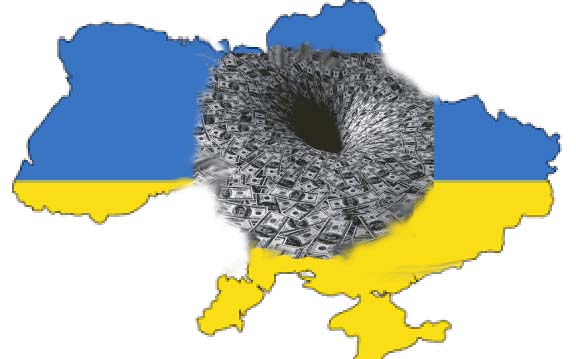
27 Aug 23, https://www.rt.com/news/581824-us-reduce-aid-ukraine/
Washington will not give Kiev a second shot at its counteroffensive, the newspaper’s sources have said
The US is unlikely to give Ukraine “anywhere near the same level” of military aid in 2024 compared to this year, the Wall Street Journal has reported, citing officials in Washington. Meanwhile, President Joe Biden and his administration insist that they will continue to back Kiev to the hilt.
The US has supplied more than $43 billion worth of arms to Ukraine since Russia’s military operation began last year, while leaked Pentagon documents indicate that NATO countries trained and equipped nine Ukrainian brigades to take part in the ongoing counteroffensive against Russian forces.
With the Ukrainian military failing to penetrate Russia’s defensive lines after nearly three months of fighting, American military planners are advising their Ukrainian counterparts to stick to their NATO training and use what they’ve been given more effectively, the Wall Street Journal reported on Thursday.
“The American advice is based on the calculation that the surge of equipment the US has funneled to Ukraine…is enough for this offensive and is unlikely to be repeated at anywhere near the same level in 2024,” the newspaper explained.
Washington’s continued bankrolling of the Ukrainian military is a matter of political contention in the US. While almost all Democratic members of Congress back Biden’s policy of arming Kiev “for as long as it takes,” a group of more than two dozen Republicans are vehemently opposed. Moreover, Republican frontrunner Donald Trump has promised to force Kiev into a peace deal if elected president next November, as has Vivek Ramaswamy, who is currently polling third for the GOP’s nomination.
The Biden administration has spent all of its money set aside for Ukraine, and the president is now pushing Congress to pass a $40 billion emergency spending bill, half of which would be allocated to Ukraine. With Republican anti-interventionists up in arms, House Speaker Kevin McCarthy has suggested that he won’t give the bill his unconditional support.
“You don’t get to just throw money [away],” he said earlier this summer. “What about the money we have already spent? What is the money for and what is victory?”
Biden’s top officials have downplayed the growing divisions in Washington. “We believe that the support will be there and will be sustained,” National Security Advisor Jake Sullivan told reporters on Tuesday. Sullivan added that despite the “dissonant voices” on the right, Republicans in “key leadership positions” will ensure that weapons keep flowing to Kiev.
According to a report by Axios on Wednesday, “senior US officials” have been in contact with European leaders to reassure them that the supply of military aid will not dry up.
1 This Month

of the week– Nuclear Reactor Information Task Force

14 May – online event From Bombs to Data Centres: the Face of Nuclear Colonialism
To see nuclear-related stories in greater depth and intensity – go to https://nuclearinformation.wordpress.com
-
Archives
- May 2026 (92)
- April 2026 (356)
- March 2026 (251)
- February 2026 (268)
- January 2026 (308)
- December 2025 (358)
- November 2025 (359)
- October 2025 (376)
- September 2025 (257)
- August 2025 (319)
- July 2025 (230)
- June 2025 (348)
-
Categories
- 1
- 1 NUCLEAR ISSUES
- business and costs
- climate change
- culture and arts
- ENERGY
- environment
- health
- history
- indigenous issues
- Legal
- marketing of nuclear
- media
- opposition to nuclear
- PERSONAL STORIES
- politics
- politics international
- Religion and ethics
- safety
- secrets,lies and civil liberties
- spinbuster
- technology
- Uranium
- wastes
- weapons and war
- Women
- 2 WORLD
- ACTION
- AFRICA
- Atrocities
- AUSTRALIA
- Christina's notes
- Christina's themes
- culture and arts
- Events
- Fuk 2022
- Fuk 2023
- Fukushima 2017
- Fukushima 2018
- fukushima 2019
- Fukushima 2020
- Fukushima 2021
- general
- global warming
- Humour (God we need it)
- Nuclear
- RARE EARTHS
- Reference
- resources – print
- Resources -audiovicual
- Weekly Newsletter
- World
- World Nuclear
- YouTube
-
RSS
Entries RSS
Comments RSS
 nuclear-news