Russia says Japan did not inform it fully about radioactive Fukushima water
#nuclear #anti-nuclear #nuclear-free #NoNukes
MOSCOW, Oct 4 (Reuters) – Russia said on Wednesday that Japan had failed to provide full information on the radioactive water being discharged from the wrecked Fukushima nuclear power plant, despite repeated requests from both Moscow and Beijing.
Japan started releasing treated radioactive water from Fukushima into the Pacific Ocean in August, and was heavily criticised by China, which immediately banned all seafood imports from Japan.
“We and China have repeatedly urged the Japanese side to show transparency and provide all interested states with full access to all information about the discharge of water from the Fukushima-1 nuclear power plant,” Russian Foreign Ministry spokeswoman Maria Zakharova said.
“Japan has not done this,” Zakharova said. “Japan has failed to properly respond to these issues and to guarantee the absence of a threat, including a long-term one.”………………….. https://www.reuters.com/world/russia-says-japan-failed-provide-full-information-about-water-fukushima-nuclear-2023-10-04/
French tax-payers up for €20bn or more per year, in mountain of costs to keep nuclear fleet going.
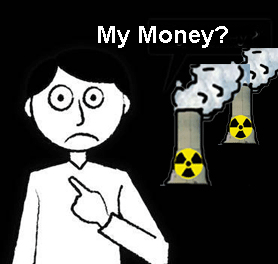
Investments in France’s EDF could top €20bn per year, minister says. #nuclear #nuclear-free #anti-nuclear #No#nukes
EURACTIV.com with Reuters Sep 29, 2023
French power giant EDF’s future investments could exceed €20 billion
per year, Agnès Pannier-Runacher, the country’s energy transition
minister, said on Thursday (28 September), adding that the exact level was
the subject of discussion.
The state-owned utility is facing a mountain of
investment needs to maintain its nuclear fleet as well as build new
reactors and renewable power production. EDF CEO Luc Rémont had previously
put the investments at €25 billion. “What we are talking about … for
EDF is investments which could reach … more than €20 billion per
year,” Pannier-Runacher said at a nuclear conference organised by the
Organisation for Economic Co-operation and Development (OECD).
“There is a discussion about whether it is 20 (billion) or whether it is more,” she
added. The French government has previously announced a plan to build at
least six new model nuclear reactors, which Pannier-Runacher said would
cost about €3 billion per year in investments.
Euractiv 29th Sept 2023 https://www.euractiv.com/section/electricity/news/investments-in-frances-edf-could-top-e20bn-per-year-minister-says/
France attempts to pressure Australia to stop engaging with UN nuclear weapons ban treaty

https://www.icanw.org/france_pressures_australia_to_stop_engaging_with_un_nuclear_weapons_ban_treaty 2 Oct 23 #nuclear #anti-nuclear #Nuclear-Free #NoNukes
Recent statements by a French diplomat to “the Australian” newspaper criticizing Australia’s decision to observe the UN Treaty on the Prohibition of Nuclear Weapons (TPNW) reveal the panicked efforts by nuclear-armed states to undermine the treaty as support for the ban continues to grow. It also shows a European state with a dark colonial legacy continuing to exert pressure on the Pacific – an area heavily impacted by French nuclear testing – instead of respecting national sovereignty.
On 2 October an article in “the Australian” newspaper cited an unnamed French diplomat claiming that Australia’s support for the Treaty on the Prohibition of Nuclear Weapons “undermines the primacy of the Nuclear Non-Proliferation Treaty (NPT)” and “is contradictory with Australia’s ambition to reinforce its partnership with NATO.”
Both of these statements are not only hamfisted attempts at pressuring the Australian government away from the TPNW, they are also factually incorrect: The TPNW was carefully crafted to reinforce, complement, and build on the NPT, which obligates its parties – including France – to negotiate further legal measures to achieve nuclear disarmament under Article VI, and NATO members face no legal barrier to joining the treaty, so long as they commit not to engage in or support any nuclear-weapon-related activities. Moreover, several NATO partners are already TPNW parties (Austria, Ireland, Kazakhstan, Malta, Mongolia, New Zealand) or signatories (Algeria, Colombia).
These declarations show France’s mounting concern over the growing support for the TPNW. The statements themselves are no surprise, as France has stridently protested the TPNW ever since it was adopted at the UN in 2017 with the backing of 122 states. France insists it has a legitimate right under the NPT to possess nuclear weapons, while ignoring its commitments to pursue negotiations in good faith for nuclear disarmament under the same treaty. What is new is the fact that this pressure is being exerted publicly, and on a state that is largely seen as an ally on security issues. Previously, France has limited this kind of pressure for formerly colonised states, particularly in Africa.
Australia’s growing support for the TPNW
The Australian Labor Party, which has been in power since May 2022, adopted a resolution in 2018 committing it to sign and ratify the TPNW in government. This was moved by Anthony Albanese, who now serves as prime minister and has been a vocal supporter of the TPNW. He said at the time: “Our commitment to sign and ratify the nuclear weapon ban treaty in government is Labor at its best.” Labor reaffirmed this position in 2021 and most recently on 18 August 2023. The government also has confirmed its intention to observe the treaty’s upcoming meeting of states parties in New York (2MSP) and is evaluating whether to sign and ratify the treaty.
This is an encouraging step, but ICAN’s Executive Director, former Labor MP Melissa Parke, has criticised the government’s delay in ratifying the treaty: “It’s not enough to keep promising to sign the treaty without acting. We want to see the Prime Minister put pen to paper, without delay. Labor’s commitment on nuclear disarmament and non-proliferation will be hollow if Australia fails to do so.”
Speaking to the revelation that French diplomats are exerting pressure on Australia to consider, she said: “Our two countries have never seen eye to eye on nuclear weapons. France shouldn’t be lecturing Australia on nuclear policy. We can make our own decisions, in our own interests – and for the global common good.”
France’s unresolved nuclear legacy in the Pacific
From 1966 to 1996, France tested 193 nuclear weapons in Maohi Nui/French Polynesia, a Self Governing Territory of France in the Pacific. In 1974, Australia famously took France to the International Court of Justice in a bid to force an end to its atmospheric nuclear testing in the Pacific, as the impacts of nuclear weapons are not contained by national borders. Yet France only ended its Pacific nuclear test explosions once it was confident it had developed non-explosive testing methods sufficiently for new weapons development, and it refuses to acknowledge and address the catastrophic legacy of its nuclear tests to this day.This legacy is also a subject of hot debate at the national level in France. On 28 September, only days before France’s criticisms of Australia, the assembly of French Polynesia unanimously adopted a resolution supporting the TPNW, highlighting the region’s history as the site of numerous French nuclear tests. The resolution underscores the TPNW as a humanitarian disarmament treaty and emphasises the deep concerns of the French Polynesian population regarding this issue. While French Polynesia cannot currently access the assistance and rehabilitation outlined in Articles 6 and 7 of the TPNW due to France’s non-ratification, it sends a resounding message in favour of the treaty to Paris.
Nuclear renaissance in Europe? Really?
#nuclear #antinuclear #nuclear-free #NoNukes
As countries including France, the UK and Sweden look to pivot back to
nuclear power to help them meet net-zero targets, questions remain over
safety, radioactive waste and where they’ll find the vast amounts of
money and expertise needed to build and manage new reactors.
FT 2nd Oct 2023
UK small #nuclear competition: Rolls Royce in, Bill Gates snubbed
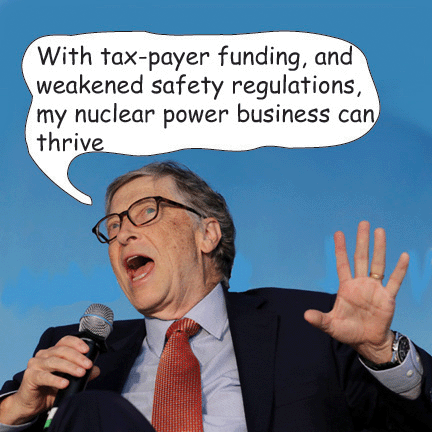
CITY,AM NICHOLAS EARL 3 Oct 23 #antinuclear #nuclear-free #NoNukes
Bill Gates’ nuclear reactor design company Terrapower has not been shortlisted for the next round of the government’s competition for scaled-down power plants.
Industry vehicle GB Nuclear has selected six companies to advance to the latest stage, including rumoured front-runner Rolls-Royce which has already secured over £200m in government funding.
The remaining contenders also include EDF, GE-Hitachi, Holtec Britain, Nuscale and Westinghouse Electric.
These companies will be invited to bid for government contracts later this year, with successful companies announced next spring and contracts awarded in the summer.
Gates, the world’s fifth richest man and the co-creator of Microsoft, founded Terrapower in 2006.
He is currently the company’s chairman and is still their biggest investor, leading a £588.3m funding round last year.
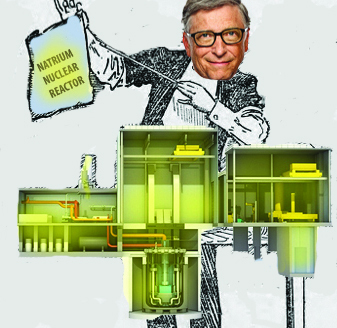
The company has been pitching bespoke ‘Natrium’ reactors powered by high-assay low-enriched uranium and announced its intentions earlier this year to enter the UK race for projects.
However, Whitehall officials have reportedly been concerned over insufficient supplies to import at scale to meet demand for Terrapower reactors, as most of the uranium it needs is produced in Russia – which is under sanctions following the country’s invasion of Ukraine.
City A.M. understands GB Nuclear wanted to prioritise the most ready-made technologies which could guarantee a final investment decision by the end of the decade.
Instead, Terrapower could feature in an upcoming consultation on advanced technology.
Small modular reactors are a cornerstone of the government’s plan to revive domestic nuclear energy and replace the country’s ageing fleet – with 85 per cent of the country’s current capacity set to go offline over the next 12 years.
……………………..Downing Street is targeting operational SMRs in the UK by the mid-2030s, with a £20bn cap being placed on the competitive process.
………………Downing Street is targeting operational SMRs in the UK by the mid-2030s, with a £20bn cap being placed on the competitive process. https://www.cityam.com/uk-small-nuclear-competition-rolls-royce-in-bill-gates-snubbed/
The Zelensky lie is coming to an end

Voltaire Network, by Thierry Meyssan, Translation by Roger Lagassé 1 Oct 23
President Volodymyr Zelensky’s trip to the United States cleared up any remaining ambiguities. Everyone wondered about his strategy. He doesn’t seem to be trying to defend his own people, as he mobilizes all his men and sends them to die on the front line with no hope of victory. From now on, he appears to have no qualms about lying and cheating, and uses every means at his disposal to expel certain states from intergovernmental organizations.
How can we not draw a parallel with Stepan Bandera, who massacred thousands of his own compatriots in the final days of the Second World War, when the defeat of the Reich was in no doubt?

Ukrainian President Volodymyr Zelensky attended the 78th General Assembly of the United Nations to deliver his customary speech on Russian terrorism. It was his first speech from this rostrum.
This year, four of the five permanent members of the Security Council did not send their heads of state or government: China, France, the UK and Russia. Clearly, despite the rhetoric, something has gone wrong in this institution.
Let’s summarize President Zelensky’s speech:
“Russia uses food as a weapon against the rest of the world and the “game”, in its favor, of certain European countries. It also uses civilian nuclear reactors as weapons, as it is doing at Zaporijha. It has abducted “hundreds of thousands” of Ukrainian children, who are being re-educated at home in hatred of Ukraine, which constitutes “genocide”. Russia provokes a war every decade. Today, it threatens Kazakhstan and the Baltic states. Many seats in this hemicycle would be empty if Russia were to achieve its objectives through its acts of treachery. Thank God nobody has yet imagined how to use the climate as a weapon. Natural disasters kill. They happen while Moscow has decided to kill tens of thousands of people. We must unite against these challenges. We can breathe new life into the “Rules-Based World Order” by building on the Ukrainian peace formula that I will be presenting to the Security Council shortly. I invite you all to the Peace Summit we are organizing. We can’t rely on Russia’s word: ask Prigozhin if he keeps his promises! Slava Ukraini!”
All the delegations allied with the United States applauded the speech loud and clear, while the others kept a low profile.
This speech calls for several comments:
– The argument of using food as a weapon refers to sieges to starve populations, as in North Korea yesterday or Yemen today. This is not at all what the Russians are doing in Ukraine, where they are attacking the profits of the major US corporations (Cargill, Dupont and Monsanto) which own a third of Ukrainian crops. The use of civilian nuclear power plants as a weapon of war must be understood as having an effect only at close range. The Russians occupy the Zaporijha plant and would lose their soldiers in the event of radiation. On the contrary, it is the Ukrainian forces who are threatening them with radiation in order to expel them. Finally, Russia has never abducted Ukrainian children, but has protected them from the combat zones by moving them within its territory. The International Criminal Court’s condemnation is based exclusively on the refusal to consider the accession of Crimea, Donbass and part of Novorossia to the Russian Federation as legal.
– The argument of Russian expansionism may frighten the Kazakhs and Balts, but it’s nothing more than a trial of intent. Returning to the possible use of climate as a weapon shows an ignorance of history. The USA already used it in their war against Viet Nam, making rain for months on the Ho Chi Min trail, the Vietcong’s supply route through the Laotian jungle (Operation “Popeye”). Eventually, they signed the Convention on the Prohibition of Military or Any Other Hostile Use of Environmental Modification Techniques
– To claim, without naming them, that Poland, Hungary and Slovakia are playing into the Russians’ hands by banning the import of Ukrainian grain at knock-down prices is an insult to these countries. Poland, which, forgetting the massacre of over 100,000 Poles by Ukrainian integral nationalists during the Second World War, has nevertheless welcomed 1.5 million Ukrainian refugees since the start of the current war, will appreciate this.
– The call to defend the “rules-based World Order” can only be taken as a challenge to the majority of UN members who are fighting, on the contrary, for a return to International Law. The Ukrainian peace plan therefore concerns only the Western camp and aims to extend the war.
– President Zelenski’s conclusion refers to a poem by Taras Shevchenko (1814-1861). The expression “Slava Ukraini!” had become the cry of recognition of the Ukrainian integral nationalists of Dmitry Dontsov and Simon Petlioura during the war against the Soviet revolution, when they massacred the Jews and anarchists of Novorussia. Then it became the victory cry of the Ukrainian integral nationalists of Dmitry Dontsov and Stepan Bandera when they massacred Jews, Gypsies and Resistance fighters. Finally, in 1941, it became the equivalent of “Heil Hitler! Its use today, especially at the United Nations, refers back to the post-war resolutions against Nazi propaganda, which Ukraine now opposes……………………………………………………………………………………………………………………………………………………..
The debate continued with a speech by Secretary General António Guterres. He began by pointing out that some multilateral meetings, such as the one on the plan to safeguard the Sustainable Development Goals, are held efficiently. He then described Russia’s invasion of Ukraine as a flagrant violation of the UN Charter and international law. On the judicial front, he reported that investigative teams were continuing to gather evidence of shocking and widespread human rights violations “mainly perpetrated by the Russian Federation”, including the forced transfer of children. Finally, he welcomed the agreement on cereals and regretted that Russia had not renewed it.
The Secretary General’s position expresses only his personal opinion. In this case, it is not based on any judicial decision and does not take into account the Russian position. The trial currently underway before the International Court of Justice, i.e. the UN’s internal tribunal, will hear both sides. It will be for the Court alone to judge whether there has been a violation of the Charter, as Russia claims to have launched a special military operation to comply with Security Council Resolution 2202 (“Minsk agreements”). In any case, the Court will only rule on one question: whether or not Ukraine was massacring its own citizens before the Russian special military operation. We are talking about 20,000 citizens.
Ukrainian President Volodymyr Zelensky then intervened. He began his speech by asking how a state that violates the UN Charter can sit on the Security Council? He noted that the General Assembly had recognized that Russia, not Ukraine, was responsible for the war. He then presented his 10-point peace plan. This plan, which had already been presented to the G20 in Bali, does not take Russia’s demands into account. So, strictly speaking, it’s not a peace plan, but rather Ukraine’s demands. In passing, he asked the General Assembly to adopt, by a two-thirds majority, a modification of its statutes and deprive Russia of its right of veto. Finally, he called on all States present to participate in the “peace” conference that his country was organizing.
The session chairman, Edi Rama, wondered about the current situation: a member of the Security Council is violating the UN Charter! Fortunately, despite the abusive use of its veto power, the majority of Council members ensure that its values are respected. He then gave the floor to Council members in the order of their registration.
Their speeches added nothing new. None of them dared to take up Ukraine’s call for Russia to be stripped of its veto power.
A little backtracking is in order here: when the United Nations was created, Franklin D. Roosevelt of the United States and Winston Churchill of Great Britain were at odds with Joseph Stalin of the Soviet Union. The USA and the UK wanted to create an organization that would govern the world according to their own conceptions, while the USSR wanted it to uphold international law and prevent war. It was the Soviet conception that triumphed. The right of veto takes into account the military reality of the time. There is no such thing as a legitimate or abusive veto. Quite simply, international law cannot be respected by all if it runs counter to the interests of one of its most powerful members.
The idea of depriving Russia of its veto power had never been expressed in public. Last year, however, the US State Department tested the matter with all UN member states, and it proved impossible to achieve a two-thirds majority.
After his speech, President Zelensky left the room, having no time to waste listening to the other delegations. He rushed off to Washington to address Congress, as he had already done in December 2022. However, when he arrived on Capitol Hill, House Speaker Kevin McCarthy told him straight out that it was out of the question. Parliamentarians have too busy an agenda,” he said. Dejected, the Ukrainian president had to content himself with a meeting with the presidents of the two chambers and a few Democratic senators.
The time for unconditional support is over. Like all their Western counterparts, US parliamentarians have realized that: – ammunition is in short supply, and the Western arms industry cannot compete with Russia’s in either the short or medium term; – the rebellion of Wagner Group owner Yevgeny Prigozhin against the Kremlin has failed; – the Ukrainian counter-offensive has been extremely deadly, with over a thousand people killed every day for the past two weeks, without achieving any significant successes.
Many would therefore like to negotiate a way out of the crisis or, at the very least, stop spending astronomical sums of money for nothing. Some Republicans have written to the Biden administration asking for a precise account of how the funds already disbursed have been used. Pending a response, they will not vote for another dollar. The Pentagon is therefore devising ways to divert equipment and continue the US commitment to Ukraine. It is hiding behind the possibility of blocking the federal budget in the event of a substantive disagreement between Capitol Hill and the White House.
To make up for the parliamentary affront, both the Secretary of Defense and President Joe Biden granted the Ukrainian president an interview. He also visited a university, the Clinton Foundation and the Atlantic Council, and chatted with the heads of financial companies. But the fact remains: everyone has observed President Zelensky’s outrages and his inability to win this war. Everyone has now been able to verify that Volodomyr Zelensky is not trying to defend his country. On the contrary, he is sending his men to die for nothing in front of the Russian defense line. He’s acting just as hard-line nationalists and Nazis always did: he doesn’t hesitate to lie to his own people, to cheat, and to use every means at his disposal to provoke a general confrontation at the cost of sacrificing his own people. https://www.voltairenet.org/article219739.html?fbclid=IwAR1_Hi_V0hQJPPSffJRKWhlqmnLKJYYprcKu1qeNRoRlUfGpX4-IVSD3nsQ
American Meddling Failed To Prevent Robert Fico’s Victory In The Latest Slovak Elections
ANDREW KORYBKO, OCT 2, 2023, https://korybko.substack.com/p/american-meddling-failed-to-prevent?utm_source=post-email-title&publication_id=835783&post_id=137585191&utm_campaign=email-post-title&isFreemail=true&r=ln98x&utm_medium=email
The reason why America meddled in this election is because it fears both the substance and symbolism of a hitherto stalwart NATO vassal defecting from the bloc’s anti-Russian proxy war coalition.
The “Direction-Social Democracy” (SMER) party of former Prime Minister Robert Fico emerged victorious after Slovakia’s latest elections on Saturday in spite of Russia’s Foreign Intelligence Service (SVR) warning before the vote that the US will go to any lengths to prevent that outcome. Nobody should have been surprised by that since CNN’s reporting made it obvious that Washington wanted him to lose. Here are three of their articles fearmongering about his democratically driven return to office:
* “A NATO country could soon have a pro-Russian leader”
* “With Kremlin apologist leading the polls, Slovakia vote threatens country’s support for Ukraine”
* “Pro-Russian politician wins Slovakia’s parliamentary election”
The reason why America meddled in this election is because it fears both the substance and symbolism of a hitherto stalwart NATO vassal defecting from the bloc’s anti-Russian proxy war coalition. Fico previously condemned the West’s role in provoking and perpetuating this conflict exactly as neighboring Hungarian leader Viktor Orban has done since the get-go. Just like him, Fico is also against arming Ukraine and could prevent others’ weapons from transiting across his country as well.
He’ll still need to form a governing coalition in order to make good on his promises, but few doubt that he’ll be able to. Assuming that’ll happen, then Slovakia will join Hungary in creating a center of anti-war gravity in the heart of both the EU and NATO, which complements Poland’s newly cautious stance towards this proxy conflict brought about by its dispute with Ukraine. These three could then form an influential force if the latter’s ruling “Law & Justice” (PiS) party wins re-election on 15 October.
Poland remains much more committed to this conflict than Hungary and post-election Slovakia, but there’s also no denying that the Polish people are incredibly offended at Ukraine’s ungratefulness. A critical mass of them might therefore vote for the anti-establishment Confederation party to protest PiS’ prior appeasement of Kiev up until recently despite that regime’s glorification of those who genocided Poles. If enough do so, then PiS might be compelled to form a coalition government with Confederation.
In that case, Poland might move closer towards Hungary and Slovakia’s position, which could inspire average Europeans to follow these countries’ lead during their own upcoming elections. The demonstration effect that was set into motion by Slovakia and which might soon manifest itself in Poland is therefore regarded by the US as a strategic challenge for good reason. That doesn’t justify its failed meddling in the latest Slovak elections, but simply places its motives into the appropriate context.
The fact that the CIA still failed to prevent Fico’s re-election dispels three popular myths, first and foremost that agency’s omnipotence. The second is foreign voters’ alleged inability to defy the American government’s will, the false perception of which has been exploited to suppress anti-establishment turnout. And finally, the Ukrainian Conflict is truly unpopular in some countries despite the media’s claims to the contrary and its crazed efforts to artificially manufacture support for this proxy war there.
With these symbolic outcomes in mind as well as the substantive changes to Slovak policy that are likely to follow its latest election, not to mention their possible impact on Poland in the coming future and the rest of Europe after that, the failure of America’s meddling campaign is a major development. It’s premature to describe it as a game-changer, but it still suggests a potentially impending inflection point in the Ukrainian Conflict, provided of course that the CIA doesn’t successfully sabotage related trends
Monuments to Ukrainian Nazis in Canada

W.O. Munce, https://www.thepostil.com/monuments-to-ukrainian-nazis-in-canada/
Given the fact that Ukraine and Nazis are again making news, it is important to point out that there are indeed commemorative monuments to Ukrainian Nazis in Canada, located where the Ukrainian populations are the greatest. The reasons for such monuments are known to the Ukrainian community alone, but so it is essential to make a record of them here, along with a hint at what those being commemorated did back in the days of World War Two.
“Ukrainian partisans and their allies burned homes, shot or forced back inside those who tried to flee, and used sickles and pitchforks to kill those they captured outside. Churches full of worshipers were burned to the ground. Partisans displayed beheaded, crucified, dismembered, or disemboweled bodies, to encourage remaining Poles to flee… It was this maimed OUN-Bandera, led by Mykola Lebed’ and then Roman Shukhevych, that cleansed the Polish population from Volhynia in 1943” (The Reconstruction of Nations).
The 14th Division of the Ukrainian SS surrounded the village Huta Pieniacka from three sides… The people were gathered in the church or shot in the houses. Those gathered in the church—men, women and children—were taken outside in groups, children killed in front of their parents. Some men and women were shot in the cemetery, others were gathered in barns where they were shot” (British archives).
“One of their major tasks as UPA partisans was the cleansing of the Polish presence from Volhynia. Poles tend to credit the UPA’s success in this operation to natural Ukrainian brutality; it was rather a result of recent experience. People learn to do what they are trained to do, and are good at doing what they have done many times. Ukrainian partisans who mass-murdered Poles in 1943 followed the tactics they learned as collaborators in the Holocaust in 1942: detailed advance planning and site selection; persuasive assurances to local populations prior to actions; sudden encirclements of settlements; and then physical elimination of human beings. Ukrainians learned the techniques of mass murder from Germans. This is why UPA ethnic cleansing was striking in its efficiency, and why Volhynian Poles in 1943 were nearly as helpless as Volhynian Jews in 1942. It is one reason why the campaign against Poles began in Volhynia rather than Galicia, since in Volhynia the Ukrainian police played a greater role in the Final Solution” (The Reconstruction of Nations).
“On that day, early in the morning, soldiers of this division, dressed in white, masking outfits, surrounded the village. The village was cross-fired by artillery. SS-men of the 14th Division of the SS ‘Galizien’ entered the village, shooting the civilians rounded up at a church. The civilians, mostly women and children, were divided and locked in barns that were set on fire. Those who tried to run away were killed. Witnesses interrogated by the prosecutors of the Head Commission described the morbid details of the act. The crime was committed against women, children, and newborn babies” (The Institute of National Remembrance. Commission for the Prosecution of Crimes against the Polish Nation).
Related Articles:
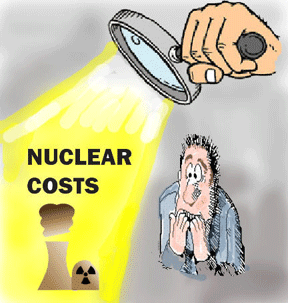
Governments have unpopular decisions to make to achieve their nuclear aims.
Global energy ministers met in Paris this week to discuss
how to kick-start a new age of atomic power. Installed capacity must triple
to 1,160 gigawatts by 2050, the Nuclear Energy Agency says. In the west,
many countries’ goals will hinge on attracting private capital to a
sector with a tarnished record.
Recent large projects in the US and Europehave run over budget and into delays. New, small reactors that can be built in factories by companies such as NuScale and Rolls-Royce to reduce risks are an exciting prospect. For larger projects in particular, governments
will have to offer incentives and guarantees that will not always sit
comfortably with taxpayers. ………..
France and the UK have ambitious targets. The UK is a test case for investor appetite
to fund new plants. It wants to secure funding for the 3.2GW Sizewell C
project, using a regulated asset base financing model. RAB …. offers
investors returns during construction. That avoids the accumulation of
interest on debt that would normally be paid off when projects open.
Households contribute to the financing via a surcharge on their energy
bills. For that reason, it is not popular with consumer groups. Opposition
will grow especially as investors will want the risk of any budget blow-ups
to be shared with bill-payers, at least 50-50. Governments have unpopular
decisions to make to achieve their nuclear aims.
FT 30th Sept 2023
https://www.ft.com/content/d3b6ca64-f93f-464f-96ab-ec479e7a933e
People Are Dying For Inches In Ukraine, The “World’s Largest Arms Fair”

CAITLIN JOHNSTONE, SEP 29, 2023 https://www.caitlinjohnst.one/p/people-are-dying-for-inches-in-ukraine?utm_source=post-email-title&publication_id=82124&post_id=137502350&utm_campaign=email-post-title&isFreemail=true&r=1ise1&utm_medium=email
There’s a heartbreaking graphic going around right now showing the almost microscopic changes that have occurred to the frontline of the war in Ukraine this year despite nonstop death and destruction of unfathomable horror the entire time.
The graphic comes from a New York Times article titled “Who’s Gaining Ground in Ukraine? This Year, No One.”, which eventually gets around to acknowledging that Russia has actually gained more ground than Ukraine in 2023 despite Kyiv’s much-hyped counteroffensive which began in June.
“When both sides’ gains are added up, Russia now controls nearly 200 square miles more territory in Ukraine compared with the start of the year,” the Times reports.
As Left I on the News noted on Twitter, this contradicts the titular claim in another New York Times article published last week under the headline “Ukraine Has Gained Ground. But It Has Much Further To Go.”
The reason the map of gains and losses is so heartbreaking is because so much has been given up for so very, very little. At least tens of thousands have died in this war with hundreds of thousands wounded, all for those teeny, tiny little blips on the map. Ukraine is now freckled with more landmines than anywhere else on earth, which experts say will take decades to clear. This giant deathtrap is exacerbated by the cluster munitions that are covering the land with greater and greater frequency, which will go on to detonate and kill civilians (mostly children) for years to come. The mines and artillery fire on the frontline of this war are reportedly creating tens of thousands of amputees, numbers comparable to what was seen in World War I.
And all for what? Essentially nothing. A few inches gained here, a few inches lost there. The meaninglessness of it all is probably one of the reasons why military-aged Ukrainian men have been fleeing and attempting to flee the nation in droves to avoid conscription.
War is the worst thing in the world. The suffering, trauma and loss of mass military violence is too much to comprehend, even for people who are right there experiencing it. And the only thing worse than a war where one side gets completely steamrolled by the other is one in which people keep killing each other and killing each other over tiny gains and losses on the battlefield without an end to the nightmare anywhere on the horizon.
And now we see western officials and media outlets telling us all to prepare for this war to drag on for years, potentially into the 2030s. This nonsensical violence, which even the head of NATO now admits could have been avoided by simply ceasing to amass a western military threat on Russia’s doorstep, is scheduled to drag on as long as possible for no grander reason than the advancement of US strategic interests.
This news from The New York Times comes out at the same time as a Wall Street Journal article titled “The War in Ukraine Is Also a Giant Arms Fair,” subtitled “Arms makers are getting orders for weapons being put to the test on the battlefield.”
“The Panzerhaubitze howitzer is part of an arsenal of weapons being put to the test in Ukraine in what has become the world’s largest arms fair,” writes WSJ’s Alistair MacDonald. “Companies that make the weapons being used in Ukraine have won orders and resurrected production lines. The deployment of billions of dollars worth of equipment in a major land war has also given manufacturers and militaries a unique opportunity to analyze the battlefield performance of weapons, and learn how best to use them.”
This is one of those things that just sounds a bit uncomfortable at first, but if you really sit with the words and deeply contemplate what’s being said here it will show up as so deeply evil it will give you nightmares. The fact that weapons systems are being tested on human bodies to the immense benefit of war profiteers over a completely avoidable and deliberately provoked war is one of the most depraved things you can possibly imagine, and is a clear sign that we are living in a profoundly sick society.
This is so, so ugly, and it’s slated to get even uglier — these freaks haven’t even gotten started on China yet. The sooner this monstrous power structure can be brought to its knees, the better it will be for everyone.
Nuclear waste ship makes unprecedented port call at Novaya Zemlya
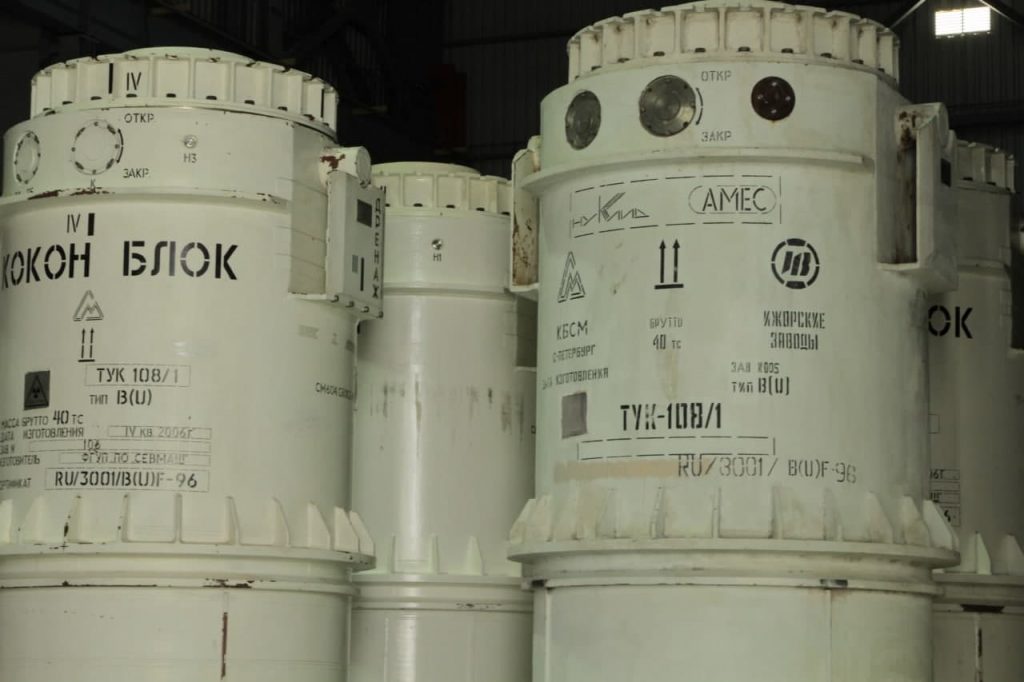
“I am deeply worried if Russia has started to move nuclear waste from the Kola Peninsula to the Arctic archipelago,” says Frederic Hauge with the Bellona foundation.
Much of the remaining uranium fuel elements in Andreeva Guba are damaged and pose special problems to handle. For that reason, the reprocessing plant in Mayak has been unwilling to receive.
Thomas Nilsen, September 29, 2023 https://thebarentsobserver.com/en/nuclear-safety/2023/09/nuclear-waste-ship-makes-port-call-novaya-zemlya
Last week, the “Rossita” could be seen on ship tracking services as it sailed outside Gremikha, a shutdown submarine base east on the Kola Peninsula. Now, the specially designed ship is moored at the pier in Severny, a military town on the shores of the Matochkin Strait diving the northern and southern islands of Novaya Zemlya
Severny is the settlement serving Russia’s nuclear weapons tests, nowadays in the form of sub-critical experiments taking place deep inside tunnels in the permafrost mountains. The last real detonation of a nuclear warhead was on October 24, 1990.
The “Rossita” was built in Italy with Italian taxpayers money. It was a helping hand from a European nation aimed to transport spent nuclear fuel from the run-down storage site in Andreeva Guba on the shores of the Litsa fjord, a short 60 km from the border with Norway.
Some 21,000 spent fuel elements from the Soviet Union’s fleet of Cold War submarines were stored. Italy’s contributions were part of a larger international cooperation to assist Russia in securing the lethal highly radioactive waste.
Other contributing nations were Norway, the United Kingdom and Sweden.
The “Rossita” shuttled between Andreeva Bay and Atomflot in Murmansk. From there, the containers with the fuel elements were sent by train to Mayak north of Chelyabinsk where Russia’s reprocessing plant is located.
With Moscow’s all-out war against Ukraine, the Western partners stopped all cooperation with Russia in regard to nuclear waste handling.
For the last 19 months, little information about what happens in Andreeva Bay has reached the public.
What is known is that two of the Northern Fleet’s most potent nuclear-powered submarines, the “Severodvinsk” and the “Kazan” of the Yasen class are moored across the bay at the piers in Nerpicha, part of Zapadnaya Litsa naval base.
“All reasons to monitor”
Frederic Hauge with the Bellona Foundation in Norway will not speculate too much about reasons Russia might have to move nuclear waste to the Arctic archipelago of Novaya Zemlya.
“What we do know is that “Rossita” is specially designed to carry TUK-18 containers modified to hold damaged spent nuclear fuel,” he says.
Much of the remaining uranium fuel elements in Andreeva Guba are damaged and pose special problems to handle. For that reason, the reprocessing plant in Mayak has been unwilling to receive.
“There are all reasons to monitor what now happens at Novaya Zemlya,” Hauge notes.
His team of nuclear experts in Oslo and Vilnius are now analyzing the limited available information with the hope of understanding what happens.
“A week ago, Rosatom’s larger carrier “Sevmorput” sailed to Novaya Zemlya. We are also told that there have been busy days at Severny and near the tunnels designed for nuclear weapons testing,” Hauge says in a phone interview with the Barents Observer.
“The big unanswered question is if what we now are witnessing is a Russia that brings dangerous nuclear waste to Novaya Zemlya for long-term storage in the permafrost.”
Fresh concerns over Zaporizhzhia nuclear power plant: Emerging Europe this week
Emerging Europe 29th Sept 2023 #nuclear #antinuclear #nuclear-free #NoNukes
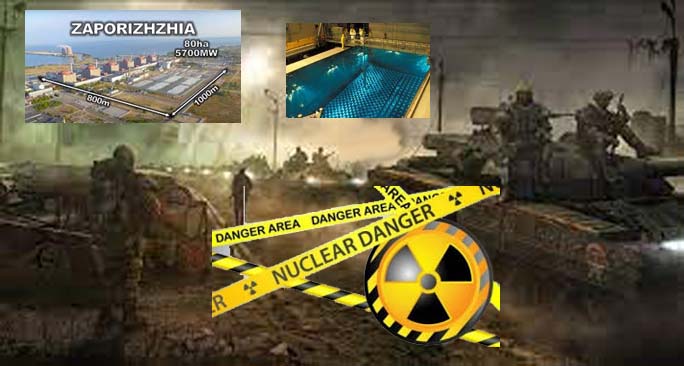
International regulators are incapable of properly monitoring safety at the Russian-occupied Zaporizhzhia nuclear power station, according to a critical dossier compiled by Greenpeace that is being sent to western governments on Thursday.
The environmental campaign group concludes the International Atomic Energy Agency has too few inspectors at Europe’s biggest nuclear plant—four—and that there are too many restrictions placed on their access.
It argues that the IAEA is “unable to meet its mandate requirements” but it is not prepared to admit as much in public, and as a result what it describes as Russian violations of safety principles are not being called out.
Shaun Burnie and Jan Vande Putte, nuclear specialists at Greenpeace, conclude: “The IAEA risks normalising what remains a dangerous nuclear crisis, unprecedented in the history of nuclear power, while exaggerating its actual influence on events on the ground.”
The vast Zaporizhzhia nuclear power plant, with six reactors on site, was captured by Russia in early March 2022 and has been on the frontline of the war ever since. It is sited on the Dnipro River in central Ukraine and Ukrainian forces occupy the riverbank opposite, leaving the plant in the sights of both sides’ militaries. https://emerging-europe.com/news/fresh-concerns-over-zaporizhzhia-nuclear-power-plant-emerging-europe-this-week/
UK government decides not to take Allerdale further in GDF nuclear waste siting process due to limited suitable geology
Nuclear Waste Services (NWS) has been engaging
with the Allerdale community about the potential for hosting a Geological
Disposal Facility (GDF) to dispose of the UK’s most radioactive waste. As
part of this process NWS obtained existing data and undertook assessments
to understand if six siting factors, safety and security, community,
environment, engineering feasibility, transport, and value for money, could
be supported if a GDF were sited in Allerdale.
Following a comprehensive
and robust evaluation of information it was concluded only a limited volume
of suitable rock was identifiable and the geology in the area was unlikely
to support a post closure safety case. NWS has therefore taken the decision
not to take Allerdale further in the search for a suitable site to host a
GDF. Initial assessments of existing data and information for the other
three communities in the siting process have indicated potentially suitable
geology, which is why NWS is continuing in the siting process with those
communities.
Nuclear Waste Services 28th Sept 2023
British communities torn between the lure of government bribes and the realities of hosting toxic radioactive trash virtually forever
#nuclear #antinuclear #nuclear-free #NoNukes
Ken Smith moved to the Lincolnshire coast to see out his retirement,
writing crime novels while surrounded by beaches, arcades, holiday parks
and nature reserves. Recently, however, his retreat has been disturbed. The
Mablethorpe resident has found himself unexpectedly on the front lines of a
struggle affecting countries across the world, centred on how to deal with
nuclear waste.
The fate of Mablethorpe will determine how Britain tackles a
problem that has been building for seven decades. As the government seeks a
better solution to radioactive waste, communities are torn between the lure
of economic opportunities versus the realities of living next to a disposal
site. Theddlethorpe, a few miles up the road, is one of three areas in
England being considered by the UK for a 36km square underground site to
dispose of nuclear waste as it decays, some of it over hundreds of
thousands of years.
FT 28th Sept 2023
https://www.ft.com/content/29961733-a72c-406c-8884-4091c0dfd828
Finland’s nuclear waste: delay in completing the review of operating licence application and safety assessment.

Finland’s Radiation and Nuclear Safety Authority (STUK) said its review of
Posiva Oy’s operating licence application for the world’s first used fuel
disposal facility is taking longer than expected and will not be completed
by the end of this year as planned.
Radioactive waste management company
Posiva submitted its application, together with related information, to the
Ministry of Economic Affairs and Employment (TEM) on 30 December 2021 for
an operating licence for the used fuel encapsulation plant and final
disposal facility currently under construction at Olkiluoto. The repository
is expected to begin operations in the mid-2020s. Posiva is applying for an
operating licence for a period from March 2024 to the end of 2070.
The government will make the final decision on Posiva’s application, but a
positive opinion by STUK is required beforehand. The ministry requested
STUK’s opinion on the application by the end of this year. The regulator
began its review in May 2022 after concluding Posiva had provided
sufficient material. However, STUK has now said its safety assessment and
opinion on the application will not be completed this year.
World Nuclear News 28th Sept 2023
https://www.world-nuclear-news.org/Articles/Completion-of-Finnish-repository-review-delayed
1 This Month

of the week– Nuclear Reactor Information Task Force

14 May – online event From Bombs to Data Centres: the Face of Nuclear Colonialism
To see nuclear-related stories in greater depth and intensity – go to https://nuclearinformation.wordpress.com
-
Archives
- May 2026 (82)
- April 2026 (356)
- March 2026 (251)
- February 2026 (268)
- January 2026 (308)
- December 2025 (358)
- November 2025 (359)
- October 2025 (376)
- September 2025 (257)
- August 2025 (319)
- July 2025 (230)
- June 2025 (348)
-
Categories
- 1
- 1 NUCLEAR ISSUES
- business and costs
- climate change
- culture and arts
- ENERGY
- environment
- health
- history
- indigenous issues
- Legal
- marketing of nuclear
- media
- opposition to nuclear
- PERSONAL STORIES
- politics
- politics international
- Religion and ethics
- safety
- secrets,lies and civil liberties
- spinbuster
- technology
- Uranium
- wastes
- weapons and war
- Women
- 2 WORLD
- ACTION
- AFRICA
- Atrocities
- AUSTRALIA
- Christina's notes
- Christina's themes
- culture and arts
- Events
- Fuk 2022
- Fuk 2023
- Fukushima 2017
- Fukushima 2018
- fukushima 2019
- Fukushima 2020
- Fukushima 2021
- general
- global warming
- Humour (God we need it)
- Nuclear
- RARE EARTHS
- Reference
- resources – print
- Resources -audiovicual
- Weekly Newsletter
- World
- World Nuclear
- YouTube
-
RSS
Entries RSS
Comments RSS
 nuclear-news
