No to Nuclear, Yes to Renewables for Wales

28th October 2025, Nuclear Free Local Authorities
Anti-nuclear campaigners meeting last weekend in Wrexham (25 October) issued a declaration calling on politicians representing Welsh constituencies in parliaments in Cardiff and Westminster to work for a nuclear free, renewables powered Wales.
Attendees at the screening of the award-winning film SOS: The San Onofre Syndrome organised by PAWB (Pobol Atal Wylfa-B, People against Wylfa B) hosted at the Ty Pawb Arts Centre in Wrexham also saw a special video message sent by the Californian filmmakers and heard from Stephen Thomas, Emeritus Professor in Energy Policy at Greenwich University and Richard Outram, Secretary of the Welsh Nuclear Free Local Authorities, who both joined the meeting online.
Welsh campaigners are working with US, Canadian and other UK activists to establish a Transatlantic Nuclear Free Alliance to campaign on issues of common concern. The film (https://sanonofresyndrome.com/) highlights the impact of the decommissioning and the legacy of managing deadly radioactive waste faced by the neighbours of the San Onofre nuclear power plant in California.
The film’s messages resonate with international audiences faced with identical threats and challenges. Commenting Professor Thomas said:
“The nuclear industry tries to assure us the radioactive waste disposal and reactor decommissioning are established processes with easily affordable costs. The truth is that we are three or more decades away from permanent disposal of waste and of carrying out the most challenging stages of decommissioning. The cost will be high, and the failure of previous funding schemes means the burden will fall on future taxpayers, generations ahead”.
28th October 2025
No to Nuclear, Yes to Renewables for Wales

Joint Media Release
Anti-nuclear campaigners meeting last weekend in Wrexham (25 October) issued a declaration calling on politicians representing Welsh constituencies in parliaments in Cardiff and Westminster to work for a nuclear free, renewables powered Wales.
Attendees at the screening of the award-winning film SOS: The San Onofre Syndrome organised by PAWB (Pobol Atal Wylfa-B, People against Wylfa B) hosted at the Ty Pawb Arts Centre in Wrexham also saw a special video message sent by the Californian filmmakers and heard from Stephen Thomas, Emeritus Professor in Energy Policy at Greenwich University and Richard Outram, Secretary of the Welsh Nuclear Free Local Authorities, who both joined the meeting online.
Welsh campaigners are working with US, Canadian and other UK activists to establish a Transatlantic Nuclear Free Alliance to campaign on issues of common concern. The film (https://sanonofresyndrome.com/) highlights the impact of the decommissioning and the legacy of managing deadly radioactive waste faced by the neighbours of the San Onofre nuclear power plant in California.
The film’s messages resonate with international audiences faced with identical threats and challenges. Commenting Professor Thomas said:
“The nuclear industry tries to assure us the radioactive waste disposal and reactor decommissioning are established processes with easily affordable costs. The truth is that we are three or more decades away from permanent disposal of waste and of carrying out the most challenging stages of decommissioning. The cost will be high, and the failure of previous funding schemes means the burden will fall on future taxpayers, generations ahead”.
Despite this, the UK Government will introduce developer-led siting plans, permitting nuclear operators to apply to locate new plants in sites throughout Wales, and intends to reduce regulation in the nuclear industry. A recent Memorandum of Understanding was also signed with the United States which could lead to British regulators being obliged to accept US reactor designs not currently approved for deployment in the UK. Great British Energy – Nuclear has also acquired land at Wylfa in Anglesey (Ynys Mon) as a potential site for the deployment of one or more so-called Small Modular Reactors being commissioned from Rolls Royce and the US company Westinghouse has also expressed interest in constructing a larger nuclear plant there. The Welsh Government specifically created Cwmni Egino to develop a new nuclear plant on the Trawsfynydd site at the heart of the beautiful Eryri National Park. And in South Wales, US newcomer Last Energy is seeking permission to deploy multiple micro reactors on a former coal power station site at Llynfi outside Bridgend.
Now eight leading campaign groups have backed the Wrexham Declaration which denounces the continued political obsession with the pursuit of nuclear power as a ‘fool’s errand’.
NFLA Secretary Richard Outram explains why: “Nuclear is too slow, too costly, too risky, contaminates the natural environment compromising human health, and leaves a legacy of nuclear plant decontamination and radioactive waste management lasting millenia that is ruinously expensive and uncertain. And nuclear plants represent obvious targets to terrorists and, as we have seen in Ukraine, to hostile powers in times of war”.
Campaigners are also convinced that nuclear will worsen fuel poverty or climate change……………………………………………………………………………………………………………………………………………………………………………………. https://www.nuclearpolicy.info/news/no-to-nuclear-yes-to-renewables-for-wales/
Trump doubles down on nuclear tests as Russia issues warning.

By Reuters, November 1, 2025 , https://www.smh.com.au/world/north-america/trump-doubles-down-on-nuclear-tests-as-russia-issues-warning-20251101-p5n6z4.html
Washington: President Donald Trump has reaffirmed that the United States will resume nuclear testing, but he would not answer directly when asked whether that would include underground nuclear tests that were common during the Cold War.
“You’ll find out very soon, but we’re going to do some testing,” Trump told reporters aboard Air Force One on Friday (Saturday AEDT) as he flew to Palm Beach, Florida, when asked about underground nuclear tests.
“Other countries do it. If they’re [going] to do it, we’re going to do it, OK?”
Trump said on Thursday that he had ordered the US military to immediately restart the process for testing nuclear weapons after a halt of 33 years, a move that appeared to be a message to rival nuclear powers China and Russia, whose last known tests were in the 1990s.
Trump made that surprise announcement on social media while aboard his Marine One helicopter flying to meet Chinese President Xi Jinping for a trade-negotiating session in Busan, South Korea.
It was not immediately clear whether Trump was referring to nuclear-explosive testing, which would be carried out by the National Nuclear Security Administration, or flight testing of nuclear-capable missiles.
Continue readingUK’s nuclear waste problem lacks a coherent plan.

The [GDF] will comprise vaults and tunnels of a size that may be
approximate to Bermuda, but without the devilish tax evaders, coupled with
a 1 km square surface site that will periodically swallow up trainloads of
toxic radioactive waste. It would be unsurprising if Nuclear Waste
Services, the agency charged with finding and building the site, placed a
job advert for its own Hades to manage this dystopic underworld and if the
postholder engaged Cerberus to guard the entrance.
The plan comes with an enormous bill for taxpayers which will scare the ‘bejeebers’ out of taxpayers. Previously the Government’s new National Infrastructure and Service Transformation Authority (NISTA) had identified in its August 2025 report that the GDF facility may have a whole life cost estimated to range from £20 billion to £53 billion.
Now PAC members have had a further frightener placed on them because these headline figures were based on 2017/18 prices and they have found that, when adjusting to the present, the undersea radioactive monster might cost over £15 billion more. It would be far cheaper to hire Godzilla.
The Public Accounts Committee Chair Geoffrey Clifton-Brown has called on the Government to produce a ‘coherent plan’ to manage the UK’s stockpile of radioactive waste
NFLA 31st Oct 2025, https://www.nuclearpolicy.info/news/trick-not-treat-nuclear-dump-is-full-of-nasty-surprises-not-sweet-treats/
“It is unacceptable that the EDF tariff reform is being adopted quietly, to the detriment of the users”
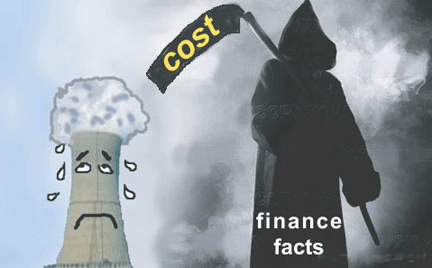
With electricity bills reaching record highs and 7 million people facing
energy poverty, it’s time to acknowledge the failure of a model. Twenty
years of brutal energy sector liberalization have failed to bring about
either lower prices or the investment promised by private operators in
exchange for regulated access to historical nuclear electricity (ARENH).
Created in 2011 to allow alternative suppliers to purchase EDF’s nuclear
production at a fixed and highly advantageous price, this mechanism was
supposed to generate sustainably competitive offers. On the contrary, it
has led to instability, private rent-seeking, industrial fragmentation, and
debt for EDF.
Le Monde 29th Oct 2025,
https://www.lemonde.fr/idees/article/2025/10/29/il-est-inacceptable-que-la-reforme-des-tarifs-d-edf-soit-adoptee-discretement-au-detriment-des-usagers_6650111_3232.html
Ministry of Defence still unclear on cost of RAF nuclear jet plan, MPs say

“Making short-term cost decisions is famously inadvisable if you’re a homeowner with a leaky roof, let alone if one is running a complex fighter jet programme – and yet such decisions have been rife in the management of the F-35.”
Sir Keir Starmer announced at the Nato summit in June that the UK would purchase 12 F-35A jets
Christopher McKeon, Friday 31 October 2025
Ministers still do not know when RAF jets will be able to carry nuclear weapons or how much the project will cost, the Commons spending watchdog has found.
In a report published on Friday, the influential Commons Public Accounts Committee (PAC) said the Ministry of Defence (MoD) had still not set out how much it would cost to operate new F-35A jets.
Sir Keir Starmer announced at the Nato summit in June that the UK would purchase 12 of the jets, which could join the alliance’s airborne nuclear mission.
The committee said the project was still “at an early stage”, with the MoD “starting to understand” the requirements of being certified for the Nato nuclear mission.
The MoD told the committee that the F-35As were “20 per cent to 25 per cent cheaper” than the F-35Bs currently operated by the RAF and Royal Navy “and slightly cheaper to support”.
But with the additional training and personnel required to join the nuclear mission, the committee said it was a “reasonable assumption that this may end up proving more expensive”.
The MPs added that the MoD had yet to set out how long it would take to make the necessary arrangements for equipping the jets with nuclear weapons.
The F-35 is the most advanced fighter jet the UK has ever possessed, and the MoD expects the overall programme to cost £57 billion over its 56-year lifespan.
That figure is already triple the original estimate, but the committee said it did not include the costs of personnel, infrastructure and fuel, with the National Audit Office (NAO) suggesting an overall cost of £71 billion.
In July, the NAO issued a wide-ranging criticism of the F-35 programme, saying its return on investment had been “disappointing” and its capability remained below the MoD’s expectations.
The watchdog also criticised severe personnel shortages and “short-term affordability decisions” that hindered the delivery of the aircraft and its full capabilities.
On Friday, the PAC reiterated many of these findings, accusing the MoD of “a pattern of short-term decision-making” that had led to increased costs.
The committee cited delays to investment in a facility to test the jet’s stealth capability, which saved £82 million in 2024-25 but added an extra £16 million to the overall cost; and delayed investment in infrastructure at 809 Naval Air Squadron until 2029, which both reduced capability and added almost £100 million in extra costs.
MPs also found the MoD had miscalculated the number of engineers needed per plane, as it had failed to take into account staff taking leave or performing other tasks.
And they questioned the department’s intention to declare the F-35 to be at full operating capability by the end of the year, despite still not having a missile to attack ground targets from a safe distance.
Committee chairman Sir Geoffrey Clifton-Brown said: “Making short-term cost decisions is famously inadvisable if you’re a homeowner with a leaky roof, let alone if one is running a complex fighter jet programme – and yet such decisions have been rife in the management of the F-35.”
He added that the MoD had been “worryingly slow” to learn “basic lessons” from the project, and described its appraisal of the F-35’s overall cost as “unrealistic”.
Sir Geoffrey said: “The F-35 is the best fighter jet this nation has ever possessed. If it is to be wielded in the manner in which it deserves, the MoD must root out the short-termism, complacency and miscalculation in the programme identified in our report………………………….https://www.independent.co.uk/news/uk/politics/raf-fighter-jets-f35a-nato-b2855616.html
Officials launch investigation after hazardous incident at shut-down nuclear plant: ‘Deeply concerning’
A government investigation got underway after radioactive water leaked from Scotland’s Dounreay nuclear site. In June 2024, NRS alerted the Scottish Environment Protection Agency (SEPA) to “a potential leak of radioactively contaminated water from a carbon bed filter on the Dounreay site,” an agency spokesperson described, according to The National, a Scottish paper.
SEPA later confirmed a “small leak” that released different radioactive
substances, including Caesium-137 and alpha-emitting radionuclides. While NRS reported no increase in groundwater radioactivity downstream of the event, SEPA found the company had breached regulations and ordered a full review of its monitoring systems.
The Cool Down 29th Oct 2025, https://www.thecooldown.com/green-business/dounreay-nuclear-site-radioactive-water-leak/
Starmer,Macron, Merz…3 unwise leaders degrading their economies while destroying Ukraine.
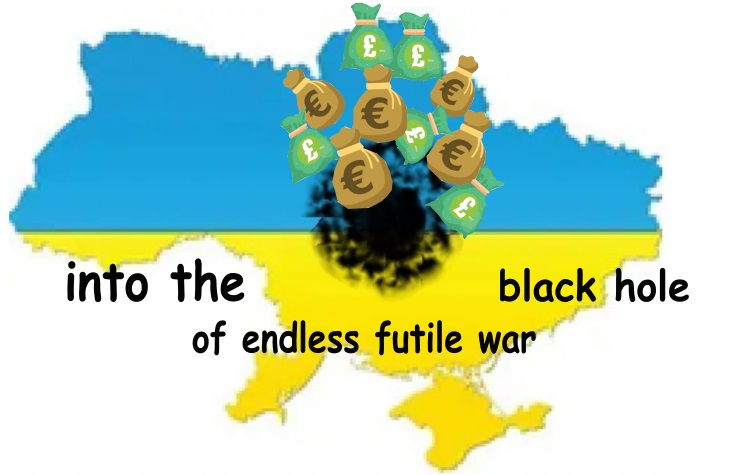
President Trump has largely ceased supplying weapons directly to Ukraine. But he’s cool about goosing US weapons builders’ profits by selling them to Europe’s Big 3 so they can take over squandering their treasure on an impossible, quixotic effort to defeat Russia.
Walt Zlotow, West Suburban Peace Coalition, Glen Ellyn IL ,1 Nov 25
The UK’s Keir Starmer, France’s Emmanuel Macron and Germany’s Friedrich Merz are wildly unpopular. Starmer has the best approval rating at 13% followed by Macron at 11%. Merz is nearly invisible at 5%.
There are several reasons but likely tops is their insistence on continuing the lost US/NATO proxy war against Russia destroying Ukraine for nearly 4 years.
President Trump has largely ceased supplying weapons directly to Ukraine. But he’s cool about goosing US weapons builders’ profits by selling them to Europe’s Big 3 so they can take over squandering their treasure on an impossible, quixotic effort to defeat Russia. Trump, a realist on the war Biden made inevitable, wants out, not only on funding the war, but on endlessly funding Europe’s paranoia about a reconstituted Soviet empire. This is one foreign policy Trump is getting right.
Starmer, Macron and Merz are degrading their economies as they reduce critically needed social spending on the commons to fund a wildly unpopular war. No wonder far right, nationalistic political movements are nipping at their heels and may soon send them packing.
Europe has a pittance of America’s wealth to fund continuation of the war. Yet, the Starmer, Macron, Merz trio endlessly bleat that Ukraine can prevail, even get back its massive lost territory now forever part of Russia, if only they provide Ukraine more, more, more. They fear monger that Russia will come for them next unless they’re defeated in Ukraine. No responsible historian, political scientist or retired diplomat (without a job to protect) would support that delusional view.
Two things are certain. The economies and political stability of the UK, France, and Germany are being severely undermined by their leaders’ refusal to negotiate the war’s end, acknowledging Russia’s valid security concerns. Second, Ukraine descends deeper into failed state status, losing more cannon fodder and territory, every day the war grinds on.
What is not certain if Starmer, Macron and Merz do not come to their senses, is whether nuclear confrontation between Russia and NATO can be avoided. All 3 need to be forced to watch ‘Forrest Gump’ to learn that ‘Stupid is as stupid does.
Stealing $140 billion in Russian assets won’t change the outcome of the war in Ukraine.
while the determination of Ukraine to fight is unquestionable, the emotional belief in the west that this will overcome the enormous social and economic challenges the country faces in an extended attritional war with Russia is wildly misplaced.
A full 180 degree change in diplomatic course by Europe would require an acceptance that the war against Russia was unwinnable, and that Russia’s underlying concerns – namely Ukrainian neutrality – would finally have to be accepted as a political reality.
Better for EU leaders to accept this now although, of course, they won’t.
Ian Proud. Nov 01, 2025, https://thepeacemonger.substack.com/p/stealing-140-billion-in-russian-assets?utm_source=post-email-title&publication_id=3221990&post_id=177688104&utm_campaign=email-post-title&isFreemail=true&r=1ise1&triedRedirect=true&utm_medium=email
Caught between a rock and a hard place, European leaders continue to deny the obvious realities of the dire situation in Ukraine, which will only worsen over time. Yet I see no evidence of any willingness to change course, despite the obvious political hazard they face and the increasingly grim forecast for Europe and for Ukraine should they continue to push an unwinnable war.
The war in Ukraine is now entirely dependent on the ability of European states to pay for it at a cost of at least $50bn per year, on the basis of Ukraine’s latest budget estimate for the 2026 fiscal year. Ukraine itself is bankrupt and has no access to other sources of external capital, beyond that provided by the governments sponsoring the ongoing war.
That then brings the conversation back to the expropriation of $140bn in assets currently frozen in Belgium which the Commission would like to use for a reconstruction loan. The term ‘reconstruction loan’ is itself disingenuous, on the basis that any expropriated Russian assets would not be used for reconstruction, but rather to fund the Ukrainian war effort. Indeed. Chancellor Merz of Germany recently suggested that the fund could allow Ukraine to keep fighting for another three years.
The most likely scenario, in the terrible eventuality that war in Ukraine did continue for another three years is that the Russian armed forces would almost certainly swallow up the whole of the Donbass region – comprising Donetsk and Luhansk oblasts. This – Ukraine’s departure from the Donbas – appears to be the basis of President Putin’s conditions for ending the war now, together with a Ukrainian declaration of neutrality and giving up any NATO aspirations. More likely, the Russian Armed forces might also capture additional swathes of land in Zaporizhia and Kherson oblasts, and also in Dnipropetrovsk, where they have made recent incursions.
So, there is a strong likelihood, at the currently slow pace of the war effort in which Russia claims small pieces of land on a weekly basis, that three years from now Ukraine would have to settle for a peace that was even more disadvantageous to it than that which is available now, having lost more land, together with potentially hundreds of thousands of troops killed or injured.
Logically, European policymakers would be able to look into the future to see this grim predicament with clear eyes and encourage Zelensky to settle for peace now.
But European policy is driven by two key considerations. Firstly, an emotional belief that an extended war might so weaken Russia that President Putin was forced to settle on unfavourable terms. The idea of a strategic defeat of Russia – which is often spoken by European politicians – however, doesn’t bear serious scrutiny.
Russia doesn’t face the same considerable social and financial challenges that Ukraine faces. Its population is much larger and a wider conscription of men into the Armed forces has not been needed – Russia can recruit sufficient new soldiers to fight and, indeed, has increased the size of its army since 2022. Ukraine continues to resort to forced mobilisation of men over the age of 25, often using extreme tactics that involve busifying young men against their will from the streets.
Critically, Russia could likely continue to prosecute the war on the current slow tempo for an extended period of time without the need for a wider mobilisation of young men, which may prove politically unpopular for President Putin domestically. Yet, the longer the war continues, Ukraine will come under increasing pressure, including from western allies, to deepen its mobilisation to capture young men below the age of 25 to shore up its heavily depleted armed forces on the front line.
There has been considerable resistance to this so far within Ukraine. Mobilising young men above the age of 22 would prove unpopular for President Zelensky but it would also worsen Ukraine’s already catastrophic demographic challenge: 40% of the working age population has already been lost, either through migration or through death on the front line and that number will continue to go south, the longer the war carries on.
Russia’s financial position is considerably stronger than Ukraine’s. It has very low levels of debt at around 15% of GDP and maintains a healthy current account surplus, despite a narrowing of the balance in the second quarter of 2025. Even if Europe expropriates its frozen assets, Russia still has a generous and growing stock of foreign exchange reserves to draw upon, which recently topped $700bn for the first time.
Russia’s military industrial complex continues to outperform western suppliers in the production of military equipment and munitions. In the currently unlikely event that Russia started to fall into the red in terms of its trade – what commentators in the west refer to as destroying Russia’s war economy – it would still have considerable scope to borrow from non-western lenders, given the strength of its links with the developing world, aided by the emergence of BRICS.
Ukraine is functionally bankrupt because it is unable to borrow from western capital markets, on account of its decision to pause all debt payments. With debt expected to reach 110% in 2025, even before consideration of any loan backed by frozen Russian assets, it depends entirely on handouts from the west. Ukraine’s trade balance has continued to worsen throughout the war, reinforcing its dependence on capital injections from the west to keep its foreign exchange reserves in the black.
So while the determination of Ukraine to fight is unquestionable, the emotional belief in the west that this will overcome the enormous social and economic challenges the country faces in an extended attritional war with Russia is wildly misplaced.
So, let’s look at the rational explanation for Europe’s continued willingness to prolong the fight in Ukraine. The uncomfortable truth is that Europe’s political leaders have boxed themselves into this position because of a hard boiled determination not to concede to Russia’s demands in any peace negotiations. Indeed, there is a steadfast and immovable objection to talking to Russia at all, which has been growing since 2014.
However, across much of Europe, the political arithmetic is turning against the pro-war establishment with nationalist, anti-war parties gaining ground in Central Europe, Germany, France, Britain and even in Poland. And despite positive overtures made by President Trump towards negotiation with President Putin, Trumpophobia provides another brake on the European political establishment shifting its position.
So, changing course now and entering into direct negotiations with Russia would have potentially catastrophic consequences, politically, for European leaders, which they must surely be aware of. A full 180 degree change in diplomatic course by Europe would require an acceptance that the war against Russia was unwinnable, and that Russia’s underlying concerns – namely Ukrainian neutrality – would finally have to be accepted as a political reality.
On this basis, European politicians would face the prospect of explaining to their increasingly sceptical voters that their strategy of defeating Russia had failed, having spent four years of war saying at all times that it would eventually succeed. And that would lead potentially to internationalist governments falling across Europe starting in two years when Poland and France will again go to the polls, and in 2029 when the British and German governments will face the voters.
There are deeper issues too. An end of war would accelerate the process of admitting Ukraine into the European Union with potentially disastrous consequences for the whole financial basis of Europe. The European Commission will face the prospect of accepting that a two-tier Europe is inevitable, admitting Ukraine as a member without the financial benefits received by existing member states; for probably understandable reasons, this would cause widespread resentment within Ukraine itself, having sacrificed so much blood to become European, precipitating widespread internal dissent and possibly conflict in a disgruntled country with an army of almost one million. Alternatively, the European Commission would need to redraw its budget and face huge resistance from existing Member States, who would lose billions of Euros each year in subsidies to Ukraine.
Caught between hoping for a strategic defeat of Russia which any rational observe can see is unlikely, and accepting the failure of their policy, causing a widespread loss of power and huge economic and political turmoil, Europe’s leaders are choosing to keep calm and carry on. If they had any sense, the likes of Von der Leyen, Merz, Starmer or Macron would change tack and pin their hopes on explaining away their failure before the political tide in Europe evicts them all from power. But I see no signs of them having the political acumen to do that. So we will continue to sit and wait, while storm clouds grow ever darker over Europe.
EDF’s plan to decommission Hinkley Point B approved despite regulator’s concerns
31 Oct, 2025 By Tom Pashby
The Office for Nuclear Regulation (ONR) has approved EDF’s plans for the
decommissioning of its Hinkley Point B nuclear power station, despite
wide-ranging concerns raised by organisations, including the Environment
Agency, which regulates the nuclear sector.
New Civil Engineer 31st Oct 2025, https://www.newcivilengineer.com/latest/edfs-plan-to-decommission-hinkley-point-b-approved-despite-regulators-concerns-31-10-2025/
Nuclear waste removal under way at silo.

“Because the removal of the waste had not been planned when the building was opened, engineers had to retrofit an exit route for it.“
COMMENT. Doesn’t that tell you everything about the stupidity of the men who design the nuclear industry?
Jonny Manning, Local Democracy Reporting Service, 1 Nov 25, https://www.bbc.com/news/articles/cvgvq930vwpo
Seventy tonnes of radioactive waste have been removed from a nuclear site’s most hazardous building.
Teams at Sellafield in Cumbria have removed the waste from the Magnox Swarf Storage Silos with the company saying it has placed it into safe storage.
The work began in 2022 after two decades of preparation, because when the building was constructed in the 1960s no-one had considered how the waste would be removed.
Sellafield’s head of legacy silos Phil Reeve said so much waste had been removed that a 7m (23ft) crater had been dug in the middle of the pile.
However, the crater presents a risk of the waste around the edges collapsing inwards.
To fix the issue, Sellafield has created its own version of a garden rake – a 1.4 tonne machine which uses its stainless steel arms to pull the nuclear waste into the centre.
“It’s a big moment to see it successfully deployed in an active environment for the first time,” said Mr Reeve.
“It allows us to crack on with confidence.”
Because the removal of the waste had not been planned when the building was opened, engineers had to retrofit an exit route for it.
This involved assembling huge retrieval machines on top of the building’s 22 waste compartments.
One machine is currently up and running with another two set to start soon.
But while work is well under way, the Sellafield team still has about 10,000 tonnes of waste to remove.
Remediation work through £4.6bn Sellafield framework
US engineering and technology firm Amentum and a joint venture of Altrad
Support Services and Atkins Réalis will deliver remediation work at the
Sellafield nuclear power station over the next 15 years. The two bidders
were named for Lot 1 of a £4.6bn Decommissioning and Nuclear Waste
Partnership (DNWP) framework, which covers four lots. Procured by
Sellafield Ltd, the agreement will see chosen contractors support
high-hazard risk reduction programmes at the Cumbrian plant.
Ground Engineering 3rd Nov 2025. https://www.geplus.co.uk/news/pair-bag-remediation-work-through-4-6bn-sellafield-framework-03-11-2025/
Donald Trump’s nuclear testing order sparks pushback from Russia, China and the UN.
SBS World News, 31 Oct 25
Trump said the Pentagon will immediately resume testing the US nuclear arsenal on an “equal basis” with other nuclear powers.
United States President Donald Trump has landed back in the US after a surprise directive to begin nuclear weapons testing that has raised the spectre of renewed superpower tensions.
Trump announced the order on social media, just as he was entering a summit with Chinese leader Xi Jinping in South Korea on Thursday.
It came days after Russia declared it had tested nuclear-capable, nuclear-powered cruise missiles and sea drones.
The blunt statement from Trump, who boasts frequently about being a “peace” president, left much unanswered.
Chiefly, it was unclear whether he meant testing weapons systems or actually conducting test explosions — something the US has not done since 1992.
“Because of other countries’ testing programs, I have instructed the Department of War to start testing our Nuclear Weapons on an equal basis,” Trump said in a post on his Truth Social platform.
Trump also said that the US has more nuclear weapons than any other country and that he had achieved this in his first term as president.
The Stockholm International Peace Research Institute said in its latest annual report that Russia possesses 5,489 nuclear warheads, compared to 5,177 for the United States and 600 for China.
In his post, Trump said — minutes ahead of his meeting with Xi — that China was expected to “be even within 5 years”, without substantiating the claim.
China, Russia express concerns
In response to Trump’s announcement, Chinese foreign ministry spokesperson Guo Jiakun urged the US to “earnestly abide” by a global nuclear testing ban.
Russia questioned whether Trump was well-informed about its activities.
“President Trump mentioned in his statement that other countries are engaged in testing nuclear weapons. Until now, we didn’t know that anyone was testing,” Kremlin spokesman Dmitry Peskov told reporters.
Russia’s recent weapons drills “cannot in any way be interpreted as a nuclear test”, Peskov said. “We hope that the information was conveyed correctly to President Trump.”
Peskov then implied that Russia would conduct its own live warhead tests if Trump did it first.
“If someone departs from the moratorium, Russia will act accordingly,” Peskov said.
Russian President Vladimir Putin has repeatedly said that if any country tests a nuclear weapon, then Russia will do so too.
Both countries observe a de facto moratorium on testing nuclear warheads, though Russia and the United States do regularly run military drills involving nuclear-capable systems.
The US has been a signatory since 1996 to the Comprehensive Nuclear-Test-Ban Treaty, which bans all atomic test explosions, whether for military or civilian purposes.
United Nations secretary-general António Guterres said through his deputy spokesman that “nuclear testing can never be permitted under any circumstances”………………………………………… https://www.sbs.com.au/news/article/trump-nuclear-testing-order-pushback/a21zghnl1
How Russia is risking nuclear catastrophe with attempts to syphon power from Ukraine’s biggest plant
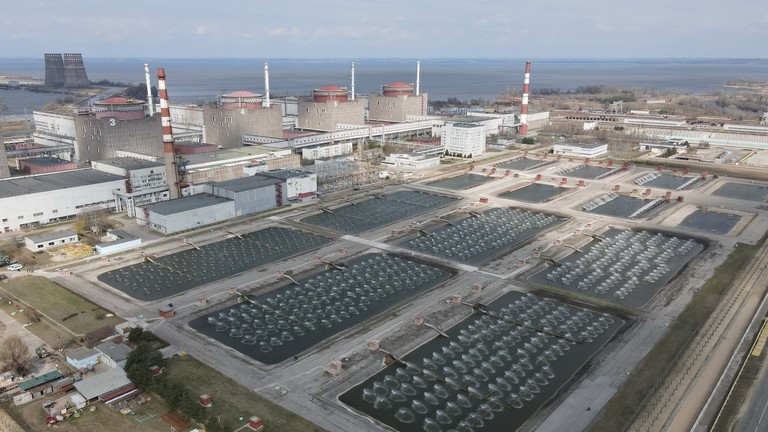
The exiled mayor of Enerhodar, close to Zaporizhzhia, reveals his fear of an ecological catastrophe
Sam Kiley, In Zaporizhzhia, Wednesday 29 October 2025, https://www.independent.co.uk/news/world/europe/zaporizhzhia-nuclear-plant-ukraine-russia-war-b2855001.html
Europe’s biggest nuclear reactor has become a battlefield in Ukraine’s defence against Russian invaders as they risk a catastrophic meltdown in its efforts to connect it to Moscow’s national grid.
The Zaporizhzhia nuclear power plant (ZNPP), which has six reactors, was captured by Russian troops early in the invasion of Ukraine in 2022. It has remained a dangerous potential flashpoint for a nuclear disaster ever since.
Fighting and bombardments by both sides of the complex and the power station itself, which has been entirely occupied by Russian forces who base troops in its buildings, have forced the “cold shutdown” of the reactors.
This means that its nuclear material is not used to generate power but needs to be constantly cooled.
The fighting cut electricity from Ukraine, meaning that the cooling system had to rely entirely on diesel generators and a skeleton staff for a month.
Regular power was only restored in the last week, after the longest period the ZNPP had been disconnected from electricity to drive its cooling systems.
Russia needs to cut the Ukrainian power link in order to install its connection into the Russian network – a long-stated ambition.
“The Russian Federation is putting in its power line, but elements of it have been successfully damaged by Ukraine,” explained Mykhailo Shuster, nuclear expert and former director of procurement at Energoatom – Ukraine’s nuclear power agency.
“Russia is now at a high level of readiness, and to connect it, the power supply from Ukraine must be interrupted.”
It is unclear whether Russia has been able to connect the Ukrainian plant to its own network during the 30-day outage. If it did so, it would then have to install converter stations to synchronise the two grids.
But the power cuts to the cooling systems, combined with the near collapse of the water supplies there after Russia blew up the Kakhova Dam – the main water source for the ZNPP – is causing jitters among local leaders.
The exiled mayor of the now-occupied Enerhodar, the town next to Zaporizhzhia, told The Independent he fears nuclear fallout could melt into the groundwater around the plant, contaminate the Dnipro River and eventually the Black Sea.
“Kakhovka Dam is destroyed; there is nothing to cool it with – even if they miraculously restore the equipment in the future,” he said.
“Worst case scenario: the water will eventually evaporate from the cooling pond, and there will be nothing to cool nuclear fuel.”
“It can melt the concrete and go into the groundwater,” Dmytro Orlov added from his office in Zaporizhzhia. Mayor Orlov runs humanitarian programmes for the thousands of people, mostly nuclear power workers, who fled the advancing Russians from his town to safety here.
The mayor recalled the 1986 Chernobyl disaster, which remains the worst nuclear disaster in history.
“The estimated amount of nuclear fuel there is about 10 times more than in Chernobyl,” he warned.
A small team of inspectors from the International Atomic Energy Authority regularly inspects the power station and has reported military training and explosions in and around the facility.
Russian artillery and mortars have been seen shelling and bombing Ukrainian towns and villages on the opposite bank of the Dnipro.
After power was restored, IAEA director general Mario Grossi said: “What was once virtually unimaginable – a nuclear power plant regularly losing off-site power – has unfortunately become a common occurrence during this devastating war. However, this was the most challenging loss of power event we have experienced so far.
“There is still much work to do to further reduce the risks of a nuclear accident.”
Escalating nuclear waste disposal cost leads senior MP to demand ‘coherent’ plan.
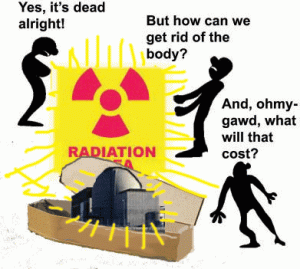
The escalating costs of the geological disposal facility (GDF) have led the Public Accounts Committee (PAC) chair to demand that the government produce a “coherent plan” to manage the country’s nuclear waste legacy
29 Oct, 2025 By Tom Pashby
https://www.newcivilengineer.com/latest/escalating-nuclear-waste-disposal-cost-leads-senior-mp-to-demand-coherent-plan-29-10-2025/
A GDF represents a monumental undertaking, consisting of an engineered vault placed between 200m and 1km underground, covering an area of approximately 1km2 on the surface. This facility is designed to safely contain nuclear waste while allowing it to decay over thousands of years, thereby reducing its radioactivity and associated hazards.
PAC chair Geoffrey Clifton-Brown’s comments were made in reaction to the revelation that the total life cost of the GDF is up to £15bn more than the sum listed in the National Infrastructure and Service Transformation Authority’s (Nista’s) recent annual report. Nista is a government body and works with the Cabinet Office and Treasury and its August 2025 report published figures from Nuclear Waste Services (NWS), the government body responsible for the GDF, showing the GDF as having a whole life cost of from £20bn to £53.3bn.
However, Nista’s Infrastructure Pipeline dashboard lists the GDF’s CapEx (capital expenditure) range for new infrastructure in 2024/2025 prices as being from £26.2bn to £68.7bn, with the top end being slightly over £15bn higher than the figure published in the annual report.
A government source explained to NCE earlier that the discrepancy is because the figures published in Nista’s annual report was based on 2017/2018 prices, meaning the effects of long-term inflation were not accounted for.
Criticism has previously been levied at High Speed 2 (HS2) because of its use of historic pricing figures to reduce the impact of inflation on budget projects and make the total cost of the project appear to be lower than it would end up being.
Government must have coherent plan to manage nuclear waste – senior MP
The House of Commons PAC is one of the most active and powerful select committees in Parliament, able to formally request that the National Audit Office carry out investigations into government projects.
Nuclear decommissioning is a key area of focus for the Committee because of the high total costs, which will hit the public purse into the far future. Sellafield is seen as the government’s flagship project within the wider nuclear decommissioning programme.
The scale of future nuclear decommissioning is clear in the Nuclear Decommissioning Authority: Annual Report and Accounts 2024 to 2025, which says: “the discounted best estimate of the future costs of the decommissioning mission of £110.1bn”. This is a £5bn increase on the previous year.
Nuclear power in Scotland would have same problems as fossil fuels
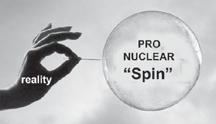
NUCLEAR power has the “same fundamental challenges” as fossil fuels, international experts have said, as they criticised the UK Government’s embrace of the nuclear industry.
Four academics, from the UK and the US,
argued that costs for nuclear power are “huge” and “rising” and
that “significant delays” in getting projects online are the norm.
They also described how in the space of a year nuclear “adds as much net
global power capacity as renewables add every two days”, and criticised
the drive by Labour ministers to deregulate the industry. The group of
academics includes Amory Lovins and Professor Mark Jacobsen, from the
University of Stanford, Professor Stephen Thomas, from the University of
Greenwich, and Dr Paul Dorfman, Bennett Scholar at the University of
Sussex.
In a joint statement, published in The National, they say that Ed
Miliband’s plans to assess Scottish sites for nuclear projects and Keir
Starmer’s plans to usher in a “golden age of nuclear” with Donald
Trump are hampered by a “few awkward facts”. They said: “The reason
is simple. Nuclear costs are huge, rising, and significant delays are the
norm.
The National 29th Oct 2025,
https://www.thenational.scot/news/25579222.nuclear-power-scotland-problems-fossil-fuels/
1 This Month


31st January – Challenging the War Machine – a DECLASSIFIED UK SUMMIT


Website of the Week
Now until to February 10, 2026 Radioactive waste storage in France: the debate is finally open! How to participate?
-
Archives
- January 2026 (211)
- December 2025 (358)
- November 2025 (359)
- October 2025 (377)
- September 2025 (258)
- August 2025 (319)
- July 2025 (230)
- June 2025 (348)
- May 2025 (261)
- April 2025 (305)
- March 2025 (319)
- February 2025 (234)
-
Categories
- 1
- 1 NUCLEAR ISSUES
- business and costs
- climate change
- culture and arts
- ENERGY
- environment
- health
- history
- indigenous issues
- Legal
- marketing of nuclear
- media
- opposition to nuclear
- PERSONAL STORIES
- politics
- politics international
- Religion and ethics
- safety
- secrets,lies and civil liberties
- spinbuster
- technology
- Uranium
- wastes
- weapons and war
- Women
- 2 WORLD
- ACTION
- AFRICA
- Atrocities
- AUSTRALIA
- Christina's notes
- Christina's themes
- culture and arts
- Events
- Fuk 2022
- Fuk 2023
- Fukushima 2017
- Fukushima 2018
- fukushima 2019
- Fukushima 2020
- Fukushima 2021
- general
- global warming
- Humour (God we need it)
- Nuclear
- RARE EARTHS
- Reference
- resources – print
- Resources -audiovicual
- Weekly Newsletter
- World
- World Nuclear
- YouTube
-
RSS
Entries RSS
Comments RSS
 nuclear-news