The EU Confirmed That Over Half A Million Ukrainian Men Fled To Escape Conscription
Zelensky’s forthcoming conscription drive might be the proverbial straw that breaks the camel’s back and could result in the Maidan scenario and/or perhaps even the Zaluzhny-led mutiny that he’s so afraid of nowadays.
The EU’s official statistics body Eurostat confirmed that an estimated 650,000 military-age Ukrainian men entered the bloc since the start of Russia’s special operation, though they acknowledged that it could be much more since their data only accounts for those who’ve officially registered their status. The BBC reported on this shortly after Zelensky promised that a new conscription drive will begin next week, and the timing of their article can thus be interpreted as a subtle signal that they expect this policy to fail.
As it turns out, Zelensky’s parliamentary ally David Arakhamia admitted just the other day that former British Prime Minister Boris Johnson convinced the Ukrainians to abandon spring 2022’s Istanbul peace process with Russia despite the two warring sides having been on the brink of a deal. This makes the UK state broadcaster’s aforesaid signal bittersweet since their country is morally responsible at least in part for all the deaths over the past 20 months since Kiev pulled out of those peace talks……………………………………… more https://korybko.substack.com/p/the-eu-confirmed-that-over-half-a?utm_source=post-email-title&publication_id=835783&post_id=139165040&utm_campaign=email-post-title&isFreemail=true&r=ln98x&utm_medium=email
Ukraine ‘concerned’ by Western push for peace talks – security chief
https://www.rt.com/russia/587695-ukraine-concerned-russia-talks/ 20 Nov, 2023
The West must keep supporting Kiev if it wants to keep ruling the world, Alexey Danilov has claimed
Kiev is worried that its Western backers are calling for peace out of an irrational fear of Russia, Aleksey Danilov, the secretary of Ukraine’s National Security and Defense Council, said on Monday.
Danilov spoke via video link to the annual conference of the Halifax International Security Forum, a Washington, DC-based pressure group funded in part by the Canadian government.
“Ukraine is concerned by the fact that discussions among certain partners have intensified regarding the need for negotiations, consultations, meetings with the Russians to discuss the issues of the war in Ukraine, a ceasefire, etc.,” Danilov said, according to a transcript posted by his office.
He attributed this to a “rudimentary fear” of Russia and argued that the West should follow Ukraine’s example instead, as Moscow “only understands the language of force.”
According to Danilov, the current conflict is “a struggle between democracy and tyranny,” with the West and Ukraine on one side, and Russia, China, Iran and North Korea on the other. If Russia is not defeated, the world should expect a new “axis of evil” within 15-20 years that would include “some European countries” as well, he insisted. “Ukraine and the Ukrainian people will fight to the end. We are sure of our victory.”
President Vladimir Zelensky’s top security official described Ukraine’s idea of victory as the “controlled decomposition of Russia into several parts” leading not just to “regime change” in Moscow but the “de-sovereignization… denuclearization and demilitarization” of the neighboring country.
Meanwhile, he said, Ukraine needs more Western funding and support to restore its 1991 borders and become an economic powerhouse
“Ukraine has every chance to become a strategic project of the West, which will demonstrate the full power of the vitality of democracy and the defense of universal values,” Danilov insisted. “The West must confirm that it is and remains the First, and a victorious Ukraine will serve as a convincing narrative in the modern confrontation between slavery and freedom!”
Earlier on Monday, US Defense Secretary Lloyd Austin arrived in Kiev to offer moral support for Ukraine, but had no new military assistance to announce. Meanwhile, Treasury Secretary Janet Yellen told the outlet CNBC that Ukraine is “utterly dependent” on US funding to keep paying the salaries of government workers, calling the continued funding of Kiev a “critical priority” for US national security.
Most of the congressionally approved funding for Ukraine has been spent and the White House has been trying to pressure Congress to pass more, so far with no effect.
Engie demands close scrutiny of French nuclear power deal to ensure competition.
A recent deal regulating French nuclear power risks making
electricity more expensive and must be carefully monitored to ensure the
new rules do not strengthen EDF’s dominant position, power group Engie’s
CEO said on Wednesday. Vigilance will be needed to ensure EDF’s producer
and supplier activities are strictly separated, said Engie (ENGIE.PA),
which is the second largest electricity supplier in the country behind
state-owned EDF.
Reuters 22nd Nov 2023
UK GOVERNMENT BLOCKS MP QUESTIONS ABOUT GAZA-RELATED ACTIVITY AT ITS CYPRUS BASE

Ministry of Defence takes extraordinary step of censoring all requests for information by MPs about RAF Akrotiri on Cyprus, which Declassified has reported is facilitating arms supplies to Israel’s war on Gaza.
MATT KENNARD AND MARK CURTIS, 20 NOVEMBER 2023 https://www.declassifieduk.org/uk-government-blocks-mp-questions-about-gaza-related-activity-at-its-cyprus-base/
- MP whose questions were blocked tells Declassified: “This is totally unacceptable in a democracy”
- RAF sent A400M military transport aircraft from Cyprus base to Tel Aviv this morning
- Britain’s Cyprus base has secretly become international military hub supporting Israel’s bombing of Gaza
The British government has blocked MPs asking any questions about activity at RAF Akrotiri, its vast air base on Cyprus, Declassified can reveal.
Blocking all parliamentary questions from MPs is a highly unusual move.
Government departments routinely refuse to answer specific questions about military operations for reasons of “national security”, but blocking all questions by elected parliamentarians goes far beyond the usual level of Whitehall secrecy.
It comes after Declassified revealed the RAF has made over 30 military transport flights to Tel Aviv since Israel began bombing Gaza. The Ministry of Defence refused to provide us any detail of the cargo or personnel on the flights.
Just this morning an A400M Atlas military transport aircraft operated by the RAF landed in Tel Aviv from Akrotiri. The aircraft can carry 116 soldiers, a Chinook helicopter or a payload of 37 tonnes.
RAF Akrotiri sits 180 miles from Tel Aviv with a flight time of 40 minutes.
Declassified has also reported that the US is moving arms to Israel using RAF Akrotiri, which has become an international military hub supporting Israel’s bombing campaign in Gaza. Half of US planes flying from British Cyprus are said to be carrying weapons for Israel.
Kenny MacAskill, Alba MP for East Lothian, told Declassified he put down a number of parliamentary questions concerning what military support the UK is providing to Israel and the role of RAF Akrotiri in the supply of military equipment.
“Your question has been queried because it is subject to a block by Government,” he was told in an email. “The Department [Ministry of Defence] has stated that it will not comment on operational matters at this base.”
MacAskill, a former Scottish justice secretary, told Declassified: “This is totally unacceptable in a democracy. Genocide is being perpetrated in Gaza and we have a right to know what our Government is doing about it.”
MacAskill said he had never experienced such a ‘block’ on asking parliamentary questions before.
He added: “The failure to call for an immediate ceasefire is bad enough but any complicity raises issues of participating in war crimes. We need openness and transparency by our government. This is not in our name.”
Secrecy
The UK military-run Defence and Security Media Advisory (DSMA) Committee – better known as the ‘D-Notice’ committee – has also sent out an ‘advisory’ to all British media to suppress reporting on UK special forces’ activity related to Gaza. The SAS was previously reported to have deployed a force to Cyprus.
No British mainstream media outlets have reported on Declassified’s recent findings about RAF Akrotiri and Gaza despite the President of Cyprus Nikos Christodoulides having to defend his government from accusations of complicity in Israel’s bombing of Gaza.
In answer to questions about the use of RAF Akrotiri by Cypriot journalists over the weekend, Christodoulides said: “There is no such information, our country cannot be used as a base for war operations”.
However, RAF Akrotiri has long been the staging post for British bombing campaigns across the Middle East. Declassified also recently revealed that 129 US airmen are also permanently deployed at the base.
The censorship of information requests from MPs makes it all but certain that RAF Akrotiri is being used for covert military purposes that the government does not want the public to know about.
It is likely the UK is sending material military aid to Israel during its bombing of Gaza, which has now killed over 12,000 Palestinians, although it previously told Declassified it was not providing “lethal aid”.
Nuclear Power: UK’s Financial Challenge Unveiled
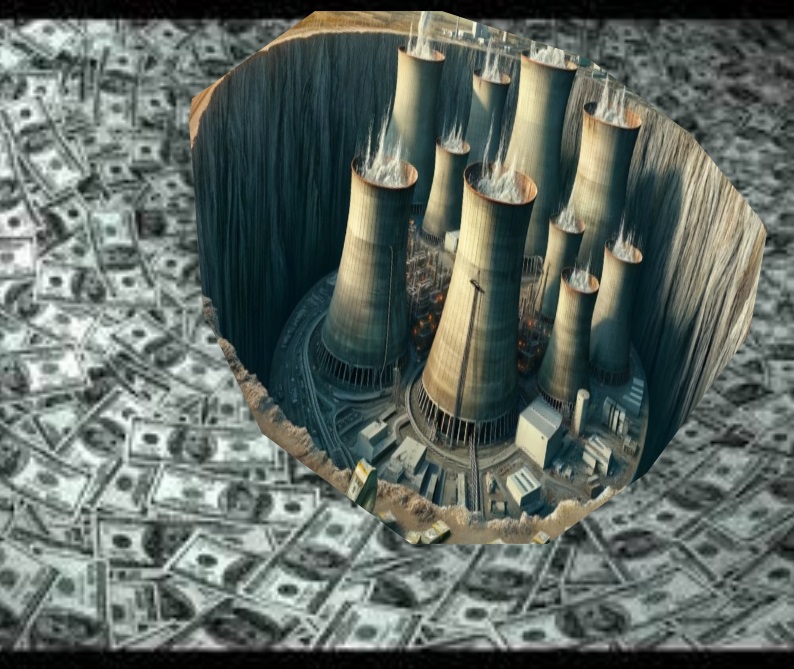
the actual cost might reach as high as £10 billion per reactor, resulting in an astonishing cumulative expense for the decommissioning process. …
this substantial cost could ultimately fall on taxpayers, raising concerns about the financial burden on the public.
Dev X Noah Nguyen, November 21, 2023
The UK’s Commitment to Nuclear Power and Financial Challenges
The United Kingdom’s dedication to nuclear power is becoming a financially challenging commitment as the dismantling expenses for its nuclear generating facilities continue to escalate. These costs have been advantageous for businesses involved in the dismantling process but a noteworthy expenditure for UK taxpayers
Regardless of the substantial costs associated with the new nuclear reactors at Hinkley Site C and the rising price of clean-up initiatives, the nation’s government remains committed to nuclear technology. This unwavering commitment is driven by the belief that nuclear power is crucial for achieving the UK’s long-term energy security and climate change goals. However, critics argue that increased investment in renewable energy sources could provide similar benefits, without the high financial burden and safety concerns associated with nuclear power……………………………………………………
Concerns Regarding Decommissioning Costs and Life Expectancy of Reactors
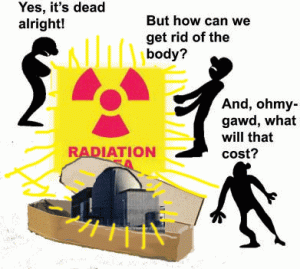
Nearly all of the remaining functional reactors are scheduled for closure by 2028, except Sizewell B, anticipated to stay in operation until 2035. With a life expectancy of roughly 40 years—considerably shorter than the 60 to 80 years frequently claimed by the sector—questions emerge about the demolition costs for the existing 23 reactors and the two under construction at Hinkley Point C.
As these reactors reach the end of their life cycle, it is crucial to plan and allocate resources effectively for their dismantling and waste disposal. The cost of decommissioning and managing nuclear facilities can significantly impact the overall economic feasibility of the energy generated, emphasizing the need for accurate cost estimations and environmentally responsible strategies.
Projected Costs of Dismantling and Importance of Effective Management
By the end of 2022, the UK’s Nuclear Decommissioning Authority (NDA) projected a total dismantling cost of £149 billion. If this figure encompasses Hinkley Site C, it would equate to about £6 billion per reactor. This substantial financial investment highlights the importance of thoroughly managing the decommissioning process to ensure effective resource allocation. With the growing push towards renewable energy sources, proper management and safe dismantling of nuclear reactors have become increasingly significant for the country’s transition towards sustainable energy.
Higher Potential Costs and the Financial Burden on Taxpayers
However, Professor Stephen Thomas from the University of Greenwich’s energy policy department posits that the actual cost might reach as high as £10 billion per reactor, resulting in an astonishing cumulative expense for the decommissioning process. He further elaborates that this substantial cost could ultimately fall on taxpayers, raising concerns about the financial burden on the public. To mitigate such consequences, proper planning and establishing an adequate funding source must be undertaken for a feasible and efficient decommissioning process…………………………………………………………………………………….
What are the concerns regarding the decommissioning costs and life expectancy of nuclear reactors in the UK?
With functional reactors scheduled for closure and shorter life expectancies than often claimed, there are concerns about the demolition costs for the existing reactors and effective management of resources for dismantling and waste disposal. The cost of decommissioning can significantly impact the overall economic feasibility of nuclear-generated energy and necessitates accurate cost estimations and environmentally responsible strategies………….. https://www.devx.com/news/nuclear-power-uks-financial-challenge-unveiled/
Tories, Labour clash over Milton Keynes nuclear waste claims
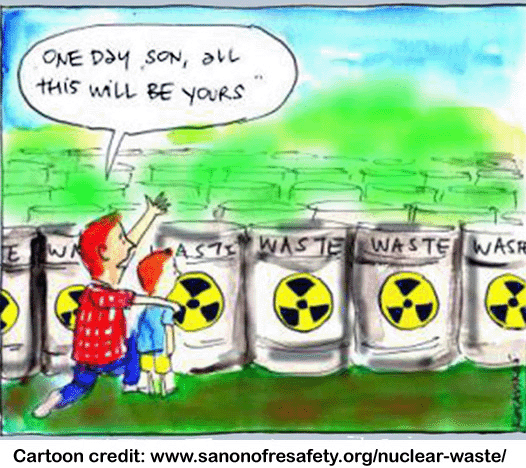
Claims that Milton Keynes is being considered as a site to store nuclear
waste have sparked a war of words between the Labour and Conservative
parties. The Labour Leader of Milton Keynes City Council Peter Marland
claimed that a site in the north of the city had been identified as a
potential dumping ground for nuclear waste.
He said that Nuclear Waste
Services, the body responsible for managing the nuclear waste generated
from UK power stations, has contacted the council about an “interested
party” looking for a site. Nuclear Waste Services has been approached for
comment. In an email seen by the BBC Local Democracy Reporting Service
(LDRS) a council official said they had been contacted by a member of the
government body who “confirmed that they will ‘close out’ with the
interested party, meaning the initial assessment of a site in MK will go no
further”.
Milton Keynes Labour said it had launched a petition to oppose
the “plans” that will be sent to the Secretary of State for Energy
Security and Net Zero, Claire Coutinho.
Bucks Free Press 21st Nov 2023
Energy and Climate Scenarios Paradoxically Assume Considerable Nuclear Energy Growth
DIW Weekly Report 45-49 / 2023, S. 293-301
Christian von Hirschhausen, Björn Steigerwald, Franziska Hoffart, Claudia Kemfert, Jens Weibezahn, Alexander Wimmers
get_app Download (PDF 0.52 MB)
get_app Gesamtausgabe/ Whole Issue (PDF 2.63 MB – barrierefrei / universal access)
Abstract
Most climate and energy scenarios created by international organizations and researchers include a considerable expansion of nuclear energy. In the IPCC Sixth Assessment Report, for example, nuclear energy increases from a current 3,000 terawatt hours on average to over 6,000 terawatt hours in 2050 and to over 12,000 terawatt hours in 2100.
This doubling and quadrupling of nuclear energy production by 2050 and 2100 is contradictory to the technical and economic realities: At no point have newly built nuclear energy plants ever been competitive, nor will they become so in the foreseeable future.
This contradiction, referred to here as the nuclear energy scenario paradox, can be explained by a series of politico- economic, institutional, and geopolitical factors.
In particular, the close relationship between the military and commercial uses of nuclear energy as well as the interest of the nuclear industry and its organizations in self-preservation play a role.
The assumptions and model logic of the scenarios must be critically scrutinized. There is the risk that considerable public and private funds will be invested in developing technologies for the commercial use of nuclear energy despite the fact that other technologies are expected to offer a significantly better cost-performance ratio with fewer economic, technical, and military risks. In light of the urgency of climate change mitigation, continuing to channel personnel and financial resources into nuclear energy is problematic.
Etopia Report: the nuclear problem – economic realities

Selected quotes for from the eTopia report 2023 (translated from the French)
“4.5. The pharaonic cost of accidents and uninsurability of Nuclear
For their part, the potential costs of nuclear incidents and accidents are difficult to take into account in the cost of the mWh, even if they are very real. Thus, the sabotage (still not clarified) in 2014 of one of the reactors at Doel cost Engie nearly 100 million euros. And in case largest accident, no insurance company in the world will agree to cover nuclear power plants.
The maximum amount of damage up to which liability of the operator is incurred, amounts to €1.2 billion for each accident nuclear ! The additional costs would therefore be borne by the taxpayers (see on this subject the Price Anderson Act, American legal framework of irresponsibility of operators on which the legislation is based today (European).
As an example – and scale – the cost of the disaster of Chernobyl is estimated, at a minimum, at more than 200 billion euros, that of Fukushima today exceeds 170 billion, while the counter still running… The Institute of Radioprotection and Nuclear Safety (IRSN) studied the economic cost of a nuclear accident, if it occurred in France. A serious accident would cost on average 120 billion euros, a major accident, 430 billion euros… or the GDP of Belgium.
In a recent interview, Patrick Pouyanné, boss of Total Energies, explains why the company will not go into nuclear power. Acknowledging that they had studied the issue very seriously, he concluded: “it’s very capital intensive and the risk cocktail is too important to a private company”. Too expensive and too dangerous, therefore. In Germany, a study commissioned by the Versicherungsforen Leipzig, a service provider for insurance companies, calculated in 2011 that if an insurance wanted to constitute sufficient premiums to a nuclear power plant within 50 years, for example, it should ask for 72 billion euros per year for civil liability!
In practical, the reactors cannot therefore be insured, unless that the price of electricity is multiplied by… twenty. The study explains years of market distortion in favor of nuclear energy and to the detriment of competition. Uwe Leprich from the University of Sciences applied sciences of Saarbrücken, demonstrates that “nuclear energy is not competitive when considered from an economic point of view appropriate in terms of regulatory policy. »
ETOPIA is a Center for animation and research in political ecology. Founded in 2004, based in Namur, our think tank brings together environmental activists, associate researchers, trainers and change agents.
Link eTopia Nuclear 2023 Report: https://rep.etopia.be/wp-content/uploads/2023/09/LIVRE_PROBLEME_NUCLEAIRE_WEB.pdf
The Russian nuclear industry during wartime, 2022 and early 2023
Bellona has published a new report that analyze the new footing on which
Rosatom, Russia’s power state nuclear corporation, has found itself as the
the war in Ukraine grinds on. It’s clear that the putatively civilian
corporation is now a direct participant in and beneficiary of Russia’s
seizure of Ukrainian nuclear infrastructure.
In the early days of the war,
Moscow’s troops marched into Chernobyl, site of the world’s worst nuclear
accident and now the host of numerous industrial scale activities aimed at
cleaning it up. Days later, it then overran the Zaporizhzhia nuclear power
plant — Europe’s largest such facility — making it the world’s first
nuclear power station to be taken as prize as the result of an armed
attack. Click here to download the report: The Russian nuclear industry during wartime, 2022 and early 2023
Bellona 21st Nov 2023
UK Has £10 Billion Per Nuclear Reactor Decommissioning Bottomless Pit
estimate in late 2022 was that the program was likely to cost £260 billion given the cost trends. That’s £10.4 billion per reactor, an order of magnitude higher than the industry average of three years ago.
Whether £6 billion or £10 billion, these numbers should be giving national energy policy makers pause. After all, those costs are going to be paid in the future in future value dollars that will be inflated. They won’t be getting magically smaller due to discounting, but should be included in cost cases with the discounting rates built in.
Clean Technica, , Michael Barnard
The decommissioning costs for the UK’s nuclear generation are coming home to roost, and they are laying golden eggs for the firms that won the business. For UK citizens, not so much. Despite the very high costs of both the new nuclear reactors at Hinkley Site C, the rapidly rising costs of clean up and the much cheaper alternatives available, the country’s current administration remains committed to the technology. Something is likely to give.
The UK is like the USA and France, a western nuclear military power. They built and operated four nuclear powered submarines with nuclear missiles and two nuclear powered aircraft carriers. That gave them one of the preconditions for success for commercial nuclear electricity generation.
They built all of the 14 shut down and 9 currently operating nuclear generation plants between 1957 and 1995, satisfying the conditions of success of a three to four decade build out to maintain master builders, creation of a nuclear construction industry with skilled, certified and security validated resources, and building a couple of dozen reactors to amortize the national program across.
They built all reactors with a very narrow set of designs, first the Magnox which also created weapons grade plutonium and then the AGR which was a modified Magnox optimized for electricity generation, not plutonium manufacturing. The high similarity and only two designs across all 23 reactors satisfied another criterion for success of a nuclear program…………….
Naturally, the nuclear program was a national strategic priority for the UK with bi-partisan support between the Conservatives and Labour, satisfying another condition of success.
This was a blueprint for a successful nuclear electrical generation program, and why nuclear generation is a poor fit for free market economics.
Despite no longer having the obvious conditions for success for a new nuclear program, the British government got behind the Hinkley Point C construction of two new EPR reactors with their unproven design. That program is years late and 50% over budget as a result. The reactors are GW scale, with 3.2 GW between the two reactors so have one condition for success out of six. The UK government also have planned two EPRs at the Sizewell site, with one of the innumerable Conservative Prime Ministers of the past decade committing £100 million of governmental money in a vain attempt to get any private investors interested. No schedule has been set for construction of those reactors.
But now the reactors are shut down or about to be shut down. Most of the remaining operating reactors will be off the grid by 2028, with only Sizewell B hanging on until 2035. All reactors had roughly a 40 year lifespan, not the 60 to 80 years often claimed by the industry, including the 60 year claim for Hinkley Point C.
How much will it cost to decommission those 23 reactors and the two Hinkley Point C reactors still under construction? The last time I looked at nuclear decommissioning costs and duration was three years ago. At the time, the average was roughly a billion US dollars and a century of duration per site.
Well, the UK’s nuclear program is definitely exceeding that. As of late 2022, the official estimate of the UK’s Nuclear Decommissioning Authority (NDA) was £149 billion. Assuming Hinkley Site C was rolled into that number, that would be a cost of £6 billion per reactor, or more than many nuclear advocates claim new nuclear can be built for.
However, Stephen Thomas, a professor of energy policy at the University of Greenwich and a regular analyst of the nuclear industry with a publication history on energy and nuclear programs with a global reach stretching back to 2004, has a slightly different expectation. He first published on the UK’s NDA in 2005 and has been tracking costs closely since, including with freedom of information requests to get accurate numbers.
His estimate in late 2022 was that the program was likely to cost £260 billion given the cost trends. That’s £10.4 billion per reactor, an order of magnitude higher than the industry average of three years ago.
Whether £6 billion or £10 billion, these numbers should be giving national energy policy makers pause. After all, those costs are going to be paid in the future in future value dollars that will be inflated. They won’t be getting magically smaller due to discounting, but should be included in cost cases with the discounting rates built in.
Given the magnitude of the costs, effectively every MWh generated by the UK fleet of reactors cost substantially more than its official stated cost. The price will be paid, after all.
If there were no alternatives to nuclear generation, then this wouldn’t be a problem compared to global warming. But, of course, this is 2023 and there are proven, effective, efficient and reliable forms of low-carbon electrical generation that do compete with nuclear energy, wind and solar. ……………………………………
The full lifecycle costs of nuclear energy are fairly well established now, and they are much higher than for renewables, transmission and storage. The conditions for success for nuclear programs are well established as well, and there isn’t a single country in the world that has fulfilled them in the 21st Century. Even China has failed, in my assessment as their industrial policy of exporting nuclear reactors of any type foreign buyers might want overrode energy policy requirements to build only a single design.
It’s unclear to me what blend of ideology, tribalism and magical thinking are combining to make countries think that their nuclear programs are unique, and that they will succeed at them when there are clear alternatives. https://cleantechnica.com/2023/11/19/uk-has-e10-billion-per-nuclear-reactor-decommissioning-bottomless-pit/
Major malfunction on Royal navy nuclear submarine plunges warship into ‘danger zone’

The sub was preparing to go on patrol when dials indicating its depth stopped working, leaving commanders to think it was level when it was still diving.
Jerome Starkey – The Sun, November 20, 202
A Royal navy nuclear sub sinking towards its crush depth was saved moments from disaster.
A depth gauge failed on the decades-old Vanguard class vessel, carrying 140 crew and Trident 2 doomsday missiles in the Atlantic.
Such a catastrophe would also have triggered a nightmare salvage mission to recover the top-secret vessel and its nuclear reactor before the Russians got to the scene, The Sun reports.
The sub was preparing to go on patrol when dials indicating its depth stopped working, leaving commanders to think it was level when it was still diving.
It was entering the “danger zone” when engineers at the back of the 490ft Vanguard-class vessel spotted a second gauge and raised the alarm………………………………………. more https://www.news.com.au/travel/travel-updates/incidents/major-malfunction-on-royal-navy-nuclear-submarine-plunges-warship-into-danger-zone/news-story/6267e0293fd0b47979b907f1912d5058
Nuclear submarine scare for 140 British crew due to ‘faulty’ gauge
George Sandeman, Monday November 20 2023, The Times

A Royal Navy nuclear submarine travelled to dangerous oceanic depths because of a failed gauge, it was reported last night.
The Vanguard-class vessel, which was carrying 140 crew and equipped with Trident missiles, was operating in the Atlantic at the time of the incident. It was preparing to go on patrol when the depth gauge stopped working, according to The Sun, leading commanders to believe that the submarine was level when it was still diving
Its descent was only halted once engineers working at the rear of the vessel noticed the actual depth on a second gauge, which was working correctly, and raised the alarm…………………………………..https://www.thetimes.co.uk/article/nuclear-submarine-scare-for-140-british-crew-due-to-faulty-gauge-5nlv2bgqc
Czech Republic, France and others will use “Declaration to Triple Nuclear Energy” to push for EU funding to the nuclear industry
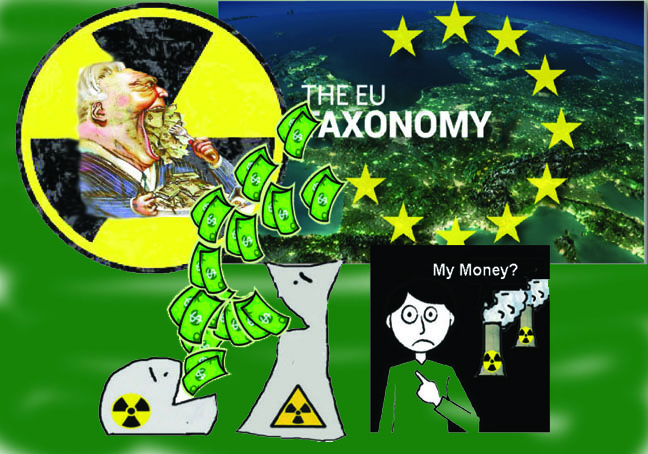
Edvard Sequens, Calla, Czech Nuclear Republic 20 Nov 23
“Declaration to Triple Nuclear Energy” – The Czech Government had it on
the agenda this week, saying that they wanted to join in. Supporting
countries include the Czech Republic, USA, France, Korea, Sweden, UK and
Ukraine (more countries are expected to join).
Substantively, this is nonsense, and the declarations adopted at COP
meetings are often only formal. But I expect that the nuclear alliance
of European countries will use the declaration to press for a
redirection of direct support from the European budget to new nuclear
projects. This is, after all, a long-term goal of the Czech political
representation. Step by step – Recognition of nuclear energy as a tool
to achieve European climate goals – Inclusion in the taxonomy –
Possibility of public support for nuclear energy by individual states
without the need to approve exemptions – Direct financial support – …
Finland extends nuclear reactor outage, pushing up power price
November 20, 2023 —by Essi Lehto and Nora Buli for Reuters
HELSINKI, Nov 20 (Reuters) – Finnish power company TVO said on Monday it had extended an outage at Olkiluoto 3, Europe’s largest nuclear power generator, while it undertakes repairs, likely boosting electricity prices.
The 1,600 megawatts (MW) unit, known as OL3, on Sunday suffered an unexpected outage due to a turbine problem, TVO and Nordic power bourse Nord Pool said.
“We are looking into a fault on the turbine side and when we find out what it is, we can say what caused it and when we can return to electricity production,” said a TVO spokesperson.
“We will issue a statement as soon as we know more.”
The outage was expected to drive up short-term power prices in Finland and the Nordic region, an LSEG market analyst said.
TVO had initially predicted a return to full production capacity on Monday morning, but in a regulatory filing said it was instead aiming for a partial restart to take place on Tuesday…………………… https://www.nasdaq.com/articles/finland-extends-nuclear-reactor-outage-pushing-up-power-price
—
UK’s Foreign Secretary urged to send observers to nuclear ban meeting in New York
The Second Meeting of the States Parties to the Treaty on the Prohibition of Nuclear Weapons will be held at the United Nations in New York between 27 November and 1 December.
The Treaty, usually referred to as the TPNW or Ban Treaty, entered international law in January 2021 after an intensive campaign championed by the International Campaign to Abolish Nuclear Weapons, a global coalition of civil society and faith groups, Hibakusha (atomic bomb and test survivors), scientists, and academics. In total there are 661 partner organisations in 110 countries within ICAN, amongst them are the UK/Ireland Nuclear Free Local Authorities and Mayors for Peace, of which NFLA founder Manchester is a Vice-Presidential and Executive city. ICAN won the Nobel Peace Prize for its work.
First opened for signature in July 2017, the TPNW now has 93 signatory states, of which 69 have taken the final step of ratifying their absolute adherence to it through their national parliaments.
The Treaty obliges signatory states not to ‘deploy, develop, test, produce, acquire, possess, stockpile, use or threaten to use nuclear weapons’ or assist other states to do so. In addition, and importantly for the UK and the other nuclear weapons states, the treaty contains obligations placed upon signatories ‘to provide adequate assistance to individuals affected by the use or testing of nuclear weapons, as well as to take necessary and appropriate measure of environmental remediation in areas under its jurisdiction or control contaminated as a result of activities related to the testing or use of nuclear weapons’.
Unfortunately, none of the nine nuclear weapon armed states (the USA, Russia, France, UK, China, India, Pakistan, Israel and North Korea), or their allies who choose to shelter under their supposed ‘nuclear umbrella’, have chosen to sign the Treaty, and in each of the nine states campaigners are seeking to influence government ministers to at least engage with this important international peace initiative by authorising observers to attend the second meeting in progress.
Norway and Germany have recently chosen to do so and now the Nuclear Free Local Authorities have joined the United Nations Association – UK and co-campaigners in writing to Britain’s new Foreign Secretary urging him to let Britain follow their lead. Campaigners also want the UK Government to acknowledge the ongoing harm caused to Indigenous people and their environments by the conduct of British atomic and nuclear weapons tests in Australia, in the Pacific and in the USA, and to use the meeting to listen to the testimony of representatives from Kiribati, formerly Christmas Island.
Councillor Lawrence O’Neill, Chair of the UK/Ireland Nuclear Free Local Authorities, explained why he was so determined to endorse the joint letter on behalf of the NFLAs:
“The UK Government claims to be committed, alongside the USA, Russia, France, and China, to achieving nuclear disarmament through the Non-Proliferation Treaty, yet in over fifty years this has achieved nothing. The reality is that India, Israel, Pakistan and North Korea continue to operate as nuclear weapon states outside of the NPT and we now live in a world where the nuclear powers continue to invest in their frightful nuclear arsenals, where the use of nuclear weapons has being threatened in Ukraine and Gaza, and where the Doomsday Clock hovers at 90 seconds to midnight!
“The world needs something to bring us back from the abyss – and the Ban Treaty represents that hope. Half of the United Nations have so far signed up to it and the NFLAs want the other half to do so. Seeing the UK attend the New York meeting as an observer and listen to the testimony of the awful impact of nuclear weapons testing in Kiribati would be the first sign that our government is serious about achieving nuclear disarmament and righting the wrongs that we as a nation have inflicted on the Kiribati people.”
1 This Month

of the week– Nuclear Reactor Information Task Force

14 May – online event From Bombs to Data Centres: the Face of Nuclear Colonialism
To see nuclear-related stories in greater depth and intensity – go to https://nuclearinformation.wordpress.com
-
Archives
- May 2026 (81)
- April 2026 (356)
- March 2026 (251)
- February 2026 (268)
- January 2026 (308)
- December 2025 (358)
- November 2025 (359)
- October 2025 (376)
- September 2025 (257)
- August 2025 (319)
- July 2025 (230)
- June 2025 (348)
-
Categories
- 1
- 1 NUCLEAR ISSUES
- business and costs
- climate change
- culture and arts
- ENERGY
- environment
- health
- history
- indigenous issues
- Legal
- marketing of nuclear
- media
- opposition to nuclear
- PERSONAL STORIES
- politics
- politics international
- Religion and ethics
- safety
- secrets,lies and civil liberties
- spinbuster
- technology
- Uranium
- wastes
- weapons and war
- Women
- 2 WORLD
- ACTION
- AFRICA
- Atrocities
- AUSTRALIA
- Christina's notes
- Christina's themes
- culture and arts
- Events
- Fuk 2022
- Fuk 2023
- Fukushima 2017
- Fukushima 2018
- fukushima 2019
- Fukushima 2020
- Fukushima 2021
- general
- global warming
- Humour (God we need it)
- Nuclear
- RARE EARTHS
- Reference
- resources – print
- Resources -audiovicual
- Weekly Newsletter
- World
- World Nuclear
- YouTube
-
RSS
Entries RSS
Comments RSS
 nuclear-news