Hackers use LinkedIn to target UK nuclear waste firm

ITPRO, By Emma Woollacott, 2 Jan 24
Radioactive Waste Management said attackers have leveraged LinkedIn in a spear phishing campaign
Radioactive Waste Management (RWM), which is planning a huge underground nuclear waste store in the north of England, has been targeted by cyber criminals via LinkedIn, according to The Guardian.
Accounts for RWM filed at Companies House show that the organization has been targeted by cyber criminals using various methods, including the use of popular social network platforms to dupe staff.
RWM, which is part of Nuclear Waste Services (NWS), revealed that attacks have escalated in recent months, raising concerns over the risk of hackers gaining access to highly sensitive materials.
NWS chief executive, Corhyn Parr, said the government-backed organization has experienced “instances of potential exploitation of ownership change through specific attack vectors, predominantly LinkedIn targeting”…………………………………………………………………………..
The incident highlights a growing problem. Last month, for example, the UK’s National Cyber Security Centre (NCSC) and international partners warned that Russia-based hacking group Star Blizzard was using spear phishing techniques via email and social media to target defense and governmental organizations.
LinkedIn has been the method of choice in previous attacks on industry and infrastructure, according to Adam Pilton, cyber security consultant at CyberSmart.
Used by millions of professionals globally, the popular social network has become a key hunting ground for targets in recent years……………………………………………. more https://www.itpro.com/security/hackers-use-linkedin-to-target-uk-nuclear-waste-firm
Swedish nuclear outage extended by 3 weeks
The outage coincides with a winter cold snap that has sent Nordic temperatures to their lowest levels in decades
Terje Solsvik, Reuters News, January 3, 2024, https://www.zawya.com/en/world/uk-and-europe/swedish-nuclear-outage-extended-by-3-weeks-njnyjkcb
A partial outage at Sweden’s Forsmark 2 nuclear reactor was extended by three weeks until Jan. 24 while repairs are made to a generator, the operator said in a market message posted via Nordic power exchange Nord Pool on Wednesday.
Forsmark Block 2 will operate at just 490 megawatt (MW) of its total 1,121 MW capacity, the note said.
The outage coincides with a winter cold snap that has sent Nordic temperatures to their lowest levels in decades, boosting demand for electricity in heating. (Reporting by Terje Solsvik, editing by Nora Buli)
Zelensky promises to ‘cut off’ Crimea in 2024
The Russian peninsula will become the conflict’s “center of gravity,” the Ukrainian leader told The Economist
Ukrainian President Vladimir Zelensky has predicted that his country’s armed forces will “isolate” Crimea in 2024. The region, which joined Russia in 2014 following a bloody nationalist coup in Kiev, hosts Moscow’s Black Sea fleet.
Kiev will seek to cut off access to the peninsula by destroying the Kerch bridge, which connects it to the Russian mainland, Zelensky claimed. For this purpose, he once again demanded German-made long-range Taurus cruise missiles, which Berlin has so far refused to supply even after France and the UK provided Kiev with Storm Shadow missiles.
Zelensky blamed information leaks for the failure of Kiev’s much-hyped summer counteroffensive against Russia, but nevertheless shared new insights into the military’s top priorities for 2024, saying in an interview with The Economist that isolating Crimea is “extremely important.”
The Ukrainian president reiterated his ambitious goal of eventually restoring the country’s 1991 borders, but stopped short of making any promises or setting timelines. The immediate goal, he said, will be “to defend the east” and protect Ukraine’s critical infrastructure.
“Russia has to know that for us this is a military object,” he said.
According to President Vladimir Putin, Russian forces now hold the strategic initiative in the Ukraine conflict, while Kiev has largely been driven by political goals, with their efforts aimed at showing “their true masters at least some results.”
Zelensky also complained that the “mobilization of Ukrainian society and of the world” was much lower now than at the beginning of the conflict, admitting that any military success will depend on assistance from the West.
“Giving us money or giving us weapons, you support yourself. You save your children, not ours,” he claimed.
Kiev announced a general mobilization in February 2022, barring most men aged 18 to 60 from leaving the country, but the campaign has been marred by corruption and draft dodging. Following Ukraine’s disappointing summer counteroffensive, which according to Moscow cost Kiev nearly 160,000 troops, Zelensky recently announced a plan to raise 500,000 more soldiers to replace battlefield losses.
“Mobilization is not just a matter of soldiers going to the front. It is about all of us. It is the mobilization of all efforts,” he told The Economist. “Let’s be honest, we have switched to domestic politics… If we continue to focus on domestic politics, we need to call elections. Change the law, the constitution. But forget about counteroffensive actions and de-occupation.”
Ukraine war – NATO provides a new bonanza for Raytheon and MBDA Germany weapons companies

NATO to buy 1,000 Patriot missiles to enhance Allies’ air defences
NATO’s Support and Procurement Agency will support a coalition of Allies, including Germany, the Netherlands, Romania and Spain to procure up to 1,000 Patriot missiles to strengthen their air defences amid Russia’s war against Ukraine. The contract will expand the European production of the missiles, enhancing supply and ensuring the replenishment of Allied stockpiles….
The $5.5 billion contract has been awarded to COMLOG, a joint venture between the US company Raytheon and German company MBDA, located in Schrobenhausen, Germany. The large volume of the order will support the set up of a production facility for Patriot missiles in Germany. ……….. https://www.nato.int/cps/en/natohq/news_221626.htm
Cyber-hackers target UK nuclear waste company RWM.
Radioactive Waste Management says attempt was made to breach the business using LinkedIn
Guardian, Alex Lawson and Anna Isaac, 1 Jan 2024
Cyber-hackers have targeted the company behind a £50bn project to build a vast underground nuclear waste store in Britain, its developer has said.
Radioactive Waste Management, the company behind the Geological Disposal Facility (GDF) project, has said that hackers unsuccessfully attempted to breach the business using LinkedIn.
RWM is the government-owned entity behind a trio of nuclear bodies that merged last year to create Nuclear Waste Services (NWS). The new body brought together the GDF project, the long-established Low Level Waste Repository in west Cumbria and another body responsible for managing waste to develop a store expected to last 175 years.
In accounts for RWM filed at Companies House, NWS’s chief executive, Corhyn Parr, said of the merger that “we have seen instances of potential exploitation of ownership change through specific attack vectors, predominantly LinkedIn targeting”………………………..
Experts have warned that social media sites are used by hackers to break through security mechanisms in a number of ways. These include creating fake business accounts, deceptive messages to gather information or cause recipients to click on malicious links, as well as directly trying to steal users credentials for other secure logins……………………..
The government is in the process of finding a site for the GDF project, a subterranean network tunnels and vaults designed to house Britain’s highly radioactive nuclear waste. The project is forecast to cost between £20bn and £53bn, and expected to receive its first waste in the 2050s. It echoes similar deep repository projects in Finland and France.
Earlier this year, Allerdale in Cumbria was deemed geologically unsuitable for the facility, leaving two other sites in Cumbria and one on the Lincolnshire coast remaining on the shortlist. NWS is in the process of surveying each site and convincing communities to approve of a development, in the face of local opposition…………………………….
Digital security in the nuclear industry has been in focus since the Guardian revealed a string of problems with cybersecurity at the Sellafield site in Cumbria………….. https://www.theguardian.com/business/2023/dec/31/cyber-hackers-target-uk-nuclear-waste-company-rwm
State papers: Plans for nuclear power plant on shores of Lough Neagh shelved over drinking water concerns
The Northern Ireland government was warned against proposals to build a nuclear power station beside Lough Neagh, archive files show.
Newsletter, By David Young, PA, 28th Dec 2023
The feasibility of the proposal was assessed by the Atomic Energy Research Establishment (AERE), a UK government body that was responsible for research on, and development of, nuclear power.
The Stormont government had been assessing the potential for a nuclear power plant in Northern Ireland in the 1950s and the shores of Lough Neagh, the UK and Ireland’s largest freshwater lake, had been identified as a possible location.
However, the AERE advised against this site, raising concern about water contamination in the event of an accident, particularly given that the lough was to be increasingly used as one of the main sources of water for Belfast.
The opinion of the AERE was outlined in a letter from its director John Cockcroft to then prime minister of Northern Ireland Viscount Brookeborough (Basil Brooke) in August 1958.
The document, marked confidential, is in archive files newly released from the Public Records Office of Northern Ireland.
In began by noting that an assessment of the “siting problem” in Northern Ireland had been conducted by a body called the Reactor Location Panel two years earlier, in 1956…………………………………………………………………………………… more https://www.newsletter.co.uk/news/politics/state-papers-plans-for-nuclear-power-plant-on-shores-of-lough-neagh-shelved-over-drinking-water-concerns-4458627
‘Get on with it’: Johnson pressures Sunak over delayed nuclear power plans

Documents seen by i reveal that major deadlines set by the Government have already been missed
Boris Johnson has warned Rishi Sunak
that the UK must generate more of its own electricity through nuclear if it
is to avoid spikes in energy prices. Boris Johnson has told Rishi Sunak to
“get on with it” after leaked documents revealed the UK’s transition
to nuclear power has been beset by delays. Plans to power a quarter of the
national grid with nuclear energy by 2050 have slowed, with a number of
internal targets missed, i can reveal.
The documents seen by i show that
several key deadlines have not been met for the UK’s plan to rapidly
increase nuclear output. The UK’s net-zero plans rely on one quarter of
the UK’s grid being powered by nuclear reactors, and Mr Johnson told i
that nuclear is vital to help control energy bills and prevent spikes such
as those caused by the Ukraine war.
The launch of Great British Nuclear,
the governmental organisation dedicated to co-ordinating the UK’s nuclear
energy plan, was only completed six months after the initial deadline of
the end of 2022. Grants to be given to promising projects were only
announced earlier this month, despite a deadline of 2022 in the documents,
which were prepared for the nuclear industry as a means of explaining the
Governments plan. A deadline to give at least one project a final
investment decision by spring 2023 was also missed.
The documents show
there is a target date for investment decisions on two further projects to
be approved by October 2024. Mr Johnson – who declared his strategy was
the “big ticket nuclear solution” to net zero when he launched it –
is concerned about the future of what he considers his legacy. ………………………………………………………………………………The delays also follow a series of -turns from Mr Sunak onnet-zero policies, which were first introduced by Mr Johnson. The former
prime minister had prioritised green policies during his premiership. Six
development sites had been shortlisted by the Government as part of a small
nuclear reactor competition in October.
However only one site from
Rolls-Royce is thought to be currently under assessment from the Office for
Nuclear Regulation (ONR) and Environment Agency, while the five other sites
are yet to progress to this stage. At the time the shortlist was announced,
Rolls-Royce hinted at frustrations at the speed of progress, with a company
statement saying “now let’s move at pace to secure the first order”
i understands that new Energy Secretary Claire Coutinho was told to focus
on projects such as nuclear upon appointment, amid industry frustrations.
With the potential of an election next year, and little movement on the
approval of six shortlisted sites, tension is building over the future of
the project. One industry source pointed to the recent announcement of an
agreement between Tees Valley Mayor Lord Houchen and the firm Community
Nuclear Power to develop the new mini nuclear reactors in the North-East.
The deal was negotiated separately from the UK’s central nuclear
strategy, amid disquiet over delays and direction. An industry source said:
“The [Tees Valley] deal is something of a warning shot to the Government.
It benefits Houchen as these sites and high-tech jobs will go to Tees
Valley if approved, and it benefits the nuclear firms to try and hurry the
Government up.”
Some investors are worried that they will not be given
the go ahead for SMR sites before the next election, causing further
delays, as Labour could change the Government’s overall approach. Stefano
Buono, chief executive of nuclear firm Newcleo, told i his business was
willing to invest “billions” in the UK if the Government provided some
clarity on the future of nuclear. He said: “We welcome the UK
Government’s strong commitment to small and advanced nuclear but remain
concerned by the timeline for delivery. “Newcleo is ready to invest
billions of pounds of private money in the UK, and create thousands of
high-value jobs in local communities with our innovative reactors. However,
like others in the industry, we call for urgent clarity on where we can
locate our operations.
iNews 28th Dec 2023
https://inews.co.uk/news/politics/johnson-pressures-sunak-nuclear-delay-energy-bills-rise-2818971
Sea level rise: ‘We can’t afford to wait’: a Cornish town faces climate threat head on
Earlier this year the north Cornwall town received a profound shock when
it was presented with a visualisation created by the Environment Agency of
the impact of rising sea levels on Bude. It left little doubt about the
seriousness of the threat and made it clear that global heating-induced sea
level rises will push the community into full-scale retreat. If nothing is
done, by 2050 rising sea levels will consume landmarks, such as the surf
life-saving club, and the Bude seawater swimming pool, as well as cafes,
businesses and car parks.
Guardian 14th Dec 2023
https://www.theguardian.com/environment/2023/dec/14/cornish-town-faces-climate-threat-head-on-bude
Nuclear attack on Northern Ireland viewed as ‘possibility’ after 9/11.
Nuclear attack on Northern Ireland viewed as ‘possibility’ after 9/11.
There were calls for decontamination units to operate at capacity while
protective clothing and supplies of antidotes, needles and syringes must be
‘built up’, senior civil servant urged.
Irish Times 28th Dec 2023
A nuclear-powered ship in Murmansk started to burn. Only few locals got to know about the serious incident
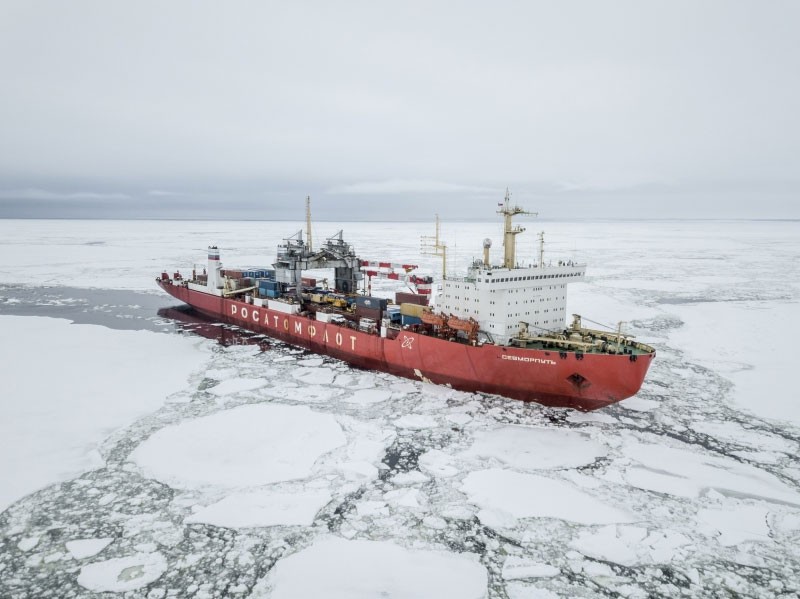
The fire brigade in Murmansk quickly extinguished the blaze that broke out on the 24th of December in a cabin onboard nuclear-powered container ship Sevmorput. State shipowner Rosatom never issued any information about the dramatic situation.
By Atle Staalesen, 28 Dec 23
Little information is available about the fire that broke out in Atomflot, the base for nuclear-powered vessels in Murmansk.
Only two short announcements were in the evening of the 24th of December posted on messenger service Telegram by the local Ministry of Emergency Situations (Emercom).
The first message posted at 21.17 pm informed about a fire on the territory of Atomflot and about the fire brigades that were on the way.
About 1,5 hour later, Emercom informed about its successful fire fighting……………
According to the emergency service, the fire covered an area of about 30 square meters in a cabin onboard the Sevmorput.
The Telegram messages were read by about ten thousand people. A few of them commented on the posts.
Where should we flee?” one of the readers asked.
Rosatom, the state nuclear power company that operates the Sevmorput, has apparently not issued any information about the fire. Neither has any of the company’s subsidiaries, such as the Atomflot or the Rosatomflot.
There is no information about the incident on the companies’ websites or their social media.
The fire could potentially have created a dramatic situation in the big Russian Arctic city. The Atomflot base is located only few kilometres from downtown Murmansk and a major fire on the nuclear-powered ship would have posed a serious threat to the about 270,000 population.
The Sevmorput is the world’s only nuclear-powered merchant container ship.
It is 260 meter long and was built in 1988. For many years, the ship lay idle in Murmansk and Russian authorities ultimately decided to scrap it. However, in 2013 it was instead decided to undertake a major renovation, and in autumn 2015, the ship was again test-sailing the Barents Sea. The following year, Sevmorput was back in regular service and has in the lastest years delivered cargo to military installations in the Russian Arctic, as well as to the petroleum development along the Siberian coast. The ship can carry 74 lighters or 1324 containers.
After the 2015 upgrade and safety evaluation, the reactor’s service life was prolonged with 150,000 hours aimed at keeping the vessel in operation until 2024.
It now looks increasingly likely that the ship will exit service and ultimately be scrapped. In a recent conference on the Arctic, Head of Atomflot Leonid Irlitsa said that his company plans to replace the ship with alternative non-nuclear vessels in 2024…………. https://thebarentsobserver.com/en/nuclear-safety/2023/12/nuclear-powered-ship-murmansk-started-burn-only-few-locals-got-know-about
How green is the UK Government’s nuclear energy strategy?
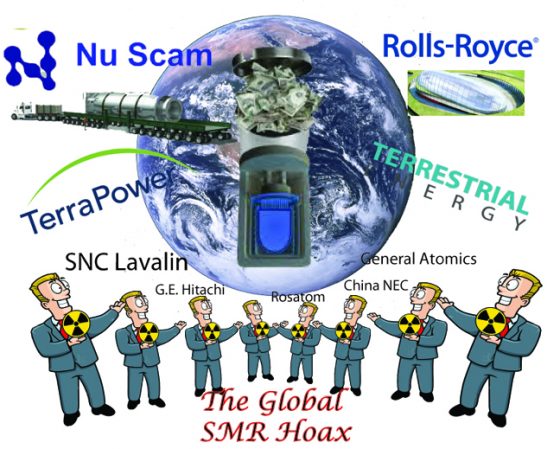
Small modular reactors have been touted as a solution to reaching net-zero – but how safe are they and will they do the job?
By Lucie Heath, Environment Correspondent, 28 Dec 23, https://inews.co.uk/news/how-green-is-the-governments-nuclear-energy-strategy-2824596
The Government has pledged to boost the country’s nuclear energy capacity, setting itself a target to power a quarter of the national grid with nuclear energy by 2050.
But i has revealed that the transition to nuclear energy has been beset by delays, prompting former prime pinister Boris Johnson to urge Rishi Sunak to “get on with it”.
Mr Johnson has been a vocal supporter of nuclear energy and has championed the development of new small modular nuclear reactors (SMRs).
SMRs have been touted as a key solution as the world transitions towards a net-zero future, but some have raised questions regarding the green credentials and viability of the technology.
Here i fact-checks the key claims with regards to SMRs.
Nuclear is low carbon
True or False: True

Ed. comment. That’s as long as you don’t count the CO2 emissions from the full nuclear fuel cycle, and the waste disposal methods.
Nuclear power is considered to be a low carbon source of energy. It has a minimal carbon footprint of around 15–50 grams of CO2 per kilowatt hour (gCO2/KWh), compared to an average footprint of around 450 gCO2/KWh for a gas powered generator and 1,050 gCO2/KWh for coal.
According to the International Energy Association (IEA), over the past 50 years the use of nuclear power has reduced CO2 emissions by over 60 gigatonnes – nearly two years’ worth of global energy-related emissions.
While nuclear produces far less CO2 than fossil fuels, environmentalists dispute its green credentials, not least due to the high volume of radioactive waste created as part of the fuel cycle.
SMRs will play a key role in the energy transition
True or False: Jury’s out
Small modular reactors have many potential benefits that overcome some of the hurdles of traditional nuclear reactor sites.
Their smaller size means that can be placed in locations not suited to large power plants and the modular nature of their design means they should be cheaper and quicker to build.
But as of 2023, only Russia and China have successfully built operational SMRs, and neither are in commercial use.
Mr Johnson’s plan to have the UK’s first SMRs contributing to the grid by 2030 looks increasingly unlikely. Rolls-Royce, which was one of the winners of a Government competition to develop them in the UK, recently told MPs its project could be contributing to the grid by 2031-32 at the very earliest.
MPs sitting on the Science, Innovation and Technology Committee recently published a report that described the Government’s nuclear strategy as more of a “wish list” and said ministers need to make it clearer what role SMRs will play in the energy transition.
SMRs are cheaper to build
True or False: Unclear
This section fails to mention the one and only commercial application of small nuclear reactors - the NuScale attempt in the USA, which was a financial fiasco, and had to be cancelled.
One of the largest hurdles to the deployment of nuclear energy are the huge costs of developing new plants. In theory, SMRs should be cheaper to build due to their size and modular nature, allowing for prefabrication.
However, it is not known exactly what the cost will be to the public purse of developing new SMRs in the UK.
The Environmental Audit Committee recently launched an inquiry into the topic, saying it was “currently unclear what financing models will be used to fund SMRs”.
Critics of nuclear argue it would be wiser to spend money on the deployment of renewable energy, which is cheaper to build.
SMRs are safer
True or false: True in theory
Safety has proved to be a massive issue preventing wider uptake of nuclear energy in the past. Incidents such as the 2011 Fukushima nuclear accident have sparked greater fears regarding the vulnerability of plants during a natural disaster, while nuclear stations can also be a risk during times of conflict, such as in Ukraine.
Proponents of SMRs say they are safer than traditional reactors, partly because their smaller core produces less heat, reducing the likelihood of overheating. A number of other innovations exist in their design which in theory should reduce the risk of failure.
While seen as being safer than large plants, SMRs are still associated with many of the same risks as traditional nuclear.
France’s Council of State opinion on a Bill relating to governance of nuclear safety in relaunching the nuclear sector
Only France could produce such a load of linguistical gymastics as this lengthy gobbledygook.
I’ve read the whole of the original, and still don’t understand it. I think it means that the Council of State thinks that what the government plans – is OK
It could mean a bit of privatising of some nuclear bits is OK. And the military connection is OK?
“the Council of State considers it unnecessary to provide, as the bill does, that the powers of the future authority do not extend to nuclear installations and activities of interest to defense”,”
“the bill modifies the rules currently applicable to ASN staff, in particular so that the ASNR can employ employees under private law,……… including 140 who will be automatically made available. of the Ministry of Defense for missions concerning it”
The Government has decided to make public
the opinion of the Council of State relating to the organization of the
governance of nuclear safety and radiation protection to meet the challenge
of relaunching the nuclear sector.
This bill, which includes twenty-two
articles, is organized into two titles respectively entitled “Nuclear
Safety and Radiation Protection Authority” and “Adaptation of the rules
of public procurement to nuclear projects” corresponding to its two
objects, which are distinct.
Title I includes provisions relating to the
missions and operation of the new independent administrative authority
(AAI) created by the bill, called the Nuclear Safety and Radiation
Protection Authority (ASNR) and resulting from the merger of the current
Nuclear Safety Authority. Nuclear Safety (ASN), which is an AAI, and the
Institute for Radiation Protection and Nuclear Safety (IRSN), which is a
public industrial and commercial establishment of the State (EPIC). This
title also includes provisions relating to the statutes and representation
of staff of the new authority and transitional provisions, particularly
concerning employees currently employed by the IRSN.
Council of State 22nd Dec 2023
Sunak to scale back nuclear target in latest UK net zero climbdown
Ministers are preparing to scale back the UK’s nuclear power target in
Rishi Sunak’s latest net zero climbdown. Draft versions of a new
“nuclear roadmap” circulating in Whitehall suggest Claire Coutinho, the
Energy Secretary, will next month commit to building a minimum of 16
gigawatts of capacity by 2050, The Telegraph understands.
Under Boris Johnson, as prime minister, the Government promised up to 24 gigawatts of
capacity by the middle of the century. It is also understood the roadmap
will not include an interim target for 2035, despite this being a key
recommendation of a net zero review published in January.
The lower target is thought to follow private warnings from some parts of industry that
Britain lacks the required workforce and supply chains to deliver reactors
at the pace needed to reach the 24-gigawatt goal. It is envisioned that
nuclear capacity will come from both “gigawatt-scale” plants and small
modular nuclear reactors, which are a new generation of factory-built,
mini-power stations.
A Whitehall source on Friday suggested that the final
target remained a subject of internal debate, with Ms Coutinho still
supportive of an ambition to reach 24 gigawatts.
Hinkley Point C in Somerset, the only plant under construction, has been plagued by delays and cost overruns that threaten to push back the start of generation to the
2030s, compared to an original target of 2025. Earlier this month it was
reported that the price tag for the scheme is now set to breach the latest
£32.7bn estimate, up from an original proposal of £18bn, and owner
EDF’s Chinese partner, China General Nuclear, is refusing to put in more
cash.
After the nuclear roadmap is set out in January, the Government and
Great British Nuclear (GBN) are expected to announce the winners of the
next stage of a programme to fund development of small modular reactors.
GBN is also expected to update a list of sites suitable for nuclear power
plants, consult on possible routes to market for so-called advanced modular
reactors and investigate what technology should be used for future
generations of gigawatt-scale plants after Hinkley and Sizewell.
The Department for Energy Security and Net Zero on Friday rejected suggestions
that the Government was planning to scale back its nuclear target. A
spokesman said: “The Civil Nuclear Roadmap will set how we will meet our
ambitious targets to deliver up to 24GW of low-carbon nuclear energy by
2050, or a quarter of the UK’s power demands.
Telegraph 23rd Dec 2023
Mystery fire breaks out on Russia’s only nuclear-powered icebreaker vessel as it was docked at Arctic port
- The Sevmorput, built in 1988, underwent extensive upgrades a decade ago
- Its owner stressed there was no threat to the ship’s nuclear reactor plant
By JAMES REYNOLDS and WILL STEWART, 25 December 2023
A mystery blaze aboard Russia‘s only nuclear-powered icebreaker cargo ship triggered panic in the Arctic port of Murmansk.
A fire broke out on Sunday in one of the cabins of the Soviet-made Sevmorput, currently docked in the northern Russian region bordering Finland and Norway.
The inferno spread some 323 square feet (30 sq metres) on the 830-ft ship (230m) before firefighters were able to put it out without casualties, Russia’s emergency ministry said.
‘The fire was quickly liquidated,’ Atomflot, which owns the vessel, said in a statement. ‘There were no injuries. There was no threat to crucial support systems or to the reactor plant.’
The ship, which entered service in 1988 and went through an extensive upgrade a decade ago, is Russia’s only nuclear-powered icebreaking transport ship, according to Rosatom. ………………………………………………..more https://www.dailymail.co.uk/news/article-12899379/Inferno-nuclear-russia-icebreaker-panic-murmansk-arctic.html
 | |||
| |||
(no subject)
Inbox
Search for all messages with label Inbox
Remove label Inbox from this conversation

Christina Macpherson <christinamacpherson@gmail.com>
7:49 AM (0 minutes ago)
to me
Spain Confirms 2035 Nuclear Phase Out Deadline
Oil Price.com, By Charles Kennedy – Dec 27, 2023,
Spain has just confirmed that it will go ahead with plans to close all its nuclear plants by 2035, while Europe remains divided on whether nuclear energy should be part of the climate change solution.
The management of radioactive waste and dismantling of the plants will cost about 20.2 billion euros ($22.4 billion) and will be paid for by a fund supported by the plants’ operators.
The future of the country’s nuclear plants was a hot issue during the recent electoral campaign, with one of the main business lobbies calling for extending the use of these plants while the conservative opposition People’s Party (PP) pledged to reverse the planned phase-out. …………………… https://oilprice.com/Latest-Energy-News/World-News/Spain-Confirms-2035-Nuclear-Phase-Out-Deadline.html
-
Archives
- May 2026 (62)
- April 2026 (356)
- March 2026 (251)
- February 2026 (268)
- January 2026 (308)
- December 2025 (358)
- November 2025 (359)
- October 2025 (376)
- September 2025 (257)
- August 2025 (319)
- July 2025 (230)
- June 2025 (348)
-
Categories
- 1
- 1 NUCLEAR ISSUES
- business and costs
- climate change
- culture and arts
- ENERGY
- environment
- health
- history
- indigenous issues
- Legal
- marketing of nuclear
- media
- opposition to nuclear
- PERSONAL STORIES
- politics
- politics international
- Religion and ethics
- safety
- secrets,lies and civil liberties
- spinbuster
- technology
- Uranium
- wastes
- weapons and war
- Women
- 2 WORLD
- ACTION
- AFRICA
- Atrocities
- AUSTRALIA
- Christina's notes
- Christina's themes
- culture and arts
- Events
- Fuk 2022
- Fuk 2023
- Fukushima 2017
- Fukushima 2018
- fukushima 2019
- Fukushima 2020
- Fukushima 2021
- general
- global warming
- Humour (God we need it)
- Nuclear
- RARE EARTHS
- Reference
- resources – print
- Resources -audiovicual
- Weekly Newsletter
- World
- World Nuclear
- YouTube
-
RSS
Entries RSS
Comments RSS
 nuclear-news