EDF, France’s state-owned nuclear company now in a fatal trap, as Hinkley Point C costs soar
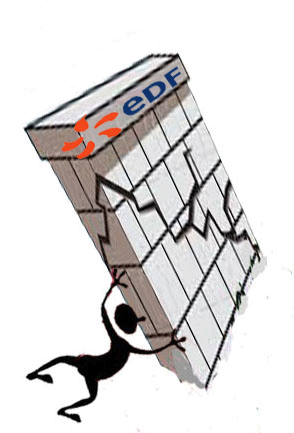
Hinkley Point: endless setbacks at nuclear plant highlight political choice to destroy EDF
On January 22nd, state-owned French utilities group
EDF announced new delays in the construction of two EPR nuclear reactors at
the British plant of Hinkley Point. Originally planned to enter service in
2024, the first of the two reactors is now expected to be, at best,
operational in 2029, or possibly “2030 or 2031”.
Seven years after the project was launched, all the warnings against EDF’s involvement in it
made by the group’s staff have proved be right, writes Mediapart
economics correspondent Martine Orange in this op-ed article.
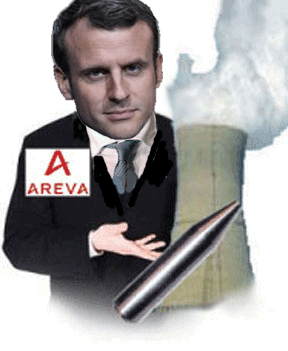
The state-owned group now finds itself in a fatal trap created by Emmanuel
Macron. Following the epic delays with the Olkiluoto nuclear power plant in
Finland, those of Flamanville in France, and those of Taishan in China, the
under-construction plant of Hinkley Point C in south-west England has now
joined the long story of an industrial catastrophe which is the third
generation EPR (pressurised water reactor) first designed by Areva, once
France’s nuclear energy giant.
Mediapart 28th Jan 2024
Are the French going cold on UK nuclear?

‘It would be madness to give Sizewell C the final go-ahead while the questions of whether Hinkley C can be finished, and who pays, are not resolved. Sizewell C is bound to take longer and cost more, but this time it would be we consumers who would bear the risk and pay the price through the “nuclear tax” on our energy bills.’.
The French government, which was previously relaxed about EDF’s forays into UK nuclear, now wants its energy company to work on projects back home in France.
So far, Britain has put £2.5billion into the project in total and taxpayers are the biggest shareholders. Campaigners who vehemently oppose the project are alarmed by the recent comments from Paris, pointing out that if the French back off from Sizewell, taxpayers could be on the hook for huge extra amounts of cash via their bills.
By FRANCESCA WASHTELL , 28 January 2024, https://www.thisismoney.co.uk/money/markets/article-13015713/Are-French-going-cold-UK-nuclear.html
Our nuclear industry is reawakening,’ energy secretary Claire Coutinho
declared in a Government strategy document published earlier this month. In
between invoking Winston Churchill’s enthusiasm for nuclear power and its
ability to help the UK reach net zero, Coutinho added that setting up new
plants would ensure our energy security ‘so we’re never dependent on the
likes of [Vladimir] Putin again’. Fighting talk. But in the space of a
fortnight, Coutinho’s gung-ho attitude has already been dented as a
diplomatic row brews over who should pay for the controversial power
stations.
French state-owned energy company EDF last week lit the blue
touchpaper with the revelation the UK’s flagship Hinkley Point C nuclear
plant in Somerset would be delayed until 2029 at the earliest. The cost, it
added, could spiral to as much as £46billion, from initial estimates of
£18billion.
Few in the industry will have been surprised, particularly as EDF has experienced delays on similar projects in Finland and France. But what was a shock were some incendiary remarks from the French government.
The Elysee Palace began pressing the UK to help plug a funding gap at Hinkley and for good measure cast doubt over its commitment to Sizewell C, the next nuclear power station in the pipeline.
A French Treasury official suggested the Government was trying to leave EDF in the lurch on Hinkley.
The official added that it cannot, at the same time, abandon the French firm to ‘figure it out alone’ on Hinkley and also expect it to plough money into Sizewell. It is, the official said, ‘a Franco- British matter,’ and not one for the French to resolve single-handedly.
This is a bad moment for two critical new nuclear plants – and our broader energy security – to be dragged into a cross-Channel tussle.
The French government, which was previously relaxed about EDF’s forays into UK nuclear, now wants its energy company to work on projects back home in France.
Well-placed UK sources deny the French claims that EDF has been left to shoulder the financing burden alone at Hinkley, or that it has been jettisoned by the British state.
They point to the fact EDF has all along had contractual obligations to shoulder the costs at this stage of the project. The early stages of developing Hinkley were undertaken by EDF along with China General Nuclear.
The Chinese firm has fulfilled its part of the bargain, leaving the onus on the French. ‘It’s all down to the French state,’ a senior industry source told The Mail on Sunday. ‘It’s tough, but they’ve not managed it at all well.’
A Department for Energy Security and Net Zero spokesman said: ‘The Government plays no part in the financing or operation of Hinkley Point C. The financing of the project is a matter for EDF and its shareholders.’
As well as backing Hinkley, EDF several years ago began serious talks with the Government over Sizewell C in Suffolk. Each could power an estimated 6 million homes for 60 years, meaning the two projects are linchpins for meeting future energy demand.
The French group is due to take a 20 per cent stake in Sizewell. The Government has previously indicated it will take 20 per cent. It was hoped the rest would be funded through money from the private sector, such as pension funds and sovereign wealth funds.
So far, Britain has put £2.5billion into the project in total and taxpayers are the biggest shareholders. Campaigners who vehemently oppose the project are alarmed by the recent comments from Paris, pointing out that if the French back off from Sizewell, taxpayers could be on the hook for huge extra amounts of cash via their bills.
The new type of funding structure for Sizewell C means consumers will already face an added tax to help pay for the plant.
Alison Downes of the Stop Sizewell C campaign group said: ‘It would be madness to give Sizewell C the final go-ahead while the questions of whether Hinkley C can be finished, and who pays, are not resolved. Sizewell C is bound to take longer and cost more, but this time it would be we consumers who would bear the risk and pay the price through the “nuclear tax” on our energy bills.’
And another area of the industry is watching the fracas with mounting frustration.
Companies vying to build ‘mini’ stations known as small modular reactors (SMRs) hope this prompts the Government to commit instead to their projects, which are quicker to build and cheaper [?]
The firms include Rolls-Royce SMR, which has already received significant funding from the Government. New nuclear plants of whatever size will almost certainly be part of the UK’s energy mix in the years to come.
The sector had already been championed by Boris Johnson before soaring oil and gas prices in the wake of Russia’s invasion of Ukraine highlighted Britain’s dependence on overseas energy.
Any fisticuffs with France over Hinkley and Sizewell would strain the sector and could fatally damage the level of public. Industry figures are urging ministers to resist stumping up cash the French had agreed to pay.
One senior source said: ‘I hope the Government doesn’t lose its nerve, though there’s no sign of that at the moment. It would be a terrible precedent.’
.
Hinkley Point C woes threaten to break UK and France’s nuclear fusion

Two former EDF executives told the Guardian the odds were stacked against Hinkley from the start. “I would have bet at the time that we would see the costs we have today. And I think they’ll climb higher too,” said one.
Cross-Channel dream is turning sour as EDF’s costs mount and Britain faces a long wait for the power to come on
Jillian Ambrose, 27 Jan 24, https://www.theguardian.com/uk-news/2024/jan/27/hinkley-point-c-woes-threaten-break-uk-france-nuclear-fusion
rench trade unions wield significant political clout. But in the summer of 2016 there was little they could do to stop the French government from investing in what would soon become the most expensive power station in the world.
All six trade union representatives on the board of Électricité de France (EDF) voted against a deal to build a nuclear power station in the UK. It was just weeks after its finance chief, Thomas Piquemal, resigned from the company over fears that Hinkley Point C in Somerset was too great a risk. The project was approved by 10 in favour and seven against.
In the last seven years these fears have proved well founded. EDF revealed this week the latest delay to Hinkley, which may not now open until 2031, well beyond its original decade-long schedule. Its costs have climbed to £35bn in 2015 prices, almost double the original forecast of £18bn in 2016. In today’s money Britain’s first new nuclear plant in 30 years could cost £46bn. The spiralling costs were blamed on inflation, Covid and Brexit.
Hinkley was meant to represent a nuclear renaissance on both sides of the Channel, and further the nuclear ambitions of China. It was an opportunity for EDF, once the world’s leading nuclear developer, to secure a future for its reactor designs in a low-carbon world.
For the UK, the first new nuclear power plant in a generation marked the start of the government’s campaign to replace its ageing fleet of reactors. And China saw it as a way to showcase its nuclear expertise, furthering its ultimate aim of building its homegrown HPR1000 nuclear reactors at Bradwell in Essex.
The deal was struck in 2016 just weeks after the Brexit vote, making Hinkley an opportunity to forge fresh ties between old friends – and create opportunities for new economic alliances too. China General Nuclear Power Group (CGN), a state-run energy company, agreed to take on a third of the project as the first step in a plan to roll out a string of nuclear plants in the UK built with its own reactor design.
The chancellor at the time, George Osborne, argued that Britain should “run towards China” to help boost the UK economy. Within months of the Hinkley deal the French president, Emmanuel Macron, and his Chinese counterpart, Xi Jinping, began talks on strengthening ties between the two nations. These led to trade deals worth about $15bn (£11.8bn) and an order from Beijing for 300 aircraft from Airbus worth tens of billions of euros.
But the rationale for all three nations now looks precarious. Hinkley’s costs have climbed as diplomatic relations between China and the west have soured. By the time the former UK prime minister Boris Johnson vowed to purge China’s Huawei from the UK’s telecoms network over security fears, the notion of Chinese-built nuclear reactors powering British homes had become politically unthinkable. CGN has ruled out any further investment in Hinkley – leaving French taxpayers to pick up the tab.
Two former EDF executives told the Guardian the odds were stacked against Hinkley from the start. “I would have bet at the time that we would see the costs we have today. And I think they’ll climb higher too,” said one.
Philippe Huet, a former head of EDF’s internal auditing in Paris, said the deal was based on political strategy rather than a commercial rationale. The British government offered EDF a contract that would guarantee payment of £92.50 for every megawatt hour of electricity generated by the nuclear plant. It was criticised for being both eye-wateringly expensive for UK bill payers but not nearly enough to cover the risks of constructing the project.
“At the time that it was agreed it was already known that EDF’s estimates understated the cost and schedule of the project. Key decision-makers chose to ignore this because it was too important strategically. As they would say, if a project cannot be profitable it must at least be strategic,” Huet said.
Hinkley is one of many costs facing the French taxpayer after the government renationalised EDF last year. The company’s future investments – in maintaining its existing fleet of nuclear reactors, building new ones, and investing in renewable energy – could exceed €20bn (£17bn) a year, according to Agnès Pannier-Runacher, the country’s energy transition minister.
The French government is reportedly calling on the UK government to provide financial help for both Hinkley and the next planned plant, Sizewell in Suffolk, to keep the struggling nuclear revival afloat. The UK government has been quick to quash any suggestion that Hinkley’s financial fallout will be borne by UK taxpayers. A spokesperson said the government “plays no part in the financing or operation of Hinkley Point C”, which was a matter for EDF and its shareholders.
Huet has predicted that EDF may even try to renegotiate its contract with the government. He estimates it could seek to raise how much it charges per megawatt hour of electricity produced by about 15% to make Hinkley a worthwhile venture.
Hinkley Point C delay deals blow to UK energy strategy
“We have the expertise, the supply chains and the teams ready to build
Hinkley Point C safely, on time and on budget,” Vincent de Rivaz, then
chief executive of EDF, said in 2016 as the project to build the UK’s
first nuclear power station since the 1990s got under way.
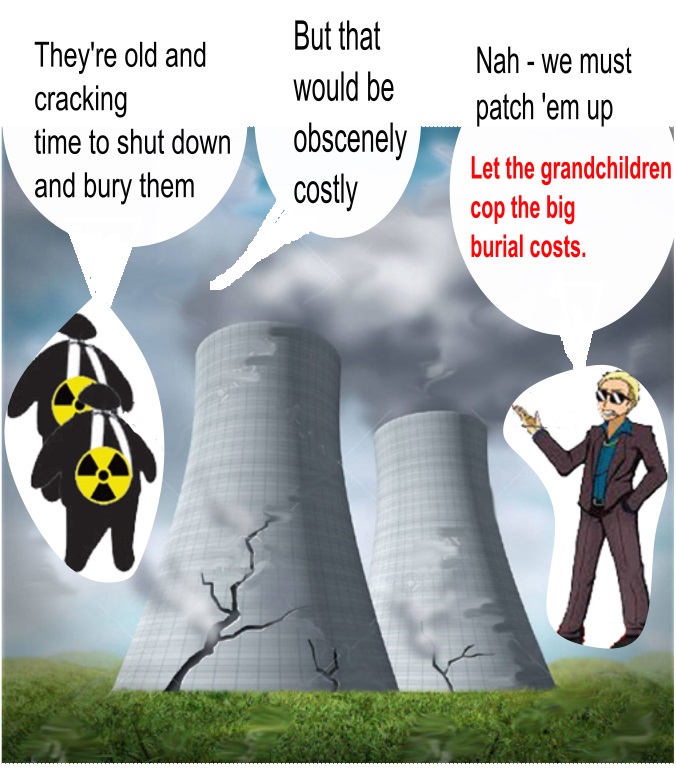
That confidence has proven misplaced. Earlier this week, the French state-owned utility
announced the latest in a series of delays and cost overruns to the 3.2
gigawatt plant under construction in Somerset. The setback to a plant that
is meant to supply electricity to 6mn homes has raised fresh questions
about the UK’s energy strategy and its push to decarbonise the grid over
the next decade as part of its goal to reach net zero by 2050.
Analysts at LSEG estimated the latest delays to the plant would push wholesale power
prices up by as much as 6 per cent between 2029 and 2032, based on the
assumption that unit two would come online in 2033. EDF is looking at ways
to help mitigate the latest delay. Two weeks ago it said it was examining
plans to further extend the life of its four oldest plants, which use
advanced gas-cooled reactor technology and date back to the 1980s.
But
there is still some doubt about that plan. Jerry Haller, EDF’s former
decommissioning director, told a parliamentary committee inquiry in 2022
that nothing could be done to extend the life of the AGR fleet again. “No
further investment will take them further,” he said at the time. EDF said
since those comments further inspections of the reactor cores had “been
better than, or in line with, our expectations”. It had already decided
last year to keep two of the plants — Heysham 1 and Hartlepool — open
until at least 2026.
But even if more life can be eked out of existing
reactors, the problems besetting Hinkley Point C have raised wider
questions about how the UK will reach its 24GW nuclear build target by
2050.
FT 27th Jan 2024
https://www.ft.com/content/55ef86b4-f55c-47a9-8121-c6c8cf6b5b18
2
Failure to deal with Trident concerns ‘puts Scots lives at risk’
FAILING to address acute concerns about the state of Trident nuclear
submarines is putting Scottish lives “at risk” and shows Westminster’s
“blatant disregard for Scotland”, an MP has said.
Martin Docherty-Hughes issued the warning ahead of a debate in Parliament today,
in which he will attempt to get answers from the UK Government over serious
concerns raised by a top insider about Britain’s nuclear weapons. The SNP
defence spokesperson will lead an adjournment debate on Wednesday evening
to highlight bombshell comments from former top government adviser Dominic
Cummings.
Cummings sparked concerns about Trident when he claimed to have
sought assurances from Prime Minister Rishi Sunak that he would deal with
the “scandal” of nuclear weapons infrastructure which he described as a
“dangerous disaster and a budget nightmare of hard-to-believe and highly
classified proportions”.
The National 24th Jan 2024
https://www.thenational.scot/news/24070255.failure-deal-trident-concerns-puts-scots-lives-risk/
Hinkley Point is glowing on my doorstep, but that won’t help us get a bus into town
In west Somerset broadband is patchy and childcare is scarce, but there’s always £10bn to spare for a badly run mega-project
In west Somerset broadband is patchy and childcare is scarce,
but there’s always £10bn to spare for a badly run mega-project.
Some 10,000 people work on site there (with another 12,000 associated jobs elsewhere).
Lifting the 245-tonne steel roof onto the first reactor, a few weeks ago,
utilised the world’s largest land-based crane. Hinkley Point C (next to the
original facilities A and B) will power some six million homes and what I
lie in bed at night wondering about is how the hell they feed the 10,000.
The Chinese state-owned CGN has a one-third stake in Hinkley and the French
state-controlled energy company EDF controls the rest.
It’s due to start generating power in 2030 and is the world’s most expensive power station.
Then this week EDF announced that, whoops, they need another £10 billion.
Prices have increased since 2015, design changes require more steel and
concrete and, I imagine, given the French contingent at the facility,
increases in the price of butter have skyrocketed the projected costs of
croissants. The final costs could be around £46 billion with the project
looking at a four-year delay.
All of which is great if you’ve got a job
there, be it in security, catering or nuclear fission, but otherwise this
futurist megalith rather clashes with the neighbouring muddy fields of
Exmoor. There are three key stumbling blocks here: childcare is scarce,
broadband is patchy and there are no buses. Which leaves people feeling
that these infrastructure projects – Hinkley Point, HS2 – are like the huge
sewage pipes that run through the slums of Mumbai. They carve up and
disrupt the landscape and lives of those who exist around it, but it’s only
the comfortable middle classes who benefit.
Telegraph 27th Jan 2024
https://www.telegraph.co.uk/columnists/2024/01/27/william-sitwell-hinkley-point/
Dutch gov’t asks its legal dept: “What can we say so that it appears as if Israel is not committing war crimes.”
Outgoing Prime Minister Mark Rutte denies that his Ministry interfered at the Ministry of Foreign Affairs to hide or change unwelcome information about Israel. “That simply did not happen,” the outgoing government leader said in a letter to parliament on Thursday. On Friday, the International Court of Justice in The Hague will make an interim ruling on the genocide case South Africa filed against Israel over its incessant bombings of the Gaza Strip in the war against Hamas.
Last week, NRC reported that Rutte’s Ministry of General Affairs asked the Legal Affairs Directorate at Foreign Affairs: “What can we say so that it appears as if Israel is not committing war crimes.” According to Rutte, there is a lot of discussion between Ministries about advice on how to weigh in. “That is normal.”
The Ministry of Foreign Affairs previously denied that General Affairs had tried to sweep matters under the rug. The criticism to that effect came from a letter written by about 20 anonymous civil servants. The piece was used in an appeal by three civil society organizations against the Dutch State to stop the delivery of F-35 parts to Israel.
The officials also said that Rutte had interfered at the last minute to prevent the Netherlands from voting in favor of a UN resolution in December that called for “creating the conditions for a long-term cessation of hostilities” in the Gaza Strip.
The Prime Minister did not say who ultimately decided on the vote. That would affect the unity of Cabinet policy, according to Rutte. According to the anonymous officials, Minister Hanke Bruins Slot (Foreign Affairs) actually wanted to support the resolution. “I don’t even have the position to overrule anyone,” Rutte said.
He added that the anonymous civil servants shouldn’t be judged too harshly. The Prime Minister thinks the practice is a shame, but “let’s be a little more relaxed about it.” According to him, there is “no problem” at Foreign Affairs with officials leaking information, and there is room in the department to have a different opinion.
Comment: If that was true, why did they feel compelled to leak the statement? Why was the government asking solely for reasons to support their argument, rather than for the legal view, or the range of views, present in that department?
The war in Gaza is causing a lot of discussion within, among others, the Ministry of Foreign Affairs. A few hundred civil servants also signed a letter last year stating that they believe the government is siding too much with Israelin the conflict. Officials at the Ministry of Foreign Affairs have already demonstrated six times against the Cabinet’s attitude.
Genocide ruling
The International Court of Justice in The Hague will rule on emergency measures against the war in Gaza on Friday in the genocide case South Africa filed against Israel. Whether the court considers Israel’s actions genocide will likely only become clear in years to come. But it could order a stop to the fighting on Friday.
At the end of last year, South Africa filed a case with the International Court of Justice for violations of the Genocide Convention. If the court finds Israel guilty of this, it would be a particularly severe conviction. That ruling won’t be made today. Such cases typically take years. Today’s ruling only concerns “provisional measures.”
The court could order Israel to stop the fighting. Such a ruling cannot be appealed against and is legally binding. But as the court cannot enforce the ruling, it would likely remain without consequences. Israel has already said that it intends to keep its war going.
Comment: Indeed, Israel has killed over 100 Gazans a day since the verdict.
Since October 7th, Israel has killed over 25,000 Palestinians in Gaza, including over 10,000 children. The Palestinian Ministry of Health announced that the death toll reached 25,105 on Sunday, Al Jazeera reported.
The International Court of Justice is the principal judicial organ of the United Nations. All 193 countries that are members of the UN can file a case there. In addition to the court’s 15 judges, two judges from the two countries involved will also join: Dikgang Moseneke from South Africa and Aharon Barak from Israel.
The court’s seat is in the Peace Palace in The Hague. Demonstrations are planned there on Friday, both by supporters and opponents of the Israeli war. There were also demonstrations and counter-demonstrations at the hearings two weeks ago.
US will station nukes in Britain for the first time in 15 years, as West escalates conflicts on multiple fronts
- Pentagon documents reveal the US is intending to place warheads three times the strength of the Hiroshima bomb on UK soil
https://www.sott.net/article/488290-US-will-station-nukes-in-Britain-for-the-first-time-in-15-years-as-West-escalates-conflicts-on-multiple-frontsBy PIRIYANGA THIRUNIMALAN and MARK NICOL 27 January 2024 |
The United States is planning to station nuclear weapons in Britain for the first time in 15 years to counter threats from Russia, it emerged last night.
Pentagon documents reveal the US is intending to place warheads three times the strength of the Hiroshima bomb on UK soil. Moscow said it would view the move as an ‘escalation’ that would be met with ‘counter-measures’.
Procurement contracts for a new facility at RAF Lakenheath in Suffolk show the US plans to house B61-12 gravity bombs ‘imminently’ at the site.
US warheads were last stationed in Britain in 2008, when it was judged that the Cold War threat from Russia had decreased.
The plans come as part of a Nato-wide programme aimed at developing and upgrading nuclear sites in response to rising tensions with the Kremlin.
The unredacted documents from the US Department of Defence’s procurement database show the Pentagon has ordered equipment, including ballistic shields, for Lakenheath, and state that construction of a housing facility for US soldiers at the base will start in June.
Nuclear weapons were stationed at RAF Lakenheath during the Cold War. Activists held protests outside the site in 2022 when it was reported that US warheads could be stationed there.
Russian foreign ministry spokesman Maria Zakharova said: ‘In the context of the transition of the United States and Nato to an openly confrontational course of inflicting a ‘strategic defeat’ on Russia, this practice and its development force us to take compensating countermeasures to reliably protect the security interests of our country and its allies.’
Comment: ‘An openly confrontational course’; because, whilst the West’s aggression against Russia has been brazen, the intention behind this move is undeniable.
Notably, back in August 2023: Poland’s President says Russia’s moving tactical nuclear weapons to Belarus ‘shifting regional security’
The Pentagon insisted the documents ‘are not predictive of, nor are they intended to disclose any specific posture or basing details’.
A Ministry of Defence spokesman said: ‘It remains a longstanding UK and NATO policy to neither confirm nor deny the presence of nuclear weapons at a given location.’
Comment: This comes amidst the escalation of the US-UK-Israel genocide in Gaza; repeated air strikes against Yemen; and NATO’s largest military exercise (also since the cold war) at Russia’s borders; all the while on its Ukraine front it faces looming defeat:
- NATO set to mobilize 90,000 soldiers for biggest drill since Cold War, rehearsing rapid US deployment near Russia’s borders
- Poland & Lithuania to hold joint military exercises on borders near Russia’s Kaliningrad enclave in the Suwałki Gap
- Houthi missile sets British oil tanker ablaze, ship was abandoned by US & France warships, cargo was fuel for Israeli jet fighters
Hinkley Point C nuclear could go £28bn over budget, and tax-payer takes larger stake in Sizewell C nuclear.

The Chemical Engineer, by Adam Duckett, 28 Jan 24
EDF SAYS its Hinkley Point C nuclear power plant could be delayed to as late as 2031, with costs rising to £46bn (US$58bn).
The project, which includes building two 1,630 MW nuclear reactors in Somerset, was estimated to cost £18bn when it was first agreed in 2016 and had been scheduled to begin operations in 2025. The project has since struggled with a series of delays and cost hikes. The firm has now outlined three scenarios that push operations back until the end of the decade at the earliest.
The first reactor could begin operations in 2029, or, under a base case scenario that assumes delays in the electromechanical work and testing start-up, could fall back to 2030. Under a third scenario, there could be a further delay to 2031.
In a letter to staff, Stuart Crooks, managing director of Hinkley Point C, said: “Like other infrastructure projects we have found civil construction slower than we hoped and faced inflation, labour and material shortages on top of Covid and Brexit disruption.”
He added that EDF has been required to substantially adapt its reactor design to satisfy British regulations, requiring 7,000 changes that have added 35% more steel and 25% more concrete.
EDF says the delays and extra work will hike costs to between £31-35bn in 2015 values meaning under the worst case scenario the price could reach £46bn.
Hinkley Point C is key to the government’s target to almost quadruple nuclear power output from 6.5 GW today to 24 GW by 2050. To meet this goal, it published a plan earlier this month that includes building at least one other plant the size of Hinkley Point C and Sizewell C that EDF is planning in Suffolk, along with suites of smaller modular and advanced nuclear reactors…………….
News of the delay prompted further criticism from nuclear opponents who argue that governments should invest in renewables instead. There are also concerns that with the Chinese junior partner in Hinkley Point C refusing to contribute any more money to the project that the UK government will be called up on to help meet the climbing costs. A government spokesperson told the Financial Times that any additional costs “will in no way fall on taxpayers”.
Government takes larger stake in Sizewell C
Earlier this week, the UK government announced it would make an extra £1.3bn available to support EDF’s construction of Sizewell C so that construction work can continue ahead of a final investment decision being made later this year. Sizewell will use the same design as Hinkley Point C.
The government’s investment further consolidates its position as the majority shareholder in the project. Last year, it bought out the project’s Chinese state-owned partner China General Nuclear as part of efforts to limit Beijing’s involvement in critical infrastructure.
The government has now invested £2.5bn in Sizewell C and the project is being funded by a so-called regulated asset base model under which surcharges on consumer energy bills help fund the project while it’s being constructed. Last year, the government opened up a bidding process to attract external investors in a bid to raise an estimated £20bn to construct the plant. https://www.thechemicalengineer.com/news/hinkley-point-c-could-go-28bn-over-budget-as-edf-predicts-further-delays/
UK government pours good money after bad, into failing Hinkley Point C nuclear boondoggle
The Stop Hinkley Campaign has reacted to the news that the cost of Hinkley
Point C has ballooned to £46bn and that the first reactor may not now be
open until 2031. Stop Hinkley Spokesperson Roy Pumfrey said: “The
Government will have known for days if not weeks that this announcement was
coming – we certainly heard rumours. You would have thought it would have
provoked them into at least re-examining their nuclear roadmap.
Instead, on Monday they decided to waste another £1.3bn of taxpayers’ money on a
carbon copy of Hinkley Point C on the Suffolk Coast. Any sensible
Government would be urgently looking at the overwhelming case to provide
our power from 100% renewables.” “And it’s not just HPC’s costs
that are ballooning, the whole project is swirling around making a horrid
noise like a punctured balloon. And trying to cram 15,000 workers toe to
toe on the site to play catch up will mean H&S rules go out the window.”
Stop Hinkley 24th Jan 2024
http://stophinkley.org/wp/wp-content/uploads/2024/01/Press-Release-240124.pdf
Campaigners call on Science Minister to back citizen science with funding
Nuclear Free Local Authorities, 25 Jan 24
The UK/Ireland Nuclear Free Local Authorities have been joined by campaigners from six local groups opposed to nuclear power in calling on the Science Minister to provide funding for citizen science projects to test levels of radioactivity near to civil nuclear power plants.
The partners have used the birthday of American ornithologist Wells Cooke (25 January), considered to be the founder of modern citizen science, to make their appeal to Michelle Donelan, who is the Secretary of State for Science, Innovation and Technology.
From 1881, Cooke engaged amateur birding enthusiasts in collecting information about bird migration. His program evolved into the government-run North American Bird Phenology Program supported by volunteers across the nation. More recently, even BBC television programmes, like Nature / Springwatch, have enrolled citizens in observing and reporting on wildlife in their gardens and communities.
Although citizen science has the virtue of engaging laypeople in research, making science more relevant and ‘immediate’ to the general population, for campaigners in West Cumbria sampling for radioactivity has not been a mere academic exercise for it highlighted radioactive ‘hotspots’ where exposure could be prejudicial to human health.
For almost ten years, volunteers at Radiation Free Lakeland have been taking soil and sand samples at various sites along the coast of West Cumbria from Whitehaven to Barrow-in-Furness, including beaches frequented by many tourists, and sending these to the United States for testing at a professional institute.
Due to a lack of available funding, the group could only afford to commission the institute to test for two isotopes – americium and caesium [1]. In 2018, undergraduate nuclear science students from the Worcester Polytechnic Institute in Massachusetts compiled the results into an initial report:
‘Of the 36 samples tested 10 (28%) were found to be over the safety limit for cesium-137 and 14 (39%) were found to be over the safety limit for americium-241.’
Some of these adverse findings were from coastal sites near to St Bees and Ravenglass, which attract many seasonal tourists.
Americum-241 is highly radioactive and chemically toxic if absorbed, with deposits accumulating in the liver and bones, remaining there for twenty and fifty years respectively, or in the sexual organs, where its residence is permanent. In all these organs, americium promotes the formation of cancer cells through its radioactivity.
Caesium-137 is soluble in water and if ingested is soon uniformly distributed within the body and remains there for up to 70 days. Based on the findings of animal experiments and autopsies performed on children exposed to radiation in the Chernobyl accident, absorption can lead to the development of pancreatic cancer.
Former US nuclear industry regulator Arnie Gunderson, touring West Cumbria at the invitation of Radiation Free Lakeland, said that some of the samples were as radioactive as those found at Fukushima, where a major nuclear accident occurred in 2011.
Gunderson was in no doubt that it was only the dedication, rigour and persistence of citizen scientists that brought these findings to light:……………………………………………………….. more https://www.nuclearpolicy.info/news/campaigners-call-on-science-minister-to-back-citizen-science-with-funding/
MP wants public vote on nuclear waste disposal
Richard Madden, BBC News, 26 January 2024 more https://www.bbc.com/news/articles/crg7nlwnz59o
People in part of East Yorkshire should be given a referendum on a proposal to bury nuclear waste, the area’s MP has said.
Nuclear Waste Services (NWS), a government agency, has identified South Holderness as having potential for a Geological Disposal Facility (GDF).
Beverley and Holderness MP Graham Stuart said any development would need public consent.
Officials behind the scheme said on Thursday that if the community did not express support the disposal facility would not be built.
‘Toughest test’
Mr Stuart said: “Everyone is right to be concerned about the possibility of a nuclear waste facility in our area.
“They are required to get local consent and I want that to be the toughest available test, a referendum of residents in the affected area”, he said.
A working group has been formed to look at the proposal and a series of public meetings will take place.
Drop-in sessions
- 1 February – Patrington Village Hall
- 2 February – Withernsea, The Shores Centre
- 8 February – Aldbrough Village Hall
- 9 February – Easington Community Hall
- 12 February – Burstwick Village Hall
All sessions run from 11:30 – 18:00 GMT.
Officials from NWS said the project could create thousands of jobs and investment in local infrastructure in South Holderness.
But campaigners in other areas have raised concerns about the impact on tourism, house prices and the environment, leading to protests.
The GDF would see waste stored under up to 3,280ft (1000m) underground until its radioactivity had naturally decayed.
Other proposals have been put forward in Cumbria and at Theddlethorpe on the Lincolnshire coast.
UK’s Ministry of Defence has continued to allow critical parts of the nuclear weapons infrastructure to rot
Dominic Cummings said amongst other things the MoD has: continued to allow
critical parts of the nuclear weapons infrastructure to rot creating
further massive secret budget nightmares as well as extremely serious
physical dangers (cf. the recent near disaster with a submarine),
UK Parliament 24th Jan 2024
Ukraine uncovers another $40 Million in weapons fraud
SOTT, Melanie Sun, The Epoch Times, Sat, 27 Jan 2024
he war-torn nation has announced a clean-out of its weapons procurement process amid ongoing corruption.
Ukraine’s National Police and Security Service on Ukraine (SBU), alongside the country’s Ministry of Defense, announced on Saturday they have uncovered an insider network that has been charged with embezzling almost $40 million in funds marked for weapons purchases.
Five individuals who formed a suspected criminal organization have been served “notices of suspicion” — the first stage in Ukrainian legal proceedings — for “appropriation, embezzlement of property, or possession of it by abuse of official position,” the SBU said.
Four of the suspects are current or former employees of the Ministry of Defense, including the head of the Department of Military and Technical Policy, Development of Weapons and Military Equipment of the Ministry of Defense, and the head and commercial director of the Lviv Arsenal company.
Another suspect is an ex-official from the ministry, who has been detained while trying to leave the country at a border crossing point.
A businessman representing a foreign company, presumed to be the arms supplier, has also been charged………………………………………………………………………………
To date, the United States has provided more than $44 billion in military aid to Ukraine since February 2022. But the Pentagon has run out of funds to replenish its stocks, so most military aid to Ukraine, for the time being, has halted.
Congress is currently debating a $105 billion supplemental spending package, proposed by the Biden administration in October 2023, that packages together defense funding for Israel, Ukraine, and the U.S. southern border.
Analysts previously told The Epoch Times that Ukraine doesn’t have a viable pathway for victory without foreign arms shipments and monetary support amid the waning U.S. support, as the Pentagon spreads its resources over increasing threats to the international rules-based order in the South China Sea as well as the Middle East.
Without international arms shipments, Ukraine would most likely be forced into a brutal stalemate with Russia and, at some point, would need to cede some of its territory to its aggressor, analysts say.
Comment: It brings to mind the old saying: “A fish rots from the head down”. So perhaps they should take a closer look up to uncover their “problems”. When a country’s leadership is completely corrupt, we can’t be shocked when more corruption is found lower down the ranks.
See also:
- WaPo: US changing strategy on Ukraine
- Hunter and the hunted: How Joe Biden is being linked to corruption, terror attacks, and political assassinations in Ukraine
- IG report finds Pentagon failed to account for more than $1B in weapons sent to Ukraine
- EU’s Ukraine weapons goal ‘unattainable’ – Germany
- Ukraine’s cyber security chief fired over corruption scandal
- Leaked US strategy on Ukraine sees corruption as the real threat https://www.sott.net/article/488310-Ukraine-uncovers-another-40-Million-in-weapons-fraud
Growing mountain of wasted money is a radioactive prospect
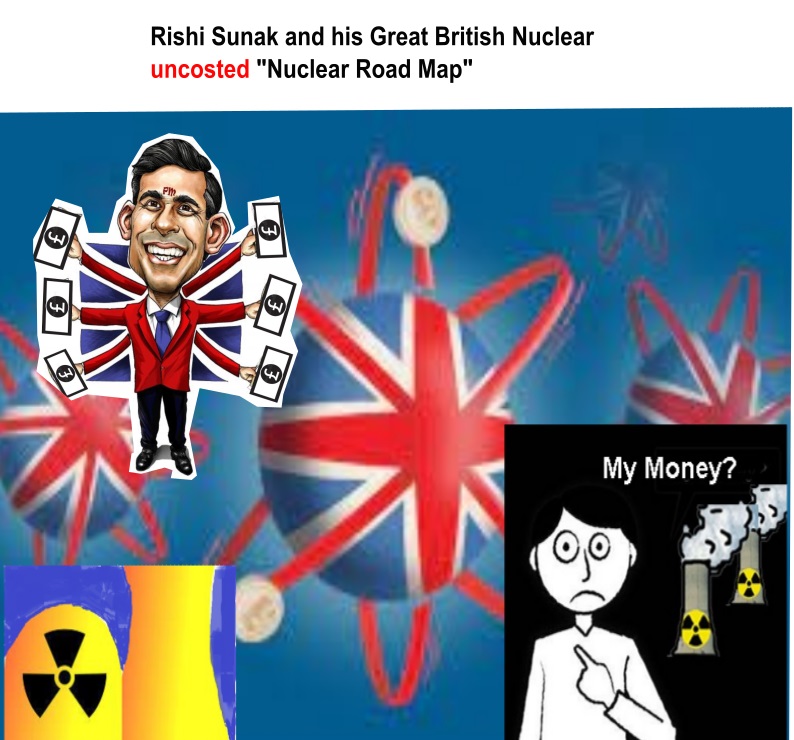
Alistair Osborne: Growing mountain of wasted money is a radioactive
prospect. Rishi Sunak’s apparent determination to press ahead with
mammoth investment in new nuclear reactors, whatever the cost, might not
prove to be the best solution.
It’s only a week since he set off — again — with his uncosted “nuclear road map”: a plan to have 24 gigawatts of new reactors by 2050, or seven more Hinkley Point Cs. On
Monday, the government sank another £1.3 billion into Sizewell C, so it
could “steam ahead” with that project, too, as Andrew Bowie, the
minister for nukes, put it.
Listen to him and investors are queueing up. So
what better news to encourage them than this jaw-dropper from EDF, the
state-backed French outfit behind both schemes? Hinkley Point’s costs
have shot up by as much as £10 billion to a top-end £35 billion, in 2015
prices.
And, instead of firing up in 2027, the first of the Somerset
nuke’s twin reactors could in an “unfavourable scenario” (the likely
outcome) be delayed until 2031. This is what comes with Hinkley’s
European pressurised reactor tech, as EDF has also proved at France’s
Flamanville, Finland’s Olkiluoto and China’s Taishan.
Indeed, two years after the Chinese nuke became operational, one unit had to be taken offline for a year’s repairs. So why is the government hellbent on a re-run with
Sizewell in Suffolk? Alison Downes from the Stop Sizewell C campaign is no
neutral voice. But she’s right to say the project “epitomises the
definition of insanity: doing the same thing over and over and expecting a
different result”. With Sizewell, though, things would be far pricier.
Under the contracts-for-difference regime, EDF is on the hook for
Hinkley’s costs. Repeat the trick at Sizewell and, under the new
regulated asset base model, consumers would find £10 billion added to
their bills — before the nuke’s even operational.
Times 25th Jan 2024
-
Archives
- May 2026 (49)
- April 2026 (356)
- March 2026 (251)
- February 2026 (268)
- January 2026 (308)
- December 2025 (358)
- November 2025 (359)
- October 2025 (376)
- September 2025 (257)
- August 2025 (319)
- July 2025 (230)
- June 2025 (348)
-
Categories
- 1
- 1 NUCLEAR ISSUES
- business and costs
- climate change
- culture and arts
- ENERGY
- environment
- health
- history
- indigenous issues
- Legal
- marketing of nuclear
- media
- opposition to nuclear
- PERSONAL STORIES
- politics
- politics international
- Religion and ethics
- safety
- secrets,lies and civil liberties
- spinbuster
- technology
- Uranium
- wastes
- weapons and war
- Women
- 2 WORLD
- ACTION
- AFRICA
- Atrocities
- AUSTRALIA
- Christina's notes
- Christina's themes
- culture and arts
- Events
- Fuk 2022
- Fuk 2023
- Fukushima 2017
- Fukushima 2018
- fukushima 2019
- Fukushima 2020
- Fukushima 2021
- general
- global warming
- Humour (God we need it)
- Nuclear
- RARE EARTHS
- Reference
- resources – print
- Resources -audiovicual
- Weekly Newsletter
- World
- World Nuclear
- YouTube
-
RSS
Entries RSS
Comments RSS
 nuclear-news