Radiation Free Lakeland urges East Riding Councillors to Withdraw from GDF process
Radiation Free Lakeland. 16 Feb 24
Dear Councillor of East Riding,
At your full meeting on 21st February 2024 I believe a motion is being put forward for withdrawal from the expression of interest by East Riding Council’s inward investment arm to start a “conversation” with residents about building a geological waste disposal facility for high level nuclear wastes.
RADIATION FREE LAKELAND
Radiation Free Lakeland are a voluntary group in Cumbria. Our Facebook group has almost 1000 members and a recent petition against investigations for GDF generated over 55,000 signatures. We are running two campaigns currently: Keep Cumbrian Coal in the Hole and Lakes Against Nuclear Dump.
RFL have been pushing back against a GDF here since 2008 Many of our members were also active in the push back against NIREX (forerunner of NWS) in the 1ate 1990s.
We fully support the motion for withdrawal and would urge East Riding Councillors to look at the experience in Cumbria.
HISTORY OF GDF IN CUMBRIA
In the 1990s the GDF plan was limited to low and intermediate level wastes for abandonment deep underground. A public inquiry in Cumbria with many scientists and geologists arguing against the “Rock Characterisation Facility” found that the low/intermediate level wastes would breach containment and percolate to the surface far sooner than NIREX had accounted for. The NIREX inspectors report can be seen here. https://www.davidsmythe.org/nuclear/inspector’s_report_complete.pdf
In breathtaking mission creep the UKs failed GDF plan now includes High Level Wastes which would be extremely hot at 100 degrees c or more. The hot wastes are currently cooled by Britain’s Favorite View -Wastwater, along with water from the rivers Ehen, Calder and other water sources amounting to millions of gallons every day. The reason the GDF would be so huge is to try and allow heat from widely spaced waste containers to dissipate into the surrounding rocks. Despite optimistic assurances about safety, this has never been done anywhere in the world. It is all a big experiment to dig a very big hole (or holes – new nuclear build/waste would require up to three GDFs), bury the waste and forget about it into millennia.
The former Leader of Cumbria County Council Eddie Martin, sadly no longer with us, put it very well in his speech to Cumbria County Council’s Cabinet in January 2013 at which CCC decided to withdraw from the ‘Managing Radioactive Waste Safely’ process (now NWS) : ” Young children and radioactive materials need supervision. Like a child, like you and me, an energetic radioactive molecule will become less energetic as it ages but for some molecules it will take many, many ages…Like a two year old, radioactive waste can get into everything: water, soil, plants and animals.” Eddie Martin’s full speech to Cabinet can be seen here https://www.lakesagainstnucleardump.com/post/heartfelt-thanks-to-courageous-leader-of-cumbria-county-council-eddie-martin
DEEP MINING FOR COAL AND NUCLEAR = DEEP POLLUTION
East Riding’s point of contact with NWS “Head of Siting” is Steve Reece. Mr Reece was formerly Operations Director for West Cumbria Mining. On his watch many deep boreholes of over 500m were drilled through the geology in the Whitehaven area and flushed with water at 240 liters per second in an area riddled with old mines to ‘test the hydrology’ for the UKs first deep coal mine in 30 years. Those 4000 metres of exploratory boreholes may have in part or in whole been responsible for the environmental catastrophe now unfolding in Whitehaven. Polluted old mine water has been pouring into the harbour for over year now with no end in sight. The fragile honeycomb of old mines dating back to medieval times has been breached and no one is taking responsibility with the Coal Authority even initially saying it was not minewater pouring into the harbour. Now no-one disputes the pollution is from old mine water but the authorities appear clueless about how to find the source of the problem and stop it. The exact siting of Steve Reece’s coal mine “exploratory” boreholes are redacted from West Cumbria Mining’s pending licence applications to the Coal Authority…………………………………
GRASP THE OPPORTUNITY TO SAY NO WITH BOTH HANDS
Councillors and the public in East Riding are being given the chance to stop the GDF in its tracks in their area – a chance that was denied to the people of Cumbria who have already voted no to the plan many times over. The rules have been changed to allow the GDF plan once more into West Cumbria. This area is seen as the most politically expedient choice for a GDF with the presence of Sellafield and a nuclear compliant workforce. There are mumblings from other areas that ‘Sellafield has the waste already so a GDF should go there.’ However the presence of 150 tonnes of plutonium (not classified as waste, not earmarked for GDF) is the very reason why earthquake inducing mining should not take place anywhere near the Sellafield site – either from Steve Reece’s coal mine (just five miles away) or from the far bigger void of a GDF..
COPELAND NWS “PARTNERSHIP” IS WITHOUT CONSENT BUT WITH CRONYISM.
There was no discussion or vote by the full Copeland Council in Cumbria in forming a “Partnership” with NWS in 2021. The decision was taken quietly by just four people, including the Mayor and Deputy Mayor of Copeland, on the executive. There is an ongoing police investigation into one of those for his failure to declare his interests of over £100,000 renumeration from the nuclear sector. Both the (former) Mayor and Deputy Mayor of Copeland (now Cumberland) are also vehement advocates of the coal mine whose CEO is Mark Kirkbride. Kirkbride is a key government advisor at the Committee on Radioactive Waste Management advising on investigation techniques, costings and construction on the GDF plans…………………….
West Cumbria is being treated as a nuclear fiefdom despite its beauty, its history, its wildlife, its ‘protected’ ocean and its tourism – all of genuine lasting value unlike the falsely puffed up ‘centre of excellence’ at Sellafield which threatens everything. We urge councillors not to allow East Riding to become a nuclear fiefdom as is Cumbria. We will continue to resist but it is difficult when this area is already viewed and treated by industry and government and by others as a nuclear fiefdom enslaved to the most toxic industry on the planet. There is no “away” for the fiefdom’s wastes, they must be monitored and repackaged as and when necessary. The first step being to allow no further wastes to be railroaded to the Sellafield site.
We fully and vehemently support the motion to withdraw East Riding (and anywhere else) from GDF “conversations.”
Yours sincerely,
Marianne Birkby
on behalf of Radiation Free Lakeland https://mariannewildart.wordpress.com/2024/02/16/radiation-free-lakeland-lettereast-riding-councillors-urged-to-withdraw-from-gdf-process/
Chris Hedges: Julian Assange’s Final Appeal
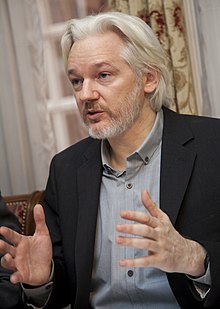
Julian Assange will make his final appeal this week to the British courts to avoid extradition. If he is extradited it is the death of investigations into the inner workings of power by the press.
By Chris Hedges / ScheerPost, 18 Feb 24
LONDON — If Julian Assange is denied permission to appeal his extradition to the United States before a panel of two judges at the High Court in London this week, he will have no recourse left within the British legal system. His lawyers can ask the European Court of Human Rights (ECtHR) for a stay of execution under Rule 39, which is given in “exceptional circumstances” and “only where there is an imminent risk of irreparable harm.” But it is far from certain that the British court will agree. It may order Julian’s immediate extradition prior to a Rule 39 instruction or may decide to ignore a request from the ECtHR to allow Julian to have his case heard by the court.
The nearly 15-year-long persecution of Julian, which has taken a heavy toll on his physical and psychological health, is done in the name of extradition to the U.S. where he would stand trial for allegedly violating 17 counts of the 1917 Espionage Act, with a potential sentence of 170 years.
Julian’s “crime” is that he published classified documents, internal messages, reports and videos from the U.S. government and U.S. military in 2010, which were provided by U.S. army whistleblower Chelsea Manning. This vast trove of material revealed massacres of civilians, torture, assassinations, the list of detainees held at Guantanamo Bay and the conditions they were subjected to, as well as the Rules of Engagement in Iraq. Those who perpetrated these crimes — including the U.S. helicopter pilots who gunned down two Reuters journalists and 10 other civilians and severely injured two children, all captured in the Collateral Murder video — have never been prosecuted.
Julian exposed what the U.S. empire seeks to airbrush out of history.
Julian’s persecution is an ominous message to the rest of us. Defy the U.S. imperium, expose its crimes, and no matter who you are, no matter what country you come from, no matter where you live, you will be hunted down and brought to the U.S. to spend the rest of your life in one of the harshest prison systems on earth. If Julian is found guilty it will mean the death of investigative journalism into the inner workings of state power. To possess, much less publish, classified material — as I did when I was a reporter for The New York Times — will be criminalized. And that is the point, one understood by The New York Times, Der Spiegel, Le Monde, El País and The Guardian, who issued a joint letter calling on the U.S. to drop the charges against him.
Australian Prime Minister Anthony Albanese and other federal lawmakers voted on Thursday for the United States and Britain to end Julian’s incarceration, noting that it stemmed from him “doing his job as a journalist” to reveal “evidence of misconduct by the U.S.”
The legal case against Julian, which I have covered from the beginning and will cover again in London this week, has a bizarre Alice-in-Wonderland quality, where judges and lawyers speak in solemn tones about law and justice while making a mockery of the most basic tenants of civil liberties and jurisprudence.
How can hearings go forward when the Spanish security firm at the Ecuadorian Embassy, UC Global, where Julian sought refuge for seven years, provided videotaped surveillance of meetings between Julian and his lawyers to the CIA, eviscerating attorney-client privilege? This alone should have seen the case thrown out of court.
How can the Ecuadorian government led by Lenin Moreno violate international law by rescinding Julian’s asylum status and permit London Metropolitan Police into the Ecuadorian Embassy — sovereign territory of Ecuador — to carry Julian to a waiting police van?
Why did the courts accept the prosecution’s charge that Julian is not a legitimate journalist?
Why did the United States and Britain ignore Article 4 of their Extradition Treaty that prohibits extradition for political offenses?
How is the case against Julian allowed to go ahead after the key witness for the United States, Sigurdur Thordarson – a convicted fraudster and pedophile – admitted to fabricating the accusations he made against Julian?
How can Julian, an Australian citizen, be charged under the U.S. Espionage Act when he did not engage in espionage and wasn’t based in the U.S when he received the leaked documents?
Why are the British courts permitting Julian to be extradited to the U.S. when the CIA — in addition to putting Julian under 24-hour video and digital surveillance while in the Ecuadorian Embassy — considered kidnapping and assassinating him, plans that included a potential shoot-out on the streets of London with involvement by the Metropolitan Police?
How can Julian be condemned as a publisher when he did not, as Daniel Ellsberg did, obtain and leak the classified documents he published?
Why is the U.S. government not charging the publisher of The New York Times or The Guardian with espionage for publishing the same leaked material in partnership with WikiLeaks?
Why is Julian being held in isolation in a high-security prison without trial for nearly five years when his only technical violation of the law is breaching bail conditions when he sought asylum in the Ecuadorian Embassy? Normally this would entail a fine. ………………………………………………………………………………………………………………………….
Julian’s lawyers will attempt to convince two High Court judges to grant him permission to appeal a number of the arguments against extradition which Judge Baraitser dismissed in January 2021. His lawyers, if the appeal is granted, will argue that prosecuting Julian for his journalistic activity represents a “grave violation” of his right to free speech; that Julian is being prosecuted for his political opinions, something which the U.K.-U.S. extradition treaty does not allow; that Julian is charged with “pure political offenses” and the U.K.-U.S. extradition treaty prohibits extradition under such circumstances; that Julian should not be extradited to face prosecution where the Espionage Act “is being extended in an unprecedented and unforeseeable way”; that the charges could be amended resulting in Julian facing the death penalty; and that Julian will not receive a fair trial in the U.S. They are also asking for the right to introduce new evidence about CIA plans to kidnap and assassinate Julian.
If the High Court grants Julian permission to appeal, a further hearing will be scheduled during which time he will argue his appeal grounds. If the High Court refuses to grant Julian permission to appeal, the only option left is to appeal to the ECtHR. If he is unable to take his case to the ECtHR he will be extradiated to the U.S.
…………………………………………………………………………………………………………………………….. No other contemporary journalist has come close to matching his revelations.
Julian is the first. We are next. https://scheerpost.com/2024/02/18/chris-hedges-julian-assanges-final-appealchris-hedges/—
Germany and Ukraine sign ‘long term’ security deal
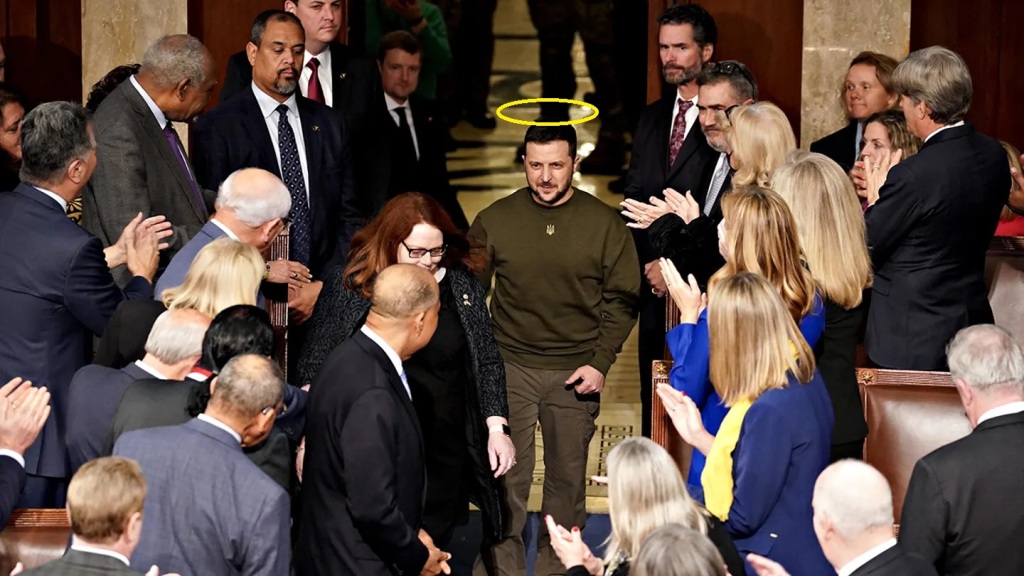
Zelensky said that the details of the agreement “are very specific and involve long-term support,” and that the pact proves that one day “Ukraine will be in NATO.”
https://www.rt.com/news/592570-germany-ukraine-security-deal/ 17 Feb 24
Ukrainian President Vladimir Zelensky has said the agreement proves his country will join NATO
German Chancellor Olaf Scholz and Ukrainian President Vladimir Zelensky have signed a security pact under which Berlin will supply Kiev with military and economic aid for another ten years.
Inked on Friday, the agreement commits Germany to providing “unwavering support for Ukraine for as long as it takes in order to help Ukraine defend itself” and restore its 1991 borders. In addition to retaking the regions of Donetsk, Lugansk, Kherson, and Zaporozhye, this feat would also involve the seizure of Crimea from Russia, which some American officials and Kiev’s former military chief view as next to impossible.
On top of military aid, the plan binds Germany to training Ukrainian police officers, transferring weapons manufacturing technology, paying for green energy projects, and a range of other efforts to help the Ukrainian government “continue providing services to its people”
Speaking at a ceremony in Berlin, Zelensky said that the details of the agreement “are very specific and involve long-term support,” and that the pact proves that one day “Ukraine will be in NATO.”
Germany is Ukraine’s second-largest Western backer, behind only the US. To date, Berlin has given Kiev €22 billion ($23.7 billion) in assistance, including €17.7 billion in military aid, according to figures compiled by the Kiel Institute for the World Economy. When aid transferred via the EU is included, Germany has handed over a total of €28 billion to Ukraine, Scholz said on Friday.
In addition to signing the decade-long pledge to Ukraine, Scholz announced a new package of military aid worth €1.1 billion. It will include 36 self-propelled howitzers, 120,000 artillery shells, and additional ammunition for Ukraine’s German-provided Iris-T air defense systems.
Germany’s outlay has hurt its own military readiness, with the New York Times reporting in November that training exercises are routinely canceled due to ammunition shortages, while German soldiers have yet to fire their latest howitzers, all of which have been sent to Ukraine.
Scholz’s decision to sanction Russian energy imports has also hammered the German economy, with industrial output falling by 2% last year, while the entire economy shrank by 0.3% in the same time period, according to the country’s Federal Statistical Office. One in three German manufacturers is currently considering moving abroad, Federation of German Industries (BDI) chief Siegfried Russwurm told Bild on Saturday, citing persistent inflation and high energy costs.
Julian Assange’s Final Appeal at the Royal Courts of Justice 20-21 Feb. What to Expect.
Day X is here! Julian Assange’s Final Appeal at the Royal Courts of Justice.
STELLA ASSANGE, FEB 19, 2024, Stella Assange – The Fight to Save my Husband
The new public hearing dates are upon us. We will be gathering outside the Royal Courts of Justice on Tuesday and Wednesday, 20-21 February. It may be the final chance for the UK to stop Julian’s extradition.
Date: 20-21 February 2024
Location: Royal Courts of Justice
Time: 8:30 am GMT
On Wed 21 Feb, there will be a march to Downing St after the hearing.
Here’s what to expect on the two days.
Meet our presenters that will be live outside the Royal Courts of Justice…………………….
JADC (The Committee to Defend Julian Assange), one of the oldest grassroots groups here in the UK will be helping us to sell T-shirts, bags, badges and our new hoodies. So, make sure to come by and say hi to Emmy and Jeannie who will be manning our table.
There will be speakers throughout the two days! Including:
Apsana Begum
Tim Dawson
John Hendy
Richard Burgon
Peter Oborne
Jeremy Corbyn
John McDonnell
Zarah Sultana
Chris Hedges
Andrew Feinstein
Andrew Wilkie
Tariq Ali
Rebecca Vincent
Ben Westwood
PEN International
Clare Daley
Mick Wallace
Chip Gibbons
Here’s how you can help………………………………………..
Nuclear Delays, Cost Overruns Imperil UK’s Net-Zero Goals

For the first time, the department’s nuclear road map was honest about why Britain and France are still so keen on nuclear, as opposed to much cheaper renewables. The roadmap mentions 14 times the link between civil and military nuclear power and the need to strengthen ties between the two to reduce costs. This military link was consistently denied in the 1990s, and in the earlier years of this century.
February 12, 2024, Paul Brown, https://www.theenergymix.com/nuclear-delays-cost-overruns-imperil-uks-net-zero-goals/
Électricité de France (EDF), the owner of the biggest construction project in the world—the giant nuclear power plant under construction at Hinkley Point in the southwest of Britain—recently announced further cost increases and delays to its completion, adding to doubts that the United Kingdom can fulfill its legal pledges to reach net-zero carbon emissions by 2050.
The French government, which owns EDF, wants the UK to chip in billions of pounds to help bail the project out, but London says it has no obligation to do so. This is leading to tensions between the two governments, with French taxpayers objecting to paying for British nuclear power stations when their own nuclear industry is struggling with under-investment and a massive debt burden. It leads to doubts that a second power station of the same size, this time on the Suffolk coast in the east of England, will ever be built.
The overoptimistic miscalculations made by EDF mean the cost estimates for the Hinkley Point project have now doubled from the 2015 estimate of £18 billion (US$22.8 billion) to between £31 and £34 billion. But that makes the problem sound better than it is: the figures are calculated in 2015 prices, and the true cost with inflation is now said to be £46 billion (US$58 billion) and still rising.
EDF is faced with making up this funding gap when it is already deep in debt and needs vast capital reserves to modernize its own fleet of more than 50 reactors and start a promised new build program. Just before the French government re-nationalized the company last year, its debts were already a staggering €54.5 billion (US$59 billion)/
When the Hinkley Point power station was first planned, the company famously predicted that UK consumers would be cooking their Christmas turkeys on power from the station by 2017. That date has been revised several times, and stood at 2027 until the third week in January. Now it has slipped back in the best case to 2029, but more likely to 2031. As one commentator put it: “The turkeys would have died of natural causes by then.”
The problem is that both governments are relying on their nuclear industries for a large part of their emission reductions. Both have to reach net-zero targets by 2050. Hinkley Point would in theory be producing 7% of British electricity by 2030 as an interim target date, displacing existing gas stations. But Hinkley Point was only part of the net-zero plan—EDF is in partnership with the British government to build a second identical power plant at Sizewell, on the Suffolk coast.
Both Hinkley Point C and Sizewell C are twin European Pressurised Reactors (EPRs), designed by EDF. Each station is supposed to produce enough power to supply six million British homes. But it is a design that has proved difficult to construct. EDF started one in Flamanville in Normandy in 2009 which was expected to be running in 2013, but is still not complete. Yet the UK is intent on continuing to allow EDF to build four reactors of the same design in Britain.
The British government has so far sunk £2.5 billion into the Sizewell C project but is not making a final investment decision while it looks for private investors. Up to now, it has found no takers.
So while the future of this power station remains in doubt, the timetables are slipping badly, and even if it does go ahead not many would bet on it producing power before 2050.
One of the odd aspects of this situation is that, in an election year in Britain, there is no political debate about what looks like a serious crisis for the nuclear industry and the UK’s climate targets. The Labour party supports the building of nuclear power stations, too, and will not be drawn into debate for fear of antagonizing the trade unions in the sector that are strongly in favour of giant power stations.
Suffolk campaigners, however, are not so reticent. “Hinkley Point C and Sizewell C epitomise the definition of insanity—doing the same thing over and over and expecting a different result,” said Alison Downes of Stop Sizewell C. “EDF and its EPR reactors are an unmitigated disaster, and it stretches credulity that Sizewell C is affordable. Indeed the government seems too embarrassed to publish the cost of Sizewell C. It should cancel the project immediately instead of handing over scarce billions that could be used instead for renewables, energy efficiency, or—in this election year—schools and hospitals.”
Stop Sizewell C and a number of other groups are challenging the Conservative government in the courts over its failure to fulfill its legal obligations under its own law that bound the UK to reach net-zero by 2050. Further delays to the nuclear power station construction program may add to the campaigner’s case.
Last month, the UK government produced a new nuclear roadmap projecting a massive new build program to bolster the industry, both for these large reactors and dozens of small modular reactors. The Department for Energy Security & Net Zero (DESNZ) remains optimistic about the nuclear industry despite the delays, but said it would not be bailing out EDF.
Hinkley Point C “is not a government project,” the department said in a statement, so “any additional costs or schedule overruns are the responsibility of EDF and its partners and will in no way fall on (UK) taxpayers”.
For the first time, the department’s nuclear road map was honest about why Britain and France are still so keen on nuclear, as opposed to much cheaper renewables. The roadmap mentions 14 times the link between civil and military nuclear power and the need to strengthen ties between the two to reduce costs. This military link was consistently denied in the 1990s, and in the earlier years of this century.
While Labour, which has a massive lead in the opinion polls going into election year, refuses to engage in a nuclear debate, it does differ from the Conservatives on the role of renewables. The current government encourages offshore wind and some solar power but has effectively blocked onshore wind farms for nearly a decade. Since this is the cheapest form of electricity production in these windy islands, and the public overwhelmingly support onshore turbines, Labour says it will at least overturn this blocking policy.
The UK’s biggest nuclear waste dump faces an inquiry by the National Audit Office (NAO) over its soaring costs and safety record.

The public spending watchdog has said it wants to examine whether Sellafield in
Cumbria is “managing and prioritising the risks and hazards of the site
effectively in the short and long term”.
It follows growing concern over
the costs of managing the site’s nuclear legacy. An NAO statement said:
“Cleaning up the site is a long-term endeavour, likely to last well into
the next century. It is expected to cost £84bn (in discounted prices),
though this cost estimate is highly uncertain.”
Sellafield stores and
treats nuclear waste from weapons programmes and power generation. The site
comprises more than 1,000 buildings and has about 81,000 tonnes of
radioactive waste in storage. This is expected to rise to 3.3m tonnes over
the coming years.
About 2,000 tonnes comprise high level waste – the most
toxic – including around 140 tonnes of plutonium in what is the world’s
largest stockpile. The site employs about 11,000 people and cost the
taxpayer around £2.5bn last year. Scrutiny of its budget and safety record
come after a series of critical reports in the Guardian, with allegations
ranging from lax cyber security to a poor work culture. The Government,
which ultimately controls Sellafield, has defended the site’s operations,
insisting there is “no elevated risk to public safety as result of the
issues reported”.
Telegraph 15th Feb 2024
UK’s Nuclear Strategy Faces Criticism: Uncertainty Looms for Small Modular Reactors

The UK’s nuclear strategy faces increasing criticism from MPs due to lack of clarity on small modular reactors (SMRs). Concerns about timelines, waste management, and costs cast doubt on their role in the future energy mix.
Rafia Tasleem, 14 Feb 2024, https://bnnbreaking.com/politics/uks-nuclear-strategy-faces-criticism-uncertainty-looms-for-small-modular-reactors
The UK government’s nuclear strategy, specifically its approach to small modular reactors (SMRs), faces mounting criticism from Members of Parliament (MPs) for its lack of clarity and the ensuing uncertainty in the nuclear sector.
A Murky Vision for Nuclear Power
MPs have expressed serious concerns about the timeline for SMR projects, potential waste management issues, and the overall vision for the sector. Despite promises of support and investment, the government’s plans for SMRs remain obscure, casting doubts on their role in the future energy mix.
The Environmental Audit Committee has voiced strong criticisms, citing the unclear strategy as a significant obstacle for the nuclear industry. This ambiguity not only undermines industry confidence but also raises questions about potential cost implications for taxpayers.
Hinkley Point C: A Cautionary Tale
The ongoing saga of Hinkley Point C serves as a stark reminder of the challenges and uncertainties surrounding UK energy policy and developments, especially in the face of the climate crisis.
Initially greenlit in June 2016, the project’s funding was divided between the government, EDF, and China General Nuclear (CGN). However, in a surprising turn of events, CGN withdrew its funding in December 2022, leaving the government to shoulder the shortfall in investment.
Furthermore, the opening of Hinkley Point C has been delayed until at least 2029, with the projected cost ballooning from £25 billion to at least £35 billion—a staggering increase that has raised eyebrows and ignited debates on the feasibility of nuclear power as a sustainable and cost-effective solution.
The Future of UK Nuclear Power
With the UK government aiming to have 24 gigawatts of nuclear capacity by 2050, the choice lies between additional large-scale reactors like Hinkley Point C or a combination of large and SMRs. However, the escalating costs and delays associated with Hinkley Point C have cast a long shadow over the nuclear sector.
The current state of affairs raises pressing questions about the future of nuclear power in the UK, especially in light of the climate crisis and the need for sustainable and reliable energy sources. As MPs and industry experts grapple with these concerns, the search for clarity and a coherent strategy becomes ever more urgent.
As of February 15, 2024, the UK government faces a critical juncture: to address the concerns surrounding its nuclear strategy and provide a clear path forward, or risk further uncertainty and potential setbacks in the nation’s quest for a sustainable energy future.
Waste issues need consideration in SMR deployment, says UK’s Committee on Radioactive Waste Management (CoRWM).

https://world-nuclear-news.org/Articles/Waste-issues-need-consideration-in-SMR-deployment 14 Feb 24
Waste management issues need to have a significantly greater prominence in the process of developing and deploying small modular reactor and advanced modular reactor designs, according to the UK’s Committee on Radioactive Waste Management (CoRWM).
There is considerable impetus for the development of small modular reactor (SMR) and advanced modular reactor (AMR) designs and their commercial deployment, both for energy security and for environmental reasons, particularly given the historic difficulties of deploying reactors at gigawatt scale,” CoRWM notes in a new position paper.
However, it says the issue of managing the used fuel and radioactive waste from these new reactors “appears, with some exceptions … to have been largely ignored or at least downplayed up to now”. It adds that the issue “must be considered when selecting technologies for investment, further development, construction and operation”.
The paper says: “This must involve addressing the uncertainties about such management at an early stage, to avoid costly mistakes which have been made in the past, by designing reactors without sufficient consideration of how spent fuel and wastes would be managed, and also to provide financial certainty for investors regarding lifetime costs of operation and decommissioning.”
CoRWM says it is essential to know: the nature and composition of the waste and, in particular, of the used fuel; its likely heat generation and activity levels; how it could feasibly be packaged and its volume; and when it is likely to arise.
“So far there is little published material from the promoters and developers of new reactor types to demonstrate that they are devoting the necessary level of attention to the waste prospectively arising from SMR/AMRs,” it notes.
The position paper provides recommendations to the UK government, Great British Nuclear (GBN), and Nuclear Waste Services and regulators to consider as SMR and AMR deployment is progressed.
“There are many questions to be answered concerning the radioactive waste and spent fuel management aspects of the design and operation of SMRs and AMRs,” CoRWM says. “This paper begins the process of raising them, with the caveat that our knowledge of the reactor designs and their fuel requirements is relatively immature compared with large GW reactors.”
CoRWM says there are various mechanisms by which these questions could be addressed in the process of obtaining approval for the new reactors. These are principally: the process of justification, which will be mandatory for all new reactor types; Generic Design Assessment which is optional and non-statutory; nuclear site licensing; and environmental permitting.
“The last two stages of control may in some cases come too late in the process to allow for effective optimisation of designs and the selection of materials that reduce waste,” CoRWM says. “It remains to be seen how effective these mechanisms will be and whether they will occur sufficiently early in the decision-making process to ensure that radioactive waste management is fully and responsibly addressed.”
CoRWM was established in 2003 as a non-statutory advisory committee and is classed as a non-departmental public body. Its purpose is to provide independent advice to the UK government, and the devolved administrations based on scrutiny of the available evidence on the long-term management of radioactive waste, arising from civil and, where relevant, defence nuclear programmes, including storage and disposal.
The UK government has plans to expand nuclear energy capacity to 24 GW by 2050, with a fleet of SMRs a key part of that strategy. Last year, the government and the new GBN arms-length body set up to help deliver that extra capacity began the selection process for which SMR technology to use. In October, EDF, GE Hitachi Nuclear Energy, Holtec, NuScale Power, Rolls Royce SMR and Westinghouse were invited to bid for UK government contracts in the next stage of the process.
‘Everyone needs to calm down’: experts assess Russian nuclear space threat
Attacks in Earth’s orbit as likely to damage Russian interests as western ones, says leading academic
Nicola Davis , 15 Feb 24, Guardian,
Rumours that Russia is planning to deploy nuclear weapons in space have been dampened down by experts who say that while such technology is possible, there is no need to push the panic button.
The furore kicked off on Wednesday when the head of the US House of Representatives’ intelligence committee, Mike Turner, called for the Biden administration to declassify information on what he called a “serious national security threat”.
While Turner gave no further details, it was later reported by news outlets, citing unnamed sources, to involve Russia’s potential deployment of a nuclear anti-satellite weapon in space. The Kremlin dismissed the claim as a “malicious fabrication”.
Dr Bleddyn Bowen, an associate professor at the University of Leicester who specialises in outer space international relations and warfare, said the the lack of detail was no reason to panic. “It’s so vague and cryptic, it could be a number of different things. [But] no matter what they are, none of them are a big deal, to be honest. Everyone needs to calm down about this.”
Russia is bound by several legal restrictions regarding the use or presence of nuclear weapons in space. Article 4 of the Outer Space treaty (1967) bans nuclear weapons from being put into orbit, installed on celestial bodies or otherwise stationed in outer space, while the New Start treaty aims to reduce the number of deployable nuclear arms. The Partial Nuclear Test Ban treaty (1963) bans nuclear explosions in space.
Even if Russia ignores these agreements, there are other considerations. Bowen said the rumoured threat may relate to nuclear-tipped anti-satellite weapons but that such a threat was nothing new.
“These are the first and the most crude kind of anti-satellite weapons ever built: the Americans had them in 1959.” He said any state with nuclear weapons already had the technology to use them in space, broadly speaking.
Another possibility, Bowen said, was that the threat related to space-based nuclear weapons that could be used to knock out satellites. Again, the idea is not entirely new: Russia has previously explored the stationing of nuclear weapons in space, albeit to attack ground targets……………………………………………………………………………………
Space-based nuclear weapons are vulnerable to attack from other nations, while the damage from such weapons would be indiscriminate.
“When you detonate a nuclear weapon in space you generate the fireball … but what you [also] generate is the electromagnetic pulse which fries the electrical circuits of anything that’s unshielded within a few thousand kilometres’ radius,” he said. The pulse may also knock out power grids on Earth if the bomb is detonated above or near populated areas.
“After that, you have the radiation that the bomb would generate,” Bowen said. Over time it would fry the electrical circuits of satellites in the wider part of Earth’s orbit.
The loss of satellite services could affect myriad systems on Earth, from telecoms to satellite navigation services. “That can have knock-on effects to the economy, to critical infrastructure, to the financial system, which relies on these satellites.”
In other words, while nuclear bombs could take out a desired satellites, they could also damage Russia’s technology and interests.
“You’ve got to be in a very desperate situation to want to do something like that,” he said. “So I am not losing any sleep over this.”
Russia also has other technology to hand. In 2021 Russia tested a direct-ascent anti-satellite missile, successfully knocking out one of its own defunct satellites.
But James Green, a professor of public international law at the University of the West of England, said he was also dubious that that system would be deployed. “I think Russia likes to project its space power [to appear] greater than it probably is,” he said.
https://www.theguardian.com/world/2024/feb/15/experts-russian-nuclear-space-threat
Dutch appeals court orders Netherlands to stop exports of F-35 parts to Israel, citing war in Gaza
AP News, BY MOLLY QUELL, 10, February 13, 2024
THE HAGUE, Netherlands (AP) — An appeals court ordered the Dutch government on Monday to halt the export of F-35 fighter jet parts to Israel, citing a clear risk of violations of international law.
A trio of human rights organizations brought a civil suit against the Netherlands in December, arguing authorities needed to reevaluate the export license in light of Israeli military action in the Gaza Strip.
“It is undeniable that there is a clear risk that the exported F-35 parts are used in serious violations of international humanitarian law,” Judge Bas Boele said in reading out the ruling, eliciting cheers from several people in the courtroom.
The exports must cease within seven days……………………………………………
Oxfam Novib, Pax Nederland and The Rights Forum filed the case in December. They argued the continued transfer of the aircraft parts makes the Netherlands complicit in possible war crimes being committed by Israel in its war with Hamas.
In January, a lower court sided with the government, allowing the Dutch to continue sending U.S.-owned parts stored at a warehouse in the town of Woensdrecht to Israel. The Netherlands is home to one of three F-35 European regional warehouses.
Other countries are also considering restricting weapons sales to Israel. Human rights groups in the United Kingdom have brought a similar suit against their government, attempting to block weapons exports to Israel.
In the United States, Democrats in the Senate are pushing a bill that would require President Joe Biden to get congressional approval before greenlighting weapons sales to Israel………………………………….https://apnews.com/article/netherlands-court-f35-israel-b33608b054a33fbacc518395b53b74e8
Ukraine set to lose key Donbass city – White House
https://www.rt.com/russia/592511-key-donbass-city-loss/
With Russia poised to capture Avdeevka, US National Security Council spokesman John Kirby has called on Congress to give Kiev more ammunition
Russian forces are preparing to capture the Donbass stronghold of Avdeevka after “particularly intense” fighting, White House National Security Council spokesman John Kirby told reporters on Thursday.
Situated just ten kilometers north of Donetsk, Avdeevka had been used by the Ukrainian military as a staging ground for attacks on the city since 2014, many of which targeted civilians. They constructed deep bunkers there, with Russian military bloggers comparing the town to a “fortress.”
Fighting around Avdeevka is “particularly intense,” Kirby said at a press conference. “We’re getting reports from the Ukrainians that the situation is critical, the Russians continuing to press Ukrainian positions every single day,” he stated, adding that “Avdeevka is at risk of falling into Russian control.”
It is unclear how many troops Kiev has lost attempting to hold Avdeevka. Kirby linked the impending fall of the town to ammunition shortages, a problem well documented by Western media in recent months. The White House spokesman called on Congress to pass a bill that would give Ukraine a $60 billion infusion of military aid, stating that this would “provide Ukraine with the artillery shells that they desperately need to disrupt these Russian assaults.”
While the US Senate passed the bill earlier this week, it remains a non-starter in the House of Representatives, where the slim Republican majority have demanded that it include a major tightening of US immigration law and “real border security provisions,” according to House Speaker Mike Johnson.
Ukraine appears determined to hold Avdeevka at all costs, with President Vladimir Zelensky naming Aleksandr Syrsky – a general infamous for tolerating severe losses – as commander-in-chief of his armed forces last week. Syrsky immediately deployed Ukraine’s 3rd Assault Brigade – an elite Western-armed unit made up of the remnants of the neo-Nazi Azov regiment – to Avdeevka, where they relieved the beleaguered and depleted 110th Mechanized Brigade.
While Ukrainian officials have not conceded defeat in Avdeevka, German reporter Julian Roepcke claimed on Thursday that “the Ukrainian army is in the process of pulling out,” while Russian forces are “quickly advancing inside and around the town.” According to Roepcke, the Russian flag is now flying at the entrance to the town, at the same spot where Zelensky took a selfie during a publicity visit in December.
Cut in Half by Russians, Avdiivka is Reinforced by Ukrainian Nazi Azov Battalion – Massive Missile Strike on Reinforcements Causes Some Defenders to Withdraw
The heavily fortified frontline town of Avdiivka, split in two by Russian forces, witnesses some of the Ukrainian defenders begin to retreat of some areas to ‘more favorable positions’.
The supply lines of the AFU in the southern sector are now under extreme pressure.
Besides the multi-pronged ground attack that is overextending the defenses, a reason for the rapid advance of the Russian forces in Avdiivka is the aerial support: a FAB guided munition drops almost immediately on any place where a concentration of Ukrainian military is spotted.
Telegram channel Ukraine Watch reported that in the first third of February alone, the Russian Aerospace Forces dropped about 460 aerial bombs on the positions of the Ukrainian Armed Forces. This includes FAB-250/500/1500 and ODAB.
his partial folding of the defenses is a bit surprising because up until a couple of days ago, the New Ukrainian commander Syrsky was still rumored to be withdrawing elite units from the Rabotino and Verbove fronts to immediately reinforce Avdiivka.
This reportedly includes more of the 47th as well as the 3rd Assault Brigade, better known as the Nazi ‘Azov’ battalion.
These brigades were thrown directly into the center of battle.
Simplicius the Thinker reported:
“After witnessing the nightmare of Bakhmut, they [Ukrainians] now understand what awaits the soldiers in Avdiivka. But what’s most interesting, is you’ll recall that their narrative was previously that Bakhmut was a ‘successful operation’ because it allegedly grinded down such a disproportionate number of Russian troops, that the city defense served its purpose. But when that truth is put to the test in reality, Ukrainians instead recognize that it’s actually them getting ground down amid desperate calls for withdrawal. If Bakhmut was such a ‘success’, then they would be happy to keep their men in Avdiivka and inflict another such ‘success’ against Russian attackers.”……………………………………………………………………………………………………………………..
Ukraine Watch reported:
“The current situation can be described as difficult. That is, the enemy is now advancing practically along the entire front line, and we have switched from offensive actions to a defensive operation. And the aim of our defensive operation is to exhaust the enemy’s forces, to inflict maximum losses on him, using our fortifications, our technical advantages in the use of unmanned aerial vehicles, electronic warfare and the maintenance of prepared defensive lines. The situation at the front was very tense, with the enemy making offensive movements in several directions, in fact all along the line of sight of my group.”
And finally, today, Intel Slava reported that the Ukrainian army is retreating to ‘more advantageous positions’ in Avdiivka, according to Dmitry Likhovy, speaker of the Tavria Armed Forces of Ukraine group.
“In Avdiivka, a maneuver is taking place where our units are withdrawing to more advantageous positions. Supplies to Avdiivka and evacuation from there are difficult. But a reserve logistics artery, prepared in advance, is being used.” https://www.thegatewaypundit.com/2024/02/cut-half-russians-avdiivka-is-reinforced-ukrainian-nazi/
Spending watchdog launches investigation into Sellafield

National Audit Office to examine risks and costs at nuclear waste site in Cumbria
Anna Isaac and Alex Lawson, 16 Feb 24 https://www.theguardian.com/business/2024/feb/15/spending-watchdog-launches-investigation-into-sellafield—
Britain’s public spending watchdog has launched an investigation into risks and costs at Sellafield, the UK’s biggest nuclear waste dump.
The National Audit Office (NAO), which scrutinises the use of public funds, has announced it will examine whether the Cumbria site is managing and prioritising the risks and hazards of the site effectively as well as deploying resources appropriately and continuing to improve its project management.
The findings of its investigation are expected to be published this autumn.
Sellafield is Europe’s most toxic nuclear site and also one of the UK’s most expensive infrastructure projects, with the NAO estimating it could cost £84bn to maintain the site into the next century.
Last year, Nuclear Leaks, a Guardian investigation into activities at Sellafield, revealed problems with cybersecurity, a radioactive leak and a “toxic” workplace culture at the waste dump.
Predictions of the ultimate bill for the site, which holds about 85% of the UK’s nuclear waste, vary. It cost £2.5bn to run the site last year, and the government estimates it could ultimately take £263bn to manage the country’s ageing nuclear sites, of which Sellafield accounts for the largest portion.
The site employs about 11,000 people and is the world’s largest store of plutonium. It comprises more than 1,000 buildings, many of which were not created with the intention of becoming long-term storage facilities for radioactive material.
Sellafield is so expensive that the Office for Budget Responsibility, which monitors threats to the UK government’s finances, has warned that it and other legacy sites pose a “material source of fiscal risk” to the country.
The NAO previously examined activities at Sellafield in 2018. It found some aspects of project management had improved but that more needed to be done to get a grip on vast costs and risks.
Amyas Morse, the head of the NAO at that time, found that the Nuclear Decommissioning Authority (NDA), which is tasked with management of Sellafield, needed to improve its explanation of its progress so that parliament could hold it to account.
This challenge was underlined when the Guardian uncovered how a worsening leak from a huge silo of radioactive waste at Sellafield could pose a risk to the public.
The leak, from one of the “highest nuclear hazards in the UK” – a decaying building known as the Magnox swarf storage silo – is expected to continue for at least a further 30 years. This could have “potentially significant consequences” if it gathers pace, risking the contamination of groundwater, according to an official document.
This was just one of a catalogue of safety risks arising from ageing infrastructure at the site. A document sent to members of the Sellafield board in November 2022, and seen by the Guardian, raised widespread concerns about a degradation of safety across the site, warning of the “cumulative risk” from failings ranging from nuclear safety to asbestos and fire standards.
Responding to the issues late last year, a Sellafield spokesperson said: “The nature of our site means that until we complete our mission, our highest hazard facilities will always pose a risk.”
Sellafield is owned by the NDA, a quango sponsored and funded by the Department for Energy Security and Net Zero that is tasked with cleaning 17 sites across the UK.
The NDA said it had a “responsibility to deliver for the public, including on value for money”.
“We welcome this continued scrutiny and look forward to working with the NAO,” a spokesperson said.
EDF’s setbacks weigh down the relaunch of nuclear power in Europe

Montel. EDF’s recent setbacks in its project to build two new generation EPR reactors in the United Kingdom darken the prospects for the revival of nuclear power in Europe, experts told Montel.
Montel) EDF's recent setbacks in its project to build two new generation EPR reactors in the United Kingdom darken the prospects for the revival of nuclear power in Europe, experts told Montel.

By: Muriel Boselli,  8 Feb 2024, https://montelnews.com/fr/news/1537158/les-revers-dedf-plombent-la-relance-du-nuclaire-en-europe-
A dispute between Paris and London over who should pay GBP 6-8 billion (in 2015 values) for new additional costs for the Hinkley Point C (HPC) project is tarnishing the image of the nuclear industry, at a time when nations European pro-nuclear companies seek to promote atomic energy in the fight against climate change, according to several experts.

Commissioning of the HPC project could be delayed by up to four years and completion costs are now expected to be between GBP31bn and £34bn, according to EDF announcements last month.

Hinkley's problems underline the "slow descent into hell" of the French nuclear industry, Jean-François Raux, former director of EDF and general delegate of the French Electricity Union (UFE), told Montel.

“I have fierce doubts about EDF's ability to build more reactors,” he said, highlighting the delays and additional costs of new construction in France, Finland and the United Kingdom.

Indeed, the start-up of the Flamanville EPR by mid-2024 was “very tense”, with EDF still having to submit compliance documents, the director of the Nuclear Safety Authority (ASN) declared last week. The project is already twelve years late.

According to a source close to the matter at EDF, the company could even withdraw from HPC, although this scenario is not the most likely. “The board of directors did not sign a blank check for Hinkley, it barely committed to financing the project for 2024,” he assures.

Threat to the relaunch of nuclear power
The French nuclear recovery program provides for the construction of six EPR2s in France at an estimated cost of EUR 52 billion. A first pair of reactors is planned at Penly, in the northwest of the country by 2035-2037.

However, these ambitions are threatened by difficulties encountered at the Hinkley site, experts said.

“The problem is that we will have to launch construction work on two European pressurized reactors at Penly, while we continue to inject billions into HPC,” estimated the source at EDF. “There will inevitably be plasters to wipe and skills to find,” he added, noting that the Penly EPRs will “inevitably encounter difficulties”.

Florence de Bonnafos, campaign manager at Greenpeace, agrees with these comments, believing that EDF's nuclear revival project is unrealistic given the latest cost estimates for the two HPC reactors.

“It’s still a bit complicated to make us believe that we will be able to build six reactors for the same budget as two reactors in Great Britain,” she said.

The schedule slip on the HPC project follows reports that EDF's Chinese partner CGN has pulled out of financing the project, leaving a gap of GBP1bn per year.

The issue could impact funding for the UK's other planned flagship nuclear project at Sizewell C, a joint venture between the UK government and CGN. EDF, in debt to the tune of EUR 65 billion, is expected to make a final investment decision next summer.

Political decisions
The subject of financing is at the heart of a standoff between the French and British governments, with Paris partly accusing the United Kingdom of having frozen its diplomatic relations with China.

Elsewhere, in the Czech Republic, where EDF has submitted a bid to build four reactors, officials could be tempted to choose Korean competitor KHNP, analysts said.

“The main problem is that the decisions taken are more political than industrial,” said the EDF source. “No one thought that we would do HPC and Flamanville in the given time. It was custard. »

In addition, Mr. Raux notes a lack of accountability within EDF. “In other sectors, when things go wrong, leaders are replaced,” he said.

This is the first part of a two-part article devoted to the prospects for nuclear development in the EU.
France’s first 6 EPR2 nuclear reactors will cost much more than the planned 52 billion euros.
Why the first six EPR2s will cost much more than the 52 billion euros
initially planned by EDF. During a hearing in the Senate, the executive
director of EDF’s new nuclear projects, Xavier Ursat, indicated that the
first six EPR2s will cost more than the 52 billion euros announced in 2021.
A first slippage in costs including the new estimate is promised for the
end of 2024.
Why the first six EPR2s will cost much more than the 52
billion euros initially planned by EDF. EDF does not brag about it. But in
the Senate commission of inquiry into the price of electricity, Xavier
Ursat, its executive director in charge of the engineering department and
new nuclear projects, was obliged to talk about it.
As predicted by an expert report in 2021, the construction of the first six EPR2s will indeed
cost more than the 51.7 billion euros, rounded to 52 billion by the State,
calculated by EDF at the time Emmanuel Macron had to decide on the relaunch
of a new nuclear program in France. A relaunch confirmed in his speech on
Belfort’s energy strategy on February 10, 2022. “We are carrying out a
new economic assessment. It led to a figure higher than 52 billion,”
Xavier Ursat declared to the senators. Which, for him, “is not very
surprising”.
L’Usine Nouvelle 12th Feb 2024
1 This Month

4 May -West Suburban Peace Coalition to discuss Iran war at May Educational Forum
Monday, May 4, 7:00 – 8:00 PM Central Standard Time
Title: : How Trump’s Narrative Tries to Shape the Reality of the War on Iran.
Contact Walt Zlotow, zlotow@hotmail.com 630 442 3045 for further information
14 May – online event From Bombs to Data Centres: the Face of Nuclear Colonialism
To see nuclear-related stories in greater depth and intensity – go to https://nuclearinformation.wordpress.com
-
Archives
- May 2026 (49)
- April 2026 (356)
- March 2026 (251)
- February 2026 (268)
- January 2026 (308)
- December 2025 (358)
- November 2025 (359)
- October 2025 (376)
- September 2025 (257)
- August 2025 (319)
- July 2025 (230)
- June 2025 (348)
-
Categories
- 1
- 1 NUCLEAR ISSUES
- business and costs
- climate change
- culture and arts
- ENERGY
- environment
- health
- history
- indigenous issues
- Legal
- marketing of nuclear
- media
- opposition to nuclear
- PERSONAL STORIES
- politics
- politics international
- Religion and ethics
- safety
- secrets,lies and civil liberties
- spinbuster
- technology
- Uranium
- wastes
- weapons and war
- Women
- 2 WORLD
- ACTION
- AFRICA
- Atrocities
- AUSTRALIA
- Christina's notes
- Christina's themes
- culture and arts
- Events
- Fuk 2022
- Fuk 2023
- Fukushima 2017
- Fukushima 2018
- fukushima 2019
- Fukushima 2020
- Fukushima 2021
- general
- global warming
- Humour (God we need it)
- Nuclear
- RARE EARTHS
- Reference
- resources – print
- Resources -audiovicual
- Weekly Newsletter
- World
- World Nuclear
- YouTube
-
RSS
Entries RSS
Comments RSS
 nuclear-news