The spending horrors facing UK’s next PM from old nuclear subs to RAAC in schools
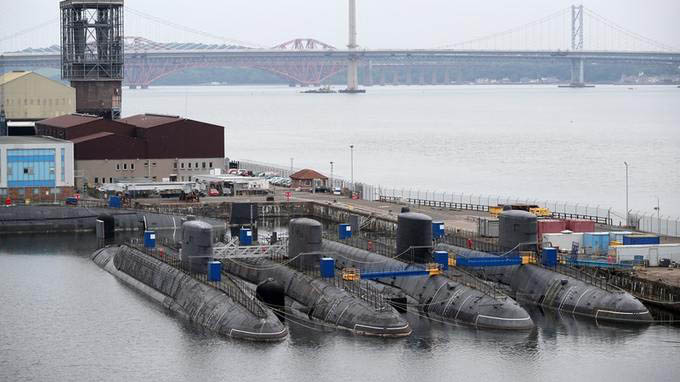
Meg Hillier warned that the next Government will face many spending ‘big nasties’ that will eat up already stretched budgets
The spending horrors facing the next PM from old nuclear subs to RAAC in
schools. Meg Hillier warned that the next Government will face many
spending ‘big nasties’ that will eat up already stretched budgets.
The influential chair of the Public Accounts Committee (PAC) has warned of the
“big nasties” of public spending that face the next Government. In an
interview with i, Labour MP Meg Hillier warned that there wasn’t
“nearly enough good project management” in Government to ensure that
the numerous issues she’s identified, from crumbling hospitals to an out
of service a nuclear submarine fleet, are dealt with.
The UK also needs to
consider how it will safely dispose of its fleet of retired nuclear
submarines, a job that is expected to be very costly for the Ministry of
Defence. The current Vanguard class of submarines are due to be phased out
by 2032 and replaced by the Dreadnought class, and it was estimated in 2016
that the renewal of the programme could cost between £167bn and £179bn
over its 30-year life span.
iNews 17th March 2024
https://inews.co.uk/news/politics/spending-horrors-facing-next-prime-minister-2960825
Deadlines, costs, production: France’s nuclear company EDF in a moment of truth
By Paul Messad | Euractiv France, Mar 18, 2024
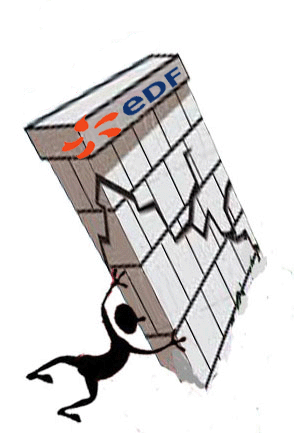
EDF, the French state-owned energy giant faces criticism for rising costs and delays in its nuclear projects, its existing reactors have also been encountering problems. Euractiv looks at the implications of these challenges for EDF and the wider nuclear energy industry.
January 23, 2023: EDF, Europe’s leading energy company, announces a further extension of the costs and construction times of its two 3rd generation pressurized water reactors (EPR) located at Hinkley Point in England. The budget could increase by 70 to 90% compared to initial estimates and the start-up could be four to six years late.
……….the delays are “not likely to undermine the confidence of the British government in its nuclear strategy” , defends SFEN. Proof of this would be its reinvestment of more than a billion pounds sterling in two other reactors built by EDF in England, at Sizewell.
For others, on the contrary, the Anglo-Saxon situation is symptomatic of the challenge faced by the largest nuclear operator in the world, in whose confidence is eroded as projects progress, while it aims, in particular, at the construction of six, then 14 EPRs in France, and one (or even four in total) in the Czech Republic for which the authorities are awaiting guarantees.
Especially since another project tarnishes the image of the French giant. On the continent, EDF is in fact building an EPR in France, in Flamanville (Normandy). But as in England, construction is experiencing significant delays (12 years) and additional costs (+470%). The start-up of the reactor planned for “mid-2024” could even be further delayed .
……………………..In France, the government intends to get started since it plans to build six EPRs — and possibly eight others. Estimated costs and deadlines for the first six: 52 billion euros and a first commissioning in 2035.
For once, according to Les Échos , costs have already been revised upwards… by 30%. When questioned, the CEO of EDF, Luc Rémont, “does not confirm any figures” .
“We will be there when we have made all the optimizations [engineering design, component manufacturing, etc., Editor’s note] ,” he explained on the sidelines of the Franco-Czech nuclear summit organized in Prague. on March 8 and 9.
The deadlines, already “very demanding” , he agreed at the end of November, have since been postponed to 2040.
This back and forth annoys the Minister of the Economy and Energy. “EDF must learn to keep its costs and its schedule ,” criticized Bruno Le Maire at the beginning of March in Le Monde .
Czech Republic, Poland, Slovakia…
It must be said that EDF is playing on its international reputation.
In Prague, Mr. Rémont accompanied the President of the Republic, Emmanuel Macron, who came to defend EDF’s candidacy for the construction of one, or even four reactors in total, in the Czech Republic.
However, the country’s authorities have emphasized their commitment to respecting deadlines and costs.
“We are interested in the lowest possible price, the highest possible guarantees that the plant will be built on time ,” Jozef Síkela, Czech Minister of Industry and Trade, told Euractiv .
Clearly, it is not because EDF is the only European company in the running that it will be chosen. Worse, the company is walking on eggshells, competing, as in 2009 on the reactor issue in the United Arab Emirates, by a subsidiary of the South Korean KEPCO.
“Fifteen years later, the Flamanville EPR […] is still not in service. Three of the South Korean reactors in Abu Dhabi are there and the last one very soon [with delay, Editor’s note]” , reminded the former representative of EDF to the European institutions (1987 to 2000) Lionel Taccoen, resumed on
The situation may seem all the more worrying as EDF is also interested in building reactors in the Netherlands, Bulgaria , Slovenia, Slovakia and Poland where the French firm was recently defeated .
In addition, the Czech authorities have left the door open for the American Westinghouse to propose a new offer. The latter has also won several contracts for reactors in Europe in recent years. …………………….
The other dark spot on EDF’s picture lies in the management of its existing fleet and in particular the annus horribilis 2022 where, in the midst of the energy crisis, production has fallen back to pre-1990 levels .
“The year in which France should have shone is exactly the year in which we had a 50% reduction in the fleet,” argued to Euractiv at the end of January Xavier Daval, vice-president of the Renewable Energies Union, the main actors’ union. of the sector in France.
We will now have to wait until 2027, according to EDF , to once again reach production levels slightly higher than those of 1995 (around 360 TWh over the year), far from the 400-420 TWh reached between 2002 and 2015.
As if more was needed, EDF discovered at the beginning of March new “indications” of corrosion , a nightmare of 2022, on one of the reactors in the park.
Nevertheless, the company and the nuclear industry benefit more than ever from government support. France, like the fifteen other European states, which are part of the “nuclear alliance”, supports the emergence of 30 to 45 large reactors by 2050 . Will EDF be the main architect? https://www.euractiv.com/section/energy-environment/news/frances-edf-faces-uphill-battle-as-europes-demand-for-nuclear-reactors-grows/
100,000 years and counting: how do we tell future generations about highly radioactive nuclear waste repositories?
Sweden and Finland have described KBS-3 as a world-first nuclear-waste management solution.

Critical questions remain about the storage method, however. There have been widely publicised concerns in Sweden about the corrosion of test copper canisters after just a few decades. This is worrying, to say the least, because it’s based on a principle of passive safety. The storage sites will be constructed, the canisters filled and sealed, and then everything will be left in the ground without any human monitoring its safe functioning and with no technological option for retrieving it. Yet, over 100,000 years the prospect of human or non-human intrusion into the site – both accidental or intentional – remains a serious threat.

International attention is increasingly fixated on “impactful” short-term responses to environmental problems – usually limited to the lifespan of two or three future generations of human life. Yet the nature of long-lived nuclear waste requires us to imagine and care for a future well beyond that time horizon, and perhaps even beyond the existence of humanity.
International attention is increasingly fixated on “impactful” short-term responses to environmental problems – usually limited to the lifespan of two or three future generations of human life. Yet the nature of long-lived nuclear waste requires us to imagine and care for a future well beyond that time horizon, and perhaps even beyond the existence of humanity.
March 19, 2024 Thomas Keating. Postdoctoral Researcher, Linköping University, Anna Storm, Professor of Technology and Social Change, Linköping University https://theconversation.com/100-000-years-and-counting-how-do-we-tell-future-generations-about-highly-radioactive-nuclear-waste-repositories-199441
In Europe, increasing efforts on climate change mitigation, a sudden focus on energy independence after Russia’s invasion of Ukraine, and reported breakthroughs in nuclear fusion have sparked renewed interest in the potential of nuclear power. So-called small modular reactors (SMRs) are increasingly under development, and familiar promises about nuclear power’s potential are being revived.
Nuclear power is routinely portrayed by proponents as the source of “limitless” amounts of carbon-free electricity. The rhetorical move from speaking about “renewable energy” to “fossil-free energy” is increasingly evident, and telling.
Yet nuclear energy production requires managing what is known as “spent” nuclear fuel where major problems arise about how best to safeguard these waste materials into the future – especially should nuclear energy production increase. Short-term storage facilities have been in place for decades, but the question of their long-term deposition has caused intense political debates, with a number of projects being delayed or cancelled entirely. In the United States, work on the Yucca Mountain facility has stopped completely leaving the country with 93 nuclear reactors and no long-term storage site for the waste they produce.
Nuclear power plants produce three kinds of radioactive waste:
- Short-lived low- and intermediate-level waste;
- Long-lived low- and intermediate-level waste;
- Long-lived and highly radioactive waste, known as spent nuclear fuel.
The critical challenge for nuclear energy production is the management of long-lived waste, which refers to nuclear materials that take thousands of years to return to a level of radioactivity that is deemed “safe”. According to the US Nuclear Regulatory Commission (NRC), in spent fuel half of the radiation in strontium-90 and cesium-137 can decay in 30 years, while it would take 24,000 years for plutonium-239 to return to a state considered “harmless”. However, exactly what is meant by “safe” and “harmless” in this context is something that remains poorly defined by international nuclear management organisations, and there is surprisingly little international consensus about the time it takes for radioactive waste to return to a state considered “safe” for organic life.
“Permanent” geological repositories
Despite the seeming revival of nuclear energy production today, very few of the countries that produce nuclear energy have defined a long-term strategy for managing highly radioactive spent fuel into the future. Only Finland and Sweden have confirmed plans for so-called “final” or “permanent” geological repositories.
The Swedish government granted approval for a final repository in the village of Forsmark in January 2022, with plans to construct, fill and seal the facility over the next century. This repository is designed to last 100,000 years, which is how long planners say that it will take to return to a level of radioactivity comparable to uranium found in the earth’s bedrock.
Finland is well underway in the construction of its Onkalo high-level nuclear waste repository, which they began building in 2004 with plans to seal their facility by the end of the 21st century.
The technological method that Finland and Sweden plan to use in their permanent repositories is referred to as KBS-3 storage. In this method, spent nuclear fuel is encased in cast iron, which is then placed inside copper canisters, which are then surrounded by clay and bedrock approximately 500 metres below ground. The same or similar methods are being considered by other countries, such as the United Kingdom.
Sweden and Finland have described KBS-3 as a world-first nuclear-waste management solution. It is the product of decades of scientific research and negotiation with stakeholders, in particular with the communities that will eventually live near the buried waste.
Critical questions remain about the storage method, however. There have been widely publicised concerns in Sweden about the corrosion of test copper canisters after just a few decades. This is worrying, to say the least, because it’s based on a principle of passive safety. The storage sites will be constructed, the canisters filled and sealed, and then everything will be left in the ground without any human monitoring its safe functioning and with no technological option for retrieving it. Yet, over 100,000 years the prospect of human or non-human intrusion into the site – both accidental or intentional – remains a serious threat.
The Key Information File
Another major problem is how to communicate the presence of buried nuclear waste to future generations. If spent fuel remains dangerous for 100,000 years, then clearly this is a time frame where languages can disappear and where the existence of humanity cannot be guaranteed. Transferring information about these sites into the future is a sizeable task that demands expertise and collaboration internationally across the social sciences and sciences into practices of nuclear waste memory transfer – what we refer to as nuclear memory communication.
In a project commissioned by the Swedish Nuclear Waste Management Company (SKB), we take up this precise task by writing the “Key Information File” – a document aimed at non-expert readers containing only the most essential information about Sweden’s nuclear waste repository under development.
The Key Information File has been formulated as a summary document that would help future readers understand the dangers posed by buried waste. Its purpose is to guide the reader to where they can find more detailed information about the repository – acting as a “key” to other archives and forms of nuclear memory communication until the site’s closure at the end of the 21st century. What happens to the Key Information File after this time is undecided, yet communicating the information that it contains to future generations is crucial.
The Key Information File we will publish in 2024 is intended to be securely stored at the entrance to the nuclear waste repository in Sweden, as well as at the National Archives in Stockholm. To ensure its durability and survival through time, the plan is for it to be reproduced in different media formats and translated into multiple languages. The initial version is in English and, when finalised, it will be translated into Swedish and other languages that have yet to be decided.
Our aim is for the file to be updated every 10 years to ensure that essential information is correct and that it remains understandable to a wide audience. We also see the need for the file to be incorporated into other intergenerational practices of knowledge transfer in the future – from its inclusion into educational syllabi in schools, to the use of graphic design and artwork to make the document distinctive and memorable, to the formation of international networks of Key Information File writing and storage in countries where, at the time of writing, decisions have not yet been made about how to store highly radioactive long-lived nuclear waste.
Fragility and short-termism: a great irony
In the process of writing the Key Information File, we have discovered many issues surrounding the efficacy of these strategies for communicating memory of nuclear waste repositories into the future. One is the remarkable fragility of programs and institutions – on more than one occasion in recent years, it has taken just one person to retire from a nuclear organisation for the knowledge of an entire programme of memory communication to be halted or even lost.
And if it is difficult to preserve and communicate crucial information even in the short term, what chance do we have over 100,000 years?
International attention is increasingly fixated on “impactful” short-term responses to environmental problems – usually limited to the lifespan of two or three future generations of human life. Yet the nature of long-lived nuclear waste requires us to imagine and care for a future well beyond that time horizon, and perhaps even beyond the existence of humanity.
Responding to these challenges, even partially, requires governments and research funders internationally to provide the capacity for long-term intergenerational research on these and related issues. It also demands care in developing succession plans for retiring experts to ensure their institutional knowledge and expertise is not lost. In Sweden, this could also mean committing long-term funding from the Swedish nuclear waste fund so that not only future technical problems with the waste deposition are tackled, but also future societal problems of memory and information transfer can be addressed by people with appropriate capacity and expertise.
Exposing myths about building French nuclear power
How French nuclear construction times and costs have been getting longer and longer – for a long time
DAVID TOKE, MAR 16, 2024, https://davidtoke.substack.com/p/exposing-myths-about-building-french
It has been standard in the UK to talk about the wonders of the French nuclear programme and how if only we copied them nuclear power would get cheaper and cheaper. The story has gone ‘If only we built a series of nuclear power plant like they did’. But it turns out that the idea that the French nuclear programme was ever getting any cheaper was a myth.
In the UK Government policy documents would use their own language to describe nuclear prospects. Special terms are used that are not usually used to discuss other energy developments. These include the acronym ‘FOAK’ which stands for ‘First of a Kind’. In other words the first plant will be relatively more expensive than the plants of the same model that followed them. Another term used of course is ‘overnight’ costs – that is a wonderful piece of euphemism given that nuclear power plants are anything but built overnight. Its use obscures the fact that very large interest costs mount up during the time that the plant is being constructed, costs which are not included in the total cost estimates. That is because the plant in the spreadsheet is being built overnight (?!).
But when we examine the actual ‘overnight’ costs of French nuclear power, as reported, they have always been increasing. Look at the analysis by Arnulf Grubler published in the journal Energy Policy in 2010: [graph on original]
Grubler’s analysis did not include the length of time taken to construct the latest French nuclear power plant at Flamanville. This is an EPR (the same design as is being built at Hinkley C and planned for Sizewell C. Construction of the Flamanville EPR began in 2007 but it has still not been completed. Hence the Figure below includes the time taken to build Flamanville up until now, with the proviso that the plant still has not been completed.
It should be understood that, broadly speaking, the cost of building reactors is proportionate to the amount of construction time. So the cost has gone up, and in recent years cost has been going up at a rapid rate,.
In my forthcoming book ‘Energy Revolutions – Profiteering versus Democracy’ I outliner four reasons for the increasing difficulties of building nuclear power plants:
‘First is the fact that nuclear power plant designers have incorporated safety features designed to minimise the consequences of nuclear accidents, but in doing so the plants have become much more complicated and difficult to build without great expense.
A second reason is that large construction projects of whatever type, at least in the West, tend to greatly overrun their budgets. In the West, improvements in health and safety regulations to protect construction workers have no doubt played a part in this.
A third factor is that, in the West at least, the cheap industrialised labour force that dominated the industrial economies of the past and which could be used to develop nuclear programmes (in the way that France did in the 1980s) has ceased to exist.
A fourth factor is simply that renewable energy technologies, especially wind and solar power, can be largely manufactured offsite in a modular fashion and their costs have rapidly fallen, leaving nuclear power increasingly uncompetitive.’ (page 30)
This book shows how we can move forward to an energy system powered by renewable energy rather than nuclear power or ‘carbon capture’ fossil fuels. It reveals how selective public ownership and targeted interventions, as part of an energy democracy programme will protect consumer interests better than the chaotic energy supply system that failed consumers so expensively in the recent energy crisis. We want no more of that!
Essentially, the idea of using nuclear power as a significant measure to engineer the global energy transition is at best a tremendous waste of resources. It is not just France that is seeing its nuclear power programme stall. It is a global phenomenon. Renewable energy is, by contrast, expanding at ever-incredible rates. As can be seen from the following graphs which is taken from my book ‘Energy Revolutions’. [on original]
Failed ICJ Case Against Russia Backfires, Paves Way for Genocide Charges Against Ukraine

MintPress News KIT KLARENBERG 13 Mar 2
As January became February, the International Court of Justice (ICJ) delivered a pair of legal body blows to Ukraine and its Western backers. First, on January 31, it ruled on a case brought by Kiev against Russia in 2017, which accused Moscow of presiding over a campaign of “terrorism” in Donbas, including the July 2014 downing of MH17. It also charged that Russia racially discriminated against Ukrainian and Tatar residents of Crimea following its reunification with Moscow.
The ICJ summarily rejected most charges. Then, on February 2, the Court made a preliminary judgment in a case where Kiev accused Moscow of exploiting false claims of an ongoing genocide of Russians and Russian speakers in Donbas to justify its invasion. Ukraine further charged the Special Military Operation breached the Genocide Convention despite not itself constituting genocide. Almost unanimously, ICJ judges rejected these arguments.
Western media universally ignored or distorted the substance of the ICJ rulings. When outlets did acknowledge the judgments, they misrepresented the first by focusing prominently on the accepted charges while downplaying all dismissed allegations. The second was wildly spun as a significant loss for Moscow. The BBC and others focused on how the Court agreed that “part” of Ukraine’s case could proceed. That this “part” is the question of whether Kiev itself committed genocide in Donbas post-2014 was unmentioned.
Ukraine’s failed lawfare effort was backed by 47 EU and NATO member states, leading to the farce of 32 separate international legal teams submitting representations to The Hague in September 2023. Among other things, they supported Kiev’s bizarre contention that the Donetsk and Lugansk People’s Republics were comparable to Al-Qaeda. Judges comprehensively rejected that assertion. Markedly, in its submitted arguments, Russia drew attention to how the same countries backing Kiev justified their illegal, unilateral destruction of Yugoslavia under the “responsibility to protect” doctrine.
This may not be the only area where Ukraine and its overseas sponsors are in trouble moving forward. A closer inspection of the Court’s rulings comprehensively discredits the established mainstream narrative of what transpired in Crimea and Donbas following the Western-orchestrated Maidan coup in February 2014.
In sum, the judgments raise serious questions about Kiev’s eight-year-long “anti-terrorist operation” against “pro-Russian separatists,” following months of vast protests and violent clashes throughout eastern Ukraine between Russian-speaking pro-federal activists and authorities.
DAMNING FINDING AFTER DAMNING FINDING
In its first judgment, the ICJ ruled the Donbas and Lugansk People’s Republics were not “terrorist” entities, as “[neither] group has previously been characterized as being terrorist in nature by an organ of the United Nations” and could not be branded such simply because Kiev labeled them so. This gravely undermined Ukraine’s allegations of Russia “funding…terrorist groups” in Donbas, let alone committing “terrorist” acts there itself.
Other revelatory findings reinforced this bombshell. The ICJ held that Moscow wasn’t liable for committing or even failing to prevent terrorism, as the Kremlin had no “reasonable grounds to suspect” material provided by Ukraine, including details of “accounts, bank cards and other financial instruments” allegedly used by accused “terrorists” in Donbas, were used for such purposes. Moscow was also ruled to have launched investigations into “alleged offenders” but concluded they “d[id] not exist… or their location could not be identified”.
DAMNING FINDING AFTER DAMNING FINDING
In its first judgment, the ICJ ruled the Donbas and Lugansk People’s Republics were not “terrorist” entities, as “[neither] group has previously been characterized as being terrorist in nature by an organ of the United Nations” and could not be branded such simply because Kiev labeled them so. This gravely undermined Ukraine’s allegations of Russia “funding…terrorist groups” in Donbas, let alone committing “terrorist” acts there itself.
Other revelatory findings reinforced this bombshell…………………………………………………………………………………..
KIEV GOES IN FOR THE KILL
The ICJ has now effectively confirmed that the entire mainstream narrative of what happened in Crimea and Donbas over the previous decade was fraudulent. Some legal scholars have argued Ukraine’s acquittal on charges of genocide to be inevitable. Yet, many statements made by Ukrainian nationalists since Maidan unambiguously indicate such an intent.
Moreover, in June 2020, a British immigration court granted asylum to Ukrainian citizens who fled the country to avoid conscription. They successfully argued that military service in Donbas would necessarily entail perpetrating and being implicated in “acts contrary to the basic rules of human conduct” – in other words, war crimes – against the civilian population.
The Court’s ruling noted the Ukrainian military routinely engaged in “unlawful capture and detention of civilians with no legal or military justification…motivated by the need for ‘currency’ for prisoner exchanges.” It added there was “systemic mistreatment” of detainees during the “anti-terrorist operation” in Donbas. This included “torture and other conduct that is cruel, inhumane and degrading treatment.” An “attitude and atmosphere of impunity for those involved in mistreating detainees” was observed.
The judgment also recorded “widespread civilian loss of life and the extensive destruction of residential property” in Donbas, “attributable to poorly targeted and disproportionate attacks carried out by the Ukrainian military.” Water installations, it recorded, “have been a particular and repeated target by Ukrainian armed forces, despite civilian maintenance and transport vehicles being clearly marked…and despite the protected status such installations enjoy” under international law.
All of this could quite reasonably be argued to constitute genocide. Regardless, the British asylum judgment amply underlines who Ukraine was truly fighting all along – its own citizens. Moscow could furthermore reasonably cite recent disclosures from Angela Merkel and Francois Hollande that the 2014-15 Minsk Accords were, in fact, a con, never intended to be implemented, buying Kiev time to bolster its stockpiles of Western weapons, vehicles, and ammunition, as yet further proof of Ukraine’s malign intentions in Donbas………………………………………………………………………………………………………………………………………………..more https://www.mintpressnews.com/failed-icj-case-against-russia-backfires-paves-way-for-genocide-charges-against-ukraine/287028/
La Hague reprocessing plant: expansion and continued operation until at least 2100

Last week, the Élysée Palace confirmed that the French reprocessing
plant at La Hague is to be expanded. Extensive investments are planned in
this context. There have already been plans since 2020 to build another
storage pool on the plant site.
At La Hague, there is still radioactive
waste from Germany, which may be returned this year. It was actually just a
side note: The Conseil de Politique Nucléaire (Nuclear Policy Council),
which was founded in 2023 and met at the Elysée Palace last Monday,
confirmed the prospect of major investments at La Hague in order to extend
the lifespan of the facilities until at least 2100.
Corresponding press
reports were confirmed by the Elysée Palace on Tuesday: The Council had
“confirmed the major guidelines of French policy on the nuclear fuel cycle,
which combines reprocessing, reuse of spent fuel and closing the cycle”,
the La Hague site would “be the subject of major investment”. No specific
timetables or amounts were mentioned in this context.
GRS 12th March 2024
And Israel? Macron to propose ‘Olympic ceasefire’ for Ukraine conflict
17 Mar 2024 , https://www.sott.net/article/489864-And-Israel-Macron-to-propose-Olympic-ceasefire-for-Ukraine-conflict
French President Emmanuel Macron has said he will propose a ceasefire between Russia and Ukraine during the Summer Olympic Games, set to take place in Paris between July 26 and August 11.
In an interview with Ukrainian media on Saturday, Macron was asked whether France, as the host of the games this year, will follow tradition and seek “a ceasefire during the Olympics.” The journalist was apparently referring to the Olympic Truce, a period of conflict cessation which historically began seven days before the games and ended seven days after so that the athletes could safely travel to and from the Olympics.
“It will be requested,” the French leader responded.
“The rule of the host country is to move in step with the Olympic movement,” the French leader said when asked about his views on the situation in which Russian athletes are allowed to participate under a neutral flag.
“This is a message of peace. We will also follow the decision of the Olympic Committee,” he added.
Comment: Will Israeli athletes also be forced to attend under a neutral flag or be banned altogether by the IOC?
The International Olympic Committee (IOC) originally banned Russian and Belarusian athletes from competing internationally, following the escalation of the military conflict in Ukraine in February 2022. Last year, however, the blanket ban was reconsidered by the organization, and conditions were set to allow individuals, but not the teams, to participate provided that they do so under a neutral flag.
The decision prompted an outcry from Kiev, with President Vladimir Zelensky calling for a complete boycott of the games. However, Ukraine later softened its stance and permitted its athletes to compete as long as the Russians and Belarusians were only present as neutral athletes.
While Moscow condemned the IOC’s requirements, calling them “unreasonable, legally void and excessive”, the head of the Russian Olympic Committee, Stanislav Pozdnyakov, confirmed on Thursday that this year’s Olympics in Paris would not be shunned, despite the restriction.
“We will never take the path of boycotting (the Games). We will always support our athletes,” he told RIA Novosti.
Comment: The French president would likely want to buy some time so that the Western partners have more time to rearm Ukraine and train yet another army. That wish for a ceasefire is unlikely to be granted by Russia.
One wonders why the French president wasn’t asked about a ceasefire in Israel.
Macron has in the recent weeks done made sure to get some time in the limelight, but it hasn’t quite worked out and he might have shown himself to be delusional if not also untrustworthy. See also:
Macron leads the way to Western civilization’s suicideMajority disagree with Macron’s comments on sending NATO troops to Ukraine – poll
EU to use Russian assets to buy arms for Ukraine – Scholz
The German chancellor has clarified that profits obtained from Moscow’s funds held in the EU will be used to arm Kiev
German Chancellor Olaf Scholz has said that interest accrued from Russian assets frozen in the EU will be used to purchase weapons for Ukraine.
Soon after Russia launched its military operation against Ukraine in February 2022, Western countries froze approximately $300 billion of funds belonging to the Russian Central Bank. Of that sum, the Brussels-based clearinghouse Euroclear holds around €191 billion ($205 billion), which has accrued nearly €4.4 billion in interest over the past year.
Speaking at a joint press conference with French President Emmanuel Macron and Polish Prime Minister Donald Tusk in Berlin on Friday, Chancellor Scholz said: “We will use windfall profits from Russian assets frozen in Europe to financially support the purchase of weapons for Ukraine.
The German leader also announced plans to establish a “new capability coalition for long-range rocket artillery,” with procurement to take place “on the overall world market.”
The German chancellor did not provide specifics, and it remains unclear whether he was referring to an entirely new initiative, or to a “long-range” scheme announced by President Macron in February.
European Commission President Ursula von der Leyen last month suggested using the interest from frozen Russian assets to buy weapons for Ukraine. However, Politico, citing an anonymous EU official, reported on Thursday that Malta, Luxembourg and Hungary had “expressed reservations” about the plan earlier this week.
Moscow has repeatedly warned that any actions taken against its assets would amount to “theft.” It has stressed that seizing the funds or any similar move would violate international law and undermine Western currencies, the global financial system, and the world economy.
UK government plans to block foreign control of newspapers – what about foreign control of Sizewell nuclear project ?
Telegraph ruling raises questions over Sizewell funding
The government plans to block foreign control of newspapers – what about physical infrastructure?
Questions are being raised about the government’s willingness to allow essential physical infrastructure to fall into the hands of foreign states but not newspapers.
Government minister Lord Parkinson told the House of Lords yesterday: “We will amend the media merger regime explicitly to rule out newspaper and periodical news magazine mergers involving ownership, influence or control by foreign states.”
Legislation is being introduced specifically to prevent The Telegraph newspaper group from being bought by RedBird IMI, a fund backed by the United Arab Emirates.
It is not yet clear, however, how far the new law could stretch. The intention is that it applies only to newspapers and news magazines. But are they really more important than water companies, electricity companies and power stations?
The Chinese state was allowed to have an influence in the development of Hinkley Point C nuclear power station but has been blocked from further involvement in the UK nuclear programme amid security concerns.
However, the UK government has been wooing the UAE to step in to help fund Sizewell C in place of China.
Campaigners against Sizewell C see the Telegraph intervention as grounds to block UAE investment in British nuclear power, on the basis that nuclear power stations must be at least as important to national security as newspapers.
“If the government is prepared to ban foreign state ownership of newspapers because of the UAE’s bid for the Telegraph, ministers must now block UAE investment in Sizewell C in the interests of national security. That deal should also be dead in the water: there is no place in our critical national infrastructure for a regime that does not share our views and values,” said a spokesperson for Stop Sizewell C.
There already exists legislation that could be used to prevent a foreign state having influence in critical infrastructure – the National Security & Investment Act 2021 and the National Security Act 2023 have sought to respond to foreign state interference.
Lord Parkinson told parliament yesterday: “We intend to expand on the current definition of ‘foreign powers’ used in the National Security Act 2023 to ensure a broad definition that also covers officers of foreign governments acting in a private capacity and investing their private wealth.”
That could put the skids under a whole host of utility companies.
However, rather blurring the message, the minister concluded: “I should note that the government remain committed to encouraging and supporting investment into the United Kingdom and recognise that investors deploying capital into this country rely on the predictability and consistency of our regulatory regime. The UK remains one of the most open economies in the world, which is key for the prosperity and future growth of our nation. Our focus here is not on foreign investment in the UK media sector in general; this new regime is targeted and will apply only to foreign states, foreign state bodies and connected individuals, and only to newspapers and news magazines.”
‘Don’t hold your breath’ – people living in Wylfa’s shadow have say on development plans
The UK Government recently announced it had bought the Anglesey site from Hitachi
North Wales Live, David Powell, Court reporter, 17 Mar 24
People living near the Wylfa power station on Anglesey have greeted the prospect of a fresh development at the site with excitement, anxiety and pessimism. Last week the UK Government announced that a £160m deal had been reached with Hitachi to buy sites at Wylfa and Oldbury in Gloucestershire – with a final sign off expected this summer.
The minister for nuclear Andrew Bowie says this is not another “false dawn” for Wylfa and that he was “supremely confident” that new nuclear would be developed at the site. North Wales Live this week visited nearby Cemaes to gauge opinions from people in the village on the proposals.
Cemaes resident William Huw Edwards, 80, used to work as a contractor atRio Tinto
, which ran Anglesey Aluminium, and on the runway at RAF Valley. He remembers disruption during construction work for the current Wylfa power station.
“There used to be two or three lorries at a time in convoys,” he recalled. As for the prospect of a new nuclear development, he said: “A lot of people are against it because of the traffic and the noise.”
He added: “It’s going to cost a lot and they will have to find the money.” He doubts it will be in the near future, saying: “It won’t be soon. Don’t hold your breath.”
But another resident Julie Clemence, 63, would support a new nuclear operation if it were smaller than its predecessor. “The American ones are really huge but I would support it if it’s smaller and less of a blot on the landscape than now,” she said.
………………………………………………………… Dylan Morgan, of Pobl Atal Wylfa B (PAWB), a campaign group against the proposal, said: “This government and anyone following it will face the same challenges regarding attracting any large new private investment to develop reactors at Wylfa or any other site in the global context of a shrinking nuclear industry.
“At the same time, renewable technologies are galloping ahead every year to take an increasing share of the worldwide electricity market.” He claimed 20 years has been “wasted” when money and resources could have been spent developing renewable energy…………………………………….
Meanwhile Katie Hayward, of Felin Honeybees, has said she is “completely broken” after learning the site might be redeveloped after she battled the proposed Wylfa B site for years.
https://www.dailypost.co.uk/news/north-wales-news/dont-hold-your-breath-people-28797236—
There is no such thing as a “nuclear waste-eating” reactor
Contrary to popular belief, the French nuclear industry is by no means “triumphant”, “the best in the world” or “at the cutting edge of technology”: in fact, EDF (bankrupt), Areva (renamed Orano after filing for bankruptcy) and CEA (subsidized by public money) are constantly making fools of themselves and leaving the French with astronomical bills.
A magic reactor killed by environmentalists?
By Stéphane Lhomme by beyondnuclearinternational, https://beyondnuclearinternational.org/2024/03/17/a-magic-reactor-killed-by-environmentalists/
On the contrary, a “nuclear waste-eating reactor” does not exist
Appearing as a guest on several TV channels (BFM, Cnews, etc.), a certain Fabien Bouglé managed to fool both viewers and journalists (most of whom are totally ignorant about nuclear power) with a series of fibs, each more enormous than the last. Here are a few clarifications.
There is no such thing as a “nuclear waste-eating” reactor
The smooth-talking Bouglé left his ignorant interlocutors stunned and bewildered as he talked about “waste-eating” reactors that would have already solved the radioactive waste issue if an infamous green lobby, “betraying France to Germany” (sic!), hadn’t “prevented” the advent of such reactors.
So, like throwing a log on the fire, all you have to do is put the radioactive waste produced by today’s power plants into a “magic” reactor, and the waste will disappear.
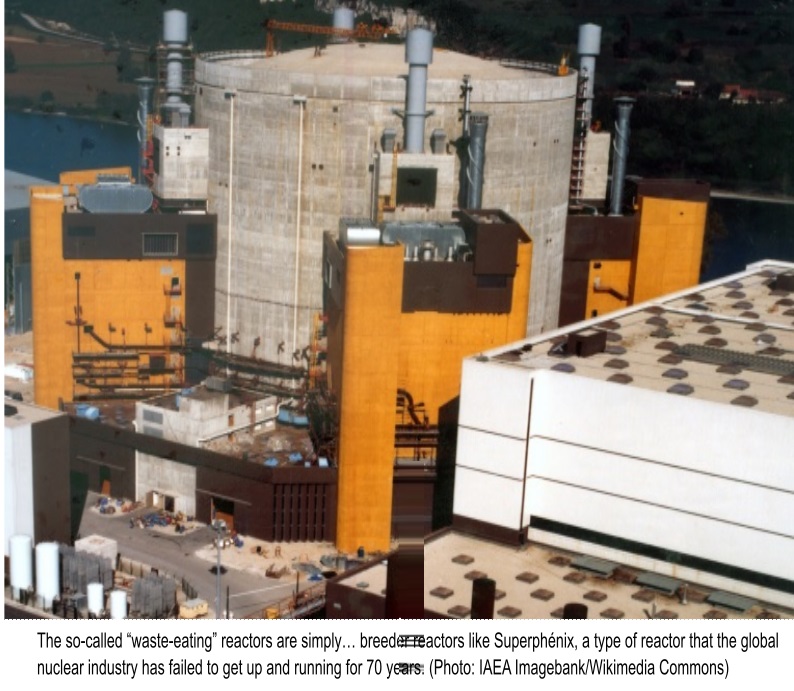
Mr. Bouglé finally divulged his “secret”: the so-called “waste-eating” reactors are simply… breeder reactors: a type of reactor that the global nuclear industry has failed to operate for 70 years, like Superphénix in France! And, even if it did work, it would in no way eliminate radioactive waste. What’s more, less than 1% of nuclear fuel (the most radioactive waste) could theoretically have its lifespan reduced, but without disappearing and while becoming even more radioactive! In the nuclear industry, as elsewhere, miracles do not exist.
The Astrid project was not “on the way to success” and was not “taken over by Bill Gates”
Despite its pretty name, the Astrid reactor project was nothing more than a little Superphénix: a sodium-cooled breeder reactor. Look at the “progress”: 40 years after the launch of Superphénix (1240 MW), the CEA wanted to make another attempt with a reactor half as powerful (600 MW), before giving up altogether.
Japan’s Monju fast-breeder reactor was definitively shut down after countless failures, a terrible fire and sodium leaks; Germany’s Kalkar fast-breeder reactor was never commissioned; and the USA has abandoned the sector. Only Russia manages to keep its BN800 hobbling along… but it doesn’t perform any of the miracles expected of it (producing “more fissile material than it consumes”, “eating” radioactive waste and other nonsense).
As for Bill Gates, he’s one of the dummies who, in recent years, have announced various types of miraculous reactors, always claiming to be able to produce electricity “cheaply, safely and with little waste” (blah blah blah). Beginning in 2006, Bill Gates and his company Terrapower first tried to make a “travelling wave” reactor work, then a “molten salt” one, both abandoned after wasting billions. Now Gates is dreaming of developing… a sodium-cooled fast-neutron reactor: back to Superphénix and 70 years of failure for the global nuclear industry.
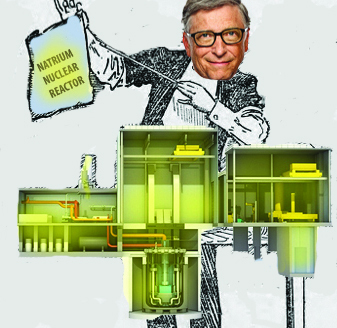
France’s nuclear woes are caused by… France’s nuclear woes!
The “evil anti-nuclear environmentalists” and the so-called “traitors in the pay of Germany” denounced by Inspector Bouglé have nothing to do with the disasters of French nuclear power: EDF, Areva (now Orano) and the CEA are doing just fine on their own! For example:
- Industrial and financial disasters at the EPR sites in Finland, Flamanville and England: 15 to 20 years (instead of four and a half) to build a reactor costing 20 billion Euros instead of 3 billion, and with serious defects.
- The unprecedented scandal of the thousands of defective parts (including the famous Flamanville EPR vessel) produced by Areva in its Le Creusot plants.
- Catastrophic and ruinous flops at the Iter (fusion) and RJH reactor sites.
- Stress corrosion (up to 32 reactors out of 56 shut down at the same time in 2022)
And so on.
Contrary to popular belief, the French nuclear industry is by no means “triumphant”, “the best in the world” or “at the cutting edge of technology”: in fact, EDF (bankrupt), Areva (renamed Orano after filing for bankruptcy) and CEA (subsidized by public money) are constantly making fools of themselves and leaving the French with astronomical bills.
The Fessenheim closure is not the cause of electricity shortages in France and imports from Germany
Mr. Bouglé claims that France was an exporter to Germany before the closure of Fessenheim and that it has suddenly become an importer because of the plant’s closure in 2020. He’s talking nonsense.
In reality, there are exchanges (in both directions) between the two countries throughout the year. When the balance sheet is drawn up on December 31, France is still an importer from Germany (*), and has been for over 25 years (**), long before Fessenheim was shut down.
This phenomenon is mainly due to the absurd choice of electric heating, developed on a massive scale in France to “justify” nuclear power: as soon as it gets cold, electricity consumption is such that it far exceeds the capacity of the French nuclear fleet, even when it’s working properly!
It’s also worth noting the ridiculous claim that life was wonderful in France with 58 reactors, and that it has suddenly gone into crisis with “only” 56 reactors, which in reality is an insane number. For the record, during the stress corrosion crisis, France was saved by importing massive amounts of electricity from neighboring countries, which have only a few reactors, if any at all.
(*) Of course, we can criticize the fact that a significant proportion of Germany’s electricity is generated by coal-fired power plants (even if the share of renewables is increasing exponentially), but the fact is that it’s this “dirty” electricity that heats France every winter, and French nuclear enthusiasts don’t go so far as to refuse this electricity and stay in the cold and dark!
(**) Except, very narrowly, in 2011: following the Fukushima disaster, Germany immediately shut down 8 reactors. But by 2012, France was once again a net importer from Germany.
The joke about waste-eating reactors
Let’s start by noting that nuclear reactors continually produce insane quantities of radioactive waste of various kinds, from nuclear fuel to the tools and clothing used in power plants, which are contaminated… and can’t be “eaten”!
But let’s concentrate on the most radioactive, the spent fuel that comes out of the reactor core after use.
Spent fuel comprises four types of element: plutonium, uranium, fission products and minor actinides. Note that the vast majority of radioactivity is contained in these last two categories.
To attempt reuse this waste fuel, separation work must already be carried out in a gigantic plant such as La Hague. These operations require huge amounts of electricity and using large quantities of terribly corrosive and dangerous chemicals: a far cry from the “clean” energy that could “save the planet”.
– Plutonium
Listening to Mr. Bouglé, the uninformed viewer (and the ignorant journalist) think that all they have to do is recover this fuel and put it in the so-called “waste-eating reactor”, which will make this waste disappear… while producing electricity! Jackpot, bravo and thanks for everything. But Santa Claus doesn’t exist, and it’s all poppycock. And here’s why.
It is used by the military for their atomic weapons. Some of this plutonium can be recovered to make fuel (known as “mox”) for use in today’s power plants, which exacerbates the consequences of an accident when it occurs. Various studies show that this option reduces only slightly the amount of uranium needed from mining. But in no case is this plutonium “eaten” or “incinerated”; it is almost entirely recovered after use.
– Uranium
The uranium resulting from these separation operations, known as “reprocessed uranium”, can theoretically be reused in place of mined uranium, but in reality, this option poses a number of technical problems. EDF has been trying to use it for years in its Cruas power plant (Ardèche), after re-enrichment… in Russia (thanks Putin!). But this remains very marginal, and in no case is this uranium “eaten” or “incinerated”; it is almost entirely recovered after use.
– Fission products
There’s nothing we can do with them, except vitrify them and store them for millennia!
– Minor actinides
These are the only elements of radioactive waste that could theoretically have their lifespan reduced in breeder reactors… while becoming even more radioactive! But even if such a “feat” were to happen (provided we finally manage to operate breeder reactors properly), minor actinides would not be “eaten”, “incinerated” or “disintegrated”. In fact, they are vitrified like fission products and have to be stored for millennia.
Conclusion
Of course, there is no technology that can “eat” nuclear waste. At most, it is theoretically possible (but not in practice) to degrade a tiny fraction of it, and even then, at the cost of new radioactive and chemical contamination and very high energy consumption.
Once and for all, let’s remember that there will never be a nuclear miracle, be it with magic reactors, or by replacing uranium with thorium (the thorium sector is also that of fast-breeder reactors!), or with fusion, or by calling old projects that have never worked “4th generation” or “SMR”.
Stéphane Lhomme is Director of the Nuclear Observatory.
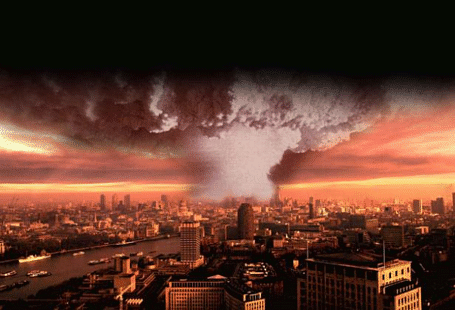
Will Biden’s, NATO’s military personnel in Ukraine cross the last red line to Armageddon?
Walt Zlotow, West Suburban Peace Coalition, Glen Ellyn IL
French President Emmanuel Macron is pushing to send NATO troops to Ukraine to keep Ukraine from imminent defeat to Russia. “The time has come for a Europe where it will be appropriate not to be a coward.” Macron got a lot of pushback form less delusional NATO leaders including German Chancellor Olaf Scholz and NATO Secretary-General Jens Stoltenberg.
Other NATO countries have joined France at considering direct troop involvement. Estonia’s Prime Minister Kaja Kallas stated that “Everything is on the table.” Lithuanian Foreign Minister Gabrielius Landsberg agreed that “nothing can be taken off the table, no option can be rejected out of hand. I very much welcome and encourage the discussion that has started.”
But unbeknownst to most Americans, due to government censorship, is that NATO military personnel are already there serving as a tripwire to wider, possibly nuclear war.
The British Prime Minister’s office confirmed recently that “Beyond the small number of personnel we do have in the country supporting the armed forces of Ukraine, we haven’t got any plans for large-scale deployment.” Didn’t we hear the same thing from US officials regarding ‘US advisors in Vietnam?
German Chancellor Scholz refused to send Taurus missiles to Ukraine because it would require German personnel to operate them. Britain and France aren’t so cautions. Scholz stated that France also has military personnel in Ukraine along with England to assist Ukraine military operations. He hinted at US presence there stating “It’s known that there are numerous people there in civilian attire who speak with an American accent.” The NY Times reported last month that numerous CIA operatives were left in Ukraine when the war started and “scores of new officers were sent in to help the Ukrainians.”
President Biden may have slipped in his State of the Union Speech last week when he uttered “There are no American soldiers (of war) in Ukraine, and I intend to keep it that way.” Biden should have added ‘But we sure have a lot of helpers there and I intend to keep it that way.’
The US and NATO are playing a dangerous game with Mother Earth and her 8 billion residents. For 750 days they’ve been crossing red lines Russia has put up to protect their borders from NATO encroachment. When Biden became president, he continued the reckless US campaign to arm Ukraine in their civil war against Russian leaning Ukrainians in Donbas seeking independence from Ukraine violence and subjugation. He repeatedly floated NATO membership to Ukraine. He rebuffed every desperate entreaty by Russia to even begin discussing their border security concerns.
The result? Russia invaded Ukraine 2 years ago February 24, 2022…after 15 years of warnings. Having catastrophically bungled the diplomacy that instigated the war, Biden could have made amends by supporting the peace agreement Ukraine’s Zelensky and Russia’s Putin negotiated in the war’s first month. Instead of support, he sabotaged it.
Biden and his NATO buddies have marched right up to, and sometimes over, numerous Russian red lines with billions in weapons, extreme rhetoric, sanctions and diplomatic maneuvering with largely unsupportive nations. Now with US and NATO military and intelligence personnel in Ukraine, and ominous calls for combat troops, we should all fret that the next red line Biden and NATO’s war cabinets cross may trigger a mushroom cloud.
Reversing Europe’s and Australia’s slide into irrelevance & insecurity – National Press Club of Australia speech- Yanis Varoufakis

First, Australia must restore a reputation tainted by blindly following America into lethal adventures in Iraq, Afghanistan and, today, via its active and crucial complicity in Israel’s deliberate war crimes in Gaza, East Jerusalem and the West Bank.
Children are not starving in Gaza today. No, they are being deliberately starved. Without hesitation or remorse. The famine in Gaza is no collateral damage. It is an intentional policy of starving to death thousands until the rest agree to leave their ancestral homeland.
Second, Australia has a duty to de-escalate the New Cold War. To understand that this can only be done if Australia ends its servility to a United States’ actively creating the threats that they then make us pay through the nose to protect us from.
Imagine an Australia that helps bring a just Peace in Ukraine, as opposed to a mindless forever war. A non-aligned Australia that is never neutral in the face of injustice but, also, not automatically aligned with every warmongering adventure decided in Washington.
Imagine an Australia which, having re-established its credentials as a country that thinks and acts for itself, engages with China in the spirit of peaceful cooperation – a far better way of addressing Beijing’s increasing authoritarianism toward its own peoples than buying useless, hyper-expensive submarines that only succeed in forcing China’s political class to close ranks around a more authoritarian core.
Imagine a truly patriotic Australian Prime Minister who tells the American President to cease and desist from the slow murder of Julian Assange for the crime of journalism – for exposing American war crimes perpetrated behind the back of US citizens in their name.
To conclude, if Europe and Australia are to escape gross irrelevance, we need separate but well-coordinated European and Australian Green New Deals.
DiEM25, our paneuropean movement, is working toward this goal.
Yanis Varoufakis – 14/03/2024
Europe and Australia are facing a common existential threat: a creeping irrelevance caused, on the one hand, by our failure properly to invest and, on the other hand, by our ill-considered slide from a strategic dependence on the United States to a non-strategic, self-defeating servility to Washington’s policy agenda.”
Yanis Varoufakis’s address at the National Press Club in Canberra on Wednesday 13 March, 2024
…………………………………. The three post-war phases that shaped Australia’s and Europe’s habitat
Our present moment in Europe and in Australia has been shaped by three distinct postwar phases.
The first was the Bretton Woods system. America exited the war as the only surplus, creditor country. Bretton Woods, a remarkable recycling mechanism, was, in effect, a dollar zone built on fixed exchange rates, sustained by capital controls, and erected on the back of America’s trade surplus. With quasi-free trade as part of the deal, Washington dollarised Europe, Japan and Australia to generate aggregate demand for the products of its factories – whose productivity had skyrocketed during the war. Subsequently, the US trade surplus sucked the exported dollars back into America. The result was twenty years of high growth, low unemployment, blissfully boring banking and dwindling inequality. Alas, once the United States lost its trade surplus, Bretton Woods was dead in the water.
The second phase was marked by the violent reversal of this recycling mechanism. The United States became the first hegemon to enhance its hegemony by boosting its trade deficit. Operating like a powerful vacuum cleaner, the burgeoning US trade deficit hoovered up the world’s net exports. And how did America pay for them? With dollars which it also hoovered up from the rest of the world as German, Japanese and later Chinese capitalists sent to Wall Street 70% of dollar profits made from their net exports to the US. There, in Wall Street, these foreign capitalists recycled their dollar profits into Treasuries, real estate, shares and derivatives.
This audacious inverted recycling system, built on US deficits, required ever increasing American deficits to remain stable. In the process, it gave rise to even higher growth than the Bretton Woods era, but also to macroeconomic and financial imbalances as well as mind-numbing levels of inequality. The new era came complete with an ideology (neoliberalism), a policy of letting finance rip (financialisation), and a false sense of dynamic equilibrium – the infamous Great Moderation built on hugely immoderate imbalances.
Almost inevitably, on the back of the perpetual tsunami of capital rushing in from the rest-of-the-world to Wall Street, financiers fashioned gigantic pyramids of complex wagers – Warren Buffet’s infamous Weapons of Mass Financial Destruction. When these crashed, to deliver the Global Financial Crisis, two things saved Wall Street and Western capitalism:
- The G7 central banks, that printed a total of $35 trillion on behalf of the financiers from 2009 to last year – a peculiar socialism for bankers. And,
- China, which directed half its national income to investment, thus replacing much of the lost aggregate demand not only domestically but also in Germany, Australia and, of course, in the United States.

The third period is more recent. The era of technofeudalism, as I call it, which took root in the mid-2000s but grew strongly after the GFC in conjunction with the rapid technological change that caused capital to mutate into, what I call, cloud capital – the automated means of behavioural modification living inside our phones, apps, tablets and laptops. Consider the six things this cloud capital (which one encounters in Amazon or Alibaba) does all at once:

- It grabs our attention.
- It manufactures our desires.
- It sells to us, directly, outside any actual markets, that which will satiate the desires it made us have.
- It drives and monitors waged labour inside the workplaces.
- It elicits massive free labour from us, its cloud-serfs.
- It provides the potential of blending seamlessly all that with free, digital payments.
Is it any wonder that the owners of this cloud capital – I call them cloudalists – have a hitherto undreamt of power to extract? They are, already, a new ruling class: today, the capitalisation of just seven US cloudalist firms is approximately the same as the capitalisation of all listed corporations in the UK, France, Japan, Canada and China taken together!
Continue readingFrench president Emmanuel Macron tells Putin ‘WE are a nuclear power and WE are ready’ in latest WW3 rhetoric.

- A stern Macron chastised Putin for threatening the use of nuclear devices
- It comes after Putin told state TV ‘weapons exist to be used’ earlier this week
Having nuclear weapons ‘imposes on us the responsibility never to escalate,’ Macron said, in a dig at the constant reminders issued by top Russian officials and media personalities of their nuclear arsenal.
His statements come amid a hardening of Paris’ stance towards Moscow after Macron abandoned his longstanding efforts to maintain a closer bond with Putin.
Britain and France are Europe’s only nuclear powers, but even their collective power is a fraction of that employed by Russia, which has the world’s largest and most varied collection of nuclear weapons by some margin – even larger than that in Washington’s vast stockpiles.
Speaking with French and Ukrainian media, Macron chastised Putin for threatening the use of nuclear devices and reminded him France also has an advanced weapons programme……………………………………………………………………………………………………………………..
For Tatiana Kastoueva-Jean, Russia specialist at the French Institute of International Relations (IFRI), the change in Macron’s stance towards Putin triggered this reaction from Russia.
‘There is incomprehension (in Russia) over how someone who wants to discuss with Russia, to be the mediator, turns into someone who takes the lead of the toughest camp opposing it,’ she said. https://www.dailymail.co.uk/news/article-13201319/French-president-Emmanuel-Macron-declares-nuclear-power-ready-response-Putins-threats-using-nukes-Kremlin-says-France-signalled-deeper-involvement-Ukraine.html
HSBC leads Sizewell C investment push as time ticks on final investment decision

Britain’s largest bank by market capitalisation is trying to rally an effort to push a final investment decision over the line for the delayed Sizewell C nuclear super project.
According to a Bloomberg report today, HSBC is discussing the possibility with investment funds to provide a debt facility that would be guaranteed by the UK’s export finance agency.
The report said that people familiar with the matter said the move would help the project, Sizewell C, which in January received government approval to begin the process of building the site, due to take nine years to complete.
But delays have come thick and fast due to inflationary cost rises and the logistical challenges involved with building a massive nuclear power station, so much so that the project is now scoped for a bill with the potential to reach £40bn.
The UK government is working in tandem with Barclays to find equity investors for the project in the hope of reaching a final investment decision this year, with gas giant Centrica having declared an interest.
Sizewell C was proposed by a consortium of EDF Energy and China General Nuclear Power Group, which own 80 per cent and 20 per cent of the project respectively.
The site, along with the also-delayed multi-billion pound Hinkley Point C and another planned major reactor that was unveiled in the nuclear strategy back in January, will form the backbone of the UK’s nuclear energy drive.
Complimenting the large projects, which are estimated to be able to provide power for around six million people each, are small module reactor programmes to be taken up by private investors.
In recent months, the UK government has reportedly been wooing the United Arab Emirates to step in to help fund Sizewell C in place of China.
However the National Security & Investment Act 2021 and the National Security Act 2023 could prove barriers to any foreign state gaining influence through investment in critical infrastructure.
In Chancellor Jeremy Hunt’s Spring Budget last week, he announced a £160m deal with Japanese technology giant Hitachi to buy back two sites on which the latter had committed to build power stations.
1 This Month

4 May -West Suburban Peace Coalition to discuss Iran war at May Educational Forum
Monday, May 4, 7:00 – 8:00 PM Central Standard Time
Title: : How Trump’s Narrative Tries to Shape the Reality of the War on Iran.
Contact Walt Zlotow, zlotow@hotmail.com 630 442 3045 for further information
14 May – online event From Bombs to Data Centres: the Face of Nuclear Colonialism
To see nuclear-related stories in greater depth and intensity – go to https://nuclearinformation.wordpress.com
-
Archives
- May 2026 (37)
- April 2026 (356)
- March 2026 (251)
- February 2026 (268)
- January 2026 (308)
- December 2025 (358)
- November 2025 (359)
- October 2025 (376)
- September 2025 (257)
- August 2025 (319)
- July 2025 (230)
- June 2025 (348)
-
Categories
- 1
- 1 NUCLEAR ISSUES
- business and costs
- climate change
- culture and arts
- ENERGY
- environment
- health
- history
- indigenous issues
- Legal
- marketing of nuclear
- media
- opposition to nuclear
- PERSONAL STORIES
- politics
- politics international
- Religion and ethics
- safety
- secrets,lies and civil liberties
- spinbuster
- technology
- Uranium
- wastes
- weapons and war
- Women
- 2 WORLD
- ACTION
- AFRICA
- Atrocities
- AUSTRALIA
- Christina's notes
- Christina's themes
- culture and arts
- Events
- Fuk 2022
- Fuk 2023
- Fukushima 2017
- Fukushima 2018
- fukushima 2019
- Fukushima 2020
- Fukushima 2021
- general
- global warming
- Humour (God we need it)
- Nuclear
- RARE EARTHS
- Reference
- resources – print
- Resources -audiovicual
- Weekly Newsletter
- World
- World Nuclear
- YouTube
-
RSS
Entries RSS
Comments RSS
 nuclear-news