The promise, peril and pragmatism of Britain’s nuclear “renaissance”

LSE Shefali Khanna, Stephen Jarvis, November 21 2025
Nuclear energy’s capacity to help Britain meet its net-zero targets makes it a potentially attractive part of the energy mix. But do the high cost and complicated logistics of building new plants, as well as the emergence of renewable alternatives, make the government’s plans unviable? Shefali Khanna and Stephen Jarvis analyse whether ambition can be realised through delivery.
After decades of stagnation, nuclear energy is staging a comeback. The British government has called its plans for nuclear power a “renaissance”, with a goal to quadruple nuclear capacity by 2050. Projects like Hinkley Point C, under construction in Somerset, and the proposed Sizewell C, in Suffolk, dominate headlines, while small modular reactors (SMRs) promise to make nuclear energy cheaper, faster to deploy and safer. But Britain’s nuclear revival raises questions about how old technologies fit into a rapidly changing energy landscape.
From decline to revival
Britain was a nuclear pioneer. Its first commercial reactor, Calder Hall, opened in 1956 and symbolised postwar scientific ambition. Yet by the 1990s, nuclear energy had lost political and public support………………………………
The nuclear policy push
The British Energy Security Strategy , published in 2022, set an ambitious target of up to 24 gigawatts of nuclear capacity by 2050, meeting roughly a quarter of projected electricity demand. To deliver this the government created Great British Nuclear, a body tasked with accelerating nuclear project approvals and supporting innovative technologies……………Much of the optimism centres on small modular reactors, nuclear units with capacities typically under 500 megawatts, compared with the large gigawatt scale reactors at traditional plants. SMRs can be factory built, reducing on site construction delays and costs that have plagued conventional reactors. In November 2025 a domestic firm, Rolls-Royce SMR, was chosen to build three SMRs in Wylfa, in Wales. And several foreign developers, including NuScale and GE Hitachi, based in America, are vying for contracts. If successful, Britain could become a global exporter of modular nuclear technology, a rare case of industrial strategy aligning with energy policy.
SMRs are still unproven at scale, however. While prototypes exist, none have yet achieved commercial operation in a liberalised electricity market. Cost estimates remain speculative and nuclear waste management challenges persist. The modular approach may simplify construction but not necessarily long-term decommissioning or waste storage.
Economics and financing are the biggest barrier
Despite renewed enthusiasm, nuclear power remains expensive. The cost of Hinkley Point C has risen from £18 billion ($23.6 billion) to over £35 billion ($45.9 billion), with completion delayed from 2025 until as late as 2031. Financing such large projects in a deregulated market is daunting, especially when renewables and battery-storage technologies have seen such rapid cost declines.
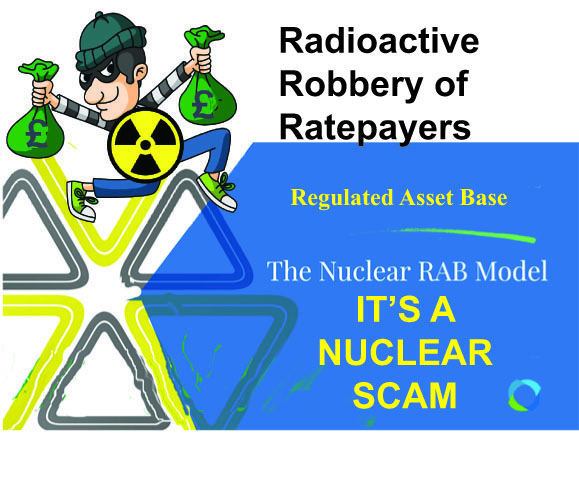
Britain is experimenting with a Regulated Asset Base model, which allows developers to recover some costs from consumers during construction, reducing investor risk but increasing public exposure. This approach could make projects like Sizewell C more viable, yet it effectively shifts financial risk from corporations to consumers, reigniting debates about fairness and affordability.
Safety, waste and trust
Nuclear energy’s social licence remains fragile. Surveys show rising support for nuclear power as part of Britain’s low carbon mix, but opposition can intensify when communities face the prospect of new plants or local waste storage. The government’s search for a geological disposal facility for radioactive waste has struggled. Transparent governance, community benefit schemes and clear communication about risks are vital.
A deeper question is how nuclear fits into a net-zero electricity system increasingly dominated by renewables. Wind and solar costs have fallen dramatically, making them the backbone of Britain’s decarbonisation strategy. But their intermittency creates a need for flexible backup and firm supplies, particularly during dark, still winter days. Here nuclear advocates see an opportunity. Yet the future grid may evolve differently. Advances in battery storage, demand flexibility and even low-carbon thermal sources (such as hydrogen or gas with carbon capture) could provide reliability without the inflexibility and long lead times of nuclear projects. From a systems perspective, nuclear’s value depends on whether it complements or crowds out other low-carbon sources of power.
A combination of offshore wind, interconnectors with Europe and demand-side management could offer cheaper resilience than large scale nuclear expansion. National Grid ESO’s Future Energy Scenarios suggest multiple credible pathways to reliability that do not rely heavily on new nuclear power.
The global dimension
……………………………… Britain wants energy sovereignty but depends on foreign partners for both capital and technology. Balancing national security with project viability will require deft diplomacy and strategic clarity.
From renaissance to realism
Nuclear energy could play a valuable role in Britain’s net-zero transition, but not at any cost. Policymakers must avoid treating it as a silver bullet or a national vanity project. Nuclear should be evaluated within a whole systems framework that considers economic efficiency, environmental impact and technological diversity. A pragmatic approach would prioritise completing current projects (such as Hinkley and Sizewell) efficiently before scaling new builds; rigorous cost transparency in SMR development; integrated planning with renewables and storage; and public engagement to rebuild trust through co-benefits, not just compensation.
The rhetoric of a “nuclear renaissance” is powerful, evoking a return to industrial confidence and scientific progress. But the real test lies in delivery. If Britain can demonstrate that modern nuclear projects are on time, on budget and publicly legitimate, it could indeed reclaim some global leadership. If not, this revival may join a long list of grand plans that stumbled on the realities of cost, complexity and public trust. https://blogs.lse.ac.uk/businessreview/2025/11/21/the-promise-peril-and-pragmatism-of-britains-nuclear-renaissance/
When medics become targets: Ukrainian strikes on Russian rescue workers and the silence of western media.

Eva Karene Bartlett, November 20, 2025, https://evakarenebartlett.substack.com/p/when-medics-become-targets-ukrainian?utm_source=post-email-title&publication_id=3046064&post_id=179646211&utm_campaign=email-post-title&isFreemail=true&r=1ise1&triedRedirect=true&utm_medium=email
Since Russia began its SMO in 2022, Western media have repeatedly accused Russia of an “unprovoked invasion” and of “war crimes”.
Honest observers, however, state that Russia has acted with considerable restraint in Ukraine—targeting military and logistics sites, not civilians—and remind of Ukraine’s eight years of warring on the civilians in the Donbass prior to the commencement of the SMO in 2022. Further, they emphasize that once again, in December 2021, Russia made clear its concerns in hopes of a diplomatic solution. These were, again, steadily ignored by Western governments and media.
Likewise ignored is Ukraine’s deliberate, shelling and drone striking of medical and rescue personnel. Under international law, medical and rescue personnel and their vehicles are protected and must not be targeted. Ukraine and its ally Israel are guilty of routinely, deliberately, targeting medics and other rescuers, maiming and killing them. These are war crimes, but the West remains mute, instead concocting stories of “Russian war crimes” in the face of Ukraine’s very real ones.
In September 2019, when I first visited the Donbass, in a village in the Gorlovka region I met an elderly resident of living alone in a home falling apart from previous Ukrainian shelling. During our conversation she said that ambulances wouldn’t be able to reach her if she was injured by the shelling, it would be too dangerous for them to try.
I was likewise told by Zaitsevo administration that ambulances could not reach the villagers.
“The paramedics don’t go farther than this building; it’s too dangerous. If somebody needs medical care near the front lines, someone has to go in their own car and take them to a point where medics can then take them to Gorlovka. The soldiers also help civilians who are injured.
A woman died due to huge blood loss because no one could reach her house to take her away in time. She was injured in the shelling and bled to death.”
This is one sordid reality for civilians living in villages heavily bombarded by Ukraine.
But the medics heroically do go to potentially dangerous areas to rescue civilians, and they have for years been deliberated targeted by Ukrainian forces when doing so.
In 2022, I interviewed numerous medics and Emergency Services workers in Donetsk regions, and subsequently made a short video about Ukraine’s deliberate targeting of rescue personnel.
Speaking with Emergency Services in Donetsk’s Kievsky district, for the two hours I was there we came under heavy Ukrainian shelling.
The windows of the building had already been blown out and were sand-bagged to attempt to protect the workers. The Chief of the centre, Andrey Levchenko, told me how five days prior his office had been impacted with shrapnel from the shelling. He thankfully had just stepped of his office before the blast and was not injured or killed.
The day prior to my visit, when out on a call to rescue civilians trapped in a building set ablaze by Ukrainian shelling, rescuers were shelled, resulting in one of them being hospitalized in critical condition.
The survivors told me that, prior to the shelling, they saw a drone overhead, which makes it credible to believe that Ukraine deliberately targeted the rescuers.
Levchenko told me that Ukraine routinely double and triple strikes rescuers.
“As soon as we go out to help people the shelling resumes.” The double or triple strike tactic often means that rescuers who have come to help those injured in the first strike are then themselves targeted, depriving civilians in need of urgent medical assistance as a result.
I also spoke with Sergei Neka, Director of the Department of Fire and Rescue Forces of the Ministry of Emergency Situations. He reiterated what I’d been told.
“Our units arrive at the scene of the accident and Ukraine begins to shell it. A lot of equipment has been damaged and destroyed.”
Two female medics I interviewed told me coming under repeated Ukrainian shelling is normal. They spoke of their fear, bu said, “How about the patients? They’re hurt and even more scared, they’re waiting for our help. If I don’t help, who will help if everyone runs away?”
By September 2022, Ukrainian forces targeted and killed 19 Donbass rescuers, injuring over 50 more.
Ukraine continues killing medics
Fast forward to the present. Following are just some of Ukraine’s more recent attacks on medics and other rescue workers.
On August 11, a Ukrainian drone targeted an ambulance in Gorlovka, killing two medics and seriously injuring the driver.
In May, a Ukrainian drone strike killed two Emergency workers who had come to the site of a first drone strike in Lugansk. In an Israeli-style second strike, Ukraine targeted the rescuers deliberately after the arrived at the scene.
In March, Russian Emergencies Ministry employees came to extinguish a car on fire following a Ukrainian drone strike in Gorlovka. A Ukrainian drone targeted them, injuring the deputy head of the firefighting service and damaging a fire truck.
There are tragically many more such instances which I could list. However, the point is that it is beyond clear that Ukraine’s shelling and drone targeting of Russian medics, firefighters and other rescuers has been a deliberate policy since before 2022.
It is also clear that Western concern for medics allegedly targeted elsewhere (think the fake rescuers of the al-Qaeda aligned White Helmets in Syria during the global war on Syria) will never extend to any concern for Russian rescuers actually targeted by Ukraine.
US, Russia drafting Gaza-inspired peace plan for Ukraine
Samuel Chamberlain and Caitlin Doornbos, New York Post, Wed, 19 Nov 2025, https://www.sott.net/article/503070-US-Russia-drafting-Gaza-inspired-peace-plan-for-Ukraine
Members of the Trump administration and Russian officials have secretly been hashing out a revised plan to end Moscow’s 45–month-old invasion of Ukraine — but the deal is riddled with unacceptable provisions that would in part force Kyiv to dramatically shrink its military, The Post can reveal.
Comment: Moscow didn’t “invade” Ukraine. After many warnings to the Kiev regime, it took action to protect Donbass Russian speakers who had endured eight years of shelling by their own country, because they wouldn’t bend to the neo-nazi coup in 2014. After all this time, The Post is still following the approved narrative. Sad.
- How the Western Press has for years hidden Ukraine’s neo-nazi war on Donbass
- Neo-Nazi battalion promises not to lay down arms until Donbass, Crimea conquered
The 28-point framework calls for Ukraine to shrink its Army to 2.5 times smaller than it is now; forces Kyiv to turn over long-range missiles “or any kind that can reach Moscow or St. Petersburg”; and bans any international brigades within Ukraine — which has long been considered the best way to ensure a halt to Russia’s assault would remain in place, a source familiar with the plan told The Post.
The proposed plan would also target NATO, requiring Ukraine to ban allied countries from keeping any military aircraft in Ukraine — instead backing them up to at least the Polish border.
The plan would also force Ukraine to fork over the entirety of the Donbas region — including territory Russia has been unable to occupy, according to a report by Financial Times.
Comment: Notice the framing. As Putin patiently explained to Tucker Carlson (and presumably Witkoff and Trump) Donbas had been part of Russia since the 17th century and then part of Ukraine for a measly two decades. There is no ‘forking over’.
Axios reported that the deal was inspired by President Trump’s 20-point road map for ending the war between Israel and Hamas terrorists in the Gaza Strip, citing US and Russian officials.
However, that plan famously calls for an international force to keep the peace in Gaza until a Palestinian state can be established.
Predictably, Moscow appears to be fond of the blueprint, with Kirill Dmitriev — the head of Russia’s sovereign wealth fund who is reportedly drafting the plan with Trump’s special envoy Steve Witkoff — telling Axios “we feel the Russian position is really being heard.”
Still, the Kremlin on Wednesday denied that there had been any new developments in what Moscow wants to see in a peace deal since Trump met with Russian dictator Vladimir Putin in Alaska in August.
“There has been nothing new in addition to what was discussed in Anchorage,” Kremlin spokesman Dmitri Peskov told reporters on Wednesday, responding to a question about the Axios report.
The plan is purportedly meant to be a sweeping blueprint that not only ends the war in Ukraine but also hashes out questions about security guarantees for the Kyiv government and the rest of Europe, as well as future ties between Washington and the two warring nations.
However, the main security guarantees that Europe and the US have sketched out for Ukraine has been the international security force, which has been scrapped in the new plan.
Further, the plan would have to be accepted by Ukraine, whose people have been fighting and dying for nearly four years to protect Kyiv’s independence and prevent Russian overreach described in the sketched-out plan.
Comment: The beleaguered citizens of Ukraine have been fighting and dying to preserve the two decade-old elite money-laundering machine that is “country” of Ukraine.
- ‘No fight against corruption in Ukraine, costs country 2% of GDP every year’, says IMF
- The scandal Zelensky can’t escape: Inside Ukraine’s biggest corruption story
- Ukraine must be held accountable for ‘stealing’ US aid – James Durso to The Hill
- The firing of Viktor Shokin: Ex-Ukraine prosecutor told to back off probe of Biden-linked firm
- Tens of billions of dollars were transferred to Ukraine, then laundered through FTX crypto currency back to Democrats in US
- Hear those alarm bells going off? Ukraine scandal leads to the Clinton Foundation
Meanwhile, a Ukrainian official told the outlet that Witkoff discussed the plan with Kyiv’s national security adviser, Rustem Umerov.
Ukraine President Volodymyr Zelensky was in Turkey on Wednesday to meet with the country’s president, Recep Tayyip Erdogan.
“Foremost, we will discuss maximum capabilities to ensure that Ukraine achieves a just peace,” Zelensky told reporters of the plans for his discussion with Erdogan, adding: “We see some positions and signals from the United States, well, let’s see tomorrow.”
Zelensky’s office declined to comment on the reported content of the plan.
For now, the conflict rages on. Overnight, Russian drones and missiles blitzed the western city of Ternopil, striking two nine-story apartment blocks and killing at least 20 people, including two children, and injuring at least 66 others.
The White House did not immediately respond to requests for comment.
Trump told a Saudi investor summit on Wednesday afternoon that he was frustrated with Putin for how long it has taken to end the Russia-Ukraine war.
“I have a good relationship with President Putin, but I’m a little disappointed in President Putin right now,” Trump said. “He knows that.”
Comment: Analyst Alexander Mercouris highlights other provisions in the draft document that have received little attention: the enshrining of Russian as a “state language”, thus protecting Russian speakers, and the restoration of the persecuted Russian Orthodox Church to its former status, including the return of all looted properties. These may be minor points to the West, but are immensely important to Russia, as it formed a part of the decision to initiate the SMO.
Zelensky covering up ‘dire’ frontline situation – Moscow

RT, Fri, 21 Nov 2025, https://www.rt.com/russia/628091-un-nebenzia-zelensky-ukraine/
Vladimir Zelensky has barred the Ukrainian military from admitting the loss of key towns to Russia, Moscow’s envoy to the United Nations, Vassily Nebenzia, has said. This is being done to hide the actual situation on the ground in the hopes that the flow of Western aid to Kiev remains unhindered, he suggested.
On Thursday, the chief of Russia’s General Staff, Valery Gerasimov,told President Vladimir Putin that Russian forces have liberated the key logistics hub of Kupyansk in Ukraine’s Kharkov Region.
The Ukrainian General Staff, however, has claimed that the city remains under the control of Kiev’s troops.
Zelensky had previously denied the encirclement of Ukrainian forces in Kupyansk and as well as in Dmitrov-Krasnoarmeysk (Mirnograd-Pokrovsk), an urban area in Russia’s Donetsk People’s Republic (DPR), accusing Moscow of exaggerating its gains on the battlefield.
During his speech at a UN Security Council meeting on Thursday, Nebenzia insisted:
“The situation on the front line for Ukraine “remains dire, if not catastrophic. Russian troops are successfully advancing on essentially all fronts.
“Despite the encirclement of a significant number of Ukrainian troops, massive losses, forced mobilization, and threats to civilians, the head of the Kiev regime forbids acknowledging the loss of cities, orders his troops to hold their positions ‘until the last soldier,’ and bans retreat.
“The policy pursued by the Kiev government has nothing to do with military reality and is purely political in nature. Zelensky wants to show his Western sponsors that the front is holding, because he counts on continued funding for his war with Russia. He needs billions of dollars to keep the war going for him and his cronies to line their pockets and stay in power.“
Last week, the Western-backed National Anti-Corruption Bureau of Ukraine (NABU) announced a probe into a “high-level criminal organization” allegedly led by Timur Mindich, a former business partner of Zelensky. Its members are suspected of siphoning around $100 million in kickbacks from state-owned nuclear operator Energoatom.
The graft scandal has led to the sacking of Ukraine’s energy and justice ministers, with other prominent figures such as Zelensky’s right-hand man, Andrey Yermak, and the head of the National Security Council Rustem Umerov also being linked to the scheme.
Russian Attacks Cripple Ukraine’s Nuclear Power Output
Oil Price, By Charles Kennedy – Nov 20, 2025,
Russian attacks on energy infrastructure in western Ukraine have left hundreds of thousands of Ukrainians without power as of Thursday as nuclear power plants are curbing generation because of damaged transmission lines.
Damage to power lines has forced nuclear power plants, which generate more than half of the country’s electricity, to reduce production, a representative of Ukraine’s national nuclear energy company Energoatom told Reuters today.
Earlier this week, Rafael Mariano Grossi, the Director General of the International Atomic Energy Agency (IAEA), said that two Ukrainian nuclear power plants have been operating at reduced capacity for the past ten days after a military attack damaged an electrical substation critical for nuclear safety and security.
Russia and Ukraine have intensified attacks on each other’s energy infrastructure in recent weeks, with Russia targeting Ukrainian power and gas supply and Ukraine hitting Russian refineries, oil depots, and export facilities. ……………………………………………. https://oilprice.com/Latest-Energy-News/World-News/Russian-Attacks-Cripple-Ukraines-Nuclear-Power-Output.html
Nordic nations’ Ukraine burden ‘unsustainable’ – Sweden.
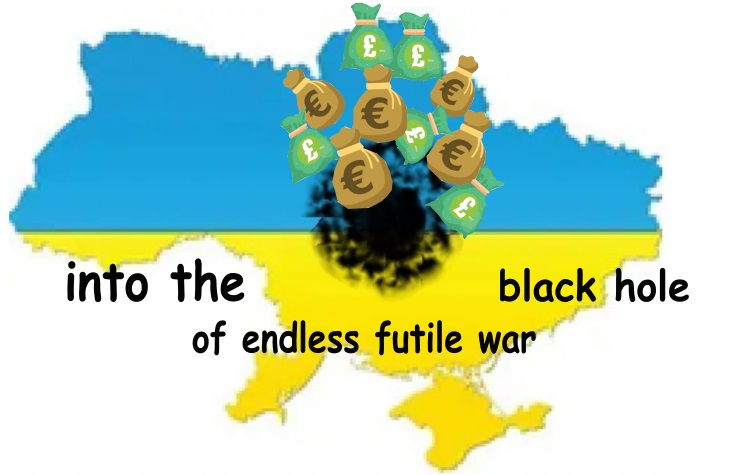
Stockholm has criticized uneven cash injections from other bloc members, despite claims about backing Kiev “for as long as it takes”
RT Thu, 20 Nov 2025, https://www.sott.net/article/503063-Nordic-nations-Ukraine-burden-unsustainable-Sweden
It is unsustainable for Nordic countries to continue to pay a disproportionate amount to support Ukraine, Swedish Foreign Minister Maria Malmer Stenergard has said in an interview with Politico. Rifts are widening inside the EU over how – and whether – to keep funding Kiev, according to the outlet.
Currently, Nordic and Baltic countries continue to contribute the most to Kiev relative to GDP, while larger EU economies trail far behind in proportional terms – a disparity Stockholm says the EU can no longer ignore.
In an interview published on Thursday, Stenergard claimed “a few countries take almost all of the burden,” calling the imbalance “not fair” and “not sustainable in the long run.”
She noted that the Nordic countries, with fewer than 30 million people, are expected to provide a third of NATO’s military aid to Ukraine this year. “It’s not reasonable in any way. And it says a lot about what the Nordics do – but it says even more about what the others don’t do.”
Comment: The Swedish foreign minister forgets that the Nordic countries are doing it out of their own blindness to reality. If they feel it is unfair, then just stop handing over the Nordic taxpayers money to Ukraine.
Stenergard’s comments reflect mounting frustration in northern capitals despite continued rhetoric about backing Ukraine “for as long as it takes,” Politico reported.
Comment: They thought that “as long as it takes” wouldn’t last so long. In other words, it was just a nice sounding slogan without much thought to what it actually meant.
EU officials have reportedly circulated a document outlining three options for the bloc’s next package for Kiev – two involving increased cash injections from member states, and a third using proceeds from frozen Russian sovereign assets. Stenergard signaled that using the immobilized assets could be the only viable path, given resistance in parts of the bloc to deeper budget commitments.
Western nations froze about $300 billion in Russian central bank assets after the escalation of the Ukraine conflict in 2022. The EU has so far transferred over a billion from interest to Kiev.
The debate comes as Ukraine faces a $100 million corruption scandal uncovered this month, in which anti-corruption agencies accused Timur Mindich – a former business partner of Vladimir Zelensky – of siphoning kickbacks from contracts with nuclear operator Energoatom, a company heavily dependent on foreign aid
The scandal broke just as Kiev is pushing for a new €140 billion ($160 billion) loan backed by frozen Russian assets, a plan stalled for weeks amid legal worries and Belgian resistance, with Moscow dismissing any use of its assets as “theft.”
Comment: So the Swedes want to steal Russian assets because they couldn’t really afford to support the black hole of Ukraine forever. They are now realizing that the money they gave to Ukraine will never come back and there wont be Russian resources to plunder. If they steal Russian frozen assets in Belgium, then the Euro will be relegated to the history of failed fiat currencies.
A multi-million dollar dispute rages over Olkiluoto 3 – Only lawyers will win
The Olkiluoto multi-million dollar dispute between TVO and Fingrid is
alive and well. However, an agreement in this matter would be in the
interest of electricity users. The dispute between Teollisuuden Voima (TVO)
and the transmission grid company Fingrid over the costs of the backup
system – system protection – built in case of a failure of the third
reactor at the Olkiluoto nuclear power plant and who will pay for it shows
no signs of abating – quite the opposite.
MSN 20th Nov 2025,
https://www.msn.com/fi-fi/talous/uutiset/olkiluoto-3-sta-riehuu-miljoonariita-vain-juristit-voittavat/ar-AA1QMSzq
Austria appeals taxonomy ruling
Austrian Government 20th Nov 2025, Vienna (OTS) – https://www.ots.at/presseaussendung/OTS_20251120_OTS0136/oesterreich-legt-rechtsmittel-gegen-taxonomie-urteil-ein
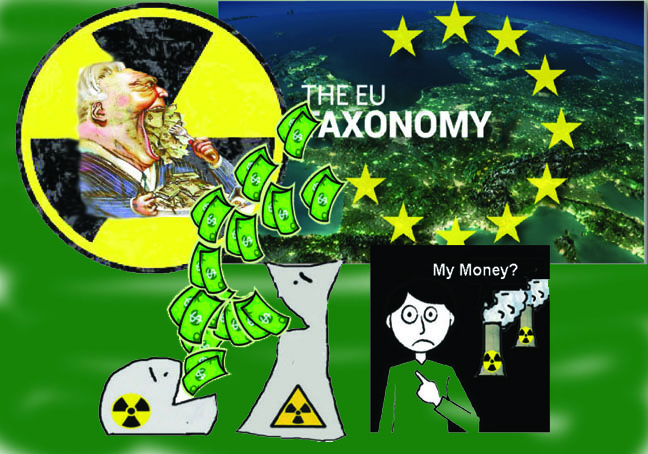
On September 10, the General Court of the European Union (EGC) dismissed Austria’s action against the classification of nuclear energy as a “sustainable investment” under the EU taxonomy. Following a thorough legal review of this ruling, the Austrian Federal Government has decided to appeal.
“As the Federal Government, we stand firmly for an honest and fact-based sustainability policy. Classifying nuclear power as sustainable is misguided and contradicts the fundamental principles of the taxonomy. Therefore, we are taking this further legal step,” emphasizes Environment Minister Norbert Totschnig. “We remain firmly committed to ensuring that European regulations actually promote the expansion of renewable energy sources. We stand behind our Austrian approach – no nuclear power, but rather a push to expand renewables.”
Background:
The appeal is based primarily on the argument that, from an Austrian legal perspective, the court applied an incorrect standard of review and that the contested regulation was adopted in violation of important procedural rules. Furthermore, from an Austrian perspective, the regulation governs fundamental policy issues, which constitutes a breach of Article 290 TFEU. In addition, Austria maintains that several provisions of the Taxonomy Regulation have been violated. The appeal was filed within the prescribed time limit.
Torness nuclear power station was opposed at every stage
Torness power station was opposed at every stage, according to the East
Lothian Courier on 14th November 1975. An alternative was put forward by an Edinburgh University professor. Calling for an end to the madness which
Torness represents, Professor Arnold Hendry of the Civil Engineering
Department claimed the proposals were unnecessary, a waster of money and dangerous. More than 60 members of the newly formed Scottish Campaign to Resist the Atomic Menace marched to the proposed site.
East Lothian Courier 13th Nov 2025
https://www.eastlothiancourier.com/
Lucky Dip: Drone companies await spending bonanza as UK’s Defence Investment Plan (DIP) to be revealed.

Plans already announced to ‘reconnect society with the military’ include the expansion of youth cadet forces, education work in schools to develop understanding among young people of the armed forces, and broader public outreach events to outline the threats and the need for greater military spending despite increased social challenges.
, Chris Cole, https://dronewars.net/2025/11/18/lucky-dip-drone-companies-await-spending-bonanza-as-defence-investment-plan-dip-to-be-revealed/
Following the government’s commitment to increase military spending and the publication of the Strategic Defence Review (SDR) in early June, the military industry has been keenly awaiting the release of the government’s Defence Investment Plan (DIP) which will layout military spending plans and other details for the rest of this parliament. Numerous reports have indicated that many planned projects are ‘on hold’ until the plan is finalised and published.
Defence minister Luke Pollard told MPs in June that the DIP will “cover the full scope of the defence programme, from people and operations to equipment and infrastructure”. Time and again ministers have promised that the plan will be unveiled in the autumn and so this now seems likely to be soon after the Budget of 26 November (although such promises are of course routinely broken).
How much?!
UK military spending was £60.2bn in 24/25 (around 2.4% of GDP), up from £42.4bn in 2020/21. In February 2025, the Starmer government committed to further increase military spending raising the budget to 2.5% of GDP by 2027 (estimated at around an extra £6bn per year – roughly the amount cut from the UK’s Aid budget) with ‘an ambition’ to reach 3% by the next parliament. At the NATO summit in June 2025, however, Starmer upped the ante, with a pledge to reach a ‘goal’ of 5% (3.5% on ‘core defence’ (estimated to be an extra £30bn per year) with 1.5% (around £40bn per year) on ‘defence-related areas such as resilience and security’) by 2029. Subsequently the government said it “expected to reach at least 4.1% of GDP in 2027”.
‘Whole of Society’
Importantly, alongside the increase in military spending, the Strategic Defence Review argued that ‘defence’ is now to be seen as a ‘whole of society’ effort and this may well be re-emphasised when DIP is published.
The plan is being billed as enabling the UK to be at ‘warfighting readiness’ and alongside equipment and weapons programmes, the public is being urged to be ”prepared for conflict and ready to volunteer, support the military, and endure challenges”.
Plans already announced to ‘reconnect society with the military’ include the expansion of youth cadet forces, education work in schools to develop understanding among young people of the armed forces, and broader public outreach events to outline the threats and the need for greater military spending despite increased social challenges.
And to top this off, the government is deploying the hoary old chestnut that military spending is good for the economy (despite such claims being persistently and thoroughly debunked).
Trailed Plans
While specific spending details remain under wraps, government announcements since the publication of the SDR have indicated some of the broad areas which will receive more funding:
Drones, Drones, Drones. In the Spring Statement, Chancellor Rachel Reeves stated that “a minimum of 10% of the MoD’s equipment budget is to be spent on novel technologies including drones and AI enabled technology.” Defence Minister Alistair Cairns indicated in July that there would be around £4bn spending on uncrewed systems – ‘Drones, drones and drones‘ as he put it on twitter.

To the ever-expanding list of UK drone development programmes, many of which are seeking funding decisions as part of the DIP, we can add Project Nyx which seeks to pair a new drone with the British Army’s Apache Helicopter.
Perhaps most significantly in this area, publication of the Defence Investment Plan may illuminate UK plans for a ‘loyal wingman’ type drone – now described by the MoD as an Autonomous Collaborative Platform (ACP) – to accompany the UK’s planned new fighter aircraft, Tempest. While some funding has already been allocated to develop smaller Tier 1 and 2 ACP’s, plans for the more strategic and no doubt costlier level Tier 3 drone have been placed on the back burner pending funding decisions. Will the UK go it alone and build a new armed drone (as no doubt BAE Systems hopes) or will it buy Australia’s Ghost Bat or one of the two drones currently competing for the US contract?
Integrated targeting web. Alongside new drones, the UK is developing a ‘digital targeting web’ to link, as MoD-speak puts it, ‘sensors’, ‘deciders’ and ‘effectors’. In other words commanders supported by AI will be networked with ‘next generation’ drones, satellites and other systems to identify targets to be destroyed by a variety of novel and traditional military systems. The aim is to rapidly speed up the time between target identification and attack. As Drone Wars has reported, several tests of various elements of this system (such as ASGARD) have been tested and it is likely that further funding for this programme will be part of the DIP.
Alongside this, there is also a desire to persuade some of the newer drone companies to open factories here in the UK. While Tekever has announced it will open a new site in Swindon, Anduril and Helsing seem to be keeping their power dry while awaiting news that they have secured government contracts before committing to setting up premises. Both companies have, however, set up UK subsidiaries and have launched PR campaigns to persuade ministers and officials of the efficacy of their products.
While drones are key for these companies, a huge increase in UK spending on military AI systems is also in their sights.
An AI ‘Manhattan Project’ endeavour. Despite continued and significant concerns about the military use of AI, particularly in ‘the kill chain’, ministers, officials and commanders seem convinced that a rapid integration of AI into all areas of the armed forces is urgent and vital. Just before stepping down as Chief of the Defence Staff in September, Admiral Sir Tony Radakin put his weight behind calls from Helsing co-founder Gundbert Scherf for a “Manhattan-Project for AI defence”. Arguing such a plan “would not cost the earth” (but putting it at around $90bn!) Scherf suggested four areas to concentrate on: a) masses of AI-enabled defensive drones deployed on NATO’s eastern flank; b) deploying AI-enabled combat drones to dominate airspace; c) large scale deployment of ai-enabled underwater drones/sensors; and finally, d) replacing Europe’s ageing satellites with (you guessed it) ai-enabled surveillance and targeting satellites.
Anduril is also not shy of lobbying in its own interests. Anduril UK CEO Richard Drake told The House, Parliament’s in-house magazine, that Anduril US was “very much happy with the direction [the SDR is] taking” but went on to publicly push to reduce regulation on the use of drones in UK airspace:
“For UK PLC to get better and better and better in drones and autonomous systems, they have to always look at their regulatory rules as well. Companies like ours and other UK companies can design and build these really cool things, but if we can’t test them well enough in the UK, that’s going to be a problem.”
Winners and Losers
While wholesale adoption of Helsing’s plan seems unlikely, there seems little doubt that the new AI-focused military companies will be among the various military companies who will be the lucky beneficiaries of the UK’s DIP. Meanwhile, the rest of us seem assured of spending cuts and tax rises.
Ukraine’s energy sector corruption crisis – what we know so far and who was involved.

Luke Harding, 19 Nov 25,
https://www.theguardian.com/world/2025/nov/19/ukraine-energy-sector-corruption-crisis
Anti-corruption investigators allege high-level kickback scheme involving Energoatom
Ukraine’s national anti-corruption bureau, known as Nabu, says it has uncovered a high-level criminal scheme at the heart of government. It involves Ukraine’s nuclear energy body, Energoatom, that runs three nuclear power plants supplying Ukraine with more than half of its electricity.
What is the scandal?
A group of insiders allegedly received kickbacks of 10-15% from Energoatom’s commercial partners. If these suppliers failed to pay up, they were removed from a list of approved counter-parties or not reimbursed for services already given. About $100m (£76m) was received in this way, Nabu says.
The alleged conspiracy had old-school touches. Its beneficiaries used code names for each other, such as “Professor”, “Karlson” and “Sugarman”. They carried blocks of cash around Kyiv in large and unwieldy bags, sometimes delivering it on foot. On one occasion, a plotter allegedly sent his wife to collect a stash of dollars, which she hid in her car.
Who was involved?
The alleged organiser of the scheme is Timur Mindich, an old friend and business partner of the Ukrainian president, Volodymyr Zelenskyy. Mindich co-founded Kvartal 95, the media production company set up by Zelenskyy before he went into politics.
Last week he fled his apartment in Kyiv’s government district hours before Nabu investigators came to arrest him, escaping abroad. He is now thought to be hiding in Israel.
Other alleged participants include Ukraine’s ex-deputy prime minister Oleksiy Chernyshov, who is already under suspicion in a separate case; the justice minster, Herman Halushchenko, and his protege, the energy minister, Svitlana Hrynchuk, who were both fired. All deny wrongdoing. At least three other backroom figures allegedly took part.
How have the public reacted?
With fury. Over the autumn, Russia has destroyed much of Ukraine’s energy infrastructure, leading to widespread and worsening blackouts. The hum of pavement generators has become a feature of everyday life, with electricity and heating supplies frequently interrupted. Meanwhile, Russian troops are advancing in the south and east after nearly four years of full-scale war.
In one conversation collected by Nabu in its 15-month investigation a suspect said it was a “pity” to build a structure to defend power stations from Russian bomb attacks since the money could be stolen instead. Chernyshov allegedly spent some of the illicit cash on four luxury mansions in a new-build riverside plot south of Kyiv.
The investigation, which has 1,000 hours of secretly recorded conversations, has been dubbed Operation Midas. The name seemingly refers to Mindich’s apartment, which features a gold toilet in the bathroom.
How far does the corruption go?
The big unanswered question. Was Mindichgate, as it has been called, a one-off? Or one of many similar insider schemes?
Zelenskyy has condemned the scandal, slapped sanctions on Mindich and stripped him of his Ukrainian citizenship. “The president of a country at war cannot have friends,” he said last week after the news broke. He has called for investigations to run their course and for those found guilty to be punished and put behind bars. In July, however – while the Midas investigation was active – Zelenskyy had signed a decree effectively stripping Nabu and the special prosecutor’s office, another anti-corruption agency, of their independence and only backed down after the most serious street protests since Russia’s 2022 full-scale invasion.
Nabu has indicated that the scandal extends to the defence ministry, where Mindich was involved in pursuing lucrative state contracts. And possibly banking, where he also had connections.
What happens next?
The affair is Ukraine’s biggest corruption scandal since Zelenskyy became president six-and-a-half years ago. Civil society activists, opposition MPs and prominent military veterans have urged him to take decisive action, even if that means the sacking and jailing of people who are personally known to him. The former president Petro Poroshenko has called for the current cabinet to be sacked and for a government of national unity to be formed. This is unlikely to happen. Poroshenko was himself embroiled in a defence procurement scandal, which played a role in his 2019 defeat to Zelenskyy, who promised to clean up public life.
Political commentators say corruption is the result of “mono-government”: the fact that Zelenskyy and his allies enjoy sweeping wartime powers under martial law. No elections can be held while fighting continues. The revelations have also dismayed Ukraine’s western partners and emboldened its enemies. Worst of all, there appears to be a connection with Moscow. According to Nabu, the kickbacks were funnelled through a Kyiv back office connected to the family of Andriy Derkach, a former Ukrainian politician who is now a pro-Kremlin Russian senator. Some cash ended up in Russia, the tapes suggest.
Is there an upside?
Of sorts. Some observers think the fact the scandal emerged at all is proof that Ukraine is slowly moving in the right direction – towards European norms and away from gloomy Soviet-style kleptocracy. Oleksandr Abakumov, the head of Nabu’s investigating team, acknowledged his colleagues had “faced a lot of obstacles” pursuing the Mindich case. But he stressed: “This isn’t a story about corruption in Ukraine. It’s about how the country is struggling with corruption, fighting with corruption.”
IAEA warns of safety importance of substations

Tuesday, 18 November 2025,
https://www.world-nuclear-news.org/articles/iaea-warns-of-safety-importance-of-substations
The International Atomic Energy Agency has stressed the importance of electrical substations in ensuring off-site power supplies to nuclear power plants.
The International Atomic Energy Agency (IAEA) said such substations “are indispensable for maintaining off-site power supplies that support safety systems and cooling functions, making their integrity vital for nuclear safety and security”.
Grossi said: “Reliable off-site power is vital for the maintenance and operation of nuclear safety functions. To this end, Agency experts will, through dedicated expert missions, continue to assess the functionality of substations critical for nuclear safety and security.”
Meanwhile, Zaporizhzhia Nuclear Power Plant, which has been under Russian military control since early March 2022, has had its main external power line shut since Friday after the activation of a protection system. The IAEA said the cause was still being investigated and they were “engaging with both sides to assist in the timely restoration of the line”.
The loss of the 750 kV Dniprovska line means the plant is relying on its 330 kV backup Ferosplavna-1 line for external power at the moment. The plant recently went a month relying on emergency diesel generators for power, before IAEA-mediated local ceasefires allowed necessary repair work to take place to reconnect.
Meanwhile, Energoatom issued a statement explaining that Khmelnitsky unit 2 has “been operating with a damaged turbine since 2022 … currently, the power unit can produce up to 900 MW of electricity”. The company added that it is in the process of purchasing a new, modernised rotor which “will not only restore the design nominal capacity, but also increase it by 40 MW to 1,040 MW”.
First Minister John Swinney absolutely rules out changing SNP’s no nuclear stance
the proposal to develop new nuclear energy was both “economic and environmental folly” that would lead to more expensive bills.
First Minister John Swinney absolutely rules out changing SNP’s no nuclear stance saying ‘there is no way on this planet that I am going to change that policy’
By Scott Maclennan, John O’Groat Journal 20th Nov 2025
First Minister John Swinney has absolutely ruled out any change to the SNP’s position against nuclear energy saying: “There is no way on this planet that I am going to change that policy.”
He was speaking at the weekend at the adoption night for the party’s candidate for Skye, Lochaber and Badenoch Eilidh Munro in Dingwall alongside Deputy First Minister Kate Forbes.
The First Minister reiterated the position after it was revealed that Anglesey in North Wales – which has many objective similarities with Caithness – is about to receive a £2.5 billion nuclear boost.
That sparked Caithness, Sutherland and Easter Ross MP Jamie Stone to reignite his argument that it is not too late for Dounreay – but the SNP must lift its ban on new nuclear power.
“This is an important announcement which demonstrates two things,” he said. “Firstly, that the UK government is serious about establishing ‘a network of small modular reactors across the UK’ – as the Energy Secretary put it.
‘It’s brilliant for a small town like Wick’ – local opticians celebrate award win
“The second point, which will be of enormous interest to the far north, is the specific reference from the UK government to ‘sites across the United Kingdom, including Scotland’.”
But Mr Swinney rebuffed all of those points arguing instead that the proposal to develop new nuclear energy was both “economic and environmental folly” that would lead to more expensive bills.
“I don’t think the position on nuclear power is exactly a surprise,” he said. “We have been around for a long time when we have won Caithness, Sutherland and Ross and there’s absolutely no way on the planet that I’m going to change that policy because I think it’s economic and environmental folly.
“These nuclear stations are hyper-expensive so if people are going to get nuclear power stations put onto their bills then they ain’t seen nothing yet because these projects always go way over budget.
“So we’ve got the opportunity for low cost renewable energy in Scotland in abundance and we should seize that opportunity to do the right thing, fiscally and environmentally and the nuclear argument will just saddle people with exorbitant fuel costs for the years to come.”…………………… https://www.johnogroat-journal.co.uk/news/first-minister-john-swinney-absolutely-rules-out-changing-sn-419801/
Wylfagasm! What does it tell us about Cymru?
18 Nov 2025, https://nation.cymru/opinion/wylfagasm-what-does-it-tell-us-about-cymru/
Some of the most unpopular politicians in the UK and Cymru, led by Starmer, rolled up to Ynys Môn on 13th November to announce that three Small Modular Reactors (SMR’s), to be designed by Rolls-Royce SMR are to be built at Wylfa by publicly owned Great British Nuclear, backed by £2.5 billion of public money.
Following the deferred gratification as the Hitachi project collapsed in 2019, the consequent media ballyhoo was euphoric, with the announcement being seen as at last confirming that nuclear is back on Ynys Môn, with up to 3,000 jobs expected during construction, and up to 900 jobs required to run the plant. The politicians of the UK, Cymru and Ynys Môn of almost all political colours welcomed the news. Starmer also announced that Cymru was to be an Artificial Intelligence (A.I.) zone, with 3,500 jobs to be created.
What’s not to like about nuclear at Wylfa?
A great deal, as I know from too many years of campaigning with PAWB (People Against Wylfa B)! Let’s be brief, though several volumes are needed to do justice to the objections.
The main argument used to justify nuclear by local politicians can be summarised in one word: JOBS! Jobs for Ynys Môn, which has haemorrhaged jobs for years, thus giving youngsters an opportunity to stay on the Island. Yes, Ynys Môn, like other economically bereft areas of Cymru, needs jobs to retain youngsters who have been drifting away in search of opportunities. But this has been a running sore for decades, and the chief focus on Ynys Môn has been to concentrate on the economic silver bullet of Wylfa since Blair’s Energy Review in 2006. So our youngsters have been let down for two decades, during which time a reliable job creation strategy could have been devised and implemented. The result is that jobs of any sort are accepted with very little robust questioning.
Poverty induces gratitude for a poisoned chalice.
Why is the chalice poisoned? The arguments against nuclear have been listed so many times that it is frankly staggering that mainstream politicians largely ignore them.
- No solution to the problem of radioactive waste which must be safe for millennia.
- Spiralling costs of every nuclear project, at the taxpayer’s expense.
- Too little, too late to mitigate climate change.
- The myth that nuclear is low carbon and safe.
- Huge long term environmental damage where uranium is mined.
- Risk of catastrophe as at Chernobyl, Fukushima, Windscale, Three Mile Island.
- Risk of malicious attacks by cyberwarfare or direct military attack in a dangerous world.
- Risk of nuclear proliferation
- Intrinsic link to military nuclear – the first Wylfa was built to produce plutonium.
Other issues can be added.
Continue readingKiev Coup Poker Update, 19 November 2025
Russian & Eurasian Politics, by Gordon hahn, November 19, 2025
Beleaguered Ukrainian President Volodomyr Zelenskiy is still on the road, having arrived in Turkey, where he had a meet and greet with of all people Mindichgate-incriminated Head of the Defense and Security Council of Ukraine Rustem Umerov supposedly to restart peace talks with Moscow. Umerov has recently been heard on the Mindichgate tapes discussing a corrupt deal on bulletproof vests. Zelenskiy needs the support of the military, but Umerov did not and certainly will not have now command or authority inside the military. That is the domain of Ukraine’s most popular political figure, Kiev’s ambassador to the UK, and former commander of the Armed Forces of Ukraine (UAF) Gen. Valeriy Zaluzhniy, fired by Zelenskiy last year.
Head of Zelenskiy’s Office of the President (OP) Andriy Yermak was reportedly in Washington speaking with the FBI, which has a hand in the opening of Mindichgate. He reportedly is now in London, where he is likely to meet with Zaluzhniy and British governmental figues, such as MI6’s new Ukrainian-British director (https://gordonhahn.substack.com/p/is-the-uk-readying-a-coup-option). With Zaluzhniy and the FBI, Yermak’s hand in the developing pre-coup or coup crisis is stronger than that of Zelenskiy, who is potentially isolated in Turkey with Umerov, a wholly unpopular figure in Ukraine and an ethnic Tatar to boot.
But the army is no longer Zaluzhniy’s to have without a fight. It is also the feifdom of the neofascists such as Azov and its founder Brig. Gen, Andriy Biletskiy, who heads a 20,000-strong Azov army corps as well as other Azov-dominated units.
There are also reports that the Secretary of the U.S. Army Dab Driscoll and Army Chief of Staff Randy George are in Kiev and are then scheduled to head to Moscow! They may be in Kiev to deliver an ultimatum to Zelenskiy in the form of the reported new U.S.-Russian peace plan he will be required to sign or face the consequences (arrest, removal from office by impeachment or coup, assassination), perhaps explaining why Zelenskiy remains away in Istanbul. However, this may prove a fatal mistake, as he has left door open to machinations.
Tonight Kiev stands empty without its president, its presidential chief of staff, its Security and Defense Council chief, its energy minister (with the country in an energy crisis), and perhaps who knows who else. Last night, Energy Minister Svetlana Grinchuk, who also is implicated in Mindichgate, fled Ukraine, joining a full cohort of Kievan wanderers – Zelenskiy, Yermak, Umerov, Mindich himself, and his sidekick Tsukerman. They are going faster than American politicians to Epstein island. Ruslan Stefanchuk, the speaker of the badly splintered Rada, rocked by Mindichgate, and head of the Cabinet of Ministers, Yuliya Svyrydenko, in her post for less than a year remain if talking about civilian leaders. Military Intelligence (HRU) chief Kyryll Budanov, a creature of the CIA remains, as presumably do at least some members of the UAF’s General Staff, including its chair Mikhail Gnatov, who just a week ago asserted military over civilian authority to Zelenskiy’s face.
This would be an excellent time for some of these figures, who remain in Kiev, to author a coup, it would seem, perhaps with the backing of those U.S. Army officials in town. It probably will not happen tonight, but who knows? Maybe tomorrow night, when Zelenskiy and Umerov can be arrested, as some official sources say they will be doing. At present a coup to replace Zelenskiy gives everyone among the present moment’s main players something of what they want. Zelenskiy remains a free (if likely hunted) man. The West’s Project Ukraine is rid of him and can be moved to its next course of action within the framework of Russian and American demands and ultimata. Russia achieves its special military operation’s goals at least for now. (Neofascist or others’ countercoups can turn over the chessboard and bring real chaos ala Ukraine’s 17th century Great Ruin or 1917-1920). At any rate, as an old American saying goes: “Get while the getting is good.”……………………………………………….. https://gordonhahn.com/2025/11/19/kiev-coup-poker-update-20-november-2025/
1 This Month


31st January – Challenging the War Machine – a DECLASSIFIED UK SUMMIT



Website of the Week
Now until to February 10, 2026 Radioactive waste storage in France: the debate is finally open! How to participate?
-
Archives
- January 2026 (211)
- December 2025 (358)
- November 2025 (359)
- October 2025 (377)
- September 2025 (258)
- August 2025 (319)
- July 2025 (230)
- June 2025 (348)
- May 2025 (261)
- April 2025 (305)
- March 2025 (319)
- February 2025 (234)
-
Categories
- 1
- 1 NUCLEAR ISSUES
- business and costs
- climate change
- culture and arts
- ENERGY
- environment
- health
- history
- indigenous issues
- Legal
- marketing of nuclear
- media
- opposition to nuclear
- PERSONAL STORIES
- politics
- politics international
- Religion and ethics
- safety
- secrets,lies and civil liberties
- spinbuster
- technology
- Uranium
- wastes
- weapons and war
- Women
- 2 WORLD
- ACTION
- AFRICA
- Atrocities
- AUSTRALIA
- Christina's notes
- Christina's themes
- culture and arts
- Events
- Fuk 2022
- Fuk 2023
- Fukushima 2017
- Fukushima 2018
- fukushima 2019
- Fukushima 2020
- Fukushima 2021
- general
- global warming
- Humour (God we need it)
- Nuclear
- RARE EARTHS
- Reference
- resources – print
- Resources -audiovicual
- Weekly Newsletter
- World
- World Nuclear
- YouTube
-
RSS
Entries RSS
Comments RSS
 nuclear-news